Overcome By; Overcome With – Sermon on Romans 12:16-21 for the Third Sunday after Epiphany

Romans 12:16–21

16 Live in harmony with one another. Do not be haughty, but associate with the lowly. Never be wise in your own sight. 17Repay no one evil for evil, but give thought to do what is honorable in the sight of all. 18 If possible, so far as it depends on you, live peaceably with all. 19 Beloved, never avenge yourselves, but leave it to the wrath of God, for it is written, “Vengeance is mine, I will repay, says the Lord.” 20 To the contrary, “if your enemy is hungry, feed him; if he is thirsty, give him something to drink; for by so doing you will heap burning coals on his head.” 21 Do not be overcome by evil, but overcome evil with good.

In the name of Jesus. Amen.

Inspired by the Holy Spirit, Paul assumes and presupposes that you are going to encounter evil. In v. 17 he writes, “Repay no one evil for evil.” You aren’t told, “If something evil happens to you, don’t turn around and do something evil in return.” The assumption of evil is even clearer in v. 21, “Do not be overcome (or ‘defeated’ or ‘conquered’) by evil, but overcome (‘defeat’ or ‘conquer’) evil with good.” Again, evil things are going to happen both to and around you. And those evil things are either going to overcome you, or you will overcome those evil things by doing good – which is the most Christlike thing you can do.

Imagine a cattle rancher taking care of his cows – feeding them, branding and tagging them, vaccinating them, checking if they’re healthy, whatever – what is he going to step in while he’s walking through that cattle pen? Without a doubt, he’s going to step in manure, cow pies, poop. It’s going to get all over his boots, maybe even on his pants and coat. It’s going to happen.

Now as he’s doing his work, suppose you’re watching him from the fence. Are you going to ask him, “How do you feel about stepping in that manure?” No! If you did, the rancher would probably say something along the lines of, “It just comes with the territory.” If you asked him, “How many piles do you step in each week?” he’d probably laugh because he doesn’t think about it in the moment or dwell on it afterward. He’s just used to it. He has enough experience with cows to know that he can’t teach them to do their business in a specific corner of the yard. It’s going to be scattered all over, and he’s going to periodically step in it.

And the rancher isn’t going to bother trying to get retribution on the cows. He isn’t going to spread his own feces around so the cows step in it. “See how they like it.” No! For one thing, the cows aren’t going to care, and it’d be too much work – very unpleasant work. The only thing a cattle rancher can do when he steps in manure is simply wipe it off before he gets in his truck or goes into his house or when his boots get heavy and caked with it. When he steps in it, he doesn’t dwell on it later. Instead, he just keeps walking.

Dear saints, you already know this, but sometimes it’s just helpful to plainly say it. This world is a cattle yard. This world is full of all sorts of stinky, smelly, steaming piles of evil. Generally, you don’t intentionallystomp around in it. Most of the time, you do your best to avoid it, but at some point, you’re going to get end up coming into contact with the manure of evil. It isn’t pleasant. You don’t like it, and you are right to not like it. But you also need to recognize and acknowledge that, when you end up caked in the manure of evil, it isn’t as though something strange is happening to you (1 Pet. 4:12). Everybody faces evil things. Everybody steps in the cow pies of evil. Everybody has bad days, weeks, months, years, and decades. Everybody. It’s part of life. It doesn’t matter how careful or careless you are. In a fallen and sinful world, you’re going to encounter evil.

This simple truth from Scripture is actually a great comfort. It helps us orient ourselves the right way. We’re going to step in the cow pies of evil. In a broken, fallen world, evil is going to happen to us. When we are confronted with evil, the best thing we can do is the unpleasant work of wiping it off and move on. Responding to evil by doing evil isn’t going to help. Neither is dwelling on it. Yes, learn from the evil things that have happened. Maybe, you don’t put yourself or others in a similar situation. But you have to do your best to scrape it off and move on.

I know many of you have encountered evil, horrific things. You’ve been neck deep in the manure of evil. You are right to weep about it, and as our text last week called for, I weep with you (Ro. 12:15). It stinks and is utterly rotten. But there also is a point at which you need to move on. You live and walk in the cattle pen of a sinful, evil, broken world.

Sin and evil throws creation out of order. No matter how small a sin is, it throws the whole, entire universe off-kilter. Remember, it only took one sin in the Garden of Eden to bring pain, strife, and death to all of creation. All sin, whether it’s your own sin or sins committed against you, sin brings chaos and disorder to creation. Still, you can’t fight sin and evil with more sin and evil of our own, just like you can’t save someone from drowning by giving them a cup of water. You have to get them out of the water they’re drowning in.

When we see sin and injustice, we naturally want to fix it. Since we are made in the image of God, we want to bring order and justice back into the world. That is what vengeance is. Now, vengeance isn’t necessarily a bad thing. We’ve gotten so used to the word ‘vengeance’ being used in a negative way that we think vengeance is always evil. That’s not the case. Yes, vengeance can be evil when you think it’s exclusively your job to dole it out. But remember God Himself says, “Vengeance is Mine, I will repay.” Paul there is quoting Dt. 32:35. The same verse gets quoted again in Heb. 10:30. Throughout the Scriptures, both in the Old and New Testament, we hear that God promises execute vengeance on the wicked. All of Ps. 94, and many other places in the Psalms this is repeated. God is just. He will punish all sin and make creation right again. That is His job and His promise.

So, know these two things and get them drilled into your head: First, you will encounter sin and evil. And second, know that fixing sin is God’s dominion. He will do it. It’s not up to you. You aren’t God. 

Yes, there are times when you are God’s instrument to execute vengeance. Parents, you are to discipline your kids (Pro. 13:24; 23:13-14; 29:15; Heb. 12:9-10). That calling has been given to you by God. And, to maintain order in society, God has given us rulers who have the God-given task of punishing sin with vengeance. Paul goes into that next in Ro. 13. Those earthly authorities are put there by God to be a terror to bad conduct (Ro. 13:3-4; 1 Pet. 2:13-14). But, generally speaking, we are to leave room for God to bring vengeance against sin.

Again, “Do not be overcome by evil, but overcome evil with good.” This is what Christ has done for you. Jesus did not let Himself be overcome by evil. It sure looked like it as He died on the cross. It appeared that evil had defeated Christ. But it didn’t. Not even close. Jesus overcame our evil with good. Good Friday indeed – the goodest [sic.] of good, when all the evil of this world was overcome, conquered, defeated, and crushed by the goodness of Christ.

Dear saints, this text is calling us to do the hardest thing in this broken world – to overcome evil with good. In other words, this text is calling us to be like Christ. The only way to do that is to let the goodness of Christ overcome both you and the evil within you. And when evil things happen to you, remember that evil person is another one for whom Christ died. Let the love and mercy of Christ fill you and spill out to others as well. Amen.

The peace of God, which surpasses all understanding, will guard your hearts and minds in Christ Jesus. Amen.
Serving the Body – Sermon on Romans 12:6-16 for the Second Sunday after Epiphany

Romans 12:6–16

6 Having gifts that differ according to the grace given to us, let us use them: if prophecy, in proportion to our faith; 7 if service, in our serving; the one who teaches, in his teaching; 8 the one who exhorts, in his exhortation; the one who contributes, in generosity; the one who leads, with zeal; the one who does acts of mercy, with cheerfulness. 

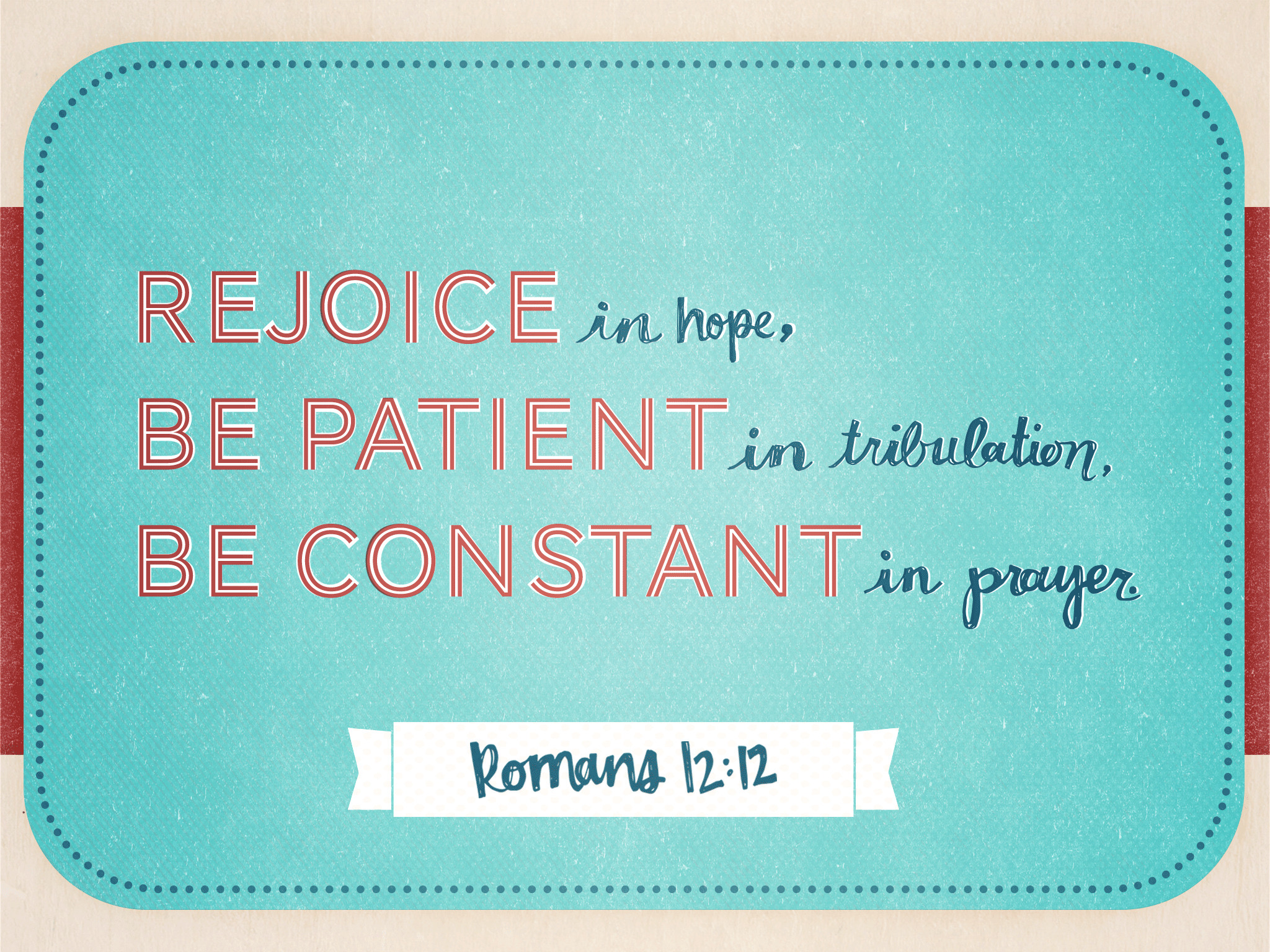
9 Let love be genuine. Abhor what is evil; hold fast to what is good. 10 Love one another with brotherly affection. Outdo one another in showing honor. 11 Do not be slothful in zeal, be fervent in spirit, serve the Lord. 12 Rejoice in hope, be patient in tribulation, be constant in prayer. 13 Contribute to the needs of the saints and seek to show hospitality. 

14 Bless those who persecute you; bless and do not curse them. 15 Rejoice with those who rejoice, weep with those who weep. 16 Live in harmony with one another. Do not be haughty, but associate with the lowly. Never be wise in your own sight.

In the name of Jesus. Amen.

When you stub a toe, your whole body reacts. Your face scrunches and grimaces in pain. Your arms and hands reach down to clasp the toe. Your throat groans, shrieks, or shouts. All of that happens naturally and instinctively. When you stub your toe, the rest of the parts of your body don’t say, “Who cares? That’s the toe’s problem.” I’ve never heard someone with knee, hip, or neck pain say, “The knee that is attached to me hurts,” or, “The neck that holds up this head hurts.” Instead, people say, “My knee hurts. My neck hurts.” And the whole body does what it can to help the part that hurts.

Dear saints, the Body of Christ is no different. When one part of the body suffers, the whole body is involved in that suffering. When one part rejoices, the whole body is involved (see also 1 Cor. 12:26). Being part of this congregation isn’t just about coming to hear the sermon. It’s about being a body, Christ’s Body. No one here is free to consider yourself separate or independent from anyone else here.

The reason I mention the Body of Christ is that today’s reading continues from last week’s. One time, Martin Luther preached on this text, and he said that starting the reading at v. 6 was the idea of someone who doesn’t understand the Bible. I think that’s an overstatement, but it is unfortunate to start at v. 6. Let me reread the final couple verses of last week’s Epistle, which lead up to this text but you didn’t hear today. Starting back at Ro. 12:4-5, “For as in one body we have many members, and the members do not all have the same function, so we, though many, are one body in Christ, and individually members one of another.” Then, our text continues, “Having gifts that differ according to the grace given to us, let us use them….”

The context of today’s text is that you are a member of a body – that’s what Christ intends for you. Yes, the whole Christian Church throughout the world and throughout time is the Body of Christ. Jesus is the One Head, and all Christians are the Body. But there’s no way this matters unless there is a local, in-person group of members. In other words, a congregation. Yes, there are Christians in Australia, Uganda, Brazil, and even Iowa. But you aren’t close enough to them geographically to do much for them. I know for a fact that there are Christians in Papua New Guinea because I know missionaries who have been there. But I haven’t met a single one of those believers. For them, I can’t do most of the things this text calls for. I can’t exhort, teach, or honor them. I can’t rejoice with them when they rejoice or weep with them when they weep. It’s just not possible.

This text wants each believer to focus on the parts of the Body of Christ that God has gathered around them. In other words, care for the people here, in this congregation. That’s why this is written to the Christian church in Rome. It’s why Paul uses the same analogy in his letter to the church in Corinth (1 Cor. 12). And God wants this same arrangement for us here and in every Christian congregation. That’s why it has been preserved for us in the Bible. God wanted this in Rome and Corinth 2,000 years ago, and He wants it here, now, among us.

And I have to say: You do a good job of this. When I teach new member classes, one of the most common things I hear is, “This place just feels like family.” So, please know that I’m not preaching this text to get on your case. I’m not rebuking you. Instead, just like a sprinter will keep training to get a faster time, there is always room for improvement.

We can improve at serving, contributing, leading, being merciful, loving, abhorring evil, holding fast to the good, honoring, and showing hospitality. Let’s consider one area where we can improve today from v. 15, “Rejoice with those who rejoice, weep with those who weep.” The reason for diving into this is that I recognize my own shortcomings in this. So, yes, your preacher today is preaching to himself. This is a, “Do as I say,” because it is what Scripture says, “not as I do,” because I fall short here.

Again, “Rejoice with those who rejoice, weep with those who weep.” First off, notice the prepositions there – with. God calls you to take on the joy and sadness of others. You aren’t called to fix people’s emotions or make them feel certain things. Instead, you join them in those emotions. As a poor example of this, think of Job’s friends; they got it half right. Job is sitting there in his horrific suffering, and his friends come to him. They were exactly right to do that. That’s where they should be. But their problem, which becomes a problem for Job, is that they try to fix everything, and they do an incredibly bad job at it.

Sure, there are times to rebuke, exhort, and encourage people. Scripture does call for that too (1 Tim. 5:20; 2 Tim. 4:2; Tit. 1:13; 2:15). But, dear saints, there are also times where you are to simply close your mouth, sit with others, cry and mourn with them if they’re sad, or jump and sing with them if they’re joyful.

This can be really hard, and for a variety of reasons. Again, we might be too quick to give advice, but another trap we easily fall into is comparing. When someone is struggling with something, it can be easy to share about a past struggle we had and make sure the other person knows how much worse we had it. Sometimes, just being there and listening to a person pour out their heart in sadness is exactly that that person needs.

As a good example of weeping with others, think about Jesus in Jn. 11. On Wednesday night, I taught through Jn. 11 where Jesus raises Lazarus from the dead. We won’t go through the whole thing, and I’m sorry to those of you who already heard this. But it’s worth hearing again. Jesus’ approach to Lazarus’ two sisters, Martha and Mary, and their grief is so interesting. Each sister talks to Jesus separately (Jn. 11:20-27, 32-34). Both of them say the same thing to Jesus when they see Him, “Lord, of You had been here, my brother wouldn’t have died.” But Jesus’ interaction with each of them is completely different.

So, the two sisters are dealing with the exact same problem – the sorrow for over the death of a brother. They both begin interacting with Jesus the exact same way. But Jesus comforts each of these sisters differently. For Martha, Jesus has words of consolation. “Your brother will rise again. I am the Resurrection and the Life” and so on (Jn. 11:23, 23, 25-26). But just a few verses later when Jesus consoles Mary, all He does is go to the tomb with her and weep with her (Jn. 11:33-35). Yes, Jesus calls Lazarus from the tomb and restores his life. But it’s that initial consoling Jesus has for each sister has a lot to teach us.

Here’s the lesson: get to know the different parts of Christ’s Body well enough so you know how to weep with them when they weep. If they’re already weeping, just be there for them. Join them in their sorrow. But when they aren’t weeping, make the effort to get to know them well enough so that, when they are weeping, you have a better idea of how to console them.

Finally, when you are weeping, know that people might not be able to do this well. But also know that Jesus does. Christ knows how to give you exactly what you need exactly when you need it. Jesus is here now. He invites you to His table to receive His Body and Blood. Here, Christ, the Great Consoler, continues to unite you as His Body and strengthen you in faith toward Him and in love toward one another. Amen.

The peace of God, which surpasses all understanding, will guard your hearts and minds in Christ Jesus. Amen.

Discern – Sermon on Romans 12:1-5 for the First Sunday after Epiphany

Romans 12:1–5

1 I appeal to you therefore, brothers, by the mercies of God, to present your bodies as a living sacrifice, holy and acceptable to God, which is your spiritual worship. 2 Do not be conformed to this world, but be transformed by the renewal of your mind, that by testing you may discern what is the will of God, what is good and acceptable and perfect. 

3 For by the grace given to me I say to everyone among you not to think of himself more highly than he ought to think, but to think with sober judgment, each according to the measure of faith that God has assigned. 4 For as in one body we have many members, and the members do not all have the same function, 5 so we, though many, are one body in Christ, and individually members one of another.

In the name of Jesus. Amen.

You will be changed. Please note how that was worded. It isn’t, “You will change,” even though that’s true. It wasn’t, “You must change,” as though this is all up to you. According to this text, you will be (passively) changed. Here, you are given a passive command, which we can’t really translate well into English. What we have there in v. 2 could be translated, “Do not become conformed to this world, rather become transformed by the renewal of your mind.”

In other words, there are things that are going to mold, shape, and change you. But there are some things that should not do that, and there are some things that should.

First, don’t allow the world to change you. The word there is, actually, ‘age.’ “Do not become conformed to this age.” This age isn’t only this world; it’s also the demons, forces of evil, and the culture that pull on you. Our age seeks to conform you to itself. We’ll talk about things like peer pressure and, maybe, even societal pressure. We are to resist those. But we are also to resist the demonic pressure and self-imposed pressure to fit in with this evil age. All those things of this age try to press, pull, form, and mold you like you’re Silly Putty. 

Hopefully, enough of you have played with Silly Putty for this analogy to work. You can easily make Silly Putty do all sorts of things. My siblings, cousins, and I would play with Silly Putty at my grandparents’ home in Faith, SD. We’d take it out of the red egg container and roll it into a bouncy-ball and play catch. When we got tired of that, we’d smoosh the puddy into a flat oval, press it onto the newspaper ink, peel it off, and stretch out the letters and pictures left on the putty. You can make Charlie Brown’s head look even more ridiculous with a blob of Silly Putty. When we got tired of manipulating a particular smudge of ink, all we had to do was simply push, roll, and re-flatten the putty, and it was ready to do another one. The ink from each image never actually left the putty; instead, it just got absorbed into it.

A lot of Christians have allowed this age to work on them like putty. And there are all sorts of reasons they allow it. Maybe they don’t want to be laughed at, so they’ll go along with the theory of evolution and try to make it fit with the account of creation. It doesn’t. It can’t, but they try anyway. Maybe they don’t want to be considered a fundamentalist, so they will compromise on all sorts of things like marriage, sexuality, abortion, and whatever. Here, Paul says, “Don’t. Don’t do that!”

When you allow this age to press and pull and stretch you in different ways, you are in a dangerous place. Just like I’d get bored bouncing a Silly Putty ball around, this age will try to conform you into all sorts of things for all sorts of uses. And just like the ink never really leaves a blob of putty, some of the ways this age will play around with you will stick with you your entire life. Christian, don’t let this age play around with you as though you’re a blob of Silly Putty.

I just need to add here: This world does change you in ways that are fine. There are plenty of lessons to learn from people and organizations that aren’t necessarily Christian, but be careful with them. Have your filter up. Keep in mind what Php. 4:8 says, “Finally, brothers, whatever is true, whatever is honorable, whatever is just, whatever is pure, whatever is lovely, whatever is commendable, if there is any excellence, if there is anything worthy of praise, think about these things.”

All that being said, you are to allow change to come from other places. “Be transformed by the renewal of your mind.” What does that mean? We might wish that Paul had said, “Be transformed by keeping the Ten Commandments,” or, “Be transformed by praying at such-and-such a time.” That would be a lot easier to understand and do. But that’s not what Scripture says here. You aren’t given a set of instructions to do or accomplish. Instead, you’re given the result of this transforming. This transforming results in the renewal of your mind, and it results in an ability to discern the will of God. God wants you, as time goes by, to get better and better at testing and figuring out His will, which is good, acceptable, and perfect/complete.

Sometimes, we’ll talk about the Ten Commandments as God’s will, what He desires us to do. And that is true. God’s will is that you have no other gods, use His name rightly, keep the Sabbath, honor your parents, not kill, not commit adultery or steal or lie or covet. That’s God’s will – plain as day. But none of that takes discernment to figure out. God has clearly said it. “Thou shalt not murder.” When you get angry at someone and want to harm them, you don’t have to discern if you should or not. Don’t do it!

When Scripture says here that you should allow yourself to be transformed so that you can discern God’s will, it’s saying that there are times when God’s will is for you to do something or not do something, but He hasn’t clearly, explicitly said what His will is. Instead, you’re going to have to discern what you should do. Yes, the Commandments are there to help and guide you, but the Commandments don’t address every decision you have to make day by day.

For example. Let’s say your kids are behaving poorly. What should you do? There isn’t a Commandment that definitively addresses that. So, should you discipline them and make sure they feel your wrath? Do you go by Pro. 13:14, “Whoever spares the rod hates his son, but he who loves him is diligent to discipline him”? Maybe. That might be the most godly, loving thing you can do. Or, should you be patient with your kids? Should you follow Col. 3:21, “Do not exasperate your children, lest they become discouraged”? Should you pause, take a step back, patiently talk with them, try to understand what’s going on? Again, maybe. That might the godly, right thing to do.

How do you know which to pick – discipline or patience? The Bible says both are good. How do you navigate it? God has a will for that situation, but He hasn’t explicitly spelled it out in the Bible. God hasn’t said, “When thy child flips out after you deny their request for candy at Hugo’s in East Grand at 12:34 PM on Jan. 12th, 2025, here’s how you handle it. But if it’s at Ace Hardware, here’s how you handle it.” God has ways He wants you to live, but it might be difficult to know how to handle each particular situation that comes up moment by moment, day by day.

Should you give money to that person on the corner by Sam’s Club? Should you watch that show or movie? Here’s a good one: Should you engage with that comment on social media? Ha! Proverbs 26:4 says, “Answer not a fool according to his folly, lest you be like him yourself.” But in the very next verse, the Bible says, “Answer a fool according to his folly, lest he be wise in his own eyes.” You’ve got two verses back-to-back saying, “Don’t do it,” and, “Do it.” So, how do you know what to do?

I can’t tell you. No one can. In His wisdom, God has made these decisions challenging for us and require us to grapple and test and discern what we are to do. In other words, God wants us to do the difficult work of gaining and growing in wisdom. This is what it is to be transformed by the renewal of your mind. This renewal of your mind happens as you read the Bible. The Holy Spirit takes God’s Word and works on you, renewing and transforming you into what He wants you to be.

2 Tim. 3:16-17 says that all Scripture is inspired by God and is there to train you in righteousness that you may be complete, equipped for every good work. In other words, the Bible trains you and renews your thinking and mind. It transforms you. More and more, as time goes on, you are to be filled with God’s Word and bring it to bear in the decisions that are constantly coming at you each day.

This doesn’t mean you have to listen for a voice from heaven and have God directly speak to you. No. Don’t expect God to spell it out like that because that doesn’t take any work. Again, in His wisdom, God has made this more difficult, but that struggle is good for you and for me.

God wants this to be the rhythm of your life. Go about your life, make those decisions, and read the Scriptures. Evaluate how you made those decisions. Maybe, you’ll realize that you did poorly and didn’t do God’s will. Then, repent. Receive God’s forgiveness for that sin. Learn from your mistake. Do better the next time.

Maybe, you’ll realize you did well and that experience will make you better equipped to handle an even tougher decision in the future.

Then, armed with that experience and filled with wisdom from God’s Word, go, live a bit more. Make more decisions, and return again to the Scriptures. Live. Read the Bible. Live. Read. Constantly weave your life and God’s Word together. That work leads to godly discernment. It transforms and renews your mind.

Know that this transforming doesn’t happen very well if the only time you hear the Scriptures is when you’re here at church. Discerning God’s will is a life-long process. It takes work. But don’t forget that this is good work, and it is how God wants to be about His business of continually transforming you. And He isn’t treating you like a blob of Silly Putty. He’s sculpting you, or, even better, He’s metamorphosizing (that’s the word here translated ‘transform’) you into a living sacrifice that is holy and acceptable to God (Ro. 12:1).

Finally, I want to make sure we anchor all of this to the context – both of this passage and the whole book of Romans. Remember this is an appeal, an appeal that is based on the mercies of God. In other words, only Christians who have been freely and completely forgiven of their sins because of what Christ has done – only they can be transformed in this way.

Even with all the discernment you gain from God’s Word, even with a mind that is filled with biblical wisdom, there will be times where you fail to do God’s good, acceptable, perfect will. That’s when you flee again to His mercies, which are new every morning (Lam. 3:22-23). And remember what Scripture said just a few chapters earlier in Ro. 8:1, “There is therefore now no condemnation for those who are in Christ Jesus.” None. Zip. Zilch. Nada. No condemnation.

Yes, grow and be changed by God’s Word. Don’t be conformed to this age. Instead, grow in wisdom, be metamorphosized, and discern. And always know and trust that Christ’s mercy covers you, now and forever. Amen.

The peace of God, which surpasses all understanding, will guard your hearts and minds in Christ Jesus. Amen.