In the name of Jesus. Amen.
Jesus says, “Truly, truly, I say to you, everyone who practices sin is a slave to sin” (Jn. 8:34). Hear it again: everyone who practices sin is a slave to sin. One thing needs to be clear right away. Normally, when we use the word ‘practice,’ we think of someone trying to get better at something. A teenager might practice ball-handling drills to become a better basketball player. Or a piano player will put in hours of practice before a concert or recital. Both want to improve their skills so they can perform well in the big moment. That’s not what Jesus is talking about here. The word Jesus uses that gets translated ‘practice’ means ‘does.’ We’ll talk about a doctor ‘practicing’ medicine or a lawyer ‘practicing’ law because that’s their field. So, everyone who does sin is a slave to sin.
Here in John 8, Jesus is speaking to people who had believed in Him (Jn. 8:31), “If you abide in My Word, you are truly My disciples, and you will know the truth, and the truth will set you free” (Jn. 8:31-32). Their reply is immediate. “We’re offspring of Abraham and have never been enslaved to anyone. How is it that you say, ‘you will become free’?” (Jn. 8:33).
They ask because that’s a downer of a message. Nobody wants to be called a slave. It doesn’t feel very good to hear that. But Jesus isn’t the kind of person who tells you something just to make you feel better. Jesus is more interested in telling you the truth because it is the truth that sets you free (Jn. 8:32)—even if it feels bad to hear it. Jesus says truth and freedom go together.
We don’t generally talk about sin in the same kind of drastic and dire ways that Jesus does here. We use all sorts of phrases to take the edge off in an attempt to deflect the hard truth. Instead of using the word ‘sin,’ we might talk about making ‘mistakes.’ Or when we lie, we might say we were ‘just joking.’ Stop it. Dressing up your sin, explaining it away, pushing it aside, and not taking it seriously is ignoring the truth. The truth for all of us is that we have an ugly monster inside of us that hates God and selfishly ignores the needs of the neighbors God has given us. Repent.
Repent because everyone who commits even one sin is a slave to sin. That’s the hard truth Jesus puts right in front of our face today. But the same Jesus who tells you that hard truth also tells you that this truth will set you free. How that happens is what we need to see.
Scripture is abundantly clear on this, and you heard it in our Old Testament reading (Hab. 2:1-4), the righteous live by faith (Hab. 2:4). That faith hears God’s Word—even harsh words from Jesus—and believes it.
One of the great gifts God preserved with the Reformation is the distinction between Law and Gospel. To be clear, Martin Luther didn’t discover this as much as he brought it back to the forefront of Christian thinking as a way to understand the Scriptures. God speaks two words—Law and Gospel. The Law is God’s Word of command that is to be done and obeyed. The Gospel is also God’s Word, but it is a word of promise. You can’t do a promise; instead, you simply believe it. So, the Law is something to do, and the Gospel is something to believe. Yet faith is not only for the Gospel. Faith also believes the Law. Faith is how you receive both of God’s Words.
To get this across, let’s say you have a headache because you have tight muscles in your shoulder and neck. You talk to a chiropractor or physical therapist, and they give you instructions to rub your shoulder in a specific place and a specific way. After hearing those instructions, you wouldn’t say, “I believe you” because you’ve been given a command, and you can either do it or not do it. But the chiropractor or therapist might hear you talk about your pain and say, “I’ll massage that out and stretch you.” That’s a promise. You haven’t been given anything to do, you can just believe it and enjoy the relief they give you. You simply receive the word and the solution they’ve offered.
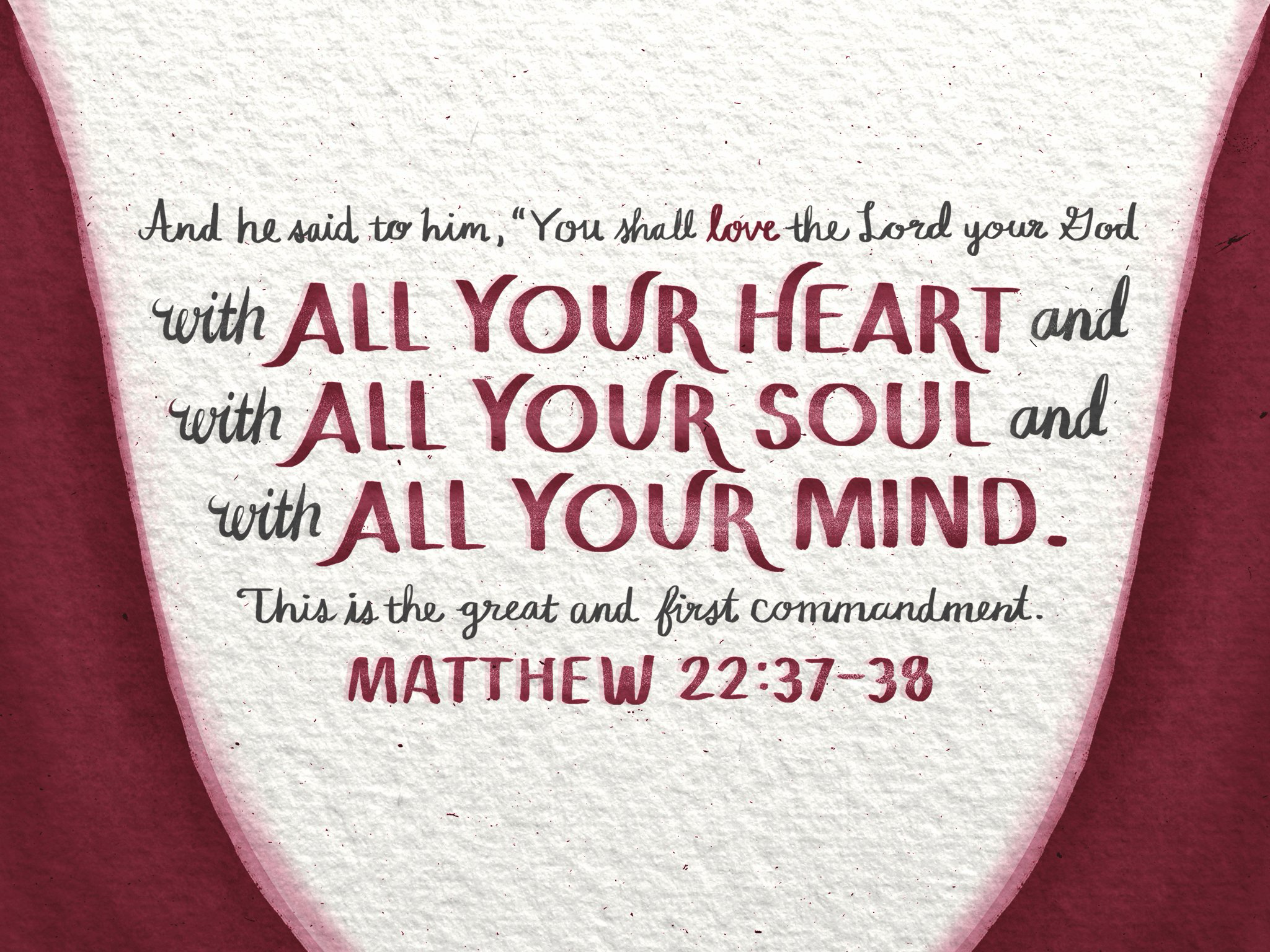
Take that to what God says to us in Scripture. God gives us the Law which is most clearly expressed in the Ten Commandments (Ex. 20:1-17) and summarized in the two great commands to love God and love neighbor (Mt. 22:37-39). God’s Law demands that we love Him by having no other gods, not misusing His name, and keeping the Sabbath. God’s Law demands that we love our neighbor by honoring parents, not murdering, not committing adultery, not stealing, not bearing false witness, and not coveting. Those are things God demands that we do. When we measure ourselves against God’s commands and demands, our mouths are stopped, and we find that we are sinners (Ro. 3:19-20). That is exactly what the people in John 8 would not admit. They said they had never been enslaved. The Law says otherwise. That is where faith does its first work. It does not argue with the diagnosis of the Law. It simply believes what God has said about you.
When the mirror of the Law exposes your sin, don’t lie to yourself and others that you’re ok in that sin. No! Instead, believe what Jesus says: you are a slave to sin and cannot free yourself (Jn. 8:34). Believe that diagnosis because it is true. Now, faith doesn’t trust the Law to save you; faith simply takes the Law at its word when it has diagnosed you as a slave. And know that you don’t have to be afraid to believe that because you have a Savior who sets you free.
The slave does not remain in the house forever. Only the son does. So, if Jesus, the Son of God your Savior, if He sets you free, you will be free indeed (Jn. 8:35-36). This is that second word of God, the Gospel. That’s His promise to you. And you can’t do anything with a promise. You can only believe it or not believe it. So, believe it. That faith is what saves you. That faith is what justifies you apart from works of the Law (Ro. 3:28).
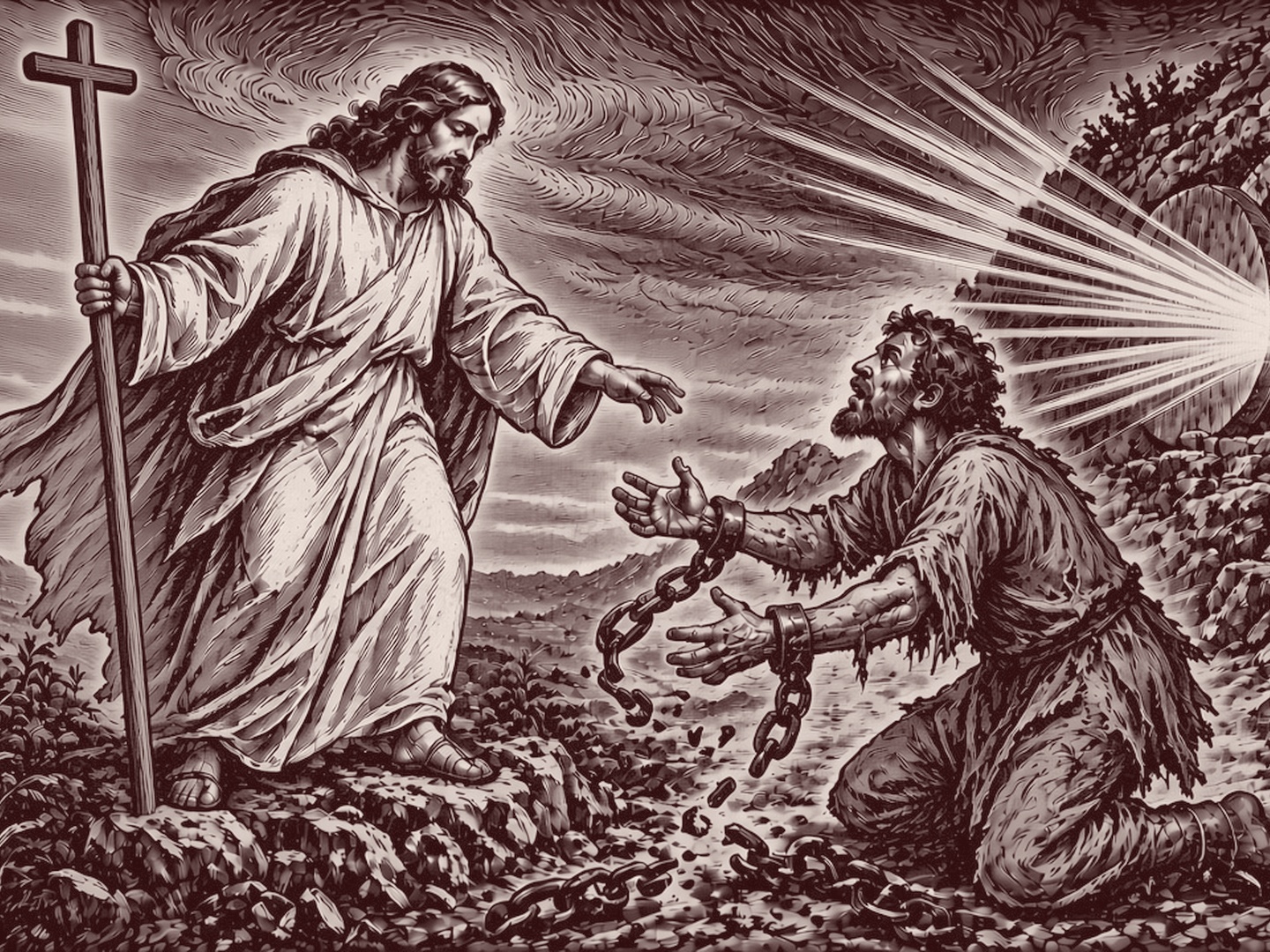
Yes, your sin is strong and holds you captive. But you have a Savior who is stronger. Your sin is mighty, but His grace is much mightier. He bore the slavery you could not escape. He paid the debt you could not pay. And He is risen, so your freedom stands. You are freed and emancipated from your slavery to sin and justified by His grace as a gift through the redemption that is in Christ Jesus (Ro. 3:24). A slave cannot sign his own papers to grant himself freedom. The Son of God has signed them for you because He paid the price of your emancipation. Jesus didn’t save you because you promised to improve and sin less. Christ saved you to free you and have you as His Own. Now, God looks at you and does not see a slave who cannot free himself. He sees you covered in the righteousness of Christ (2 Co. 5:21). The cross is the sign of that emancipation. It is not a self-help plan, but the very place where Christ paid the price to set you free.
God’s answer to your sin is written down and made plain so you can see and believe it (Hab. 2:2-3). The righteous live by faith (Hab. 2:4). This is faith that has first believed the Law’s hard verdict and now believes the Gospel’s free promise. Abide in that Word. Believe that Gospel. You are emancipated. You are free, free indeed—all because of Jesus. Amen.
The peace of God, which surpasses all understanding, will guard your hearts and minds in Christ Jesus (Php. 4:7). Amen.



You must be logged in to post a comment.