Matthew 16:13-20— 13 Now when Jesus came into the district of Caesarea Philippi, he asked his disciples, “Who do people say that the Son of Man is?” 14 And they said, “Some say John the Baptist, others say Elijah, and others Jeremiah or one of the prophets.” 15 He said to them, “But who do you say that I am?” 16 Simon Peter replied, “You are the Christ, the Son of the living God.” 17 And Jesus answered him, “Blessed are you, Simon Bar-Jonah! For flesh and blood has not revealed this to you, but my Father who is in heaven. 18 And I tell you, you are Peter, and on this rock I will build my church, and the gates of hell shall not prevail against it. 19 I will give you the keys of the kingdom of heaven, and whatever you bind on earth shall be bound in heaven, and whatever you loose on earth shall be loosed in heaven.” 20 Then he strictly charged the disciples to tell no one that he was the Christ.
In the name of Jesus, the Son of the living God. Amen.
Jesus decides to take an opinion poll while in the district of Caesarea Philippi, “Who do people say that the Son of Man is?” The results vary: some say John the Baptist, some say Elijah, some Jeremiah, or others one of the prophets. All of those answers are flattering, very complimentary, but are they right? Flattering and complimentary are fine and dandy, but in this question only the right answer counts.
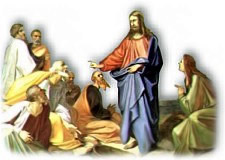 Jesus asks the disciples, “Who do you say that I am?” Peter answers for the disciples and, ultimately, for the whole Christian Church, “You are the Christ, the Son of the living God.” If Peter is right (and he is), notice what this means. It means that Jesus is the fulfillment of the promise Adam and Eve heard from God, that the seed of the woman will crush Satan’s head (Gen. 3:15). It means that Jesus is the fulfillment of God’s promise to Abraham, “I will bless you. And your seed will possess the gate of his enemies, and in your seed shall all the nations of the earth be blessed” (Gen. 22:17-18). Jesus is the fulfillment of all the promises God gave to Moses, Isaiah, Ezekiel, and Daniel.
To confess that Jesus is the Christ, the Son of the living God is a big confession to make. But Peter didn’t make this up on his own. He’s not as good a theologian as that – no one is. Jesus says, “Flesh and blood has not revealed this to you, Peter, but my Father who is in heaven.” Flesh and blood does not avail you. You cannot, by your own reason or strength, believe in Jesus Christ or come to Him (SC Art. 3).
Our epistle text (Ro. 11:34-12:8) says, “Who has known the mind of the Lord, or who has been His counselor? Or who has given a gift to Him that he might be repaid? For from Him and through Him and to Him are all things. To Him be glory forever. Amen.”
Peter’s confession – that Jesus is the Christ, the Son of the living God – came from God, was made through God, and gives glory to God. So does your confession, believer. And flesh and blood does not reveal who Jesus is to you. Only the Father who is in heaven can reveal this through the Holy Spirit.
 Jesus makes three promises to those who confess this. Jesus promises first to build His Church upon this confession. “On this rock I will build My church.” God builds the Church. I know many of you here put your hands to the very hammers and saws that built this building. You have your own blood, sweat, and tears in this building. But someday this building will fall. It will crumble. But the holy Christian Church is not a building. And some of you, many of you, have brought others into this building to hear the Gospel of Christ, and that Gospel has been heard and believed. But you still have not built this Church. God has. You are the living stones which “are being built up as a spiritual house, to be a holy priesthood, to offer spiritual sacrifices acceptable to God through Jesus Christ” (1 Pet. 2:5).
Jesus’ second promise is that on the rock of the confession that He is the Christ, the Son of the living God, God will build the Church so firmly that “the gates of hell will not prevail against it.” Now that is quite a promise, but it is difficult to tell the ‘direction’ of this promise – is it offensive or defensive? Some commentators focus on the defensive nature of this. They say that the evil hosts of Satan that issue from the stronghold of hell’s gates will attack the Church but will always be thwarted. If this is the direction of the promise, then hell can send out host after host, but the Church will stand.
 However, other commentators view this in the opposite direction, as offensive. Gates don’t move – they protect. Rocks can be loaded into catapults and hurled against gates. As Jesus ministered, He fought against the devil and his kingdom, and Jesus, the Son of the living God, prevailed. Casting out demons, healing diseases, and overcoming the fallen creation was Jesus’ cup of tea. Jesus’ Church is still on the offensive side of the ball. Sins are forgiven and the rule of Satan is overthrown through Jesus’ continued ministry in the Church. The Church, which stands on the solid rock of the confession that Jesus is the Messiah, demolishes hell’s gates every time.
Whether this promise is defensive or offensive, doesn’t really matter. Believer, you along with the rest of the Christian Church will always overcome the strongest onslaught of hell.
Jesus’ third promise is, “I will give you the keys of the reign of heaven.” If you give keys to someone, it means you trust them with whatever is behind the door. Jesus gave His Church the keys to the reign of heaven. Those who do not confess that Jesus is the promised Messiah are eternally locked out of the reign of heaven. Those who do confess, who have this revelation from the Father, enter into the door of the reign of heaven.
 Yes. God is so reckless that He will entrust the opening and closing of the reign of heaven to His Church. He has given His Church the authority to forgive sins because of what Jesus has done on the cross. Jesus Himself told the Church to disciple all nations opening the reign of heaven to them so that all can enter. However, those who stubbornly refuse Jesus’ call to enter into the reign of heaven through His sacrifice are to be shut out. The Church is to make it clear that they are outside of God’s love – in order that they desire to receive the love of God already poured out for them in Christ’s blood.
And that is precisely what Jesus will do in next week’s Gospel lesson (Mt. 16:21-28); Jesus will close the doors to the reign of heaven in Peter’s face. We’ll see how quickly things fall apart when the Church moves away from its confession of Christ being the Messiah. There is only one Messiah, and He has come to be a specific type of Messiah. Peter will be told by Christ, the Son of the living God, that is necessary for Him as Messiah to suffer, die, and rise again. Peter decides he doesn’t want that type of Messiah. He will tell Jesus, “Far be it from You, Lord! This shall never happen to You.” Jesus says to Peter, “Get behind Me, Satan.” But we’ll leave that for next week.
For now, know the truth of this confession – Jesus is the Christ, the Son of the living God. This confession, this faith comes only from God. And this faith is unconquerable. Amen.
The peace of God, which surpasses all understanding, will guard your hearts and minds in Christ Jesus. Amen.

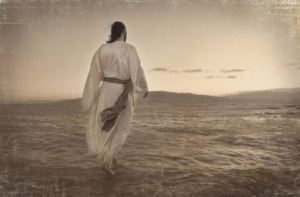 Notice, though, that even though they are having trouble, there is no mention of the disciples being afraid. The disciples are not scared – until they see Jesus. Jesus advances towards them, but all they see is a phantasm. They see a figure emerging from the darkness walking on top of the very same waves that are inhibiting their progress.
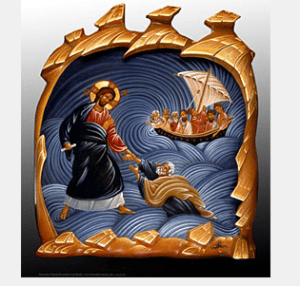 Anyway, Peter cries out, “Lord, save me.” If I were Jesus, I’d have lost my patience. I would have let Peter sink down to the bottom of the sea. But how long does Jesus wait to rescue this braggadocios disciple? He doesn’t wait one second. “Immediately, Jesus reached out His hand and took hold of [Peter] saying to him, ‘O you of little faith, why did you doubt?’”
 Most importantly, God keeps giving you His forgiveness for your failure and sin. He has given it to you already today through the Absolution. And if you doubt that that forgiveness proclaimed through your pastor is really for you, He gives you forgiveness that cannot miss in Communion, in Bread and Wine, in His very body and blood given unto death on the cross for the forgiveness of your sins. Strengthened by this food, this little meal, God gives you a lot to chew on. Your God equips you and sends you back out into this broken world with sins forgiven and hearts full of joy. Amen.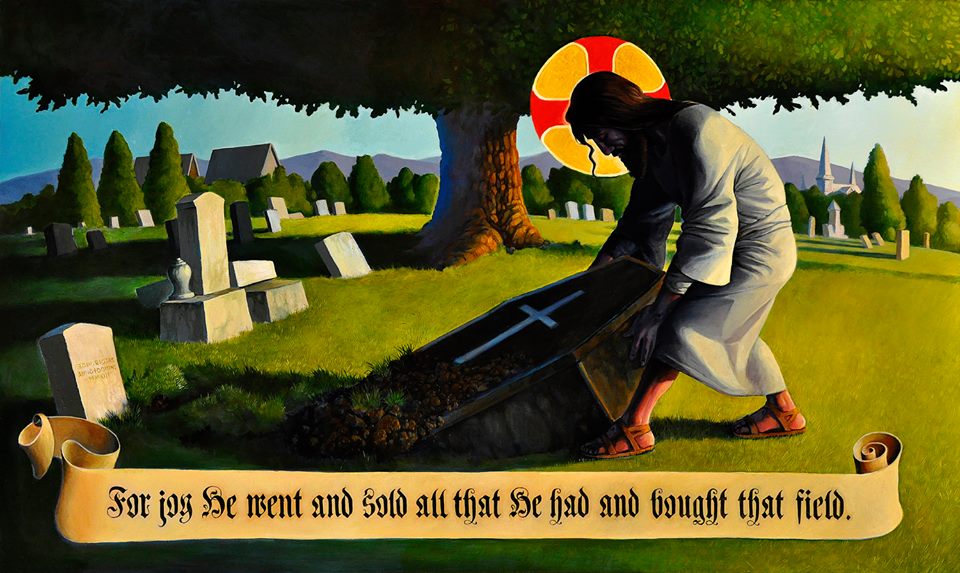
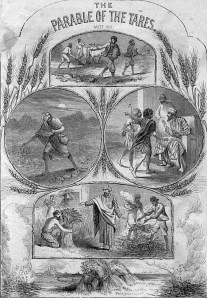 The reign of heaven may be compared to a man who sowed good seed in his field, but in the night an enemy comes and sows weeds. The weeds Jesus speaks about look identical to wheat as they grow, but at harvest time the grains of this weed are a different color than the wheat. The servants of the master ask if they should go and go and gather the weeds, but take careful note of what the master says:
 But Jesus teaches with the parable of the Sower and the Seed, and the disciples don’t like this. They are disappointed. “Why do You speak to them in parables?” they ask (13:10). It is as if the disciples are saying, “Jesus, don’t You see how much trouble You’ve stirred up today. People are rejecting Your message. The Pharisees hate You, and You are separating us from the crowds and even Your own family. Now, You are teaching in parables? Come on, clear things up! Teach them plainly so they can understand.”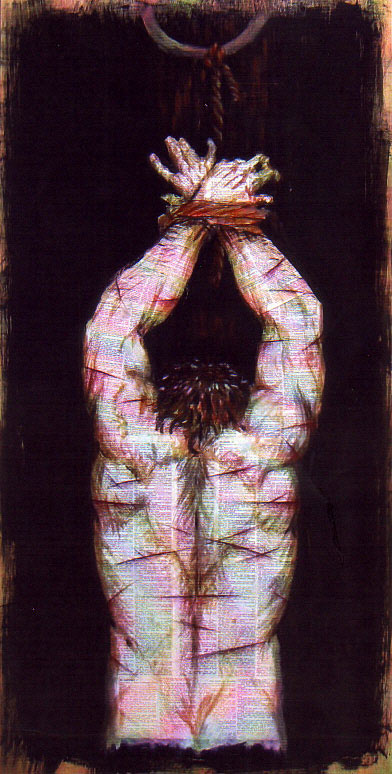
 But God did reveal (lit. “apocalypsed”) His salvation to those who had no wisdom of their own – to the “little children.” All sinners, that includes you, are without understanding. Like Paul in our epistle text (Ro. 7:14-25), you too are a slave to sin. You carry the burden of knowing what is right and good, but you don’t do it. Like Paul, you practice the very things you hate and know to be evil. You reject and deny God’s authority over you.
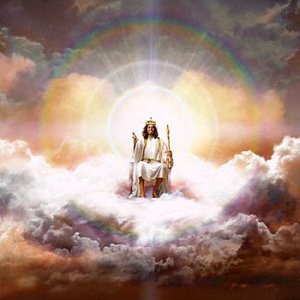 at might be St. Augustin’s most famous quote he says to God, “Thou hast formed us for Thyself, and our hearts are restless till they find rest in Thee.” The rest that Jesus gives is completely foreign and alien to our normal, everyday existence. The rest Christ delivers is the forgiveness of sins and the end striving against God. That rest is what God wanted us to have so He gave us the third Commandment, “Remember the Sabbath day to keep it holy.” God wanted us to set apart a whole day when we could find rest in being fed with His Word. Jesus is offering the eternal Sabbath rest that only comes from God.
 Matthew 10:34-42—34 “Do not think that I have come to bring peace to the earth. I have not come to bring peace, but a sword. 35 For I have come to set a man against his father, and a daughter against her mother, and a daughter-in-law against her mother-in-law. 36 And a person’s enemies will be those of his own household.
 The Prince of Peace says, “Do not think that I have come to bring peace to the earth. I have not come to bring peace, but a sword.” Strange words from Jesus especially when we remember that, at His birth, the angels sang, “Peace on earth,” (Lk. 2:14). Such an odd saying from Jesus who, the night before He dies proclaims, “Peace I leave with you; My peace I give to you” (Jn. 14:27).
 In Junior High and early High School, my favorite article of clothing was a sweatshirt which had a little logo embroidered over my heart which said, “No fear.” That sweatshirt was my favorite. It was forest green with a plaid hood. I felt super cool wearing it, so I probably wore it more often than I should have. I would don that bold and defiant statement, “No fear.” However, underneath that sweatshirt was the skin and bone frame of a timid, dorky adolescent. In reality, I feared lots of things. I feared the mean kids. I feared being left out and rejected. I feared that no girl would ever like me.
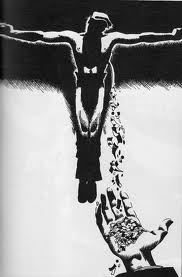 In the face of persecution and death, Jesus tells His disciples – and you – do not fear, but acknowledge (lit. ‘confess’) Christ. Jesus solemnly urges you to make your confession of salvation through Christ. He has redeemed you and everyone you meet with His holy and precious blood and with His innocent sufferings and death.
 Pastorsamwise
You must be logged in to post a comment.