Successful Sowing – Sermon for Sexagesima on Luke 8:4-15

Listen here.

Luke 8:4–15

4 And when a great crowd was gathering and people from town after town came to him, he said in a parable, 5 “A sower went out to sow his seed. And as he sowed, some fell along the path and was trampled underfoot, and the birds of the air devoured it. 6 And some fell on the rock, and as it grew up, it withered away, because it had no moisture. 7 And some fell among thorns, and the thorns grew up with it and choked it. 8 And some fell into good soil and grew and yielded a hundredfold.” As he said these things, he called out, “He who has ears to hear, let him hear.”

The Sower9 And when his disciples asked him what this parable meant, 10 he said, “To you it has been given to know the secrets of the kingdom of God, but for others they are in parables, so that ‘seeing they may not see, and hearing they may not understand.’ 11 Now the parable is this: The seed is the word of God. 12 The ones along the path are those who have heard; then the devil comes and takes away the word from their hearts, so that they may not believe and be saved. 13 And the ones on the rock are those who, when they hear the word, receive it with joy. But these have no root; they believe for a while, and in time of testing fall away. 14 And as for what fell among the thorns, they are those who hear, but as they go on their way they are choked by the cares and riches and pleasures of life, and their fruit does not mature. 15 As for that in the good soil, they are those who, hearing the word, hold it fast in an honest and good heart, and bear fruit with patience.”

In the name of the Father and of the Son and of the Holy Spirit. Amen.

Success is measured by goals. The Titanic was a massive success, if the goal was to produce the world’s largest luxury ocean liner. It was a complete failure if the goal was for it to remain world’s largest luxury ocean liner.

As we consider this parable, we might be tempted to ask, “Is the Sower successful?” On the one hand, He is massively successful. The seed is sown. But, on the other hand, He is a massive failure because of how recklessly and wastefully the seed is tossed around. Most of the seed fails to grow, mature, and bear fruit. It ends up all over the place. On the path where Satan will snatch the seed. On the rocks where it doesn’t get nourishment. Among the weeds and thorns that choke it to death.

Now, rather than judging the Sower’s success, we need to recognize that Jesus is teaching us some very important truths with this parable and the places where the seed fails.

First, God is perfectly willing to let His Word go out to places where there will be no fruit.

Second, we see that the Word has enemies. With the seed that falls on the path, Jesus wants us to recognize that Satan is a real threat, and he always attacks where the Word is present – where it is preached, taught, and heard. Don’t be surprised when you are attacked. Also, with the seed that falls on the rocks, Jesus wants us to know that the Word needs to be continually nourished. Christian, you never outgrow your need for the Word and Sacraments so that your faith does not wither and die.

ThornsThird, Jesus blows away any misconceptions we may have that if the devil left us alone and the seed gets the nourishment that it needs, then everything would be hunky dory. The seed that falls among the thorns – that is the riches and pleasures of this life – it dies too. Even good things in this life are a threat to your faith. Thorns don’t just prick you like a needle leaving a little pain behind. They entangle and trap. Enjoy the good gifts God gives you in this life, but also recognize how easily they choke out your faith.

If we focus on those things, we may be tempted to think that God is mostly a failure when He sends out His Word. God forbid even the thought.

The Sower is successful. The seed that falls on the good soil produces, and it produces a hundredfold. But even when the seed falls on the path, the rocks, and among the thorns, we need to remember that, though there is no fruit, the Sower is still successful. Jesus is teaching exactly what we heard on our Old Testament text (Is. 55:10-13). God’s Word never returns void. It always accomplishes God’s purpose. Always.

Now, since we clearly know that God is successful, we might instead be tempted to think that we are unsuccessful. Do you see in yourself the hundredfold fruit that Jesus describes the good soil producing? Probably not. Instead, you see yourself being choked out. You feel malnourished and starving. You know the devil’s attacks. All these things are extremely evident to you, and so you’re tempted to doubt that God’s Word accomplishes what Jesus describes.

But that is the remarkable nature of the Seed of God’s Word. The Seed, unlike any other seed, is able to transform the ground. That is why God sows it in inhospitable places.
Bear Fruit with Patience SowerAnd hear again what Jesus says in the last verse of our text: “As for that in the good soil, they are those who, hearing the word, hold it fast in an honest and good heart, and bear fruit with patience.”

That honest and good heart comes from the work of the Word of God itself. The Word cleanses and forgives you. The Seed of the Word is what makes your heart clean (Jn. 15:2-3). And the fruit comes with patience.

Don’t be surprised if you don’t see the massive, hundredfold production. Be patient. God is the one who will bring it about. Don’t fall into the devil’s temptation to measure how successful God’s Word is. If we measure the how successful God’s Word is by looking for our fruit, we will surely be discouraged.

Instead, remember that the success of God’s Word Is not dependent on what you see or experience. The success of God’s Word is dependent on His promise.

Dear Christians, to you it has been given to know the secrets of the kingdom of God. Hear and receive Christ’s Word. Hold it fast. Be continually nourished by that Word as you hear it, read it, learn it, and receive it now in the Lord’s Supper. And be patient. He who has begun a good work in you will be faithful to bring it to completion (Php. 1:6). Amen.

The peace of God, which surpasses all understanding, will guard your hearts and minds in Christ Jesus. Amen.

The Vineyard of Grace – Sermon for Septuagesima on Matthew 20:1-16

Listen here.

Matthew 20:1–16

1 “For the kingdom of heaven is like a master of a house who went out early in the morning to hire laborers for his vineyard. 2 After agreeing with the laborers for a denarius a day, he sent them into his vineyard. 3 And going out about the third hour he saw others standing idle in the marketplace, 4 and to them he said, ‘You go into the vineyard too, and whatever is right I will give you.’ 5 So they went. Going out again about the sixth hour and the ninth hour, he did the same. 6 And about the eleventh hour he went out and found others standing. And he said to them, ‘Why do you stand here idle all day?’ 7 They said to him, ‘Because no one has hired us.’ He said to them, ‘You go into the vineyard too.’ 8 And when evening came, the owner of the vineyard said to his foreman, ‘Call the laborers and pay them their wages, beginning with the last, up to the first.’ 9 And when those hired about the eleventh hour came, each of them received a denarius. 10 Now when those hired first came, they thought they would receive more, but each of them also received a denarius. 11 And on receiving it they grumbled at the master of the house, 12 saying, ‘These last worked only one hour, and you have made them equal to us who have borne the burden of the day and the scorching heat.’ 13 But he replied to one of them, ‘Friend, I am doing you no wrong. Did you not agree with me for a denarius? 14 Take what belongs to you and go. I choose to give to this last worker as I give to you. 15 Am I not allowed to do what I choose with what belongs to me? Or do you begrudge my generosity?’ 16 So the last will be first, and the first last.”

Hiring the Laborers in the VineyardIn the name of the Father and of the Son and of the Holy Spirit. Amen.

Too often, we forget that Jesus lived in history. Just as we have well-known stories in our day that form and shape our understanding of the world, so did Jesus and the people of His day. Today, if someone says, “I have a Cinderella story to tell you…” you know how the story will go – rags to riches. Well, in Jesus’ day, there was a famous parable that is remarkably similar to this one before us. This parable had been told during the funeral sermon of a well-known rabbi who died when he was only twenty-eight years old. The parable went like this:

A king hired laborers to work in his vineyard. After watching the men work for a couple of hours, he noticed one had a lot more ability than the rest. So, the king invited that laborer to spend the rest of the day with him eating and relaxing while the rest continued to work. At the end of the day, the king lined everyone up to pay them. The one who only worked two of the twelve hours was paid the same as those who had worked all day. The others complained. But the king replied, “This man worked with so much skill that he accomplished as much in two hours as you did in twelve. So, don’t complain; I’m being fair.”

Santa's Nughty ListThe point of this parable at the twenty-eight-year-old’s funeral was that this famous rabbi had done enough good works to go to heaven early. In other words, be good, do good, and get rewarded. Santa Claus anyone?

Now, there is a kernel of truth to that parable. It is right, proper, and just to reward good works. If you tell your kids they cannot play outside until their rooms are clean and one gets it done more quickly, it is right to not make them wait until the other is finished. The same goes for everyday life. Rewarding good works is the expected thing. It is fair and right to pay according to work done. But there is no grace in that.

Jesus’ parable this morning stands that other parable on its head. Our Lord isn’t teaching about fair wages or justice. He is teaching us about grace. Jesus retells the well-known parable, and in Jesus’ version, a bunch of lazybones who show up just before the checks are written get paid as though they had worked all day.

This is how it is in the kingdom of God. In the kingdom of God, bums who don’t work get rewarded for the work of others. But too often, we complain about this just like those in the parable.

When others are happy or blessed, we grumble and complain. We get covetous and envious. When someone gets a shiny, new toy, we think of all the reasons they don’t deserve it. We murmur to ourselves and others that they must have cheated someone else or gotten it by some undeserving means.

Because of our sin, we like generosity and mercy when we benefit, but not when others do. In our pride, we can even become embarrassed when we receive a generous gift or a simple act of kindness. Think of the rabid feminists who believe that a man opening a door for a woman is an act of micro-aggression.

We are prideful people who are always measuring. We look at our lives and works and compare them against those of the people around us, and somehow, we always end up on top. We keep score and expect God to notice. But then, when things go wrong, when we recognize our failures, our pride causes us to swing into despair. But even in our despair, we keep measuring. We know that we don’t measure up. And our despair makes us wonder if God loves us. Repent.

Repent and see the comfort of this parable. It teaches us that the kingdom of God is not a kingdom of fairness or equal pay. If that were the case, if God’s kingdom was where people got what they deserved, we would all spend eternity in hell. God’s kingdom, God’s vineyard, is a vineyard of grace.

With the Gospel, there is no room for pride or boasting in what we do because there is no doing on our part. Everything has been done by Christ, and we simply benefit because of His work. We who were dead in our sins, enemies of God, and children of wrath are raised, pardoned, and transferred into God’s kingdom.

Rescued from DeathAnd, with the Gospel, there is no room for despair. God’s love has been poured out for you to save you. In Christ, God has won your salvation on the cross. On the cross, Jesus bore the heat of the day, the heat of God’s wrath. And you, believer, get His wages.

Rejoice. The kingdom of heaven is the opposite of the kingdoms of men. You don’t earn. You don’t pay. The goods are given for free. It would drive any man-made business into the ground, but God doesn’t care. God isn’t out to make a living. He is out to give away His kingdom.

In Christ’s kingdom, grace reigns, sins are forgiven, and wretched orphans are made to be beloved children. Amen.

The peace of God, which surpasses all understanding, will guard your hearts and minds in Christ Jesus. Amen.

Beautiful Savior – Sermon for the Transfiguration of Our Lord on Matthew 17:1-9

Listen here.

Matthew 17:1-9

1 And after six days Jesus took with him Peter and James, and John his brother, and led them up a high mountain by themselves. 2 And he was transfigured before them, and his face shone like the sun, and his clothes became white as light. 3 And behold, there appeared to them Moses and Elijah, talking with him. 4 And Peter said to Jesus, “Lord, it is good that we are here. If you wish, I will make three tents here, one for you and one for Moses and one for Elijah.” 5 He was still speaking when, behold, a bright cloud overshadowed them, and a voice from the cloud said, “This is my beloved Son, with whom I am well pleased; listen to him.”

6 When the disciples heard this, they fell on their faces and were terrified. 7 But Jesus came and touched them, saying, “Rise, and have no fear.” 8 And when they lifted up their eyes, they saw no one but Jesus only. 9 And as they were coming down the mountain, Jesus commanded them, “Tell no one the vision, until the Son of Man is raised from the dead.”

transfiguration-iconIn the name of Jesus. Amen.

Peter, James, and John get to see Jesus in His divine glory. They get to see the dazzling white clothes and Jesus’ face shine like the sun. Peter, James, and John are very blessed to see Jesus’ glory on the mountain of Transfiguration.

John wrote about the glory he saw in the opening verses to his Gospel. “We have seen His glory, glory as of the only Son from the Father, full of grace and truth” (Jn. 1:14b).

Peter wrote about it too in our Epistle lesson today (1 Pet. 1:16-21). “We were eyewitnesses of His majesty. For when He received glory from God the Father, and the voice was born to Him by the Majestic Glory, ‘This is My beloved Son, with whom I am well pleased,’ we ourselves heard this very voice was borne from heaven, for we were with Him on the holy mountain.”

In this text we see why we confess in the Nicene Creed that Jesus is, “God of God, Light of light, very God of very God.” And it is truly awesome.

There with Jesus are Moses and Elijah. We don’t know how the three disciples knew it was Moses and Elijah. Maybe Jesus greeted them by name. But these two pillars of the Old Testament are there talking with Jesus. And Peter rightly recognizes, “Lord it is good that we are here. I’d love to make three tabernacles here, one for You and one for Moses and one for Elijah.”

We like Peter’s idea. We want to hold on to certain pleasant or awesome moments and avoid others that make us uneasy or uncomfortable. There are times when we get caught up in an incredible experience and want it to last forever. We want the glory to stick around and the exhilaration to continue. But whenever we have a “mountaintop experience,” it does eventually go away. We are changed by those moments, but the time comes when the buzz starts to fade. The recollection dims, and we are left with only the memories.

Those feelings and emotions are good things. They are gifts from God, but they are not the most important things. Too often, those feelings become like a drug. Instead of enjoying them when we have them, we start to seek a new high. More adrenaline. More warmth. More rush.

As good as those feelings and emotions are, God gives us better gifts. And Peter tells us about the most important of those gifts, again in our Epistle lesson. After Peter reflects on the awesomeness of the Transfiguration, he says, “We have the prophetic word more fully confirmed, to which you will do well to pay attention as to a lamp shining in a dark place, until the day dawns and the morning star rises in your hearts.”

Peter tells us that the Scriptures, what we have right before us now, are more sure and certain than what he saw in the Transfiguration because those Scriptures show us more than simply who we are in relation to God. Those Scriptures show us who God is in relation to us. He is the God who comes to redeem and save us.

That is what Elijah and Moses were talking about with Jesus. They were talking about how God is toward us. Matthew doesn’t tell us what Elijah, Moses, and Jesus’ conversation covered, but Luke does (Lk. 9:31). Luke tells us that these three men spoke of Jesus’ “exodus which He was about to accomplish at Jerusalem.” In other words, they were talking about the crucifixion.

In the Transfiguration, Peter, James, and John got to see who they are in relation to God. They get to see that Jesus is truly God in the flesh. His divinity brilliantly shines through His humanity. And because they see who they are in relation to God, they fall on their faces and are terrified.

But Jesus reaches out and shows them who He is in relation to them. Jesus touches them. Every other time this word for ‘touch’ is used in the Gospels, someone is healed. Jesus heals these disciples of their fear saying, “Rise, and have no fear.” And as they lift up their eyes, they see no one but Jesus only.

They behold the Son of God in the flesh. They behold the One whom the Law and the prophets foretold. They beheld the Lamb of God who takes away the sin of the world. They behold the One who is their beautiful Savior.

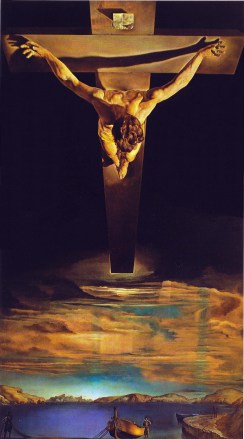
Christ of St John on the Cross Salvador DaliIn the Transfiguration, Jesus is truly beautiful, divinely beautiful. But in there is another beauty that is better than the Transfiguration. The beauty of Jesus is what you see on the cross where God in the flesh dies for the disciples and for you to save you from your sin.

It is good for us to remember who we are in relation to God. Before God, we are unworthy, groveling worms who deserve nothing good and make silly suggestions about tents. But on the cross, we see who God is relation to us. He is the God who offers Himself even unto death to redeem, forgive, and save us.

Jesus’ Transfiguration beauty is great and awesome. But His better beauty is the fact that He is the Savior – your beautiful Savior. Amen.

The peace of God, which surpasses all understanding, will guard your hearts and minds in Christ Jesus. Amen.

God Has Options – Sermon for the Second Sunday after Epiphany on John 2:1-11

Listen here.

John 2:1-11

1 On the third day there was a wedding at Cana in Galilee, and the mother of Jesus was there. 2 Jesus also was invited to the wedding with his disciples. 3 When the wine ran out, the mother of Jesus said to him, “They have no wine.” 4 And Jesus said to her, “Woman, what does this have to do with me? My hour has not yet come.” Jesus Turns Water into Wine John 25 His mother said to the servants, “Do whatever he tells you.” 6 Now there were six stone water jars there for the Jewish rites of purification, each holding twenty or thirty gallons. 7 Jesus said to the servants, “Fill the jars with water.” And they filled them up to the brim. 8 And he said to them, “Now draw some out and take it to the master of the feast.” So they took it. 9 When the master of the feast tasted the water now become wine, and did not know where it came from (though the servants who had drawn the water knew), the master of the feast called the bridegroom 10 and said to him, “Everyone serves the good wine first, and when people have become drunk, then the poor wine. But you have kept the good wine until now.” 11 This, the first of his signs, Jesus did at Cana in Galilee, and manifested his glory. And his disciples believed in him.

Grace, mercy, and peace be to you from God our Father and from our Lord and Savior, Jesus Christ. Amen.

When you think through all the miracles of Jesus, turning water into wine is probably the miracle you think is least significant. Jesus did so many other, more important, miracles. He fed the masses and healed diseases. He made the lame to walk, the blind to see, and the deaf to hear. He cast out demons and raised the dead. Turning water into wine just seems like a nifty party trick especially when you consider that Jesus did this for people who are drunk. (The word that the master of the feast uses in v. 10 is the drunkenness that Scripture warns about [1 Cor. 6:9-11; Eph. 5:18]). And yet, Scripture says this was the first sign Jesus does to manifest His glory.

Jesus, Mary, and the first few disciples are all at a wedding, and the wine runs out. Either the guests were enjoying the wine quicker than respectable people should, or the bride and groom didn’t plan well enough. Mary informs Jesus, “They have no wine.” Notice that she doesn’t ask for anything in particular. She doesn’t offer a solution. She doesn’t ask Jesus to rebuke the drunks. She gives no stipulations and doesn’t tell Jesus how to act. She simply puts the situation in front of Him, “They have no wine.”

But Jesus doesn’t seem too interested. “Woman, what does this have to do with Me? My hour has not yet come.”

But Mary doesn’t give up hope. She tells the servants, “Do whatever He tells you.” She leaves every option to Jesus believing that Jesus knows and will do what is good and right. And this is a beautiful expression of faith.

Mary has no idea what Jesus will tell them. Jesus might not tell them anything, or He might tell everyone, “Go home. The party is over.” When Jesus does tell the servants to fill the jars, He might be setting up a purification station. He might start dunking their heads in hot and cold water to sober them up like Fezzik does to Inigo in “The Princess Bride.”

Mary doesn’t know what Jesus will do, but she trusts. She believes that Jesus is compassionate. She knows that God loves weddings, celebrations, and joy. Whatever Jesus tells them to do will be good – even if it is uncomfortable and unpleasant.

This is faith. Faith expects good things from God. Faith trusts God to keep His promises, to be a loving heavenly Father. But faith also recognizes that God has options.

Open Prayer HandsWhen you or a loved one is plagued with sickness and disease you pray for healing. You pray for a clean scan. You pray that the next doctor appointment will show that everything is normal. You pray for a miracle. These are all good things to pray for.

But remember, God has options. Yes, God can heal you instantaneously. But He can also allow the disease to spread. He can allow the sickness to remain. God can even use that disease to be your death or the death of your loved one.

Does that mean that God hasn’t heard your prayer? Does that mean that God is angry with you? Does that mean that God has abandoned or failed you? Does that mean God doesn’t love you? No. Absolutely no!

You look around and see a world filled with injustice. You see people starving. You see nations at war. You see corrupt governments and politicians. So, you pray. You pray that this person would get elected or that policy will be enacted.

But if God doesn’t submit to your solution, if the wicked continue to prosper and the world stays evil, you are tempted to doubt. You start to wonder if God really cares. But does He care? Does God still love justice and hate wickedness? Yes. Absolutely, yes!

Now, should you pray for things you want? Of course. God already knows the desires of your heart. But also, be ready to accept what God gives you because it will be, it absolutely will be, a good beyond comprehension. He is your loving heavenly Father, and He withholds no good thing from His children (Ps. 84:11; Mt. 7:11).

Remember, just before He was arrested, Jesus prayed three times, “Father, let this cup pass from Me” (Mt. 26:39-44). Never in the history of mankind was there a more futile petition prayed to God. Jesus Himself said that it was necessary for Him to suffer and die (Lk. 9:22). Yet, each time He prayed to be delivered from the crucifixion, Jesus also prayed, “Your will be done.”

Let God have His options. He will always do what is good, right, and best. Don’t let Satan fill your head with his lies that God is holding out on you. Remember that God delights in your prayers. And remember that He has answered all the sickness, pain, suffering, and The Resurrectionsin of this world. He has answered them by sending His Own, beloved Son to die and rise again. He has glory for you that is unspeakable and unimaginable.
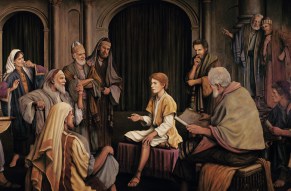
Remember, you will never suffer anything that the Resurrection cannot fix. Look for that. God has promised it. He who has promised is faithful (Heb. 10:23), and He will surely do it. Amen.

The peace of God, which surpasses all understanding, will guard your hearts and minds in Christ Jesus. Amen.

Hide and Seek – Sermon for the First Sunday after Epiphany on Luke 2:41-52

Listen here.

Luke 2:41-52

41 Now his parents went to Jerusalem every year at the Feast of the Passover. 42 And when he was twelve years old, they went up according to custom. 43 And when the feast was ended, as they were returning, the boy Jesus stayed behind in Jerusalem. His parents did not know it, 44 but supposing him to be in the group they went a day’s journey, but then they began to search for him among their relatives and acquaintances, 45 and when they did not find him, they returned to Jerusalem, searching for him. Twelve Year Old Boy Jesus in the Temple.jpg46 After three days they found him in the temple, sitting among the teachers, listening to them and asking them questions. 47 And all who heard him were amazed at his understanding and his answers. 48 And when his parents saw him, they were astonished. And his mother said to him, “Son, why have you treated us so? Behold, your father and I have been searching for you in great distress.” 49 And he said to them, “Why were you looking for me? Did you not know that I must be in my Father’s house?” 50 And they did not understand the saying that he spoke to them. 51 And he went down with them and came to Nazareth and was submissive to them. And his mother treasured up all these things in her heart. 52 And Jesus increased in wisdom and in stature and in favor with God and man.

In the name of Jesus. Amen.

The last two weeks, my wife and I have commented to each other several times how nice it is to have children that behave decently enough that we can trust them to do the right thing when we aren’t looking. They know enough that we don’t have to hover over them and make sure they aren’t playing with grandma’s decorations or sticking objects into outlets – at least until they are teenagers. We can trust our kids, who are sinners, to not get themselves into too much mischief even though our youngest is five-years-old.

How much more could Mary and Joseph trust twelve-year-old Jesus who was perfect? A perfect child is easy to ignore, and that is exactly what they did. They sinned. The guardians of God in the flesh left their twelve-year-old Son alone and unprotected in a big, dangerous city.

If you have been separated from your child even for a few minutes in a store or at a park, you know the angst and fear Mary felt. When a parent finds a lost child, the typical reaction is relief followed by anger toward the child. And yes, I speak for myself. But anger toward a curious child who wanders away is not justified. Instead, you have failed as a parent. You were not attentive enough or gave her more freedom than she could handle.

Now, there is such a thing as righteous anger. Jesus was righteously angry when He cleared the Temple with a whip (Jn. 2:14-16) and when the disciples didn’t allow the children to come to Him (Mk. 10:14). Scripture even tells us to be angry and yet not sin (Ps. 4:4; Eph. 4:26). But more often than not, our anger is an attempt to hide our own self-righteousness.

We think we know better than those in authority over us. We think we are smarter and have more common sense. We applaud our own motives while we judge others to be selfish. There are times when we might be provoked, but that doesn’t excuse us when we sin. We choose our own reactions, and we are accountable for them.

AngerBut as sinners, we never want to own our sin. Instead, we offer excuses and expect others to justify us in our sin. That is why, when someone offends you, you are more likely to tell someone else how mad you are rather than speak to the person you are angry with. Sometimes, we do get approval for our sinful actions from others. But we do ourselves no favors finding approval from others because when we do, we start to think that we can play the same game with God.

When God convicts us of sin, we try to play a deadly game of hide and seek. Adam blamed his sin of eating the fruit on Eve and, ultimately, God. But neither Eve nor God put the fruit in Adam’s mouth and made him chew and swallow. Parents blame their children for their anger when they misbehave. But whose responsibility is it to teach children right behavior? Children blame their parents if they are bored because their tablets and phones get taken away. And this silly game goes on and on.

While we might be able to hide our sin before others, it never works with God. Yes, there are times when we are hurt and are victims. But we add to our own pain with bad responses and sinful behavior. Repent.

Mary increased her sin. She sinned by not making sure Jesus was with them when they started home for Nazareth. And she added sin to sin when she lashed out at Jesus blaming Him for her fear and distress. “Why have You treated us so?” In other words, “Jesus, it’s Your fault that we had all that worry and fear the last three days.”

But twelve-year-old God in the flesh rebukes her gently. “Why were you looking for Me?” In other words, He is saying, “Didn’t you mess up? What went wrong so that I was lost in the first place?”

But even better, Jesus’ response hints at the answer. Jesus is the Savior of Mary and Joseph, and they are lost without Him. But Jesus is exactly where He it is necessary for Him to be – in the Temple. Our translation (ESV) says, “Did you not know that I must be in my Father’s house?” which is a bad translation. The word ‘house’ isn’t there at all. A better translation would be, “Did you not know that It is necessary that I am among the things of My Father?”

The Temple was God’s house where He promised to meet with His people. But Jesus isn’t referring only to the Temple. There was also the altar, the lampstands, the incense, the sacrifices, and the priests. All the stuff that cleansed God’s people from their sin. It is necessary for Jesus to be among those things. Jesus is, to put it a little crassly, one of His Father’s things. In fact, He is the Thing. He is the Temple destroyed and raised in three days. He is the Priest. He is the Sacrifice. Where else would the Savior be?

Now, the Temple building is destroyed, but the true Temple isn’t.

I mentioned earlier how we play hide and seek with God when it comes to our sin. But God also plays hide and seek with us, and He is as bad at hide and seek as a young child. Bad Hide and SeekIf you’ve ever played hide and seek with a little child, you don’t have difficulty finding her. She will hide in the same three or four spots every time. Behind a door. Under a lumpy, moving blanket on the floor with her legs sticking out. Or lying face-down on the couch with her eyes shut because if she can’t see you then you can’t see her, obviously.
Well, God hides Himself too. He isn’t in a Temple building you can see. He isn’t in the pillar of fire or cloud of smoke. Instead, He is in the waters of your Baptism. He is in the Bread and Wine of His Supper. He is in the preaching of His Gospel and in the Absolution. To the unbelieving, all those things look silly. But Jesus is there because He has promised to be. Jesus has told you where He is so that you can find Him. And where you find Him, you find life. Amen.

The peace of God, which surpasses all understanding, will guard your hearts and minds in Christ Jesus. Amen.

Who Are You? – Sermon for the Fourth Sunday of Advent on John 1:19-28

Listen here.

John 1:19–28

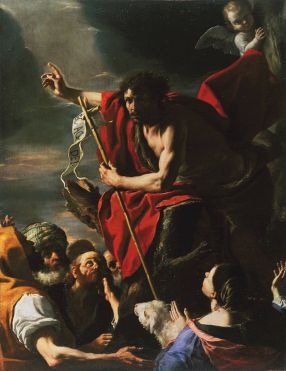
19 And this is the testimony of John, when the Jews sent priests and Levites from Jerusalem to ask him, “Who are you?” 20 He confessed, and did not deny, but confessed, “I am not the Christ.” 21 And they asked him, John the Baptizer“What then? Are you Elijah?” He said, “I am not.” “Are you the Prophet?” And he answered, “No.” 22 So they said to him, “Who are you? We need to give an answer to those who sent us. What do you say about yourself?” 23 He said,
“I am the voice of one crying out in the wilderness,
‘Make straight the way of the Lord,’
as the prophet Isaiah said.”

24 (Now they had been sent from the Pharisees.) 25 They asked him, “Then why are you baptizing, if you are neither the Christ, nor Elijah, nor the Prophet?” 26 John answered them, “I baptize with water, but among you stands one you do not know, 27 even he who comes after me, the strap of whose sandal I am not worthy to untie.” 28 These things took place in Bethany across the Jordan, where John was baptizing.

Grace, mercy, and peace be to you from God our Father and from our Lord and Savior, Jesus Christ. Amen.

Who are you, John? Well, his name means, ‘the Lord is gracious.’ John’s name was given to him not by his parents but from heaven itself (Lk. 1:13). So, when you insert the meaning of John’s name, our text opens saying, “This is the testimony, the witness, of God’s grace…”

Priests and Levites come from Jerusalem to ask John, “Who are you?”

If someone walks up to you and asks, “Who are you?” how do you answer? You maybe start with your name and tell them about your family. You talk about your job or what you are studying in school. The conversation might turn to your interests, hobbies, or pet-peeves.

John doesn’t do that. The priests and Levites come out into the wilderness to see this guy who has a large following, has his own disciples, and has baptized gobs of people from Jerusalem and Judea (Mt. 3:5-6). They want to know and so they ask, “Who are you?”

“Well, I’m not the Christ.” And you can just picture John go back to preaching and baptizing, and the priests and Levites scratching their heads.

Even though the picture we have of John in the Gospels is extremely intense, John must have been a bit of an introvert. But if we have a biblical understanding of who John is and what God had given him to do, this is a perfect answer.

John is the forerunner. He is the one sent by God to point people to God’s grace in Jesus. John is the one who prepares the way of the Lord. And when you are preparing the way for the Christ who is so great and mighty that you aren’t even worthy to untie His sandals, confessing that you aren’t Him makes a lot more sense.

Now, the priests were students of the Old Testament. They knew that the last word they had from God was that God would send Elijah (Mal. 4:5), the prophet who didn’t die but was taken into heaven. Malachi had prophesied that God would send His messenger before Him who would prepare for God’s coming into the Temple (Mal 3:1). There was even some in those days who thought that Elijah would return from heaven and be the Messiah. So, these priests and Levites ask, “Are you Elijah?” And John says, “Nope,” and goes back to baptizing.

Now, this may seem a little strange because Jesus will say that John is the Elijah whom Malachi spoke about (Mt. 11:14). But John’s denial is probably because of their misconceptions.

So, the priests and Levites think it over some more and ask, “Ok, are you the prophet?” incarnation of JesusAnd they ask this because of what we heard in our Old Testament lesson (Dt. 18:15-19). In that text, Moses told the people that God would raise up a prophet for His people from among them. And Moses made it very clear, “To Him you shall listen.”
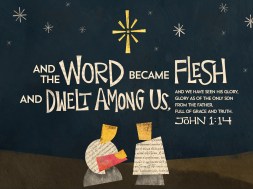
In that text, Moses reminds the people about the day when God gave the Ten Commandments on Mt. Sinai. The people were, well, terrified and asked Moses to not let God speak to them anymore. And God said, “Yeah, talking to them like that is too frightening for them. I’ll speak to them again in a way that doesn’t make them wet themselves. I’ll put my words in the mouth of my Prophet, and He will speak to the people.” God was referring to Jesus – the One who speaks God’s words of forgiveness, who makes God’s grace and truth known (Jn. 1:14). So, when John gets asked, “Are you the prophet?” again, he says, “No.”

The priests and Levites are done asking John, “Who are you?” because John isn’t interested in answering. “Fine, you won’t tell us who you are. But we need to tell the guys who sent us something. What do you say about yourself?”

And John still keeps the focus where it should be, “Listen, guys, I’m no one. I am simply a voice preaching in the wilderness preparing the way for the Lord.”

Now, what does all of this mean for us today? What can we learn from this text?

One thing we can learn from the priests and Levites is that even if someone has studied the Scriptures, it doesn’t mean they are teaching the Bible rightly. Don’t simply listen to someone’s preaching and teaching because they seem nice, can quote a verse periodically, and sound “Bibley.” Know the Bible. And if any preacher or teacher isn’t constantly pointing you to Jesus for the forgiveness of your sins, avoid them.

Second, see how John confesses right away that he is not the Christ. Don’t ever trust in yourself for your salvation. God delivers you. Like John, you are not the Christ. But thanks be to God, you don’t need to be. Jesus has come. He has delivered you from sin, death, and the devil. His birth, His death, His resurrection, and His ascension have secured a place for you to live forever with God who is full of mercy and grace.

John 1_14Finally, take a page out of John’s playbook and point people to Jesus. John has a laser-like focus on Jesus and isn’t interested in talking to people unless he is pointing them to Christ. Point others to the One who delivers them from sin. Point them to Jesus, the Lamb of God who takes away the sin of the world. Tell them that they don’t need to save themselves. Jesus saves them.

This is the testimony of John. This is the testimony of God’s grace. May that be our testimony as well. May that be our witness as we gather together and as we go out from here.

I look forward to celebrating the coming of God’s grace with you tonight as we rejoice in the incarnation of our Lord and Savior. Amen.

The peace of God, which surpasses all understanding, will guard your hearts and minds in Christ Jesus. Amen.

Comfort – Sermon for the Third Sunday in Advent on Isaiah 40:1-8

Listen here or subscribe to a podcast of these sermons on iTunes or Spreaker under the the title “Christ the King Free Lutheran.”

Isaiah 40:1-8

Comfort, comfort my people, says your God.Isaiah 40 1
Speak tenderly to Jerusalem,
and cry to her
that her warfare is ended,
that her iniquity is pardoned,
that she has received from the Lord’s hand
double for all her sins.

3 A voice cries:
“In the wilderness prepare the way of the Lord;
make straight in the desert a highway for our God.
Every valley shall be lifted up,
and every mountain and hill be made low;
the uneven ground shall become level,
and the rough places a plain.
5 And the glory of the Lord shall be revealed,
and all flesh shall see it together,
for the mouth of the Lord has spoken.”

A voice says, “Cry!”
And I said, “What shall I cry?”
All flesh is grass,
and all its beauty is like the flower of the field.
7 The grass withers, the flower fades
when the breath of the Lord blows on it;
surely the people are grass.
8 The grass withers, the flower fades,
but the word of our God will stand forever.

Grace, mercy, and peace be to you from God our Father and from our Lord and Savior, Jesus Christ. Amen.

Do these verses scare you? After all, they talk about warfare, iniquity, sins. Wilderness, desert. Mountains pressed down. Valleys raised. And you are in the midst of it all. Frail. Like grass that withers and like flowers that fade.

No. These verses don’t cause you to worry. They do not cause anxiety. You probably don’t give any of those things a second thought T because through it all you hear of the constant, abiding, eternal Word of your God who speaks comfort to you.

You heard it at the beginning of our service, but it bears repeating. “Rejoice in the Lord always; again, I will say, rejoice” (Php. 4:4). Why should you rejoice? Because God comes to comfort you. “Comfort, comfort my people, says your God.” Those seven words are enough for endless sermons.

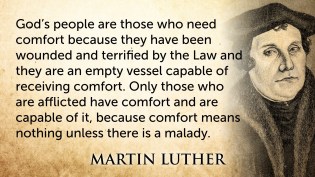
Luther Isaiah 40 ComfortThe only people who can be comforted are those who are troubled, afflicted, and uncomfortable. And God says, “Give them a double dose. Give them two shots of comfort.”

Who gets this comfort? God’s people do. That means you. You are those for whom Christ was born. You are those whom God claims as His own. You are the people for whom Christ has died. Christ is the Lamb of God who takes away the sin of the world. That means your sin is included. The Creator, Redeemer, and Sanctifier of all people calls you, “My people.”

And just in case you don’t get the fact that you are God’s people, His children, God calls Himself, “Your God.” He is not ashamed to claim you as His.

So, play the first verse of this text backwards. God says to you, “I am your God. You are My people. And I give to you comfort on top of comfort.”

The context in which these verses were written helps us see how comforting these words from God are. God tells Isaiah to tell Jerusalem that her warfare is ended. But, when Isaiah writes these words, Jerusalem isn’t even at war. Now, Babylon will come and besiege Jerusalem, and God’s people will be taken into exile. But even before it begins, God comforts His people with the promise that her warfare will end.

Advent Wreath 3God’s anger is but for a moment, and His favor is for a lifetime. Weeping may tarry for the night, but joy comes with the morning (Ps. 30:5). And even before the suffering begins God preaches comfort to His people.

That final line of v. 2 may still make you scratch your head a little bit. This talk of receiving “from the Lord’s hand double for all her sins.” What is that all about? It sounds like punishment, but it is not.

The people of Isaiah’s day didn’t pay double for their sins, not even close. The wages of sin is death. The people of Jerusalem didn’t die twice; they didn’t’ get a double dose of hell. These words are not about punishment. Instead, they are about God’s mercy and grace.

You see, God doesn’t want you to receive any of His wrath or judgment. He doesn’t want you to pay for any of your sin. He doesn’t want you to spend eternity in hell. So be comforted. Christ has come. Jesus has ended your warfare and pardoned you. You receive double from God for all your sins because your sin is punished – not on you but on Christ. And in return, you are given His righteousness, holiness, innocence, and His good works.

This is how God’s accounting works. Here is how God manages the debt of your sin. Jesus doesn’t just simply get you out of debt. He gives you an increase. Imagine if you stole from God $1,000 worth of stuff. Instead of simply forgiving the debt and calling it even, God gives you $1,000 more (Pr. David Petersen). That is how your God is for you.

God with UsHere is your hope, Christian. You have God’s comfort in all things. Heaven is on your side. Your warfare is ended. Your iniquity pardoned. And no one, not even God Himself, can charge you for your sins because His Word of comfort stands forever.

So, rejoice. Rejoice in the Lord always. Rejoice, rejoice, Emmanuel, Jesus, God with you, shall come to you. Amen.

The peace of God, which surpasses all understanding, will guard your hearts and minds in Christ Jesus. Amen.

Near – Sermon for the Second Sunday in Advent on Luke 21:25-36

Listen here.

Luke 21:25-36

25 “And there will be signs in sun and moon and stars, and on the earth distress of nations in perplexity because of the roaring of the sea and the waves, 26 people fainting with fear and with foreboding of what is coming on the world. For the powers of the heavens will be shaken. 27 And then they will see the Son of Man coming in a cloud with power and great glory. 28 Now when these things begin to take place, straighten up and raise your heads, because your redemption is drawing near.”
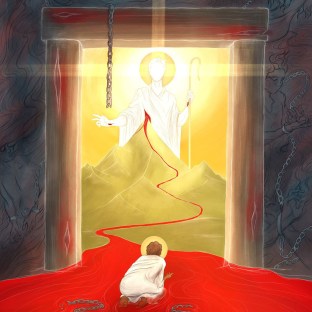
29 And he told them a parable: “Look at the fig tree, and all the trees. 30 As soon as they come out in leaf, you see for yourselves and know that the summer is already near. 31 So also, when you see these things taking place, you know that the kingdom of God is near. 32 Truly, I say to you, this generation will not pass away until all has taken place. 33 Heaven and earth will pass away, but my words will not pass away.

34 “But watch yourselves lest your hearts be weighed down with dissipation and drunkenness and cares of this life, and that day come upon you suddenly like a trap. 35 For it will come upon all who dwell on the face of the whole earth. 36 But stay awake at all times, praying that you may have strength to escape all these things that are going to take place, and to stand before the Son of Man.”

In the name of Jesus. Amen.

Imagine that you are in a large, fortified castle that is being attacked. The ground shakes and the walls creak. You hear the shouts of soldiers. Captains holler as they command their troops to band together and be steady. Swords are clashing, arrows whizzing. You feel and hear the deep boom of a battering ram repeatedly pounding the gates as dust and pebbles fall from the massive bricks of stone all around youCastle Besieged

Normally, you wouldn’t want to be anywhere near all that calamity, wreckage, and ruin. But imagine that all of this is happening while you are in the dungeon, and the king who is attacking the castle is your father coming to rescue you. So, when those gates fall and his soldiers breach the walls, you will be freed. You might still be scared when the fighting rages near you because the danger is real, but you know that the castle falling is your hope.

That is why Jesus gave us these words. Jesus tells you about the end of this world so that when all these fearful things take place, you know what is happening. The castle of this world is falling, but its fall is your rescue and deliverance.

Too often, we think that this world is all there is because this world is all we know. And when what we know starts to shake and crumble, we get worried when its end appears near.

When we see hurricanes hitting the South and California burning, when we turn on the news or open Facebook and learn about another mass shooting or the continued nuclear saber-rattling of dictators, as we hear about celebrities and politicians being accused of terrible conduct, or as we watch our society decaying because we can’t even talk to each other, we think the world is coming to an end. Well, it is.

It is, but Jesus has told us it would. Jesus said that there would be signs in creation – in the sun, moon, and stars. Jesus said there would be distress in the nations. Jesus said people would be fainting with fear and foreboding of what is coming on the world. We are seeing with our own eyes all of this taking place. But remember that we live in the dungeon of the castle of this fallen, sinful world, and Jesus, our Savior, is coming again to rescue and free us.

Christ Returns in Power and GloryRemember also that this world is not all that there is. There is more. There is still the eternal wedding feast of the Lamb in His kingdom. That is why Jesus tells us to not be afraid when these things draw near. He says, “When these things begin to take place, straighten up and raise your heads, because your redemption is drawing near.”

All the troubles of this world are signs that Jesus is coming to rescue us. These signs that bring fear to the world are already near you, and they are only going to get nearer and nearer. And for the world all these signs leave them no other option than to despair.

But for you, Christian, these signs are signs that your deliverance is drawing near, that you are about to be rescued. If the signs still cause you to worry and fear, look to God’s Word because even though heaven and earth pass away, God’s Word will never pass away.

Remember, the Word became flesh for you and for your salvation, full of grace and truth (Jn. 1:14). God’s Word to you is that He is a God merciful and gracious, slow to anger and abounding is steadfast love and faithfulness (Ex. 34:6).

After Adam and Eve fell into sin, they didn’t want to be near each other in their natural, created state, so they covered themselves in leaves. Then, when God showed up, they didn’t want to be near Him either, so they hid. But what did God say? He asked, “Where are you?” (Gen. 3:9).

It was not God’s wrath that caused Adam and Eve to hide; it was their sin. Their sin had so clouded their minds that they thought their sin had changed who God was. Sadly, we think that too. Of course, God knew where Adam and Eve were. God who created everything in mercy and had given them everything in mercy had come to them In His mercy.

God came to Adam and Eve to give them the promise of the Seed who would crush the serpent’s head. God had come to mercifully point Adam and Eve to Jesus, the Lamb slain before the foundation of the world (1 Pet. 1:19-20). God came to show them that because of His mercy, He would accept the death of another to cover their sin.

But Adam and Eve thought He was coming to destroy them.

To be sure, sin has changed us. Because of our sin, death entered into the world. Because of our sin, this creation will perish. But God has fixed it because His love and mercy for you endures forever. He has come and paid the price. He has laid down His life for you. And He is coming again for you.

cropped-jesus-lamb-slain-silver-goldSo, the castle of this world crumbles, but your redemption draws near. Though the earth gives way, though the mountains tremble and are moved into the heart of the sea (Ps. 46:2-3), according to His promise you are waiting for the new heavens and new earth in which righteousness dwells (2 Pet. 3:13).
The end is drawing near. Twilight is falling upon this world of sin. But for you believer, there is a new dawn. “The sun of righteousness shall rise with healing in its wings” (Mic. 4:2). Jesus, your Redeemer, is near, and He comes to save you so you can be with Him forever and ever.

So, straighten up. Raise your heads. Your redemption is drawing near. Amen.

The peace of God, which surpasses all understanding, will guard your hearts and minds in Christ Jesus. Amen.

God’s New Name – Sermon for the First Sunday in Advent on Jeremiah 23:5-8 & Matthew 21:1-9

Listen here.

Jeremiah 23:5-8

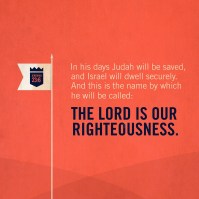
5 “Behold, the days are coming, declares the Lord, when I will raise up for David a righteous Branch, and he shall reign as king and deal wisely, and shall execute justice and righteousness in the land. 6 In his days Judah will be saved, and Israel will dwell Jeremiah 23_6 Righteousnesssecurely. And this is the name by which he will be called: ‘The Lord is our righteousness.’

7 “Therefore, behold, the days are coming, declares the Lord, when they shall no longer say, ‘As the Lord lives who brought up the people of Israel out of the land of Egypt,’ 8 but ‘As the Lord lives who brought up and led the offspring of the house of Israel out of the north country and out of all the countries where he had driven them.’ Then they shall dwell in their own land.”

Matthew 21:1–9

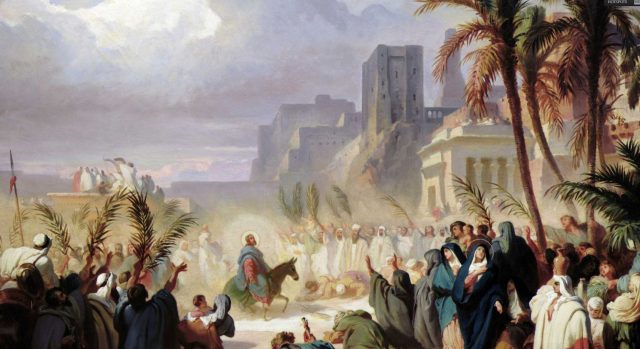
1 Now when they drew near to Jerusalem and came to Bethphage, to the Mount of Olives, then Jesus sent two disciples, 2 saying to them, “Go into the village in front of you, and immediately you will find a donkey tied, and a colt with her. Untie them and bring them to me. 3 If anyone says anything to you, you shall say, ‘The Lord needs them,’ and he will send them at once.” 4 This took place to fulfill what was spoken by the prophet, saying,

5 “Say to the daughter of Zion, ‘
Behold, your king is coming to you,
humble, and mounted on a donkey,
on a colt, the foal of a beast of burden.’”

6 The disciples went and did as Jesus had directed them. 7 They brought the donkey and the colt and put on them their cloaks, and he sat on them. 8 Most of the crowd spread their cloaks on the road, and others cut branches from the trees and spread them on the road. 9 And the crowds that went before him and that followed him were shouting,

“Hosanna to the Son of David!
Blessed is he who comes in the name of the Lord!
Hosanna in the highest!”

jesus-triumphal-entry-palm-sunday

Grace, mercy, and peace be to you from God our Father and from our Lord and Savior, Jesus Christ. Amen.

The Exodus, when God led His people out of slavery in Egypt, was the main event of salvation in the Old Testament. The slaughter of the Passover lamb whose blood protected God’s people from the angel of death. The parting of the sea to release God’s people from the land of slavery on dry ground. The guidance of cloud by day. The protection of the pillar of fire by night. And the culmination when God gave of the Law on Mt. Sinai saying, “I am the Lord your God, who brought you out of the land of Egypt, out of the house of slavery” (Ex. 20:2). All those actions were the main celebration of the people of God. So, when God’s people called upon Him, they would name Him, “the God who brought us out of land of Egypt.”

But in today’s Old Testament text (Jeremiah 23:5-8), God declares through Jeremiah that He will be called by a new name, “the Lord is our righteousness.” God would no longer be known as the one who brought His people out of the land of Egypt because greater things were coming. God would bring about a better, more lasting deliverance. The days were coming when God would raise up for David a righteous branch. This offspring of David would reign as king. He would cause God’s people to be saved, and under Him they would dwell securely.

Our Gospel text today (Matthew 21:1-9), is the beginning of that great event. Jesus rides into Jerusalem, into the royal city. He rides toward the cross – for you.

Jesus is your Lord. He is your righteousness. He rules not over a political kingdom, but over an eternal kingdom. Jesus is the Savior that the all great events of the Exodus were pointing forward to. He is your Passover Lamb; faith points toward Him and the angel of death passes over you. He is the pillar of fire who lights your way through the darkness. He is the cloud protecting you from the scorching heat of God’s wrath. He is the one who brings you out of a foreign land full of death and sin.

Jesus’ death and resurrection stands as the central event in the history of the cosmos. The cross and empty tomb is what all of Scripture pointed forward to. God coming and reconciling you back to Himself is the story and the teaching of all the Scriptures (Jn. 5:39).

That is why the Church has its own unique calendar that centers around Jesus’ death and resurrection. Having such a calendar isn’t commanded in Scripture, but it is a helpful tool prepared Advent Wreath 1for us by the saints who have come before us. Today, this first Sunday in Advent, is the beginning of a new Church year.

Advent is not about us getting ready for Christmas to meet baby Jesus in a manger. Instead it is getting us ready for Christ’s coming in glory to judge the living and the dead. And so, we repent. We repent because Jesus will come on the Last Day to judge all mankind, and sadly for most it will be a day of terror.

But not for you, Christian. Jesus, your Savior, is your righteousness. He died to make you His own. Because of what He has done, you are declared righteous. And we, as God’s people prepare for His return by receiving Him as He comes to us in His Word and as He comes here and now in Bread and Wine given to us for the forgiveness of our sins.

And so, we join our voices with those who welcomed Him into Jerusalem, “Hosanna,” which means, “Lord, save us now.” And He does because He is our righteousness. Amen.

The peace of God, which surpasses all understanding, will guard your hearts and minds in Christ Jesus. Amen.


Matthew 25:31-46 – When?

Listen here.

Matthew 25:31-46

31 “When the Son of Man comes in his glory, and all the angels with him, then he will sit on his glorious throne. 32 Before him will be gathered all the nations, and he will separate people one from another as a shepherd separates the sheep from the goats. 33 And he will place the sheep on his right, but the goats on the left. 34 Then the King will say to those on his right, ‘Come, you who are blessed by my Father, inherit the kingdom prepared for you from the foundation of the world. 35 For I was hungry and you gave me food, I was thirsty and you gave me drink, I was a stranger and you welcomed me, 36 I was naked and you clothed me, I was sick and you visited me, I was in prison and you came to me.’ 37 Then the righteous will answer him, saying, ‘Lord, when did we see you hungry and feed you, or thirsty and give you drink? 38 And when did we see you a stranger and welcome you, or naked and clothe you? 39 And when did we see you sick or in prison and visit you?’ 40 And the King will answer them, ‘Truly, I say to you, as you did it to one of the least of these my brothers, you did it to me.’

41 “Then he will say to those on his left, ‘Depart from me, you cursed, into the eternal fire prepared for the devil and his angels. 42 For I was hungry and you gave me no food, I was thirsty and you gave me no drink, 43 I was a stranger and you did not welcome me, naked and you did not clothe me, sick and in prison and you did not visit me.’ 44 Then they also will answer, saying, ‘Lord, when did we see you hungry or thirsty or a stranger or naked or sick or in prison, and did not minister to you?’ 45 Then he will answer them, saying, ‘Truly, I say to you, as you did not do it to one of the least of these, you did not do it to me.’ 46 And these will go away into eternal punishment, but the righteous into eternal life.”

Grace, mercy, and peace be to you from God our Father and from our Lord and Savior, Jesus Christ. Amen.

Dear Nikko, today you are Baptized. Today, God has placed His name upon you – Father, Son, and Holy Spirit. God has made you His child and heir. God has made you to be His sheep. So, Nikko, today you begin a life of service to your Savior. But what does this mean? How do you go about serving the God who created everything? What can you offer Him?

These are questions that we, your brothers and sisters in Christ, continue to struggle with. But the answer Nikko, and all of you here, is given to us by Jesus in this text.

But t’s not an easy text. Now, let’s be honest. If this was the only word that we had received from Jesus, then a religion of works and salvation by human effort would be the logical conclusion. Sheep do acts of kindness, and they receive heavenly praise and eternal rewards. Goats don’t, and get hell.

But Scripture is clear. We do not earn our way into God’s good graces. We don’t buy our way into eternal life. And even this text agrees. Notice, Jesus’ first words to the sheep, “Come, you who are blessed of My Father. Inherit the kingdom prepared for you from the foundation of the world.”

The sheep are sheep because God has made them sheep. They are chosen, predestined, elect. They are not sheep because they did acts of kindness or because they made a choice to be a sheep or because they worked hard to become a sheep. They are sheep for one reason – God has done it. God makes them sheep. God makes them righteous. And then, these sheep live like His sheep.
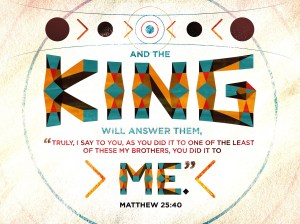
They go out into God’s creation, out into their ordinary lives, and they take care of those around them. They help the sick, feed the hungry, visit the imprisoned, and clothe the naked. They do sheep things. God’s sheep act like sheep.

And the goats? Well, the goats choose what God never planned. They choose to ignore the call of God and the cry of their fellow creatures. They reject grace and choose death. And so, in return, God gives them what they choose. They share the unintended and unsought fate of Satan and his hoard.

But not you. You are a sheep. At the Font, God made His claim on you, gave you His Name, and made you His sheep. You belong to Him.

And so you, His sheep, live like His sheep. You go out into God’s world and meet the needs of fellow creatures who cry for your help. That’s what sheep do. And when sheep do what God gives them to do, they are serving the God who made them sheep. That’s the point of the text.

The point is that what sheep do as sheep is never wasted and never lost. Because you are God’s sheep, your work, your normal daily work, is transformed. Whatever you do for the sake of those around you who need your help, whatever you do in fulfillment of your God-given vocation, whatever you do that God has given you to do is exactly the work you should be doing, and that work is never wasted and is never lost.

It’s not what makes a big splash. It’s not what makes others applaud. It’s not what earns financial perks or accolades or A’s. It’s not what makes you feel good. None of these things determine the value of the work you do. The only thing that counts is that you are doing what you have been given to do in service to others. And so, know that whatever it is you are doing, you are doing it as God’s sheep. And whatever you do as God’s sheep is holy work.

So, you get up and go to work and put in your eight, ten, or twelve hours. You prepare another report, meet another deadline. You clean the kitchen, fold the laundry, and scrub the toilet. You sit through another lecture. You study for another spelling or history or science quiz. You make your bed, clear your dishes, and straighten your shoes and coats in the entryway. You change the day’s eighth dirty diaper, prepare the days’ fourth bottle, and you wipe your child’s snotty nose because it is holy work.

As God’s sheep, all the work you do is done in service to the one who needs what God has put you there to give. God has put that needy person in your life – even if their need seems inconsequential. Everything you do can be done with a sense of awe, wonder, and gratitude at the sheer holiness of the work you are doing.

You don’t need work that is more meaningful. You don’t need a vocation that is more prestigious. You don’t need to do things that will impress those who watch or grade or evaluate. No, you just need to do what you have been given to do to care for those around you who need it. And when you do that, you are doing an incredible, holy work.

Notice, the sheep are totally unaware of all the holy works they had done. They ask Jesus, “When? When did we do all those things?” These sheep appear before Jesus with hands empty of good works. But Jesus praises and rewards them anyway.

Also notice, the goats were shocked. They ask Jesus, “When? When did we not do all those good things?” They appeared before Jesus with hands full of what they thought were their good works. But since their hands are full of their own works and merits, they had no room to  receive the mercy, grace, and forgiveness Jesus freely gives.

So, when are you doing your best works? When are you serving the God who has created, redeemed, and sanctified you? When you don’t even notice because that work seems so inconsequential and insignificant.

So, see the need of those around you. Step up and you meet that need. Parents, children, students, employers, neighbors, strangers – give them what they need from you, and you fulfill your righteous vocation.

Sheep are righteous twice. Righteous before God in your election, and righteous before creation in your vocation. You are a sheep. You live without futility because you know that your labor is never in vain. No deed is insignificant. No act is forgotten. God saves you and your labor. Neither is ever lost.

You may feel that your work is insignificant and meaningless. You may feel like what you do goes unnoticed. But it is not. You, you are a sheep. And that changes everything – everything about you and everything about what you do forever. Amen.[1]

The peace of God, which surpasses all understanding, will guard your hearts and minds in Christ Jesus. Amen.

[1] This sermon was taken largely from a sermon by Dr. Joel Biermann on this same text (https://itunes.apple.com/us/podcast/matthew-25-31-46/id463450793?i=105495219&mt=2).