Hebrews 9:11-15
11 But when Christ appeared as a high priest of the good things that have come, then through the greater and more perfect tent (not made with hands, that is, not of this creation) 12 he entered once for all into the holy places, not by means of the blood of goats and calves but by means of his own blood, thus securing an eternal redemption. 13 For if the blood of goats and bulls, and the sprinkling of defiled persons with the ashes of a heifer, sanctify for the purification of the flesh, 14 how much more will the blood of Christ, who through the eternal Spirit offered himself without blemish to God, purify our conscience from dead works to serve the living God.
15 Therefore he is the mediator of a new covenant, so that those who are called may receive the promised eternal inheritance, since a death has occurred that redeems them from the transgressions committed under the first covenant.
In the name of Jesus. Amen.
The first ten verses of Hebrews 9, which lead up to this text here, describe the décor of the Tabernacle, how it had a Holy Place with a golden lampstand, the table, and the Bread of the Presence. Beyond the Holy Place was the Most Holy Place, the Holy of Holies, where there was an altar of incense and the Ark of the Covenant covered in gold.
Inside the Ark was a golden urn holding some of the manna, Aaron’s staff which had budded, and, most importantly, the tablets of stone on which was written the Ten Commandments. Standing over the Ark were the golden cherubim overshadowing the mercy seat which was the exact place where God said He would meet with His people. Only high priest could enter that Holy of Holies, and he only went in one day each year – the Day of Atonement. The high priest would actually go into the Holy of Holies three times that day. First, he would enter to fill the place with the smoke of incense creating a smoky barrier between himself and God’s holiness. He would enter a second time to offer the blood of a bull for his own sins. And finally he would enter, to sprinkle the blood of a goat on the Ark for the sins of the people.
Now, there are all sorts of details that we could go into, but for the sake of time today, we’re going to focus on the blood of the goat that was sprinkled on the Ark and the tablets of the Ten Commandments that were inside the Ark. The blood of that sacrifice created a barrier between God’s Law inside the Ark and the people outside the Tabernacle. That blood, according to God, was what was required for sins.
To get an idea of what was happening on the Day of Atonement, I’d like to give you a picture from a friend of mine. Imagine a huge stone wall before the presence of God in heaven. Every time you sin, a chisel etches into that rock recording how you have broken God’s Commandments. Every time you covet the things that God has not given you, tink, tink, tink, your sin is engraved in heaven. Every time you gossip, spread rumors, or speak poorly of your neighbor, tink, tink, tink. Every time you take was is not yours, hold back something that could help your neighbor, or act selfishly or ungenerously, tink, tink, tink. Every lustful thought, every filthy word, every unchaste deed, tink, tink, tink. Every ounce of your anger is recorded there on that wall, every time you disobey your parents or rebel against the authorities God has placed over you.
This is the record of sins against your neighbor, but your sins against God cry out even more. Missing church, despising God’s Word, neglecting your prayers, and fearing and loving and trusting in everything but God, all of this comes before the Father and cries out for justice and punishment. This is the accusing work of the Ten Commandments, they accuse us, and you and I stand guilty.
Now, it doesn’t really matter if you feel guilty. You are guilty. And in fact, if you aren’t concerned about those sins, that’s additional marks against you. When a convicted criminal has no remorse or feelings of guilt for the sins for which he’s guilty, it is good and right for the punishment to be harsher.
What the high priest was doing when he entered into the Holy of Holies on the Day of Atonement was offering the blood of a goat for the sins of the people. Every year the blood of that sacrifice preached to the people that God accepted the death of another in their place. But the problem was that it was that blood, that sacrifice, needed to be annually refreshed and touched up with another sacrifice. So, every Day of Atonement, the high priest would go through all of it again.
But now, our text would have us imagine that Jesus, our Great High Priest, has come, not into the Tabernacle, but into the heavenly courtroom. Jesus still has the holes in His hands, feet, and side. And Jesus carries a bowl full of blood, but it isn’t the blood of a goat. Instead, it is His own blood, drained from His body as He suffered and died on the cross. He takes that blood to this massive stone wall with the chiseled record of all of your sins, and He covers the whole wall with His blood. All those marks are smeared with His blood. And now, when the Father looks there, the record of your sin is gone. instead, God sees the blood of Jesus, and not one bit of the evidence of your sins is visible. Every sin is died for. Everything you have done that deserves God’s punishment has been covered by the blood of Jesus.
That’s the picture of this text. Look again at v. 12, “[Jesus] entered once for all into the holy places, not by means of the blood of goats and calves but by means of His own blood, thus securing an eternal redemption.” Your sins are forgiven, and the perfect righteousness of Jesus is given to you. And this transaction happened, not in a tent made by hands. Instead, this transaction took place once for all eternity in the reality of the heavenly courtroom, the temple not made with hands.
Jesus took your place. He endured the wrath of God that you and I deserve. Because He did this, He secured an eternal redemption for you. His sacrifice, His shed blood, is presented before God the Father who, according to Jesus in our Gospel lesson (Jn. 8:42-59, see v. 50), is the Judge, and God Himself declares you to be not guilty. Because of what Jesus, your Savior, has done, you have an eternal redemption. And, according to Jesus, as you keep and believe His Word, you will never taste death (Jn. 8:52).
Now, the text plainly says that you have an eternal redemption. Unending, ceaseless, endless – it’s an eternal redemption. But there is another statement here that shows the extent of this redemption. Look again at v. 13-14 and, as you hear this, think back to the sacrificial worship of the Old Testament, “For if the blood of goats and bulls, and the sprinkling of defiled persons with the ashes of a heifer, sanctify (make holy) for the purification of the flesh, how much more will the blood of Christ, who through the eternal Spirit offered Himself without blemish to God, purify our conscience from…” Now, look carefully at what the text says here. “How much more will the blood of Christ, purify our conscience from dead works.”
You would expect the text to say that Jesus’ blood purifies our conscience from ‘sin’ or ‘iniquities’ or ‘transgressions,’ but it doesn’t say that. The text could have said that because that is also true. The blood of Jesus purifies you from every sin that troubles your conscience. But it says that it purifies your conscience from dead works. What are those?
We know that our sins alienate us from God and make God angry with us. But we think that the opposite is true, that God is pleased with us because of our good works. We wrongly think that a few good works here and there earn us brownie points with God. No. Nothing helps us but the blood of Jesus. His sacrifice on the cross cleanses us even from our good works which are, according to this text, dead works.
Our sinful flesh is stuck on the wrong idea that we can cleanse ourselves from sin by making up for those sins by doing good works. That is a dangerous place to be. We cannot atone for our sins. The only hope we have for a clean conscience is the blood of Jesus. He died for your sins, and He died for your dead works that will never make up for the ways in which you have failed.
Because Jesus has offered Himself as the sacrifice for our sins, He is the mediator of a new covenant which He instituted in His Last Supper. When you come in a few minutes to this altar, Jesus gives you that blood which wipes away your sins. The blood that the priests offered in the Old Testament was sprinkled on the altar, but Jesus is about to fill you His life-giving blood.
Christ now invites you to come and receive this eternal redemption, and you will receive the promised, eternal inheritance. Come and receive so that you may have a purified, clean conscience now and through eternity. Amen.
The peace of God, which surpasses all understanding, will guard your hearts and minds in Christ Jesus. Amen.
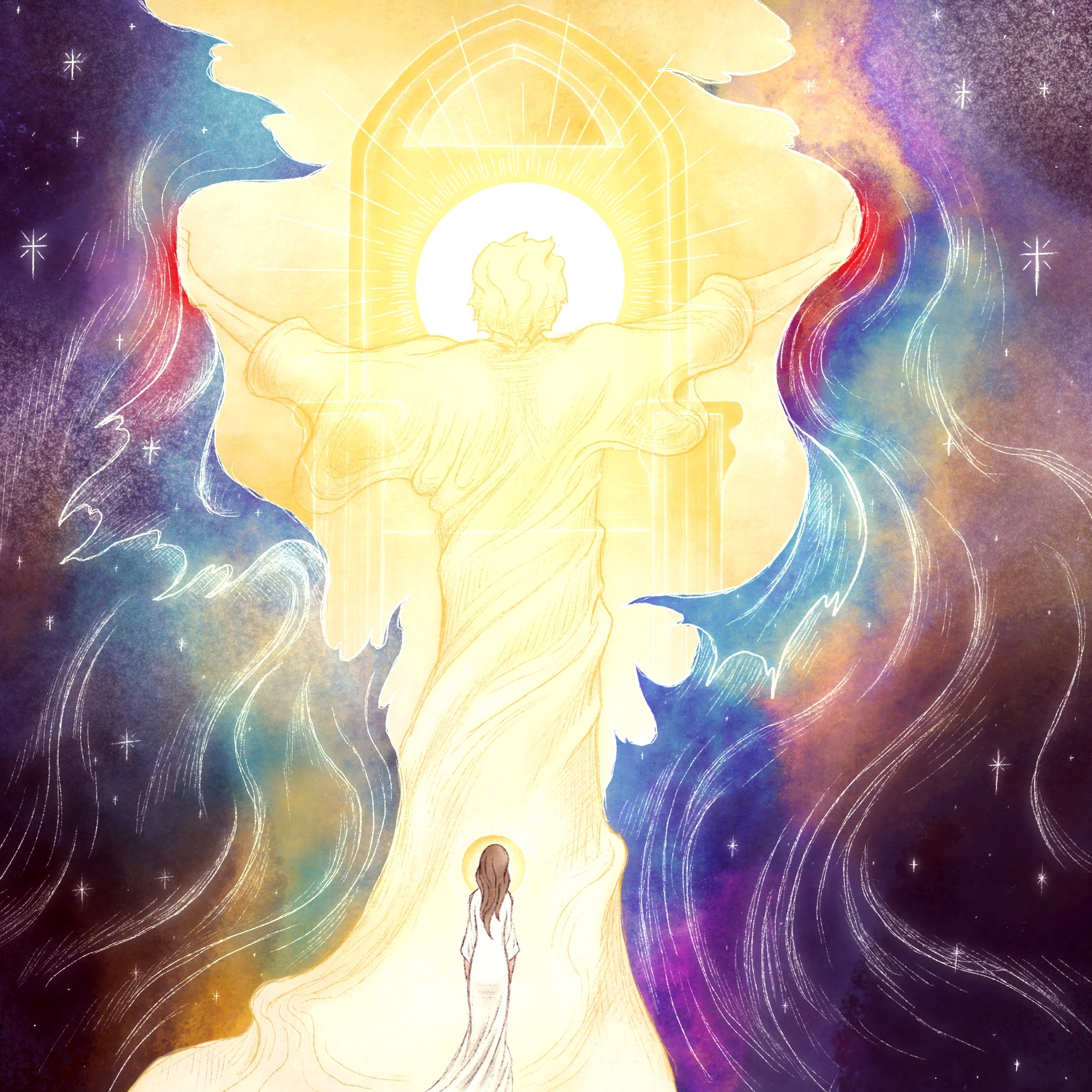 In fact, if you go back to Hebrews 8[:5], we are told that all the instructions that Moses received about the services, sacrifices, and festivals even the Tabernacle itself all served as copies and shadows of the heavenly things. A few verses after our text here (Heb. 9:23), we are told that the earthly copies of the heavenly things were given by God, but they needed to be purified with all those rites and rituals that God gave to Moses and Aaron.
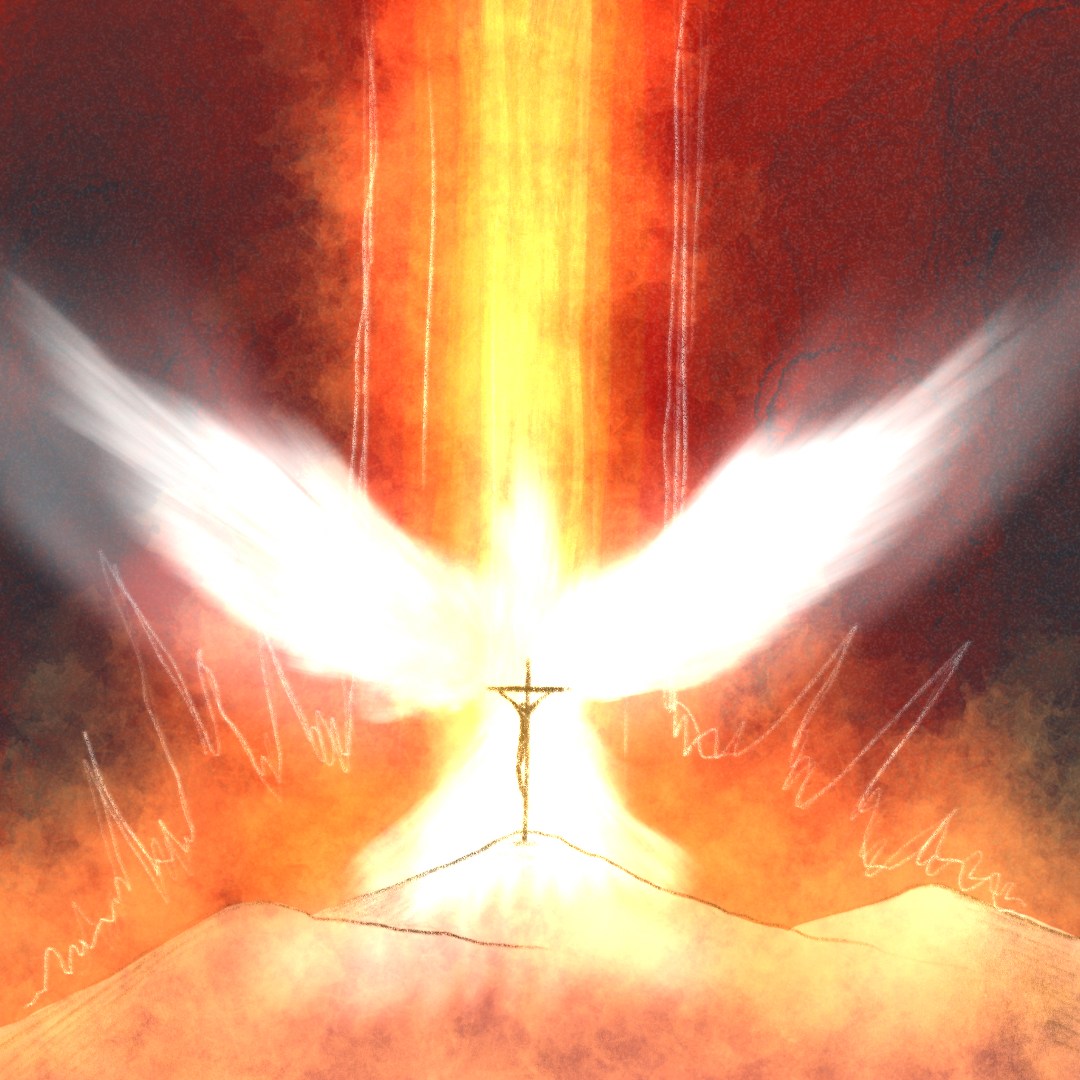 And now that Jesus, our Savior and Great High Priest, has come, all the shadows and copies are done away with. Now, because of Christ’s death and resurrection, we know that our prayers are acceptable and rise up to God. Now, when we don’t know how to pray as we ought, the Holy Spirit intercedes for us with groanings too deep for words (Ro. 8:26). Now that Jesus has come, we don’t need the bread of the presence because the Holy Spirit has taken up residence and dwells in your heart (1 Cor. 6:19). Now that Christ has come and shed His blood and brought His blood into the heavenly Holy of Holies, your conscience has been cleansed and purified to serve the living God (Heb. 9:14).
 Pastorsamwise
You must be logged in to post a comment.