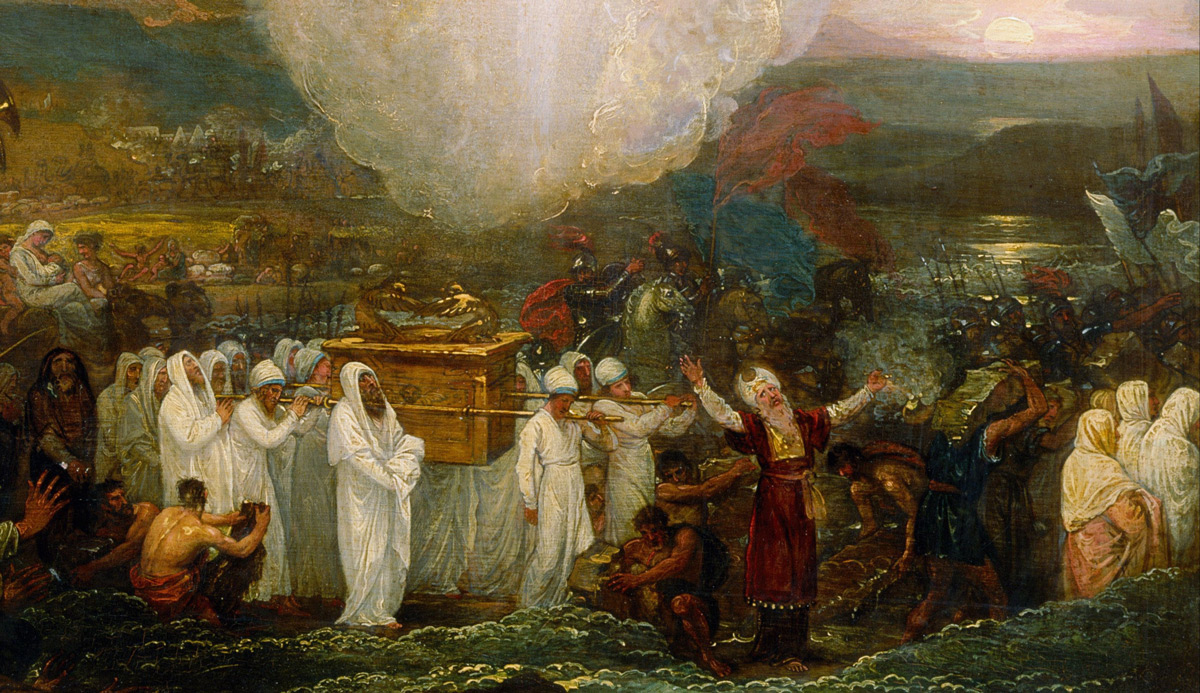
The Clash – Sermon on Matthew 11:12-19 for Reformation Sunday

Matthew 11:12-19

12 From the days of John the Baptist until now the kingdom of heaven has suffered violence, and the violent take it by force. 13 For all the Prophets and the Law prophesied until John, 14 and if you are willing to accept it, he is Elijah who is to come. 15 He who has ears to hear, let him hear.

16 “But to what shall I compare this generation? It is like children sitting in the marketplaces and calling to their playmates,

17 “‘We played the flute for you, and you did not dance; 
we sang a dirge, and you did not mourn.’

18 For John came neither eating nor drinking, and they say, ‘He has a demon.’ 19 The Son of Man came eating and drinking, and they say, ‘Look at him! A glutton and a drunkard, a friend of tax collectors and sinners!’ Yet wisdom is justified by her deeds.”

In the name of Jesus. Amen.

Do you believe that God uses the plans and actions of violent men to accomplish His will? I hope you can answer, “Yes.”

We don’t normally think of it this way, but the cross is the greatest example of God’s will being accomplished through the actions of evil men. The very event that won your salvation was the height of mankind’s rebellion against God. The world planned, plotted, and schemed to put the Son of God to death (Mt. 12:14Mk. 3:6Jn. 11:47-53). Christ’s death on the cross was the most unjust act ever committed by mankind. Jesus, the only person to ever live a righteous and sinless life, was condemned and crucified. And it was through Christ’s death that death itself was undone. There, on the cross, God won your salvation.

So, if God can accomplish your salvation through the actions of violent men – which He has, He absolutely has – then you don’t ever have to fear any evil in this world. The plans and actions of evil men never stop God and His will. When we see all the violence, upheaval, and opposition in this world, it can be easy to fall into despair and think that God isn’t in control. But He is – no question He is. Christ is still ruling and reigning over all things. And God’s will is still done.

Still today, God destroys and brings to nothing every evil council and purpose of the devil, the world, and our own flesh. His Name is still hallowed. His kingdom still comes. God continues to strengthen and keep us steadfast in His Word and in faith. This is His good and gracious will that we pray would be done in the Lord’s Prayer.

So, believer, every night when you go to bed, you can close your eyes in the peace and comfort of knowing that your sins are forgiven because of what Christ has done. Even as the world constantly clashes against the kingdom of heaven, you have God’s comfort and peace that surpasses all understanding (Php. 4:7).

Ever since the Fall into sin, there has been a clash between fallen humanity and God. This clash is rightly described when theologians make a distinction between believers on earth and believers in heaven. Christian, as long as you are in this world, you are part of the “Church militant,” and when you are removed from this world – either when you die or when Christ returns – you are transferred to the “Church triumphant.”

In this text, Jesus teaches us how to live as members of the “Church militant.” And this is important and helpful instruction because the clash between this fallen world and you citizens of the kingdom of heaven, that clash can make us want to fight back against the world. But you don’t need to fight because Jesus has already won the war.

So, in this text – which is not an easy text – Christ helps you understand how to live when you face violence and opposition in this world. There are two portions of this text that I’ve always found confusing and somewhat difficult. The first deals with the violence the Church faces in this world. The second deals with the world’s opposition and ridicule of the Church. We’ll think our way through each of them; then, we’ll see how Jesus tells us to respond.

The first difficult part is right away in v. 12 where Jesus addresses the violence that faces the Church. Our Lord says, “From the days of John the Baptist until now the kingdom of heaven has suffered violence,” no problems so far. It’s what comes next, “and the violent take it by force.” What is Jesus talking about? Do the violent seize control of the kingdom? No. There’s something else going on. But we have to wade through all of this to get the full picture.

Both John the Baptist and Jesus came preaching the exact same message “Repent, for the kingdom of heaven is at hand” (Mt. 3:24:17). And the world didn’t like that message. It turns out – surprise, surprise – that people who don’t think they’re sinners, they don’t want to be told to repent. So, they violently attacked the messengers. John’s preaching got him arrested, and soon after this text, John will be beheaded (Mt. 14:1-12). At this point in Matthew’s gospel, Jesus is still a couple of years from being crucified, but it’s coming.

That violence against the kingdom of heaven that John and Jesus faced continues to this day. It’s happening all over the world – even here in our country. The shootings at Annunciation School in Minneapolis, the Christian school in Nashville, Charlie Kirk’s martyrdom, and many other events are part of this clash. Today, in North Korea, China, Egypt, and all around the world, Christians are being violently persecuted. Just this week, I saw horrifying statistics from Nigeria. Since the year 2000, 62,000 Christians have been martyred there, and already in 2025, 7,000 have been martyred. Yes, the kingdom of heaven still suffers violence. Lord, have mercy.

So, what does Jesus mean with that last phrase, “the violent take it by force”? Again, it isn’t that the violent gain possession or ownership or control of the kingdom of heaven by force. Instead, they try to take it away by force. In other words, this world actively tries to prevent the coming of God’s kingdom. But they will never succeed.

The second part of the text that can be confusing starts in v. 16 where Jesus is trying to figure out how to describe ‘this generation.’ “To what shall I compare this generation? It is like children sitting in the marketplaces and calling to their playmates, ‘We played the flute for you, and you did not dance. We sang a dirge, and you did not mourn.’”

In a way, this is a little parable. The generation Jesus is speaking about isn’t just the generation of His time. The children in the marketplace are the same violent people Jesus talked about in v. 12 – it’s the generation of sinners. Sinners aren’t happy with anything. Basically, they say, “We were happy, but you weren’t happy with us. We were sad, and you didn’t get sad with us.” And Jesus goes on to explain that little poem to illustrate how the world reacts to the kingdom of heaven. The explanation is seen in how this generation reacted to John the Baptizer and to Jesus Himself.

In short, neither John nor Jesus followed the world. John wouldn’t dance when the world wanted him to. He came eating locusts and honey, and he wasn’t feasting with them because he was too busy calling them to repentance. They thought John’s preaching was too pessimistic. They figured things weren’t as bad as John said they were. So, they tried to dismiss John saying, “You won’t dance to our flute? You must have a demon.”

But then Jesus came, and He did eat and drink. He went to many feasts throughout His ministry. He went to dinners at Pharisees’ houses (Lk. 7:36ff14:1ff). Jesus feasted with tax collectors and sinners (Mk. 2:15-17Mt. 9:10-13Lk. 15:1), and the world didn’t like that either. Christ wouldn’t mourn during their dirges and funeral songs. So, just like they did with John, they tried to dismiss Jesus saying, “You’re a glutton, a drunkard,” (both of which are ridiculous accusations), “a friend of tax collectors and sinners.”

In other words, dear saints, you can live a life of fasting that avoids all of the pleasures this world seeks because you know this world is not all there is. And people will respond by calling you evil and demonic. You can also live a life where you participate and eat and drink, and people will say that you are a glutton and a drunkard.

So, Jesus is saying you can’t win with the world. Yes, there is a time for fasting and saying that the things of this world don’t matter. And there is also a time for feasting and enjoying the fullness of the gifts God has given. But it doesn’t matter to the world if you fast or feast, the world is going to hate you – not because of your eating and drinking or your abstaining. The world is going to hate you, dear saints, simply because you are a citizen of the kingdom of heaven.

So, what should our response be? How do we live in a generation that violently attacks and opposes the Gospel?

Well, first, recognize that the kingdom of heaven advances through the simple, unimpressive Word of God that can be attacked and resisted. The kingdom of God advances through the preaching of the Gospel because faith comes by hearing (Ro. 10:17). In other words, listen. Jesus puts it this way, “He who has ears to hear, let him hear” (Mt. 11:15).

One of the most important lessons from the Reformation is that we don’t need to talk as much as we need to listen. Christians are first and foremost hearers. You hear the Law which stops your mouth and makes you silently accountable to God (Ro. 3:19). Stop making excuses for your sin and be silent before God. Then, hear the Gospel, which forgives all your sin.

The other response to the violence and opposition from this generation is to patiently wait. Jesus says, “Wisdom is justified by her deeds” (Mt. 11:19). That means that the day is coming when your faith and your identity as a member of the kingdom will be proven true. No one will be able to deny the wisdom you had in confessing your sin and believing in Jesus. That right fear of the Lord is the beginning of wisdom (Pr. 9:10).

Christian, you do not need to try to make God’s kingdom come. God is, and He will, bring about the coming of His kingdom. In the meantime, He arms you with the sword of His Word (Eph. 6:17). The sword of God’s Word doesn’t function like any other sword because it is the sword that makes the wounded whole. Use that sword to heal this broken generation. And pray. Pray, “Lord, keep us steadfast in Your Word.”

When this world is filled with wickedness, when violence surrounds you, when the evil people oppose you, and when all of this is clashing down around you, remember what Jesus says to you. “Fear not, little flock, for it is your Father’s good pleasure to give you the kingdom” (Lk. 12:32). Alleluia! Amen.

The peace of God, which surpasses all understanding, will guard your hearts and minds in Christ Jesus (Php. 4:7). Amen.

Children of Light – Sermon on Ephesians 5:1-9 for the Third Sunday of Lent

Ephesians 5:1-9

1 Therefore be imitators of God, as beloved children. 2 And walk in love, as Christ loved us and gave himself up for us, a fragrant offering and sacrifice to God. 

3 But sexual immorality and all impurity or covetousness must not even be named among you, as is proper among saints. 4 Let there be no filthiness nor foolish talk nor crude joking, which are out of place, but instead let there be thanksgiving. 5 For you may be sure of this, that everyone who is sexually immoral or impure, or who is covetous (that is, an idolater), has no inheritance in the kingdom of Christ and God. 6 Let no one deceive you with empty words, for because of these things the wrath of God comes upon the sons of disobedience. 7 Therefore do not become partners with them; 8 for at one time you were darkness, but now you are light in the Lord. Walk as children of light 9 (for the fruit of light is found in all that is good and right and true),

In the name of Jesus. Amen.

You’ve probably all heard the phrase, “Nothing good happens after ___ o’clock.” If a news anchor said it, the time might have been midnight or 2 AM. If it was one of your parents, it was probably 10:00. Kids, if you ever hear that phrase from your parents or grandparents, they know what they’re talking about. When darkness falls, it is a lot more likely that evil things are going to happen.

Darkness is the favorite blanket of evil, and we know this instinctively. It’s why kids go into their parents’ room in the middle of the night and cry about monsters under the bed or whatever other impossible things kids imagine. Everyone has a keen sense of vulnerability in the dark. Even adults often have their bleakest thoughts when the world is dark. The thoughts that wake me up at 3 AM are never the best, brightest, or most hopeful ones.

In a wonderful way, Scripture repeatedly gives a picture of the Savior as the bright Morning Star (Is. 60:1-3; Mal. 4:2; 2 Pet. 1:19; Rev. 2:28, 22:16). Or, in a similar vein, Scripture says that, when Jesus comes, a new day dawns (Ps. 84:11; Ro. 13:12). In the first chapter of Luke’s Gospel, the coming of Jesus is described as the “sunrise from on high” that “give[s] light to those who sit in darkness and in the shadow of death,” and His coming, “guide[s] our feet into the way of peace” (Lk. 1:78-79).

Dear saints, the picture Scripture gives us is that all of creation has changed because Christ has come. The darkness has been dispelled, put to flight, and broken up. Jesus hints at this in our Gospel reading (Lk. 11:14-28). Christ says that He casts out demons by the finger of God, and His power to do that is proof that the kingdom of God has come upon us (Lk. 11:20).

Because of Jesus’ resurrection, there is a new day – the day that the Lord has made. Because He has made it, we rejoice and are glad in it (Ps. 118:24). And this new day will never end. Believer, this changes you, and it changes how you think about the world. The fact that today and every other day of your life is the day that the Lord has made, the things in front of you that are ominous, scary, and threatening are all less intimidating. Yes, they are still threats, but you know that they are all defeated threats.

All three of our readings today are about spiritual warfare, about the battle between the kingdom of darkness and Christ’s kingdom of light. It’s obvious in both the Old Testament (Ex. 8:16-24) and Gospel (Lk. 11:14-28). In our Gospel reading, Jesus tells us know how the kingdom of Satan operates, and our Lord comforts us because He tells us how He, our Savior and Champion, has defeated sin, death, and the devil.

And in the Old Testament reading, we heard how Pharaoh’s magicians recognized that the finger of God was at work when they couldn’t replicate the gnats that swarmed throughout Egypt (Ex. 8:18-19). Those evil, demonic sorcerers were able to duplicate the sign God did through Moses of turning his staff into a serpent (Ex. 7:11-12), but they failed to do the smaller thing of reproducing gnats.

The last time these texts came up, I had fully intended to preach about the folly of the kingdom of darkness because that folly is on full display through Pharaoh and his magicians. Their whole country is completely overrun with gnats, but they still try to duplicate the sign done through Moses. That text shows how self-destructive the kingdom of Satan is. “Our whole nation is filled with these gnats.” “I know what we should do; let’s try to make more of them.”

But today, rather than seeing how the kingdom of darkness works or how self-destructive it is, I decided to preach on this Epistle reading because it gives us the strategy of how to fight back against the forces of darkness. Throughout Scripture you are given several ways to fight evil, but this text gives you one simple weapon – thankfulness and thanksgiving.

Notice that v. 3 gives us a list of things we are to not only avoid we aren’t even to name them. That list is sexual immorality, impurity, and covetousness. Then in v. 5, that list is repeated when we’re told that the sexually immoral, the impure, and those who are covetous have no inheritance in the kingdom of Christ and God.

To contrast that twice-repeated list, Paul mentions only one thing here – thanksgiving. The beloved children of God who walk in love as children of light have thanksgiving on their lips, not filthiness or foolish talk or crude joking.

Thanksgiving is one of the fruits of the Spirit (Gal. 5:22-23). And thanksgiving is one of your best weapons against the darkness from which you have been rescued. When thanksgiving is on your lips, the temptations and sins you face are much easier to fight because those things become revolting.

Think back to the Garden of Eden and how the devil tempted our first parents to fall into sin. “Can’t you eat from any tree? If you eat from this one that God told you not to eat from, you will be like God. Don’t you want to be like Him?” (Gen. 3:1, 5). Instead of being thankful that God had given all the other trees for food, instead of being thankful that God had already made created them in His image (Gen. 1:27), Adam and Eve coveted (Gen. 3:6). The fruit of the forbidden tree looked good, and it was desirable. Because of that coveting, because of that wrong desire to be more than God had already made them to be, they took of the fruit and ate and plunged all of creation into the darkness of sin and death.

Coveting is a sin, but it is a sin that rarely registers in our conscience. We pass off coveting as nothing because we think it doesn’t hurt anyone else. That is so wrong. Here coveting is equated with idolatry (Eph. 5:5). Coveting is the first step into sin. To put it another way, every time you sin, you first covet and idolize yourself. Coveting is basically saying, “God, you got it wrong. You messed up. That thing over there,” whatever it is, “should be here. It should be mine.”

Whenever you sin, you break at least three commandments. Every time you sin, you first covet which is nothing less than idolizing yourself. Then you commit adultery, steal, lie, take the Lord’s name in vain, etc. The way to fight against this is to give thanks instead of coveting and having those false desires.

Imagine for just a minute if thankfulness had replaced Adam and Eve’s coveting. They would have realized, “We aren’t hungry; the entire world is our pantry! Thank you, God. We are already created in God’s image and are exactly what God wants us to be. Thank you, God, that we are created in Your image and that you have declared that we are ‘very good’” (Gen. 1:31).

Dear saints, Scripture gives you several ways to fight against the devil and the darkness. But today, you children of light, this text gives you one simple, specific weapon to fight back against the forces of evil, and that is thanksgiving.

You husbands, the next time you are tempted with lust, pause. Take a moment to give thanks to God for your wife. Thank God for uniting the two of you in the bond of holy marriage (Mt. 19:6). You wives, the next time you are tempted to complain to someone about your husband, take a moment to give thanks to God for him and all the ways he cares for you and your family. Children, the next time you are tempted to disobey your parents, take a moment to give thanks to God for all that your parents provide to you and how they protect you.

Dear saints, the light of Christ has shined upon you, and because of that you are now children of the light. You used to be darkness, and notice the way Eph. 5:8 says that. It isn’t just that you were in darkness. No. You were darkness itself. But now that you are God’s children, you are light in the Lord, so now you walk as children of the light. And as children of the light, you produce the fruit of light which is found in all that is good and right and true.

You give thanks to God for all the good He has given you. You give thanks to God, and it is right to do so because He has truly blessed you because He has given Himself up for you as a fragrant offering and sacrifice.

God has forgiven you (Eph 4:32). He has made this new day of light and has shined His light into you. So, rejoice, be glad in this day, and give thanks. And as you give thanks, the darkness flees. Amen.

The peace of God, which surpasses all understanding, will guard your hearts and minds in Christ Jesus. Amen.

The Battle – Sermon on Revelation 12:7-12 for the feast of St. Michael & All Angels

Revelation 12:7–12

7 Now war arose in heaven, Michael and his angels fighting against the dragon. And the dragon and his angels fought back, 8 but he was defeated, and there was no longer any place for them in heaven. 9 And the great dragon was thrown down, that ancient serpent, who is called the devil and Satan, the deceiver of the whole world—he was thrown down to the earth, and his angels were thrown down with him. 10 And I heard a loud voice in heaven, saying, “Now the salvation and the power and the kingdom of our God and the authority of his Christ have come, for the accuser of our brothers has been thrown down, who accuses them day and night before our God. 11 And they have conquered him by the blood of the Lamb and by the word of their testimony, for they loved not their lives even unto death. 12 Therefore, rejoice, O heavens and you who dwell in them! But woe to you, O earth and sea, for the devil has come down to you in great wrath, because he knows that his time is short!”

In the name of Jesus. Amen.

“Out of sight, out of mind.” Sometimes, you might use that phrase as an excuse, sometimes as a reason to procrastinate. It’s really easy to forget things that aren’t right in front of us. So, we make lists, set reminders on our phones, and put events on the calendar. Well, the Church has done exactly that for us today, September 29th, as we remember the angel, St. Michael, and all angels. Today, we remember that God has created all things, visible and invisible.

The Bible teaches a lot about angels, but it doesn’t answer every question we might have about angels and demons (which are just fallen angels). There’s a lot of garbage out there when it comes to angels. Be very discerning about what you hear, see, and read about angels. People have found that they can make a lot of money off the curiosity surrounding angels and demons. If you’re interested after the service, I can print a couple of my older sermons from a few years ago that overview what the Bible teaches about angels and demons. Today, as we consider this Epistle reading (Rev. 12:7-12), we’re mainly going to focus on the invisible, unseen battle that is currently raging around us. It’s something we need to see and recognize. We want it in our sight and on our mind because, through His Word, God gives us tremendous comfort in the midst of this battle.

The whole chapter of Revelation 12 teaches us about something that has happened and continues right now all around us. I know a lot of people think the events of Revelation are in the future, but that’s not necessarily the case. Some Christians will disagree with that. I promise I’ll show from Scripture why I firmly believe that Rev. 12 is both past and current and will continue until Christ returns.

To get a bit of context for what we heard, Rev. 12 starts with a scene of a pregnant woman who is about to give birth. The text says that her Child will rule the nations with a rod of iron (Rev. 12:5). Psalm 2 uses this same language and imagery of Jesus. In Psalm 2, the nations are raging and trying to get out from under God’s rule. In response, God sets His King and Son on the throne of Zion (Ps. 2:6-8), and He rules with a rod of iron and dashes those rebellious, earthly authorities like a clay pot (Ps. 2:9). Who is this woman about to give birth? As Christians, we know that the virgin Mary is the one who gave birth to Jesus, but this text isn’t referring to Mary. Here in Rev. 12, this woman is representative of the whole Church, all believers. The reason I say that will become clearer in a bit, so stick with me, please.

In Rev. 12 we are told that a great red dragon – in other words, the devil – is waiting there to devour Jesus immediately after He is born. But Jesus is caught up to God and to His throne (Rev. 12:5). Basically, John skips over Christ’s entire life, ministry, death, resurrection, and ascension. He does this to set up what happens to the Church. After she gives birth, the woman (who, again, is believers) flees into the wilderness where God has prepared a place for her to be protected and nourished. That’s the context for our reading.

Now, to the first verse of our text. There is war in heaven. That sounds weird. It’s heaven – a place where there is no more sorrow, crying, or pain (Rev. 21:4) – but this is what John sees. And think about this, the devil wasn’t able to devour Christ in a broken world. Not when He was an infant, not during Jesus’ life, not even in Jesus’ crucifixion and death. But he still tries to attack Jesus in heaven. Anyone with a half a brain knows that strategy isn’t going to work, but the devil’s hatred of God makes him absolutely foolish when it comes to battle strategy. Satan thinks he’ll fight to take Jesus off His heavenly throne, but the devil doesn’t get very far. King Jesus doesn’t even have to fight Himself. Instead, He sends His archangel Michael (see Jd. 9) who defeats the devil and permanently expels that worm and his angels (i.e. the demons) from heaven. God created Michael for that very purpose, and King Jesus doesn’t rob Michael of that glory. God lets Michael do his job of throwing the ancient serpent out of heaven.

Then, we hear this loud voice. Let’s walk through what this voice says. “Now the salvation and the power and the kingdom of our God and the authority of His Christ have come” (Rev. 12:10a) Think through this. We have salvation, right? Yes, of course we do! Jesus has the power and authority over all creation, right? Yes, He does! Before He ascends, Christ says, “All authority in heaven and on earth has been given to Me” (Mt. 28:18). Despite what we might experience, has the kingdom of God come? Yes! Jesus says when He casts out demons by the finger of God, that means that the kingdom of God has come (Lk. 11:20).

So, what does the loud voice from heaven say next? “The accuser of our brothers has been thrown down, who accuses them day and night before our God” (Rev. 12:10b). Remember our Gospel reading (Lk. 10:17-20). Jesus had sent the 72 disciples out to preach the arrival of the kingdom of God (Lk. 10:1-9). Our text is Jesus’ response when they return. He says that through their ministry He, “saw Satan fall like lightning from heaven” (Lk. 10:18). A couple weeks ago, we saw from Job how the devil was in heaven with the other angels accusing Job of loving God because God was nice to him (Job 1:9; 2:4-5). The devil wasn’t content to only accuse Job; he was accusing all Christians, and heaven was sick and tired of it. But now, Satan can’t do that anymore because Michael has thrown him out of heaven and God’s presence. Now, we need to hear a little more from the heavenly voice.

“And they have conquered him by the blood of the Lamb and by the word of their testimony, for they loved not their lives even unto death.” (Rev. 12:10b-11). Again, back in Lk. 10:17, the 72 disciples are excited because even the demons are subject to them in Jesus’ name. This is still true, believer. The devil and his demons are continually defeated as believers proclaim Jesus’ name. Michael has knocked him out of heaven, and God continues to kick Satan while he’s down through the feet of believers by the power of Jesus’ blood and by your witness and testimony (Ro. 16:20).

Finally, the voice from heaven concludes, “Therefore, rejoice, O heavens and you who dwell in them! But woe to you, O earth and sea, for the devil has come down to you in great wrath, because he knows that his time is short!” The victory in heaven means there is no place for the devil there anymore. But God, for reasons only He knows, hasn’t sent the devil to his final destination of the eternal fire of hell (Mt. 25:41). Not yet. The devil now has come to the earth where He viciously rages because he knows that his time is short.

That’s the end our text, but the rest of Rev. 12 shows that the woman who gave birth to the Child is still pursued by the dragon. But God protects her in the wilderness and nourishes her (Rev. 12:13-14). Every time the devil tries to destroy her, his efforts are stopped, thwarted, and defeated (Rev. 12:15-17). That’s why I said earlier that the woman isn’t Mary but the whole Church – which includes Mary, but isn’t only Mary. The devil continues his futile fight against the Church, but we believers are protected and win the victory by the blood of the Lamb.

Now, here’s what all of this means for us, and why it is such a comfort. All the troubles we face today are spiritual battles against the demons. Scripture says, “For we do not wrestle against flesh and blood, but against the rulers, against the authorities, against the cosmic powers over this present darkness, against the spiritual forces of evil in the heavenly places” (Eph. 6:12). All of those terms refer to the devil and demons. On the one hand, that verse reminds us that people are not our enemies. We do not have to fight against people because they are individuals who are loved, and whom Christ has died for. But that verse also reminds us that there is a constant spiritual battle going on all around us, and the victory has been won through our Savior, Jesus Christ. We conquer with Michael and all the heavenly host by the Blood of the Lamb.

Still, the battle rages on. We see this battle manifest itself in different ways. Abortion, public safety, the LGBTQ movement and all sorts of other topics – those are the different battle lines in the spiritual war going on all around us. Wherever our culture is fighting against God’s good order, that is where the battle lines have been drawn. And the victory doesn’t and won’t come from Congress, the White House, or through the ballot box. The victory comes at your dinner table. It comes in your home as you raise your children in the faith. It comes as you point others to Jesus, and as you faithfully carry out all your vocations. Wherever you testify about Christ, your Savior, there is the victory. The kingdom of God is strengthened and fortified as Christ is proclaimed, and it advances as unbelievers are brought into the kingdom through faith in Jesus.

Dear saints, this battle has been raging ever since the Fall into sin. Even when it appears as though the devil and his angels are gaining ground, remember that they are a defeated enemy. They cannot win. Jesus is on the throne, and He will never be removed. God calls you to be faithful. Keep confessing and testifying about Christ (Rev. 12:11). God has promised you His protection through the holy angels as you do what God gives you to do in this fight. And better than that, you have the victory through Jesus and His blood.

Your Lord, your Savior, your King, and your Captain invites you now to His Table to receive His very blood through which you gain the victory. Come and receive as He pours His mercy and forgiveness into you. Amen.

The peace of God, which surpasses all understanding, will guard your hearts and minds in Christ Jesus. Amen.

Coming Soon – Sermon on John 1:19-29 for the Fourth Sunday of Advent

John 1:19–29

19 And this is the testimony of John, when the Jews sent priests and Levites from Jerusalem to ask him, “Who are you?” 20 He confessed, and did not deny, but confessed, “I am not the Christ.” 21 And they asked him, “What then? Are you Elijah?” He said, “I am not.” “Are you the Prophet?” And he answered, “No.” 22 So they said to him, “Who are you? We need to give an answer to those who sent us. What do you say about yourself?” 23 He said, “I am the voice of one crying out in the wilderness, ‘Make straight the way of the Lord,’ as the prophet Isaiah said.” 

24 (Now they had been sent from the Pharisees.) 25 They asked him, “Then why are you baptizing, if you are neither the Christ, nor Elijah, nor the Prophet?” 26 John answered them, “I baptize with water, but among you stands one you do not know, 27 even he who comes after me, the strap of whose sandal I am not worthy to untie.” 28 These things took place in Bethany across the Jordan, where John was baptizing. 

29 The next day he saw Jesus coming toward him, and said, “Behold, the Lamb of God, who takes away the sin of the world!

In the name of Jesus. Amen.

My college buddies and I try to get together every year. We typically meet at a lake cabin that belongs to the family of one of the guys in our group. Sometimes, we’ll joke that the only reason we invite him is that we meet at his cabin. (He’s actually a great guy.) The majority of our time is spent sitting around a campfire. Since there are at least three eagle scouts and one borderline pyromaniac in that group, building and maintaining the fire is no problem.

We sit around those huge, burning logs sharing stories late into the night, but over the years, I’ve ended up being one of the first to go to sleep. Because I’m one of the first to bed, I’m also one of the first up and get back to the firepit in the morning. When I look at the place that was a roaring fire when I went to bed, all I can see is a pile of ash. The flames are all gone. But when I get down close to that gray ash heap, I can fell there are still hot embers underneath. All it takes to get the fire going again is a paper plate, a few twigs, and a little blowing.

Throughout the Old Testament, God had made promise after promise that the Messiah and Savior would come. Like a huge bonfire, the prophetic promises burned bright and hot. But then, God stopped sending the prophets, and the flames died down. For some 400 years, there was no word from God. By all appearances, there was nothing more than an ash heap, but under those ashes were glowing embers ready to ignite anything placed on them.

Those hot coals were detected with the old priest, Zechariah. The people of Jerusalem had heard the story of how he had seen a vision while he was serving in the Temple, and after that vision he wasn’t able to speak for nine months. The strange thing is that vision and silence coincided with his old wife, Elizabeth, getting miraculously pregnant and having a son. Zechariah was only able to speak again after his son was named John, which was reportedly the name given to him in that vision (Lk. 1:2-25, 57-80). And this John grew up to be a peculiar fellow. He lived out in the desert eating grasshoppers and wild honey.

Then, the breeze started to blow on the embers. John was out in the wilderness preaching and baptizing. He would say things that others were too shy to speak. John was calling soldiers, tax collectors, and everyone to repent (Lk. 3:7-17). The religious leaders didn’t have a problem with that call to repentance. The curious thing about this call to repent was the reason John gave, “for the kingdom of God is near.” Where did John get that idea?

John’s preaching had gotten the embers glowing from beneath the ashes, and now huge crowds of people were migrating from Jerusalem, Judea, and all around the Jordan to hear this preaching and to be baptized by John (Mt. 3:5-6). Just like sticks thrown on hot embers, flames were starting to flicker once again. And that is what got the attention of the religious big wigs in Jerusalem. So, they sent a delegation to John to ask him, “Who are you?”

John confessed, “I am not the Christ. No, I’m not Elijah. No, I’m not the prophet. I am the voice of one crying out in the wilderness, ‘Make straight the way of the Lord,’ as the prophet Isaiah said.” And John goes on to say, “There is One standing among you that you don’t know, and I’m not worthy to stoop down and untie His sandals.” The flames were growing higher and hotter.

Now, Scripture doesn’t say this for sure, but I like the idea that Jesus was present in that crowd when John says, “among you stands One you do not know,” because it was the very next day that John points to Jesus and says, “Behold the Lamb of God who takes away the sin of the world.” With that preaching, the log was thrown on the flames and a new bonfire ignited.

That new fire of Jesus’ ministry brought miracles, healing, and powerful teaching. It burned brightly scattering and dispersing the darkness of demons. But after three years of Jesus’ ministry, something happened. It looked like the fire completely collapsed and the flames appeared to go out as Jesus died on the cross, but they ignited again in His glorious resurrection. By His death and resurrection, Jesus, the Lamb of God, has taken away the sin of the world. Everyone quickly check. Are you part of this world? Ok. Then Jesus has taken away your sin.

This same Jesus is now ascended into heaven where He sits at God’s right hand interceding for you and pleading your case before God the Father. There, Christ your Savior continually reminds God the Father that the wrath and punishment you deserve has been fully paid by His holy and precious blood. With His nail-scarred hands, Jesus now points to you who trust in Him and says, “That one’s sins are removed as far as the east is from the west” (Ps. 103:12).

Yes, you live some 2,000 years after Jesus died and rose again. Sure, it might look like the light of the fire of Jesus’ ministry has been reduced to nothing more than a pile of ashes. But it’s looked like that before. And our perception can be deceiving. The embers are still there and hot. Christ is not as far away as He may seems to be. He is here. Jesus stands among you. He has promised, “Where two or three are gathered in My name, there I am among them” (Mt. 18:20). He declares to you, believer, “I am with you always, to the end of the age” (Mt. 28:20). 

Jesus has come once – born in a barn in Bethlehem. He is coming again in glory and power. And He is come now. It doesn’t matter how gray the ashes appear to be in this sinful world. The embers are glowing hot and bright underneath, ready to ignite at any moment.

Lord willing (Jam. 4:15), we will gather here again tonight to celebrate and remember the birth of our Savior, the Lamb of God who takes away the sin of the world. Celebrating the birth of Jesus helps to prepare us for His second coming. Believer, He came meek and humble when He was born in Bethlehem to be the Savior. That is why the angels could sing, “Glory to God in the highest, and on earth peace among men with whom He is pleased” (Lk. 2:14). That faith prepares you to welcome Him when He comes again in glory on the Last Day.

For those who do not have faith, Jesus’ second coming will be terrifying. There will be no angel to tell you, “Fear not for I bring you tidings of great joy” (Lk. 2:10). Because, when He comes again, He will come to judge the earth (Ps. 96:13, 98:9). You who have faith, you already know the outcome of that judgment. Jesus Himself will be your defense lawyer (1 Jn. 2:1) and judge who will declare you not guilty.

For anyone here who does not have faith in Christ, I love you too much to not tell you that – if you persist in your unbelief and sin – the outcome of your judgment on that day is certain. Jesus will say to you, “Depart from Me, you cursed, into the eternal fire prepared for the devil and his angels” (Mt. 25:41). So, quit your stubborn, self-centered, self-righteous ways. Repent of your sin, and believe in Jesus. He loves you and wants you for his own.

And for you, dear saints, Jesus is here now, and He is with you always. The day of His return is coming soon. The embers are still hot and ready to ignite. Come, Lord Jesus. Amen.

The peace of God, which surpasses all understanding, will guard your hearts and minds in Christ Jesus. Amen.

Citizenship – Sermon on Philippians 3:17-21 for the Twenty-third Sunday after Trinity

Philippians 3:17–21

17 Brothers, join in imitating me, and keep your eyes on those who walk according to the example you have in us. 18For many, of whom I have often told you and now tell you even with tears, walk as enemies of the cross of Christ. 19Their end is destruction, their god is their belly, and they glory in their shame, with minds set on earthly things. 20 But our citizenship is in heaven, and from it we await a Savior, the Lord Jesus Christ, 21 who will transform our lowly body to be like his glorious body, by the power that enables him even to subject all things to himself.

In the name of Jesus. Amen.

Imagine that you get a phone call telling you that your great-uncle Bob has died. Bob was incredibly wealthy, he didn’t have any kids, so he named you as the sole heir of his massive estate because you played catch with him at a family reunion years ago. Congratulations. Now, Bob’s mansion with all of his groundskeepers, a personal chef, butlers, and maids is all yours. You’ve never been to that mansion, but you are given a couple aerial pictures of the massive estate and a partial list of everything you’re going to get. That list is incomplete only because there was too much include everything.

Your great-uncle Bob would travel to that estate by helicopter, but Bob’s helicopter was left at the mansion. So, the only way you can get there is by hiking a path. That path is straight and clearly marked, but you can only enter that path at the beginning. No map of this path exists, and you can’t use a GPS to help you. You know where to start, you know what the path looks like, but you don’t know how long the path is. The hike could take you a few minutes, or it could take you weeks. You just don’t know. So, while you journey on this path, you keep taking out the pictures of the mansion and the partial list of everything you will get to enjoy. Those pictures and list of things motivate you to keep you putting one foot in front of another when the path gets tough.

Tuck that analogy in the back of your mind as we consider this text. What Paul is doing in these verses is encouraging you to keep looking at, to keep longing for, and to keep expecting the joys of what lies ahead (see Php. 3:12-16). Paul wants you to do that so you don’t stray off the path that leads you to your eternal inheritance with Christ, your Savior.

Paul starts this text by saying that we should imitate him and other Christians like him. When we celebrated All Saints’ Day last week, I mentioned how Scripture wants us to remember the saints who have gone before us so we can be encouraged by their life and walk of faith. This is one of those places. And Paul isn’t just being boastful here; don’t get that impression. The Holy Spirit inspired Paul to write this, so that means God Himself wants us to imitate Paul (and other Christians) and walk according to his example. But also know, that doesn’t mean you here today are supposed to take Paul’s biography and make it the story of your life. God isn’t calling you to be a persecutor of the church, go around arresting Christians, be blinded on the road to Damascus, get Baptized, and become a missionary who gets beaten and arrested almost everywhere he goes. Instead, go back to what Paul has said in the verses leading up to this text. 

If you look back in Philippians 3, you’ll see exactly how Paul wants you to imitate him. I’ll just list a few of them here:

Paul says that he counts everything as loss for the sake of knowing Christ as his Lord (Php. 3:7-8). Paul recognizes he doesn’t have a righteousness that comes from himself; instead, his righteousness is given and imputed to him only through faith in Christ (Php. 3:9). Paul shares in Christ’s sufferings (Php. 3:10). He recognizes that he hasn’t been resurrected yet, so he presses on in life because Christ has claimed him (Php. 3:12-13a). Paul forgets what lies behind and strains forward to what lies ahead (Php. 3:13b-14). And Paul says that he holds on to what he already has been given by God (Php. 3:16). Those are the ways God wants you to imitate Paul. Walk according to that example.

Now contrast Paul’s walk with those that he, with tears in his eyes, calls “enemies of the cross of Christ” and how they walk. Those enemies of Jesus walk in the way of destruction because the only god they serve is their belly, they glory in their shame, and their minds are set on earthly things. All three of those things are closely related to each other because, when people think this world is their home, they set their mind only on things of this world. They end up serving the god of their sinful, carnal desires. And they wrongly find “glory in their shame.”

There are myriads of examples of finding glory in shame today. Unbelievers celebrate their sins. Heathens ‘shout their abortions’ and label brutal, horrific murder as ‘choice.’ It’s no coincidence they have ‘Pride Month.’ Pagans steal, loot, and riot, and they call it ‘mostly peaceful protesting.’ I could go on and on. All of those sins of murder, fornication, and robbery should bring them shame, but they rebrand those things to try to make them sound glorious.

Now, don’t dislocate your shoulder because you want to pat yourself on the back. While unbelievers find glory in things that should cause them shame, you and I do the same thing in the opposite direction. We are ashamed of things that actually bring us glory. In Psalm 4, which is my favorite Psalm and one that I recommend you read when/if you are having trouble falling asleep, David asks pagans (Ps. 4:2), “O men, how long shall my honor be turned into shame?” Too often we are persuaded by popular opinion and are embarrassed by the most glorious things about us. The devil likes to try to turn things on their heads. He wants to pagans to boast in what is sinful and shameful as though it is glorious, and he wants believers to think that the most glorious things are shameful.

Scripture repeatedly says, “Let the one who boasts boast in the Lord,” (1 Cor. 1:31; 2 Cor. 10:17; Jer. 9:23-24). How often are you talking to someone who would be blessed by hearing you quote a Bible passage or offer some comfort from God’s Word but you are afraid to do it? I know it happens to me, and it’s my job. We all fall into the temptation to be ashamed of the very things that bring us glory and should be most proud of. You are a child of God, but do you boast about that?

If you’re at a fancy party surrounded by important, powerful people, do you say, “I don’t mean to brag, but I’m saved by grace through faith (Eph. 2:8-9). God has written my name in the Book of Life (Php. 4:3; Rev. 3:5). Each week, I go to this place, and God Himself sends someone to tell me that I’m entirely forgiven of all my sins’ (Jn. 20:23). I’m Baptized. Yeah, in the name of the Father, Son, and Holy Spirit (Mt. 28:19). I am a regular a guest at feast of the Creator of the universe, and He gives me life and salvation through His Body and Blood (Mt. 26:26-28)”? Probably not.

Yes, it’s sinful and dreadful when unbelievers try to turn their sin into glory, but it’s equally wretched when we fall into the temptation to turn our glory into shame. Repent.

This is why the Holy Spirit inspired Paul to write this text and remind us that our citizenship is in heaven (Php. 3:20). Notice that. It doesn’t say, “your citizenship will be in heaven,” it is. Now. That’s something to hold on to when the path of your Christian walk gets long and hard.

Dear saints, you are, right now, citizens of the kingdom of God. Your driver’s license might have ‘Minnesota’ printed on it. You might pay income taxes to the state of North Dakota. (Living in a border town makes this part of the sermon a little more difficult.) Your passport might be issued by the United States of America. But, Christian, you are not home here. You have a better home. So, back to the great-uncle Bob analogy, stay on the path. You don’t know how long this path is going to be, but you do know what lies at the end of it. When you are tempted to quit hiking, pull out the pictures and lists of what Scripture promises are yours when you arrive at your inheritance, and keep putting one foot in front of the other. When you are enticed to stray from the path, remember the glory that is yours because you are, right now, a citizen of the kingdom of heaven.

And whenever you find things in this world that bring you joy and pleasure, know that they will fade, because heaven and earth will pass away (Mt. 24:35). The best things here on earth, yes, they are good gifts from God, but those things are only echoes and incomplete copies of the joys and pleasures that await you when you arrive home when Christ returns. Come quickly, Lord Jesus. In the name of the Father and of the Son and of the Holy Spirit. Amen.

The peace of God, which surpasses all understanding, will guard your hearts and minds in Christ Jesus. Amen.

Blessed, Now and Forever – Sermon on Matthew 5:1-12 for All Saints’ Day (Observed)

Matthew 5:1-12

1 Seeing the crowds, he went up on the mountain, and when he sat down, his disciples came to him. 2And he opened his mouth and taught them, saying: 

3 “Blessed are the poor in spirit, 
for theirs is the kingdom of heaven.
4 “Blessed are those who mourn, 
for they shall be comforted.
5 “Blessed are the meek, 
for they shall inherit the earth.
6 “Blessed are those who hunger and thirst for righteousness, 
for they shall be satisfied.
7 “Blessed are the merciful, 
for they shall receive mercy.
8 “Blessed are the pure in heart, 
for they shall see God.
9 “Blessed are the peacemakers, 
for they shall be called sons of God.
10 “Blessed are those who are persecuted for righteousness’ sake,
for theirs is the kingdom of heaven.
11 “Blessed are you 
when others revile you and persecute you 
and utter all kinds of evil against you falsely on my account.
12 “Rejoice and be glad, 
for your reward is great in heaven, 
for so they persecuted the prophets who were before you.”

In the name of Jesus. Amen.

Just to let you know, this sermon is on the Beatitudes. It might not seem like it at first, though, because we’re going to take a round-about way of getting into it.

Dear saints and holy ones. That’s you, Christian. You are a saint; you are a holy one. That’s what the word ‘saint’ means – it simply means ‘holy one.’ You are not holy because you have lived a holy life, done enough good works, and performed at least two verifiable miracles. No. You are holy because God has made you holy through Jesus who died and rose again for you. He shed His holy and precious blood on the cross, and you have washed your robes white in the blood of the Lamb (Rev. 7:14). If Jesus is holy (and He is), then you are holy because you have been Baptized into Christ and have put on Christ (Gal. 3:27).

This also means that you are God’s holy, beloved children now (1 Jn. 3:2). “Behold what manner of love the Father has given to [you], that [you] should be called children of God; and so [you] are” (1 Jn. 3:1). That Epistle lesson today (1 Jn. 3:1-3) invites us to behold, to see, this great love of God the Father. 

So, picture a great, mighty, wealthy, powerful king. This king is unimaginably strong. His family is large. His servants are devoted. His castle is breathtaking. His kingdom is magnificent and awesome. This king has huge armies with formidable soldiers who defeat every enemy they face, and he is brilliant when it comes to war strategy.

This king is fighting against his enemy, and into his camp is brought a lowly, pitiful servant of the enemy. This servant had been fighting against and trying to usurp the king. This pathetic servant is bloodied, clothed in rags, and injured so badly that he looks like he’s about to die. This servant has been captured and is thrown on the ground before the king. The king should just put him to death. Maybe, if the king wanted to be nice, he could throw the servant into a dungeon to live out the rest of his miserable days. But the king doesn’t do that.

Instead, the king walks over to this poor wretch, kneels next to him, and gently lifts his head to look at his face. Finally, the king speaks. He pardons and forgives the servant for his rebellion. Then, the king takes the man’s hand and helps him stand up. He tends to his wounds, puts him in the best tent, and feeds him the finest food. The king gives him an office in his kingdom and even adopts this servant as his own child. That man was an enemy and good as dead. But now, he is the royal heir of the king.

Behold, what manner of love the Father has given you, that you should be called a child of God. Dear saints and holy ones, that is your story. But that isn’t the end of your story. Yes, you are God’s children now, but what you will be has not yet appeared, but it has been described and promised. Now, this brings us to the Beatitudes.

Our translation of each of the Beatitudes, begins with the word ‘blessed.’ It’s a good translation, but it might leave us with a superficial and limited understanding because people speak about being ‘blessed’ in very shallow ways. Today, when people talk about being blessed, they typically mean good things are happening to them, and those good things are obvious to everyone. But the status of those whom Jesus declares to be ‘blessed’ are not things that we usually consider to be blessings. The first four are needs and lacks; things that we think of as deficiencies – poor, mourning, meek/humble, and being hungry and thirsty. And the next four are virtues – merciful, pure, peacemaker, and enduring persecution.

The word Jesus uses that gets translated as ‘blessed’ refers a state of being that is happy (in fact the word Jesus uses here is how the Greek translation of the Old Testament translates the Hebrew word for ‘happy’). But even the word ‘happy’ falls short because the word also means joyful, at peace with God and the world, and content. This blessedness ultimately refers to being what you are meant to be because you are reconciled to God.

So, think back to the picture of the mighty, powerful king who adopts that servant. Imagine that adopted servant kept going out with the king to fight in battles. He might question some of the king’s strategies. He probably thinks the king is taking risks that are too great or retreating and giving up territory that should be defended. Sometimes, the newly adopted servant might think that the king is out of his mind and that the kingdom is crumbling or even already fallen. But the king keeps putting everything into perspective. He reveals his plan and assures the servant that what he is doing is intentional and that the victory is soon to come.

The Beatitudes are just that. They are Jesus putting everything into perspective and telling you that the evil and sorrowful things you see and experience in this world are not a danger to the kingdom because the war has already been won and the kingdom is fully secured by Jesus’ death and resurrection. Satan is defeated. The devilish head of the serpent has been crushed. The light of Christ will always drive away the darkness.

Just take one of the Beatitudes as an example. Jesus says, “Blessed are the meek, for they shall inherit the earth.” Typically, our experience tells us the opposite. We normally think that it is the strong, proud, type-A personalities who are blessed because they always seem to get ahead and have the most influence over what takes place in the world. But consider Jesus, the meekest human ever. Though He was God in the flesh and Creator of the universe, He was meek and submitted to His earthly parents, Joseph and Mary (Lk. 2:51). King Jesus entered Jerusalem meek and mounted on a donkey (Mt. 21:5). Christ could have called twelve legions of angels to deliver Him from being arrested, beaten, and crucified (Mt. 26:53), but He didn’t. In every aspect of His life Jesus was meek and humble. Now, He is risen and seated at God’s right hand on the throne of the universe with all authority in heaven and on earth (Mt. 28:18).

So, when Jesus says, “The meek will inherit the earth,” you can trust Him. Psalm 37 expands on what Jesus says in this Beatitude. In summary, Psalm 37 says to not worry about people who do evil, they will soon fade like the grass. Be still before the Lord, wait patiently for Him, and don’t worry about it when evil people seem to be prospering because they will be cut off. In just a little while, the wicked will be no more. The meek shall inherit the land and delight in the abundant peace that God will give to them. I would encourage you to read Psalm 37 before you read or watch any news. Then, read it again afterward. Let God’s Word and promises put everything into perspective.

As Jesus speaks the Beatitudes to you, you are like Abraham. You stand in the Promised Land without an army, weak, and surrounded by enemies, but Christ promises, “This is all yours.” And, like Abraham, you believe and trust God’s promise and that faith is counted to you as righteousness (Gen. 15:5-7).

Again, when Jesus repeatedly tells you that you are blessed here, He is saying that you are exactly what you are meant to be. In a world that is still tainted with sin, it is right and good for you to be poor in spirit, to mourn, to be meek, and to hunger and thirst for righteousness. It shows that you recognize that things are not now as they were created to be. It is also proper for you as a child of the king to have those virtues – merciful, pure, peacemaker, and enduring persecution. Jesus uses the Beatitudes to encourage and remind you that the brokenness surrounding you has already been fixed by His death and resurrection.

Here Jesus comforts you by telling you that all your suffering is temporary, and in that suffering, you are following in the same footsteps that He walked. If the world treats you badly, know that you are not alone. That is how the world treated the saints who came before you, and if Jesus continues to delay, it is how it will treat the saints who come after you. If the kingdom of heaven is anything, it is a kingdom of hope. And you can have this hope because you have these blessings now and in the future.

Dear saints, the kingdom of heaven is yours. Your pain, your loneliness, and even your suffering is not random or accidental. Your mourning will cease, and you will be comforted. Some of your loved ones have gone to heaven and have already come to their reward. They are now before the throne of God and sheltered in His presence. Jesus, the Lamb, has shepherded them and wiped away every tear from their eyes (Rev. 7:15-18).

And even though you are separated from them now, that separation is temporary and a lot less distant than it seems to be. Those saints in glory join us here because we have come to Mt. Zion, the heavenly Jerusalem. We are surrounded by innumerable angels in festal gathering and surrounded by the assembly of all the saints who are enrolled in heaven (Heb. 12:22-23). This is true because we have come to Jesus. This is the hope that surpasses all understanding (Php. 4:7). When the fight is fierce and warfare long, listen and hear the distant triumph song. Then your hearts are brave again, and arms are strong.

Dear saints, you are blessed by Jesus, now and forever. Amen.

The peace of God, which surpasses all understanding, will guard your hearts and minds in Christ Jesus. Amen.

Wilderness to the Promised Land – Sermon on Joshua 3:1-6 and Matthew 3:13, 4:1-2

Joshua 3:1-6; Matthew 3:13, 4:1-2

In the name of Jesus. Amen.

Imagine that you’re on a family road trip. You get on the freeway and have a nice conversation with your kids. As the talk starts to slow down, the kids ask if they can play some music over the stereo. After an hour of having the tunes cranked up, the kids start complaining about the songs their siblings are picking. So, you turn off the music and tell them all to take a nap, read a book, or just stare out the window. But the kids are tired of being in the car, so they revert to their favorite pastime – annoying each other. (By the way, this isn’t necessarily about my family.) After an hour of dealing with the complaints – “He’s touching me,” “Well, she’s looking at me,” “They’re breathing loud,” – you have just about had it. But you’re getting close to your destination.

It’s been several hours since you left home. You’re tired of being in the car and just want the trip to be over. But as you turn down the street of your destination, all your kids start screaming at each other. You’ve finally had enough. You tell your kids that for their punishment, you are going to fill up the gas tank and drive around for several more hours – one hour for every minute of screaming and fighting. (And, yes, I know with gas prices as high as they are, this seems completely ludicrous.)

Well, that analogy is similar to what happened when God delivered Israel out of slavery in Egypt (just don’t go too far with the details). God was bringing His people to the Promised Land. It was trip that shouldn’t have taken more than a couple of months. But God had led His people via the scenic route that included a lengthy pit stop at Mt. Sinai. After receiving God’s commands and instructions about building the Tabernacle, the people rebelled at the foot of the mountain and made the golden calf. Repeatedly on this road trip, the Israelites complained and wanted to return to Egypt and slavery because the cucumbers tasted good (Nu. 11:5). They would whine about not having food and water even though God was constantly providing for them.

To top it all off, when God’s people were on the doorstep of the land God had sworn to give them, they rebelled again. God had the people send spies into the Promised Land for forty days to have a look around (Nu. 13-14). When the spies returned, they reported that the land was fantastic, but they were terrified to enter because people who lived there were giants. Ten of the twelve spies said that entering the Promised Land was impossible even though God had promised to give it to them. This bad report from those ten spies terrified God’s people, and they refused to go forward.

So, God punished them by sending them into exile. For each of the forty days the spies were in the land, God sentenced the people to one year of exile wandering in the wilderness (Nu. 14:34). Forty days of spying and doubting that God would do what He promised meant forty years of exile. God swore that none of the people who were twenty years or older would enter the Promised Land except for Caleb and Joshua, the two faithful spies (Nu. 14:28-33). All the rest of the people would die in the wilderness, but their children would enter Canaan.

When the people learned about their punishment, some of them decided to try and conquer the Promised Land on their own. It didn’t go well. They went without the Ark of the Covenant which meant they went without God’s presence and blessing, so they were utterly defeated (Nu. 14:39-45). So, into exile went God’s people, but God went with them. For forty years, God’s people wandered in the wilderness between Canaan and Egypt. They had walked right up to their inheritance, but they didn’t believe God’s promises, which meant they had abandoned His blessing. But throughout those forty years of wandering in the wilderness, God remained faithful to His people. God was faithful even though the people continued to complain and rebel.

Finally, in tonight’s Old Testament reading (Josh. 3:1-6), the forty years of exile were over, and God brought His people into the Promised Land. As the priests carrying the Ark neared the banks, the Jordan River stood in a heap so His people could leave the wilderness and exile and enter the land flowing with milk and honey (Josh 3:12-17). Despite the people’s sin and rebellion on the way from Egypt to the Promised Land, and despite their sin during the forty years of exile, God was with His people – blessing them, forgiving them, and providing for them (Josh. 5:10-12).

We are just like the unfaithful Israelites who complained, rebelled, and bickered. Because of our sin, we wander about in the wilderness. We don’t have any word or promise from God about how long our exodus will be. But we do have the promise that a good land awaits us after our time of exile is over. Dear Christian, God has promised to give you the new heavens and new earth (Rev. 21:1). There, the same God who daily provides abundantly for all the needs of your life will abundantly provide for you for all eternity and shelter you in His presence. Jesus has gone there before you to prepare a place for you (Jn. 14:1-3). And now Jesus leads you on the way to that paradise.

In our Gospel lesson (Mt. 3:13, 4:1-2), Jesus went down into the waters of the same Jordan River that the Israelites crossed to go into the Promised Land. Jesus went to those waters to be baptized by John. There, your sins were placed upon Jesus (Jn. 1:29). But unlike the Israelites, Jesus doesn’t pass through the Jordan to enter the Promised Land. Instead, Jesus goes through the Jordan and out to the wilderness. Christ takes your sins into the wilderness and carries them back to Satan. But while out in the wilderness, your Savior finds you to lead you and travel with you on your journey to the Promised Land. He leads you to the waters of your Baptism, which grant forgiveness, life, and salvation and brings you into His kingdom.

Jesus prepared the way to the promised land for you because He is the Way (Jn. 14:6). He has opened the courts of heaven to you. Christ leads you on your pilgrim journey with His powerful, nail-scarred, forgiving hands. He brings you to where He is seated at the right hand of God the Father and where He is, there you may be also (Jn. 14:3). So, dear saints, set your minds above where your Lord and Savior is seated at the right hand of God. And when Christ, who is your life appears, then you will appear with Him in glory (Col. 3:1-4). Amen.

The peace of God, which surpasses all understanding, will guard your hearts and minds in Christ Jesus. Amen.

Sorrow & Sighing Will Flee – Sermon on Matthew 9:18-26 for the Twenty-fourth Sunday after Trinity

Matthew 9:18-26

18 While [Jesus] was saying these things to them, behold, a ruler came in and knelt before him, saying, “My daughter has just died, but come and lay your hand on her, and she will live.” 19 And Jesus rose and followed him, with his disciples. 

20 And behold, a woman who had suffered from a discharge of blood for twelve years came up behind him and touched the fringe of his garment, 21 for she said to herself, “If I only touch his garment, I will be made well.” 22 Jesus turned, and seeing her he said, “Take heart, daughter; your faith has made you well.” And instantly the woman was made well. 

23 And when Jesus came to the ruler’s house and saw the flute players and the crowd making a commotion, 24 he said, “Go away, for the girl is not dead but sleeping.” And they laughed at him. 25 But when the crowd had been put outside, he went in and took her by the hand, and the girl arose. 26 And the report of this went through all that district.

In the name of Jesus. Amen.

This text begins with, “While [Jesus] was saying these things….” which means it is plopping us into the middle of a conversation. Matthew could have just told this as a stand-alone story by starting with, “One time a ruler came to Jesus….” Both Mark’s and Luke’s Gospels do that when they record the story (Mk 5:22-43Lk. 8:41-56), but Matthew was inspired by the Holy Spirit to include more context. He connects these two miracles with the discussion Jesus is currently having. So, please, grab your Bible, so you can see what Jesus is saying. Open, turn, tap, or whatever you do in your Bible to Mt. 9:14-17.

Some of John the Baptizer’s disciples come to ask Jesus a question, “Why do we and the Pharisees fast, but Your disciples do not fast?” Notice what their question assumes. “We’re pious, religious people, and we fast. The Pharisees are pious, religious people, and they fast. Why aren’t Your disciples religious and pious like us? Why don’t they fast?” These disciples of John figure that Jesus’ disciples should be practicing their religion like they and others do. In other words, at the root of their question is the idea that Jesus is just a regular teacher and nothing new or special. They must have missed the fact that John had been pointing and pushing them toward Jesus (Jn. 3:25-30).

Jesus answers the question from John’s disciples by saying (Mt. 9:15-17), “Can the wedding guests mourn as long as the bridegroom is with them? The days will come when the bridegroom is taken away from them, and then they will fast.” Then, Jesus goes on to talk about old cloths and new patches and new wine and old wineskins. But the point of interest here is this talk about the Bridegroom being present – something that John the Baptizer had taught.

In Jesus’ day, wedding feasts were an even bigger ordeal than they are today. A wedding feast would last several days – sometimes even a week (Gen. 29:27) or two.[1] Refusing to eat at a wedding feast would be at least inappropriate if not offensive. Imagine if you invited someone to come to your house for dinner in two weeks. You carefully prepare the menu making sure it will be tasty and nourishing. You go out shopping picking the best produce and meat. You spend hours preparing the food. Your guest arrives, sits down for the meal, and announces he won’t be eating because he is fasting. It’s rude and wrong.

When Jesus says that His disciples don’t fast because the bridegroom is present, He is saying that the Old Testament promises about God’s people being married to God (Is. 54:5-662:4-5Hos. 2:14-20) are coming true in His ministry. The day of deliverance that God had been promising since the Fall has come. The Messiah is here, and the wedding feast has begun!

But now, while Jesus is saying these things, a ruler comes and tells Jesus that his daughter has died. Mark’s Gospel tells us that his name is Jairus (Mk. 5:22), so I’m going to refer to him by his name. Jairus has a legitimate reason to be mourning, but the Groom is present. And the wedding feast that is Jesus’ ministry will not be disturbed by death of anyone except the Groom. (But even His death ends up being only a brief interruption of the feast.) Jairus knows that Jesus, the Groom, won’t let his daughter’s death stand, so he says to Jesus, “Come lay Your hand on her, and she will live.” So, what does Jesus do? Look carefully at v. 19, “Jesus rose and followed him.”

Matthew doesn’t just say that Jesus follows Jairus to his home. Christ “rose.” That word that gets translated ‘rose’ a word for resurrection. In fact, Matthew uses that same word again in v. 25 when the little girl will arise from her sleep of death. The word can mean “stand up,” but most literally it is what we do in the morning when we get out of bed. And it is what we Christians will do on the Last Day when we rise up from our graves. But Matthew is giving a nice little foreshadowing of what Jesus is going to do when He gets to Jairus’ house. The little girl’s rising from death only happens because Jesus rises first. Dear saints, the same is true for you. You will rise again because Jesus is risen – no question about that. [Alleluia! Christ is risen! He is risen indeed! Alleluia!]

On the way to Jairus’ house, we get a little interruption in the story. A woman who has been suffering from a discharge of blood for twelve years hears about this wedding feast and decides that all she needs to do is touch the fringe of Jesus’ garment and she will be ‘saved.’ The word there doesn’t just mean ‘made well,’ it means ‘saved’ from her disease. She does. She is. And Jesus proves that her idea of touching His garment isn’t just a superstition about Jesus’ clothes. Her faith saves her.

For twelve years, she had been ceremonially unclean from this menstrual bleeding. This meant for twelve years she couldn’t go to the Temple, couldn’t get married, couldn’t even attend some family gatherings. But Christ brings her into the celebration of the joy of the Messiah’s wedding feast. She gets even better than what Isaiah got when the burning coal touched his lips (Is. 6:7), and she ascends the ladder to heaven that Jacob saw in his dream (Gen. 28:12).

After all this, Jesus arrives at Jairus’ house. He dismisses the people who are there making a commotion and mourning. By the way, these were professional, paid mourners, so they knew who was dead and who wasn’t. But Jesus dismisses them saying, “Go away, for the girl is not dead but sleeping,” which says a lot about what your Savior thinks about your death. The mourners laugh at Christ, but Jesus simply takes this little girl by the hand and lifts her up from the nap of death. Her spirit returns (Lk. 8:55), and she lives.

Dear Natalie, that brings me to you. Natalie, today you are Baptized. Today, Jesus has joined you to Himself by placing His name upon you (Mt. 28:19) and clothed you with Himself (Gal. 3:27). In your Baptism, Jesus joined you to His death so that you have a Jesus-kind of death – in other words, a death that doesn’t last long and ends in resurrection (Ro. 6:3-11).

Natalie, no one here knows what God has in store for your life in this world. But, dear Natalie, we do know this because Scripture promises: You heard it in our Epistle lesson (Col. 1:9-14), God has delivered you from the domain of darkness and transferred you to the kingdom of His beloved Son, in whom you have redemption, the forgiveness of sins.

Natalie, and all you saints, God promises in our Old Testament lesson (Is. 51:9-16), “I, I am He who comforts you.” You are the redeemed of the Lord. You shall come to the eternal Zion with singing. Everlasting joy will be on your head. You will, without a doubt, obtain gladness and joy. Whatever sorrow and sighing you endure in this fallen world, whether it is caused by others or by your own sins and failures, that sorrow and sighing will flee away because they are utterly defeated by Christ’s death and resurrection.

Jesus, your Savior and Groom, has borne your griefs and carried your sorrows. Your sorrow and sighing cannot and will not stay with you. They will flee because Jesus lives. And because He lives, so will you. Amen.

The peace of God, which surpasses all understanding, will guard your hearts and minds in Christ Jesus. Amen.


[1] The apocryphal book of Tobit (8:20) speaks of a two-week wedding feast for a particularly important wedding.

Excuses – Sermon for the Second Sunday of Trinity on Luke 14:15-24

Listen here.

Luke 14:15-23

15When one of those who reclined at table with him heard these things, he said to him, “Blessed is everyone who will eat bread in the kingdom of God!”

16But he said to him, “A man once gave a great banquet and invited many. 17And at the time for the banquet he sent his servant to say to those who had been invited, ‘Come, for everything is now ready.’ 18But they all alike began to make excuses. The first said to him, ‘I have bought a field, and I must go out and see it. Please have me excused.’ 19And another said, ‘I have bought five yoke of oxen, and I go to examine them. Please have me excused.’ 20And another said, ‘I have married a wife, and therefore I cannot come.’ 21So the servant came and reported these things to his master. Then the master of the house became angry and said to his servant, ‘Go out quickly to the streets and lanes of the city, and bring in the poor and crippled and blind and lame.’ 22And the servant said, ‘Sir, what you commanded has been done, and still there is room.’ 23And the master said to the servant, ‘Go out to the highways and hedges and compel people to come in, that my house may be filled. 24For I tell you, none of those men who were invited shall taste my banquet.’”

In the name of the Father and of the Son and of the Holy Spirit. Amen.

Once, there was a young child whose parents loved him very much. They taught him the Scriptures, and the child was gradually learning to repeat the passages his parents read to him. The child grew, and it was time to train him to use the toilet. His parents would sit him on the potty chair and give him privacy to do his business. This child, schooled in the Scriptures, had a signal to his parents when he needed help cleaning himself after going number 2. He would recite from our text, “Come, for everything is now ready.” Thankfully, his parents were not like those who offered excuses in the parable. They were loving and went and cared for his needs.

The men who make excuses to escape going to the king’s banquet are treating the invitation like it is a call to help wipe a toddler’s derriere. They simply aren’t interested in going to the banquet because they thought they had something better to do, and they don’t care about the repercussions if they are absent. They are comfortable insulting the king, his invitation, and his feast because they have treasures on earth. They don’t realize that, unlike the feast, the invitation is not eternal.

The point of the parable is easy to see. Not everyone goes to heaven. Those who do not think they need God’s grace will find that, outside of His grace, there is only eternal loneliness and torment. As our hymn just said:

But they who have … resisted His grace
And on their own virtue depended,
Shall then be condemned and cast out from His face,
Eternally lost and unfriended.
Have mercy upon us, O Jesus![1]

At the time of death or when Jesus returns, the invitation is withdrawn. Those who reject the invitation will get what they want. They won’t have to offer any more excuses to the king and his messengers. Those who continually reject God’s invitation will one day be free of God, but they will be eternal prisoners of themselves.

Invite as many as you find to the wedding feastSo, this parable should give us an urgency. There is still room for more at the feast. We should be those who go out and call more of the poor, crippled, blind, and lame. We should go out to the highways and hedges and compel more to come in. And we wouldn’t even have to go far from this very place. How many Muslim refugees do we have living less than one block away? They play in our yard and use our trees for shade. Jesus wants them to come to His feast as much as He wants you.
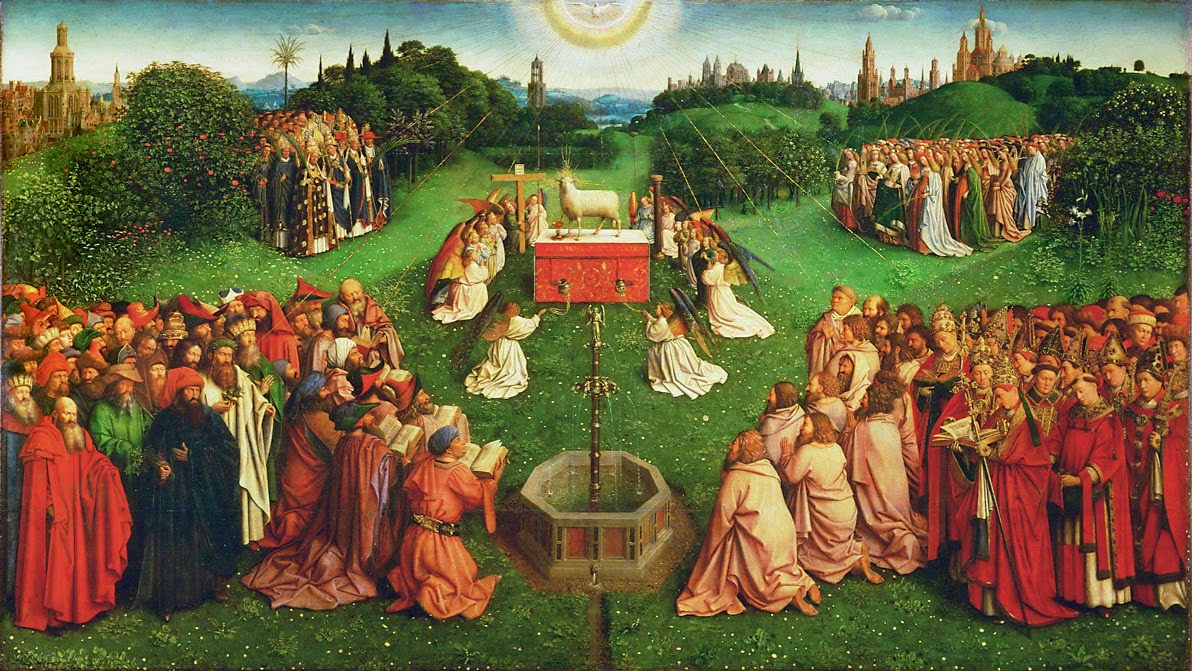
But this parable should hit each and every one of us harder because of the context. And when this parable hits us harder, we will become more eager to extend the invitation of Christ the King.

Here is why this parable should crush us – it isn’t just that it exposes our sinful hesitation to share the Gospel with others. Jesus tells this parable in response to a statement, “Blessed is everyone who will eat bread in the kingdom of God.” In its context, that is a heretical benediction.

Now, don’t get me wrong. At face value, it is true. Everyone who eats bread in the kingdom of God is blessed. But the person who says this is, at that very moment, eating with Jesus. In that context, this statement would be like a newlywed husband getting to the hotel on his wedding night and saying to his bride, “Today was nice, but I’m really looking forward to my retirement party.” The man who says, “Blessed is everyone who will eat bread in the kingdom of God,” doesn’t realize that he is, in truth, living in that present blessing. The blessed existence he that would come sometime in the future was going on right around him.

Wherever Jesus is, there is the kingdom of God. Jesus came preaching that the kingdom of God was at hand (Mk. 1:14-15). And just a couple of chapters earlier in Luke’s Gospel, Jesus said that because He was casting out demons by the finger of God that God’s kingdom had come (Lk. 11:20).

You see, the person sitting there with Jesus at the table was sitting with the present King and eating with God incarnate. So, this parable speaks to us today about being at church. When God’s people gather together to hear God’s Word and receive His gifts, there is the kingdom of God. So, if you are looking forward to going to heaven and being with Jesus, you should also look forward to coming to church because it is a foretaste of eternity with Jesus.

Each of the men who offer excuses in the parable aren’t saying that they never want to go to the party; they just want to go when it is more convenient for them. And their excuses show that they view the things of the world as more important than eternal things.

The pleasures and cares of this world are dangerous to faith when we appreciate and love them more than the blessing of gathering with our Lord and Savior and brothers and sisters in Christ here every Sunday morning.

Wedding Feast of the LambWeekends at the lake, sport tournaments, and even time with family are all blessings from God. But when those things keep us from gathering around God’s Word in the place where God says He meets with us, they are deadly. They are idols. When you are not in church for whatever reason on any given Sunday, you are missing the blessing of being and feasting with God.

The king is angry with those who offer excuses. And notice – this is the most amazing thing that is hard to wrap our minds around – the king is angry because all he wants is for them to be there with him. The king is angry because he wants these people to have the good and joyous things he has for them. God is much more desirous of giving to and helping us than we are of receiving or asking for those things (Luther).

Repent. Repent of your excuses. Jesus has died and shed His blood so that the sinful excuses you would offer are washed away. They are removed as far from you as the east is from the west. And know that God’s invitation stands. “Come. Come to my feast. Come and receive what you could never earn or deserve. Come, you who are worthy. Come, you who are unworthy. Come, for all the blessings of heaven are here for you for free. Come, for everything is now ready.”Amen.

The peace of God, which surpasses all understanding, will guard your hearts and minds inChrist Jesus. Amen.

[1]“There Many Shall Come” Ambassador Hymnal #627. Magnus Brostrup Landstad.

The Finger of God – Sermon for the Third Sunday in Lent on Luke 11:14-28

Listen here.

Luke 11:14–28

14 Now he was casting out a demon that was mute. When the demon had gone out, the mute man spoke, and the people marveled. Jesus Rebuking Demon15 But some of them said, “He casts out demons by Beelzebul, the prince of demons,” 16 while others, to test him, kept seeking from him a sign from heaven. 17 But he, knowing their thoughts, said to them, “Every kingdom divided against itself is laid waste, and a divided household falls. 18 And if Satan also is divided against himself, how will his kingdom stand? For you say that I cast out demons by Beelzebul. 19 And if I cast out demons by Beelzebul, by whom do your sons cast them out? Therefore they will be your judges. 20 But if it is by the finger of God that I cast out demons, then the kingdom of God has come upon you. 21 When a strong man, fully armed, guards his own palace, his goods are safe; 22 but when one stronger than he attacks him and overcomes him, he takes away his armor in which he trusted and divides his spoil. 23 Whoever is not with me is against me, and whoever does not gather with me scatters.
24 “When the unclean spirit has gone out of a person, it passes through waterless places seeking rest, and finding none it says, ‘I will return to my house from which I came.’ 25 And when it comes, it finds the house swept and put in order. 26 Then it goes and brings seven other spirits more evil than itself, and they enter and dwell there. And the last state of that person is worse than the first.”

27 As he said these things, a woman in the crowd raised her voice and said to him, “Blessed is the womb that bore you, and the breasts at which you nursed!” 28 But he said, “Blessed rather are those who hear the word of God and keep it!”

Grace, mercy, and peace be to you from God our Father and from our Lord and Savior, Jesus Christ. Amen.

Some people will never believe. Their hearts are so hardened that, no matter how great a sign they see from the hand of God Himself, they still refuse to believe. This doesn’t mean that we should stop proclaiming the Gospel to them or stop praying for them. It is just reality. And, in fact, it is a call to further prayer because we recognize that conversion is always, always a work of the Holy Spirit chiseling away at sin-hardened hearts.

Jesus casts a mute demon out of a man. Some marveled. Some were still seeking from a sign from heaven. And some accused Jesus of casting out the demon by the power of Beelzebul (which means ‘lord of the flies’ a derogatory title for Satan stating that the devil is the lord of the dung heap).

Now, as illogical as the accusation is, we need to see how that it infinitely more blasphemous. Jesus delivers a man from a demon that made him mute. But people say, “Jesus is doing the devil’s work.”

And we need to pause here because nothing has changed. This world still calls good evil and evil good. If you are pro-life, you are sexist who just wants to control women’s bodies. If you stand for marriage as God created it or believe that men are men and women are women, you are homophobic.

Believer, this world hates God and hates Jesus, and it hates you too because you are God’s child. We live in a world that constantly stands good and evil on their heads. And the sooner you admit it, the better.

Jesus shows how ludicrous the claim that He is casting out demons by the power of Beelzebul. Instead, Jesus says it is by the finger of God that He is casting out demons which means that the kingdom, the reign, of God has come among those who scoff at wheat Jesus is doing.

This expression Jesus uses “the finger of God” is interesting. That phrase is only used four times in the Bible. You heard it in our Old Testament lesson (Ex. 8:16-24). Pharaoh’s magicians recognize that the plague of gnats is the finger of God coming in judgment against them. In Exodus 31[:18] and Deuteronomy 9[:10], Scripture talks about God’s finger writing the Ten Commandments on the stone tablets. Now here, Jesus talks about God’s finger casting out demons. The point is that Jesus casting out demons is a fulfillment of the Law and a plague on hell. Jesus tells demons to go and they have to go.

Then, Jesus tells something like a parable. He says that when a strong man [the devil] who is fully armed guards (and keep that word ‘guards’ in the back of your mind because it comes up again in a little bit) his house [the world] his goods [sinners] are safely under his lordship. But Jesus says that when one stronger than him [Jesus] is going to come and attack him, take away his armor, and divide the spoil [you].

Jesus says that He has come to rob the devil’s house and you are the spoils, the treasure, the plunder that Jesus is taking out of the devil’s cellar. He has won, redeemed, purchased, and grabbed you from the devil’s clutches. All by the power of His finger.

He has pulled you out of darkness and into His marvelous light. And notice what Jesus says, “Whoever is not with Me is against me.” There is no spiritual neutral ground. You are either rescued by Jesus and delivered into His kingdom, or you are held captive in the devil’s domain. And if you are not filled by the Holy Spirit, then the demons come back, and your last state is worst than the first.

So how do you know if you are in the kingdom of God or in the kingdom of the devil? Well, Jesus answers that. A woman says to Jesus, “Blessed is the womb that bore you, and the breasts that nursed you.” Now, Mary was certainly blessed. She is the mother of our Lord. But Jesus says, even better than being His mother is to hear the Word of God and keep (there is that same word used about the devil ‘guard’) it.

Though you were guarded by Satan, Jesus has come and rescued you with His finger transferring you to His kingdom. Now, you guard the Word that Jesus used to deliver you from Satan.

Cross and CommunionGuard it. Keep it. Take it. Eat and drink it. Because Jesus joins that Word of deliverance and forgiveness of sins to bread and wine. With His little finger, He destroyers the stronghold and armor of the devil. He claims you as His own. And He guards and keeps you now and for all eternity. Amen.

The peace of God, which surpasses all understanding, will guard your hearts and minds in Christ Jesus. Amen.