The Sign – Sermon on Isaiah 7:10-14; Galatians 4:4-7; & Luke 1:26-38 for Midweek Advent 1 2024

Isaiah 7:10-14; Galatians 4:4-7; Luke 1:26-38

In the name of Jesus. Amen.

God’s Word always works. Sometimes, it’s instantaneous. At creation, God said, “Let there be…” and whatever God said on each of the six days of creation simply was (Gen. 1). We see this same thing in many of Jesus’ miracles. Our Lord would say, “Receive your sight,” to blind eyes (Mt. 9:28-29); “Be opened,” to deaf ears (Mk. 7:34); “Your son lives,” to a frantic father (Jn. 4:50, 53); and “Come out,” in front of the grave of dead-as-a-doornail Lazarus (Jn. 11:43). And all of things happened immediately.

However, it’s also true that God will say something, and time passes. The thing God says still happens. It just takes a while. God told Moses to go back to Egypt, deliver His people out of slavery, and bring all of them to worship Him on Mt. Sinai (Ex. 3:10-12). It happened, but it took a while (Ex. 19:1-2). God told Noah that He would send a flood to destroy all flesh (Gen. 6:13-22). That happened too, but only when enough time elapsed for Noah to build the ark and herd the animals onto it – possibly about 100 years (Gen. 5:32; 7:6). Ultimately, It doesn’t matter if God’s Word is delayed. What God says happens.

But we are impatient people. Even though time after time God has proven His faithfulness to His Word, we wrongly start to doubt and take matters into our own hands. Abraham believed God’s Word that he would be the father of many nations (Gen. 12:1-3; 15:1-6), but the delay in the fulfillment of that promise led Abraham to have a son with his wife’s servant, Hagar (Gen. 16:1-4). That momentary unbelief of Abraham, though forgiven, still has devastating repercussions to this day. You can wait and trust that God will come through on His Word (Hab. 2:3).

In our text tonight from Isaiah, King Ahaz of Judah is facing a problem. Neighboring countries are attacking Judah. The king of Israel and the king of Syria joined forces and invaded his land, they have besieged Jerusalem, but they hadn’t been able to destroy it. So, Ahaz devises a plan, but it’s a stupid plan. He asks for help from another one of his enemies, the king of Assyria, to fight against Israel and Syria. Ahaz even takes the gold out of the Temple to buy Assyria’s help (2 Kgs. 16:5-8). But God sends the prophet Isaiah to tell Ahaz that He’s in control and that Ahaz doesn’t need to fear Israel and Syria because they are nothing more than smoldering stumps (Is. 7:1-9).

That Isaiah text (Is. 7:10-14) begins when God invites Ahaz to request a sign for proof that He will deliver Judah from her enemies, and it is an open-ended invitation. Ahaz could ask for a sign as deep as Sheol or as high as heaven. In other words, Ahaz could have asked for anything. He could have been selfish and asked God for a million tons of gold to put in his treasury. But Ahaz refuses in a pious sounding way, “I will not put the Lord to the test.” Ahaz preferred to forge ahead with his own plans. He fancied the formidable Assyrian army over God’s invitation to simply trust and be firm in faith that God would deliver (Is. 7:9b). Bad idea. By rejecting that sign, Ahaz also rejected God’s Word and promise. He treated God’s Word as though it was meaningless and impractical. Ahaz had his own plans, and he didn’t want God to interfere with them.

God wasn’t fooled by Ahaz’s fake piety. But still God is merciful and will give Ahaz not just one but two signs of deliverance. One of them, which we didn’t hear, would be fulfilled in Ahaz’s lifetime (Is. 7:15-17). But the sign we did hear is more wonderful because it isn’t only a sign that Judah would be delivered from her enemies. Instead, the promise is that God would deliver all humanity because God would come and dwell among us.

“Behold, the virgin shall conceive and bear a son, and shall call His name Immanuel,” which means ‘God with us’ (Mt. 1:23). God promises that He is coming. And when He comes, He comes to deliver and save. But when God’s acts of salvation are met with unbelief, those acts become a judgment to the one who disbelieves. So, for Ahaz, Immanuel means judgment.

About 700 years later, God came through on His promise of Immanuel. In our Gospel text (Lk. 1:26-38), God sends the angel Gabriel to Mary. Gabriel announces to her that the time to fulfill that promise given to Ahaz has come. Though she is a virgin, she will conceive and bear a Son who will be the fulfillment of God’s promise to dwell with His people as well as all the other promises God had given to save His fallen creation. Mary’s response is completely different than Ahaz’s response. She seems to be filled with surprise and curiosity, “How will this be?” Gabriel simply reassures her that nothing is impossible for God (Lk. 1:37), and Mary simply trusts. “Behold, I am the servant of the Lord; let it be to me according to your word” (Lk. 1:38).

Sure, God’s promise that the virgin would conceive took a while – 700 years. But it happened at exactly the right time. God sent forth His Son, born of a woman. Born with your flesh and bone. Born to bear your sins to the cross. Born to redeem you. Born so that you could be adopted, chosen, selected into God’s family. Born so that you would be an heir of God (Gal. 4:4-7).

Dear saints, because God has already given you what is most precious to Him and most needful for you, you can believe that He won’t go back on any of His other promises to you. All of God’s promises find their ‘yes’ in Christ, in Immanuel (2 Cor. 1:20).

Jesus is God with you. And even more than that – Jesus is God for you. God is on your side. You can take His Word to the bank. Amen.

The peace of God, which surpasses all understanding, will guard your hearts and minds in Christ Jesus. Amen.

Who, Then, Receives This Sacrament Worthily? – Sermon for Midweek Lent 5

IV. Who, Then, Receives This Sacrament Worthily?

Fasting and bodily preparation are indeed a good outward discipline, but that person is truly worthy and well prepared who believes these words: “Given and shed for you for the forgiveness of sins.” But anyone who does not believe these words or who doubts them is unworthy and unprepared, for the words “for you” require truly believing hearts.

Luther’s Small Catechism

In the name of Jesus. Amen.

It’s a gift. The Lord’s Supper is a gift. The Body of Christ broken for you is a gift. The Blood of Christ shed for the forgiveness of your sins is a gift. Everything about the Lord’s Supper is a gift. When we consider our worthiness or unworthiness of receiving the Holy Communion, we must start with the understanding that it is a gift.

Jesus doesn’t give us Himself in the Sacrament because we have earned or deserved Him. Birthday and Christmas presents aren’t earned. If something is earned, it is no longer a gift. When you give a gift, you give out of love. Jesus is not Santa Claus who makes his list and checks it twice to see who has been naughty or nice and give based on that. And remember what the gift gives – the forgiveness of sins. If you imagine, somehow, that you don’t have any sins that need forgiving, then you don’t need or have any desire for the gift. Only the sick need a doctor, and only sinners need the Sacrament.

In our epistle reading tonight (1 Cor. 11:27-34), Paul does give a warning about Holy Communion. You can receive the gift Jesus gives in an unworthy manner, and there are serious consequences of receiving the Lord’s Supper in an unworthy manner. But before we get to that, let’s first consider what it is to be worthy of receiving the Sacrament. The two ‘qualifications’ – or, maybe better, ‘qualities’ or ‘attributes’ – of being a worthy recipient of the Lord’s Supper are found in v. 28-29 and v. 31.

To be worthy of Communion, a person is to ‘examine’ and ‘judge’ himself ‘truly’ (1 Cor. 11:28, 31). Here’s what that means: When you consider who you are in light of God’s Commandments, you find nothing but sin and failure. You find that you have not done what God demands and that you have done what God forbids. When you examine your thoughts, words, and deeds, you see clearly that you are not worthy to be in God’s presence let alone have a seat at His Table. God be praised that the recognition of your sin and unworthiness is precisely what makes you worthy to receive what Jesus gives in Holy Communion because what He gives is His very Body and Blood for the forgiveness of sins.

The other ‘quality’ of receiving the Lord’s Supper worthily comes in 1 Cor. 11:29 and is to “discern the Body.” In other words, it is to recognize that Jesus is truly present in His Supper as He gives you the New Covenant of His Blood in the elements of Communion.

When you know and recognize those two things, God invites you and desires that you, “eat of the Bread and Drink of the Cup” (1 Cor. 11:28).

If someone does not recognize that they are a sinner who needs forgiveness or does not believe that Jesus gives His Body and Blood in the Sacrament, that person eats and drinks the Sacrament in an unworthy manner, and that does have consequences.

The first consequence Scripture mentions is to be guilty concerning the Body and Blood of the Lord. In other words, an unworthy reception of the Lord’s Supper puts that person alongside the soldiers, Pilate, Judas, and the Jewish leaders as being guilty of Jesus’ wounds and crucifixion.

A person can be guilty of the Body and Blood of Jesus in various ways. Judas was guilty because he betrayed Jesus (Mt. 27:3-4). The priests and Pharisees were guilty because they falsely accused Jesus (Mt. 26:59). The soldiers were guilty because they beat, whipped, and spat upon Jesus (Mt. 27:27-31). Pilate was guilty because he condemned Jesus (Mt. 27:24-26). All of them were individually guilty of the bodily harm done to Jesus in different ways, but the guilt remains the same. Here, Paul says that to receive Communion in an unworthy manner is just as great a crime as those who carried out the betrayal, beating, and crucifixion of our Lord (1 Cor. 11:27).

The consequence of this guilt concerning Christ’s Body and Blood brings God’s judgment. Paul says that the reason some of the Corinthian Christians are weak, sick, and have died is that they were receiving Communion in an unworthy manner. Paul isn’t speaking figuratively here; this is serious stuff.

Now, I want to be clear, the judgment Paul talks about here does not mean that the Christians who receive the Lord’s Supper in an unworthy manner are condemned. The text is clear. The judgment from the Lord that they receive is used by God to discipline them so that they are not condemned with the world (1 Cor. 11:29, 32). But that discipline and judgment is real, and because that discipline is real, this should guide what we do.

As your pastor who loves and cares for you and your well-being as well as the well-being of other Christians, I need to say this: When you are traveling or visiting a church with family or friends, there are times and instances where you should not take Communion. If you are at a church that says the Lord’s Supper is only symbolic, or, if you are at a Roman Catholic church that teaches that receiving the Lord’s Supper is earning some sort of spiritual merit, do not commune there. I say that because, by receiving the Sacrament there, you are encouraging your Christian brothers and sisters in their wrong belief and unworthy reception of the Lord’s Supper. And by not taking Communion there, God may open a door for you to teach them about the great blessing that Jesus gives in His Supper. Pray that that would be the case.

Yes, Scripture gives us warnings about receiving the Sacrament in an unworthy manner, but it is done in a way to encourage us to receive it regularly and rightly. Listen carefully to what comes after the warning of receiving in an unworthy manner and being guilty concerning the Body and Blood of our Lord, “Let a person examine himself, then, and so eat of the Bread and drink of the Cup” (1 Cor. 11:28). In the Large Catechism, Luther picks up on this and rightly says this is warning, but it is an encouragement to receive the gift of the Lord’s Supper which Jesus gives to us as often as we eat and drink.

Luther says, “If… you are heavy-laden and feel your weakness, then go joyfully to this Sacrament and receive refreshment, comfort, and strength.” But what if you don’t feel your weakness? Luther suggests that you put your hand to your chest and to check if you still have flesh and blood because Ro. 7:18 says, “I know that nothing good dwells in me, that is, in my flesh.” Then, look around and see if you are still in the world. If you are in the world, believe what the Bible teaches about it – that it is full of danger and difficulties (Jn. 15:18-21, 16:33). Finally, remember that the devil is prowling around like a roaring lion seeking to devour us (1 Pet. 5:8) and has all sorts of flaming darts pointed at us (Eph. 6:16). Your sinfulness, the danger of living in a sinful world, and the promise of Jesus are all constant reminders of how greatly you need the gift Jesus gives in the Sacrament.

I want to close this series on the Lord’s Supper with one final thought about receiving God’s gifts. When it comes to earthly things, desire and satisfaction are opposites. If you are hungry, it is because you don’t have food. Once you have eat and are full, you no longer desire food.

Spiritual things work differently, and I think we have all seen or experienced this. When you have God’s Word, you want more of it, and, sadly, the opposite is also true. The less you have God’s Word, the less you desire it. When it comes to the gifts Gospel, the more we receive them, the more we long for them. When we taste and see that the Lord is good (Ps. 34:8), our hunger for His goodness and mercy grows.

May our love and desire for God’s Word continue to grow as we receive more and more of the free gift of His grace and mercy which He freely gives through His Word and Sacraments. Amen.The peace of God, which surpasses all understanding, will guard your hearts and minds in Christ Jesus. Amen.
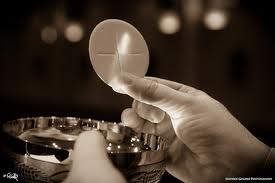
How Can the Bodily Eating and Drinking Produce Such Great Benefits? – Sermon for Midweek Lent 4

III. How Can the Bodily Eating and Drinking Produce Such Great Benefits?

The eating and drinking, indeed, do not produce them, but the words: “Given and shed for you for the forgiveness of sins.” For besides the bodily eating and drinking, these words are the chief thing in the Sacrament; and anyone who believes them has what they say and declare, namely, the forgiveness of sins.

Luther’s Small Catechism

In the name of Jesus. Amen.

Again, to recap: the Lord’s Supper is the true Body and Blood of Jesus in and with the bread and wine which Christ gives to us to eat and to drink. This means that Jesus is truly present in the Lord’s Supper to give you forgiveness, life, and salvation. When you receive Communion, you never have to wonder why Jesus is with you. He is there to deliver all the benefits of His death and resurrection which He won for you on the cross. You simply taste and see that He is good (Ps. 34:8).

This question from the Small Catechism addresses a common misunderstanding many Christians today have about the Lord’s Supper. The misunderstanding will take different shapes, so tonight’s sermon is largely going to be responding to the errors about Communion.

I don’t know of any Christians who say that Jesus doesn’t really care if we have Communion or not. But some Christians will say that Jesus doesn’t actually give us His Body and Blood for the forgiveness of sins in the Sacrament. Instead, they believe the Lord’s Supper is a meal which helps us remember what Christ has done for us. They will say that when Jesus said, “This is My Body and Blood,” what He really meant was, “This represents My Body. This represents My Blood.” I think one of the biggest reasons they think that is what this question from the Small Catechism addresses. If we modernized this question a bit it would be, “How can having a physical bite a bread and a physical sip of wine do anything that benefits a person spiritually?” 

This is a logical question. You don’t eat a hotdog and drink a soda to be forgiven. You aren’t saved by having a bowl of soup and a glass of water. So, why would eating and drinking the elements of Communion be any different? Even though it is a logical question, that doesn’t mean we can respond with mere logic. Our logic, thinking, and reasoning is a good gift from God. But our logic is fallen and cannot comprehend everything God teaches and promises in His Word. God’s ways and thoughts are higher than our ways and thoughts (Is. 55:8-9).

So, it all comes down to the words and promises of Jesus. Once Jesus says, “Given and shed for you for the forgiveness of sins,” that settles any disagreement of what Communion is for. The Lord’s Supper delivers the forgiveness of sins. 

Think back to Naaman, the commander of the army of Syria (1 Kgs. 5:1-14). He had leprosy and was given the suggestion to go to God’s prophet, Elisha. Elisha told Naaman to wash seven times in the Jordan River, and he would be cleansed of his leprosy. But when Naaman considered the water of the Jordan, he balked at the idea. There were cleaner rivers back in Syria which he thought could do a better job of washing his festering, diseased skin. So, he wasn’t going to lower himself into those dirty, mucky waters until one of his servants basically said, “Why not give it a try? We’ve come all this way, and the prophet said to wash and be cleansed of your leprosy. If it doesn’t work, we can get the mud washed off of you later.” Naaman washes and finds out that God had given him a promise through Elisha. The waters of the Jordan River became a leprosy-healing stream – not because those waters were special by themselves. Instead, it was because God had attached a promise for Naaman to those waters.

Some might object to that and say, “Well, that was to heal the physical ailment of leprosy. God doesn’t use physical things to bring about spiritual benefits.”  Not so fast. What about the burning coal that touched Isaiah’s lips? The seraph promised him, “Behold, this has touched your lips. Your guilt is taken away, and your sin atoned for” (Is. 6:7). The same is true for Holy Communion. Jesus, the Son of God Himself, puts His Supper into your mouth and says to you who receive it, “This has touched your lips. You have eaten and drunk. Your guilt is taken away, and your sin atoned for.”

And on top of that, if it were true that physical things do not and cannot bring about forgiveness and spiritual benefits, what is Jesus doing on the cross? Throughout Scripture, God can and does regularly bring about spiritual benefits through physical things and physical actions.

Another objection Christians have about the elements of the Lord’s Supper being Jesus’ Body and Blood is, as I already mentioned, that Jesus is speaking figuratively. They will say, “Sure Jesus said, ‘This is My body; this is My blood,’ but what He meant is, ‘This represents My body; this represents My blood.’” They will point to passages where Jesus says that He is the door (Jn. 10:7, 9). Obviously, Jesus isn’t a literal door. They will say we should understand what Jesus says when institutes Communion exactly the same way.

The problem with that argument is the context of what Jesus is saying and what He is doing when He says it. When Jesus talks about being the door, it is in the context of Him drawing from all sorts of shepherd/sheep imagery from the Old Testament. When you read those verses in context, it is clear that He is using figurative language.

But when Jesus institutes Holy Communion everything is different. Jesus blessed the physical Bread and physical Cup and handed them to the disciples saying, “This is My Body. This is My Blood.” Jesus could have used language that is figurative. He does that all the time to introduce the parables. “The kingdom of heaven is like…” (Mt. 13; 20:1; 25:1; Lk. 13:18; etc.) But Jesus doesn’t do that in His Supper. He gives them Bread and Wine saying, “This is My Body; this is My Blood.” When God speaks, the impossible happens – the lame walk, the blind see, the dead are raised, and Bread and Wine become more than mere bread and wine.

Another objection that Christians today will have about Communion is that created things – especially small things like bread and wine – cannot hold something as big as God. The phrase that gets used is, “The finite cannot hold the infinite.” If that statement is true (and it’s not), that is big problem. If the finite cannot hold the infinite, that would mean that Jesus wasn’t God in the flesh, that would be impossible. But that is not the case. The finite can and does hold the infinite. Scripture clearly teaches that in Jesus, “the whole fullness of God dwells bodily” (Col. 2:9). And if Jesus wants to put Himself in Bread and Wine, He can do that too.

The final objection we will address tonight is when some Christians will say something like, “Well, Jesus’ death on the cross is what saves – not what we receive in Communion.”

The response to that is, “Yes. It is only through Jesus’ finished work on the cross that we are saved.” But how does God give and deliver what Jesus did on the cross to you? You weren’t there.

As much as I enjoy the hymn Were You There When They Crucified My Lord? (especially hearing Johnny Cash’s version), that hymn is asking questions to which we would have to answer with a resounding, “No.” In fact, only a small minority of the people who existed were there. You weren’t there when they crucified Jesus. You weren’t there when they nailed Him to the tree. You weren’t there when they laid Him in the tomb. You weren’t there when He rose up from the grave. All those things are good and important to remember, but you weren’t there – halfway across the world, outside of Jerusalem nearly 2,000 years ago.

But Jesus can, and promises to, deliver all the benefits of the cross to you in Holy Communion – His body broken, His Blood shed – directly delivered to your mouth. If the eating of the fruit of the tree of the knowledge of good and evil can cause the devastating damage of sin entering the whole world, how beautiful is it that eating and drinking Jesus’ Body and Blood, which were given on the tree of the cross, brings forgiveness, life, and salvation?

We probably want to know more about how the eating and drinking of the Lord’s Supper makes logical sense, God hasn’t given us all the details. That’s ok. We have His sure and certain promise, so hold fast to that.

Even though what you receive in the Sacrament doesn’t look like much, and by itself it isn’t much, but when Jesus attaches His promises to it, it is everything. It is the medicine of immortality. Amen.

The peace of God, which surpasses all understanding, will guard your hearts and minds in Christ Jesus. Amen.

Ask in Jesus’ Name – Sermon on John 16:23-33 for the 6th Sunday of Easter

Listen here.

John 16:23-33

23 “In that day you will ask nothing of me. Truly, truly, I say to you, whatever you ask of the Father in my name, he will give it to you. 24 Until now you have asked nothing in my name. Ask, and you will receive, that your joy may be full.

25 “I have said these things to you in figures of speech. The hour is coming when I will no longer speak to you in figures of speech but will tell you plainly about the Father. 26 In that day you will ask in my name, and I do not say to you that I will ask the Father on your behalf; 27 for the Father himself loves you, because you have loved me and have believed that I came from God. 28 I came from the Father and have come into the world, and now I am leaving the world and going to the Father.”

29 His disciples said, “Ah, now you are speaking plainly and not using figurative speech! 30 Now we know that you know all things and do not need anyone to question you; this is why we believe that you came from God.” 31 Jesus answered them, “Do you now believe? 32 Behold, the hour is coming, indeed it has come, when you will be scattered, each to his own home, and will leave me alone. Yet I am not alone, for the Father is with me. 33 I have said these things to you, that in me you may have peace. In the world you will have tribulation. But take heart; I have overcome the world.”

Alleluia! Christ is risen!
He is risen indeed! Alleluia!

In the name of Jesus. Amen.

The name for this sixth Sunday of Easter is “Pray.” The name comes from the wonderful promise of Jesus in this text that gets translated, “Whatever you ask of the Father in My name, He will give it to you.”

Prayer is not an optional part of the Christian life. God commands us to pray in the 2nd Commandment, “Thou shalt not take the name of the Lord thy God in vain, for the Lord will not hold him guiltless who taketh His name in vain.” When God forbids us from misusing His name, He is also commanding that we do rightly use His name to call upon Him in every time of need and worship Him with prayer, praise, and thanksgiving. In other words, God wants His people to pray.

Constantly, the Scriptures tell us to pray. The Biblical design is that Christians should pray regularly and an ordered way. In the Old Testament there were specific times for prayer – both morning and evening. Even after the day of Pentecost, the apostles were going to the Temple to pray at the appointed times (Act. 3:1). Even though specific hours or times of prayer aren’t prescribed in the New Testament, every single book in the New Testament directs God’s people to pray. And Paul will go so far as to say in 1 Thessalonians 5:17, “Pray without ceasing.” God wants His people to be people of prayer.

With all of that in mind, why is it that we – please note that I am including myself in this – why is it that we have find it difficult to make prayer a regular part of our lives?

Now, there are no passages of Scripture that expressly say, “Here is why you struggle to pray.” So, this isn’t a “Thus sayeth the Lord” thing. But I think all our hesitations to pray can be boiled down to one of two reasons. First, we find it hard to pray when we have a guilty conscience, and second, we don’t actually believe God when He promises to hear and answer our prayers. And the answer to both of those hesitations – the answer to our guilt and our doubt – is when Jesus tells us to pray in His name. So, let’s address both of those objections.

If you have a guilty conscience, you are reluctant to pray. When you know the guilt and depth of your sin, you don’t have the boldness to ask the holy God for something. I know I often go back to Isaiah’s call to be a prophet in Isaiah 6, but it is familiar and such a powerful scene. Isaiah sees God surrounded by the cloud and smoke. He sees the seraphim with their six wings. He hears them calling out, “Holy, holy, holy is the Lordof hosts.” Isaiah doesn’t interrupt their song to say, “Hey God, would You mind helping me out? I’ve got something here that needs Your attention.” Instead, Isaiah is overwhelmed with his guilt and says, “I am undone. I’m a man of unclean lips,” which isn’t a prayer. Isaiah isn’t addressing in prayer there because he doesn’t know how to pray as he ought because of his guilty conscience. Yet, the Holy Spirit intercedes for Isaiah with groanings too deep for words (Ro. 8:26). And God treats Isaiah’s statement like a prayer and answers it by sending one of the seraphs with a coal and a word to absolve Isaiah.

When we have a guilty conscience, we don’t want to pray because we think it would be a waste of God’s time. You see, a guilty conscience makes all our requests seem petty. Even though we might be praying for a truly important thing – like an end to the physical and economic suffering and that the virus is inflicting upon the world – a guilty conscience makes us feel insignificant and distant from a holy God. But listen, if you aren’t going to pray until you feel you are worthy, you will never and should never ask God for anything. Ever!

So, the solution to a guilty conscience is found in Jesus’ words here: “Whatever you ask of the Father in My name, He will give it to you.”

Now, simply throwing a quick “in Jesus’ name” to the end of your prayers isn’t the magical “abracadabra” that gets God’s attention. You are a child of God, and you always have God’s attention.

Instead, praying in Jesus’ name means that you are praying for the sake of Jesus’ death and atonement of you. If you were to approach God without Jesus’ blood and cleansing, your prayers are not pleasing to God. But with Jesus and in His name, you have Jesus’ clear promise that the Father Himself loves you (Jn. 16:27). You have Jesus’ promise that when you ask in His name the Father will give what you ask so that your joy will be full (Jn. 16:24). When you pray in Jesus’ name, you come before God with the perfection of Jesus.

Many Christians have the wrong idea that when they are forgiven by God for the sake of Jesus that they have entered into some sort of neutral state. They think of their sin sort of like credit card debt that they have racked up. Then, when Jesus comes along to forgive them, He pays off their debt so that it is gone, and they can start again with a zero-debt balance. That kind of thinking, that kind of theology, that view of sin and forgiveness is actually very Roman Catholic.

Dear saints, when Scripture teaches that Jesus forgives you for the sake of His death and resurrection, and He also gives you His complete righteousness and perfect obedience (Ro. 3:21-22; 5:17-19; 2 Cor. 5:21; Php. 3:9; Gen. 15:6). God hears your prayers and does not take your sins into account. When God hears your prayers, it is as though He is hearing Jesus Himself pray.

When you pray in Jesus’ name, there are no trivial or unimportant prayers. Whatever you pray for is important to God because it is important to you, and God is interested in you.

I remember in 8th grade, I was going to a Christian school, and our first period was always Bible. Our teacher would take prayer requests. The other boys and I would raise our hands and ask that we pray for the Twins or Vikings to win. There was a kid who was a fan of the Cleveland Indians and the Chicago Bears, so when the Twins were playing the Indians or the Vikings playing the Bears there would be competing prayer requests. So, we would make sure to get enough prayer requests to outnumber his requests for the enemy teams. I think we’d even giggle when the person praying (it might have been me) made sure to mention in the prayer, “Four of us want the Twins to win, and only one of us wants the Indians to win.”

For many years (and still today) I find myself getting embarrassed about praying to God for trivial and simple things. But you know what? God didn’t, and God doesn’t. If you want something, it doesn’t matter how silly it is, go ahead and pray for it. At least you’re going to the right Source! You are asking your loving, generous, and kind heavenly Father for what you want. And He doesn’t look down on you for it.

Now, this doesn’t mean that our prayers are perfect. In fact, sometimes we pray for sinful things. But remember that the blood of Jesus has covered you, and God does not remember or regard those sins (Is. 43:25). He always loves to hear your prayers, so go to God in prayer with boldness.

So, when you have a guilty conscience, remember that you pray in Jesus’ name.

And regarding the second hesitation or reason we find it difficult to pray is that we don’t believe God when He promises to hear and answer our prayers.

Too often, we have a philosophical and fatalistic approach to our prayer. Here’s what I mean by that. We know that God is omniscient – He knows everything. This means that He knows everything that will happen in the future. And we know that God is omnipotent, or all-powerful, and He governs everything. He has His loving hand in everything that happens in the world which is why Scripture can say that God works all things together for good for those who love Him and are called according to His purpose (Ro. 8:28).

If we take that Scriptural truth with us into prayer, we can come to the wrong conclusion that our prayer isn’t going to do any good or change anything because God has already determined He will do and will do it. Ultimately, that line of thinking makes prayer pointless with regard to changing anything. But that view is wrong. It is just plain wrong.

The Bible teaches the opposite. When you pray, you pray as a child of God, and God reacts to your council on matters in the world.

Picture it this way. When a president or king or general is fighting a war, he has advisors. They sit around a table and strategize and consult and plan together. Those advisors are important, and their input is valued and sways and changes the strategy and actions of the leader.

As a child of God, you are at that table. When Scripture tells you to pray, it means that you are invited into God’s war room to give your input as to how things should be handled on the battlefield. God is going to ask your thoughts on how a situation should be handled. God turns to you and says, “Ok child. Here’s the situation. What do you think we should do?” And your prayers are your response. And God says, “Ok. That’s what we’ll do.”

Think back to the people of Nineveh when Jonah preached to them. They prayed in repentance and faith to God, and Jonah 3:10 says, “God relented of the disaster that He had said He would do to them, and He did not do it.” Their repentance was faith in God’s Word. They repented because they believed the Word of God’s Law. And because they were united to Jesus’ name through that repentance, God listened to their prayers and acted accordingly. And this view of prayer, the view that prayer is effective and influences how God acts in the world, in no way limits God’s power or authority.

Now, let me be very clear on this. God always knows what is best to do, and He won’t let His counselor’s input ruin what is best. Remember that even Jesus had one of His prayers denied. When Jesus prayed, “Father, if it is possible, let this cup pass from Me” (Mt. 26:39), it was the most futile and impossible prayer that has ever been prayed or will be prayed. Jesus’ death was the only answer for our sin. But God absolutely listened to Jesus prayer, and He loved to hear it. Jesus prayed it without sinning, and God still answered Jesus’ prayer because He also prayed, “Nevertheless, not as I will, but as You will.” Again, God will not let His counselor’s input thwart what is best.

But God does respond to what you, as His children and counselors, want to do. So, when God invites and commands you to pray, He is asking you for your input. So, if you fumble around and look at the ground saying, “Well, I’m not sure. You’re God. You should decide what to do,” do you think that God is pleased with that? Of course not. Pray. Ask. Be at God’s table.

Listen to these Scripture texts and tell me if it seems like your prayer does anything. From James 5[:15], “The prayer of faith will save the one who is sick, and the Lord will raise him up.” Yes, your prayer does something!

Listen to the next verses (Jam. 5:16b-18), “The prayer of a righteous person has great power as it is working. Elijah was a man with a nature like ours, and he prayed fervently that it might not rain, and for three years and six months it did not rain on the earth. Then he prayed again, and heaven gave rain, and the earth bore its fruit.” Does that make it sound like God just does whatever He is going to do and your prayer doesn’t matter? Nope!

God invites you, His children, into the war room and wants your input regarding His action. And, in no way does this limit God’s power. God retains His total sovereignty and still is able to bring our opinions into His consideration. This is beyond our ability to make sense of. We cannot philosophize how this is possible. But it is what Scripture teaches, and it is beautiful.

If we don’t believe that our prayers make a difference, we have the false idea that God is like a lazy father on television shows who is disinterested in his children. We wrongly think that He just wants to be left alone and read His newspaper.

Dear children of God, your loving heavenly Father always puts the newspaper down, always puts His cell phone back in His pocket, always turns off the game. Your heavenly Father always has time for you, always wants to hear from you, and always wants to speak with you.

Before I conclude here, I want to give you three quick and easy prayers to put in your back pocket. I think one of the best ways to be more regular and faithful in prayer is to do it more often, and these three little prayers are can help with that. They might not feel like prayers, but they are. Again, the more regularly you pray these simple prayers, the more easily you will find it to be more consistent in praying.

The first little prayer is for whenever you see something good happen. Pray, “God be praised.” It is good and right for you to verbally acknowledge and recognize that that good thing, whatever it is, has come from God.

The second little prayer is for whenever you see something bad or evil. Pray, “Lord, have mercy.” This is a perfect prayer in the face of any evil or disaster because God always desires to give you His mercy.

The third and final little prayer is for whenever you are making plans or looking to the future. Pray, “Lord willing,” or “If the Lord wills” (see James 4:13-15). Especially in these days of pandemic with constant change in rules and guidelines, etc. this little prayer reminds you that everything is in God’s merciful hands.

Hear again what Jesus says, “In that day you will ask in My name, and I do not say to you that I will ask the Father on your behalf, for the Father Himself loves you” (Jn. 16:26-27). So, pray. Be regular in your prayers because God does not regard your sins, and He desires and acts upon your input. Pray in Jesus’ name, and watch how God acts for your good and for the good of others.

Alleluia! Christ is risen!
He is risen indeed! Alleluia!

Amen.

The peace of God, which surpasses all understanding, will guard your hearts and minds in Christ Jesus. Amen.