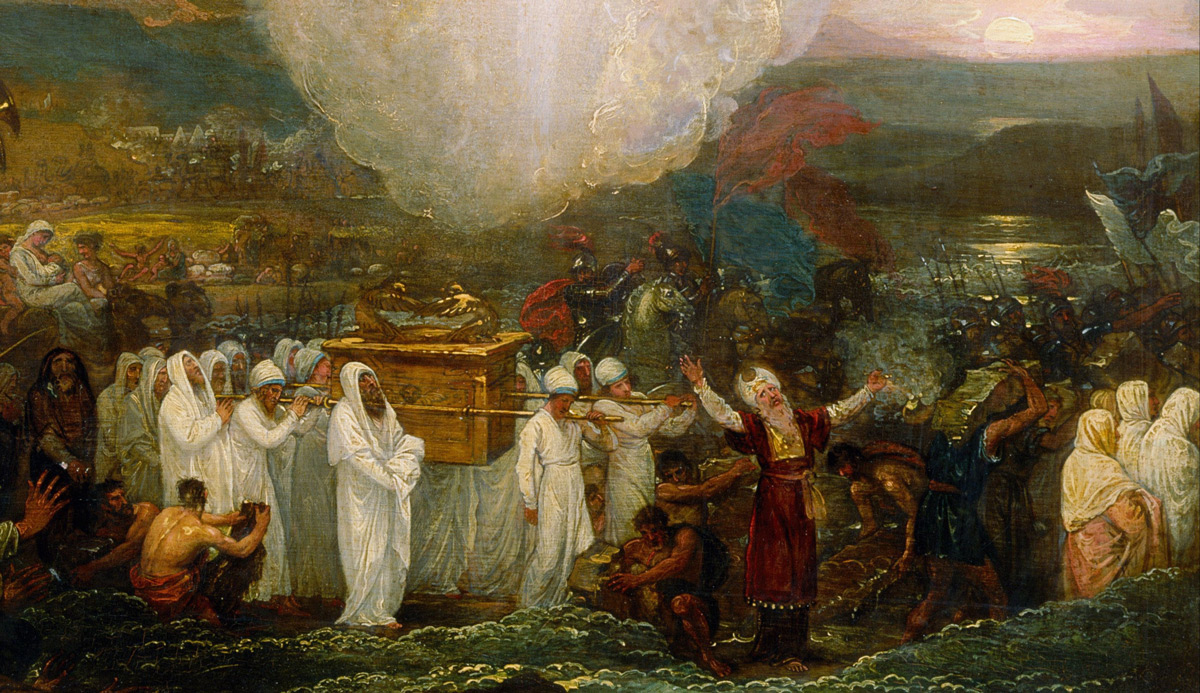
Joshua 3:1-6; Matthew 3:13, 4:1-2
In the name of Jesus. Amen.
Imagine that you’re on a family road trip. You get on the freeway and have a nice conversation with your kids. As the talk starts to slow down, the kids ask if they can play some music over the stereo. After an hour of having the tunes cranked up, the kids start complaining about the songs their siblings are picking. So, you turn off the music and tell them all to take a nap, read a book, or just stare out the window. But the kids are tired of being in the car, so they revert to their favorite pastime – annoying each other. (By the way, this isn’t necessarily about my family.) After an hour of dealing with the complaints – “He’s touching me,” “Well, she’s looking at me,” “They’re breathing loud,” – you have just about had it. But you’re getting close to your destination.
It’s been several hours since you left home. You’re tired of being in the car and just want the trip to be over. But as you turn down the street of your destination, all your kids start screaming at each other. You’ve finally had enough. You tell your kids that for their punishment, you are going to fill up the gas tank and drive around for several more hours – one hour for every minute of screaming and fighting. (And, yes, I know with gas prices as high as they are, this seems completely ludicrous.)
Well, that analogy is similar to what happened when God delivered Israel out of slavery in Egypt (just don’t go too far with the details). God was bringing His people to the Promised Land. It was trip that shouldn’t have taken more than a couple of months. But God had led His people via the scenic route that included a lengthy pit stop at Mt. Sinai. After receiving God’s commands and instructions about building the Tabernacle, the people rebelled at the foot of the mountain and made the golden calf. Repeatedly on this road trip, the Israelites complained and wanted to return to Egypt and slavery because the cucumbers tasted good (Nu. 11:5). They would whine about not having food and water even though God was constantly providing for them.
To top it all off, when God’s people were on the doorstep of the land God had sworn to give them, they rebelled again. God had the people send spies into the Promised Land for forty days to have a look around (Nu. 13-14). When the spies returned, they reported that the land was fantastic, but they were terrified to enter because people who lived there were giants. Ten of the twelve spies said that entering the Promised Land was impossible even though God had promised to give it to them. This bad report from those ten spies terrified God’s people, and they refused to go forward.
So, God punished them by sending them into exile. For each of the forty days the spies were in the land, God sentenced the people to one year of exile wandering in the wilderness (Nu. 14:34). Forty days of spying and doubting that God would do what He promised meant forty years of exile. God swore that none of the people who were twenty years or older would enter the Promised Land except for Caleb and Joshua, the two faithful spies (Nu. 14:28-33). All the rest of the people would die in the wilderness, but their children would enter Canaan.
When the people learned about their punishment, some of them decided to try and conquer the Promised Land on their own. It didn’t go well. They went without the Ark of the Covenant which meant they went without God’s presence and blessing, so they were utterly defeated (Nu. 14:39-45). So, into exile went God’s people, but God went with them. For forty years, God’s people wandered in the wilderness between Canaan and Egypt. They had walked right up to their inheritance, but they didn’t believe God’s promises, which meant they had abandoned His blessing. But throughout those forty years of wandering in the wilderness, God remained faithful to His people. God was faithful even though the people continued to complain and rebel.
Finally, in tonight’s Old Testament reading (Josh. 3:1-6), the forty years of exile were over, and God brought His people into the Promised Land. As the priests carrying the Ark neared the banks, the Jordan River stood in a heap so His people could leave the wilderness and exile and enter the land flowing with milk and honey (Josh 3:12-17). Despite the people’s sin and rebellion on the way from Egypt to the Promised Land, and despite their sin during the forty years of exile, God was with His people – blessing them, forgiving them, and providing for them (Josh. 5:10-12).
We are just like the unfaithful Israelites who complained, rebelled, and bickered. Because of our sin, we wander about in the wilderness. We don’t have any word or promise from God about how long our exodus will be. But we do have the promise that a good land awaits us after our time of exile is over. Dear Christian, God has promised to give you the new heavens and new earth (Rev. 21:1). There, the same God who daily provides abundantly for all the needs of your life will abundantly provide for you for all eternity and shelter you in His presence. Jesus has gone there before you to prepare a place for you (Jn. 14:1-3). And now Jesus leads you on the way to that paradise.
In our Gospel lesson (Mt. 3:13, 4:1-2), Jesus went down into the waters of the same Jordan River that the Israelites crossed to go into the Promised Land. Jesus went to those waters to be baptized by John. There, your sins were placed upon Jesus (Jn. 1:29). But unlike the Israelites, Jesus doesn’t pass through the Jordan to enter the Promised Land. Instead, Jesus goes through the Jordan and out to the wilderness. Christ takes your sins into the wilderness and carries them back to Satan. But while out in the wilderness, your Savior finds you to lead you and travel with you on your journey to the Promised Land. He leads you to the waters of your Baptism, which grant forgiveness, life, and salvation and brings you into His kingdom.
Jesus prepared the way to the promised land for you because He is the Way (Jn. 14:6). He has opened the courts of heaven to you. Christ leads you on your pilgrim journey with His powerful, nail-scarred, forgiving hands. He brings you to where He is seated at the right hand of God the Father and where He is, there you may be also (Jn. 14:3). So, dear saints, set your minds above where your Lord and Savior is seated at the right hand of God. And when Christ, who is your life appears, then you will appear with Him in glory (Col. 3:1-4). Amen.
The peace of God, which surpasses all understanding, will guard your hearts and minds in Christ Jesus. Amen.
 13Then Jesus came from Galilee to the Jordan to John, to be baptized by him. 14John would have prevented him, saying, “I need to be baptized by you, and do you come to me?” 15But Jesus answered him, “Let it be so now, for thus it is fitting for us to fulfill all righteousness.”Then he consented. 16And when Jesus was baptized, immediately he went up from the water, and behold, the heavens were opened to him, and he saw the Spirit of God descending like a dove and coming to rest on him; 17and behold, a voice from heaven said, “This is my beloved Son, with whom I am well pleased.”
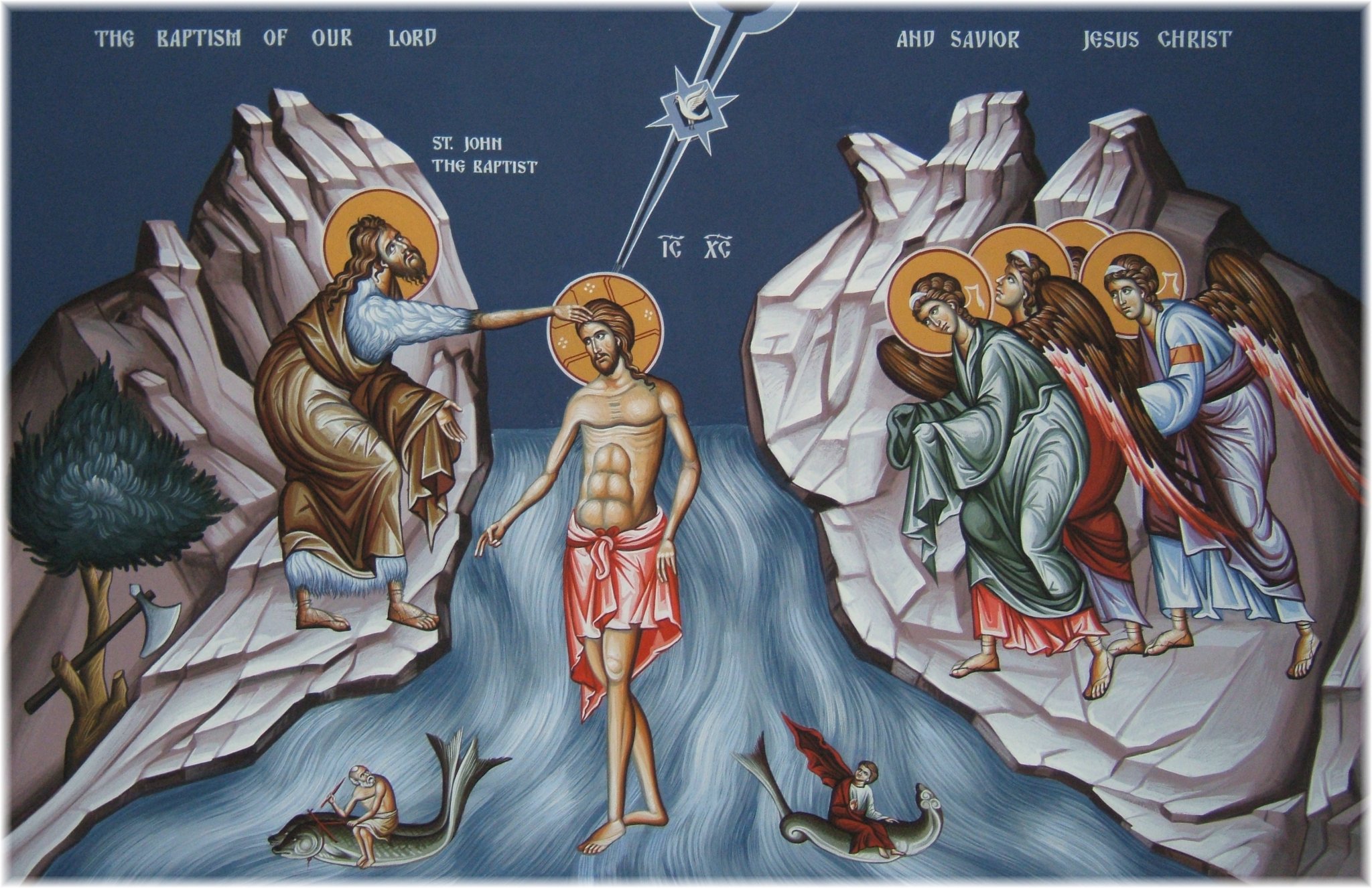 To that very place and in that very context comes Jesus Christ, our Lord. And what is He coming to do? He’s coming to be baptized!
 Christ’s glory, His exultation is to call you and chose you who are not wise according to worldly standards, not powerful, not of noble birth. Instead, He is exalted to choose us who are foolish, weak, and despised in the world (1 Cor. 1:26-31).
 Pastorsamwise
You must be logged in to post a comment.