No Nonsense – Sermon on Luke 24:1-11 for the Vigil of Easter

The bulletin for tonight’s service can be found here.

Luke 24:1-11

1 But on the first day of the week, at early dawn, they went to the tomb, taking the spices they had prepared. 2 And they found the stone rolled away from the tomb, 3 but when they went in they did not find the body of the Lord Jesus. 4 While they were perplexed about this, behold, two men stood by them in dazzling apparel. 5 And as they were frightened and bowed their faces to the ground, the men said to them, “Why do you seek the living among the dead? 6 He is not here, but has risen. Remember how he told you, while he was still in Galilee, 7 that the Son of Man must be delivered into the hands of sinful men and be crucified and on the third day rise.” 8 And they remembered his words, 9 and returning from the tomb they told all these things to the eleven and to all the rest. 10 Now it was Mary Magdalene and Joanna and Mary the mother of James and the other women with them who told these things to the apostles, 11 but these words seemed to them an idle tale, and they did not believe them.

Alleluia! Christ is risen! 
He is risen indeed! Alleluia!

In the name of Jesus. Amen.

With all the reverence and respect that I can give to them, the angels that appear the morning of the resurrection are a bit sassy. These women had left early, even before the sun had started to peek over the horizon. So, they probably hadn’t gotten themselves ready like they would on any other morning. They just tossed on some clothes and grabbed the bundles of spices as they went out the door to walk through that dewy, morning air. They went intending to finish the job of burying Jesus. But when they arrived at the tomb, they find it. The stone – rolled away. The body of Jesus – gone. So, they stand there totally disheveled and utterly perplexed.

These two angels that stand in front of them look completely different. The angels are clothed in dazzling apparel. They look at these tired women with their bundles, and it’s almost like the angels are thinking, “Oh, for cute. These women with their bundles of spices. What do they think they are going to do here?”

And one of those angels asks his sassy question, “Why do you seek the Living One among the dead? He’s not here. He is risen. Remember what He told you while He was still with you in Galilee? The Son of Man had to be delivered into the hands of sinful men, crucified, and on the third day rise. By the way, ladies, that’s today.” It’s like that angel is saying, “This shouldn’t be too difficult for you. He told you all about this.”

And it’s at that point that these women – Mary and Mary and Mary and Mary (there were lots of Marys) and Joanna and Salome – they remember that Jesus had said that He would rise. Only then did they remember those words of Jesus.

So, they ran back to tell these things to the eleven apostles and all the others who were gathered together. Luke doesn’t record the conversation between the women and the rest, but he makes it very clear (it doesn’t come out in our translation) that there was an ongoing conversation. “As they were speaking about these things to the apostles” (Lk. 24:10). 

Luke only leaves us to imagine what this conversation would have sounded like. But the women probably told them all about the angels and their dazzling apparel and about the other sassy angel who had come down to sit on the stone and dance on the grave of death (Mt. 28:2-3). They would have told them how the angel reminded them what Jesus had said about that dying and rising stuff.

But the words of these disheveled, frantic, crazy women sounded delirious. The apostles figured it was nothing more than an idle tale and a bunch of nonsense. What they had seen on Good Friday was too devastating. They figured the women hadn’t gotten enough sleep and should have set their alarm clocks for a little later.

And that reaction to the women’s report is a huge comfort to us today. They should have believed the whole time, even as Christ hung on the cross. But the fact they initially thought it was all nonsense bolsters our faith.

Because as that day rolled on, Jesus would appear to two of them on the road to Emmaus (Lk. 24:13-32). Jesus would appear to Peter (Lk. 24:34). That evening, Jesus would appear to all of them as they sat locked in the upper room (Jn. 20:19-22). Jesus would eat in front of them and show them His pierced hands and side (Lk. 24:38-43).

The women weren’t spewing a bunch of nonsense. It wasn’t an idle tale. As that day wore on, their disbelief melted away into belief. And that belief would strengthen into boldness. And that boldness would mature into courage.

What first had sounded like an idle tale and a bunch of nonsense to the apostles slowly became an undeniable certainty. Jesus died but lives. And now, because He lives, death would have no hold on them because it had no hold on Jesus. Death was no longer their enemy, because their Savior, their Lord, their Jesus, had defeated death.

As the years passed, almost all of those – who, initially, thought that the Resurrection was just a bunch of nonsense, just an idle tale of tired and confused women – they would, one by one, refuse to deny the fact that Jesus had risen. They would not deny that the One who had died is now living. They would rather give up their own lives because it wasn’t nonsense. Jesus is the Living One who gives everlasting life to all who believe in Him.

Dear saints, the day is coming when all the perplexities of this world and of your life will not be perplexing anymore. In that day, this fact will remain certain, firm, and sure – Jesus is risen. It is no nonsense. Amen.

Alleluia! Christ is risen! 
He is risen indeed! Alleluia!

The peace of God, which surpasses all understanding, will guard your hearts and minds in Christ Jesus. Amen.

The Word of Yahweh – Sermon on Jeremiah 1:4-19 and Revelation 19:6-16 for Midweek Advent 3

Jeremiah 1:4-19 & Revelation 19:6-16

In the name of Jesus. Amen.

Through this Advent sermon series, we have seen Jesus, the eternal Son of God, in the Old Testament before He became Yahweh incarnate. The first week, we saw how Jesus appeared to Moses in the burning bush as the Angel/Messenger of Yahweh calling Moses to deliver His people out of slavery in Egypt. Last week, we heard how Yahweh defines His name, “I am,” to Moses through the book of Exodus. Tonight, we are fast-forwarding just over 800 years (806 to be exact) to the call of Jeremiah where we see how Jesus, the Word of Yahweh, is active in and through His people.

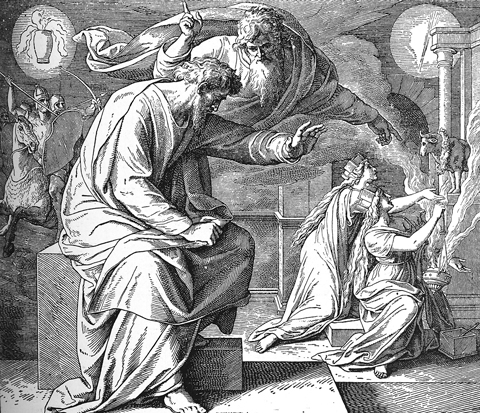
In that Old Testament reading tonight (Jer. 1:4-19), Jeremiah recounts God calling him to be a prophet. Jeremiah tells us, “The Word of Yahweh came to me” (Jer. 1:4). Now, right off the bat, we don’t want to get the wrong impression about this encounter. When Jeremiah says, “the Word of Yahweh came to me,” it isn’t just some voice in Jeremiah’s head or even something Jeremiah merely hears with his ears. No. Look at v. 9. The Word of Yahweh that comes to Jeremiah has a hand that reaches out and touches Jeremiah’s mouth.

Lord willing (Jam. 4:15), we will gather again this Sunday night and hear from Jn. 1:14 that the Word became flesh and dwelt among us. In other words, the God who created all things took upon Himself a body. Now, because of Christmas, being human is part of God’s identity. But here, long before Jesus was born, this Word of Yahweh comes to Jeremiah, stretches out His hand, and touches Jeremiah’s mouth because had a plan for Jeremiah. A plan which had been in place for a long, long time.

The Word of Yahweh didn’t wait for the right person to come along, get all the right education, and amass five years of experience before calling him. Nope! Even before Jeremiah was born or formed in the womb, Yahweh had appointed Jeremiah to be a prophet to the nations (Jer. 1:5). But Jeremiah isn’t too keen on the idea because he’s only a youth (probably under 20 years old), so Yahweh gives Jeremiah this wonderful calling and promise, “Wherever I send you, go. Whatever I command you, speak. You don’t need to be afraid. I’ll be with you.” And that with divine hand, the Word of Yahweh reaches out and places His words in Jeremiah’s mouth. And those words set Jeremiah over nations and kingdoms to pluck up, break down, destroy, and overthrow. And those words also enable Jeremiah to build and plant. In other words, God is going to use Jeremiah to speak His words of Law and Gospel.

Jeremiah served in the twilight of his nation, Judah. Jeremiah’s culture, like our culture today, had drifted far from God’s Commandments. That is why four stated purposes of his preaching are related to judgment – to pluck up, to tear down, to destroy, and to overthrow.

But Jeremiah will also build and plant by preaching beautiful Gospel. He would preach about healing and restoration (Jer. 3:22, 30:17). Jeremiah would preach that even though the people would go into exile, a remnant would return (Jer. 23:3, 50:20). He announced that Yahweh would raise up for David the righteous Branch and make His people righteous (Jer. 23:5-6). Through Jeremiah, God foretold the New Covenant Jesus would institute in Holy Communion where Yahweh would forgive iniquity and remember sin no more (Jer. 31:31-34).

In our text, the Word of Yahweh comes to Jeremiah two more times with these visions of an almond branch and boiling pot. For the sake of brevity, I’m not going to go into too much detail about the significance of why God shows those two particular things to Jeremiah. But we should notice the comfort those visions bring. In the vision of the almond branch, the Word of Yahweh promises that He is watching over His Word to perform it. Through the Word of Yahweh, God announces what is going to do (Am. 3:7), and He follows through. God says what He does, and He does what He says.

And with the vision of the boiling pot, the Word of Yahweh declares that His judgment is about to boil over against the sin of His people. That’s why Jeremiah is to dress himself for work and not hold back the preaching of the Law (Jer. 1:16-17). Even though Jeremiah’s audience isn’t going to like what God says through him, the Word of Yahweh promises that He will make Jeremiah a fortified city, an iron pillar, and bronze walls (Jer. 1:18). And even though everyone fights against Jeremiah, God promises to be with him to deliver him (Jer. 1:19). And if God promises to do that for Jeremiah, He can also do it for and to you.

But, we need to change gears here because you and I are not Jeremiah. And yet Jesus, the Word of Yahweh, has called us to proclaim His Word to the people He puts in our lives. The world needs to hear what God has to say. In Mt. 10:27, Christ says, “What I tell you in the dark, say in the light, and what you hear whispered, proclaim on the housetops.” That, at times is a daunting call. But dear saints, we cannot shrink back from saying what God has clearly said in His Word. The world has turned upside down because we who bear Christ’s name have been either afraid or ashamed to simply say what the Bible says. Repent.

In Mk. 8:38, Jesus warns, “Whoever is ashamed of Me and My words in this adulterous and sinful generation, of him will the Son of Man be ashamed when He comes in the glory of His Father.” The opinions of evil, sinful men do not change the truth of what God says. Don’t ever be ashamed or afraid of confessing what God has said in His Word. You, like Jeremiah, can speak the Word of Yahweh before kings and not be put to shame (Ps. 119:46). God is with you and will strengthen you like forged metal upon which the forces of this world will break. Jesus promises that when you are dragged before the authorities of this world to bear witness, you don’t need to be anxious or worried about what to say because the Holy Spirit will give you the very words that need to be spoken, and God will speak through you (Mt. 10:18-20). So speak.

I want to close these Advent sermons with the picture we were given in our Epistle reading (Rev. 19:6-16). There, John sees Jesus, the Word of Yahweh, riding on a white horse. His eyes are like a flame of fire, and He wears many crowns on His head. The armies of heaven follow Him, and from His mouth comes a sharp sword which will strike down the nations that He will rule over with a rod of iron.

That picture is how your Savior is today. Jesus has all authority in heaven and on earth (Mt. 28:18). Throughout human history, earthly rulers have and will continue to be in rebellion against Christ, and their treachery has brought harm to creation. But, ultimately, those authorities have no power. Jesus, the Word of Yahweh, has more power than all the forces of the world and all their machines of war combined. This Jesus has come once, and He is coming again.

But there is more to that picture. The first half of that reading shows you – the Church and Bride of Christ. You, believer, are part of that great multitude singing the praises of Christ. Because Jesus came in your flesh, suffered, bled, died, and rose again for you, God has granted you to be clothed in fine, bright, and pure clothes. You stand, clothed in the good works and righteous deeds that God has prepared beforehand for you to walk in (Eph 2:10).

Christ – the Lamb and Bridegroom, the Word of Yahweh – has come. This fact brings terror to the faithless, but that isn’t you. You are His beloved. And He is coming to bring you to to Himself and to eternal life, joy, and peace. Hallelujah! Come, Lord Jesus. Amen.

The peace of God, which surpasses all understanding, will guard your hearts and minds in Christ Jesus. Amen.
Fear Not, Confess – Sermon on Matthew 10:26-33 for the Presentation of the Augsburg Confession

Matthew 10:26–33

26 “So have no fear of them, for nothing is covered that will not be revealed, or hidden that will not be known. 27 What I tell you in the dark, say in the light, and what you hear whispered, proclaim on the housetops. 28 And do not fear those who kill the body but cannot kill the soul. Rather fear him who can destroy both soul and body in hell. 29 Are not two sparrows sold for a penny? And not one of them will fall to the ground apart from your Father. 30 But even the hairs of your head are all numbered. 31 Fear not, therefore; you are of more value than many sparrows. 

32 “So everyone who acknowledges me before men, I also will acknowledge before my Father who is in heaven, 33 but whoever denies me before men, I also will deny before my Father who is in heaven.”

In the name of Jesus. Amen.

If we’re honest, we all have to admit that there are times we have been afraid to speak the truth. What Jesus tells us in His Word, we are often afraid to bring into the light. We hear things in Church that we don’t whisper outside these walls, and we don’t dare shout from the housetops.

Jesus clearly says that nothing is covered or hidden that will not be revealed and known. But speaking the truth can still be hard. We don’t want to say something that will cause us to be criticized, ridiculed, and rejected. We don’t want to deal with the discomfort of knowing we have offended someone. We don’t want to be misrepresented as being hateful people. But every reason for not speaking has a common root – fear. But all those fears in the wrong things. We are fearing those who can kill the body but not the soul. Repent. Repent and stop fearing mere men, but fear God who can destroy both the soul and body in hell.

As I mentioned earlier, today is the 493rd anniversary of the presentation of the Augsburg Confession which lays out a summary of what we believe, teach, and confess here at Christ the King. I want to give a very brief bit of history about that presentation before I apply the rest of this Gospel reading to you. I’m sorry if you don’t like history, but it will be helpful for you to hear it so you can boldly live out your faith in today’s culture.

In 1529, the army of Muslim Ottoman Empire was marching its way from Istanbul, Turkey into Europe and through the Holy Roman Empire. But the unusually rainy weather that year caused the Muslim invaders to stall out just south of Germany before they returned home. Emperor Charles V knew the armies would probably return, and he wanted unity in his empire so they could all fight against the Muslim armies together. This meant that Charles had to deal with the religious problem between the German territories who had been awakened by Luther’s proclamation of the Gospel on the one side and the Roman Church on the other side.

Charles called the Lutheran princes and officials from the Roman Church to meet in the city of Augsburg. When the Lutheran princes arrived, they were met with an order from Charles to participate in a festival called Corpus Christi. That festival of the church of Rome is where a priest or bishop would consecrate the elements of the Lord’s Supper, but then, rather than consuming it, the Bread would be placed in a golden box and paraded through the town so people could see the elements. The Roman church taught that simply seeing the Bread was a way for the people to commune. The whole thing flies in the face of what Jesus says about the Lord’s Supper. He says, “Take, eat,” not, “Take, walk behind, and look.”

The Lutherans were appalled at the situation. One of the Lutheran rulers stood before Charles and replied to this demand, “Before I would deny my Lord and Savior in this way, I would gladly kneel before you and have my head chopped off.” In other words, “No.” Charles could barely speak German, so he responded, “Nicht kopf ab. Nicht kopf ab.” Which is, “Not head off. Not head off.”

A few days later, at 3:00 PM on June 25th of 1530, Charles, the Roman officials, and the Lutheran princes gathered to hear the doctrinal statement of the Lutherans which is the Augsburg Confession. In that document, the Lutherans wanted to show that they were not heretics but were faithfully preaching the doctrines of Scripture and traced their doctrine and practice back to the early years of the church. Crowds came to hear the confession; in fact, so many people gathered they couldn’t all fit in the castle. The windows were opened, and the document was read in its entirety. The voice reading it was so clear and articulate that it is recorded that thousands outside the castle were able to hear. And all the Lutherans stood as it was read.

By holding to that confession, the Lutheran princes were all risking their lands and lives, but they held firm to those Scriptural doctrines anyway. They spoke of God’s testimonies before kings and were not put to shame (Ps. 119:46). And they didn’t know how Charles, the head of the government, would respond. It was possible that they would all be executed, and their lands and people would be attacked by Charles’ armies. It was possible that Charles would agree with them. They didn’t know. They didn’t have control. All they could do was speak God’s testimonies and leave everything in His hands.

Ok. History lesson over.

Today, we don’t have control over the government. We don’t have control over the culture or the media. We don’t have control of the perception others have of us. So many things are outside our control, but that’s ok. It’s ok. Our confidence in confessing God’s testimonies is never based on having control or tax benefits or a favorable political or social environment. 

We can always speak God’s testimonies and not be put to shame. Yes, we might be mocked and ridiculed and labeled as ‘old-fashioned.’ Yes, we might be kicked to the side of the culture. Yes, we might even be persecuted by the government, society, and media. But that doesn’t matter because none of them have control over reality. They’ve never had that control, and they never will because their word didn’t create the heavens and the earth. Their word didn’t establish what is right and what is wrong. Their word doesn’t determine the truth. But God’s Word did and still does.

By God’s Word the heavens and the earth were made. By God’s Word, Christ was sent to be the Savior of sinners. By God’s Word, you have been called, gathered, enlightened, and sanctified as the Church. By God’s Word, you are kept and sustained in the one true faith.

That is why we can confess God’s Word without fear. The worst anyone can do to us is merely kill our bodies; they cannot touch our souls (Mt. 10:28). The God who created the sparrows by His Word knows when one of them falls to the ground. And that same God is your heavenly Father who has numbered every hair on your head. That same God is the One who came to earth, took on flesh, shed His blood, and died for you. That same God is the One who inscribed your name in the Book of Life before the foundation of the world (Rev. 17:8).

Now, we might wish that God would send revival to our land. We might wish that God would send reformation to unite the scattered and divided Christians here on earth. We might wish that God would raise up another Luther or, like He did in our Old Testament reading (Neh. 8:1-2, 5-6, 9-12), another ruler like Nehemiah or another priest like Ezra who can restore the Word of God to our land and to the people around us. But God in His wisdom, which is greater than yours, hasn’t given one – at least, not yet. But God has raised up you. God has placed you in your family; in this congregation; in your workplace; in this city, state, and country to confess His testimonies, and you will not be put to shame.

So, dear saints, acknowledge Christ before men, and He also will acknowledge you before God the Father (Mt. 10:32).

And if you still fear to speak His testimonies and acknowledge Christ, if you aren’t sure how to speak the truth in love (Eph. 4:15), here are some suggestions for overcoming that fear:

Start by being here at church for the services and Bible studies. Learn from God’s Word because that will help you grow in your faith. And, as you grow, you will be more equipped to confess.

Then, talk with your family after church. Talk about the hymns and the Scripture readings. Talk about what you leaned in Sunday school and the sermon. Discuss with your spouse, kids, and parents what God taught you and how He encouraged and blessed you through His Word. All of that is zero risk because you won’t be persecuted for doing that. It won’t put you or them in danger. Also, it is good practice for confessing the faith and speaking the truth of God’s testimonies to others.

If you’re already doing that, expand further out. Confess to friends and relatives that you are close to – people who are a little further out but you have a good, solid relationship with. If you mess up and say something that offends them, you have a better chance of getting another opportunity to confess better or more clearly. That is also low risk.

As you become more comfortable doing that, keep going. You will be better equipped to confess to people you are less familiar with and even to strangers. The more you confess, the better you get at it. And along the way, you will be building up and encouraging those around you to confess as well.

Dear saints, fear not. Confess God’s testimonies.

When time is no more and you stand before God, you will only have Him to answer to. Everything else will pass away. As many days as God gives to you, confess Him knowing that only God and His Word will stand. The world may try to shame us, but they don’t have any power. The power of men comes and goes. All flesh is like grass and eventually passes away, but the Word of the Lord endures forever (Is. 40:6, 8; 1 Pet. 1:24-25).

Dear Christian, Jesus is risen. We are going to win. Amen.

The peace of God, which surpasses all understanding, will guard your hearts and minds in Christ Jesus. Amen.

Who Are You? – Sermon for the Fourth Sunday of Advent on John 1:19-28

Listen here.

John 1:19–28

19 And this is the testimony of John, when the Jews sent priests and Levites from Jerusalem to ask him, “Who are you?” 20 He confessed, and did not deny, but confessed, “I am not the Christ.” 21 And they asked him, John the Baptizer“What then? Are you Elijah?” He said, “I am not.” “Are you the Prophet?” And he answered, “No.” 22 So they said to him, “Who are you? We need to give an answer to those who sent us. What do you say about yourself?” 23 He said,
“I am the voice of one crying out in the wilderness,
‘Make straight the way of the Lord,’
as the prophet Isaiah said.”

24 (Now they had been sent from the Pharisees.) 25 They asked him, “Then why are you baptizing, if you are neither the Christ, nor Elijah, nor the Prophet?” 26 John answered them, “I baptize with water, but among you stands one you do not know, 27 even he who comes after me, the strap of whose sandal I am not worthy to untie.” 28 These things took place in Bethany across the Jordan, where John was baptizing.

Grace, mercy, and peace be to you from God our Father and from our Lord and Savior, Jesus Christ. Amen.

Who are you, John? Well, his name means, ‘the Lord is gracious.’ John’s name was given to him not by his parents but from heaven itself (Lk. 1:13). So, when you insert the meaning of John’s name, our text opens saying, “This is the testimony, the witness, of God’s grace…”

Priests and Levites come from Jerusalem to ask John, “Who are you?”

If someone walks up to you and asks, “Who are you?” how do you answer? You maybe start with your name and tell them about your family. You talk about your job or what you are studying in school. The conversation might turn to your interests, hobbies, or pet-peeves.

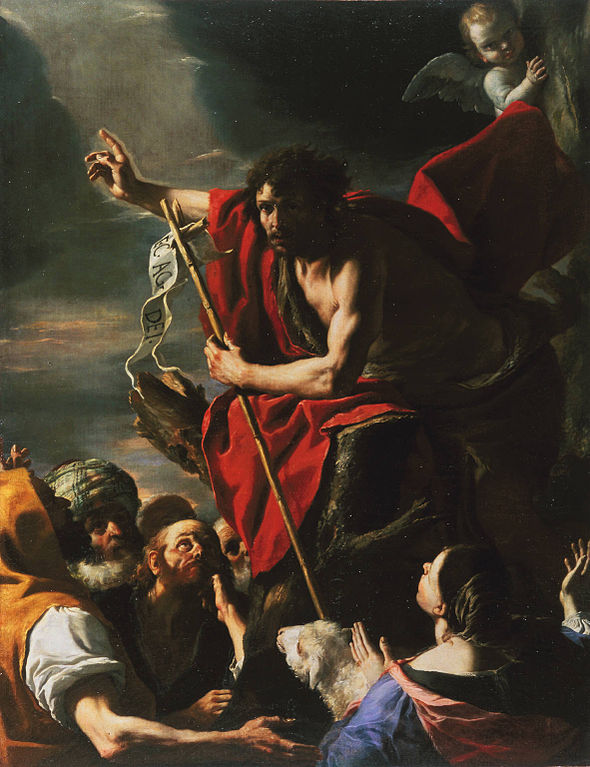
John doesn’t do that. The priests and Levites come out into the wilderness to see this guy who has a large following, has his own disciples, and has baptized gobs of people from Jerusalem and Judea (Mt. 3:5-6). They want to know and so they ask, “Who are you?”

“Well, I’m not the Christ.” And you can just picture John go back to preaching and baptizing, and the priests and Levites scratching their heads.

Even though the picture we have of John in the Gospels is extremely intense, John must have been a bit of an introvert. But if we have a biblical understanding of who John is and what God had given him to do, this is a perfect answer.

John is the forerunner. He is the one sent by God to point people to God’s grace in Jesus. John is the one who prepares the way of the Lord. And when you are preparing the way for the Christ who is so great and mighty that you aren’t even worthy to untie His sandals, confessing that you aren’t Him makes a lot more sense.

Now, the priests were students of the Old Testament. They knew that the last word they had from God was that God would send Elijah (Mal. 4:5), the prophet who didn’t die but was taken into heaven. Malachi had prophesied that God would send His messenger before Him who would prepare for God’s coming into the Temple (Mal 3:1). There was even some in those days who thought that Elijah would return from heaven and be the Messiah. So, these priests and Levites ask, “Are you Elijah?” And John says, “Nope,” and goes back to baptizing.

Now, this may seem a little strange because Jesus will say that John is the Elijah whom Malachi spoke about (Mt. 11:14). But John’s denial is probably because of their misconceptions.

So, the priests and Levites think it over some more and ask, “Ok, are you the prophet?” incarnation of JesusAnd they ask this because of what we heard in our Old Testament lesson (Dt. 18:15-19). In that text, Moses told the people that God would raise up a prophet for His people from among them. And Moses made it very clear, “To Him you shall listen.”
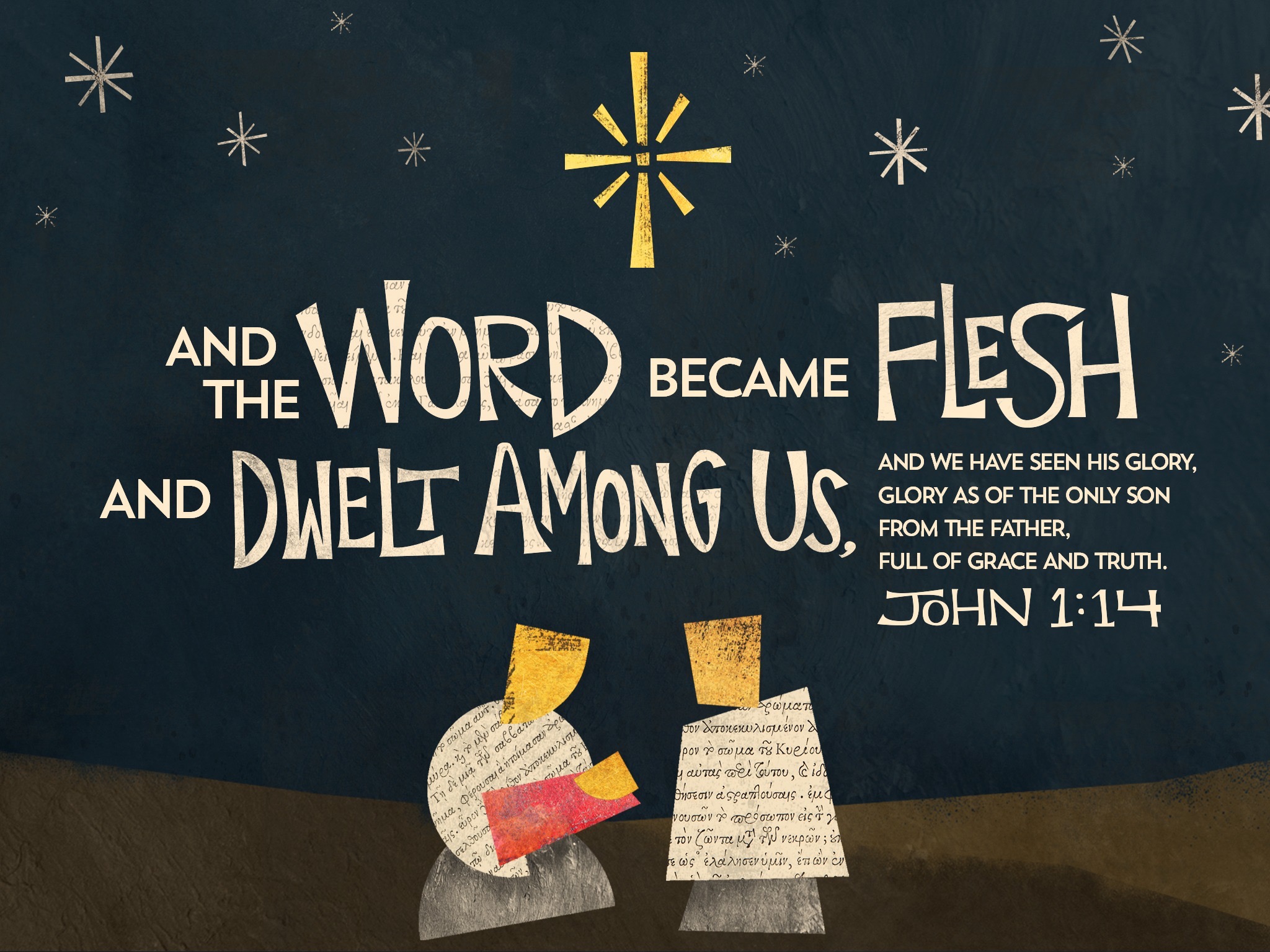
In that text, Moses reminds the people about the day when God gave the Ten Commandments on Mt. Sinai. The people were, well, terrified and asked Moses to not let God speak to them anymore. And God said, “Yeah, talking to them like that is too frightening for them. I’ll speak to them again in a way that doesn’t make them wet themselves. I’ll put my words in the mouth of my Prophet, and He will speak to the people.” God was referring to Jesus – the One who speaks God’s words of forgiveness, who makes God’s grace and truth known (Jn. 1:14). So, when John gets asked, “Are you the prophet?” again, he says, “No.”

The priests and Levites are done asking John, “Who are you?” because John isn’t interested in answering. “Fine, you won’t tell us who you are. But we need to tell the guys who sent us something. What do you say about yourself?”

And John still keeps the focus where it should be, “Listen, guys, I’m no one. I am simply a voice preaching in the wilderness preparing the way for the Lord.”

Now, what does all of this mean for us today? What can we learn from this text?

One thing we can learn from the priests and Levites is that even if someone has studied the Scriptures, it doesn’t mean they are teaching the Bible rightly. Don’t simply listen to someone’s preaching and teaching because they seem nice, can quote a verse periodically, and sound “Bibley.” Know the Bible. And if any preacher or teacher isn’t constantly pointing you to Jesus for the forgiveness of your sins, avoid them.

Second, see how John confesses right away that he is not the Christ. Don’t ever trust in yourself for your salvation. God delivers you. Like John, you are not the Christ. But thanks be to God, you don’t need to be. Jesus has come. He has delivered you from sin, death, and the devil. His birth, His death, His resurrection, and His ascension have secured a place for you to live forever with God who is full of mercy and grace.

John 1_14Finally, take a page out of John’s playbook and point people to Jesus. John has a laser-like focus on Jesus and isn’t interested in talking to people unless he is pointing them to Christ. Point others to the One who delivers them from sin. Point them to Jesus, the Lamb of God who takes away the sin of the world. Tell them that they don’t need to save themselves. Jesus saves them.

This is the testimony of John. This is the testimony of God’s grace. May that be our testimony as well. May that be our witness as we gather together and as we go out from here.

I look forward to celebrating the coming of God’s grace with you tonight as we rejoice in the incarnation of our Lord and Savior. Amen.

The peace of God, which surpasses all understanding, will guard your hearts and minds in Christ Jesus. Amen.