John 10:1-21—“Truly, truly, I say to you, he who does not enter the sheepfold by the door but climbs in by another way, that man is a thief and a robber. 2 But he who enters by the door is the shepherd of the sheep. 3 To him the gatekeeper opens. The sheep hear his voice, and he calls his own sheep by name and leads them out. 4 When he has brought out all his own, he goes before them, and the sheep follow him, for they know his voice. 5 A stranger they will not follow, but they will flee from him, for they do not know the voice of strangers.” 6 This figure of speech Jesus used with them, but they did not understand what he was saying to them.
7So Jesus again said to them, “Truly, truly, I say to you, I am the door of the sheep. 8 All who came before me are thieves and robbers, but the sheep did not listen to them. 9 I am the door. If anyone enters by me, he will be saved and will go in and out and find pasture. 10 The thief comes only to steal and kill and destroy. I came that they may have life and have it abundantly.”
11 “I am the good shepherd. The good shepherd lays down his life for the sheep. 12 He who is a hired hand and not a shepherd, who does not own the sheep, sees the wolf coming and leaves the sheep and flees, and the wolf snatches them and scatters them. 13 He flees because he is a hired hand and cares nothing for the sheep.
14 “I am the good shepherd. I know my own and my own know me, 15 just as the Father knows me and I know the Father; and I lay down my life for the sheep. 16 And I have other sheep that are not of this fold. I must bring them also, and they will listen to my voice. So there will be one flock, one shepherd.
17 “For this reason the Father loves me, because I lay down my life that I may take it up again. 18 No one takes it from me, but I lay it down of my own accord. I have authority to lay it down, and I have authority to take it up again. This charge I have received from my Father.”
19 There was again a division among the Jews because of these words. 20 Many of them said, “He has a demon, and is insane; why listen to him?” 21 Others said, “These are not the words of one who is oppressed by a demon. Can a demon open the eyes of the blind?”
In the name of Jesus. Amen.
The most important rule in real estate is, “Location, location, location.” The same rule applies to interpreting Scripture, but since Scripture’s location isn’t geographical but the written word, we need to tweak the rule. The most important rule in interpreting Scripture is, “Context, context, context.”
So what is the context for our passage this morning? I’m glad you asked. The context is Jesus’ healing of the man born blind which begins at Jn. 9:1 and continues through all forty-one verses of that chapter. But the passage shouldn’t be broken at 10:1. Sometimes the chapter breaks in the Bible do you no favors. The story of the man born blind doesn’t end until 10:21.
It has been six weeks since our sermon text was Jn. 9 where Jesus heals the man born blind. So let me give you a summary of that chapter. Jesus heals the man born blind. The Pharisees accuse the man of lying that Jesus healed him; they say he must have never been blind at all. The Pharisees summon the man’s parents. They confirm that he is their son who was born blind. But they are fearful of the Pharisees so they make their son tell his own story of how his sight was restored. The man repeatedly says that Jesus opened his eyes. The Pharisees say that Jesus is a nobody and a sinner, and they try to get the man to accuse Jesus of being guilty of sin, but he refuses. So they throw him out of the synagogue. After he is thrown out, Jesus finds the man and tells him that He is the Christ. And the man believes.
The last three verses of Jn. 9 quote Jesus speaking some of the harshest Law recorded in all the Gospels and are an important lead-up to our text. Jn. 9:39–41 39 Jesus said, “For judgment I came into this world, that those who do not see may see, and those who see may become blind.” 40 Some of the Pharisees near Him heard these things, and said to Him, “Are we also blind?” 41 Jesus said to them, “If you were blind, you would have no guilt; but now that you say, ‘We see,’ your guilt remains.”
After these harsh words of law, the scene continues with our sermon text which is the heart of the Gospel message. Jesus speaks about this Good Shepherd stuff. Jesus tells this little parable – a “figure of speech” – about the sheep and how desperately they need the shepherd to lead them safely into the sheepfold.
However, as the Pharisees and the crowds listen to this figure of speech, they don’t understand, so Jesus explains it more fully. Jesus says that He is the Door through which the sheep enter safety. Only by entering through Jesus will a person be saved and find good, green pasture, still waters, and restoration of the soul.
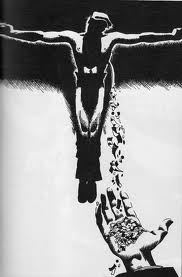 Jesus says that He is the Good Shepherd of Ps. 23 who provides security in the valley of the shadow of death, He prepares the table, and He pours into your cup so that it overflows.
Only in Jesus does your cup flow over with life.
Your Good Shepherd says, “I have come that they may have life.” If Jesus has come so that you can have life, than what did you have before? You had the absence of life – you owned death.
Because of our sin, we all are the owners and creators of death. We are born dead, and we perpetuate death. We spread death through our words and actions which are all sinful and unclean. Even though we live, we are the walking dead.
Annalise and Naomi, and our boys for that matter, love singing the song “In Summer” from the new Disney movie Frozen. The song is sung by a snowman, Olaf, who is magically alive. Olaf has never experienced summer, but he really, really wants to. Olaf sings about how he can’t wait for summer to come so he can go lie down in the burning sand and get a tan. He wants to see “what happens to solid water when it gets warm.” As Olaf sings about summer he imagines walking through the green grass and sings, “Winter’s a good time to stay in and cuddle, but put me in summer and I’ll be a… happy snowman!”
The song is actually a good picture of us in our sin. We live our lives in a blissful, sinful ignorance. Because of sin, our days are numbered. We will all melt in the coming judgment of God.
But your Good Shepherd says, “I have come that you may have life and have it abundantly.” This is much more holistic than you or I can possibly imagine. Because of the Good Shepherd and His work, He gives you life. This is the reason Jesus, the Son of God, the Good Shepherd, entered creation.
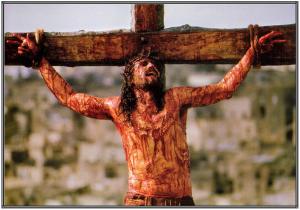 How does the Good Shepherd give this life? By lying down His life for you, the sheep. Five times in v. 11-18 Jesus says that He is the Good Shepherd because He lays down His life for you sheep. The Good Shepherd gives up His life for you. “He overcomes the wolf by filling the wolf’s mouth with His own body and thus saves the sheep from being lost” (Rev. David Petersen).
Your Good Shepherd lays down His life for you. No one took Jesus’ life from Him; He laid it down Himself so that He could take it up again,.
Brother and sister, in your Good Shepherd, you have abundant life. Even death becomes life in the hands of the Good Shepherd because He conquered death by rising from the grave. The sting of death is sin and the power of sin is the law, but your Good Shepherd has given His life so that you too have victory over the law and sin and death (1 Cor. 15:56).
Easter season is not just about celebrating the fact that Jesus is risen from the dead, but that you also are risen with Him. Just as your Good Shepherd has risen so you too have risen. Where your Good Shepherd is, there you are also. Amen.
The peace of God, which surpasses all understanding, will guard your hearts and minds in Christ Jesus. Amen.
 Pastorsamwise
You must be logged in to post a comment.