Mark 7:1–13
1 Now when the Pharisees gathered to him, with some of the scribes who had come from Jerusalem,2 they saw that some of his disciples ate with hands that were defiled, that is, u nwashed. 3 (For the Pharisees and all the Jews do not eat unless they wash their hands properly, holding to the tradition of the elders, 4 and when they come from the marketplace, they do not eat unless they wash. And there are many other traditions that they observe, such as the washing of cups and pots and copper vessels and dining couches.) 5 And the Pharisees and the scribes asked him, “Why do your disciples not walk according to the tradition of the elders, but eat with defiled hands?” 6 And he said to them, “Well did Isaiah prophesy of you hypocrites, as it is written,
‘This people honors me with their lips,
but their heart is far from me;
7 in vain do they worship me,
teaching as doctrines the commandments of men.’
8 You leave the commandment of God and hold to the tradition of men.”
9 And he said to them, “You have a fine way of rejecting the commandment of God in order to establish your tradition! 10 For Moses said, ‘Honor your father and your mother’; and, ‘Whoever reviles father or mother must surely die.’ 11 But you say, ‘If a man tells his father or his mother, “Whatever you would have gained from me is Corban”’ (that is, given to God)— 12 then you no longer permit him to do anything for his father or mother, 13 thus making void the word of God by your tradition that you have handed down. And many such things you do.”
In the name of Jesus. Amen.
Imagine that you got hired at a large company – let’s say Apple™. You show up for your first day. Your supervisor introduces you to your co-workers. You are given an orientation on the company. Your supervisor leads you to your desk, and you begin your first day on the job. Suddenly, you feel a hand on your shoulder and look up to see Tim Cook (the CEO of Apple). Of the thousands of co-workers he could be talking to, he talks to you. He welcomes you to the company and says, “The thing that I look at most is punctuality. I will not tolerate you being late. Do good work, but above all, be on time.”
What might you do? You have several options: You can make sure you leave your home every morning so that even if there is traffic, or you get a flat tire, you will still be clocking in on time. But then, you think to yourself, “What if my car breaks down completely? What if something outside of my control happens that makes me late. Tim Cook told me to be on time, so I need to be on time.” So you come up with a plan to simply live at your desk. You abandon your family and never see them. You miss all your kids’ soccer games, school plays, and birthdays. You never spend time with your spouse. You are consumed and haunted by the CEO’s words, “Be on time.”
So here you are living at work. You have to hide your blanket, pillow, and spare clothes because you don’t want people to know that you are so scared of disappointing the CEO that you are living at work. You dodge the security personal at night hoping that their flashlights won’t find you and reveal how consumed you are with making sure that you punch your time-card at the right time.
This analogy falls somewhat short of what is going on in our text, but hopefully it gives you an idea of what was going on in the Pharisees’ minds. God had given the Ten Commandments, and the Pharisees were terrified of breaking them. The Pharisees had a bunch of rules that they would teach in an effort to keep people from even getting close to breaking God’s Commandments.
But in doing so, the Pharisees went beyond what God’s Word says. For example: God gave the Third Commandment, “Remember the Sabbath day to keep it holy.” So the Pharisees determined how many steps you could take on the Sabbath. They made a rule about how much weight you could carry in your hand or pocket. The Pharisees even discussed what you would do if you were holding an apple with your hand out of your window when the Sabbath began. Could you bring your hand into the window? Well, that would be delivering food. Can you drop the apple? Well, that could be planting an apple tree. Apparently, they even had a debate about where you could spit on the Sabbath. If you spit on the dirt, you might be watering a plant, so the Pharisees determined that it was allowable to spit on rocks.
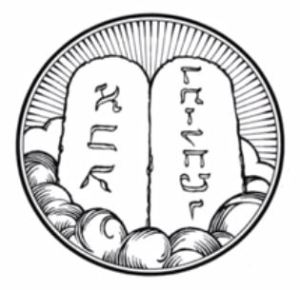 Now, we can laugh at these things, but these were serious debates. They understood that God was serious about His Commandments. He had come down on Mt. Sinai and written these rules in stone – twice. God had told them that He was, “A jealous God, visiting the iniquity of the fathers on the children to the third and fourth generation.” So what the leaders of the people did was to (and this is their words) “set a hedge” around the Law. God wanted them to keep the Sabbath holy, so they decided to make sure that they wouldn’t even get close to breaking His command.
People still do this type of thing today. Since the Bible tells us not to lust after someone who is not our spouse, some say we shouldn’t dance because dancing could lead to lustful thoughts and actions. They have come to believe this so strongly that they say all dancing is sin. There is even the joke, maybe you’ve heard it, that sex before marriage is bad because it could lead to dancing. They do the same with drinking alcohol. Since the Bible says that drunkenness is a sin, some say you should never drink alcohol even though the Bible never says that. In fact, the Bible says that wine is a gift from God to “gladden the hearts of man” (Ps. 104:15). But both of those are easy things to pick on.
The important thing is to realize that all of us do this. We make up our own rules and add to God’s perfect, complete Law in an effort to make God like us better. In all of this, we make ourselves to be God. We invent our own cultural rules and laws and begin to practically say, “Look at me God. I haven’t even gotten close to breaking that commandment. Look at me and love me because of it.” We become like the Pharisee in Lk. 18:10-15. We simply cannot stop ourselves.
Now, let me be clear, it is good to put ourselves in a position to refrain from breaking God’s Law. It is good for people who have a history of alcoholism in their family to refrain from drinking because we know alcoholism is often hereditary. But that doesn’t mean that your brothers and sisters who do not have that problem are less in God’s favor simply because they have a couple of beers or glasses of wine. And let me add this: kids, it is wrong for you to have alcohol if you are not 21 because you are to obey the laws of the land (Ro. 13:1-7).
Brothers and sisters, God’s Law is complete and perfect. By adding our little rules to keep us from breaking God’s Law, we are showing that we desire to be our own little-god. This is exactly what Eve did in the Garden. Eve said that God had commanded her not to “eat of the tree, neither shall you touch it, lest you die” (Gen. 3:3). God never said anything about it being wrong to touch the tree. But, with Eve and the Pharisees in our text, we see what adding to God’s Law does not stop us from sinning. We still break God’s commands. We still sin. We still, by our thoughts and actions, damn ourselves.
 For the Pharisees and for us, because of our sin, God’s Law doesn’t always do what God designed it to do. God’s Law always condemns us. If you think you can earn God’s love by following your little rules, you are adding sin to sin. Romans 4:15 says, “The law brings wrath” (cf. Ro. 7:10-25 and Gal. 3:10). God’s Law always “kills, reviles, accuses, judges, and condemns everything that is not in Christ” (Luther). You are always in a dangerous place when you look at God’s Law and think to yourself, “Well, at least I’m keeping that one pretty well.” You may fool others and you may even fool yourself, but you aren’t fooling God. His Law always convicts. God’s Law is intended to cut you open like a sword, so that you watch in horror “as [your] own blood spills out of [you]” (Rev. D. Matyas).
Jesus doesn’t give the Pharisees any Gospel in this text. The Pharisees don’t want mercy; they want to not need mercy.
So to you who are content with your relationship with God, God has nothing for you but His Law. God tells you that not only have you not done what He has commanded, but you have done the opposite. He sees that you are imperfect, yet He demands perfection. Christ demands, “Be perfect as your heavenly Father is perfect” (Mt. 5:48).
But to you who are convicted of your sin, God has another word. To you who know that you have sinned and offended God in all you say and do, God speaks His word of Gospel. He speaks His words of absolution over you. 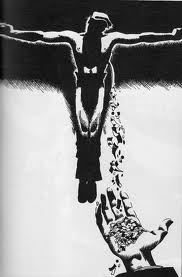 Brothers and sisters, God has sent His own Son to be sin for you. Jesus took your sins and was run through with God’s sword of the Law. Jesus’ blood was spilt from His head, hands, feet, and side. God punished your sins upon Jesus as He died on the cross, and in return, God gives you the perfect, complete obedience of Christ. Because you are in Christ, because you have been united to Him in baptism, because you believe His words of forgiveness in the absolution, because you are joined to Jesus as you eat His body and drink His blood, God remembers your sins no more (Jer. 31:34). Your sins are separated from you as far as the east is from the west (Ps. 103:12). Your sins have been smashed into nothingness under God’s foot and cast into the depths of the sea (Mic. 7:19).
Because of Jesus, God says to you, “I have blotted out your transgressions like a cloud and your sins like a mist; return to Me, for I have redeemed you” (Is. 44:22). Amen.
The peace of God, which surpasses all understanding, will guard your hearts and minds in Christ Jesus. Amen.
 Pastorsamwise
You must be logged in to post a comment.