Matthew 11:2-11
2 Now when John heard in prison about the deeds of the Christ, he sent word by his disciples 3 and said to him, “Are you the one who is to come, or shall we look for another?” 4 And Jesus answered them, “Go and tell John what you hear and see: 5 the blind receive their sight and the lame walk, lepers are cleansed and the deaf hear, and the dead are raised up, and the poor have good news preached to them. 6 And blessed is the one who is not offended by me.”
7 As they went away, Jesus began to speak to the crowds concerning John: “What did you go out into the wilderness to see? A reed shaken by the wind? 8 What then did you go out to see? A man dressed in soft clothing? Behold, those who wear soft clothing are in kings’ houses. 9 What then did you go out to see? A prophet? Yes, I tell you, and more than a prophet. 10 This is he of whom it is written,
“‘Behold, I send my messenger before your face,
who will prepare your way before you.’
11 Truly, I say to you, among those born of women there has arisen no one greater than John the Baptist. Yet the one who is least in the kingdom of heaven is greater than he.”
In the name of Jesus. Amen.
Here we are – just over a week away from Christmas, and now we hear John the Baptizer. He is the fore-runner. He is the voice of one crying in the wilderness, “Prepare the way of the Lord.” He came tearing down mountains as he preached the Law and raising up valleys as he preached the Gospel.
John is an interesting character. He is one of only three people I can think of – Isaac, John, and Jesus – whose birth was promised from heaven before the child was even conceived (maybe you can think of more). God sent the angel Gabriel to tell Zechariah that God would open Elizabeth, his wife’s, womb; Gabriel also said that John would be filled with the Holy Spirit before he was even born (Lk. 1:15). When Mary was pregnant with Jesus and went to visit Elizabeth, Mary greeted Elizabeth, and John leapt in Elizabeth’s womb (Lk. 1:39-41).
 John was born and grew up as a Nazarite, so his hair was never cut. Imagine his big, bushy beard and his long, tattered hair. John preached out in the wilderness wearing clothes made of camel hair and leather belt. He had a peculiar diet of locusts and wild honey (Mk. 1:6). Imagine having locust breath – probably even worse than coffee breath. Matthew summarizes John’s preaching as this message: “Repent for the kingdom of heaven is at hand” (Mt. 3:2). People would come out to the wilderness to hear him preach, and when he saw them he said, “You brood of vipers! Who warned you to flee from the wrath to come?” (Mt. 3:7). He would preach about the axe that was laid to the root of every tree that would cut down each tree that didn’t bear fruit and throw it into the fire (Mt. 3:10). So, John was a preacher of the Law. But still all the country of Judea and Jerusalem was going out to John and being baptized and confessing their sins (Mk. 1:4-5).
But John was also a preacher of the Gospel. He would point people to Jesus. He told them about the One who was coming after him, whose sandals he was unworthy to stoop down and untie (Mk. 1:7). He pointed to Jesus and said, “Behold the Lamb of God, who takes away the sin of the world!” (Jn. 1:29, 35-36). John was a wild man frantically calling people to repent and pointing them straight to Jesus.
But that is not the John we hear about today. In today’s Gospel, John is in prison. He had preached against the sin of Herod, and Herod didn’t like it. The John in today’s Gospel reading isn’t standing in the wilderness next to the Jordan River with his hair blowing in the wind as he preaches repentance and the Lamb of God. Instead, John is behind bars in a stuffy, dank, dark cell. And the last words we hear of John the Baptizer don’t even come directly from his mouth. His last recorded words in Scripture are a question brought by John’s disciples to Jesus. “Are you the One who is to come, or shall we look for another?”
Even John who, according to Jesus, was the greatest among those born of women, even John struggled with doubt. So, when you struggle with doubt (and please, notice, it I didn’t say ‘If you struggle with doubt’), when you struggle with doubt, know that you are sitting next to John. Maybe, you wouldn’t word your question the same way that John did. Maybe, your question is, “Is my spouse really going to rise again?” or, “Am I ever going to get better and be healed?” or, “Jesus, did You really die and rise again for me?” or, “Jesus do you really forgive me?” All of those questions also fall under John’s question, “Are you the One who is to come?”
It’s a simple ‘yes/no’ question. But Jesus, in typical Jesus fashion, doesn’t give a ‘yes/no’ answer. Instead, Jesus sends John’s disciples back with a message, “Go and tell John what you hear and see:the blind receive their sight and the lame walk, lepers are cleansed and the deaf hear, and the dead are raised up, and the poor have good news preached to them.And blessed is the one who is not offended by me.”
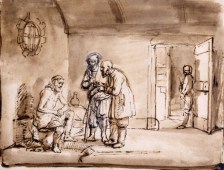 John was anxious in prison knowing he was probably going to be executed for what he had preached. Probably, John was wondering if he had preached rightly. And Jesus’ response points John and you to the Scriptures. In particular, Jesus points John to Isaiah 35:4-6, and you have to hear the context of those verses because it shows how beautifully Jesus answers John’s question, “Are you the One who is to come?” Here it is Isaiah 35:4-6, “Say to those who have an anxious heart, ‘Be strong; fear not! Behold, your God will come with vengeance, with the recompense of God. He will come and save you.’ Then the eyes of the blind shall be opened, and the ears of the deaf unstopped; then shall the lame man leap like a deer, and the tongue of the mute sing for joy….”
Jesus directs imprisoned, anxious, troubled, doubting John and you, to the comforting promises of Scripture because the word of the Lord endures forever (Is. 40:8). The blind seeing, the deaf hearing, the lame walking, and the mute singing are evidence that God has come, and He has come to save. The comfort is notin the signs. The signs point back to the comforting news that God has come to bring salvation to you.
This is the good news, the Gospel, that John needs to hear. This is the good news that all sinners need to hear, that you need to hear. God has come. Jesus has come and saved you. 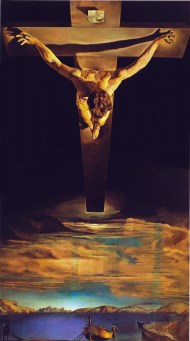 He opened the eyes of the blind. Christ made the deaf hear, the lame walk, and the mute to sing. All of that means that salvation has come to you who are anxious and poor in spirit. Rejoice.
Believer, you can have joy because of the comforting message that Jesus has come. He has come and saved you. Joy is not the same as happiness. Happiness and sadness cannot coexist, but joy and sadness can. Joy is not the absence of sadness or anger. Joy is confidence and contentment that God is in control and is taking care of things. Even when everything seems dark and fading, God is in control, and He has come. He has died and risen again. He has come and saved you. Amen.
The peace of God, which surpasses all understanding, will guard your hearts and minds in Christ Jesus. Amen.
 Pastorsamwise
You must be logged in to post a comment.