In the name of Jesus. Amen.
You can take each of these parables out of their context, and they will correctly teach you about the Kingdom of God and His grace and mercy. When these parables are taken out of context, they become nice stories about how Jesus seeks out you who are lost sheep, lost coins, and lost sons, and the angels in heaven rejoice at your being brought into the fold. To view yourself as the lost sheep, coin, or son is not entirely wrong, but neither is it entirely right.
So first, let’s consider the context of these parables. The reason Jesus tells them is the grumbling of the Pharisees when Jesus is eating with and welcoming sinners. So, the point of each of the parables is to pound into our heads the joy of heaven over one sinner who receives grace. The parables show us the ludicrous feasting and joy of God’s mercy, pardon, and steadfast love over sinners.
 In each of these parables, what is lost – the sheep, the coin, and even the son – is not valuable. That is the point of the parables. This is most apparent in the parable of the lost coin. The party the woman throws costs more than the coin that she recovered. That one sheep was worth less than the cost of the party that the shepherd threw. Even that one son was not worth the cost of the party. And don’t pish-posh that statement.
The son had told his father to drop dead. The twerp demanded that his father sell off everything. The little brat went off, blew the inheritance, and returned only when he is tired of sharing swill with swine and thinks he has a chance at getting some bread. He came sauntering back to negotiate a job for himself. Had the father brought him on as a hired hand, it would have been gracious. Restoring him to sonship is merciful. Throwing a party about the whole business is unimaginable. No, the son is not worth a party.
But that is the point. The point is that God is like an obsessive and foolish shepherd, woman, and father who loves too much. God pays for work not performed and for merchandise not delivered.
If these parables give you a picture of a God who seems reasonable, then you are reading them wrong. Your heavenly Father turned His back on His perfectly good, entirely faithful, and completely obedient Son to purchase those who killed Him. Jesus laid down His precious life for sinners.
To paraphrase our Old Testament text (Mic. 7:18-20), “Who is a God like You, pardoning iniquity and passing over transgression? You do not retain Your anger forever, because You delight in steadfast love. You have compassion on us, and You will have compassion us again and again.”
 Because of our sin, we are broken. No one wants to admit it, but we are happy when our neighbor suffers and we are sad when he rejoices. The Germans created a word for this by combining their words for ‘harm’ and ‘joy’ into one word, Schadenfreude. The worst part is we justify our Schadenfreude. We enjoy others’ pain because we figure they deserved it. We want others to get what we think is justice. But this is the opposite of compassion and is from the devil.
Satan wants justice for others. His desire is that you get the wages of your sin – death. And when we desire and demand justice, we join our voices to the serpent and receive nothing but hell and condemnation.
Like the Pharisees, we live good, respectable lives but only in an outward way. We mow our lawns and use our turn signals. We volunteer, pay our bills, and give to charities. And we think we deserve good, peaceful lives because of it. When we encounter any trouble or trial or cross, we conclude that God isn’t being fair. And worse than that, when God showers blessings on others, we figure God is rewarding bad behavior. And instead of repenting, we judge God to be unjust. We are entirely foolish for thinking so.
The Pharisees were angry at Jesus for receiving sinners, so they are damned and go home condemned. They refuse to repent. And they refuse to repent because they hate grace – even though they will never admit it. Irritation at God for accepting sinners through grace is the height of hubris and pride.
Instead of being encouraged that God forgives sinners whom we deem worse than us, we get jealous and think that God should simply accept us as we are because we are so much better than others. It is the same as saying, “I don’t need mercy, so others shouldn’t get mercy.”
Repent. The sheep, the coin, and the son are not worth the cost to restore them nor the party thrown afterwards. And, sinner, you are not worth the cost of your redemption. Let me repeat that and let it sink in: You are not worth the cost of your redemption.
But God does it anyway. How great is God’s steadfast love toward us and others?
No one is worthy of the banquet. No one is worthy to enter the feast. The feast is full of sinners accepted by God’s grace alone. Otherwise, what is Jesus doing on the cross?
The father in the parable slaughtered the fattened calf in order to celebrate the fact that 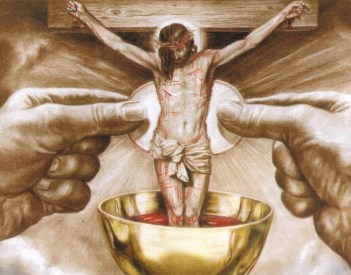 he restored and received his son back into the family. Sinner, your heavenly Father has fattened up Jesus, His faithful Son, to serve as food for you who are unworthy.
Come, you poor, lame, cripple, and blind. Come, you who have no other options or choice. You and I are sinners received entirely by God’s grace without any merit or worthiness of our own.
Heavenly Father, teach us to rejoice in this and in nothing else. Amen.
The peace of God, which surpasses all understanding, will guard your hearts and minds in Christ Jesus. Amen.
 Pastorsamwise
You must be logged in to post a comment.