Return – Sermon on Isaiah 55:6-13 for Sexagesima Sunday

Isaiah 55:6-13

6 “Seek the Lord while he may be found; 
call upon him while he is near; 
7 let the wicked forsake his way, 
and the unrighteous man his thoughts; 
let him return to the Lord, that he may have compassion on him, 
and to our God, for he will abundantly pardon. 
8 For my thoughts are not your thoughts,
neither are your ways my ways, declares the Lord. 
9 For as the heavens are higher than the earth, 
so are my ways higher than your ways 
and my thoughts than your thoughts. 

10 “For as the rain and the snow come down from heaven 
and do not return there but water the earth, 
making it bring forth and sprout, 
giving seed to the sower and bread to the eater, 
11 so shall my word be that goes out from my mouth; 
it shall not return to me empty, 
but it shall accomplish that which I purpose, 
and shall succeed in the thing for which I sent it. 

12 “For you shall go out in joy 
and be led forth in peace; 
the mountains and the hills before you
shall break forth into singing, 
and all the trees of the field shall clap their hands. 
13 Instead of the thorn shall come up the cypress; 
instead of the brier shall come up the myrtle; and it shall make a name for the Lord, 
an everlasting sign that shall not be cut off.”

In the name of Jesus. Amen.

A lot of decisions you make in life are based on the recommendation(s) of others. But you rank and evaluate those recommendations based on several factors. For example, if you need to replace the windows on your house, you’ll probably ask someone who just remodeled, “What kind of windows did you get? What brand? Who installed them? Were they punctual?” Depending on their experience, you might get the same brand and kind of windows but have another contractor install them. Or, if you find out that person has only had those windows for a few months, you might try to find someone who got new windows in the past two years because they know how those windows work in the hot and cold. Just one positive or negative recommendation might be all you need to make your decision.

But even when you can’t ask someone you know personally, you might look for recommendations. You shop online, and you’ll read through the reviews of complete strangers. If you see a couple hundred variations of, “Five stars! Works exactly as described. Would definitely buy again.” You’re more likely to buy that product rather than another one that only has a dozen reviews.

Sometimes, you don’t seek recommendations, but they’re offered to you anyway. You meet a friend for coffee, and she tells you that you “have to” try this drink or see this movie or meet Sally because she’s just so great. You might really like that friend. But, depending on how much you trust her taste in those things, you might follow her recommendations or not.

Here, Isaiah is giving you an unsolicited recommendation. “Seek the Lord while He may be found; call upon Him while He is near.” And it’s a recommendation you can trust because it’s backed by Isaiah’s own personal experience. Of all the prophets the Holy Spirit could have inspired to give this recommendation, of course it comes from Isaiah.

When Isaiah was called to be a prophet (Is. 6:1-7), God was very findable and extremely near. Isaiah was in the Temple, the place where God had promised to dwell among His people. But by God’s design, the Temple had all sorts of separation. There was smoke and walls and curtains to maintain a safe distance between the holy God and sinners.

As Isaiah was in the Temple that day, all of the protection of the smoke of the incense, the walls, and the curtain was stripped away. Isaiah doesn’t just see the ark of the covenant, which represented the throne of God; instead, he sees the actual throne where God sits. Isaiah sees the angels flying and hears them singing, “Holy, Holy, Holy is the Lord of armies.” Again, God was very findable and near. But in that moment, Isaiah would not have recommended that you seek God or call upon Him. Instead, Isaiah wished he wasn’t there. He called down a curse upon himself: “Woe is me! For I am lost; for I am a man of unclean lips, and I dwell in the midst of a people of unclean lips” (Is. 6:5).

Now, think about that for a minute. When Isaiah woke up that morning, he had unclean lips. He had those unclean lips as he walked to the Temple. Isaiah lived among people of unclean lips long before he saw God on the throne. So, what was it that made Isaiah despair? What caused his conscience to go into overdrive? It was God’s nearness. It was the fact that the holy God had found him, and that terrified Isaiah.

I heard a distinction from another pastor, and I think it’s helpful: There is a difference between a troubled conscience and a terrified conscience. A troubled conscience is aware of sin. A troubled conscience will say things like, “I’ve made some mistakes, but nobody’s perfect. At least I’m better than that guy.” When you have a troubled conscience, you know that there’s something wrong with you and something wrong with the world.

A terrified conscience recognizes more. A terrified conscience recognizes that God is mad because I’ve sinned and that He has promised to punish sin. Think back to the Garden of Eden. Adam and Eve had a troubled conscience when they sewed fig leaves together to cover their shame. But then, when God showed up, they had a terrified conscience and tried to hide behind some bushes or trees.

Neither a troubled conscience nor a terrified conscience is going to seek God when He can be found or call upon Him when He is near. If your conscience is merely troubled, you won’t think that you need Him. You’ll wrongly think, “I’ll just make up for my mistakes.” And if your conscience is terrified, you’re going be as silent as possible when God gets close because you don’t want to draw attention to yourself. 

Before I go on, I need to make something crystal clear: God doesn’t want you to remain in the state of having either a troubled or terrified conscience. God wants to forgive you and give you a pure, clean conscience (Heb. 10:21-22). But because you and I are sinners, we are going to have a conscience that is either troubled or terrified. And frankly, it’s much, much better to have a terrified conscience. If your conscience is merely troubled, or if you think you will fix your conscience by trying to do better, I have no good news for you. None whatsoever. All I can say to you is that you will always be troubled until you stand before God’s judgment throne. Then you will be terrified, but it will be too late. God will condemn you, and you will spend an eternity in hell and terror. Repent now. Return to God now, now while He is near and may be found.

But if the Holy Spirit has worked a terrified conscience in you, then I do have good news. To you who know you can’t fix your own guilt and shame, to you who know that you cannot hide from the Holy, Almighty, and Just God – know that God is near to you now. And this is a good thing.

When Isaiah’s conscience was terrified to the point that he thought he was finished, God sent one of those angels to touch Isaiah’s lips with a burning coal. That act took away Isaiah’s guilt and atoned for his sin (Is. 6:7). That compassion and abundant pardon from God brought Isaiah even closer to God. But now he had a new, cleansed, and purified conscience.

Because of that merciful, gracious, forgiving, atoning act of God, Isaiah makes this recommendation from his own experience. “Seek the Lord while He may be found; call upon Him while He is near.”

When v. 7 of this text says, “let the wicked forsake his way, and the unrighteous man his thoughts,” that wickedness and unrighteousness includes all the sinful things you do with our lips, hands, feet, and mind. Sure. But take particular notice of the last half of v. 7, “let him return to the Lord, that He may have compassion on him.” In other words, the wickedness and unrighteousness you are to forsake is failing to seek the Lord while He may be found and your unwillingness to call upon Him when He is near.

Instead, dear saints, return. Return to your God because He will abundantly pardon. Catch that – abundantly pardon. Your God pardons because His thoughts and ways are not like your thoughts and ways; God’s are infinitely higher. That doesn’t only mean God’s IQ is way up here and ours is way down here. While that’s true, that isn’t the context of Is. 55:8-9. Instead, God’s ways are the high, heavenly ways of compassion and abundant pardon, while our ways, frankly, aren’t. That’s even more reason for you to listen to Isaiah recommendation and return to God.

When God’s Word of abundant pardon goes out, that Word does not return empty. It accomplishes exactly what God sends it to do. In other words, when God says, “I forgive you,” what God actually means is, “I forgive you.” That very word of your high, compassionate, pardoning God removes your sin from you as far as the east is from the west (Ps. 103:12). Because of that you will go forth in joy and be lead in God’s peace. The mountains and hills and trees and all creation will rejoice with you.

Dear saints, return to God. Return to Him for His mercy, for His grace, and for His abundant pardon. He is near. Seek Him now. Return to Him now. Amen.

The peace of God, which surpasses all understanding, will guard your hearts and minds in Christ Jesus. Amen.

A Fresh Look – Sermon on Matthew 20:1-16 for Septuagesima Sunday

Matthew 20:1–16

1 “For the kingdom of heaven is like a master of a house who went out early in the morning to hire laborers for his vineyard. 2 After agreeing with the laborers for a denarius a day, he sent them into his vineyard. 3 And going out about the third hour he saw others standing idle in the marketplace, 4 and to them he said, ‘You go into the vineyard too, and whatever is right I will give you.’ 5 So they went. Going out again about the sixth hour and the ninth hour, he did the same. 6 And about the eleventh hour he went out and found others standing. And he said to them, ‘Why do you stand here idle all day?’ 7 They said to him, ‘Because no one has hired us.’ He said to them, ‘You go into the vineyard too.’ 8 And when evening came, the owner of the vineyard said to his foreman, ‘Call the laborers and pay them their wages, beginning with the last, up to the first.’ 9 And when those hired about the eleventh hour came, each of them received a denarius. 10 Now when those hired first came, they thought they would receive more, but each of them also received a denarius. 11 And on receiving it they grumbled at the master of the house, 12 saying, ‘These last worked only one hour, and you have made them equal to us who have borne the burden of the day and the scorching heat.’ 13 But he replied to one of them, ‘Friend, I am doing you no wrong. Did you not agree with me for a denarius? 14 Take what belongs to you and go. I choose to give to this last worker as I give to you. 15 Am I not allowed to do what I choose with what belongs to me? Or do you begrudge my generosity?’ 16 So the last will be first, and the first last.”

In the name of Jesus. Amen.

What is the greatest gift given in this parable?

At first glance, we think that it’s the denarius, that full day’s wage, handed to the workers who showed up last. But that’s the wrong answer. All the workers – those who were hired at the eleventh hour, the ninth hour, the sixth hour, the third hour, and right way at daybreak – they all get the same coin. It looks like the later you come, the greater the gift you receive. We think the only ones who don’t receive a gift are those who worked all day. They simply get what they had agreed to, what they bargained for – an honest day’s wage for an honest day’s work. But the denarius is not the greatest gift in the parable.

The greatest gift is a place in the vineyard. All of these workers – no matter what time of day they were hired – all of them started out in exactly the same place. They were all stuck in the marketplace with no prospects, no future, no income. None of them had anything until the master came to call them into his vineyard.

None of the workers got into the vineyard on their own. All of them knew they needed work to provide for their families. But they had no shot at that until the master called them into his vineyard. Before the master called them, they apparently didn’t even know there was a vineyard or how to get there, otherwise they could have gone to his house, knocked on the door, and asked for work. But that’s not what happens. Instead, the owner comes to them, seeks them, finds them, and promises to give them what they need. It’s the master who brings them all of them in. So, into the vineyard they all go – each at the time of day when the master called – not one moment before, not one moment after.

Back up just a bit and imagine the thought process of the workers hired first. They went to the marketplace because, in that part of the world in Jesus’ day (and still today), people who didn’t have normal, secure, regular jobs, they would gather at a certain spot in the marketplace in hope of being hired. Again, the people who were hired at the beginning of the day had nothing, no money, no job, no prospects. So, as the sun rises and as they march toward the vineyard, they’re excited about the master’s promise of an honest day’s pay for an honest day’s work. That promised denarius motivated them. Throughout the day, all of their work and toil and enduring all the heat and sweat was tolerable because that denarius meant life for each of them and for their families.

The only thing that spoiled it, the only thing made that denarius unappealing, was the fact that others also received the denarius. Seeing others get the same denarius was the only thing that robbed those first workers of their joy in the denarius. To say it bluntly: comparison is the thief or joy.

Imagine a company has two positions open. You apply and are given one of the positions, and you love everything about your new job. You like the environment, your coworkers, and $100,000 per year compensation. But then, you find out that the person hired for the other position – who is doing the same job, working the same hours, and has the same experience as you have – imagine finding out that person makes $101,000. How would that change your perception of your job and salary? If you’re selfish like me, I’m sure your attitude would change. You’d feel cheated. You’d complain. It’d ruin your whole perception of your new job. But here’s the thing: nothing has actually changed. Your paycheck didn’t diminish. The environment around you didn’t get worse. Nothing has been taken from you. You haven’t lost anything. The only thing that has changed is your perception. Someone else has gotten something that you don’t think they deserve. Repent.

Dear saints, God’s grace isn’t only for you. It is certainly given to you, but you aren’t the only one who gets or needs it. Please, please don’t be so foolish as to demand that God give you what you deserve because what you deserve is an eternity in hell. God doesn’t want to give you what you deserve. He wants you to be in His vineyard. And, yes, He has work for you to do there.

Look again at v. 12-15. When the workers hired first grumble about their denarius and all the hard work they did in the scorching heat, the master doesn’t fight or question their claim. He doesn’t diminish the work they have done. Not one bit. The only objection the master against their grumbling is that he’s being completely fair with them. His generosity doesn’t mean they were short-changed. The owner simply says, “If you don’t like my generosity, take what is yours and go. You’re free to leave my vineyard and go back to the marketplace.”

Dear saints, yes, this is a parable about working in God’s kingdom, and I titled this sermon “A Fresh Look” because we all need to be reminded that life in God’s kingdom does require work. God’s call to be a Christian is a call to much work. Jesus says, “If anyone would come after Me, let him deny himself and take up his cross and follow Me” (Mt. 16:24). That calling from your Savior is a call to work. But there is so much joy in your work in God’s kingdom. That’s not to say that all of the work is pleasant and easy.

Dear saints, there are many things in this world that require work, but the work itself is good. There is work, there is labor, there are difficulties involved in all good things. For example, being a parent is work – a lot of work, and even a lot of unpleasant work. Parents have to get up in the middle of the night, change poopy diapers, suck snot out of the noses of the babies. I don’t know anyone who thinks those things are pleasant or anyone who enjoys doing those things. But none of those things mean the baby isn’t a delight or a joy to be around. And there is blessing in doing them. People are happier and more content when they give of themselves and serve others. Yes, the work is its own reward.

Christian, you have been brought into God’s vineyard. A vineyard is a place where there is plenty of work to be done, but the purpose is not to produce grapes. Vineyards exist to produce wine which makes glad the heart of man (Ps. 104:14-15). Life in God’s kingdom is to live where work is done, but that work culminates in joy and feasting. The whole point of your work and labor and toil in God’s kingdom is to join God in producing joy.

Dear saints, you’re going to leave here and head back to your labor, back to your work, back to the heat and sweat and toil of your God-given vocations. But before you do, God invites you to His table to feast. Come and enjoy a foretaste of the feast to come. Come and receive the joy of receiving Christ’s Body and Blood given and shed for you for the forgiveness of all your sin. Come to the feast. Then, go. God still has vineyard work for you to do. Amen.

The peace of God, which surpasses all understanding, will guard your hearts and minds in Christ Jesus. Amen.
Come Near – Sermon on Exodus 34:29-35 for the Transfiguration of Our Lord

Today’s sermon is short because we spent time considering our liturgy during our service. If you are interested in learning more about that, please see the video of that service.

Exodus 34:29–35

29 When Moses came down from Mount Sinai, with the two tablets of the testimony in his hand as he came down from the mountain, Moses did not know that the skin of his face shone because he had been talking with God. 30 Aaron and all the people of Israel saw Moses, and behold, the skin of his face shone, and they were afraid to come near him. 31 But Moses called to them, and Aaron and all the leaders of the congregation returned to him, and Moses talked with them. 32Afterward all the people of Israel came near, and he commanded them all that the Lord had spoken with him in Mount Sinai. 33 And when Moses had finished speaking with them, he put a veil over his face. 

34 Whenever Moses went in before the Lord to speak with him, he would remove the veil, until he came out. And when he came out and told the people of Israel what he was commanded, 35 the people of Israel would see the face of Moses, that the skin of Moses’ face was shining. And Moses would put the veil over his face again, until he went in to speak with him.

In the name of Jesus. Amen.

Moses was eighty years old when he led God’s people out of Egypt, through the Red Sea, and to Mt. Sinai (Act. 7:23, 30). When they all arrived at Mt. Sinai, Moses became a mountaineer of sorts. He kept going up and down – at least six, if not eight, total times. Before God gave the Ten Commandments Moses had already gone up and down the mountain three times (Ex. 19:3-7; 19:8-14; 19:20-25). He would ascend to hear God speak and descend to tell the people what God had said. Then in Ex. 20, all the people heard God speak the words of the Ten Commandments, but the people said that hearing God’s voice was too traumatic and fearful for them. They begged Moses to not let God speak to them anymore (Ex. 20:18-20).

God agreed to the arrangement that they came up with. Moses would be the mediator between God and His people (Dt. 5:23-33). So, Moses kept going up and down the mountain. After God gave the Ten Commandments, Moses went up again to hear the instructions of how to construct the Tabernacle so God could come near and dwell among His people (Ex. 24:9-32:15). While Moses was up there, the people decided they wanted a tame god, a god they could control. So they made the golden calf to worship (Ex. 32:1-10). So, God sent Moses back down. He saw the people worshipping the golden calf and threw the tablets of the Ten Commandments breaking them because they had broken God’s covenant. Then Moses went back up the mountain again.

Our text begins as Moses is descending Sinai one final time. This last journey up the mountain was probably the most grueling for Moses. The verse right before our reading says that Moses was on the peak forty days and nights eating no food and drinking no water (Ex. 34:28). Of course, that isn’t humanly possible, but God made it happen. The fact that Moses is even alive after all of that is a miracle. But not only was Moses alive, he wasn’t disheveled or haggard. Instead, Moses’ face shined because he had been talking with God. His face reflected God’s glory, and the people were afraid again.

Now, the cause of their fear wasn’t God’s voice. Instead, it was the fact that the skin of Moses’ face was shining. The people didn’t want to come near Moses. So, Moses would hide his face behind a veil when he finished speaking God’s Word to them.

All of this is to say that the people were afraid when God came near. They were afraid when God spoke to them directly, and they were afraid when Moses was their intermediary. The people didn’t want God to come near to them.

In Jer. 23:29, God describes His Word saying, “Is not My Word like fire, declares the Lord, and a hammer that breaks the rock in pieces?” But in Is. 55:10, God also says that His Word is like the rain and snow that creates life by giving seed to the sower and bread to the eater. We might wonder, “Well, which is it, God? Does Your Word burn and break, or does it give life?” Well, dear saints, God’s Word does both. In Is. 55:11, God says that His Word will always accomplishes what God desires.

Dear saints, you cannot hear God’s Word and remain unchanged. Either you will be softened toward it, or you will be hardened against it. And that is one of the beautiful things about the liturgy we use here because, through that liturgy, God comes near so He can speak to you and create faith.

You hear God’s Law where He says that your sins have harmed you and alienated you from Him. Because of our sins, we should all be afraid like the people who didn’t want God to come too close. So our liturgy is also filled with the Gospel.

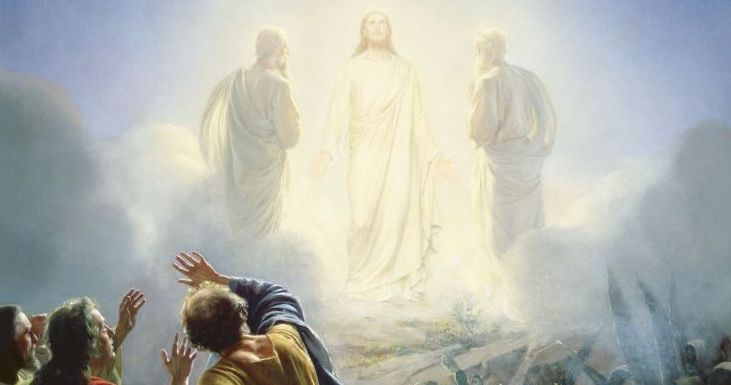
You hear how God comes near, not to destroy you but to forgive you and give you eternal life. You hear how Christ has come near by taking on your flesh and becoming one of you. Our Lord came near to remove the veil between us and God so we could stand in His holy, glorious, gracious, merciful presence. The entire service is designed to lead us out of our sinful desires and draw us to God’s side. Through our liturgy, God comes near to us so we can come near to Him.

Even though we have all sinned against God, He doesn’t want to be distant. Dear saints, God wants to bless you. He wants you to behold His face as it shines upon you in grace. He wants to lift up His countenance upon you and give you His peace (Num. 6:24-26).

That peace with God is yours through the death and resurrection of your Lord and Savior, Jesus Christ. In Christ, God has come near to you to dwell among you. In Jesus, you see God’s glory, full of grace and truth. And from His glory you receive grace upon grace (Jn. 1:14, 16). Amen.

The peace of God, which surpasses all understanding, will guard your hearts and minds in Christ Jesus. Amen.

Enough – Sermon on Luke 2:22-40 for the Presentation of Our Lord

Luke 2:22–40

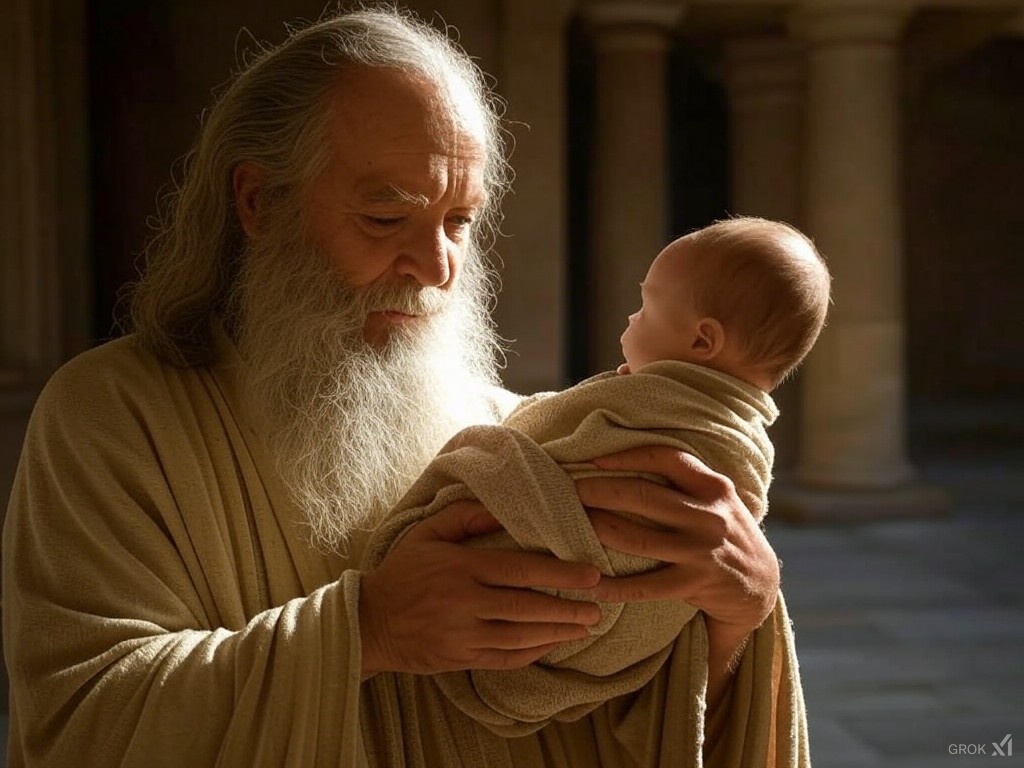
22 And when the time came for their purification according to the Law of Moses, they brought him up to Jerusalem to present him to the Lord 23 (as it is written in the Law of the Lord, “Every male who first opens the womb shall be called holy to the Lord”) 24 and to offer a sacrifice according to what is said in the Law of the Lord, “a pair of turtledoves, or two young pigeons.” 25 Now there was a man in Jerusalem, whose name was Simeon, and this man was righteous and devout, waiting for the consolation of Israel, and the Holy Spirit was upon him. 26 And it had been revealed to him by the Holy Spirit that he would not see death before he had seen the Lord’s Christ. 27 And he came in the Spirit into the temple, and when the parents brought in the child Jesus, to do for him according to the custom of the Law, 28 he took him up in his arms and blessed God and said, 

29 “Lord, now you are letting your servant depart in peace, 
according to your word; 
30 for my eyes have seen your salvation 
31 that you have prepared in the presence of all peoples, 
32 a light for revelation to the Gentiles, 
and for glory to your people Israel.” 

33 And his father and his mother marveled at what was said about him. 34 And Simeon blessed them and said to Mary his mother, “Behold, this child is appointed for the fall and rising of many in Israel, and for a sign that is opposed 35 (and a sword will pierce through your own soul also), so that thoughts from many hearts may be revealed.” 

36 And there was a prophetess, Anna, the daughter of Phanuel, of the tribe of Asher. She was advanced in years, having lived with her husband seven years from when she was a virgin, 37 and then as a widow until she was eighty-four. She did not depart from the temple, worshiping with fasting and prayer night and day. 38 And coming up at that very hour she began to give thanks to God and to speak of him to all who were waiting for the redemption of Jerusalem. 

39 And when they had performed everything according to the Law of the Lord, they returned into Galilee, to their own town of Nazareth. 40 And the child grew and became strong, filled with wisdom. And the favor of God was upon him.