Isaiah 61:1-4, 8-11

Listen here.

Isaiah 61:1-4, 8-11

1   The Spirit of the Lord God is upon me,
because the Lord has anointed me

to bring good news to the poor; Jesus Reading Isaiah

he has sent me to bind up the brokenhearted,

to proclaim liberty to the captives,
and the opening of the prison to those who are bound;

2   to proclaim the year of the Lord’s favor,
and the day of vengeance of our God;
to comfort all who mourn;

3   to grant to those who mourn in Zion—
to give them a beautiful headdress instead of ashes,

the oil of gladness instead of mourning,
the garment of praise instead of a faint spirit;

that they may be called oaks of righteousness,
the planting of the Lord, that he may be glorified.

4   They shall build up the ancient ruins;
they shall raise up the former devastations;

they shall repair the ruined cities,
the devastations of many generations.

8   For I the Lord love justice;
I hate robbery and wrong;

I will faithfully give them their recompense,
and I will make an everlasting covenant with them.

9   Their offspring shall be known among the nations,
and their descendants in the midst of the peoples;

all who see them shall acknowledge them,
that they are an offspring the Lord has blessed.

10 I will greatly rejoice in the Lord;
my soul shall exult in my God,

for he has clothed me with the garments of salvation;
he has covered me with the robe of righteousness,

as a bridegroom decks himself like a priest with a beautiful headdress,
and as a bride adorns herself with her jewels.

11 For as the earth brings forth its sprouts,
and as a garden causes what is sown in it to sprout up,

so the Lord God will cause righteousness and praise
to sprout up before all the nations.

In the name of Jesus. Amen.

Rocky & DragoWe love Cinderella stories. We want the down-and-out rise from the dust. We want characters move from rags to riches, orphans to become kings. We want Rocky to beat Drago. We love these stories because we want to be like them. We want to move up, climb the ladder, reach the top. We want to better ourselves, rise up, and thrive. But we’ve tried it and found that too often, it doesn’t work.

We tried to better ourselves in the Garden of Eden. God told us that we were good. We were whole and needed nothing more to be complete. Then, Satan presented Adam and Eve with the possibility of becoming more than they were. “When you eat of the tree, your eyes will be opened, and you will be like God, knowing good and evil. You can improve yourself. You will be better than you are now.”

Adam and Eve attempted to climb the ladder. They took from the tree and ate. Their eyes were opened. They became something more. Now, they knew evil – but it was not better.

The root of sin is seeking to improve ourselves. We want to take control of our own lives. We want to be the master of our own destiny. We keep looking up, striving to be more. We want to be our own god. But the more we try, the more we fail, the more we sin, and the worse we become.

Christ of St John on the Cross Salvador DaliGod is not like us. God does not look up – there is nothing above Him. God doesn’t even look side-to-side – there is no one like Him. God only looks down. God looks down to those who are beneath Him. Luther even says, “The farther one is beneath God, the better doss God see him.” God is far-sighted.

God has always acted this way. God brings good news to the poor. Even before God cursed poor Adam and Eve, He promised that He would crush Satan’s head.

God binds up the brokenhearted. After Cain killed Abel, God gave Adam and Eve another son, Seth.

God proclaims liberty to the captives. He delivered His people from slavery under Pharaoh.

God opens the prison to those who are bound. Whether it was the apostles Peter, John, or Paul. God opens any and all iron bars to release His people.

God gives a beautiful headdress instead of ashes. Abraham’s son Isaac was not reduced to ashes, instead God provided.

God gives the oil of gladness instead of mourning. Jesus forgave the sins of the woman who washed His feet with her tears.

God does all of this because it brings Him glory.

God sees our pathetic attempts to rise up and improve, and He has pity on us. So He came down. He came down in the most dramatic, humble way.

Your God came down and placed Himself in the womb of a poor peasant girl. Your God came down to be born at night in a cold barn. Your God let Himself be carried by His parents to another country to escape being slaughtered as an infant. Your God grew up in a little podunk town learning the trade of a carpenter. Your God was despised and rejected by His peers and relatives. Your God touched lepers. Your God ate with the tax collectors and prostitutes. Your God suffered. Your God bled. Your God died. He did all of this for you.

God’s glory isn’t to become something more than He already is. God can’t become anything more. God is glorified through what He does for you. He was anointed to bring good news to you who are poor. His glory is to bind up you, the brokenhearted, to proclaim liberty to you who are captive in sin, and releasing you even from the prison of death. Christ’s glory is to proclaim to you the year of Yahweh’s favor and to comfort you who mourn. He is glorified by giving you a beautiful headdress instead of ashes and oil of gladness and garments of praise.

Baptism 2In your baptism, He clothed you in the garments of salvation. Through His Word, He covers you with the robe of righteousness.

Christ was anointed to do all of this for you. You, and the faithful believers who have come before you and who will come after you, you all are His garden, His planting. You produce the fruit of righteousness and praise. God has made His covenant with you, and He is always faithful to His promises. Amen.

The peace of God, which surpasses all understanding, will guard your hearts and minds in Christ Jesus. Amen.
2 Peter 3:8-14 – Relative Slowness

Listen here.

2 Peter 3:8-148 But do not overlook this one fact, beloved, that with the Lord one day is as a thousand years, and a thousand years as one day. 9 The Lord is not slow to fulfill his promise as some count slowness, but is patient toward you, not wishing that any should perish, but that all should reach repentance.

10 But the day of the Lord will come like a thief, and then the heavens will pass away with a roar, and the heavenly bodies will be burned up and dissolved, and the earth and the works that are done on it will be exposed. 11 Since all these things are thus to be dissolved, what sort of people ought you to be in lives of holiness and godliness, 12 waiting for and hastening the coming of the day of God, because of which the heavens will be set on fire and dissolved, and the heavenly bodies will melt as they burn! 13 But according to his promise we are waiting for new heavens and a new earth in which righteousness dwells.

14 Therefore, beloved, since you are waiting for these, be diligent to be found by him without spot or blemish, and at peace.

In the name of Jesus. Amen.

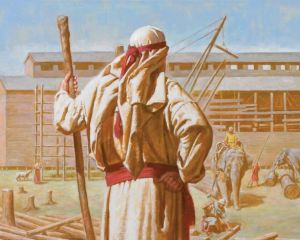
Noah Building the ArkThe earth was corrupt in God’s sight. Every intention of the thoughts of man’s heart was only evil continually (Gen. 6:5). So God told Noah, “Build an ark (lit. ‘a box), and make it big. I’m sending a flood. Everything that is on the earth shall die.” Now, if you were Noah, you’d be jumping in your car and speeding to Menards to get tools and building supplies. God didn’t tell Noah exactly when He would send the flood, and the ark would take a long time to make. It was a pretty big boat – bigger than a football field. But God gave Noah a promise. “I establish My covenant with you, I’ll keep you, your family, and the animals you take with you alive.”

Noah had a big job in front of him with an important deadline, a true deadline. Because of God’s wrath against sin, death was coming to everything. But 1 Peter 3:20 says that God patiently waited for Noah to build the ark. God was disgusted with His creation, but God was patient for Noah’s sake.

God is slow to anger and abounding in steadfast love and faithfulness.

Beloved by God, the day of the Lord is coming. God will again judge the wickedness of mankind. The heavens will pass away with a roar, and the heavenly bodies will be burned up, dissolve, and melt. That day will come unannounced, like a thief, like an army marching against a city. Watch.

A watchman’s work is boring. He waits and watches for something that may never come – he doesn’t know. But if a watchman becomes careless, grows impatient, and falls asleep on his watch, the results can be catastrophic – and not just for him. If the watchmen are asleep when the enemy or thief comes… well, nothing good can come from that.

Christ said He would return. He promised. But for 2,000 years now, believers have been watching and waiting. Even the Christians in Peter’s day were getting tired of waiting and watching. They had expected that Jesus would return before they died. But now false teachers were mocking them for believing that Christ would ever return. Peter even quotes them back in 2 Peter 3:4, “Where is the promise of Jesus’ coming? The fathers have died. And everything is the same as it has been since the beginning of creation.”

You can imagine the scoffers of Noah’s day. “What’s that big box for, Noah? There’s no water around here. Nothing bad is going to happen.” I would venture to guess there were days and weeks and months and years when the scoffers’ words got to Noah and made him wonder, “Why am I doing all this?” But then, the waters did come. The unbelievers were caught unaware. God came like a thief and took their lives away.

Most of the time, we don’t need scoffers to distract us into thinking Jesus won’t return. Today feels like yesterday, and yesterday felt like the day before. Most of the time, you don’t think about Jesus’ coming. Your life is manageable, so you get comfortable. You get sleepy. You don’t watch. You start to think that God is getting too old, too slow, too decrepit. You think that God doesn’t care.

But the Lord is not slow to fulfill His promise – at least, not as some count slowness. I love that line. What is any amount of time to God who is eternal? With the Lord one day is as a thousand years, and a thousand years as one day. Beloved, do not overlook this fact.

With the Lord, one day is as a thousand years. Our kids teach us that one hour can feel like 1,000 years. Monday night, before going to bed, Annalise trotted into the bathroom, emphatically picked up a cup, filled it, and stated, “I haven’t had a drink in 1,000 years.” She just had a full glass of water at supper.

Time, all of time, stands before God as a single thing. God sees every moment of created history right before Him. To God, Adam is just as close as you are. To God, a thousand years are as one day.

Jesus Second ComingWatch because God is not slow to fulfill His promises. Watch knowing that the time is soon. Maybe it isn’t what you call soon, but Jesus is coming soon. The creation will be dissolved, so live in holiness and godliness. Be diligent to be found by Him without spot or blemish and at peace.
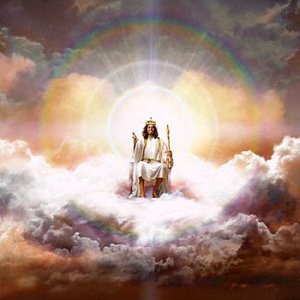
Doomsday is coming, so be at peace. That sounds odd. Everything observable is going to be destroyed by fire, how can you be at peace? Because Jesus, your Savior, is coming. He is coming soon, and He is coming now in bread and wine. This meal of His supper purifies you. Jesus’ body and blood removes all spots, wrinkles, and blemishes. This meal gives you strength and feeds you for a life of godly and holy watching and waiting. Amen.

The peace of God, which surpasses all understanding, will guard your hearts and minds in Christ Jesus. Amen.

Matthew 25:31-46 – Sheepish Vocation Knows No Futility

Listen here.

God over All Christ for AllMatthew 25:31-4631 “When the Son of Man comes in his glory, and all the angels with him, then he will sit on his glorious throne. 32 Before him will be gathered all the nations, and he will separate people one from another as a shepherd separates the sheep from the goats. 33 And he will place the sheep on his right, but the goats on the left. 34 Then the King will say to those on his right, ‘Come, you who are blessed by my Father, inherit the kingdom prepared for you from the foundation of the world. 35 For I was hungry and you gave me food, I was thirsty and you gave me drink, I was a stranger and you welcomed me, 36 I was naked and you clothed me, I was sick and you visited me, I was in prison and you came to me.’ 37 Then the righteous will answer him, saying, ‘Lord, when did we see you hungry and feed you, or thirsty and give you drink? 38 And when did we see you a stranger and welcome you, or naked and clothe you? 39 And when did we see you sick or in prison and visit you?’ 40 And the King will answer them, ‘Truly, I say to you, as you did it to one of the least of these my brothers, you did it to me.’

41 “Then he will say to those on his left, ‘Depart from me, you cursed, into the eternal fire prepared for the devil and his angels. 42 For I was hungry and you gave me no food, I was thirsty and you gave me no drink, 43 I was a stranger and you did not welcome me, naked and you did not clothe me, sick and in prison and you did not visit me.’ 44 Then they also will answer, saying, ‘Lord, when did we see you hungry or thirsty or a stranger or naked or sick or in prison, and did not minister to you?’ 45 Then he will answer them, saying, ‘Truly, I say to you, as you did not do it to one of the least of these, you did not do it to me.’ 46 And these will go away into eternal punishment, but the righteous into eternal life.”

In the name of Jesus. Amen.

At some point in life, everyone is plagued with thoughts of futility. Everyone wonders if all their work and all their effort and all their labor is, ultimately, serving no useful purpose. You go through the same motions day after day, month after month, and year after year, but who cares? You try hard to be a good husband or a good mother or a good son or a good student but does anyone notice? Does anyone appreciate it? What difference does it make?

The ancient Chinese philosopher Confucius said, “The hardest thing of all is to find a black cat in a dark room, especially if there is no cat.” Maybe your life feels that futile.

You wash the dishes, fold the laundry, and sweep the floor only to turn around and find the same mess moments later. You do your homework, write that paper, or finish that task at work and wonder, “What difference does it make? Why bother?” Your life is filled with all sorts of busyness – work, classes, meetings, taking the kids to this practice or that event – and everything you do feels as meaningless as finding that elusive, non-existent black cat.

The temptation to go through the motions of our daily lives without regard for the meaning behind the motions hounds us all. And always the fear of futility looms and grows. When all is said and done, what difference does it make? What’s the point? Why bother?

The answer is in today’s text, the story of the sheep and the goats. It’s not an easy text. It’s not that it is hard to understand; instead, the meaning is altogether clear, and that’s the problem. Now let’s be honest. If this was the only word that we had received from Jesus, then a religion of works and salvation by human effort would be the logical conclusion. Sheep do acts of kindness, and they receive heavenly praise and eternal rewards. Goats don’t, and get hell. It’s a tough text.

But Scripture is clear. We do not earn our way into God’s good graces. We don’t buy our way into eternal life. And even this text agrees. Notice, what Jesus first says to the sheep, “Come, you who are blessed of My Father. Inherit the kingdom prepared for you from the foundation of the world.”

The sheep are sheep because God has made them sheep. They are chosen, predestined, elect. They are not sheep because they made a choice to be a sheep. They are not sheep because they did acts of kindness. They are not sheep because they worked hard to become a sheep. They are sheep for one reason – God has done it! God makes them sheep. God makes them righteous. And then, these sheep live like His sheep.

They go out into God’s creation, out into their ordinary lives, and they take care of those around them. They help the sick. They feed the hungry. They visit the imprisoned. They clothe the naked. They do sheep things. God’s sheep act like sheep.

And the goats? Well, the goats choose what God never planned. They choose to ignore the call of God. They choose to ignore the cry of their fellow creatures. They reject grace, and they choose death. And so, in return, God gives them what they choose. They share the unintended and unsought fate of Satan and his hoard.

But not you. You are a sheep.

Baptism 2At the Font, God made His claim on you and gave you His Name. The Lord is your shepherd. You are His sheep. You belong to Him – you always will. And so you, His sheep, live like His sheep. You go out into God’s world and you do what you have been given to do. You meet the needs of fellow creatures who cry for your help. That’s what sheep do. And when sheep do what God gives them to do, futility is gone. It’s wiped out completely. That’s the point of the text.

This text is not an exhortation to be a sheep and not a goat. Sheep have no choice anyway. Remember, God does the choosing. The point is that what sheep do as sheep is never wasted and never lost. There’s no futility. This means that your work, your daily work, is transformed. What you do, whatever you do, for the sake of those around you who need your help, whatever you do in fulfillment of your God-given vocation, whatever you do that God has given you to do, is exactly the work you should be doing and is never wasted and is never lost.

It’s not what makes a big splash. It’s not what makes others applaud. It’s not what earns financial perks or accolades or A’s. It’s not what makes you feel good. None of these things determine the value of the work you do. The only thing that counts is that you are doing what you have been given to do in service to others. And so, know that whatever it is you are doing, you are doing it as God’s sheep. And whatever you do as God’s sheep is holy work.

You get up and go to work and put in our eight or ten or twelve hours. You prepare another report. You struggle to meet another deadline. You stock that shelf. You clean up the kitchen. You fold the laundry. You sit through another lecture. You study for another spelling or history or science test. You make your bed, clear your dishes, and straighten your shoes and coats in the entryway. You change the day’s eighth dirty diaper, and you prepare the days’ fourth bottle, and you wipe the white truckle from your shoulder because it is holy work.

As God’s sheep, all the work you do is done in service to the one who needs what God has put you there to give. God has put that needy person in your life – even if their need seems inconsequential. Everything you do can be done with a sense of awe and wonder and gratitude at the sheer holiness of the work you are doing.

You don’t need work that is more meaningful. You don’t need a vocation that packs more prestige. You don’t need to do things that will impress those who watch or grade or evaluate. No, you just need to do what you have been given to do to care for those around you who need it. And when you do that, you are doing an incredible, holy work – just the way that God intended it to be done.

Your work is worthwhile always. That’s the way that it is with sheep. And you are a sheep. Elect, chosen by God, doused in forgiveness at the Font. Righteous. Righteous before God. You are a sheep. You see the need of those around you. You step up and you meet that need. Parents, children, students, employers, neighbors, strangers – you give them what they need from you, and you fulfill your vocation. And you are righteous.

The Lamb of GodSheep are righteous twice. Righteous before God in your election, and righteous before creation in your vocation. You are a sheep, my friend. You live without fear. You live without futility. You know – you know that your labor is never in vain. No deed is insignificant. No act is forgotten. God saves you and your labor. Neither is ever lost.

You may feel that your work is insignificant and meaningless. You may feel like what you do goes unnoticed. But it is not. You, you are a sheep. And that changes everything – everything about you and everything about what you do forever. Amen.[1]

The peace of God, which surpasses all understanding, will guard your hearts and minds in Christ Jesus. Amen.

[1] This sermon was taken largely from a sermon by Dr. Joel Biermann on this text (https://itunes.apple.com/us/podcast/matthew-25-31-46/id463450793?i=105495219&mt=2).

Matthew 25:14-30 – 5, 2, 1

Listen here.

Matthew 25:14-3014 “For it will be like a man going on a journey, who called his servants and entrusted to them his property. 15 To one he gave five talents, to another two, to another one, to each according to his ability. Then he went away. 16 He who had received the five talents went at once and traded with them, and he made five talents more. 17 So also he who had the two talents made two talents more. 18 But he who had received the one talent went and dug in the ground and hid his master’s money. 19 Now after a long time the master of those servants came and settled accounts with them. 20 And he who had received the five talents came forward, bringing five talents more, saying, ‘Master, you delivered to me five talents; here I have made five talents more.’ Matthew 25_2121 His master said to him, ‘Well done, good and faithful servant. You have been faithful over a little; I will set you over much. Enter into the joy of your master.’ 22 And he also who had the two talents came forward, saying, ‘Master, you delivered to me two talents; here I have made two talents more.’ 23 His master said to him, ‘Well done, good and faithful servant. You have been faithful over a little; I will set you over much. Enter into the joy of your master.’ 24 He also who had received the one talent came forward, saying, ‘Master, I knew you to be a hard man, reaping where you did not sow, and gathering where you scattered no seed, 25 so I was afraid, and I went and hid your talent in the ground. Here you have what is yours.’ 26 But his master answered him, ‘You wicked and slothful servant! You knew that I reap where I have not sown and gather where I scattered no seed? 27 Then you ought to have invested my money with the bankers, and at my coming I should have received what was my own with interest. 28 So take the talent from him and give it to him who has the ten talents. 29 For to everyone who has will more be given, and he will have an abundance. But from the one who has not, even what he has will be taken away. 30 And cast the worthless servant into the outer darkness. In that place there will be weeping and gnashing of teeth.’”
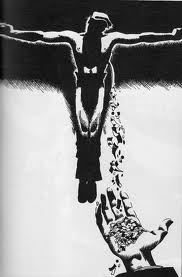
In the name of Jesus. Amen.

Matthew 25 is a series of three parables about the return of Christ. The first parable, which we looked at last week, was the parable of the Ten Virgins. Jesus told that parable to teach you that you need to be ready for His return. Today’s parable, the Parable of the Talents, teaches what your attitude toward Christ return should be. Your attitude should be one of bold excitement. Next week’s parable, the Parable of the Sheep and Goats, teaches why you should be excited. I don’t want to preach next week’s sermon, but if we don’t see what happens in next week’s text, we won’t understand the parable before us today.

In next week’s parable, Christ says that He will separate all people. His sheep will be placed on His right and the goats on His left. Jesus will tell His sheep about all the good works they have done. Jesus will tell them about all the times they fed the hungry, gave a drink to the thirsty, welcomed the stranger, clothed the naked, and visited the sick and imprisoned. And the sheep will be surprised because they aren’t aware of doing any of those things. The goats will be surprised too. Jesus will tell them that they didn’t do any good works. The goats all thought they had a done all sorts of good works. But Jesus tells them that none of their works are good enough. Then He sends them off on the bus headed for the eternal fire prepared for the devil and his angels.

Believer, when Christ returns, He will not see one single, solitary sin in you. “There is therefore now no condemnation for those who are in Christ Jesus” (Ro. 8:1).

Again, I don’t want to say too much and spoil next week’s sermon, but if you don’t see how Christ will judge you believer, you won’t understand this week’s text. When Christ returns to judge you, there will not be one mark against you. You will stand before God completely sinless and pure. God will not see any sin you have ever committed. God will look at you and see only perfect obedience. He will see the righteousness of Christ. Remember that as we look at this week’s parable.

When we look at this week’s parable and are honest, most of us identify ourselves as the third servant. We think we need to play it safe and take no risks. We look at God as a tyrant who makes hard, impossible demands of us. But that is not who God is!

God is a giver. God the Father has given you everything you have. He has given you your body and soul, your eyes and ears, food and clothing, home and family, and all your property. God the Son has given you His body and blood. Jesus has given you His obedience and His righteousness. And God the Holy Spirit has given you faith. He has delivered Jesus’ forgiveness to you. God is a giver.

God has done and still does exactly what the Master does in this parable. He gives and He goes. Jesus suffered, bled, died, rose again, and ascended into heaven. Ephesians 4:7–8 7 But grace was given to each one of us according to the measure of Christ’s gift. 8 Therefore it says, “When He ascended on high He led a host of captives, and He gave gifts to men.”

God gives generously to all, but God’s generosity does not mean equality. “To one servant he gave five talents, to another two, to another one.” One talent is equivalent to about 20 years’ wages. The average income in America right now is just over $50,000, so we’re talking about $5, $2, and $1 million. I want to give these servants names. For the sake of ease, I’m going to use prophet’s names. Isaiah gets $5 million. Jeremiah gets $2 million. And Jonah gets $1 million. Notice that this Master doesn’t give any directions, any instructions as to what to do with these gifts. The Master simply dishes out the cash saying, “Here you go boys. Five for you, two for you, and one for you. Now, I’m going away.”

The Master gives to His servants because He trusts them and their ability. Trusting is risky. It would have been safer for this Master to take His $8 million with Him. Most of us, probably all of us, would bring that money with us on our trip. But that is not God’s way. God is a giver. He gives, and He trusts His servants with what is His.

Isaiah and Jeremiah, see that their Master is a generous giver. So they go, and they go recklessly. They don’t read up on what is and what is not a good investment. They go straight to the trading floor, and each of them double their gift. That’s a nice return. But the return says more about the nature of the gift than the ability of the servants. The gifts of the Master just seem to magically double because they are the Master’s gifts.

But then there is Jonah. Jonah cannot see that his Master is a generous giver. The Master hands Jonah a gift of $1 million, and he is scared out of his mind because he wrongly thinks that his Master is a hard, impossible, merciless man. Instead of using the gift, Jonah buries it in the ground. In other words, Jonah does nothing.

Look at how differently the three servants address the Master when He returns. Both Isaiah and Jeremiah say the same thing. They both speak about the Master’s generosity. “Master, You delivered, You gave, me x talents. Look! I have doubled it.” But notice how differently Jonah addresses the Master – he says, “Master, I knew You to be a hard Man, an impossible Man, a merciless Man.”

Can you imagine the audacity of Jonah, after being given a free, no-strings-attached gift of $1 million, calling his Master a hard, merciless man? “Yeah, Master, You gave me $1 million, but I know You to be a hard, merciless Man.” That’s crazy talk! The problem with Jonah was that he thought that his Master would be angry with him no matter what he did with his gift. So he did nothing, nothing at all.

Remember, the Master gave no instructions about what to do with the gifts He gave. You know what would have happened if Jonah had just gone out and bought himself something nice? Let’s say Jonah had gone out and bought himself a $1 million yacht. When the Master returned, the boat would have been appraised at $2 million, and Jonah could have gone to the Master in the same awe that both Isaiah and Jeremiah had for the Master.

But Jonah didn’t do anything. So the Master condemns Jonah with his own words. “I gave you $1 million and you think I’m a hard Man with no mercy. Then, yes Jonah, you should be afraid of Me. And in that fear, you should have at least gone and put My money in the bank so it would have earned interest. But, let Me tell you something, Jonah. You could have gone out and lost every last penny, and I wouldn’t have cared. At least you would have recognized Me for the merciful, gracious Master that I really am. But since you fear Me, I’ll give you a reason to be afraid. Take the talent, give it to Isaiah, and throw Jonah out.”

Blessings from the CrossBrothers and sisters, open your eyes! God has given you everything, absolutely everything you have. And while you were still His enemy in open, active rebellion against Him, He gave you what was most precious to Him – He gave you Jesus, His only begotten Son. While you were a sinner and under His wrath against sin, He gave you grace. He freely gave you the full forgiveness of sins. Believe it!
And, “there is therefore now no condemnation for you who are in Christ Jesus” (Ro. 8:1). You have no need to fear God. God is a giver. God is a gracious giver. Use His gifts. Use them freely and recklessly, and He will say to you, “Well done, good and faithful servant. Enter into the joy of your Master.” Amen.

The peace of God, which surpasses all understanding, will guard your hearts and minds in Christ Jesus. Amen.

Matthew 25:1-13 – Flasks of Faith

Listen here.

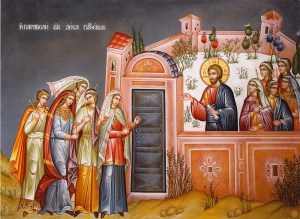
Parable of the Ten VirginsMatthew 25:1-131 “Then the kingdom of heaven will be like ten virgins who took their lamps and went to meet the bridegroom. 2 Five of them were foolish, and five were wise. 3 For when the foolish took their lamps, they took no oil with them, 4 but the wise took flasks of oil with their lamps. 5 As the bridegroom was delayed, they all became drowsy and slept. 6 But at midnight there was a cry, ‘Here is the bridegroom! Come out to meet him.’ 7 Then all those virgins rose and trimmed their lamps. 8 And the foolish said to the wise, ‘Give us some of your oil, for our lamps are going out.’ 9 But the wise answered, saying, ‘Since there will not be enough for us and for you, go rather to the dealers and buy for yourselves.’ 10 And while they were going to buy, the bridegroom came, and those who were ready went in with him to the marriage feast, and the door was shut. 11 Afterward the other virgins came also, saying, ‘Lord, lord, open to us.’ 12 But he answered, ‘Truly, I say to you, I do not know you.’ 13 Watch therefore, for you know neither the day nor the hour.”

In the name of Jesus. Amen.

In all the weddings I’ve been involved with as a pastor, I’ve never had to deal with a “Bridezilla” – the bride who is more concerned about the wedding than the marriage. When I see commercials for the reality show “Bridezillas,” it looks like a preview for an episode of Jerry Springer. Brides yelling and crying and moaning and complaining at friends and family. Let this serve as a warning: If you act that like that on your wedding day and I’m doing the ceremony, I’m walking out.

Only once have I had a bride be very specific about anything. The couple was getting married under the bell tower at Concordia College in Moorhead. It was a nice setting. Anyway, the bride wanted to be walking down the aisle as the bell tower struck 3:00 PM. I figured that wouldn’t be a problem. The bride was so insistent on that the bells announce her arrival that I figured she’d makes sure it happened. During rehearsal, the wedding coordinators helped me plan out where the wedding party needed to be and when so the bride’s entrance would be perfect.

The afternoon of the wedding came.  Bride, groom, and wedding party were all dressed. Pictures were finished. We had everyone in the appointed place at 2:30 PM. The groomsmen and I went to our designated place, and I assumed the bride and bridesmaids were going to their appointed place. But about ten minutes before we were supposed to start, one of the wedding coordinators came and asked me where the bride and bridesmaids were. I had no idea. Like a game of hide and seek, both wedding coordinators were frantically searching to find the bride and her bridesmaids. I’m sure the groom had thoughts of being left at the altar. I was wondering if the wedding was going to happen, if all my time and preparation would have been for nothing, and if I would still get reimbursed for driving down to Moorhead.

Anyway, three o’clock came, the bell tower chimed clear and bright, and still no bride. Finally at 3:07 PM, the tardy bride magically appeared with her bridesmaids. She asked, “Can we still get everyone down the aisle so I can come down while the bells are chiming?” I thought, “Are you kidding me?” As calmly as I could, I said, “No, the bell rang several minutes ago. You missed it.” I didn’t say it to be mean. It was just the truth. The rest of the ceremony went fine. The couple still got married,  but the bride’s picture of a “perfect” entrance was gone.

The Groom in this parable isn’t as forgiving. Now, this parable can be difficult if you get lost in all the details. But we don’t need to worry about the details. The main idea is clear: “Watch therefore, for you know neither the day nor the hour.” Believer, be ready for the return of Christ, your Groom.

Imagine these ten giggly girls excitedly waiting at the groom’s house imagining all the fun and excitement of the party. They have all been invited, and none of them have imagined the possibility of being left out because they are already “in.” But five were foolish – the Greek word is μωρός, where we get our word moron. And five were wise.

Even though they have been invited to a daytime wedding, the five morons take their lamps. They don’t want to have to carry around a bunch of extra stuff to carry around. But the five wise girls burden themselves with the extra weight and bother of a flask of oil.

The afternoon passes, evening has come to a close, and a wedding reception turns into a slumber party. All ten became drowsy. All ten of them finally nod off and succumb to sleep.

The Ten Virgins Parable“But at midnight there was a cry, ‘Here is the bridegroom! Come out to meet him.’” The girls trim their lamps, but the morons realize to their horror they don’t’ have enough oil. The morons beg and plead with the wise girls whose silly, unnecessary act of bringing an extra flask of oil doesn’t seem so silly anymore. “Give us some of your oil, for our lamps are going out.” But the wise girls say, “No way. There isn’t enough for us and for you. Go buy your own oil.” Hardly an act of Christian charity.
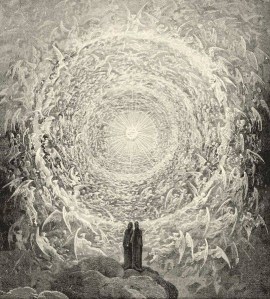
The oil dealers have all closed up shop by now, but the morons wouldn’t have a problem finding oil. Everyone knows everyone in these villages, and someone will give the oil. Their problem is time has already run out. As they were off trying to get their oil, the bridegroom comes, the party starts, and the door is shut.

The morons get themselves back to the house and are outside frantically knocking. “Lord, lord, open to us.” But the dreadful answer comes faintly but clearly through the closed door. “Truly, I say to you, I do not know you.” Notice he does not say, “I never called you.” He does not say, “I never invited you.” He does not say, “I never loved you.” He simply states honestly, “I never knew you because you never bothered to know Me.”

Again, we could get all bogged down in the details of the parable. But in the end what does it mean to be ready? What gets you into the party, and what keeps you outside?

Faith. Faith in Jesus crucified and risen for the forgiveness of your sins is all you need to make you acceptable to God. Faith is God’s gift, and God gives the gift of faith in specific ways. “Faith comes from hearing, and hearing through the word of Christ” (Ro. 10:17). God speaks His Word to you in the Scriptures, as you read them and hear, mark, and learn them. God gives faith in His Word connected to His Sacraments. In Baptism, God puts His faith-giving words directly on you in water. In Communion, God puts His faith sustaining words directly in you in bread and wine. Through His Word, Jesus always fills up your lamps and gives you enough oil of faith to fill up all the flasks you can find.

The only way you run out of the oil of faith is when you cut yourself off from it. By not filling up with the Word of God, you will run out.

Now is the time to fill your flasks! You do not know how much oil you will need. Why, why would you ever think you have enough? Why would you become complacent and think you don’t need more of God’s Word? Why would you stop coming to the merchant to get more oil? The oil isn’t expensive – in fact it’s on sale for free! But that sale isn’t eternal – there is a deadline, and you do not know when that deadline will come. There is no time to procrastinate. Come and receive the gift of faith. You do not know when it might be that you are not so freely able to read and study the Word of God. Hoard it.

Jesus is coming. The Bridegroom said He would return to take you to where He is. But you do not know when. It has been two thousand years of anticipation waiting for the Groom to return. It is easy to fall asleep. It is easy to get distracted with many other things and think the time to get oil will last forever. But it won’t.

Today feels like a lot like yesterday, and yesterday felt like the day before. Because Jesus didn’t come yesterday or the day before, you feel like Christ is not coming today (Wolfmueller). You fools, repent!

If you aren’t ready for Christ’s return, it will be as if you are being chased by a lion only to meet a bear. Then you run into your house to get safe from the bear and lean against a wall to be bitten by a snake. There is no escape, no safety. Christ is coming and you need to be ready. If you aren’t you will be eternally outside in the outer, eternal darkness where there is weeping and gnashing of teeth. Outside is horrible and horrifying darkness. Come into the light!

But once you are scared silly about being left outside, remember what you are waiting for. You are waiting for a party. You are waiting for a time of unimaginable celebration and unspeakable joy. Absolutely, you need to be ready, but only because it would be a travesty to miss all the fun. Amen.

The peace of God, which surpasses all understanding, will guard your hearts and minds in Christ Jesus. Amen.

Matthew 5:1-12 – Blessed Saints

Listen here.

Matthew 5:1-12

1 Seeing the crowds, he went up on the mountain, and when he sat down, his disciples came to him.

2 And he opened his mouth and taught them, saying:

3   “Blessed are the poor in spirit,
for theirs is the kingdom of heaven.

4   “Blessed are those who mourn,
for they shall be comforted.

5   “Blessed are the meek,
for they shall inherit the earth.

6   “Blessed are those who hunger and thirst for righteousness,
for they shall be satisfied.

7   “Blessed are the merciful,
for they shall receive mercy.

8   “Blessed are the pure in heart,
for they shall see God.

9   “Blessed are the peacemakers,
for they shall be called sons of God.

10 “Blessed are those who are persecuted for righteousness’ sake,
for theirs is the kingdom of heaven.

11 “Blessed are you when others revile you and persecute you and utter all kinds of evil against you falsely on my account. 12 Rejoice and be glad, for your reward is great in heaven, for so they persecuted the prophets who were before you.

In the name of Jesus. Amen.

I’m tired. Despite the extra hour of sleep last night, I’m tired. I’m tired of all the wars and fighting that go on in this world. I’m tired of the persecution that Muslim terrorists are inflicting on our brothers and sisters in Christ. I’m tired of seeing how people dismember and slaughter their children and call it ‘choice.’ I’m tired of worrying about Ebola. I’m tired of all the campaign ads and lofty promises of politicians who won’t deliver what they promise. I’m tired.

I’m tired, and I would venture to guess that you are tired too. And maybe you could add to this list. Maybe you’re tired of struggling to make ends meet. Maybe you are tired of your hard work going unrecognized by your family or your boss. Maybe you are tired of trying to hold your marriage together. Maybe you are tired of watching a friend or family member who is destroying his or her life with drugs or alcohol. Maybe you are tired of caring for a family member who is sick or dying.

We are all tired. We are tired of the tribulation that is life in this world of sin. Our sin has brought about the great tribulation. We are tired because we are cursed. Cursed by our own thoughts, cursed by our own words, and cursed by our own deeds.

All Saints 1Then this text comes along, and Jesus says, over and over, “Blessed. Blessed. Blessed” Nine times in this text, Jesus announces present blessing upon you, believer – not just some future blessing that you get someday after next Tuesday. “You are blessed now.”

Yesterday, November 1st, is the day the Church celebrated All Saints’ Day. It is a day to remember the believers who have died and are now with their God and Savior. But it is also a day to remember that you too, believer, are a saint. You are one who has been made holy by Christ. In baptism, you have washed your robe white in the blood of the Lamb. You are even now part of that multitude before the throne of God. Each Sunday we gather together as believers to receive God’s blessings. Therefore, each Sunday becomes a foretaste of what is ours when Christ returns and raises us to eternal life.

We’re not going to go through all the Beatitudes today because that would take too long. But consider, please, the first two:

“Blessed are the poor in spirit, for theirs is the reign of heaven.”

The poor in spirit are those who wait on God. The poor in spirit are sinners who have nothing to give, nothing to offer God. The poor in spirit are you who are tired and lost in sin, you who are cursed by sin. Jesus says, “Blessed are you who are poor in spirit.” Why are you blessed? Because you have nothing to offer. You have nothing in your hands. There is nothing you have to barter and trade with to get something out of God. He simply wants to give to you. He gives you forgiveness, life, and salvation. He gives you Jesus – crucified and risen. He gives you the reign of heaven. “Blessed now are the poor in spirit, for there is, now, the reign of heaven.”

“Blessed are those who mourn, for they shall be comforted.”

When we think of mourning, we think of death. “The sting of death is sin, and the power of sin is the Law. But! But thanks be to God who gives us the victory through our Lord Jesus Christ” (1 Cor. 15:56-57). Your Lord, your Savior gives you the victory now. Jesus is the Lamb who was slain. Jesus walked through death and came out even more glorious than He was before He went to death. Jesus’ resurrection means that the resurrection of the dead has already begun. So, when your loved ones die, mourn – be sad. As James 4:9 says, be wretched and mourn and weep. But even in mourning, you are blessed. You are blessed because you know that death, as final as it is, is not the final fact. “Blessed now are those who mourn, for they shall be comforted.”

All SaintsJesus says, “Rejoice and be glad, for your reward is – not will someday be – your reward is now great in heaven.”
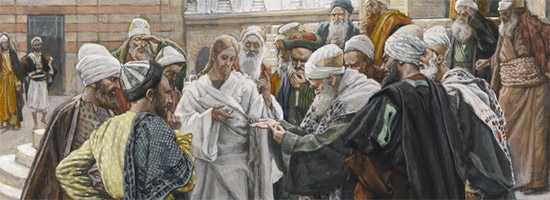
Beloved and blessed saints, though you are tired of living under the curse of sin, your Savior calls you blessed. Look around at what you have. See what Christ has given you. You have the presence of God in your midst. He is here to shelter you with His presence. Your hungering and thirsting is gone because Jesus gives you His body and blood for the forgiveness of your sins.

1 John 3:2-3 2 Beloved, we are God’s children now, and what we will be has not yet appeared; but we know that when he appears we shall be like him, because we shall see him as he is. 3 And everyone who thus hopes in him purifies himself as he is pure. Amen.

The peace of God, which surpasses all understanding, will guard your hearts and minds in Christ Jesus. Amen.

Matthew 22:15-22 – Render to God Jesus

Listen here.

Matthew 22:15-2215 Then the Pharisees went and plotted how to entangle him in his words. 16 And they sent their disciples to him, along with the Herodians, saying, “Teacher, we know that you are true and teach the way of God truthfully, and you do not care about anyone’s opinion, for you are not swayed by appearances. 17 Tell us, then, what you think. Is it lawful to pay taxes to Caesar, or not?” 18 But Jesus, aware of their malice, said, “Why put me to the test, you hypocrites? 19 Show me the coin for the tax.” And they brought him a denarius. 20 And Jesus said to them, “Whose likeness and inscription is this?” 21 They said, “Caesar’s.” Then he said to them, “Therefore render to Caesar the things that are Caesar’s, and to God the things that are God’s.” 22 When they heard it, they marveled. And they left him and went away.

In the name of Jesus. Amen.

Do you find your actions result in unintended consequences?

In 1912, we learned a lesson from the sinking of the Titanic – you need to have enough lifeboats for everyone on the ship. When the “unsinkable” Titanic launched on its maiden voyage there were 2,223 people on board, but the ship had enough lifeboats for just under 1,200 people. Because of this in 1915, the federal “Seamen’s Act” was passed in the United States which required all ships to have enough lifeboats for all its passengers.

Well, there was a boat in Chicago called the Eastland. When it was built, the Eastland had a design flaw – it was top-heavy, its center of gravity was way too high causing the boat to list. When the “Seamen’s Act” passed, the Eastland had to add more heavy lifeboats to accommodate the number of passengers. But this, of course, made the ship even more top-heavy. Anyway, on July 24, 1915, the Eastland was chartered by a company to take its workers on their annual picnic. As the passengers boarded, they stood on the deck to take in the morning air. But suddenly the boat tipped over on its side, and 848 people died because the boat had been made “safer,” but that safety resulted in unintended consequences.

Good intentions do not always equal good results. Sometimes unintended consequences cause more mayhem like in the case of the Eastland. But sometimes unintended consequences produce unexpected benefits. Something like that happens in our text today.

In this Gospel text, the Pharisees are out for blood. Jesus is a threat to their authority, so they want Jesus dead. The Pharisees are looking for a way to trap Jesus in His words. They wanted to set a trap for Him so they could accuse Him of a capital crime. So the Pharisees worked together with the Herodians to lay out their trap. This would be similar to the farthest left liberal and the farthest right conservative joining forces to achieve something together. It’s almost unbelievable that something like this would happen.

The Herodians represented the Roman occupation of Israel. Herod’s dynasty had come to power only because Rome had given it to them. The Pharisees and the people living in Israel hated the fact that they were under the Herod’s and Roman rule, but they couldn’t really do anything about it. Both the Herodians and the Pharisees viewed Jesus as a threat to their way of life, and as the saying goes, “The enemy of my enemy is my friend.”

They lay a snare for Jesus. They are going to ask Jesus a question that will catch Him in His words. But first they try to disguise their trap. They lather their trap in honeyed words. “Teacher, we know that You are true and teach the way of God truthfully, and You do not care about anyone’s opinion, for You are not swayed by appearances.” Thinking they have Jesus fooled and off His guard, they set the trap. ”Should we pay taxes to Caesar or not?”Jesus & Pharisees arguing about the tax

Now, if Jesus says, “No,” the Herodians, the representatives of Rome, will think He is stirring up a rebellion. About 25 years before this, in 6 AD, a man named Simon the Galilean lead a revolt because of this very same tax resulting in a civil war. The Herodians would kill to stop another rebellion like this. But if Jesus says, “Yes,” the crowds who are following Him will be disgusted with Him seeing Him as a traitor to God the Jewish state.

But Jesus sees right through them. “Hypocrites. You evil, conniving, two-faced hypocrites. I’m going to ask you a question. Show Me the coin you use to pay the tax.” Someone in the group pulls a denarius out of his pocket and shows it to Jesus. And Jesus asks, “Whose likeness and inscription is on this coin? Whose icon and writing is this?”

They answer, “Caesar’s.” Jesus says, “Render to Caesar the things that are Caesar’s and to God the things that are God’s.” In other words, Jesus tells these nefarious hypocrites, “Since that coin has Caesar’s icon and writing on it, give it back to Caesar if he asks for it. But any other ‘currency,’ any other thing, that has God’s icon and writing on it, when God asks for it, render it to Him.”

With this answer, Jesus makes those hypocrites look like Wiley Coyote trying to catch Roadrunner. They marvel and go away.

Passover LambBut, fast-forward a couple of days. These hypocrites will do exactly what Jesus says. They will render to God the things that are God’s. They will render to God Jesus. Desperate to get rid of Him, the hypocrites will arrest Jesus and bring Him before Pilate saying, “This Man is forbidding us to give tribute to Caesar, and saying that He Himself is Christ, a king” (Lk. 23:2). They make sure that Jesus gets placed on the cross, and in doing so, they render to God Jesus, the Son of God.

Just as the denarius bared the icon and words of Caesar, Jesus is the icon and Word of God (Col. 1:15; Jn. 1:1-4). But these hypocrites call for Jesus’ death thinking it will benefit them and their way of living. But killing Jesus will have unintended consequences with eternal benefits. They offer to God the Lamb of God who takes away the sin of the world – even their own sin.

Your actions also have unintended consequences. When we complain about our political leaders, we sin – not only against them, but also against God. Those in authority over us are placed there by God. If you resist the authorities, you resist and rebel against God (Ro. 13:1-7). You and I are sinners, descendants of Adam. We bear the icon of original sin (1 Co. 15:49) from the time we are conceived. Everything we do, even our righteous deeds fall apart in our hands producing sin and death.

BaptismHowever, God has given you the icon of Christ (1 Cor. 15:49). When you were baptized into Christ, you put on Christ (Gal. 3:27). When you were baptized in the name of the Father, Son, and Holy Spirit, God put His words, His name, on you.
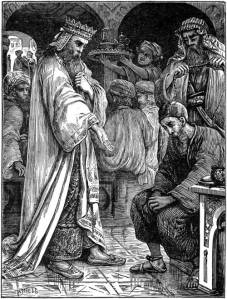
In allowing Himself to be offered to God, Jesus offered to God the things that are God’s. Through His death and resurrection, Jesus redeemed you and all of creation and presents it back to God. Our evil toward God has resulted in the best unintended consequence – eternal life with Him. Amen.

The peace of God, which surpasses all understanding, will guard your hearts and minds in Christ Jesus. Amen.

Matthew 22:1-14 – I’m Serious. Come. Eat, Drink, & Be Merry

Listen here.

Matthew 22:1-141 And again Jesus spoke to them in parables, saying, 2 “The kingdom of heaven may be compared to a king who gave a wedding feast for his son, 3 and sent his servants to call those who had been called to the wedding feast, but they would not come. 4 Again he sent other servants, saying, ‘Tell those who have been called, “See, I have prepared my dinner, my oxen and my fat calves have been slaughtered, and everything is ready. Come to the wedding feast.”’ 5 But they paid no attention and went off, one to his farm, another to his business, 6 while the rest seized his servants, treated them shamefully, and killed them. 7 The king was angry, and he sent his troops and destroyed those murderers and torched their city. Matthew 22 Wedding Garment Parable8 Then he says to his servants, ‘The wedding feast is ready, but those who had been called were not worthy. 9 Go therefore to the main roads and call to the wedding feast as many as you find.’ 10 And those servants went out into the roads and gathered all whom they found, both bad and good. So the wedding hall was filled with guests. 11 But when the king came in to look at the guests, he saw there a man who had no wedding garment. 12 And he says to him, ‘Friend, how did you get in here even though you do not have a wedding garment?’ And he was speechless. 13 Then the king said to the attendants, ‘Bind him hand and foot and cast him into the outer darkness. In that place there will be weeping and gnashing of teeth.’ 14 For many are called, but few are chosen.”
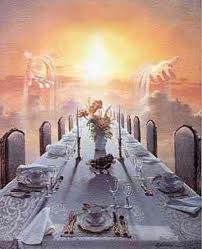
In the name of Jesus. Amen.

You have a God who wants to, “prepare a table before you in the presence of your enemies” (Ps. 23:5). You have a God who has made for you “a feast of rich food, a feast of well-aged wine, of rich food full or marrow, of aged wine well refined” (Is. 25:6). But most of the time, we sinners look at God as though He is a blood-thirsty deity that we are fed to rather than a loving heavenly Father we are fed by (Capon). But a God full of wrath and anger is not the kind of God you have.

Jesus depicts God’s reign, His saving action in the world, as a king who gave a wedding feast. The king sends out invitations, and then he sends out his servants to call those who had already been called. But after these two calls, the guests still do not come. The king eagerly sends out other servants tempting the guests to come, “The feast is ready. Listen to this tasty menu; I’ve killed my best animals and barbequed them. The table is set. The wine is poured. Come to my palace. Let’s have a hand-clappin’, foot-stompin’, side-splinnin’ good ol’ time.”

The guests still make light of it all. They ignore the call and go about their regular business. One goes off to his farm, and another goes off to his business. Some of the other invitees make it clear what they think of the king and his party. They seize the king’s servants who were simply inviting them to come to a feast, treat the servants disgracefully, and kill them. This is no way to run a social life.

Pause here for a moment. Notice, the two types of people here. First, there are those who think that the king’s gracious attitude will absolve them from the bother having to sit through his feast (notice the sarcasm). These people say, “Oh, I have so much stuff to do, I can’t be interrupted to go to a boring party at the palace.” Second, there are those who think that they are too good, too fancy, too high-brow to be seen at the feast. Maybe they see the guest list and say, “Oh, I couldn’t be seen with the likes of those people. It would ruin my reputation.” But what is common to both of these groups is that they are lacking in faith that the king’s feast is the place to be. And by rejecting the king and his feast, the people are left with nothing because outside of this party, there is no life at all.

The palace is decorated, and the music has started. But the town is filled with indifference and violence towards the king and his party causing the streets flow with the blood of the king’s servants.violent-men (1)

So before he can preside over the party, the king has to oversee a slaughter. He sends out his armies shooting up cars, throwing grenades, launching missiles, and dropping napalm on the very people the king wanted at his feast. The king wanted to give them the best food and wine. But because of their violent refusal, the king takes their lives crosses them off of his list for good.

After this “shock and awe” display of wrath, the king dusts off his hands and determines to go on with the party. He sends out his servants, “Go into the main streets of the city and invite as many as you find.” So the servants go out and gather all the people they could find – both bad [πονηρός where we get our word ‘pornography’] and good.

Pause again. The king will stop at nothing to have his party. Evil is not a problem for God. Evil has already been dealt with on the cross, in the death and resurrection of Jesus. God does not invite the good and snub the bad. He invites everyone – the good, the bad, the ugly, and the evil. The eternal Marriage Supper of the Lamb is open to all sorts of evil people – to drunkards, druggies, prostitutes, murderers – and even to you.

The only thing that can possibly hinder you from getting into the feast of God’s reign is rejection of the invitation. While you were yet a sinner, Christ died for you making you acceptable to God. Trust that provision and nothing else.

Back to the parable: The servants bring in everyone they can find, both the bad and the good. All these people are dragged off the street dressed just as they are – business casual, sweaty workout cloths, and even filthy rags – and are marched right into the palace. But before they are ushered to their chairs, the king’s servants give everyone something splendid to wear. The men get expensive Italian suits by Armani and Brioni while the women get evening gowns by Dolce & Gabbana and Prada. So, finally, the wedding hall was filled with guests.

The king comes in to have a look at the splendor. But he sees one glaring defect marring the whole scene. One character stands out like a monstrous, puss-oozing zit smack in the middle of an otherwise flawless face. There he is, a guy with no wedding cloths. The king walks right up to him and asks, “Hey buster, how did you get in here without a wedding garment?” And the man was speechless.

I think Jesus makes the man speechless just to get to the point of the parable. Stories, even good stories, have to end sometime. Seeing the lengths to which the king goes to get anyone in his feast, I’m sure any excuse would have done. If the guy had just said, “I didn’t want to get your fancy schmancy suit dirty. And I’ve been working all day getting sweaty and dirty cleaning the manure out of my barn. And I’m still bleeding from when I tried to jump over my barbed-wire fence when I heard about your invitation.” I’m sure the king would have laughed and said, “Don’t worry about it. The cloths are just for fun. Here’s a nice $50,000 Kiton suit. The color will distract from the poo in your hair! Here’s a nice Rolex watch. It will work as a Band-Aid for your cut.”

But this guy doesn’t even offer an excuse, and by doing so, he excludes himself from a relationship with the king. The king wanted a relationship with this guy and was willing to go to whatever lengths to make it happen. But by not believing and accepting the king’s provision and acceptance, this sorry dude brought judgment upon himself. “Bind him hand and foot, and throw him into the outer darkness – where there is nothing but weeping and gnashing of teeth.”

Eschatological Lord's SupperYou see, God has prepared a table for you. He accepts you. He accepts you not because of who you are or what you have done. He accepts you because of what Jesus Christ has done. God simply wants you at His party. He has laid it all out with the best food, the most expensive china, and the finest wine. He will dress you in the righteousness of His Son.
Ephesians 2:4–7 4 God, being rich in mercy, because of the great love with which he loved [you], 5 even when [you] were dead in [your] trespasses, made [you] alive together with Christ—by grace you have been saved— 6 and raised [you] up with him and seated [you] with him in the heavenly places in Christ Jesus, 7 so that in the coming ages he might show the immeasurable riches of his grace in kindness toward [you] in Christ Jesus.

God invites you, “I’m serious. Come. Eat, drink, and be merry. This is My feast, and I want you here.” Amen.

The peace of God, which surpasses all understanding, will guard your hearts and minds in Christ Jesus. Amen.

Matthew 21:33-46 – The Seemingly-Absent, Gracious-to-a-Fault God

Listen here.

Matthew 21:33-4633 “Hear another parable. There was a master of a house who planted a vineyard and put a fence around it and dug a winepress in it and built a tower and leased it to tenants, and went into another country. 34 When the season for fruit drew near, he sent his servants to the tenants to get his fruit. 35 And the tenants took his servants and beat one, killed another, and stoned another. 36 Again he sent other servants, more than the first. And they did the same to them. 37 Finally he sent his son to them, saying, ‘They will respect my son.’ 38 But when the tenants saw the son, they said to themselves, ‘This is the heir. Come, let us kill him and have his inheritance.’ 39 And they took him and threw him out of the vineyard and killed him. 40 When therefore the owner of the vineyard comes, what will he do to those tenants?” 41 They said to him, “He will put those wretches to a miserable death and let out the vineyard to other tenants who will give him the fruits in their seasons.”

42 Jesus said to them, “Have you never read in the Scriptures:

“‘The stone that the builders rejected
has become the cornerstone;

this was the Lord’s doing,
and it is marvelous in our eyes’?

43 Therefore I tell you, the kingdom of God will be taken away from you and given to a people producing its fruits. 44 And the one who falls on this stone will be broken to pieces; and when it falls on anyone, it will crush him.”

45 When the chief priests and the Pharisees heard his parables, they perceived that he was speaking about them. 46 And although they were seeking to arrest him, they feared the crowds, because they held him to be a prophet.

In the name of Jesus. Amen.

Jesus keeps singing Isaiah’s love song about Yahweh’s vineyard (Is. 5:1-7). God wants to supply everything necessary for a feast – a time of wining and dining. He plants a vineyard, sets a hedge around it, digs out a winepress, and builds a watchtower to protect against marauding invaders.

But then, in our eyes, God made a mistake. “He leased the vineyard out to tenants.” Think of all the trouble God could have saved if He had simply had kept the vineyard with all of its grapes and wine for Himself. But, then, God does something even more silly, “He went into another country.”

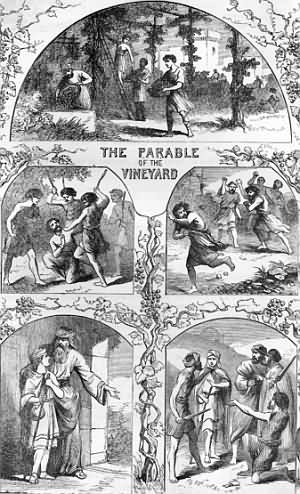
Parable of the Vineyard“If you want it done right, you have to do it yourself,” we say. But that is not God’s way. He doesn’t set Himself up in the watchtower and manage the vineyard Himself. He lets the tenants figure it out for themselves. When the harvest is over and the wine is made, He expects those tenants to give Him His portion so that He and His tenants can eat, drink, and be merry together.
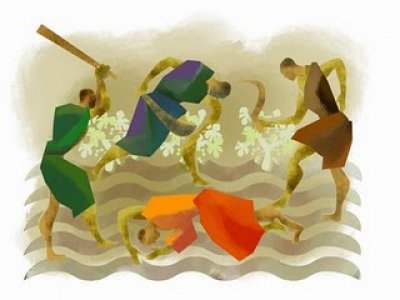
But the tenants see the Owner as remote and distant. So when the Owner’s servants show up asking for the Owner’s portion the tenants respond, “Yeah, good luck with that.” They think that whatever they send back to the Owner will mean less for them. So they beat one of the servants, kill another, and stone another.

If you don’t think the Owner is foolish yet, look at what He does next. “He sent other servants, more than the first. And they did the same to them.”

Finally, the Owner decides to do something so foolish it’s pathetic. He sent His Son saying, “They will respect My Son.” It looks as though the vineyard Owner underestimated how evil and opportunistic His tenants were. Why, why, would the vineyard Owner be so foolish as to send His Son while His vineyard is stained with the blood of His servants? But He does, and the Son goes willingly.

The tenants see the Son coming and figure this is their chance to make it big. “Come, let us kill the Heir and we will have His inheritance. And they threw [the Son] out of the vineyard and killed Him.”

Then Jesus asks the big question, “When the Owner of the vineyard comes, what will He do to those tenants?” There is no doubt that He will clobber and destroy them. The chief priests and elders, the leaders of the Temple, said to Jesus (lit.), “He will put those wretches to a wretched death.” You would too. You certainly wouldn’t have let things get this far. You absolutely wouldn’t have sent your own child. You probably wouldn’t have sent a second delegation of servants. You likely wouldn’t have gone to a far off country. And maybe you wouldn’t have even lent your vineyard out to anyone.

Parable of the Wicked TennantsBy acting with evil towards the vineyard Owner, His servants, and His Son, the tenants show that they viewed the Owner as evil.
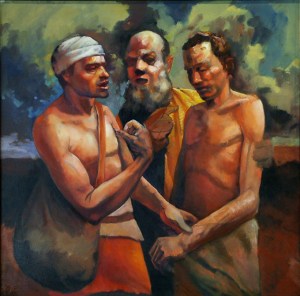
Luther famously said, “As you believe, so it is.” If you treat God as a kill-joy who deprives you of good things, then that is the God you have. If you treat God as a threat to you and your well-being, then that is the God you have. If you think God is the kind of God who demands His rights and pays back evil for evil, then that is the God you have. If you treat God as a threat and enemy, then that is the God you have.

“The evil you think of God, you will receive from Him” (Nagel). Because the tenants are wretched, they get a wretched end. “As you believe, so it is.” If you insist that God give you what you deserve, that is all you will get. If you treat God as a threat and enemy, then that is what He will be (Nagel). But that is not what God wants.

God wants a vineyard, grapes, wine, and the joy that comes from it all (Ps. 104:14-15). God wants what is His to flow from Himself to you and to Himself again – back and forth, back and forth. That is God’s love for you.

God has set us as His tenants in His vineyard, but we have returned His kindness with sin and murder. It was at your hands and my hands that Jesus was thrown out of the vineyard to suffer, bleed, and die. The Father sent Jesus knowing we would treat Him with dishonor, and Jesus willingly came. He came and let His body be broken for you. He let His blood be shed for you. And He does not return your violence upon your heads. He gives and gives more.

Eschatological Lord's SupperToday, He willingly gives you His body and blood – in, with, and under the bread and the wine. He gives His body and blood for the forgiveness of your sins.

You can believe God is a tyrant stealing all your hard work and all your joy from you, and He will certainly do that if that is what you believe. But He doesn’t want to. God wants the joy of the harvest. He wants us to join Him in the celebration, and He calls you to play your part in furnishing the fruit and wine for the festivity (Nagel). Amen.[1]

The peace of God, which surpasses all understanding, will guard your hearts and minds in Christ Jesus. Amen.

[1] I am indebted to Norman Nagel’s sermon on this text as inspiration for this sermon.

Matthew 21:23-32 – Change of Mind

Listen here.

Matthew 21:23-3223 And when he entered the temple, the chief priests and the elders of the people came up to him as he was teaching, and said, “By what authority are you doing these things, and who gave you this authority?” 24 Jesus answered them, “I also will ask you one question, and if you tell me the answer, then I also will tell you by what authority I do these things. 25 The baptism of John, from where did it come? From heaven or from man?” And they discussed it among themselves, saying, “If we say, ‘From heaven,’ he will say to us, ‘Why then did you not believe him?’ 26 But if we say, ‘From man,’ we are afraid of the crowd, for they all hold that John was a prophet.” 27 So they answered Jesus, “We do not know.” And he said to them, “Neither will I tell you by what authority I do these things.

Parable of the Two Sons28 “What do you think? A man had two sons. And he went to the first and said, ‘Son, go and work in the vineyard today.’ 29 And he answered, ‘I will not,’ but afterward he changed his mind and went. 30 And he went to the other son and said the same. And he answered, ‘I go, sir,’ but did not go. 31 Which of the two did the will of his father?” They said, “The first.” Jesus said to them, “Truly, I say to you, the tax collectors and the prostitutes go into the kingdom of God before you. 32 For John came to you in the way of righteousness, and you did not believe him, but the tax collectors and the prostitutes believed him. And even when you saw it, you did not afterward change your minds and believe him.
In the name of Jesus. Amen.

“What gives You the right? Where do You get Your authority?” The chief priests and elders want to know why Jesus thinks He can do all the things He has been doing.

Well, what has Jesus been doing? In last week’s text, Jesus was teaching in parables, but today’s text moves Jesus’ story late into the 4th quarter. We have jumped ahead to Tuesday of Holy Week – in three days Jesus will be hanging on the cross. So what has Jesus done in the last few days that has the chief priests and elders upset? If you look at Matthew and Mark together you get a sense of the timeline. Mark (11:1-27) gives us a sense of how time has passed (Matthew, as he writes, isn’t as concerned about letting us know what happened on what day).

Jesus entered Jerusalem on Sunday riding a donkey while the crowds welcomed Him waving palm branches, laying their cloaks on the road before Him, and shouting, “Hosanna! Save us now, Lord! Blessed is He who comes in the name of the Lord! Hosanna in the highest!”

On Monday, Jesus enters the Temple again and causes quite a scene. He drives out the people who are selling and buying animals with a whip, and He overturns the tables of the money changers. You might think after causing such a scene, Jesus would want to abscond, to slip out to a quiet alley. But instead He stays in the Temple healing the blind and lame while children cry out, “Hosanna to the Son of David!” And Jesus doesn’t tell the kids to be quiet and reverent. Instead, He accepts their praise. None of this goes over well with the leaders. They don’t like it one bit and are trying to figure out how to destroy Jesus.

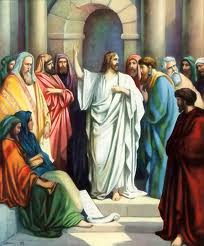
Jesus Teaching in the SynogagueNow our text picks up on Tuesday. Jesus is in the Temple again. The chief priests and elders of the people, the spiritual leaders, walk up to Jesus and ask Him, “What gives Jesus? Who do You think You are? Why are You doing all these things? This is our turf. We get to say how things are supposed to be done here. We told the money changers and sellers they could be here. Why do You think you can drive them out and change how we do things? By what authority do You do all this?”

Jesus responds, “I also will ask you one question, and if you tell me the answer, then I also will tell you by what authority I do these things.” Jesus asks, “The baptism of John, from where did it come? From heaven or from man?”

The answer to the leaders’ question is the answer to Jesus’ question. The source of John’s authority was the source of Jesus’ authority. If they answer Jesus’ question right, then they will have answered their own question.

But these spiritual leaders huddle up and discuss how to respond, and they realize they have a problem. If they answer, “From heaven,” Jesus will say, “If John’s message was from heaven, why didn’t you believe John? He told people to believe in Me. John himself said that I was the one mightier than he was. He said that I am the Lamb of God who takes away the sin of the world. If John came from God, why don’t you believe Me?” But these leaders also realize that if they answer, “From man,” the crowds will be upset because they believed that John was a prophet. Gobs of people from all over the country believed John’s preaching which called for repentance, and they went to him to be baptized (Mk. 1:5). If the leaders say that John’s baptism was only from man, the crowds will hate them.

So they decide to answer with a humble-sounding lie, “We don’t know.” So Jesus tells them, “Than neither will I tell you by what authority I do these things.”

But Jesus doesn’t let them off the hook. Jesus traps the leaders with another question. But He doesn’t trap them to condemn them; instead, He traps them to bring them to repentance. Jesus asks a question with a mini-parable, “What do you think? A man had two sons. He said to them both, ‘Son, go and work in the vineyard today.’ The first son said, ‘I will not go,’ but later changed his mind (lit. ‘repented’) and went. The second son said, ‘I will go,’ but he did not go. Which of the two sons did the will of his father?”

The leaders know the answer – it’s elementary, it’s obvious. “The first. The one who said he would not go but then repented and went.” With this right answer, Jesus has them right where He wants them. He says, “Truly, I say to you, the tax collectors and the prostitutes go into the kingdom of God before you. John came to you in the way of righteousness preaching repentance. But you did not believe him – you did not repent. But the tax collectors and the prostitutes believed him and repented. And even when you saw it, you did not afterward change your minds (lit. ‘repent’) and believe him.”

Let’s leave Jesus and the leaders for now. What does this mean for you?

Crying to GodWho do the characters in the parable represent? The father is God, the two sons are believers and unbelievers. To work in the vineyard is to do the will of God. That doesn’t mean to fly straight and obey all of God’s commandments. To do the will of God is to repent of everything you do because what you do always falls short of God’s command. God sent John and Jesus preaching telling people what His will was – “Repent.” Jesus said that God’s will is that everyone look to Jesus and believe in Him for eternal life (Jn. 6:40). Without repentance and faith you will never do the will of the Father. Instead, you will watch as tax collectors and prostitutes, as all sinners, enter the reign of heaven ahead of you.

It doesn’t matter how good you are, you are still a sinner. And sinners, all sinners, the worst of the worst sinners, enter the reign of God only because of repentance and faith in Jesus. Abandoning your works and efforts is the only way into the reign of God. Jesus is the Lamb of God who has taken away the sin of the world.

Jesus has authority from God. And Christ used His authority to take your sins and make them His own (2 Cor. 5:21; 1 Pet. 2:24). He suffered, bled, and died for those sins. As far as God is concerned, you have never sinned at all because of Jesus’ sacrifice.

So, repent, believe. Enter the reign of God on the basis of Jesus’ authority to forgive you because He has forgiven you. All of you. Amen.

The peace of God, which surpasses all understanding, will guard your hearts and minds in Christ Jesus. Amen