Matthew 13:1-23 – The Father Went out to Sow the Son

Listen here.

Matthew 13:1-23—That same day Jesus went out of the house and sat beside the sea. 2 And great crowds gathered about him, so that he got into a boat and sat down. And the whole crowd stood on the beach.

3 And he told them many things in parables, saying: “A sower went out to sow. 4 And as he sowed, some seeds fell along the path, and the birds came and devoured them. 5 Other seeds fell on rocky ground, where they did not have much soil, and immediately they sprang up, since they had no depth of soil, 6 but when the sun rose they were scorched. And since they had no root, they withered away. 7 Other seeds fell among thorns, and the thorns grew up and choked them. 8 Other seeds fell on good soil and produced grain, some a hundredfold, some sixty, some thirty. 9 He who has ears, let him hear.”

10 Then the disciples came and said to him, “Why do you speak to them in parables?” 11 And he answered them, “To you it has been given to know the secrets of the kingdom of heaven, but to them it has not been given. 12 For to the one who has, more will be given, and he will have an abundance, but from the one who has not, even what he has will be taken away. 13 This is why I speak to them in parables, because seeing they do not see, and hearing they do not hear, nor do they understand. 14 Indeed, in their case the prophecy of Isaiah is fulfilled that says:

‘You will indeed hear but never understand,
and you will indeed see but never perceive.”

15 For this people’s heart has grown dull,
and with their ears they can barely hear,
and their eyes they have closed,

         lest they should see with their eyes
and hear with their ears

and understand with their heart and turn,
and I would heal them.’

16 But blessed are your eyes, for they see, and your ears, for they hear. 17 For truly, I say to you, many prophets and righteous people longed to see what you see, and did not see it, and to hear what you hear, and did not hear it.

18 “Hear then the parable of the sower: 19 When anyone hears the word of the kingdom and does not understand it, the evil one comes and snatches away what has been sown in his heart. This is what was sown along the path. 20 As for what was sown on rocky ground, this is the one who hears the word and immediately receives it with joy, 21 yet he has no root in himself, but endures for a while, and when tribulation or persecution arises on account of the word, immediately he falls away. 22 As for what was sown among thorns, this is the one who hears the word, but the cares of the world and the deceitfulness of riches choke the word, and it proves unfruitful. 23 As for what was sown on good soil, this is the one who hears the word and understands it. He indeed bears fruit and yields, in one case a hundredfold, in another sixty, and in another thirty.”

In the name of Jesus. Amen.

Jesus has already had a busy day. This day began back in Mt. 12:1 with Jesus and His disciples walking through grainfields. The disciples were hungry so they plucked heads of grain and ate them. The Pharisees accused Jesus that His disciples were breaking the Sabbath laws. But Jesus insists that He is Lord of the Sabbath (12:1-8). Jesus then goes on to enter the synagogue and heals a man with a withered hand. This really sets the Pharisees off and they conspired against Jesus to destroy Him (12:9-14). But Jesus knows they want to destroy Him, so He withdraws from the synagogue and heals all sorts of people. A demon possessed man is brought to Him, and Jesus heals the man. The Pharisees accuse Jesus of casting out demons by Beelzebul. Jesus proves that their accusation is absolute nonsense (12:15-37).

What happens next is almost comical. Some of the scribes and Pharisees make a request of Jesus. They ask, “Teacher, we wish to see a sign from You” (12:38). Jesus tells them that He will give them no sign except the sign of the prophet Jonah – i.e. His death and resurrection (12:39-45). After this, Jesus’ mother and brothers come to find Him and get Him to stop talking. But Jesus says that His mother and brothers are the disciples who believe in Him (12:46-50).

Now we come to our text: “That same day Jesus went out of the house and sat beside the sea. And great crowds gathered about Him, so that He got into a boat and sat down. And the whole crowd stood on the beach” (13:1-2). The disciples were probably relieved. Jesus is getting away from the opposition, and He is going to teach again similar to how He did in the Sermon on the Mount. When Jesus taught on that mountain, He opened up God’s Word and made it plain and clear, and the people were astonished at Jesus teaching and authority (7:28-29).

Parable of the SowerBut Jesus teaches with the parable of the Sower and the Seed, and the disciples don’t like this. They are disappointed. “Why do You speak to them in parables?” they ask (13:10). It is as if the disciples are saying, “Jesus, don’t You see how much trouble You’ve stirred up today. People are rejecting Your message. The Pharisees hate You, and You are separating us from the crowds and even Your own family. Now, You are teaching in parables? Come on, clear things up! Teach them plainly so they can understand.”

Jesus answers them, “I speak to them in parables, because seeing they do not see, and hearing they do not hear, nor do they understand. You disciples, you see, hear, and understand. But they have hardened their hearts. So even what they have will be taken away.”

A couple of things to note about this: First, see that Jesus is still teaching to them. He is still graciously preaching the Word of God and bringing the reign of God to the crowds who have rejected Him. Second, see that by teaching them in parables, Jesus is acknowledging the reality of the situation – He is teaching outsiders. He is teaching people who have rejected Him (Gibbs). If the outsiders are treated as outsiders, maybe, they will wake up and become insiders. Maybe they will stop rejecting God’s Word.

Now, Jesus explains the whole parable to the disciples.

Jesus explains that the seed is the “Word of the reign [of God]” (more on this in a minute). The Word is sown in all sorts of places where normal farmers wouldn’t want to waste good seed. Some falls on the path and is devoured by birds. Sometimes, Satan simply snatches away the message, and the hearers never believe. These satanic birds don’t even give the seed a chance to sprout. This sounds terrible, but what happens when birds eat seeds? Right, eventually, they have to “get rid” of them – if you know what I mean. The seed is not on the original soil anymore, but it is still good seed and can still sprout, if it lands on good soil.

Some seed falls on rocky ground. That seed sprouts up, but soon dies. Some people hear Jesus and believe, but there is no soil so there are no roots. Tribulation or persecution comes and the plant immediately withers.

Some seed falls among thorns. These people hear and believe Jesus, but they get chocked out by the cares and worries of this world.

Notice, most of the ground where the seed falls fails to produce.

Consider for a moment, do you see yourself in any of these three types of ground? Do you hear the Word of God and forget about it right away? Or do you find yourself falling away when trials and persecutions come your way? Do the things of this world choke and strangle you?

Repent. Soil can’t make itself good. Soil needs to be worked over to become good soil. Pray. Pray that God will work you over so that you will become good soil. That work may be unpleasant and hard, but it will produce. Take every advantage available to you to hear the pure Word of God taught rightly. Dig deep. Find the nourishing soil fertilized by the crucified body and blood of your Savior.

Again, most of the ground where the seed falls fails to produce.

But there is a fourth place where the seed falls. Some seed falls upon good ground, and it produces unimaginable amounts of yield. Apparently, even a ten-fold yield is an almost unheard of by farmers. Jesus is saying that this seed is producing thirty, sixty, and even a hundredfold. This is some good, fruitful seed. Jesus doesn’t say exactly what this fruit is, but it likely refers to good works (Mt. 5:13-16). Whatever the fruit is, it is good and there is a plethora of it.

Word Became FleshJesus explains that the seed is the Word. Now, some say that we Christians need to get out there and sow the seed of the Word. They say we need to send pastors and missionaries all over our communities and throughout the world to sow this seed. But that misses the point, and it ignores the Scriptures that teach us that Jesus Himself is the Word of God in the flesh.

Jesus is the Word. Do you see what that means? It means that God the Father is the Sower, and Jesus, God the Son, is the Seed. The Father sowed Jesus in the fullness of time by sending His Son (Gal. 4:4). The Father has sent Jesus. He is the Word who came into the world and enlightens every person (Jn. 1:1f). Jesus became flesh and was sown among us. But many have rejected Him.

Jesus has “already, literally been sown everywhere in the world – and quite without a single bit earthly cooperation or even consent” (Capon see also Ro. 10:18). We Christians produce fruit when we simply bring the Good News of the Word, the Seed of Jesus Christ who is already there. We announce that Jesus is present as the Lamb of God who takes away the sin of the world. We proclaim that His cross, His death, His resurrection, and His ascension is already present for them for their forgiveness.

Dear saints, go out in joy, produce good fruit, and proclaim that Jesus has come to forgive the sins of everyone you meet. Announce this Good News to your family, friends, and neighbors. God’s Word will not return to Him empty; it will accomplish the very purpose for which He has already sent it (Is. 55:10-11).

He who has ears, let him hear.  Amen.[1]

The peace of God, which surpasses all understanding, will guard your hearts and minds in Christ Jesus. Amen.


[1] I am especially indebted to Robert Farrar Capon’s book Kingdom, Grace, Judgment: Parados, Outrage, and Vindication in the Parables of Jesus for this sermon.

Matthew 11:25-30 – God Over All & Christ For All

Listen here.

Matthew 11:25-30 25 At that time Jesus declared, “I thank you, Father, Lord of heaven and earth, that you have hidden these things from the wise and understanding and revealed them to little children; 26 yes, Father, for such was your gracious will. 27 All things have been handed over to me by my Father, and no one knows the Son except the Father, and no one knows the Father except the Son and anyone to whom the Son chooses to reveal him.

28 ”Come to me, all who labor and are heavy laden, and I will give you rest. 29 Take my yoke upon you, and learn from me, for I am gentle and lowly in heart, and you will find rest for your souls. 30 For my yoke is easy, and my burden is light.”

In the name of the Father, Son, and Holy Spirit. Amen.

Our text comes just after Jesus has pronounced woes upon three cities – Chorazin, Bethsaida, and Capernaum – who had rejected the message of the forgiveness of sins in Jesus’ name. These cities had seen Jesus work miracles. In Bethsaida, He had healed a blind man. He had fed the 5,000 men plus women and children. Remember the paralytic who was lowered down from the roof? Jesus first forgave his sins then made him walk – that was in Capernaum. These three cities had seen the miraculous presence of Christ, but they had rejected Him. Seeing, they did not see, and hearing they did not hear.

The wise and understanding hearts of these cities rejected the promised Messiah. Now Jesus prays, “I thank You, Father, Lord of heaven and earth that You have hidden these things from the wise and understanding and revealed them to little children.” Wisdom did not help Chorazin, Bethsaida, and Capernaum. In fact just the opposite. They claimed to be wise and became fools (Ro. 1:22).

Baptism 2But God did reveal (lit. “apocalypsed”) His salvation to those who had no wisdom of their own – to the “little children.” All sinners, that includes you, are without understanding. Like Paul in our epistle text (Ro. 7:14-25), you too are a slave to sin. You carry the burden of knowing what is right and good, but you don’t do it. Like Paul, you practice the very things you hate and know to be evil. You reject and deny God’s authority over you.
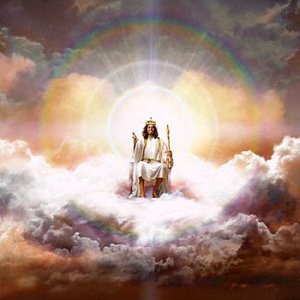
Notice, though that Jesus says that the “little children” (lit. ‘infants’), those who realize they are utterly dependent, they have the revelation that only God can give. Those who are last, lost, least, and little receive the forgiveness of Christ. This is the gracious act of God. The very people who deserve condemnation, to them God gives forgiveness, life, and salvation.

God is over all things. The Creator has control over every aspect of creation, but notice what Jesus says, “All things have been handed over to Me by My Father.” Jesus says that God the Father is Lord of heaven and earth and has placed everything into Jesus’ hand.

So Jesus is, now and forever, Lord over all things. Notice what Jesus says next, “No one knows the Son except the Father, and no one knows the Father except the Son and anyone to whom the Son chooses to reveal Him.” You cannot come to know God unless Jesus reveals Him to you. Unless Christ chooses to reveal God to you, you are lost.

Salvation is completely out of your hands. Does that scare you? It shouldn’t; it should comfort you because look at what the Savior says next, “Come to Me, all who labor and are heavy laden, and I will give you rest.”

Rest. Who doesn’t want rest? God fills our lives with so many good things – good families, good homes, good jobs. But rest, where do we find rest? We search high and low trying to find rest. We try to create little sanctuaries of rest for ourselves. We make our homes places of solace away from the difficult business of our day. We take time off of work to travel to peaceful places in the world and “get away from it all.” No matter how hard we try to find it or create it, true rest alludes us.

Even when we do find rest and solitude, those moments are few and far between. In whGod over All Christ for Allat might be St. Augustin’s most famous quote he says to God, “Thou hast formed us for Thyself, and our hearts are restless till they find rest in Thee.” The rest that Jesus gives is completely foreign and alien to our normal, everyday existence. The rest Christ delivers is the forgiveness of sins and the end striving against God. That rest is what God wanted us to have so He gave us the third Commandment, “Remember the Sabbath day to keep it holy.” God wanted us to set apart a whole day when we could find rest in being fed with His Word. Jesus is offering the eternal Sabbath rest that only comes from God.

You see, beloved, God is over all, and the Son of God, who rules over all, is for you. Jesus says, “Come to Me, all who labor and are heavy laden, and I will give you rest. Take My yoke upon you, and be discipled by Me, for I am gentle and lowly in heart, and you will find rest for your souls. For My yoke is easy, and My burden is light.”

What is this “yoke” that Jesus speaks about? The word refers to an instrument that makes work easier. The word is used for the frame that was used to control animals who were pulling a cart, but the word is also used to describe the contraptions slaves would use to make carrying heavy burdens easier. Maybe it is comforting to imagine being harnessed to a cart with Jesus, but that is not what Jesus is referring to. Instead, as a slave of Christ, you trade the yoke of your sin for the perfect yoke of rest that Christ gives. This yoke is “easy” or literally, “good, useful, fulfilling its purpose for you.” This yoke removes your burden completely.

The prefect yoke of Jesus gives you, who have been overly burdened, the eternal Sabbath rest for your soul. Jesus goes on in Mt. 12 to prove that He is Lord of the Sabbath who gives this rest. But that tale is for another time.

Today, brothers and sisters, know that Jesus has taken your burden of sin and borne it to the cross, so that you can have that Sabbath rest. Learn from Him who gives you that Sabbath rest here and now as you come to His table and receive His yoke of the forgiveness of sins in the bread and wine. Amen.[1]

The peace of God, which surpasses all understanding, will guard your hearts and minds in Christ Jesus. Amen.


[1] The title for this sermon was taken from Dr. Jeffrey Gibbs’ commentary on this passage.

Matthew 10:34-42 – Division, Presence, & A Cup of Cold Water

Listen here.

Jesus sends out the TwelveMatthew 10:34-4234 “Do not think that I have come to bring peace to the earth. I have not come to bring peace, but a sword. 35 For I have come to set a man against his father, and a daughter against her mother, and a daughter-in-law against her mother-in-law. 36 And a person’s enemies will be those of his own household.

37 ”Whoever loves father or mother more than me is not worthy of me, and whoever loves son or daughter more than me is not worthy of me. 38 And whoever does not take his cross and follow me is not worthy of me. 39 Whoever finds his life will lose it, and whoever loses his life for my sake will find it.

40 “Whoever receives you receives me, and whoever receives me receives him who sent me. 41 The one who receives a prophet because he is a prophet will receive a prophet’s reward, and the one who receives a righteous person because he is a righteous person will receive a righteous person’s reward. 42 And whoever gives one of these little ones even a cup of cold water because he is a disciple, truly, I say to you, he will by no means lose his reward.”

In the name of the Father, Son, and Holy Spirit. Amen.

Today’s lesson continues Jesus’ words to the disciples as He sends them out to preach saying, “The reign of heaven is at hand.” Jesus plainly tells them that they will be rejected for this message. Today’s text says that even families will be split because of the message the disciples bring in Jesus’ name.

Sword 2The Prince of Peace says, “Do not think that I have come to bring peace to the earth. I have not come to bring peace, but a sword.” Strange words from Jesus especially when we remember that, at His birth, the angels sang, “Peace on earth,” (Lk. 2:14). Such an odd saying from Jesus who, the night before He dies proclaims, “Peace I leave with you; My peace I give to you” (Jn. 14:27).

Jesus did come to bring peace. He came to bring peace between us and God. Until we have peace with God, there will be no peace in any of our relationships.

These words of Jesus are hard, harsh, and difficult. This is not a warm, fuzzy Jesus. His picture of a sword cutting through the family is one that is hard to accept. Sons against fathers and mothers against daughters and enemies within your own household – tough stuff. Some of you may have personal experience of this sword slicing through your own family. Even if you don’t know this division in your own family, you probably know someone who has had the experience.

In fact, your Savior has gone through this Himself. A sword passed through the indivisible Trinity. God the Father abandoned His only-begotten Son as He paid for your sins. God swung a sword through Himself to bring you peace with Him. Yet, the peace you have with God can cause divisions within your relationships.

Your relationship with God defines your existence with others. You exist as a father, mother, sibling, child, or whatever because you first exist as God’s creature. “That relation is older and closer” (C. S. Lewis, The Great Divorce). You see because of your sin, even your love for your family is filled with sin. You cannot truly love others, not even your own family, unless you love Jesus first. Only when you love Jesus first can you really, truly love your family.

The first commandment is to fear, love, and trust in God above all things. If you love mother or father, son or daughter more than God, you don’t love them at all. They are gifts from God, remember that. Even a focus on your family can cause you to make idols of the gifts God has given. Too often our idols are not statues of wood and metal that we bow down to. We fashion idols out of the gifts God gives us – our houses, our finances, and, yes, even our family. Rather than recognizing them as God’s good gifts we idolize them.

That is why Jesus sends out His twelve disciples. He sends them out proclaiming that God’s reign has come in Him. Jesus stands on the earth that was created by Him but is in open, sinful rebellion against Him. Jesus brings the peace with God that comes only through His atoning sacrifice and delivers the forgiveness of sins.

Jesus sends out the disciples to proclaim, “The reign of heaven is at hand.” This means that all the gods and idols we have made for ourselves are coming to an end. They are coming to an end because of the sin that we brought into His creation. This means that God’s judgment is also upon us sinners.

In Christ, God is at war with sin. The Great Physician is amputating what is incurable – your sin, your evil, your wickedness. He took it upon Himself and nailed it to the cross, buried it in the tomb, and left it there when He rose from the dead.

So Jesus sends His messengers with the proclamation of the forgiveness of sins even before the event of the cross. Therefore, every person who received the disciples and their message received Jesus and even the Father who sent Jesus. Christ’s mission is to unite heaven with earth by being the Lamb of God who takes away the sin of the world. This amazing fact means that when you receive the message of the disciples you receive Jesus and the Father. Whatever division comes out of that is easier to bear when you have the presence of God.Two Reigns of God

Jesus closes this text speaking about rewards for receiving the prophet, righteous person, and giving even a cup of cold water to a “little one.” The prophet is the disciple who speaks the message given to him by Christ. The righteous person is the disciple who is made righteous by Christ. The “little one” is also the disciple – even a gesture as small as giving a cup of cold water to the disciple is noticed by God.

The cross of Christ does divide. It can divide you from those who should be dearest to you. But it divides you from your idols and sin. It brings you into the presence of your Creator, Redeemer, and Comforter. And it refreshes you now and into eternity. Amen.

The peace of God, which surpasses all understanding, will guard your hearts and minds in Christ Jesus. Amen.

Matthew 10:5a, 24-33 – No Fear

Listen here.

Matthew 10:5a, 24-335 These twelve Jesus sent out, instructing them,

24“A disciple is not above his teacher, nor a servant above his master. 25 It is enough for the disciple to be like his teacher, and the servant like his master. If they have called the master of the house Beelzebul, how much more will they malign those of his household.

26“So have no fear of them, for nothing is covered that will not be revealed, or hidden that will not be known. 27 What I tell you in the dark, say in the light, and what you hear whispered, proclaim on the housetops. 28 And do not fear those who kill the body but cannot kill the soul. Rather fear him who can destroy both soul and body in hell. 29 Are not two sparrows sold for a penny? And not one of them will fall to the ground apart from your Father. 30 But even the hairs of your head are all numbered. 31 Fear not, therefore; you are of more value than many sparrows.

32“So everyone who acknowledges me before men, I also will acknowledge before my Father who is in heaven, 33 but whoever denies me before men, I also will deny before my Father who is in heaven.

In the name of the Father, Son, and Holy Spirit. Amen.

Do you know what command is given most often in the Bible? Think about your answer because the right answer might surprise you. Is it, “Do not kill”? Is it, “Love God,” or, “Love your neighbor”? Is it to rightly worship God? Is it, “Be more moral”? If you guessed any of these, you are wrong.

The most common command in Scripture (by N.T. Wright’s count) is, “Do not fear.” Jesus gives this very command three times in this text alone, “Do not fear.”

No FearIn Junior High and early High School, my favorite article of clothing was a sweatshirt which had a little logo embroidered over my heart which said, “No fear.” That sweatshirt was my favorite. It was forest green with a plaid hood. I felt super cool wearing it, so I probably wore it more often than I should have. I would don that bold and defiant statement, “No fear.” However, underneath that sweatshirt was the skin and bone frame of a timid, dorky adolescent. In reality, I feared lots of things. I feared the mean kids. I feared being left out and rejected. I feared that no girl would ever like me.
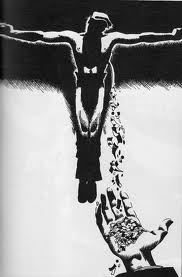
I’ve mostly grown past those fears. I don’t live in fear of the neighborhood bully. I have learned to not care what others think about me. And I’ve gotten married. But I still fear many irrational things. I fear that because I don’t take good enough care of my house that it will someday collapse on my family. Even though I never came within 100 ft. of it, I feared the industrial wood chipper that workers from the city were using earlier this week as they cut down trees in our neighborhood. On top of that, I have mild mottephobia. Yes, I admit it; I fear moths – I hate how they flutter.

Apart from those fears, which I admit are foolish, I still have a lot of fears. I fear that the economy will crash and my kids and grandkids will have to learn how to hunt squirrels and rabbits. I fear that the war and fighting in many parts of the world will spread and cause World War III. I fear that our country will continue down this path of immorality. I fear that we are not far from authorities demanding that we accept and even endorse immoral, Godless behavior as ‘normal.’ I fear that we Christians in this part of the world will be bitterly persecuted because of our faith and confession.

Jesus sends out the TwelveThese words from Jesus today speak of persecution that comes because of a faithful confession. In this text, Jesus is sending out His twelve disciples to preach His message, “The reign of heaven is at hand” (Mt. 10:7). And Jesus doesn’t hide the fact that people will hate them for this proclamation. He says, “Brother will deliver brother over to death, and the father his child. You will be hated by all for My name’s sake.” Jesus says, “They have already maligned me by calling Me ‘Beelzebul.’ They will certainly malign you too.”

These words of Jesus are very solemn and sobering and downright scary. But throughout this text, Jesus’ command, “Do not fear,” dominates. In the face of persecution, Jesus tells His disciples, “Do not fear.”

We ask, “Why, Jesus? What rational reason can You give us to not fear?”

We wish Jesus would say, “Do not fear because I will spare you from suffering.” But that is not our experience; we do suffer in this world. Jesus doesn’t say that we will not suffer; in fact, those who are most faithful to Him will likely suffer most. We are not greater than Jesus. He suffered persecution. We should expect suffering and persecution as His servants.

Instead, Jesus tells the disciples, “Do not fear because everything done in secret will be made known to all. Do not fear because the worst thing people can do to you is kill you. Do not fear because you are more valuable than many sparrows.”

Consider each of these for a moment.

“Do not fear because everything done in secret will be made known.” Now, at first glance, this is a terrifying thing. Think of all those sins that you have committed and gotten away with. Think of all those things you have thought and said and done which you think are secret. Jesus says that they will be revealed.

But then remember, believer, that in baptism you have been clothed in the righteousness of Christ (Gal. 3:27, 2 Cor. 5:21). When God looks at you, all He sees is Jesus – His perfect life of obedience and His suffering, dying, and rising – for you. So no matter how discretely you are persecuted, God knows it all. God is a just God and will ultimately not allow sin to go unpunished. “Do not fear.”

Secondly, “Do not fear because the worst thing people can do to you is kill your body. They have no power over your soul.” Again, this doesn’t sound very comforting on the surface. All we know is our existence in this life, so the death of our body is something we fear.

But God tells us that there will be a resurrection of the dead and that there is life in the world to come. God has the power and rightful authority to cast you, body and soul, into hell. Because of your sin, you deserve that eternal punishment which was prepared for Satan and his angels (Mt. 25:41). But that is not your destiny, Christian. For you, God has prepared from before the foundation of the world (Mt. 25:34) an eternal kingdom of righteousness, innocence, and blessedness. “Do not fear.”

Finally, “Do not fear because you are more valuable than many sparrows.” Jesus says that two sparrows are worth only a penny (back then this was 1/16th of a day’s wage). Sparrows are basically worthless, but God takes note of every sparrow that dies.

Even beyond that, at any given moment, God knows the number of hairs of your head. He knows you and every part of you intimately and perfectly. And He loves you. Even if you are persecuted, suffer, and die, God knows. “Do not fear.”

Blessings from the CrossIn the face of persecution and death, Jesus tells His disciples – and you – do not fear, but acknowledge (lit. ‘confess’) Christ. Jesus solemnly urges you to make your confession of salvation through Christ. He has redeemed you and everyone you meet with His holy and precious blood and with His innocent sufferings and death.

My “No Fear” sweatshirt was meaningless words of thread. But Jesus’ simple words, “Do not fear,” are more than your normal, everyday words – they are God’s words. God’s words are His actions, so, “Do not fear.”

In the face of sickness, cancer, and disease, keep your confession and do not fear. In the face of this world which always appears to be falling apart at the seams, keep your confession and do not fear.

God’s love for you is unquestionable. He has sent His Son to suffer and die for you. He has forgiven your sins. As far as the east is from the west so far has He removed your sins from you. “Do not fear.” Amen.

The peace of God, which surpasses all understanding, will guard your hearts and minds in Christ Jesus. Amen.

Acts 2:1-21 – These Last Days

Listen here.

Acts 2:1-21—When the day of Pentecost arrived, they were all together in one place. 2 And suddenly there came from heaven a sound like a mighty rushing wind, and it filled the entire house where they were sitting. 3 And divided tongues as of fire appeared to them and rested on each one of them. 4 And they were all filled with the Holy Spirit and began to speak in other tongues as the Spirit gave them utterance.

5 Now there were dwelling in Jerusalem Jews, devout men from every nation under heaven. 6 And at this sound the multitude came together, and they were bewildered, because each one was hearing them speak in his own language. 7 And they were amazed and astonished, saying, “Are not all these who are speaking Galileans? 8 And how is it that we hear, each of us in his own native language? 9 Parthians and Medes and Elamites and residents of Mesopotamia, Judea and Cappadocia, Pontus and Asia, 10 Phrygia and Pamphylia, Egypt and the parts of Libya belonging to Cyrene, and visitors from Rome, 11 both Jews and proselytes, Cretans and Arabians—we hear them telling in our own tongues the mighty works of God.” 12 And all were amazed and perplexed, saying to one another, “What does this mean?” 13 But others mocking said, “They are filled with new wine.”

14 But Peter, standing with the eleven, lifted up his voice and addressed them: “Men of Judea and all who dwell in Jerusalem, let this be known to you, and give ear to my words. 15 For these people are not drunk, as you suppose, since it is only the third hour of the day. 16 But this is what was uttered through the prophet Joel:

17 “‘And in the last days it shall be, God declares,

that I will pour out my Spirit on all flesh,

and your sons and your daughters shall prophesy,
and your young men shall see visions,
and your old men shall dream dreams;

18 even on my male servants and female servants
in those days I will pour out my Spirit, and they shall prophesy.

19 And I will show wonders in the heavens above
and signs on the earth below,
blood, and fire, and vapor of smoke;

20 the sun shall be turned to darkness
and the moon to blood,
before the day of the Lord comes, the great and magnificent day.

21 And it shall come to pass that everyone who calls upon the name of the Lord shall be saved.’

In the name of the Father, Son, and Holy Spirit. Amen.Pentecost Spirit

Today is Pentecost Sunday which marks the beginning of the last days. God’s Spirit who was there at the beginning of creation hovering over the face of the waters is now sent spreading the Good News of the Gospel of Jesus to all mankind which comes through the waters of baptism (Act. 2:38).

Pentecost, as you have heard in years past, was initially a Jewish festival which remembered when God descended on Mt. Sinai in fire and cloud in order to give the Ten Commandments which was God’s covenant with the people of Israel. In our text, God again descends in fire with the New Covenant to God’s people which replaces the old covenant. God gives this New Covenant in Christ’s blood to all humanity So the disciples speak about Jesus and the Gospel.

The Jewish festival of Pentecost was celebrated fifty days after Passover. At Passover, the people of Israel remembered how God had protected them from the angel of death by the blood of the lamb smeared on their doorposts. They remembered how Pharaoh and his army had been defeated by drowning in the Red Sea. Fifty days later on the day of Pentecost, the Israelites remembered how they assembled before Mt. Sinai which was covered in fire and smoke. They stood far off from the mountain out of fear of God’s command to not touch the mountain. They remembered how God’s terrifying voice spoke to them the words of His law, His Torah.

In our text, it has been fifty days since Christ’s Passover. The Lamb of God who takes away the sin of the world has been slain. Fifty days before this day the angel of death descended upon Christ as He hung on the cross. Now the voice of God comes again to His people assembled around His holy mountain – Mt. Zion. The enemies of sin, death, and the devil have been defeated. The voice of God comes to them, and they cannot help but spread the Good News of the voice of God to all the people assembled in Jerusalem.

Jesus had promised the disciples, “Repentance and forgiveness of sins should be proclaimed in [My] name to all nations, beginning from Jerusalem” (Lk. 24:47). Now we see how easy God made it for this to happen. Rather than the disciples having to travel to every corner of the earth, God brings “devout men from every nation under heaven” to Jerusalem to stand right before the disciples so they can hear. Paul reaffirms this in Ro. 10:18 saying that the Gospel of Christ has indeed gone throughout the earth even to the ends of the world.

Peter, and those who were with him, were accused of being drunk with new wine because of how they prophesied, preaching about the mighty acts of God which Christ had done.

Peter says that what is happening at the Pentecost is that the last days have come. God has poured His Spirit out on all flesh. So all sorts of people are prophesying about what God has done with sin – He has condemned sin in the flesh (Ro. 8:3) of Jesus.

Peter uses these words from Joel 2:28-32 to say that the events of Pentecost are God’s activity in the last days. A new age has arrived (I. H. Marshall).

To understand all of this, it is important to know context of the verses from Joel. In Joel, a plague of locusts has come and gone, and Joel is now calling the people to repentance before the day of the Lord comes.

Jesus spoke about how the judgment of the world had come in His cross (Jn. 12:31). God’s judgment against the sin of the world all falls on Christ as God pours out all His wrath against sin upon Christ. That’s why, as Peter continues his sermon after our text (which will be one of our texts next week), Peter speaks about Christ and the cross.

Peter speaks about how Christ did many miraculous signs among the people, yet He was delivered to sinful men to be crucified and killed. However, God did not allow Jesus to see corruption, but raised Him from the dead. Jesus then ascended to the Father where He sits ruling as Lord over all creation.

The people are “cut to the heart” because of this message. So the Holy Spirit directs Peter to prophesy the forgiveness of sins in Jesus’ name.

Jesus takes and becomes sinThis message is for you here today. God gives an urgency to this message because these are the last days. God’s final attack on sin has occurred in the person of Jesus Christ. Therefore, be united with Him through baptism. Are you already baptized? Good; remember the promise God made to you there. His promise is that He has forgiven your sins, made you His child, and ushered you into His presence now and forever. Amen.
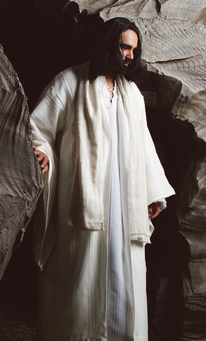

The peace of God, which surpasses all understanding, will guard your hearts and minds in Christ Jesus. Amen.

John 14:15-21 – Because I Live, You Also Will Live

Listen here.

John 14:15–21 15“If you love me, you will keep my commandments. 16 And I will ask the Father, and he will give you another Helper, to be with you forever, 17 even the Spirit of truth, whom the world cannot receive, because it neither sees him nor knows him. You know him, for he dwells with you and will be in you.

18“I will not leave you as orphans; I will come to you. 19 Yet a little while and the world will see me no more, but you will see me. Because I live, you also will live. 20 In that day you will know that I am in my Father, and you in me, and I in you. 21 Whoever has my commandments and keeps them, he it is who loves me. And he who loves me will be loved by my Father, and I will love him and manifest myself to him.”

In the name of Jesus. Amen.

Jesus gives a hard word here. “If you love me, you will keep My commandments.” Ouch. Doesn’t Jesus know we’re all sinners? Doesn’t He knew that we all fall short of God’s glory? Doesn’t He know that this statement shows that no one really loves Him? Yes, He does.

Jesus doesn’t care how many e-mails you forward or Facebook statuses you repost saying that you love Him. If you want to show that you love Jesus, it’s pretty simple – keep His commandments.

By your own actions – your every thought, word, and deed – you show that you don’t love Jesus. You aren’t devoted to Him. You aren’t ‘s-o-u-l-e-d out’ for Jesus. Your actions reveal that you disregard Jesus and His Word.

“If you love me.” We are wary of statements that begin like this and rightly so. Kids say this type of thing to their parents, “If you really loved me, you would let me stay out later.” Or, “If you really loved me, you wouldn’t make me do so many chores.” Spouses use this type of phrase as coercion. Have you said the phrase, “If you really loved me…” (or some similar statement) before making a selfish request of your spouse?

But simply because we sinners abuse phrases like the one Jesus makes here, that doesn’t mean that Jesus is abusing the statement. Jesus’ statement is simple: “If you love Me, obey Me.”

Yet, we don’t obey Jesus, and therefore, we don’t love Jesus. And that is not ok. Jesus meant what He said, and it is not good for you to somehow work your way around His clear statement.

Of course we know that Jesus forgives. Jesus is in the forgiveness business. You can always come to Him and say, “I have shown that I have not loved you because I have not obeyed you.” And Jesus will always meet that confession by saying, “I forgive you.”

But He doesn’t detract His statement. He doesn’t have this command struck from the record of Scripture. The law stands, “If you love Me, obey Me. Love God. Love your neighbor.”

But this command isn’t the only word He gives in these verses. He promises to send a Helper. Jesus promises to send the Holy Spirit. Jesus promises that He will not leave us as orphans. Then He speaks an even stronger word than “If you love me, you will keep my commandments.” He says, “Because I live, you also will live.”Thomas Sees Jesus

I like stories. There are good stories and bad stories. Bad stories fix all the problems of the characters. Even worse stories fix all the problems of everyone. Good stories imitate life – in this life there is no “happily ever after.” The best stories don’t tie up all the loose ends – instead, they leave you hanging a little bit.

In the parable of the Prodigal Son (arguably Jesus’ most beloved parable), you are left hanging. The son who left home and wasted away his inheritance is showered with forgiveness and welcomed home with a banquet. But the story ends with older son, the son who stayed, hearing the invitation to join the celebration; however, you aren’t told how the story ends. Does he swallow his pride and join party? We aren’t told. We are left in the dark.

The story of Jesus’ ministry is the best story ever, and frankly it leaves you hanging too.

Imagine Jesus as a lifeguard. He strolls the beach carefully watching the swimmers. He realizes that there is a strong undertow, so He calls everyone out of the water. People complain, but they comply. Instead of an afternoon of swimming in the cool waves, they settle for playing Frisbee and volleyball on the beach.

Suddenly, a young boy cries out, “Hey look out there! There’s a girl drowning!” Sure enough, a girl is struggling in the waves and getting pulled further and further out. Lifeguard Jesus dashes across the sand and dives into the breakers. The girl flails her arms trying to stay above the water. The crowds wonder if Jesus will make it in time.

Finally, He reaches her. But He too begins to flounder in the waves. Suddenly, he goes under and doesn’t come up again. The girl is now alone and helpless, and she too sinks for the last time below the rough surf.

The people on the beach can’t believe it. The lifeguard gave His life trying to save the girl, but now both are dead.

The police show up. They get the whole story from the crowds on the beach. People are dumbstruck. How could this have happened?

One officer searches the lifeguard’s stand. He finds a clipboard where the lifeguard had written on a small slip of paper, “Everything is ok. The girl is safe in My death.”

The whole town is talking about the tragedy. It leads the evening news. People admire the Lifeguard for doing His job, but they begin to wonder if He really had the qualifications to be a lifeguard in the first place. He should have been able to rescue her. He shouldn’t have drowned.

Three days later, people are still shocked, but they are timidly coming back to the beach. Who do they find there, but the very Lifeguard who had drowned. He is back on the stand. They all ask Him, “What happened? Where have You been? Where’s the girl?” He insists, “The girl is fine. Didn’t you get My note? She is safe in My death.”

The Lifeguard shows up on the beach every now and then for a month. People still ask Him the same question, “What happened?” But He gives the same answer. And then one day, He is just gone.Jesus Coming out of the Tomb

This Thursday marks 40 days after Easter when Jesus Christ physically ascended to heaven. Jesus is sitting there with His nail-scarred hands and feet. He is seated at the right hand of the Father with His pierced side. There He lives. Death has done its worst to Him. Death got even worse than it gave. Death could not hold Jesus. And death was defeated by Christ’s death.

As surely as He is raised, you too will rise.

Jesus dies, rises, and sticks around just long enough to prove beyond a shadow of a doubt that He is really, truly risen. Then, He leaves. But His life is your life. If Jesus lives, you too will live.

Jesus no longer appears like He did during the forty days after His resurrection. This is a good thing. If Jesus continued to appear here and there like He did during those forty days after His resurrection, we would have to wonder if He was really with us whenever we didn’t see Him. The ascension of Jesus proves what He said on the cross, “It is finished.” Jesus doesn’t have any work left to do. His work of reconciling you with the Father is complete.

Because He lives, you also will live. Amen.[1]

The peace of God, which surpasses all understanding, will guard your hearts and minds in Christ Jesus. Amen.


[1] I am thankful to Robert F. Capon for the lifeguard illustration which he uses in a couple of his books.

John 14:1-14 – Let Not Your Hearts Be Troubled

Listen here.

John 14:1-14—“Let not your hearts be troubled. Believe in God; believe also in me. 2 In my Father’s house are many rooms. If it were not so, would I have told you that I go to prepare a place for you? 3 And if I go and prepare a place for you, I will come again and will take you to myself, that where I am you may be also. 4 And you know the way to where I am going.”

5Thomas said to him, “Lord, we do not know where you are going. How can we know the way?” 6 Jesus said to him, “I am the way, and the truth, and the life. No one comes to the Father except through me. 7 If you had known me, you would have known my Father also. From now on you do know him and have seen him.”

8Philip said to him, “Lord, show us the Father, and it is enough for us.” 9 Jesus said to him, “Have I been with you so long, and you still do not know me, Philip? Whoever has seen me has seen the Father. How can you say, ‘Show us the Father’? 10 Do you not believe that I am in the Father and the Father is in me? The words that I say to you I do not speak on my own authority, but the Father who dwells in me does his works. 11 Believe me that I am in the Father and the Father is in me, or else believe on account of the works themselves.

12“Truly, truly, I say to you, whoever believes in me will also do the works that I do; and greater works than these will he do, because I am going to the Father. 13 Whatever you ask in my name, this I will do, that the Father may be glorified in the Son. 14 If you ask me anything in my name, I will do it.”

In the name of Jesus. Amen.

I want to tell you a little bit about how I prepare my sermons.

The first couple of days in my work week are spent studying the text. I read it often. I read the other texts appointed for the week trying to see how they shed light on the sermon text. I plow through the original language trying to find some of the major words and phrases that are being highlighted. I read commentary after commentary after commentary. I read and listen to sermons on the text as well.

I try to find things in the text that shed new light on the passage. My goal in all of this is to write a sermon that will deliver Jesus to you and to me. I am always blessed by all the studying and grappling with the text. I need to hear these sermons, and I am blessed by them.

Sinful Tree PersonAs your pastor, I covet your prayers, and I know that many of you are very faithful about praying for me and my family. This was an extremely hectic and rough week for me personally. And this sermon, more than any of the 289 others I have preached here in the past four years and five months, is what I need to hear today.

My prayer, as always, is that it is a blessing for you as well.

“Let not your hearts be troubled,” Jesus says to the disciples. But why would the disciples’ hearts be troubled? They are troubled because of what Jesus said just a few moments before in Jn. 13:33, “Little children, yet a little while I am with you and where I am going you cannot come.” Where is He going? He is going away. He is going to the cross, to His death, to His tomb, to the resurrection.

The disciples cannot go with Jesus. He is going the way in which they cannot go. He is going to accomplish the salvation that they need and that you and I need.

So Jesus comforts them. “Let not your hearts be troubled.”

Jesus promises that He is going to prepare a place for the disciples. The first seven verses of our text have been read at almost every funeral I have done. They are comforting words that Jesus gives. The words promise God’s protection and abiding care through eternity.

But Jesus goes on. “Let not your hearts be troubled,” because Jesus promises the disciples that He is in the Father. The words that He has spoken in the past and that He is speaking now are the words that God the Father wants Him to speak.

But Jesus still goes on. “Let not your hearts be troubled,” because Jesus promises that the disciples will do even greater works than He has done during His ministry. He invites them to remember that He has healed the sick, opened the ears of the deaf, restored sight to the blind, and even raised the dead. But the disciples will still do even greater works. How foolish we often are looking and waiting for spectacular things to happen while we close our eyes and neglect to see the works Jesus is doing right here – delivering words of forgiveness, life, and salvation.

But Jesus still doesn’t stop there. “Let not your hearts be troubled.” Jesus makes a reckless promise that whatever His disciples ask in His name – whatever they ask – He will do it so that God will be glorified. Do we really believe that whatever we ask in Jesus’ name He will give us? We should. Jesus is not a liar; He is a man of His word.

Temptations of the world and MonastacismThis world is filled with troubles and sin and death. This world throws all sorts of sufferings and crosses that trouble our hearts. But Jesus’ words in this text show that no matter what comes our way, God is using them to conform us, His chosen, elect children, into the image of His Son. “For neither death nor life, nor angels nor rulers, nor things present nor things to come, nor powers, nor height nor depth, nor anything else in all creation, will be able to separate us from the love of God in Christ Jesus our Lord (Ro. 8:38-39).”
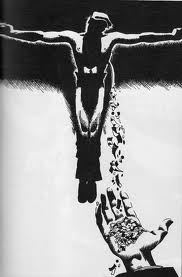
“Let not your hearts be troubled.” Jesus wants us to know that He will lead us to His presence. Jesus wants us to know God’s loving heart which was willing to sacrifice His only Son for us. Jesus wants us to know that because of His grace all is well for us both in this life and the next.

“Let not your hearts be troubled.” Believe in God; believe in Jesus. Those are His words for us today. In the name of the Father and of the Son and of the Holy Spirit. Amen.

The peace of God, which surpasses all understanding, will guard your hearts and minds in Christ Jesus. Amen.

John 10:1-21 – In Christ, Your Cup Overflows with Life

Listen here.

John 10:1-21—“Truly, truly, I say to you, he who does not enter the sheepfold by the door but climbs in by another way, that man is a thief and a robber. 2 But he who enters by the door is the shepherd of the sheep. 3 To him the gatekeeper opens. The sheep hear his voice, and he calls his own sheep by name and leads them out. 4 When he has brought out all his own, he goes before them, and the sheep follow him, for they know his voice. 5 A stranger they will not follow, but they will flee from him, for they do not know the voice of strangers.” 6 This figure of speech Jesus used with them, but they did not understand what he was saying to them.

7So Jesus again said to them, “Truly, truly, I say to you, I am the door of the sheep. 8 All who came before me are thieves and robbers, but the sheep did not listen to them. 9 I am the door. If anyone enters by me, he will be saved and will go in and out and find pasture. 10 The thief comes only to steal and kill and destroy. I came that they may have life and have it abundantly.”

11 “I am the good shepherd. The good shepherd lays down his life for the sheep. 12 He who is a hired hand and not a shepherd, who does not own the sheep, sees the wolf coming and leaves the sheep and flees, and the wolf snatches them and scatters them. 13 He flees because he is a hired hand and cares nothing for the sheep.

14 “I am the good shepherd. I know my own and my own know me, 15 just as the Father knows me and I know the Father; and I lay down my life for the sheep. 16 And I have other sheep that are not of this fold. I must bring them also, and they will listen to my voice. So there will be one flock, one shepherd.

17 “For this reason the Father loves me, because I lay down my life that I may take it up again. 18 No one takes it from me, but I lay it down of my own accord. I have authority to lay it down, and I have authority to take it up again. This charge I have received from my Father.”

19 There was again a division among the Jews because of these words. 20 Many of them said, “He has a demon, and is insane; why listen to him?” 21 Others said, “These are not the words of one who is oppressed by a demon. Can a demon open the eyes of the blind?”

In the name of Jesus. Amen.

The most important rule in real estate is, “Location, location, location.” The same rule applies to interpreting Scripture, but since Scripture’s location isn’t geographical but the written word, we need to tweak the rule. The most important rule in interpreting Scripture is, “Context, context, context.”

So what is the context for our passage this morning? I’m glad you asked. The context is Jesus’ healing of the man born blind which begins at Jn. 9:1 and continues through all forty-one verses of that chapter. But the passage shouldn’t be broken at 10:1. Sometimes the chapter breaks in the Bible do you no favors. The story of the man born blind doesn’t end until 10:21.

It has been six weeks since our sermon text was Jn. 9 where Jesus heals the man born blind. So let me give you a summary of that chapter. Jesus heals the man born blind. The Pharisees accuse the man of lying that Jesus healed him; they say he must have never been blind at all. The Pharisees summon the man’s parents. They confirm that he is their son who was born blind. But they are fearful of the Pharisees so they make their son tell his own story of how his sight was restored. The man repeatedly says that Jesus opened his eyes. The Pharisees say that Jesus is a nobody and a sinner, and they try to get the man to accuse Jesus of being guilty of sin, but he refuses. So they throw him out of the synagogue. After he is thrown out, Jesus finds the man and tells him that He is the Christ. And the man believes.

The last three verses of Jn. 9 quote Jesus speaking some of the harshest Law recorded in all the Gospels and are an important lead-up to our text. Jn. 9:39–41 39 Jesus said, “For judgment I came into this world, that those who do not see may see, and those who see may become blind.” 40 Some of the Pharisees near Him heard these things, and said to Him, “Are we also blind?” 41 Jesus said to them, “If you were blind, you would have no guilt; but now that you say, ‘We see,’ your guilt remains.”

After these harsh words of law, the scene continues with our sermon text which is the heart of the Gospel message. Jesus speaks about this Good Shepherd stuff. Jesus tells this little parable – a “figure of speech” – about the sheep and how desperately they need the shepherd to lead them safely into the sheepfold.

However, as the Pharisees and the crowds listen to this figure of speech, they don’t understand, so Jesus explains it more fully. Jesus says that He is the Door through which the sheep enter safety. Only by entering through Jesus will a person be saved and find good, green pasture, still waters, and restoration of the soul.

Blessings from the CrossJesus says that He is the Good Shepherd of Ps. 23 who provides security in the valley of the shadow of death, He prepares the table, and He pours into your cup so that it overflows.
Only in Jesus does your cup flow over with life.

Your Good Shepherd says, “I have come that they may have life.” If Jesus has come so that you can have life, than what did you have before? You had the absence of life – you owned death.

Because of our sin, we all are the owners and creators of death. We are born dead, and we perpetuate death. We spread death through our words and actions which are all sinful and unclean. Even though we live, we are the walking dead.

Annalise and Naomi, and our boys for that matter, love singing the song “In Summer” from the new Disney movie Frozen. The song is sung by a snowman, Olaf, who is magically alive. Olaf has never experienced summer, but he really, really wants to. Olaf sings about how he can’t wait for summer to come so he can go lie down in the burning sand and get a tan. He wants to see “what happens to solid water when it gets warm.” As Olaf sings about summer he imagines walking through the green grass and sings, “Winter’s a good time to stay in and cuddle, but put me in summer and I’ll be a… happy snowman!”

The song is actually a good picture of us in our sin. We live our lives in a blissful, sinful ignorance. Because of sin, our days are numbered. We will all melt in the coming judgment of God.

But your Good Shepherd says, “I have come that you may have life and have it abundantly.” This is much more holistic than you or I can possibly imagine. Because of the Good Shepherd and His work, He gives you life. This is the reason Jesus, the Son of God, the Good Shepherd, entered creation.

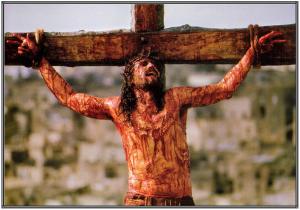
Passion of Christ on the CrossHow does the Good Shepherd give this life? By lying down His life for you, the sheep. Five times in v. 11-18 Jesus says that He is the Good Shepherd because He lays down His life for you sheep. The Good Shepherd gives up His life for you. “He overcomes the wolf by filling the wolf’s mouth with His own body and thus saves the sheep from being lost” (Rev. David Petersen).

Your Good Shepherd lays down His life for you. No one took Jesus’ life from Him; He laid it down Himself so that He could take it up again,.

Brother and sister, in your Good Shepherd, you have abundant life. Even death becomes life in the hands of the Good Shepherd because He conquered death by rising from the grave. The sting of death is sin and the power of sin is the law, but your Good Shepherd has given His life so that you too have victory over the law and sin and death (1 Cor. 15:56).

Easter season is not just about celebrating the fact that Jesus is risen from the dead, but that you also are risen with Him. Just as your Good Shepherd has risen so you too have risen. Where your Good Shepherd is, there you are also. Amen.

The peace of God, which surpasses all understanding, will guard your hearts and minds in Christ Jesus. Amen.