John 1:29-42 – Holy Thief

Listen here.

John 1:29-42—The next day he [John the Baptizer] saw Jesus coming toward him, and said, “Behold, the Lamb of God, who takes away the sin of the world! Passover Lamb 30 This is he of whom I said, ‘After me comes a man who ranks before me, because he was before me.’ 31 I myself did not know him, but for this purpose I came baptizing with water, that he might be revealed to Israel.” 32 And John bore witness: “I saw the Spirit descend from heaven like a dove, and it remained on him. 33 I myself did not know him, but he who sent me to baptize with water said to me, ‘He on whom you see the Spirit descend and remain, this is he who baptizes with the Holy Spirit.’ 34 And I have seen and have borne witness that this is the Son of God.”

35 The next day again John was standing with two of his disciples, 36 and he looked at Jesus as he walked by and said, “Behold, the Lamb of God!” 37 The two disciples heard him say this, and they followed Jesus. 38 Jesus turned and saw them following and said to them, “What are you seeking?” And they said to him, “Rabbi” (which means Teacher), “where are you staying?” 39 He said to them, “Come and you will see.” So they came and saw where he was staying, and they stayed with him that day, for it was about the tenth hour. 40 One of the two who heard John speak and followed Jesus was Andrew, Simon Peter’s brother. 41 He first found his own brother Simon and said to him, “We have found the Messiah” (which means Christ). 42 He brought him to Jesus. Jesus looked at him and said, “You are Simon the son of John. You shall be called Cephas” (which means Peter).

In the name of the Father, Son, and Holy Spirit. Amen.

Dear saints, you could contemplate the first words out of John the Baptizer’s mouth for the rest of your life, for the rest of eternity, and still not exhaust them. “Behold, Jesus, the Lamb of God, who takes away the sin of the world!” The Lamb of God who takes away the sin of the world is Jesus.

We look around this world, and we find sin. We look at the news, and we find sin. We look at the internet and our Facebook pages, and we find sin. We look at our home life, and we find sin. We look at how we treat our families and friends, and we find sin. We look at our marriages, and we find sin. We look at how we raise our kids, and we find sin. We look at how we spend our time, and we find sin. We look inside ourselves, and we find sin.

Sin and evil and death are all around us. But wherever we find sin, we are to find Jesus.

Jesus is this Lamb who took upon Himself the sin of the whole world. But we refuse to believe this. We insist on taking this honor – yes, honor – away from Jesus. We think it is dishonorable for the holy Son of God to bear all the world’s sin. However, when we do this, we become even worse. We take hold of our sin that sin becomes even stronger. We try to justify ourselves and the sin we have committed. We hold up a shabby bit of improvement in whatever area of our lives even though we have ignored all the other ways in which we have sinned against God.

To show us our sin, God has given His law. God has told you how you should live. God has shown you what you should do and what you should not do. God has given His Commandments to show you what you are, and here is the verdict: “None is righteous, no, not one; no one understands; no one seeks for God. All have turned aside; together they have become worthless; no one does good, not even one. Their throat is an open grave; they use their tongues to deceive. The venom of asps is under their lips. Their mouth is full of curses and bitterness. Their feet are swift to shed blood; in their paths are ruin and misery, and the way of peace they have not known. There is no fear of God before their eyes” (Ro. 3:10-18).

God’s Law lays a heavy burden upon you. Your sin is at your throat. The Law has saddled you with your every failure. No amount of good works or pious living will lessen the load of your sin.

Like Isaac, you ascend the mountain with Abraham (Gen. 22:1-14). The wood of your sin is laid on your back, the fire of judgment is in hand, but there is no animal for the sacrifice. And so you ask your heavenly Father, “I see the fire and the wood, but where is the lamb for a burnt offering?” You are bound, set upon the wood, and the knife rises over you.

But just as the knife comes down to kill, there is Jesus. You unexpectedly find the Sacrifice caught in the bush. You discover the Lamb of God who takes away the sin of the world.

Jesus says to you, “You are no longer a sinner, but I am. I am your substitute. You have not sinned, but I have. The entire world is in sin. However, you are not in sin; but I am. All your sins are to rest on Me and not on you” (Luther). He is willing to become your servant, willing to be your sacrifice. Jesus was slaughtered, roasted on the cross, and eaten (Luther).

Jesus, the Lamb of God who takes away the sin of the world, is the Holy Thief. He takes what is not His, the sin of the world, and claims it all as His own.

Jesus sees the sin of the world, and He does not, He cannot, remain idle. Jesus confesses all the sin of the world before God, and God lays on Christ the iniquity of us all (Is. 53:6). The Lord strikes Jesus for those sins (Is. 53:8).

Brother and sister, do not doubt that Jesus is the Lamb of God who takes away the sin of the world. This is the Gospel message. This is your salvation.

The Law says that sin lies upon you. But when you see sin surrounding you, overwhelming you, and engulfing you, remember Jesus says that your sin is His.The Lamb of God
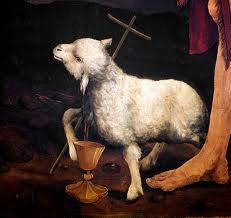
When Satan comes to accuse you, remember this. Tell him, “I admit that I deserve death and hell. What of it? Jesus says that He has taken those sins from me. Go talk to Christ about those sins; they are His now. The Lamb has stolen my sin.” Amen.

May the peace of God which surpasses all understanding guard your hearts and minds in Christ Jesus. Amen.

Matthew 3:13-17 – Jesus, You Come to Me?

Listen here.

Matthew 3:13-17—Then Jesus came from Galilee to the Jordan to John, to be baptized by him. 14 John would have prevented him, saying, “I need to be baptized by you, and do you come to me?” 15 But Jesus answered him, “Let it be so now, for thus it is fitting for us to fulfill all righteousness.” Then he consented. 16 And when Jesus was baptized, immediately he went up from the water, and behold, the heavens were opened to him, and he saw the Spirit of God descending like a dove and coming to rest on him; 17 and behold, a voice from heaven said, “This is my beloved Son, with whom I am well pleased.”Baptism of Christ 1

In the name of the Father, Son, and Holy Spirit. Amen.

Jesus keeps doing unexpected things. Last week, we saw the twelve-year-old Jesus in the Temple. Mary was upset that He had stayed behind in Jerusalem putting herself and Joseph through torture. Jesus responds, “Why were you looking for me? Did you not know that I must be in my heavenly Father’s business.” With such a response, you would expect Jesus to leave Mary and Joseph behind, begin living on His own, and starting His ministry. Instead He does the unexpected. He returns to Nazareth and is submissive to Mary and Joseph.

Now in Mt. 3, we fast-forward to thirty-year-old Jesus. Maybe, He has matured to be more conventional and predictable, but no He continues to do the unexpected.

John has been preaching out in the wilderness, “Repent for the reign of heaven is at hand” (Mt. 3:2). All sorts of crowds were coming to John the Baptizer confessing their sins and being baptized. And John points the people away from himself and to Another, to Jesus.

John preaches, “I am baptizing you with water for repentance, but the One who is coming after me is mightier than I, whose sandals I am not worthy to carry; He Himself will baptize you with the Holy Spirit and fire. His winnowing shovel is in His hand, and He will cleanse His threshing floor and will gather His wheat into the barn, but the chaff He will burn with unquenchable fire” (Gibbs’ translation of Mt. 3:11-12). But what happens next is unexpected.

Jesus arrives in the wilderness. He comes to the banks of the river Jordan, the place where the sinners are coming in response to John’s preaching, “Repent.” Does Jesus come to baptize with the Holy Spirit? Does He come bringing with His winnowing shovel and that unquenchable fire? No. Instead, Jesus unexpectedly comes for the same reason all those sinners are coming – He comes to be baptized by John.

This is shocking because Matthew has told us that Jesus is the fulfillment of the prophecy, “’Behold the virgin shall conceive and bear a son, and they shall call His name Immanuel’ (which means, God with us)” (Mt. 1:22-23). The angel tells Joseph that the Child’s name shall be Jesus, “for He will save His people from their sins.”

This Jesus, Yahweh with us to save us from our sins, appears among sinners, and what does He do? It’s not what John expected, and it’s not what we would expect God to do either. Jesus stands side by side with sinners in order to be baptized.

John is appalled. John tries to prevent Jesus. “Hang on here Jesus, I am the one who needs to be baptized by You, yet You are the one coming to Me?”

John’s preaching was directed to sinners who needed to repent of their sins. The sinners needed to be baptized in order to enter into the community of God’s people. Why does Jesus come? Does Jesus need to repent? Does Jesus need to be converted? Does Jesus need to be brought back into the people of God? Of course not! And John knows all of this.

Jesus, in essence, tells John, “Allow it, let it be, for now, for in this way it is fitting for us to fulfill all righteousness.” What righteousness is Jesus talking about? Many places in the Old Testament, but especially Ps. 71 equates God’s righteous acts as the saving deeds of God. Ps 71:15 15 My mouth will tell of your righteous acts, of your deeds of salvation all the day (also Ps. 71:2, 16, 19, 24). Jesus, the sinless Son of God, comes to be baptized for sinners to fulfill all righteousness because He is your Savior who bears your sins.

Jesus' BaptismJesus’ baptism works backwards compared to yours. In your baptism, your sins were washed away (Act. 22:16; Heb. 10:22). But Jesus’ baptism put your sins upon the Son of God. Jesus entered the waters of the Jordan which were filled with the sins of the people who had been baptized by John. Jesus took a bath in your dirty bath water. Jesus does the unexpected; He comes to you, sinner.

As sinners, we have this false conception that we need to move up because God cannot move down. We think that the separation caused by God’s holiness needs to be bridged by us. We think we need to clean up our act and get our life straightened out so we can come to God. But that will never work.

Covered in the slime of our sins, we will never be able to clean up enough. Filthy rags of works-righteousness don’t clean the piles of dung that are our sinful lives.

Jesus does the unexpected; He comes to you. Jesus choses to identify with sinners instead of with God. Jesus comes to us in the likeness of sinful flesh (Ro. 8:3). He does not count equality with God a thing to be grasped and empties Himself.

Jesus takes everything that has gone wrong with us – our sins – upon Himself. Jesus, the pure Son of God becomes the greatest sinner. He does this to fulfill all righteousness to bring salvation to you.

Jesus is the Servant of God described in our Old Testament text (Is. 42:1-9). Jesus brings justice to the nations without breaking a bruised reed or quenching a faintly burning wick. He will not be thwarted until He establishes justice on the earth. He comes to us sinners as a light. He opens our blind eyes; brings us prisoners out of the dungeon and the prison of darkness. Isaiah goes on to tell about this Servant of Yahweh: Though Jesus does no violence, God’s will is to crush Him. Jesus bears our iniquities to make us accounted righteous (Is. 53:9, 11).

As Jesus comes up from the sin-filled waters of the Jordan River, the heavens are opened, and the Spirit of God descends and rests upon Jesus. The voice of God speaks, “This is my beloved Son, with whom I am well pleased.”

God is certainly pleased with His Son, Jesus. But how can you know if God is pleased with you? Sinner, you stand naked before a holy God in all your sinful ugliness and He in all His perfect holiness with no buffer in between. It is not a pretty picture.

However, at the right hand of the Father, sits Jesus. Jesus doesn’t beat around the bush. He doesn’t give you a list of things to do to make your nakedness less appalling. Instead, Jesus looks down at the nail holes in His hands and feet and says to the Father and the Spirit, “This is what gives him holiness before Us. He is mine. In his baptism, he was with Me in My death. Therefore, He will never die again.” Amen.

May the peace of God which surpasses all understanding guard your hearts and minds in Christ Jesus, now and forever. Amen.

Luke 2:40-52 – Finding the Jesus You Thought You’d Lost

Listen here.

Luke 2:40-52—And the child grew and became strong, filled with wisdom. And the favor of God was upon him.

41 Now his parents went to Jerusalem every year at the Feast of the Passover. 42 And when he was twelve years old, they went up according to custom. 43 And when the feast was ended, as they were returning, the boy Jesus stayed behind in Jerusalem. His parents did not know it, 44 but supposing him to be in the group they went a day’s journey, but then they began to search for him among their relatives and acquaintances, 45 and when they did not find him, they returned to Jerusalem, searching for him. 46 After three days they found him in the temple, sitting among the teachers, listening to them and asking them questions. 47 And all who heard him were amazed at his understanding and his answers. 48 And when his parents saw him, they were astonished. And his mother said to him, “Son, why have you treated us so? Behold, your father and I have been searching for you in great distress.” 49 And he said to them, “Why were you looking for me? Did you not know that I must be in my Father’s house?” 50 And they did not understand the saying that he spoke to them. 51 And he went down with them and came to Nazareth and was submissive to them. And his mother treasured up all these things in her heart.

52 And Jesus increased in wisdom and in stature and in favor with God and man.

In the name of the Father, Son, and Holy Spirit. Amen.Jesus in the Temple Twelve

Before we really dive into this text, I believe it is incumbent upon me to make one very important observation: Parents, this text proves that even if your kids were perfect and sinless like Jesus, you would still be stressed out. Press on.

This text is unique as it is the only time in all of the Gospels where we are given a glimpse into the life of Jesus as a child. The vast majority of the four Gospels deal with about 3.5 years of Jesus’ 33 years on earth, and a significant chunk of that focuses on one week – Holy Week. So why does Luke, inspired by the Holy Spirit, include this account that is at least mildly embarrassing for Mary and Joseph, the parents of the Messiah? Well, this event becomes the theme of Jesus’ life, death, and resurrection.

For twelve years, Jesus has lived with His parents being perfectly obedient to them. He listened to the Scriptures in the synagogue and became filled with wisdom. This Passover is significant for Jesus because He is twelve years old; in other words, Jesus was considered to be spiritually mature. On top of that, twelve years old also places Jesus on the threshold of becoming an adult.

The family journeys up to Jerusalem. Large groups of people would travel together to go to the feasts. After celebrating God’s deliverance, Mary and Joseph’s caravan of friends, neighbors, and relatives leaves Jerusalem. They would all be spread out, some traveling more quickly and others more slowly. People in the caravan knew where they would meet and camp. But when everyone assembled at the meeting place, Mary and Joseph don’t find Jesus.

I would guess that every parent knows the panic of not knowing where your child is, even if it is only for a few seconds at a playground or in a store.

Imagine traveling for a whole day and realizing your child is not with you. And this is not any child; Mary and Joseph both know that this Child is the Son of God who will save His people from their sins. They had been entrusted with raising Him, and now He is lost. Though it was only for a moment, even Mary and Joseph failed at being parents.

Jesus is gone. Mary and Joseph experience the hellish terror of losing a child. They are apart from Jesus. To be without Jesus is hell, even when that Jesus is only a twelve-year-old boy. He is the Savior of the world. Whenever we are without Him, we are in hell – eternally suffering in our sin, eternally dying.

Mary and Joseph lost Jesus, and we do too. We lose Jesus often. We take our eyes off of Jesus and become distracted with many things. We worry and fret about what we see in the news. We fuss about our bank and credit card statements. We pester ourselves with planning for the unforeseeable. And we stew about our health problems. We focus on how we are doing in every area of our lives – our social skills, our parenting, our mariages – we look at all these things and we see our many failures. We let the devil, the world, and our own sinful flesh distract us and lead us far, far away. We lose Jesus.

But Jesus is never lost. He is always right where He has promised to be.

After three days, Mary and Joseph find Jesus in the Temple. They are amazed and in wonder at finding Jesus sitting among the teachers listening to them and asking them questions. Imagine their shock and amazement and joy at finding their Child, not playing baseball or video games, but sitting and talking with pastors and spiritual leaders.

Even in her joy, Mary is somewhat dumbfounded. In her emotional mix of relief and irritation she says, “How could You do this to us? Your father and I have been torturing ourselves searching for you.” And Jesus, you have to love this especially from a twelve-year-old boy, calmly answers, “Why were you looking for Me? Did you not know that I must be in My Father’s house?”

Now, this translation is debated. Literally, Jesus says, “I must be in the things of My Father.” Jesus doesn’t say exactly what ‘things’ of His Father He needs to be in. Every translation fills in the blank for us. Most English versions will translate this, “in My Father’s house.” But the King James does a better job I think when it translates Jesus as saying, “in My Father’s business.”

Jesus is never lost. He must always be doing His Father’s business.

Even Jesus’ word must here is significant, especially in the Gospel of Luke. Jesus talks a lot about the things He must do: “I must preach the good news of the kingdom of God” (Lk. 4:43); but most importantly five times Jesus either directly or indirectly says that He must suffer, die, and be raised on the third day (9:22; 13:33; 17:25; 22:37; 24:44). Even when Jesus does what He must do and “gets lost” in death, He is right where He has promised to be.

You see this event of Mary and Joseph losing Jesus is very similar to the scene Easter morning (Lk. 24:1-11). A small caravan women arrive at the empty tomb expecting to find Jesus, but He is nowhere to be found. For Mary and Joseph, Jesus was lost in Jerusalem for three days, and for the women, Jesus was lost in death for three days. Mary and Joseph are asked why they were searching for Jesus, and the women are asked why they are searching for the living among the dead.

But Jesus is never lost. Jesus is always where He has promised to be. And He is always asking us, “Why were you looking for Me? Did you not know that I must be in My Father’s business: dying and rising and forgiving your sins?”

Communion Cross with JesusJesus is still doing His Father’s business, working in His Word and Sacraments. When you lose Jesus, remember that it’s not Jesus who is lost. Jesus will always be found where He has promised to work. That means Jesus is here through His Word. He is here in this bread and here in this wine doing His Father’s business of removing your sins from you.

If it is possible for Mary and Joseph – the people chosen by God to care for Him – to lose Jesus  than you certainly can lose Him too. Too often we assume that we can bring Jesus with us on our own business. And eventually we get the sense that we are far from Him, but it is not because He has moved.

Go and search. When you look in the right places – His Word and Sacraments – you’ll always find Him. Amen.

May the peace of God which surpasses all understanding guard your hearts and minds in Christ Jesus, now and forever. Amen.

Matthew 1:18-25 – God with Us

Matthew 1:18-25—Now the birth of Jesus Christ took place in this way.

When his mother Mary had been betrothed to Joseph, before they came together she was found to be with child from the Holy Spirit. 19 And her husband Joseph, being a just man and unwilling to put her to shame, resolved to divorce her quietly. 20 But as he considered these things, behold, an angel of the Lord appeared to him in a dream, saying, “Joseph, son of David, do not fear to take Mary as your wife, for that which is conceived in her is from the Holy Spirit. 21 She will bear a son, and you shall call his name Jesus, for he will save his people from their sins.” 22 All this took place to fulfill what the Lord had spoken by the prophet:

23 “Behold, the virgin shall conceive and bear a son,
and they shall call his name Immanuel”

(which means, God with us).

24 When Joseph woke from sleep, he did as the angel of the Lord commanded him: he took his wife, 25 but knew her not until she had given birth to a son. And he called his name Jesus.

In the name of Jesus. Amen.

Our Gospel lesson today is a Genesis story. It is the story of the beginning of Jesus Christ. In fact, Matthew uses the word genesis; he literally writes, “the genesis of Jesus Christ took place in this way.”

The story told in Genesis 1-4 is very different from the genesis of Jesus.Adam, Eve, and Cain

Adam and Eve, the first husband and wife, began in holiness and perfection. God gave them a place to live and work to do. God provided their food and they had no need of clothing. But Adam and Eve fell into the devil’s temptation of getting more. Satan held out the illusion of being more than just God’s creatures. He held out the illusion of being like God. And Adam and Eve fell for it hook, line, and sinker.

Because they fell for Satan’s lie, sin came. Sin brought death. And ‘the rest is history’ as we say. The rest is a tragic, death-filled history.

Sin and death are on display throughout God’s creation. From the news of the day to the dining room table to your every thought and action, sin is evident. Mankind has created and displayed sin in every imaginable place, and we aren’t done creating and displaying our sins throughout God’s creation.

Into the mess of humanity, God comes to live among His creation. God initiates restoring His relationship with a sinful, fallen humanity. God descends to be with us.

Our text is the genesis, the beginning, of Jesus told from Joseph’s perspective. In typical male fashion, the birth of Jesus is told briefly and simply. In fact, it is mentioned so fast you could easily miss the fact that Jesus is born in the last verse of the text.

Joseph is engaged to Mary. Now, engagements worked differently in those days. An engagement was legally binding and could only be broken by death or divorce. But the couple did not actually came together as husband and wife until the marriage took place.

So, when Mary tells Joseph that she is pregnant, imagine the bombshell that was. Joseph knows how babies are made. Human babies have human fathers. He knows that Mary is not pregnant with his baby. The only logical conclusion is that Mary has been an unfaithful fiancé and is an adulteress.Joseph & Mary

But Mary knows what is going on – the angel Gabriel told her (Lk. 1:26-37). Now, Mary tries to reassure Joseph, “I’m pregnant, but it’s not what you think. This is God’s child. And I am still a virgin.” That would be a tough pill to swallow – so tough, in fact, that it is impossible.

The carpenter Joseph knows the commandments. Through Moses, God had given laws for when the sin adultery took place. “If a man commits adultery with the wife of his neighbor, both the adulterer and the adulteress shall surely be put to death” (Lev. 20:10). That sounds pretty foreign in our promiscuous society.

Joseph is a just man. Just men keep God’s just law. To take Mary as his wife would mean that society would see Joseph as guilty by association of fathering a child outside of the marriage bed.

Yet, Joseph is a gracious man. He is ‘unwilling to put Mary to shame.’ He doesn’t want to put Mary in the place where she would be publicly labeled as an adulteress.

So what is a just and gracious man to do? Does he give law or grace?

Joseph resolves to attempt a middle road. He does not want to take on the sin of his fiancé, but he does not want to be ungracious either. He resolves to divorce her quietly in an attempt to retain his integrity before the community and his graciousness toward Mary.

God intervenes. God sends His angel to speak to Joseph, “Joseph, son of David, do not fear to take Mary as your wife, for that which is conceived in her is from the Holy Spirit. She will bear a son, and you shall call his name Jesus, for he will save his people from their sins.”

Joseph does as the angel commands him. He takes the shame of Mary’s pregnancy upon himself and makes her his wife. Mary gives birth, and Joseph calls His name Jesus.

Emmanuel – God with us.

Jesus – Yahweh saves.

God begins again. God proves that He loves creation by getting mixed up in mankind’s mess.

In Jesus, God comes in the flesh to save His people from their sins. God is here with us. The holy, holy, holy God enters His creation. He does this not to give us what we deserve, but to give us what we do not deserve. He comes to fix what we have broken.

God with us to save us sinners from ourselves. God with us to save us from our desire to supplant His rule and be our own gods. God with us as we wallow in the midst of our sins.

In Jesus, justice and grace meet. God’s wrath against your sins and the sins of all humanity are spent and poured out on Christ. On the person of Jesus, your sin is punished.

God is with you to give you undeserved grace. Jesus took your suffering; Christ took your shame. God is unwilling to put you to shame, but He does not plan to put you away in secret. No, God does not work that way. He openly puts Jesus on the cross, the Just for the unjust.

All of this is done to give you a new beginning, a new genesis. God restores the relationship that you by your many and manifest sins have broken.

I said earlier that the Genesis of Jesus is very different from Genesis 1-4. It is different because it is the  same story, but in reverse. In Gen. 1-4, all humanity in Adam and Eve moves from perfection to sin, but the Genesis of Jesus, the New Adam (1 Cor. 15:45), humanity moves from sin to perfection. 1 Cor. 15:22 says, “For as in Adam all die, so also in Christ shall all be made alive.”

When you were dead in your sins, at the right time, Christ died for you. Though you have been adulterous toward God, He gives you a new and perfect beginning. Jesus takes your sins. Now, believer, you stand on God’s holy mountain. For God has given you clean hands and a pure heart.

Now, whenever you hear the name Jesus, remember that God has come into your mess to be with you and save you from your sins. Through Jesus, the Son of David according to the flesh, God has given you grace.

God has bound Himself up with you and all creation to save you from your sins. Amen.

May the peace of God which surpasses all understanding guard your hearts and minds in Christ Jesus, now and forever. Amen.

Luke 18:1-8 – The Anti-Hero

Luke 18:1-8—And [Jesus] told them a parable to the effect that they ought always to pray and not lose heart. 2 He said, “In a certain city there was a judge who neither feared God nor respected man. 3 And there was a widow in that city who kept coming to him and saying, ‘Give me justice against my adversary.’ 4 For a while he refused, but afterward he said to himself, ‘Though I neither fear God nor respect man, 5 yet because this widow keeps bothering me, I will give her justice, so that she will not beat me down by her continual coming.’ ” 6 And the Lord said, “Hear what the unrighteous judge says. 7 And will not God give justice to his elect, who cry to him day and night? Will he delay long over them? 8 I tell you, he will give justice to them speedily. Nevertheless, when the Son of Man comes, will he find faith on earth?”

Luther Preaching ChristIn the name of the Father, Son, and Holy Spirit.  Amen.

This short little parable, just four verses, is a captivating use of story.  Jesus uses this scoundrel of a judge to illustrate something about God.  This parable is both irreverent and funny; who here would compare God to a judge who neither fears God or respects man?  Jesus depicts a judge who is perfectly and completely unqualified to be a judge.  Even though this judge is a completely despicable human being, Jesus has him stand in for God.

In a hilarious way, the first words out of this character’s mouth agree with public opinion on him, “I neither fear God nor respect man.”  Imagine if the first words out of Cinderella’s wicked stepmother and ugly stepsisters were, “I’m Cinderella’s wicked stepmother,” and, “We’re Cinderella’s ugly stepsisters.”  It’s great stuff.

The legal system in Jesus’ day worked quite different than ours.  Cases were heard in no particular order; people who had legal disputes would stand around the judge and holler.  The judge would pick your case to be heard based on how he felt that day.  So if you wanted your cast to be heard quickly, the best course of action was to bribe the judge.

JudgeThis particular judge would probably need a large bribe because you could not appeal his sense of decency.  Because he has no fear of God, he is unconcerned that he will one day be judged by God.  Also, because he has no respect for anyone, you cannot threaten to ruin his reputation.  He just doesn’t care.

Now, enter the poor widow.

Typically in Jesus’ day, women were not allowed to speak in legal disputes – that was the job of the woman’s father, husband, or sons.  Because this widow goes herself to this scoundrel of the judge we know she is completely alone, completely helpless.

The widow kept coming demanding justice.  Finally, he caves in; the judge not only hears the widow’s case, but he also rules in her favor with no bribes.  He does all of this, frankly, because he’s annoyed.  Look at what the judge says in the last part of v. 5.  “I will give her justice, so that she will not beat me down by her continual coming.”

That phrase, ‘beat me down,’ literally means, ‘to blacken my eye.’  I’m pretty sure judge isn’t worried about this widow physically attacking him.  And he’s not worried about this widow ruining his reputation in the community – he has no fear of God or respect for man.  He is like the parent who has been beaten down by question after question about everything in the universe and how it all works.  (Come to my house; I know how this judge feels).  He is sick and tired of hearing this woman day after day, night after night, hour after hour, minute after minute crying out to him demanding justice.  The judge does give justice because he is worried about his physical health.

Jesus uses the unrighteous judge to make an incredible point.  Even this worthless scoundrel of the judge will give justice to someone who has absolutely nothing to offer him.  How much more then will God, who loves justice, who defines justice – how much more will give justice to His elect when they cry to Him?  God will absolutely give justice to His chosen ones speedily.

Now, Jesus told this parable to the effect that “they ought always to pray and not lose heart.”  So who here is losing heart?  I know that there are some of you here who are losing heart.  Lately, you’ve been stretched, you are tired, and autumn, the season of death, can be depressing.  The snow is about to fly, the temperature is plummeting, and it’s getting darker and darker every day.

To be a disciple of Jesus can be wearisome and discouraging.  You live  in a hostile world filled with heartache and heartbreak and suffering.  Being a Christian calls for endurance.  Are you losing heart?

Losing heart is a poetic way to say that you despair.  You are helpless, hopeless, lost, and alone.

Believer, you are more like the widow than you realize.  You have nothing to offer God.  You have nothing to use for a bribe.  Your works all fall far too short.  You have no one to advocate for you.  No one can help you.

And above all of that, why would you, a sinner, approach Almighty God asking for justice?  You know your sins.  You know that you are guilty – very guilty.  Satan, your accuser, your adversary,  has a very damning case against you.  You have been unfaithful to God.  You have despised His name, and worshiped everything under the sun.

But there is good news.  Romans 7 says that you are truly a widow.  Your husband, the law, has died.  You are no longer married to the law.  The law has died to you and you can belong to another, to Christ (Ro. 7:4).  The best part is that your new Husband, Jesus Christ, is the Judge to whom you appeal for justice.  You, church, are the bride of Christ.

Imagine that, believer, you are the bride of Christ.  Keep on praying to the Judge to give His judgment upon you.  Your judge is the very One who has taken away your sin.  Do not lose heart.  Do not listen to the devil’s accusations; do not let him or anyone else accuse you.  You are forgiven of all your sins.

How does Christ deal with you, how will He judge?  He will vindicate you.  He judges you to be, “Not guilty,” because you have the righteousness of Christ.

Believe this.

Jesus told this parable to the effect that you not lose heart and always pray.  He told this parable to strengthen your faith that God will certainly hear and answer your prayers.

So who is losing heart?  Notice what Christ says at the end of v. 8, “When the Son of Man comes, will He find faith on earth?”  It looks like Christ is the one losing heart.  But see how strong of an exhortation this is to pray and believe.  According to Jesus in this text, faith and prayer go hand-in-hand.  You do not pray if you do not believe that prayer will do something.  And you do not believe if you do not pray to your God who invites you to pray.

Christ begs you to believe Him when He says that His forgiveness, His work, and His sacrifice is for you.

If He is willing to give you Himself, what good thing would He withhold from you?  Amen.

May the peace of God which surpasses all understanding guard your hearts and minds in Christ Jesus now and until He comes again.  Amen.

Pardon the delay…

There is no longer any serious historian who denies that Jesus instituted the Lord’s Supper. Indeed, there are hardly any scholars who seriously deny that Jesus wished this Supper to be repeated by His people. Where in early Christendom would there have been the commanding spirit who would have thought of bridging the time between the death and the return of the Lord with such a celebration, in which past and future again and again become present, and the distance between heaven and earth is bridged? The church has been able to survive the delay of the Lord’s return, for which it has been praying for nineteen centuries and for which it has been waiting so long, only because Sunday after Sunday is the “Day of the Lord,” the day of the anticipated parousia, the day on which He comes to His congregation under the lowly forms of bread and wine and “incorporates” Himself in it anew.

Sasse, Herman (2013-01-09). Letters to Lutheran Pastors – Volume 1 Concordia Publishing. Kindle Edition.

Luke 16:1-15 – The Lauding of the Shrewd

Luke 16:1–15—He also said to the disciples, “There was a rich man who had a manager, and charges were brought to him that this man was wasting his possessions. 2 And he called him and said to him, ‘What is this that I hear about you? Turn in the account of your management, for you can no longer be manager.’ 3 And the manager said to himself, ‘What shall I do, since my master is taking the management away from me? I am not strong enough to dig, and I am ashamed to beg. 4 I have decided what to do, so that when I am removed from management, people may receive me into their houses.’ The Unjust Steward5 So, summoning his master’s debtors one by one, he said to the first, ‘How much do you owe my master?’ 6 He said, ‘A hundred measures of oil.’ He said to him, ‘Take your bill, and sit down quickly and write fifty.’ 7 Then he said to another, ‘And how much do you owe?’ He said, ‘A hundred measures of wheat.’ He said to him, ‘Take your bill, and write eighty.’ 8 The master commended the dishonest manager for his shrewdness. For the sons of this world are more shrewd in dealing with their own generation than the sons of light. 9 And I tell you, make friends for yourselves by means of unrighteous wealth, so that when it fails they may receive you into the eternal dwellings.

10 “One who is faithful in a very little is also faithful in much, and one who is dishonest in a very little is also dishonest in much. 11 If then you have not been faithful in the unrighteous wealth, who will entrust to you the true riches? 12 And if you have not been faithful in that which is another’s, who will give you that which is your own? 13 No servant can serve two masters, for either he will hate the one and love the other, or he will be devoted to the one and despise the other. You cannot serve God and money.”

14 The Pharisees, who were lovers of money, heard all these things, and they ridiculed him. 15 And he said to them, “You are those who justify yourselves before men, but God knows your hearts. For what is exalted among men is an abomination in the sight of God.”

In the name of the Father, Son, and Holy Spirit.  Amen.

This is not an easy parable.  It comes on the heels of the three famous parables: The Lost Sheep, The Lost Coin, and The Prodigal Son – remember better titles for those parables would focus on the main characters: The Reckless Shepherd, The Persnickety Woman, and The Wasteful Father.

Remember back in Lk. 15:1-2, the Pharisees and scribes were grumbling because Jesus was receiving tax collectors and sinners and eating with them.  Jesus was surrounding Himself with all the lowlifes of society, the riffraff, the scoundrels, and the bums.  To those tax collectors and sinners, His followers [disciples], Jesus tells this parable.  But the Pharisees and scribes certainly heard it too.

Can’t you just see Jesus trying to hide the smile on His face as He told this parable.  Can you imagine the shock and horror of the Pharisees and scribes as they hear Jesus tell this parable about the manager’s and his unrighteous, sinful actions and then praising him?

In this parable, Jesus presents a rich man who is so full of mercy and grace that he is happy to be cheated repeatedly rather than ceasing to be merciful and gracious.

The rich man catches his manager red-handed cooking the books and stealing.  The rich man is an honest man, and so he can’t have an unrighteous, dishonest man managing his books.  The rich man not willing to tarnish his reputation of being righteous and just at the expense of his unrighteous manager.  In other words, the rich man does not overlook the sin.  He tells the unrighteous manager, “Pack up your things.  Turn in the books.  You’re fired.”

The manager realizes that his very life is in danger because this is the only job he can do.  He is an accountant – a dishonest accountant – but an accountant nonetheless.  When word gets out that he has been fired because he is a crook and a cheat, no one will ever hire him to be an accountant again.  He can’t do anything else.  He is not strong enough to dig, and he is too ashamed to beg.  The fact that he is fired is an utter and complete disaster.

The manager realizes that he is in huge trouble, faced with a major crisis.  He whole life is burning down.  He needs help.

But he doesn’t waste any time.  He thinks on his feet, and he acts.  He acts quickly.

The unrighteous manager knows that his master is being merciful.  He could, and maybe should, have been thrown into prison immediately, but he was not.  Instead, the rich man has mercifully given the manager a sliver of time.  So the unrighteous manager decides to bet his entire future on the mercy of his former boss.  The unrighteous manager goes ‘all-in’ on the master’s grace.

As he goes back to his office to collect his ledger, the unrighteous manager summons all of his master’s debtors.  He is going to  purchase, friends for himself, not spending his own money, but charging the expense on the rich man’s credit card.

The unrighteous manager lowers all the tenant’s bills.

As far as the tenants know, the rich man has instructed the manager to lower the bills.  As far as the tenants know, the rich man is the source of this mercy and grace.  But, in the end, the tenants don’t really care why this is happening.  All they focus on is the fact that they have been freed from their debts, and they are thankful.

The unrighteous manager hopes that some of the villagers’ praise and thanks will spill over to him too.  Maybe one or more of the villagers will help him when they see him destitute and out of a job.  Maybe they will help him so that he will not have to dig or beg.

So, now, picture this final scene:  The unrighteous manager dismisses the very last debtor who skips out of his office because his debt has been significantly reduced.  The unrighteous manager takes a deep breath and smirks.  Even he can barely believe he is trying this.  He picks up the pile of papers reflecting the discounted debts.  The ink is still wet.  He closes the door to his office for the last time and walks to the rich man’s office.  As he opens the door, he rich man is looking out his window watching the whole village dancing and shouting for joy.  He turns toward the manager who is waving the bills in the air to get the ink as dry as possible.  With a crooked smile, he hands the bills over and they have obviously been reduced.

What does the rich man think?  What does he do?

He commends and compliments the unrighteous manager!  He sees the joke.  Yes, the joke is very expensive and at the rich man’s expense, but it’s still funny.

The rich man can’t turn stop the singing and dancing by saying, “No, no, no.  This man was fired.  He had no right to change your bills.  The bills are all going back to what they were.”  If he stopped the party and celebration like that, the villagers would turn against him forever.  The rich man’s reputation of generosity and mercy would be forever lost, and he won’t have that.

This is a beautiful story where everyone wins.  The villagers have less debt; the rich man has tenants who love him; and the unrighteous manager will probably not have to dig or beg to keep himself alive.

Do not be offended that the unrighteous manager gets away with his cheating and stealing – the rich man isn’t.  If the rich man is willing to die to those debts that are owed to him, why aren’t you?

Why do you find it so difficult to get over the fact that the rich man, the God character in this story, is willing to die to what is owed to Him?  Maybe you are thinking, “It simply is wrong, unfair, unjust that the rich man didn’t nail that sinner.”  You are right – how beautifully wrong, unfair, and unjust.  How gracious, loving, and merciful.

You see, this parable is so difficult because it so clearly reveals God’s mercy and grace.  When you look at it, you think it is about sin and deceit, but you are wrong.  It is important to note, that Jesus doesn’t use this parable to praise the unrighteous manager for his stealing or cheating.  No, Jesus praises his shrewdness.

Just as the rich man was willing to be cheated by the unrighteous manager, God is willing to be the butt end the poorly told joke of our lives.

Like the unrighteous manager, your life is an absolute disaster and crisis.  Like the unrighteous manager, you need help.  Like the unrighteous manager, your life is too messy and complex to deal with on your own.

You live in a world where evil is answered with evil; you see it every day.  Today, Jesus is challenging you to see the moral complexity of our world as an opportunity.  That’s right, the mess of this world and your life is an opportunity to find different ways to show this world of thieves and cheats the justice, love, peace, and mercy of your God.

You have a God who loves you in spite of yourself.  A God, who through the death and resurrection of His Son, Jesus, is the only one who can bring you out of your messes – the messes you and your selfishness create.  Amen.

May the peace of God which surpasses all understanding guard your hearts and minds in Christ Jesus.  Amen.

Luke 15:1-10 – Found

Luke 15:1-10—Now the tax collectors and sinners were all drawing near to hear him. 2 And the Pharisees and the scribes grumbled, saying, “This man receives sinners and eats with them.”

3 So he told them this parable: 4 “What man of you, having a hundred sheep, if he has lost one of them, does not leave the ninety-nine in the open country, and go after the one that is lost, until he finds it? 5 And when he has found it, he lays it on his shoulders, rejoicing. 6 And when he comes home, he calls together his friends and his neighbors, saying to them, ‘Rejoice with me, for I have found my sheep that was lost.’ 7 Just so, I tell you, there will be more joy in heaven over one sinner who repents than over ninety-nine righteous persons who need no repentance.

8 “Or what woman, having ten silver coins, if she loses one coin, does not light a lamp and sweep the house and seek diligently until she finds it? 9 And when she has found it, she calls together her friends and neighbors, saying, ‘Rejoice with me, for I have found the coin that I had lost.’ 10 Just so, I tell you, there is joy before the angels of God over one sinner who repents.”

In the name of the Father, Son, and Holy Spirit.  Amen.

Can’t you just hear the Pharisees and scribes grumbling and murmuring with clenched teeth and lowered voices, “This man receives sinners and eats with them”?

Jesus was associating Himself with the types of people that were questionable, shadowy, uncouth, lazy, selfish, profane, perverse, and scandalous.

If He had lived today, Jesus would be eating with the IRS agents who illegally targeted conservative political groups.  Jesus would be going to Olive Garden with the NSA agents who spied on people who are on the wrong side of elections.  Jesus would be barbecuing with the alcoholics.  He would have a picnic with the people who use their food stamps to buy liquor at strip clubs.

All sorts of lowlifes would be crowding around Jesus.  The air around Jesus would be clouded in cigarette smoke and filled with profanities.

Think of all the people whose lives are big neon signs that read, “Failure,” and Jesus is surrounded by them.  Flocks of individuals whose lives were mere shells of what they could have been or were supposed to be.  Hosts of people who fill their lives with every imaginable variation of immoral living were Jesus’ cup of tea.

Jesus was surrounded by the junkies, druggies, hippies, and beatniks – all the people who knew they had gone astray from God.

These very people hemmed around Jesus to hear His words, and Jesus would receive them and even eat with them.  Jesus, the man who performed miracles and claimed to speak for God, was making God’s name very unholy because of the people He associated with.

“This man receives sinners and eats with them.”

Jesus’ responds to these grumbling voices with three parables; we give them the titles, “The Lost Sheep,” “The Lost Coin,” and “The Prodigal Son.”  But those titles do not recognize the main character of the parables and obscure the point of each parable.  How many of you are going to go home this afternoon to watch refereeing while some guys in pads play football?  Just like referees, the sheep, coin, and son are important parts of the story, but they are not the main attraction.  I would suggest better titles for these three parables: “The Reckless Shepherd,” “The Persnickety Woman,” and “The Wasteful Father.”

In each of these parables, Jesus does not highlight how those things get lost.  Even in the third parable we learn so little about younger son and how he gets lost.  We are given very little information about how either the sheep or the coin got lost.  But were given very clear details of the determination and the pains and the sufferings and the work of the Reckless Shepherd and the Persnickety Woman to find what is lost.

This Reckless Shepherd leaves his 99 sheep.  He leaves his flock out in the wilderness, where bears, lions, and wolves are easily able to kill and eat the abandoned flock.  And this shepherd leaves the flock to go find one sheep which, for all he knows, is already maimed or dead.  For all he knows, this shepherd is wasting not just his time and efforts but potentially his entire flock for the sake of the lost.

This Persnickety Woman has lost one coin.  She goes through the dirty, dusty work of finding what others might have just chalked up as a loss. She goes through the pains of using a dim lantern to light her floor as she sweeps and rummages through every square inch of her disaster of a house to find the lost.

The actions of both the Reckless Shepherd and the Persnickety Woman flirt with being comically foolish.  But both the shepherd and the woman search, sweat, and swoon not just to find the lost, but to preserve their own integrity.

These two are pictures of Christ.

You, of course, are the lost.  You are lost because of your own doing.

You have severed yourself from the rest of the flock and the protection of the shepherd.  Your every action leads you astray.  You turn your own way.

You sin causes you to fall down into the cracks of the floor.  You roll farther and farther away picking up speed and end up in a heap of ashes and crumbs and grime and filth.

You are that sheep; you are that coin.  In this world, a lost sheep is a dead sheep.  But in the kingdom of God, lost and dead sheep are worth finding and raising.

In this world, a lost coin is a dead coin.  But in the kingdom of God, lost coins retain all their value once they are found.

You and I can put names and faces to those lost sinners that we think God is wasting His time and effort trying to find.  Sure, you like it for yourself, you find comfort in the fact that God searches you out and finds you.  You are happy to hear that God still has use for you.  But what about when that message is given to the other lost?  We, just like the Pharisees and scribes grumble, “This man receives sinners and eats with them.”

I wonder what the Pharisees and scribes would say if they saw us in this sanctuary gathered around Jesus, hearing His word, sitting round His table?  Would they be grumbling about us?  Maybe not.

Let me say it as plainly as possible: Are you the tool Jesus wants to use to bring in the tax collectors and sinners of our community, or are you holding back because you know that you would grumble if those lowlifes showed up here?

You see, the Pharisees and scribes were singing the right lyrics, but to the wrong tune.  The line, “This man receives sinners and eats with them” is best sung to the tune of the Gospel.

You see, sinner, you do not receive Jesus – Jesus receives you.

Christ wandered in the mountains and hills of death and despair to find you.  He heaved you up on His shoulders and brought you back.  Jesus took out His broom and swept and searched all the cracks of His tomb, and He found you there.  He picked you up and put you back in His pocket, calling all of heaven to celebrate with Him because of His tremendous finding.

And maybe, just maybe, God leaves you here until you are ready to join the angel’s song, “This man receives sinners and eats with them.”  Amen.

May the peace and joy and celebration of God which surpasses all understanding guard your heart and mind and fill your soul with gladness now and into all eternity.  Amen.

Luke 14:25-35 – Throw It All Away

Luke 14:25-35—Now great crowds accompanied him, and he turned and said to them, 26 “If anyone comes to me and does not hate his own father and mother and wife and children and brothers and sisters, yes, and even his own life, he cannot be my disciple. 27 Whoever does not bear his own cross and come after me cannot be my disciple.

28 “For which of you, desiring to build a tower, does not first sit down and count the cost, whether he has enough to complete it? 29 Otherwise, when he has laid a foundation and is not able to finish, all who see it begin to mock him, 30 saying, ‘This man began to build and was not able to finish.’ 31 Or what king, going out to encounter another king in war, will not sit down first and deliberate whether he is able with ten thousand to meet him who comes against him with twenty thousand? 32 And if not, while the other is yet a great way off, he sends a delegation and asks for terms of peace. 33 So therefore, any one of you who does not renounce all that he has cannot be my disciple.

34 “Salt is good, but if salt has lost its taste, how shall its saltiness be restored? 35 It is of no use either for the soil or for the manure pile. It is thrown away. He who has ears to hear, let him hear.”

In the name of the Father, Son, and Holy Spirit.  Amen.

How often do you ask yourself the question, “Do I measure up?”  How often do you wonder if you have made the grade?  Do you wring your hands if you haven’t pleased everybody, or if you failed that one important person?  Do you find yourself coming up short again and again no matter what new techniques you try?

Even when you do everything right, do the results reach your intended goals?  Even after you’ve followed all the rules, filled out the right forms, made every call, and pleaded your case brilliantly, do things end up the way they should?

Maybe you went to college and got a good degree, but you cannot find a job.  Maybe you built a business with a good model and great potential, but someone made it all fall apart.  Or maybe you own a business, but a customer fails to pay a bill, or an employee makes an expensive mistake, or regulations weigh you down, and you aren’t is profitable as you need to be.

Maybe you studied hard for that test, but still didn’t get a good grade.  Maybe you have thrown your whole heart into that relationship, but you are unappreciated and abandoned.

You pulled every string, used all of your connections, left no stone unturned, and you still don’t measure up.

You maybe wonder, “If I still can’t achieve my goals no matter how much I sacrifice, then why make any sacrifices it all?”

Now, in today’s text, Jesus makes following Him, makes being His disciple, sound more difficult than anything else you have tried.  Isn’t following Christ supposed to be easy?  Isn’t being a Christian all about life, joy, hope, faith, and love?

Not if you listen to what Jesus says, “If anyone comes to Me and does not hate his own father and mother and wife and children and brothers and sisters, yes, and even his own life, he cannot be My disciple.  Whoever does not bear his own cross and come after Me cannot be My disciple.”  Ouch.

Jesus, the man who said, “Love your enemies.”  Is now saying, “Hate your father, mother, wife, children, brothers, sisters, and even your own life, or you cannot be My disciple.  Bear your own cross, or you cannot be My disciple.”

With the track record of all your previous failures, it sounds as though following Jesus is going to be added to the list of projects begun but abandoned.  It looks like Jesus is setting you up to fail.

You still try.  You work at this.  You live your life thinking that your relationship with God is dependent upon you.  You suspect that God loves you when you are a good little Christian boy or girl and go to church, put money in the offering plate, and talk about God every now and then.  You think that God smiles upon you when you help others who are in need.  Then, when something bad happens, you wonder why God is allowing it to happen.

You have been keeping track of all the things that you bring to your relationship with God; you rely on all of your efforts and works.  But, in the end, you realize your efforts and works simply do not measure up.

Though you rarely think about it, you know eventually you will die, and nothing that you could claim as yours will be of any benefit to you.  Even though you still try to do it, you know that you cannot build yourself a tower to get to heaven.  The foundation will not be strong enough; the materials will not get you high enough.

Even though you still fight against Him, you know that you cannot win a war against God.  He is marching against you with 20,000 special-force soldiers, and your 10,000 little plastic toy soldiers are going to melt away.  God is mustering His troops and surrounding you because of your sins and failures.  Christ is coming again on the warpath to tear down, pluck up, and destroy all sinners and failures.  He is coming to battle against you, and you will lose.

This text today is a call from Jesus to let it all go.  Surrender.  Throw it all away.

Jesus tells you to renounce everything you would offer to become His disciple, His follower.  You may have to distance yourself from your family.  The word translated hate in v. 26 is an accurate translation, but it carries wrong connotations for us today (our use of hate is so connected to emotion), better to understand this word in light of the context of v. 33 where Jesus says to ‘renounce’ everything that you have.  Distance yourself from your parents, spouse, and children.  Especially, put space between yourself and your whole life filled with works because your life full of works do not and will not ever measure up.

While Christ is still a long way off, sue for peace.  Send the delegation that God has given you.  Send the diplomat of your baptism to remind Christ that He has put His name upon you.  Commission the negotiator of the Lord’s Supper to show that Christ Himself is given to and for you.  Jesus Christ will set you behind Him so that you are following Him as He continues to bring His kingdom as He leads the charge against sin.

Even while others mock you for your pathetic tower, remember that Christ built a tower to the heavens built on a block of wood in the shape of a cross.

Abandon your efforts and works.  Carry your cross.  Even though it may be unpleasant, you will actually find that it is no work whatsoever to pick up and carry your cross because it has already been carried to its end in your Savior’s death and resurrection.  Amen.

May the peace of God which surpasses all understanding guard your hearts and minds in Christ Jesus.  Amen.