Coming Redemption – Sermon on Luke 21:25-36 for the Second Sunday of Advent

Luke 21:25–36

25 “And there will be signs in sun and moon and stars, and on the earth distress of nations in perplexity because of the roaring of the sea and the waves, 26 people fainting with fear and with foreboding of what is coming on the world. For the powers of the heavens will be shaken. 27 And then they will see the Son of Man coming in a cloud with power and great glory. 28 Now when these things begin to take place, straighten up and raise your heads, because your redemption is drawing near.”

29 And he told them a parable: “Look at the fig tree, and all the trees. 30 As soon as they come out in leaf, you see for yourselves and know that the summer is already near. 31 So also, when you see these things taking place, you know that the kingdom of God is near. 32 Truly, I say to you, this generation will not pass away until all has taken place. 33 Heaven and earth will pass away, but my words will not pass away.

34 “But watch yourselves lest your hearts be weighed down with dissipation and drunkenness and cares of this life, and that day come upon you suddenly like a trap. 35 For it will come upon all who dwell on the face of the whole earth. 36 But stay awake at all times, praying that you may have strength to escape all these things that are going to take place, and to stand before the Son of Man.”

In the name of Jesus. Amen.

I love this text. That might sound strange because of all the heavy warnings in it. Our Lord is talking about His second Advent, His second coming, which will be marked by signs in the sun, moon, and stars. Distress of nations in perplexity. The roaring of the sea and waves. People fainting with fear and foreboding as the powers of the heavens are shaken. Then, Jesus says that all of us need to watch ourselves so those signs don’t get us weighed down with dissipation, drunkenness, and the cares of this life. And He urges us to pray that we may have strength to escape all the things that are going to take place.

Now, I don’t love this text because I’m sadistic. I love this text because in the middle of all those signs and warnings, your Savior says, “When these things begin to take place, straighten up and raise your heads, because your redemption is drawing near.” It is so comforting, and the thing that cranks up the volume on that comfort is the distressing things that surround it.

Comfort is for those who are in the midst of pain, peril, and distress. Imagine arriving at a big family reunion and you see your grandma surrounded by her kids, grandkids, nieces, and nephews. She’s talking, laughing, hugging people. She sees you, and her eyes light up. The first thing you say to her isn’t going to be, “Grandma, it’ll be ok,” because that would make her mind start racing wondering what’s happened, what went wrong, who got hurt. You don’t comfort someone who is already happy unless you are about to give them distressing news. Comfort is for the distressed.

That is why Jesus doesn’t sugarcoat the terrible signs that will coincide with His return. If He had, the fact that those signs point to your redemption drawing near wouldn’t be nearly as comforting. So, in the midst of the anarchy, theft, riots, hatred, wars, and natural disasters we see in our day, straighten up and raise your heads because it all points to your coming redemption. And it is coming.

Throughout the week as I was praying, studying the text, and preparing for this sermon, my plan for how I was going to preach it took a really abrupt turn. Jesus spoke these words to the disciples, so in the past, I’ve preached this text in such a way as to get you Christians to focus on v. 28, “When these things begin to take place, straighten up and raise your heads, because your redemption is drawing near.” I still want to do that, but this time I want to take that one step further and talk about what these verses have to say about evangelizing and sharing the Gospel with others.

 2 Cor. 1:4 says, “[The God of comfort] comforts us in all our affliction, so that we may be able to comfort those who are in any affliction, with the [same] comfort with which we ourselves are comforted by God.” The comfort Jesus gives in this text is for you, Christian. And that comfort is meant to be shared with everyone who is troubled by the cares of this life.

The Advent season is a good time to meditate on the fact that we are waiting for Jesus’ return in glory to judge the living and the dead. What do you do while you wait for things? A lot of the time, what we do when we wait has nothing to do with what we are waiting for. You sit in your car waiting for your kid to come out of school or practice and check your email, send that text message you’ve been avoiding, whatever. (By that way, that isn’t meant to be an indictment. Sometimes, that’s just being efficient with your time.) By the way, I’d suggest using that time of waiting in prayer for your kid. As we consider this text, it is good to ask yourself, “What can I do with my time while I wait for Jesus to return? While I am surrounded by all the evil of this world, what would God have me do?” Dear saints, look around you.

Jesus says that the nations will be in distress and perplexity, fainting with fear and foreboding because of these signs, and He warns against focusing on the cares of this life. How many people do you interact with that are caught up fretting and worrying about the cares of this life? How many of them would be comforted with the fact that all the evil that surrounds them points to Jesus’ return and the day of redemption for those who believe in Him? 

Jesus says that the day of His return will come upon all who dwell on the face of the earth, and for unbelievers, that day will come suddenly like a trap that snaps shut. In other words, the people around you who aren’t Christians either are seeing or will see these signs and rightly fear what is going on in the world. So, believer, use those signs to point others to the fact that Jesus, the Lamb of God who takes away the sin of the world and the Redeemer of all mankind, is coming back to gather His elect sheep to dwell with Him forever (Mt. 25:33-34).

Let me try an analogy on you. And this analogy comes with a warning. All the signs Jesus mentions point you to your redemption. So these signs should cause you to get excited in anticipation of your Savior’s return. But for those who don’t have faith, these signs will cause fear and foreboding. This analogy is meant to encourage you to use that fear and foreboding as a tool to point people to the coming redemption. Here’s the analogy:

Imagine you are on a ship in the middle of the ocean that has struck an iceberg and is sinking. The bow of the ship is already under water. There are fires because the stoves in the kitchen have tipped over. People are running around screaming. The ship and all the passengers are in complete chaos. But you’ve heard the captain on the radio talking with another ship that is coming to rescue every passenger on board. You can even see it off on the horizon. You know it’s coming full speed to save everyone onboard, but you also know that it’s going to be a while before it arrives at your location. Others on your ship either can’t see it, or, if they do see it, they’re convinced that it isn’t coming to rescue them. What would you be doing?

Well, you would do everything you could to encourage everyone, “Just hang on. Our rescue is on its way! They’re coming. Stay calm. Act reasonably.” You’d be helping people into the lifeboats. You’d break things that would float that people could use after your ship sinks to the bottom of the ocean. Everything you do and say would be driven and motivated by the fact that your rescue is soon to come.

Dear saints, that’s your calling as a Christian. Encouraging people to persevere because the rescue ship is on the way with Jesus, the Savior, at the helm. When someone is weighed down by the cares of this life – whether it’s things they see on the news; problems with their health, family, or job; natural disasters; whatever – all of that is an opportunity to confess your hope and confidence that Jesus is returning, and your redemption is drawing near.

The cares of this life are certainly real and ominous, but they completely pale in comparison to the redemption that is coming and drawing near. The ship of this world is sinking below the waves, and the more you encourage others and point them to Christ, the more firmly you will believe it. And the more firmly you believe it, the more you will tell others too.

Dear saints, in the midst of the evil of this broken world, straighten up. Raise your heads. Your redemption is coming and drawing near. Amen.

The peace of God, which surpasses all understanding, will guard your hearts and minds in Christ Jesus. Amen.

The Angel of Yahweh – Sermon on Exodus 3:1-15; Hebrews 1:1-14; and Psalm 34 for Midweek Advent 1

Exodus 3:1-15; Hebrews 1:1-14; Psalm 34

In the name of Jesus. Amen.

Both of those Scripture readings you heard tonight (Ex. 3:1-15; Heb. 1:1-14) are so rich and so dense that we could have months of sermons on either and still not exhaust them. The same is true for tonight’s Psalm (Ps. 34) too. But, since it’s the season of Advent, we’re going to consider all three of them under one umbrella, so to speak, and that is the theme of how God comes to us in veiled power and enticing grace. We’ll begin with that reading from Ex. 3 with a little context, go to Heb. 1, and circle all the way back to Ps. 34.

To quickly summarize Ex. 1-2, you’ll remember, Moses was an Israelite slave who was born in Egypt but ended up being raised in Pharaoh’s palace. When he was forty years old (Act. 7:23f), he left the palace and saw a fellow Israelite being beaten by an Egyptian. Thinking no one was watching, Moses killed that Egyptian (Ex. 2:11-12) to save his kindred. But his homicide had a witness, and when Pharaoh found out about it, he planned to kill Moses (Ex. 2:15).

So, Moses fled Egypt, married a Midianite woman, and became a shepherd. Exodus 2 then closes like a cliffhanger. The Pharaoh who wanted to kill Moses died, and the people of Israel were left groaning in Egypt because of their slavery and cried to God for help. Then, and listen carefully to how Scripture narrows the gap between the Israelites and God: “Their cry for rescue from slavery came up to God. And God heard their groaning, and God remembered his covenant with Abraham, with Isaac, and with Jacob. God saw the people of Israel—and God knew” (Ex. 2:23-25). It’s like those words want you to imagine God sitting up somewhere in heaven and hearing those cries for help. The pleas for mercy got God’s head swiveling around to find exactly where those cries are coming from. Then, He sees and knows something needs to be done.

Now, of course, God saw the suffering of His people. He sees all things and knows all things. He is omnipresent and omnipotent. But I think the text is written this way to encourage us to pray in our times of trouble to get God’s attention so He will act. And He does. God hears, He sees, and He acts.

When Moses was eighty years old, God comes down and has this conversation with Moses at the burning bush (Act. 7:30). Initially, the text identifies the Being in the bush as “the angel of the Lord.” When you see ‘Lord’ (or ‘Lord God’) with all capital letters, the translation is indicating that God’s personal, divine name, “Yahweh,” is there in the Hebrew. And ‘Yahweh’ is that “I am who I am” name that God gives to Moses which we will consider more fully next week.

Now, about this ‘angel of Yahweh’ that appears to Moses: The word translated as ‘angel’ means ‘messenger.’ There are places in Scripture where the ‘angel/messenger of Yahweh’ is a created being. The prophet Haggai is called the “angel/messenger of Yahweh” (Hag. 1:13). In Malachi 2:3, a priest is titled the “angel/messenger of Yahweh.” But here, this particular ‘angel/messenger of Yahweh’ isn’t a human or one of the myriads of angels that God created. Notice that this angel of Yahweh speaks as God Himself saying, “I am the God of your father, the God of Abraham, the God of Isaac, and the God of Jacob.” And Moses appropriately responds to this angel of Yahweh, who is God Himself, by hiding his face (Ex. 3:6).

Consistently, the church has taught and held that this ‘angel of Yahweh’ who appears to Moses in the burning bush is Jesus. I won’t go into all the proof texts tonight; you can ask me for more later. For now, I’ll just give two passages to corroborate. The first one: Jn. 1:18 says, “No one has ever seen God; the only God, who is at the Father’s side, He,” referring to Jesus, “He has made Him known.” And second, Jesus is the Word of God that created all things (Jn. 1:1-3) who was made flesh (Jn. 1:14), appeared, and spoke to God’s people throughout the Old Testament.

So, to summarize our reading from Ex. 3, God hears the prayers of His people from heaven as they groan under slavery on earth. He sees how they are oppressed. And He comes to them. He comes to act, but He is going to act through Moses. And notice that when the Son of God comes in power and grace, He appears to Moses in a way that entices Moses and draws him in, closer to God. The burning bush that isn’t consumed makes Moses extremely curious, so Moses gets closer to see this odd thing. God draws near to Moses in an approachable way as the ‘angel of Yahweh’ in the burning bush. Then, Jesus, the Son of God and angel of Yahweh, makes it clear that He is God who has come to deliver His people by working through Moses, sending him back to Egypt, and doing all sorts of signs through him, which brings us to Heb. 1.

Jesus, appearing to Moses as the ‘angel of Yahweh’ in the burning bush is one of the “many ways God spoke” to His people of old (Heb. 1:1). In a similar way, Jesus spoke to Joshua as the commander of Yahweh’s armies who had come to lead God’s people into the Promised Land (Jos. 5:13-15). Jesus appears to Isaiah as the holy, holy, holy Lord of hosts in Is. 6 (see Jn. 12:41). In each of those places and many more, God veils Himself just enough so the person He reveals Himself to isn’t completely destroyed. God needs to do this because no one can see the face of God and live (Ex. 33:20).

The rest of Heb. 1 tells us how Jesus is no mere angel. He is God’s only-begotten Son (Heb. 1:5). All the other angels worship Him (Heb. 1:6). He has a throne that will stand forever (Heb. 1:8-9), and all His enemies will be subjected under His feet (Heb. 1:13).

Dear saints, this is the same Jesus who has come to you. He has heard your cries for help, He has come to save you by dying and rising for you, and He is coming again so you will live forever with Him.

The epitome of God’s coming in a way that is unintimidating and accessible is the incarnation and birth of Jesus. For you, the eternal, almighty, all-powerful Son of God has come to earth. He heard your cries, saw your suffering, and delivered you. “Veiled in flesh, the God-head see. Hail th’ Incarnate Deity.” He is “pleased as man with man to dwell, Jesus our Immanuel.” 

And this is true for you every day of your life, believer. As our Psalm (Ps. 34) said, Jesus “the angel of Yahweh encamps around [you] who fear Him, and delivers [you]” (Ps. 34:7) In Him, you find your refuge and have no lack. He delivers you from all your troubles because He redeems your life. And you find your refuge in Him. Amen.

The peace of God, which surpasses all understanding, will guard your hearts and minds in Christ Jesus. Amen.

Coming – Sermon on Matthew 21:1-9 for the First Sunday of Advent

Matthew 21:1–9

1 Now when they drew near to Jerusalem and came to Bethphage, to the Mount of Olives, then Jesus sent two disciples, 2saying to them, “Go into the village in front of you, and immediately you will find a donkey tied, and a colt with her. Untie them and bring them to me. 3 If anyone says anything to you, you shall say, ‘The Lord needs them,’ and he will send them at once.” 4 This took place to fulfill what was spoken by the prophet, saying, 

5 “Say to the daughter of Zion, 
‘Behold, your king is coming to you, 
humble, and mounted on a donkey, 
on a colt, the foal of a beast of burden.’” 

6 The disciples went and did as Jesus had directed them. 7 They brought the donkey and the colt and put on them their cloaks, and he sat on them. 8 Most of the crowd spread their cloaks on the road, and others cut branches from the trees and spread them on the road. 9 And the crowds that went before him and that followed him were shouting, “Hosanna to the Son of David! Blessed is he who comes in the name of the Lord! Hosanna in the highest!”

In the name of Jesus. Amen.

Dear saints, welcome to Advent. ‘Advent’ means ‘coming.’ One of my goals with this sermon and the rest of the sermons leading up to our Christmas Eve service is to deepen your appreciation for the season of Advent and cultivate the attitude Advent gives us. And I want to be clear: I’m not going to chide you if you put up your Christmas tree and decorations immediately after putting the Thanksgiving leftovers in your fridge, and I’m not going to call you to repent if you started watching Hallmark Christmas movies or listening to Christmas music weeks ago. Don’t worry about that.

So, about Advent. Yes, Advent precedes Christmas, but Advent isn’t “pre-Christmas.” The season of Advent isn’t meant to only prepare us to celebrate that Jesus was born. The dominant idea of Advent is the thought of our Lord’s coming in three ways. First, God has come in the flesh of Jesus. Second, God will come again; Jesus will return in His body to judge the living and the dead. And third – and maybe most importantly – God continually comes to us now in grace in His Body and Blood given in Holy Communion, in the preaching and hearing of His Word, and in the fellowship of the Church which is His body (Col. 1:24).

Dear saints, God came, God is coming, and God comes. And this is exceptionally Good News because, as Psalm 16:11 says, “In Your presence there is fullness of joy.” God’s coming brings joy. But too often, we prefer to substitute the joy of God’s presence with other things.

In his book Mere Christianity, C.S. Lewis wrote, “[H]uman history… [is] the long terrible story of man trying to find something other than God which will make him happy” (p. 49). We see this playing out at the beginning of human history. I know you know all of this, but it’s good to hear it again. The devil enticed Adam and the woman to take what God had forbidden. Rather than trusting God’s promise that gaining the knowledge of good and evil would turn out badly, the couple took the fruit and ate. They got the knowledge of evil, but it didn’t make them happy.

Instead, they realized their nakedness and shame, so they tried to cover themselves with fig leaves. Their own attempt at finding an answer to their sin and guilt apart from God providing a solution didn’t make them happy either. But something made the first couple even more unhappy. They heard God coming into the Garden. The all-powerful Creator of the universe was coming, and they thought He was coming for their destruction. Rather than running toward God, they ran away from Him. God was coming with power, but He was coming in mercy and grace to give them chance after chance to repent. This is why we need Advent; it helps us see that God’s coming is Good News because He comes to restore sinners unto Himself.

God asks, “Where are you?” (Gen. 3:9). God knew where they were, but God was coming in peace and love, begging them to confess and be forgiven. But Adam responded that he was afraid because he was naked. So, God asks, “Who told you were naked? Have you eaten the forbidden fruit?” (Gen. 3:11). In other words, “Adam, repent.” But Adam starts pointing his finger, “The woman, whom You gave to be with me, she gave me the fruit, and I ate” (Gen. 3:12). Basically, Adam is saying, “God, it’s all Your fault.” So, God turns to the bone of Adam’s bones and the flesh of Adam’s flesh, and asks her, “What did you do?” which is yet another call for repentance. But the woman also passes the buck, “The serpent deceived me, and I ate” (Gen. 3:13). All of this running from God, passing the blame for our own sin, and blaming God is, sadly, how we sinners naturally react to God’s coming.

In a real sense, the rest of Genesis 3 along with the rest of the Bible is God promising to restore the fullness of joy in His presence (Ps. 16:11). Yet still, we fallen sinners seek happiness apart from God and His coming because we wrongly think that God’s coming means our judgment and condemnation. Now, yes, on the Last Day when Jesus returns that will be true for unbelievers who keep seeking a false, temporary happiness apart from God’s gracious presence. But for you, while you still breathe, God comes in grace and mercy. That is why we read this Gospel text today to open the season of Advent. It occurred on Palm Sunday just days before Jesus’ crucifixion. Look how God comes:

King Jesus comes to His royal city, and there is power in His coming. The cattle on a thousand hills are His (Ps. 50:10), so is the donkey and its colt. If He needs them, they are His to use. This crowd of people welcomes Him as the King without anyone telling them what to do. Yes, His coming is an unstoppable force. But, unlike other kings, He comes humbly. He didn’t ride into the city as a regal conqueror on an impressive war horse. He came riding on a colt. He didn’t come with legions of armies. He came with crowds of lowly, common people crying out, “Hosanna,” which means, “Save us.” He didn’t enter a lavish palace with a high and lofty throne. His battered, beaten, bloodied body hiked up a hill carrying His own cross to the place where He gave His life for sinners. Even when Jesus came as King, He came to give His life for sinners to bring them back into the joy of His presence (Ps. 16:11).

And this kind of humble coming marked His entire life. During His ministry, Jesus dined and associated with tax collectors and sinners (Lk. 15:1-2, 7:39). He surrounded Himself with an entourage of fishermen. And, of course, His arrival in the flesh was also meek, lowly, and gracious. Conceived by a young fiancée of a carpenter from Nazareth, born in a barn, and laid in a feeding trough, God came in the flesh of a swaddled infant.

Until He comes again in glory, God comes to forgive, redeem, and purchase you from all your sins and trespasses against Him. God comes to you to restore you back into a right relationship with Himself.

Believer, in a sense, you have always been living in Advent. Until Jesus returns, you are always looking, waiting, and watching for His coming even as He comes to You now in His Word and Sacrament. Yes, He always comes in power, but He humbly uses His power to forgive, redeem, restore, and save you.

Christ came, He is coming, and Christ comes now inviting you to His table where He will show you His steadfast love and grant you His salvation (Ps. 85:7). Dear saints, Christ doesn’t to judge you. He comes to bring you forgiveness, life, salvation, and the joy of His presence. Amen.

The peace of God, which surpasses all understanding, will guard your hearts and minds in Christ Jesus. Amen.

Gentle, Reasonable Rejoicing – Sermon on Philippians 4:4-7 for the Fourth Sunday of Advent

Philippians 4:4-7

4 Rejoice in the Lord always; again I will say, rejoice. 5 Let your reasonableness be known to everyone. The Lord is at hand; 6 do not be anxious about anything, but in everything by prayer and supplication with thanksgiving let your requests be made known to God. 7 And the peace of God, which surpasses all understanding, will guard your hearts and your minds in Christ Jesus.

In the name of Jesus. Amen.

Before I share a quote with you, I want to be clear on something: I am a Vikings fan, through and through. Have been and will be all my life. I feel like I need to say that because the quote comes from the former Green Bay Packers coach, Vince Lombardi. In 1967, the Packers’ kick returner, Travis Williams, scored a touchdown and danced in the endzone to celebrate. As he returned to the sideline, Lombardi told his excited rookie, “Travis, the next time you make it to the endzone, act like you’ve been there before.”

Now, I share that quote to help us get to the meaning of one particular word in this text; it’s in v. 5, “Let your reasonableness (the Greek word there is pronounced epieikēs) be known to everyone.” There really isn’t a good English equivalent for epieikēs, which is utterly unfortunate. Other translations will use words like gentleness, graciousness, and moderation, but each of those only convey one part of the word’s meaning. Epieikēs – refers to a strength that doesn’t need to prove anything to other people because that strength is accompanied with gentleness, meekness, and humility. We could compare it to scoring a touchdown, calmly handing the ball to the ref, and heading to the sidelines to get ready for the next play. A player who does that is confident enough to know that he has the strength and ability to find his way into the endzone again so he can be humble.

Now, all of that was to simply convey the meaning of epieikēs. When Paul wrote Philippians, he wasn’t writing to a football team, so let’s get to what this means for us Christians.

Dear saints, “Rejoice in the Lord always; again I will say, rejoice.” The life of a Christian is a life of rejoicing. Why can you be joyful always? Because you are a sinner who deserves nothing but God’s punishment, but that is not what God has given you. Instead, you have a Savior. Jesus, the eternal Son of God, has come in the flesh. He has taken your place. He lived a perfect, sinless life for you. He is the Lamb of God who takes away your sin (Jn. 1:29) and brings it to the cross where He endured the punishment that you deserved because of your sin (2 Cor. 5:21).

And in place of your sin, Jesus has fully forgiven you and has given you His perfect righteousness. When God looks at you, He sees His holy, beloved Son (Gal. 3:27). Nothing can take that away from you – not sickness, not financial troubles, not pesky relatives, not greedy politicians. Neither death nor life, nor angels nor rulers, nor things present nor things to come, nor powers, nor height nor depth, nor anything else in all creation, will be able to separate you from the love of God in Christ Jesus your Lord (Ro. 8:38-39). Now, that is reason to rejoice.

In your rejoicing, let that epieikēs – that confident, humble, gentle strength – be evident to everyone you encounter because Jesus, your Savior, is at hand. Christian, Jesus is coming back, and He will bring justice and righteousness. You don’t have to prove or assert yourself. You don’t have to make everything right in a fallen world. Jesus will come and do that. Just a few verses before our text, we are told that “our citizenship is in heaven, and from [heaven] we await a Savior, the Lord Jesus Christ” (Php. 3:20). So, when you face any type of adversity in this world, you can have a moderated, calm kindness and gentleness because you stand in the strength of Jesus who is going to fix everything that is broken and make everything right.

Yes, this world is going to throw all sorts of trials, tribulations, and adversities at you that will make you worried and anxious. But this text tells us what to do with those worries so our humble, gentle strength – our epieikēs – continues to be known to everyone. Turn those anxieties into your prayers. Whatever makes you worried and anxious, doesn’t need to dictate how you act. Instead, hand that thing over to God in prayer. God promises to take care of that thing in the way that is best for you and for those around you (Ro. 8:28).

Christian, the almighty, all-powerful God and Creator of all things is also your Redeemer. Rejoice! He freely gives you His salvation. In Isaiah 30:15, God makes a promise to you that explains why you can have this epieikēs; He says, “In returning and rest you shall be saved; in quietness and in trust shall be your strength.”

Dear saints, in Jesus you are sons and daughters of God and have the victory over every evil because His death on the cross has delivered you (1 Cor. 15:57). “Christ’s resurrection guarantees the victory of [you,] His brothers and sisters. Christ’s second coming brings the final fulfillment. And Christ, [your] Lord, is at hand.”[1] Amen.

The peace of God, which surpasses all understanding, will guard your hearts and minds in Christ Jesus. Amen.

Today’s sermon was abbreviated due to our Sunday School Christmas program.


[1] Rev. Dr. Normal Nagel. Selected Sermons of Norman Nagel. Concordia Publishing House, 2004. p. 27

Patience – Sermon on Matthew 11:2-11 for the Third Sunday of Advent

Matthew 11:2-11

2 Now when John heard in prison about the deeds of the Christ, he sent word by his disciples 3 and said to him, “Are you the one who is to come, or shall we look for another?” 4 And Jesus answered them, “Go and tell John what you hear and see: 5 the blind receive their sight and the lame walk, lepers are cleansed and the deaf hear, and the dead are raised up, and the poor have good news preached to them. 6 And blessed is the one who is not offended by me.”

7 As they went away, Jesus began to speak to the crowds concerning John: “What did you go out into the wilderness to see? A reed shaken by the wind? 8 What then did you go out to see? A man dressed in soft clothing? Behold, those who wear soft clothing are in kings’ houses. 9 What then did you go out to see? A prophet? Yes, I tell you, and more than a prophet. 10 This is he of whom it is written,

“‘Behold, I send my messenger before your face, 
who will prepare your way before you.’

11 Truly, I say to you, among those born of women there has arisen no one greater than John the Baptist. Yet the one who is least in the kingdom of heaven is greater than he.”

In the name of Jesus. Amen.

For a long time, John the Baptizer stood on the banks of the Jordan preaching, “Repent, for the kingdom of heaven is at hand” (Mt. 3:2). Massive crowds were going out to John confessing their sins and being baptized by him (Mt. 3:5). But not anymore. Now, John is sitting in the dungeon of Herod’s palace, and all he can hear are the sounds of Herod and his nobles partying, feasting, getting drunk, and doing all sorts of debaucherous things (Mt. 14:6-7).

The reason John sends his disciples to Jesus here is not entirely clear. Some suggest that John was trying to get his few remaining disciples to leave him and follow Jesus. That could be, I suppose, but my guess is that the theologians who promote that theory don’t preach very often. The devil and his demons love to torment preachers after they’ve left the pulpit by whispering, “No one is listening. No one cares. All your words and work have amounted to nothing.” Satan and his minions try to convince preachers that the Word of God is ineffective and weak. But that is a total, complete lie. The opposite is true. All flesh is like grass that withers and fades, but the Word of our God stands forever (Is. 40:6-8).

John had clearly confessed that Jesus was the One who was greater than he was (Jn. 1:15). John confessed that Jesus is the Lamb of God who takes away the sin of the world (Jn. 1:29). There is no doubt that John knew Jesus was the Christ who was coming to save His people from their sins. But it seems – and know this is my opinion, but it’s an opinion that is shared with many others as well – it seems that John’s state of mind was being affected by his imprisonment. Jesus sure appeared to be taking His sweet time in ushering in the kingdom of God. Jesus hadn’t done anything to get John out of prison, and He didn’t appear to be delivering His people. So, John longed for reassurance, “Are you the Coming One, or shall we look for another?”

John’s question is on the edge of being rude. Basically, John is complaining that Jesus is taking too long and isn’t being the Messiah that John imagined He would be. We could almost translate John’s words, “If You’re the Coming One, hurry up and get going, or we’re going to look for another.” Jesus is patient with His answer. He doesn’t say, “Yes, I am the Coming One. Just wait.” Instead, Jesus tells John how He is coming. “The blind receive their sight and the lame walk, lepers are cleansed and the deaf hear, and the dead are raised up, and the poor have good news preached to them. And blessed is the one who is not offended by Me.”

Jesus knows what He is doing. He will work all things together for good to those who love Him and are called according to His purpose (Ro. 8:28). Christ comforts John with the only comfort there is for those who wait, either patiently or impatiently, and that comfort comes solely from the Word of God. The salvation Jesus came to bring was more than just to save John from imprisonment and martyrdom. Jesus came to save all humanity from their sins. So, if John must wait, it will be worth it. Christ’s grace will be sufficient for John – even if he must remain in prison until he is martyred, which he will (Mt. 14:1-12).

Dear saints, just like He is with John here, Jesus is gentle with us, His children, even when we grow impatient and angry. Jesus didn’t give up on John, and He doesn’t give up on you. In our suffering, we need to look to and find comfort in the Word and promises of God which stand forever.

In the Scriptures, John doesn’t get to see Jesus perform any miracles. John simply has to trust the reports of the miracles. Here, John doesn’t get a detailed plan or timeline of how and when Jesus is going to bring about the long-promised salvation. John simply has to trust. Sitting there in prison, he has nothing more than the Word and promise of Jesus. Even John the Baptizer, the forerunner and herald of the Messiah, must live by faith given in and through the Word. The same is true for us.

In this life, we often have to face tribulation, sickness, instability, and uncertainty. We are imprisoned in a world where the devil prowls around like a roaring lion seeking to devour us (1 Pet. 5:8). We pray that God would remove the trials we face, but there are times when the only answer we get is, “My grace is sufficient for you, for My power is made perfect in weakness” (2 Cor. 12:9).

Dear saints, be patient as you wait for Jesus and his deliverance. Even if it seems as though Christ is taking His sweet time, He is doing what is right and good and best. Our nation might continue to crumble and even fall. The wicked might appear to prosper and grow even more evil (Jer. 12:1). You might watch as your loved ones go through sickness and even to death. I hope and pray that isn’t the case, but it may be. Even in the midst of those things, rejoice and remember what God has promised, “the sufferings of this present time are not worth comparing with the glory that is to be revealed to us” (Ro. 8:18).

As painful as your sufferings are, they are temporary. Have patience. Your Savior knows what He is doing. And as you wait for Him, arm yourself now with the Word of God and His promises which stand forever.

Dear saints, rejoice and have patience. God is for you, and no one can stand against you. And you know that God is for you because He has already given up His Son to save you. God has already given you His Son, Jesus, to die and rise again for you, so He will, without a doubt, give you all good things (Ro. 8:31-32).

Rejoice and be comforted by the words of your God. He promises that your warfare is ended. Your iniquity is pardoned. Jesus has come and paid double for your sins. He has removed those sins from you as far as the east is from the west, and He has given you His perfect righteousness. This same Jesus is coming again for you. Amen.

The peace of God, which surpasses all understanding, will guard your hearts and minds in Christ Jesus. Amen.

Calling Friends & Family to See Jesus – Sermon on John 1:43-51 for Midweek Advent 2

John 1:43-51

43 The next day Jesus decided to go to Galilee. He found Philip and said to him, “Follow me.” 44 Now Philip was from Bethsaida, the city of Andrew and Peter. 45 Philip found Nathanael and said to him, “We have found him of whom Moses in the Law and also the prophets wrote, Jesus of Nazareth, the son of Joseph.” 46Nathanael said to him, “Can anything good come out of Nazareth?” Philip said to him, “Come and see.” 47Jesus saw Nathanael coming toward him and said of him, “Behold, an Israelite indeed, in whom there is no deceit!” 48 Nathanael said to him, “How do you know me?” Jesus answered him, “Before Philip called you, when you were under the fig tree, I saw you.” 49 Nathanael answered him, “Rabbi, you are the Son of God! You are the King of Israel!” 50 Jesus answered him, “Because I said to you, ‘I saw you under the fig tree,’ do you believe? You will see greater things than these.” 51 And he said to him, “Truly, truly, I say to you, you will see heaven opened, and the angels of God ascending and descending on the Son of Man.”

In the name of Jesus. Amen.

As is often the case, we have to remember where we’ve been, so we can see where we’re going.

Last Wednesday, we heard how Andrew became a disciple of Jesus. Andrew heard John the Baptizer declare Jesus to be the Lamb of God. Andrew asked where Jesus was teaching so he could learn more, and Jesus invited him, “Come and see.” As Andrew listened to Jesus teach, his eyes were opened by the Holy Spirit to see that Jesus was indeed the Messiah. So, Andrew ran and found his brother Simon Peter and brought him to Jesus.

That’s where we’ve been, now here’s where we’re going.

The day after that, Jesus finds Philip, and calls him, “Follow Me.” We don’t know how long Philip was with Jesus or what happened while they were together, but Philip comes to believe the same thing Andrew believed the day before. This Jesus dude is the fulfillment of everything Moses and the prophets (i.e. the entire Old Testament) wrote about.

Growing up as a pastor’s kid, I learned to moderately despise the puns that pastors would make; they were just so bad. So, I’m going to need your advanced forgiveness for this pun I’m about to use. Philip’s name means (of all things) ‘lover of horses.’ Philip is so excited about finding the Messiah that he gallops off to find his buddy, Nathanael to tell him about Jesus. When a person hears good news, they naturally want to share it with others – especially with people who are close to them.

Dear saints, you too have found the Messiah, the Savior and Lamb of God who takes away the sin of the world. Well, probably more accurately (like Philip) you have been found by Him. Jesus came and found you lost and dead in your sin. He has raised you to new life, given you the forgiveness of all your sins, and gifted you with the Holy Spirit so that you are now God’s temple (1 Cor. 6:19). Maybe the excitement and joy of that fact has worn off a bit. Well, it’s time for God to restore to you the joy of His salvation (Ps. 51:12).

Just think what your life and existence would be like without Jesus. You would have no real purpose or meaning for life. You would have no hope. You would be destined for an eternity in hell. All the pain and suffering you experience in this life would be nothing more than signs that you are living in a cold, meaningless world.

But with Jesus, everything is different. All your sins are forgiven. You are a child of your heavenly Father. You know that for all eternity, you are safe and secure in God’s eternal, almighty hands. You know that the suffering and tribulation you experience in this world is known by Jesus, but He has overcome the world (Jn. 16:33). He is causing all things to work together for your good because loves you, you love Him, and He has called you according to His purpose (Ro. 8:28). That is what it is to be found by Jesus who calls you to follow Him, just like He did with Philip.

And Philip wants nothing more than to share this good news with his friend Nathanael, but Nathanael doesn’t jump on board right away. He’s more interested to stay in the shade of his fig tree than meeting someone from Nazareth. I don’t know what Nathanael’s beef with Nazareth is. Maybe his childhood rival was from there. Maybe Nathanael is skeptical about the Messiah being from Nazareth because he knew his Bible well enough to know that Nazareth had no connections to the Messiah. Bethlehem, sure (Mic. 5:2), but not Nazareth. I think we can all empathize with Nathanael to a degree. If you came to me all excited about something in/from Mandan, I’d echo Nathanael, “Can anything good come from Mandan?”

But Philip doesn’t give up. He doesn’t argue with Nathanael or try to remind him about the really good doughnut shop in downtown Nazareth. Nope. Philip simply says, “Come and see.” And Nathanael saw.

Without any pleasantries exchanged between them, Jesus knows Nathanael and who he is. As Nathanael walks up to Him, Jesus says, “Behold, an Israelite indeed, in whom there is no deceit!” In other words, Nathanael is a straight-shooter and doesn’t mince words, not when he expresses his thoughts about Nazareth or anything else. Nathanael is dumbfounded and maybe a little convicted, “How do you know me?” Jesus answered, “Before Philip called you, when you were under the fig tree, I saw you.” That’s all it took. “Rabbi, you are the Son of God! You are the King of Israel!” Nathanael believed.

Dear saints, that’s the power of Jesus working through His Word. Philip doesn’t have to do a whole bunch of convincing and arguing with Nathanael. Philip doesn’t even have to share his personal testimony or anything like that. Nathanael is called to be one of Jesus’ disciples simply because of Philip sharing his joy of being found by Jesus, the Messiah. Jesus does the rest (i.e. Jesus does it all).

Maybe you know people who are skeptical and even have animosity toward God. You might think that nothing will ever get through to them. Take heart. Jesus works through His Word to do things far beyond our imagination. Two sentences from Jesus changed Nathanael’s heart toward this carpenter’s Son from backwards Nazareth.

Now, I can’t say that Jesus will convert your skeptical friends or family as quickly, but Jesus will work on them through His Word. As surely as rain and snow make the ground wet, God will use His Word to accomplish the purpose for which He sends it (Is. 55:10-11).

It all comes down to sharing good news with others. You share good news all the time. You find a trusty mechanic, a good burger, a nice cup of coffee, you see a good movie, read a good book, or even find a funny meme on social media, and you find yourself telling others about and introducing them to it. Pretty much the only time we keep good news to ourselves is if/when we think sharing it with others would mean that we get less of it. 

Repent of that, and remember you don’t get any less Gospel when you share it with others. Instead, you gain new brothers and sisters in Christ. Feel free, absolutely and joyfully free, to share the best thing in the history of the world – the Good News that Jesus is the Savior of all mankind.

Luther (supposedly) once said, “Christians are simply beggars telling other beggars where to find bread.” Maybe when you invite people to come here to God’s house, they will be skeptical like Nathanael was at first. Don’t worry about it. Keep telling them. Keep inviting them. At least those beggars will have heard where the bread is. You don’t need to be eloquent. Simply invite those whom you love to, “Come and see.” Amen.

The peace of God, which surpasses all understanding, will guard your hearts and minds in Christ Jesus. Amen.

The Trap that Liberates – Sermon on Luke 21:25-36 for the Second Sunday of Advent

Luke 21:25-36

25 [Jesus says,] “And there will be signs in sun and moon and stars, and on the earth distress of nations in perplexity because of the roaring of the sea and the waves, 26 people fainting with fear and with foreboding of what is coming on the world. For the powers of the heavens will be shaken. 27 And then they will see the Son of Man coming in a cloud with power and great glory. 28 Now when these things begin to take place, straighten up and raise your heads, because your redemption is drawing near.”

29 And he told them a parable: “Look at the fig tree, and all the trees. 30 As soon as they come out in leaf, you see for yourselves and know that the summer is already near. 31 So also, when you see these things taking place, you know that the kingdom of God is near. 32 Truly, I say to you, this generation will not pass away until all has taken place. 33 Heaven and earth will pass away, but my words will not pass away.

34 “But watch yourselves lest your hearts be weighed down with dissipation and drunkenness and cares of this life, and that day come upon you suddenly like a trap. 35 For it will come upon all who dwell on the face of the whole earth. 36 But stay awake at all times, praying that you may have strength to escape all these things that are going to take place, and to stand before the Son of Man.”

In the name of Jesus. Amen.

Dear saints, it is Advent, so we consider and prepare for the coming of Jesus. Advent prepares to remember and celebrate His first coming in our flesh to die, rise again, and save us from our sin. In Advent, we also recognize that Christ regularly comes to us as we gather together around His Word and Sacrament. But we also prepare for Jesus’ second coming in power and glory to judge the living and the dead. That is the focus today.

Jesus came once, and He is coming again. This does take faith, but Christ’s return does is not difficult to believe. Jesus has already come once to pay for your sins and redeem you. So, there is no doubt that He’s going to come back to retrieve you.

Imagine if someone went to Rydell’s, requested the most expensive car on the lot, and paid for it in cash. (I looked and, right now, it’s a ’22 Cadillac Escalade that costs $112,000.) If that buyer told the dealer, “Hold on to it for me. I’ll be back to pick it up.” If he is delayed a few days, a week, even a month, the employees would know; he’s coming back. He paid for it, so he’ll be back to get it. Well, your Savior, Jesus has ransomed you from this dark and fallen world. He purchased you not with silver or gold, but with His holy and precious blood (1 Pet. 1:18-19). There is no doubt: He will come back to claim you as His own.

Now, of all the passages of Scripture describing Christ’s return, this one might be the most encouraging and reassuring – even with all those horrific signs. It is comforting because it puts perspective on all the evil that surrounds you. The signs Jesus mentions – the powers of the heavens and the entire world being shaken, the distress of nations and perplexity at the roaring of the sea and waves – all those, according to Jesus, are signs for you to straighten up. In other words, while the world and all creation crumbles around you, you are to raise up your heads because your redemption is drawing near.

But you do need to watch yourselves. Don’t be consumed by the signs and get weighed down with dissipation, drunkenness, and the cares of this life. That day will come upon many like a trap that snaps shut and kills its prey. So, be very aware of how you are reacting to the things you see even now.

All the things going on in the world – the politicization of absolutely everything, pandemic, violence, division, descension, natural disasters, economic difficulties, and even the sorrows we endure in this world – all these things are signs that this world can not and will not endure. So, watch yourself now and consider what those things do to you. Jesus doesn’t want you running around in a panic like Chicken Little now, and He doesn’t want you falling into a trap then. All of these signs point, not to your destruction, but to your redemption. You’ve heard me use this illustration before, but it is too good to not regularly use, and it can be easy to forget this.

Imagine that you are in a castle at night, and suddenly all the guards and soldiers start running to the walls of the castle. They suit up in their armor; grab their swords, battle axes, bows, and arrows; and take their positions on the wall because, outside the castle walls, an army is marching to attack the castle. The boots of the attacking army stop, and you hear the shouts of captains telling the troops to load the catapults and start banging away at the castle gate with the battering ram. Then you hear it. BOOM! The battering ram hits the castle doors, and the walls shake. BOOM! A rock launched from a catapult hits its target. Windows break, glass comes crashing to the floor, and dust falls from the ceiling. Again, and again, and again. BOOM!

Normally, you would be terrified in a situation like that. But not now. Not now because you are in the prison of that castle and are being held captive. The commander who is leading the attack on the castle is Jesus coming to save you. Knowing that, every crash, every clang, every shout of battle, every wall that crumbles around you means that your release and rescue is getting closer and closer. You see the morning sunlight breaking on the horizon, and you know that the day of your redemption is dawning.

Jesus says, “Your redemption is drawing near.” Now, you might be thinking, “Wait a minute! I thought Jesus already brought redemption.” As long as we’ve been Christians, we have been taught that Jesus has redeemed us – bought and freed us from sin, death, and the power of the devil with His holy and precious blood and with His innocent sufferings and death. 1 Peter 1:18-19 says that Christ is the Lamb without blemish or spot who has redeemed us. Hebrews 9:12 says that Jesus entered once into the Holy Place by means of His own blood and secured for us an eternal redemption. Jesus said so Himself on the cross, “It is finished”(Jn. 19:30). Christ has made full satisfaction for all your sins. So, why does Jesus, when He is talking about the end of the world, why does He talk about your redemption drawing near as though it is something in the future?

Christ does it to encourage, comfort, and teach you that in His second coming, everything that He has already accomplished for you in His first coming will be fully yours when He returns. It is yours now by faith, and it will be yours by experience when He returns. Yes, your redemption is complete. There is nothing, absolutely nothing, left to be done. Jesus has purchased you. The transaction is complete. You belong to Him. And all the signs that Jesus mentions here are like tracking updates for a package you are waiting for, and the goods will be delivered soon.

Dear saints, this fallen, sinful world is walking straight into a trap that will devour them and be their end. But not you. For you, Christian, you who have been redeemed by Christ, Jesus’ return is no trap. It is your great hope and expectation. It is your liberation. It is the day of your deliverance and eternal freedom.

We don’t like it when the world seems to be coming apart at the seams. Our fear probably lies in the fact that this world is all we have experienced and known. So, when we see it falling apart at an alarming rate, we get anxious. Repent. This world is not all there is.

This world is ending. Good riddance. Every sign pointing to the end of this world is a sign of your rescue. Those signs are pointing you to the return of your Deliverer, your King, your Savior. Come quickly, Lord Jesus (Rev. 22:20). Amen.

The peace of God, which surpasses all understanding, will guard your hearts and minds in Christ Jesus. Amen.

Now – Sermon on Jude for Midweek Advent 1 2020

Listen here.

In the name of Jesus. Amen.

The end is near. Not the end of autumn, that’s still a couple weeks away. Not the end of the pandemic, but, maybe, the vaccine will help. Not the end of the legal proceedings for the election, it’s hard to know when that will be. Not the end of 2020, but that will come too.

The end of days is near. In fact, Scripture teaches that we have been living in the last days since the ascension of Christ. In his sermon on Pentecost, Peter says that we are living in the last days (Act. 2:17). In the second verse of Hebrews, the author says that we are living in the last days. And in 1 John 2:18, John even says that it is the last hour.

As I mentioned at the beginning of the service, Advent is a time for us to think of Christ’s comings. His first coming was, of course, when He was born in Bethlehem. Jesus also continually comes to us now through His Word and Sacraments. And our Savior will come again in glory on the Last Day.

Our services this Advent will focus on Christ’s coming and the comfort that this gives us now, at the last, and unto eternity. Jesus’ return comforts us because Christ first came for us while we were sinners and His enemies. When He came to earth the first time, He came to make us His own by taking up our flesh so He could go to the cross and shed His blood for us. Now that He has done that and has made us His children, how much more will His glorious return on the Last Day be for our benefit?

Tonight, we start with the book of Jude to see the comfort that we have right now knowing that Christ will come again.

Jude is such a timely book for our day. Jude writes to those who are called, who are beloved in God the Father, and who are kept for Jesus Christ. Listen again to v. 17-19, “You must remember, beloved, the predictions of the apostles of our Lord Jesus Christ. They said to you, ‘In the last time there will be scoffers, following their own ungodly passions.’ It is these who cause divisions, worldly people, devoid of the Spirit.” Sound familiar?

We live in the age of scoffers. Think back to the first verse of the first Psalm, “Blessed is the man who walks not in the counsel of the wicked, nor stands in the way of sinners, nor sits in the seat of scoffers.” In our culture, we are way beyond sin and wickedness. Today, people celebrate wickedness and laugh at sin. When was the last time you heard someone in the media call something wicked or sinful? Those words are likely to start a firestorm if they are ever used outside of the church. We live in the age of scoffers who mock and dismiss even the idea of sin.

In our culture, what is good is labeled as wicked or hateful. If you dare to say that marriage is God uniting a man and a woman, you hear the majority of the cultural and political elite calling you bigoted, homophobic, and uneducated.

Atheism is the fastest growing religion today because it appears to offer an escape. Atheism is attractive to people today because, if there is no being higher than us, there is no accountability for sin and no judgment. And the heathen of today are terrified of judgment. They know their actions are sinful. So, they just lie to themselves and say that they will never have to answer for their sins. If we are just the highest animals who are an accident of evolution, then there is no accountability or day of reckoning. The nightly prayer of the atheist is, “Now I lay me down to sleep, I sow the seeds I’ll never reap. If I should die before I wake, oh well.”

The Christians of Jude’s day were a lot like us. They were just as dismayed at the evil that surrounded them as we are by the evil that surrounds us now. But Jude wants to remind us that evil has always surrounded God’s people.

Jude goes back before the Fall of Adam and Eve to the fall of the angels. Satan and the demons were not content to be what God had created them to be. So, they rebelled. And for their rebellion, they had an eternal fire prepared for them (Mt. 25:41). And the devil came into the garden to drag humanity, the pinnacle of God’s creation, down with him. 

Jude wants us to remember Cain. God was gracious and merciful to Cain, giving him grain from the field, but Cain rebelled. Cain murdered his brother out of jealousy. Today, God is gracious and merciful to us, giving any and every kind of food we could want and more than we could ever eat. But our culture has rebelled. And instead of killing our brothers; we murder our own children in the womb out of convenience.

Jude reminds us of the cities of Sodom and Gomorrah. They were prosperous, but they rebelled and were filled with unnatural desires. Today, our culture is filled with those same unnatural desires. Those sins are even celebrated with parades, they are even given two months of recognition. Will God send the same fire and sulfur upon our land that He sent on Sodom and Gomorrah? Or, maybe, has God already sent His judgment through fires, hurricanes, unrest, riots, and COVID? But our culture has scoffed and largely let God’s wrath against sin go unnoticed. I’d encourage you to read Amos 4:6-11 and hear of all the calamities God sent to His people. And make sure you notice the sorrow of God’s heart when they refused to repent.

We could go on and talk about Korah and his rebellion against God’s servant, Moses (Num. 16:1-331-35). Or God’s prophet Balaam (Num. 22-25) who sought to become rich by proclaiming something other than God’s Word.

Rebellion against God is all around us, in our midst, and even within ourselves. We are not content with the vocations and tasks that God has given us. We seek the world’s approval rather than God’s. We are the grumblers and the malcontents following after our own sinful desires. We are the loud-mouthed boasters showing favoritism to gain advantage for ourselves (Jud. 16). Repent. 

Do not think that God’s judgment is something to scoff at. It’s time to consider that our that current situation is the judgment of God. Repent.

Again, all of these examples from Jude serve as a reminder that evil has always surrounded God’s people. While that doesn’t sound like comfort, there actually is comfort to be found in that fact. Because despite all the rebellion against God and all the scoffing at God’s people, God sent Jesus, His beloved Son, to rescue and redeem His enemies. And that should give us hope now.

So, what are we, as God’s people, to do now, while we confronted and surrounded by all this evil? Well, listen again to Jude: 

Keep yourselves in the love of God. Continue to devote yourself to the Scriptures (Jud. 21). In His Word, Christ comes to you now, in this moment. Wait for the mercy of our Lord Jesus Christ that leads to eternal life. And have mercy on those who doubt. Save others by snatching them out of the fire hating even the garment stained by flesh (Jud. 23). Be in the world but not of the world.

Show mercy with fear. Isn’t that an interesting phrase from Jude 23? Mercy with fear. Be bold to say the hard things that need to be said. It is not loving to condone and celebrate the sins of the scoffers. As you say those hard things, even though you are saying them in love, know that you will be persecuted. But remember that persecution won’t last. From our Gospel lesson tonight, remember that Jesus said brother will deliver brother over to death, even a father his child, and children will rise against parents (Mk. 13:12). Don’t forget that Jesus promised that you will be hated for His name’s sake (Mk. 13:13). Even if it is a fearful thing to do, offer the unbelievers you encounter day after day a carrot on the end of a stick. Proclaim the truth of God’s Word, and extend the joy of God’s forgiveness and mercy that cannot be denied. 

The days are coming, and are already here, where we will probably be called to be a Shadrach, a Meshach, or an Abednego and walk through the fire. Maybe not a fiery furnace, but the fire of persecution. But know that God’s promise is that you do not, nor will you ever walk alone.

Your heavenly Father is able to keep you from stumbling. So, don’t be afraid of the persecution or of your shortcomings. Christ will – absolutely, beyond a doubt, you can take it to the bank – Christ will present you blameless before God’s presence.

To Him be glory, majesty, dominion, and authority. Now, at the last, and unto eternity. Amen.

The peace of God, which surpasses all understanding, will guard your hearts and minds in Christ Jesus. Amen.

The Oven, the Stubble, and the Sun – Sermon on Luke 21:25-36 for the Second Sunday in Advent

Listen here.

Luke 21:25-36

25 “And there will be signs in sun and moon and stars, and on the earth distress of nations in perplexity because of the roaring of the sea and the waves, 26 people fainting with fear and with foreboding of what is coming on the world. For the powers of the heavens will be shaken. 27 And then they will see the Son of Man coming in a cloud with power and great glory. Christ's Return in Glory28 Now when these things begin to take place, straighten up and raise your heads, because your redemption is drawing near.”

29And he told them a parable: “Look at the fig tree, and all the trees. 30 As soon as they come out in leaf, you see for yourselves and know that the summer is already near. 31 So also, when you see these things taking place, you know that the kingdom of God is near. 32 Truly, I say to you, this generation will not pass away until all has taken place. 33 Heaven and earth will pass away, but my words will not pass away.

34 “But watch yourselves lest your hearts be weighed down with dissipation and drunkenness and cares of this life, and that day come upon you suddenly like a trap. 35 For it will come upon all who dwell on the face of the whole earth. 36 But stay awake at all times, praying that you may have strength to escape all these things that are going to take place, and to stand before the Son of Man.”

In the name of the Father and of the Son and of the Holy Spirit. Amen.

A couple of years ago, we had some trouble with the oven in our home. For some reason, it would suddenly go into self-cleaning mode while something was being cooked. Apparently, self-cleaning mode brings your oven’s heat to somewhere between 750-1,000°F. Banana bread does not like temperatures that high. Also, apparently, my family’s lungs did not like the banana bread’s response to temperatures that high. The worst part was how long it took to extract the smoking loaf from the oven. Even after the power was cut, the oven door remained locked and the bread kept smoking until the temperature fell to whatever Whirlpool deems safe. I stood next to the oven waiting so that as soon as I heard the lock release, I could open the door and take the glowing loaf outside to finish smoldering.

I was amazed at how our normal oven was able to turn what was supposed to be tasty goodness into a block of inedible, charred ash. But God speaks of another oven that will be more intense than anything we can imagine in our Old Testament text (Mal. 4:1-6). God speaks there about the day of judgment. Listen again to the first verse: “Behold, the day is coming, burning like an oven, when all the arrogant and all evildoers will be stubble. The day that is coming shall set them ablaze, says the Lord of hosts, so that it will leave them neither root nor branch.” Now, that’s one hot oven.

Too often, it seems as though the wicked are strong, powerful, and unmovable. Too often, we think the wicked will always prosper and be better off than we poor, little Christians are. Malachi here says that our perception is that the evildoers are like strong trees with deep roots and large branches. But the burning oven of that day will incinerate them so that there will be neither root or branch left. Instead, the evil will prove to be nothing more than stubble that will burn up quickly. For those who refuse to repent, the Last Day will mean their utter destruction because the oven of God’s wrath will burn the stubble of the wicked.

As Jesus talks about this same day in our Gospel text, He doesn’t use the picture of a burning oven, but He uses similar pictures of calamity. Signs in the sun and moon and stars. Distress of nations in perplexity. Roaring of the sea and waves. People fainting with fear and foreboding because of what is coming on the world as the powers of the heavens are shaken.

We don’t like that imagery. We don’t like it when the world seems to be coming apart at the seams. Our fear probably lies in the fact that this world is all we have experienced and known. So, when we see it falling apart at an alarming rate, we get anxious. Repent. This world is not all there is.

Dear saints, we don’t need to be worried when we see the world collapsing. Jesus told us that it would happen. He gave us these signs so we would know what is actually going on. Jesus warned us so that we wouldn’t be afraid. It’s like Jesus is saying, “When it looks like everything is falling apart, when all creation seems to be disintegrating, it is. But don’t worry about it. Nothing bad is going to happen to you. Instead, be glad because all of it means that your redemption is drawing near.”

When you see signs in the sun, moon, and stars; when you see the nations in distress and perplexity; when you see the roaring of the sea and waves, people fainting with fear and foreboding; when you feel the oven heating up and see the stubble burning, remember what the Scriptures say. You are safe in the nail-scarred hands of your Savior, Jesus.

Again, as God promised in Malachi, “For you who fear My name, the sun of righteousness will rise with healing in its wings. And you will go out leaping like calves from the stall.”

So, the pictures we have, so far, of Christ’s return are an oven burning up the stubble of the wicked. But for you Christian, the picture is that the sun is rising and a new day of joy and everlasting peace is dawning. Imagine it this way:

You are in a castle at night, but suddenly all the guards and soldiers start running to the walls of the castle. They take their positions there because outside the castle walls is an army marching to attack the castle. The boots of that attacking army stop tramping, and you hear the shouts of commanders telling the troops to load the catapults and start banging away with the battering ram. Then you hear it. BOOM! The battering ram hits the castle doors and the walls shake. BOOM! A rock launched from a catapult hits its target and a couple of windows break and dust falls from the ceiling. Again and again and again BOOM!

Christ Returns in Power and GloryNormally, you would be terrified in a situation like that. But not now. Not now because you are in the prison of that castle being held captive. And the commander who is leading the army that is storming the castle is Jesus coming to save you.
Knowing that, every crash, every clang, every shout of battle, every wall that crumbles around you means that your release is closer. And you know that a new day is dawning, and it is the day of your deliverance.

Dear saints, I said it a couple of weeks ago, and I’ll say it again. This world is ending. Good riddance. Every sign pointing to the end of this world – no matter how fearful or painful it may be – is a sign of your rescue. All of them are signs pointing you to the return of your Deliverer, your King, your Savior.

The oven is heating up. The stubble is smoldering. But, dear saints, lift up your heads. The Sun is rising. A new, eternal dawn is breaking forth on the horizon. And your redemption draws near. Come, Lord Jesus. Amen.

The peace of God, which surpasses all understanding, will guard your hearts and minds in Christ Jesus. Amen.

Who Are You? – Sermon for the Fourth Sunday of Advent on John 1:19-28

Listen here.

John 1:19–28

19 And this is the testimony of John, when the Jews sent priests and Levites from Jerusalem to ask him, “Who are you?” 20 He confessed, and did not deny, but confessed, “I am not the Christ.” 21 And they asked him, John the Baptizer“What then? Are you Elijah?” He said, “I am not.” “Are you the Prophet?” And he answered, “No.” 22 So they said to him, “Who are you? We need to give an answer to those who sent us. What do you say about yourself?” 23 He said,
“I am the voice of one crying out in the wilderness,
‘Make straight the way of the Lord,’
as the prophet Isaiah said.”

24 (Now they had been sent from the Pharisees.) 25 They asked him, “Then why are you baptizing, if you are neither the Christ, nor Elijah, nor the Prophet?” 26 John answered them, “I baptize with water, but among you stands one you do not know, 27 even he who comes after me, the strap of whose sandal I am not worthy to untie.” 28 These things took place in Bethany across the Jordan, where John was baptizing.

Grace, mercy, and peace be to you from God our Father and from our Lord and Savior, Jesus Christ. Amen.

Who are you, John? Well, his name means, ‘the Lord is gracious.’ John’s name was given to him not by his parents but from heaven itself (Lk. 1:13). So, when you insert the meaning of John’s name, our text opens saying, “This is the testimony, the witness, of God’s grace…”

Priests and Levites come from Jerusalem to ask John, “Who are you?”

If someone walks up to you and asks, “Who are you?” how do you answer? You maybe start with your name and tell them about your family. You talk about your job or what you are studying in school. The conversation might turn to your interests, hobbies, or pet-peeves.

John doesn’t do that. The priests and Levites come out into the wilderness to see this guy who has a large following, has his own disciples, and has baptized gobs of people from Jerusalem and Judea (Mt. 3:5-6). They want to know and so they ask, “Who are you?”

“Well, I’m not the Christ.” And you can just picture John go back to preaching and baptizing, and the priests and Levites scratching their heads.

Even though the picture we have of John in the Gospels is extremely intense, John must have been a bit of an introvert. But if we have a biblical understanding of who John is and what God had given him to do, this is a perfect answer.

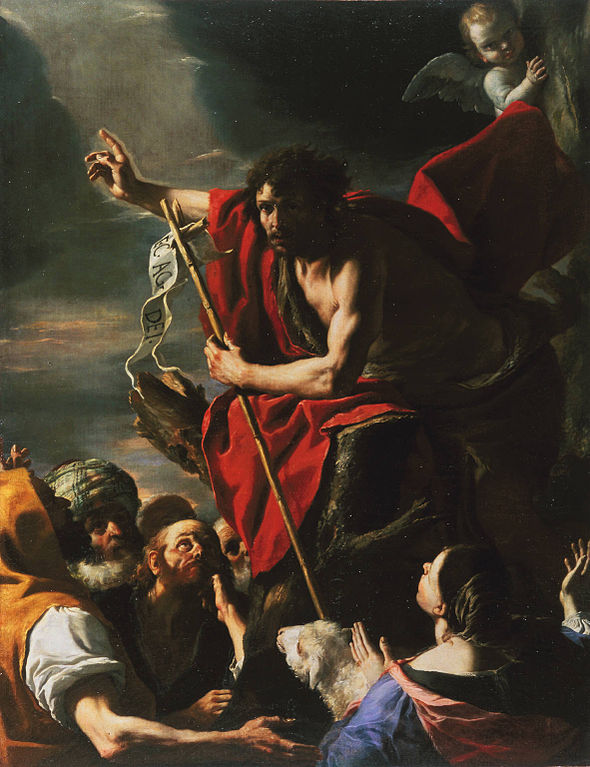
John is the forerunner. He is the one sent by God to point people to God’s grace in Jesus. John is the one who prepares the way of the Lord. And when you are preparing the way for the Christ who is so great and mighty that you aren’t even worthy to untie His sandals, confessing that you aren’t Him makes a lot more sense.

Now, the priests were students of the Old Testament. They knew that the last word they had from God was that God would send Elijah (Mal. 4:5), the prophet who didn’t die but was taken into heaven. Malachi had prophesied that God would send His messenger before Him who would prepare for God’s coming into the Temple (Mal 3:1). There was even some in those days who thought that Elijah would return from heaven and be the Messiah. So, these priests and Levites ask, “Are you Elijah?” And John says, “Nope,” and goes back to baptizing.

Now, this may seem a little strange because Jesus will say that John is the Elijah whom Malachi spoke about (Mt. 11:14). But John’s denial is probably because of their misconceptions.

So, the priests and Levites think it over some more and ask, “Ok, are you the prophet?” incarnation of JesusAnd they ask this because of what we heard in our Old Testament lesson (Dt. 18:15-19). In that text, Moses told the people that God would raise up a prophet for His people from among them. And Moses made it very clear, “To Him you shall listen.”
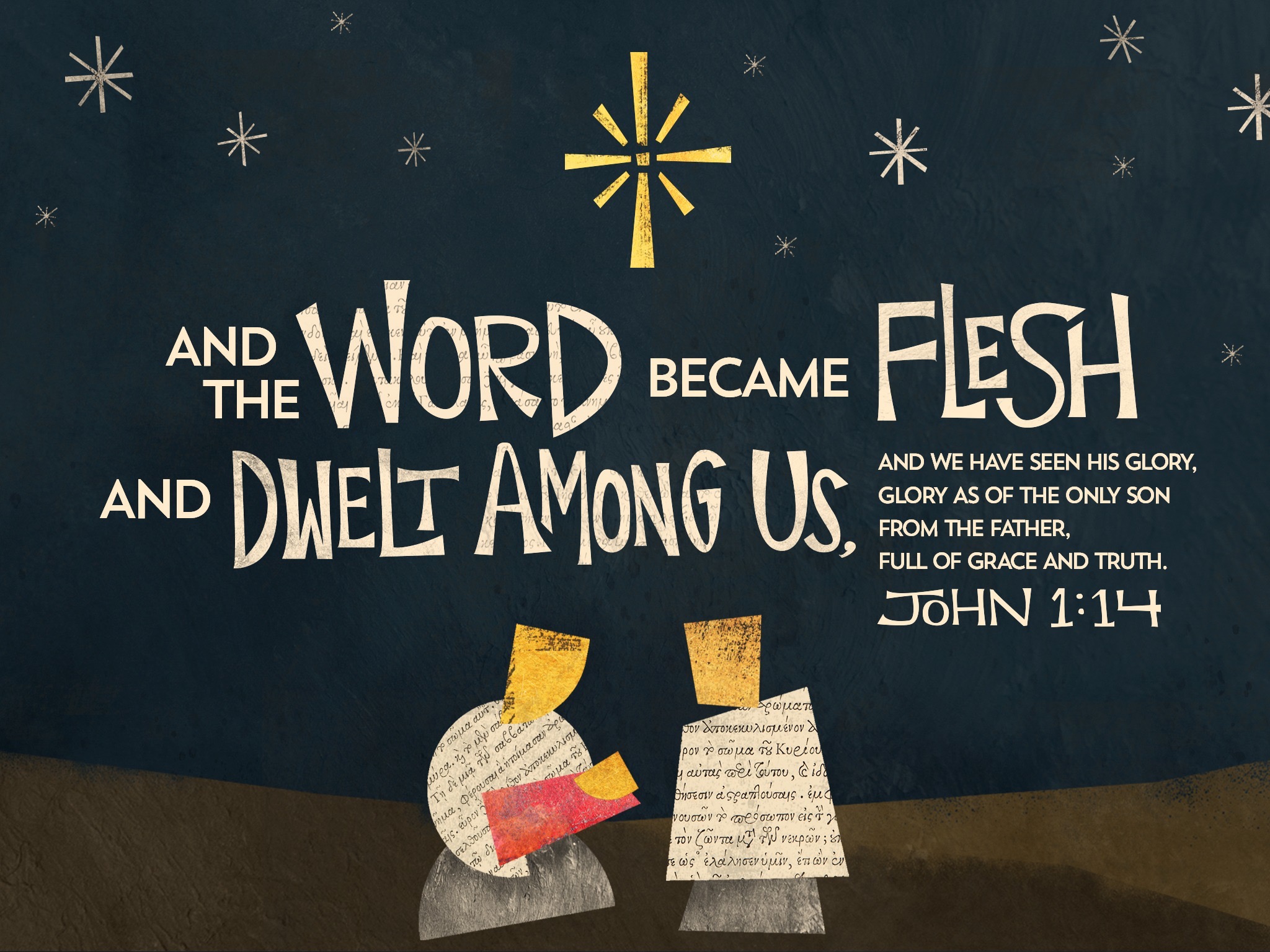
In that text, Moses reminds the people about the day when God gave the Ten Commandments on Mt. Sinai. The people were, well, terrified and asked Moses to not let God speak to them anymore. And God said, “Yeah, talking to them like that is too frightening for them. I’ll speak to them again in a way that doesn’t make them wet themselves. I’ll put my words in the mouth of my Prophet, and He will speak to the people.” God was referring to Jesus – the One who speaks God’s words of forgiveness, who makes God’s grace and truth known (Jn. 1:14). So, when John gets asked, “Are you the prophet?” again, he says, “No.”

The priests and Levites are done asking John, “Who are you?” because John isn’t interested in answering. “Fine, you won’t tell us who you are. But we need to tell the guys who sent us something. What do you say about yourself?”

And John still keeps the focus where it should be, “Listen, guys, I’m no one. I am simply a voice preaching in the wilderness preparing the way for the Lord.”

Now, what does all of this mean for us today? What can we learn from this text?

One thing we can learn from the priests and Levites is that even if someone has studied the Scriptures, it doesn’t mean they are teaching the Bible rightly. Don’t simply listen to someone’s preaching and teaching because they seem nice, can quote a verse periodically, and sound “Bibley.” Know the Bible. And if any preacher or teacher isn’t constantly pointing you to Jesus for the forgiveness of your sins, avoid them.

Second, see how John confesses right away that he is not the Christ. Don’t ever trust in yourself for your salvation. God delivers you. Like John, you are not the Christ. But thanks be to God, you don’t need to be. Jesus has come. He has delivered you from sin, death, and the devil. His birth, His death, His resurrection, and His ascension have secured a place for you to live forever with God who is full of mercy and grace.

John 1_14Finally, take a page out of John’s playbook and point people to Jesus. John has a laser-like focus on Jesus and isn’t interested in talking to people unless he is pointing them to Christ. Point others to the One who delivers them from sin. Point them to Jesus, the Lamb of God who takes away the sin of the world. Tell them that they don’t need to save themselves. Jesus saves them.

This is the testimony of John. This is the testimony of God’s grace. May that be our testimony as well. May that be our witness as we gather together and as we go out from here.

I look forward to celebrating the coming of God’s grace with you tonight as we rejoice in the incarnation of our Lord and Savior. Amen.

The peace of God, which surpasses all understanding, will guard your hearts and minds in Christ Jesus. Amen.