The End of Judgment – Sermon on 2 Chronicles 28:8-15 for the Thirteenth Sunday after Trinity

2 Chronicles 28:8-15

8 The men of Israel took captive 200,000 of their relatives, women, sons, and daughters. They also took much spoil from them and brought the spoil to Samaria. 9 But a prophet of the Lord was there, whose name was Oded, and he went out to meet the army that came to Samaria and said to them, “Behold, because the Lord, the God of your fathers, was angry with Judah, he gave them into your hand, but you have killed them in a rage that has reached up to heaven. 10 And now you intend to subjugate the people of Judah and Jerusalem, male and female, as your slaves. Have you not sins of your own against the Lord your God? 11Now hear me, and send back the captives from your relatives whom you have taken, for the fierce wrath of the Lord is upon you.” 

12 Certain chiefs also of the men of Ephraim, Azariah the son of Johanan, Berechiah the son of Meshillemoth, Jehizkiah the son of Shallum, and Amasa the son of Hadlai, stood up against those who were coming from the war 13 and said to them, “You shall not bring the captives in here, for you propose to bring upon us guilt against the Lord in addition to our present sins and guilt. For our guilt is already great, and there is fierce wrath against Israel.” 14 So the armed men left the captives and the spoil before the princes and all the assembly. 15 And the men who have been mentioned by name rose and took the captives, and with the spoil they clothed all who were naked among them. They clothed them, gave them sandals, provided them with food and drink, and anointed them, and carrying all the feeble among them on donkeys, they brought them to their kinsfolk at Jericho, the city of palm trees. Then they returned to Samaria.

In the name of Jesus. Amen.

To get at this text, we need to set the scene. The first three kings to rule over God’s people were Saul, David, and Solomon. King Solomon wasn’t that great, though. Despite all the wisdom, wealth, and fame that God gave him, Solomon went after the pagan gods of his many wives. So, God tells Solomon that He will take away the kingdom from Solomon’s son, Rehoboam (1 Kgs. 11:9-13). After Solomon’s death, God’s people were split into two kingdoms. There was the kingdom of Israel in the north who had wicked, unfaithful kings. And there was the kingdom of Judah in the south who had some kings who were faithful to God, but also many who were wicked. And, I have to admit, this time of the divided kingdoms is a confusing time.

All of 2 Ch. 28 is about the reign of Judah’s most wicked king, King Ahaz.[1] (And don’t confuse Ahaz with wicked King Ahab who ruled Israel about 140 years before Ahaz ruled Judah. Like I said, it’s hard to keep everything straight with two kingdoms and similar names.) Ahaz was the twelfth king of Judah and his reign began about 200 years after Israel and Judah split. During his reign, King Ahaz made sacrifices to all sorts of false gods. Scripture says he made these sacrifices under every green tree (2 Ch. 28:4). He even burned his own sons in an attempt to appease these false gods (2 Ch. 28:3). Because of his wickedness and idolatry, God sent judgment upon Ahaz and Judah through the kings and armies of Syria and Israel. These two armies came and killed 120,000 of Judah’s men of valor in one day (2 Ch. 28:5-6).

God brought this judgment upon the people of Judah so they would repent of their sin. Hosea, who was a prophet during the time of King Ahaz, wrote, “Come, let us return to the Lord; for He has torn us, that He may heal us…” (Hos. 6:1a). Dear saints, God sends judgment and punishment so that we repent and return to Him. Remember that in times of pandemics, economic trouble, terrorist activity, and when our soldiers are killed.

Now, beyond the 120,000 soldiers of Judah who were killed, the kingdom of Israel also took captive 200,000 men, women, and children and took much spoil and brought them to Israel’s capitol city which was Samaria.[2] The Israelites planned to make these captives their slaves. They were treating their relatives the same way barbarian people would treat their enemies. In the minds of these Israelites, the devastating judgment that God had doled out on the battlefield wasn’t enough. They planned to pour on more judgment by taking the people of Judah as their slaves and plundering what God had left them after their defeat.

But this obscure prophet of God named Oded stands up and basically says, “Listen, you Israelites, the reason you defeated Judah was that God was judging them through you. But now you plan on making your relatives, these fellow children of Abraham, your slaves. This is a bad idea. You Israelites aren’t any better than the people you have defeated. You have your own sins to repent of. The battle is over. Stop pouring out judgment. Send these people back before God turns His judgment upon your own heads” (2 Ch. 28:9-11).

You see, what Israel was doing to Judah happens all the time in our day. You turn on the news and see a person who was caught in some sin. Judgment has been poured out upon him – either through the court system or through that sin being made public. And what happens? Everyone starts pouring out more judgment by making that sin more public and mocking and ridiculing that person. It’s like social media was made for this very thing. God allows a sin that someone committed in the dark to come into the light, and everyone jumps on and does everything they can to spread that sin farther and farther. We see how far we can go to ruin that person’s life. We loot and pillage whatever hasn’t already been taken from that person – make him lose his job, take his friends away, and turn his family against him. We don’t think that the punishment God poured out on the battlefield was enough, so we do everything we can to add to that judgment. And we do this because we think it makes us look more righteous. We spread the sins of others as far as we can to distract from our own sins. 

My fellow failures, repent. We are all guilty of this. Any time we gossip we are doing this very thing. And I hope and pray we are all tired of it. May our conscience be a little Oded on our shoulder telling us to knock it off and repent instead of pouring out more judgment once the battle is over.

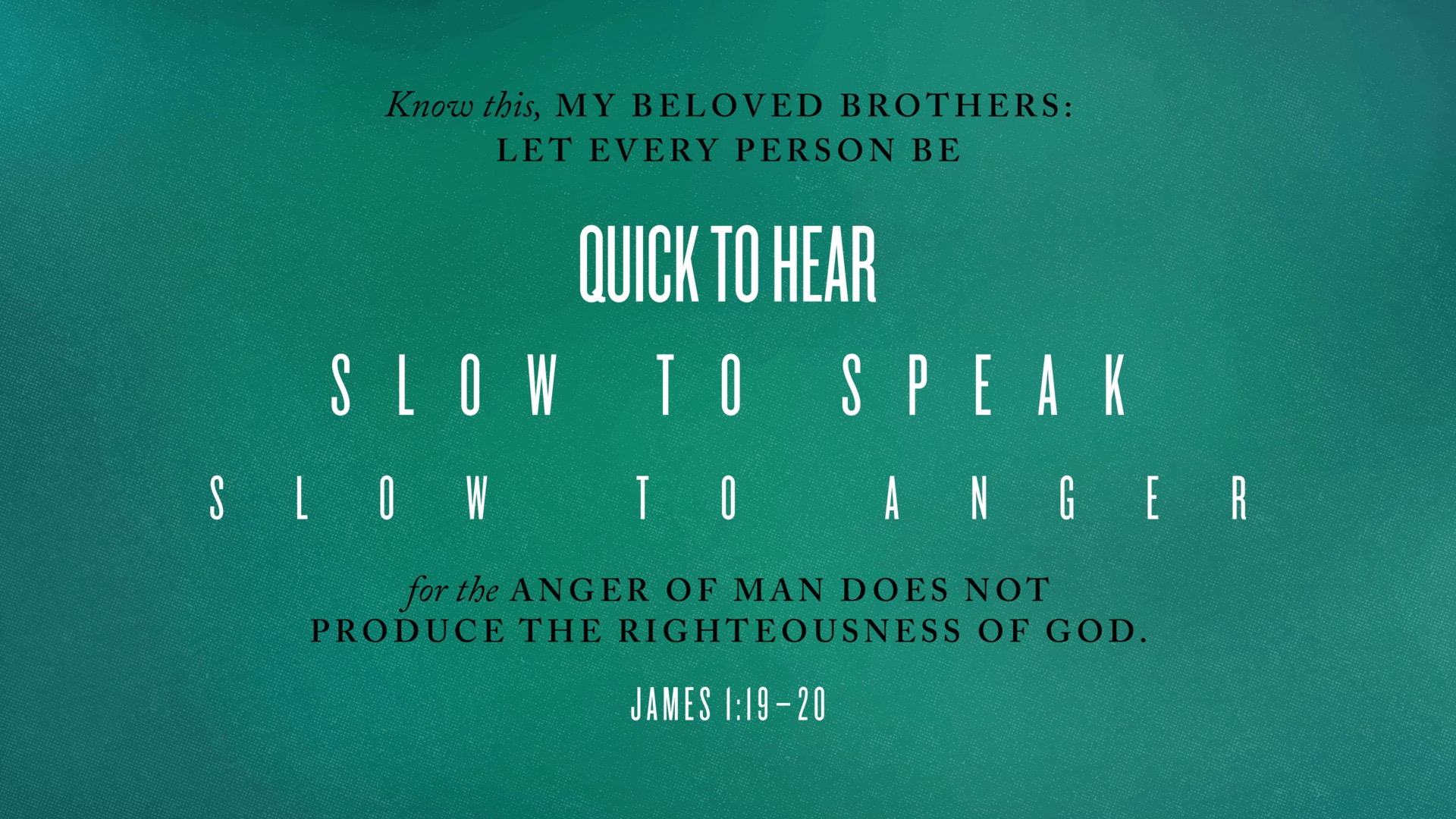
James 1:20 says, “[T]he anger of man does not produce the righteousness of God.” No matter how mad you get at the sins you see in this world, that anger does not make you righteous. That’s why we get so tired trying to make ourselves righteous; we know our little judgment doesn’t actually accomplish anything.

So, what does produce the righteousness of God? It’s the mercy and forgiveness of Jesus and His holy and perfect blood, shed for you on the cross. Christ takes all the wrath and judgment that our sins deserve to His grave, and in return He gives us the holiness and righteousness that God requires.

The voice of Oded prevailed in our text. The four guys mentioned in v. 12, whose names I won’t butcher again, they used the spoil that had been taken to clothe, feed, anoint, and return their kinsfolk to their home. These good Samaritans are a little picture of what Jesus, your Good Samaritan, does for you. Christ is your Good Samaritan (Lk. 10:23-37) who sees you in the ditch – bruised, bloodied, and left for dead. And in His mercy, He looks on you and pours out His love and forgiveness.

Dear Syrus, that brings me to you. Syrus, today you are Baptized. Today, Jesus has joined you to Himself. Through the waters that God placed upon your head, God clothed you in Christ (Gal. 3:15). Jesus saw you beat up by the guilt of your sin. But Christ cleaned your wounds by this washing of regeneration and renewal of the Holy Spirit (Tit. 3:5-6). And Jesus has carried you to the inn of His Church where He has set up an all-expenses paid account where you are cared for until He returns.

And to all you dear saints, this is true for you as well. Remember that. Remember especially that whatever care, compassion, and healing you need is already paid for by Christ. And now, Christ has called you to be merciful as He has had mercy upon you (Lk. 6:36). In our Gospel lesson (Lk. 10:23-37), after Jesus tells the Parable of the Good Samaritan, He tells the lawyer, “You go, and do likewise” (Lk. 10:37).

That’s a tough calling. There will be times when, instead of being like the world and piling judgment upon judgment, you pour out the mercy that Christ has first given you. The world will see this and take advantage of you and that mercy. But don’t let that stop you from being merciful. Don’t become embittered when they harm you and try to leave you in the ditch again. Remember the anger of man does not produce the righteousness of God. Don’t go back to your judgmental ways. 

Yes, being merciful costs you, but your account is fully covered so you don’t have to pay a thing. Instead, you can be merciful because you live in the all-inclusive inn of the holy Christian Church fully and completely paid for by your Savior who has shown you His mercy and will cover every expense for the love and care and healing and nurturing you need, from now until the day you depart this veil of tears.

Yes, there is an end to judgment, but it is only found in the mercy of Christ, your Lord and Savior. For that, God be praised. Let’s run now to His table and receive that mercy. Amen.

The peace of God, which surpasses all understanding, will guard your hearts and minds in Christ Jesus. Amen.


[1] See also 2 Kings 16 for more about King Ahaz’s reign.

[2] Most of the time you come across the name ‘Samaria’ in the Old Testament, it is referring to the capitol city of Israel. In the New Testament, it usually refers to the geographical region surrounding Samaria.

Guilt, Anger, and Forgiveness – Sermon on Luke 2:41-52 for the First Sunday after Epiphany

Listen here.

Luke 2:41-52

41 Now his parents went to Jerusalem every year at the Feast of the Passover. 42 And when he was twelve years old, they went up according to custom. 43 And when the feast was ended, as they were returning, the boy Jesus stayed behind in Jerusalem. His parents did not know it, 44 but supposing him to be in the group they went a day’s journey, but then they began to search for him among their relatives and acquaintances, 45and when they did not find him, they returned to Jerusalem, searching for him. 46 After three days they found him in the temple, sitting among the teachers, listening to them and asking them questions. 47 And all who heard him were amazed at his understanding and his answers. 48 And when his parents saw him, they were astonished. And his mother said to him, “Son, why have you treated us so? Behold, your father and I have been searching for you in great distress.” 49 And he said to them, “Why were you looking for me? Did you not know that I must be in my Father’s house?” 50 And they did not understand the saying that he spoke to them. 51 And he went down with them and came to Nazareth and was submissive to them. And his mother treasured up all these things in her heart. 52 And Jesus increased in wisdom and in stature and in favor with God and man.

In the name of Jesus. Amen.

I will be making some comments about what has gone on and what is going on in our country, but to do so, I’m going to lay some groundwork from this text first.

One of the most remarkable things we see in this text is the fact that God the Father put His own dear Son into the care of very fallible parents. Now, God didn’t have a choice in that. Anyone God would choose to be the parents of the Savior of the world would be fallen, sinful, people. But here we see what is probably the worst case of child neglect in all of the Scriptures.

Imagine taking your family on a long road trip – let’s say you’ve driven to Houston, Texas (I don’t know why Houston, but it’s my analogy, and I get to pick). It’s time to return home. You get everything packed up and start driving. As you travel down the road, you pray for safety and begin to have a conversation with your spouse. Your kids are in the back quietly reading, staring out the window, watching a movie, or playing on their devices. After a couple of hours, you ask your twelve-year-old a question, but there is no answer. So, you ask one of the other kids, and get a response. You don’t think it’s really a big deal that your twelve-year-old didn’t answer, so you don’t turn around to see why he is silent. Eventually, you stop for gas and snacks. The kids go to the bathroom, and you get back on the road. You try to engage with your twelve-year-old again, and still no answer. Finally, you get to the hotel in Kansas where you are planning on staying and check in. As everyone gets settled in the room, you realize your twelve-year-old isn’t there. So, you go check the lobby, the pool, and the car. Still no twelve-year-old. You ask the other kids, and they inform you that the twelve-year-old never got in the car before you left Houston.

You finally get back to Houston and find your kid in the church you attended. He’s sitting and politely listening to a Bible study. Are you going to get after your twelve-year-old for treating you badly? The whole drive back to Texas, are you going to yell at your other kids for not telling you one of their siblings wasn’t in the car? If I’m being totally honest, I might.

Well, that’s the modern equivalent of what happened in this text. Joseph and Mary completely dropped the ball, failed as parents, and are guilty of serious neglect. We can’t go soft on Joseph and Mary here. They had a serious lapse in judgment. They left the big city with their friends and family while their twelve-year-old Son stayed. They didn’t think much of it at first. They figured He must be with the group, but He wasn’t. So, back they travel to Jerusalem, search for two more days, and finally, on the third day, they find Jesus listening to the teachers and learning from them.

And hear again what Mary does. She speaks to her perfect, sinless Son in a stern tone, “Son, why have you treated us this way? Your dad and I have been worried sick about you and searching for you.” Don’t skip over that. I have little doubt that Mary felt her guilt and sin. She should have known better. She knew that Jesus was God’s miraculous Son, born to set people free from sin. He was the Messiah and Savior of the world. She was chosen by God to protect and raise the long-awaited Messiah, and she had failed. She knew her guilt. But notice what that guilt and shame does to her. Instead of owning up to it, confessing it, and repenting, she projects her guilt on to Jesus.

We all have this fight or flight instinct when our guilt is hunting us down. Unfortunately, we most often chose to fight, but it’s never a fight we can win. The best we can do is drag others down with us, but we do it anyway. The best option would be to simply say, “I’m sorry; I was wrong.” But we don’t. We attack and we try to circle the wagons around us. Repent.

All of this brings me to the events in our nation’s capitol this past week.

First of all, it was wrong. It is a shameful thing that the world was watching that happen in the greatest, most blessed nation in the history of the world. It should not have been and we are already seeing the impact on our culture. And there are a lot of questions. Who were the people who did this, and why were they doing it? But I’m not going to get into that because it doesn’t matter for the purposes of this sermon. I will simply say that we need to let the process work. As information is gathered, that will all be sorted out and those who have broken the law should be prosecuted and punished.

As Christians, we should be united in saying that what happened was wrong and we should have similar feelings about it as we did when the planes crashed into the World Trade Center on 9/11.

There has been a lot of rhetoric surrounding the storming of the Capitol. Some will say that the right is to blame, and others will point the finger back at the left and how they cheered on the various protestors over the last six months. Both sides have valid points. But here’s the deal. All of that needs to stop because it doesn’t help the situation. And as followers of Jesus, we need to be the first to shut our mouths when it comes to blaming “them” – whoever “them” is.

Jesus is clear about this. In Luke 13[:1-5], Jesus gets asked about a time when Pontius Pilate killed some Galileans while they were offering their sacrifices. The people bringing this question to Jesus are looking for Jesus to speak out against the evil of Pilate. But Jesus doesn’t have it. He responds, “Do you think that these Galileans were worse sinners… because they suffered in this way? No, I tell you; but unless you repent, you will all likewise perish.” Then, Jesus even goes further and adds, “Or those eighteen on whom the tower in Siloam fell and killed them: do you think that they were worse offenders than all the others who lived in Jerusalem? No, I tell you; but unless you repent, you will all likewise perish.”

In other words, whenever there is injustice and tragedy, your Savior calls you as an individual to repent. Whether the injustice comes from the authorities whom God has placed in those positions to keep and promote peace, or whether it is some natural disaster, whatever the case may be, the problems you see in this world should cause you and I to individually repent.

Back to Mary. In light of her pain, grief, and guilt, she blames Jesus for all of her feelings of distress. She says, “Why have You treated us so?” In other words, Mary is saying, “Jesus, you’ve made us feel bad.” And we all fall into the same trap of projecting our guilt away from ourselves. Repent.

We don’t get a free pass for our sinful feelings. We chose to feel the way we feel. We are not animals. We chose our reactions. Yes, we can be provoked and prodded, but that does not excuse us from our sinful actions and reactions. We indulge ourselves in our anger and choose to take vengeance for ourselves, while God says, “Vengeance is Mine. I will repay” (Dt. 32:35Ro. 12:19Heb. 10:30). But we aren’t content to wait for God’s action, so we take it up ourselves. And this is pride which is in violation of God’s Commands.

But now watch how Jesus responds. Jesus has to address this accusation from His mother. Mary has accused Jesus of breaking the 4th Commandment by not honoring His father and mother, so He cannot be silent. But watch what Jesus does. He does rebuke Mary and her anger toward Him, but He does it in the kindest way. He doesn’t say, “Hold on there, mom. Back up. You’re the one who is supposed to be watching out for Me.” Instead, He says, “Why were you looking for Me? Did you not know that I must be in My Father’s house?” 

In this rebuke, Jesus isn’t defending His honor; instead, He’s defending His work. He has to be sinless to be the Savior and die for the sins of the world.

So, Mary stands rebuked by God in the flesh, and thanks be to God she accepts it – to her absolute credit. She might have been tempted to snap back at Jesus, “Listen you tween, what do you mean by that?” But she doesn’t. She submits to the rebuke in humility. And notice that even though neither Mary nor Joseph fully understand what Jesus is saying (see v. 50), yet still, she submits to His correction.

Here’s the point. Jesus is your Savior, and He will rebuke you when you do wrong and have guilt, but He does it kindly and gently so that you repent and return to Him for His mercy and forgiveness. May we, when we are rebuked by Christ also accept that rebuke, repent, and receive His forgiveness and delight in His presence. And when we are wrongly accused of sin, may we follow in Jesus’ steps and not put up our fists to defend our honor. Instead, let us be calm, measured, and offer correction and forgiveness.

After this, Jesus returned to Galilee with His fallible parents and lived in submission to them. Dear saints, this shows us that God works in and through families by shedding His light of mercy and forgiveness in and through them. Parents, don’t fall into the trap of thinking that your failures and shortcomings disqualify you from being a good parent. One of the best things you can do for your kids is confess your failures, receive forgiveness from them and from Christ, and teach them that God’s grace and mercy is the most important thing in the world. And as you do that, love your spouse, hug your kids, share with them the forgiveness of Christ. That will do more for this country and the world than anything else you can do. 

Dear saints, there appears to be difficult days ahead of us. If you want to start changing the world, pour yourself into your family and those that God puts into your life. Because it isn’t great power that holds evil in check. Don’t be conformed to this world in thinking that way. Instead, be transformed by God’s Word which renews your mind (Ro. 12:2) recognizing that it is the small, everyday deeds of ordinary folk that keep the darkness at bay.

And above all, live in the free gift of forgiveness that Christ has given you. In the midst of this fallen world, keep singing the songs of Zion. May our Savior return quickly and deliver us from our exile and captivity. Amen.

The peace of God, which surpasses all understanding, will guard your hearts and minds in Christ Jesus. Amen.

Anger, Law, & Righteousness – Sermon on Matthew 5:20-26 for the Sixth Sunday after Trinity

Listen here.

Matthew 5:20-26

20 “For I tell you, unless your righteousness exceeds that of the scribes and Pharisees, you will never enter the kingdom of heaven.

21 “You have heard that it was said to those of old, ‘You shall not murder; and whoever murders will be liable to judgment.’ 22 But I say to you that everyone who is angry with his brother will be liable to judgment; whoever insults his brother will be liable to the council; and whoever says, ‘You fool!’ will be liable to the hell of fire. 23 So if you are offering your gift at the altar and there remember that your brother has something against you, 24 leave your gift there before the altar and go. First be reconciled to your brother, and then come and offer your gift. 25 Come to terms quickly with your accuser while you are going with him to court, lest your accuser hand you over to the judge, and the judge to the guard, and you be put in prison. 26 Truly, I say to you, you will never get out until you have paid the last penny.”

In the name of Jesus. Amen.

Why did You have to pick the scribes and Pharisees, Jesus? Why does our righteousness have to exceed theirs to enter the kingdom of heaven? Why couldn’t You pick the righteousness of the sinners and tax collectors that You were eating with?

The scribes and Pharisees were the good guys. They had dedicated their lives to keeping God’s law. They made up extra commandments – more than six-hundred of them. When you looked at them, you would see good and holy people who would put our lives and good works to shame. Their lives were the supreme example of the outward keeping of God’s Law. But that’s exactly where the problem lies, and that is precisely what Jesus is getting at.

The scribes and Pharisees understood the Commandments to be attainable, keep-able, obey-able. They looked at the Commandments and saw them simply on the external. They would look at a particular Commandment and think, “I’ve done that. I’ve honored God in that way.”

In some ways they had. They hadn’t murdered anyone. They kept their bodies pure from adultery. They hadn’t stolen what was someone else’s. They had an external righteousness and life, but with that external righteousness came the most dangerous thing – pride. They figured they had done well and that God should be pleased with them. But here Jesus sits at the top of the mountain (Mt. 5:1) and preaches that their external works are not enough.

Jesus shows the righteousness that is required – a righteousness that exceeds the external righteousness of the Pharisees. And here, Jesus starts with the 5th Commandment about murder. He will go on to several of the other Commandments in the verses that follow, which you can read later today and this week for your homework. But Jesus probably starts with the 5th Commandment because, of all the Commandments, this one probably seems easiest for us to keep. Most of us can say, “I’ve never killed anybody, so I’m good concerning this Commandment.” But Jesus says, “Easy there partner. Not so fast. You have heard that it was said to those of old, ‘You shall not murder; and whoever murders will be liable to judgment.’ But I say to you that everyone who is angry with his brother will be liable to judgment; whoever insults his brother will be liable to the council; and whoever says, ‘You fool!’ will be liable to the hell of fire.”

Jesus says that there is more to the Law than you realize. It isn’t enough to keep your hands from taking someone’s life. Jesus teaches that the 5th Commandment has instructions for our lips and what we say, for our minds and what we think, even for our hearts, what we feel. If you call your neighbor a ‘fool,’ if you have insulted him or her, if you’ve been angry with anyone, you’ve broken the 5th Commandment and have guilty blood on your soul. And with all the anger in our culture and society, it is a good time for us to consider this topic of anger so that we have a right mindset about it.

The Scriptures do teach us that there is a godly use of anger. Psalm 4:4 and Ephesians 4:26 both say, “Be angry and do not sin,” which means that it is possible to be angry without sinning. And Jesus is our example. He cleansed the temple, taught against the Pharisees’ hypocrisy, and endured the disciples’ repeated unbelief. All of those things did make Him angry, and the Scriptures certainly use that terminology. Jesus was angry at times, but without sin.

To understand this, it is important to make a distinction. Some will try to say, “Hate the sin, but love the sinner.” But you run into problems with that phrase when you come across verses like Psalm 11:5b which says, “[The Lord’s] … soul hates the wicked and the one who loves violence.” So, a better distinction is the difference between the anger of office and the anger of the person. I’ll explain.

Anger of office has to do with your vocation or your station in life and your calling. Think of a judge in a courtroom. To be a judge is to have an office of anger – to sentence someone to jail or give them a fine is an act of anger. But the most common example of the office of anger is what we see in parents. Parents are called to sit in an office of anger at times. When their children break the 4th Commandment to honor their parents, it is the parent’s God-given duty to be angry and discipline their children.

Parents are supposed to punish their kids when they do things that put their kids or other people in danger. If your kid runs into the street without looking for cars, you have to punish them by not letting them be outside by themselves or by restricting where they can go on their bike. That punishment is serving in an office of anger, but all of this is an anger of office not of person. In other words, you aren’t punishing your kids because you don’t like them or are angry with them; you are punishing your kids because you love them, want to protect them, and desire that they grow up to be responsible people.

In fact, disciplining your kids is one of the most loving things you can do. Listen to a few Scriptures here: Proverbs 12:1, says, “Whoever loves discipline loves knowledge, but he who hates reproof is stupid.” Or Hebrews 12:6 which says, “For the Lord disciplines the one he loves, and chastises every son whom he receives.” Good parents will follow the example of their heavenly Father in disciplining their children. And in Revelation 3:19, Jesus says, “Those whom I love, I reprove and discipline.” Even though discipline is unpleasant at the time for the one being disciplined, later “it yields the peaceful fruit of righteousness to those who have been trained by it” (Heb. 12:11).

As our culture continues to wander farther and farther from God and seeks to be free from His authority, we see other God-ordained institutions of authority are being rejected as well. As this takes place, the biblical concept of discipline and love is dangerously fading and absent, and we are seeing the evil fruits of that. Sinful and evil actions are spoken of as good and right, and anyone who calls out that sin and evil is labeled ‘intolerant,’ ‘unenlightened,’ and ‘old-fashioned.’ But we cannot give up or retreat.

We must continue to love our neighbor by calling sin ‘sin’ and evil ‘evil.’ And we must do so in loving ways that show how that sin hurts the person committing that sin and how it harms their neighbor. We need to do this in a way that encourages repentance and faith in Christ who cleanses us from every sin through His death and resurrection.

Back to the example of the office of parent, if your kids keep repeatedly breaking your rules, it can be hard to separate the anger of the office as parent and anger toward the person of your child. But, do you get the idea? I hope you do. And I hope that as you parent your children, you are able to discipline them in a way that is not being angry toward the person of your child and instead having a righteous anger of office as parent.

In this text, Jesus is talking about the anger of a person, not about the anger of office. When someone speaks poorly against us or sins against us, we get angry toward that person and our heart gets hardened toward that neighbor. When we get angry toward another person, we try to wiggle our way out of our obligation to love that person, wrongly thinking that we are exempt from the command to love them as our neighbor because we think they are our enemies. It happens to all of us, and we all need to repent because Jesus goes on, just a few verses after this text, He says, “You have heard that it was said, ‘You shall love your neighbor and hate your enemy.’ But I say to you, love your enemies and pray for those who persecute you so that you may be sons of your Father who is in heaven” (Mt. 5:43-45). Jesus does not authorize you to be angry with the people who sin against you. Instead, He has told and explicitly commanded you to love them, pray for them, do good to them, and serve them.

When Jesus talks about a righteousness that exceeds that of the scribes and Pharisees, He isn’t talking about an external keeping of the Law. Jesus demands that everything you think, say, do, and feel conforms to God’s Commandments. To have a heart completely free of anger, lust, greed, rebellion, bitterness, strife, and idolatry. A heart that is full of love for God and your neighbor. This is the righteousness that exceeds the righteousness of the scribes and Pharisees. And this means that when the Law speaks to you, you do not go to a place of pride. Instead, the Law speaks to you and you fall into despair because you know that without this exceeding righteousness, you will never enter the kingdom of heaven.

We cannot attain to this righteousness. We cannot achieve it. And the more we try – which we should – the more we know we fail and feel in our hearts our own great sinfulness and the wrath of God that we deserve. We cannot achieve this righteousness that Jesus says is required. We have to look for this righteousness outside of ourselves.

This righteousness is not found in good works and obedience to the Law. It is Jesus’ righteousness and His perfect obedience to the Law and His heavenly Father which is given to us as a gift. Christian, Scripture says that you are in Christ who “has become [for you] wisdom from God, righteousness and sanctification and redemption” (1 Cor. 1:30).

Dear saints, there is one person in the entire history of the world who could stand under the judgment of the Law and not be condemned by it – Jesus, your Lord and Savior. Yet, Jesus, who kept the Law perfectly and filled up the Law, He Himself bore the curse and condemnation of the Law, and suffered for sins He did not commit so that He could give you His righteousness and the reward it deserved. For our sake God made Jesus who knew no sin to be sin, so that in Him we might become the righteousness of God (2 Cor. 5:21). Your anger, your insults, your lust, your disobedience, your theft, your lying, your idolatry – Jesus became all of that. He took all of that upon Himself and suffered for your sins so He could give to you His keeping of the Law, His perfect obedience to God.

Through faith in Christ, you have the righteousness that exceeds the righteousness of the scribes and Pharisees. You have the perfection and righteousness that defines God’s only Son. Your sins have been erased, and you are now in Christ. All of God’s commands are fulfilled for you.

Jesus has brought you out of your slavery to the Law. You have been united to Christ’s death and resurrection. Sin no longer has dominion over you. So, consider yourselves dead to sin and alive to God in Christ Jesus (Ro. 6:11). Amen.

The peace of God, which surpasses all understanding, will guard your hearts and minds in Christ Jesus. Amen.

Mercy Over Anger – Sermon on Matthew 8:1-13 for the Third Sunday of Epiphany

Listen here.

Matthew 8:1-13

When [Jesus] came down from the mountain, great crowds followed him. And behold, a leper came to him and knelt before him, saying, “Lord, if you will, you can make me clean.” And Jesus stretched out his hand and touched him, saying, “I will; be clean.”And immediately his leprosy was cleansed. And Jesus said to him, “See that you say nothing to anyone, but go, show yourself to the priest and offer the gift that Moses commanded, for a proof to them.”

centurion with a sick servantWhen he had entered Capernaum, a centurion came forward to him, appealing to him, “Lord, my servant is lying paralyzed at home, suffering terribly.” And he said to him, “I will come and heal him.” But the centurion replied, “Lord, I am not worthy to have you come under my roof, but only say the word, and my servant will be healed. For I too am a man under authority, with soldiers under me. And I say to one, ‘Go,’ and he goes, and to another, ‘Come,’ and he comes, and to my servant, ‘Do this,’ and he does it.” 10 When Jesus heard this, he marveled and said to those who followed him, “Truly, I tell you, with no one in Israel have I found such faith. 11 I tell you, many will come from east and west and recline at table with Abraham, Isaac, and Jacob in the kingdom of heaven,12 while the sons of the kingdom will be thrown into the outer darkness. In that place there will be weeping and gnashing of teeth.” 13 And to the centurion Jesus said, “Go; let it be done for you as you have believed.”And the servant was healed at that very moment.

In the name of the Father and of the Son and of the Holy Spirit. Amen.

All the Scripture lessons today (2 Kgs. 5:1-15; Ro. 12:16-21; and Mt. 8:1-13) speak of both mercy and anger. Naaman, the commander of Syria’s army has leprosy and is mercifully healed by God through the prophet Elisha when he washes seven times in the Jordan. But, when Naaman first heard about how this healing would come, he was angry and wasn’t even going to do as God directed him through Elisha.

In our Epistle lesson (Ro. 12:16-21), we Christians are told to be merciful instead of getting angry and vengeful. We are told to not be haughty, but to associate with the lowly. We are told to not repay evil for evil and never avenge ourselves, but leave vengeance to the Lord. We are commanded to overcome evil not with anger but with good.

But the theme of mercy and anger is a little harder to notice in this Gospel text. Mercy is easy to see. Jesus is merciful to two men. First, to a leper who was physically and spiritually unclean but then receives better than he asks. And second, to a Gentile centurion who had a sick servant. This centurion, a commander of at least one hundred men, believes that even though he was unworthy to have Christ come under his roof our Lord has both the ability and mercy to speak a word from far away and heal his servant. So, you might be wondering, where is the anger in this Gospel text?

After Jesus praises the centurion’s faith, Jesus talks about the anger of those who spend eternity in hell. In the outer darkness, Jesus says people will experience only weeping and gnashing of teeth for eternity. That phrase “gnashing of teeth” is not some sort of torture, like an eternal dental procedure. “Gnashing of teeth” is a Hebrew expression of anger and rage. A person who is angry gnashes his teeth at the one who has made him angry. (You see this in Ps. 112:10and other places in the Old Testament.) You can watch this happen when children are angry with their siblings or peers. They clench their jaw, show their teeth, and growl. Hell is where anger and rage never go away and is never satisfied. And we need to consider this for a bit to see the horror of hell.

Those who are in hell insisted on going their own way in this life. They want to be their own lords rather than let God be their Lord. They insist that they be judged according to their own righteousness and merits (which is only a big, smoldering pile of scat anyway), and so they will be. They will be judged and condemned because their trust is in their own righteousness rather than in Christ’s righteousness won for them on the cross and given to them by God’s grace and mercy. And they will be angry with God because they think God has been unfair. In hell, people are given over to their own anger for eternity.

Jesus gives this picture in the parable of the sheep and the goats (Mt. 25:31-46). The goats are justly condemned to hell for their sins, but they are angry with God for not seeing what they thought were their plethora of good works. In the parable of Lazarus and the rich man (Lk. 16:19-31) Jesus also shows how unbelievers grumble and angrily insist on their own way even when they are suffering. The rich man is in anguish and sorrow in hell begging Abraham to send Lazarus back from the dead to warn his brothers. Abraham says, “They already have Moses and the prophets.” In other words, they have the Scriptures, so they don’t need any further warning. But the rich man says, “That won’t work. My idea is better. Send Lazarus.” Even in there in hell, the rich man rejects the power and truth of God’s Word and angrily insists on his own way.

AngerHell is the place where people are given over to their anger. It is full of people whose pride has lead them to think that God owes them something because they are so good and righteous or because they belonged to the right club or had the right lineage. But they are wrong and so they are in torment stewing in their anger against God and there is no relief or release. All of that is the gnashing of teeth. So, when Jesus speaks of what hell will be, He gives a picture of darkness, sorrow, and anger.

Now, we need to consider this picture of hell as a place of eternal anger a bit because anger is so prevalent in our society. Anger is probably the most acceptable sin in our culture. We give in to it all too easily and quickly, but our expressions of anger reveal only our pride.

Someone cuts us off while we are driving, and we get angry. We sinfully think, “How dare that guy think he is so important that he cut me off like that?” Well, maybe he actually is more important. Maybe he is going to say goodbye to his dying relative.

Someone jumps into an empty line at the grocery store with a full cart while we have to wait holding only a gallon of milk. Or a coworker fumbles through a task leaving us to pick up the slack. Or our child forgets to do the chore we expected them to do and because of their absent-mindedness we end up behind schedule. We get angry because we see every inconvenience as an injustice against us. Our pride has been hurt, and we try to get even with that person or we take our frustration out on the first vulnerable target in our sights. In doing so, we act as though any hinderance to us is of cosmic significance. And our anger leads us to respond wrath and vengeance.

But by becoming angry – listen to this now – by becoming angry, we are stealing from God. “Vengeance is Mine, I will repay,” says God. To give in to anger is to bring a little piece of hell upon yourself. In doing so, you hurt yourself and those you love. Your anger reveals your pride, and it is weakness. It is unhealthy and dangerous.

Repent. Let it go. Turn the other cheek. The Holy Spirit does not ever move you to anger. None of the fruits of the Spirit – neither love, nor joy, peace, patience, kindness, goodness, faithfulness, gentleness, nor self-control – none of those have anything to do with anger. Instead, the Holy Spirit moves you to pity, compassion, patience, forgiveness, and mercy.

Now, pay careful attention here because this is the most important thing about this sermon. Mercy triumphs over anger. Consider Naaman in our Old Testament text. He went off in a rage when he thought Elisha’s prescribed ceremony was foolish. Naaman was a strong man, but we see that his strength was not in his military might rather in his humility and submission to the Word of God.

Same with the centurion in this Gospel text. While he had authority over many men and could order them around, he lacked the authority to make his servant better. He could not say to his servant’s sickness, “Go away.” And he lacked the authority to say to his servant, “Get better.” jesus-lamb-slain-silver-goldHe couldn’t do it because he didn’t have the strength or authority. The centurion’s truest strength was his submission and faith that Christ’s authority far surpassed his own. So, the centurion in faith and hope asks Jesus to merely speak the word, and his servant is healed at that very moment.

Dear saints, your Savior’s mercy is more than His anger toward you. Trust in that mercy. And when you are tempted to be angry with others, remember that God is just. He is just and merciful. May we, as His children, be like Him. Amen.

The peace of God, which surpasses all understanding, will guard your hearts and minds in Christ Jesus. Amen.

Hide and Seek – Sermon for the First Sunday after Epiphany on Luke 2:41-52

Listen here.

Luke 2:41-52

41 Now his parents went to Jerusalem every year at the Feast of the Passover. 42 And when he was twelve years old, they went up according to custom. 43 And when the feast was ended, as they were returning, the boy Jesus stayed behind in Jerusalem. His parents did not know it, 44 but supposing him to be in the group they went a day’s journey, but then they began to search for him among their relatives and acquaintances, 45 and when they did not find him, they returned to Jerusalem, searching for him. Twelve Year Old Boy Jesus in the Temple.jpg46 After three days they found him in the temple, sitting among the teachers, listening to them and asking them questions. 47 And all who heard him were amazed at his understanding and his answers. 48 And when his parents saw him, they were astonished. And his mother said to him, “Son, why have you treated us so? Behold, your father and I have been searching for you in great distress.” 49 And he said to them, “Why were you looking for me? Did you not know that I must be in my Father’s house?” 50 And they did not understand the saying that he spoke to them. 51 And he went down with them and came to Nazareth and was submissive to them. And his mother treasured up all these things in her heart. 52 And Jesus increased in wisdom and in stature and in favor with God and man.

In the name of Jesus. Amen.

The last two weeks, my wife and I have commented to each other several times how nice it is to have children that behave decently enough that we can trust them to do the right thing when we aren’t looking. They know enough that we don’t have to hover over them and make sure they aren’t playing with grandma’s decorations or sticking objects into outlets – at least until they are teenagers. We can trust our kids, who are sinners, to not get themselves into too much mischief even though our youngest is five-years-old.

How much more could Mary and Joseph trust twelve-year-old Jesus who was perfect? A perfect child is easy to ignore, and that is exactly what they did. They sinned. The guardians of God in the flesh left their twelve-year-old Son alone and unprotected in a big, dangerous city.

If you have been separated from your child even for a few minutes in a store or at a park, you know the angst and fear Mary felt. When a parent finds a lost child, the typical reaction is relief followed by anger toward the child. And yes, I speak for myself. But anger toward a curious child who wanders away is not justified. Instead, you have failed as a parent. You were not attentive enough or gave her more freedom than she could handle.

Now, there is such a thing as righteous anger. Jesus was righteously angry when He cleared the Temple with a whip (Jn. 2:14-16) and when the disciples didn’t allow the children to come to Him (Mk. 10:14). Scripture even tells us to be angry and yet not sin (Ps. 4:4; Eph. 4:26). But more often than not, our anger is an attempt to hide our own self-righteousness.

We think we know better than those in authority over us. We think we are smarter and have more common sense. We applaud our own motives while we judge others to be selfish. There are times when we might be provoked, but that doesn’t excuse us when we sin. We choose our own reactions, and we are accountable for them.

AngerBut as sinners, we never want to own our sin. Instead, we offer excuses and expect others to justify us in our sin. That is why, when someone offends you, you are more likely to tell someone else how mad you are rather than speak to the person you are angry with. Sometimes, we do get approval for our sinful actions from others. But we do ourselves no favors finding approval from others because when we do, we start to think that we can play the same game with God.

When God convicts us of sin, we try to play a deadly game of hide and seek. Adam blamed his sin of eating the fruit on Eve and, ultimately, God. But neither Eve nor God put the fruit in Adam’s mouth and made him chew and swallow. Parents blame their children for their anger when they misbehave. But whose responsibility is it to teach children right behavior? Children blame their parents if they are bored because their tablets and phones get taken away. And this silly game goes on and on.

While we might be able to hide our sin before others, it never works with God. Yes, there are times when we are hurt and are victims. But we add to our own pain with bad responses and sinful behavior. Repent.

Mary increased her sin. She sinned by not making sure Jesus was with them when they started home for Nazareth. And she added sin to sin when she lashed out at Jesus blaming Him for her fear and distress. “Why have You treated us so?” In other words, “Jesus, it’s Your fault that we had all that worry and fear the last three days.”

But twelve-year-old God in the flesh rebukes her gently. “Why were you looking for Me?” In other words, He is saying, “Didn’t you mess up? What went wrong so that I was lost in the first place?”

But even better, Jesus’ response hints at the answer. Jesus is the Savior of Mary and Joseph, and they are lost without Him. But Jesus is exactly where He it is necessary for Him to be – in the Temple. Our translation (ESV) says, “Did you not know that I must be in my Father’s house?” which is a bad translation. The word ‘house’ isn’t there at all. A better translation would be, “Did you not know that It is necessary that I am among the things of My Father?”

The Temple was God’s house where He promised to meet with His people. But Jesus isn’t referring only to the Temple. There was also the altar, the lampstands, the incense, the sacrifices, and the priests. All the stuff that cleansed God’s people from their sin. It is necessary for Jesus to be among those things. Jesus is, to put it a little crassly, one of His Father’s things. In fact, He is the Thing. He is the Temple destroyed and raised in three days. He is the Priest. He is the Sacrifice. Where else would the Savior be?

Now, the Temple building is destroyed, but the true Temple isn’t.

I mentioned earlier how we play hide and seek with God when it comes to our sin. But God also plays hide and seek with us, and He is as bad at hide and seek as a young child. Bad Hide and SeekIf you’ve ever played hide and seek with a little child, you don’t have difficulty finding her. She will hide in the same three or four spots every time. Behind a door. Under a lumpy, moving blanket on the floor with her legs sticking out. Or lying face-down on the couch with her eyes shut because if she can’t see you then you can’t see her, obviously.

Well, God hides Himself too. He isn’t in a Temple building you can see. He isn’t in the pillar of fire or cloud of smoke. Instead, He is in the waters of your Baptism. He is in the Bread and Wine of His Supper. He is in the preaching of His Gospel and in the Absolution. To the unbelieving, all those things look silly. But Jesus is there because He has promised to be. Jesus has told you where He is so that you can find Him. And where you find Him, you find life. Amen.

The peace of God, which surpasses all understanding, will guard your hearts and minds in Christ Jesus. Amen.