Doxology – Sermon on Ephesians 3:13-21 for the Sixteenth Sunday after Trinity

Ephesians 3:13-21

13 So I ask you not to lose heart over what I am suffering for you, which is your glory. 

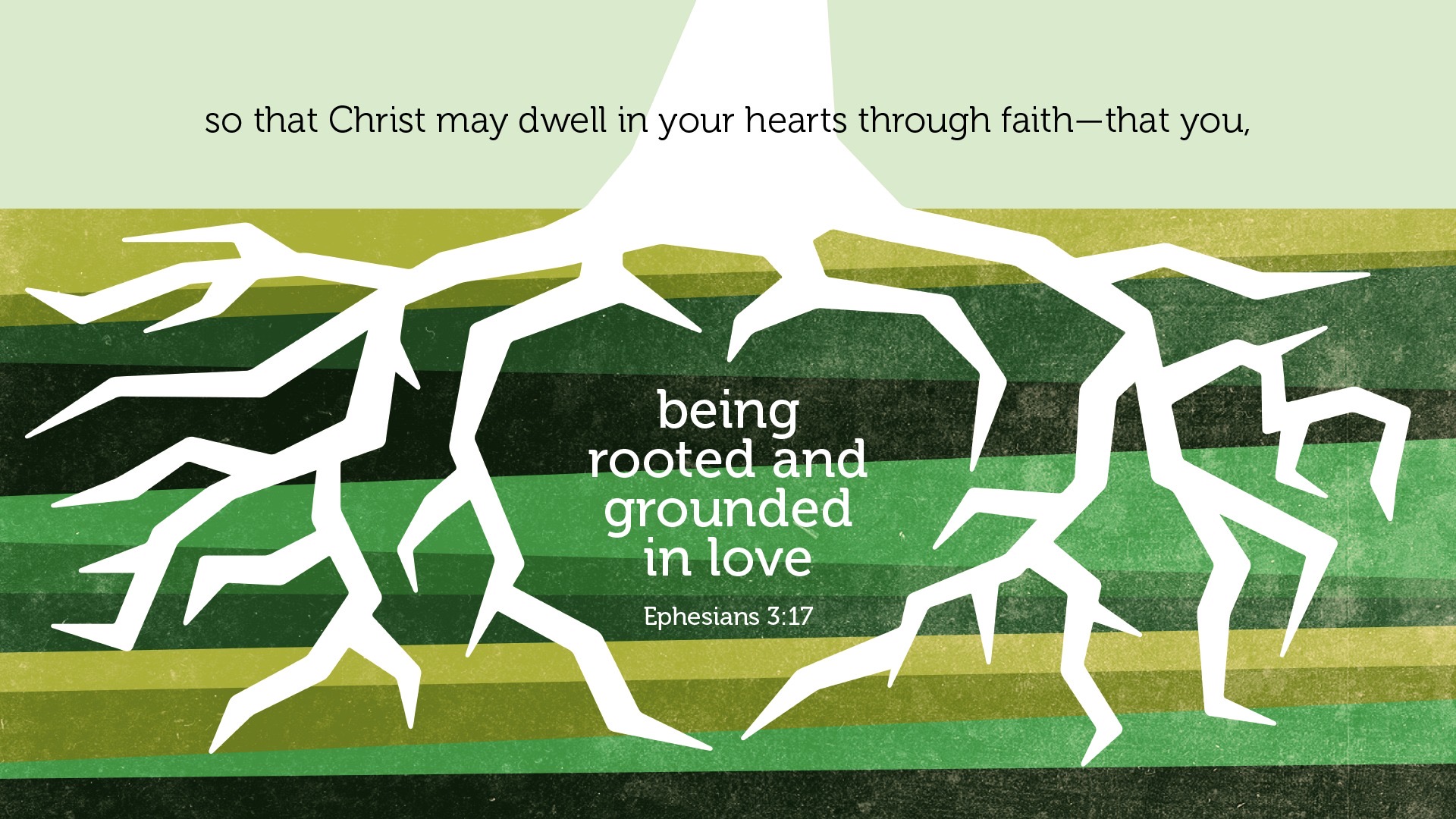
14 For this reason I bow my knees before the Father, 15 from whom every family in heaven and on earth is named, 16 that according to the riches of his glory he may grant you to be strengthened with power through his Spirit in your inner being, 17 so that Christ may dwell in your hearts through faith—that you, being rooted and grounded in love, 18 may have strength to comprehend with all the saints what is the breadth and length and height and depth, 19 and to know the love of Christ that surpasses knowledge, that you may be filled with all the fullness of God. 

20 Now to him who is able to do far more abundantly than all that we ask or think, according to the power at work within us, 21 to him be glory in the church and in Christ Jesus throughout all generations, forever and ever. Amen.

In the name of Jesus. Amen.

This text is a prayer that you would be strengthened, rooted, and grounded in faith so that you would know the love of Christ. Whether you know it or not, that is why you are here today. You are here so that you would know the love of Jesus. Now, beware. The prayer in this text is very humbling for us. But if you are willing to be humbled, you will receive a gift greater than you can imagine. So, let’s walk through the text.

In v. 14-15, Paul is basically getting to his knees to pray. Then, in v. 16, the prayer begins. Paul asks that God would strengthen our inner being so we would know the love of Christ that surpasses knowledge. Now, Paul wouldn’t pray that we be strengthened if our inner being were already strong enough to hold on to and grasp Christ’s love. And we can’t make ourselves strong enough by working harder than others or being smarter than others. Of course, it’s good to be smart and work hard, but this text isn’t about that. This strength comes from outside of us.

As we come to v. 17, we need to remember that Paul is writing this text to and praying this prayer for Christians. If you go back to the opening verses of this letter, you see that Paul is writing to the saints who are faithful and have already been blessed in Christ and have been given every spiritual blessing in the heavenly places (Eph. 1:1-3). So, it is good and right to imagine that Paul is praying this for you. But his prayer asks for something you would expect to have already happened. He prays that you, Christian, would be strengthened with power through the Holy Spirit so that Christ would dwell in your hearts through faith. Isn’t that interesting? Doesn’t Christ already dwell in the hearts of Christians? Yes. And don’t you already know this? Yes!

But this prayer shows that even you, God’s people, His saints, you who are chosen by God, you need to be rooted and grounded so that you have strength to comprehend the love of Christ. Let’s consider this idea of being rooted and grounded because it helps us understand why Paul can pray that we would have something we already have and know something we already know.

A lot of our learning moves from one thing to another. In school, you are taught numbers then, when you master that, you move on to addition. When you master addition, you move to subtraction then multiplication then division, etc. Sometimes, we are tempted to think we don’t need to learn something anymore because it’s simplistic. If you showed up for calculus your senior year and the lesson was learning how to count, you’d drop the class! But the Christian life is about learning, and learning again, and again, and again the love of Jesus.

How young were you when you learned the lesson, “Jesus loves me this I know”? Isn’t that teaching for baby Christians? Yes, it is. But Christian, you don’t move beyond those lessons. The teaching of Christ’s love is as elementary as learning that 2 comes after 1, and 3 after 2. But that teaching is also more advanced than differential equations.

Christian, be humbled to learn that simple lesson again. You need to be strengthened to be rooted and grounded in Christ’s love. Rooted and grounded means that you don’t move. You don’t go anywhere. You stay put. You roots go down deeper and deeper where you already are. In other words, there are incredible things to know, but it is the same. Same soil. Same location.

Here’s where those roots dig down – look at v. 18-19. Those roots dig down into the breadth and length and height and depth of the love of Christ that surpasses knowledge. You already know this love, but Paul is praying that you would know more fully the love of Christ.

Now, we know that the place we learn of Christ’s love is always through the Scriptures. But for that message to take deeper root, there needs to be some breaking up of hardened soil. In other words, for your inner being to become stronger, God will come to you through His Word to break you up a bit first. You will hear the Law and learn about your needs, your weaknesses, your limitations, and your sin. And God uses that Law to break you up and expose your failure and sin. Then, the soil is prepared for your roots to go deeper as you hear God say, “You knew before that I loved you, but you didn’t know that I would love you here and in this situation.”

Just briefly consider our Old Testament lesson (1 Kgs. 17:17-24) which is a continuation of the story from last week. The widow of Zarephath learned that God loved her and cared for her during a drought that left her with only enough flour and oil for she and her son to have one more bite before they died. But in the midst of her plight, God loved her and provided so that her little bit of ingredients wouldn’t run out. In today’s text, she learns that God still loved her even when her son died.

Remember what she said. This widow figured that her son’s death was God simply reminding her that she was a sinner (1 Kgs. 17:18). She thinks that God’s love was only enough to provide for her next meal. But God had more blessings and love to pour out on her. Her son was raised. God loved her and did far more abundantly than she could ask or think. God had more love to give that widow even in midst of the death of her son. Her son was raised, and, God be praised, her roots went deeper into the love of God.

Now, that’s her story, how she was broken, strengthened, and more deeply rooted in Christ’s love. I can’t say how this will specifically happen for you. But you will face a time of suffering or weakness. You will encounter something that simply knocks you down so all you can see and feel is how weak and powerless you are. Then, God’s love will come to you in that weakness and place of inability. That love isn’t new, but His love will come into that place, and you will know again and more fully than before the love of Jesus which you already know.

Dear Beau, that brings me to you. Beau, today you are Baptized. Today, God has made you a Christian and saved you (1 Pet. 3:21). God has made you His disciple by placing His name – Father, Son, and Holy Spirit – upon you (Mt. 28:). He has claimed you as His own. God has joined you to the death and resurrection of Christ (Ro. 6:3-10). God has clothed you with Christ (Gal. 3:27). But, Beau, today is just the beginning of God’s love for you in Christ. There’s more. More gifts. More blessings. More love that God will continue to pour out on you. Beau, may God give you the strength to let your roots sink deeper and stronger in the love of Christ as you grow and mature in the faith. May each day of your life be filled with lessons of Christ’s infinite love for you.

And all you saints, may this be the same for you. May God give all of you the strength to sink your roots further and deeper into the knowledge of God’s love so you may know His love which surpasses knowledge. And may you unite your voice with the entire church in a doxology, in praise to God.

Dear saints, your God is able to do far more abundantly than all you ask or think. And His power is at work within you. To Him be glory in the church and in Christ Jesus throughout all generations, forever and ever. Amen.[1]

The peace of God, which surpasses all understanding, will guard your hearts and minds in Christ Jesus. Amen.
[1] Portions of this sermon were adapted from a sermon by Rev. Dr. Jeff Gibbs on this text.

The End of Judgment – Sermon on 2 Chronicles 28:8-15 for the Thirteenth Sunday after Trinity

2 Chronicles 28:8-15

8 The men of Israel took captive 200,000 of their relatives, women, sons, and daughters. They also took much spoil from them and brought the spoil to Samaria. 9 But a prophet of the Lord was there, whose name was Oded, and he went out to meet the army that came to Samaria and said to them, “Behold, because the Lord, the God of your fathers, was angry with Judah, he gave them into your hand, but you have killed them in a rage that has reached up to heaven. 10 And now you intend to subjugate the people of Judah and Jerusalem, male and female, as your slaves. Have you not sins of your own against the Lord your God? 11Now hear me, and send back the captives from your relatives whom you have taken, for the fierce wrath of the Lord is upon you.” 

12 Certain chiefs also of the men of Ephraim, Azariah the son of Johanan, Berechiah the son of Meshillemoth, Jehizkiah the son of Shallum, and Amasa the son of Hadlai, stood up against those who were coming from the war 13 and said to them, “You shall not bring the captives in here, for you propose to bring upon us guilt against the Lord in addition to our present sins and guilt. For our guilt is already great, and there is fierce wrath against Israel.” 14 So the armed men left the captives and the spoil before the princes and all the assembly. 15 And the men who have been mentioned by name rose and took the captives, and with the spoil they clothed all who were naked among them. They clothed them, gave them sandals, provided them with food and drink, and anointed them, and carrying all the feeble among them on donkeys, they brought them to their kinsfolk at Jericho, the city of palm trees. Then they returned to Samaria.

In the name of Jesus. Amen.

To get at this text, we need to set the scene. The first three kings to rule over God’s people were Saul, David, and Solomon. King Solomon wasn’t that great, though. Despite all the wisdom, wealth, and fame that God gave him, Solomon went after the pagan gods of his many wives. So, God tells Solomon that He will take away the kingdom from Solomon’s son, Rehoboam (1 Kgs. 11:9-13). After Solomon’s death, God’s people were split into two kingdoms. There was the kingdom of Israel in the north who had wicked, unfaithful kings. And there was the kingdom of Judah in the south who had some kings who were faithful to God, but also many who were wicked. And, I have to admit, this time of the divided kingdoms is a confusing time.

All of 2 Ch. 28 is about the reign of Judah’s most wicked king, King Ahaz.[1] (And don’t confuse Ahaz with wicked King Ahab who ruled Israel about 140 years before Ahaz ruled Judah. Like I said, it’s hard to keep everything straight with two kingdoms and similar names.) Ahaz was the twelfth king of Judah and his reign began about 200 years after Israel and Judah split. During his reign, King Ahaz made sacrifices to all sorts of false gods. Scripture says he made these sacrifices under every green tree (2 Ch. 28:4). He even burned his own sons in an attempt to appease these false gods (2 Ch. 28:3). Because of his wickedness and idolatry, God sent judgment upon Ahaz and Judah through the kings and armies of Syria and Israel. These two armies came and killed 120,000 of Judah’s men of valor in one day (2 Ch. 28:5-6).

God brought this judgment upon the people of Judah so they would repent of their sin. Hosea, who was a prophet during the time of King Ahaz, wrote, “Come, let us return to the Lord; for He has torn us, that He may heal us…” (Hos. 6:1a). Dear saints, God sends judgment and punishment so that we repent and return to Him. Remember that in times of pandemics, economic trouble, terrorist activity, and when our soldiers are killed.

Now, beyond the 120,000 soldiers of Judah who were killed, the kingdom of Israel also took captive 200,000 men, women, and children and took much spoil and brought them to Israel’s capitol city which was Samaria.[2] The Israelites planned to make these captives their slaves. They were treating their relatives the same way barbarian people would treat their enemies. In the minds of these Israelites, the devastating judgment that God had doled out on the battlefield wasn’t enough. They planned to pour on more judgment by taking the people of Judah as their slaves and plundering what God had left them after their defeat.

But this obscure prophet of God named Oded stands up and basically says, “Listen, you Israelites, the reason you defeated Judah was that God was judging them through you. But now you plan on making your relatives, these fellow children of Abraham, your slaves. This is a bad idea. You Israelites aren’t any better than the people you have defeated. You have your own sins to repent of. The battle is over. Stop pouring out judgment. Send these people back before God turns His judgment upon your own heads” (2 Ch. 28:9-11).

You see, what Israel was doing to Judah happens all the time in our day. You turn on the news and see a person who was caught in some sin. Judgment has been poured out upon him – either through the court system or through that sin being made public. And what happens? Everyone starts pouring out more judgment by making that sin more public and mocking and ridiculing that person. It’s like social media was made for this very thing. God allows a sin that someone committed in the dark to come into the light, and everyone jumps on and does everything they can to spread that sin farther and farther. We see how far we can go to ruin that person’s life. We loot and pillage whatever hasn’t already been taken from that person – make him lose his job, take his friends away, and turn his family against him. We don’t think that the punishment God poured out on the battlefield was enough, so we do everything we can to add to that judgment. And we do this because we think it makes us look more righteous. We spread the sins of others as far as we can to distract from our own sins. 

My fellow failures, repent. We are all guilty of this. Any time we gossip we are doing this very thing. And I hope and pray we are all tired of it. May our conscience be a little Oded on our shoulder telling us to knock it off and repent instead of pouring out more judgment once the battle is over.

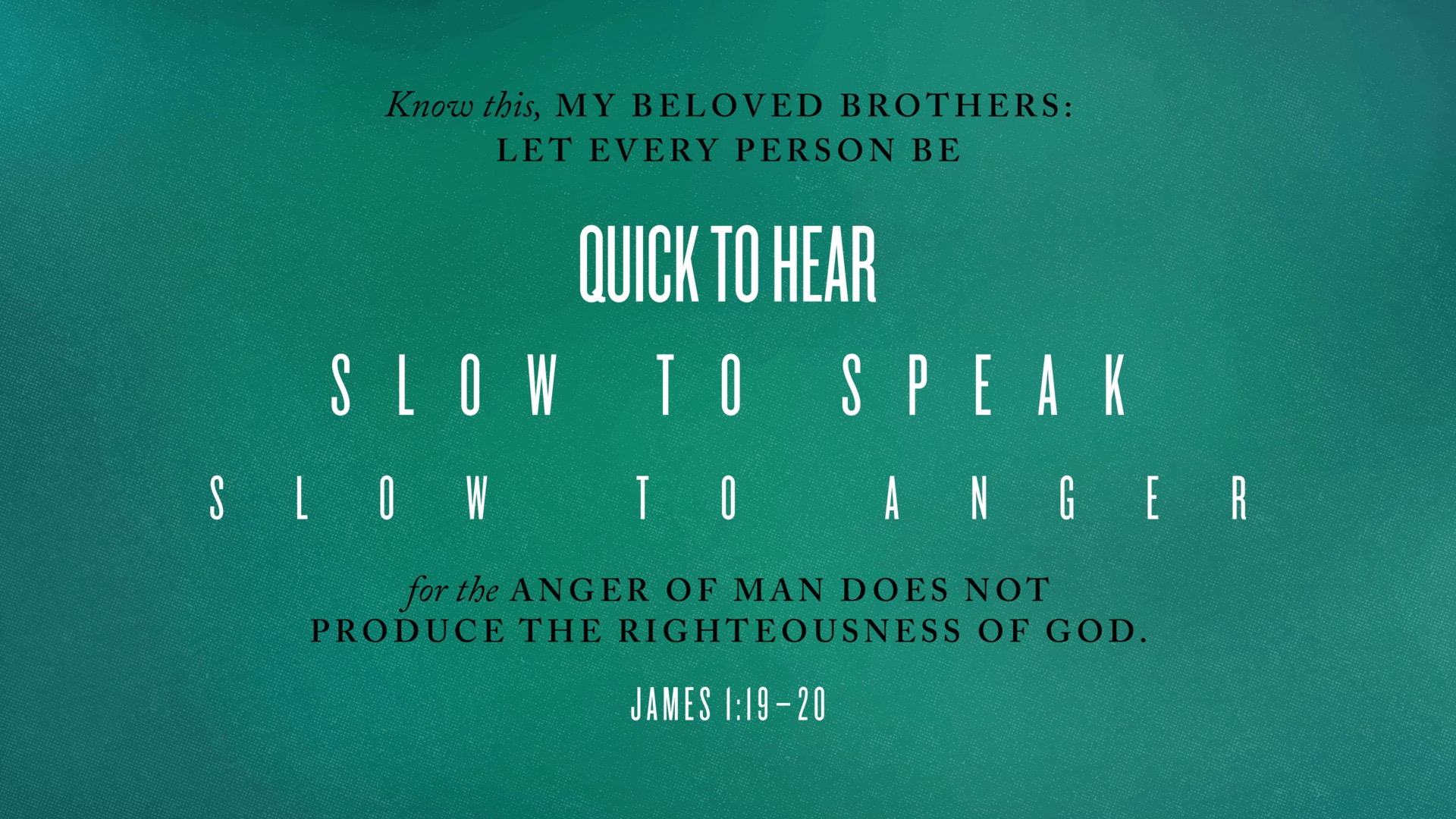
James 1:20 says, “[T]he anger of man does not produce the righteousness of God.” No matter how mad you get at the sins you see in this world, that anger does not make you righteous. That’s why we get so tired trying to make ourselves righteous; we know our little judgment doesn’t actually accomplish anything.

So, what does produce the righteousness of God? It’s the mercy and forgiveness of Jesus and His holy and perfect blood, shed for you on the cross. Christ takes all the wrath and judgment that our sins deserve to His grave, and in return He gives us the holiness and righteousness that God requires.

The voice of Oded prevailed in our text. The four guys mentioned in v. 12, whose names I won’t butcher again, they used the spoil that had been taken to clothe, feed, anoint, and return their kinsfolk to their home. These good Samaritans are a little picture of what Jesus, your Good Samaritan, does for you. Christ is your Good Samaritan (Lk. 10:23-37) who sees you in the ditch – bruised, bloodied, and left for dead. And in His mercy, He looks on you and pours out His love and forgiveness.

Dear Syrus, that brings me to you. Syrus, today you are Baptized. Today, Jesus has joined you to Himself. Through the waters that God placed upon your head, God clothed you in Christ (Gal. 3:15). Jesus saw you beat up by the guilt of your sin. But Christ cleaned your wounds by this washing of regeneration and renewal of the Holy Spirit (Tit. 3:5-6). And Jesus has carried you to the inn of His Church where He has set up an all-expenses paid account where you are cared for until He returns.

And to all you dear saints, this is true for you as well. Remember that. Remember especially that whatever care, compassion, and healing you need is already paid for by Christ. And now, Christ has called you to be merciful as He has had mercy upon you (Lk. 6:36). In our Gospel lesson (Lk. 10:23-37), after Jesus tells the Parable of the Good Samaritan, He tells the lawyer, “You go, and do likewise” (Lk. 10:37).

That’s a tough calling. There will be times when, instead of being like the world and piling judgment upon judgment, you pour out the mercy that Christ has first given you. The world will see this and take advantage of you and that mercy. But don’t let that stop you from being merciful. Don’t become embittered when they harm you and try to leave you in the ditch again. Remember the anger of man does not produce the righteousness of God. Don’t go back to your judgmental ways. 

Yes, being merciful costs you, but your account is fully covered so you don’t have to pay a thing. Instead, you can be merciful because you live in the all-inclusive inn of the holy Christian Church fully and completely paid for by your Savior who has shown you His mercy and will cover every expense for the love and care and healing and nurturing you need, from now until the day you depart this veil of tears.

Yes, there is an end to judgment, but it is only found in the mercy of Christ, your Lord and Savior. For that, God be praised. Let’s run now to His table and receive that mercy. Amen.

The peace of God, which surpasses all understanding, will guard your hearts and minds in Christ Jesus. Amen.


[1] See also 2 Kings 16 for more about King Ahaz’s reign.

[2] Most of the time you come across the name ‘Samaria’ in the Old Testament, it is referring to the capitol city of Israel. In the New Testament, it usually refers to the geographical region surrounding Samaria.

Dead to Sin, Alive to God – Sermon on Romans 6:1-11 for the Sixth Sunday after Trinity

Romans 6:1-11

1 What shall we say then? Are we to continue in sin that grace may abound? 2 By no means! How can we who died to sin still live in it? 3 Do you not know that all of us who have been baptized into Christ Jesus were baptized into his death? 4 We were buried therefore with him by baptism into death, in order that, just as Christ was raised from the dead by the glory of the Father, we too might walk in newness of life.

5 For if we have been united with him in a death like his, we shall certainly be united with him in a resurrection like his. 6 We know that our old self was crucified with him in order that the body of sin might be brought to nothing, so that we would no longer be enslaved to sin. 7 For one who has died has been set free from sin. 8 Now if we have died with Christ, we believe that we will also live with him. 9 We know that Christ, being raised from the dead, will never die again; death no longer has dominion over him. 10 For the death he died he died to sin, once for all, but the life he lives he lives to God. 11 So you also must consider yourselves dead to sin and alive to God in Christ Jesus.

In the name of Jesus. Amen.

This epistle text is dropping us near the middle of Paul’s letter to the church in Rome. Because that is the case, I want to quickly summarize what Romans says up until this point: In Ro. 1-2, Paul lays out everyone’s state under God’s Law. We’re all in trouble. We have all sinned and fall short of the glory of God (Ro. 3:23). And there is nothing you or I can do about it. Your works and my works cannot save. The Ten Commandments shut our mouths before the right and just judgment of God. Then, at the end of Ro. 3, we are given hope. In Ro. 3:21-24, Paul says that the righteousness God requires has been manifested apart from the Law through faith in Christ.

When he gets to Ro. 4, Paul uses the example of Abraham who was declared to be righteous not because he was such a good person but because he believed God’s promise to him (Ro. 4:3 see also Gen. 15:6). In Gen. 15, God promised old, childless Abraham that He would bless him with a son. God brought Abraham outside, told him to try to count the stars, and promised that his offspring would be as numerous as the stars. God made a direct promise to Abraham there under that night sky, and Gen. 15:6 says, “[Abraham] believed the Lord, and He counted it to him as righteousness.”

And notice how God connected His promise to Abraham to something physical, the stars. Think about how the nights were for old Abraham after that. Imagine him going out on a clear, cloudless night and seeing all the stars. How many nights, do you suppose, Abraham would remember God’s promise and start trying to count the stars? How long would he count before he would give up, realizing it wasn’t possible? And then Abraham would get tired, yawn, smile to himself, go to his bed, and fall asleep thinking, “Well, God made a promise to me. It’s hard to imagine and believe, but God promised.”

Back to Romans. When we get to Ro. 5, Paul changes gears and compares Jesus to Adam by saying that Jesus is the second Adam and new head of humanity. The first Adam brought sin and death to all humanity, but Christ, the second Adam, brings forgiveness, justification, salvation, and life. Paul writes in Ro. 5:18-19, and listen carefully to these verses, “Therefore, as one trespass led to condemnation for all men, so one act of righteousness leads to justification and life for all men. For as by the one man’s disobedience the many were made sinners, so by the one Man’s obedience the many will be made righteous.”

Through Jesus’ righteousness and obedience, you, believer, are made righteous. Eternal life has been secured for you – not by your works, efforts, and achievements but solely by the work of Christ, which is yours through faith. God be praised!

All that brings us to our text. In this first part of Ro. 6, Paul deals with a question even before it is allowed to enter a forgiven sinner’s mind. When we hear the Gospel, that we are forgiven and reconciled to God for Christ’s sake, the old Adam in us wants to go wild. “If God loves to forgive, let’s give Him lots to forgive!” Paul says, “Not a chance; may the possibility of that thought never come to be! How can you live in sin when you are dead to it?”

“Don’t you know that all of us who have been Baptized into Christ Jesus were Baptized into His death?” (Ro. 6:3). Just like He did for Abraham, God has made a promise to you that is connected to something physical, the water of your Baptism. You who are Baptized have been picked up from where and when you are and joined to Jesus’ death and resurrection. In your Baptism, God joined you to Jesus’ death so that you have a Jesus-kind of death. In other words, a death that doesn’t last very long, and a death concludes with resurrection. That means that sin and death no longer have a say in your life. You are dead to them. You are alive to God in Christ Jesus. The day you were Baptized was both your death day and the day you were begotten from above (Jn. 3:3-5).

But Paul goes on to say that this truth is something you have to take on faith. “You must consider yourself dead to sin and alive to God in Christ Jesus” (Ro. 6:11). This is why we don’t believe that everyone who is Baptized will be saved. Yes, Baptism is where and how God saves you (1 Pet. 3:21) and delivers what Jesus has done for you by His death and resurrection (Ro. 6:3-11). But you can walk away from the promises God gives you in Baptism.

“Consider yourself dead to sin and alive to God in Christ Jesus.” Believer, you have two identities at once – one in Adam and another in Christ. You must reckon yourself as dead and alive at the same time. By your birth into this world, you are a sinner. By your new birth from above (Jn. 3:3-5), you are a child of God.

This means something for you each day of your life. It means that sin is no longer your master because sin has been dethroned by Jesus. He’s your Lord now, not sin. So, don’t put sin back on the throne. Fight against it. Don’t use your body as an instrument of unrighteousness. Sin and death will have no dominion over you because they have no dominion over Jesus, which is what Paul says in the next few verses after our text (Ro. 6:12-14).

Dear saints, you are, right now, dead to sin and alive to God. That fact might seem strange because you know that you still sin. The old Adam still clings closely to you. At times, you feel that old Adam and know the guilt and shame of your sin. You recognize that you are not what God intended you to be. The wages of sin is death (which is what you earn by yourself) but the free gift of God is eternal life in Christ Jesus our Lord (Ro. 6:23). That’s why considering and reckoning yourself dead to sin and alive to God is so important. You are simultaneously righteous and sinner.

So, when you are inclined to sin and cave into temptation, you have all the proof you need that the old Adam is still hanging around and you need repentance. So, repent. Repenting is saying and believing what God says about sin. Confessing that you do not deserve anything good from God, but don’t stop there. Keep going! Confessing your sin also means saying what God says, that those sins have been died for and are forgiven because of Christ.

And when you are upset, discouraged, and appalled that you have sinned, when you resist and fight back against your wicked thoughts, words, and deeds, you can know for certain that you are alive to God.

Through your Baptism you are truly forgiven, regenerated, and made holy. That is how God looks at you, Christian. But we also recognize from both Scripture and our experience that this new life has only begun. It is not yet complete. But know that the God who began a good work in you, He will be faithful to bring it to completion (Php. 1:6).

What occurred in your Baptism – the drowning and rising, the death and resurrection – isn’t something that is merely in the past, but neither is it something will only come later in the future. Your Baptism is your present life, believer. Daily you repent of your sins, daily you believe in Christ crucified for your forgiveness, and daily you walk in newness of life until that great day when your Old Adam finally perishes, and you are perfectly and eternally renewed.

In other words, because your Baptism has joined you to Christ’s death and resurrection, live that out. Sin now has no dominion over you. You are dead to sin and alive to God. Amen.

The peace of God, which surpasses all understanding, will guard your hearts and minds in Christ Jesus. Amen.

Whom Shall I Fear? – Sermon on Psalm 27 for the Seventh Sunday of Easter & Confirmation Sunday

Alleluia! Christ is risen!
He is risen indeed! Alleluia!

In the name of Jesus. Amen.

Alyssa, Isaac, Annalise, and Naomi, God be praised for each one of you today. You have done a lot of work. You have read, studied, memorized, and learned a lot to get to today. This is good, and we praise God who has given you the ability to complete all that work. I hope that each one of you also recognize the work that your parents have done to help you. Matt and Lisa, Jon and Mel, Sam and Sarah, you have made sure your child was in class and have helped your child study and memorize. In other words, you parents have been faithful to the promises you made to nurture and raise your child in the faith when they were Baptized. God be praised for that as well. And I hope that each of you confirmands thank God for your parents’ faithfulness. Not all children have parents who faithfully keep those vows, but you do. You can also thank your Baptismal sponsors (or godparents, if that is what you call them). They also have been faithful in their prayers for you and supporting your parents in their duties.

So, today is a day to celebrate. It is a day to celebrate all the work that you and your parents and sponsors have done. Even more so, it is a day to celebrate because you will receive Jesus’ very Body and Blood and all the promises Christ gives with that.

But I do want to caution you. Just because you have come to this day of your confirmation, that doesn’t mean that you have finished the race. The beginning of Hebrews 12 talks about the life of a Christian as a race. And for everyone here who isn’t being confirmed today, you listen very carefully too. Heb. 12:1-2 says, “Let us lay aside every weight and sin which clings so closely, and let us run with endurance the race that is set before us, looking to Jesus, the Author and Perfector of our faith, who for the joy that was set before Him endured the cross, despising the shame, and is seated at the right hand of the throne of God.”

The Christian life is a marathon; it’s a race that requires endurance. Alyssa, Isaac, Annalise, and Naomi, each of you are off to a good start. There’s no question about that. You are running well. But none of us can say exactly how far along you are in the race. As important and momentous as your Confirmation is, it isn’t time to relax a little bit and rest your legs. Keep up the pace. Keep pressing on; keep learning; keep growing in your faith. You aren’t at the finish line – not yet.

And to some of you Christians here today, maybe you have been slacking and slowing up in the race of faith. Repent. Consider this your reminder to keep running. Maybe you have been a bit lazy and started walking or even stopping to smell the roses. Maybe you have gotten completely off course. Now is the time to come back to the race. Put your past failures of loafing, slacking, and being lazy behind you. Start running again and forget them. St. Paul says in Philippians 3:13-14, “[Forget] what lies behind and [strive] forward to what lies ahead. Press on toward the goal for the prize of the upward call of God in Christ Jesus.” 

Now, whether you are being confirmed today, were confirmed years or decades ago, or are not yet confirmed, it is good to remember that there are two other days that are more important than your confirmation day. The first is the day of your Baptism. It was at your Baptism that were begotten from above (Jn. 3:35), joined to Jesus’ death and resurrection (Ro. 6:3-11), and clothed with Christ (Gal. 3:27). That is why the day of your Baptism is more important than today. So, just briefly: 

Alyssa, you were Baptized June 10th of 2010 at Christ the King Lutheran Church in Wilson, WI. God used the hands of Pastor Les Johnson, your grandpa, to Baptize you. And your Baptismal sponsors were Stephen, Frieda, and Jodi.

Isaac, you were Baptized August 14th, 2007 here at this font by the hands of Pastor Gary Jorgenson. Your sponsors were Mark and Melissa. Many of those who are here today were present that day as well.

Annalise, you were Baptized February 15th, 2009 at St. Ansgar’s Lutheran Church in Salinas, CA. You were Baptized by the hands of the pastoral intern, Sam Wellumson. Apparently, his supervising pastor thought he needed some experience doing a Baptism. Your sponsors are Abby, Nathen, Andrew, and Matt.

Naomi, you were also Baptized at this font on August 1st, 2010 by my hands. Abby, Nathen, and Andrew are your sponsors. Just like Isaac, many here today were witnesses of your Baptism. And Naomi, you are the first person I’ve confirmed whom God has put under my pastoral care for your whole life. While I rejoice in that, I also feel like I owe you an apology. But I trust God knows what He is doing.

Now, each one of you, know that your confirmation today is actually tied to your Baptism. Jesus says that disciples are made by Baptizing and teaching (Mt. 28:18-20). So, today, you are simply confirming and publicly confessing that the work that God began in you when you were Baptized has continued, and you have kept the faith that God gave you in your Baptism. And by God’s grace, you will continue in that faith.

The other day that is more important than today is still ahead of you and is the day you will cross the finish line when Jesus returns. On that day, by God’s grace, Christ will say to you, “Well done, good and faithful servant” (Mt. 25:2123). So, again, keep pressing on until you reach that day. Keep learning God’s Word. Keep gathering with your fellow believers to be encouraged, sing God’s praises, be strengthened by God’s Word, and be fed by Christ’s Body and Blood for the forgiveness of your sins.

Today is not your completion of learning and studying God’s Word. Confirmation is not a graduation from Sunday School or Church or something like that. As hard as you have worked and as much as you have learned, you have just begun to explore the depths of the riches of God’s Word. Keep it up your entire life.

Ok. To the sermon proper. (Don’t worry, I know how long I’ve gone already).

Today’s sermon is titled “Whom shall I fear?” which comes mainly from our call to worship from Psalm 27. But this idea also fits with all three of today’s readings (Ezk. 36:22-281 Pet. 4:7-14Jn. 15:26-16:4) about being a believer in Christ and the dangers that surround all Christians. It also fits with the verses each of you picked as your Confirmation verses which are all related to faith triumphing over fear (Josh. 1:9Ps. 46:10Ps 4:8Dt. 31:8).

I’d encourage everyone to open a Bible to Ps. 27. You already heard about one-third of it from our Call to worship. But I want you to see the progression of the Psalm as David originally wrote it. Most of the Psalms are pretty Lutheran in their structure (which is, admittedly, putting the cart before the horse). Most Psalms begin with a complaint or confession of sin and move toward hope and the promises of God, but Psalm 27weaves around a bit differently. And in a lot of ways Ps. 27 follows the pattern of the Christian life of faith.

In v. 1-6, David starts out very confident in his faith. V. 1 – because God is David’s light, salvation, and the stronghold of his life, he has no reason to fear. V. 2-3 – when enemies assail him, they are the ones who fall. V. 4-6 – all David wants to do is be in God’s temple and worship. In those first six verses, David has a lot of excitement and energy and enthusiasm.

But then in Ps. 27:7, there is a shift to earnest prayer. We don’t know specifically what it is, but something is causing David to suffer. He’s crying aloud to God (v. 7). He’s pleading his case. God wants David to seek His face. David is earnestly doing that (v. 8), but God still seems hidden (v. 9a). David isn’t doubting God; he hasn’t fallen away. David still recognizes that God has been his help and salvation, but David really needs God’s presence and salvation now (v. 9b-10).

It seems as though David is realizing that the life of faith is more difficult than he thought, and he wasn’t as prepared as he assumed he would be for the trials that have come his way. He begs God to lead him on a level path and deliver him from his enemies (v. 11-12).

Finally, the last two verses (v. 13-14) come back full circle. David recognizes that he cannot manipulate or control the world, so he sets everything in the Lord’s hands. God has made promises, and David will patiently wait for those promises to be fulfilled.

So, the Psalm opened with excitement and braggadocios faith that a young Christian (or confirmand) might have. Then, after getting beaten up by the world, that faith matures into a calm, quiet, peaceful trust and patience on God.

You confirmands, and all you Christians, there are times of great joy and excitement in the life of faith. Those “mountaintop experiences” are good, and we can praise God for them when they come along. But don’t be discouraged when those experiences fade. Don’t despair when life is hard. When it seems that evil and all sorts of danger surrounds you, remember that Jesus has promised to be with you forever (Mt. 28:20). Because of those promises:

Alyssa, as your verse (Josh. 1:9) said, you can be strong and courageous. God is with you wherever you go.

Isaac, as your verse (Ps. 46:10) said, when times get tough, be still and know that the God who is exalted over all creation is by your side.

Annalise, as your verse (Ps. 4:8) said, even in turmoil and tribulation, you can lie down and sleep in peace because God makes you dwell in safety.

Naomi, as your verse (Dt. 31:8) said, you have nothing to fear because God will never leave you or forsake you.

You can know all of this because of what the church celebrated this past Thursday. Thursday marked 40 days after Easter, which means it was the celebration of when Jesus ascended into heaven. Jesus, the eternal Son of God who became man, is now seated as the ruler of all creation. That means the one who died and rose again for you is ruling and reigning over all things. In other words, Jesus, your Savior, is in control of all that happens.

And even though you still live in a fallen world full of sin hear what Scripture promises you. Ephesians 2:4-7 says, “But God, being rich in mercy, because of the great love with which He loved us, even when we were dead in our trespasses, made us alive together with Christ—by grace you have been saved— and raised us up with Him and seated us with Him in the heavenly places in Christ Jesus, so that in the coming ages He might show the immeasurable riches of His grace in kindness toward us in Christ Jesus.”

And in a few moments, your Savior invites you to receive those immeasurable riches of His grace and be His guest at His table. Come. Join in the feast. Receive Jesus’ Holy Supper of His very Body and Blood given and shed for you for the forgiveness of all your sins.

Alleluia! Christ is risen!
He is risen indeed! Alleluia!

Amen.

The peace of God, which surpasses all understanding, will guard your hearts and minds in Christ Jesus. Amen.

The Well of Salvation – Sermon on Isaiah 12:1-6 for the Fifth Sunday of Easter

Listen here.

Isaiah:12-1-6

1 You will say in that day: 

     “I will give thanks to you, O Lord, 
      for though you were angry with me, 

     your anger turned away, 
that you might comfort me. 

2   “Behold, God is my salvation; 
I will trust, and will not be afraid; 

     for the Lord God is my strength and my song, 
and he has become my salvation.” 

3 With joy you will draw water from the wells of salvation. 4 And you will say in that day: 

     “Give thanks to the Lord, 
call upon his name, 

     make known his deeds among the peoples, 
proclaim that his name is exalted. 

5   “Sing praises to the Lord, for he has done gloriously; 
let this be made known in all the earth. 

6   Shout, and sing for joy, O inhabitant of Zion, 
for great in your midst is the Holy One of Israel.”

Alleluia! Christ is risen!
He is risen indeed! Alleluia!

In the name of Jesus. Amen.

Have you ever been watching a movie for an hour and a half and then right at the climax, when there is only twenty minutes left, someone walks into the room starts asking questions? They want to know everything about the characters and what is happening so they can watch the end with you. When that happens to me, my inclination is to grab the remote, turn up the volume, and pretend I don’t hear the intruder. Hopefully, you’re more polite than I am and pause the movie to give as full of an explanation as possible so that person will understand the characters, plot, and inside jokes that usually come at the end of a movie.

This text, which is a stunning song, is one of the climactic parts of the book of Isaiah. Isaiah 12 is absolutely magnificent, but jumping straight into it like we have today is like coming in for the climax of a movie. Without the context, you miss the beauty and wonder. Well, don’t worry. Today, I’m a preacher, so I won’t just ignore the questions that this text begs. Let’s all get caught up.

The two questions that stare us in the face when we come to this beautiful chapter are first, when is “that day”? And second, who is the “you” that will sing this song in “that day”?

To get at the ‘when’ of that day, we have to go back to Isaiah 11 which begins with a famous prophecy of Jesus’ birth. “There shall come forth a shoot from the stump of Jesse, and a branch from his roots shall bear fruit.” And as you get to v. 6 of Isaiah 11, the focus shifts to looking beyond Christ’s birth to His return on the Last Day. There, Isaiah talks about how “the wolf shall dwell with the lamb,” etc. And as you work your way down to v. 10, Isaiah speaks about how Christ will, “stand as a signal for the peoples – of Him shall the nations inquire, and His resting place shall be glorious.”

So, when we get to our passage here in ch. 12, what day is Isaiah referring to when he says this beautiful song will be sung? Is it when Christ is born in Bethlehem, or is it when He returns on the Last Day? I think the best and safest answer is, “Yes. It’s both.” Which also means that the answer to the second question about the identity of the “you” who sings this song is you, believer.

Dear saint, you live in the day when God’s anger turned away from you and to Christ. God comforts you because Jesus went to the cross to suffer God’s wrath against your sin in your place. On the cross, Christ, the eternal Son of God, became your salvation. Today, you trust in Him and are not afraid. Jesus is your strength and your song, and He has become your salvation.

And to see how this is for you now, we have to do a little leg work. And, please, bear with me; this will feel more like Bible study than a sermon for just a bit. And it would be helpful for you to turn to ch. 7 of John’s Gospel. There in Jn. 7, Jesus is in Jerusalem for the Feast of Booths. That feast was when God’s people commemorated their time of exodus in the wilderness and lived in tents. If you want to learn more about what God commanded for that feast, see Lev. 23[:33-36, 39-43] and Dt. 16[:13-17].

Each day of the celebration of that week-long feast, the priest would go to the Pool of Silom in Jerusalem and draw some water and carry it back to the Temple in a parade filled with trumpets. The crowds would follow the priest who was carrying that jar of water and sing v. 3 of our text, “With joy you will draw water from the wells of salvation.” When they reached the Temple, that water was poured around the Altar as a thank offering for God’s provision for the people during the Exodus.

So then, look at Jn. 7:37-38. It was on the last day of that feast that Jesus cries out, “If anyone thirsts, let him come to Me and drink. Whoever believes in Me, as the Scripture has said, ‘Out of his heart will flow rivers of living water.’” So, in the context of the people singing for a whole week about joyfully drawing water from the wells of salvation, Jesus says, “If you’re thirsty for salvation, come to Me and drink.”

Now, the way the ESV reads there, the one who drinks from Christ will have living waters flowing from his heart. But I want you to notice something. If you are looking at one of our pew Bibles, there is a little footnote #3 which provides an alternate translation (which, I think, fits better with the context).

The alternate translation reads, “If anyone thirsts, let him come to me, and let him who believes in Me drink. As the Scripture has said, ‘Out of his heart will flow rivers of living water.” Translated that way, it makes Jesus Himself the source of the rivers of living water. In other words, Jesus is saying, “Believer, drink from Me because out of My heart flow the rivers of the living water of salvation.” And understanding Christ’s words that way makes more sense since Christ is inviting those who are thirsty for salvation to come to Him and be satisfied.

Also, think back to what John tells us happened after Christ died on the cross. The soldiers came to Jesus, saw that He was already dead, and pierced His side with a spear. And what came out? Water and blood flowed from Christ (Jn. 19:31-37). In other words, when we understand Jesus as the source of the rivers of living water, it is the very wounds of Christ that are the wells of salvation for you, believer. From the wounds of Jesus, salvation has poured and flows into this world. God be praised!

That is why we Christians sing. We give thanks to the Lord, we call upon His name, and we make His deeds known among the peoples.

All of this brings me back to you, Israelle. Israelle, today, God has joined your voice to the great choir of His children. Today, God poured the wells of His salvation over you. Though you were born in sin, Jesus’ heart has flowed with rivers of living water to save you (see also Jn. 4:1014).

Israelle, in your Baptism today, you have begun to drink from the wells of salvation which are the wounds of Christ. Because of God’s promises given to you in your Baptism, His anger has turned away from you, and He has comforted you (Is. 12:1). Continue to drink from Christ. And continue to sing His praises because He will never leave you or forsake you.

Israelle, Jesus will always be in your midst to deliver and save you (Is. 12:6). He will bless you with every good and perfect gift from above (Jas. 1:17). His right hand and holy arm have worked salvation for you (Ps. 98:1). Israelle, God has given you the Holy Spirit to guide you into all the truth throughout your life (Jn. 16:13). So, continually put away all filthiness and wickedness and receive with meekness the implanted Word of God, which is able to save your soul (Ja. 21).

And all you Christians, come today to this altar to drink again from the wells of salvation as Christ gives you His Body to eat and His Blood to drink. Nourished by this pure gift, give Him thanks. Go back out into the world making His deeds known among the people you encounter.

Sing His praises. He has done gloriously. Shout, and sing for joy, you inhabitant of Zion. The Holy One of Israel is great in your midst today and forever. Amen.

Alleluia! Christ is risen!
He is risen indeed! Alleluia!

The peace of God, which surpasses all understanding, will guard your hearts and minds in Christ Jesus. Amen.

Infant Baptism – Sermon for Midweek Lent 5

Listen here.

Do children also believe? Are they rightly Baptized?

The Baptism of infants is pleasing to Christ, as is proved well enough from His own work. For God sanctifies many of those who have been baptized as infants and has given them the Holy Spirit. There are still many people even today in whom we perceive that they have the Holy Spirit both because of their doctrine and life. It is also given to us by God’s grace that we can explain the Scriptures and come to the knowledge of Christ, which is impossible without the Holy Spirit [1 Cor. 12:3].

For this reason let everyone value his Baptism as a daily dress [Gal. 3:27] in which he is to walk constantly. Then he may ever be found in the faith and its fruit, so that he may suppress the old man and grow up in the new…. [I]f anyone falls away from the Christian life, let him again come into it. For just as Christ, the Mercy Seat [Ro. 3:25], does not draw back from us or forbid us to come to Him again, even though we sin, so all His treasure and gifts also remain. Therefore, if we have received forgiveness of sin once in Baptism, it will remain every day, as long as we live. Baptism will remain as long as we carry the old man about our neck.

Martin Luther’s Large Catechism

In the name of Jesus. Amen.

Many times, we Lutherans (along with Roman Catholics and others) are accused of doing something that is not biblical when we Baptize infants. Some well-meaning Christians will say, “The Bible never records an infant being Baptized.” And I have to admit that is correct. There is no verse that says, “Little two-week-old Bobby was Baptized,” or, “Timmy was Baptized as an infant.” The snarky side of me would like to point out that nowhere in Scripture does a woman explicitly receive the Lord’s Supper. If we would deny a child the gifts that God gives in Baptism just because there is no explicit mention of an infant being Baptized in Scripture, should we deny women the Body and Blood of Jesus? No!

Even though the Bible does not have a record of an infant being Baptized, the Scriptures certainly do imply that babies were Baptized. Look again at our first lesson (Act. 2:37-41). Peter has preached his great Pentecost sermon and closes with the horrific words of the Law, “Know for certain that God has made [Jesus] both Lord and Christ, whom you crucified.” The people are terrified, cut to the heart, and ask, “Brothers, what shall we do?” Peter answers, “Repent and be baptized every one of you in the name of Jesus Christ for the forgiveness of your sins, and you will receive the gift of the Holy Spirit,” now listen closely, “for the promise is for you and for your children.” In other words, the gift of forgiveness and the Holy Spirit is for the people there and for their children. That doesn’t mean that their children get the promise eventually when they grow up. The natural reading of that text is that Baptism is for the people there and for their children and babies. Peter could have limited it to people who were of a certain age, but he didn’t.

Later, in Act. 16, there are two entire households that are Baptized. First the household of Lydia (Act. 16:11-15), and later the household of the Philippian jailor (Act. 16:25-34 esp. v. 31-33). Remember that in the time of the New Testament, the life expectancy wasn’t that much longer than normal, child-bearing years, and they didn’t have the methods of birth control that we do. Also, children were much more valued back then. It is highly unlikely that neither Lydia, who was a seller of purple goods (Act. 16:14), nor the Philippian jailor had households without any children.

And remember, when Jesus gives the gift of Baptism to the church as the method of making disciples, He says, “Make disciples of all nations (ἔθνος, ‘ethnicities,’ ‘all types of people’) by Baptizing them in the name of the Father, Son, and Holy Spirit” (Mt. 28:19). If Jesus wanted to limit who is eligible to be Baptized, He would have made a limit there, but He didn’t.

Now, very briefly (I don’t want to spend much time on this because it is an absurd thought process): We know that “all have sinned and fall short of the glory of God” (Ro. 3:23). Our Psalm tonight (Ps. 51) teaches us that we are brought forth in iniquity and in sin did our mothers conceive us (Ps. 51:5). Still, some people teach that God does not hold babies accountable for their sins until they reach some sort of ‘age of accountability’ (which isn’t a biblical term anyway). But just use a little logic: If God isn’t going to punish young children for their sins until they reach a certain level of understanding of their sins, then abortion and infanticide would be evangelistic tools. God forbit it! Enough on that thought.

Back to what Peter says in Act. 2:38-39, some will say that Peter requires things to be done sequentially. First, you have to repent, then you can be Baptized. Or first you have to believe and only after you believe then you can be baptized. First of all, salvation isn’t a three-step program. But also notice that argument implies that babies cannot believe, which is not in line with what Scripture teaches – not at all. The overwhelming teaching of Scripture is that babies can and do believe.

I included an insert in your bulletin tonight titled, “Infant Faith in the Scriptures.” For anyone watching or listening, I’ll include links to it in the description (click here). And I would like us to quickly walk through it.

First, let’s start with Ps. 71:5-6. “For you, O Lord, are my hope, my trust, O Lord, from my youth. Upon you I have leaned from before my birth; you are he who took me from my mother’s womb. My praise is continually of you.”

One of the reasons this is such a great place to start is the variety of vocabulary used to describe a child. The verses start by saying that the Lord is my hope and trust ‘from my youth.’ In English, we use the word ‘youth’ for a very wide range of ages. Sometimes, churches have ‘youth group’ for middle-school through high school. East Grand Forks has ‘youth soccer’ for preschool through sixth grade. The Hebrew word translated as ‘youth’ here has a wide range of meaning too. One of the nice things about Hebrew poetry is that it’s very repetitive, and the repetition helps us see how expansive the term is. So, in v. 5 God is the object of hope and trust for the psalmist from his youth, and notice in v. 6 how it gets specific. The psalmist has leaned on God from before his birth. He recognizes that God was the one who brought him from his mother’s womb, and he continually (i.e. from before his birth and throughout his youth) praises God.

Those verses are very instructive, but let’s turn to the New Testament, and specifically what Jesus teaches about the faith of children. To do that, we need to understand some of the vocabulary of the Greek New Testament. In English, we have lots of words for a kid: infant, baby, toddler, tyke, little one, child, youth. Greek does the same. I’ve included five words (there are more) that deal with children. And I put them in different colors so they pop out in the verses that follow. Let’s quickly go through and define them:

βρέφος (brephos) – very small child; baby; infant; unborn baby in the womb

παιδίον (paidion) – a child below the age of puberty; it’s maybe the most basic words for ‘child,’ but it has a wide range of ages that it can apply to.

μικρός (mikros) – ‘little one’; one who is small; it’s even used to describe Zacchaeus

νήπιος (nēpios) – a very young child; infant; a minor not yet of legal age

θηλάζω (thēlazō) – v. ‘to nurse’; can also be used as a noun meaning ‘one who nurses’

So, let’s go through the verses on that sheet. First, Luke 18:15-17 which is the same account as our Gospel lesson tonight (Mk. 10:13-16). Now, to be fair, Mark only uses the word παιδίον when he records this, but that’s why I used Luke’s account here. According to Luke, the doctor, people are bringing even their βρέφος (infants) to Jesus to be blessed by His touch. The disciples didn’t like it, but Jesus says, “Let the children (παιδίον) come to me, and do not hinder them, for to such belongs the kingdom of God. Truly, I say to you, whoever does not receive the kingdom of God like a child (παιδίον) shall not enter it.” Jesus here plainly says that the kingdom of God belongs to children to παιδίον – and notice that includes infants, βρέφος. And if we say that the kingdom belongs to children apart from faith, we are going to end up in a very bad place theologically.

Next passage, Matthew 18:1-6: The disciples want to know who is the greatest in the kingdom of heaven. Jesus brings a child (a παιδίον) into their circle and says, “Truly, I say to you, unless you turn and become like children (παιδίον), you will never enter the kingdom of heaven. Whoever humbles himself like this child (παιδίον) is the greatest in the kingdom of heaven. Whoever receives one such child (παιδίον) in my name receives me, but whoever causes one of these little ones (μικρός ‘little guys’ and notice what Jesus says next) who believe in me to sin, it would be better for him to have a great millstone fastened around his neck and to be drowned in the depth of the sea.” According to Jesus, children, even little ones believe in Him.

Next verse, Matthew 21:15-16: This is after Jesus has entered into Jerusalem on Palm Sunday to the shouts of “Hosanna!” The chief priests and scribes get furious when they see all the things Jesus is doing, and they see children (παιδίον again) crying out, “Hosanna to the Son of David!” They want Jesus to get them to quiet down by asking, “Do you hear what these are saying?” And Jesus responds, “Yup! Have you never read,(then He quotes Ps. 8:2) “‘Out of the mouth of infants (νήπιος) and nursing babies (θηλάζω) you have prepared praise’?” Right praise of God is only possible through faith (Ro. 14:23b).

Chugging right along, Matthew 11:25-27: Jesus praises His heavenly Father, “I thank you, Father, Lord of heaven and earth, that you have hidden these things from the wise and understanding and revealed them to little children (νήπιος infants); yes, Father, for such was your gracious will. All things have been handed over to me by my Father, and no one knows the Son except the Father, and no one knows the Father except the Son and anyone to whom the Son chooses to reveal him.” God is more than capable of hiding things from the wise and understanding and able to reveal the things of faith to the infants.

Two more, 2 Timothy 3:14-15: Paul tells pastor Timothy, “Continue in what you have learned and have firmly believed, knowing from whom you learned it.” Pause for a second: remember from the previous verse, who does the teaching and revealing? God does. Continue at v. 15 “and how from childhood (βρέφος from ‘infancy’) you have been acquainted with the sacred writings, which are able to make you wise for salvation through faith in Christ Jesus.” Since his infancy, and maybe even before his birth (as we’ll see in a minute), Timothy was acquainted with the sacred writings, the Scriptures, through which God makes even infants wise for salvation through faith in Christ Jesus.

Finally, we see this actually happen in our final passage, Lk. 1:1541: This is about John the Baptizer. In v. 15, the angel Gabriel announces to Zechariah that he will have a son, that’s John. And that John will, according to v. 15, “be filled with the Holy Spirit even from his mother’s womb.” Later on in v. 41, Mary visits Elizabeth, John’s mother and Mary’s relative. When Mary got to her house and greeted Elizabeth, the baby (βρέφος the pre-born baby, John) leaped in her womb. Elizabeth goes on to say that pre-born John leaped precisely at the sound of Mary’s greeting, which, if I remember rightly, was shalom, ‘peace.’

With that text in particular, we see that babies can hear in the womb. But even more importantly, that the Word of God, that proclamation and greeting of God’s peace, is effective to give the Holy Spirit and create faith even for pre-born babies. So, all you dads and moms, take note. Read the Scriptures to all your children, even before they are born. God works through His Word.

So, Scripture teaches that children, infants, and even pre-born babies can have faith. So, if someone objects to infant baptism based on the idea that infants can’t believe, they are arguing against Scripture.

And we can admit that it’s difficult to know how babies believe. How can infants who can’t talk or express themselves believe? But that’s the miracle of faith. How can any sinner, dead in their sin believe? Faith is always a gracious, life-giving gift of God (Eph. 2:8-9).

Think back to what we’ve covered the past five weeks and see what Scripture says that Baptism does: Baptism saves (1 Pe. 3:21). It forgives sins (Act. 2:38). Baptism delivers from death and the devil (Col. 1:13). It gives the new begetting from above (Jn. 3:35-6). In Baptism, God joins you to Jesus’ death and resurrection (Ro. 6:3-11) and clothes you with Christ (Gal. 3:27). And nowhere does Scripture limit that work. All sinners, even infants, need God to do those things. And, God be praised, God promises that Baptism does all of these things, and God cannot and does not lie. So, continue believing what God has done for you in your Baptism.

I want to close with the second paragraph from the Large Catechism in your bulletin:

“For this reason let everyone value his Baptism as a daily dress [Gal. 3:27] in which he is to walk constantly. Then he may ever be found in the faith and its fruit, so that he may suppress the old man and grow up in the new. [I]f anyone falls away from the Christian life, let him again come into it. For just as Christ, the Mercy Seat [Ro. 3:25], does not draw back from us or forbid us to come to Him again, even though we sin, so all His treasure and gifts also remain. Therefore, if we have received forgiveness of sin once in Baptism, it will remain every day, as long as we live. Baptism will remain as long as we carry the old man about our neck.”

Even though we can (and, sadly, some do) walk away from the faith and deny the benefits of their Baptism, God remains faithful to His promises (2 Tim. 2:13). Those promises are always there for you to return to. Live in those promises trusting what God has done for you through your Savior, Jesus Christ. Amen.

The peace of God, which surpasses all understanding, will guard your hearts and minds in Christ Jesus. Amen.

What Does Such Baptizing with Water Signify? – Sermon for Midweek Lent 4

Listen here.

IV. What Does Such Baptizing with Water Signify?

It signifies that the old Adam in us, together with all sins and evil lusts, would be drowned by daily sorrow and repentance and be put to death; and that the new man should daily come forth and rise to live before God in righteousness and holiness forever.

Where is it so written?

St. Paul writes in the sixth chapter of the Epistle to the Romans: “Therefore we have been buried with Him through baptism into death, so that as Christ was raised from the dead through the glory of the Father, so we too might walk in newness of life.”

Martin Luther Small Catechism

In the name of Jesus. Amen.

Baptism saves (1 Pe. 3:21), forgives sins (Act. 2:38), delivers from death and the devil (Col. 1:13), and gives the new begetting from above (Jn. 3:35-6). Still, one of the most common objections people have to those Scriptural teachings is they will say, “Baptism doesn’t save. Only Jesus saves by His death and resurrection.” Well, they’re half right. We agree with the second part of that statement.

Jesus alone saves us by His death and resurrection. Colossians 1:20 says that Jesus reconciled all things by making peace through the blood of His cross. Ephesians 2:13 says that we who were far off have been brought near by the blood of Christ. In 1 Corinthians 2:2, Paul says that he decided to know nothing among the Corinthian Christians except Christ and Him crucified. And, finally, Galatians 6:14 says, “Far be it from me to boast except in the cross of our Lord Jesus Christ.” By His death and resurrection, Jesus, the eternal Son of God, won our salvation. Period.

But that leaves us with a problem. We weren’t there. Jesus was crucified 1,998 years ago and 6,185.425 miles away (as the crow flies between East Grand Forks and Jerusalem). So how does Jesus’ victory over sin, death, and the devil get to us who live nearly 2,000 years later? How do we get the benefits of Jesus’ blood which was shed half the world away from here? According to Romans 6:3-4, it happens through your Baptism.

Your salvation was won and purchased on the cross, but it isn’t distributed there. The only one we know was saved on Mt. Calvary on that Good Friday was the thief on the cross, the one to whom Jesus said, “Truly, I say to you, today you will be with Me in paradise” (Lk. 23:43).

Think back to all the sporting competitions you have watched. The team that wins the Super Bowl might win the game on a play that happens in the 2nd quarter, but they don’t get the Lombardi Trophy until after the game clock runs out, and probably on a different part of the field than where the winning play occurred. In the Olympics, the person who wins the 100m dash doesn’t get their gold medal as they cross the finish line in first place. It wouldn’t be safe. Just imagine what would happen if the officials tried to hang the gold medal on the winner at the finish line of downhill skiing or the luge. Talk about an epic clotheslining. I can’t think of any instance where the prize is awarded at the exact moment and location of where the victory is won.

The same is true of salvation. Your salvation is won by Christ on the cross, but it isn’t delivered there. Your salvation is delivered to you in your Baptism.

I know that this final question from the Catechism asks, “What does Baptizing with water signify?” We’ll get to what it signifies, but first Romans 6 says that Baptism actually does something. All of us who have been Baptized into Christ Jesus were Baptized into His death. We were buried therefore with Him by Baptism into death, in order that, just as Christ was raised from the dead by the glory of the Father, we too might walk in newness of life.

Your Baptism actually joined you to Jesus’ death. It isn’t just that it was a sign or some symbology (sic.). It actually picked you up from wherever you were when you were Baptized, brought you back in time to 33 AD, and joined you to Christ’s death on the cross.

Being joined to Jesus’ death is a good thing because that means you have a Jesus-kind of death – a death that doesn’t last very long. Christ was in the tomb for three days before He rose again, and since you have been Baptized into Christ and joined to Jesus’ death you can know that your time in the grave will not last either. Being joined to Jesus’ death means that you will certainly be united with Him in a resurrection like His (Ro. 6:5).

Your Baptism is where God delivered your justification. It is where God declares you to be not guilty of your sins. Beyond that, your Baptism is where God calls you to think of yourself differently – to think of yourself as one who is and is being sanctified. In other words, your Baptism allows you to say that you are no longer defined by your sins, but by God’s righteousness.

Because of that, Baptism signifies that you daily die to sin and live before God in righteousness. That’s why our Epistle text (Ro. 6:1-14) closes by calling us to not let sin reign in our mortal bodies and make us obey our sinful passions. 

Through your Baptism you are truly forgiven, regenerated, and made holy. That is how God looks at you, Baptized Christian. But we also recognize from Scripture and our experience that this new life has only begun. It is not yet complete. You recognize that the Old Adam still dwells in you despite the fact that he was drowned in your Baptismal waters. Also, you recognize that the devil and the world still remain around you pestering you, trying to deceive you and lead you astray. The devil, the world, and your own sinful flesh want you to continue in those sins which were drowned and return to slavery to sin.

What occurred in your Baptism, the drowning and rising, the death and resurrection, isn’t something that is merely in the past, but neither is it something to come later in the future. Your Baptism is your present life, believer. Daily you repent of your sins, daily you believe in Christ crucified for your forgiveness, and daily you walk in newness of life until that great day when your Old Adam finally perishes, and you are perfectly and eternally renewed.

In other words, because your Baptism has actually joined you to Christ’s death and resurrection, live that out. Sin now has no dominion over you, since you are not under law but under grace.

So, each night, as you go to your bed, let it be a practice run at your death. Over and over, Scripture speaks about the death of believers as them falling asleep (Mt. 9:24Jn. 11:4141 Cor. 15:61 Thess. 4:13). As you go to bed, confess your sins and read a passage of absolution. Hear how God has cast all your sins behind His back (Is. 38:17). How God blots out your transgressions for His own sake and will not remember your sins (Is. 43:25) Know that God promises that He removes your sins from you as far as the east is from the west (Ps. 103:12) and that He tread your sins under His foot and cast them into the depths of the sea (Mic. 7:19). And as you sleep, die to those sins knowing that God’s steadfast love never ceases, His mercies never come to an end, they are new every morning, great is His faithfulness (Lam. 3:22-23) to you.

Then, each morning think of your getting out of bed as a dress rehearsal for the Resurrection. Let your new, forgiven self come forth daily to rise and live before God in righteousness and holiness. Dear Baptized Christian, let each day of your forgiven life be a day where you take up your cross and follow after your Savior trusting in Him as you live and wait for your eternal inheritance with Him. Amen.

The peace of God, which surpasses all understanding, will guard your hearts and minds in Christ Jesus. Amen.

How Can Water Do Such Things? – Sermon for Midweek Lent 3

Listen here.

III. How Can Water Do Such Things?

It is not the water indeed, that does such great things, but the Word of God, connected with the water, and our faith which relies on that Word of God. For without the Word of God, it is simply water and no baptism. But when connected with the Word of God, it is a baptism, that is, a gracious water of life and a washing of regeneration in the Holy Spirit, as St. Paul says to Titus, in the third chapter: “He saved us, not on the basis of deeds which we have done in righteousness, but according to His mercy, by the washing of regeneration and renewing by the Holy Spirit, whom He poured out upon us richly through Jesus Christ our Savior; so that being justified by His grace we would be made heirs according to the hope of eternal life. This is a trustworthy statement.”

Martin Luther Small Catechism

In the name of Jesus. Amen.

To recap what we have covered so far: We heard how Jesus says disciples are made – baptizing in the name of the Father, Son, and Holy Spirit and teaching God’s Word. Last week, we considered how Baptism works the forgiveness of sins, delivers from death and the devil, and gives salvation to all who believe. With all the things that Scripture says Baptism does, we rightly wonder, “How can water do all this?”

This is the same question that Naaman had (2 Kgs. 5:1-14). Remember Naaman, the commander of the enemy Syrian army? He had leprosy, but he went to Elisha God’s prophet in Israel. Elisha told Naaman to wash seven times in the Jordan River and he would be clean. Naaman wasn’t too happy with that prescription. He figured the rivers of Syria were better than all the waters in Israel. So, he wasn’t going to do it until one of Naaman’s servants basically said, “Why not give it a try? If the prophet has said this, it’s at least worth a shot.” Naaman went and washed, and he was cleansed. God had indeed spoken through His prophet, Elisha, and the waters of the Jordan became a life-giving and life-restoring stream. It wasn’t that the waters were special or healing, but because of God’s promise. When he exited the Jordan, Naaman’s skin was like the skin of a child. Smooth as a baby’s bottom.

So, speaking of babies and water. Let’s consider the conversation between Jesus and Nicodemus in our Gospel lesson (Jn. 3:1-17). Nicodemus comes to Jesus under the cover of darkness and has an incredibly interesting discussion with Christ about salvation.

There is too much going on in this text to cover everything. We’d be here until morning. We’re simply going to stick to one thing, and that is the fact that Nicodemus keeps thinking one way while Jesus is talking another. I’m going to translate these verses differently than the ESV does to try to bring out some of the nuances of the conversation because it helps us see what Jesus is teaching and how Nicodemus misunderstands. The first thing Jesus tells Nicodemus is, “Truly, truly, I say to you unless one is fathered/begotten from above he cannot see the kingdom of God.”

Greek has two words for how kids come about. Here Jesus uses the Greek word γεννάω. Now, γεννάω is typically the word that refers to the father’s contribution to how a child comes into the world. For example, when Gen. 5 goes through the genealogies of the first people, the Septuagint, which is Greek translation of the Old Testament, will use the word γεννάω. It talks about how Adam γεννάω’d Seth. And Seth γεννάω’d Enosh. And Enosh γεννάω’d Kenan, and so on. Γεννάω means ‘fathered’ or ‘begat.’

The other Greek word for how children come into existence focuses on the mother’s action in bringing a child into the world. That word is γίνομαι or ‘birthed.’ When I was in seminary, Sarah and I lived in the brand new housing units on campus. Shortly before our one year anniversary, the kind woman who donated the funds for those units to be built came to tour them. We had our house cleaned up and gave her a tour. As she was about to leave, we again expressed our gratitude for her generosity. Right before walked out the door, she asked Sarah, “And when will you begin birthing?” If I had had quicker wits back then, I would have responded, “About nine months after I begin begetting/fathering.”

In these verses, Jesus repeatedly talks about begetting/fathering, but Nicodemus continually stays in birthing mode. Jesus says that we sinners must be γεννάω’d begotten/fathered from above, but Nicodemus can’t imagine being γίνομαι’d birthed a second time. “How can a man be born when he is old? Can he enter a second time into his mother’s womb and be born?” Even though Nicodemus is using the same word Jesus uses, γεννάω, he is still thinking about being birthed γίνομαι’d by a mother.

So, Jesus further explains. “Truly, truly, I say to you, unless one is fathered of water and the Spirit, he cannot enter the kingdom of God. That which is fathered of the flesh is flesh, and that which is fathered of the Spirit is spirit.” What Jesus is saying here is that there is another way to be fathered – a water and Spirit kind of being fathered.

We need this mode of being fathered because we have all been fathered/begotten by sinful fathers. Ephesians 2 says that we are dead in our trespasses and sin (Eph. 2:1) and because of that we are children of wrath (Eph. 2:3). 1 Corinthians 15(:22) says that because we are descended from Adam we will all die, but in Christ we shall be made alive. Adam is the father and begetter of all sinners. But God desires to give us a new begetting from Christ who bore our sins on the cross. He took your sins from you because He is the Lamb of God who takes away the sin of the world. Through Baptism, Christ begets and fathers you so that you are children of righteousness.

In other words, when God connects His Word to the waters of your Baptism, you are begotten anew from above – from God.

Which brings us back to our Epistle text (Tit. 3:1-8). “When the goodness and loving kindness of God our Savior appeared, He saved us.” So, please notice. God is the one who saves. We aren’t saved because of works or prayers done by us in righteousness. God saves us by His own mercy. How does God do this saving? “By the washing of regeneration and renewal of the Holy Spirit, whom He poured out on us richly through Jesus Christ our Savior, so that being justified by [God’s] grace we might become heirs according to the hope of eternal life” (Tit. 3:4-7).

Dear saints, what God’s Word is saying here is that we are begotten/fathered by God through the washing of regeneration in our Baptism.

Christian, through your Baptism, you have been made an heir of God. You have been begotten from above and are poised to inherit everything that is God’s. John 1:12-13, which you hear every Christmas Eve service, puts it this way, “[T]o all who did receive [Christ], who believed in His name, He gave the right to become children of God, who were born (but the Greek word there is γεννάω ‘begotten/fathered’), not of blood nor of the will of the flesh nor of the will of man, but of [the will] of God.”

By the power of God’s Word connected to the waters of your Baptism, you have a new begetting. With this begetting, God has given you all of Christ’s holiness and righteousness. You have been begotten by God and made and heir with Christ. Live as a child of God as our text from Titus stated. God has delivered you from your old, sinful, foolish, disobedient ways. He has rescued you from your various passions and pleasures.

So, you Baptized child of God, live out your calling as God’s beloved child as you devote yourself to good works. Amen.

The peace of God, which surpasses all understanding, will guard your hearts and minds in Christ Jesus. Amen.

What Gifts or Benefits Does Baptism Bestow? – Sermon for Midweek Lent 2

Listen here.

II. What Gifts or Benefits Does Baptism Bestow?

Baptism works forgiveness of sins, delivers from death and the devil, and gives everlasting salvation to all who believe, as the word and promise of God declare.

What is this word and promise of God?

It is the word of our Lord Jesus Christ, as recorded in the last chapter of Mark: “He who has believed and has been baptized shall be saved; but he who has disbelieved shall be condemned.”

Martin Luther’s Small Catechism

In the name of Jesus. Amen.

Last week we considered how Jesus instructs His disciples to make disciples of all nations/ethnicities by baptizing them and teaching them. Since Jesus has instituted Baptism as the means to make disciples, Baptism cannot be an empty, optional thing. It is vital. We also introduced the idea that God places His Name – Father, Son, and Holy Spirit – upon us when we are Baptized. Wherever God’s name is, there is salvation. Psalm 54:1 says, “O God, save me by Your name.”

Now, as we move to the second question about Baptism and consider what gifts and benefits Baptism bestows, we see according to Scripture that Baptism works forgiveness of sins. After Peter preached on Pentecost, his listeners were convicted by the Law and asked, “What shall we do?” Peter responded, “Repent and be Baptized … for the forgiveness of your sins” (Act. 2:38). Because Baptism works the forgiveness of sins, it delivers from death and the devil (see Col. 1:13). (The idea of forgiveness being deliverance from death and the devil will be part of the sermon this Sunday.) Baptism also gives salvation to all who believe.

According to the plain words of Scripture, Baptism saves. You heard it tonight. Palin as the nose on your face, 1 Peter 3:21 says, “Baptism now saves you.” Before we get into the specifics of that text, I want to acknowledge that there are Christians (and, please, note that I truly call them Christians) who deny that Baptism saves. I’ve heard many Christians ask me, “You do know, the Bible doesn’t teach that Baptism saves, don’t you?” I point them to 1 Peter 3:21, “Baptism now saves you.” And they don’t have an answer. I have a friend who learned Greek at a Baptist college. His class translated this verse, and the professor said, “There is no denying what this verse says, ‘Baptism saves,’ but we know that isn’t what this verse means.”

That is a dangerous approach to theology and leads down a perilous road. If Scripture says, “Baptism saves,” but it doesn’t really mean, “Baptism saves,” then what other passages don’t really mean what they say? The devil loves to take little slivers of doubt like that to destroy the faith of Christians by sowing the seeds of unbelief in all sorts of texts – both Law and Gospel. Satan will whisper, “Does the Bible mean what it says, ‘By grace you have been saved through faith’ (Eph. 2:8)?  Does John 3:16 mean what it says? Did Jesus really mean it when He said, ‘I am the Way, the Truth, and the Life. No one comes to the Father except through Me’ (Jn. 14:6)? Did God really say, ‘Thou shalt not murder,’ ‘Thou shalt not commit adultery,’ or, ‘Thou shalt not bear false witness’? (Ex. 20:13-1416)?”

Now, this is a bit of an aside, but I love you too much to not address this: We could call Baptism an “apex doctrine.” Let me explain what that means. In biology, there are apex predators – the animals at the top of the food chain. For example, sharks are the top of the food chain in the ocean. Nothing hunts the sharks. So, when there is a shortage of plankton in a part of the ocean because there are high levels of mercury, the biologists will test the blood of sharks even though they are interested in learning about the plankton. Here’s why. 

Plankton will absorb the mercury, but the mercury won’t be detectable in the plankton. As you move up the food chain, mercury levels will get higher at each level. The fish that eat plankton have a little higher level of mercury. And the fish that eat the fish that eat the plankton have even higher levels. But the sharks that eat the fish that eat the fish that eat the fish that eat the plankton will have the highest concentrations of mercury. So that’s where the biologists look. They look at the apex predator because they will have levels of mercury that are detectable. Ok.

Baptism is one of the doctrines at the top of the food chain when it comes to being able to detect doctrinal poison. Little levels of poison don’t necessarily kill you right away, but there is no amount of theological poison that is safe. So, to you kids who are in middle school and high school, when you go off to college, move away from home, and look for a church, don’t necessarily pick the church that is the most fun to go to. Look at what that church believes – and look especially to what that church teaches about Baptism and I’ll add the Lord’s Supper. The ‘little’ theological problems that can be hard to see get more detectable when it comes to the church’s teaching about the Sacraments.

Ok. To 1 Peter 3. That text is so rich and dense, I’m not going to cover everything. Instead, I want to give you the context and then focus on what it says concerning Baptism. I’ll start at v. 18:

Jesus suffered once for sins, the righteous One for us unrighteous ones, that He might bring us to God. Jesus was put to death in the flesh but made alive in the spirit. What this text is saying is that Jesus rose from the dead on Easter, but before He physically came out of the tomb, He went in His spirit to hell and preached to those who were in that place of torment that they experience now. We know they have torment before Christ returns because of Jesus’ parable about the rich man and Lazarus in Lk. 16:19-31, but that is not their final destination. When Christ returns, everyone will be raised from the dead. Those who do not believe in Christ will be cast into the lake of fire that was prepared for the devil and his angels (Mt. 25:41). So, Christ went to that place of torment and proclaimed His victory over sin, death, and the devil. And Peter mentions specifically that Jesus preached to the souls who did not listen to Noah’s preaching while he built the ark. And Peter mentions them because of the point he is about to make about Noah, his family, the ark, and Baptism.

Noah and his wife and his sons and their wives, eight people in total, were brought safely through the water of the Flood (Gen. 7-8). In the Flood, God was judging unbelief and saving the faithful at the same time. And in the Flood, God uses the same ingredient or instrument to bring both judgment and salvation. It was the waters of the Flood that killed the sinful, unbelieving people, and it was the same water that raised Noah and his family above God’s judgment that came through the Flood. In the Flood, water was the instrument of both death and life.

The same is true of Baptism, and we’ll consider this more fully in two weeks when we look at Romans 6which teaches that Baptism unites us with Christ’s death and resurrection. But for tonight, see how Baptism delivers us from sin, death, and the devil by defeating them, and how it saves us. According to this verse (1 Pet. 3:21), Baptism saves because it isn’t just washing a little dirt from a person. Instead, Baptism is an appeal to God for a good conscience. And this Baptism saves because it connects us to the resurrection of Jesus Christ.

Now, some will ask the question, “Do you have to be Baptized to be saved? What about the thief on the cross. He wasn’t Baptized and Jesus said that he would be in paradise that very day.” To which we respond, that’s right. But go again to what Jesus says in Mk. 16:16, “Whoever believes and is Baptized will be saved, but whoever does not believe will be condemned.”

Notice that unbelief is the only condition that Jesus mentions with regard to being lost and condemned. Those who trust in Christ’s death and resurrection for the forgiveness of their sins are saved. Those who don’t believe aren’t – even if they are Baptized. If you do not believe in Christ, you are still in your sins. Faith in Christ is to believe that Jesus has removed your sins.

All of this is to say that you can be saved without being Baptized. Deathbed and foxhole converts are just as saved as those who are Baptized as infants and remain believers their entire life.

The main thing about saving faith is that it believes something. To simply say, “I believe,” is an incomplete confession of faith. What is it that you believe? Christians, children of God believe what God has promised them.

Remember when God promised old, childless Abraham (then Abram)? God brought Abraham outside, told Abraham to try to count the stars, and promised that Abraham’s offspring would be as numerous as the stars. God made a direct promise to Abraham there under that night sky, and Gen. 15:6 says, “[Abraham] believed the Lord, and He counted it to him as righteousness.”

God connected His promise to Abraham to something physical, the stars. And I love to imagine what the nights were like for old Abraham after that. I can picture him going out on a clear, cloudless night and seeing all the stars because there was no light pollution. How many nights, do you suppose, Abraham would remember God’s promise and start trying to count the stars? How long would he count before he realized it wasn’t possible? And then he would get tired, smile to himself, go to his bed, and fall asleep thinking, “Well, God made a promise to me. It’s hard to imagine and believe, but God promised.”

Dear saints, God has made promises to you as well. God didn’t bring you outside to look at the stars, but He did bring you to the font. In your Baptism, God promised that He washed away your sins (Act. 2:38). At the font, God promised that you who are Baptized into Christ have put on Christ (Gal. 3:27). God promised that those waters joined you to Jesus’ death and resurrection (Ro. 6:3-4Col. 2:12). There God promised that He delivered you from the domain of darkness and transferred you to the kingdom of His beloved Son (Col. 1:13-14). These are all things God has said in the Scriptures about what He did for you in your Baptism. God is true to His Word, and faith clings to and believes those promises of God.

So, when you wash your hands or face, when you take a shower, when raindrops keep falling on your head, you too can remember God’s promises to you. Everything Christ has won for you by His life, death, and resurrection was delivered to you in your Baptism by God’s decree. And God counts that faith as your righteousness. Amen.

The peace of God, which surpasses all understanding, will guard your hearts and minds in Christ Jesus. Amen.

What Is Baptism? – Sermon for Midweek Lent 1

Listen here.

I. What is Baptism?

Baptism is not simply water, but it is the water used according to God’s command and connected with God’s Word.

What is this word of God?

It is the word of our Lord Jesus Christ, as recorded in the last chapter of Matthew: “Go therefore and make disciples of all the nations, baptizing them in the name of the Father and the Son and the Holy Spirit.”

Martin Luther’s Small Catechism.

In the name of Jesus. Amen.

I’m no Julie Andrews, but I’ll attempt a little Maria von Trapp impersonation here, “Let’s start at the very beginning – a very good place to start. When you read, you begin with A-B-C. When you sing, you begin with Do-Re-Mi…” When you consider Baptism, you begin with Mt. 28:19.

Jesus says, “Go therefore and make disciples of all nations, baptizing them in the name of the Father and of the Son and of the Holy Spirit.” Our crucified and resurrected Savior, who has all authority in heaven and on earth, passes His authority to His disciples. But what exactly is Jesus telling His disciples to do here? What is the command? I can still hear and picture a particular missionary repeatedly telling a group I was in, “The command is to go!” Actually, it isn’t. And, in fact, the word ‘go’ is probably the least important word in this verse. That’s a horrible thing to say about anything Jesus tells us, but it’s true. In all honesty, you could remove the word ‘go’ and what Jesus says would have the same meaning. Just quickly, here’s why.

Before ascending into heaven, Jesus meets the disciples on a mountain in Galilee. Jesus wants His disciples to ‘make disciples’ of ‘all nations.’ Since ‘all nations’ are not there on that mountain, the disciples are going to have to leave the mountain in order to do what Jesus wants them to do. But because Jesus does say, “Go,” it is important. I don’t want to overly bore you here with grammar, so I’ll just get to the point. “Go,” is not a verb in Jesus’ sentence here. The idea is more along the lines of, “as you go,” in other words, wherever the disciples go, here is what they are to do. “Disciple all nations.” The command Jesus gives is ‘disciple,’ and ‘disciple’ is not a word that we are used to being an action. Normally, we hear the word ‘disciple’ and think it is a person – one of the twelve or a Christian today. But that’s the command, ‘disciple’ or ‘make disciples.’

And Jesus specifies whom the eleven disciples are to disciple – “all nations.” The word, there, for nations is ἔθνος – where we get our word ‘ethnicities’ or ‘all types of people.’ Jesus wants all ethnicities to be His disciples because – “red and yellow, black and white, they are precious in His sight.” And to fast-forward to when we will consider infant Baptism, that is one of the reasons we baptize infants. No matter their skin color, country, heritage, age, or ethnicity, Jesus wants all people to be saved and come to a knowledge of the truth (1 Tim. 2:4).

How are Jesus’ disciples to disciple all ethnicities? Two things are necessary: First, baptizing in the name of the Father, Son, and Holy Spirit, and second, teaching them all that Jesus has said.

Notice that, according to Jesus, the water of Baptism is tied to the divine, triune name of God – Father, Son, and Holy Spirit. God places His holy name on you in Baptism. But this is more than simply slapping a bumper sticker or luggage tag on you. When you were Baptized into the name of the Father, Son, and Holy Spirit, God brought you into fellowship with Himself. God gave you a new character, new identity, and even new birth.

When you put your name on a loan or marriage certificate, something changes. You are bound to an agreement or a person. When the eternal, unchangeable, holy God puts His name on you, that is significant.

That’s why teaching is also part of making disciples. It will take our entire lifetime to learn what it means to have God’s name placed upon us, the Baptized. That is why you come to church and listen to sermons, why you study and read your Bible. You have been made a disciple through water and the Word. Keep learning what that means, you children of God!

Now, some object to what the Bible says about God working spiritually through something physical like water. To that, we have to ask, “Has God ever used something physical to bring about salvation?” To that we have to say, without hesitation, “Yes!” Jesus became a literal, physical human to die on a cross, shed His blood, and rise again. In Christ, God used something physical to bring about something spiritual.

As humans, we are physical and spiritual – body and soul. So, it makes complete sense for God to save us through both physical and spiritual means – water and Word.

Now, it is vitally important that we recognize that Baptism isn’t simply water, but water used according to God’s command and connected to God’s Word. Without the Word and command of God, there is nothing special about the water used. That same water could be used to boil potatoes, wash your hands, or mop the floor. God’s Word and promise connected to that water is essential.

We might wonder, “Why would God chose to connect His promises to something as common as water?” God could have connected the same promises to honey, milk, or kiwi juice. But He didn’t. Asking why water is used in Baptism is like asking, “Why didn’t God create us with six arms? Why don’t birds say, ‘Moo’? Why doesn’t salt taste sweet?” The only answer is that God didn’t do it that way. Let’s let God be God, and let us be His creatures.

Again, God’s Word is essential to make a Baptism, but so is the water. Consider the importance of water through Scripture. It was over the water that the Holy Spirit hovered at the beginning of creation (Gen. 1:2). It was through water that God brought His people into the Promised Land (Jos. 3). It was through water that God led His people out of slavery (Ex. 14). It was with water that the priests were to wash their hands and feet before they went near the altar to minister to the Lord (Ex. 30:18-21).  And it was into the water that Jesus stepped to fulfill all righteousness (Mt. 3:15). 

Christian, as we will see in the coming weeks, in your Baptism God has done all of this for you. In your Baptism, the Holy Spirit has come to dwell in you. In your Baptism, you have been brought out of your slavery to sin. In your Baptism, you have been brought into the Promised Land of the kingdom of God. In your Baptism, you have been brought into God’s presence and before God’s altar. In your Baptism, God has fulfilled all righteousness and saved you. 

Finally, because Jesus commanded Baptism and as we see what it does in the coming weeks, we know that Baptism isn’t merely a human work. Baptism is God’s work. Just as God has redeemed you through the shedding of blood through Jesus’ hands, He has adopted you through the washing of water in Baptism done by human hands. In your Baptism, God gave you His grace, mercy, forgiveness, and adoption. It didn’t miss. Amen.

The peace of God, which surpasses all understanding, will guard your hearts and minds in Christ Jesus. Amen.