Follow – Sermon on Matthew 26:1-27:66 for Palm Sunday

Matthew 26:1-27:66 & John 12:12-19

In the name of Jesus. Amen.

Most of you here today have known the story of Jesus’ life for as long as you can remember. For that, God be praised! You know that the Palm Sunday welcome will quickly move to the bitter account of Jesus’ Passion that we just finished reading.

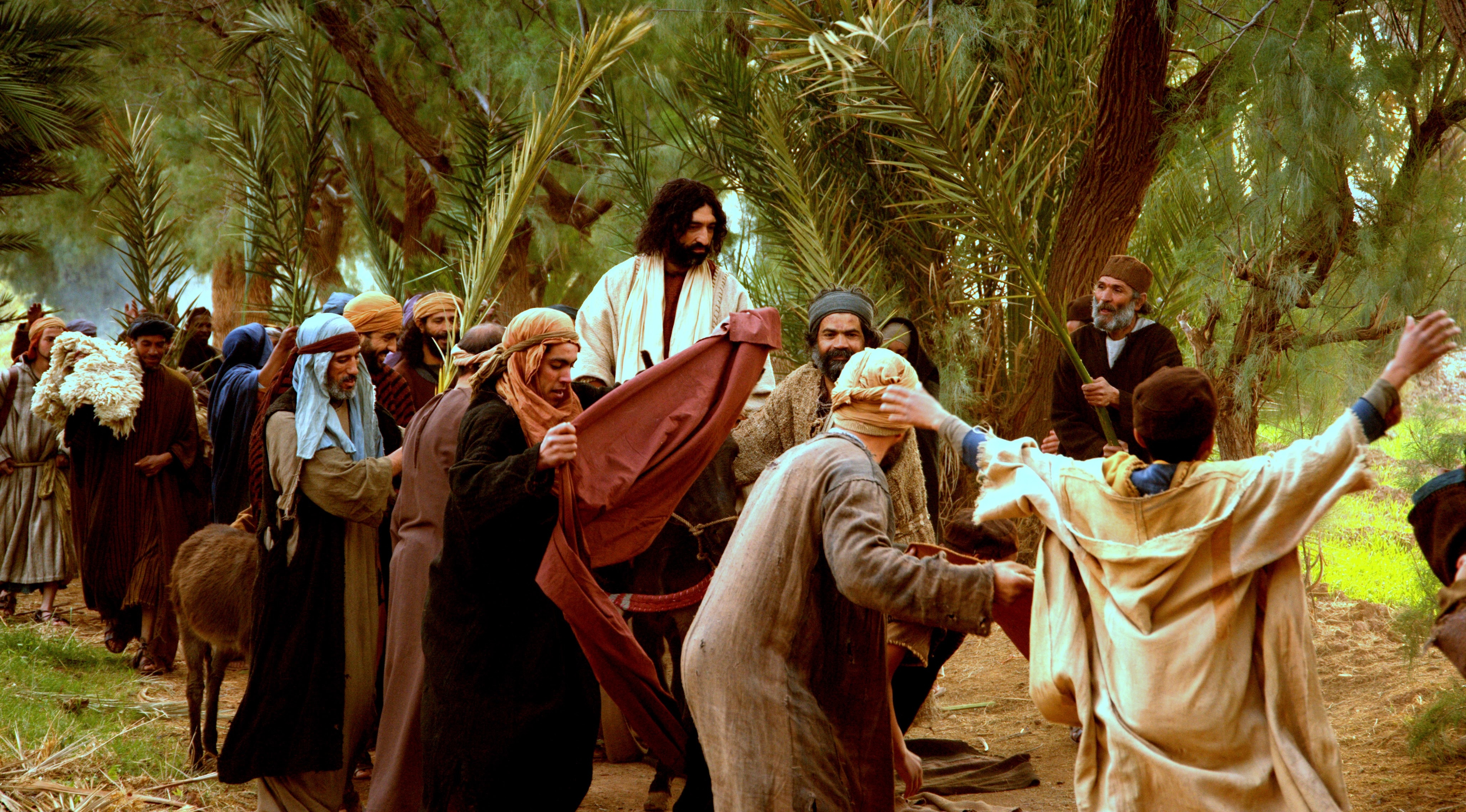
But imagine that you didn’t know. Imagine attending our service and hearing all of this for the first time. Imagine all of it was new. You hear about Jesus being welcomed into Jerusalem with the shouts of, “Hosanna,” as He rides into Jerusalem on a donkey. Then, not even half an hour later, you hear about Jesus’ crucifixion. You might wonder, “What changed? How did this turn around so quickly? Why are the people who were shouting, ‘Hosanna, blessed is he who comes in the name of the Lord,’ now shouting for Jesus to be crucified?”

Hearing all of this for the first time would probably be shocking to you. But, again, you know the story of Jesus’ life. You know how it begins with Jesus being born in Bethlehem. You know how it ends with Jesus’ resurrection and ascension. Jesus knew this too.

As He rode into Jerusalem on that day nearly 2,000 years ago, Jesus knew. He knew that the palm branches that were being waved to welcome Him as the king would be followed by the whip that would be waved across His back. Jesus knew that the shouts of, “Hosanna,” would soon turn to shouts of, “Crucify.” Jesus knew that the jackets across the road would morph into the soldiers, gambling for His clothes. Riding into Jerusalem on a donkey, Jesus knew that He would ride out of Jerusalem lifeless and laid on a bier. We don’t know if Jesus heard the Pharisees saying, “The whole world is going after him.” But Jesus knew that, in a few short days, almost everyone would turn their back on Him. Christ knew that, soon, it would be just a couple of men – Joseph of Arimathea and Nicodemus (Jn. 19:38-40) – and a few women who would lay Him in the tomb.

Jesus knew all of this as He triumphantly went into Jerusalem. He wasn’t surprised by anything that happened the following Thursday or Friday. That was the reason He went into Jerusalem. Christ wasn’t surprised by the change between that Sunday and Friday. He went knowing exactly what was going to happen, knowing exactly what was going to take place, knowing that He would be betrayed, knowing that Judas mark Him as the one the soldiers should arrest, knowing that Peter would deny Him, knowing that His disciples would flee.

Jesus knew all of it. He knew that he would suffer. He knew that He would be mocked. He knew that He would be ridiculed and beaten. He knew that He would be stripped. He knew the crown of thorns would be pressed onto His head and nails driven through His hands and feet. Jesus knew all of this. Christ knew that the reason He was going to Jerusalem was so that He could suffer, die, and rise again for you (Lk. 18:31-33).

Jesus knew that He was going to bear all of humanity’s sins before God, the Judge. Jesus – the perfect, sinless Son of God, who knew no sin – He became sin so that you, through faith, might become the righteousness of God (2 Co. 5:21). And Jesus followed through with His Father’s plan to save you.

Conceivably, we could plead innocent of all the injustices that Jesus faced – the betrayal, the denial, the false accusations, the beating, the whipping, the mocking, the scorning. We weren’t there. We didn’t do those things to Him. We would probably not be convicted of killing of Jesus before any earthly judge and jury. We could honestly say that we weren’t shouting, “Crucify, crucify Him!” We weren’t calling for Barabbas to be released and innocent Jesus be crucified. We weren’t daring God by calling for the guilt Christ’s blood to be upon us and upon our children.

Dear saints, we could say Jesus did not die because of us, but please believe that He dies for us. He goes to the cross on our behalf and in our place. Isaiah says that the Lord laid on Jesus the iniquity of us all (Is. 53:6). That leaves no doubt, no question, we – you and I – are why Jesus is on the cross.

Yet, that isn’t the entire story either, is it? Out of His love for you, Jesus willingly went to the cross. He went for the joy that was set before Him (Heb. 12:2) – the joy of winning you as His own.

The eternal Son of God did not count equality with God a thing to grasp at all costs. Instead, He emptied Himself and took the form of a servant. He was born in the likeness of men. In other words, God Himself was willing to be seen in your flesh and blood. But Jesus went lower. He humbled Himself by becoming obedient to the point of death, even a cursed (Gal. 3:13) cross kind of death (Php. 2:5-8) so that you could be reconciled to Him. Dear saints, have that same mind of Christ.

Even as the whip followed the palm branches; the shouts of, “Crucify,” followed the, “Hosannas”; the gambling for Jesus’ clothes followed the coats laid out on the road; let us also follow Jesus this Holy Week.

Follow Him to the upper room, where He gives His Body and Blood for the forgiveness of sins (Mt. 26:26-28). Follow Him to His trial, where He is falsely accused. Follow Jesus out to the hill of Golgotha, where He is forsaken by God (Mt. 27:46). Follow Jesus as He goes to the tomb, but let’s not stop there either.

Continue to follow Jesus out of the tomb, out of death, out of all that we deserve because of our sins. Follow Jesus, having His mind, having His humble attitude, having received His gracious love and mercy by faith. Follow Him and extend His humble, sacrificial love to others until that great day when every knee shall bow and every tongue confess that Jesus Christ is Lord. Amen.

The peace of God, which surpasses all understanding, will guard your hearts and minds in Christ Jesus. Amen.

Father, into Your Hands I Commit My Spirit – Sermon on Luke 23:46 & Psalm 31:5 for Good Friday

In the name of Jesus. Amen.

“Then Jesus, calling out with a loud voice, said, ’Father, into Your hands I commit My Spirit.’ And having said this [Jesus] breathed His last” (Lk. 23:46).

Hebrews 10:31 tells us, “It is a fearful thing to fall into the hands of the living God.” The majority of times that the Bible talks about God stretching out His hand, it means destruction. This is why death is a fearful thing for us. The wages of sin is death (Ro. 6:23). It is appointed for a man to die once, and after that comes judgment (Heb. 9:27). Deep down, everyone knows this (Ro. 1:18-21).

Even the most hardcore atheist who wrongly thinks we are nothing more than a glob of atoms who randomly evolved knows that death is something to be avoided. Over the past few years, we have watched the absurd and, even, the evil things people will do in an attempt to avoid death. But unless Jesus returns first, we will all die (1 Thess. 4:17). And Satan uses the fact that sinners die to his advantage. Hebrews 2:14-15 says that the devil is able to hold all of humanity in bondage and slavery using only one tool, the fear of death. People try to stay alive at all costs and put even the thought of death as far away as possible. Death reminds us that we are not in control and are not in charge.

So, we have to learn from Jesus how to die. Jesus does not go into death as though He is falling into the hands of an enemy, but safely into the hands of His Father. These words of Jesus, “Father, into Your hands I commit My Spirit,” are a quote from Psalm 31:5, and by quoting it, Jesus wants us to consider the entire Psalm. Just like when you hear a line from a song or a movie and, so long as you are familiar with it, the whole song or scene comes to mind, this one line Psalm 31 would have brought the whole Psalm to the minds of those who were there at the cross.

I would encourage you to read all of Psalm 31 tonight with your family and have the crucifixion in mind. For now, hear the first five verses:

1 In You, O Lord, do I take refuge; 
let me never be put to shame; 
in Your righteousness deliver me! 
2 Incline Your ear to me; 
rescue me speedily! 
Be a rock of refuge for me, 
a strong fortress to save me! 
3 For You are my rock and my fortress; 
and for Your name’s sake You lead me and guide me; 
4 You take me out of the net they have hidden for me, 
for You are my refuge. 
5 Into Your hand I commit my spirit; 
You have redeemed me, O Lord, faithful God. 

Psalm 31:1-5 ESV

With His dying breath, Jesus commits Himself into the hands of the Father, and Christ can do this because He knows God is not angry with Him. And you, when you come to the end of your life, when you are breathing your last, you need to know this as well.

God is not angry with you. His anger over your sin has been satisfied. He has redeemed you through Jesus’ death. He has purchased and won you. Christ has paid the price for your sins. Unless you stubbornly hold on to your sins and refuse to believe that Christ has taken your place, there is no wrath, no judgment from God for you. You, Christian, you are a child of God, a child of the heavenly Father because Jesus has paid the price for your sins. You are no longer a sinner, but a one who has been redeemed and purchased by Jesus, the only-begotten Son of God.

By His blood, Jesus has washed away all your sin. You stand before God in the robe of Christ’s righteousness (Is. 61:10). For you, Christian, it is no longer a fearful thing to fall into the hands of a living God because God’s hands were nailed to the cross for you. Those are the hands that you commit yourself to.

There is therefore now no condemnation for you who are in Christ Jesus (Ro. 8:1) because your condemnation is in the past. It has already happened as Jesus died on the cross for you.

Jesus died after praying Psalm 31:5a, “Into your hands I commit my spirit.” And it is important to notice that Jesus only prays the first line because He could not pray the second line, “You have redeemed me, O Lord, faithful God.” Jesus couldn’t pray the second line because He was not redeemed; instead, He was redeeming. He was redeeming you. He was there on the cross paying the price; winning your salvation; forgiving your sins; overcoming sin, death, and the grave. He was doing all of that so you can pray all of Psalm 31:5. The entire thing. Because of what your Lord and Savior has done, you can rightly pray, “Father, into Your hands I commit my spirit; You have redeemed me, O Lord, faithful God.”

You belong to Jesus. He is your Brother and God is your Father. At the end of every day, take up these words, “Almighty God, my heavenly Father, like Jesus did before me, into Your hands I commit my spirit, for You have redeemed me, O Lord, faithful God.” And as you pray that, know that Jesus, who committed Himself into the hands of God the Father, has gone and prepared a place for you so that where Jesus is, you may be also (Jn. 14:3). Amen.[1]The peace of God, which surpasses all understanding, will guard your hearts and minds in Christ Jesus. Amen.


[1] This sermon was adapted from a sermon by Pr. Bryan Wolfmueller.

Today in Paradise – Sermon on Luke 23:39-43 for Good Friday

In the name of Jesus. Amen.

The disciples, James and John, had asked Jesus if they could sit at His right and left when Jesus entered His glory, but Jesus told them that they didn’t know what they were asking. Besides that, Jesus said that it wasn’t His to grant, and the heavenly Father had already determined who would have those seats of honor (Mk. 10:35-40). In a few minutes, we will hear who gets those positions – two criminals one on Jesus’ right and another on His left (Mk. 15:27; Lk. 23:33).

At first, both of these condemned men mock Jesus as they hang there with Christ on their own crosses (Mk. 15:32). But something happens as the thief on the right watches Jesus suffer. This thief hears Jesus’ words as He hangs on the cross. Maybe, it was when he heard Jesus say, “Father, forgive them, for they know not what they do” (Lk. 23:34). And faith sprouts in that criminal’s heart. He is converted and is a Christian.

Now, instead of mocking Jesus, he prays to Jesus. And his prayer sounds absurd, “Jesus, remember me when You come into Your kingdom.” Here Jesus is beaten, bloodied, stricken, stripped, hanging, and dying on a cross. He is about as far from obtaining a kingdom as you could possibly be. But through faith this thief knows that Jesus isn’t done. He knows that the cross won’t be the end of Jesus. Somehow, and this can only be by the working of the Holy Spirit, this man believes that death won’t be the end of Jesus. He is a king who is coming into His kingdom. And even in that moment this thief believes that Jesus is a Savior who can save him from the condemnation that is the due reward for his deeds (Lk. 23:41).

Jesus looks at him and says, “Truly, I say to you, today you will be with me in Paradise.”

And when Jesus dies, His body is run through with a spear, taken down from the cross, and laid in the grave. But Jesus’ soul goes to be with the Father in heaven, and the thief goes with Him. Jesus and this thief meet up that very day in Paradise. Scripture says that to be away from the body is to be present with the Lord (2 Cor. 5:8). 

The separation of body and soul that Jesus and this criminal experience when they die is the same separation that you and I will face unless Jesus returns first. Our body will go to the grave, and our soul will go to be with the Lord. But when Jesus returns, He will put you back together. Your body will be raised from the grave. Your soul will be rejoined to your body, and you will live forever. This is our hope and comfort.

But there is something more comforting to learn from the thief on the cross, and it is this: You are saved, not by your works, but by God’s grace. You are justified, not by your deeds, but by God’s promise. You are delivered, not by your efforts, but by God’s mercy. And this is only possible because Jesus takes all your sin and suffers in your place on the cross.

That thief’s story preaches this to you today. He lived a life that earned him capital punishment. But the Holy Spirit got a hold of him. He believed and was converted. And he’s right into heaven. 

The thief isn’t saved because of his works, deeds, or efforts! Even if he wanted to do a good work, he wouldn’t have been able because his hands and feet are nailed to a cross. All he had to face the judgment of God was the promise of Jesus, and that was enough for him. And it is enough for you.

When you stand before God’s holiness and perfection to be judged, there is nothing you can offer – no excuse, no self-justification, no good work. Nothing. 

You have nothing except the promise of Jesus. And, again, that is enough. Jesus says to this condemned criminal, “Truly, today you will be with Me in Paradise.” And Christ says the same to you, dear saint. “Truly, you will be with Me in Paradise.” Amen.

The peace of God, which surpasses all understanding, will guard your hearts and minds in Christ Jesus. Amen.

Don’t Settle – Sermon on Matthew 17:1-9 for the Transfiguration of our Lord

Matthew 17:1-9

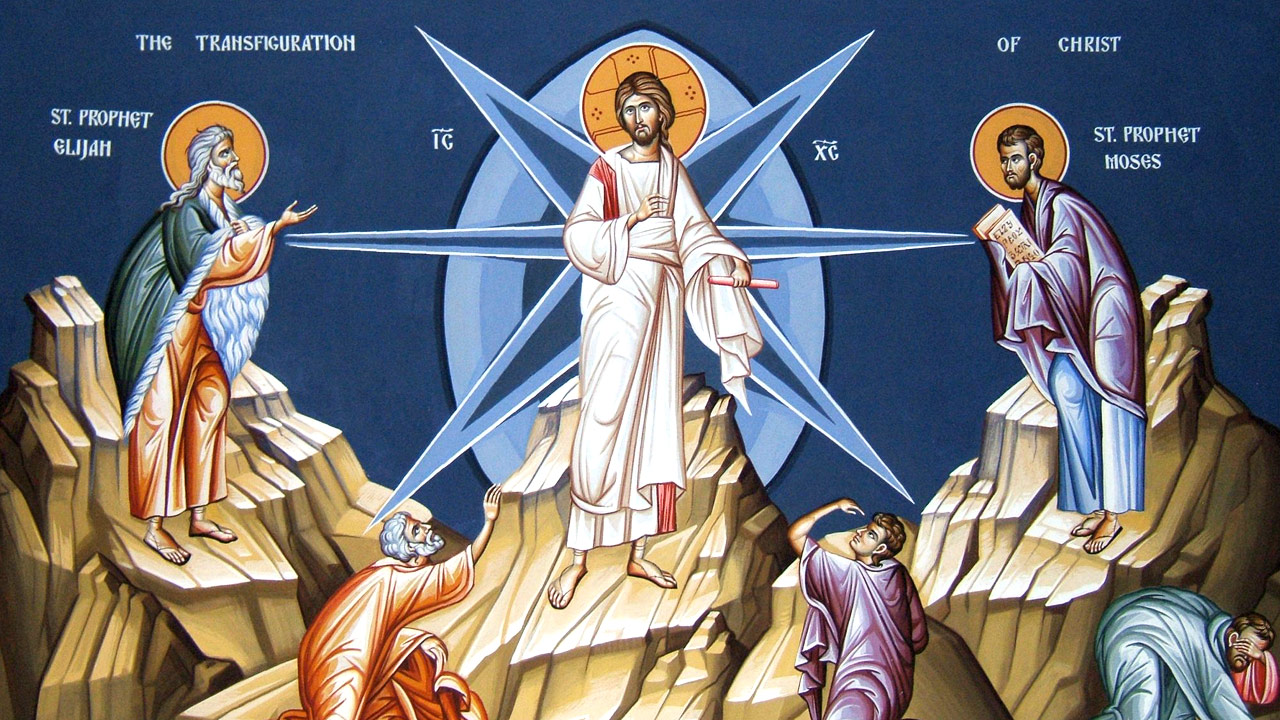
1 And after six days Jesus took with him Peter and James, and John his brother, and led them up a high mountain by themselves. 2 And he was transfigured before them, and his face shone like the sun, and his clothes became white as light. 3 And behold, there appeared to them Moses and Elijah, talking with him. 4 And Peter said to Jesus, “Lord, it is good that we are here. If you wish, I will make three tents here, one for you and one for Moses and one for Elijah.” 5 He was still speaking when, behold, a bright cloud overshadowed them, and a voice from the cloud said, “This is my beloved Son, with whom I am well pleased; listen to him.” 

6 When the disciples heard this, they fell on their faces and were terrified. 7 But Jesus came and touched them, saying, “Rise, and have no fear.” 8 And when they lifted up their eyes, they saw no one but Jesus only. 9 And as they were coming down the mountain, Jesus commanded them, “Tell no one the vision, until the Son of Man is raised from the dead.”

In the name of Jesus. Amen.

Change is often difficult because we have to adjust. We prefer consistency over fluctuation and variation. This past Thursday morning, the temperature in East Grand Forks bottomed out at -30°F; the forecast for Tuesday indicates we’ll reach 36°F. If that prediction holds out, we will experience a 66° swing in five days. That 36°F is going to feel glorious. Kids will be begging parents to go around without coats and wearing shorts. I can already hear several of you thinking, “I can’t wait for a change in this bitterly cold weather. I’ll adjust just fine, thank you.” But the change I’m thinking of will happen next Fall. What will happen then? When October rolls around and we dip back down into the 30’s, the coats and shivers will be back because we will have gotten accustomed to 80-90° weather through the summer. Change can be rough. Those mid 30’s will feel glorious if we get there in the next couple of days, but not so much in October.

Now, I bring all of this up to set the stage for what happens at the Transfiguration of Jesus. Our text begins with a time marker, “And after six days…”, so we need a bit of context. If you look back to Mt. 16, you see that Jesus has just told His disciples that He must go to Jerusalem, suffer, be killed, and rise on the third day, and this prediction would have been about six months before the crucifixion. The disciples had been following Jesus for about two and a half years. They had gotten comfortable being around Him, seeing His miracles, listening to His teaching, and enjoying His company.

The impression we get is that Peter does not hear everything Jesus says. Peter hears the suffering and dying part, and I imagine Peter is so shocked that he doesn’t hear Jesus say He would rise again on the third day. So, when Jesus says that He is going to suffer and die, Peter doesn’t like it – not one bit. Jesus getting killed would be a very unwelcome change. So, Peter scolds Jesus for saying that He was going to die by saying, “Far be it from You, Lord! This shall never happen to you” (Mt. 16:22). And Jesus utterly rebukes Peter with His harshest words recorded in the Gospels, “Get behind me, Satan! You are a hindrance to Me. For you are not setting your mind on the things of God, but on the things of man” (Mt. 16:23).

So now, to our text. The Transfiguration takes place six days after this exchange between Jesus and Peter. Jesus brings Peter, James, and John up a high mountain by themselves, and suddenly, Jesus is transfigured. His face shines like the sun, and His clothes become dazzlingly bright and white as light. Then, Old Testament celebrities start showing up as Moses and Elijah crash the party.

Peter sees all of this and is scared (Mk. 9:6) but probably in a thrilling way. He wants to remain there with Jesus, Moses, and Elijah. Peter likes how things are there, up on that glorious mountain. Seeing the Transfiguration is probably in the top three highlights of Peter’s time with Jesus. Shiny Jesus is fantastic stuff, and it definitely beats the suffering and death Jesus predicted six days earlier. But as Moses and Elijah are there talking with Jesus, the Gospel of Luke tells us that Jesus, Moses, and Elijah are speaking about Jesus’ exodus which He was about to accomplish in Jerusalem (Lk. 9:31). Even in the shining glory of the Transfiguration, there is this talk about Jesus’ suffering and death. So, Peter says (and listen to how he focuses on location), “Lord, it is good that we are here. If you wish, I will make three tents here, one for you and one for Moses and one for Elijah.” It’s almost like Peter is saying, “Hey, things are good here! Why don’t we all just hang out here on this glorious mountain and forget about all that stuff in Jerusalem?”

But God the Father interrupts Peter’s plan. The cloud of God’s glory overshadowed them, and God said, “This is My beloved Son, with whom I am well pleased; listen to Him” (Mt. 17:5). Now, I don’t think we should only take this in the broad, general sense that Jesus’ words are important to listen to. That is, of course, true. Every Word of Christ is important, and Peter even makes that point in our Epistle lesson (2 Pet. 1:16-21). The Bible, God’s Word, is a lamp shining in the darkness of this world, and we do well to pay attention to it. But I would suggest that God’s command to listen to Jesus here is much more specific and pointed.

When God the Father interrupts Peter’s plan to make tents and remain on the mountain by saying, “Listen to My beloved Son,” God is reinforcing to Peter the fact that Jesus must go to Jerusalem, be crucified, and rise again. Peter is right that the glory on that mountain is good, but if Jesus doesn’t descend from the summit, if He doesn’t go down to Jerusalem, down to suffer, down to the cross, and down to the grave, then Jesus’ truest glory would never be revealed. The glory of the Transfiguration is good but remaining there would have been settling for something far less than the glory that Jesus revealed upon the cross.

We don’t understand the glory of Jesus’ Transfiguration until we see the crucifixion because by His cross Jesus elevates us to share in His glory. And those two events closely parallel each other. Here in the Transfiguration, Jesus’ clothes are shining white; on Calvary, they have been stripped off and soldiers gambled for them (Mt. 27:35). Today, Jesus was surrounded by Moses and Elijah. At the cross, Jesus is flanked by criminals (Mt. 27:38). At the Transfiguration, the bright cloud of God’s glory illumines everything; at Calvary darkness fills the land (Mt. 27:45). Here, God’s voice thunders from heaven declaring Jesus to be His beloved Son. There, the Roman soldier confesses that Jesus truly was the Son of God (Mk. 15:39).

While the two scenes are strikingly different, they help us understand each other. Because it was on the cross that Christ delivered you from the power of sin, death, and the devil so that you could share in His glory. Because of what Jesus has done for you by shedding His blood, you are being transfigured from one degree of glory to another (2 Cor. 3:18).

Dear saints, this life is filled with ups and downs and all the changes that come with them. We can certainly thank God for the moments where we have mountaintop experiences. They are good and glorious, but we don’t remain in them in this life. Don’t settle for those temporary moments. Another glory, a greater and eternal glory, awaits you. As it was with Jesus, so it is with you. You follow Jesus through suffering in this world and await the glory that is yours because of what Christ has done (Mt. 16:24-25).

And so, Christ comes to you now to strengthen you and assure you that He will never leave you nor forsake you. He comes now to give you His Body to eat and His Blood to drink and make full satisfaction for all of your sins. Jesus invites you to come to His altar and His table. Remove the veil over your face. Behold the glory of the Lord. And go back into the world with God’s glory radiating from you (Mt. 5:14-16) so that others may see your good works and give glory to your Father who is in heaven. Amen.

The peace of God, which surpasses all understanding, will guard your hearts and minds in Christ Jesus. Amen.

I Thirst – Sermon on John 19:28 for Good Friday

Listen here.

In the name of Jesus. Amen.

In Hosea 11:1, God says, “When Israel was a child, I loved him, and out of Egypt I called My son.” But it didn’t take long for that beloved child to start whining. Even though God had displayed His might and power to protect and deliver His people through the plagues He sent upon Egypt, three days after crossing the Red Sea the people came to the bitter waters of Marah (Ex. 15:22-26). They grumbled against Moses saying, “I thirst! What are we going to drink?”

Well, God acted for His son, Israel. God showed Moses a log and told him to toss it into those bitter waters. Moses did, the bitter water became sweet, and the thirst of Israel, God’s son, was quenched.

About one month later, God’s son, Israel, again said, “I thirst.” They had come to a place where there was no water. This time the whining was worse. The son grumbled again saying to Moses, “Why did you bring us up out of Egypt, to kill us and our children and our livestock with thirst?” But God, their loving Father, still provided. He told Moses to take his staff and strike a rock. And from that rock came water for God’s son, and his thirst was quenched again.

Tonight, Jesus, on the verge of death, cries out, “I thirst.” Jesus is God’s true, beloved, faithful, obedient Son. Jesus is the true Israel. Christ had never whined or complained no matter how hard or bitter things got for Him. He was everything that the nation of Israel wasn’t. Yet, when Jesus, the only-begotten Son of God, cries out to His Father, “I thirst,” God doesn’t move a muscle. God doesn’t jump to action.

You remember the parable of the rich man and Lazarus (Lk. 16:19-31). As he is there in torment, the rich man begs for a drop of water from Lazarus’ finger. Like that rich man, Jesus gets nothing to drink. Not even one drop.

When Jesus cries, “I thirst,” it is because He is truly parched. Jesus is true God and also true Man. He actually was thirsty. But even more than needing water for His dehydrated mouth, Jesus’ thirst is to do His Father’s will (Jn. 4:34). Christ thirsted for your salvation so that you can be God’s child. Only Jesus can truly say, “As a deer pants for flowing streams, so pants my soul for You, O God. My soul thirsts for God, for the living God” (Ps. 42:1-2a). Jesus thirsted in your place.

We thirst for things that are momentary and trivial. We thirst for the attention and approval of others. We thirst for our own glory, our own wealth, our own safety, our own selfish desires. But no matter how much we drink from the cup of our sins, our thirst is never satisfied there. That is why Jesus went to the cross. He went there because of your sin. He went to the cross to atone for your sinful thirsts.

That is why, it pleased God to do nothing for Jesus as He thirsted on the cross. It was God’s will for Jesus to drink from the bitter cup of wrath so that you could drink the sweet, living waters that Jesus gives which well up to eternal life (Jn. 4:14).

There was no water from the rock for Jesus because He was the Rock. According to 1 Cor. 10:4, Christ was the Rock that was struck in the wilderness for God’s people to drink. It happened in the wilderness for Israel, God’s son, and it still happens for you today, believer. Jesus was struck with a spear and out of that dead Rock hanging on the cross came the water and blood which give eternal life.

Jesus thirsted. He died. He rose again. And He is ascended and is now seated at God’s right hand. But Christ still thirsts. Even today He thirsts, and His thirst is for your salvation. He thirsts for you to be forgiven and receive His righteousness. Jesus’ thirst is to eternally satisfy your thirst.

So, Jesus, your Savior, invites you, “If anyone thirsts, let him come to me and drink. Whoever believes in me, as the Scripture has said, ‘Out of his heart will flow rivers of living water’” (Jn. 7:37-38).

May we drink from Him, our crucified and risen Lord and Savior. Amen.The peace of God, which surpasses all understanding, will guard your hearts and minds in Christ Jesus. Amen.

Father, Forgive Them – Sermon on Luke 23:34 for Good Friday

Listen here.

Luke 23:34a

34 And Jesus said, “Father, forgive them, for they know not what they do.”

In the name of Jesus. Amen.

Whenever I read the passages about the crucifixion, I get frustrated. There is a big part of me that wants to enter into the story, grab people by the shirt, and tell them, “You don’t know what you’re doing!”

But imagine saying, “You don’t know what you are doing,” to the chief priests and Pharisees when they put Jesus on trial. Likely, they would have responded, “We know exactly what we are doing.” They had intentionally sought out gathered people who they knew would give false testimony against Jesus (Mt. 26:59-60), so they could put Him to death. In fact, for the majority of Jesus’ ministry, they had been trying to find a way to destroy Jesus (Mk. 3:6; Jn. 5:18).

Imagine saying to the crowds, “You don’t know what you are doing.” They probably would have said, “That man, Jesus, is dangerous. The chief priests and elders told us just how dangerous He is. It’s better for us to have murderer Barabbas freed and wandering the streets than to have Jesus leading people astray. We want Him crucified.”

Imagine saying to the soldiers, “You don’t know what you are doing.” They would have likely said, “Yes we do. We are experts with whips and hammers and nails. We know how to whip, beat, and flog a prisoner. We have been trained to know exactly where to put the nails in the hands and feet to avoid the arteries and maximize the suffering to make death on a cross as excruciating as possible.”

It seems as though everyone responsible for putting Jesus on the cross knew exactly what they were doing. But Jesus prays, “Father, forgive them, for they know not what they do.” Was Jesus wrong?

No. In His mercy, Jesus looks on them from His with compassion, and absolves them. He forgives their sins. And He blesses them. Because that is exactly why He is dying. He is dying to forgive them, and He is dying to forgive you.

When we see Jesus dying on the cross, we are sorry for our sins. We know our sins are bad, but when we see how Jesus suffers for our sins, we know just how bad they are. We see what the cost is for our sins. We know how angry God is at our sins.

We know that it was because of our sins that Jesus was dragged around all night to the different trials. We know that our sin caused Jesus to be spit upon, beaten, and whipped. Because of our sin, Jesus was pinned to that splintered piece of wood and lifted up to hang there and suffocate to death. Because of our sin, Jesus endured the wrath of God as He hung in darkness, abandoned and deserted by His Father. All of it is sad, and it should make us sorry. There is no more severe preaching of God’s Law than the cross of Jesus because on the cross of Jesus we see what we deserve (FOC. Ep. IV. 9).

But know this: Jesus is not just suffering because of you; He is suffering for you and in your place.

Jesus wants to be on the cross. Now, it isn’t as though Jesus enjoyed being on the cross. Hebrews 12:2 says Jesus despised the shame of the cross. He wants to be there. He wants to pay the price. He wants to rescue, redeem, save, and forgive you all your sins.

Yes, Jesus suffers because of you, but even more wonderfully Jesus suffers for you. And Christ would have it no other way.

Remember when Peter says that he doesn’t want Jesus to go to the cross (Mt. 16:21-22), but Jesus rebukes Peter saying, “Get behind Me, Satan.” Jesus is determined to be up there on the cross because it is the only way for you to have the gifts that He will win. To be on that cross is what Jesus wants.

Jesus wants to be crucified for you so that you can have His joy and His peace.

And this is why we call it “Good Friday” because Jesus is dying for you.

And He isn’t mad about it. Jesus isn’t upset or angry at you. He loves you and prays from the cross for you, “Father, forgive them, for they know not what they do.” Amen.

The peace of God, which surpasses all understanding, will guard your hearts and minds in Christ Jesus. Amen.

Ride on – Sermon on Matthew 26:1-27:66 for Palm or Passion Sunday

Listen here.

The congregation read the quotes from all the characters (with the exception of Jesus) in the Passion narrative this year.

In the name of Jesus. Amen.

That Gospel reading is a lot to take in – all the injustice, betrayal, brutality, and morbidity. But the whole reason Jesus rode on into Jerusalem was to endure all of this for you. Even though we might wish to turn away from it, we can’t. We must hear, see, look, and ponder because in this reading we see who we truly are.

We are the chief priests who want to get rid of God secretly and stealthily. We are the disciples who think it is possible to give too much to God. We are Judas wanting to gain something earthly from our relationship with Jesus – even though it ends up being less than thirty pieces of silver. We are Peter bragging about our commitment to Jesus, but when the heat gets turned up, we deny. We are the disciples who cannot stay awake while we watch and pray with Jesus.

We are Caiaphas who demands a sign from Jesus and refuses to take Christ at His Word. And when Jesus says something we don’t like, we pass judgment on Him. We are the chief priests who tell those who are crushed under the weight of their sins to go away and figure it out on their own instead of pointing them to God’s mercy. We are Pilate who is given every chance to do the right thing but fails. We are the soldiers who insult and strike Jesus, but we don’t do it with a reed. We do it with our continual sins. And we are the crowds to pass by Jesus and mock Him.

Repent. Repent but do not despair because you are also the centurion who rightly confesses, “Truly this is the Son of God!” (Mt. 27:54). You are the crowds who cry out, “Hosanna,” which means, “Save us now.” You are also the crowds who cry out, “His blood be on us and on our children” (Mt. 27:25). The crowds who shouted those words in our text thought God didn’t see or didn’t care if they put His only begotten Son to death. But, dear saint, you know better. You know that Jesus’ blood is what cleanses you from your sin.

You are Barabbas, a notorious sinner who gets off scot free. You are the thief on the cross who will be with Jesus in paradise. You are Peter who gets restored. You are Simon of Cyrene who lives a life of carrying Jesus’ cross enduring the weight and suffering, but doing it willingly and joyfully because you know that to live is Christ and to die is gain (Php. 1:21). And, God be praised, you will be those who rise from your grave when Christ returns.

Yes, dear saints, this text is some of the most difficult Scripture to read, but at the same time it is the most beautiful because in it you see Jesus’ love for you. Scripture says, for the joy – think of that, for the joy! – that was set before Him, He endured the cross despising its shame, and now, He is seated at the right hand of the throne of God (Heb. 12:2).

Christ’s joy and delight is to redeem and save you by dying on the cross. So, ride on, King Jesus. Ride on and save us. Hosanna in the highest! Amen.

The peace of God, which surpasses all understanding, will guard your hearts and minds in Christ Jesus. Amen.