Matthew 2:13-23
13 Now when they had departed, behold, an angel of the Lord appeared to Joseph in a dream and said, “Rise, take the child and his mother, and flee to Egypt, and remain there until I tell you, for Herod is about to search for the child, to destroy him.” 14 And he rose and took the child and his mother by night and departed to Egypt 15 and remained there until the death of Herod. This was to fulfill what the Lord had spoken by the prophet, “Out of Egypt I called my son.”
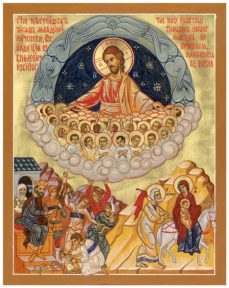 16 Then Herod, when he saw that he had been tricked by the wise men, became furious, and he sent and killed all the male children in Bethlehem and in all that region who were two years old or under, according to the time that he had ascertained from the wise men. 17 Then was fulfilled what was spoken by the prophet Jeremiah:
18 “A voice was heard in Ramah,
weeping and loud lamentation,
Rachel weeping for her children;
she refused to be comforted, because they are no more.”
19 But when Herod died, behold, an angel of the Lord appeared in a dream to Joseph in Egypt, 20saying, “Rise, take the child and his mother and go to the land of Israel, for those who sought the child’s life are dead.” 21 And he rose and took the child and his mother and went to the land of Israel. 22 But when he heard that Archelaus was reigning over Judea in place of his father Herod, he was afraid to go there, and being warned in a dream he withdrew to the district of Galilee. 23 And he went and lived in a city called Nazareth, so that what was spoken by the prophets might be fulfilled, that he would be called a Nazarene.
In the name of Jesus. Amen.
Merry Christmas and happy New Year! Today is the twelfth and last day of the Christmas season. Maybe you began celebrating Christmas when the Hallmark Channel began their “Countdown to Christmas” way back on October 26th. And, no, I’m not going to mock their movies today. Finally, after ten years of being your pastor, I’ve learned to not do that anymore – at least not in a sermon.
Maybe you have taken down your tree and lights and have stored all the decorations in your garage and shed. Remember for Christians, every Sunday is Christmas and Easter – even if your house or this sanctuary isn’t decorated accordingly. So, before we take everything down today after the service, God would remind us of why Jesus came. And this reminder comes in a sobering way with a sad text. The reminder is this: Jesus entered this world to bring life and salvation to people who are obsessed with death.
The birth of Jesus wasn’t the soft, cleaned up picture that we so often have in our minds. Joseph and Mary didn’t lay baby Jesus in a warm, comfortable, well-kept barn. It was a normal barn – cold, dirty, and stinky. They weren’t surrounded by well-groomed animals. Instead, the Scriptures make sure we know that things were much humbler and more dangerous for the holy family. After the birth of Jesus announced by gruff shepherds, the families of Bethlehem wondered at the news (Lk. 2:18) but soon returned to their normal lives. Then at the beginning of Matthew 2, King Herod heard from the magi about the birth of the One who had been born King of the Jews. And Herod did not think this was good news at all.
A little background on King Herod. This Herod was known as Herod the Great, probably because of the many building projects he completed. Herod wasn’t an Israelite; he was an Edomite, a descendent of Esau. But Caesar had given him the title king of the Jews. Herod was utterly and completely wicked and would do whatever he thought necessary to protect his power. He had nine or ten wives, most of whom were murdered because he suspected of them plotting against him. Herod was so bad that Caesar Augustus, who was his friend, said that it was better to be Herod’s pig than Herod’s son.
Five days before Herod’s death, he murdered his oldest son to keep him from gaining his throne. As Herod lay on his death bed, he called all his advisors and all the influential men of Jerusalem and Judea to gather together and had them locked in the Hippodrome which was a horse racing track. Herod ordered his armies to surround the stadium and kill everyone inside after he died so that the city cry when he died – even if they weren’t crying for him. Apparently, the order wasn’t carried out.
So, when the magi come to Jerusalem asking, “Where is he who is born King of the Jews?” you can imagine how troubled Herod was. King of the Jews is his job, his title, his office.  The guy who didn’t even want his own children to be king after him hears that someone else has been born to be King of the Jews. Well, Herod isn’t going to let that stand. And when Herod is troubled about this, the rest of Jerusalem is also quaking as they wonder what will happen next.
So, Herod learns from the chief priests and scribes that the Christ was to be born in Bethlehem, he sends the magi to find the Child and let him know where the infant Jesus is. But God tells the magi to not return to Herod, and they depart to their own country. And God sends an angel to warn Joseph to take the infant Jesus to Egypt, the land of slavery and infanticide (Ex. 1:8-21), to save the life of the Savior. As the soldiers marched south from Herod’s castle toward Bethlehem to carry out their murderous orders, the holy family fled ahead of them to Egypt.
Again, the first Christmas was not a tranquil, picturesque scene. Lord, have mercy.
The slaughter of all those boys two years old and younger in Bethlehem is one of the saddest, most horrific things recorded in all of the Scriptures. And yet, it is not so different in our time and culture today.
In 2018, the number of abortions performed in the US passed 60 million since the Roe v. Wade decision. Worldwide, the numbers are much more devastating. In our country, the killing of these pre-born children isn’t to protect a title of a king. Instead, these children are killed for the sake of convenience and independence. And it is all done in the name of choice. Politicians used to defend abortion saying that it should be safe, legal, and rare, but many of them are pushing to expand access to abortion and even suggesting that babies who survive attempts at abortion can be left to die on a table. And now, the leading provider of abortion in our country encourages women to shout their abortions and celebrate them.
Dear saints, there is a modern-day holocaust going on in our country, and it should daily drive us to our knees in prayer. Thomas Jefferson, the third president of our country, a man who published his own version of the Gospels that removed all of Jesus’ miracles, all the claims of His divinity, and even the Resurrection, Jefferson said, “A single human being is of infinite worth.” Even this secular principle is right and is enough to peacefully (and notice I said peacefully) oppose abortion with every ounce of our strength. But the coming of the Son of God in the flesh has raised the sacredness of all human life to an even higher dimension (Dr. Rev. David Scaer). In Jesus is life which gives light to everyone (Jn. 1:4, 9).
 In the incarnation, the eternal Son of God shares in the life of every man, woman, and child – born and unborn. We human beings are all taken out of the flesh of Adam which means that we are all part of one another. But even more importantly, by His conception, the eternal Son of God has permeated all of humanity. This is why the devil loves abortion. Satan loves abortion because every unborn child reminds him of the fact that the Son of God came in the flesh, took up residence in His mother’s womb, and defeated him. The fact that your Savior was once a pre-born child is primary the reason Christians oppose abortion.
Because we are descended from Adam, we all stand before God under the just verdict of guilty and deserving of hell (Ps. 51:5). But again, more importantly, because Jesus has taken on our flesh, we can stand in faith before God with Jesus, the second Adam, to hear a verdict of innocent, holy, and righteous because this Jesus has taken your place. On the cross, He become your sin (2 Cor. 6:21) so that He is the Lamb of God who takes away your sin (Jn. 1:29) and buries it into the emptiness of His tomb.
The young boys of Bethlehem died that night so Jesus could escape death as an infant but not escape death forever. Jesus grew up and died for them and for you upon the cross. Jesus died for them and for the evil Herod’s, Hitler’s, Stalin’s, bin Laden’s, and Soleimani’s of the world. Christ paid for the sins of every abortionist, every woman who has had an abortion, and every man who has pressured a woman to get an abortion. Your Savior died for those sins just as much as He died for yours.
Today, you have heard how your Savior was saved from death so that, at the right time Christ could die for you (Ro. 5:6). So, yes – rejoice because of Christmas while you remember why Jesus came. He came to bring salvation and life to a world obsessed with death. He came to make you – yes you, sinner – His own. Amen.
The peace of God, which surpasses all understanding, will guard your hearts and minds in Christ Jesus. Amen.
 If Menards can have Christmas decorations out already and if the Hallmark Channel can do nonstop Christmas movies in July, then the Church can certainly have Easter in October. In fact, we have to celebrate Easter because this text screams Easter – loud and clear. But always before Easter, there is Good Friday. Before resurrection, there must be death. Good Friday sadness is a prerequisite to Easter joy. We have to see that first.
 Then, Jesus walks past the pallbearers, straight up to the bier, touches it, and says, “Young man, I say to you, arise,” as though He was waking up a sleepy teenager late on a Saturday morning. The boy gets up and begins to speak. I wonder what he said.
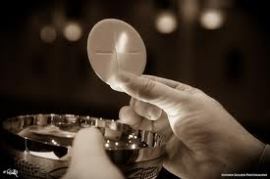 Jesus marches toward your funeral procession, and He does not stop or yield. Jesus does not give way or defer to death. Instead, Jesus defeats death with His death and resurrection, each and every time He meets it. Jesus meets you here today as you plod along in your personal funeral procession and gives you life. Jesus meets you at this altar to give you His living Body and His life-giving Blood.
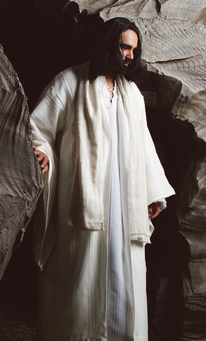 And you can smile in his face, “Yes, death, you used your sting, didn’t you? You should have used your sting on me. The sting would have stuck on me. But you didn’t. Instead, death, you used your sting on my Savior, my God, and my Lord. You used your sting on Jesus, didn’t you? You had Jesus pinned tightly on the cross, and you stuck Him with your stinger and buried it into Him. Death, you were a fool that day. You stung God Himself. You stung Jesus who is the Resurrection and the Life (Jn. 11:25). But when you went to the tomb to find your stinger and get it back, Jesus wasn’t there. And guess what, death, Christ has taken my sin as He hung on the cross. And, death, you will not ever get your sting back. Never. That empty tomb means that your sting is lost forever. Death, I don’t fear you any longer.”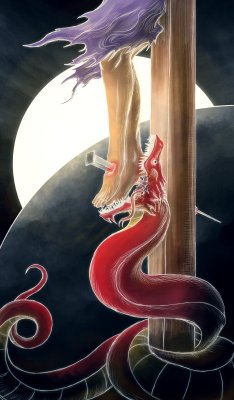
 But Satan comes along and puts a question into the mind of the woman. “Did God actually say?” This is the one attack of the devil. He always is trying to get us to doubt the Word and promise of God. “Did God actually say, you should not eat of any tree in the garden?” And notice that the woman adds to God’s promise. She says, “We may eat of the fruit of the trees in the garden, but God said, ‘You shall not eat of the fruit of the tree that is in the middle of the garden, neither shall you touch it, less you die.’” God had never said anything about not touching the tree of the knowledge of good and evil (at least, it isn’t recorded for us). Satan is attacking God’s Word, but Adam and the woman have not fallen yet. The serpent sees his opening and tells an outright lie, “You will not surely die! For God knows that when you eat of it your eyes will be opened, and you will be like God, knowing good and evil.”
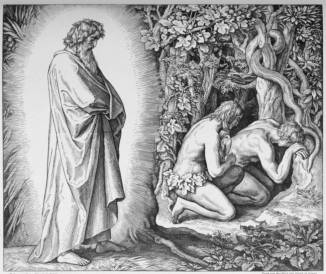 But even as God does this, we will see the horrific consequences that sin and evil has brought into God’s good creation. God calls to Adam, “Where are you?” God still wants to have fellowship with Adam and the woman even though they have sinned, broken His commandment, and lost their faith. But rather than confessing and repenting of his sin, Adam dodges the opportunity saying, “I hid from You because I was naked and afraid.” So, God gives Adam a second chance to repent, “Who told you that you were naked? Have you eaten of the tree of which I commanded you not to eat?”
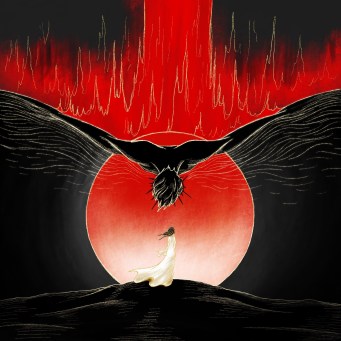 gives her the name Eve. She wasn’t called this at any point before in Scripture. Adam gives her the name ‘Eve’ which means ‘life-giver.’ Here’s how we know faith is restored. Eve was already going to be the mother of everyone who would be born. But Adam, the father of faith, changes her name to Eve because she is the mother of all who would believe in the promised Seed who would crush the serpent’s head.
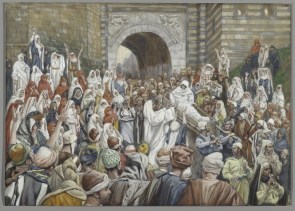 12 As he drew near to the gate of the town, behold, a man who had died was being carried out, the only son of his mother, and she was a widow, and a considerable crowd from the town was with her. 13 And when the Lord saw her, he had compassion on her and said to her, “Do not weep.” 14 Then he came up and touched the bier, and the bearers stood still. And he said, “Young man, I say to you, arise.” 15 And the dead man sat up and began to speak, and Jesus gave him to his mother. 16 Fear seized them all, and they glorified God, saying, “A great prophet has arisen among us!” and “God has visited his people!” 17 And this report about him spread through the whole of Judea and all the surrounding country.
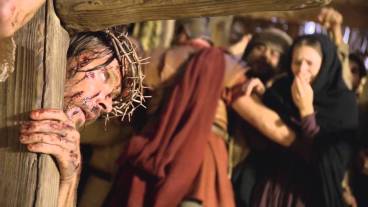 The funeral procession began at the sentencing as crowds shouted out, “Crucify, crucify Him.” In that funeral procession, Jesus carried His own bier, His own cross, until He could carry it no more. A great crowd of people followed Jesus mourning and lamenting for Him. But even in the midst of that funeral procession, Jesus’ words are the same, “Weep not”(Lk. 23:26-28).
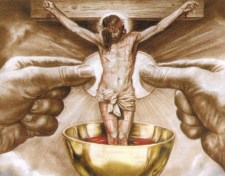 Instead, Jesus defeats death, each and every time He meets it.
 Pastorsamwise
You must be logged in to post a comment.