Matthew 26:1-27:66
In the name of Jesus. Amen.
Matthew is the only one of the four Gospels that tells us what happened to Judas after Jesus was arrested and condemned (Mt. 27:3-10). Judas was overcome with regret and guilt because he knew that God had cursed anyone for taking a bribe to shed innocent blood (Dt. 27:25). Our translation says that Judas “changed his mind” (Mt. 27:3). In Greek, it’s one word (μεταμέλομαι) that is similar to the word for repentance (μετανοέω), but the change of mind Judas had was only one-sided. And here’s what the text conveys: Judas was very sorry. He wished that what he had done could be undone. He regretted his betrayal, but Judas did not repent the way Christians repent. Christian repentance has two parts. It includes the regret and change of mind Judas had. But saving repentance goes one step further. Christian repentance also trusts and believes in God’s grace and mercy given on account of Jesus’ death and resurrection (Mk. 1:15). Judas was lacking that faith and trust.
That lack of faith in God’s mercy is why Judas goes to the chief priests and elders. He doesn’t know where else to turn even though he had been taught better. Sadly, Judas brings his confession to the wrong place. Judas went to the Temple which had been the place of forgiveness (1 Kgs. 8:30), but the night before, Jesus had clearly told Judas and the rest of the disciples that He was instituting the New Covenant (Jer. 31:33-34) in His Blood for the forgiveness of sin (Mt. 26:26-29). The result was that Judas went to the very ones who had been seeking Jesus’ death (Mt. 26:14-15). Judas knew where he needed to go for forgiveness – he had been told just a few hours earlier. But instead of going to Jesus, he sought forgiveness where it could not be found.
Judas’ confession of sin and his action of returning the thirty pieces of silver were both right. He had betrayed innocent blood and returning the payment he received for his sin was what he should do. But his sorrow and penance could not undo what he had done; it could not remove the guilt of his sin. The chief priests and elders were supposed to be forgivers, absolvers, and ministers of atonement. Yet, after hearing Judas’ confession, they refuse to lift the burden of guilt from him. Instead, they bind Judas’ sin and betrayal on his head. “What is that to us? See to it yourself” (Mt. 27:4). What a chilling, horrific thing to say to someone who is crushed with guilt.
Throughout the Gospels, those religious leaders had tried to convict Jesus of sin. They would accuse Jesus and the disciples of eating with defiled hands (Mt. 15:1-20) and of eating and associating with tax collectors and sinners (Lk. 15:1-2). They were always trying to trap Jesus (Mt. 22:15-40). You would think that they would at least tell Judas something like, “Don’t worry, Jesus isn’t innocent. He’s a sinner. He’s dangerous. He’ll bring trouble to all of us with his teaching.” But they don’t. They don’t try to convince Judas that Jesus was guilty. They don’t even offer that little shred of comfort to Judas. It appears as though they also know that Jesus was innocent. Back in Mt. 23:2-4, Jesus rightly said of them, “They tie up heavy burdens, hard to bear, and lay them on people’s shoulders, but they themselves are not willing to move them with their finger.”
If the chief priests and elders had offered Judas forgiveness, it would have required them to admit their own guilt. Again, they were the ones who conspired with Judas to shed Jesus’ innocent blood. But instead of repenting, they insisted they were doing the right thing in condemning Jesus. So, they become absurdly hypocritical.
After Judas throws the pieces of silver in the Temple, they quickly work to get that money out of the Temple because it is blood money. They recognize they cannot put the bounty they had placed on Jesus’ head back in the holy treasury because it is unclean money (Dt. 23:18). But (here’s the hypocrisy) they were the ones who defiled that holy money. They were the ones who took it from the treasury. They were the ones who turned that silver into blood money using it to pay Judas for his betrayal (Mt. 26:15).
While it is tempting to despise the chief priests and Judas, in Christian humility we need to recognize that we do just as they did. Too often, we are filled with sinful desires and passions and make any excuse to attempt to justify them. Too often, we will do all sorts of horrific things and try to hide them under the guise of holiness while we ignore the carnage it wreaks on others. Too often, we are like Judas and don’t realize how destructive our behavior is until it’s too late. When we do, finally, realize the great harm we have done, it can lead us to despair. And despair is a dangerous place to walk. Judas despairs of all hope and kills himself. Judas is condemned, not because he kills himself, and not even because he betrayed Jesus. Jesus’ death covered even Judas’ sins of suicide and betrayal. Judas is condemned because he died outside of faith in Jesus’ grace and mercy. Jesus calls Judas the “son of destruction” (Jn. 17:12) and says that it would have been better for Judas if he had never been born (Mt. 26:24). Jesus never says anything like that about His sheep.
Please allow me a brief aside here: Suicide, self-murder, is not the unforgivable sin. Can people commit suicide and still be a Christian? Yes. To those of you who have lost someone to suicide, you can have comfort in the promises of Scripture. Christ Himself is the man of sorrows, acquainted with grief (Is. 53:3). When someone is walking in grief, depression, and even in the valley of the shadow of death, Jesus is with them (Ps. 23:4) and desires to save them (1 Tim. 2:4). In that deathly vale, Jesus calls to them, “Come to Me, all who labor and are heavy laden, and I will give you rest” (Mt. 11:28). All that being said, suicide is an evil death and is never the answer to despair.
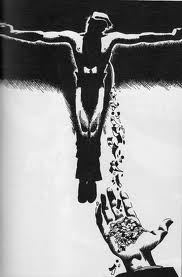
The answer to all sin and despair is in the innocent Blood of Jesus which has been shed for you. His innocent Blood was shed to cleanse you of your guilty blood. Whenever you recognize your guilt and sin against God, bring those sins to Christ. Let Him deal with them because He has dealt with them in His death and resurrection. He is the Lamb of God who takes away the sin of the world (Jn. 1:29).
The answer to sin is the innocent Blood of Jesus that He freely gives to you in Holy Communion. And now, Jesus invites you to His table to receive that Blood which He will put in your mouth. Here, Jesus’ innocent Blood becomes your blood. Dear saints, come, take, eat, and drink the perfect, innocent Blood of your Savior which He has shed for the forgiveness of all your sins. Amen.
The peace of God, which surpasses all understanding, will guard your hearts and minds in Christ Jesus. Amen.
 The main focus of Matthew’s Passion account we just heard is the royalty of Jesus. Christ rode into Jerusalem on a royal donkey just like King David and King Solomon (1 Kgs. 1:38) had done. But Matthew doesn’t focus on Jesus’ royal greatness or magnificence. Instead, Matthew focuses on King Jesus’ innocence. Matthew points us to King Jesus “the Innocent.”
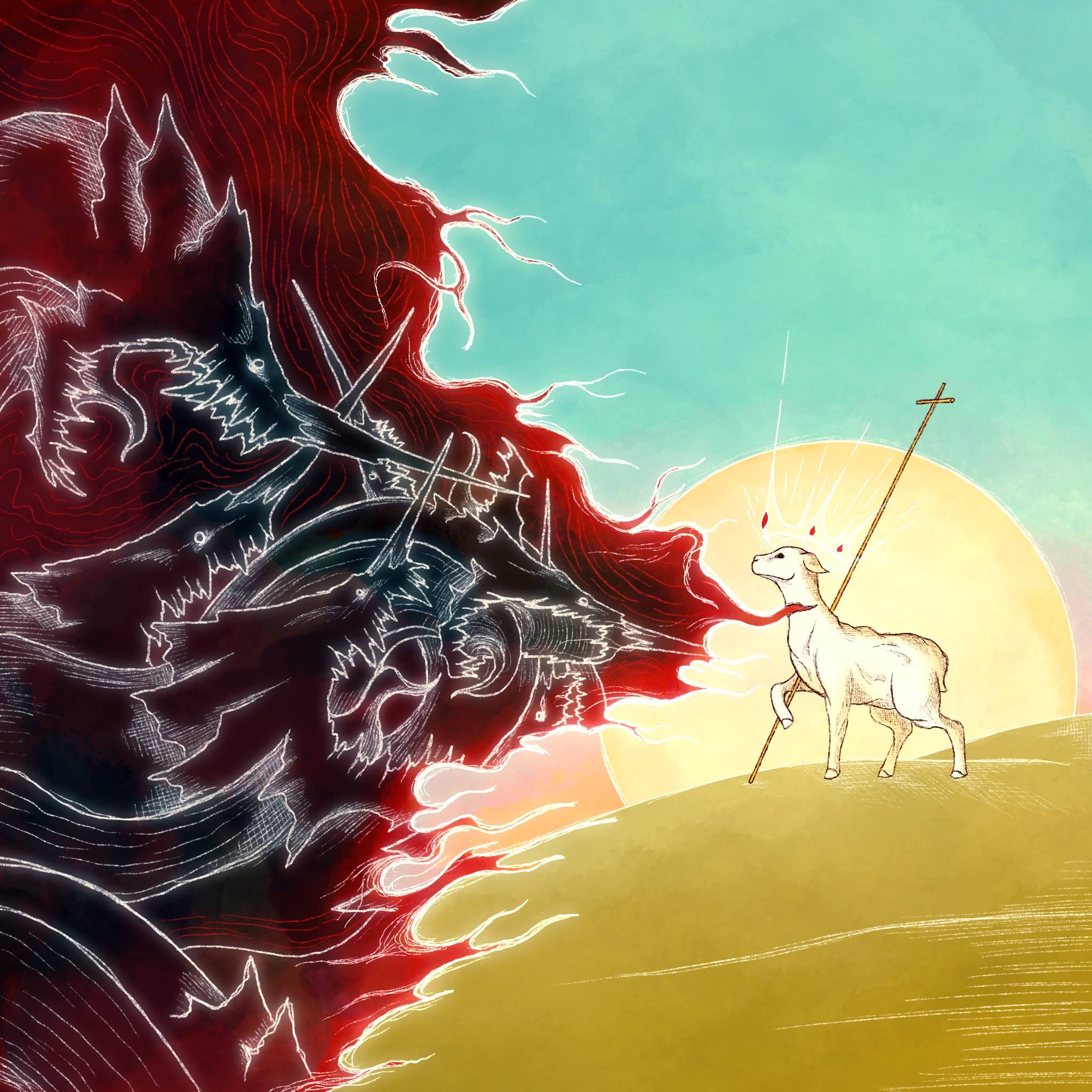 Jesus has arrived in Jerusalem. The Priest has come to the Temple. The Prophet has come to Mt. Zion. The King has come to His city. But most importantly the Lamb of God has come to His altar, where He would in five days breathe His last and pour out His blood for you (Pr. Wolfmueller). This is your Lord’s Passion, done and completed for you. Amen.
 Pastorsamwise
You must be logged in to post a comment.