The Lasting Legacy of Pentecost – Sermon on Acts 2:1-21, 36 for the Day of Pentecost

Acts 2:1–21, 36

1 When the day of Pentecost arrived, they were all together in one place. 2 And suddenly there came from heaven a sound like a mighty rushing wind, and it filled the entire house where they were sitting. 3 And divided tongues as of fire appeared to them and rested on each one of them. 4 And they were all filled with the Holy Spirit and began to speak in other tongues as the Spirit gave them utterance. 

5 Now there were dwelling in Jerusalem Jews, devout men from every nation under heaven. 6 And at this sound the multitude came together, and they were bewildered, because each one was hearing them speak in his own language. 7 And they were amazed and astonished, saying, “Are not all these who are speaking Galileans? 8 And how is it that we hear, each of us in his own native language? 9 Parthians and Medes and Elamites and residents of Mesopotamia, Judea and Cappadocia, Pontus and Asia, 10 Phrygia and Pamphylia, Egypt and the parts of Libya belonging to Cyrene, and visitors from Rome, 11 both Jews and proselytes, Cretans and Arabians—we hear them telling in our own tongues the mighty works of God.” 12 And all were amazed and perplexed, saying to one another, “What does this mean?” 13 But others mocking said, “They are filled with new wine.” 

14 But Peter, standing with the eleven, lifted up his voice and addressed them: “Men of Judea and all who dwell in Jerusalem, let this be known to you, and give ear to my words. 15 For these people are not drunk, as you suppose, since it is only the third hour of the day. 16 But this is what was uttered through the prophet Joel: 

17 “ ‘And in the last days it shall be, God declares, 
that I will pour out my Spirit on all flesh, 
and your sons and your daughters shall prophesy, 
and your young men shall see visions, 
and your old men shall dream dreams; 
18 even on my male servants and female servants 
in those days I will pour out my Spirit, and they shall prophesy. 
19 And I will show wonders in the heavens above 
and signs on the earth below, 
blood, and fire, and vapor of smoke; 
20 the sun shall be turned to darkness 
and the moon to blood, 
before the day of the Lord comes, the great and magnificent day. 
21 And it shall come to pass that everyone who calls upon the name of the Lord shall be saved.’

36 Let all the house of Israel therefore know for certain that God has made him both Lord and Christ, this Jesus whom you crucified.”

In the name of Jesus. Amen.

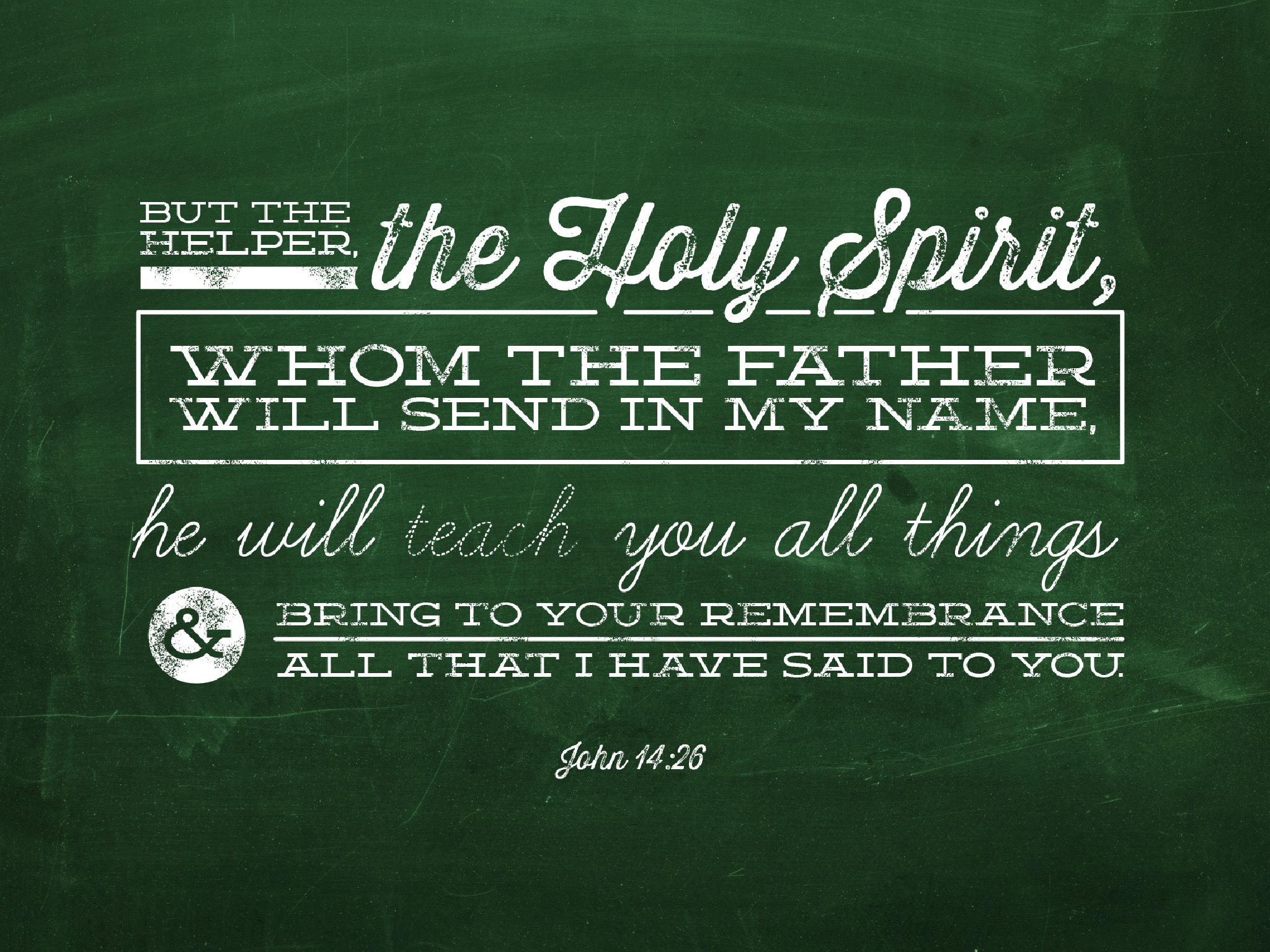
With all the amazing things that happened on the Day of Pentecost, it’s easy to miss the most amazing thing God did when He poured out the Holy Spirit on all flesh (Act. 2:17; Joe. 2:28-29). Our attention is so quickly and easily grabbed by the wowie-zowie things, that we get distracted from the lasting gift that God bestows with this giving of the Holy Spirit. Pentecost is about the sounds, not the sights. It’s about the audible rather than the visible. The work of the Holy Spirit is not so much in what is seen as in what is heard.

Yes, there are tongues of fire that rest on those believers, but as best as we can tell, those tongues of fire were only seen by the 120 Christian believers who had gathered together in one place (Act. 1:15). Notice, there is the sound of a mighty, rushing wind (Act. 2:2), but curtains aren’t flapping, dust isn’t flying, hats aren’t blowing down the street. It’s only the sound, and that sound fills the house where they are gathered. These 120 believers are filled with the Holy Spirit and are given the ability to speak in languages that represented every nation that existed, but they hadn’t ever learned those languages (Act. 2:5, 8-11).

It is that sound of wind that draws the bewildered multitude to the apostles (Act. 2:6). The people from all those nations weren’t drawn like moths that saw a flame; no, they were drawn by the sound. And those people heard something even more amazing. They heard those believers declaring the mighty works of God in their native languages. For some, that message led to further curiosity, “What does this mean?” But for some, it led to mocking, “They are drunk and filled with wine” (Act. 2:13).

Now, consider that accusation as I slightly modernize it. Imagine you are there in that crowd. All the people from Italy are standing around someone who’s speaking Italian, and they’re listening intently because they can understand. All the Brazilians gather around the guy speaking Portuguese. All the people from France, and 22.8% of the Canadians who speak French, are listening to someone speaking French. You hear the guy who’s speaking American,[1] and you can understand everything because it is being spoken fluently. You hear the Gospel. You are told that God came in the flesh of Jesus. You hear that He suffered, bled, died on the cross, rose again from the dead, and ascended into heaven. And you hear that Christ did all of this to forgive you of your sins and give you eternal life.

After hearing that message in American, you go over to the people who speak Portuguese (because, of course, people who speak French are rude) and you ask in one of the ‘commercial, business’ languages – either Greek, Latin, or Aramaic – what they heard. And it’s the same Gospel message. The only difference was that they heard it in Portuguese – fluent, articulate Portuguese. So, it’s clear that these Galilean hillbillies are speaking languages they didn’t know. Your conclusion would probably not be, “Oh, they must be drunk.” Getting drunk doesn’t endow a person with fluency in another language. In short, it probably wasn’t the act of speaking in other languages that elicited that accusation; instead, it was probably the content of what was being said. “You’re saying that God came to earth as a human. But He did it to die, and by that death I’m forgiven? You must be drunk.”

But the sounds of Pentecost still aren’t done. Peter stands up, and here is where we see the most amazing thing about Pentecost. Peter doesn’t stand up to perform a visible sign. He doesn’t heal the sick, cast out demons, or raise the dead. Peter stands up to speak and preach a Holy Spirit-inspired sermon to the entire crowd. That should be astounding to us.

We know Peter and what kind of man he was just fifty-three days before Pentecost. A young servant girl had simply asked Peter if he knew who Jesus was, and that led to Peter denying Jesus three times (Mk. 14:66-72). But now Peter, filled with the Holy Spirit, preaches to a crowd of over 3,000 people. And it is a bold sermon. He doesn’t hold back. He does point to Jesus with the sermon, but not with loud Gospel overtones.

I’ll just summarize his sermon. “Men of Israel, Jesus was here just a short time ago. He did all sorts of miracles, and you know about them. You know He was sent by God, yet you put Him to death. Now, we have seen Him raised from the grave. This Jesus has now ascended into heaven. He has all authority in heaven and on earth, and He will use that authority for the sake of His Church until He has put all His enemies under His feet. That’s a big problem for you because you put Him to death and are His enemy. You’re in trouble. Amen.”

It’s a sermon that would have been highly criticized in seminary because it doesn’t really contain any Gospel. How does a guy like Peter preach like that, especially because he preaching that accusation against himself? Peter knows his own guilt. The only explanation is that Peter was filled with the Holy Spirit and emboldened in a remarkable way. The sermon itself is a miracle. But then, the response to that sermon is even more miraculous.

Over 3,000 people ask, “What can we do?” Before this, the crowds had heard some amazing things and wondered what it all meant, but now? Now, they are cut to the heart (Act. 2:37), and they recognize their guilt. This is amazing because most of them probably were not present in the crowd on Good Friday crying out, “Crucify, crucify Him.” The foremost expert on the history and practices of this time, a guy named Alfred Edersheim, says that there may have been some overlap but the majority of the people there for the Day of Pentecost weren’t there for the Passover. So, Peter is addressing a crowd of hardened sinners who could have offered all sorts of excuses arguing for their innocence of Jesus’ death. But over 3,000 of them don’t. They confess and repent with a simple, “What shall we do?” (Act. 2:37).

And Peter adds a postscript to his sermon and tells them, “Repent and be baptized in the name of Jesus Christ for the forgiveness of your sins, and you will receive the gift of the Holy Spirit” (Act. 2:38). That very day, 3,000 souls were saved. 

They were given faith. They were also given and filled with the Holy Spirit. But that filling of 3,000 people with the Holy Spirit is so understated. Luke doesn’t tell us about another mightier wind that rushed even louder. No. They confess, repent, get Baptized, and are filled with the Holy Spirit. They are saved. How were they saved? Through the Holy Spirit’s work of pointing sinners to Jesus in simple preaching and through the Holy Spirit’s working through water and the Word. And through those means, the Holy Spirit creates faith.

Dear saints, that same miraculous work of the Holy Spirit through preaching continues today. In fact, that is what is happening even now. It is through God’s Word proclaimed by the mouth is this sinner that the Holy Spirit is creating, strengthening, and sustaining your faith. Right now, through God’s Word, the Holy Spirit is filling this place and pointing you to Jesus (Jn. 15:26).

Don’t think for one minute that the Holy Spirit isn’t working just because you don’t see whatever you think might be evidence of the Holy Spirit. The lasting legacy of Pentecost is that the Holy Spirit points sinners to Christ. Jesus Himself said that’s the Holy Spirit’s work (Jn. 15:26). Right here, right now, the Holy Spirit is calling, gathering, enlightening, sanctifying, and preserving you in the one true faith. He is here abundantly forgiving you of your sin. And the Holy Spirit invites you now to Jesus’ table where He will work through other means, through bread and wine which are Jesus’ Body and Blood. Come, receive, and be filled with the Holy Spirit. Amen.

The peace of God, which surpasses all understanding, will guard your hearts and minds in Christ Jesus. Amen.


[1] Yes, I know ‘American’ isn’t an official language.

Know-It-All Jesus – Sermon on Luke 5:1-11 for the Fifth Sunday after Trinity

Luke 5:1-11

1 On one occasion, while the crowd was pressing in on him to hear the word of God, he was standing by the lake of Gennesaret, 2 and he saw two boats by the lake, but the fishermen had gone out of them and were washing their nets. 3 Getting into one of the boats, which was Simon’s, he asked him to put out a little from the land. And he sat down and taught the people from the boat.

4 And when he had finished speaking, he said to Simon, “Put out into the deep and let down your nets for a catch.” 5 And Simon answered, “Master, we toiled all night and took nothing! But at your word I will let down the nets.” 6 And when they had done this, they enclosed a large number of fish, and their nets were breaking. 7 They signaled to their partners in the other boat to come and help them. And they came and filled both the boats, so that they began to sink. 8 But when Simon Peter saw it, he fell down at Jesus’ knees, saying, “Depart from me, for I am a sinful man, O Lord.” 9 For he and all who were with him were astonished at the catch of fish that they had taken, 10 and so also were James and John, sons of Zebedee, who were partners with Simon. And Jesus said to Simon, “Do not be afraid; from now on you will be catching men.” 11 And when they had brought their boats to land, they left everything and followed him.

In the name of Jesus. Amen.

How many miracles do you see in this text? Obviously, the huge catch of fish is one. Peter, James, and John leaving everything to follow Jesus is probably a second. But some of you might see a third miracle. How often does a man get told to go fishing and doesn’t jump at the opportunity? It’s a miracle!

One thing we need to understand when considering this text is that this is not Jesus and Peter’s first encounter – not even close. Somehow, we have gotten a view of the disciples that they just jump right on the Jesus bandwagon and follow Him wherever He goes from the start. But actually, this is the third time Jesus calls Peter to follow Him. We have to consider the other Gospels to realize this. Back in John 1, John the Baptizer sees Jesus and proclaims Him to be the Lamb of God who takes away the sin of the world (Jn. 1:29). Peter’s brother, Andrew, had been one of John’s disciples, but after John says this Andrew starts following Jesus. Andrew went and found Peter and said, “We have found the Messiah” (Jn. 1:41), so Peter also started following Jesus. The second call comes at the beginning of Mark’s Gospel where Jesus is walking along the shore of the Sea of Galilee and says to Andrew and Peter, “Follow Me, and I will make you fishers of men” (Mk. 1:17).

Now, when we come to this text, we see another different scene. Crowds are pressing in on Jesus to hear Him preach. Jesus asks Peter to help Him get a little space for preaching. (Maybe, this is the precedence for Lutherans sitting in the back rows. Give the preacher enough room to preach!) Peter stops cleaning his nets and puts the boat out a little from the land so Jesus can preach while sitting on the boat and not get trampled by the crowds.

When Jesus’ sermon is over, He tells Peter to grab his freshly cleaned nets, put the boat out into the deep waters, and have a catch. But Peter isn’t too keen on the idea. That previous night of fishing had been frustrating. All his work had led to zero fish, and now this Son of a carpenter is telling him to go out in the middle of the day and have a catch. No! Peter knows fishing. He thinks Jesus should stick to making tables and chairs and preaching. Daytime is not the time to fish, and the deep waters aren’t where you find fish. But Peter relents; he does as Jesus says almost like he is humoring this know-it-all Jesus.

Peter and Andrew row out into the deep, drop the nets, and enclose such a large number of fish that the nets begin to break. Even though this text is just twelve verses, we have to understand that it would have taken a long time of tugging and pulling and grunting to load up their boat with all these fish, and there still isn’t enough room. So, Peter and Andrew signal to their partners, James and John, to bring their boat out into the deep water and fill that second boat up until both boats begin to sink because there are so many fish.

Again, this is clearly a miracle which, you would think, would excite Peter and have him try to sign Jesus to a contract as a full partner in his fishing business. But that isn’t Peter’s reaction. He says, “Depart from me, for I am a sinful man, O Lord.”

Now, Peter had seen Jesus do miracles before this. We know that Peter had been at the wedding in Cana when Jesus turned water into wine in Jn. 2:1-11. That text tells us that when Peter and the other disciples saw the miracle they believed in Jesus. And, if you look back to Luke 4, you see that Jesus had done several other miracles. It is very possible that Peter was in the synagogue when Jesus cast out a demon (Lk. 4:31-37). After that, Jesus goes to Peter’s house and healed Peter’s mother-in-law of a fever (Lk. 4:38-39). Peter would have been there for that miracle. It’s likely that Peter was with Jesus later that same evening while Jesus healed all sorts of people who were sick (Lk. 4:40-41). Never after any of those miracles does Peter ask Jesus to leave. So, why does Peter ask Jesus to go away after this catch of fish?

Probably, it is because this miracle is taylor-made to teach Peter that he doesn’t know it all. Sure, Peter is a successful fisherman, but his knowledge and wisdom and expertise has its limits. And Peter is going to have to learn to simply trust Jesus’ word, especially when Peter enters the new vocation that Jesus is about to call him to.

With this miracle, Jesus is teaching Peter something very important about preaching. You might be wondering, “What does a massive catch of fish that nearly sinks two boats have to do with preaching?” Well, you notice at the end of this text Jesus says to Peter, “Do not be afraid; from now on you will be catching men.” In other words, this catch of fish is a set up. It is a preview of what is going to happen when Peter begins his new calling and vocation of preaching the Gospel. From this point forward, Peter is going to learn from Jesus how to be a minister of the Word.

We heard in our Epistle lesson (1 Cor. 1:18-25) that the message that Jesus is going to have Peter preach is called “the word of the cross” and is folly to those who are perishing. That Epistle text goes on to say, “Jews demand signs and Greeks seek wisdom, but we preach Christ crucified, a stumbling block to Jews and folly to Gentiles.” In other words, this new vocation that Jesus is calling Peter into – catching men with the preaching of the Gospel – it isn’t going to be flashy and impressive. It isn’t going to sound wise and knowledgeable. Instead, it’s going to sound as silly as trying to catch fish at the wrong time of day in the wrong spot when everything you would expect to work will fail. But the results, the results will be unimaginable.

And that’s what we see at Peter’s first opportunity to proclaim the Gospel after Jesus’ resurrection. On the day of Pentecost, Peter preaches a sermon that isn’t overly profound or insightful or persuasive. He simply preaches Christ crucified and risen, and 3,000 souls are saved (Act. 2:14-41). God worked through His Word on that day of Pentecost to bring in a large catch of men through the net of the Gospel, just as Jesus worked through His Word to Peter here with the catch of fish.

Dear saints, God will continue to work through that the proclamation of that Word. He has promised! While we see our country slide into greater and greater sin and unbelief, we don’t need to start figuring out how to make the Gospel more appealing to people. Again, the message of the Gospel is folly to those who are perishing. The Gospel we preach and believe is that sin separates you from God and is damnable. But God Himself has taken the punishment you deserve, and you get off scot free. And if we try to repackage the Gospel so that it doesn’t sound so foolish, it will cease being the Gospel. As a congregation, we need to do nothing more than to be faithful in proclaiming Christ crucified for sinners, and God will use that net of the Gospel (Mt. 13:47-50) to do His work.

Dear saints, you aren’t called to be like Peter in this text. I know there are a lot of sermons on this account that conclude with a challenge to leave everything behind and follow Christ. And because Peter is a towering figure in the Christian church, a lot of people have the idea that they should do as Peter does here. But honestly, the only thing Peter does in this text that all Christians should emulate is listen to Jesus – even when Jesus seems to be a know-it-all and calls you to do something that seems as ridiculous as fishing at the wrong time in the wrong place. Otherwise, there’s nothing that Peter does in this text for you to mimic.

Honestly, Peter is kind of a mess in this text. Even when he confesses his sin, he is only half right. He recognizes his sinfulness which is good, but then he asks Jesus to depart which is silly. Dear saints, when you recognize your sin, that is when you ask Jesus to come and wash away your sin.

And, no. You aren’t called to be like Peter and leave everything to follow Jesus. It is an amazing thing that Peter does this, but Jesus hasn’t called you to do that. God has put you into particular relationships where He uses you as His hands and feet to minister to the needs of your neighbor. Don’t leave those vocations and relationships. Instead, serve Jesus where you are.

Scripture is clear on this. 1 Corinthians 7:20-24 says, “Each one should remain in the condition in which he was called. Were you a bondservant when called? Do not be concerned about it. (But if you can gain your freedom, avail yourself of the opportunity.)… So, brothers, in whatever condition each was called, there let him remain with God.”

Dear saints, God needs you in the stations and vocations where He has placed you. Jesus knows how He can use you best in the kingdom of God. Jesus knew what He was doing when He placed you into your family, into this congregation, in your job, in your neighborhood. He has placed you there to be a faithful husband, wife, child, employer, worker, and neighbor. You don’t need to leave that in order to serve God more faithfully. God has placed you there to serve Him by serving those neighbors He has given you. Even if you think Jesus has made a mistake by putting you there, just trust that Jesus actually does know it all. And He will use you in the way that He sees fit.

Finally, if you want to see yourself in this text, you are the fish caught up in the net of the Gospel. You have been brought safely into the boat of the holy Christian Church by Jesus who went to the cross and shed His blood so you could be forgiven and saved. And Jesus Your Savior now calls and invites you to come to this altar and receive His Body and Blood given and shed for you for the forgiveness of your sins.

So, come. Receive. The holy Son of God does know it all, and He is here for you now and forever. Amen.

The peace of God, which surpasses all understanding, will guard your hearts and minds in Christ Jesus. Amen.