A Good Day – Sermon on Genesis 22:1-14 for the Fifth Sunday of Lent

Genesis 22:1-14

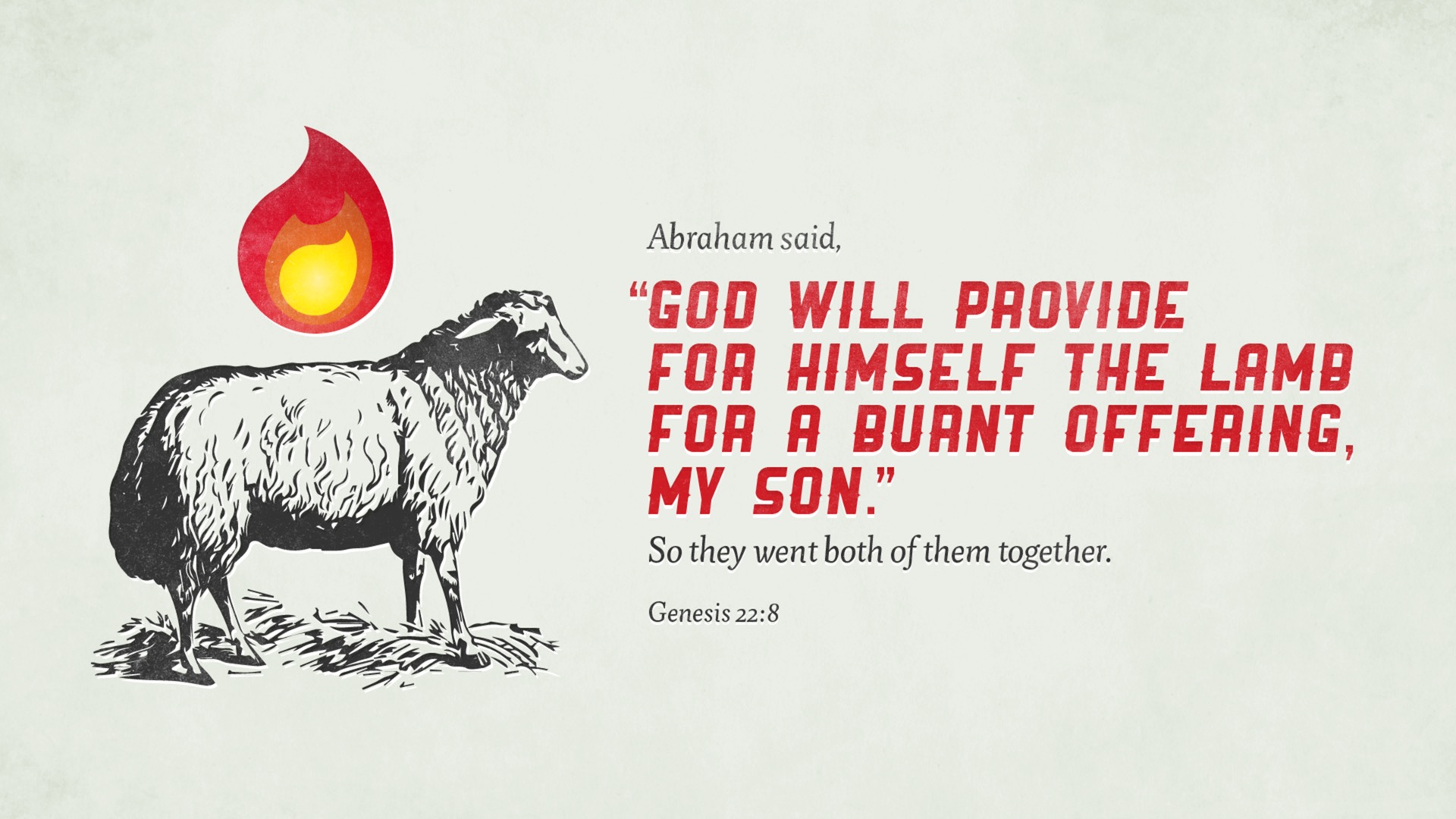
1 After these things God tested Abraham and said to him, “Abraham!” And he said, “Here I am.” 2 He said, “Take your son, your only son Isaac, whom you love, and go to the land of Moriah, and offer him there as a burnt offering on one of the mountains of which I shall tell you.” 3 So Abraham rose early in the morning, saddled his donkey, and took two of his young men with him, and his son Isaac. And he cut the wood for the burnt offering and arose and went to the place of which God had told him. 4 On the third day Abraham lifted up his eyes and saw the place from afar. 5 Then Abraham said to his young men, “Stay here with the donkey; I and the boy will go over there and worship and come again to you.” 6And Abraham took the wood of the burnt offering and laid it on Isaac his son. And he took in his hand the fire and the knife. So they went both of them together. 7 And Isaac said to his father Abraham, “My father!” And he said, “Here I am, my son.” He said, “Behold, the fire and the wood, but where is the lamb for a burnt offering?” 8 Abraham said, “God will provide for himself the lamb for a burnt offering, my son.” So they went both of them together. 

9 When they came to the place of which God had told him, Abraham built the altar there and laid the wood in order and bound Isaac his son and laid him on the altar, on top of the wood. 10 Then Abraham reached out his hand and took the knife to slaughter his son. 11 But the angel of the Lord called to him from heaven and said, “Abraham, Abraham!” And he said, “Here I am.” 12 He said, “Do not lay your hand on the boy or do anything to him, for now I know that you fear God, seeing you have not withheld your son, your only son, from me.” 13 And Abraham lifted up his eyes and looked, and behold, behind him was a ram, caught in a thicket by his horns. And Abraham went and took the ram and offered it up as a burnt offering instead of his son. 14 So Abraham called the name of that place, “The Lord will provide”; as it is said to this day, “On the mount of the Lord it shall be provided.”

In the name of Jesus. Amen.

In most of our interactions with people, we typically give more weight to their commands than we do to their promises. In other words, we take commands seriously but promises, not so much. We’ve grown accustomed to people who over-promise but under-perform.

When your boss tells you he wants a certain task completed by the end of the day, that carries a lot of weight. But when your boss promises that he’ll consider your request for a new chair as soon as possible, you anticipate that there will be delays and excuses and figure you’ll probably have to ask several more times. Sadly, even children learn this. Parents will command their children to do certain things, but then when a child asks their parents to consider getting a puppy, a parent responds, “Sure, I’ll think about it,” but that may or may not happen.

The worst part of this is how it clouds how we consider God’s Word. God’s Word is consistent. His promises carry same weight as His commands. What God promises always happens. You can count on it. He is the Lord; He has spoken, and He will do it (Ezk. 24:14).

That helps us understand a little better what’s going on in this text. The biggest hurdle we have to understanding this text is the question, why is God commanding Abraham to do this? Why command the human sacrifice of Isaac? Last week we talked about the tests that God gives, and this is clearly a test. God is testing Abraham here, and this is probably the most difficult test recorded in Scripture. (Who knows? Maybe Job would argue with that statement.) 

The reason God tests always to strengthen faith. He doesn’t test you to see if you have enough willpower or inner strength. Instead, God tests faith to make it stronger. God’s tests increase steadfastness (Jam. 1:2-4), endurance, character, and hope (Ro. 5:3-5). One pastor put it nicely when he said that God gives tests to strengthen our “givable-to-ness.” His tests open us up so we can receive from God’s hands the abundance He wants to give us.

God had been making promises to Abraham for years prior to this. God called Abraham to leave his land and people (Gen. 12:1-3) so God could make a great nation out of him (Gen. 15:1-6). When Abraham was 99 years old, God promised to give Abraham a son through his wife Sarah – even though she was 90 and past the age of having children (Gen. 17:15-16). God kept giving promises. Just before this reading, God promised that Isaac would have children, and through Isaac’s children all the families of the earth would be blessed (Gen. 21:1218:18).

But now, God commands Abraham to offer Isaac as a burnt offering. God’s promise that Isaac would have children is in direct contradiction to God’s command that Isaac be sacrificed. So, what is Abraham to do? Should he believe God’s command or God’s promise? The answer is to believe both, and Abraham does. Hebrews 11:19 says, that Abraham believed that God would raise Isaac from the dead. Abraham believed God’s promises and commands – even when God’s promise and command appeared contradictory.

Now, to the text. God doesn’t just say, “Go sacrifice Isaac.” No. God lays it on thick. “Take your son, your only son Isaac, whom you love.” That, dear saints, is the first time the word ‘love’ is used in the Bible. “Take your son, your only son Isaac, whom you love, and go to the land of Moriah, and offer him there as a burnt offering on one of the mountains which I will show you.”

Abraham knew that all the animal sacrifices in the Old Testament pointed to the fact that God would accept the death of another in the place of the sinner. Abraham and all the believers in the Old Testament believed that those sacrifices were pointing forward to the Savior God had promised (Gen. 3:15) who would die in their place (Heb. 9:12).

This sacrifice (or ‘near sacrifice’) of Isaac might be the clearest portrayal of what God would do through Christ. The whole thing is parallel to what Jesus would do. Abraham is to offer his son, just like God the Father, is to offer up His beloved son, Jesus (Jn. 3:16). It takes three days for the thing to take place (Gen. 22:4Lk. 24:46). Isaac, like Jesus, carries the wood to the place where he is to be the sacrifice (Gen. 22:6Jn. 19:17). The ram that gets offered in place of Isaac is crowned with thorns (Gen. 22:13Mt. 27:19). 

When Abraham sees that ram caught in the thicket by its horns, which doesn’t happen to rams, Abraham recognizes that ram is to be sacrificed instead of Isaac. God has put that ram there, and God will accept the death of that ram in the place of Isaac. But the ram is not the actual substitute. That ram points to Jesus as the sacrifice in place of Isaac and Abraham and the whole world and for you.

Through this whole thing, God is giving Abraham an insight into what God will go through when He offers up Jesus as the sacrifice for the sin of the world.

Dear saints, as we move into Holy Week, we’re going to hear a lot of sad things. Next week, Palm Sunday, we’ll hear the Passion of Christ from Matthew. We’ll hear about the betrayal, beating, whipping, crucifying, and dying of the eternal, beloved Son of God. There will be no substitute for Jesus. He will die, and this is serious and sad like this offering of Isaac was for Abraham. But notice how Jesus talks about all of this. When Jesus spoke of Abraham in our Gospel reading today, our Lord says, “Abraham saw my day and was glad” (Jn. 8:56). Abraham rejoiced.

Abraham saw what God would do in giving His only begotten Son on the cross, and he rejoiced. Dear saints, in the days that are coming up, you’ll hear all that Christ did. Yes, it’s sad and somber, but the greatest expression of faith is that you would be glad and happy about this. Receive it all with a thankful and joyful heart. God loves you, so He loves to do this for you.

Tenali, today you are Baptized. Jesus is the one who has taken your place. This is reason to rejoice all the days of your life. Live a life filled with rejoicing in the fact that Jesus is your substitute. Tenali, and all you saints, remember that Jesus endured all His suffering with joy. It was for the joy that was set before Him that Jesus endured the cross, despising the shame (Heb. 12:2).

Joy isn’t only for Easter. Joy is found in all Christ has done for you. You have a substitute. You have a Savior. Good Friday, a glad day, indeed. Amen.

The peace of God, which surpasses all understanding, will guard your hearts and minds in Christ Jesus. Amen.

God Punishes Christ

The Scripture readings for tonight’s service
are portions of Psalm 22; Zechariah 13:1, 7-9; and Mark 14:32-41.

In the name of Jesus. Amen.

One of the common objections that pagans have against Christianity goes something like this: The Christian god is nothing more than a spoiled brat. He gets upset when humans decide to eat a piece of fruit, and you silly Christians believe the only way to make him happy is for him to torture and kill his own child. The pagans will then say that if god were truly loving that he wouldn’t threaten us with eternal punishment simply because we don’t follow his contrived rules. They think that god should just love and accept us for who we are and not who he expects us to be. He’s simply too demanding and stubborn. If he wants to forgive us, he should just get over his rules, ignore our deficiencies, and move on.[1]

That type of thinking is all the evidence you need to know that person has no clue what Christianity actually teaches. So, let’s try an analogy – just know this analogy isn’t a complete picture of Christianity either. The hymn we just sang, “Salvation Unto Us Has Come,” does a great job giving a fuller picture than this analogy does, but the analogy helps address that objection, so here it is:

Imagine a mom and dad who have a perfectly loving home with several children. In this home, there is no anger or selfishness. The children never fuss or complain. They all treat each other and with perfect, complete love and respect.

Then one day, a virus attacks the children, and it causes them to harm themselves and each other in horrible ways. They also fight against their parents. (Please know, the analogy already breaks down here because it doesn’t place any culpability on the kids for contracting this virus. We are entirely guilty for all of our sin. But, again, it’s not a full picture.)

In that instance, could those parents simply let that virus eat away at their children? Could they just decide to love their children the way they are while the virus progresses, and the conditions keep getting worse? Could those parents ignore how that virus mutates the genes of their kids and spreads to others too? Could they just let that virus fester and kill their kids along with all their descendants while the kids get more and more violent and dangerous? No!

The parents would hate the virus. They would be angry at the destruction and devastation it brought to their family. They would do anything they could to annihilate the virus. But those parents know two things. First, they know that the virus has run so deep that killing the virus would also mean the death of their children. Second, they know that only way to abolish the virus and stop the suffering it brings is for one of the parents to receive a treatment that sucks all the virus out of their children and puts it all into one of the parents. It means that one of the parents will have to die, but the children will live and be cured. So, of course, one of the parents, out of love for the family willingly volunteers to be the cure and die.

Now, this analogy doesn’t present all the aspects of what Scripture teaches, but it addresses the “God-is-a-child-abuser” objection against Christianity that I mentioned earlier.

Dear saints, the virus of sin is horrific. Sin isn’t just something floating around out there that periodically causes pain. No, sin is a completely devastating infection coursing through your veins. Your sin causes hurt and harm to others and to yourself. Sin kills you.

Yes, God loves you just the way you are. But it would not be loving for God to leave you just the way you are. Instead, He loves you in such a way that He will not allow sin to drag you into eternal suffering. In Christ, God came down to draw all the infection of sin from you. Jesus took all that sin and disease from you (Is. 53:4; Mt. 8:17). In 2 Cor. 5:19, 21, Scripture tells us, “In Christ God was reconciling the world to Himself, not counting their trespasses against them… For our sake He made Him to be sin who knew no sin, so that in Him we might become the righteousness of God.”

When the virus of sin first infected humanity in the Garden of Eden, God promised to send the Savior (Gen. 3:15) and draw all the disease of sin out of you. In love for you, God kept that promise when, in the fullness of time, the long-promised and long-awaited Christ came to willingly suffer all the pain and torment that the virus of sin brings.

In Christ, God was at work keeping the promise He had made. But even though humanity first heard that promise in the Garden of Eden, Scripture teaches that even before He created all things, God knew that humanity would choose to contract that virus and He knew what it would take to cure you. So, Scripture comforts you by clearly stating that Jesus is the Lamb slain before the foundation of the world (Rev. 13:8 [KJV]; 1 Pet. 1:19-20).

When God poured out His just anger and righteous wrath against the virus of sin, He first placed it all upon Himself, on Jesus (Jn. 1:29; 2 Cor. 5:21; 1 Jn. 2:2) to spare and rescue you from that punishment. And when Christ suffered God’s punishment for your sin, He knew exactly what He was doing (Mk. 14:36, 39). No one took Jesus’ life from Him. He had the authority to lay it down and to take it up again (Jn. 10:18).

He knew that He was the Shepherd who would be struck for your sake (Zech. 13:8; Mk. 14:27). He willingly took the blow of God’s punishment and laid down His life for you (Jn. 10:11). Christ did this so that you would call upon His name and be His people (Zech. 13:9).

It was not out of hatred for His Son, but out of love for you that God the Father punished Jesus on the cross. The Good Shepherd willingly took all of God’s wrath against your sin in order that you would be His forever. He was punished so that you would be restored and forgiven, brought back to your proper place as a child of God. Because of what Jesus has done for you, you can confess, “The Lord is my God.”

Christ has opened the fountain that cleanses you from the virus of sin and uncleanness (Zech. 13:1). Because Jesus has taken your punishment God is not ashamed to say, “[You] are My people” (Zech. 13:9). Amen.

The peace of God, which surpasses all understanding, will guard your hearts and minds in Christ Jesus. Amen.


[1] I have intentionally used lower-case references to God here because this argument does not – in any way, shape, or form – represent who God truly is.

Christ’s Suffering as Payment & Sacrifice for Sin

The Scripture readings for tonight’s service are
Psalm 103:1-5, 8-14; Isaiah 53:10-12; Galatians 3:10-14; and John. 3:13-21.

In the name of Jesus. Amen.

To a certain degree, everyone has the wrong belief that if they have done something wrong they can make up for it. Some believe that happens through Karma. If enough bad things happen to them, it will eventually be paid back in good things happening to them and will all balance out. Some believe they can make up for bad things through luck. If a black cat crosses your path, you spill salt, walk under a ladder, or break a mirror; you just have to find a four-leaf clover, a heads-up penny, or some other nonsense. Yes, even Christians fall into this wrong belief. When we feel the guilt of our sin, we think that if we do enough good works, pray the right prayers, redouble our efforts, or simply resolve to do better, then God will have no choice but wink, smile at us, and ignore our sins.

This type of thinking and belief is totally wrong! Across the board, it’s wrong. All of those false beliefs attempt to deal with the brokenness that sin brings to creation. And they all fail to bring relief. Because of sin, we are polluted and need cleansing. Because of our sin, we are out of step with creation. Because of our sin, we are banished from God’s holy presence. We can’t just climb a ladder up to heaven, no matter how well we think it’s constructed. We can’t wash away the defilement that clings to us. We can’t approach God in His holiness. We need something that those false beliefs can never give. What we actually need is atonement. 

Atonement is one of those $3 theological words, so we need to define it. The way I will often teach my Confirmation students its meaning is to break down how it is spelled and change how it is pronounced – at-one-ment. To atone something means to cleanse it from the pollution of sin. But atonement doesn’t stop there. Atonement makes a person holy. And with this cleansing and infusion of holiness, atonement gives a person beneficial access to God’s presence (Dr. Kleinig).

This is why Christianity is completely different from any other religion. Christianity teaches that God Himself, and God alone, atones for the sins of the world (1 Jn. 2:1-2) through Jesus’ suffering and death. A good way to understand Jn. 3:16 is, “For God loved the world so that He sacrificed His only-begotten Son that whoever believes in Him should not perish but have eternal life.” We need this because at the end of Jn. 3, Scripture says, “Whoever believes in the Son has,” present tense, “has eternal life; whoever [rejects],” more literal understanding, “whoever rejects the Son shall not see life, but the wrath of God remains on him” (Jn. 3:36). Because we are born sinners, we stand under God’s holy and righteous wrath.

Now, God’s holy presence is both life-giving and death-dealing. It sanctifies and blesses everything that is clean, but it annihilates everything that is unclean and unholy. Since human impurity is incompatible with God’s holiness, getting close to the holy God is dangerous.

Think of gasoline and fire. The two cannot exist together. As soon as the two come into contact, the gasoline is completely burned up and consumed. Think of God’s holiness as the fire and, because of our sin, we are more combustible than gasoline. This is why we need God Himself to atone us.

Scripture records several instances where unclean, polluted sinners are instantly consumed in God’s holy presence – Aaron’s sons, Nadab and Abihu, when they offered unauthorized fire before God (Lev. 10:1-2); the clan of Korah, when they thought they could change the worship practices that God had given (Num: 16:1-36); or Uzzah, when he reached out and touched the Ark of the Covenant which was forbidden (2 Sam. 6:6-7). 

So, to be in God’s holy presence, we need to be changed, and that change can only happen because of what Jesus has done as He suffered on the cross. He changes us. He doesn’t change God. Christ changes us so that we are cleansed from the pollution of sin, that we are granted forgiveness and mercy, and that we can safely enter God’s holy presence.

Each of our Scripture readings tonight talk about this change. Our Psalm tonight (Ps. 103) remembers that God forgives your iniquity, heals the pollution of your diseases, and redeems your life from the pit. But God doesn’t just stop there. Because you are cleansed and can come into God’s holy presence, He crowns you with steadfast love and mercy, and satisfies you with good so your youth is renewed like the eagle’s (Ps. 103:3-5).

Our Old Testament reading (Is. 53:10-12) says that it was God’s will to crush Jesus in your place. Jesus’ suffering and death makes an offering for guilt. Christ bears your iniquities and makes you accounted as righteous. And that text makes it clear that, even though Jesus will die in the place of sinners, He will have His days prolonged and see you whom He has made to be children of God.

The Epistle reading (Gal. 3:10-14) says that Jesus redeemed you from the curse of the law by becoming a curse for you as He suffered and hung on the tree of the cross. Christ did this so that the blessing God gave to Abraham might be given to you who are cleansed through faith in Christ like your father Abraham was (Ro. 4:16).

And our Gospel reading (Jn. 3:13-21) says that, in Jesus, God came into the world not to condemn you, but in order that you might be saved and atoned through Jesus’ work.

Jesus’ suffering has bought and purchased you so that you belong to God. He came, not to be served but to serve, and to give His life as a ransom price for you (Mk. 10:45). 

Dear saints, your price has been paid. On the cross, Jesus cried out, “It is finished” (Jn. 19:30). But Jesus continues grant you access to God. 1 Jn. 2:1-2 says, “If anyone does sin, [you] have an advocate with the Father, Jesus Christ the righteous. He is,” present tense – meaning He is and remains, “the propitiation,” (i.e. the one who makes atonement), “for not just your sins but also for the sins of the whole world.”

All the benefits of His suffering and death are continually delivered to you because He is your advocate with your heavenly Father, now and forever. Amen.

The peace of God, which surpasses all understanding, will guard your hearts and minds in Christ Jesus. Amen.
The Price – Sermon on Matthew 27:62-28:15 for the Vigil of Easter

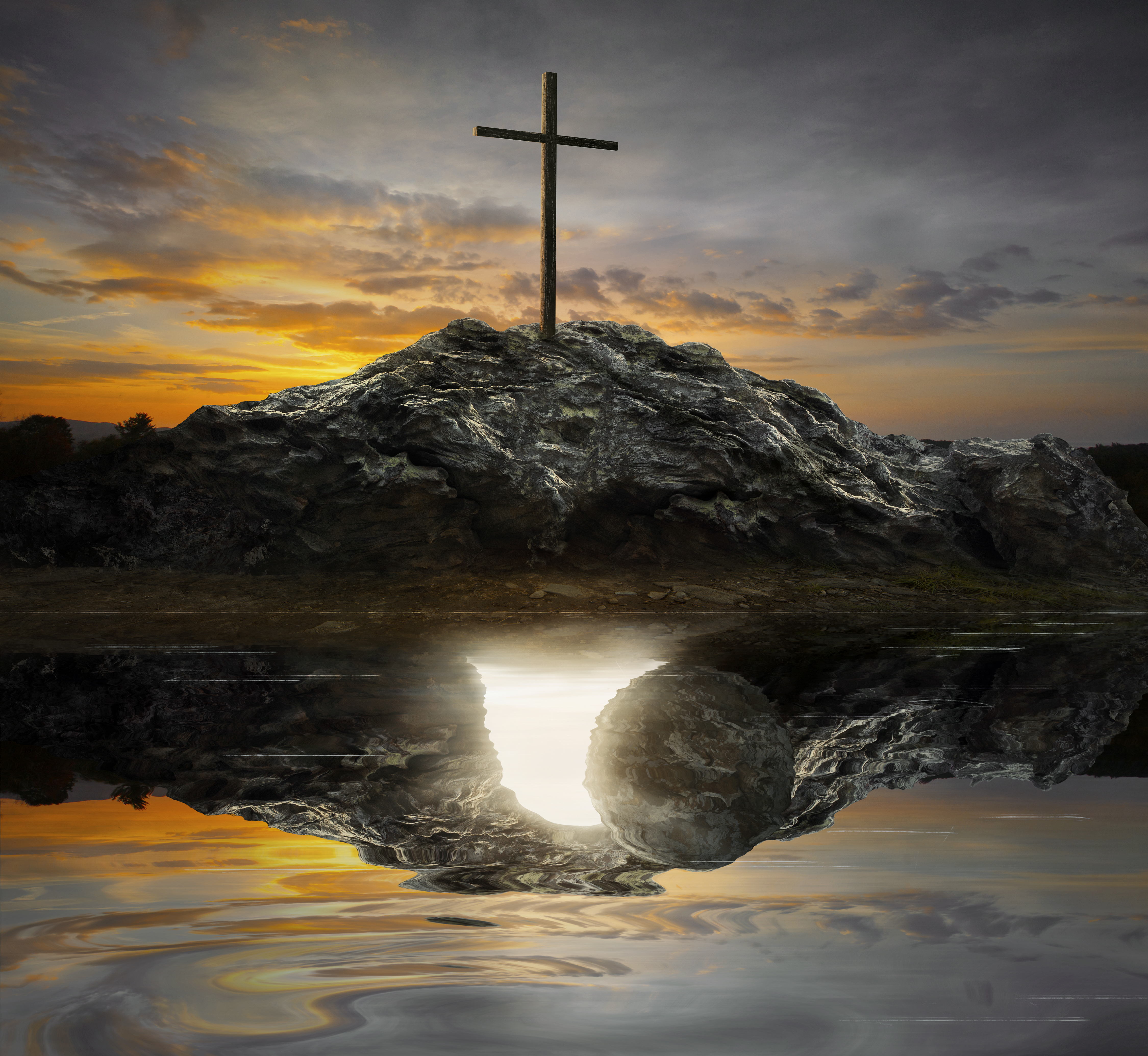
A single cross with the reflection of an empty tomb.

Matthew 27:62-28:15

62 The next day, that is, after the day of Preparation, the chief priests and the Pharisees gathered before Pilate 63 and said, “Sir, we remember how that impostor said, while he was still alive, ‘After three days I will rise.’ 64 Therefore order the tomb to be made secure until the third day, lest his disciples go and steal him away and tell the people, ‘He has risen from the dead,’ and the last fraud will be worse than the first.” 65 Pilate said to them, “You have a guard of soldiers. Go, make it as secure as you can.” 66 So they went and made the tomb secure by sealing the stone and setting a guard. 

1 Now after the Sabbath, toward the dawn of the first day of the week, Mary Magdalene and the other Mary went to see the tomb. 2 And behold, there was a great earthquake, for an angel of the Lord descended from heaven and came and rolled back the stone and sat on it. 3 His appearance was like lightning, and his clothing white as snow. 4 And for fear of him the guards trembled and became like dead men. 5 But the angel said to the women, “Do not be afraid, for I know that you seek Jesus who was crucified. 6 He is not here, for he has risen, as he said. Come, see the place where he lay. 7 Then go quickly and tell his disciples that he has risen from the dead, and behold, he is going before you to Galilee; there you will see him. See, I have told you.” 8 So they departed quickly from the tomb with fear and great joy, and ran to tell his disciples. 9 And behold, Jesus met them and said, “Greetings!” And they came up and took hold of his feet and worshiped him. 10 Then Jesus said to them, “Do not be afraid; go and tell my brothers to go to Galilee, and there they will see me.”

11 While they were going, behold, some of the guard went into the city and told the chief priests all that had taken place. 12 And when they had assembled with the elders and taken counsel, they gave a sufficient sum of money to the soldiers 13 and said, “Tell people, ‘His disciples came by night and stole him away while we were asleep.’ 14 And if this comes to the governor’s ears, we will satisfy him and keep you out of trouble.” 15 So they took the money and did as they were directed. And this story has been spread among the Jews to this day.

Alleluia! Christ is risen!
He is risen indeed! Alleluia!

In the name of Jesus. Amen.

When Jesus died on Friday, things happened quickly and somewhat haphazardly because the Sabbath was about to begin at dusk. Joseph of Arimathea asked for the body of Jesus and laid it in his own new tomb (Mt. 27:57-61). Jesus had His Sabbath rest in that tomb from all the work that He had done (Gen. 2:2), but the chief priests and Pharisees don’t rest because they can’t rest. Instead, they work. They work like busy, busy bees. Even though it is the Sabbath day (and a high Sabbath because of the Passover), they go to Pilate and ask that a guard be set because they remember that Jesus had said He would rise after three days (Mt. 27:63-64). In a sad twist of irony, the enemies of Christ take His prediction of the resurrection more seriously than Jesus’ own disciples do.

Pilate seems to be a little annoyed by the request. He figures Jesus is dead and is no longer a threat, but here are these chief priests completely obsessed with a guy who has been crucified and is dead. So, Pilate says, “You have a guard of soldiers.” The Greek here is a little ambiguous. Pilate’s words there could be either a statement – which is how it is in our translation – or a command, “Here, have/take a guard of soldiers. Go, make it as secure as you can.”

I bring this up because it would make a difference as to which soldiers are stationed to guard the tomb. If it is a command, “Have a guard of soldiers,” it would be Roman soldiers. But if it is a statement, “You have a guard of soldiers,” then it would be soldiers from the Jewish Temple guard. I used to think that they were Roman soldiers (probably because of all the artwork I’ve seen depicts them as Roman soldiers). It could very well be that they were Roman soldiers, but I think there are enough clues to see that it is a real possibility that these guards are part of the Jewish Temple guard, and that is the assumption I’ll be using through the rest of the sermon tonight.

Toward the dawn of the first day of the week, the women go “to see the tomb” (Mt. 28:1), but they are invited by the angel to see that the place where Jesus lay and rested was now empty because Jesus has risen (Mt. 28:6). The angel sends them to tell the disciples the good news, but on the way, Jesus meets them. If you want to hear more about that exchange (which is so rich and beautiful), you’ll have to come back tomorrow morning.

While the women restart their journey to tell the disciples, the guard that had been stationed at the tomb go not to Pilate but to the chief priests and report everything that had taken place (Mt. 28:11). And the chief priests don’t accuse the soldiers of being crazy or drunk. Imagine someone came to your front door and said, “I was in the cemetery, and a guy came out of his grave,” your first reaction would not be, “Here’s some money, don’t tell anybody.” But that is what the chief priests do. They pay the guards to lie about what had happened, and it took a significant payment. Our text says, “a sufficient sum of money,” or, literally, “silver” (Mt. 28:12). That “hush silver” was the price of the soldiers’ lie. The chief priests instruct the soldiers to say, “Jesus’ disciples came while we were asleep and stole the body.”

This is why I think these soldiers were part of the Temple guard. Roman soldiers knew that falling asleep while on duty was a death sentence. Roman soldiers were well-trained and well-armed, so even lying about a bunch of fishermen being able to steal what they were guarding would be humiliating. And excuses from the chief priests would not satisfy Pilate to keep them out of trouble (Mt. 28:14), no matter how elaborate those excuses were. But the soldiers take the silver, and the “stolen body theory” spread to deny the fact of Jesus’ resurrection.

Now, all of that was to set this up: Everyone has a price. Judas’ price to betray Jesus was thirty pieces of silver (Mt. 26:15). The soldiers’ price to lie and defame their own honor was a large sum of silver (Mt. 28:12, 15). Now, ask yourself, “What is my price?” 

I don’t think anyone here would betray Jesus, like Judas did, for any amount of money. And I would guess that all of us would say that we are willing to die rather than deny Christ, but so did Peter (Mt. 26:35). We might not think that we have a price. And yet, we are all bought with a lower price for lower things.

Every time we sin, we are easily bought. We sin and despise God’s Word by skipping church and neglecting to gather with our brothers and sisters in Christ because we don’t want to pay the price of getting extra sleep on Saturday night, missing our kids’ tournament, or researching to find a church while we are on vacation. We sin and lie because we aren’t willing to pay the price of our reputation when the truth will cost us. Whenever we fall into sin, we sell our souls for the deadly wages that sin pays us (Ro. 6:23). Dear saints, repent.

Repent and know that the price of your sins has been paid by Jesus. Everyone has a price, even God. The story of Abraham and Isaac (Gen. 22:1-18) showed what kind of price, what kind of sacrifice, was needed. There, Abraham places his son on the altar, and even though God stopped the sacrifice of Isaac, it gives us an idea of the price and what kind of sacrifice needed to take place for our redemption.

God the Father took His Son, His only Son, Jesus whom He loved and sacrificed Him on Calvary. God didn’t just forgive your sin willy-nilly. No. He sent Jesus to pay the price for every sin you have committed. Your God and Lord has paid the debt you owed to Him. And because the price has been paid, you are now Jesus’ brothers and children of God.

And the resurrection proves that God has accepted the payment. Because of Jesus’ death and resurrection, you have been brought out of slavery. You have been delivered through the sea of your Baptism and through the flood of God’s wrath against your sin. You have been saved from the fiery furnace and brought to dawn of the New Creation and into the life everlasting.

And now that the, you are invited to your seat at the Lord’s table where Jesus gives you His Body and His Blood. God invites you, “Come, everyone who thirsts, come to the waters; and he who has no money, come, buy and eat! Come, buy wine and milk without money and without price” (Is. 55:1). And you have this invitation because Jesus, your crucified and risen Savior, has fully paid the price for you.

Alleluia! Christ is risen!
He is risen indeed! Alleluia!

Amen.The peace of God, which surpasses all understanding, will guard your hearts and minds in Christ Jesus. Amen.

Father, into Your Hands I Commit My Spirit – Sermon on Luke 23:46 & Psalm 31:5 for Good Friday

In the name of Jesus. Amen.

“Then Jesus, calling out with a loud voice, said, ’Father, into Your hands I commit My Spirit.’ And having said this [Jesus] breathed His last” (Lk. 23:46).

Hebrews 10:31 tells us, “It is a fearful thing to fall into the hands of the living God.” The majority of times that the Bible talks about God stretching out His hand, it means destruction. This is why death is a fearful thing for us. The wages of sin is death (Ro. 6:23). It is appointed for a man to die once, and after that comes judgment (Heb. 9:27). Deep down, everyone knows this (Ro. 1:18-21).

Even the most hardcore atheist who wrongly thinks we are nothing more than a glob of atoms who randomly evolved knows that death is something to be avoided. Over the past few years, we have watched the absurd and, even, the evil things people will do in an attempt to avoid death. But unless Jesus returns first, we will all die (1 Thess. 4:17). And Satan uses the fact that sinners die to his advantage. Hebrews 2:14-15 says that the devil is able to hold all of humanity in bondage and slavery using only one tool, the fear of death. People try to stay alive at all costs and put even the thought of death as far away as possible. Death reminds us that we are not in control and are not in charge.

So, we have to learn from Jesus how to die. Jesus does not go into death as though He is falling into the hands of an enemy, but safely into the hands of His Father. These words of Jesus, “Father, into Your hands I commit My Spirit,” are a quote from Psalm 31:5, and by quoting it, Jesus wants us to consider the entire Psalm. Just like when you hear a line from a song or a movie and, so long as you are familiar with it, the whole song or scene comes to mind, this one line Psalm 31 would have brought the whole Psalm to the minds of those who were there at the cross.

I would encourage you to read all of Psalm 31 tonight with your family and have the crucifixion in mind. For now, hear the first five verses:

1 In You, O Lord, do I take refuge; 
let me never be put to shame; 
in Your righteousness deliver me! 
2 Incline Your ear to me; 
rescue me speedily! 
Be a rock of refuge for me, 
a strong fortress to save me! 
3 For You are my rock and my fortress; 
and for Your name’s sake You lead me and guide me; 
4 You take me out of the net they have hidden for me, 
for You are my refuge. 
5 Into Your hand I commit my spirit; 
You have redeemed me, O Lord, faithful God. 

Psalm 31:1-5 ESV

With His dying breath, Jesus commits Himself into the hands of the Father, and Christ can do this because He knows God is not angry with Him. And you, when you come to the end of your life, when you are breathing your last, you need to know this as well.

God is not angry with you. His anger over your sin has been satisfied. He has redeemed you through Jesus’ death. He has purchased and won you. Christ has paid the price for your sins. Unless you stubbornly hold on to your sins and refuse to believe that Christ has taken your place, there is no wrath, no judgment from God for you. You, Christian, you are a child of God, a child of the heavenly Father because Jesus has paid the price for your sins. You are no longer a sinner, but a one who has been redeemed and purchased by Jesus, the only-begotten Son of God.

By His blood, Jesus has washed away all your sin. You stand before God in the robe of Christ’s righteousness (Is. 61:10). For you, Christian, it is no longer a fearful thing to fall into the hands of a living God because God’s hands were nailed to the cross for you. Those are the hands that you commit yourself to.

There is therefore now no condemnation for you who are in Christ Jesus (Ro. 8:1) because your condemnation is in the past. It has already happened as Jesus died on the cross for you.

Jesus died after praying Psalm 31:5a, “Into your hands I commit my spirit.” And it is important to notice that Jesus only prays the first line because He could not pray the second line, “You have redeemed me, O Lord, faithful God.” Jesus couldn’t pray the second line because He was not redeemed; instead, He was redeeming. He was redeeming you. He was there on the cross paying the price; winning your salvation; forgiving your sins; overcoming sin, death, and the grave. He was doing all of that so you can pray all of Psalm 31:5. The entire thing. Because of what your Lord and Savior has done, you can rightly pray, “Father, into Your hands I commit my spirit; You have redeemed me, O Lord, faithful God.”

You belong to Jesus. He is your Brother and God is your Father. At the end of every day, take up these words, “Almighty God, my heavenly Father, like Jesus did before me, into Your hands I commit my spirit, for You have redeemed me, O Lord, faithful God.” And as you pray that, know that Jesus, who committed Himself into the hands of God the Father, has gone and prepared a place for you so that where Jesus is, you may be also (Jn. 14:3). Amen.[1]The peace of God, which surpasses all understanding, will guard your hearts and minds in Christ Jesus. Amen.


[1] This sermon was adapted from a sermon by Pr. Bryan Wolfmueller.

Moriah to Zion – Sermon on Genesis 22:1-14; Hebrews 9:22, 11:17-19; and John 3:16

In the name of Jesus. Amen.

Throughout Scripture, God repeatedly makes Himself available to people on mountains. Working backwards through time, Jesus ascended into heaven from Mt. Olivet (Act. 1:12). Jesus was Transfigured on the top of a mountain (Mt. 17:1). Jesus preached His most famous sermon on the top of a mountain (Mt. 5:1); He even titled it the Sermon on the Mount – just kidding. Elijah met with God on the top of a mountain (1 Kgs. 19:8-18). God brought Moses to the top of a mountain to see the Promised Land before he died (Dt. 34:1-5). And, of course, God spoke the Ten Commandments to His people from the top of Mt. Sinai (Ex. 20).

In the Old Testament, God’s people had the understanding that heaven was up, hell was down, and earth was between. Because of that, mountains were places of worship. All that being said, when Abraham saw Mt. Moriah, it probably wasn’t an awe-inspiring moment. God told Abraham to take his only son to Mt. Moriah and offer him up as a sacrifice. Amazingly, Abraham was faithful and trusted. Our epistle text tonight (Heb. 9:22, 11:17-19) sheds some light on how Abraham could go through this. Abraham believed that God would raise Isaac from the dead. We get a hint of that in Gen. 22. Notice what Abraham says to his servants when he and Isaac leave them behind. The same subject governs all the verbs, “I and the boy will go over there and [I and the boy] will worship and [I and the boy] will come again to you” (Gen. 22:5).

Abraham takes the wood and lays it on his son, and Isaac carries his own location of death. As they ascend the mountain, Isaac speaks up and asks the question of the day, “Behold, the fire and the wood, but where is the lamb for a burnt offering?” Abraham says, “God will provide for Himself the lamb for a burnt offering, my son.”

Now, we need to interrupt the text, slow down, and ponder Abraham’s answer. The Hebrew word here in v. 8 which gets translated ‘provide’ is a really bad translation. The Hebrew word actually means ‘to see,’ but basically every English version you can get your hands on will translate it as ‘provide.’ They say that the verb ‘to see’ here has the sense of ‘will see to it’ as in, “God will see to it Himself that there is a lamb.” But to translate it that way makes us miss something big because there is one other part of Abraham’s words here that we miss in English. The most literal, wooden translation of Abraham’s response to Isaac is, “God will see Himself – a lamb” (Dr. John Saleska). Hear that again: “God will see Himself – a lamb.”

Now, the story slows down giving every excruciating detail. They come to the place. Abraham builds the altar, lays the wood in order, binds Isaac, and lays him on top of the wood. Abraham reaches out his hand and takes the knife to slaughter his son. But the angel of the Lord steps in.

I’m not going to take the time to fully explain it in this sermon (ask me later if you’re interested), but the “angel of the Lord” in the Old Testament is Jesus. For now, the only proof I’ll offer is that the angel of the Lordspeaks as God Himself and uses God’s same words from earlier in the text. Notice He says, “You have not withheld your son, your only son, from Me.”

Abraham lifts up his eyes and “looked” (which is the same word that was translated ‘provide’ earlier) and there is a ram caught in a thicket by his horns. And Abraham offers up the ram as a burnt offering instead of his son. After all this, Abraham names that place, “Yahweh will see” (again, same word back in v. 8 and v. 13). And it became a saying, “On the mount of Yahweh it will be seen.”

For years, God would see on that same mountain, Mt. Moriah, the sacrifices of His people. It was on that very mountain that Solomon built the Temple and where the blood of animals was shed to atone for the sins of the people. On that mountain, God would accept the death and blood of another in place of His people who were under condemnation for their sins. And it’s no surprise that Jewish people admire this account of the sacrifice of Isaac highly – so highly, in fact, that they gave it a title, the Aqedah, which is the Hebrew word for ‘binding.’ In the Old Testament, Isaac is the only sacrifice that is ‘bound.’ And in the New Testament, there is only one other ‘bound’ sacrifice.

On a mountain just outside Jerusalem and within view of Mt. Moriah, Jesus offers the sacrifice of His body and blood. On Mt. Calvary, God sees the Lamb of God who takes away the sin of the world (Jn. 1:29) as Christ, your Savior, is bound to the cross by nails through His hands and feet. Even though Jesus was sacrificed on Mt. Calvary, He brought His atoning blood to the true Holy of Holies in the heavenly Temple (Heb. 9:11-12) and sprinkled it before God so you would have forgiveness, life, and salvation. 

The journey from Mt. Moriah to Mt. Zion is the story of your deliverance from exile because Jesus is what Isaac could not have possibly been. Christ is the son, the only Son, the only begotten Son, whom God the Father loves. He carries the wood of the altar upon which He is sacrificed. His head was caught in a thicket of thorns. Jesus freely gives His life for your salvation, and the sacrifice isn’t interrupted. Jesus delivers forgiveness and life to you through the shedding of His holy and precious blood. Through faith in Him you will not ever perish but have everlasting life (Jn. 3:16).

God has seen. He has seen the sacrifice of Jesus, and because of that, heaven is eternally opened to you. Amen.

The peace of God, which surpasses all understanding, will guard your hearts and minds in Christ Jesus. Amen.