Loved Ones – Sermon on 1 John 3:1-3 for All Saints’ Sunday

1 John 3:1-3

1 See what kind of love the Father has given to us, that we should be called children of God; and so we are. The reason why the world does not know us is that it did not know him. 2 Beloved, we are God’s children now, and what we will be has not yet appeared; but we know that when he appears we shall be like him, because we shall see him as he is. 3 And everyone who thus hopes in him purifies himself as he is pure.

In the name of Jesus. Amen.

Typically, names are given. When you’re born, you’re given a name. Whether or not you like your name, doesn’t matter. The name your parents gave you is your name. Sometimes, you are given a nickname, which you may like or dislike.

In junior high, my schoolmates called me ‘string-bean.’ I didn’t like it so much. But being over 6 ft. tall and weighing maybe 120 lbs. soaking wet, it fit. When I made the varsity swim team, I thought, “This is my chance for a cool nickname,” because no one else from my school was a swimmer. So, I tried to give myself a nickname. The movie Rudy had just come out, and the story of that weak, little football player who finally got a chance and proved himself on the field was so inspirational that I told my teammates to call me ‘Rudy.’ I even had it printed on my first varsity swimming t-shirt. Long story short, ‘Rudy’ didn’t stick, sadly. Even worse was that one of the other swimmers was dating a girl from my school. As soon as he found out that I was called ‘string bean,’ the name followed me into the pool.

The Bible has lots of names and titles for people who are saved by grace through faith in Christ – Christian (Act. 11:26), believer (Act. 5:14), child of God (Jn. 1:12-13), people of God (1 Pet. 2:9Rev. 21:3), citizens of the kingdom of heaven/God (Php. 3:20), people belonging to the Way (Act. 9:2). I could go on and on. All of those names and titles have a different focus, and you are probably comfortable with some of those titles and names for yourself. But the Bible has another name for you. Even though it’s a name that you might not like, even though it’s a title that you wouldn’t claim for yourself, it’s a name that is true and accurate. You, Christian, are a ‘saint.’

A saint is not someone who does a lot of good works, has witnesses who can verify two miracles, and gets recognized by people wearing funny hats at the Vatican. No! To be a saint literally means to be a ‘holy one.’ And no; you aren’t holy by your own works or efforts. You aren’t holy when it comes to keeping God’s commands. You aren’t holy because of your obedience. Instead, you are made holy by grace through faith in Jesus. Christ is the Lamb of God who takes away the sin of the world (Jn. 1:29). That means Jesus takes all your sin and shame and guilt and bares it to the cross. In exchange, Jesus gives you His perfect obedience, His total righteousness, His pure holiness. Because of Christ, God makes you holy. The fact that you are a saint is God’s work – not yours.

Here in chapter 3, John wants you to see, to behold, to recognize that you are a saint. Even though the word ‘saint’ doesn’t come up in the text, there are three other terms or titles in this text that point to the fact that you are a ‘saint.’

First, you are God’s child, and John wants you to bask in the fact that God has made you His child. “See what kind of love the Father has given to us, that we…” we who are sinful and unclean, we who rebel against God, we who by nature are enemies of God, “See the love God the Father has given to us that we should be called children of God.” And John drives the point home, “And so we are” (1 Jn. 3:1).

You, dear saints, are God’s children. Jesus Himself said so. The morning of the Resurrection, shortly after Jesus finished tidying up His grave, folding up His burial cloths, and making the bed, He tells Mary Magdelene to tell the disciples, “Go to My brothers and say to them, ‘I am ascending to My Father and your Father, to My God and your God’” (Jn. 20:17).

In Hebrews 2:10, Jesus is referred to as the Founder of your salvation who brings “many sons to glory.” Then, Hebrews goes on to say, “He who sanctifies,” (in other words ‘makes holy’), “and those who are sanctified,” (in other words, ‘who are made saints’), “all have one source. That is why [Jesus] is not ashamed to call [you who are made holy] ‘brothers’” (Heb. 2:11). Since Jesus, the Son of God, is not ashamed to call you ‘brothers,’ then you also are children of God. And children inherit characteristics from their parents. Since God is holy, holy, holy (Is. 6:3) – you also are holy. You, children of God, are saints.

John goes on to acknowledge that the world doesn’t recognize you as the children of God. People can’t look at you and say, “Oh, I see you’re a Christian. You look just like your heavenly Father.” You and I don’t bear that divine resemblance because even though we are children of God, we still sin and fall short of the glory of God (Ro. 3:23). In the eyes of the world, we look like sinners, so the world doesn’t see us as children of God. But the fact that the world doesn’t recognize that we are children of God shouldn’t surprise us. The world doesn’t recognize us as children of God because it didn’t recognize Jesus as the Son of God when He came to earth.

The second term John uses to point to the fact that we are saints is “beloved” or lit. ‘loved ones.’ God has poured His love into you. And by His love, He has given you the right to be His children who are born of God (Jn. 1:12-133:5). And in that love you receive grace on top of grace (Jn. 1:16). Because of Jesus, God’s love washes over you. His love makes you clean, forgiven, and sanctified, i.e. holy and sainted (1 Co. 6:11). That is what it is to be God’s beloved. As God’s loved one, you also have His promise that the day is coming when you will be like Jesus because you will see Him as He is (1 Jn. 3:2).

And it’s a good thing that we need to wait for that transformation before we look like Jesus. Can you imagine if you already had the glory of being God’s beloved child? Imagine if as soon as you were Baptized and given the gift of faith that you started to radiate like Jesus did in the Transfiguration. You face shines like the sun (Mt. 17:2), and your clothes become radiant and intensely white (Mk. 9:3). You’d probably get pulled over all the time, and the police would demand that you have more tint on your windows.

The third term John uses to ‘saint’ you is in this text is in v. 3. As you have this hope of being like Jesus when you see Him John says, “Everyone who thus hopes in Him purifies himself as He is pure.” The root of the word for ‘purifies’ and ‘pure’ is the same as ‘holy’ and ‘saint.’

This purification doesn’t happen by you doing good works and no longer sinning. This purification comes through faith and the hope you have of being like Jesus – which is, again, only by God’s love and grace. To live by grace through faith is to have this hope. The picture here is that, through faith and hope, Jesus’ purity is given and poured into you. The Old Testament had all those regular sacrifices that delivered this same purity by pointing people forward to the cleansing that comes only through Jesus’ sacrifice on the cross. Now, you have the fullness of what those were pointing to. Faith in Christ continually purifies you as Jesus Himself is pure.

Since the last time we celebrated All Saints’ Day, one of our sisters in Christ became like Jesus. On Tuesday, March 25th, Ros, who was already a saint in this life, saw Jesus as He is. She entered that great multitude around the throne of Jesus. She exited this great tribulation and got her white robe. She is now sheltered in God’s presence where Jesus will shepherd her to springs of living water (Rev. 7:9-17). Now Ros and every other believer who has gone to be with Christ surrounds us and cheers us on as we look to Jesus, the Founder and Perfector of our faith (Heb. 12:1-2).

Dear saints, behold what manner of love the Father has given unto you, that you should be called children of God – and so you are. God your Father now invites you to His Supper. God the Son comes to serve you. And God the Holy Spirit comes to continually purify you by grace through faith. This is God’s promise, and this is our hope. Amen.

The peace of God, which surpasses all understanding, will guard your hearts and minds in Christ Jesus (Php. 4:7). Amen.
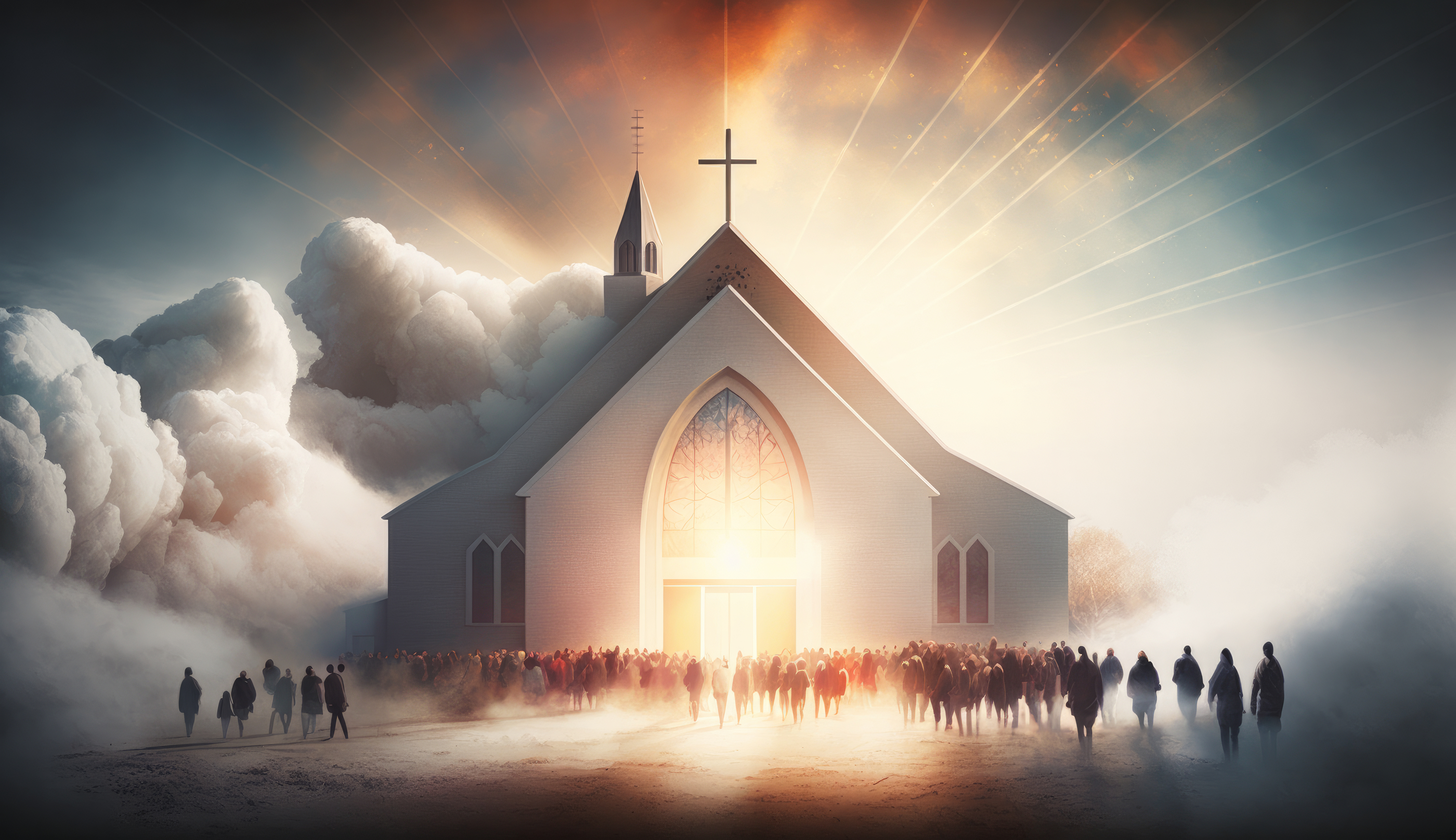
The Host – Sermon on Revelation 7:9-17 for All Saints’ Day (Observed)

Revelation 7:9–17

9 After this I looked, and behold, a great multitude that no one could number, from every nation, from all tribes and peoples and languages, standing before the throne and before the Lamb, clothed in white robes, with palm branches in their hands, 10 and crying out with a loud voice, “Salvation belongs to our God who sits on the throne, and to the Lamb!” 11 And all the angels were standing around the throne and around the elders and the four living creatures, and they fell on their faces before the throne and worshiped God, 12 saying, “Amen! Blessing and glory and wisdom and thanksgiving and honor and power and might be to our God forever and ever! Amen.” 

13 Then one of the elders addressed me, saying, “Who are these, clothed in white robes, and from where have they come?” 14 I said to him, “Sir, you know.” And he said to me, “These are the ones coming out of the great tribulation. They have washed their robes and made them white in the blood of the Lamb. 

15 “Therefore they are before the throne of God, 
and serve him day and night in his temple; 
and he who sits on the throne will shelter them with his presence. 
16 They shall hunger no more, neither thirst anymore; 
the sun shall not strike them, 
nor any scorching heat. 
17 For the Lamb in the midst of the throne will be their shepherd, 
and he will guide them to springs of living water, 
and God will wipe away every tear from their eyes.”

In the name of Jesus. Amen.

Dear saints of God. Has anyone ever shown you a photo and said, “That’s a picture of me when I was younger”? The snarky, obvious reply would be, “Isn’t every picture of you a picture of when you were younger?” It doesn’t matter if the picture is almost immediately available on the screen of your phone or if the picture has been sitting in some dusty photo album for years. They’re all a picture of you when you were younger.

Photos are a great way to preserve memories and pass along the stories of our lives and the lives of our loved ones. Even though those pictures captured just one moment in time, they remind us of so much more than the fraction of a second that it took for the shutter to open and close. They are a window into the lives of people in them, some of whom are no longer with us. Those pictures of the past have tremendous value.

When you take the time to look at old photos with family, you learn more about the people you love and can connect with them in a deeper way. You might find out that your quiet, tough, deer-hunting grandpa played the clarinet his freshman year of high school. You get the opportunity to tell your kids about the time you visited Mt. Rushmore as a kid just like they did. But when you went in 3rd grade, Aunt Jane got carsick on the drive up there. Two years ago at Thanksgiving, I learned that a pastor friend of mine has an uncle who was a groomsman for my father-in-law. Without looking through a photo album, I never would have known that my family was already tied to his.

With Thanksgiving coming up, I’d encourage you to do this. I know some of you kids might think it’ll be boring, but maybe you can make a game of it. See if grandma says, “That’s a picture of me when I was younger.” Just don’t make fun of her if she does.

In our text today we get to see an old picture, nearly 2,000 years old. But it is still a vivid, vibrant picture. It’s especially magnificent and spectacular because, even though it’s an old picture, it’s a picture of you in the future. The Apostle John sees the entire church – every Christian being welcomed into God’s presence. It’s a picture of the Church triumphant.

Now, before we look at the details of this picture, something needs to be crystal clear. This is not something in a galaxy far, far away. Nope! What is contained in this picture is right here and all around us. Hebrews 12:22-24a says that when you are here at church, “[Y]ou have come to Mount Zion and to the city of the living God, the heavenly Jerusalem, and to innumerable angels in festal gathering, and to the assembly of the firstborn who are enrolled in heaven, and to God, the Judge of all, and to the spirits of the righteous made perfect, and to Jesus, the mediator of a new covenant.” Can you see it? No. But does that mean it is any less real? Not at all!

Now, to the picture. The major details of the picture are a great multitude – more than anyone could count. People from every nation, tribe, and language. They stand before the Lamb who is on the throne. They wear white robes, wave palm branches, and sing, “Salvation belongs to our God who sits on the throne and to the Lamb.” That’s what you see with a quick glance at the picture.

Next, our text gives the caption that’s under the picture which lets us know the identity of this multitude. One of the elders asks John, “Who are these people clothed in white robes, and from where have they come?” Maybe John could have mustered up a good guess. Already in Revelation, John has seen a lot of awesome, amazing, wonderful things. But he’d rather hear the elder say who they are, so he punts the question back to him, “Sir, you know.” And the elder gives the caption, “These are the ones coming out of the great tribulation.” 

Now, that’s a good, accurate translation so long as we see that this is a present, ongoing thing – a continual process. To get the idea gets across, it could be translated, “These are the ones who are coming out of the great tribulation.” In other words, this already massive crowd keeps growing bigger and bigger all the time as believers leave this life and enter the next, and they are leaving the great tribulation.

Now, there are some very smart Christians who disagree with me on this, but because of how Scripture uses the word for ‘tribulation,’ I do not think this is some future thing. In the opening verses of Revelation, John writes that he is our brother and partner of the tribulation and the kingdom (Rev. 1:9). Jesus, in Jn. 16:33, says, “In this world you have tribulation.” The word for ‘tribulation’ is θλῖψις (thlipsis) and it can be translated tribulation, affliction, trouble, and suffering. Different translations will tend to favor using one of those words more often than others. But when you look at all the different places the word is used, you can see that it is a description of our life in this broken, fallen world. It is to be in this veil of tears. The people in this picture John puts before us are coming out of this tribulation.

If you look back at the previous chapter (Rev. 6), you see that this multitude has come out of war, famine, sickness, economic hardship, persecution, and political turmoil. But now they are standing before the Lamb and singing His praise. What this means is that all the believers we love but have died, they are still singing God’s praise. They are all there in the great host. They made it.

They’re holding the palm branches, singing the songs, standing in the presence of Jesus, the Lamb who shed His blood and was slaughtered to forgive them all of their sins. Jesus, the Lamb who died and rose again is now their Shepherd. All of them are in this picture because they are the saints who have gone before us. God be praised.

But, dear saints, remember that this is All Saints’ Sunday. You are part of that host too. You are also coming out of the great tribulation. Yes, you’re still in it, but you are in the process of coming out of it as you hold to faith in Christ. It is a picture of you when you are older, and because you have this picture, your life in this great tribulation becomes a little more bearable.

The troubles and trials of this world that leave your robes tattered, torn, stained, and defiled, they will all be plunged into the blood of the Lamb and come out dazzling white. The afflictions and persecutions you endure now will go away because you will be sheltered by and in His presence. You know that your hunger and thirst for peace and security will be satisfied. The tribulations that make your pillow wet with tears, they will all be wiped away.

Yes, you, dear saint, are part of this endless, uncountable crowd, but you aren’t lost in the host. For you, for each and every one of you, God will wipe away every last tear. The whole host is there. Not one is missing. Yet, every individual is intimately cared for by the Lamb.

This is true because Jesus, your Savior, has come and made you His saint. He has and will make everything sad come untrue. Everything that has been broken because of sin will be all the more beautiful because it has been redeemed and made new by the blood of Christ. 

You, believer, are part of that host. Come quickly, Lord Jesus. Amen.

The peace of God, which surpasses all understanding, will guard your hearts and minds in Christ Jesus. Amen.

Blessed, Now and Forever – Sermon on Matthew 5:1-12 for All Saints’ Day (Observed)

Matthew 5:1-12

1 Seeing the crowds, he went up on the mountain, and when he sat down, his disciples came to him. 2And he opened his mouth and taught them, saying: 

3 “Blessed are the poor in spirit, 
for theirs is the kingdom of heaven.
4 “Blessed are those who mourn, 
for they shall be comforted.
5 “Blessed are the meek, 
for they shall inherit the earth.
6 “Blessed are those who hunger and thirst for righteousness, 
for they shall be satisfied.
7 “Blessed are the merciful, 
for they shall receive mercy.
8 “Blessed are the pure in heart, 
for they shall see God.
9 “Blessed are the peacemakers, 
for they shall be called sons of God.
10 “Blessed are those who are persecuted for righteousness’ sake,
for theirs is the kingdom of heaven.
11 “Blessed are you 
when others revile you and persecute you 
and utter all kinds of evil against you falsely on my account.
12 “Rejoice and be glad, 
for your reward is great in heaven, 
for so they persecuted the prophets who were before you.”

In the name of Jesus. Amen.

Just to let you know, this sermon is on the Beatitudes. It might not seem like it at first, though, because we’re going to take a round-about way of getting into it.

Dear saints and holy ones. That’s you, Christian. You are a saint; you are a holy one. That’s what the word ‘saint’ means – it simply means ‘holy one.’ You are not holy because you have lived a holy life, done enough good works, and performed at least two verifiable miracles. No. You are holy because God has made you holy through Jesus who died and rose again for you. He shed His holy and precious blood on the cross, and you have washed your robes white in the blood of the Lamb (Rev. 7:14). If Jesus is holy (and He is), then you are holy because you have been Baptized into Christ and have put on Christ (Gal. 3:27).

This also means that you are God’s holy, beloved children now (1 Jn. 3:2). “Behold what manner of love the Father has given to [you], that [you] should be called children of God; and so [you] are” (1 Jn. 3:1). That Epistle lesson today (1 Jn. 3:1-3) invites us to behold, to see, this great love of God the Father. 

So, picture a great, mighty, wealthy, powerful king. This king is unimaginably strong. His family is large. His servants are devoted. His castle is breathtaking. His kingdom is magnificent and awesome. This king has huge armies with formidable soldiers who defeat every enemy they face, and he is brilliant when it comes to war strategy.

This king is fighting against his enemy, and into his camp is brought a lowly, pitiful servant of the enemy. This servant had been fighting against and trying to usurp the king. This pathetic servant is bloodied, clothed in rags, and injured so badly that he looks like he’s about to die. This servant has been captured and is thrown on the ground before the king. The king should just put him to death. Maybe, if the king wanted to be nice, he could throw the servant into a dungeon to live out the rest of his miserable days. But the king doesn’t do that.

Instead, the king walks over to this poor wretch, kneels next to him, and gently lifts his head to look at his face. Finally, the king speaks. He pardons and forgives the servant for his rebellion. Then, the king takes the man’s hand and helps him stand up. He tends to his wounds, puts him in the best tent, and feeds him the finest food. The king gives him an office in his kingdom and even adopts this servant as his own child. That man was an enemy and good as dead. But now, he is the royal heir of the king.

Behold, what manner of love the Father has given you, that you should be called a child of God. Dear saints and holy ones, that is your story. But that isn’t the end of your story. Yes, you are God’s children now, but what you will be has not yet appeared, but it has been described and promised. Now, this brings us to the Beatitudes.

Our translation of each of the Beatitudes, begins with the word ‘blessed.’ It’s a good translation, but it might leave us with a superficial and limited understanding because people speak about being ‘blessed’ in very shallow ways. Today, when people talk about being blessed, they typically mean good things are happening to them, and those good things are obvious to everyone. But the status of those whom Jesus declares to be ‘blessed’ are not things that we usually consider to be blessings. The first four are needs and lacks; things that we think of as deficiencies – poor, mourning, meek/humble, and being hungry and thirsty. And the next four are virtues – merciful, pure, peacemaker, and enduring persecution.

The word Jesus uses that gets translated as ‘blessed’ refers a state of being that is happy (in fact the word Jesus uses here is how the Greek translation of the Old Testament translates the Hebrew word for ‘happy’). But even the word ‘happy’ falls short because the word also means joyful, at peace with God and the world, and content. This blessedness ultimately refers to being what you are meant to be because you are reconciled to God.

So, think back to the picture of the mighty, powerful king who adopts that servant. Imagine that adopted servant kept going out with the king to fight in battles. He might question some of the king’s strategies. He probably thinks the king is taking risks that are too great or retreating and giving up territory that should be defended. Sometimes, the newly adopted servant might think that the king is out of his mind and that the kingdom is crumbling or even already fallen. But the king keeps putting everything into perspective. He reveals his plan and assures the servant that what he is doing is intentional and that the victory is soon to come.

The Beatitudes are just that. They are Jesus putting everything into perspective and telling you that the evil and sorrowful things you see and experience in this world are not a danger to the kingdom because the war has already been won and the kingdom is fully secured by Jesus’ death and resurrection. Satan is defeated. The devilish head of the serpent has been crushed. The light of Christ will always drive away the darkness.

Just take one of the Beatitudes as an example. Jesus says, “Blessed are the meek, for they shall inherit the earth.” Typically, our experience tells us the opposite. We normally think that it is the strong, proud, type-A personalities who are blessed because they always seem to get ahead and have the most influence over what takes place in the world. But consider Jesus, the meekest human ever. Though He was God in the flesh and Creator of the universe, He was meek and submitted to His earthly parents, Joseph and Mary (Lk. 2:51). King Jesus entered Jerusalem meek and mounted on a donkey (Mt. 21:5). Christ could have called twelve legions of angels to deliver Him from being arrested, beaten, and crucified (Mt. 26:53), but He didn’t. In every aspect of His life Jesus was meek and humble. Now, He is risen and seated at God’s right hand on the throne of the universe with all authority in heaven and on earth (Mt. 28:18).

So, when Jesus says, “The meek will inherit the earth,” you can trust Him. Psalm 37 expands on what Jesus says in this Beatitude. In summary, Psalm 37 says to not worry about people who do evil, they will soon fade like the grass. Be still before the Lord, wait patiently for Him, and don’t worry about it when evil people seem to be prospering because they will be cut off. In just a little while, the wicked will be no more. The meek shall inherit the land and delight in the abundant peace that God will give to them. I would encourage you to read Psalm 37 before you read or watch any news. Then, read it again afterward. Let God’s Word and promises put everything into perspective.

As Jesus speaks the Beatitudes to you, you are like Abraham. You stand in the Promised Land without an army, weak, and surrounded by enemies, but Christ promises, “This is all yours.” And, like Abraham, you believe and trust God’s promise and that faith is counted to you as righteousness (Gen. 15:5-7).

Again, when Jesus repeatedly tells you that you are blessed here, He is saying that you are exactly what you are meant to be. In a world that is still tainted with sin, it is right and good for you to be poor in spirit, to mourn, to be meek, and to hunger and thirst for righteousness. It shows that you recognize that things are not now as they were created to be. It is also proper for you as a child of the king to have those virtues – merciful, pure, peacemaker, and enduring persecution. Jesus uses the Beatitudes to encourage and remind you that the brokenness surrounding you has already been fixed by His death and resurrection.

Here Jesus comforts you by telling you that all your suffering is temporary, and in that suffering, you are following in the same footsteps that He walked. If the world treats you badly, know that you are not alone. That is how the world treated the saints who came before you, and if Jesus continues to delay, it is how it will treat the saints who come after you. If the kingdom of heaven is anything, it is a kingdom of hope. And you can have this hope because you have these blessings now and in the future.

Dear saints, the kingdom of heaven is yours. Your pain, your loneliness, and even your suffering is not random or accidental. Your mourning will cease, and you will be comforted. Some of your loved ones have gone to heaven and have already come to their reward. They are now before the throne of God and sheltered in His presence. Jesus, the Lamb, has shepherded them and wiped away every tear from their eyes (Rev. 7:15-18).

And even though you are separated from them now, that separation is temporary and a lot less distant than it seems to be. Those saints in glory join us here because we have come to Mt. Zion, the heavenly Jerusalem. We are surrounded by innumerable angels in festal gathering and surrounded by the assembly of all the saints who are enrolled in heaven (Heb. 12:22-23). This is true because we have come to Jesus. This is the hope that surpasses all understanding (Php. 4:7). When the fight is fierce and warfare long, listen and hear the distant triumph song. Then your hearts are brave again, and arms are strong.

Dear saints, you are blessed by Jesus, now and forever. Amen.

The peace of God, which surpasses all understanding, will guard your hearts and minds in Christ Jesus. Amen.

The Most Blessed Story Is True – Sermon on Matthew 5:1-12 observing All Saints’ Day

Matthew 5:1-12

1 Seeing the crowds, he went up on the mountain, and when he sat down, his disciples came to him. 2And he opened his mouth and taught them, saying: 

3 “Blessed are the poor in spirit, for theirs is the kingdom of heaven.

4 “Blessed are those who mourn, for they shall be comforted.

5 “Blessed are the meek, for they shall inherit the earth.

6 “Blessed are those who hunger and thirst for righteousness, for they shall be satisfied.

7 “Blessed are the merciful, for they shall receive mercy.

8 “Blessed are the pure in heart, for they shall see God.

9 “Blessed are the peacemakers, for they shall be called sons of God.

10 “Blessed are those who are persecuted for righteousness’ sake, for theirs is the kingdom of heaven.

11 “Blessed are you when others revile you and persecute you and utter all kinds of evil against you falsely on my account. 12 Rejoice and be glad, for your reward is great in heaven, for so they persecuted the prophets who were before you.”

In the name of Jesus. Amen.

“Blessed.” Nine times, Jesus proclaims a blessing in this text. Each of these blessings that Jesus speaks is the kind of story that we like – a rags to riches story. The poor, the down and out, the little, and the weak rise from their pitiful condition and get something good.

Other than the Bible, the book my nose has spent the most time in is Tolkien’s Lord of the Rings. And, I have to say the obvious, don’t just watch the movies, read the books – they’re infinitely better. The little hobbits “rise from their quiet fields to shake the towers and counsels of the Great,” and topple the dark lord, Sauron. We love that kind of story. We love how Cinderella ascends from mopping the floors of her wicked stepmother and waiting on her cruel stepsisters to live in the palace married to Prince Charming.

The stories where the small, weak, despised, and ostracized overcome all the obstacles and live happily ever after capture our attention. They are often a nice escape from reality because we know that not everything works out so perfectly. And even though we like to hear, “and they all lived happily ever after,” we know that real stories don’t end up that way. Cinderella grows old, wrinkly, and dies. The Ugly Duckling turns into a swan, but eventually gets entangled in a windmill. And Bambi either gets chronic wasting disease or shot during hunting season.

So, back to Lord of the Rings for just a moment: Old Bilbo was the one who found the ring of power which gave him an unnaturally long life. He has passed the ring on to his nephew, Frodo, and retired from adventuring at the elven house of Rivendell so he could settle down and write a book about his adventures. But when Bilbo finds out the ring must be taken on a perilous journey to Mount Doom to be destroyed, he figures it’s his job. He mourns for a bit saying, “I was just writing an ending for [my book]…. I had thought of putting: and he lived happily ever afterwards to the end of his days.” That last phrase, “to the end of his days,” is more realistic. Happily ever after can only last so long in this fallen world. Psalm 90:9 says, “we bring our years to an end like a sigh.” Deep down, we know that happily ever after doesn’t come in this world. Rags-to-riches stories rarely happen, and even when they do, those riches don’t last.

So, when Jesus sits down on the top of the mountain and teaches us the Beatitudes, we know our Lord doesn’t lie. We want our own happily ever after, so think we need to try to be what Jesus describes in order to be eternally blessed. But, when we hear who Jesus says is blessed, we take a step back. Who wants to be poor in spirit, mournful, meek, hungry, thirsty, and persecuted? We spend so much time and energy trying to avoid being those things. We want to be spiritually strong, not poor in spirit. We want to be happy and joyful, not mourning. We want to be powerful, not meek. And we typically avoid persecution at all costs.

Today, as we observe All Saints’ Day, it is important to remember that the Beatitudes are not attitudes that Jesus commands us to have. They are not Jesus’ advice on how we must arrange our lives to attain our own rags-to-riches, happily ever after ending. That approach turns the blessings Jesus gives here into be-curse-itudes. Instead, the Beatitudes are a description first of Jesus and then of who you are, dear saints, because you are in Jesus.

And we can say that because of what Christ has done. Christ’s story is a better but different kind of story than rags-to-riches. In fact, Christ’s is the only story that even makes rages-to-riches possible. It is the story, the true story, of Jesus who went from riches to rags to save us ragged sinners.

The eternal Son of God left His dwelling in heaven. He humbled Himself to be born in a manger and entered this sin-sick world. Christ endured every temptation, disappointment, and sorrow you have ever and will ever face. He was poor in spirit (Mk. 14:34). He mourned death (Jn. 11:35). He was meek (same Gk. word in Mt. 11:29 and Mt. 21:5). He became hungry (Mt. 4:2) and thirsty (Jn. 19:28). He was merciful, pure in heart, and a peacemaker. And persecuted? Yes, He was persecuted. Abandoned by even His closest friends, betrayed into the hands of evil men, beaten, mocked, scorned. Crucified, forsaken by God the Father, died, and buried. It doesn’t get any lower than that.

Jesus didn’t have to do or experience any of this, but out of His great love for you – He did. “He left His Father’s throne above, so free so infinite His grace. Emptied Himself of all but love and bled for Adam’s helpless race.” Jesus left the riches of heaven to descend to you and me in the filthy rags (Is. 64:6) of our sin. He came to you to raise you from your rages to His riches. He did that to make you His saints, His holy ones, His beloved, His blessed.

Dear saints, you don’t ever have to wonder if the blessings Jesus proclaims in the Beatitudes are for you. If v. 3-10 were all we had, then, sure, maybe there would be doubt. But Jesus closes the Beatitudes by saying, “Blessed are you.” You are blessed now even when you are reviled, persecuted, and slandered for your faith in Jesus. Rejoice and be glad, your reward is great in heaven.

“Beloved, [you] are God’s children now, and what [you] will be has not yet appeared; but know that when He appears [you] shall be like him, because [you] shall see Him as He is” (1 Jn. 3:2). Blessed Jesus, may that day come soon. Amen.

The peace of God, which surpasses all understanding, will guard your hearts and minds in Christ Jesus. Amen.

The Holy One Makes Us Holy – Sermon for Midweek Advent 1 2019

Listen here.

The texts for tonight’s service were Exodus 3:1-5; 1 Timothy 4:1-10; and John 15:1-5.

In the name of Jesus. Amen.

For a little over two years, I have been mulling over those words we heard from 1 Timothy 4[:4-5], “Everything created by God is good, and nothing is to be rejected if it is received with thanksgiving, for it is made holy by the Word of God and prayer.” These words have a profound impact on how we, as God’s holy people, go about our daily lives and interact with the world.

Every home, every marriage, every relationship, every gift, every possession, every day, every night, all our work, all our sleep, all our joys, and all our sorrows: everything is made holy and sacred by God’s Word.

Tonight, we are going to begin a year-long journey considering God’s holiness: how that holiness comes to us, and the implications of what it means to live as God’s sacred people. Now, I know that a year sounds like a long time. It probably is. But when I was at a conference in the beginning of October, one of the pastors who was presenting mentioned that people have to hear something eight times before they begin to latch on to it. (For me, it is probably more like sixteen times.)

So, these mid-week Advent services will serve as an introduction to that theme: Sacred. And through this Church year I will repeatedly draw on this idea. Hopefully, by the end of it all, I will have touched on this theme often enough that we will have a better understanding of how God’s holiness is given to us in our Baptism, maintained by His Word, sustained in us through ongoing faith, and changes the way we interact with everyone and everything around us.

Now, it’s tempting for me to throw everything at you all at once, but I’m going to try to resist that temptation and remind myself that I have a whole year. So, tonight, we will begin by briefly considering how our holy God makes us holy.

God alone is holy, and, apart from Him, nothing is ever holy. We fallen, sinful humans can only be holy if we receive God’s holiness. Just as a flashlight has no energy to shine unless it has batteries, our holiness is completely dependent to being connected with the holiness of God. Our holiness is never our achievement; it is always a gift from God. And, yes, God wants to give us this holiness.

Exodus 3_14 - Burning BushIn our Old Testament lesson tonight (Ex. 3:1-5), Moses found himself standing on holy ground when God appeared in a bush. That bush was burning because of God’s holy presence, and Moses’ curiosity was piqued when he noticed that though the bush was aflame it was not consumed; it didn’t burn up. In the same way, when God’s holiness comes to us, it burns but God does not want us to be consumed by the fire of His holiness. Instead, He wants us to be changed by it.

Consider when Isaiah found himself in God’s presence (Is. 6:1-7). Isaiah saw the Lord high and lifted up, seated on the throne, the train of His robe filled the Temple, and the seraphim called out, “Holy, holy, holy is the Lord of hosts.” Isaiah knew this put him in a bad place. He cried out, “Woe is me! For I am undone; for I am a man of unclean lips, and I dwell in the midst of a people of unclean lips; for my eyes have seen the King, the Lord of hosts.” God’s holiness does two things to Isaiah.

First, God’s holiness revealed and unmasked Isaiah’s sin, and it wasn’t only Isaiah’s defilement that troubled him. Isaiah knew that because he lived among other sinners, their sinfulness and defilement had rubbed off on him making him more unclean and unholy. And God’s holiness was a fire that would reduce Isaiah to ashes. But God would not have it be this way.

Isaiah 6 - Holy Holy Holy Lips CoalSo, the second thing God’s holiness does to Isaiah is rub off on him. God sent one of the seraphs to fetch a burning coal, take it to Isaiah, and touch his lips with it and give a word of promise, “Behold, this has touched your lips; your guilt is taken away, and your sin atoned for.”
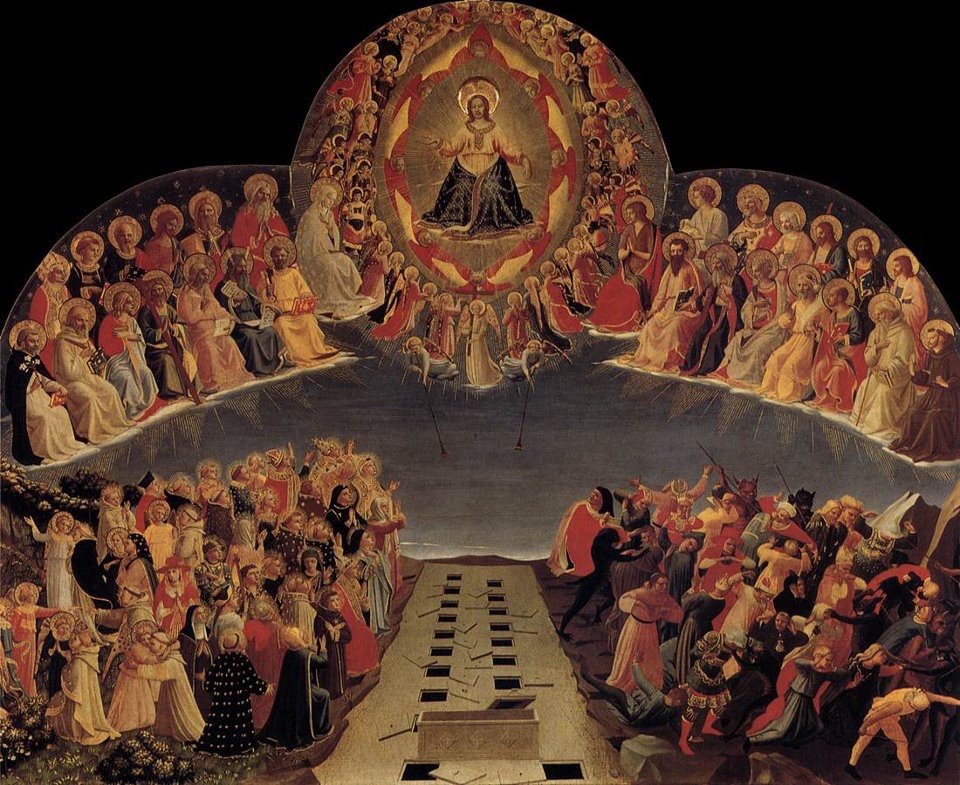
God didn’t appear in His holiness to undo Isaiah and destroy him. Instead, God brings Isaiah into fellowship with Him as He forgave and reconciled Isaiah to Himself making Isaiah holy and sacred to go and proclaim God’s Word.

Like Isaiah, we do not ever possess God’s holiness as our own. It isn’t something we can bottle up and store for later. We continually receive and borrow holiness from God, and God isn’t stingy in sharing His holiness with us. He happily and readily gives us His holiness through His Word making us sacred.

We heard this in the Gospel lesson (Jn. 15:1-5) where Jesus tells us that He is the Vine and we are the branches. There, Jesus gives us a beautiful picture of the holy lives we lead. As we abide in Him, who is the Vine, we bear sacred fruit. And God the Father prunes us so what we may bear more of that fruit. But Jesus doesn’t stop there. He tells us that already we are clean (it’s the same word Jesus used which was translated ‘pruned’). And what is the instrument that prunes us and makes us clean? It is His Word.

This means that Jesus doesn’t make us holy and then leave us to continue being holy on our own. Instead, He meets us where we are, calls us through His Word, and by that Word He joins us to Himself. As we abide in Jesus’ Word, He does everything for us and gives everything to us. Jesus invites us to safely approach our holy heavenly Father in faith with Him. Apart from Him, we cannot accomplish anything spiritually. But with Jesus, we stand on holy ground before God the Father in the heavenly sanctuary. Jesus brings heaven to earth for us so that we can live heavenly lives with Him here on earth.

God’s will for us as His children is to be holy as He Himself is holy (1 Pet. 1:14-16). The good news is that God doesn’t expect us to generate our own holiness. Jesus continually doles out His holiness upon us through His Word which makes us and all we do sacred.

More on that in the weeks to come. Amen.

The peace of God, which surpasses all understanding, will guard your hearts and minds in Christ Jesus. Amen.

Saints – Sermon on Revelation 7:9-17 for the Observation of All Saints’ Day

Listen here.

Revelation 7:9-17

All Saints gathered around the throne9 After this I looked, and behold, a great multitude that no one could number, from every nation, from all tribes and peoples and languages, standing before the throne and before the Lamb, clothed in white robes, with palm branches in their hands, 10 and crying out with a loud voice,

“Salvation belongs to our God who sits on the throne,
and to the Lamb!”

11 And all the angels were standing around the throne and around the elders and the four living creatures, and they fell on their faces before the throne and worshiped God, 12 saying,

“Amen! Blessing and glory and wisdom and thanksgiving
and honor and power and might
be to our God forever and ever! Amen.”

13 Then one of the elders addressed me, saying, “Who are these, clothed in white robes, and from where have they come?” 14 I said to him, “Sir, you know.” And he said to me,

“These are the ones who are coming out of the great tribulation.
They have washed their robes
and made them white in the blood of the Lamb.

15 “Therefore they are before the throne of God,
and serve him day and night in his temple;
and he who sits on the throne
will shelter them with his presence.
16 They shall hunger no more, neither thirst anymore;
the sun shall not strike them, nor any scorching heat.
17 For the Lamb in the midst of the throne will be their shepherd,
and he will guide them to springs of living water,
and God will wipe away every tear from their eyes.”

In the name of Jesus. Amen.

Dear saints, the Apostle John wants you to see what he saw. The text says, “Behold,” so, get this picture in your mind. You see a huge crowd, so many people that you can’t begin count them. Even though there are too many to count, you can see thousands of faces and notice that they are not all the same. They have different skin colors and facial features. They come from all the different tribes and peoples and languages. You want diversity? This is diversity.

Yet, despite their different upbringings every member of that throng is doing the same thing. They are all standing before the throne of God and the Lamb. They are all clothed in white robes and holding palm branches in their hands. And they are all crying out with a loud voice, “Salvation belongs to our God who sits on the throne and to the Lamb!”

The myriads of angels are there, and they cry out with that multitude, “Blessing, glory, wisdom, thanksgiving, honor, power, and might be to our God forever and ever! Amen.”

The elder asks John, “Who are these clothed in white robes, and from where have they come?” John simply responds, “Sir, you know.” It doesn’t seem as though John had no idea who the crowd was. It isn’t as though he throws up his hands and responds, “I have no idea.” Instead, it’s as though John is so overcome with wonder and amazement that he can’t put words together to answer the question. You know how you want your grandpa or one of your friends to tell a story that you were involved in because they can tell it so well? It might be something like that.

The angel, the elder, says, “These are the ones who are coming out of the great tribulation. They have washed their robes and made them white in the blood of the Lamb.” There is no question or debate that John here is seeing the saints, Christians who have died and are with God. But people will debate if John is seeing the Christians who have died during his time or if John was transported into the future and given a glimpse of all the saints after the return of Christ and the resurrection of the dead.

Well, we have a clue to answer this debate in the text. (But I would like to note that, even if the interpretation of this particular phrase of v. 14 is incorrect, everything else I will preach could be shown from a variety of other Scripture passages.) The elder there says, “These are the ones who are coming,” present tense and there is a sense that this is a continual thing, “the ones who are coming out of the great tribulation.” The picture is that there is a constant, steady stream of people continually being added to this great multitude. Of all the things that could be said about these saints, the elder mentions they are coming out of the great tribulation.

Imagine the comfort that this must have been for John. At this point in his life, he is likely the last living apostle of Jesus when he sees this vision. John was the bishop of the entire region of Asia. He has been exiled to the island of Patmos because there was a persecution of Christians at that time. He had at least heard of – and, more likely, had seen with his own eyes – all sorts of men, women, and children who died for their confession of faith in Christ. Like you, John saw and experienced the fact that Christians leave earth. They breathe their last and are buried. And John knows the sadness and mourning that comes along with that.

But here John gets a glimpse of the heavenly view of what happens when Christians depart this earth. He sees the same ones who leave this earth filled with sorrow, difficulty, and tears now entering heaven in victory and glory. Stop and consider this for a minute:

When Christians die and leave this world, it is grievous, sudden, and often unexpected. Even if someone has been sick for a long time and you know they are going to die, there is an abruptness to death – like running into a wall. But that is how it is for us from the perspective of earth. Here, we get the picture of the same thing from the perspective of heaven.

All SaintsWhile death may come suddenly and abruptly here, those who die in the faith are not surprise arrivals in heaven. The company in heaven is not startled or shocked by those who show up at the doors of glory. The gates are open, and the believers who arrive there have been anticipated and are welcomed into the great multitude to be with the Lamb who shepherds them. Their arrival into glory is no shock to the residents of heaven. It is perfectly ordinary and on time.
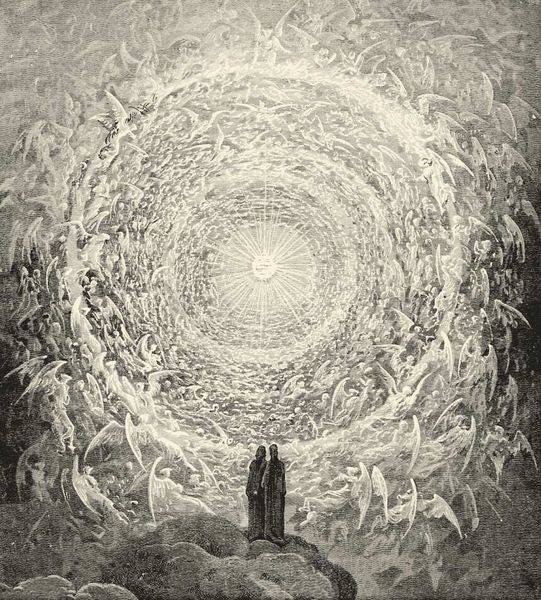
Consider as well that this multitude has come out of the great tribulation. They have come out of corrupted cultures and depraved societies. They endured the same disappointments and failures that you do.Like you, they struggled to balance their faith with their experiences. Like you, their families were hurt and torn apart because of sin. Like you, they wept for family and friends who abandoned faith in Christ. Like you, they served and supported others in ways that went unrecognized and unthanked. Like you, they were ridiculed and mocked for their faith. Like you, they knew the sorrow of pain, sickness, heart attacks, strokes, cancer, and dementia. Like you, they worried about the future. Like you, they feared as they walked through the valley of the shadow of death. Like you, they sinned and fell short of the glory of God. And like you, they pressed on in the midst of it all.

They pressed on and persisted in the faith while Jesus held them in His hand, just as He even now holds you. Jesus, their Shepherd, tenderly spoke to them as He speaks to you right now in His Word. Jesus gave them eternal life, and they will never perish (Jn. 10:28), just as He has given you eternal life and you will never perish.

Here is the point of all of this; here is the comfort for you: No one who believes in Jesus dies. This is a promise directly from the mouth of Jesus. Christ says, “I am the resurrection and the life. Whoever believes in me, though he die, yet shall he live, and everyone who lives and believes in me shall never die” (Jn. 11:25-26).

This year, as a congregation, we have mourned the deaths of Sonia Link, Ken Malm, and Verdie Pederson. You can add the names of others as well – friends and family members who either weren’t known to our congregation or who died years ago. These brothers and sisters in Christ have safely passed through death into life because whoever believes in Jesus lives. You can find comfort and solace in the fact that whoever believes in Jesus is of eternal significance and that person’s faith is of eternal consequence.

All Saints 1Because of this, we can have joy in the midst of sorrow. Here and now, as we are gathered together in God’s house and are invited to God’s table, we come to what is described in Hebrews 12(:22-24). This very morning in a small church on the north end of East Grand Forks, MN, we have come, “to Mount Zion and to the city of the living God, the heavenly Jerusalem, and to innumerable angels in festal gathering, and to the assembly of the firstborn who are enrolled in heaven, and to God, the judge of all, and to the spirits of the righteous made perfect, and to Jesus, the mediator of a new covenant.”
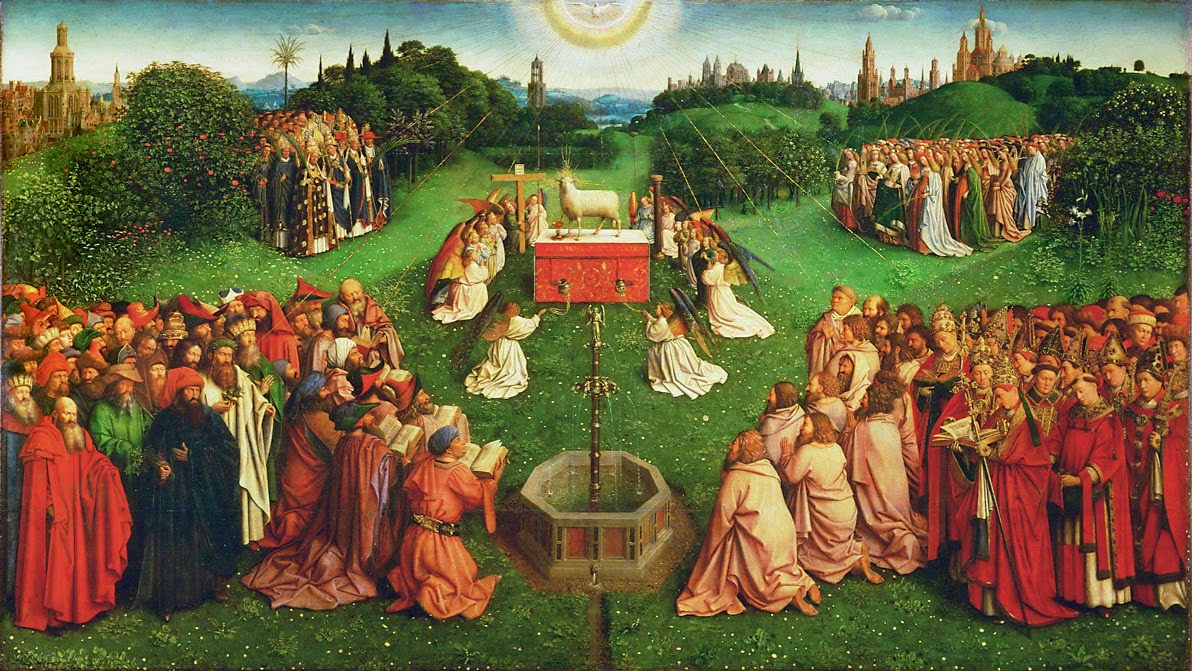
There are more here with us today than we can see or count. The saints of all time – those who are famous and known, those whom we don’t know yet, and our loved ones who preceded us in faith – they are all here with us as we gather together at the Lord’s Table.

Those who have departed this world with faith in Jesus are still united to us in Jesus because they are redeemed in the same Blood of Christ. They have washed their robes and made them white in the Blood of the Lamb. And, dear saints, you who have been made holy, so have you. Amen.

The peace of God, which surpasses all understanding, will guard your hearts and minds in Christ Jesus. Amen.

The Race – Sermon on Hebrews 11:39-12:2 for Observation of All Saints’ Day

Listen here.

Hebrews 11:39-12:2

39 And all these, though commended through their faith, did not receive what was promised, 40 since God had provided something better for us, that apart from us they should not be made perfect.

Therefore, since we are surrounded by so great a cloud of witnesses, let us also lay aside every weight, and sin which clings so closely, and let us run with endurance the race that is set before us, looking to Jesus, the founder and perfecter of our faith, who for the joy that was set before him endured the cross, despising the shame, and is seated at the right hand of the throne of God.

In the name of the Father and of the Son and of the Holy Spirit. Amen.

Let these words of Scripture paint a picture in your mind. The picture is of a huge stadium, and it has to be massive. We’re not talking thousands or tens of thousands of seats. Imagine millions, billions, even trillions of seats. And every single seat is filled – a capacity crowd. You, believer, are there in that stadium, but you are not in the stands. You are running a race on the track.

All the people in the stadium are Christians. They are the believers who have come before us. Hopefully, the rest of Hebrews 11, which you didn’t hear, is familiar to you. It is sometimes called “the hall of faith” and is a list Old Testament believers who finished the same race. The chapter gives sixteen names including Abel, Noah, Abraham, Sarah, Moses, Rahab, David, etc., but it also includes multitudes more who aren’t named. All of them had faith in Jesus (v. 13, 39) even though they faced persecution, difficulty, trials, and temptations. They were all sinners who clung to faith in Jesus. But these saints have finished their race, are now in heaven, and are part of that great cloud of witnesses that surround us.

Wedding Feast of the LambSo, the picture is this: These Christians have crossed the finish line. But instead of going to the locker room and getting into an ice bath, they go into the stands to cheer us on as we run our race. And again, this is multitudes of people – more than you could count – people from every nation, tribe, people, and language (Rev. 7:9). Imagine the cheers, chants, clapping, and whooping encouraging you as you run.

Here you are on the track. Running your race of faith. The race has been long. It has been hard and difficult. Parts of the course of your race have been filled with sorrow, with disappointment, with discouragement. Parts of your course have brought you through the valley of the shadow of death. And you have gotten tired. Your lungs are burning. You can hardly feel your legs, and with each stride your feet hit the ground harder and harder. You are weary and might be tempted to stop pushing, to take it easy and walk, or even stop the race altogether.

But everyone in the stands is cheering you on, “Don’t stop! Run! Keep going! Dig deep! Keep pressing on! Go!”

I remember when I was in cross-country (I was never a great runner, but I still did cross-country to get ready for swimming, and I was good at swimming). But when I was in cross-country, everyone running the race would start in a huge pack. Scores of runners would all get on the starting line, and all the parents and classmates would be there to cheer everybody on at the start. As the runners would make their way through the course, fans would find different spots to cheer people on, and when their runner went by, they would move to another spot to cheer. Anyway, people would all try to be at the finish line to encourage runners to finish strong. But as the leaders and the main pack of runners finished, the crowd at the finish line would thin out. Usually, by the time I would finish, there would hardly be anyone left to watch. I think even once, the official timer wasn’t paying attention when I crossed the finish line which was discouraging to say the least.

But that is not the picture Scripture gives us about the race we are running. This great cloud of witnesses is there encouraging us at every last bit of the race.

These Christians who have gone before us and are cheering us on are called ‘witnesses.’ They aren’t called an ‘audience’; they are ‘witnesses.’ That means, as we run our race, they are cheering us on with their witness, their testimony, encouraging us to press on.

Exhausted Runner.jpgSo, maybe you are tired and struggling with quarrels in your family, and you want to quit running. But there is Abel cheering you on, “Keep going. I know it’s hard. My brother hated me for my faith in Jesus and killed me. But Christ was faithful to me and brought me to the end of my race. Keep going.”
Maybe, you are tired of all the evil in the world and it’s pressing down on you. But there is Noah, “Don’t stop. The evil in the world is nothing new. I was one of only eight people in the whole world who believed in Jesus. But Jesus protected us. He delivered us from the evil. He brought us to the finish line. He’ll get you there too.”

Maybe, you discouraged because you want to have kids but can’t. There is Sarah, “I know your pain and heartache. Keep running. God is faithful. Jesus will see you through.”

You are afraid of your enemies, there are the people who crossed the Red Sea on dry land and the people who walked around Jericho and shouted telling you to look to Jesus.

You are filled with regret and guilt or how you gave your body away to people who were not your spouse, and there is Rahab telling you to look to Jesus.

You committed one little sin which tossed you headlong into more sin, shame, guilt, and regret. There is David telling you that Jesus is faithful to you.

This is one reason – not the main reason, but one reason – that it is important to know your Bible. No matter what you are struggling with, no matter what problems and guilt and shame you have, you can see how Jesus was faithful to your brothers and sisters in Christ who went through the same things you are going through.

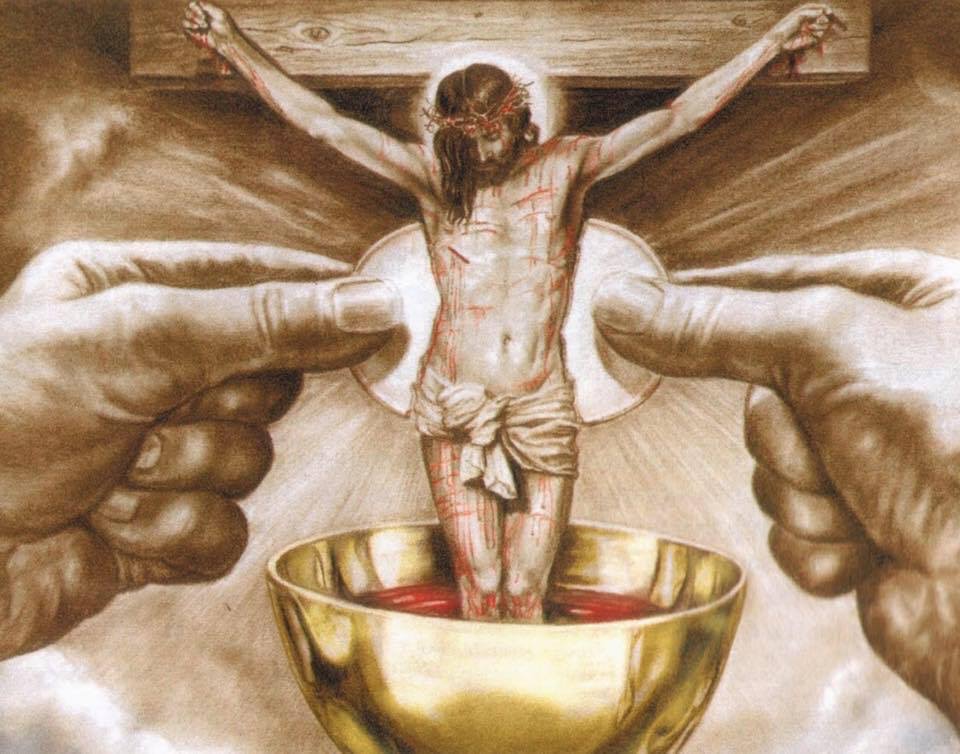
All those saints are bearing witness. They are telling you, “Those sins and burdens you have, let them go. Get rid of them. You don’t need them. Lay them aside. Let them go, and don’t look back. Cross and CommunionLook to Jesus. Fix your eyes on Him. Look to Christ, the author, the founder, and the perfecter of your faith. For the joy what was set before Him, He endured the cross, despising the shame, and is seated at the right hand of the throne of God.”

Yes, dear saints, the race is long and hard. But here is Jesus. He is here to lift your drooping head. He is here to draw your wandering eyes back to Himself. He is here to nourish and sustain you for the race. He is here to give you His Body and Blood in His holy Sacrament. Amen.

The peace of God, which surpasses all understanding, will guard your hearts and minds in Christ Jesus. Amen.