Pure Religion – Sermon on James 1:22-27 for the Sixth Sunday of Easter

James 1:22-27

Alleluia! Christ is risen! 
He is risen indeed! Alleluia!

In the name of Jesus. Amen.

Pop quiz. You’ve probably heard this phrase, so finish it for me, “Christianity isn’t a religion, it’s a [relationship].” I’m going to push back on that. But before I do, I have to say two things. First, I understand the sentiment behind calling Christianity a relationship. I really do. Scripture does talk about believers in relational terms. The Bible is clear that God is our Father (Mt. 6:9), and we are His children (1 Jn. 3:1). Because Christ has come in the flesh, He is our Brother (Jn. 20:17Heb. 2:11). Through faith, believers are the Bride of Christ (Eph. 5:31-32Hos. 2:19-20). All of those are relationships. That relational language is clear, important, and Scriptural. The thing I want to point out is that those relationships only exist when a person has the right religion.

Second, the word ‘relationship’ doesn’t actually occur in the Bible—at least not in the Hebrew or Greek. There are a couple modern translations that use it. But the word ‘religion’ is a word the Bible uses. Here, James talks about a ‘worthless’ (lit. ‘vain, vaporous’) religion and a ‘pure’ religion, and there is only one.

Today when people use the word ‘religion’, they often focus on the practices people have. But ‘religion’ mainly has to do with the set of beliefs a person has, and, yes, those beliefs result in practices. We could talk about the different religions of Christianity, Judaism, Islam, Buddhism, Hindu, and a myriad of others. But we can distill all religions down to two beliefs. On the one hand, there’s the Christian religion that believes people are made right through faith in Christ. Every other religion believes you have to do something to make yourself right. We can shorten that down even further—there’s the religion of the Gospel and a myriad of religions of law. Or, even more simply, we can say there’s true religion, Christianity, and false religions, everything else. In this text, James wants us to focus on pure, undefiled, true religion.

This text begins with a clear call, “Be doers of the Word and not hearers only, deceiving yourselves” (Jam. 1:22). Notice what James does not say. He doesn’t divide humanity into people who hear and people who do not hear. Instead, he says there are 1) hearers who become doers and 2) hearers who forget and are not doers. You can’t be a doer without first being a hearer.

The verse right before our text, which you heard in last week’s epistle reading, makes that clear. “Receive with meekness the implanted word, which is able to save your souls” (Jam. 1:21). The Holy Spirit takes God’s Word, plants it in you, and you grow and produce fruit (Mt. 13:19-23). That Word gives you faith and is able to save your soul (Ro. 10:17). Everything James says in our text today grows out of that implanted Word. 

James helps us understand what this kind of hearing looks like with a vivid analogy that can be confusing. It might feel like he’s mixing metaphors, but he isn’t. James is actually talking about hearing the Word, but he uses the image of seeingin a mirror to show what happens—or doesn’t happen—when we hear. God’s Word is the crystal-clear mirror. You stand before it, and it shows you exactly who you are. All of God’s Word, both Law and Gospel, show you who you are and set you at liberty. 

For example, even the Ten Commandments set us at liberty because they begin, “I am the Lord your God, who brought you out of the land of Egypt, out of the house of slavery” (Ex 20:2). Before God gives a single command, He tells us who we really are. We are His people, rescued by His mighty hand. To be a doer of that Word is to say back to God and others, “Yes. You are God; we are Your people.”

The only alternative is to turn away and say, “You are not our God; we are not your people.” But to do that is to be the hearer who forgets. He looks in the mirror of the Word, sees his face, and then walks away forgetting what he just saw. Nothing changes, and that makes his religion worthless. He deceives his own heart.

But the one who looks intently into the perfect law of liberty and remains steadfast—he does not forget. He is a doer of the Word. And James promises: this one will be blessed in his doing. Not because the doing earns God’s favor—faith alone saves (Ro. 1:17Eph. 2:8-9)—but because the doing flows from the gift already received. Faith alone saves, but true faith is never alone.

And that perfect law of liberty is freeing in the deepest sense. The Ten Commandments show us how creation itself works. They are not a ladder by which we to climb up to God. They are the guardrails of the life God has already given us in Christ. They teach us how to love God with all our heart and how to love our neighbor as ourselves. They show us the shape of freedom and of a life of love that reflects the love of God who first loved us.

And when we break those commands and get out of line with how God created us to live, the perfect law of liberty is still freeing. The Gospel comes to tell us that we have a Savior. We have Jesus who died and rose again for us. We have redemption and forgiveness through His blood. God’s Word makes those promises, and we become doers by believing and trusting that what God has said is true.

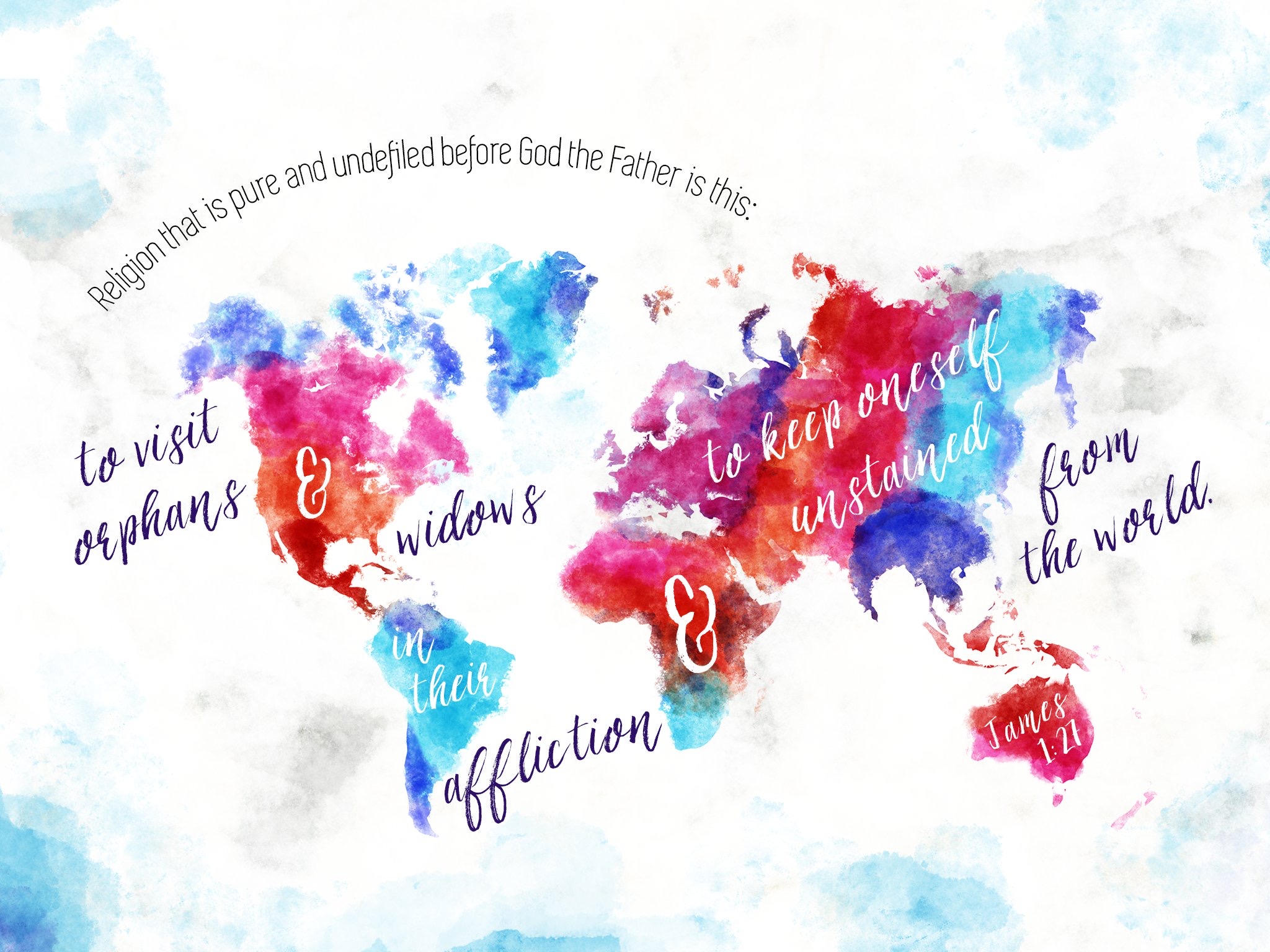
That is why James can define pure and undefiled religion so clearly in Jam. 1:26-27. Pure religion is to bridle our tongues, so our words give life by confessing the truth of God’s Word instead of tearing down. Pure religion is visiting orphans and widows in their affliction and keeping oneself untainted from the world. These are not new laws that we have to obey to earn God’s love. They are the natural fruit of a faith that remembers who it is in the mirror of the Word. 

In your daily vocations—whether you are a parent, a neighbor, a coworker, a citizen, or a friend—pure religion takes a shape. You notice the outcast and hurting and invite them to lunch. You see the struggling family down the street and drop off a meal or watch their kids so the parents can go on a date. You sit with the widow in the pew and listen to her stories. You advocate for the vulnerable instead of looking the other way. You live in the world but refuse to let its godless values stain your heart. You calmly but boldly speak truth. You show mercy because Christ has first given His mercy to you. And you walk in the freedom Christ has won for you.

Dear saints, that is pure religion—the religion that is pure, and the religion that makes you pure. That religion sets you into a right relationship with God as your Father and you as His children. That relationship only exists because we have the right religion—the religion of the Gospel of Christ.

Jason, that brings me to you. Jason, today is a day of pure joy. You are now Baptized into the name of the Father and of the Son and of the Holy Spirit. God has implanted His Word in you which is able to save your soul. You have received the new birth of water and the Spirit that Jesus promised (Jn. 3:3-6). You are joined to Christ’s death and resurrection (Ro. 6:3-7). As the Holy Spirit continues to work in you, you become more and more a doer of the Word.

Jason and all of you, dear saints, keep looking intently into this perfect law of liberty. Come back to it every day in the Scriptures, in the preaching, in the Lord’s Supper. Remember who you are. You are beloved children of the Father, brothers and sisters of the risen Christ, and you are the Bride He has washed clean. Continue to live as doers. Care for the lonely and the hurting. Bridle your tongue and speak life and the forgiveness of Christ. Live in the world but refuse to be stained by it. Do the good works God has prepared for you to walk in—not to earn His favor, but because you already have that favor in full.

This is pure religion. This is true faith. This is the life that is blessed in the doing, all because of the One who lived, died, and rose for you. Amen.

Alleluia! Christ is risen! 
He is risen indeed! Alleluia!

The peace of God, which surpasses all understanding, will guard your hearts and minds in Christ Jesus (Php. 4:7). Amen.
Holy Hope – Sermon on 1 John 3:1-3 for the Fourth Sunday of Easter

1 John 3:1-3

Alleluia! Christ is risen! 
He is risen indeed! Alleluia!

In the name of Jesus. Amen.

At some point every child learns that plants come from seeds. I can’t tell you exactly when I learned it, but I must have been very young. When I was four years old, my friends and I had epic watermelon seed fights at Blue Dog Lake near Waubay, SD. We’d take a big ol’ bite and spit the seeds at each other like tiny black bullets. A grandpa who was there warned me, “Don’t swallow one of those seeds or a watermelon plant will grow out of your stomach!” Of course that isn’t actually possible, but I did know those seeds could grow into watermelons. So that warning terrified me, and I made sure I spit out every single seed.

But just imagine for a moment that you never learned that plants came from seeds. If you saw those tiny black seeds, you would simply think they were annoying little inconveniences that come with enjoying the sweet fruit. You wouldn’t guess that inside that little shell is everything needed for a sprawling vine that will produce two to four melons, each weighing fifteen pounds that are bursting with hundreds of more seeds. The potential is hidden.

This touches on the picture of what it is to be a child of God right now. Now, please know that this is not a perfect analogy. It fits with this text, but don’t use it with other texts like Jesus’ parable of the Sower and the Seed. Fair?

Dear saints, see what the kind of love the Father has given to us, that we should be called children of God—and we are. The world glances at you and sees nothing special. Sometimes, we look in the mirror and wonder the same thing: “Am I really God’s child?” But don’t let the world fool you. The world did not recognize the eternal Son of God when He came, so it should come as no surprise that it does not recognize us either (1 Jn. 3:1). That’s why the apostle John presses his point. “Beloved, we are God’s children now” (1 Jn. 3:2). The living DNA of Jesus’ divine sonship is alive inside of you. It’s growing. It’s maturing. It’s advancing—even when no one else can see it.

But there is more still to come. “What we will be has not yet appeared. But we know that when Jesus appears we shall be like Him, because we shall see Him as He is” (1 Jn. 3:2). One day Jesus will appear in glory, and suddenly the full-grown plant will be plain for everyone to see. No more hidden potential. Fully ripened. Glorified. Pure. Perfect. Recognizable as the Father’s own.

Even now, before Christ returns, this hope is doing something powerful in you. Listen to v. 3 again, “Everyone who thus hopes in Him purifies himself as He is pure.” The words translated ‘purifies’ and ‘pure’ both have the root word ‘holy,’ so ‘pure’ is a good translation. That means this hope is active and purifies you right now. It purifies you as Jesus Himself is pure. This hope works like sunlight and steady rain on that buried seed. It draws outward and upward from the life of Christ. It cleanses your thoughts, words, and choices. It makes you holy today because you know what you will be on the day of Christ’s return.

When temptation rises and anger spills out, this hope remembers, “I am a child of Jesus, the Pure One. I don’t need to live like the world lives.” When guilt tries to bury you, this hope declares, “My sins are already washed away in the blood of the Lamb.” When the world mocks your faith or you begin to doubt your own identity, this hope lifts your eyes to Christ, “The world didn’t know Him, so it doesn’t know me. But He knows me. And one day everyone will see what He has been growing all along.”

That brings me to each of you confirmands. Today, you stood before us to say, “Yes, this holy hope is mine.” The seed planted in your Baptism is still growing, and this hope will keep purifying you until Jesus appears.

Wes, you were made God’s child on December 9th, 2012, right over there when God used my hands to Baptize you. Whenever fears or doubts creep in, keep hearing the promise that nothing is impossible for your God (Lk. 1:37).

Graeham, you were made God’s child on August 4th, 2013, at your home in Fargo when your grandpa, Pr. Steve Papillon, Baptized you. Keep confessing with your mouth and believing in your heart that Jesus died and rose for you (Ro. 10:9).

Taavi, you were made God’s child on January 19th, 2014, when I placed those waters on your head from that font. Remain strong and courageous. Do not be dismayed, for the Lord your God is with you wherever you go (Josh. 1:9).

Sutton, you were made God’s child on November 23rd, 2014, when I Baptized you right here. All of your life, cast every anxiety and care on your God who cares for you (1 Pet. 5:7).

Alex, you were made God’s child on March 3rd, 2015, when I had the joy of Baptizing you. Always call on your God who answers and is always by your side (Is. 58:9).

Syneva, you were made God’s child on June 28th, 2015, at Trinity Free Lutheran Church in Grand Forks when Pr. Dan Antal Baptized you. Continue to be adorned by the gentle, quiet spirit God has given you (1 Pet. 3:3-4).

You Confirmands and all you saints, when the world fails to recognize you and when you even fail to recognize yourself, remember the seed. The Father planted it. Christ is tending it. And the Holy Spirit is causing it to grow. This holy hope purifies you today, tomorrow, and every day until Jesus returns. Live in it. Abide in it. Let it shape your thoughts, your words, your choices, and your love for others.

Dear saints, you are God’s children now. And there is even more to come. Hold fast to this holy hope. Let it purify you as Jesus is pure. The day is coming when we will see Him as He is. On that great day, we will be like Him. Amen.

Alleluia! Christ is risen! 
He is risen indeed! Alleluia!

The peace of God, which surpasses all understanding, will guard your hearts and minds in Christ Jesus (Php. 4:7). Amen.
Loved Ones – Sermon on 1 John 3:1-3 for All Saints’ Sunday

1 John 3:1-3

1 See what kind of love the Father has given to us, that we should be called children of God; and so we are. The reason why the world does not know us is that it did not know him. 2 Beloved, we are God’s children now, and what we will be has not yet appeared; but we know that when he appears we shall be like him, because we shall see him as he is. 3 And everyone who thus hopes in him purifies himself as he is pure.

In the name of Jesus. Amen.

Typically, names are given. When you’re born, you’re given a name. Whether or not you like your name, doesn’t matter. The name your parents gave you is your name. Sometimes, you are given a nickname, which you may like or dislike.

In junior high, my schoolmates called me ‘string-bean.’ I didn’t like it so much. But being over 6 ft. tall and weighing maybe 120 lbs. soaking wet, it fit. When I made the varsity swim team, I thought, “This is my chance for a cool nickname,” because no one else from my school was a swimmer. So, I tried to give myself a nickname. The movie Rudy had just come out, and the story of that weak, little football player who finally got a chance and proved himself on the field was so inspirational that I told my teammates to call me ‘Rudy.’ I even had it printed on my first varsity swimming t-shirt. Long story short, ‘Rudy’ didn’t stick, sadly. Even worse was that one of the other swimmers was dating a girl from my school. As soon as he found out that I was called ‘string bean,’ the name followed me into the pool.

The Bible has lots of names and titles for people who are saved by grace through faith in Christ – Christian (Act. 11:26), believer (Act. 5:14), child of God (Jn. 1:12-13), people of God (1 Pet. 2:9Rev. 21:3), citizens of the kingdom of heaven/God (Php. 3:20), people belonging to the Way (Act. 9:2). I could go on and on. All of those names and titles have a different focus, and you are probably comfortable with some of those titles and names for yourself. But the Bible has another name for you. Even though it’s a name that you might not like, even though it’s a title that you wouldn’t claim for yourself, it’s a name that is true and accurate. You, Christian, are a ‘saint.’

A saint is not someone who does a lot of good works, has witnesses who can verify two miracles, and gets recognized by people wearing funny hats at the Vatican. No! To be a saint literally means to be a ‘holy one.’ And no; you aren’t holy by your own works or efforts. You aren’t holy when it comes to keeping God’s commands. You aren’t holy because of your obedience. Instead, you are made holy by grace through faith in Jesus. Christ is the Lamb of God who takes away the sin of the world (Jn. 1:29). That means Jesus takes all your sin and shame and guilt and bares it to the cross. In exchange, Jesus gives you His perfect obedience, His total righteousness, His pure holiness. Because of Christ, God makes you holy. The fact that you are a saint is God’s work – not yours.

Here in chapter 3, John wants you to see, to behold, to recognize that you are a saint. Even though the word ‘saint’ doesn’t come up in the text, there are three other terms or titles in this text that point to the fact that you are a ‘saint.’

First, you are God’s child, and John wants you to bask in the fact that God has made you His child. “See what kind of love the Father has given to us, that we…” we who are sinful and unclean, we who rebel against God, we who by nature are enemies of God, “See the love God the Father has given to us that we should be called children of God.” And John drives the point home, “And so we are” (1 Jn. 3:1).

You, dear saints, are God’s children. Jesus Himself said so. The morning of the Resurrection, shortly after Jesus finished tidying up His grave, folding up His burial cloths, and making the bed, He tells Mary Magdelene to tell the disciples, “Go to My brothers and say to them, ‘I am ascending to My Father and your Father, to My God and your God’” (Jn. 20:17).

In Hebrews 2:10, Jesus is referred to as the Founder of your salvation who brings “many sons to glory.” Then, Hebrews goes on to say, “He who sanctifies,” (in other words ‘makes holy’), “and those who are sanctified,” (in other words, ‘who are made saints’), “all have one source. That is why [Jesus] is not ashamed to call [you who are made holy] ‘brothers’” (Heb. 2:11). Since Jesus, the Son of God, is not ashamed to call you ‘brothers,’ then you also are children of God. And children inherit characteristics from their parents. Since God is holy, holy, holy (Is. 6:3) – you also are holy. You, children of God, are saints.

John goes on to acknowledge that the world doesn’t recognize you as the children of God. People can’t look at you and say, “Oh, I see you’re a Christian. You look just like your heavenly Father.” You and I don’t bear that divine resemblance because even though we are children of God, we still sin and fall short of the glory of God (Ro. 3:23). In the eyes of the world, we look like sinners, so the world doesn’t see us as children of God. But the fact that the world doesn’t recognize that we are children of God shouldn’t surprise us. The world doesn’t recognize us as children of God because it didn’t recognize Jesus as the Son of God when He came to earth.

The second term John uses to point to the fact that we are saints is “beloved” or lit. ‘loved ones.’ God has poured His love into you. And by His love, He has given you the right to be His children who are born of God (Jn. 1:12-133:5). And in that love you receive grace on top of grace (Jn. 1:16). Because of Jesus, God’s love washes over you. His love makes you clean, forgiven, and sanctified, i.e. holy and sainted (1 Co. 6:11). That is what it is to be God’s beloved. As God’s loved one, you also have His promise that the day is coming when you will be like Jesus because you will see Him as He is (1 Jn. 3:2).

And it’s a good thing that we need to wait for that transformation before we look like Jesus. Can you imagine if you already had the glory of being God’s beloved child? Imagine if as soon as you were Baptized and given the gift of faith that you started to radiate like Jesus did in the Transfiguration. You face shines like the sun (Mt. 17:2), and your clothes become radiant and intensely white (Mk. 9:3). You’d probably get pulled over all the time, and the police would demand that you have more tint on your windows.

The third term John uses to ‘saint’ you is in this text is in v. 3. As you have this hope of being like Jesus when you see Him John says, “Everyone who thus hopes in Him purifies himself as He is pure.” The root of the word for ‘purifies’ and ‘pure’ is the same as ‘holy’ and ‘saint.’

This purification doesn’t happen by you doing good works and no longer sinning. This purification comes through faith and the hope you have of being like Jesus – which is, again, only by God’s love and grace. To live by grace through faith is to have this hope. The picture here is that, through faith and hope, Jesus’ purity is given and poured into you. The Old Testament had all those regular sacrifices that delivered this same purity by pointing people forward to the cleansing that comes only through Jesus’ sacrifice on the cross. Now, you have the fullness of what those were pointing to. Faith in Christ continually purifies you as Jesus Himself is pure.

Since the last time we celebrated All Saints’ Day, one of our sisters in Christ became like Jesus. On Tuesday, March 25th, Ros, who was already a saint in this life, saw Jesus as He is. She entered that great multitude around the throne of Jesus. She exited this great tribulation and got her white robe. She is now sheltered in God’s presence where Jesus will shepherd her to springs of living water (Rev. 7:9-17). Now Ros and every other believer who has gone to be with Christ surrounds us and cheers us on as we look to Jesus, the Founder and Perfector of our faith (Heb. 12:1-2).

Dear saints, behold what manner of love the Father has given unto you, that you should be called children of God – and so you are. God your Father now invites you to His Supper. God the Son comes to serve you. And God the Holy Spirit comes to continually purify you by grace through faith. This is God’s promise, and this is our hope. Amen.

The peace of God, which surpasses all understanding, will guard your hearts and minds in Christ Jesus (Php. 4:7). Amen.
Purified & Redeemed – Sermon on Hebrews 9:11-15 for the Fifth Sunday of Lent

Hebrews 9:11–15

11 But when Christ appeared as a high priest of the good things that have come, then through the greater and more perfect tent (not made with hands, that is, not of this creation) 12 he entered once for all into the holy places, not by means of the blood of goats and calves but by means of his own blood, thus securing an eternal redemption. 13 For if the blood of goats and bulls, and the sprinkling of defiled persons with the ashes of a heifer, sanctify for the purification of the flesh, 14how much more will the blood of Christ, who through the eternal Spirit offered himself without blemish to God, purify our conscience from dead works to serve the living God. 

15 Therefore he is the mediator of a new covenant, so that those who are called may receive the promised eternal inheritance, since a death has occurred that redeems them from the transgressions committed under the first covenant.

As You Believe, So It Is – Sermon on 2 Samuel 22:26-34 for the Ninth Sunday after Trinity

2 Samuel 22:26-34

26 With the merciful you show yourself merciful; 
with the blameless man you show yourself blameless; 

27 with the purified you deal purely, 
and with the crooked you make yourself seem tortuous. 

28 You save a humble people, 
but your eyes are on the haughty to bring them down. 

29 For you are my lamp, O Lord, 
and my God lightens my darkness. 

30 For by you I can run against a troop, 
and by my God I can leap over a wall. 

31 This God—his way is perfect; 
the word of the Lord proves true; 
he is a shield for all those who take refuge in him. 

32 “For who is God, but the Lord? 
And who is a rock, except our God? 

33 This God is my strong refuge 
and has made my way blameless. 

34 He made my feet like the feet of a deer 
and set me secure on the heights.

In the name of Jesus. Amen.

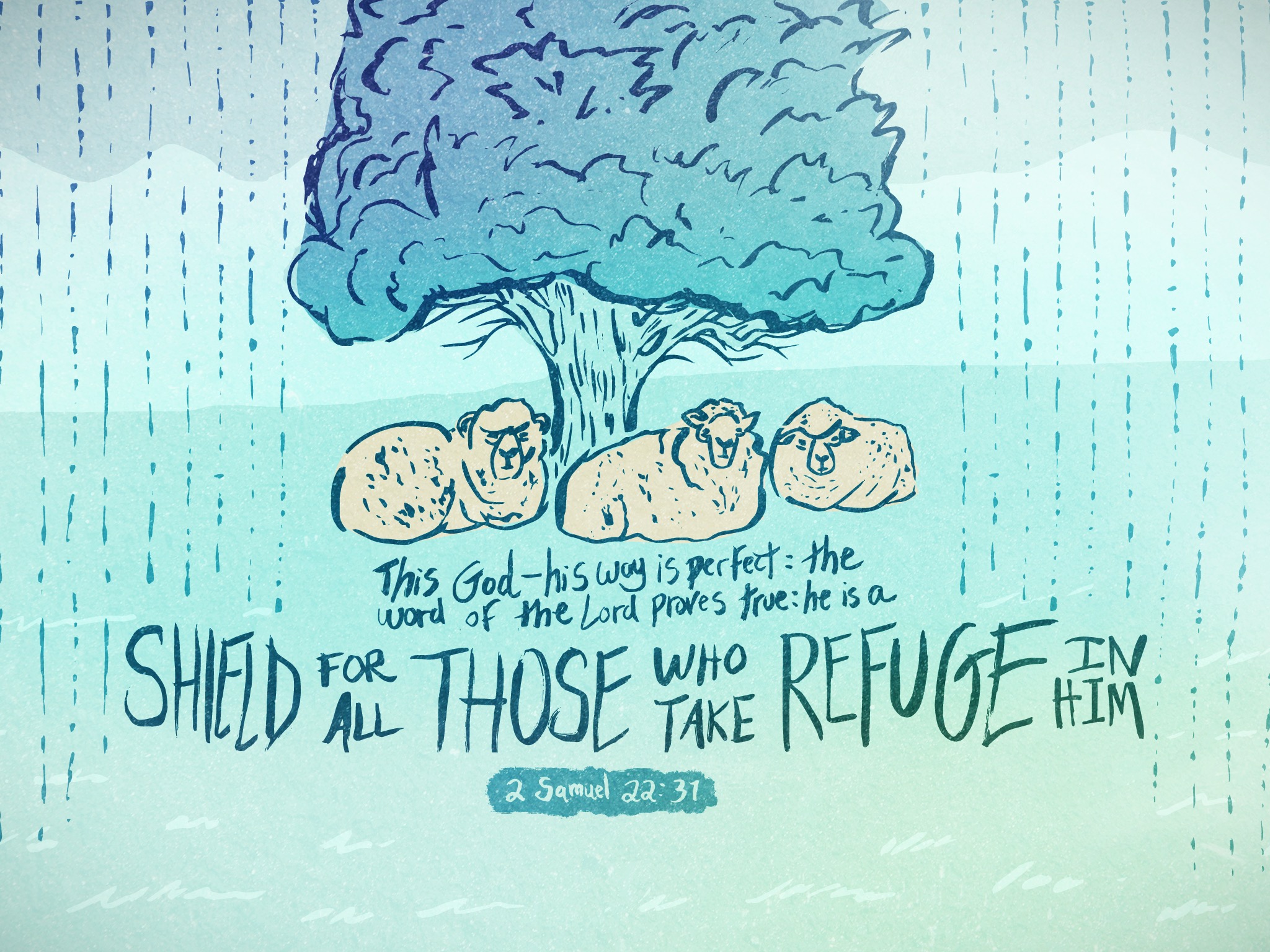
If this text feels like a Psalm, you are a good student of Scripture. 2 Samuel 22 is actually the same as Psalm 18. David wrote at least 74 of the 150 Psalms, and it’s interesting (at least, I think it’s interesting) that this is the only place in the story of David’s life where a Psalm recorded. We don’t know exactly when the Psalm was written. But this is placed here in 2 Samuel 22 at the end of David’s life, and v. 1 tells us that this was David’s song, “when the Lord delivered [David] from the hand of all his enemies, and from the hand of Saul.” And the contents of the Psalm are a very fitting way to wrap up David’s story.

David had fought his last war. He had faced the lions and bears as a shepherd. He had killed the giant, Goliath. He was rescued from the spears of King Saul. David had been saved from the Philistines. David was reestablished as king even after his own son, Absalom, had dethroned and hunted him. And, maybe, most importantly, God had rescued David from himself. God forgave David for his adultery with Bathsheba. God absolved David from the sin of murdering Bathsheba’s husband, Uriah. Through it all, God was faithful to David in the face of David’s enemies of the devil, the world, and David’s own sinful flesh. From a humble shepherd who was the youngest of the eight sons of Jesse to the conquering King of Israel, David’s life is a rags to riches story. But morally, David started out better than he ended. The tail end of David’s life was disappointing to say the least, but that is what makes this passage so interesting.

The verses you just heard are the middle of the Psalm where David is reflecting on all of God’s gracious acts throughout his life. David addresses God, “With the merciful You show Yourself merciful; with the blameless man You show Yourself blameless; with the purified You deal purely.” God does show us all these things about Himself, but it sounds as though David is bragging that he was those things – merciful, blameless, and pure. How could such a great sinner like David say something like that?

Well, look again at v. 33. “God is my strong refuge and [He] has made my way blameless.” It was God who made David all those things. By God’s declaration, by God’s mercy, and by God’s absolution, David was merciful, blameless, and pure.

Now, whenever we hear passages like this, we need to recognize God’s actions come first and then God’s attributes shine through God’s children. The text does not say that God is merciful to the merciful, blameless to those who are blameless, and pure to those who are pure. If that were the case, God’s mercy, blamelessness, and purity would never be revealed because we are all sinners. Instead, we need to recognize that God is the one who makes us blameless, makes us merciful, and makes us pure, and all of that shines through us. We are not the light of the world. Jesus is, and His light shines through us for all the world to see. God is merciful, blameless, and pure according to His nature, and God works on us and in us to make us like He is. Colossians 3:10 says that we are being renewed after the image of God, and Romans 8:29 says we are being conformed to the image of Christ. As Christians, God is renewing us in His image.

So, again, with the merciful God shows Himself merciful; with the blameless God shows Himself blameless; with the purified God deals purely. But then notice how v. 27 changes gears, “with the crooked You make Yourself seem tortuous.” Big change there. Just quickly, the translation there is tortuous not torturous. Torturous is related to torture and causing extreme pain and suffering. That’s not the translation here. Instead it is tortuous (remove the second ‘r’) which means full of twists and turns or shifty. It isn’t as though God is shifty toward crooked, bent sinners. Notice very carefully, shifty and complex is simply how God seems to the crooked.

Dear saints, we don’t and can’t change the nature or character of God, but what you believe about God does shape how God will appear to you. In short, as you believe, so it is (Mt. 8:13, 9:29). If you believe God is merciful, and He is, you have no trouble seeing God’s mercy. If you believe God is blameless, and He is, His blamelessness is apparent. If you believe God is pure, and He is, you will see and receive His purity. But if you wrongly believe that God isn’t those things, if you believe God is a as crooked as you are, it will seem and appear as though God is twisted, convoluted, and out to get you even though God by His nature and character is direct and straight; He is merciful and gracious, slow to anger and abounding in steadfast love and faithfulness (Ex. 34:6) toward you.

We can see this in how Jesus deals with the scribes and Pharisees. They were always out to get Jesus and trap Him in His teaching, and Jesus will respond in a similar way. Remember when they were trying to trap Jesus by asking Him a question about divorce (Mt. 19:1-9), and Jesus responds to this Law question in a similar fashion by asking them what the Law says. The Pharisees wanted to live by the Law, which isn’t possible, so Jesus lovingly points them back to the Law in an effort to mercifully show them that life does not come through the Law (Ro. 7:5-12). But rather than fleeing to Jesus to receive God’s mercy, the Pharisees stubbornly reject Jesus and are left under the torture of needing to keep the Law perfectly. Because of this, God seems tortuous.

Dear saints, the way you view God will affect the way you interpret all reality. Lord, have mercy on us, and deliver us from believing wrongly about You.

When life gets tough and bad things happen, when we feel the weight of the burdens and crosses we bear, one of the first things we sinners do is blame God. We ask questions like, “What have I done to deserve this?” “How could You do this to me, God?” Or, even, “What kind of God would allow this evil?” In those moments of grief, sorrow, and despair, God does seem absent, uncaring, and tortuous, but remember that your feelings do not dictate reality.

I’ve said it before, but it bears repeating. Your feelings are a good and important gift from God. But your feelings are also fallen and infected with sin and don’t always match up with reality. So, when God seems to be absent, when God seems to be uncaring, when God seems tortuous, that is not the time to reject or abandon God. That is the time to run to Him.

God loves you with the purest love. He has demonstrated His love for you in that while you were a sinner and enemy of God, rebelling against Him, God gave Jesus, His Son, to die for you and restore you (Ro. 5:8). So, when you feel forsaken, abandoned, and even cheated by God, ask yourself, “Did God send Jesus as the Lamb of God who takes away the sin of the world to die for my sins?” The answer to that question is always, “Yes.” Then, be honest with God about your feelings. Cling to His promises that He gives you in His Word. Run back to Him in prayer, and ask Him to be true to those promises. That is what faith does.

Dear saints, God has given you His mercy by sending His blameless Son to redeem you and make you pure. That is how He is toward you now and for all eternity. Believe that, and watch how God’s mercy, blamelessness, and purity flow freely to you. Believe that and God will always be your rock, your strong refuge, and your shield as you take refuge in Him. Amen.

The peace of God, which surpasses all understanding, will guard your hearts and minds in Christ Jesus. Amen.

If you have a heart that can expect of Him nothing but what is good—especially in need and distress—and a heart that also renounces and forsakes everything that is not God, then you have the only true God. If, on the contrary, your heart clings to anything else from which it expects more good and help than from God, and if your heart does not take refuge in Him but flees from Him when in trouble, then you have an idol, another god.[1]


[1] LC. 1st Commandment, par. 28.