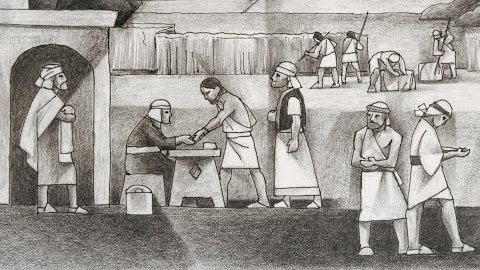
A Fresh Look – Sermon on Matthew 20:1-16 for Septuagesima Sunday

Matthew 20:1–16

1 “For the kingdom of heaven is like a master of a house who went out early in the morning to hire laborers for his vineyard. 2 After agreeing with the laborers for a denarius a day, he sent them into his vineyard. 3 And going out about the third hour he saw others standing idle in the marketplace, 4 and to them he said, ‘You go into the vineyard too, and whatever is right I will give you.’ 5 So they went. Going out again about the sixth hour and the ninth hour, he did the same. 6 And about the eleventh hour he went out and found others standing. And he said to them, ‘Why do you stand here idle all day?’ 7 They said to him, ‘Because no one has hired us.’ He said to them, ‘You go into the vineyard too.’ 8 And when evening came, the owner of the vineyard said to his foreman, ‘Call the laborers and pay them their wages, beginning with the last, up to the first.’ 9 And when those hired about the eleventh hour came, each of them received a denarius. 10 Now when those hired first came, they thought they would receive more, but each of them also received a denarius. 11 And on receiving it they grumbled at the master of the house, 12 saying, ‘These last worked only one hour, and you have made them equal to us who have borne the burden of the day and the scorching heat.’ 13 But he replied to one of them, ‘Friend, I am doing you no wrong. Did you not agree with me for a denarius? 14 Take what belongs to you and go. I choose to give to this last worker as I give to you. 15 Am I not allowed to do what I choose with what belongs to me? Or do you begrudge my generosity?’ 16 So the last will be first, and the first last.”

In the name of Jesus. Amen.

What is the greatest gift given in this parable?

At first glance, we think that it’s the denarius, that full day’s wage, handed to the workers who showed up last. But that’s the wrong answer. All the workers – those who were hired at the eleventh hour, the ninth hour, the sixth hour, the third hour, and right way at daybreak – they all get the same coin. It looks like the later you come, the greater the gift you receive. We think the only ones who don’t receive a gift are those who worked all day. They simply get what they had agreed to, what they bargained for – an honest day’s wage for an honest day’s work. But the denarius is not the greatest gift in the parable.

The greatest gift is a place in the vineyard. All of these workers – no matter what time of day they were hired – all of them started out in exactly the same place. They were all stuck in the marketplace with no prospects, no future, no income. None of them had anything until the master came to call them into his vineyard.

None of the workers got into the vineyard on their own. All of them knew they needed work to provide for their families. But they had no shot at that until the master called them into his vineyard. Before the master called them, they apparently didn’t even know there was a vineyard or how to get there, otherwise they could have gone to his house, knocked on the door, and asked for work. But that’s not what happens. Instead, the owner comes to them, seeks them, finds them, and promises to give them what they need. It’s the master who brings them all of them in. So, into the vineyard they all go – each at the time of day when the master called – not one moment before, not one moment after.

Back up just a bit and imagine the thought process of the workers hired first. They went to the marketplace because, in that part of the world in Jesus’ day (and still today), people who didn’t have normal, secure, regular jobs, they would gather at a certain spot in the marketplace in hope of being hired. Again, the people who were hired at the beginning of the day had nothing, no money, no job, no prospects. So, as the sun rises and as they march toward the vineyard, they’re excited about the master’s promise of an honest day’s pay for an honest day’s work. That promised denarius motivated them. Throughout the day, all of their work and toil and enduring all the heat and sweat was tolerable because that denarius meant life for each of them and for their families.

The only thing that spoiled it, the only thing made that denarius unappealing, was the fact that others also received the denarius. Seeing others get the same denarius was the only thing that robbed those first workers of their joy in the denarius. To say it bluntly: comparison is the thief or joy.

Imagine a company has two positions open. You apply and are given one of the positions, and you love everything about your new job. You like the environment, your coworkers, and $100,000 per year compensation. But then, you find out that the person hired for the other position – who is doing the same job, working the same hours, and has the same experience as you have – imagine finding out that person makes $101,000. How would that change your perception of your job and salary? If you’re selfish like me, I’m sure your attitude would change. You’d feel cheated. You’d complain. It’d ruin your whole perception of your new job. But here’s the thing: nothing has actually changed. Your paycheck didn’t diminish. The environment around you didn’t get worse. Nothing has been taken from you. You haven’t lost anything. The only thing that has changed is your perception. Someone else has gotten something that you don’t think they deserve. Repent.

Dear saints, God’s grace isn’t only for you. It is certainly given to you, but you aren’t the only one who gets or needs it. Please, please don’t be so foolish as to demand that God give you what you deserve because what you deserve is an eternity in hell. God doesn’t want to give you what you deserve. He wants you to be in His vineyard. And, yes, He has work for you to do there.

Look again at v. 12-15. When the workers hired first grumble about their denarius and all the hard work they did in the scorching heat, the master doesn’t fight or question their claim. He doesn’t diminish the work they have done. Not one bit. The only objection the master against their grumbling is that he’s being completely fair with them. His generosity doesn’t mean they were short-changed. The owner simply says, “If you don’t like my generosity, take what is yours and go. You’re free to leave my vineyard and go back to the marketplace.”

Dear saints, yes, this is a parable about working in God’s kingdom, and I titled this sermon “A Fresh Look” because we all need to be reminded that life in God’s kingdom does require work. God’s call to be a Christian is a call to much work. Jesus says, “If anyone would come after Me, let him deny himself and take up his cross and follow Me” (Mt. 16:24). That calling from your Savior is a call to work. But there is so much joy in your work in God’s kingdom. That’s not to say that all of the work is pleasant and easy.

Dear saints, there are many things in this world that require work, but the work itself is good. There is work, there is labor, there are difficulties involved in all good things. For example, being a parent is work – a lot of work, and even a lot of unpleasant work. Parents have to get up in the middle of the night, change poopy diapers, suck snot out of the noses of the babies. I don’t know anyone who thinks those things are pleasant or anyone who enjoys doing those things. But none of those things mean the baby isn’t a delight or a joy to be around. And there is blessing in doing them. People are happier and more content when they give of themselves and serve others. Yes, the work is its own reward.

Christian, you have been brought into God’s vineyard. A vineyard is a place where there is plenty of work to be done, but the purpose is not to produce grapes. Vineyards exist to produce wine which makes glad the heart of man (Ps. 104:14-15). Life in God’s kingdom is to live where work is done, but that work culminates in joy and feasting. The whole point of your work and labor and toil in God’s kingdom is to join God in producing joy.

Dear saints, you’re going to leave here and head back to your labor, back to your work, back to the heat and sweat and toil of your God-given vocations. But before you do, God invites you to His table to feast. Come and enjoy a foretaste of the feast to come. Come and receive the joy of receiving Christ’s Body and Blood given and shed for you for the forgiveness of all your sin. Come to the feast. Then, go. God still has vineyard work for you to do. Amen.

The peace of God, which surpasses all understanding, will guard your hearts and minds in Christ Jesus. Amen.

Life in the Vineyard – Sermon on Matthew 20:1-16 for Septuagesima Sunday

Matthew 20:1–16

1 “For the kingdom of heaven is like a master of a house who went out early in the morning to hire laborers for his vineyard. 2 After agreeing with the laborers for a denarius a day, he sent them into his vineyard. 3 And going out about the third hour he saw others standing idle in the marketplace, 4 and to them he said, ‘You go into the vineyard too, and whatever is right I will give you.’ 5 So they went. Going out again about the sixth hour and the ninth hour, he did the same. 6 And about the eleventh hour he went out and found others standing. And he said to them, ‘Why do you stand here idle all day?’ 7 They said to him, ‘Because no one has hired us.’ He said to them, ‘You go into the vineyard too.’ 8 And when evening came, the owner of the vineyard said to his foreman, ‘Call the laborers and pay them their wages, beginning with the last, up to the first.’ 9 And when those hired about the eleventh hour came, each of them received a denarius. 10 Now when those hired first came, they thought they would receive more, but each of them also received a denarius. 11 And on receiving it they grumbled at the master of the house, 12 saying, ‘These last worked only one hour, and you have made them equal to us who have borne the burden of the day and the scorching heat.’ 13 But he replied to one of them, ‘Friend, I am doing you no wrong. Did you not agree with me for a denarius? 14 Take what belongs to you and go. I choose to give to this last worker as I give to you. 15 Am I not allowed to do what I choose with what belongs to me? Or do you begrudge my generosity?’ 16 So the last will be first, and the first last.”

In the name of Jesus. Amen.

The Bible refers to Christians as many things. Christians are God’s sons (Ro. 8:14; Gal. 3:26), daughters (2 Cor. 6:18), children (Mt. 6:9; Ro. 8:16; 1 Jn. 3:1), and heirs (Ro. 8:17; Gal. 4:7). All Christians are called the bride of Christ (Eph 5:25-27) and the body of Christ (Ro. 12:4-5; 1 Cor. 12:27). The Bible will refer to you Christians as sheep with Jesus as your Shepherd (Jn. 10:1ff). There are all sorts of other things I could mention, but in this parable, Jesus calls you workers or laborers in God’s vineyard, and that is what we are going to focus on.

In the parable, the vineyard is the kingdom of God or the Church, the master is Jesus, and, Christian, you are in this parable as a worker who was brought into the vineyard by Jesus. Some of you were brought in early and some later, but you were all brought in by the invitation of Christ. You were brought in to the kingdom of God for a purpose.

Christ has called you into His kingdom not just to lounge around and dangle your toes in the pool while you get a tan. No, He has work for you to do. Husbands and fathers; wives and mothers; children; students; employees with a boss or business owners with staff; citizens of cities, states, and countries – all of these are tasks put in front of you as you work for God in His kingdom. There are times when the work Jesus puts in front of you is hard, difficult, and requires more strength than you can muster on your own. There are times when that work is easier. But it doesn’t matter how challenging or easy the work is, it is work in God’s kingdom.

And this parable harkens back to our origins, back to what God created us to be. Remember how it was at the beginning of creation and before the Fall? God creates everything, plants a garden, and puts Adam and Eve there so they could work it and keep it (Gen. 2:15). Those of you who have been attending our adult class Sunday mornings will, hopefully, remember this. Those two responsibilities – to work and to keep the Garden of Eden – are the same duties that God gives to the priests who served in the Tabernacle and Temple (Num. 3:7-8, 8:26, 18:5-6); the Hebrew words are the same. God didn’t just create Adam and Eve to be gardeners, they were guardians of sacred space. So, this parable refers to how God calls you to be guardians of the sacred space of His kingdom.

This vineyard, the kingdom of God, is a blessed place. Yes, there’s work to do. You have tasks and responsibilities to faithfully carry out, and at times you will struggle and even fail in those responsibilities as laborers in the vineyard. But remember, Scripture doesn’t only call you a laborer; again, you are also a child of God. As a laborer in God’s vineyard and as a child of God, you are part of the family business. Now, please know that I’m going to push past the boundaries of the parable a bit here (i.e. this goes a bit past the scope of the parable), but it is still in line with what the Scriptures teach.

In a family business, the children get all sorts of perks, freedom, and leeway that regular employees, who aren’t part of the family, don’t get. Now, I don’t know enough about vineyards to know if they regularly use tractors, but sick with me on this for a minute. Imagine a normal vineyard with a worker who crashes the tractor because he’s being careless or reckless. That guy is probably going to get fired. But if one of the vineyard owner’s own children makes the same mistake, sure he might get a lecture or not be allowed to drive the new tractor that replaces the one he broke, but he’s still going to be in the business because he’s family.

Now, what might that look like for you as a laborer in God’s vineyard? Again, as a Christian, you are working in God’s vineyard no matter what you are doing. You adults – in your job, whatever it is; in your home with your spouse and children; or in your town, state, and country – every responsibility is vineyard work that God gives you to do. You kids – at home, you empty the dishwasher, make your bed, brush your teeth; in your school, whatever subject you are studying or even being a friend to others at recess – all of that is vineyard work.

There are times you are going to mess up in that vineyard work. You’re going to burn the supper. You’re going to bomb the spelling, math, or science test. But you’re family, so there is forgiveness and mercy extended. You’re still going to be in the vineyard. Sure, you’ll have lessons to learn (and, sometimes, those lessons won’t be pleasant). You might be relegated to different tasks that better fit your abilities (see 1 Cor. 12:21-26). But you’re still in the vineyard because you’re family. Ultimately, the only failure is not learning from your mistakes and doing better the next time.

According to the parable, the thing that gets you thrown out of the vineyard is being angry with the master because of his generosity and goodness toward others (Mt. 20:13-15). But now, I have to add this just briefly: None of that is an excuse to be lazy or reckless with your labor in the vineyard. Remember, the better you work in the vineyard, the more you will benefit. So, take your work in the vineyard of God’s kingdom seriously, but also know that your place in the vineyard is safe and secure.

Ok, back inside the boundaries of the parable and to the elephant in the room – the wages. 

In the parable, the only place outside of the vineyard is the marketplace. Markets are where goods and money are exchanged. This thing costs so much, and if you don’t have enough, tough cookies. The marketplace operates only in justice. Now don’t get me wrong, justice is a good thing. We need justice, but because we are sinners, justice is a terrifying thing. God be praised that we have a God who is merciful andjust (Ro. 3:26; 1 Jn. 1:9). The marketplace is where the master of the vineyard finds his laborers and calls them out of it. Notice how the master says to the eleventh-hour workers, “Why do you stand here idle all day?” They don’t respond, “Well, we like it here.” No. The marketplace is a terrible place to be as it is presented in this parable. When the master says, “You go into the vineyard too,” they don’t respond, “Aw man, now we have to work.” They willingly and joyfully go into the vineyard.

Again, notice how the judgment in this parable is being tossed out of the vineyard because the grumblers didn’t like the master’s pay scale based on mercy and generosity. Dear saints, we want to remain in the vineyard where we are benefactors of Jesus’ death and resurrection. Because of what Jesus has done, we are in the vineyard where we get better than our sins deserve.

The parable is not just a description of the last day and final judgment. The parable is also about the life of faith. Some of you have said something like this to me, “Pastor, I don’t really like this parable. I’ve been a Christian my whole life and worked in God’s kingdom. And Jesus is saying that all I’ve done as a worker in His kingdom doesn’t really matter because anyone who converts on their deathbed or in a foxhole gets treated the same way I will. I know this is a wrong attitude, but I still don’t like what the parable teaches.” 

I’ve done my best to address that in the past, but after studying this week, I’ve got an answer that is better than what I remember sharing in the past. If you look back to the end of Mt. 19, the context of when Jesus tells this parable is also recorded in Lk. 18:18-30. Luke doesn’t record this parable, but Jesus tells this parable in the context of Peter’s little brag and question, “Jesus, we disciples have left our homes and everything and followed you. What are we going to get?” (see Mt. 19:27 & Lk. 18:28). And in Lk. 18:29-30, Jesus promises, “Truly, I say to you, there is no one who has left house or wife or brothers or parents or children, for the sake of the kingdom of God, who will not receive many times more in this time, and in the age to come eternal life.”

Did you catch that? Jesus promises eternal blessings and rewards to you in the life to come, but you also get blessings and rewards in this life for your labor in His kingdom. That’s what Jesus says. And He wouldn’t say it if it weren’t meant to be enticing to you to do the work that He has for you in His kingdom. Plus, consider this: you know what those eleventh-hour workers, who got paid the same denarius as those who worked the whole day, you know they did the next day? They got up and worked a full day in the vineyard. They got more strength, more endurance, more experience, and did what they could for the benefit of the vineyard.

Finally, and I’ll leave you with this: Remember your Christian life is work and labor in the vineyard. Jesus doesn’t tell the parable about the owner of a factory that produces sweatpants or sneakers or frozen French fries. No. It’s about a vineyard. Vineyards exist to produce wine which God gives to make glad the heart of man (Ps. 104:15). The work you do in Christ’s kingdom brings joy, rest, and feasting to you and to those around you. May we all be diligent and faithful and joyful as we live out our faith in the life of the vineyard. Amen.

The peace of God, which surpasses all understanding, will guard your hearts and minds in Christ Jesus. Amen.

Out of the Marketplace & into the Vineyard – Sermon on Matthew 20:1-16 for Septuagesima Sunday

Matthew 20:1–16

1 “For the kingdom of heaven is like a master of a house who went out early in the morning to hire laborers for his vineyard. 2 After agreeing with the laborers for a denarius a day, he sent them into his vineyard. 3 And going out about the third hour he saw others standing idle in the marketplace, 4 and to them he said, ‘You go into the vineyard too, and whatever is right I will give you.’ 5 So they went. Going out again about the sixth hour and the ninth hour, he did the same. 6 And about the eleventh hour he went out and found others standing. And he said to them, ‘Why do you stand here idle all day?’ 7 They said to him, ‘Because no one has hired us.’ He said to them, ‘You go into the vineyard too.’ 8 And when evening came, the owner of the vineyard said to his foreman, ‘Call the laborers and pay them their wages, beginning with the last, up to the first.’ 9 And when those hired about the eleventh hour came, each of them received a denarius. 10 Now when those hired first came, they thought they would receive more, but each of them also received a denarius. 11 And on receiving it they grumbled at the master of the house, 12 saying, ‘These last worked only one hour, and you have made them equal to us who have borne the burden of the day and the scorching heat.’ 13 But he replied to one of them, ‘Friend, I am doing you no wrong. Did you not agree with me for a denarius? 14 Take what belongs to you and go. I choose to give to this last worker as I give to you. 15 Am I not allowed to do what I choose with what belongs to me? Or do you begrudge my generosity?’ 16 So the last will be first, and the first last.”

In the name of Jesus. Amen.

Was this vineyard owner being fair, or was he being merciful? Was he being just, or was he being gracious? As I was preparing for the sermon this week, I came across several sermons that summarized the parable as a dichotomy: “Not fair, but merciful,” or, “Not just, but gracious.” If you think fairness and mercy or justice and grace do not exist together, you are wrong. Just plain wrong.

We must get one thing straight. With this parable, Jesus isn’t giving advice on how to run a business. An economic system where everyone is paid equal wages without considering how much experience they have, the skills required for the position, or the number of hours a person works has been tried. Even when whole governments try to force this type of arrangement in the country, it fails. It fails miserably, and that failure is always accompanied by a lot of suffering and death. But even in a small business, it doesn’t work. There are tons of examples of this, but I was reading about one particular company near London that tried to do this,[1]and the experiment lasted only a year before they had to abandon it and adopt a normal pay scale.

The reason this doesn’t work is companies do not have unlimited, infinite resources. Sure, they might have massive profits and huge budgets, but that doesn’t mean a business can afford to pay everyone equally. Companies always need to be taking in more money than they are spending and paying. If a company doesn’t balance its finances, it won’t be in business for long. A business should pay its employees a fair day’s wage for a fair day’s work. The economy of the marketplace needs to operate on a fair and just scale because it is always dealing in the realm of supply and demand, and supply is always limited.

Now, all of that is just basic economics. But I am not an economist, I don’t play one on TV, and didn’t I stay at a Holiday Inn last night. And this is not an economics lecture; this is a sermon. I only say all of that to set the stage so you can see that the vineyard owner is fair and just as well as merciful and gracious. Through the whole parable, this vineyard owner follows every standard of just of economics.

In Jesus’ day, you didn’t have a 9-5 job; instead, you worked while it was light until it got dark. Because Israel is geographically close to the equator, the workday throughout the year is basically consistent, 6 AM to 6 PM. We don’t have that luxury here in the bitter north. Our shortest day has about 8.5 hours of daylight, and our longest day just over 16 hours. So, this vineyard owner goes to the marketplace to hire workers just before sunrise. In Jesus’ day (and still today), people who didn’t have regular jobs would gather in a certain spot in the marketplace hoping to be hired – even if it was just for a day. The vineyard owner selects some workers and offers them the standard wage for a regular workday – one denarius. Because the arrangement is acceptable to the workers he selects, off to the vineyard they go. They have the confidence and security that they will be able to provide for their family for the day.

About the third hour of the workday, think 9 AM or during the morning coffee break, the owner goes back to the marketplace, and notice how different v. 1 and v. 3 are. In v. 1, he goes to the market to hire workers. But in v. 3, there is no mention of the owner wanting to hire more workers. He simply goes to the marketplace and sees people who are still there hoping to get a job. The owner gives them two things: an invitation and a promise. Listen carefully to what he says, “You go into the vineyard too, and whatever is right I will give you.” This group sees it as a job offer, and since they trust the owner to be a fair and just guy, they go and work in the vineyard.

The owner goes out two more times – the 6th hour (lunchtime), and the 9th hour (afternoon break) – and does the exact same thing. “You go into the vineyard too, and whatever is right I will give you.” And the owner isn’t done visiting the marketplace. He goes again at the 11th hour, right as all the other businesses are getting ready to close up. He finds even more people standing around because no one hired them. Now, the owner simply invites them, “You go into the vineyard too.” They don’t get a promise of getting what is right, fair, or just. They are simply invited to leave the marketplace and go into the vineyard.

Now, the surprises start coming in the parable. Suddenly, there’s a new character, a foreman. Think of him as the manager of the vineyard. Now, why wasn’t this manager going out to hire workers? But we don’t even have time to ponder the question because the next two surprises come so quickly. The owner tells the manager lit., “Call the workers and pay them the wage.” (Our translation makes it sound like the wages are still a secret, but the Greek is clear.) No matter when they arrived in the vineyard, they all are to receive the wageof a full day’s pay. The final surprise comes with the order in which the wage is paid out. The owner decides that the order will be the last get their denarius first and the first will get their denarius last.

Why not do it the other way? Those who agreed for a denarius could get exactly what they bargained for, and every subsequent group would get a surprise that would bring more delight because they worked fewer hours. Everyone would be happy, and it would avoid the trouble of the argument which comes at the end of the parable. We could also ask, when the owner went to the marketplace at the eleventh hour, why didn’t he just toss a denarius to those who were still there? Why go through the trouble of bringing them to the vineyard? The answer to both questions is that the owner wants his grace and mercy to be seen and witnessed by everyone in his vineyard. This vineyard is the place to be. The owner doesn’t want them to have to go back to the marketplace.

Well, the grumbling comes, “These last worked only one hour, and you have made them equal to us who have borne the burden of the day and the scorching heat.” If those grumblers had thought two seconds about what they were saying, they would have realized their complaint roughly means, “This isn’t right, fair, or just. Why are you being gracious and merciful to them? They haven’t deserved it!”

Let me paraphrase the owner’s response, “Um, excuse me? I’ve been completely fair and just with you. Remember our contract this morning? You agreed on a denarius. You have it. It’s yours. You are free to do whatever you want with what is yours. Don’t I have the freedom to do what I want with what is mine? Why does the grace I give to others irritate you? You don’t have any less because I give more to others. I understand that you want to be richer at the end of the day. That’s fine. You are. I have chosen to be poorer at the end of the day. If you don’t like that, you can take what is yours, get out of my vineyard, and go back to the marketplace.”

The parable ends there, and we are left hanging. How did the full-day workers respond? Did they leave the vineyard where the owner runs things with both justice and mercy? We don’t know.

What would you do? Or, more accurately, what are you doing?

Again, this parable is not about companies and businesses who have limited assets. This parable is about the kingdom of your God who has unlimited resources, and the vastness of His resources is only outmatched by His incalculable mercy. There is only one vineyard and one master who is fair and just as well as being merciful and gracious like this. You can certainly return to the marketplace if you want, but there you will only find justice and no mercy.

Dear saints, in the end, there is only One who has worked a full day’s shift – Jesus. Christ has borne the burden and heat of the day. He has come and did the work you could never do. He has fully kept God’s Law and was perfectly obedient to God’s Commands. You get His wages, and this is Jesus’ delight. Christ willingly went to the cross got the wrath and punishment of sin that you deserve. For the joy that was set before Him, He endured the cross for you (Heb. 12:2). Jesus wants to bring you out of the marketplace and into the vineyard. There is no better place to be, but if you don’t like the vineyard, you are free to go.

Christ Jesus invites you to remain in His vineyard and never go back to the marketplace that is empty of mercy and grace. Because of the mercy and grace of God, you are no longer workers being overpaid. You are a member of the kingdom, a child of God, and a brother or sister of Christ. You remain with Him. Not only do you get paid generously; you also have a permanent place and remain in the vineyard.

And secure in His vineyard, Jesus invites you now to a feast at His table where He will give you what is right and just as well as what is merciful and gracious. So, come. Dear saints, when you confess your sins, He is faithful and just to mercifully and graciously forgive you and cleanse you from all unrighteousness (1 Jn. 1:9). Amen.

The peace of God, which surpasses all understanding, will guard your hearts and minds in Christ Jesus. Amen.


Information on the company in London that wasn’t used:

The company started out small, just five people. The owner realized everyone was basically contributing the same, so he talked to his employees, and they all agreed to be paid the same. From the owner himself down to the office assistant, they all received the same amount which is what they all agreed was a ‘decent living wage’ for London. For a while it worked just fine, but as the company grew, this wage model caused all sorts of problems. The company needed to hire more staff because of a higher demand for their services. When they advertised a position for a software developer, they didn’t get applicants because that skill is in high demand and was typically compensated higher than the living wage the company had set. And when they advertised for more another office assistant, they were inundated with applications because the salary was much higher than other companies were offering for the same type of work. In short, the experiment lasted only one year before the company started basing their salaries on experience and expertise.


[1] “CEO Secrets: ‘We tried paying everyone the same salary. It failed.’” https://www.bbc.com/news/business-55800730

Kingdom Work – Sermon on Matthew 20:1-16 for Septuagesima Sunday

Matthew 20:1-16

1 [Jesus says,] “For the kingdom of heaven is like a master of a house who went out early in the morning to hire laborers for his vineyard. 2 After agreeing with the laborers for a denarius a day, he sent them into his vineyard. 3 And going out about the third hour he saw others standing idle in the marketplace, 4 and to them he said, ‘You go into the vineyard too, and whatever is right I will give you.’ 5 So they went. Going out again about the sixth hour and the ninth hour, he did the same. 6 And about the eleventh hour he went out and found others standing. And he said to them, ‘Why do you stand here idle all day?’ 7 They said to him, ‘Because no one has hired us.’ He said to them, ‘You go into the vineyard too.’ 8 And when evening came, the owner of the vineyard said to his foreman, ‘Call the laborers and pay them their wages, beginning with the last, up to the first.’ 9 And when those hired about the eleventh hour came, each of them received a denarius. 10 Now when those hired first came, they thought they would receive more, but each of them also received a denarius. 11And on receiving it they grumbled at the master of the house, 12 saying, ‘These last worked only one hour, and you have made them equal to us who have borne the burden of the day and the scorching heat.’ 13 But he replied to one of them, ‘Friend, I am doing you no wrong. Did you not agree with me for a denarius? 14 Take what belongs to you and go. I choose to give to this last worker as I give to you. 15 Am I not allowed to do what I choose with what belongs to me? Or do you begrudge my generosity?’ 16 So the last will be first, and the first last.”

In the name of Jesus. Amen.

This parable is about the kingdom of heaven and not about the kingdom of this world. An economy where workers are given equal wages without considering how much they have contributed does not work a world filled with sinners. If any CEO operated a company this way, they would have a lot of employees but no workers, and that business would go under in short order because the funds would be gone in to time. Anyone who suggests that the Scriptures are in favor of a Marxist, Socialist economy has proven that he doesn’t know the Bible very well. Several places in Proverbs say that the sluggard will not eat. And just so you know that isn’t ‘just an Old Testament thing,’ Paul says in 2 Thess. 3:10–12, “If anyone is not willing to work, let him not eat. For we hear that some among you walk in idleness, not busy at work, but busybodies. Now such persons we command and encourage in the Lord Jesus Christ to do their work quietly and to earn their own living.”

With that in mind, we can turn to the parable.

This parable is about the kingdom of heaven which works the opposite of the kingdoms of men. In the kingdom of heaven, you don’t earn a wage, and you don’t pay for goods or services. Instead, everything in the kingdom of heaven is given away for free because Christ has done all the work and paid for it all by His death and resurrection. God can do this because He isn’t out to make a living by running a profitable business. Instead, God is only interested in giving you His kingdom for free. That’s the main point of the parable, and Jesus stresses that point with two important details.

First, notice when the vineyard owner goes out early in the morning, he bargains with the full-day workers. They agree to work for the day, and in exchange, they will receive a denarius (which, just to be clear, was the normal wage for a day’s work). That was the settled agreement. None of the other workers got a contract like that. They only get a promise. The vineyard owner promises those who were hired at the third hour, “Whatever is right I will give you” (v. 4). And the word there that gets translated ‘right’ is the Greek word for ‘just’ and ‘justice.’

At the sixth and ninth hour, the vineyard owner said the same thing to the workers. But then, notice how the schlubs who are standing idly in the marketplace at the eleventh hour (which would be about 5:00 PM our time and one hour before payday), they don’t even get a promise. The vineyard owner simply tells them, “You go into the vineyard too.” When the wages are given out, everyone gets the same – one denarius. It didn’t matter if the workers had bargained for the denarius or if they simply trusted the promise of the vineyard owner to give what was right and just or if they just went into the vineyard because the owner told them to. Everyone gets the same – one denarius.

And it is good to recognize that the denarius was a gift no matter how long each person worked. None of the workers, not a single one, took the initiative to go and work in the vineyard. No one went knocking at the owner’s door to ask for a job, and none of them volunteered to work for him when he came into the marketplace. Each of them was called at the precise time the owner called them. He went and retrieved them to come into his vineyard. 

This is God’s economy in the kingdom of heaven. And this is the way it must be if it is by grace. Nothing is earned; nothing deserved. That’s the first detail to notice. The denarius was a gift from the hand of the vineyard owner for everyone – those who worked twelve hours, who worked nine hours, or six, or three, or one.

The second detail that shows that God’s intention is to give away the kingdom for free cones at the end. Notice that those who were upset with everyone getting a denarius are sent away from the vineyard which implies that those who were grateful for what they received get to stay.

If you don’t like the fact that in the kingdom of heaven everyone gets the same, then these harsh words of judgment are for you, “Take what belongs to you and go.” In other words, you are free to leave God’s vineyard with your wages and nothing more. Just remember what your wages are. Ro. 6:23 says, “The wages of sin is death.”  If you want to, you can look at your denarius and complain to God that others, who you think haven’t worked as hard as you, have gotten the same as you. But you do so at your own peril and will be sent away from the vineyard.

The most beautiful thing in the parable is not the fact that some get overpaid, and the owner pretends like they worked the whole day and asks them to come back to the next morning. Instead, they have a new home with the gracious vineyard owner. Grace is a one-way street. Everything you have is a gift from God which has been paid for by the blood of Christ. Eternal life is given solely because of what Christ has done by dying and rising again for you. Those who don’t like it and are angry with the vineyard owner are sent away. In this way, the first become the last. 

But there is one more thing about the parable that I want to highlight. It is a minor but important point. Jesus depicts the kingdom of God as working in His vineyard. Dear saints, God has kingdom work for you to do; you are a laborer in His vineyard. I know a lot of devout Christians who are constantly trying to figure out, “What is God’s will for my life?” They have a good heart and want to serve God in meaningful ways. This is a good thing, but you don’t have to agonize yourself trying to discern what God wants you to be doing in His kingdom because Jesus has already told you where He wants you working in His vineyard.

Jesus says that the second great command is, “Love your neighbor as yourself” (Mt. 22:39). So, if you want to figure out how to serve God in any given moment, all you have to do is ask yourself, “Who is my neighbor, and what do I owe that neighbor?” If you find yourself at your job, the kingdom work that God has given you to do is to be a good employee, coworker, and provider for your household. When you are out running errands, be a good driver, help the short person reach the item on the top shelf (or, if you’re short, help me reach the stuff on the bottom shelf). Be kind and polite to the people around you. Plow your neighbor’s sidewalk or driveway. Be a good parent. Feed your kids, help them with their homework, and teach them about life. If you’re retired, spend more time praying and interceding for the needs of others. All of this is fruitful kingdom work.

Kids, do what your parents ask you to do at home. When you’re at school, be a good student and classmate and recognize that you are preparing yourself to become a productive member of society. Parents, instill that fact into your children. When they complain about their homework (the multiplication tables, the sentence diagraming, and memorizing facts about ancient Egypt or photosynthesis) when they complain that it is pointless and boring, remind them that they are doing that work not just for their teacher or for a grade, they are doing it for God. Col. 3:23 says, “Whatever you do, work heartily, as for the Lord and not for men.”

In all of those situations, you aren’t just serving your neighbor, you are serving God and doing kingdom work. It doesn’t matter how small or seemingly insignificant the task is, it is the vocation that God has called you to do.

Here’s the thing: God certainly doesn’t need you to work in His kingdom. He could do it all better Himself. He has the power, strength, and ability to do it all without you. But He has called you into His vineyard and join Him in all of these things.

I’d like to close with an illustration. Imagine a dad tells his young son, “Let’s go chop some wood.” The boy jumps at the invitation because he doesn’t even see it as work. He wants to be like his dad. He wants to be strong, swing that axe, and be productive. He would rather do that than anything else. So, the boy goes out and, of course, he stinks at it. The dad is doing all the real work. At some point, the boy gets tired, bored, discouraged, or distracted. But the dad calls the boy back to the task at hand, “No, we’re chopping wood here.” At the end of it all, the dad has produced a giant pile of wood, and the boy has only chopped a handful of little logs. The dad could have probably produced a way more logs by himself than the two of them did together because the dad had to teach his son how to swing the axe and keep calling his son back to work. But here’s the thing: the wood that the boy has chopped is used. It contributes to the needs of the family. And as long as that pile of wood that the dad and boy produced lasts, the dad is going to brag to his family and guests, “Isn’t that fire nice? Timmy helped me chop that wood. Thanks for all your work, Timmy.”

Dear saints, your Heavenly Father has called you to work with Him doing kingdom work. Going back to Col. 3:23-34, “Whatever you do, work heartily, as for the Lord and not for men,” and listen carefully now, “knowing that from the Lord you will receive the inheritance as your reward. You are serving the Lord Christ.”

The day is coming, and it is coming soon, when Jesus will return. And on that day, He will give you faithful Christians the inheritance of the vineyard. In the meantime, God will use every last bit of what you do to expand and grow His kingdom because everything you do and say is made holy and sanctified by what Christ has done for you (Ps. 18:32). Amen.

The peace of God, which surpasses all understanding, will guard your hearts and minds in Christ Jesus. Amen.

The Evil Eye – Sermon on Matthew 20:1-16 for Septuagesima Sunday

Listen here.

Matthew 20:1-16

1 “For the kingdom of heaven is like a master of a house who went out early in the morning to hire laborers for his vineyard. 2 After agreeing with the laborers for a denarius a day, he sent them into his vineyard. 3 And going out about the third hour he saw others standing idle in the marketplace, 4 and to them he said, ‘You go into the vineyard too, and whatever is right I will give you.’ 5 So they went. Going out again about the sixth hour and the ninth hour, he did the same. 6 And about the eleventh hour he went out and found others standing. And he said to them, ‘Why do you stand here idle all day?’ 7 They said to him, ‘Because no one has hired us.’ He said to them, ‘You go into the vineyard too.’ 8 And when evening came, the owner of the vineyard said to his foreman, ‘Call the laborers and pay them their wages, beginning with the last, up to the first.’ 9 And when those hired about the eleventh hour came, each of them received a denarius. 10 Now when those hired first came, they thought they would receive more, but each of them also received a denarius. 11And on receiving it they grumbled at the master of the house, 12 saying, ‘These last worked only one hour, and you have made them equal to us who have borne the burden of the day and the scorching heat.’ 13 But he replied to one of them, ‘Friend, I am doing you no wrong. Did you not agree with me for a denarius? 14 Take what belongs to you and go. I choose to give to this last worker as I give to you. 15 Am I not allowed to do what I choose with what belongs to me? Or do you begrudge my generosity?’ 16 So the last will be first, and the first last.”

In the name of Jesus. Amen.

Follow the eyes of those who worked all twelve hours of the day. These laborers woke up before the sun rose. They crawled out of bed, rubbed their eyes, had breakfast, and made their way to the marketplace hoping to be hired so they could put food on the family table. As the morning light begins to illumine the city, they see the vineyard owner coming toward them. He calls them to work in his vineyard offering an honest day’s pay for an honest day’s work – one denarius. Off they go into the vineyard. When they get there, they see their tasks and get busy. They dig, and they till, and they prune, and they water, and they pull weeds, and they harvest. Whatever needs to be done in the vineyard, they get at it.

Then, as the morning sun continues to rise, these twelve-hour workers see their friends who hadn’t been hired at first, but now they are arriving in the vineyard. They had been hired just before Price is Right comes on. At this point, the guys who got to the vineyard first had been working for three hours, so they know what tasks could use a few extra hands. They all get to working as productively and efficiently as possible. A few more hours go by, and at the sixth hour during their lunch break, they see more of their buddies arriving to work in the vineyard. So, again, they reorganize and reprioritize where each of them will be laboring, and it’s back off to work.

As the day goes on and the temperature rises, they grab some water, and see more of their pals coming to work in the vineyard. It’s the ninth hour – about three o’clock. Those twelve-hour workers see that the vineyard is getting pretty full, but they welcome their friends and get back to the grind.

Then, as the sun is setting and the temperature begins to dip, they see even more workers arriving. The day is basically over, so it’s strange that more workers are arriving. But whatever. The twelve-hour workers know that they’ll soon be getting their wages, their denarius. They look forward to returning to their homes and proudly show the fruits of their labor. They anticipate the hugs from their kids and kisses from their wives. They’re ready to sit down to a nice dinner, get cleaned up, and contentedly lie down in their beds after an honest, fulfilling day’s work. They are pleased with themselves because they have done what was needed to provide for their families.

Finally, the sun begins to set, and the evening light clings to the sky. The workers put all the tools away and line up to receive their wages. But the full-day workers see that they are going to have to wait for their pay. Their buddies who came just in time for cleanup are going to get paid first. But then, they see the oddest thing. The guys who basically arrived just in time to get paid are getting a full denarius. These twelve-hour workers see that shiny denarius, a full day’s wage, landing in the clean hands of the one-hour workers. Their eyes get wide. They are so busy giving each other high fives and imagining what they are going to do with their extra windfall that they don’t even notice that those hired at the ninth hour get a denarius, same with those who came in at the sixth and those at the third.

So, there they are, standing in front of the foreman. They hold out their hand expecting to see lots of shiny coins. But they feel the weight of a single, solitary denarius in their palms. They look at that currency and despise it. What had sounded good, right, and reasonable in the morning is now detestable, despicable, and revolting in their eyes. So, they angrily look toward the vineyard owner, and the same is true of him. In the morning, he had appeared as a fair and honest man who would provide work and pay for them and their families, but now he looks like an unfair, unjust, inequitable scoundrel. And they complain.

The vineyard owner patiently listens to their protests, but they haven’t been shorted. It’s no skin off their backs. They didn’t get any less. So, the vineyard owner looks square into the eyes of those sour-faced workers and asks, “Where’s the foul? Didn’t we agree for a denarius? All those coins belong to me, so why do you think you get to decide what I do with them? Am I not allowed to do what I choose with what belongs to me?” And our translation says, “Do you begrudge my generosity?” But literally, the Greek there says, “Is your eye evil because I am good?”

And there it is. The vineyard owner was good – good and generous. He provided jobs and income for the people of his community. In fact, he was better than good. He was gracious. He freely gave more than the vast majority of his workers deserved. The evil eyes only pop up in those who think they deserve more than they are given. And those eyes are evil because they look more at themselves and their work instead of at the mercy and generosity of the vineyard owner.

None of these workers decided on their own to work for the master. Every one of them was called and sent only by the initiative of the vineyard owner. No one went to knock at his door to ask for a job, and no one volunteered to work for him when he came into the marketplace. Each of them was called, and each of them was called at the precise time the owner called them. He went and retrieved them.

Here’s the point, Christian: You were called by God. Period. He came. He called you into His service. He gave you work to do. You didn’t seek to work for Him. God called you into His kingdom when it pleased Him. If it had pleased God to hire everyone at dawn and have them work an entire day, he would have.

If you think God owes you better than He has given, if you think you have earned what He gives for free, you too have an ugly, evil eye. In fact, you have lifted yourself above God and put yourself on His throne. But it won’t work, you aren’t above God. When Jesus comes again on the Last Day, the first will be last, and Jesus Himself declares what that means. The last are told to take what is theirs and leave the vineyard. If this parable rubs you the wrong way, that’s the sentence you need to look at.

The true gift in the parable is hidden in that sentence. It isn’t just about the denarii that the vineyard owner graciously doles out. A permanent place in the vineyard is at stake. For those who have the evil eye of pride, there is nowhere else to go and they are sent away empty-handed. If we are really honest, we cannot claim anything as our own. Everything we have is gift. By grace we are saved, not as a result of works. No one can boast (Eph. 2:8-9).

But that sentence of judgment – when the vineyard owner says, “Take what belongs to you and go” – is a gracious statement for you, believer. You just have to open your eyes to see the benevolence, generosity, and mercy of God.

To those who don’t invoke their rights or complain about the generosity of God, they remain in the vineyard. You don’t just get a day’s wage for little work. In His mercy, God gives you the whole vineyard! Your generous God doesn’t treat you as workers, but as sons. Dear saints, God doesn’t pay you wages. He gives you an inheritance. The vineyard is yours.

Rejoice. The kingdom of heaven is the opposite of the kingdoms of men. You don’t earn. You don’t pay. The goods are given for free. It would drive any man-made business into the ground, but God doesn’t care. God isn’t out to make a living. He is out to give away His kingdom.

In the kingdom of God, there is no room for pride or arrogance or boasting in what we do because there is no doing on our part. Everything has already been done by Christ. We simply benefit because of His full and complete work. We who were dead in our sins, enemies of God, and children of wrath are raised, pardoned, adopted, and transferred into God’s kingdom. As we heard in our call to worship, God saves a humble people, but the haughty eyes He brings down (Ps. 18:27).

And look! Jesus now invites you to come have a seat at His table and taste of the joys of His finished work for you. Amen.

The peace of God, which surpasses all understanding, will guard your hearts and minds in Christ Jesus. Amen.

Holy Work – Sermon on Matthew 20:1-16 for Septuagesima

Listen here.

Matthew 20:1-16

1 “For the kingdom of heaven is like a master of a house who went out early in the morning to hire laborers for his vineyard. 2 After agreeing with the laborers for a denarius a day, he sent them into his vineyard. 3 And going out about the third hour he saw others standing idle in the marketplace, 4 and to them he said, ‘You go into the vineyard too, and whatever is right I will give you.’ 5 So they went. Going out again about the sixth hour and the ninth hour, he did the same. 6 And about the eleventh hour he went out and found others standing. And he said to them, ‘Why do you stand here idle all day?’ 7 They said to him, ‘Because no one has hired us.’ He said to them, ‘You go into the vineyard too.’ 8 And when evening came, the owner of the vineyard said to his foreman, ‘Call the laborers and pay them their wages, beginning with the last, up to the first.’ 9 And when those hired about the eleventh hour came, each of them received a denarius. 10 Now when those hired first came, they thought they would receive more, but each of them also received a denarius. 11And on receiving it they grumbled at the master of the house, 12 saying, ‘These last worked only one hour, and you have made them equal to us who have borne the burden of the day and the scorching heat.’ 13 But he replied to one of them, ‘Friend, I am doing you no wrong. Did you not agree with me for a denarius? 14 Take what belongs to you and go. I choose to give to this last worker as I give to you. 15 Am I not allowed to do what I choose with what belongs to me? Or do you begrudge my generosity?’ 16 So the last will be first, and the first last.”Laborers in the Vineyard getting paid

In the name of Jesus. Amen.

To get at the main point of this parable, I’m going to borrow an analogy. Imagine two waitresses working at a small cafe by themselves. Suddenly, a man brings in eighty of his family members to celebrate an occasion, and those two waitresses have to serve this massive, unexpected crowd. One of the waitresses works hard the whole time. She does her best to get all the drinks and orders. She puts in the effort to make sure all the plates are served to the correct spots. She attempts to keep the glasses full of refills. She promptly comes to wipe up a spill. And even though she is flustered, she does all of this with a friendly smile on her face.

The other waitress is angry about the whole ordeal. She’s mad that such a large party didn’t call ahead to let them know they were coming so the restaurant could be properly staffed. She grumbles when extra napkins are requested. She intentionally lets some of the food sit for several minutes after it was prepared so that it isn’t hot when it is delivered to the table. And she interacts with the party as little as possible and pretends not to hear certain requests. This second waitress actually made the evening more difficult for the first, so difficult, in fact, that it would have been easier for the first waitress to do the whole thing herself.

When the party is ready to leave, the man who brought everyone in walks up to both waitresses and hands each of them a handsome 30% tip. Which of the two is going to complain? Right. The first. She would have preferred for the man to give her a 15 or even 10% tip so long as the second waitress got stiffed. She would rather get less if it meant that all her effort was recognized and appreciated.

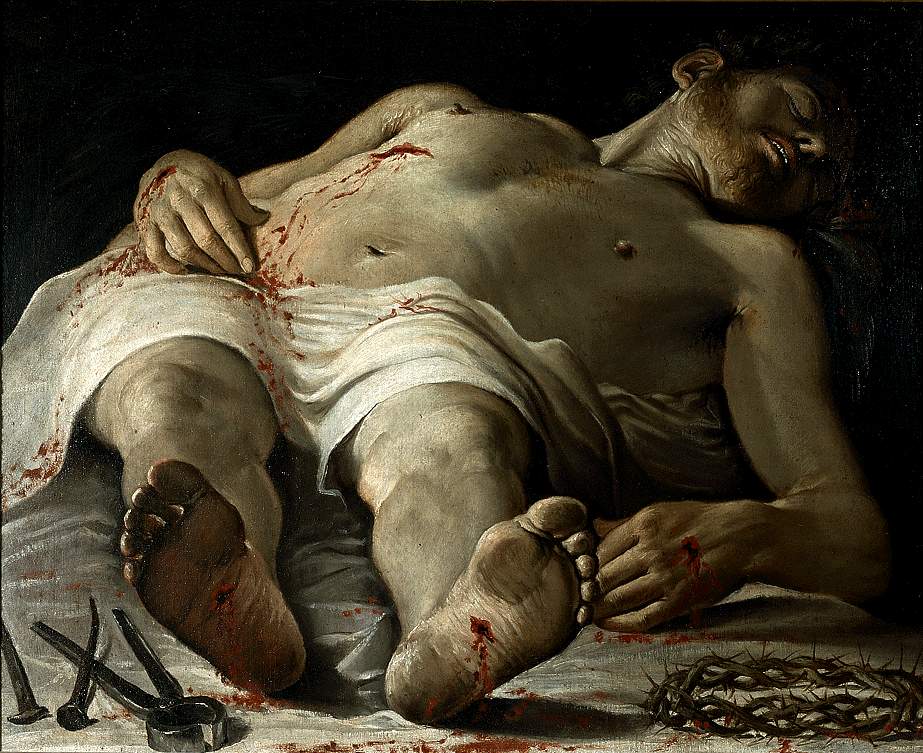
Jesus Laid in the Tomb 1Dear saints, welcome to the kingdom of heaven. In the kingdom of heaven, you are never rewarded based on your works or efforts because, if you received what you deserved, you would be sent straight to hell. In the kingdom of heaven, there are no formulas or set, hourly wages. You are given to based solely on the merits of Christ’s work for you. He is the only one who can say that He bore the burden of the day and the scorching heat. His atonement, His mercy, His grace is what you get, nothing less. Because of God’s unmerited, unearned, undeserved, unconditional love freely given to you for the sake of Christ, you are an heir of the kingdom of heaven. God be praised!

That’s the main point of the parable. The sermon could end here, but it won’t. There are other points in the parable. Yes, they are minor points, but I have four that I know will be helpful and comforting to you today. So, I’d like to draw them out a little bit. And these points all come from a small phrase in the parable from v. 6that never jumped out at me before. Notice in that verse that when the master goes out at the eleventh hour, just before the sun begins to set and working day is ending, the master finds more people standing there in the marketplace waiting to be hired and asks them, “Why do you stand here idle all day?” Did you catch it?

“All day.” It means the guys hired at the very end of the day had been there all along. I can’t tell you how many times I’ve studied, taught, and preached on this parable, but I kept missing that phrase. I had figured these guys were lazy. I thought maybe they slept in, maybe they were trying to avoid working during the hot part of the day. But that’s not the case! They were there early in the morning, at dawn, when the master first went out to hire workers. And they were there at the third and the sixth and the ninth hour when he came. Most people would have given up and gone home around the sixth hour (which is noon). But no. When the master asks why they have been standing there idle all day, they say, “Because no one has hired us.”

Here’s the first point we can draw from that: no one who got paid their denarius at the end of the day decided on their own to go work for the master. Every one of them was called and sent only by the initiative of the vineyard owner. No one volunteered themselves for labor when he came, and no one went to knock at his door to ask, “Would you hire me to work in your vineyard?” Nope. good-friday-jesus-comes-to-rescueEach of them was called, and each of them was called at the precise time the owner called them. He went and retrieved them.

So, if you are a worker in the Lord’s vineyard, if you have been called into the service of the kingdom of heaven, i.e. if you are a Christian, you were called by God. Period. He came. He gave you work to do. You didn’t seek to work for Him. God called you into His service when it pleased Him. Some, God brings in early and has them work the whole day, but for some reason – a reason known only to God – He brings others in a later, at the third, sixth, ninth, and eleventh hour. If it had pleased the master to hire all of them at dawn, he could have.

Which brings us to second point. if you think that you are one of the early hires, if you have been a Christian your whole life and faithfully carried out your vocations, if you have been tempted at times to grumble for all your hard work or tempted to pat yourself on the back for what you have accomplished, be careful. Remember that it was not you who offered up yourself to work. You were called by the grace of God. “By grace you have been saved through faith. And this is not your own doing; it is the gift of God, not a result of works, so that no one may boast. You are his workmanship, created in Christ Jesus for good works, which God prepared beforehand, that you should walk in them” (Eph. 2:8-10).

Know this. God is pleased with your work. He designed all those works for you, and He laid them all out before you to serve those who needed God’s work offered through your hands. You will be rewarded, and you will be rewarded far better than you deserve.

The third point: Maybe you think that you are one of those who were called to work late. Maybe you are saddened by how much time you wasted pursuing a life of pleasure for yourself. If you think, “How much more good could have I done if I hadn’t been so foolish? If I had been studying Scripture earlier, I could have been of better service.” Dear saint, don’t get discouraged. easte-jesus-brings-us-out-of-deathGod had a reason for bringing you in when He did. Trust His timing. He brought you into His vineyard exactly when He wanted you.

The fourth point is also along those lines, and I know it will be comforting to many of you, so listen up! If you have been praying for someone who is not in God’s vineyard, or if you have been aching for someone who was once in the vineyard but left – maybe it is a friend or relative. If it seems like your prayers and efforts have been wasted, take courage. Don’t stop praying for them. Yes, God calls some early, but some aren’t called into the vineyard until later. Some are called so late that they only arrive in time to get paid which means they do no more than receive their gracious reward. Be comforted. God has His own timing. Keep praying.

One more thing. I know the most common way the different hours that the workers get hired is understood to be a time in each individual’s life. When it is interpreted this way, the workers hired first represent people who have been Christians their entire lives. They were given faith in baptism and continued in that faith until they died. Those who were hired at the third, sixth, and ninth hour are commonly viewed as those who came to faith later in life – as youth, adults, and seniors. And those hired at the eleventh hour are the deathbed converts. That seems to be a legitimate way to understand that detail of the parable, in fact, that is how this sermon has interpreted that detail up to now.

However, remember this parable is about the kingdom of heaven. 1 John 2:18, written almost two-thousand years ago, says that it is the last hour. In the book of Revelation, we get repeated pictures of the saints who have died and entered into glory, and they are still working by praying for us (Rev. 6:9-11). Also, consider Hebrews 11 that uses the faith and deeds of the Old Testament saints to encourage us. Then, Hebrews 12[:1-2] gives us a picture of the great cloud of saints surrounding us and cheering us on to keep walking in faith. And Revelation 14:13 says that those who die in Christ are blessed because they now rest from their labors, but – and this is the point – their deeds follow them.

Considering all of that, none of us can claim to be those who worked through the heat of the day. Rejoice that God is merciful and has and will continue to give to you far better than you deserve. But also, be encouraged because this means that your labor in Christ is never wasted and is valuable work that lives on after you are gone. Think of the labor done by the authors of Scripture – Moses, David, Isaiah, Matthew, John, and Paul– their labor continues to reap results for the kingdom of God today.

Great Multitude with white robes washed in the blood of the lambAnd it isn’t just their work. Your work, done as a Christian, is holy work. Fathers and mothers, the work you do day in and day out will reap results in the lives in your children, grandchildren, and great-great-great-great grandchildren if Christ tarries. But it will also reap results in the lives of others whom you will never meet because you have shined the light of Christ to those you have met, and they will shine that light elsewhere. You Sunday school teachers, you who are praying for and encouraging our youth, you trustees who are caring for our facility, and everyone who is here encouraging another person is offering holy work that will be used by God until Christ returns. Everyone has a story of being impacted by someone else long after that person has entered into glory. So, take heart, and keep working. The labor that God has called you to is fruitful, holy work. It is holy work that God will multiply and expand. For that, God be praised. Amen.

The peace of God, which surpasses all understanding, will guard your hearts and minds in Christ Jesus. Amen.

Ready, Set, Go! – Sermon on 1 Corinthians 9:24-10:5 for Septuagesima.

Listen here.

1 Corinthians 9:24-10:5

24 Do you not know that in a race all the runners run, but only one receives the prize? So run that you may obtain it. 25 Every athlete exercises self-control in all things. They do it to receive a perishable wreath, but we an imperishable. 26 So I do not run aimlessly; I do not box as one beating the air. 27 But I discipline my body and keep it under control, lest after preaching to others I myself should be disqualified.

For I do not want you to be unaware, brothers, that our fathers were all under the cloud, and all passed through the sea, and all were baptized into Moses in the cloud and in the sea, and all ate the same spiritual food, and all drank the same spiritual drink. For they drank from the spiritual Rock that followed them, and the Rock was Christ. Nevertheless, with most of them God was not pleased, for they were overthrown in the wilderness.

In the name of the Father and of the Son and of the Holy Spirit. Amen.

Paul compares the Christian life to a sporting event. They didn’t have the best sport – baseball – in Paul’s day, but they had sporting competitions. The city of Corinth, in particular, hosted a series of games every other year called the Isthmian Games which were the second most famous athletic competition in the world after the Olympics. The events included racing, wrestling, jumping, boxing, javelin, discus, and even poetry. Thousands of athletes would show up to compete in the events, and throngs of people would come to watch. The winners of each competition would end up being famous throughout the Roman Empire and get statues and monuments. isthmean-games-celery-crown.jpg
But the immediate reward, the prize they got right after the competition, wasn’t a gold medal placed around their neck. No, they got a wreath made of dried, withered celery. Yes, celery – that vegetable that is tasteless when you eat it alone but ruins every dish you add it to.

I can just imagine the first guy to win. He ascends the podium while the crowds cheer and receives his celery wreath. He holds it and thinks, “Celery? I get celery? I thought I was competing for a salary.”

To compete in the games, athletes would be required to devote ten months to training. They had to focus their complete attention on their training, give up any bad habits, and even had to give up things that weren’t bad in general but were a hinderance to their training. The competitors had to have the will and self-control to let go of anything that would distract them from winning first place. And when it was time to compete, they had one goal – finishing first.

Paul takes the imagery of those athletes who wholly dedicated themselves to training, running, and winning a perishable wreath of withered celery and says, “You, Christian, should have even more dedication to receive the imperishable prize of forgiveness and eternal life.”

Now, this analogy Paul is using is good and beneficial, but all analogies have their limitations. So, we have to pause for a moment here to make sure everything stays clear.

One limitation comes when Paul says, “all the runners run, but only one receives the prize.” In the Christian race, all believers win the prize. It should go without saying, but I’m going to say it anyway. It isn’t as though only one person will be saved. If that were the case, Jesus wins period and no one else. His perfect life and perfect obedience in thought, word, and deed have never and will never be matched. Not even close.

Another limitation to the analogy is that you aren’t saved because of your work, your training, your dedication, your self-control. This has to be clear – if you don’t get this, you will completely miss the point of this entire text, this sermon, and the whole Bible. Salvation isn’t earned or deserved. You don’t earn eternal life by being better than most people. Getting a “C” in “Morality” doesn’t cut it. You’ve probably heard the joke about two guys (we’ll just say Sven and Ole) who are camping in the forest. Outrun the BearThey see a bear eyeing them and licking its chops. Sven looks over at Ole who is bent over tying his shoelaces. Sven says, “Ole, do you really think you can outrun a bear?” Ole pulls the laces tight, stands up, sniffles and says, “I don’t have to outrun the bear. I only have to outrun you.” Salvation is not like that. You aren’t saved because you are better than most people. You are saved by grace alone through faith alone by Christ alone.

But here is the point Paul ismaking in these verses. You can fall away. Salvation can be lost. And if you don’t take salvation seriously, you are like an athlete who shows up for a race but has no plans of actually competing to win. Paul points to Israel’s ancestors (whom we heard about a little bit in the Old Testament text [Ex. 17:1-7]). Of the six-hundred-thousand men plus women and children who were brought out of Egypt by God’s mighty hand, only two of them – only Joshua and Caleb – got to enter the Promised Land. All of them had been given physical deliverance, physical food, physical drink. But they had also been given spiritual deliverance. They had been given a type of Baptism. They were given spiritual food and spiritual drink directly from Christ who gives water that wells up to eternal life (Jn. 4:13-14; 7:37-38). But with most of them, God was not pleased, and they were overthrown in the wilderness.

Because faith and salvation can be lost and because so many were overthrown in the wilderness, you need to run after the prize of eternal life. Discipline yourself. And that doesn’t mean that you give yourself a spanking or something like that if you sin. No, discipline yourself in a way that keeps you from running headfirst into sin.

If you know that you are prone to falling into sin when you go to that certain place, when you hang out with that crowd, when you drink too much, or when you surf the internet late at night, have the discipline to refrain, to stay away, from those things. In other words, don’t get lazy about your sin. Practice self-control. Do all of this so that you aren’t running aimlessly, so that you don’t box as one beating the air, or so that you don’t get disqualified. This text is exhorting, urging, prompting, and prodding us to good works and to live as Christians.

But with all that said, I need to confess something. The more I am told to do a certain thing, the less I want to do it. It is too easy to look back on how I’ve failed in the past. My failures and sins easily haunt me, and it is tempting to give up. Maybe you have the same problem. That is what Paul is addressing in this text. He wants to focus us on the imperishable prize so that we keep working, keep striving, and keep pressing toward it.

The Bible is constantly pushing us forward toward the prize, but we are too often looking back at our past sins and failures. And those sins and failures get us down and discouraged so that we are tempted to give up even trying. We can’t do that.

So, what’s the answer? What will motivate us to do good works and live as Christians? Don’t look back at your failures and sins. Forget them. Know that God has forgiven your sins through Jesus’ cross, death, burial, and resurrection. In Isaiah 43:25, God says, “I am He who blots out your transgressions for My own sake, and I will not remember your sins.” Or Jeremiah 31:34 where God says, “I will forgive their iniquity, and I will remember their sin no more.”

Because God has forgotten your failures, you don’t need to dwell on them either. Paul uses similar language in Philippians 3:13–14. That passage is in your Scripture insert. Listen to this: “Brothers, I do not consider that I have made it my own. But one thing I do: forgetting what lies behind and straining forward to what lies ahead, I press on toward the goal for the prize of the upward call of God in Christ Jesus.”

Your past failures and sins are just that. They are in the past, and they are forgiven and died for by Christ. You have received the entire forgiveness of all your sins, and you are about to receive the very Body and Blood of Christ, given and shed for the forgiveness of your sins. Believer, every promise of Scripture lies before you. The eternal party, the never-ending feast of God lies before you. It is a feast of rich food, a feast of well-aged wine, of rich food full of marrow, of aged wine well refined. There, God will swallow up death forever; and the Lord God will wipe away tears from all faces (Is. 25:6-8).Augustine on 1 Corinthians 9_25.JPG

Listen to what Christ Himself says is your goal, your prize from Revelation 2-3: To the one who conquers, God will grant to eat of the tree of life, which is in the paradise of God. The one who conquerors will not be hurt by the second death. The one who conquerors will be clothed in white garments, and Jesus will never blot his name out of the book of life but will confess his name before God the Father. The one who conquerors will be made a pillar in the temple of God. And the one who conquerors will sit with Jesus on His throne (Rev. 2:7, 11, 3:5, 12, 21).

Christian, this is your goal, your prize, your imperishable wreath. And it is worth running for. Ready? Set. Go! Amen.

The peace of God, which surpasses all understanding, will guard your hearts and minds in Christ Jesus. Amen.

The Vineyard of Grace – Sermon for Septuagesima on Matthew 20:1-16

Listen here.

Matthew 20:1–16

1 “For the kingdom of heaven is like a master of a house who went out early in the morning to hire laborers for his vineyard. 2 After agreeing with the laborers for a denarius a day, he sent them into his vineyard. 3 And going out about the third hour he saw others standing idle in the marketplace, 4 and to them he said, ‘You go into the vineyard too, and whatever is right I will give you.’ 5 So they went. Going out again about the sixth hour and the ninth hour, he did the same. 6 And about the eleventh hour he went out and found others standing. And he said to them, ‘Why do you stand here idle all day?’ 7 They said to him, ‘Because no one has hired us.’ He said to them, ‘You go into the vineyard too.’ 8 And when evening came, the owner of the vineyard said to his foreman, ‘Call the laborers and pay them their wages, beginning with the last, up to the first.’ 9 And when those hired about the eleventh hour came, each of them received a denarius. 10 Now when those hired first came, they thought they would receive more, but each of them also received a denarius. 11 And on receiving it they grumbled at the master of the house, 12 saying, ‘These last worked only one hour, and you have made them equal to us who have borne the burden of the day and the scorching heat.’ 13 But he replied to one of them, ‘Friend, I am doing you no wrong. Did you not agree with me for a denarius? 14 Take what belongs to you and go. I choose to give to this last worker as I give to you. 15 Am I not allowed to do what I choose with what belongs to me? Or do you begrudge my generosity?’ 16 So the last will be first, and the first last.”

Hiring the Laborers in the VineyardIn the name of the Father and of the Son and of the Holy Spirit. Amen.

Too often, we forget that Jesus lived in history. Just as we have well-known stories in our day that form and shape our understanding of the world, so did Jesus and the people of His day. Today, if someone says, “I have a Cinderella story to tell you…” you know how the story will go – rags to riches. Well, in Jesus’ day, there was a famous parable that is remarkably similar to this one before us. This parable had been told during the funeral sermon of a well-known rabbi who died when he was only twenty-eight years old. The parable went like this:

A king hired laborers to work in his vineyard. After watching the men work for a couple of hours, he noticed one had a lot more ability than the rest. So, the king invited that laborer to spend the rest of the day with him eating and relaxing while the rest continued to work. At the end of the day, the king lined everyone up to pay them. The one who only worked two of the twelve hours was paid the same as those who had worked all day. The others complained. But the king replied, “This man worked with so much skill that he accomplished as much in two hours as you did in twelve. So, don’t complain; I’m being fair.”

Santa's Nughty ListThe point of this parable at the twenty-eight-year-old’s funeral was that this famous rabbi had done enough good works to go to heaven early. In other words, be good, do good, and get rewarded. Santa Claus anyone?

Now, there is a kernel of truth to that parable. It is right, proper, and just to reward good works. If you tell your kids they cannot play outside until their rooms are clean and one gets it done more quickly, it is right to not make them wait until the other is finished. The same goes for everyday life. Rewarding good works is the expected thing. It is fair and right to pay according to work done. But there is no grace in that.

Jesus’ parable this morning stands that other parable on its head. Our Lord isn’t teaching about fair wages or justice. He is teaching us about grace. Jesus retells the well-known parable, and in Jesus’ version, a bunch of lazybones who show up just before the checks are written get paid as though they had worked all day.

This is how it is in the kingdom of God. In the kingdom of God, bums who don’t work get rewarded for the work of others. But too often, we complain about this just like those in the parable.

When others are happy or blessed, we grumble and complain. We get covetous and envious. When someone gets a shiny, new toy, we think of all the reasons they don’t deserve it. We murmur to ourselves and others that they must have cheated someone else or gotten it by some undeserving means.

Because of our sin, we like generosity and mercy when we benefit, but not when others do. In our pride, we can even become embarrassed when we receive a generous gift or a simple act of kindness. Think of the rabid feminists who believe that a man opening a door for a woman is an act of micro-aggression.

We are prideful people who are always measuring. We look at our lives and works and compare them against those of the people around us, and somehow, we always end up on top. We keep score and expect God to notice. But then, when things go wrong, when we recognize our failures, our pride causes us to swing into despair. But even in our despair, we keep measuring. We know that we don’t measure up. And our despair makes us wonder if God loves us. Repent.

Repent and see the comfort of this parable. It teaches us that the kingdom of God is not a kingdom of fairness or equal pay. If that were the case, if God’s kingdom was where people got what they deserved, we would all spend eternity in hell. God’s kingdom, God’s vineyard, is a vineyard of grace.

With the Gospel, there is no room for pride or boasting in what we do because there is no doing on our part. Everything has been done by Christ, and we simply benefit because of His work. We who were dead in our sins, enemies of God, and children of wrath are raised, pardoned, and transferred into God’s kingdom.

Rescued from DeathAnd, with the Gospel, there is no room for despair. God’s love has been poured out for you to save you. In Christ, God has won your salvation on the cross. On the cross, Jesus bore the heat of the day, the heat of God’s wrath. And you, believer, get His wages.

Rejoice. The kingdom of heaven is the opposite of the kingdoms of men. You don’t earn. You don’t pay. The goods are given for free. It would drive any man-made business into the ground, but God doesn’t care. God isn’t out to make a living. He is out to give away His kingdom.

In Christ’s kingdom, grace reigns, sins are forgiven, and wretched orphans are made to be beloved children. Amen.

The peace of God, which surpasses all understanding, will guard your hearts and minds in Christ Jesus. Amen.