Return – Sermon on Isaiah 55:6-13 for Sexagesima Sunday

Isaiah 55:6-13

6 “Seek the Lord while he may be found; 
call upon him while he is near; 
7 let the wicked forsake his way, 
and the unrighteous man his thoughts; 
let him return to the Lord, that he may have compassion on him, 
and to our God, for he will abundantly pardon. 
8 For my thoughts are not your thoughts,
neither are your ways my ways, declares the Lord. 
9 For as the heavens are higher than the earth, 
so are my ways higher than your ways 
and my thoughts than your thoughts. 

10 “For as the rain and the snow come down from heaven 
and do not return there but water the earth, 
making it bring forth and sprout, 
giving seed to the sower and bread to the eater, 
11 so shall my word be that goes out from my mouth; 
it shall not return to me empty, 
but it shall accomplish that which I purpose, 
and shall succeed in the thing for which I sent it. 

12 “For you shall go out in joy 
and be led forth in peace; 
the mountains and the hills before you
shall break forth into singing, 
and all the trees of the field shall clap their hands. 
13 Instead of the thorn shall come up the cypress; 
instead of the brier shall come up the myrtle; and it shall make a name for the Lord, 
an everlasting sign that shall not be cut off.”

In the name of Jesus. Amen.

A lot of decisions you make in life are based on the recommendation(s) of others. But you rank and evaluate those recommendations based on several factors. For example, if you need to replace the windows on your house, you’ll probably ask someone who just remodeled, “What kind of windows did you get? What brand? Who installed them? Were they punctual?” Depending on their experience, you might get the same brand and kind of windows but have another contractor install them. Or, if you find out that person has only had those windows for a few months, you might try to find someone who got new windows in the past two years because they know how those windows work in the hot and cold. Just one positive or negative recommendation might be all you need to make your decision.

But even when you can’t ask someone you know personally, you might look for recommendations. You shop online, and you’ll read through the reviews of complete strangers. If you see a couple hundred variations of, “Five stars! Works exactly as described. Would definitely buy again.” You’re more likely to buy that product rather than another one that only has a dozen reviews.

Sometimes, you don’t seek recommendations, but they’re offered to you anyway. You meet a friend for coffee, and she tells you that you “have to” try this drink or see this movie or meet Sally because she’s just so great. You might really like that friend. But, depending on how much you trust her taste in those things, you might follow her recommendations or not.

Here, Isaiah is giving you an unsolicited recommendation. “Seek the Lord while He may be found; call upon Him while He is near.” And it’s a recommendation you can trust because it’s backed by Isaiah’s own personal experience. Of all the prophets the Holy Spirit could have inspired to give this recommendation, of course it comes from Isaiah.

When Isaiah was called to be a prophet (Is. 6:1-7), God was very findable and extremely near. Isaiah was in the Temple, the place where God had promised to dwell among His people. But by God’s design, the Temple had all sorts of separation. There was smoke and walls and curtains to maintain a safe distance between the holy God and sinners.

As Isaiah was in the Temple that day, all of the protection of the smoke of the incense, the walls, and the curtain was stripped away. Isaiah doesn’t just see the ark of the covenant, which represented the throne of God; instead, he sees the actual throne where God sits. Isaiah sees the angels flying and hears them singing, “Holy, Holy, Holy is the Lord of armies.” Again, God was very findable and near. But in that moment, Isaiah would not have recommended that you seek God or call upon Him. Instead, Isaiah wished he wasn’t there. He called down a curse upon himself: “Woe is me! For I am lost; for I am a man of unclean lips, and I dwell in the midst of a people of unclean lips” (Is. 6:5).

Now, think about that for a minute. When Isaiah woke up that morning, he had unclean lips. He had those unclean lips as he walked to the Temple. Isaiah lived among people of unclean lips long before he saw God on the throne. So, what was it that made Isaiah despair? What caused his conscience to go into overdrive? It was God’s nearness. It was the fact that the holy God had found him, and that terrified Isaiah.

I heard a distinction from another pastor, and I think it’s helpful: There is a difference between a troubled conscience and a terrified conscience. A troubled conscience is aware of sin. A troubled conscience will say things like, “I’ve made some mistakes, but nobody’s perfect. At least I’m better than that guy.” When you have a troubled conscience, you know that there’s something wrong with you and something wrong with the world.

A terrified conscience recognizes more. A terrified conscience recognizes that God is mad because I’ve sinned and that He has promised to punish sin. Think back to the Garden of Eden. Adam and Eve had a troubled conscience when they sewed fig leaves together to cover their shame. But then, when God showed up, they had a terrified conscience and tried to hide behind some bushes or trees.

Neither a troubled conscience nor a terrified conscience is going to seek God when He can be found or call upon Him when He is near. If your conscience is merely troubled, you won’t think that you need Him. You’ll wrongly think, “I’ll just make up for my mistakes.” And if your conscience is terrified, you’re going be as silent as possible when God gets close because you don’t want to draw attention to yourself. 

Before I go on, I need to make something crystal clear: God doesn’t want you to remain in the state of having either a troubled or terrified conscience. God wants to forgive you and give you a pure, clean conscience (Heb. 10:21-22). But because you and I are sinners, we are going to have a conscience that is either troubled or terrified. And frankly, it’s much, much better to have a terrified conscience. If your conscience is merely troubled, or if you think you will fix your conscience by trying to do better, I have no good news for you. None whatsoever. All I can say to you is that you will always be troubled until you stand before God’s judgment throne. Then you will be terrified, but it will be too late. God will condemn you, and you will spend an eternity in hell and terror. Repent now. Return to God now, now while He is near and may be found.

But if the Holy Spirit has worked a terrified conscience in you, then I do have good news. To you who know you can’t fix your own guilt and shame, to you who know that you cannot hide from the Holy, Almighty, and Just God – know that God is near to you now. And this is a good thing.

When Isaiah’s conscience was terrified to the point that he thought he was finished, God sent one of those angels to touch Isaiah’s lips with a burning coal. That act took away Isaiah’s guilt and atoned for his sin (Is. 6:7). That compassion and abundant pardon from God brought Isaiah even closer to God. But now he had a new, cleansed, and purified conscience.

Because of that merciful, gracious, forgiving, atoning act of God, Isaiah makes this recommendation from his own experience. “Seek the Lord while He may be found; call upon Him while He is near.”

When v. 7 of this text says, “let the wicked forsake his way, and the unrighteous man his thoughts,” that wickedness and unrighteousness includes all the sinful things you do with our lips, hands, feet, and mind. Sure. But take particular notice of the last half of v. 7, “let him return to the Lord, that He may have compassion on him.” In other words, the wickedness and unrighteousness you are to forsake is failing to seek the Lord while He may be found and your unwillingness to call upon Him when He is near.

Instead, dear saints, return. Return to your God because He will abundantly pardon. Catch that – abundantly pardon. Your God pardons because His thoughts and ways are not like your thoughts and ways; God’s are infinitely higher. That doesn’t only mean God’s IQ is way up here and ours is way down here. While that’s true, that isn’t the context of Is. 55:8-9. Instead, God’s ways are the high, heavenly ways of compassion and abundant pardon, while our ways, frankly, aren’t. That’s even more reason for you to listen to Isaiah recommendation and return to God.

When God’s Word of abundant pardon goes out, that Word does not return empty. It accomplishes exactly what God sends it to do. In other words, when God says, “I forgive you,” what God actually means is, “I forgive you.” That very word of your high, compassionate, pardoning God removes your sin from you as far as the east is from the west (Ps. 103:12). Because of that you will go forth in joy and be lead in God’s peace. The mountains and hills and trees and all creation will rejoice with you.

Dear saints, return to God. Return to Him for His mercy, for His grace, and for His abundant pardon. He is near. Seek Him now. Return to Him now. Amen.

The peace of God, which surpasses all understanding, will guard your hearts and minds in Christ Jesus. Amen.

Fleshly Thorns – Sermon on 2 Corinthians 11:19-12:9 for Sexagesima Sunday

2 Corinthians 11:19–12:9

19 You gladly put up with fools since you are so wise! 20 In fact, you even put up with anyone who enslaves you or exploits you or takes advantage of you or pushes himself forward or slaps you in the face. 21 To my shame I admit that we were too weak for that! 

What anyone else dares to boast about—I am speaking as a fool—I also dare to boast about. 22 Are they Hebrews? So am I. Are they Israelites? So am I. Are they Abraham’s descendants? So am I. 23 Are they servants of Christ? (I am out of my mind to talk like this.) I am more. I have worked much harder, been in prison more frequently, been flogged more severely, and been exposed to death again and again. 24 Five times I received from the Jews the forty lashes minus one. 25Three times I was beaten with rods, once I was stoned, three times I was shipwrecked, I spent a night and a day in the open sea, 26 I have been constantly on the move. I have been in danger from rivers, in danger from bandits, in danger from my own countrymen, in danger from Gentiles; in danger in the city, in danger in the country, in danger at sea; and in danger from false brothers. 27 I have labored and toiled and have often gone without sleep; I have known hunger and thirst and have often gone without food; I have been cold and naked. 28 Besides everything else, I face daily the pressure of my concern for all the churches. 29 Who is weak, and I do not feel weak? Who is led into sin, and I do not inwardly burn? 

30 If I must boast, I will boast of the things that show my weakness. 31 The God and Father of the Lord Jesus, who is to be praised forever, knows that I am not lying. 32 In Damascus the governor under King Aretas had the city of the Damascenes guarded in order to arrest me. 33 But I was lowered in a basket from a window in the wall and slipped through his hands. 

1 I must go on boasting. Although there is nothing to be gained, I will go on to visions and revelations from the Lord. 2 I know a man in Christ who fourteen years ago was caught up to the third heaven. Whether it was in the body or out of the body I do not know—God knows. 3 And I know that this man—whether in the body or apart from the body I do not know, but God knows— 4 was caught up to paradise. He heard inexpressible things, things that man is not permitted to tell. 5 I will boast about a man like that, but I will not boast about myself, except about my weaknesses. 6 Even if I should choose to boast, I would not be a fool, because I would be speaking the truth. But I refrain, so no one will think more of me than is warranted by what I do or say. 

7 To keep me from becoming conceited because of these surpassingly great revelations, there was given me a thorn in my flesh, a messenger of Satan, to torment me. 8 Three times I pleaded with the Lord to take it away from me. 9 But he said to me, “My grace is sufficient for you, for my power is made perfect in weakness.” Therefore I will boast all the more gladly about my weaknesses, so that Christ’s power may rest on me.

In the name of Jesus. Amen.

This is a fairly long text, and Paul boasts about himself quite a bit here, but please notice he acknowledges that. He even calls himself a fool and madman (2 Cor. 11:21, 23) for talking like this. But still, to our northern Minnesota, Midwestern ears, a lot of this text can be a bit off-putting. Paul would probably be more ‘at home’ in a place like New York or New Jersey. But basically, all that bragging is Paul defending status as an apostle. That long list of things he endured – the beatings, lashings, shipwrecks, and dangers – all of that is Paul saying that he learned what Jesus meant when He said, “If anyone would come after Me, let him deny himself and take up his cross and follow Me” (Mt. 16:24).

Then, Paul mentions this vision that he had fourteen years before he wrote this letter, but he does it in a roundabout way. He talks about a man who was caught up into the third heaven. We don’t know what this ‘third heaven’ is other than the fact that Paul calls it ‘paradise.’ While he was there, he heard things that he isn’t allowed to speak about; in other words, the vision was just for him. That isn’t unique. In the book of Revelation, John has a similar experience; he hears the voice of seven thunders, but he isn’t allowed to write what those thunders said (Rev. 10:1-4). Now, it’s clear that the man who had the vision is Paul himself. Notice how in 2 Cor. 12:7, Paul says that he was given a thorn in the flesh to keep him from becoming conceited because of the surpassing greatness of that vision. God knew Paul’s weakness of being prideful, so to limit that pride, God gives Paul this thorn in the flesh to keep him humble.

We don’t know exactly what this thorn is. We can speculate, but we can’t say for sure. The possibility that I gravitate toward is that this thorn in Paul’s flesh was poor vision (see Act. 9:18; Gal. 6:11). But I also will admit that I lean toward that understanding because I can identify with it. I also think Paul is intentional about not saying exactly what this thorn is so that you can take his conclusion about the thorn and apply it to yourself in whatever afflictions and suffering you face. Whatever this thorn in the flesh is, it wasn’t a minor thing for Paul. He pleads and begs with Jesus three times to have it removed. This thorn, Paul’s pleading, Jesus’ response to that pleading, and Paul’s conclusion have a lot to teach us about suffering as a Christian.

The first thing to notice is that this thorn was given to Paul. So, who gave it? Well, we have some clues. That thorn is a messenger (lit. an ἄγγελος) of Satan to harass him. In other words, it is one of the devil’s demons who afflicts and torments Paul with the thorn. The devil’s intention is always to push us toward more pride and greater sin. You especially see it when the devil tempts Adam and Eve by saying, “you’ll be like God,” in the Garden of Eden (Gen. 3:5). Because of this, we might conclude it was the devil who gave this thorn, but hold on just a second. Also notice that this thorn was given in order to limit Paul’s pride and conceit. The devil wouldn’t want to do that. So, who gave Paul this thorn? We’d have to conclude God did, but God does it through the devil.

So, here’s the lesson for us: Both the thorn and the demon are evil – utterly and completely evil – but God takes those evil things and uses them for good. When Ro. 8:28 says that God works all things together for good for those who love him, it is true. Even the work and attacks of the devil can be tools in God’s hand to bring about good. We see a similar thing happen with Job. God allows the devil to afflict Job by destroying all Job’s possessions and even Job’s health (Job. 1:9-12, 2:4-6). There, the devil admits that he can’t touch anything connected with Job unless God permits it. The devil’s intention in tormenting Job with all that suffering is to get Job to curse God. But when you get to the end of the book of Job, you see that Job remains blameless and upright. God uses that affliction of the devil to increase Job’s faith, and on top of that, Job’s three “friends” get brought closer to God as well.

The devil’s intention with both Job’s suffering and Paul’s thorn in the flesh is to destroy faith and increase sin, but God uses the devil’s work to accomplish His purposes. This happens all the time, but the clearest place we see this is in the crucifixion of Jesus. The devil’s fingerprints are all over it! Judas’ betrayal, the crowds who get stirred up by the priests and elders to release the murderer Barabbas instead of Jesus (Mt. 27:20), and the high priest Caiaphas who says that Jesus should die instead of the whole nation perishing (Jn. 11:49-50), there’s no question that all of that was Satan’s work in order to kill Jesus on the cross.

But what actually happened on the cross? Did the devil win by getting Jesus pinned there? Nope! It is on the cross that Jesus crushes that worm’s head. On the cross, Jesus took the record of debt that stood against us and nailed it to the cross which completely disarmed the devil and demons and put them to open shame (Col. 2:14-15). In the crucifixion, Satan thought he was beating God, but God was using the devil’s own strategy and plan to utterly defeat Satan, to deliver you, and to win you back for Himself. God be praised!

Now, let’s draw some practical application from all of this because there are all sorts of lessons to take away from this text (more than I’m going to cover here).

First, God can and does use suffering for your benefit. You don’t have to like suffering; in fact, we long for our suffering to be over. But you can know that God is working in and through your suffering – whatever it is. Scripture doesn’t call you to rejoice because of your suffering, but it does call you to rejoice even in the midst of your suffering (Ro. 5:3-5).

Second, if you are suffering in any way, if you have some thorn, that does not mean that God is angry with you or pitted against you. Remember, Job’s suffering began because God bragged about Job to the devil (Job 1:8, 2:4). And God wasn’t angry with Paul either. It was God’s love for Paul that permitted that fleshly thorn that Paul dealt with for so long.

Third, if you are afflicted by demons, that doesn’t mean you are a bad Christian. Paul had one for fourteen years while he was proclaiming the Gospel, starting new churches, and furthering the kingdom of God. And Jesus tells Paul, “My grace is sufficient for you. I’m going to let that demon do his thing while I give you My grace. This will show My strength is working through you.”

Fourth, unanswered prayers and denied petitions do not mean that God is unhappy with you. Paul begged and pleaded three times, and Jesus said, “No.” Yes, sometimes, Jesus will release you from the things that cause you suffering, but even when He says, “No,” it is for your benefit.

Finally, look at Paul’s reaction to all of this. He doesn’t say, “I asked for this thorn to be removed, but Jesus said, ‘No,’ so I’m going to complain.” No! He says, “Therefore I will boast all the more gladly of my weaknesses, so that the power of Christ may rest upon me. I’ll be content with weaknesses, insults, hardships, persecutions, and calamities. For when I am weak, then I am strong.”

Dear saints, you are right to lament and long for your suffering to come to an end. Jesus came to rescue you from all suffering. But in your suffering, know that God is at work, and you don’t know what kind of fruit God will bring about through that suffering. Christ is right there beside you in every affliction and weakness you have. He is there present with His strength. And He comes now to strengthen you with His all-powerful Body and Blood, given and shed for you for the forgiveness of all your sins. To Him be all the glory, honor, praise, and thanks now and forever. Amen.

The peace of God, which surpasses all understanding, will guard your hearts and minds in Christ Jesus. Amen.

Rooted – Sermon on Luke 8:4-15 for Sexagesima Sunday

Luke 8:4–15

And when a great crowd was gathering and people from town after town came to him, he said in a parable, “A sower went out to sow his seed. And as he sowed, some fell along the path and was trampled underfoot, and the birds of the air devoured it. And some fell on the rock, and as it grew up, it withered away, because it had no moisture. And some fell among thorns, and the thorns grew up with it and choked it. And some fell into good soil and grew and yielded a hundredfold.” As he said these things, he called out, “He who has ears to hear, let him hear.”

And when his disciples asked him what this parable meant, 10 he said, “To you it has been given to know the secrets of the kingdom of God, but for others they are in parables, so that ‘seeing they may not see, and hearing they may not understand.’ 11 Now the parable is this: The seed is the word of God. 12 The ones along the path are those who have heard; then the devil comes and takes away the word from their hearts, so that they may not believe and be saved. 13 And the ones on the rock are those who, when they hear the word, receive it with joy. But these have no root; they believe for a while, and in time of testing fall away. 14 And as for what fell among the thorns, they are those who hear, but as they go on their way they are choked by the cares and riches and pleasures of life, and their fruit does not mature. 15 As for that in the good soil, they are those who, hearing the word, hold it fast in an honest and good heart, and bear fruit with patience.

In the name of Jesus. Amen.

Today, I’m taking a different approach on how I’m preaching this text. We’ll use the parable and explanation as a lens through which we look at what is happening in this text. You’re all smart people, so I think you’ll catch on pretty quickly.

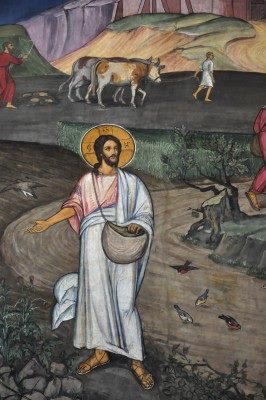
One day Jesus saw massive crowds coming toward Him. So many had come to listen to Him teach that Matthew actually lets us know that Jesus had to teach from a boat while the crowds listened from the beach (Mt. 13:1-9). But Jesus didn’t see this as just another day at the lake. No. He saw fields that were ripe unto seeding. He saw ground that was ready to be planted with God’s Word. So, Christ reached into His bag and started throwing the good Seed of God’s Word as far and wide as He possibly could.

As He taught, Jesus threw some seed on the path. He noticed that some were not paying much attention. They were nodding off or distracted by one thing or another. They could hear His voice, that wasn’t the issue. But He could tell that the Seed of the Word wasn’t sinking in. Christ wasn’t worried about this. Jesus knew He could get a harvest there, but He didn’t want the Seed to be trampled down or eaten by the birds. So, Jesus took out His plow. He called out, “He who has ears to hear, let him hear.” But even though the plow broke the soil up, it quickly went back to being impermeable. The seed just stayed on the top. And Jesus watched in grief as the birds came and devoured the precious Seed from the soil of the path.

As Jesus taught, He threw some Seed on the rocks. Christ saw that they were joyfully listening and excited to hear. But Jesus also knew their excitement would die down, their joy would fade, and they would soon face times of testing. The Seed Jesus was spreading grew up quickly, but the roots weren’t digging down because of the rocks underneath. Jesus knew the sun would soon come out with its heat. Plants need the sun and its warmth, but if those plants didn’t have roots that could find moisture, they would wither and die. So, Jesus rolled up His sleeves to pick the rock out of that soil. He called out, “He who has ears to hear, let him hear.” But the rocks just kept returning. No matter how many tons of rock Jesus removed, there was always more. And Jesus grieved as the hot sun of those trials beat down on the soil, and the plants withered away before the Word could produce fruit in that rocky soil.

As Jesus taught, He threw some seed among the thorns. Christ saw others who were listening, but those thorns threatened the growth of the precious Seed. Christ knew those listeners would go back to their homes and focus on other things – their jobs, their families, and their houses. Even though Jesus Himself had given those good gifts, He knew that soil loved those thorns more than the Word, and if those thorns weren’t plucked and picked, they would choke out the Seed of the Word. So, again, Jesus rolls up His sleeves to remove those thorns by calling out, “He who has ears to hear, let him hear.” With those words, Jesus carefully and meticulously uprooted the thorns, but they kept coming back. The Seed of God’s Word was there and growing. But Christ mourned as He watched the thorns of the cares, riches, and pleasures of life prevent that soil from producing fruit.

But there was a fourth kind of soil that did produce fruit. In fact, it produced a miraculous harvest of a hundredfold. What made this soil good? Well, we have to remember that there is no soil that is naturally and natively good. No. Jesus, the Sower always tends what He plants with His Word. Everywhere Jesus sows the Word of God will look like an unlikely place to produce fruit, but as He continues to work on the soil, He brings about a harvest by plowing, picking, and plucking the unworthy soil.

Even the twelve disciples were those bad soils. Think of Thomas as the soil of the path. Easter evening, the Gospel Seed was tossed onto Thomas. He heard that Jesus had risen from the dead, but the birds simply devoured that Seed. Thomas refused to be tilled and softened, but Jesus didn’t give up on Thomas. Christ continued to dig His plow into the hard soil of Thomas’ heart. And one week later, Thomas believed and confessed Christ as his Lord and God (Jn. 20:24-28).

Think of Peter as the rocky soil. Peter had been warned about falling into the temptation of denying Jesus three times. Peter needed to produce the fruit of fleeing temptation, but his stone-hard heart didn’t let the roots of Jesus’ warning find the moisture it needed. Peter was withered in the hot sun of that test. Three times Peter denied knowing Jesus (Jn 18:15-18, 25-27). The Seed planted in him got scorched, but Jesus hadn’t given up on Peter either. Christ continued to sow the seed of His Word and remove the rocks from Peter’s heart. Through the labor of Jesus’ sowing and tending the soil of Peter’s heart, Peter was restored and produced great fruit as he later fed, tended, and shepherded Jesus’ lambs (Jn 21:15-19).

Several of the disciples were also the thorny soil. They saw Jesus anointed with expensive ointment shortly before He was arrested and thought it was a complete waste (Mk. 14:3-9). They were choked out by the cares and riches of this life, but Christ didn’t give up on them either. Jesus continued to pull and pluck those thorns by teaching them how that anointing was preparing Him for His burial. The sad reality, though, is that for all of Jesus’ plucking and tending, the soil of Judas Iscariot’s heart still ended up being choked out by the thorns of thirty pieces of silver (Jn. 12:4; Mt. 26:14-16).

Dear saints, all of this is to say that Jesus, the Sower, doesn’t merely scatter the Seed of His Word, walk away, and only come back periodically to see what’s happened with His precious Seed. No! He is the constant gardener. He continually scatters the Seed of His Word which guides, teaches, forgives, feeds, and strengthens you. He also digs and plows to break up the hard soil. He clears the soil of rocks and thorns. Through His Word, He corrects, exhorts, and rebukes. Some of what He does is gentle. He consoles, comforts, and encourages by declaring His love, mercy, and forgiveness. And Jesus constantly guards His field to protect what He has planted (Is. 5:1-7). He does all of this, the planting, the tending, the weeding, and the guarding so that the Seed of His Word gets well-rooted to produce abundant fruit in and through you.

Dear saints, you are God’s children. Through His Word, He gives you an honest and good heart. Yes, you are attacked by the devil, threatened by temptation, and seduced by the cares and riches of this world. But by God’s grace, He will sustain you as He continues to work on you through that same holy and precious Word. May that Word be deeply rooted in each of us today and always. He who has ears to hear, let him hear. Amen.

The peace of God, which surpasses all understanding, will guard your hearts and minds in Christ Jesus. Amen.

The Seed – Sermon on Luke 8:4-15 for Sexagesima Sunday

Listen here.

Luke 8:4-15

1 And when a great crowd was gathering and people from town after town came to him, he said in a parable, 5 “A sower went out to sow his seed. And as he sowed, some fell along the path and was trampled underfoot, and the birds of the air devoured it. 6 And some fell on the rock, and as it grew up, it withered away, because it had no moisture. 7 And some fell among thorns, and the thorns grew up with it and choked it. 8 And some fell into good soil and grew and yielded a hundredfold.” As he said these things, he called out, “He who has ears to hear, let him hear.”

9 And when his disciples asked him what this parable meant, 10 he said, “To you it has been given to know the secrets of the kingdom of God, but for others they are in parables, so that ‘seeing they may not see, and hearing they may not understand.’ 11 Now the parable is this: The seed is the word of God. 12 The ones along the path are those who have heard; then the devil comes and takes away the word from their hearts, so that they may not believe and be saved. 13 And the ones on the rock are those who, when they hear the word, receive it with joy. But these have no root; they believe for a while, and in time of testing fall away. 14 And as for what fell among the thorns, they are those who hear, but as they go on their way they are choked by the cares and riches and pleasures of life, and their fruit does not mature. 15 As for that in the good soil, they are those who, hearing the word, hold it fast in an honest and good heart, and bear fruit with patience.”

In the name of Jesus. Amen.

This is Jesus’ first parable, so a quick note about parables is important here at the outset. We get some insight as to the reason Jesus teaches in parables when the disciples ask Jesus what the parable means. Jesus tells them, “I speak to them in parables, because seeing they do not see, and hearing they do not understand.” In short, parables are not intended to make things clearer. The parables, according to Jesus, are meant to obscure things. And here’s why:

The crowds had begun to reject Jesus’ teaching. Basically, what Jesus says He is doing is teaching these know-it-alls in riddles, so they realize just how dumb they really are (see esp. Mt. 13:10-17). You know how it is when you are around a group of people and there is a joke that you aren’t in on. You get curious and want to be ‘in.’ So you ask questions and dig deeper to be part of the ‘in’ crowd.

God be praised, the disciples fall for the bait and do exactly that. Please notice, that. These guys who have been called by Jesus to be fishers of men, even they have to ask Jesus what the parable means. When the disciples ask Jesus what He means by this parable, they are exercising and growing in their faith. They go to the right place with their misunderstanding; they go straight to Jesus. “Dude, what are you talking about?” Whenever you have doubts or questions or feel like outsiders, you do well to follow the disciples’ example here. Let’s all go to Jesus, the Word made flesh, and get things cleared up.

Honestly, this particular parable really is quite simple. And to make it idiot-proof and so we don’t get it wrong, Jesus gives us the cheat sheet. We can thank the Holy Spirit for inspiring the Gospel writers to help us dense folk today. So, since you have ears, hear what God desires you to hear.

In the parable, the seed is the Word of God. The different places where the seed falls – the path, the rocks, the thorns, and the good soil – are the various conditions of the heart. While we might be tempted to ask, “What kind of soil am I?” it is probably better to recognize that you and I are each of these types of soil at different times. And even though Jesus doesn’t explicitly say this, I think the types of soil that are presented in the parable are in a particular order. Jesus starts with what is easiest for the devil to attack and prevent fruit from being produced and moves to the types of hearts that are more difficult. So, let’s go through each of them.

First, the path, and listen most closely right now. Open your ears here for two minutes. If you don’t listen to any other part of this sermon, listen to this. The path represents those who hear the Word of God, but then, the devil comes and takes away the Word from their hearts. Look again at the end of v. 12. Our translation, the ESV, has Jesus explaining what happens to the seed on the path by saying, “so they may not believe and be saved.” Now, the ESV is a faithful translation (I wouldn’t be using it for our services if I didn’t think so), but I think the translators unintentionally mislead us a little bit here (and to be fair to the ESV, other translations do the same thing). They make it sound like there are two verbs there – ‘not believe’ and ‘not be saved.’ But, actually, there is only one verb. ‘Not believe’ is a participle and ‘not be saved’ is the verb. In other words, more literally, Jesus says, “so that having believed they may not be saved.” In other words, these people hear God’s Word, and they believe it. But before that Word can begin to grow and sprout, the devil simply snatches it away. This is the devil’s easiest attack on the Word of God. And I think we’ve all experienced this.

To my great shame, I will admit that there are times when I hear God’s Word and it goes right in one ear and out the other. For example, after I drop my kids off for school, I will listen as my phone plays one of my daily Bible readings while I drive here to work. And there are days when I get distracted by something – thinking about my day, or another driver who doesn’t come to a complete stop or use their turn signal or whatever. The reading ends, and I honestly couldn’t tell you what I heard. Other times, I’ve listened to sermons – good, solid, biblical sermons – but once the sermon is over, I couldn’t tell you what the sermon was about. Again, this is the easiest way for the devil to attack the powerful, effective Word of God. He simply snatches it away because it falls on the hard, concrete path.

People of God, when you hear God’s Word, when you read the Bible, when you sit in those chairs and hear the preaching, listen up. Do whatever it takes to pay attention. Get enough sleep on Saturday. Have some caffeine before you come. Don’t let your heart be a paved, hardened path where the devil can simply come and snatch God’s Word from you.

Now, that you’ve heard that, I hope I have your attention and you keep listening.

The second place the seed of God’s Word falls is the rock. This ground is a little more difficult for Satan. This is when we hear God’s Word and receive it with joy. But then those promises get scorched by the heat of trials. We believe the Word for a while, but when times of trouble and testing come, we abandon those promises and fall away.

How many times does God promise to be with you always, but then, when hot trials come, we think God is angry with us and has abandoned us? Trials, tribulations, and troubles are not the time to doubt God’s promises! Think about it the terms of this parable. The heat from the sun represents the trials. But it isn’t the hot sun that kills plants. If plants have good, deep roots that reach down to where the moisture is, the heat from the sun is what causes plants to grow and bear fruit.

Think of when Shadrach, Meshach, and Abednego faced death – they faced the hottest trial that anyone can encounter, literally! But they refused to let that trial wither their faith. They had roots that went down to the moisture and their faith prevailed and even flourished when Jesus walked with them in the burning fiery furnace. If you know even a little bit of church history, you know that the church typically grows when it is persecuted. Dear saints, when trials and tribulations come, that is not the time to abandon God’s promises. That is the time to sink your roots deep into them and find the moisture you need. Those trials will in fact cause you to grow and not wither away.

The third place the Word of God falls is among the thorns. The thorns are the cares and riches of this life. Jesus here is warning us that trials and tribulations aren’t the only enemy to our faith. Good gifts that God gives can also be bad for our faith. We are tempted to think that when we are comfortable and not facing trials that we will be left alone, but that isn’t the case. We cannot let our guard down when things are going well. The devil will still attack us, but this is also where he has the hardest time. Satan hasn’t been able to simply snath the promises of God away, and he hasn’t succeeded with his fiery trials. So, the devil has no other choice but to try and choke out God’s Word. But this attack takes the longest and is the hardest for him to accomplish. Here, the devil has to try to slowly introduce weeds to choke out God’s Word. He can’t do it all at once, otherwise we would recognize the attack and be on guard against it. So, he works slowly to choke out God’s Word from your heart.

This is just a reminder. Those weeds – the riches, pleasures, and cares of this life – will always be a threat and nuisance to you. Christian, there will be times where you will need to go out and pick weeds from your life. You can’t simply trim weeds. You have to pull them up by the root. Dear saints, ask yourself, “What has gotten in the way of the Word of God? What things keep me from hearing the blessings God would give me through His Word?” When Jesus talks here about the cares and riches of this life, He doesn’t get specific. Instead, He wants us to constantly assess ourselves and see what is hindering us from rejoicing in God’s Word and being participants in God’s family.

Now, we are ten days away from the beginning of Lent. Today is February 7th and Lent begins February 17th. Scripture doesn’t give specifics for each of us as to what chokes out our faith; instead, God’s Word gives us wisdom to discern what might be slowly strangling us. I am calling on you now to use that wisdom.

Lent is typically a time to remove particular hinderances to our devotion to God’s Word. The Scriptures call it fasting. Fasting is not commanded, but Jesus does assume that His disciples will fast at times (see. Mt. 6:16-18). Fasting is not a way to make God more pleased with you. God couldn’t be more pleased with you who believe that Jesus has forgiven you of all your sins. Instead, fasting is a way to uproot the thorns that the devil would use to choke out your faith. Fasting curbs your sinful, fleshly desires. Fasting, basically, tells your flesh, “You are not in charge of me.”

Lent is a time to pull out those weeds and thorns that would choke out your faith. You have ten days to consider what you might remove from your life for the forty days of Lent. Maybe, there is something that would be beneficial for you to give up in order to discipline your flesh and give extra attention to God’s Word. Again, God doesn’t command this. It’s not something you have to do, but it is a good practice. Don’t think that God will be more pleased with you if you fast. Instead, know that it is a good and beneficial discipline to deny yourself something so that thing, whatever it is, doesn’t become a choking, strangling thorn in your life of faith. Lent is a good time to pick weeds from your spiritual life.

Finally, the Word falls on good soil. Just as you, sinner, are the soil of the path, the rocks, and the thorns, you, Christian, are also the good soil. You are both and all at the same time. God’s Word comes and produces an abundance of fruit that yields a hundred-fold and provides for others.

When we hear this parable, one of the most shocking things is how the recklessly the sower throws around the seed. He throws it around willy-nilly and it lands all over the place. Well, right here at this altar, the sower is about to carefully plant the Seed of His Word deeply into you. You are about to come and receive Christ, the Word made flesh, His very Body and Blood. Let this careful, deliberate planting of God’s Word and the deliverance of God’s forgiveness of all your sins bear, let it bear the fruit of joy and love. Amen.

The peace of God, which surpasses all understanding, will guard your hearts and minds in Christ Jesus. Amen.

Holy Rest – Sermon on Hebrews 4:9-13 for Sexagesima

Listen here.

Hebrews 4:9-13

9 So then, there remains a Sabbath rest for the people of God, 10 for whoever has entered God’s rest has also rested from his works as God did from his. 11 Let us therefore strive to enter that rest, so that no one may fall by the same sort of disobedience. 12 For the word of God is living and active, sharper than any two-edged sword, piercing to the division of soul and of spirit, of joints and of marrow, and discerning the thoughts and intentions of the heart. 13 And no creature is hidden from his sight, but all are naked and exposed to the eyes of him to whom we must give account.

In the name of the Father and of the Son and of the Holy Spirit. Amen.

This text has two things that, at first glance, don’t seem to go together – striving and rest. Striving is effort. Hebrews 4_13 - God's RestStriving means that you work hard because you aren’t sure if you are going to make it. That’s why you strive. And rest? Well, rest is rest. It’s the opposite of striving. Typically, striving and rest only go together when the later follows the former. People strive so they can go home and rest for the evening or the weekend, or they work for decades so that eventually they can retire and rest. But that is only how things are in this fallen world.

Christians rest from their works just as God did from His. Genesis 1-2 records how God created all things. Each day of creation follows a pattern. God spoke and created light, and there was evening and morning day one. God spoke and created the sky, and there was evening and morning day two. God spoke and created land, seas, and plants, and there was evening and morning day three. God spoke and created the sun, moon, and stars, and there was evening and morning day four. God spoke and created birds and fish, and there was evening and morning day five. God spoke and created animals and people, and there was evening and morning day six. The pattern breaks there. But Scripture does tell us about the seventh day.

Genesis 2:1-3 says, “Thus the heavens and the earth were finished, and all the host of them. And on the seventh day God finished His work that He had done, and He rested on the seventh day from all His work that He had done. So God blessed the seventh day and made it holy, because on it God rested from all His work that He had done in creation.” Notice that two things are missing. First, God doesn’t speak. God is silent on the seventh day because He is done creating. And second, there is no mention of evening and morning. In the text, the seventh day, the holy day of rest, doesn’t end.

God rested from His work. God didn’t rest because He was tired. He rested because everything was completed. The beautiful thing that happens here in Hebrews is the declaration that you, Christian, enter into the same eternal, holy Sabbath rest that God had on that seventh day (Heb. 4:10). But what works do you rest from?

There are two options. Some might suggest that it is the work you have to do while living in a fallen world. But that rest only comes after you die, and you only have to go back to Heb. 4:3 to see that the Scriptures say believers have already now entered into God’s rest. So, it can’t be the rest that comes only after death. Instead believer, you rest from the work of self-justification and self-salvation (Ro. 3:20 and Eph 2:9).

Hebrews 4_12 - Word of God Sharp SwordChristian, you have entered into the rest of God. You find your rest as you simply allow God’s Word to do its work in your heart as it pierces to the division of soul and spirit and discerns the thoughts and intentions of your heart. That Word of God convicts you of your sin revealing that your thoughts, words, and deeds are sinful in God’s sight. And that same Word invites you to faith in Christ who says, “Come to Me, all who labor and are heavy laden, and I will give you rest,” or better translated, “I will rest you” Mt. 11:28).

Now, none of this is to say that Christian life is easy. No, the Christian life is hard work and full of danger. We all need to realize that we could stumble and fall away from the faith. In fact, that is what the first eight verses of Hebrews 4 warn us about. God’s people, the Israelites, did not enter the rest of the Promised Land because they did not believe God. They fell away. They were the soil on the path, the rocky soil, and the thorny soil (Lk. 8:4-15). They failed to enter into God’s rest. Scripture is very clear about the dangers of falling away.

We need to hold fast, keep our eyes on Jesus, and not stray away. That is striving. But that striving is only possible because of the rest that has already been won for us. It is a rest that has already been given by God. So, the Christian life can be a restful striving.

Your rest has already been won by Jesus. Jesus came into the world to do the work that you and I could not do. He came to battle against sin, death, and the devil. Jesus’ faithful striving led Him to the cross where He endured the wrath of God because of our sin. Jesus faithfully walked all the way to the cross for you. Jesus Rested on the SabbathAnd on a Friday, the sixth day from the cross, Jesus cried out as He died, “It is finished” (Jn. 19:30). His striving for your salvation was done. Jesus was laid to rest in a tomb on the Sabbath, the seventh day because all His work to redeem you was complete. And Christ rises on the first day of the week, the first day of the new creation.

Now, Jesus is ascended to His and your heavenly Father. So when you strive, you do it with Jesus on your side. Jesus knows your weaknesses and fears. And because of His work, He pours out His forgiveness every moment of every day. The rest He won and purchased for you is guaranteed, perfect, and stored up for you ready to be revealed at the Last Day (1 Pet. 1:5). You can rest because of Jesus.

Bella, today you are Baptized. Today, you have been joined to Jesus your Savior (Ro. 6:3-11) and have been clothed with Christ (Gal. 3:27). That means, dear Bella, that today you have entered into your rest with God. Jesus has done absolutely, positively everything that needed to be done for your salvation. You are wholly and completely given over into holy rest.

Baptism 2Bella, and all you saints, because you and I are always tempted to think there is something left for us to do to be saved, God desires that you continue to be pointed to the holy, eternal rest that Christ has given you. Here, assembled in God’s presence with your brothers and sisters in Christ, God reminds you of the holy rest you have now. There is nothing left for you to do. Every time you come here, you receive that rest by listening to God’s life-giving Word and letting that Word do God’s work in you.

That is why we use our liturgy. It is one of the best ways to deliver the holy rest that comes only through God’s Word. We enter God’s presence by hearing His Word and singing His praise. We confess our sins and receive His forgiveness. We hear His Word and confess our faith that is taught in that Word. We receive instruction from that Word and pray to Him as His beloved children. We are fed Christ’s body and blood for the forgiveness of our sins. And we receive His blessing and benediction as we depart so we can carry that blessing with us through the week.

Bella, and all you saints, keep listening to the Word faithfully and diligently as it is preached and enacted in the service because your present access to God’s eternal, holy rest depends upon that Word. And that Word will never fail you. Amen.

The peace of God, which surpasses all understanding, will guard your hearts and minds in Christ Jesus. Amen.

Successful Sowing – Sermon for Sexagesima on Luke 8:4-15

Listen here.

Luke 8:4–15

4 And when a great crowd was gathering and people from town after town came to him, he said in a parable, 5 “A sower went out to sow his seed. And as he sowed, some fell along the path and was trampled underfoot, and the birds of the air devoured it. 6 And some fell on the rock, and as it grew up, it withered away, because it had no moisture. 7 And some fell among thorns, and the thorns grew up with it and choked it. 8 And some fell into good soil and grew and yielded a hundredfold.” As he said these things, he called out, “He who has ears to hear, let him hear.”

The Sower9 And when his disciples asked him what this parable meant, 10 he said, “To you it has been given to know the secrets of the kingdom of God, but for others they are in parables, so that ‘seeing they may not see, and hearing they may not understand.’ 11 Now the parable is this: The seed is the word of God. 12 The ones along the path are those who have heard; then the devil comes and takes away the word from their hearts, so that they may not believe and be saved. 13 And the ones on the rock are those who, when they hear the word, receive it with joy. But these have no root; they believe for a while, and in time of testing fall away. 14 And as for what fell among the thorns, they are those who hear, but as they go on their way they are choked by the cares and riches and pleasures of life, and their fruit does not mature. 15 As for that in the good soil, they are those who, hearing the word, hold it fast in an honest and good heart, and bear fruit with patience.”

In the name of the Father and of the Son and of the Holy Spirit. Amen.

Success is measured by goals. The Titanic was a massive success, if the goal was to produce the world’s largest luxury ocean liner. It was a complete failure if the goal was for it to remain world’s largest luxury ocean liner.

As we consider this parable, we might be tempted to ask, “Is the Sower successful?” On the one hand, He is massively successful. The seed is sown. But, on the other hand, He is a massive failure because of how recklessly and wastefully the seed is tossed around. Most of the seed fails to grow, mature, and bear fruit. It ends up all over the place. On the path where Satan will snatch the seed. On the rocks where it doesn’t get nourishment. Among the weeds and thorns that choke it to death.

Now, rather than judging the Sower’s success, we need to recognize that Jesus is teaching us some very important truths with this parable and the places where the seed fails.

First, God is perfectly willing to let His Word go out to places where there will be no fruit.

Second, we see that the Word has enemies. With the seed that falls on the path, Jesus wants us to recognize that Satan is a real threat, and he always attacks where the Word is present – where it is preached, taught, and heard. Don’t be surprised when you are attacked. Also, with the seed that falls on the rocks, Jesus wants us to know that the Word needs to be continually nourished. Christian, you never outgrow your need for the Word and Sacraments so that your faith does not wither and die.

ThornsThird, Jesus blows away any misconceptions we may have that if the devil left us alone and the seed gets the nourishment that it needs, then everything would be hunky dory. The seed that falls among the thorns – that is the riches and pleasures of this life – it dies too. Even good things in this life are a threat to your faith. Thorns don’t just prick you like a needle leaving a little pain behind. They entangle and trap. Enjoy the good gifts God gives you in this life, but also recognize how easily they choke out your faith.

If we focus on those things, we may be tempted to think that God is mostly a failure when He sends out His Word. God forbid even the thought.

The Sower is successful. The seed that falls on the good soil produces, and it produces a hundredfold. But even when the seed falls on the path, the rocks, and among the thorns, we need to remember that, though there is no fruit, the Sower is still successful. Jesus is teaching exactly what we heard on our Old Testament text (Is. 55:10-13). God’s Word never returns void. It always accomplishes God’s purpose. Always.

Now, since we clearly know that God is successful, we might instead be tempted to think that we are unsuccessful. Do you see in yourself the hundredfold fruit that Jesus describes the good soil producing? Probably not. Instead, you see yourself being choked out. You feel malnourished and starving. You know the devil’s attacks. All these things are extremely evident to you, and so you’re tempted to doubt that God’s Word accomplishes what Jesus describes.

But that is the remarkable nature of the Seed of God’s Word. The Seed, unlike any other seed, is able to transform the ground. That is why God sows it in inhospitable places.

Bear Fruit with Patience SowerAnd hear again what Jesus says in the last verse of our text: “As for that in the good soil, they are those who, hearing the word, hold it fast in an honest and good heart, and bear fruit with patience.”

That honest and good heart comes from the work of the Word of God itself. The Word cleanses and forgives you. The Seed of the Word is what makes your heart clean (Jn. 15:2-3). And the fruit comes with patience.

Don’t be surprised if you don’t see the massive, hundredfold production. Be patient. God is the one who will bring it about. Don’t fall into the devil’s temptation to measure how successful God’s Word is. If we measure the how successful God’s Word is by looking for our fruit, we will surely be discouraged.

Instead, remember that the success of God’s Word Is not dependent on what you see or experience. The success of God’s Word is dependent on His promise.

Dear Christians, to you it has been given to know the secrets of the kingdom of God. Hear and receive Christ’s Word. Hold it fast. Be continually nourished by that Word as you hear it, read it, learn it, and receive it now in the Lord’s Supper. And be patient. He who has begun a good work in you will be faithful to bring it to completion (Php. 1:6). Amen.

The peace of God, which surpasses all understanding, will guard your hearts and minds in Christ Jesus. Amen.