Forsaken – Sermon on Mark 15:33-35 for Good Friday

Mark 15:33-35

33 And when the sixth hour had come, there was darkness over the whole land until the ninth hour. 34 And at the ninth hour Jesus cried with a loud voice, “Eloi, Eloi, lema sabachthani?” which means, “My God, my God, why have you forsaken me?” 35 And some of the bystanders hearing it said, “Behold, he is calling Elijah.”

In the name of Jesus. Amen.

On Good Friday, our Lord Jesus Christ suffered in three distinct ways. And it’s helpful to distinguish and contrast them. The three kinds of suffering are 1) physical suffering, 2) suffering the shame, and 3) the suffering of forsakenness.

We know what it is to have physical pain. We’ve all experienced it. Maybe not to the extent that Jesus did, but we’ve all had physical pain. You scrape your knee, get your finger caught in a door, or just sleep or sit wrong. Physical pain is something we naturally try to avoid. The physical pain of the cross was, without a doubt, excruciating for Jesus. But His physical pain was not what won your redemption and salvation. Physical pain was not the price that Jesus had to pay.

If Jesus’ physical pain won your salvation, then you and I have the same capacity to suffer physically as Jesus did. Plenty of people were beaten, whipped, and crucified in Jesus’ day, but their physical suffering didn’t save them.

We also know what it is to experience shame. The shame Jesus endures in His Passion is also horrible. He was spit on. The soldiers placed robes on Him, put a crown of thorns on Him, and bowed down to Him as they mocked, “Hail, King of the Jews.”

He was blindfolded and punched as people asked Him to prophesy, “Who was it that hit you?” People walked by the cross wagging their heads, saying, “You saved others. You don’t seem to be able to do anything now. You trusted in God, where is He now?” That’s the shame of the cross. And yet, the shame Jesus suffered is also not what wins your salvation. Other people have suffered similar shame.

But there’s that third suffering. It’s a hidden suffering, but it is the one that’s most profound of all. We get a glimpse of it in this fourth word of Jesus, “My God, My God, why have You forsaken Me?” That’s the greatest suffering of the cross.

In that moment, Jesus is suffering all the wrath of God over sin. He’s suffering all of God’s anger that you and I deserve. 2 Corinthians 5:21 says that Jesus, who knew no sin, was made to be sin for us, so that in Him we could become the righteousness of God.

In other words, all of the anger, all of the wrath, all of the punishment, and the separation from God that you and I deserve – it all falls on Jesus. He suffers all of that as our sins are laid on Him. In that moment, God is looking down at Jesus, and God does not see the Son whom He loves. Instead, God only sees sin and all the things that He hates and abhors.

In that moment, God the Father forsakes Jesus and pours out all of His wrath onto Christ. This why Isaiah says that Jesus is smitten, stricken by God, and afflicted (Is. 53:4). All of God’s righteous anger falls on Jesus. When Jesus says these words, “My God, My God, why have You forsaken Me?” that is what is taking place.

The most profound word of that prayer from Jesus’ lips is, “Why?”Christ doesn’t pray, “My God, My God, You have forsaken Me.” Instead, it’s, “Why? Why have You forsaken Me?” And this is a real, honest question. Several times throughout His life Jesus denies using His divine knowledge and omnipotence. This is one of those times. For those moments, even the purpose of Jesus’ suffering is hidden from Him.

This wasn’t always the case. When He was nailed to the cross, Jesus knew what He was doing there. That’s why He said, “Father, forgive them.” God can’t forgive without the cross. Jesus knew what He was doing on the cross when He told the thief, “Today you’ll be with Me in paradise.” And in just a few minutes Jesus shows that He knows again why He’s there when He says, “It is finished.”

But here, right in the middle of the crucifixion as Jesus cries out, “Why have You forsaken Me?” He temporarily denies His knowledge of what He is doing there. The point of it all is hidden from Him.

In that moment Jesus has nothing. Nothing to cling to. No hope. No comfort at all. He doesn’t have the comfort of knowing that He’ll be raised on the third day. He doesn’t have the comfort that this is happening for your salvation. In that moment, all Jesus knows is that He’s suffering all of God’s wrath against sin even though He’s done nothing wrong or sinful.

That is the suffering that wins your salvation. That suffering of being forsaken by God that Jesus is enduring here is beyond our comprehension.

We can see the beating and the whip. We can see the crown of thorns. We can see the shame and hear all the mockery. We can see the nails. But what you can’t see is the thing that matters most. The vengeance and wrath of God towards sinners is all poured out on Christ.

That’s the reason. That’s why Jesus goes to the cross. He goes there so that you will never see this wrath. So that you will never know this suffering under God’s righteous judgment. So that you will never know what it is to be forsaken by God. 

Jesus says, “My God, My God, why have You forsaken Me?” so that you never have to.

Dear saints, you will never have to say that because God will not forsake you. He has promised (Heb. 13:5-6). He will not leave you alone in your sin. He doesn’t let your sin and guilt remain because Jesus has taken it and has suffered for it in your place.

That’s the suffering that wins and accomplishes your salvation. It is a suffering that we can’t imagine. And, Christian, because of Jesus, you never will. Jesus is your substitute. He pushes you out of the way of God’s wrath so that wrath hits Him and not you.

“My God, My God, why have You forsaken Me?” As He said that, Jesus didn’t know. But, dear saints, you do. You know the answer. He was forsaken by God so that you will be not only accepted, but also loved as God’s redeemed child for all eternity. Amen.

The peace of God, which surpasses all understanding, will guard your hearts and minds in Christ Jesus. Amen. 
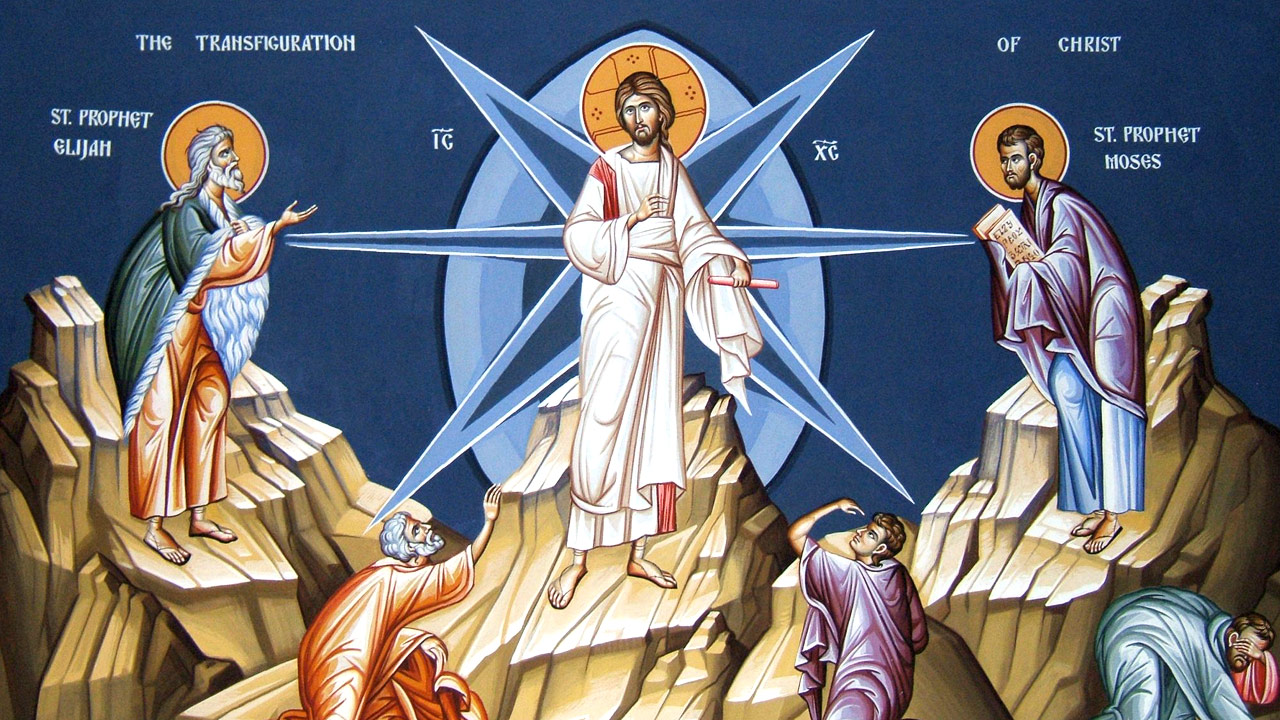
Don’t Settle – Sermon on Matthew 17:1-9 for the Transfiguration of our Lord

Matthew 17:1-9

1 And after six days Jesus took with him Peter and James, and John his brother, and led them up a high mountain by themselves. 2 And he was transfigured before them, and his face shone like the sun, and his clothes became white as light. 3 And behold, there appeared to them Moses and Elijah, talking with him. 4 And Peter said to Jesus, “Lord, it is good that we are here. If you wish, I will make three tents here, one for you and one for Moses and one for Elijah.” 5 He was still speaking when, behold, a bright cloud overshadowed them, and a voice from the cloud said, “This is my beloved Son, with whom I am well pleased; listen to him.” 

6 When the disciples heard this, they fell on their faces and were terrified. 7 But Jesus came and touched them, saying, “Rise, and have no fear.” 8 And when they lifted up their eyes, they saw no one but Jesus only. 9 And as they were coming down the mountain, Jesus commanded them, “Tell no one the vision, until the Son of Man is raised from the dead.”

In the name of Jesus. Amen.

Change is often difficult because we have to adjust. We prefer consistency over fluctuation and variation. This past Thursday morning, the temperature in East Grand Forks bottomed out at -30°F; the forecast for Tuesday indicates we’ll reach 36°F. If that prediction holds out, we will experience a 66° swing in five days. That 36°F is going to feel glorious. Kids will be begging parents to go around without coats and wearing shorts. I can already hear several of you thinking, “I can’t wait for a change in this bitterly cold weather. I’ll adjust just fine, thank you.” But the change I’m thinking of will happen next Fall. What will happen then? When October rolls around and we dip back down into the 30’s, the coats and shivers will be back because we will have gotten accustomed to 80-90° weather through the summer. Change can be rough. Those mid 30’s will feel glorious if we get there in the next couple of days, but not so much in October.

Now, I bring all of this up to set the stage for what happens at the Transfiguration of Jesus. Our text begins with a time marker, “And after six days…”, so we need a bit of context. If you look back to Mt. 16, you see that Jesus has just told His disciples that He must go to Jerusalem, suffer, be killed, and rise on the third day, and this prediction would have been about six months before the crucifixion. The disciples had been following Jesus for about two and a half years. They had gotten comfortable being around Him, seeing His miracles, listening to His teaching, and enjoying His company.

The impression we get is that Peter does not hear everything Jesus says. Peter hears the suffering and dying part, and I imagine Peter is so shocked that he doesn’t hear Jesus say He would rise again on the third day. So, when Jesus says that He is going to suffer and die, Peter doesn’t like it – not one bit. Jesus getting killed would be a very unwelcome change. So, Peter scolds Jesus for saying that He was going to die by saying, “Far be it from You, Lord! This shall never happen to you” (Mt. 16:22). And Jesus utterly rebukes Peter with His harshest words recorded in the Gospels, “Get behind me, Satan! You are a hindrance to Me. For you are not setting your mind on the things of God, but on the things of man” (Mt. 16:23).

So now, to our text. The Transfiguration takes place six days after this exchange between Jesus and Peter. Jesus brings Peter, James, and John up a high mountain by themselves, and suddenly, Jesus is transfigured. His face shines like the sun, and His clothes become dazzlingly bright and white as light. Then, Old Testament celebrities start showing up as Moses and Elijah crash the party.

Peter sees all of this and is scared (Mk. 9:6) but probably in a thrilling way. He wants to remain there with Jesus, Moses, and Elijah. Peter likes how things are there, up on that glorious mountain. Seeing the Transfiguration is probably in the top three highlights of Peter’s time with Jesus. Shiny Jesus is fantastic stuff, and it definitely beats the suffering and death Jesus predicted six days earlier. But as Moses and Elijah are there talking with Jesus, the Gospel of Luke tells us that Jesus, Moses, and Elijah are speaking about Jesus’ exodus which He was about to accomplish in Jerusalem (Lk. 9:31). Even in the shining glory of the Transfiguration, there is this talk about Jesus’ suffering and death. So, Peter says (and listen to how he focuses on location), “Lord, it is good that we are here. If you wish, I will make three tents here, one for you and one for Moses and one for Elijah.” It’s almost like Peter is saying, “Hey, things are good here! Why don’t we all just hang out here on this glorious mountain and forget about all that stuff in Jerusalem?”

But God the Father interrupts Peter’s plan. The cloud of God’s glory overshadowed them, and God said, “This is My beloved Son, with whom I am well pleased; listen to Him” (Mt. 17:5). Now, I don’t think we should only take this in the broad, general sense that Jesus’ words are important to listen to. That is, of course, true. Every Word of Christ is important, and Peter even makes that point in our Epistle lesson (2 Pet. 1:16-21). The Bible, God’s Word, is a lamp shining in the darkness of this world, and we do well to pay attention to it. But I would suggest that God’s command to listen to Jesus here is much more specific and pointed.

When God the Father interrupts Peter’s plan to make tents and remain on the mountain by saying, “Listen to My beloved Son,” God is reinforcing to Peter the fact that Jesus must go to Jerusalem, be crucified, and rise again. Peter is right that the glory on that mountain is good, but if Jesus doesn’t descend from the summit, if He doesn’t go down to Jerusalem, down to suffer, down to the cross, and down to the grave, then Jesus’ truest glory would never be revealed. The glory of the Transfiguration is good but remaining there would have been settling for something far less than the glory that Jesus revealed upon the cross.

We don’t understand the glory of Jesus’ Transfiguration until we see the crucifixion because by His cross Jesus elevates us to share in His glory. And those two events closely parallel each other. Here in the Transfiguration, Jesus’ clothes are shining white; on Calvary, they have been stripped off and soldiers gambled for them (Mt. 27:35). Today, Jesus was surrounded by Moses and Elijah. At the cross, Jesus is flanked by criminals (Mt. 27:38). At the Transfiguration, the bright cloud of God’s glory illumines everything; at Calvary darkness fills the land (Mt. 27:45). Here, God’s voice thunders from heaven declaring Jesus to be His beloved Son. There, the Roman soldier confesses that Jesus truly was the Son of God (Mk. 15:39).

While the two scenes are strikingly different, they help us understand each other. Because it was on the cross that Christ delivered you from the power of sin, death, and the devil so that you could share in His glory. Because of what Jesus has done for you by shedding His blood, you are being transfigured from one degree of glory to another (2 Cor. 3:18).

Dear saints, this life is filled with ups and downs and all the changes that come with them. We can certainly thank God for the moments where we have mountaintop experiences. They are good and glorious, but we don’t remain in them in this life. Don’t settle for those temporary moments. Another glory, a greater and eternal glory, awaits you. As it was with Jesus, so it is with you. You follow Jesus through suffering in this world and await the glory that is yours because of what Christ has done (Mt. 16:24-25).

And so, Christ comes to you now to strengthen you and assure you that He will never leave you nor forsake you. He comes now to give you His Body to eat and His Blood to drink and make full satisfaction for all of your sins. Jesus invites you to come to His altar and His table. Remove the veil over your face. Behold the glory of the Lord. And go back into the world with God’s glory radiating from you (Mt. 5:14-16) so that others may see your good works and give glory to your Father who is in heaven. Amen.

The peace of God, which surpasses all understanding, will guard your hearts and minds in Christ Jesus. Amen.