Your Visitation – Sermon on Luke 19:41-48 for the Tenth Sunday after Trinity

Luke 19:41-48

41 And when [Jesus] drew near and saw the city, he wept over it, 42 saying, “Would that you, even you, had known on this day the things that make for peace! But now they are hidden from your eyes. 43 For the days will come upon you, when your enemies will set up a barricade around you and surround you and hem you in on every side 44 and tear you down to the ground, you and your children within you. And they will not leave one stone upon another in you, because you did not know the time of your visitation.”

45 And he entered the temple and began to drive out those who sold, 46 saying to them, “It is written, ‘My house shall be a house of prayer,’ but you have made it a den of robbers.”

47 And he was teaching daily in the temple. The chief priests and the scribes and the principal men of the people were seeking to destroy him, 48 but they did not find anything they could do, for all the people were hanging on his words.

In the name of Jesus. Amen.

This Gospel text takes place on Palm Sunday. The crowds have laid palm branches and coats on the road as Jesus rode into Jerusalem on a donkey. They shouted, “Hosanna! Blessed is the King who comes in the name of the Lord! Peace in heaven and glory in the highest!” (Lk. 19:3638). The Pharisees demanded that Jesus rebuke them, but He refused. Instead, He said, “I tell you, if they were silent, the very stones would cry out” (Lk. 19:40).

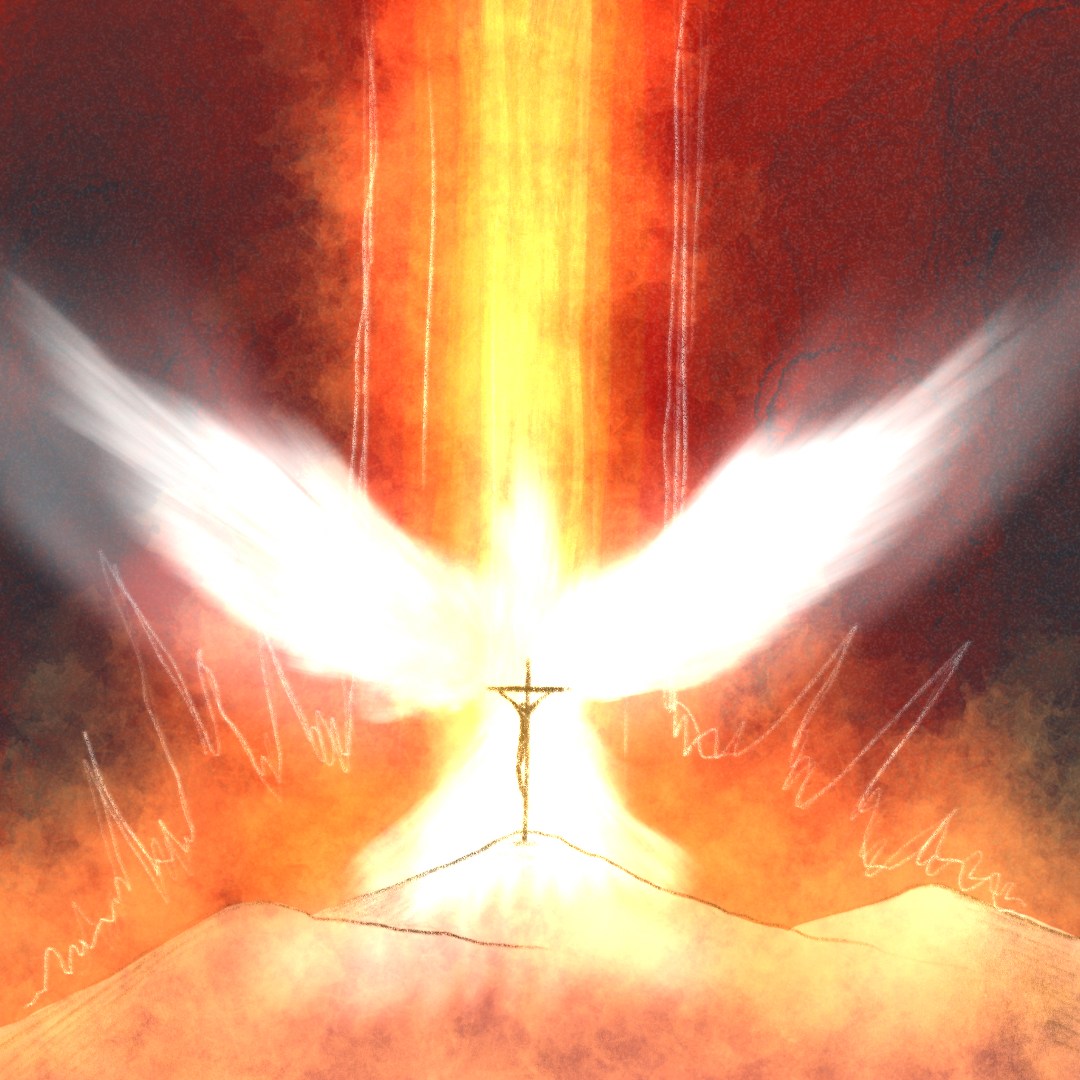
But while all this joy and celebration surrounded Jesus, Luke tells us here what is going on in Jesus’ heart. Christ comes to the crest of the hill that overlooks Jerusalem, and He weeps. He has come to visit Jerusalem and bring the peace that surpasses all understanding (Php. 4:7). But He weeps because the city is so twisted and corrupt that it doesn’t know or recognize the things that make for peace. Jesus predicts the destruction of Jerusalem when their Roman armies will set up a barricade all around the city to rip it apart brick by brick. All of this will happen because the people did not know the time of their visitation (Lk. 19:44).

We look forward to some visits. Especially if they live far apart, kids will ask how long it’ll be until they visit grandpa, grandma, and the cousins again. You get excited about an upcoming visit with your college or high school friends. But other visits can be uncomfortable – a visit to the dentist, a visit from the OSHA inspector, or a visit to the principal’s office. 

When Jesus says, “You did not know the time of your visitation,” the word He uses for ‘visitation’ (episkopē) is where we get our English word ‘scope.’ A couple days ago, I was talking with a woman who had a partial knee replacement years ago, but she still had continual pain. Her doctor decided to use a scope to look into her knee and see what was going on. That scope revealed that she had an infection that never showed up on other imaging or lab work. The only thing that revealed the infection was that scope. The doctor needed to get in there and see what was causing her pain.

The visitation Jesus talks about here is Him scoping things out in the city. What does that scope reveal? It reveals that the citizens of Jerusalem, the ‘city of peace,’ do not know the things that make for peace. It revealed that the Temple – God’s house, the place where God promised to deliver His mercy and forgiveness to sinners – had become a hideout of robbers. Jesus’ visitation, that scope, revealed how disordered the city was.

That’s why Jesus goes into the Temple. He drives out the infectious thieves from their den and daily fills the Temple with His teaching. Sadly, by the end of the week, the chief priests, scribes, and other leaders decide to arrest Jesus, put Him on trial, condemn, and crucify Him. And the people of Jerusalem still didn’t know or recognize the things that make for peace.

So, in 70 AD, about 40 years after Jesus’ prophecy here, the Roman general Titus came and destroyed Jerusalem. It was one of the most horrific events in human history. About one million people were killed. Titus took enough gold from the Temple to pay for the building of the Coliseum in Rome and burned Jerusalem to the ground.

All of this – the destruction of Jerusalem and the Temple – should serve as a reminder and a warning to us. Judgment is coming. This world cannot and will not last. Those who do not have faith in Christ will be damned, so repent and believe in Jesus.

Don’t fall into the temptation of being comfortable and complacent in yourself and in your sin. Just because God doesn’t send immediate judgment upon your sin doesn’t mean that God doesn’t mind or care that much about it. In our Old Testament reading (Ez. 3:8-11), we heard how the people rebuilt the Temple. When the foundation was laid, the people sang responsively, “[The Lord] is good, and His steadfast love and mercy endures forever.” Yes, God’s mercy endures forever, but His patience over sin does not.

So, be warned. Be warned but also have hope. There is a purification and replacement of what is broken in this world. The day is coming when all that is corrupt, evil, and infected will be swept away and replaced with what is pure. There is a final freedom and peace from all your enemies.

As you consider this text, ask yourself, “Did Jesus visit Jerusalem to bring judgment or to bring peace?” The answer is, “Yes. Both.”

After His tears dried, Jesus’ first order of business was to visit the Temple and expel the money changers. But He didn’t stop there either. Jesus kept returning to the Temple so He could fill it with the good news that He had come to bring God’s forgiveness, life, and salvation. The whole reason Jesus had gone to Jerusalem was for the sake of peace – true, ultimate peace.

Christ visited Jerusalem to bring the very peace that was first promised to Adam and Eve even after they had fallen into sin (Gen. 3:15). Jesus visited Jerusalem so He could reconcile God and man through His blood. Christ won that peace through His cross and resurrection. And now, Jesus guards that peace with His protection.

Notice how Luke tells us that Jesus’ enemies couldn’t do anything. They couldn’t touch either Jesus or the crowds who listened to Him. Wherever Jesus’ Word is proclaimed the enemies of Christ have no control. They wanted to destroy Jesus, but they couldn’t do a thing (Lk. 19:47-48). Only when Jesus decided are they able to arrest and crucify Him. And through His death, Christ brings His promised peace.

So, dear saints, know the day of your visitation. Today is that day. Today, and every day you come to this place to hear God’s Word, Jesus is visiting you and proclaiming to you the things that make for peace. Yes, there are times when that visitation means Jesus has to remove the filth and shame of your sin. But that is how God brings about His peace.

Jesus’ visitation delivers you to the new, true, heavenly Jerusalem (Heb. 12:22-24) where God dwells with you and your enemies cannot touch you. They cannot touch you because they cannot touch Jesus. They have already done their worst to Him, and now, He lives forever. And because He lives, you live too (Jn. 14:19).

Psalm 48 describes the fortress that you have in the holy Christian Church, a fortress that is not founded on bricks that can crumble. No, the fortress Christ has delivered you to is built upon the foundation of God’s Word, which will never fade, fail, or fall. Listen to the description of your fortress from that Psalm: “Walk about Zion, go around her, number her towers, consider well her ramparts, go through her citadels, that you may tell the next generation that this is God, our God forever and ever. He will guide us forever” (Ps. 48:12-14). 

In this tower, the only danger, the only threat you face is if you would leave its protection. Dear saints, God has and is visiting you here, now to bring you His true, abiding peace. Amen.

The peace of God, which surpasses all understanding, will guard your hearts and minds in Christ Jesus. Amen.

Location – Sermon on Luke 18:9-14 for the Eleventh Sunday after Trinity

Luke 18:9–14

9 He also told this parable to some who trusted in themselves that they were righteous, and treated others with contempt: 10 “Two men went up into the temple to pray, one a Pharisee and the other a tax collector. 11 The Pharisee, standing by himself, prayed thus: ‘God, I thank you that I am not like other men, extortioners, unjust, adulterers, or even like this tax collector. 12 I fast twice a week; I give tithes of all that I get.’ 13 But the tax collector, standing far off, would not even lift up his eyes to heaven, but beat his breast, saying, ‘God, be merciful to me, a sinner!’ 14 I tell you, this man went down to his house justified, rather than the other. For everyone who exalts himself will be humbled, but the one who humbles himself will be exalted.”

In the name of Jesus. Amen.

Most of you are familiar with the phrase, “The three most important factors in real estate are – location, location, location.” A house here in East Grand Forks would probably be triple the cost if you moved it to Los Angeles County. For some reason, want to live there. I’ll gladly take winter.

A similar thing could be said about sin. The three most important factors about sin are – location, location, location. To be clear, I’m not talking about where sin is committed geographically. Speaking a lie to a massive crowd of people is just as damning as lying to yourself in your own mind without ever moving your lips. By referring to sin’s location here, I’m talking about where the sin resides. Sin has a place. Either sin is on you, or sin is on Jesus, the Lamb of God who takes away the sin of the world (Jn. 1:29).

We have this wrong tendency to think of sin as something abstract and floating around somewhere. There is no sin outside of the one who is committing it. Sin starts in the heart. Jesus says, “Out of the heart come evil thoughts, murder, adultery, sexual immorality, theft, false witness, slander” (Mt. 15:19). A sinner isn’t simply a person who commits sins. All people, besides Jesus, commit sin. Being a sinner means to be a person who is outside of God’s fellowship, outside the kingdom of God, someone who belongs with the demons. That is why we need Jesus to be the Savior of sinners. He changes the location of the sin. He removes it from the sinner as far as the east is from the west (Ps. 103:12).

Now, with that in mind, let’s consider the parable, which is about as straightforward as it gets. We’re told that the audience is people who are sinners with sin residing in them but still trusted in themselves and their own righteousness while treating others with contempt. Jesus also gives a clear conclusion to the parable, “Everyone who exalts himself will be humbled, but the one who humbles himself will be exalted.” But to get a fuller sense of what Jesus is teaching here we need to set the picture of what is going on in the parable. The people who originally heard this would have been familiar with what goes on in the Temple, but we probably aren’t.

Two men went up into the Temple, which is God’s house (1 Kgs. 8:13, 27), and they go for a specific purpose – to pray and worship. In English, we typically think of prayer as an individual thing. Sure, we will pray the Lord’s Prayer and say grace before a meal with others. But normally we think of prayer as an individual thing and worship as a corporate, communal thing. But the people in Jesus’ day had one word for both prayer and worship. These two men go to the place of worship at the same time. What kind of service are they attending?

They would have been at the Temple for the atonement offering, which was the only service that took place every day in the Temple, and it occurred twice each day – once at dawn and again at three in the afternoon. The service would begin by the altar for sacrifice. An unblemished lamb was slaughtered, and its blood was sprinkled on the altar following a precise ritual.

This sacrifice was a reminder of how God covered the sin, nakedness, and shame of Adam and his wife by providing garments of animal skins after they fell into sin (Gen. 3:21). It showed that God would accept the death of another in place of the sinner. As the atonement lamb was sacrificed, certain prayers were offered with the sound of silver trumpets and cymbals. The people would sing a Psalm. A priest would go into the Holy Place where he would offer incense, praying that the sacrifice would be pleasing to God. Then, when the priest entered the Holy Place with that incense, the people would offer their private prayers to God.

But the Pharisee’s prayer directly contradicted everything that was happening around him in the Temple. He thanks God that he is acceptable because of who he is and who he is not, what he has not done and what he has done. His prayer in that context would be like coming here on Good Friday and praying, “God, I’m sure glad I’m not like all these sinners around me who need Jesus to die for their sins.” It’s utterly blasphemous.

But the tax collector’s prayer harmonizes with the service in at least two very specific ways. First, when the tax collector prays, “God be merciful to me, a sinner,” he isn’t using the normal word for ‘mercy.’ Many times in the Gospels, we hear people with sickness, disease, or other affliction cry to Jesus, “Have mercy” (Mt. 15:22, 20:31; Lk. 18:38-39). That’s always a good prayer to ask God for blessings you haven’t earned and the relief that you don’t deserve. But the tax collector’s prayer uses a different word. We could translate his prayer as, “God, atone me. God, reconcile me. God, make me what I should be.” That’s the first way his prayer harmonizes with the service. He is praying that the atonement that is taking place there in the Temple and the sacrifice being offered would do what God had promised it would do and remove his sin from him (Lev. 4:35).

Second, his prayer harmonizes with the service because this tax collector recognizes that he is the sinner who needs atonement. He needs to be reconciled. He needs to have his sin, his shame, his guilt removed. Again, that’s precisely what that service was pointing to. That is what the tax collector looked to, and that is why he went down to his house justified.

Now, there is a danger in this parable. We know that the really good, moral Pharisee did not go home justified, but this sinful tax collector did. The danger that can arise for us then is to think that everything about the Pharisee is bad. Be careful with that. It is good and right to not be extortioners, unjust, adulterers. It is good to fast and give tithes. That is all good stuff. There is another side to the coin of the Pharisee’s prayer. We might be tempted to pray, “God, I thank You that I am not like other men, self-righteous, pretentious, holier-than-thou types, or even like this Pharisee. I’ve given You my heart, dedicated my life to You, and made You my Lord.” Do you see what that does? It locates our eyes off of Jesus – the One who atones for our sin (1 Jn. 2:2).

The location of your sin matches where you look. If you look to yourself, your sin is on you. If you look to Christ, your sin is gone, defeated, eternally removed.

Let me close with an analogy: Imagine you had to cross some terrifying span. Far below at the bottom of that span are all the things you fear most – snakes, rats, lava, rough seas, or sharks. You fill in whatever is scariest. But there is a bridge that spans that gap. What would you look to for confidence in crossing that gap? You’d look to the bridge. You’d see if it was well-built, sturdy, and strong. You wouldn’t look inward to see if you have enough confidence in the bridge. And you build confidence in the bridge by looking at the bridge.

So, dear saints, where are you looking? Are you looking toward things you have done – either good works or your own humility? If so, you should have no confidence whatsoever.

Look to Jesus. His sacrifice, His blood, His death, His resurrection is enough. Looking there, you go to your house justified by God’s sure and certain declaration. Amen.

The peace of God, which surpasses all understanding, will guard your hearts and minds in Christ Jesus. Amen.

Purified & Redeemed – Sermon on Hebrews 9:11-15 for the Fifth Sunday of Lent

Hebrews 9:11–15

11 But when Christ appeared as a high priest of the good things that have come, then through the greater and more perfect tent (not made with hands, that is, not of this creation) 12 he entered once for all into the holy places, not by means of the blood of goats and calves but by means of his own blood, thus securing an eternal redemption. 13 For if the blood of goats and bulls, and the sprinkling of defiled persons with the ashes of a heifer, sanctify for the purification of the flesh, 14how much more will the blood of Christ, who through the eternal Spirit offered himself without blemish to God, purify our conscience from dead works to serve the living God. 

15 Therefore he is the mediator of a new covenant, so that those who are called may receive the promised eternal inheritance, since a death has occurred that redeems them from the transgressions committed under the first covenant.

God Made Known – Sermon on Exodus 40:17-21, 34-38; Titus 3:4-7; and John 1:1-18 for Christmas Day 2022

John 1:1-18

1 In the beginning was the Word, and the Word was with God, and the Word was God. 2 He was in the beginning with God. 3 All things were made through him, and without him was not any thing made that was made. 4 In him was life, and the life was the light of men. 5 The light shines in the darkness, and the darkness has not overcome it. 

6 There was a man sent from God, whose name was John. 7 He came as a witness, to bear witness about the light, that all might believe through him. 8 He was not the light, but came to bear witness about the light. 

9 The true light, which gives light to everyone, was coming into the world. 10 He was in the world, and the world was made through him, yet the world did not know him. 11 He came to his own, and his own people did not receive him. 12 But to all who did receive him, who believed in his name, he gave the right to become children of God, 13 who were born, not of blood nor of the will of the flesh nor of the will of man, but of God. 

14 And the Word became flesh and dwelt among us, and we have seen his glory, glory as of the only Son from the Father, full of grace and truth. 15 (John bore witness about him, and cried out, “This was he of whom I said, ‘He who comes after me ranks before me, because he was before me.’”) 16 For from his fullness we have all received, grace upon grace. 17 For the law was given through Moses; grace and truth came through Jesus Christ. 18 No one has ever seen God; the only God, who is at the Father’s side, he has made him known.

In the name of Jesus. Amen.

Until the Temple was built, God was happy to dwell on earth in the tent of the Tabernacle. We heard about it in our Old Testament lesson from Exodus (Ex. 40:17-21, 34-38). If you’re like me, the first thing that comes to mind about the book of Exodus is God sending plagues on Egypt to deliver His people from slavery. It is a significant part of the book. Chapters 5-15 deal with the plagues, the Passover, and the crossing of the Red Sea. But a similar chunk of Exodus, in fact 13 chapters (Ex. 25-31, 35-40), deals with the Tabernacle. In Ex. 25-31, God picked the curtains, furniture, and standardized the dress code. And in those chapters, God spent a lot of time designing His throne.

That throne would be a box about 3 x 2 ft. which we know as the Ark of the Covenant. Inside that box was placed a golden jar of manna, Aaron’s rod that miraculously bloomed, and the tablets of the Ten Commandments (Heb. 9:4). But the most important part of the Ark was the gold cover which was called the mercy seat. The mercy seat had two big golden angels facing each other, and the wings of those angels pointed toward an empty spot which God declared to be His throne on earth where He would meet with His people (Ex. 25:17-22).

In today’s Old Testament lesson, we heard about the first time the Tabernacle was pitched. The poles were assembled, the curtains hung, the furniture arranged, and the Ark brought into the Most Holy Place. The cloud of God’s glory entered the Tabernacle. And that cloud would dictate the movements of God’s people. When it stayed, they stayed, and when the cloud went up, the people would pack up their things and move.

Once each year, on the Day of Atonement, the high priest would enter the Most Holy Place to sprinkle the blood of a goat between the wings of those golden angels above the mercy seat, but visually that space was always empty. Only by faith in God’s promise did the high priest and God’s people know that God was dwelling with them. For generations this went on. God’s people brought that box with them wherever they went. But a King never appeared to sit on the throne of the mercy seat. God’s presence with His people was always invisible. So, it always seemed as though something was missing.

Until today. Today is the day, the day of great joy for all people – for you. In the birth of Jesus, the King appeared. As we heard last night, King Jesus wasn’t born in a palace with soft beds and linens. He didn’t even come to that tent to sit in that empty space above the golden throne of the Ark. No. He appeared humbly, born in a stable and placed in an empty feeding trough until He would finally be enthroned on the cross. King Jesus had appeared to save His rebellious people.

As our Epistle lesson (Tit. 3:4-7) said, “When the goodness and loving kindness of our God and Savior appeared, He saved us.” The word for loving-kindness in Greek is philanthropia, where we get our word ‘philanthropy’ – lover of man. God Himself is the ultimate philanthropist. He has appeared in the flesh of Jesus to love you by saving you.

You aren’t saved by doing all sorts of good, righteous works. You are saved by God’s mercy through the washing of regeneration and renewal of the Holy Spirit. And God pours His Holy Spirit out on you richly through Jesus Christ, your Savior.

Dear saints, God has come to you, here on earth. The Word became flesh and dwelt among us (Jn. 1:14). Literally, John says the Word became flesh and ‘tabernacled’ among us. And by Jesus’ tabernacling with us, God is made known.

He came with a glory that isn’t frightening, but with a glory full of grace and truth. From the fullness of His mercy, goodness, and loving-kindness, we receive grace upon grace. God’s glory is no longer covered in a smoke that fills the Tabernacle. The truest form of God’s glory appears to you today in the body Jesus. And that glory draws to itself the presence and attention of angels, shepherds, wise men, and all who hunger and thirst for righteousness.

The Ark and throne of God that was in the Tabernacle and, later, the Temple had served its purpose. Because of the birth of Jesus, because of Christmas, there is a better place where God meets man. It’s here, at this altar, and every Christian altar.

Here, you have a better manna – Jesus’ true Body and Blood given to you for the forgiveness of your sin. Here, you have something better than Aaron’s rod. You have the royal branch of David’s tree (Jer. 23:5). And here, you have those Ten Commandments which have been fulfilled (Mt. 5:17-18) and fully credited to your account.

Dear saints, in Jesus, God makes Himself known as your Savior, your King, your Deliverer. Merry Christmas! Amen.[1]

The peace of God, which surpasses all understanding, will guard your hearts and minds in Christ Jesus. Amen.


[1] This sermon has been adapted from a sermon written by Pr. Ralph Tausz of Melrose Park, IL.

Greater & More Perfect – Sermon on Hebrews 9:11-15 for the Fifth Sunday of Lent

Listen here.

Hebrews 9:11–15

11 But when Christ appeared as a high priest of the good things that have come, then through the greater and more perfect tent (not made with hands, that is, not of this creation) 12 he entered once for all into the holy places, not by means of the blood of goats and calves but by means of his own blood, thus securing an eternal redemption. 13 For if the blood of goats and bulls, and the sprinkling of defiled persons with the ashes of a heifer, sanctify for the purification of the flesh, 14 how much more will the blood of Christ, who through the eternal Spirit offered himself without blemish to God, purify our conscience from dead works to serve the living God. 15 Therefore he is the mediator of a new covenant, so that those who are called may receive the promised eternal inheritance, since a death has occurred that redeems them from the transgressions committed under the first covenant.

In the name of Jesus, our great High Priest. Amen.

In the name of Jesus, our great High Priest. Amen.

Jesus has shed His blood for you. He offered Himself without blemish to the Father to purify your conscience from dead works to serve the living God. Because Christ has shed His blood for you, you have been called to be God’s children and receive the promised eternal inheritance. God be praised!

Imagine for a moment that you made plans to take your family to Great Wolf Lodge in Bloomington. (In case you don’t know, that’s a hotel with a huge indoor water park similar to what we have at the CanAd Inn and Splashers, but many, many times bigger.) You show your kids the pictures of the water park and all the waterslides and splash pads, and your kids are raring to go. But then, when you arrive, instead of wanting to go to the water park, your kids say they would rather splash around in the bathtub of your hotel room. You plead and urge them to put on their swimsuits, try the waterslides, the lazy river, and all the different attractions. But your kids insist they would rather sit in the tub with their rubber duck.

Well, there was a similar thing going on when this text was written.

The letter of Hebrews was basically a sermon written to a largely Jewish congregation. The way that the book is written, it seems as though some of these Jewish believers were beginning to wonder if they had made a mistake by becoming Christians. It appears as though they were wondering if they should return to their old, Jewish religion with the high priest, the Temple, the altar overlaid with gold, the festivals, the sacrifices, and the blood of goats and bulls. They were wondering if they had left the true worship of God for a much humbler, simpler religion of Christianity.

The whole book of Hebrews, but especially these verses and the surrounding context, serves as a resounding, “No! Don’t do it!” Throughout the book of Hebrews, these Christians are pointed to the fact that what they had in Jesus, and what we have today is better, greater, and more perfect.

Hebrews 9_24 Great High Priest Holy PlacesIn fact, if you go back to Hebrews 8[:5], we are told that all the instructions that Moses received about the services, sacrifices, and festivals even the Tabernacle itself all served as copies and shadows of the heavenly things. A few verses after our text here (Heb. 9:23), we are told that the earthly copies of the heavenly things were given by God, but they needed to be purified with all those rites and rituals that God gave to Moses and Aaron.

So, here’s the picture this text is painting for us. The purpose of all the Old Testament ritual and ceremony – the daily sacrifices, the buildings, the furniture, the washings – all of it served, for a time, as a copy and shadow of the heavenly things. The earthly tabernacle was given to God’s people as a picture of what is going on in heaven. God’s people could see the details going on before them, but they were to know that it was just a shadow of the reality of what is going on in heaven before God.

And now, because of Jesus, the shadow of the Tabernacle and Temple is no longer needed. Still today, we Christians, we people of God, have the reality. I hope and pray that this results in two things for you.

First, I hope that when you read those passages from Exodus and Leviticus, when you read about the construction of the Tabernacle with the vessels and different colors of fine twined linen, when you read about the priests and their vestments and their activities, when you read about the feasts and the sacrifices, I hope that you now read them with a little more interest because, again, they are copies and shadows of the heavenly reality.

But second, and more importantly, I hope you see that all of it points you to what Jesus, your Savior and Great High Priest, has done and accomplished once for all and once for you! Because now the reality in heaven has been perfected by the blood of Jesus, your Savior.

In the Tabernacle, the altar of incense served as a copy. The people were to look at the smoke of the incense rising into heaven and know that the prayers they made on earth were also rising up to God. In the Tabernacle, the bread of the presence served as an earthly shadow reminding the people that God was present with them. In the Tabernacle, the curtain that separated the Holy of Holies served as an earthly copy and shadow that preached to the people 364 days each year that access to the holy God was closed. And on the Day of Atonement, when the high priest could enter into the Holy of Holies, that curtain preached that access to God was possible when the blood of atonement was sprinkled there.

Hebrews 9-14 - Christ Offered HimselfAnd now that Jesus, our Savior and Great High Priest, has come, all the shadows and copies are done away with. Now, because of Christ’s death and resurrection, we know that our prayers are acceptable and rise up to God. Now, when we don’t know how to pray as we ought, the Holy Spirit intercedes for us with groanings too deep for words (Ro. 8:26). Now that Jesus has come, we don’t need the bread of the presence because the Holy Spirit has taken up residence and dwells in your heart (1 Cor. 6:19). Now that Christ has come and shed His blood and brought His blood into the heavenly Holy of Holies, your conscience has been cleansed and purified to serve the living God (Heb. 9:14).

This book of Hebrews is telling the people who are tempted to go back to the earthly copy of the heavenly reality to forget shadow and look at Jesus, who is the real thing! To go back to the Tabernacle and priests and sacrifices would be like choosing to play in the hotel bathtub instead of spending the afternoon at the water park. Brady and Leah, I know you’re watching, you wouldn’t do that, would you? Of course not! It would be foolish! It would be like driving to visit the Grand Canyon, but instead of looking around at the beautiful scenery and take it all in, you look at a couple pictures of the Grand Canyon. Sure, the pictures may be wonderful and beautiful, but you’re there at the real thing! Experience it! Take it in!

So, dear saints, I have two closing thoughts.

First, as we gather together at church (and even as we gather together virtually), we have the fulfillment. We have the purification and holiness that God delivers through Christ. Yes, it is best when we can gather together and receive the blessings of God’s purifying Word and Sacrament in person together, but we can still receive it now in this way. This is also why we use the liturgy (the order of our service). All of it is taken from Scripture to deliver to you the promises that Christ has won and given. And I am so excited for the time when we can again receive those things in this house of God together.

And second, know that everything Christ has done as your High Priest is to deliver to you His redemption from your sins. Because of Jesus, you have a pure conscience.

So, pay attention. Look at me because I want to ask you something right now:

What is troubling your conscience? Is it something you have done in the past? Is it some new sin? Is it your fears? Is it your worry about the future? Is it some sin against God or against your neighbor? What is troubling your conscience right now?

Whatever it is, know that Jesus has carried that sin that is bothering your conscience to the cross. He suffered. He bled. He died for that sin. And He has risen again to present His atoning blood in the courtroom of heaven as the unassailable, unquestionable evidence of your innocence. And in that courtroom of heaven, the verdict has been spoken. You have been declared by God, the righteous Judge in heaven, to be not guilty because of Jesus.

So, what has been spoken by God in heaven, I speak to you now on earth. You have, right now, an eternal redemption. Your guilt is taken away, and your sin atoned for (Is. 6:7) by Jesus. Christ has removed your sin from you as far as the east is from the west (Ps. 103:12). Because of Christ, your Greater and more Perfect High Priest, you have the entire forgiveness of all your sins. Amen.

The peace of God, which surpasses all understanding, will guard your hearts and minds in Christ Jesus. Amen.
Holy Peace Dwelling with Us – Sermon on Luke 2:1-20 for Christmas Eve 2019

Listen here.

Grace, mercy, and peace be to you from God our Father and from our Lord and Savior, Jesus Christ. Amen.

Dear saints, merry Christmas!Incarnation Icon Tonight, and all the days of your life, you can celebrate the fact that Jesus is born. God has taken on your flesh to save you. He has come in your likeness, born of a woman, in order to deliver you from your sin.

This Gospel text is one of the most familiar passages for Christians. As it was read, you could probably finish most of the phrases from memory, and that is good. But that familiarity can bring with it a loss of the wonder, awe, peace, power, and glory that this text has for us.

Whenever we read the Scriptures, we should be looking for the unexpected. But our familiarity with the text means that almost nothing is unexpected, at least not anymore. We’re so familiar with it that we aren’t surprised even though there are surprises at every turn. It’s surprising that God uses something as normal as a census and taxes to bring Joseph and Mary to Bethlehem to fulfill His promise that the Messiah would be born in the city of David (Mic. 5:2). It is surprising, and saddening, that none of Joseph’s relatives had a place for him and his laboring wife to stay which meant they ended up delivering their Son in a barn. Though those things are familiar to us, they are still shocking, unexpected, and are worthy to have us to pause and consider them more closely. However, tonight we are going to focus on what happens outside of Bethlehem in the fields so that we get a fuller picture of what happened in Bethlehem.

Glory appears to the ShepherdsLuke tells us that those shepherds, who were minding their own business, suddenly found themselves surrounded by the shining, dazzling glory of the Lord. The surprising, unexpected thing is not the existence of God’s glory. God’s glory shining is something that happens throughout the Scriptures.

The glory of God led Israel out of Egypt, but God’s glory was veiled and hidden in a pillar of cloud by day and a pillar of fire by night (Ex. 13:21-22). That same glory, veiled in a cloud, descended on Mt. Sinai when God spoke to the people to give them the Ten Commandments (Ex. 19:9, 16-17). Even though God’s glory was hidden behind the cloud, the people were so afraid of God’s glory that they asked Moses to tell God to not speak directly to them anymore (Dt. 18:15-19). God’s voice along with His glory, even when it was concealed by the cloud, was too much for them to behold.

But God’s glory continued to be with His people. When they built the Tabernacle, that same cloud entered the Tabernacle. And it was this glory of God that led the people through the wilderness during the Exodus. Whenever the cloud would stop, the people would set up their camp and stay there until the cloud was taken up and led them further (Num. 9:17-22).

Every time the people set up their camp, the cloud would enter into the most holy place in the Tabernacle. And God gave strict instructions to Aaron, the high priest, that he wasn’t to enter the holy of holies any time he wanted or else he would die (Lev. 16:2). And even when Aaron, and the high priests after him, were allowed to enter the holy of holies on the Day of Atonement, those high priests were told to burn incense and make a cloud of smoke to serve as an additional barrier between them and the holy presence of God (Lev. 16:12-13).

Glory in Solomon's TempleThis went on for centuries until the King Solomon finished construction of the Temple. When the Ark of the Covenant was brought into the Temple, the cloud descended into the most Holy Place, and the priests had to leave because God’s glory filled the Temple (1 Kgs. 8:10-11; 2 Chron. 5:13-14). God no longer dwelt in the tent of the Tabernacle; now, He dwelled in the house of the Temple which was where heaven and earth intersected. And still, year after year, the high priest would enter the most holy place be the representative of the people and meet with God behind the smoke made by the incense and the cloud that subdued God’s glory (Ex. 25:21-22).

But year after year, God’s people kept serving other pagan gods which defiled them and God’s Temple. And though God repeatedly warned them about their sin, they refused to trust in God alone. So, God sent His people into exile in Babylon. And it was in Babylon that Ezekiel had a vision of the Temple. In that vision, Ezekiel saw the glory of God in that cloud leave the Temple (Ezek. 10:1-19). And shortly after this, Jerusalem was destroyed along with the Temple.

God did bring His people back to their land. They rebuilt Jerusalem and the Temple, but when the second Temple was completed, God’s people had a problem. The cloud of God’s glory didn’t return to dwell there (Ezra 3:10-15; 6:16-18). God did not enter that second, rebuilt Temple. For several hundred years, it went on like this. God’s people had the Temple, but God’s glory wasn’t seen. So, the people didn’t know if God was there for them as He had been with them in the past. Because God’s glory had not entered the Temple, there was confusion and doubt. The people wondered, “Has God forsaken us forever?” And this was a legitimate question.

But now here in Luke 2, outside of the Temple, away from Jerusalem, out in a field, the glory of the Lord reappears. But notice, there is no cloud to veil God’s glory. Why was there no cloud? Well, the cloud was no longer necessary.

The cloud had been there to hide the full glory of God so the people wouldn’t be destroyed by God’s holy presence. Now in the birth of Jesus, the full glory of God is still hidden, but not in a cloud. Now, the glory of God is hidden in the infant Jesus lying in a manger.

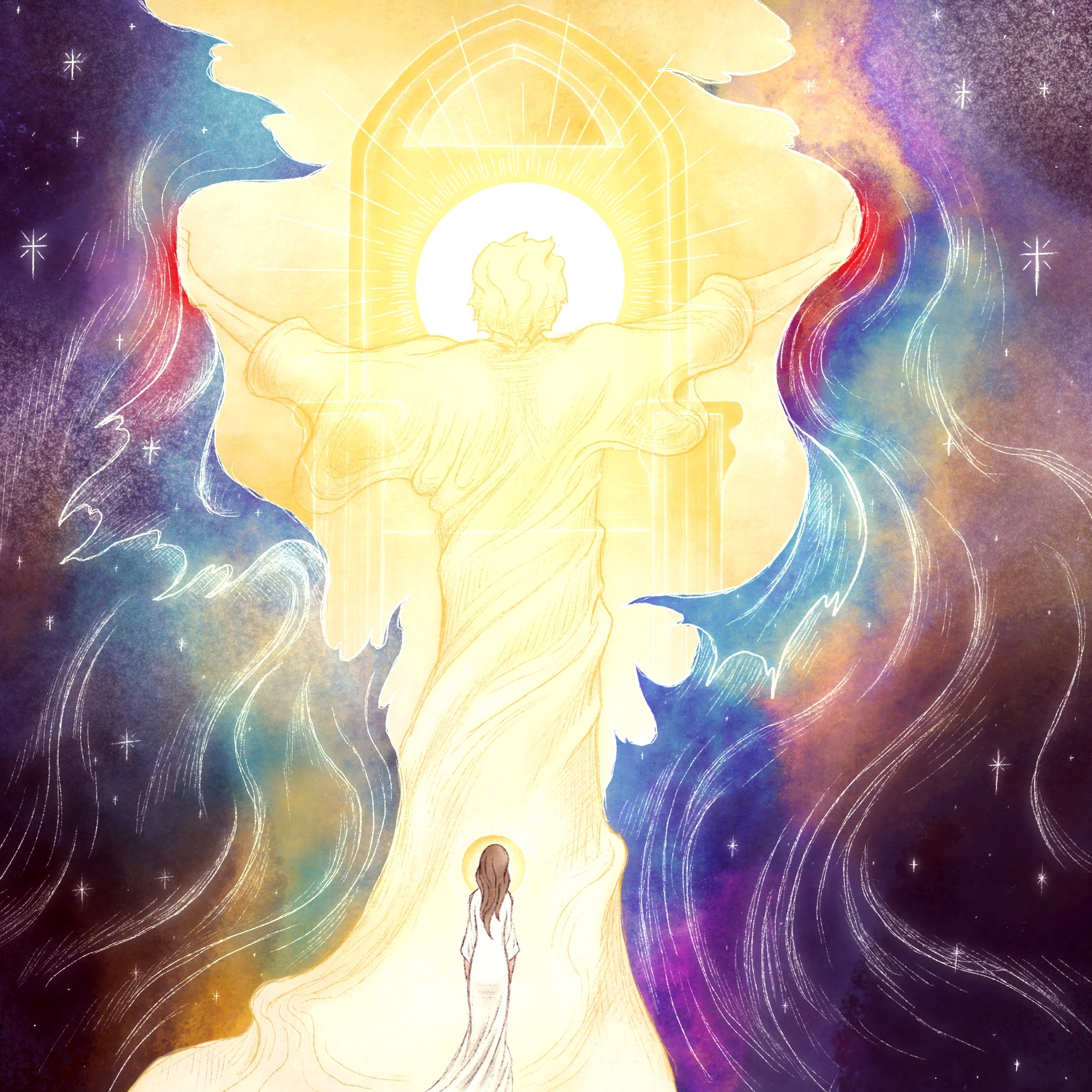
Dear saints, tonight we celebrate the fact that God has hidden Himself in your flesh. This is the miracle of Christmas. God hides Himself in your humanity so that He can be with you, dwell with you, and reveal Himself to you. God veils His glory in the body of Jesus so that He can appear as your Savior. God hides Himself so that He can reveal Himself as your Redeemer.

We are sinners. To be found by God in His glory and majesty would be our eternal destruction. But there in Bethlehem is God wrapped in swaddling clothes. Empty Manger With Cross ShadowHe is there so He can grow up and walk among us in the towns and streets of Galilee, Judea, and Jerusalem. He is there so He can be betrayed, arrested, beaten, tried, crucified, loaded up with your sin, die, and rise again.

This is how your God is for you. God does not approach you with His consuming holiness. He hides His holy glory, and He comes in peace so that He can clothe you in His holiness. And clothed in that holiness, you are now the temple of the Holy Spirit who dwells within you (1 Cor. 6:19). God continues to reveal His glory to all creation through you, Christian (Ro. 8:21). Because of what Christ has done for you by making you holy, heaven and earth continue to overlap as God’s glory shines through you (Mt. 5:14-16).

So tonight, we join our voices with the heavenly choir. “Glory to God in the highest, and on earth peace to you.” Behold Christ’s glory which is full of grace and truth. From this Jesus, you receive grace upon grace. For your God is pleased to well with you now and forever. Amen.

The peace of God, which surpasses all understanding, will guard your hearts and minds in Christ Jesus. Amen.