Come Near – Sermon on Exodus 34:29-35 for the Transfiguration of Our Lord

Today’s sermon is short because we spent time considering our liturgy during our service. If you are interested in learning more about that, please see the video of that service.

Exodus 34:29–35

29 When Moses came down from Mount Sinai, with the two tablets of the testimony in his hand as he came down from the mountain, Moses did not know that the skin of his face shone because he had been talking with God. 30 Aaron and all the people of Israel saw Moses, and behold, the skin of his face shone, and they were afraid to come near him. 31 But Moses called to them, and Aaron and all the leaders of the congregation returned to him, and Moses talked with them. 32Afterward all the people of Israel came near, and he commanded them all that the Lord had spoken with him in Mount Sinai. 33 And when Moses had finished speaking with them, he put a veil over his face. 

34 Whenever Moses went in before the Lord to speak with him, he would remove the veil, until he came out. And when he came out and told the people of Israel what he was commanded, 35 the people of Israel would see the face of Moses, that the skin of Moses’ face was shining. And Moses would put the veil over his face again, until he went in to speak with him.

In the name of Jesus. Amen.

Moses was eighty years old when he led God’s people out of Egypt, through the Red Sea, and to Mt. Sinai (Act. 7:23, 30). When they all arrived at Mt. Sinai, Moses became a mountaineer of sorts. He kept going up and down – at least six, if not eight, total times. Before God gave the Ten Commandments Moses had already gone up and down the mountain three times (Ex. 19:3-7; 19:8-14; 19:20-25). He would ascend to hear God speak and descend to tell the people what God had said. Then in Ex. 20, all the people heard God speak the words of the Ten Commandments, but the people said that hearing God’s voice was too traumatic and fearful for them. They begged Moses to not let God speak to them anymore (Ex. 20:18-20).

God agreed to the arrangement that they came up with. Moses would be the mediator between God and His people (Dt. 5:23-33). So, Moses kept going up and down the mountain. After God gave the Ten Commandments, Moses went up again to hear the instructions of how to construct the Tabernacle so God could come near and dwell among His people (Ex. 24:9-32:15). While Moses was up there, the people decided they wanted a tame god, a god they could control. So they made the golden calf to worship (Ex. 32:1-10). So, God sent Moses back down. He saw the people worshipping the golden calf and threw the tablets of the Ten Commandments breaking them because they had broken God’s covenant. Then Moses went back up the mountain again.

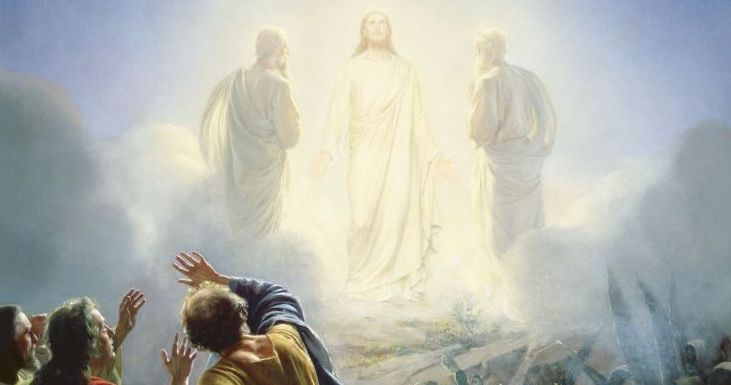
Our text begins as Moses is descending Sinai one final time. This last journey up the mountain was probably the most grueling for Moses. The verse right before our reading says that Moses was on the peak forty days and nights eating no food and drinking no water (Ex. 34:28). Of course, that isn’t humanly possible, but God made it happen. The fact that Moses is even alive after all of that is a miracle. But not only was Moses alive, he wasn’t disheveled or haggard. Instead, Moses’ face shined because he had been talking with God. His face reflected God’s glory, and the people were afraid again.

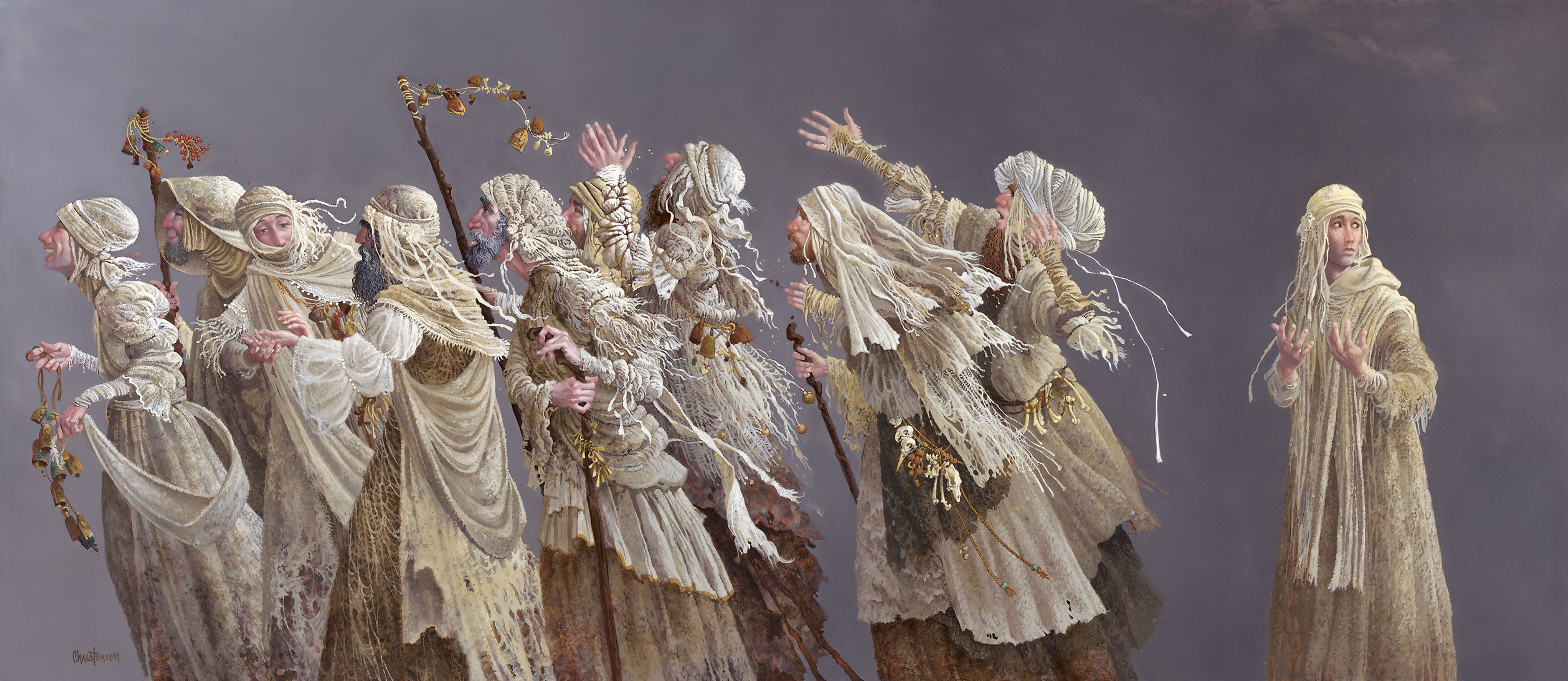
Now, the cause of their fear wasn’t God’s voice. Instead, it was the fact that the skin of Moses’ face was shining. The people didn’t want to come near Moses. So, Moses would hide his face behind a veil when he finished speaking God’s Word to them.

All of this is to say that the people were afraid when God came near. They were afraid when God spoke to them directly, and they were afraid when Moses was their intermediary. The people didn’t want God to come near to them.

In Jer. 23:29, God describes His Word saying, “Is not My Word like fire, declares the Lord, and a hammer that breaks the rock in pieces?” But in Is. 55:10, God also says that His Word is like the rain and snow that creates life by giving seed to the sower and bread to the eater. We might wonder, “Well, which is it, God? Does Your Word burn and break, or does it give life?” Well, dear saints, God’s Word does both. In Is. 55:11, God says that His Word will always accomplishes what God desires.

Dear saints, you cannot hear God’s Word and remain unchanged. Either you will be softened toward it, or you will be hardened against it. And that is one of the beautiful things about the liturgy we use here because, through that liturgy, God comes near so He can speak to you and create faith.

You hear God’s Law where He says that your sins have harmed you and alienated you from Him. Because of our sins, we should all be afraid like the people who didn’t want God to come too close. So our liturgy is also filled with the Gospel.

You hear how God comes near, not to destroy you but to forgive you and give you eternal life. You hear how Christ has come near by taking on your flesh and becoming one of you. Our Lord came near to remove the veil between us and God so we could stand in His holy, glorious, gracious, merciful presence. The entire service is designed to lead us out of our sinful desires and draw us to God’s side. Through our liturgy, God comes near to us so we can come near to Him.

Even though we have all sinned against God, He doesn’t want to be distant. Dear saints, God wants to bless you. He wants you to behold His face as it shines upon you in grace. He wants to lift up His countenance upon you and give you His peace (Num. 6:24-26).

That peace with God is yours through the death and resurrection of your Lord and Savior, Jesus Christ. In Christ, God has come near to you to dwell among you. In Jesus, you see God’s glory, full of grace and truth. And from His glory you receive grace upon grace (Jn. 1:14, 16). Amen.

The peace of God, which surpasses all understanding, will guard your hearts and minds in Christ Jesus. Amen.

Discern – Sermon on Romans 12:1-5 for the First Sunday after Epiphany

Romans 12:1–5

1 I appeal to you therefore, brothers, by the mercies of God, to present your bodies as a living sacrifice, holy and acceptable to God, which is your spiritual worship. 2 Do not be conformed to this world, but be transformed by the renewal of your mind, that by testing you may discern what is the will of God, what is good and acceptable and perfect. 

3 For by the grace given to me I say to everyone among you not to think of himself more highly than he ought to think, but to think with sober judgment, each according to the measure of faith that God has assigned. 4 For as in one body we have many members, and the members do not all have the same function, 5 so we, though many, are one body in Christ, and individually members one of another.

In the name of Jesus. Amen.

You will be changed. Please note how that was worded. It isn’t, “You will change,” even though that’s true. It wasn’t, “You must change,” as though this is all up to you. According to this text, you will be (passively) changed. Here, you are given a passive command, which we can’t really translate well into English. What we have there in v. 2 could be translated, “Do not become conformed to this world, rather become transformed by the renewal of your mind.”

In other words, there are things that are going to mold, shape, and change you. But there are some things that should not do that, and there are some things that should.

First, don’t allow the world to change you. The word there is, actually, ‘age.’ “Do not become conformed to this age.” This age isn’t only this world; it’s also the demons, forces of evil, and the culture that pull on you. Our age seeks to conform you to itself. We’ll talk about things like peer pressure and, maybe, even societal pressure. We are to resist those. But we are also to resist the demonic pressure and self-imposed pressure to fit in with this evil age. All those things of this age try to press, pull, form, and mold you like you’re Silly Putty. 

Hopefully, enough of you have played with Silly Putty for this analogy to work. You can easily make Silly Putty do all sorts of things. My siblings, cousins, and I would play with Silly Putty at my grandparents’ home in Faith, SD. We’d take it out of the red egg container and roll it into a bouncy-ball and play catch. When we got tired of that, we’d smoosh the puddy into a flat oval, press it onto the newspaper ink, peel it off, and stretch out the letters and pictures left on the putty. You can make Charlie Brown’s head look even more ridiculous with a blob of Silly Putty. When we got tired of manipulating a particular smudge of ink, all we had to do was simply push, roll, and re-flatten the putty, and it was ready to do another one. The ink from each image never actually left the putty; instead, it just got absorbed into it.

A lot of Christians have allowed this age to work on them like putty. And there are all sorts of reasons they allow it. Maybe they don’t want to be laughed at, so they’ll go along with the theory of evolution and try to make it fit with the account of creation. It doesn’t. It can’t, but they try anyway. Maybe they don’t want to be considered a fundamentalist, so they will compromise on all sorts of things like marriage, sexuality, abortion, and whatever. Here, Paul says, “Don’t. Don’t do that!”

When you allow this age to press and pull and stretch you in different ways, you are in a dangerous place. Just like I’d get bored bouncing a Silly Putty ball around, this age will try to conform you into all sorts of things for all sorts of uses. And just like the ink never really leaves a blob of putty, some of the ways this age will play around with you will stick with you your entire life. Christian, don’t let this age play around with you as though you’re a blob of Silly Putty.

I just need to add here: This world does change you in ways that are fine. There are plenty of lessons to learn from people and organizations that aren’t necessarily Christian, but be careful with them. Have your filter up. Keep in mind what Php. 4:8 says, “Finally, brothers, whatever is true, whatever is honorable, whatever is just, whatever is pure, whatever is lovely, whatever is commendable, if there is any excellence, if there is anything worthy of praise, think about these things.”

All that being said, you are to allow change to come from other places. “Be transformed by the renewal of your mind.” What does that mean? We might wish that Paul had said, “Be transformed by keeping the Ten Commandments,” or, “Be transformed by praying at such-and-such a time.” That would be a lot easier to understand and do. But that’s not what Scripture says here. You aren’t given a set of instructions to do or accomplish. Instead, you’re given the result of this transforming. This transforming results in the renewal of your mind, and it results in an ability to discern the will of God. God wants you, as time goes by, to get better and better at testing and figuring out His will, which is good, acceptable, and perfect/complete.

Sometimes, we’ll talk about the Ten Commandments as God’s will, what He desires us to do. And that is true. God’s will is that you have no other gods, use His name rightly, keep the Sabbath, honor your parents, not kill, not commit adultery or steal or lie or covet. That’s God’s will – plain as day. But none of that takes discernment to figure out. God has clearly said it. “Thou shalt not murder.” When you get angry at someone and want to harm them, you don’t have to discern if you should or not. Don’t do it!

When Scripture says here that you should allow yourself to be transformed so that you can discern God’s will, it’s saying that there are times when God’s will is for you to do something or not do something, but He hasn’t clearly, explicitly said what His will is. Instead, you’re going to have to discern what you should do. Yes, the Commandments are there to help and guide you, but the Commandments don’t address every decision you have to make day by day.

For example. Let’s say your kids are behaving poorly. What should you do? There isn’t a Commandment that definitively addresses that. So, should you discipline them and make sure they feel your wrath? Do you go by Pro. 13:14, “Whoever spares the rod hates his son, but he who loves him is diligent to discipline him”? Maybe. That might be the most godly, loving thing you can do. Or, should you be patient with your kids? Should you follow Col. 3:21, “Do not exasperate your children, lest they become discouraged”? Should you pause, take a step back, patiently talk with them, try to understand what’s going on? Again, maybe. That might the godly, right thing to do.

How do you know which to pick – discipline or patience? The Bible says both are good. How do you navigate it? God has a will for that situation, but He hasn’t explicitly spelled it out in the Bible. God hasn’t said, “When thy child flips out after you deny their request for candy at Hugo’s in East Grand at 12:34 PM on Jan. 12th, 2025, here’s how you handle it. But if it’s at Ace Hardware, here’s how you handle it.” God has ways He wants you to live, but it might be difficult to know how to handle each particular situation that comes up moment by moment, day by day.

Should you give money to that person on the corner by Sam’s Club? Should you watch that show or movie? Here’s a good one: Should you engage with that comment on social media? Ha! Proverbs 26:4 says, “Answer not a fool according to his folly, lest you be like him yourself.” But in the very next verse, the Bible says, “Answer a fool according to his folly, lest he be wise in his own eyes.” You’ve got two verses back-to-back saying, “Don’t do it,” and, “Do it.” So, how do you know what to do?

I can’t tell you. No one can. In His wisdom, God has made these decisions challenging for us and require us to grapple and test and discern what we are to do. In other words, God wants us to do the difficult work of gaining and growing in wisdom. This is what it is to be transformed by the renewal of your mind. This renewal of your mind happens as you read the Bible. The Holy Spirit takes God’s Word and works on you, renewing and transforming you into what He wants you to be.

2 Tim. 3:16-17 says that all Scripture is inspired by God and is there to train you in righteousness that you may be complete, equipped for every good work. In other words, the Bible trains you and renews your thinking and mind. It transforms you. More and more, as time goes on, you are to be filled with God’s Word and bring it to bear in the decisions that are constantly coming at you each day.

This doesn’t mean you have to listen for a voice from heaven and have God directly speak to you. No. Don’t expect God to spell it out like that because that doesn’t take any work. Again, in His wisdom, God has made this more difficult, but that struggle is good for you and for me.

God wants this to be the rhythm of your life. Go about your life, make those decisions, and read the Scriptures. Evaluate how you made those decisions. Maybe, you’ll realize that you did poorly and didn’t do God’s will. Then, repent. Receive God’s forgiveness for that sin. Learn from your mistake. Do better the next time.

Maybe, you’ll realize you did well and that experience will make you better equipped to handle an even tougher decision in the future.

Then, armed with that experience and filled with wisdom from God’s Word, go, live a bit more. Make more decisions, and return again to the Scriptures. Live. Read the Bible. Live. Read. Constantly weave your life and God’s Word together. That work leads to godly discernment. It transforms and renews your mind.

Know that this transforming doesn’t happen very well if the only time you hear the Scriptures is when you’re here at church. Discerning God’s will is a life-long process. It takes work. But don’t forget that this is good work, and it is how God wants to be about His business of continually transforming you. And He isn’t treating you like a blob of Silly Putty. He’s sculpting you, or, even better, He’s metamorphosizing (that’s the word here translated ‘transform’) you into a living sacrifice that is holy and acceptable to God (Ro. 12:1).

Finally, I want to make sure we anchor all of this to the context – both of this passage and the whole book of Romans. Remember this is an appeal, an appeal that is based on the mercies of God. In other words, only Christians who have been freely and completely forgiven of their sins because of what Christ has done – only they can be transformed in this way.

Even with all the discernment you gain from God’s Word, even with a mind that is filled with biblical wisdom, there will be times where you fail to do God’s good, acceptable, perfect will. That’s when you flee again to His mercies, which are new every morning (Lam. 3:22-23). And remember what Scripture said just a few chapters earlier in Ro. 8:1, “There is therefore now no condemnation for those who are in Christ Jesus.” None. Zip. Zilch. Nada. No condemnation.

Yes, grow and be changed by God’s Word. Don’t be conformed to this age. Instead, grow in wisdom, be metamorphosized, and discern. And always know and trust that Christ’s mercy covers you, now and forever. Amen.

The peace of God, which surpasses all understanding, will guard your hearts and minds in Christ Jesus. Amen.

The Worship of Turning Back – Sermon on Luke 17:11-19 for the Fourteenth Sunday after Trinity

Luke 17:11-19

11 On the way to Jerusalem [Jesus] was passing along between Samaria and Galilee. 12 And as he entered a village, he was met by ten lepers, who stood at a distance 13 and lifted up their voices, saying, “Jesus, Master, have mercy on us.” 14 When he saw them he said to them, “Go and show yourselves to the priests.” And as they went they were cleansed. 15 Then one of them, when he saw that he was healed, turned back, praising God with a loud voice; 16 and he fell on his face at Jesus’ feet, giving him thanks. Now he was a Samaritan. 17 Then Jesus answered, “Were not ten cleansed? Where are the nine? 18 Was no one found to return and give praise to God except this foreigner?” 19 And he said to him, “Rise and go your way; your faith has made you well.”

In the name of Jesus. Amen.

In my opinion, this is the third weirdest miracle Jesus does. If you want to know which two top it, you’ll have to ask me after the service.[1] This miracle is weird because of how Jesus heals with a hidden promise, “Go and show yourselves to the priests.” In saying this, Jesus instructs the lepers to do what the Law required after being cleansed from leprosy (Lev. 14:2-32), but when Christ tells them to do that, they are still leprous.

I don’t know what it is with this text, but I have a lot of questions about it. Maybe I have these questions because Jesus Himself asks a lot of questions in it. One of my questions is when the ten lepers ask Jesus to have mercy on them, what exactly are they asking for? They have the obvious need of being healed from their leprosy, and Jesus had healed lepers before (Lk. 5:12-16). So, maybe they knew Jesus could cure their disease and wanted Him to do that. It could be that the lepers were asking for something different than healing. Maybe they wanted food or some other form of charity.

Another question I have is why does Jesus heal the lepers this way? Back in Luke 5, a leper came to Jesus saying, “If you are willing, you can make me clean.” And Jesus says, “I am willing; be clean,” then Jesus says, “Go and show yourself to the priest and make an offering for your cleansing as Moses commanded, for a proof to them.” Why wouldn’t Jesus do that again? Why not say, “Sure I’ll give you mercy. Be cleansed and go, show yourselves to the priest”? Why does He skip the first part?

Another question I have is how far did the ten go before they were cleansed? Was it after they walked for a couple hours, or was it ten or fifteen minutes and after they got outside the village? Or, possibly, was it as soon as they pivoted away from Jesus and toward Jerusalem? It’s unclear in English, but the Greek verbs can legitimately be interpreted to suggest that it happened more or less immediately. Jesus’ question, “Were not ten cleansed? Where are the nine?” could be a direct rebuke of the unthankfulness of the nine that they heard with their own ears. Something along the lines of, “Hey, are you nine going to ignore what I have just done for you?”

Now, we don’t know if the lepers were healed immediately or not. And we don’t know for sure what happened to the nine. Maybe they went to the Temple, were declared clean by the priest, offered the sacrifices, and went back to normal life. I’m sure the nine lepers were grateful for their restored skin and the fact they were able to be regular members of society again. But they were not thankful.

Whatever happened to them, it is a reminder of what Jesus says in the Sermon on the Mount, that God “makes His sun rise on the evil and on the good, and sends rain on the just and the unjust” (Mt. 5:45). God is good to all mankind. Anyone can be grateful for a sunny day or a rain shower that provides what we need to eat. Unbelievers can be grateful for all the blessings God gives through creation, but they can’t be thankful because they don’t know whom to thank. Only believers can be thankful to the God who gives good gifts.

There is a difference between being grateful and being thankful, between gratitude and thanksgiving. The two are, certainly, related. But to use a distinction by a pastor friend of mine,[2] gratitude looks at the goodness of the gift while thankfulness looks back behind the gift to the goodness of the giver. Let me give an example:

My first year of Bible College, I was on a choir that went on a tour in Eastern Europe. One church that hosted us was in the Czech Republic, and the church ladies prepared a meal for the entire choir and the chaperones (around 40 people). For them, this was a monumental task and huge cost. We all sat down at the tables as we waited for the ladies to serve us, and out they came with plates loaded with steamed sauerkraut and dumplings. That was the meal. Now, don’t get me wrong. I like sauerkraut, but I like it as a side – not the main dish. But we could tell that those ladies were proud of the meal they had set before us. So, we all did our best to eat as much as possible. Some, of course, ate more than others. I don’t think anyone was grateful for a meal of sauerkraut, but everyone, even those who only choked down a few bites, was thankful to the ladies. After our concert that night, I went to my host family and had a massive spread of food put before me that included several different baked goodies, sliced meat and cheese, fruit, and vegetables. There was more than I could eat. There, I was both grateful and thankful for the food. But, in both instances, those who served the food were good and generous and deserved thanks.

Back to the healed Samaritan leper. I’m sure he was grateful for the healing, but only he was thankful to Jesus, the Giver of the healing. Notice, he “turned back, praising God with a loud voice; and he fell on his face at Jesus’ feet, giving Him thanks” (Lk. 17:15-16). Now, there is something important here. There are some pagans who say Jesus never claimed to be God. It’s complete nonsense and ignores the totality of Jesus’ sayings and what the Scriptures teach.[3] But look at what Jesus says while this Samaritan is worshipping at His feet, “Was no one found to return and give praise to God except this foreigner?” Right there, Jesus is identifying Himself as God. Dear saints, God has feet – human feet that were pierced for you.

Yes, this text is about thankfulness, but more broadly, this text is about the worship of thanks. Worship is always about turning back. Psalm 51:17 says, “The sacrifices of God are a broken spirit; a broken and contrite heart, O God, You will not despise.” So, one act of worship is repentance. Repentance is nothing more than turning back, turning back from a life filled with sin and the consequences of sin and turning toward God. Another act of worship is thankfulness. Thankfulness is receiving God’s gifts and not just going on to the next thing but turning back to give thanks to the God who gave the gift.

To be thankful, this healed Samaritan leper has to literally turn back to Jesus. And it is the same for us. To offer God the worship of thanksgiving is to first receive God’s gifts and turn back in thanks. Now, I’m using this sermon to prepare us for what we will hear Jesus say in next week’s Gospel lesson (Mt. 6:24-34) about worry and anxiety. This text puts us in the right orientation to hear what Jesus has to say about the future and worry. We can face the unknown future with confidence when we first look back and give God the worship of thanks. You can’t thank God for things in the future because God hasn’t given them yet. Yes, we can look to the future with hope, but even that hope comes through faith, and faith is another form of worship that requires looking back to the promises God has already given us. With those promises in our pocket, we can face the future without fear. Worry and anxiety come by looking at the unknown, bad things in the future. The worship of thankfulness turns back to God who has been faithful to us in the past and given us good things.

Dear saints, you have a giving God. God’s love language is gift-giving. So, the best way to worship a giving God is to come back and receive more of His gifts like this Samaritan does. He receives healing from Jesus, comes back, and receives salvation. The last words of Jesus in this text are literally, “Your faith has saved you.” God is like a grandma. You know how grandma invites you over for a huge meal and stuffs you full of her excellent cooking. The best way to praise and thank your grandma after such a meal is not to help with the dishes. No, the best way to praise grandma is to take another helping of her special green-bean casserole.

Dear saints, God gives you every good thing. He has given you a new day to live and receive His gifts of parents, children, siblings, friends, food, clothing, house, etc. And here, in God’s house, you have received God’s gifts of forgiveness, absolution, His Word, faith, eternal life, and fellowship with your blood-bought brothers and sisters in Christ. Jesus has won all of this for you through His death and resurrection and freely gives it all to you. And He has more for you.

We will continue to worship. We worship our Savior by receiving all these gifts He has already given and we will turn back to fall at the feet of our crucified and risen Savior. And Jesus raises up from His feet to sit at His table where He continues to give us more gifts. The gift of His life-giving Body and Blood in His Supper. Amen.

The peace of God, which surpasses all understanding, will guard your hearts and minds in Christ Jesus. Amen.


[1] The two stranger miracles are the healing of the deaf and mute man in Mk. 7:31-37 and the two-part healing of the blind man in Mk. 8:22-26

[2] Pr. Bryan Wolfmueller.

[3] Many of Jesus’ own statements are clear about Him being the Son of God, but those statements can only be understood in light of the Old Testament.

Sing – Sermon on Isaiah 12:1-6 for the Fifth Sunday of Easter

Listen here.

Isaiah:12-1-6

You will say in that day:

“I will give thanks to you, O Lord,
for though you were angry with me,

your anger turned away,
that you might comfort me.

2   “Behold, God is my salvation;
I will trust, and will not be afraid;

for the LordGodis my strength and my song,
and he has become my salvation.”

With joy you will draw water from the wells of salvation. 4And you will say in that day:

“Give thanks to the Lord,
call upon his name,

make known his deeds among the peoples,
proclaim that his name is exalted.

5   “Sing praises to the Lord, for he has done gloriously;
let this be made known in all the earth.

6   Shout, and sing for joy, O inhabitant of Zion,
for great in your midst is the Holy One of Israel.”

Alleluia! Christ is risen!
He is risen indeed! Alleluia!

In the name of Jesus. Amen.

The day of salvation that Isaiah speaks about is today. 2 Corinthians 6:2states that, because Christ has died and risen for you, now is the day of salvation. God was angry with you because of your sin, but His anger has turned away. Jesus lives, and God has given you His comfort. Christ reigns in heaven, and God is now your salvation. Jesus has delivered you. God is your strength and your song. Whether or not you realize it, you are here today to draw from the wells of salvation which will never run dry.

Higher Things - Singing.jpgSo, “Sing praises to the Lord, for He has done gloriously. Shout, and sing for joy, O inhabitant of Zion, for great in your midst is the Holy One of Israel.” The Scripture readings today have called you – in fact, they have commanded you – to sing to God five times (Ps. 98:1, 4, Is. 12:5, 6).

Many places in Scripture, you are commanded to “sing a new song.” There are some Christians (and they may have good intentions) some Christians who say that we should be singing songs that appeal to people’s current taste in music. In other words, we should always be writing songs that will make people tap their toes or something. Other denominations go so far as to say this command to ‘sing a new song’ means that we should only sing songs that have been around for so long – say fifty or one-hundred years. And once a song reaches that age, it should be retired, put out to pasture, and not sung anymore. But that is not what it means to ‘sing a new song.’

When Scripture tells us to sing a new song, it always goes on to tell us, not about the musical style of the song, but about the content of the song, and the content of the song is always God’s deliverance. We sing of how God has delivered and rescued us from our sin and the devil. In other words, we sing of Christ who has saved us.

God’s salvation is always new. An ancient Greek philosopher (Heraclitus) said, “You never step in the same river twice,” because it isn’t the same river and you aren’t the same person. In a similar way, the best Christian songs, no matter how old they are, are always new. It doesn’t matter how long the song has been around because the salvation Jesus has won for you means something different to you now than it did yesterday. Yes, you have sinned again, but God’s steadfast love never ceases. His mercies never come to an end. They are new every morning.

Songs that you have memorized and have been singing your whole life can bring new comfort in a different way than they had before. None of this is to say that we shouldn’t be writing new songs. No, no, no. Christians should be the best artists – especially when it comes to music. Until Christ returns, the church should always be writing songs that speak clearly of God’s deliverance and salvation while we continue singing the faithful songs of our ancestors in the faith.

Zephaniah 3_17 - Quiet you with His loveNow, why does God command us to sing; isn’t speaking good enough? Apparently, no. There is a great passage in everyone’s favorite Old Testament book, Zephaniah 3:17. Listen to this, “The Lordyour God is in your midst, a mighty one who will save; he will rejoice over you with gladness; he will quiet you by his love; he will exult over you with loud singing.” It is an absolutely beautiful picture. But the reason I bring this up is that this is the one place in all the Scriptures where God sings, and the reason He sings is His joy over you.

When God expresses His joy over you who have been redeemed by His beloved Son, He does it with singing because nothing else will do. Music and song is the only thing capable of expressing the joy that God has because of you. God sings in joy over you, so you sing for joy to Him. And this is why we spend time in our services singing. We don’t do it to make our service more interesting. Rather, we sing because singing is, in fact, a form of spiritual warfare against God’s enemies and your enemies. Let me give you two quick examples:

In 2 Chronicles 20, King Jehoshaphat ruled in Judah. His kingdom was threatened by the armies of the Moabites and Ammonites. Jehoshaphat doesn’t know what to do, so he calls all the people of Judah to come to the Temple to pray. While they are praying, a prophet comes in and says that the people don’t need to be afraid of the hoard coming against them. That prophet says that the army won’t even need to fight because the Lordwill fight for them. When the people hear this, they all bow down with their faces to the ground. But then, suddenly, two clans of the priests, the Kohathites and the Korahites, stand up and begin to sing loudly. Those two classes of priests had been appointed by King David years earlier to be the singers in the Temple. Basically, they had been appointed to be the church choir.

The next morning, the battle lines are formed. 2 Chronacles 20_21 - SingAnd Jehoshaphat appoints the front line to be – guess who – the Kohathites and the Korahites, the choir. The Lordwould fight for them, so why not have the singers be the first into battle? The army marches out behind the choir and listen to this, it’s from 2 Chron. 20:22, “And when they began to sing and praise, the Lordset an ambush against the men of Ammon [and] Moab… who had come against Judah, so that they were routed.” Through their singing, God defeated the enemies of His people.

And don’t think this is an isolated event. In Acts 16, Paul and Silas are beaten with rods, arrested, and thrown into prison for preaching about Jesus. While they are there in the dank, stinky dungeon, guess what they do. They prayed to God, but then they began, you guessed it, they began to sing hymns (Act. 20:25). They weren’t worried about the other prisoners hearing them sing. They sing, and God acts. God sends an earthquake, the prison doors are all opened, and all the shackles of all the prisoners fall off.

We could also talk about how David used to play his harp to drive away the demons that tormented King Saul (1 Sam 16:23). Or how Jesus and the disciples, in that dark hour before Jesus was arrested, sang a hymn before they departed the upper room (Mt. 26:30).

The devil hates music and flees when God’s people sing. So, the devil tris to get us to not sing. If Satan tries to get you embarrassed of your voice or your ability to sing, get over it. God doesn’t care how good of a singer you are. He’s not looking for Grammy winners or finalists from American Idol or The Voice. He wants you and commands you to sing.

So, sing. Sing when you are happy. Sing when you are depressed. Sing when you are apathetic. Sing of Jesus. Sing of His victory. Sing of His deliverance. Sing of His forgiveness. Sing how His right hand and holy arm have rescued you. Sing because the battle is the Lord’s. He has won the victory over Satan, sin, and death. Sing and watch the devils flee.

Alleluia! Christ is risen!
He is risen indeed! Alleluia!

Amen.

The peace of God, which surpasses all understanding, will guard your hearts and minds inChrist Jesus. Amen.

Anxious – Sermon on Matthew 6:24-34 for the Fifteenth Sunday after Trinity

Listen here.

Matthew 6:24–34

24 “No one can serve two masters, for either he will hate the one and love the other, or he will be devoted to the one and despise the other. You cannot serve God and money.

25 “Therefore I tell you, do not be anxious about your life, what you will eat or what you will drink, nor about your body, what you will put on. Is not life more than food, and the body more than clothing? 26 Look at the birds of the air: they neither sow nor reap nor gather into barns, and yet your heavenly Father feeds them. Are you not of more value than they? 27 And which of you by being anxious can add a single hour to his span of life? 28 And why are you anxious about clothing? Consider the lilies of the field, how they grow: they neither toil nor spin, 29 yet I tell you, even Solomon in all his glory was not arrayed like one of these. 30 But if God so clothes the grass of the field, which today is alive and tomorrow is thrown into the oven, will he not much more clothe you, O you of little faith? 31 Therefore do not be anxious, saying, ‘What shall we eat?’ or ‘What shall we drink?’ or ‘What shall we wear?’ 32 For the Gentiles seek after all these things, and your heavenly Father knows that you need them all. 33 But seek first the kingdom of God and his righteousness, and all these things will be added to you.

34 “Therefore do not be anxious about tomorrow, for tomorrow will be anxious for itself. Sufficient for the day is its own trouble.”

In the name of the Father and of the Son and of the Holy Spirit. Amen.

In 1988, Bobby McFerrin offered us “a little song [he] wrote.” He thought we “might want to sing it note for note. Don’t worry; be happy. In every life we have some trouble. hakuna-matata-don-t-worry-be-happy-1But when you worry, you make it double. Don’t worry; be happy. Woo, ooh.”

As chipper as Mr. McFerrin’s song was, apparently the ditty didn’t work because in 1994 the lovable characters, Timon and Pumbaa, came along to teach us a “wonderful phrase.” Hakuna Matata. In case you didn’t know, “it means no worries for the rest of your days. It’s [their] problem-free philosophy. Hakuna Matata.”

As catchy as those jingles are, their philosophy and approach to anxiety is terribly simplistic, and we still find ourselves getting worried.

Mothers worry when their children wander off and get lost. Fathers worry when an unexpected expense comes up and the bills pile up. Children get anxious about the first day of school with new teachers and higher expectations. The evening news and papers get your attention by reporting on the worst stories first. Television shows will end with foreboding cliffhangers to make you anxious about what will happen next week. And to get your vote, politicians have become masters at creating worry and anxiety then telling us that they are the ones who can save us. “If we don’t ban straws, the turtles are going to die.” “If we don’t reduce carbon emissions, the planet is going to die.” And both political parties are guilty of this. Years ago, it was, “If Obamacare gets passed, people will die.” Today, it’s, “If Brett Kavanaugh gets a seat on the Supreme Court, people are going to die.” Or, “If we don’t do something about the border, people are going to die. If we don’t do something about ISIS, people are going to die. If we don’t do something about taxes and the economy, people are going to die. Our country is divided, people are going to die.”

“Don’t Worry Be Happy” and “Hakuna Matata”? These seem to be nothing more than trite, naïve dismissals of the anxious world in which we live. But here, Jesus seems to be just as dismissive. He tells us, “Don’t be anxious about your life. Don’t be anxious about what you will eat, drink, or wear. Don’t be anxious about tomorrow.”Maybe Jesus lives in the same fantasy land as Bobby, Timon, and Pumbaa.

Well, there is a significant difference between Jesus’, “Don’t be anxious,”and Bobby, Timon, and Pumbaa. Jesus recognizes how serious of a sin worry and anxiety are. You see that in how this whole text is related.

First, Jesus points out that your anxiety is evidence of idolatry. He says, “No one can serve two masters, for either he will hate the one and love the other, or he will be devoted to the one and despise the other. You cannot serve God and money.”

When you have two masters, you are always going to be torn between the two because they will never fully agree on the service they require of you. FranticAnd Jesus addresses the most common master that you and I serve – possessions and stuff.

The word translated as ‘money’ here is the word ‘mammon’ which means more than ‘money.’ But since you get your stuff with money, ‘money’ is a fine translation. Jesus here is addressing your most common idol. You worship your stuff. Idolatry isn’t simply bowing down to statues. Idolatry is fearing, loving, or trusting in anything that isn’t God.

The God who created you, gives you everything you need to live, and sustains it all isn’t seen. But you can see how much money in your wallet or purse. You can look at your balance in your bank account and investments. You spend lots of time at your job. You probably know your boss and the person who signs your checks. And so, you are tempted to you trust those things rather than God who is hidden behind them all. And anxiety is the liturgy and worship that your possessions demand.

We think if we have enough we are secure, so we worry when we think we are running short. Or we think that if we have a little more money, then we’ll be happy. So, we get anxious to accrue a little more. But this is sinful idolatry, and these words from Jesus expose our lack of faith. Scripture says, “Whatever does not proceed from faith is sin.”

Repent.

Repent and then laugh at yourself. I think that is what Jesus wants us to do with our sin.

Don’t laugh because your sin doesn’t matter or isn’t serious. Your sin is deadly serious. Serious enough that Jesus will go to the cross, suffer, and die for that sin. But He also wants us to see how foolish and downright silly it is when He tells us to look at the birds and the lilies. He asks, “Do you trust God as much as a crow trusts God? Do you trust God as much as a lily trusts God?”

Birds in a nestWhen was the last time you saw a bird driving a tractor or operating a combine? A bird cannot plant and harvest like we can. But God didn’t design them to do that. He designed us to do that. Birds simply do what God designed them to do: have chicks and raise them and sing.

A bird wakes up, finds a branch, and sings the song God put into its beak. While that little bird sings, it isn’t worried about food even though it has more reason to be worried about food than we have because it doesn’t know where its food is going to come from. It can’t go into the store and buy food. The bird just sits there and sings for a while. Then, when it is hungry, it flies off and finds the food God has set out for it. Jesus says, “Those birds don’t sow or reap or gather into barns, and yet your heavenly Father feeds them.”

Did you notice that? Jesus doesn’t say, “Their heavenly Father feeds them.” He says, “Your heavenly Father feeds them.”Your Father cares enough about the birds to feed them. Jesus wasn’t born to save birds. Jesus wasn’t crucified to save birds. He did all of that for you. You are the peculiar object of God’s saving love. If He feeds birds, He is going to feed you.

Same with the lilies of the field. God hasn’t given them anything more to do than to grow and look and smell nice. God provides everything they need even though they are alive today and tomorrow are shriveled up and burned. If God clothes the grass like that, how much more will He clothe you?

Worry is useless. It doesn’t help at all. In fact, it makes things worse. Jesus hasn’t given you permission to worry. Worry is the worship that money demands. So, what should you do when you have worry and anxiety?

Philippians 4[:6]says, “Do not be anxious about anything, but in everything with prayer and supplication with thanksgiving let your requests be made known to God.”

Take your worry and turn it around don’t let it be the slavish worship you offer to your idol, money. Instead, when you are worried about anything, make it your prayer. Pray, Open Prayer Hands“God You have told me not to be anxious. You have told me not to worry. Well, I’m worried about ______. You take care of that. Help me. Protect me. Etc.” Then your worry becomes a true service to God.
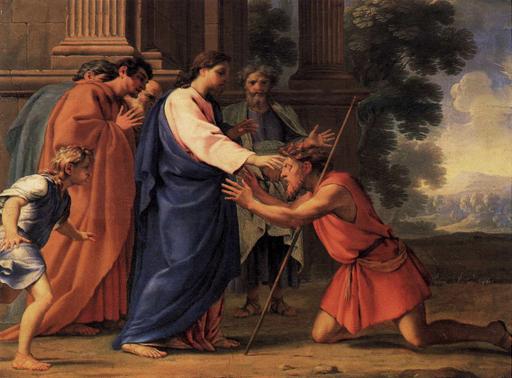
God loves you. He has provided you with everything you need for eternity. In His mercy, He sent His only-begotten Son to shed His blood on the cross to make you His own so that you will live forever in His kingdom. So, there is no reason to doubt that He will take care of the things you need today or tomorrow.

And then, be free. Free to seek first the kingdom of God and His righteousness – the righteousness He delivers to you in His Word and Sacraments. Jesus has promised that all these things will be added to you. Amen.

The peace of God, which surpasses all understanding, will guard your hearts and minds in Christ Jesus. Amen.

Kyrie Eleison – Sermon for Quinquagesima on Luke 18:31-43

Listen here.

Luke 18:31–43

31 And taking the twelve, he said to them, “See, we are going up to Jerusalem, and everything that is written about the Son of Man by the prophets will be accomplished. 32 For he will be delivered over to the Gentiles and will be mocked and shamefully treated and spit upon. 33 And after flogging him, they will kill him, and on the third day he will rise.” 34 But they understood none of these things. This saying was hidden from them, and they did not grasp what was said.

35 As he drew near to Jericho, a blind man was sitting by the roadside begging. 36 And hearing a crowd going by, he inquired what this meant. 37 They told him, “Jesus of Nazareth is passing by.” 38 And he cried out, “Jesus, Son of David, have mercy on me!” 39 And those who were in front rebuked him, telling him to be silent. But he cried out all the more, “Son of David, have mercy on me!” 40 And Jesus stopped and commanded him to be brought to him. And when he came near, he asked him, 41 “What do you want me to do for you?” He said, “Lord, let me recover my sight.” 42 And Jesus said to him, “Recover your sight; your faith has made you well.” 43 And immediately he recovered his sight and followed him, glorifying God. And all the people, when they saw it, gave praise to God.

In the name of the Father and of the Son and of the Holy Spirit. Amen.

The disciples are blind. Not physically but spiritually. Jesus plainly tells them where they are going – Jerusalem. Jesus plainly tells them why they are going to Jerusalem. So that everything written about Him in the Scriptures would be fulfilled. He will be mocked, shamefully treated, and spat upon. Jesus will be flogged, whipped, and beaten. He will be crucified, and He will die. But He will, He absolutely will, rise again on the third day.

Jesus gives turn-by-turn directions to His destination. But the disciples are blind, and Luke wants us to know this, and tells us three times. The disciples understood none of these things. This saying was hidden from them. And they did not grasp what was said.

Jesus Heals BartimeausThe road to the cross passes through Jericho. In the city where the walls had come-a-tumblin’ down, lived a blind man. Mark tells us that his name is Bartimeaus (Mk. 10:46). Bartimeaus heard all sorts of commotion and asked what it was all about. He is told nothing more than that Jesus of Nazareth is passing through. As blind as he is, Bartimeaus sees his opportunity and cries out, “Jesus, Son of David, have mercy on me.” And don’t miss this.

 

By recognizing that Jesus is the “Son of David,” blind Bartimeaus recognizes that Jesus is his King and Lord. And Bartimeaus requests mercy. In Greek, it would be, “Kyrie eleison.”

Each week, part of our normal service to sing the Kyrie after the Confession of Sins. We ask God the Father, God the Son, and God the Holy Spirit to have mercy upon us. Maybe, you have done it so often that you don’t really think about it. Well, today, do think about it.

Think through our whole service. What would you say is the highest praise, the most worshipful thing we do? Is it when we sing songs and hymns or when we place our tithes on the Altar? Now, those things are good, and it is right to do them. But I would argue above them, and maybe the greatest worship we offer, is singing that God would have mercy upon us.

For one thing, asking God for mercy is one of the most common prayers in all of Scripture, trusting people who count such things. It also puts us alongside other people in the Gospels – two blind men (Mt. 9:27), the Canaanite woman whose daughter is possessed by a demon (Mt. 15:22), and the ten lepers (Lk. 17:12-13). We take their cries for mercy and put them on our lips.

Now, maybe you think the Kyrie isn’t too worshipful and more like begging. You have a point because we are. But also realize that this is high praise. When we ask God to have mercy, we are recognizing God as He wants to be recognized. He wants to be known as the God who is merciful. His truest character is that He has steadfast love and compassion (Ex. 34:6-7). He desires mercy and not sacrifice (Hos. 6:6; Mt. 9:13). God’s mercy, His steadfast love, endures forever (Ps. 136).

When we cry out, “Kyrie eleison. Lord, have mercy.” We stand with the blind men, with the unclean lepers, and with those who are oppressed by the devil and the demons. We are saying, “Lord, we want You to be our Savior too. We want you to be Jesus for us. We want to receive what You gave to them. We want You to be what all the Scriptures reveal You to be. We want You to come to us in Your truest character.”

And Jesus delights in that prayer. He answers that prayer and is merciful. He gives sight, healing, deliverance, cleansing, life, and salvation. And because of that, we follow Him and give praise to God.

Baptism 2Dear Charlie. Today, you are Baptized. Today, your God and Lord has had mercy upon you. Today, God joined all His promises of forgiveness, life, and salvation to water and poured out all His love upon you. The perfect, Divine love we heard in our Epistle lesson (1 Cor. 13) has been given to you and to all your brothers and sisters in Christ.

All you saints, hear this. The love of Christ you have received is not simply empty words that echo like noisy gongs or clanging cymbals. In His great love and mercy, Jesus gave away all He had – every last ounce of strength, every drop of His blood, and His final breath.

To you, Christ has been patient and kind. Though Jesus was mocked, shamefully treated, and spit upon, He was not arrogant or rude. Even in the midst of all this He was thinking of you praying, “Father forgive them.” Jesus did not rejoice in the wrongdoing but rejoiced in the truth that God, in His mercy, would use all of this for your eternal good. On the cross, your Savior in love and mercy bore all things, believed all things, hoped all things, and endured all things. His merciful love for you will never fail and never end.

And so, we sing in worship with Bartimeaus, “Kyrie eleison.” Lord have mercy. And He does. Amen.

The peace of God, which surpasses all understanding, will guard your hearts and minds in Christ Jesus. Amen.