Full Stop – Sermon on Hebrews 4:9-13 for Sexagesima Sunday

Hebrews 4:9-13

In the name of Jesus. Amen.

When we think of rest, we think of it as the opposite of work. Most of the time, rest means we can change into comfy clothes and sweats and sit on a couch or recliner after a long day at work or school. Monday through Friday, rest probably means going to bed at descent time to gain enough strength just so you can get up and get back to work tomorrow and the next day and the next day until the weekend comes. Sadly, many Christians have accepted and adopted the phrase, “Everybody’s workin’ for the weekend.” We’ll work hard for days, weeks, and months to go on vacation – notice how the word ‘vacate’ is the root of the word ‘vacation.’ We vacate our work to visit sandy beaches, cruise ships, or lake cabins where there are no alarm clocks or calendars or to-do lists. Often, rest is nothing more than being inactive or idle. Even though this idea of rest isn’t completely contrary to the Bible – in fact, some of those ideas are right – but the concept of rest in the Scriptures is much fuller and more beautiful than that. 

We know that rest is something more than just recuperating from work because the first being to rest in Scripture is God. And He doesn’t need to recuperate! God’s work of creation ends with Him resting on the seventh day. Gen. 2:1-3 says, “Thus the heavens and the earth were finished and all the host of them. And on the seventh day God finished His work that He had done, and He rested on the seventh day from all His work that He had done. So God blessed the seventh day and made it holy, because on it God rested from all His work that He had done in creation.” The Hebrew word translated ‘rest’ there means “cease” or “come to an end,” which has a different nuance than our concept of ‘rest.’ But that word alsohas a specialized meaning of ‘celebrate.’

The first Sabbath day was God celebrating the finish and completion of His work of creating. It wasn’t as though God needed to catch His breath and sit on His Lazy-boy in the clouds to regain strength. No! His work was done, complete, nothing more to do. Everything was in harmony. Everything was ordered exactly the way God intended it to be. God’s rest on the seventh day was His delightful celebration that He had finished His work, and He had done it well.

You’ve probably experienced this kind of rest when you’ve finished a project that has cost you effort, time, and skill. You step back and see that everything is spot on. Imagine the satisfaction of when all the ice and snow is cleared from the cement of your driveway and sidewalk. Or when the house is clean and the meal is spread out on the beautiful table. The job is done, and you have that sweet sense of satisfaction. That’s the idea of rest in Gen. 2, and that’s why God blesses the seventh day and makes it holy.

All of God’s work of creating was moving toward that holy, blessed seventh day of rest. But also, each individual day of creation has hints of moving toward this rest. The picture Gen. 1 gives us is that God works for a time each day and has mini rests each night. But notice how the summary of each day in Gen. 1 is ordered. Each of the six days of creation end with the statement, “And there was evening and there was morning the X day” (Gen. 1:5813192331). The thing you need to notice with that phrase is that each day starts from the time of rest. Evening is mentioned first, then, comes morning. The time of rest comes first. The picture is that God doesn’t get His work in so that He can rest; instead, He works from or out of rest; His work is the fruit of His rest. Then, when the six days are done and everything is complete, God takes a whole day to celebrate and rejoice in His orderly, finished, beautiful creation. God’s rest isn’t Him pulling back from creation. Instead, it’s Him delighting in His creation. He’s celebrating and enjoying everything that He done and accomplished.

Also, think about what the timing of that first Sabbath means our first parents. Adam and Eve were created on the sixth day and were the final two pieces of God’s creation. So, their first full day of existence is the seventh day – the day when God rests. God ordered creation so that He could share His celebration of its completion with mankind. Adam and Eve hadn’t done anything yet. They hadn’t done any work, but they are there to celebrate with God in the ‘very goodness’ (Gen. 1:31) of His complete creation. 

This is the background of why God gave us the third Command to “Remember the Sabbath day to keep it holy” (Ex. 20:8). The Sabbath day was established so that you would remember and celebrate the wonder of God and all that He has done. In Ex. 20:8-11, when God first gave the Ten Commandments, He gives a long explanation of why the Sabbath Command exists. It’s the second longest explanation of all the Commandments. The only one that has a longer explanation is the First Command. And God ties the Sabbath Command to the fact that He made the heavens and earth, the sea and all that is in them, and rested on the seventh day and blessed and made it holy (Ex. 20:11). The interesting thing is that when the Ten Commandments are repeated right before Israel entered the Promised Land, God ties the Sabbath Command to something different. God ties it to the fact that He had brought His people out from slavery in Egypt (Dt. 5:12-15). God connects the Sabbath Command to two things: 1) creation and 2) redemption.

So, the Sabbath Command to rest exists so that we can celebrate with God in the goodness of His works of creating and saving every week. God did all the work of creating humanity, and God did all the work of redeeming His people. The people didn’t do anything because they couldn’t do anything. God did everything that needed to be done. So, the point of the Sabbath Command isn’t only to get you to stop working. The point of the Sabbath is so you can sanctify, honor, and celebrate the work God has done for you. That point is so you would delight in the wonder and joy of His creation and His redemption.

After all that, we can get to this text from Hebrews. When our text talks about the Sabbath rest that remains for the people of God, God is promising more than a time for you to physically recover and get back to work. Instead, God is promising that you will rejoice with Him in the abundant gifts He gives. It’s a reentrance into the same rest with God that Adam and Eve had with God before the Fall into sin. This Sabbath rest is delighting in all of God’s works which make and redeem everything so it is all perfect, pristine, and complete.

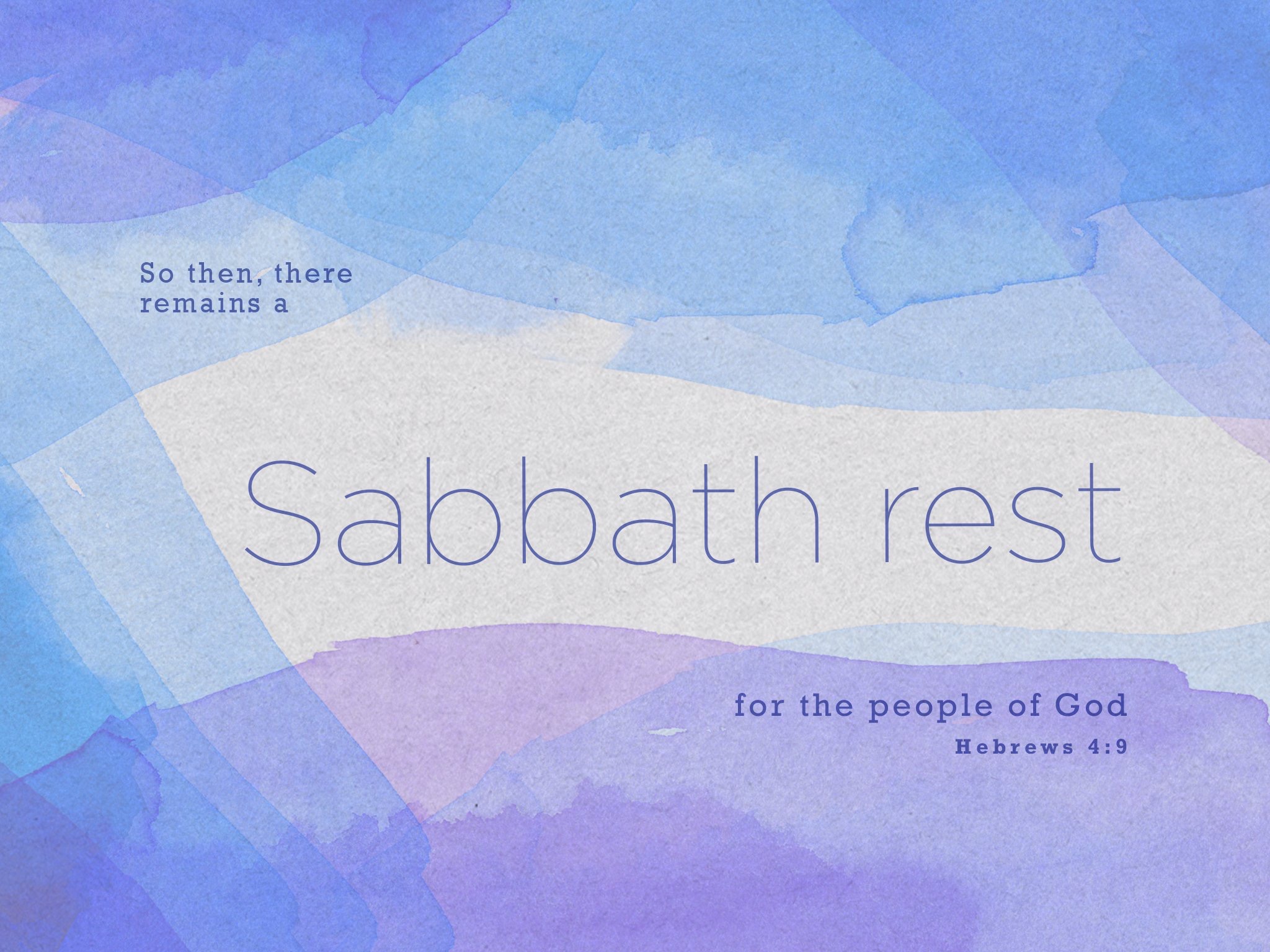
One of the ways the text highlights this isn’t clear in our translations, but it is clear in the Greek. In v. 9, the text says that a ‘Sabbath rest’ remains for the people of God. In Greek, ‘Sabbath rest’ is a single word sabbitismos, and it’s a word that only appears here in the entire Bible. It’s like the author of Hebrews had to make up a new word to capture all of the meaning of the rest that is in your future. It’s a rest that is greater than all the rest that has come before. Then, in v. 10-11, the text uses a different word that gets translated as ‘rest’ three times. The word is katapausis. You can hear in it the word ‘pause’ and the ‘kata’ at the beginning just amplifies it. It means a ‘complete stop’ or a ‘full stop.’ 

Dear saints, your Sabbath rest is full and perfect because it is found in the perfect restoration that Jesus has worked and won for you. By His death and resurrection, Jesus has completely redeemed you. And because of His work, you are a new creation (2 Co. 5:17).

This Sabbath rest, this full stop, is something you have to strive after. You have to strive after it because you aren’t God. Because God is eternal and all-powerful, the reason for His rest is different than yours. Sharing in God’s rest isn’t about recovering after work. Instead, it’s the pure delight of being exactly what you are created and redeemed to be.

You have to strive to enter this rest because you want to be your own god and master. And you’ll never have God’s rest if you think that you are your own master and that everything depends on you. That kind of independence is actually horrifying because it requires and demands constant vigilance, work, and activity. Stop deluding yourself! You aren’t in control or responsible for everything. God is. Strive to let go of your need to control your corner of creation because you’ll always need to control a little more. And you can’t. Instead, be still (cease) and know that He is God (Ps. 46:10).

You enter God’s Sabbath rest by hearing His living and active Word. In John 6, Jesus is asked by a crowd point-blank, “What must we do to be doing the works of God?” In other words, “How can we strive to please God?” And Jesus responds, “This is the work of God, that you believe in Him whom He has sent” (Jn. 6:28-29). So, let’s drive all of this home:

There is a Sabbath rest for you, people of God (Heb. 4:9). This rest is yours now, but it is also a future promise. It’s yours now because God the Father has finished His work of creation. And God the Son has finished His work of saving and redeeming you. But the permanent possession of that rest is still in the future. God the Holy Spirit keeps working on you through God’s Word. That’s why you need to strive and work to not fall into the disobedience of unbelief and of giving up faith in God’s promises. You need to strive to give up on trying to be your own master. You need a full stop. And how do you get that?

Well, you come here. You begin each week in the rest that is yours right now. You come into this sanctuary where Christ is (Mt. 18:20). By coming here, you receive what He promised in Mt. 11:28, “Come to Me all you who labor and heavy laden, and I will give you rest,” or, more literally, “I will rest you.” And it is from that rest that you are strengthened to go out from here and live your life day after day, week after week. You go back into creation after celebrating the fullness and completion of God’s work in you. You go back to your vocations knowing that God is in control, knowing that He is busy completing the good work that He began in you (Php. 1:6).

This place is truly a sanctuary. It’s a holy place where holy people meet with the holy God. From Him, and from Him alone, you receive the full stop from your futile works of trying to claw your way back to God. And always, we look forward to the day when we will forever enter into God’s rest and joy and celebration of His redeemed and sanctified creation. May that day come soon. Come quickly, Lord Jesus (Rev. 22:20). Amen.

The peace of God, which surpasses all understanding, will guard your hearts and minds in Christ Jesus (Php. 4:7). Amen.
Pursue What Never Fades – Sermon on 1 Corinthians 9:24-10:5 for Septuagesima Sunday

1 Corinthians 9:24-10:5

In the name of Jesus. Amen.

Before we get into the text something needs to be abundantly clear in our minds. Salvation is a gift. It is freely given by God because He is merciful and gracious, abounding in steadfast love and faithfulness (Ex. 34:6). You are saved by grace through faith and not because of your own doing; salvation is a free gift given by God and isn’t a result of your works (Eph. 2:8-9). You don’t earn your way into heaven. You don’t deserve God’s forgiveness and mercy, but He loves to freely give you His forgiveness, mercy, and grace because of what Christ has done by His death and resurrection. That needs to be firm in your mind because that isn’t what Paul is dealing with in these verses.

What Paul is dealing with is the fact that salvation can be neglected and cast aside. Salvation can be lost. That’s why those first few verses from 1 Co. 10 talk about how God’s people were overthrown in the wilderness. They prayed, and God delivered them from bondage and slavery in Egypt. God sent His judgment on their oppressors, and His people left with the treasures of Egypt (Ex. 12:35-36). On top of that, God gave them every spiritual blessing. They were Baptized in the cloud and the sea. God fed them with spiritual food and gave them spiritual drink. But even though they had received all those gifts, they didn’t enter the Promised Land. Instead, they were overthrown in the wilderness (1 Co. 10:5). Or, to use the word Paul uses at the end of ch. 9, they were disqualified.

So, what Paul is dealing with here isn’t about becoming saved. That’s a free gift. What he’s talking about is being a Christian, living a Christian life, denying self, and bearing the cross (Mt. 16:24). He’s talking about walking in the good works that God prepared for you (Eph. 2:10) and about bearing the fruit of good works that proves that faith is living (Jam. 2:17-18).

When you aren’t striving to walk in the good works God has prepared for you, Paul says you look absurd. You look like an athlete on a track who isn’t even trying. The gun goes off, and you’re still standing at the starting line as though nothing is happening, or you’re ridiculously dancing across all the lanes while the other competitors are finishing the race. When you are complacent in your faith, you’re like an unfocused boxer. The bell rings, and you’re swinging punches in the air willy-nilly while the other guy in the ring is waiting to knock you out cold.

Yes, God has saved us and freely granted us salvation. The point here is that salvation places us into a life that is filled with good works, a life where we fight against the sins of being lazy and complacent, a life where we are devoted to loving God and our neighbor, and a life where we are determined and disciplined to do better at keeping His commandments. This kind of life is what gives us a deeper and firmer faith in and devotion to Christ.

This pursuit to faith, this growth in and devotion to good works isn’t just a minor teaching of Scripture. It’s all over the New Testament. In Lk. 13:24, Jesus says, “Strive to enter through the narrow door.” In Jn. 6:27, He says, “Do not work for the food that perishes, but [work] for the food that endures to eternal life.” 1 Co. 15:58 says, “Be steadfast, immovable, always abounding in the work of the Lord.” Gal. 6:9, “Let us not grow weary of doing good.” Php. 2:12“Work out your own salvation with fear and trembling.” Tit. 2:14 says that Jesus purified us to be His people who are “zealous for good works.” Heb. 4:9-11 says, “There remains a Sabbath rest for the people of God; …strive to enter that rest.” 1 Pt. 1:22, “Love one another earnestly from a pure heart.” This teaching everywhere.

But one of the problems that we have with these many calls to good works is that we look backward. We think about how it went when we had opportunities to do good works. We look back at our failures to be diligent and how un-zealous and lazy we were. We realize that we aren’t what God calls us to be. So, the Bible is pushing us forward to good works, but we look back and see our failures. That kills our drive and motivation. Instead of being inspired by these calls to good works, we are discouraged. We think, “With all the times I’ve failed, why would I even try?” The very thing that is meant to encourage us ends up discouraging us. And that isn’t a problem with the Scriptures. The problem is our sin and looking backward.

What Paul is doing with this text is trying to get us to quit looking at our past failures and laziness. Instead, we are to look forward to the prize. In Php. 3:13–14, Paul puts it this way, “[O]ne thing I do: forgetting what lies behind and straining forward to what lies ahead, I press on toward the goal for the prize of the upward call of God in Christ Jesus.”

This is why Paul uses this sporting analogy here and says that he disciplines his body and keeps it under control. The Greek there literally says, “I pummel my body and make it a slave… lest I should be disqualified.”

To compete in the games that Paul mentions here, athletes in Paul’s day would devote themselves to ten months of training. They would go on strict diets and give up anything that hindered their training. Those competitors had to have the will and self-control to let go of everything that would distract them from winning. And when it was time to compete, they had one goal – winning the prize.

The prize the athletes won at the games near Corinth wasn’t a gold medal. No, they got a wreath made of dried, withered celery. Dear saints, if an athlete is willing to do all that for celery – something that you buy at the store simply so you can throw it away after it sits in your fridge for a week – how much more should you work and strive and discipline yourself and use self-control? You should do all that because your prize, your aim, your goal is the resurrection? Your goal is eternal life. It’s peace and rest with God Himself (Heb. 4:9-11).

The parable in our Gospel lesson today (Mt. 20:1-16) dealt with this too. The problem with the workers who were hired at the beginning of the day was that they kept looking backward at their work and toil and were focused on the wage. That perspective wrongly led them to think they were owed more than the guys who were hired later. The problem with those workers was that were looking in the wrong direction. They figured the goal was the paycheck when, in reality, it was a place in the vineyard. That’s why they are told to exit the vineyard.

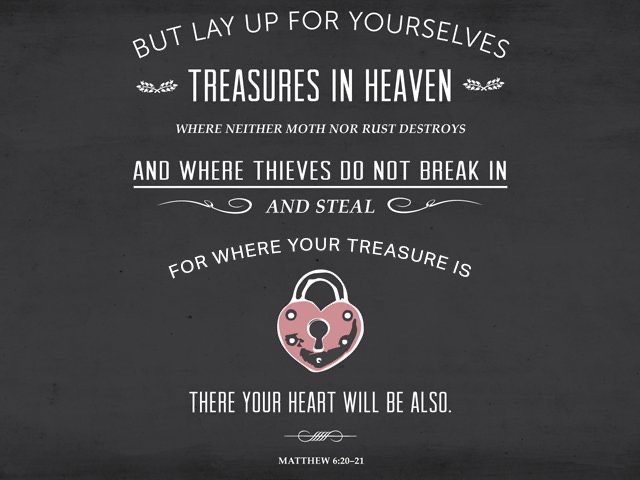
Dear saints, pursue what never perishes. Chase what never fades because that is actually worth having and attaining. 2 Tim. 4:8 points you to the crown of righteousness which the Lord, your Savior and righteous Judge, will award to you because you have loved His appearing. That is what is before you, and that is worth striving for.

Look to that. When you wake up every morning, you are to see a track, a race, a finish line, and a prize. That prize is the imperishable crown of righteousness and life with your Savior. Get up and run that you may obtain it. Dear saints, pursue that because it will never fade. Amen.

The peace of God, which surpasses all understanding, will guard your hearts and minds in Christ Jesus (Php. 4:7). Amen.