Matthew 20:1-16 – 1 “For the kingdom of heaven is like a master of a house who went out early in the morning to hire laborers for his vineyard. 2 After agreeing with the laborers for a denarius a day, he sent them into his vineyard. 3 And going out about the third hour he saw others standing idle in the marketplace, 4 and to them he said, ‘You go into the vineyard too, and whatever is right I will give you.’ 5 So they went. Going out again about the sixth hour and the ninth hour, he did the same. 6 And about the eleventh hour he went out and found others standing. And he said to them, ‘Why do you stand here idle all day?’ 7 They said to him, ‘Because no one has hired us.’ He said to them, ‘You go into the vineyard too.’ 8 And when evening came, the owner of the vineyard said to his foreman, ‘Call the laborers and pay them their wages, beginning with the last, up to the first.’ 9 And when those hired about the eleventh hour came, each of them received a denarius. 10 Now when those hired first came, they thought they would receive more, but each of them also received a denarius. 11 And on receiving it they grumbled at the master of the house, 12 saying, ‘These last worked only one hour, and you have made them equal to us who have borne the burden of the day and the scorching heat.’ 13 But he replied to one of them, ‘Friend, I am doing you no wrong. Did you not agree with me for a denarius? 14 Take what belongs to you and go. I choose to give to this last worker as I give to you. 15 Am I not allowed to do what I choose with what belongs to me? Or do you begrudge my generosity?’ 16 So the last will be first, and the first last.”
In the name of Jesus. Amen.
Out of curiosity, how many of you hate this parable? Be honest.
The reason we don’t like this parable is not because it is hard to understand. We don’t like this parable precisely because we do understand it. We understand it all too well and we don’t like it.
This parable is about the reign of heaven. It is not telling you how to run a business. If you ran your business like this, you’d get sued for all you are worth. But Jesus isn’t speaking about how the economics of the world should work. In this world, a fair day’s work should be paid with a fair wage. But as Jesus speaks about the economics of heaven, He says that everyone gets the same. Everyone, even bums like you and me, everyone gets rewarded for the work of others.
 Jesus depicts God as the Master (lit. ‘despot’) of a vineyard. The Despot needs workers in His vineyard, so He goes out early in the morning to the marketplace to hire laborers. Notice how He goes about hiring: The first workers agreed (lit. ‘symphonized’) with the Despot for one denarius (a denarius = 1 day’s wage; let’s call it $120). But notice, the workers hired at the third hour, the sixth hour, and the ninth hour are only given the Master’s promise, “Whatever is (lit.) just, I will give you.” They go out to work trusting the Master.
But, notice, those hired at the eleventh hour don’t even get a promise, they are just told, “You go into the vineyard too,” and they go. The workers hired at the beginning of the day know what to expect, but nobody else does. They simply go out in faith trusting the Despot because they know He is a decent fellow.
Now imagine the workers. The ones who started at the beginning of the day watch as more and more workers come later and later. You can imagine that the ones who were hired at the third hour ask their coworkers how much they are getting paid. “We agreed with the Despot for $120 for the day,” the newbies figure out the math. “Ok. That works out to $10/hr. We’ll be working for nine hours; that’s $90.” The later workers all do the same.
Imagine the surprise of all the employees when the last group of workers come. They got hired at the eleventh hour, so when they finally show up and are told what to do, they only work about fifteen minutes.
The sun sets, and it’s time to get paid. The Despot realizes things are looking pretty good. The vineyard is producing a bumper crop, so the Despot decides to have a little fun. He tells the foreman to divvy out the checks and pay the last first. The idle bums who were hired at the eleventh hour get a pleasant surprise – they open their envelope and find a check for $120. I’m sure they didn’t tell the Despot that he had made a mistake. They just chuckle to themselves and figure they should work for this guy again.
The way Jesus tells the parable, you can see the workers who were hired first licking their chops thinking that the Master has decided to pay $120 per hour. They start trying to do the math and figure out how much they are going to get.
But then, those who worked three hours get $120, and they are still happy as all get out, but they might be a little curious why they didn’t get a little more. Those who worked six and nine hours get their $120, and they are pleased, but probably more than a little jealous of those who came later. And when those who were hired at the beginning of the day see their $120, they choke.  They are outraged. All they can think about is their hard work and how hot the day was. They march up to the Despot and give their little speech, “Hey, those punks only worked one hour while we worked all day long. How dare you make them equal to us?”
But the voice of the Despot puts them back in their place. “Liston, buddy, I’m doing you no wrong. We had an agreement, and I paid you according to our deal. If anyone is being cheated here, it’s Me. I’m the One who is overpaying for one hour of work.”
The Despot’s response should sock our prideful souls right between the eyes. He says, “Take what belongs to you and go. I chose to give to this last worker as I give to you. Do you begrudge My generosity?” Literally, He says, “Is your eye evil because I am good?”
In other words, the Despot says, “Listen, pal. If you don’t like the way I run things in My vineyard, if you don’t like that I give – not pay, but give – everybody the same, than get out of here. If you don’t like seeing Me be gracious and merciful, you’d better go and work yourself sweaty somewhere else because ‘Mercy’ is My middle name. But let me tell you something, buster, there’s no better place to be than in My vineyard. Maybe you should stick around and learn to enjoy living in My mercy.”
In the mercy-filled reign of God, it doesn’t matter if you work twelve hours or nine hours or six hours or three hours or one measly hour. In the reign of heaven what you receive is based solely on the mercy and generosity of God. In the reign of heaven, you get what you get because of the work of Another.
Jesus is using this parable to teach that the reign of heaven isn’t about rewarding the rewardable. This is good news; this is Gospel. God simply won’t pay you according to what you earn, and all you have earned is eternal death and separation from God. If you demand God give you what you earned, God will tell you, “If you don’t like My mercy, take what is yours. Take your sin and death and misery and go, get out of here.”
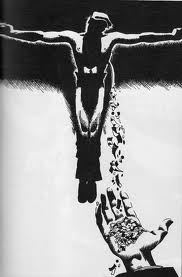
 You see, you have already received God’s mercy. Jesus worked a full day under the heat and wrath of God’s fury over your sin. He dug in the muck and mire of sin pulling out the weeds of sickness and disease. He watered the whole field with forgiveness and life. If anyone could complain that God’s method of payment is unfair, it is Jesus. He lived the perfect life under God’s commandments, and what did He get? A beating. A whip-scarred back. A crown of thorns. Nails driven through His hands and feet. And a spear-torn gash in His side. He got a cross and a tomb.
But Jesus rose again and is now sitting at the right hand of the Father. And that, dear saint, is where you are as well. You were buried with Christ in your baptism so that you may also be raised with Him at the right hand of God (Ro. 6:4-5; Col. 2:12-13). And Jesus loves the Father’s little game of giving you everything. Jesus loves that the Father has not paid you according to your work but according to His grace. Amen.
The peace of God, which surpasses all understanding, will guard your hearts and minds in Christ Jesus. Amen.

 Mercy is two things. Mercy is both not getting what you deserve and getting what you don’t deserve. Vinnie got mercy. He didn’t get the punishment that he deserved, and he got his debt forgiven which he didn’t deserve. But Vinnie showed that he refused the king’s mercy because Vinnie demanded what he deserved from Chuck. By demanding his rights from Chuck, Vinnie was refusing his undeserved gift from the king.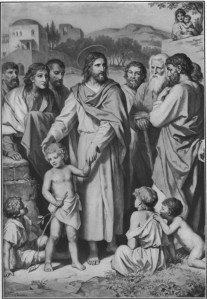

 Brothers and sisters, we are in a great place because Jesus is here among us. Here we are, a small little flock of sheep gathered at our Shepherd’s feet. We have all gone astray. This past week we have all sinned and wandered from our Shepherd’s pen. And yet He has gathered us together once again. And heaven rejoices. Heaven rejoices as our Savior throws us a feast in His Supper giving us His body to eat and His blood to drink. In this meal, Jesus is present with us, forgiving our sins. Amen.
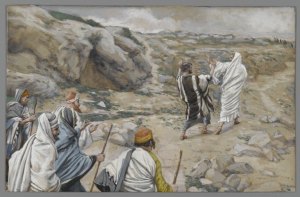 But what does Jesus say? “Get behind me, Satan!” Jesus certainly doesn’t beat around the bush.
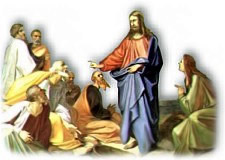 Jesus asks the disciples, “Who do you say that I am?” Peter answers for the disciples and, ultimately, for the whole Christian Church, “You are the Christ, the Son of the living God.” If Peter is right (and he is), notice what this means. It means that Jesus is the fulfillment of the promise Adam and Eve heard from God, that the seed of the woman will crush Satan’s head (Gen. 3:15). It means that Jesus is the fulfillment of God’s promise to Abraham, “I will bless you. And your seed will possess the gate of his enemies, and in your seed shall all the nations of the earth be blessed” (Gen. 22:17-18). Jesus is the fulfillment of all the promises God gave to Moses, Isaiah, Ezekiel, and Daniel.
 Jesus makes three promises to those who confess this. Jesus promises first to build His Church upon this confession. “On this rock I will build My church.” God builds the Church. I know many of you here put your hands to the very hammers and saws that built this building. You have your own blood, sweat, and tears in this building. But someday this building will fall. It will crumble. But the holy Christian Church is not a building. And some of you, many of you, have brought others into this building to hear the Gospel of Christ, and that Gospel has been heard and believed. But you still have not built this Church. God has. You are the living stones which “are being built up as a spiritual house, to be a holy priesthood, to offer spiritual sacrifices acceptable to God through Jesus Christ” (1 Pet. 2:5).
 However, other commentators view this in the opposite direction, as offensive. Gates don’t move – they protect. Rocks can be loaded into catapults and hurled against gates. As Jesus ministered, He fought against the devil and his kingdom, and Jesus, the Son of the living God, prevailed. Casting out demons, healing diseases, and overcoming the fallen creation was Jesus’ cup of tea. Jesus’ Church is still on the offensive side of the ball. Sins are forgiven and the rule of Satan is overthrown through Jesus’ continued ministry in the Church. The Church, which stands on the solid rock of the confession that Jesus is the Messiah, demolishes hell’s gates every time.
 Yes. God is so reckless that He will entrust the opening and closing of the reign of heaven to His Church. He has given His Church the authority to forgive sins because of what Jesus has done on the cross. Jesus Himself told the Church to disciple all nations opening the reign of heaven to them so that all can enter. However, those who stubbornly refuse Jesus’ call to enter into the reign of heaven through His sacrifice are to be shut out. The Church is to make it clear that they are outside of God’s love – in order that they desire to receive the love of God already poured out for them in Christ’s blood.
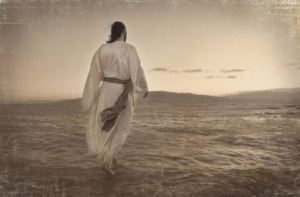 Notice, though, that even though they are having trouble, there is no mention of the disciples being afraid. The disciples are not scared – until they see Jesus. Jesus advances towards them, but all they see is a phantasm. They see a figure emerging from the darkness walking on top of the very same waves that are inhibiting their progress.
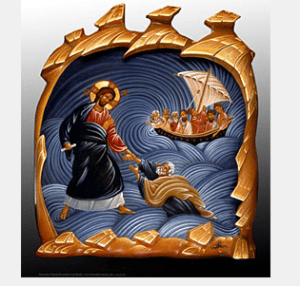 Anyway, Peter cries out, “Lord, save me.” If I were Jesus, I’d have lost my patience. I would have let Peter sink down to the bottom of the sea. But how long does Jesus wait to rescue this braggadocios disciple? He doesn’t wait one second. “Immediately, Jesus reached out His hand and took hold of [Peter] saying to him, ‘O you of little faith, why did you doubt?’”
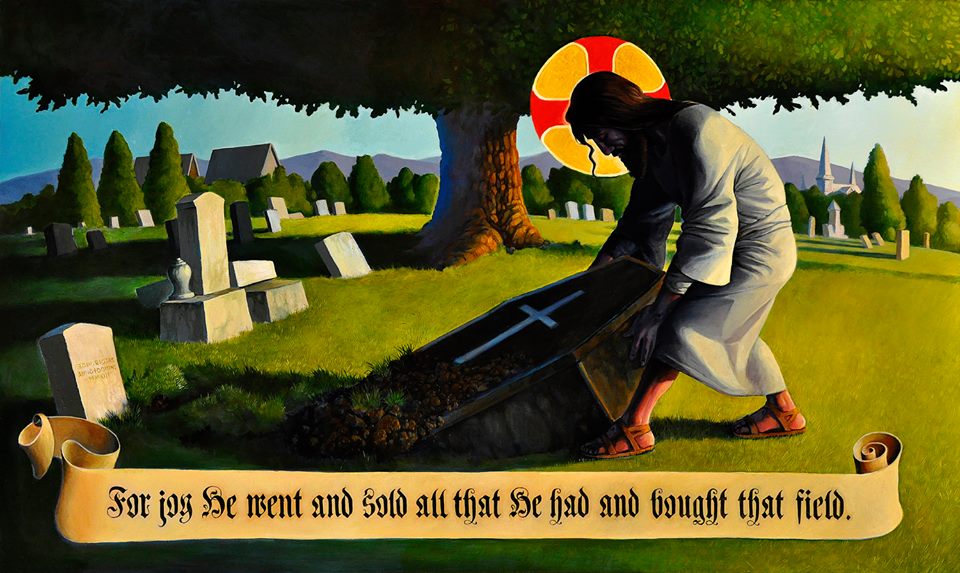
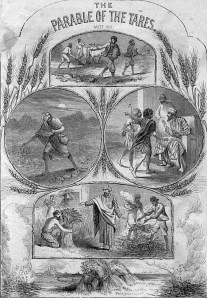 The reign of heaven may be compared to a man who sowed good seed in his field, but in the night an enemy comes and sows weeds. The weeds Jesus speaks about look identical to wheat as they grow, but at harvest time the grains of this weed are a different color than the wheat. The servants of the master ask if they should go and go and gather the weeds, but take careful note of what the master says:
 Pastorsamwise
You must be logged in to post a comment.