Genesis 3:8-15
8 And they heard the sound of the Lord God walking in the garden in the cool of the day, and the man and his wife hid themselves from the presence of the Lord God among the trees of the garden. 9 But the Lord God called to the man and said to him, “Where are you?” 10 And he said, “I heard the sound of you in the garden, and I was afraid, because I was naked, and I hid myself.” 11 He said, “Who told you that you were naked? Have you eaten of the tree of which I commanded you not to eat?” 12 The man said, “The woman whom you gave to be with me, she gave me fruit of the tree, and I ate.” 13 Then the Lord God said to the woman, “What is this that you have done?” The woman said, “The serpent deceived me, and I ate.”
14 The Lord God said to the serpent,
“Because you have done this,
cursed are you above all livestock
and above all beasts of the field;
on your belly you shall go,
and dust you shall eat
all the days of your life.
15 I will put enmity between you and the woman,
and between your offspring and her offspring;
he shall bruise your head,
and you shall bruise his heel.”
In the name of Jesus. Amen.
Sin entered the world. God’s good creation fell. Satan spewed his poison. Eve drank it in with her ears. She stretched out her hand and took the forbidden fruit. She put it in her mouth and ate. Eve gave some to her husband who was with her, and he ate. The fruit looked good and tasted good. But once the fruit was in their bellies, once the sin was in the past, all hell broke loose. They knew their shame. They tried to cover themselves. They acted stupidly.
All sin is like this. Sin looks wise and promises to make you more, make you complete. When you sin, it feels good and you are not afraid. You feel nice and right. While you are sinning, you block out any notion that you are acting contrary to God’s will – otherwise you wouldn’t be doing it. But once the sin is done, things change. You feel guilt. Your eyes are opened, and you fear. You fear others because you know your shame, and you try to cover yourself and your sin. But worst, you fear God and flee from God because you know you deserve punishment. But where can you flee from God? Running from God is stupid. Sin makes you stupid. Watch how stupid.
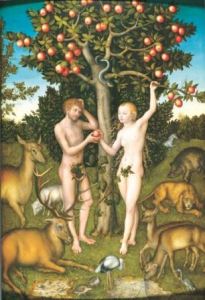 First, Adam and Eve attempt the impossible. They try to avoid their Creator. They try to hide themselves in the dumbest place – behind leaves and trees. Adam and Eve could have buried themselves under the mountains and God still would have found them. Adam and Eve have been caught, but they still try to flee. God shows up. The leaves haven’t worked. Their little aprons blow away. “The Lord God called to the man and said to him, ‘Where are you?’”
Adam answers, “I heard your voice and I was afraid because I was naked, and I hid myself.” Sin has destroyed Adam’s logic. He was afraid at God’s voice? Adam had heard God speak before. God had told Adam to name the animals; told him to eat of the all the plants and trees; told him to be fruitful, multiply, and fill the earth. God’s voice never scared Adam before. But Adam says he was afraid of God now because he is naked – even though he had always been naked. Adam’s nakedness was God’s creation and was not shameful before. But Adam has become a different person. He is making up lies to excuse his sin. But all of his excuses simply show his guilt.
God asks, “Who told you that you were naked? Have you eaten of the tree which I commanded you not to eat?” God is giving Adam another chance. God is basically saying, “My voice didn’t scare you. And you haven’t been ashamed of your nakedness before. Are you frightened by Me because you ate from the forbidden tree?”
So, Adam is caught. His guilt is out in the open. With his own excuses, Adam has revealed himself to be the sinner he now is. His stupidity is out in the open, but rather than repent, he acts even more stupidly. “The woman. It was her fault. She gave me the fruit, and I ate. And You gave that woman to me. So God, it really is Your fault. I sinned because of You, God.” He simply won’t repent. Adam won’t say, “Yes, God. I sinned. Forgive me, and be merciful to me.” Instead, Adam tries to justify his sin. Instead of running back to God, he keeps trying to flee from God. And Eve does no better. She responds to God, “The serpent, that You allowed to wander around the garden, he deceived me, and I ate. So God, it’s all Your fault.”
Sin makes us stupid. The last step of sin is to insult God and say that sin is God’s fault. We sinners should fear God’s punishment. But God is slow to punish sin, and this text proves it. God could have simply erased all of creation with a simple word. Instead, God seeks out the sinners. God was repeatedly giving Adam and Eve a chance to repent, but both Adam and Eve refused. This text reveals how sinners react toward God – they run and flee and accuse even God. But this text also reveals how God reacts toward sinners – He is patient, merciful, and gracious.
Before He says anything more to Adam and Eve, God curses the serpent. And in cursing the serpent, God preaches the first Gospel to stupid, guilty sinners. God promises that an offspring (lit. ‘seed’) would come from the woman who would crush Satan’s head. After millennia, God’s promise came. Jesus was born. Satan pursued Him through Herod, and Jesus had to be kept safe in Egypt. Satan pursued Jesus into the wilderness where he tempted Christ just as he tempted Adam and Eve. But Jesus prevailed.
Jesus went on the offensive. Jesus bound Satan and expelled demons wherever He encountered them. Jesus forgave sins. He battled against sickness and death. In a last ditch effort, Satan used one of Jesus’ own disciples to betray Him. The devil used a sham of a court proceeding to condemn Him. With all of his might, the serpent lashed out at Jesus, put Him on a cross, and Jesus died. But through that wound inflicted by Satan, Satan’s head was crushed. The devil was utterly defeated and vanquished forever. Jesus rose from the dead and lives and reigns to all eternity.
Whatever sins you have committed, stop trying to excuse them. Stop trying to flee from God. Don’t be stupid. Instead, flee to God. God is seeking you out and saying, “Where are you? ” Repent. Confess your sins. God is here with forgiveness. Jesus gives His body and blood for you. He enters your body to forgive your sins and cleanse you from all unrighteousness. Take and eat the body of Christ which was broken for you and makes you whole. Take and drink the blood of Jesus shed for the forgiveness of your sins. Here is God looking for you. Here is God seeking to restore you. Here is life. Here is rest. Amen.
The peace of God, which surpasses all understanding, will guard your hearts and minds in Christ Jesus. Amen.
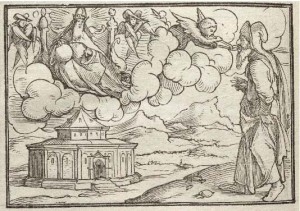 4 And the foundations of the thresholds shook at the voice of him who called, and the house was filled with smoke. 5 And I said: “Woe is me! For I am lost; for I am a man of unclean lips, and I dwell in the midst of a people of unclean lips; for my eyes have seen the King, the Lord of hosts!”
 Today, you have come into this sanctuary and into presence of the holy, holy, holy Father, Son, and Holy Spirit. And, no, you didn’t see a vision of God high and lifted up. You can’t see flaming seraphim. You don’t feel the foundations of the thresholds shake. But God is here. Today’s Psalm (29) spoke about it. The glory, majesty, strength, and splendor of God’s holiness fills this place. God sits enthroned forever. His voice flashes forth flames of fire. The Word of God strips the forests bare. And we here in this sanctuary have cried, “Glory!” And the glory of God the Father, Son, and Holy Spirit is a terrifying thing for you and I who are sinners.
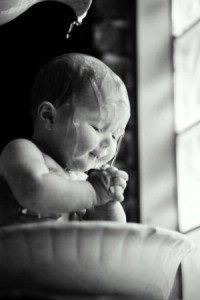 In your baptism, God the Father, Son, and Holy Spirit has washed away your sins. In the waters of your baptism, the holy blood of Jesus covered you and made you holy. In the waters of your baptism, all evidence of your sin was washed away in the name of the Father, Son, and Holy Spirit. In your baptism, you were given the right to no longer fear the holiness of God.
 3 And he said to me, “Son of man, can these bones live?” And I answered, “O Lord God, you know.” 4 Then he said to me, “Prophesy over these bones, and say to them, O dry bones, hear the word of the Lord. 5 Thus says the Lord God to these bones: Behold, I will cause breath to enter you, and you shall live. 6 And I will lay sinews upon you, and will cause flesh to come upon you, and cover you with skin, and put breath in you, and you shall live, and you shall know that I am the Lord.”
 If you have seen the movie, The Princess Bride, you will remember Miracle Max talking about different categories of deadness. Miracle Max was able to revive “mostly dead” Wesley, but he said there is only one thing you can do when someone is all dead – go through their pockets for loose change.

 11 “And I am no longer in the world, but they are in the world, and I am coming to you. Holy Father, keep them in your name, which you have given me, that they may be one, even as we are one. 12 While I was with them, I kept them in your name, which you have given me. I have guarded them, and not one of them has been lost except the son of destruction, that the Scripture might be fulfilled. 13 But now I am coming to you, and these things I speak in the world, that they may have my joy fulfilled in themselves. 14 I have given them your word, and the world has hated them because they are not of the world, just as I am not of the world. 15 I do not ask that you take them out of the world, but that you keep them from the evil one. 16 They are not of the world, just as I am not of the world. 17 Sanctify them in the truth; your word is truth. 18 As you sent me into the world, so I have sent them into the world. 19 And for their sake I consecrate myself, that they also may be sanctified in truth.”
 You probably start with Christmas Good Friday, and Easter, of course. Maundy Thursday might come next. Throw Pentecost in there too. But then what? Tap your pencil on your notepad a few of times, and scratch your head. Think through the Apostle’s Creed. You confess that Jesus was “born of the Virgin Mary, suffered under Pontius Pilate, was crucified, dead, and buried. On the third day, He rose again from the dead.” Well, you’ve hit all those, and Pentecost comes up when you get to the Third Article, “I believe in the Holy Spirit.” But notice that your list has skipped over the Ascension. “[Jesus] ascended into heaven and sits at the right hand of God the Father Almighty.”
 Risen Jesus is now at the right hand of God the Father. God’s right hand is not a particular place that we can think of. Instead, it is representative of the whole power of the omnipotent God. Jesus is where all God’s power and authority is, and He promises that He is with you. He is with you always. And He is with you even to the end of the age. Because He is going to the Father, Jesus prays this prayer, He speaks these things, for you so that you may have His joy fulfilled in you – even while you live as an alien in this sin-filled, hostile world.
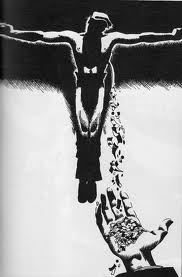 Brothers and sisters, Jesus says we are in the world, but we are not of the world – an important distinction. Jesus does not call you to change the world. The only thing that can change this world is Christ’s death and resurrection which has already redeemed us and all of creation. But that doesn’t mean that we can just sit back and relax either. We must speak out against sin. But even more importantly, we must announce the forgiveness that Jesus’ death and resurrection has won. We are kept in this world to be evidence of God’s forgiveness. Our lives are witness to the grace and mercy we have received in Christ. The Word which makes us holy is the Word of forgiveness that we are left in this world to proclaim.
 The disciples didn’t either. Remember, Jesus is speaking these words to the disciples just moments before He is betrayed and delivered to be crucified. The disciples did a poor job of loving Jesus that night. They did not stay awake and watch with Jesus even one hour as He prayed. The disciples all fled, abandoning Jesus when He was arrested. When a little servant girl asked Peter if he was one of Jesus’ disciples, he denied it three times.
 God’s love for us is not contingent upon our actions. Jesus has already laid down His life for you. Because He was crucified for you, you know that He loves you. He loved you while you were still His enemy. While you were a sinner, Christ died for you (Ro. 5:8). Jesus commands you to do nothing more than believe that His death is for you. Jesus commands you to do nothing more than abide in His love.
 Vines, vines, vines all over the place. Scripture is literally crawling with vines. Jesus is making a big statement in these verses – calling Himself the “true vine.” So we’re going to take a little time to see how God speaks about His vine in the Old Testament.
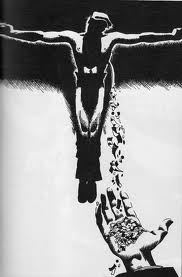 Soak up the Word of God. Read it daily. Come here and drink God’s Word as it comes through the songs, hymns, liturgy, readings, and sermons. Let the rain of your baptism, which is water connected with the Word, precipitate through your whole life. Open your lips to receive the nourishing sap of Christ’s body and blood given in bread and wine.
 The good shepherd lays down his life for the sheep. 12 He who is a hired hand and not a shepherd, who does not own the sheep, sees the wolf coming and leaves the sheep and flees, and the wolf snatches them and scatters them. 13 He flees because he is a hired hand and cares nothing for the sheep. 14 I am the good shepherd. I know my own and my own know me, 15 just as the Father knows me and I know the Father; and I lay down my life for the sheep. 16 And I have other sheep that are not of this fold. I must bring them also, and they will listen to my voice. So there will be one flock, one shepherd. 17 For this reason the Father loves me, because I lay down my life that I may take it up again. 18 No one takes it from me, but I lay it down of my own accord. I have authority to lay it down, and I have authority to take it up again. This charge I have received from my Father.”
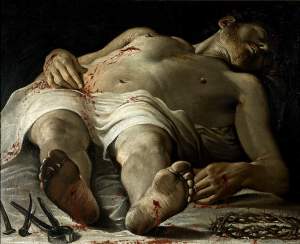 Jesus does say, “I am the good shepherd. The good shepherd lays down his life for the sheep.” What makes Jesus the Good Shepherd is that He dies – nothing less. He dies for His sheep. The Good Shepherd has blood, His own blood, on Him. The Good Shepherd has holes in His hands and feet, wounds that He suffered on the cross for you. Jesus, the good, fitting, competent Shepherd suffered, bled, and died so that He could be your Shepherd. The kind of shepherd you needed. You needed a shepherd to be really, truly abandoned and condemned by God because of your sin. Jesus, your Shepherd, died a real death and was buried in a real tomb. Your sin was that serious of a problem.
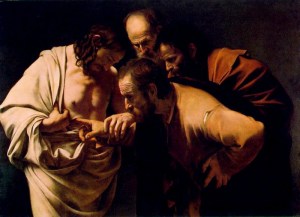 26 Eight days later, his disciples were inside again, and Thomas was with them. Although the doors were locked, Jesus came and stood among them and said, “Peace be with you.” 27 Then he said to Thomas, “Put your finger here, and see my hands; and put out your hand, and place it in my side. Do not disbelieve, but believe.” 28 Thomas answered him, “My Lord and my God!” 29 Jesus said to him, “Have you believed because you have seen me? Blessed are those who have not seen and yet have believed.”
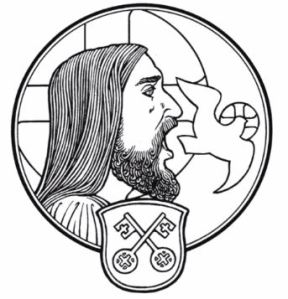 But the door doesn’t come crashing down; it isn’t unlocked; it doesn’t even open. Jesus simply appears there in the room with them to say, “Peace to you.” Jesus shows the disciples His hands and side, and the disciples were filled with joy. And Jesus repeats Himself, “Peace to you. As the Father has sent Me, even so I am sending you.” Then, Jesus breathes on them and says, “Receive the Holy Spirit. If you forgive the sins of any, they are forgiven them; if you withhold forgiveness from any it is withheld.” (More on that a little later.)
 Another pastor (Rev. Bryan Wolfmueller) uses this analogy: Imagine you are found guilty of a crime and locked in prison. As you sit there in prison, a judge looks over your case and rules that you are innocent. He sends an order to the guard of your prison to set you free. The guard comes with the keys, unlocks your cell, and releases you back into society. Now, who set you free, the judge or the guard? Honestly, the answer is both.
 In the name of Jesus. Amen.
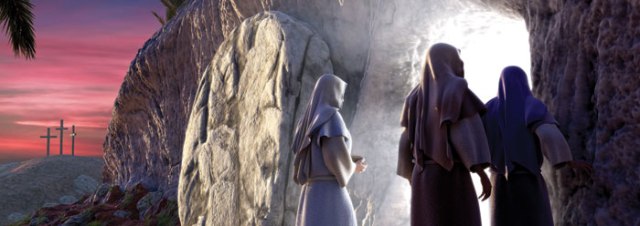
 But death has died. The grave cannot hold you. Jesus lives. He has risen out of death and back to us. He came out as a king to meet His people. He is a victorious general returned from war. Jesus burst down the prison walls of death from the inside. Death could not hold Him, and it cannot hold you.

You must be logged in to post a comment.