Sabbath Rest – Sermon on Genesis 1:1-2:3 and Luke 23:50-24:7 for the Vigil of Easter

Genesis 1:1-2:3 & Luke 23:50-24:7

Alleluia! Christ is risen!
He is risen indeed! Alleluia!

In the name of Jesus. Amen.

As we read through Genesis 1, there was a line that kept repeating. “And there was evening and morning the first day.” “And there was evening and morning the second day.” “And there was evening and morning the third, fourth, fifth, and sixth day.” But then, when we get to the account of the seventh day and expect to hear, “And there was evening and morning the seventh day,” we get nothing but crickets. Moses didn’t write that. But in and through that Holy Spirit inspired silence, there is an indication that the Sabbath day is incomplete. Yes, it was blessed with rest and holiness, but that day was still waiting for its completion and fulfillment.

That fulfillment came today, for us Westerners, or in the Jewish mind yesterday, Holy Saturday. The way days were reckoned in Jesus’ day, the new day began when the first two stars appeared in the sky. That’s why we start celebrating the Resurrection tonight, well before midnight. It’s why we celebrate Christ’s birth on the eve of His birth.

Jesus was crucified on Friday. In our Gospel lesson (Lk. 23:50-24:7), we heard how Joseph of Arimathea asked Pilate for the body of Jesus. Joseph took Jesus down from the cross and wrapped Him in a linen shroud and laid him in a new tomb. But because the Sabbath about to begin, Joseph, Nicodemus (Jn. 19:39), and the women weren’t able to finish the burial of Jesus. The sun was setting, and they didn’t have time to get the job done. The last verse of Luke 23 says, “On the Sabbath they rested according to the commandment.”

So, Joseph rested. The women rested. And, most importantly, Jesus rested, fulfilling the seventh day of creation.

Scripture says that after God finished creating everything on Friday, the sixth day, “God saw everything that He had made, and behold, it was very good” (Gen. 1:31). Then, God rested the following day, the seventh day, and made it holy.

On the Friday we call ‘good,’ the day of the re-creation and redemption of all things, Jesus saw everything He had done – His miracles, His teaching, His faithfulness to God and neighbor, how He perfectly obeyed God, how He had borne our griefs and carried our sorrows, and how He purchased and won us back – and behold, it was very good. That is why He could cry out, “It is finished,” before He breathed His last (Jn. 19:30).

Dear saints, Jesus, your slain Creator and Redeemer, endured the cross and labored in love for your peace and so you could have eternal rest. After completing His work, He entered His Sabbath rest as He lay there in the tomb.

Jesus’ task was done. Your sins were atoned for. He had finished His work that He had done, so He rested from all His work that He had done in creation. And now, Jesus has burst from the tomb, spitting in the face of death. The devil’s head has been crushed. Jesus has rested in the grave, and the Sabbath has been fulfilled so you can also enter into that perfect rest (Heb. 4:10).

And this has eternal significance for you. When you bury your loved ones, and when you yourself are buried, they and you follow Jesus into that rest. This is why Christian burial places are called ‘cemeteries.’ The word ‘cemetery’ comes from a Greek word koimeteria which means ‘sleeping place.’ We bury our brothers and sisters in Christ knowing that God isn’t done with them. We put them where they can rest and await the wake-up call that will be the trumpet blast on the Last Day when Jesus returns to raise them.

Dear saints, Christ has completely stripped death and the grave of its victory and sting (1 Cor. 15:55-56). Jesus lives, and so do you. And you have entered into His rest.

Alleluia! Christ is risen!
He is risen indeed! Alleluia!

Amen.

The peace of God, which surpasses all understanding, will guard your hearts and minds in Christ Jesus. Amen.
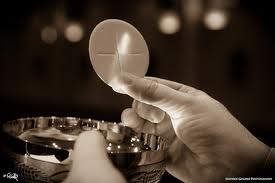
Today in Paradise – Sermon on Luke 23:39-43 for Good Friday

In the name of Jesus. Amen.

The disciples, James and John, had asked Jesus if they could sit at His right and left when Jesus entered His glory, but Jesus told them that they didn’t know what they were asking. Besides that, Jesus said that it wasn’t His to grant, and the heavenly Father had already determined who would have those seats of honor (Mk. 10:35-40). In a few minutes, we will hear who gets those positions – two criminals one on Jesus’ right and another on His left (Mk. 15:27; Lk. 23:33).

At first, both of these condemned men mock Jesus as they hang there with Christ on their own crosses (Mk. 15:32). But something happens as the thief on the right watches Jesus suffer. This thief hears Jesus’ words as He hangs on the cross. Maybe, it was when he heard Jesus say, “Father, forgive them, for they know not what they do” (Lk. 23:34). And faith sprouts in that criminal’s heart. He is converted and is a Christian.

Now, instead of mocking Jesus, he prays to Jesus. And his prayer sounds absurd, “Jesus, remember me when You come into Your kingdom.” Here Jesus is beaten, bloodied, stricken, stripped, hanging, and dying on a cross. He is about as far from obtaining a kingdom as you could possibly be. But through faith this thief knows that Jesus isn’t done. He knows that the cross won’t be the end of Jesus. Somehow, and this can only be by the working of the Holy Spirit, this man believes that death won’t be the end of Jesus. He is a king who is coming into His kingdom. And even in that moment this thief believes that Jesus is a Savior who can save him from the condemnation that is the due reward for his deeds (Lk. 23:41).

Jesus looks at him and says, “Truly, I say to you, today you will be with me in Paradise.”

And when Jesus dies, His body is run through with a spear, taken down from the cross, and laid in the grave. But Jesus’ soul goes to be with the Father in heaven, and the thief goes with Him. Jesus and this thief meet up that very day in Paradise. Scripture says that to be away from the body is to be present with the Lord (2 Cor. 5:8). 

The separation of body and soul that Jesus and this criminal experience when they die is the same separation that you and I will face unless Jesus returns first. Our body will go to the grave, and our soul will go to be with the Lord. But when Jesus returns, He will put you back together. Your body will be raised from the grave. Your soul will be rejoined to your body, and you will live forever. This is our hope and comfort.

But there is something more comforting to learn from the thief on the cross, and it is this: You are saved, not by your works, but by God’s grace. You are justified, not by your deeds, but by God’s promise. You are delivered, not by your efforts, but by God’s mercy. And this is only possible because Jesus takes all your sin and suffers in your place on the cross.

That thief’s story preaches this to you today. He lived a life that earned him capital punishment. But the Holy Spirit got a hold of him. He believed and was converted. And he’s right into heaven. 

The thief isn’t saved because of his works, deeds, or efforts! Even if he wanted to do a good work, he wouldn’t have been able because his hands and feet are nailed to a cross. All he had to face the judgment of God was the promise of Jesus, and that was enough for him. And it is enough for you.

When you stand before God’s holiness and perfection to be judged, there is nothing you can offer – no excuse, no self-justification, no good work. Nothing. 

You have nothing except the promise of Jesus. And, again, that is enough. Jesus says to this condemned criminal, “Truly, today you will be with Me in Paradise.” And Christ says the same to you, dear saint. “Truly, you will be with Me in Paradise.” Amen.

The peace of God, which surpasses all understanding, will guard your hearts and minds in Christ Jesus. Amen.
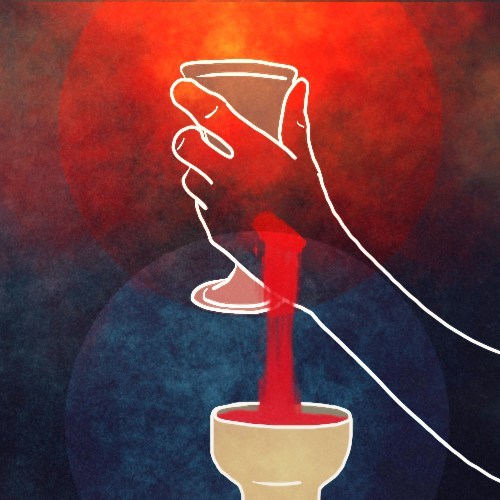
Passover to the Lord’s Supper – Sermon on Exodus 12:1-13 & Mark 14:12-28 for Maundy Thursday

In the name of Jesus. Amen.

Before God rescued His people from slavery in the land of Egypt, He gave them a meal to celebrate their deliverance – the Passover meal. They were to take a lamb and slaughter it at twilight. God told them to take some of the blood and smear that blood on doorposts and the lintel of the houses where they would eat it. They were to eat that lamb and unleavened bread quickly and dressed to travel. That night, God passed through the land of Egypt and struck dead all the firstborn of both man and beast, but He did not enter any houses where He saw the blood of the lamb on the door. That blood was a sign that shielded God’s people from death.

It’s interesting, though, God had already set apart His people so they were not troubled by the previous plagues. Scripture tells us that the flies of the fourth plague didn’t pester the Israelites (Ex. 8:22-23). In the fifth plague, the livestock of the Egyptians died, but not the livestock of God’s people (Ex. 9:4, 7). The hail of the seventh plague didn’t fall upon the Hebrews (Ex. 9:26). Same with the darkness in the ninth plague (Ex. 10:22-23). God didn’t have His people set up any sign to keep those plagues from harming them. They didn’t need to put a fly in their window or write a “Have a nice day” in chalk on their sidewalks to be spared from those plagues. But with this final plague, God had His people set themselves apart with the sign of the blood of the lamb marking their doors.

The fact that God had His people do this not only on that day but also every year afterward was to preach an annual sermon. Each year in the Passover feast, God was reminding His people and preaching to them that the blood of a lamb protected and guarded them from His wrath and death. That blood and meal reminded the people of what God had done in the past, but it was also pointing forward to another Lamb and a better blood that would protect and shield God’s people. And that Lamb is Jesus.

But then, in our Gospel lesson tonight (Mk. 14:12-26), that Passover sermon was preached for the final time. Jesus has His disciples prepare the Passover meal, and that very night, that sermon is fulfilled. It’s no longer needed. The Passover sermon is about to become obsolete because Jesus institutes the new testament of His Supper where He gives His Body and Blood for the forgiveness of sins.

One interesting thing to notice before we move on here: In both instances, both with the Passover meal and the Lord’s Supper, God gives this meal to His people before the event actually happened. Before God passed through Egypt, God gave the Passover meal. The same thing is true in the Lord’s Supper. Before Jesus goes to the cross and gives His body unto death and sheds His blood, Jesus gives the meal of His Body and Blood for the forgiveness of your sins.

Jesus had come, and He was about to do His Father’s will. The Lamb of God, who takes away the sins of the world (Jn. 1:29) and eternally protects God’s people from the plague of death (Heb. 12:24), this Lamb had come to give Himself so that His blood can shield you and death no longer has a claim on you.

The Passover meal had served its purpose. Tomorrow, Jesus will go to the cross. And to replace the Passover meal, Jesus now gives you Holy Communion. Yes, the Lord’s Supper was instituted in the context of the Passover, but it lays aside that old meal. Many people have tried to figure out at what point during the Passover meal Jesus gives Communion as its replacement. But Scripture indicates that Jesus institutes Holy Communion as a separate thing after they had finished that final Passover meal. The Gospel of Luke especially indicates that Jesus institutes His Supper after the Passover meal was finished (Lk. 22:20). 

Now, instead of the Passover meal, you are to eat the bread, which Jesus says is His body, and you are to drink the cup, which Jesus says is His blood. And you do this as a remembrance of what Christ has done for you. Yes, there is remembrance in this meal, but it also delivers exactly what Christ promises it delivers. Jesus promises that in this little meal, you receive the forgiveness of your sins. And unlike the Passover meal, which was an annual thing, Jesus says to do this often in remembrance of Him (1 Cor. 11:25).

So now, Jesus invites you – yes, you – to His altar, to His table. Jesus knows what you need, and He invites you to come and receive it. This is your entry into the Holy of Holies. Here in this meal, the time and distance between you and the cross of Jesus collapses as you participate in the feast of the Lamb who was slain from the foundation of the world (1 Pet. 1:19-20). Here, your Lord gives you everything you need as you walk out of your slavery to sin and toward the Promised Land of the new heavens and earth (Rev. 21:1). Here, your sins are forgiven. Here, the Body and Blood of Christ are given for you.

So, come. Your Brother, your Lord, and your Savior invites you. Amen.The peace of God, which surpasses all understanding, will guard your hearts and minds in Christ Jesus. Amen.

Wilderness to the Promised Land – Sermon on Joshua 3:1-6 and Matthew 3:13, 4:1-2

Joshua 3:1-6; Matthew 3:13, 4:1-2

In the name of Jesus. Amen.

Imagine that you’re on a family road trip. You get on the freeway and have a nice conversation with your kids. As the talk starts to slow down, the kids ask if they can play some music over the stereo. After an hour of having the tunes cranked up, the kids start complaining about the songs their siblings are picking. So, you turn off the music and tell them all to take a nap, read a book, or just stare out the window. But the kids are tired of being in the car, so they revert to their favorite pastime – annoying each other. (By the way, this isn’t necessarily about my family.) After an hour of dealing with the complaints – “He’s touching me,” “Well, she’s looking at me,” “They’re breathing loud,” – you have just about had it. But you’re getting close to your destination.

It’s been several hours since you left home. You’re tired of being in the car and just want the trip to be over. But as you turn down the street of your destination, all your kids start screaming at each other. You’ve finally had enough. You tell your kids that for their punishment, you are going to fill up the gas tank and drive around for several more hours – one hour for every minute of screaming and fighting. (And, yes, I know with gas prices as high as they are, this seems completely ludicrous.)

Well, that analogy is similar to what happened when God delivered Israel out of slavery in Egypt (just don’t go too far with the details). God was bringing His people to the Promised Land. It was trip that shouldn’t have taken more than a couple of months. But God had led His people via the scenic route that included a lengthy pit stop at Mt. Sinai. After receiving God’s commands and instructions about building the Tabernacle, the people rebelled at the foot of the mountain and made the golden calf. Repeatedly on this road trip, the Israelites complained and wanted to return to Egypt and slavery because the cucumbers tasted good (Nu. 11:5). They would whine about not having food and water even though God was constantly providing for them.

To top it all off, when God’s people were on the doorstep of the land God had sworn to give them, they rebelled again. God had the people send spies into the Promised Land for forty days to have a look around (Nu. 13-14). When the spies returned, they reported that the land was fantastic, but they were terrified to enter because people who lived there were giants. Ten of the twelve spies said that entering the Promised Land was impossible even though God had promised to give it to them. This bad report from those ten spies terrified God’s people, and they refused to go forward.

So, God punished them by sending them into exile. For each of the forty days the spies were in the land, God sentenced the people to one year of exile wandering in the wilderness (Nu. 14:34). Forty days of spying and doubting that God would do what He promised meant forty years of exile. God swore that none of the people who were twenty years or older would enter the Promised Land except for Caleb and Joshua, the two faithful spies (Nu. 14:28-33). All the rest of the people would die in the wilderness, but their children would enter Canaan.

When the people learned about their punishment, some of them decided to try and conquer the Promised Land on their own. It didn’t go well. They went without the Ark of the Covenant which meant they went without God’s presence and blessing, so they were utterly defeated (Nu. 14:39-45). So, into exile went God’s people, but God went with them. For forty years, God’s people wandered in the wilderness between Canaan and Egypt. They had walked right up to their inheritance, but they didn’t believe God’s promises, which meant they had abandoned His blessing. But throughout those forty years of wandering in the wilderness, God remained faithful to His people. God was faithful even though the people continued to complain and rebel.

Finally, in tonight’s Old Testament reading (Josh. 3:1-6), the forty years of exile were over, and God brought His people into the Promised Land. As the priests carrying the Ark neared the banks, the Jordan River stood in a heap so His people could leave the wilderness and exile and enter the land flowing with milk and honey (Josh 3:12-17). Despite the people’s sin and rebellion on the way from Egypt to the Promised Land, and despite their sin during the forty years of exile, God was with His people – blessing them, forgiving them, and providing for them (Josh. 5:10-12).

We are just like the unfaithful Israelites who complained, rebelled, and bickered. Because of our sin, we wander about in the wilderness. We don’t have any word or promise from God about how long our exodus will be. But we do have the promise that a good land awaits us after our time of exile is over. Dear Christian, God has promised to give you the new heavens and new earth (Rev. 21:1). There, the same God who daily provides abundantly for all the needs of your life will abundantly provide for you for all eternity and shelter you in His presence. Jesus has gone there before you to prepare a place for you (Jn. 14:1-3). And now Jesus leads you on the way to that paradise.

In our Gospel lesson (Mt. 3:13, 4:1-2), Jesus went down into the waters of the same Jordan River that the Israelites crossed to go into the Promised Land. Jesus went to those waters to be baptized by John. There, your sins were placed upon Jesus (Jn. 1:29). But unlike the Israelites, Jesus doesn’t pass through the Jordan to enter the Promised Land. Instead, Jesus goes through the Jordan and out to the wilderness. Christ takes your sins into the wilderness and carries them back to Satan. But while out in the wilderness, your Savior finds you to lead you and travel with you on your journey to the Promised Land. He leads you to the waters of your Baptism, which grant forgiveness, life, and salvation and brings you into His kingdom.

Jesus prepared the way to the promised land for you because He is the Way (Jn. 14:6). He has opened the courts of heaven to you. Christ leads you on your pilgrim journey with His powerful, nail-scarred, forgiving hands. He brings you to where He is seated at the right hand of God the Father and where He is, there you may be also (Jn. 14:3). So, dear saints, set your minds above where your Lord and Savior is seated at the right hand of God. And when Christ, who is your life appears, then you will appear with Him in glory (Col. 3:1-4). Amen.

The peace of God, which surpasses all understanding, will guard your hearts and minds in Christ Jesus. Amen.
Tree of Life to the Cross – Sermon on Genesis 2:15-17, 3:22-24; 1 Peter 2:21-25; and John 3:14-15

Genesis 2:15-17, 3:22-24; 1 Peter 2:21-15; John 3:14-15

In the name of Jesus. Amen.

I love looking at maps. At the risk of you thinking I’m a complete geek (which I probably am), I sometimes relax by opening the Google Earth app on my iPad and search for little islands near Antarctica, the north pole, and in the middle of the Pacific Ocean. I’ll zoom in as close as possible and tilt the view to see what the terrain of those islands looks like. Then, I’ll zoom out and see how close those islands are to other locations that I am familiar with.

Let’s do something similar tonight. Don’t actually pull out your devices, just do this in your mind. How would you find the place where Jesus was crucified? If you wanted to find it on Google Earth, you would probably zoom out and scroll over to the Mediterranean Sea. Then, you would zoom in again to find Jerusalem, and there you have it. Geographically, slightly outside of Jerusalem, Jesus was crucified on the hill of Golgotha. But most of the time, when you think about the location of Jesus’ death, you probably don’t imagine a map. Instead, you likely think about the instrument of His death – the cross. The cross is where Jesus paid the price for your sin. The exact latitude and longitude of where Jesus’ cross was planted isn’t certain; Scripture doesn’t give all those details and didn’t need to. But, believer, you can know for certain that the cross of Jesus is where God saved you.

Now, there was a point to all that. In our Epistle lesson tonight (1 Pet. 2:21-25), Peter zooms in as close as possible to the place where you were reconciled to God. In v. 24, Peter says, “[Jesus] Himself bore our sins in His body on the tree.” Notice, Peter doesn’t say that Jesus bore your sins in His body on the cross, but on the tree. It’s no accident Peter uses that word. Just briefly, the Greek word Peter uses that gets translated as ‘tree’ can mean either ‘wood’ or ‘tree.’ The same thing is true in Hebrew; Hebrew has one word for ‘wood’ and ‘tree.’

Now, with that in mind, let’s go back to the beginning. God placed man and woman in the Garden of Eden to work and keep it. In the middle of the Garden of Eden (Gen. 2:9), God put two trees, two living woods – the Tree (or ‘wood’) of Life and the Tree (or ‘wood’) of the Knowledge of Good and Evil. The fruit of the Tree of Life was, of course, life. That is why God wouldn’t even finish the thought of Adam and Eve eating its fruit after they fell. They would live forever in sin and death. And the fruit of the Tree of the Knowledge of Good and Evil was forbidden because it brought forth death. But there, at the trunk of the Tree of the Knowledge of Good and Evil, Adam and Eve listened to and believed the lies of the devil. That disobedience has cast us into exile and away from life itself. Before humanity could have access to the Tree of Life again, sin had to be dealt with.

Because of our sin, you and I are not able to be part of the solution to sin and death. In our sin, we are left stumbling helplessly through this world. Restoring ourselves to God is impossible and beyond our reach, but not beyond the reach of God. Even though we were overcome by the fruit of a tree, God has come and restored us by the fruit of another tree – the wood of the cross that was planted outside Jerusalem on Golgotha.

Jesus, the Son of Man was lifted up on a tree just as Moses lifted up the bronze serpent in the wilderness (Jn. 3:14-15). The tree of the cross – a piece of wood that was used as an instrument of torture, suffering, and death – is the Tree of Life upon which Jesus is lifted up. There, Christ bears your sins – all of them. Just as all mankind brought the curse of sin and death upon himself by eating the fruit of the forbidden tree, Jesus takes all the curse of sin and death upon Himself by becoming a curse for us. The Scriptures say, “cursed is everyone who hangs on a tree” (Dt. 21:23, Gal. 3:13). Now, through Jesus’ wounds you are healed because He has taken the curse that belonged to you upon Himself. And now, whoever believes in Him has eternal life.

Jesus has led you out of your exile away from the Garden, away from the Tree of Life to the new Tree of Life.. Through faith in Jesus, the promised Seed of the Woman (Gen. 3:15), you follow your Savior to the tree of life, which is the tree of the cross, whose fruit gives you life. 

You heard God say in Genesis 3:22, “Behold, the man has become like one of us in knowing good and evil.” Listen carefully here, “Now, lest he reach out his hand and take also of the tree of life and eat, and live forever—” God wouldn’t even finish the thought of you being cursed by living forever in sin. But now Jesus has come and become a curse for you by dying on the tree of the cross. The way to the Tree of Life is open again to you. In John 6:51 (and listen to how closely this parallels Gen. 3:22), Jesus says, “I am the living bread that came down from heaven. If anyone eats of this bread, he will live forever. And the bread that give for the life of the world is My flesh.” Now that you are redeemed by Jesus, He desires that you eat and live forever with Him. Jesus has come to bring you home, out of exile, and give you eternal life free from sin, pain, guilt, shame, and death. A new life of joy, peace, and perfection that is forever.

Dear saints, by Jesus’ wounds on the new Tree of Life, which is His cross, you have been healed. You are no longer straying like sheep but have returned to the Shepherd and Overseer of your soul. Amen.

The peace of God, which surpasses all understanding, will guard your hearts and minds in Christ Jesus. Amen.

Slavery to the Promised Land – Sermon on Exodus 14:13-31 and Mark 1:9-13

Exodus 14:13-31; Mark 1:9-13

In the name of Jesus. Amen.

Scripture repeatedly connects water with death and life. At creation, there was chaos and darkness as the Spirit of God hovered over the face of the waters. But then God spoke, and life was brought forth (Gen. 1:2). In the Flood, God sent judgment and death upon sinful mankind by raining water on the earth for 40 days and nights, but those same waters were life-giving as they lifted Noah and his family safely in the ark above God’s judgment (1 Pet. 3:21). When Moses was born, the Hebrew baby boys were to be drowned in the waters of the Nile, but Moses was placed in a basket – his own personal ark – and saved by those waters to be found by Pharaoh’s daughter (Ex. 1:22-2:10).

After wandering in the desert for forty years, God’s people passed out of the deathly, barren wilderness and into the Promised Land by passing through the waters of the Jordan River (Jos. 3). Naaman came to the prophet, Elijah, as a man with deadly leprosy, but he washed himself in the waters of the Jordan River and came out with the skin of a newborn (2 Kg. 5:1-14). Jonah was swallowed by the great fish and brought down to the depths of the sea, but was vomited up again on dry land with new life (Jon. 1:17:2-10, Mt. 12:40). 

Last but not least, in tonight’s Old Testament lesson (Ex. 14:13-31), God’s people are departing Egypt and leaving the land of slavery, leaving the brutal taskmasters, whips, despair, hopelessness, and death behind. Initially, Israel had gone to Egypt to stay alive and find a place of refuge and rescue from a severe famine (Gen. 45:4-15). In those days, Egypt was a land that offered a good home while the world was filled with desperation (Ex. 1:1-7). But things had taken a bad turn. A new pharaoh came to power and saw God’s people as a source of cheap labor. The Hebrews ended up groaning under his cruelty. The land that had provided for them became the place of pain and sorrow. The country that had been a place of life became a place of death.

God heard the cries of His people and sent Moses to deliver them out of slavery and death. It wasn’t an easy departure. It took ten terrible plagues to convince Pharaoh to let them leave and go to the land that God had promised to give to Abraham and his offspring. But the Hebrews only got as far as the Red Sea when Pharaoh had another change of heart. Now, God’s people were stuck between a big body of water on one side and Pharaoh and his army on the other. 

God told Moses to lift his staff over the sea, and the waters parted so God’s people could pass through on dry ground. Through the water, God’s people left slavery and death and begin their journey from their exile in Egypt back to the Promised Land. The Egyptian army pursued them through those waters, but it didn’t work. The walls of the sea collapsed on Pharaoh’s army. The Lord did, indeed, fight for His people, and they had only to be silent (Ex. 14:14). The evil tormentors of God’s people were all washed away. The waters of the Red Sea were an instrument of both life and death. The same waters that destroyed the enemies of God’s people are the waters that save them. The waters that killed also delivered.

Dear saints, the world around is is getting very bleak. Yes, we live in the land of the free, but the darkness of evil is gathering around us. Like the Hebrews when they initially entered Egypt, we’ve had remarkably blessed days, but that is changing daily before our eyes. The novelist, G. David Hopf wrote, “Hard times create strong men. Strong men create good times. Good times create weak men. And, weak men create hard times.” The good times that have been a blessing from God, have created weak men. We are watching inflation soar. We see the potential for horrific wars. The holocaust of abortion continues to rage around us. And our culture has become so open-minded that brains are falling out. For example, yesterday, the supreme court nominee said that she was unable to define what a woman is during her confirmation hearing. Stating simple truths are now considered “hate speech.” It may be that hard times and persecution are looming large before us. Dear Christian, be ready. Our beloved country might turn into a land of slavery. Lord, have mercy.

But even if that isn’t the case and we enjoy more good days, it doesn’t change the fact that we are all slaves of sin and death. We continually sin in thought, word, and deed. We do not love God with our whole heart or our neighbors as ourselves. We need a Savior and deliverer. We need to be rescued from the demons. And, God be praised, God has come and fought for us to deliver us from every oppression.

In our Gospel lesson tonight (Mk. 1:9-13), Jesus came to the Jordan River. Scripture tells us that in those same waters, the people of Jerusalem, all Judea, and all the region around the Jordan were going to John to be baptized as they confessed their sins (Mt. 3:5-6). Jesus also went into that water to be baptized. But Christ didn’t need to be washed clean of sin because He didn’t have any. Instead, Jesus went down into those waters, and like a sponge, He absorbed those sins into Himself. After Jesus was baptized, He was driven by the Holy Spirit to go into the wilderness bringing those sins back to Satan, the father of sin.

In His baptism, Jesus began to take upon Himself the sins of the whole world (2 Cor. 5:21, Jn. 1:29). In Jesus, God has condemned sin in the flesh (Ro. 8:3). By taking our sin, going to the cross, and suffering God’s wrath against your sin, Jesus prepared you for your own journey into and through the waters of Baptism. In your Baptism, your old, sinful nature was drowned (Ro. 6:3-8), and your sin, all your sin, is washed away. God promises that in your Baptism, you have everlasting life and are delivered from your exile. Dear saints, continue to believe what God has promised you. Because of what Jesus has done for you, heaven has been torn open so you can pass safely through this world of sin and into the promised land of the kingdom of heaven. Amen.

The peace of God, which surpasses all understanding, will guard your hearts and minds in Christ Jesus. Amen.

Moriah to Zion – Sermon on Genesis 22:1-14; Hebrews 9:22, 11:17-19; and John 3:16

In the name of Jesus. Amen.

Throughout Scripture, God repeatedly makes Himself available to people on mountains. Working backwards through time, Jesus ascended into heaven from Mt. Olivet (Act. 1:12). Jesus was Transfigured on the top of a mountain (Mt. 17:1). Jesus preached His most famous sermon on the top of a mountain (Mt. 5:1); He even titled it the Sermon on the Mount – just kidding. Elijah met with God on the top of a mountain (1 Kgs. 19:8-18). God brought Moses to the top of a mountain to see the Promised Land before he died (Dt. 34:1-5). And, of course, God spoke the Ten Commandments to His people from the top of Mt. Sinai (Ex. 20).

In the Old Testament, God’s people had the understanding that heaven was up, hell was down, and earth was between. Because of that, mountains were places of worship. All that being said, when Abraham saw Mt. Moriah, it probably wasn’t an awe-inspiring moment. God told Abraham to take his only son to Mt. Moriah and offer him up as a sacrifice. Amazingly, Abraham was faithful and trusted. Our epistle text tonight (Heb. 9:22, 11:17-19) sheds some light on how Abraham could go through this. Abraham believed that God would raise Isaac from the dead. We get a hint of that in Gen. 22. Notice what Abraham says to his servants when he and Isaac leave them behind. The same subject governs all the verbs, “I and the boy will go over there and [I and the boy] will worship and [I and the boy] will come again to you” (Gen. 22:5).

Abraham takes the wood and lays it on his son, and Isaac carries his own location of death. As they ascend the mountain, Isaac speaks up and asks the question of the day, “Behold, the fire and the wood, but where is the lamb for a burnt offering?” Abraham says, “God will provide for Himself the lamb for a burnt offering, my son.”

Now, we need to interrupt the text, slow down, and ponder Abraham’s answer. The Hebrew word here in v. 8 which gets translated ‘provide’ is a really bad translation. The Hebrew word actually means ‘to see,’ but basically every English version you can get your hands on will translate it as ‘provide.’ They say that the verb ‘to see’ here has the sense of ‘will see to it’ as in, “God will see to it Himself that there is a lamb.” But to translate it that way makes us miss something big because there is one other part of Abraham’s words here that we miss in English. The most literal, wooden translation of Abraham’s response to Isaac is, “God will see Himself – a lamb” (Dr. John Saleska). Hear that again: “God will see Himself – a lamb.”

Now, the story slows down giving every excruciating detail. They come to the place. Abraham builds the altar, lays the wood in order, binds Isaac, and lays him on top of the wood. Abraham reaches out his hand and takes the knife to slaughter his son. But the angel of the Lord steps in.

I’m not going to take the time to fully explain it in this sermon (ask me later if you’re interested), but the “angel of the Lord” in the Old Testament is Jesus. For now, the only proof I’ll offer is that the angel of the Lordspeaks as God Himself and uses God’s same words from earlier in the text. Notice He says, “You have not withheld your son, your only son, from Me.”

Abraham lifts up his eyes and “looked” (which is the same word that was translated ‘provide’ earlier) and there is a ram caught in a thicket by his horns. And Abraham offers up the ram as a burnt offering instead of his son. After all this, Abraham names that place, “Yahweh will see” (again, same word back in v. 8 and v. 13). And it became a saying, “On the mount of Yahweh it will be seen.”

For years, God would see on that same mountain, Mt. Moriah, the sacrifices of His people. It was on that very mountain that Solomon built the Temple and where the blood of animals was shed to atone for the sins of the people. On that mountain, God would accept the death and blood of another in place of His people who were under condemnation for their sins. And it’s no surprise that Jewish people admire this account of the sacrifice of Isaac highly – so highly, in fact, that they gave it a title, the Aqedah, which is the Hebrew word for ‘binding.’ In the Old Testament, Isaac is the only sacrifice that is ‘bound.’ And in the New Testament, there is only one other ‘bound’ sacrifice.

On a mountain just outside Jerusalem and within view of Mt. Moriah, Jesus offers the sacrifice of His body and blood. On Mt. Calvary, God sees the Lamb of God who takes away the sin of the world (Jn. 1:29) as Christ, your Savior, is bound to the cross by nails through His hands and feet. Even though Jesus was sacrificed on Mt. Calvary, He brought His atoning blood to the true Holy of Holies in the heavenly Temple (Heb. 9:11-12) and sprinkled it before God so you would have forgiveness, life, and salvation. 

The journey from Mt. Moriah to Mt. Zion is the story of your deliverance from exile because Jesus is what Isaac could not have possibly been. Christ is the son, the only Son, the only begotten Son, whom God the Father loves. He carries the wood of the altar upon which He is sacrificed. His head was caught in a thicket of thorns. Jesus freely gives His life for your salvation, and the sacrifice isn’t interrupted. Jesus delivers forgiveness and life to you through the shedding of His holy and precious blood. Through faith in Him you will not ever perish but have everlasting life (Jn. 3:16).

God has seen. He has seen the sacrifice of Jesus, and because of that, heaven is eternally opened to you. Amen.

The peace of God, which surpasses all understanding, will guard your hearts and minds in Christ Jesus. Amen.

Eden to Heaven – Sermon on Genesis 3:22-24 & Revelation 22:1-5

Genesis 3:22-24 & Revelation 22:1-5

In the name of Jesus. Amen.

God created you to live in perfection. In six days, God created everything in the universe. He created light and darkness. He placed the sun, moon, stars, and galaxies in their places. God established land, sea, and plants and filled the earth with birds, fish, and every kind of animal. And God planted the garden of Eden. Only after all that was completed did God create the crown of creation – man and woman. And Adam and Eve were placed in the Garden of Eden to work it and keep it.

But it wasn’t the kind of work that we experience – it was pure joy. There was no need to look at the forecast to see what the weather would be. No worries about gas prices and inflation. No crisis. No war. No disease or pandemic. Everything was in perfect harmony. In God’s own estimation, all that He created was good, in fact, very good (Gen. 1:21). Best of all was the perfect relationship that existed between God and man. God freely giving and man graciously receiving. Even the one command that God gave was gracious, “Of the tree of the knowledge of good and evil you shall not eat, for in the day you eat of it you shall surely die” (Gen. 2:17).

Now, some suggest that God put the tree of the knowledge of good and evil in the garden so Adam and Eve could choose to trust or reject God. But this is not the case. God’s prohibition to eat from that tree was a promise for Adam and Eve to believe. Just track with me for a minute here. Scripture repeatedly says, “The righteous shall live by faith” (Hab. 2:4; Ro. 2:17; Gal. 3:11; Heb. 10:38). In other words, to be righteous is to have faith. We know that for us sinners to be righteous is to have faith in Jesus as our Savior. But what kind of faith did Adam and Eve have before the Fall? They already knew the mercy, goodness, and graciousness of God because they constantly experienced it in everything that God had given and in everything God was to them. So, what is it that Adam and Eve believed before the Fall that made them righteous through faith?

Well, at some point in those first six days, God created the angels. Now, Scripture doesn’t tell us specifically when, but at some point in those days of creation the devil and demons rebelled and fell. In other words, evil existed. When God banned Adam and Eve from eating from the tree of knowledge of good and evil, God was giving a promise, “Evil exists, and I just want you to trust Me on this. When you find out what evil is, it won’t go well for you, in fact, you’ll die.” So, Adam and Eve could go to the tree of the knowledge of good and evil and know, “What a good God we have. He has given us everything and doesn’t want us to experience or even know what evil is.”

But, as you heard in Sunday’s Old Testament lesson (Gen. 3:1-21), Satan stirred up discontentment in Adam and Eve. The devil told Eve that she could become something more than God had created her to be. Satan said that she would become like God. So, deceived as she was (Gen. 3:13; 2 Cor. 11:3), Eve took the fruit. Adam was even worse; he wasn’t deceived and knew exactly what he was doing (1 Tim. 2:14). They both sinned and fell. They took. They ate. Their eyes were opened. They had become something more. You heard God say it Himself tonight, “Behold, the man has become like one of us in knowing good and evil” (Gen. 3:22).

But Adam and Eve knowing evil wasn’t better. Not even close. Now, because the head of creation had fallen into sin, creation fell with him (Ro. 8:20-21). And Adam and Eve were sent into exile – away from God’s presence, away from the Garden of Eden, and away from the tree of life which was now guarded by the cherubim and a flaming sword. But God sent them into this exile with a new promise to believe. A promise that paradise would be restored to them when the seed of the woman would come and crush the serpent’s head (Gen. 3:15). And it was through faith in that promise that God went with them.

Dear saints, you and I live in exile. We wander about sinfully trying to become like God by our own works, but all our effort is curved in upon itself. Instead of being like our giving God, we seek after our own comfort and desires. Unlike God who is generous and giving, we try to pile up riches for ourselves. We try to create our own little gardens of Eden in an attempt to regain the paradise we lost. But we never achieve the perfection we long for. The treasures we acquire quickly fade and fall apart in our hands.

We cannot return from this exile by our own reason or strength. Yet, God walks alongside us, calling us back unto Himself. Out of His great love for us, He continues to give us promise after promise. And God delivers on every one of His promises. He has sent Jesus into this world of exile to bring us back to paradise. He comes to us who are bent over in our sin and frees us. He delivers us from the bondage of Satan (Lk. 13:16) and gives us rest. He announces to us that because of what He has done by His death and resurrection, we will be eternally restored. While Jesus was on the cross, He told the thief next to Him, “Today, you will be with Me in paradise” (Lk. 23:43). That word ‘paradise’ means ‘an enclosed garden.’

In our reading from Rev. 22:1-5 tonight, we get a picture of that garden of paradise. And that is what lies ahead for you, dear saint. Through faith in Jesus, you are righteous. Your destination is the bright crystal river, the tree of life yielding its twelve kinds of fruit, and leaves for the healing of the nations. There you will see God’s face, and there will be no more night. You will need no light of lamp or sun, for you will be restored to God, and He will be your light. Your time in exile has an end. And there, in eternal bliss, you will reign forever and ever. Amen.

The peace of God, which surpasses all understanding, will guard your hearts and minds in Christ Jesus. Amen.
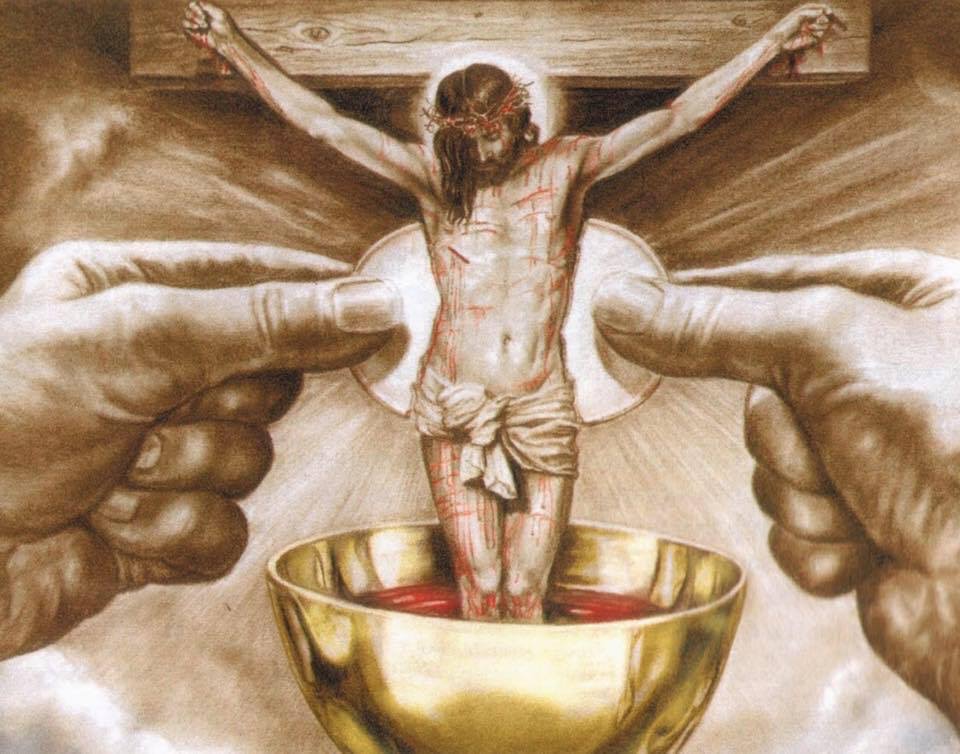
Sackcloth & Ashes to Robes of Righteousness – Sermon on Joel 2:12-19 & Revelation 7:9-14 for Ash Wednesday

Joel 2:12-19; Revelation 7:9-14; Matthew 6:1-6, 16-21

In the name of Jesus. Amen.

Humanity’s first experiment with clothes didn’t work very well. You remember that God had created Adam and Eve without sin, and they were both naked and unashamed (Gen. 2:25). But after they sinned, Adam and Eve became aware of their nakedness. They saw their shame, and because of their disobedience, they now knew what evil was and were ashamed of what God had created to be good. So, they tried to cover their nakedness and shame with fig leaves (Gen. 3:7). Those fig leaves were Adam and Eve’s feeble attempt to cover their sin. It didn’t work.

When God came to the Garden, He was seeking them out asking, “Where are you?” (Gen. 3:9). Of course, God knew where they were, but He was giving Adam and Eve opportunity to repent. Adam knew his half-stitched leaf sewing wasn’t enough to cover his guilt. Adam replied, “I heard the sound of You in the garden, and I was afraid, because I was naked, and I hid myself” (Gen. 3:10). Fig leaves and hiding weren’t enough. Adam and Eve stood before a holy God utterly and totally incapable of covering their sin and shame.

Now, God had told Adam that the day he ate from the Tree of the Knowledge of Good and Evil that Adam would surely die (Gen. 2:17). And those fig leaves were no escape from the death sentence that Adam had earned by his disobedience. The problem of Adam and Eve’s sin and shame doesn’t get fixed until toward the end of Gen. 3 when God makes garments of skins and clothes them (Gen. 3:21). You’ve heard me say this before, but it needs regular repeating. When God makes cloths of skins for Adam and Eve, blood is shed. You can’t get skins from an animal without spilling blood. So, when God clothes Adam and Eve, He is teaching them that He will accept the death of another to cover their sin and guilt.

After clothing Adam and Eve, God did one more gracious thing – He expelled them from the Garden of Eden. We typically think of this exile from Eden and banishment from the Tree of Life as a further penalty (Gen. 3:22). But not so fast. This exile from the Garden wasn’t a punishment. Think about it for a minute. Adam and Eve were now sinners. If they ate from the Tree of Life as sinners, they would live forever in their sin. Dear saints, that is the definition of hell. Their expulsion from the Garden and inability to access the Tree of Life was God acting in grace and mercy. Clothed in those animal skins, Adam and Eve are sent out of the Garden and into exile, but their garments served as a constant reminder of God’s promise to crush the serpent’s head (Gen. 3:15).

Now, we’re going to change gears here, but stick with me. Tonight, we heard in our Old Testament lesson (Joel 2:12-19) God calling to humanity again. But this time, God isn’t calling us to come out of a hiding place in Eden. Instead, He is calling to us who are in the exile of sin. And in this invitation, God brings up the topic of clothing again.

God invites us to return to Him with fasting, weeping, and mourning. He says to rend and rip our hearts and not our garments. Rending and ripping clothes was a way to express and reveal deep sorrow. After all of Job’s possessions and children were destroyed, Job tore his clothes in mourning (Job 1:20). David tore his clothes when King Saul and his dear friend Jonathan were killed in battle (2 Sam. 1:11). The interesting thing about that verse from Joel about rending hearts and not clothes is what comes after. Notice in Joel 2:13 what comes immediately after the call to rend your heart: “Return to the Lord your God, for He is gracious and merciful, slow to anger, and abounding in steadfast love.” Even with your clothes rent and your nakedness uncovered, God invites you to leave your exile in sin, shame, and nakedness to return to Him to receive His grace and mercy.

Instead of simply an outward sign of ripping and rending clothes, God calls us to rend our hearts. God is calling for true repentance – not merely an external show of repentance. When a person rends their garments, it only reveals the nakedness and shame underneath. But after the problem is revealed, God calls us to a step further. Underneath our ripped cloths, lies a broken spirit and heart. And Ps. 51:17 tells us, “The sacrifices of God are a broken spirit; a broken and contrite heart, O God You will not despise.”

Tonight, our corrupt, sinful hearts are laid bare before God. Because of our sin we are under the same curse as Adam, “Remember you are dust, and to dust you shall return” (Gen. 3:19). The wages of our sin is death (Ro. 6:23), but God in His abundant mercy still seeks us out. He desires to save us and bring us out of our exile. And God has fulfilled His promise to cover our sin and shame. God has accepted the death of Another in our place. Jesus has taken your place. He went to the cross and hung there naked, and not just physically. He bore your all your sins in His body on the tree and by His wounds you have been healed (1 Pet. 2:24).

Our Epistle lesson (Rev. 7:9-14) shows what is in store for us. God has permanently covered us in Christ. Because of what Christ has done, we can sing with Isaiah, “I will greatly rejoice in the Lord; my soul shall exult in my God, for He has clothed me with the garments of salvation; He has covered me with the robe of righteousness” (Is. 61:10). You who are baptized into Christ have put on Christ (Gal. 3:27). Even now, you have a white robe that is washed perfectly clean in the blood of the Lamb.

Dear saints, because of what Christ has done, your sackcloth and your dusty ashes have been exchanged for the robe of righteousness. Your exile in sin and shame is ended because Jesus has won the victory over sin and death. By His resurrection, He has turned your mourning into dancing and loosed your sackcloth and clothed you with gladness (Ps. 30:11). By God’s action of seeking you out, you have returned to His presence, and now He welcomes you as His beloved bride (Is. 54:5). Your time in exile is over. You have returned to God. And there is treasure in heaven laid up for you. A treasure that lies hidden with Christ where moth and rust do not destroy and where thieves do not break in and steal (Mt. 6:19-21).

Dear saints, come. Come clothed in Jesus’ righteousness. Come to God’s table and receive Christ’s body and blood for the forgiveness of all your sins. He welcomes you home. In Jesus’ name. Amen.

The peace of God, which surpasses all understanding, will guard your hearts and minds in Christ Jesus. Amen.

The Child Who Is the Lord – Sermon on Luke 2:1-20 for Christmas Eve 2021

In the name of Jesus. Amen.

Dear saints, merry Christmas!

The first few verses recording Jesus’ birth are nothing spectacular quite honestly. It begins with a government that wanted more taxes. So, Joseph and the very pregnant Mary travel to Bethlehem, Joseph’s hometown, to be numbered and provide a list of their property so Rome would know how much they owed. While they are there, Mary gives birth to her Son and wraps Him is swaddling clothes. Again, nothing extraordinary there.

The only thing that is peculiar is that Mary lays her Newborn in a manger, a feeding trough, because there wasn’t a more hospitable place for the infant Jesus. Quite honestly, if v. 1-7 was all that was recorded concerning Jesus’ birth, there wouldn’t be much to say. Sure, for Joseph and Mary it would have been a very anxious, fretful time, but even today all over the world poor women give birth in unusual and unsanitary conditions.

So, a baby Boy is born and laid in a manger. The only ones to notice in those first seven verses are His father and mother. The people of Bethlehem continue to sleep, and the night would have remained silent and undisturbed, but then comes the rest of the text, and v. 8-20 tell us very clearly that something extraordinary has happened.

The birth of this Child has ushered in a cosmic shift and is the most significant thing that has ever happened. The host of angels suddenly appear to shepherds. The glory of God shines, not in the Most Holy Place in the Temple, but out in the fields surrounding the little town of Bethlehem. All of it reveals that what happened that night was God joining heaven to earth.

The host of holy angels mingle with lowly shepherds. The music of heaven is now heard by men, and they are invited to join in the song. At first, the shepherds are too stunned and afraid to speak. But the angel quiets their fear saying, “Fear not, for behold, I bring you good news of great joy that will be for all the people. For unto you is born this day in the city of David a Savior, who is Christ the Lord.”

In other words, the eternal God who created heaven and earth has been born on earth as a Child to be your Savior. God is powerful enough that His voice breaks the mighty cedar trees (Ps. 29:5), and now He softly coos in His mother’s arms. The Child is the same God who appeared to the shepherd Moses in the burning bush warning Moses to not come close because His presence was too holy (Ex. 3:1-6). But now He invites shepherds to come in as close as possible and see Him lying in a manger as a helpless Child.

The incarnation and birth of Jesus isn’t about God becoming small; instead, it is about mankind becoming big. God made mankind in His own image, but here God becomes what you are – a Child of a woman – in order to make you what He is – a child of the heavenly Father. Even though the people of Bethlehem don’t take notice, heaven itself does. With one foot in heaven and another foot on earth, the company of angels sing, “Glory to God in the highest, and on earth peace among those with whom He is pleased!”

The angels are happy because the Savior of mankind has been born, and we are going to be reconciled to them. There is an interesting verse in 1 Peter 1:12 that says the Gospel, the fact that God comes to save us, is something into which angels long to look. I heard a thought this week about the joy that the angels have because of Christ’s birth that I think is really insightful and deeply rooted in Scripture. The thought is that when the angels see how God forgives, redeems, and saves mankind in Christ’s birth, death, and resurrection, the angels get to witness what love is.

You see, the angels never fell into sin or were corrupted, so they are not redeemed because they don’t need to be. They constantly experience God’s perfect love. So, when the angels see how God loves us in Christ, they see the love God has for them in action. They know how far we have fallen, and in Christ, they see the lengths to which God goes to save us. So the birth of Christ gives the angels a fuller picture of how much God loves them, and it brings them great joy.

Beloved of God, Jesus is born, and He is born to save you. God almighty sucks His thumb. His arms were tucked tightly into that manger as an infant so those same arms could be stretched out upon the cross. His head is surrounded by hay in a feeding trough so it can later be crowned with thorns. His body is swaddled and laid in a manger, so that same body could eventually be wrapped in linen cloths and laid in a tomb. And just as He did not remain the manger, neither did He remain in the grave.

In the birth of Jesus, the grace of God has appeared bringing salvation for all people. That includes you. We sinners cannot be in the presence of a holy God, but God has become a man to welcome and forgive sinners. For those willing to receive it, peace has arrived. The war is over. There is now peace between God and man. Because of what Christ has done, God is well pleased with you.

If you have ever wondered how far God would go to make you His own, first look down into the manger then look up to the cross. There is your answer.

Our next hymn asks, “What Child is this?” Well, we have the answer. This Child is Christ the King. This Child is the Word made flesh. This Child is the Christ. This Child is the Lord God Almighty who comes to forgive you, to save you, to rescue you, to deliver you, and to give you eternal life with Him.

Dear saints, Jesus is born, and He brings you His eternal peace. So, again, merry Christmas. Unto you is born this day a Savior who is Christ the Lord. Amen.

The peace of God, which surpasses all understanding, will guard your hearts and minds in Christ Jesus. Amen.