The Child Who Is John’s Joy – Sermon on 2 Samuel 6:12-23 and Luke 1:39-45 for Midweek Advent 3

In the name of Jesus. Amen.

We expect kings to behave differently than we do. Kings don’t walk; they strut. Kings don’t just throw on some clothes; they are robed. And kings don’t eat; they dine. Kings are dignified and distinguished. That’s why David’s wife, Michal, was so disgusted by her husband’s behavior in our Old Testament reading (2 Sam. 6:12-23). He wasn’t acting very kingly.

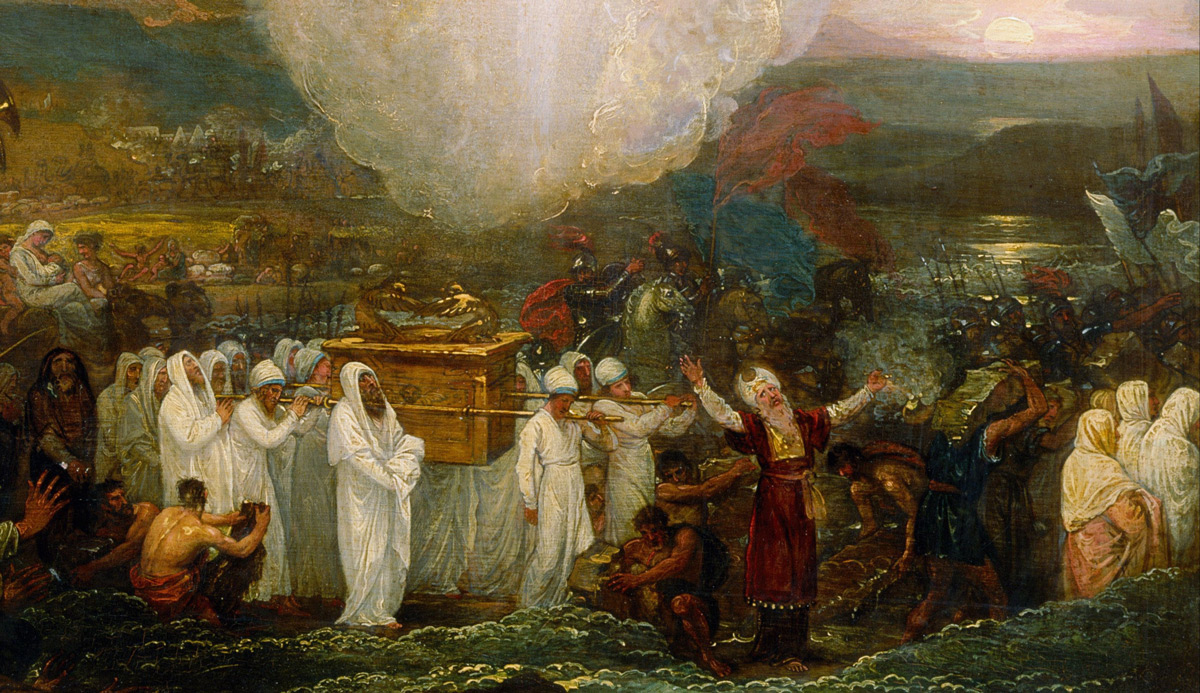
The Ark of the Covenant had been stolen by the Philistines and had been held for about seven months (1 Sam. 6:1). When the Israelites initially recovered the Ark, things didn’t go so well. Hundreds of years before, when God had given instructions on how to build the Ark, He commanded that the Ark have golden rings on its corners so that poles overlaid with gold could be placed through those rings (Ex. 25:12-15). The priests were instructed to carry the Ark by those poles on their shoulders (Nu. 7:9). But a guy named Uzzah and those with him put the Ark on a cart. When one of the oxen pulling the cart stumbled, Uzzah reached out to stabilize the Ark and was killed when he touched it. This made David afraid to move the Ark any further. So, the Ark stayed at the house of Obed-edom for three months (2 Sam. 6:11) while he and his whole household were blessed. That is where our Old Testament lesson picks up.

David hears how Obed-edom was blessed and decides to finish the job of bringing the Ark back to Jerusalem. This time, the proper procedure for carrying the Ark was followed to the letter (1 Ch. 15:13-15). The “proper” behavior for a king, however, was thrown out the window. King David is part of the procession, but he doesn’t wear his royal robes. Instead, David puts on a linen ephod which was a humble garment for a priest. David doesn’t stride like a king before the Ark; instead, David leaped and danced like nobody was watching.

But David’s wife, Michal, was watching, and she wasn’t at all impressed by her husband’s behavior. Instead, she sarcastically nags him for it. But God was watching David too, and God judged David’s celebration and joy to be very befitting for His king. So, God made Michal barren for the rest of her life because she mocked David’s joy.

At the beginning of our service this past Sunday, the first words of Scripture you heard in our Call to Worship were the same words from our Epistle lesson tonight (Php. 4:4-7), “Rejoice in the Lord always; again I will say, rejoice.” (And, in fact, you’ll hear those verses again in this coming Sunday’s epistle lesson.) The reason for so much rejoicing this week is, according to the text, that “the Lord is at hand.” Rejoice. You don’t have to climb up to heaven to the presence of God. No. He comes to you. He comes to bring His love, mercy, forgiveness, and grace. And this good news should make us throw away any sense pride or dignity we might think we possess in ourselves and cause our hearts to leap for joy like David.

Our problem is that we are too much like Michal and not enough like King David. Our hearts are pulled from the joy of God’s presence. Like Adam and Eve in the garden after they ate the forbidden fruit, we avoid God’s presence. Usually, it isn’t because we are afraid of punishment but because we are too busy running after worldly things that we imagine will bring joy. But when we attain those things, we don’t find joy or even fulfillment. At best, we are amused for a while and then get bored. Even though God knows this about us, He still graciously desires to dwell with us.

That is why Christ came. He draws near to save a world that is in love with sin instead of Him. God comes to remove our hearts of stone and give us new hearts of flesh so that we can truly rejoice in His presence with us.

We can learn a lot both from King David and from the pre-born John the Baptizer in our Gospel text (Lk. 1:39-45). King David was so overcome with joy that he dropped all sense of decorum a king should have and danced and leapt for joy at the return of the Ark because the Ark of the Covenant was where God promised to dwell with His people. In other words, when David brought the Ark back to Jerusalem, God was returning to His people. And in a more important way, when Mary, who was pregnant with Jesus, visited her older relative (Lk. 1:36) Elizabeth, unborn John leapt when he heard the voice of the woman carrying the world’s Savior. John leapt because something even more wonderful than the Ark had arrived at his house. Mary was, in a very real way, the new Ark of the Covenant because she carried in her womb God in human flesh.

It is absolutely true that our Roman Catholic brothers and sisters in Christ say way more about Mary than what Scripture does. But we overreact and push back against the false Roman Catholic teaching harder than we should. That isn’t good either because it ends up diminishing what Scripture says about Jesus. And if we say anything less about Jesus, our salvation is in doubt. Now, if you have any questions regarding what I’m about to say here, please let me know. I’m happy to answer them. Trust me; I’m not starting to lean toward Rome.

To have a proper understanding of Mary and her place in the story of God saving mankind, it is good to start with a Scriptural understanding of who we are and who Jesus is. So, Adam was created by God without a man or woman. Eve was created by God from a man without a woman. We are created by God from both a man and a woman. But Jesus, the God-man, is the only one who comes into human flesh solely from a woman, and that woman is Mary.

The Son of God, the second Person of the Trinity, existed from all eternity. But when He took on flesh, He did so through Mary. That means every bit of Jesus’ human nature comes from Mary. She was chosen by God to carry out a unique role in the salvation of mankind. According to our Gospel text, she is the mother of Elizabeth’s Lord and your Lord as well. God chose her to be Jesus’ earthly mother.

Now, in no way does that mean that Mary was sinless herself. We have at least one example from Scripture where Mary sins (and possibly others [Mk. 3:21, 31Jn. 2:3-47:5]). The easiest example is when Mary wrongly chides twelve-year-old Jesus when He stays in Jerusalem (Lk. 2:48). Mary sins at least twice there. First, she neglected her responsibility as a parent to protect her Son, and second, she blames Jesus for her sin, which is the same thing Adam did when he blamed God for giving him a wife who gave him the forbidden fruit. Also, no, we don’t and shouldn’t worship Mary or pray to her. But, again, we shouldn’t diminish her unique part in the story of salvation. Doing so robs us of the wonder and joy of our salvation. God became man to save us.

In our Gospel text tonight, God was drawing near not just to Jerusalem, but to the whole world through the pre-born Jesus in Mary’s womb. And that is why the unborn John the Baptizer leaps in Elizabeth’s womb. God had come to earth in order to redeem sinful mankind.

This good news brought joy to John even before he was born, but it also brought joy to Jesus Himself. Hebrews 12:2 says that enduring the cross to save mankind was the joy that was set before Jesus. God had come born of a woman, born under the Law, to redeem you who were under the Law, so that you might receive adoption as sons (Gal. 4:4-5).

So, when the hymn we sang earlier asks, “What Child is This?” the answer is enough to make our hearts leap just like King David and John the Baptizer. The Child is Christ the King, God in the flesh come to save us. The eternal Son of God comes brings forgiveness, eternal life, and joy to the world.

And right now, through His Word, He comes even nearer to you than He came to John in this Gospel text (Mt. 18:20). He comes and takes up residence in your heart. His love fills you and that love spills over to others. Jesus comes near and makes you a new creation (2 Cor. 5:17). And the day is coming soon when Jesus will come to dwell with you again. He will come from His eternal throne one final time to bring you out of this world of sin and sorrow to His eternal joys.

So, “Rejoice in the Lord always; again I will say, rejoice. The Lord is at hand.” He has come, and He is coming again. Amen.[1]The peace of God, which surpasses all understanding, will guard your hearts and minds in Christ Jesus. Amen.


[1] The idea for connecting David’s joy at the return of the Ark to the leaping of John the Baptizer was adapted from a sermon by Pr. Ralph Tausz.

The Child Who Is Zechariah’s Hope – Sermon on Luke 1:5-15 for Midweek Advent 1

Luke 1:5-25

5 In the days of Herod, king of Judea, there was a priest named Zechariah, of the division of Abijah. And he had a wife from the daughters of Aaron, and her name was Elizabeth. 6 And they were both righteous before God, walking blamelessly in all the commandments and statutes of the Lord. 7 But they had no child, because Elizabeth was barren, and both were advanced in years. 

8 Now while he was serving as priest before God when his division was on duty, 9 according to the custom of the priesthood, he was chosen by lot to enter the temple of the Lord and burn incense. 10 And the whole multitude of the people were praying outside at the hour of incense. 11 And there appeared to him an angel of the Lord standing on the right side of the altar of incense. 12 And Zechariah was troubled when he saw him, and fear fell upon him. 13 But the angel said to him, “Do not be afraid, Zechariah, for your prayer has been heard, and your wife Elizabeth will bear you a son, and you shall call his name John. 14 And you will have joy and gladness, and many will rejoice at his birth, 15 for he will be great before the Lord. And he must not drink wine or strong drink, and he will be filled with the Holy Spirit, even from his mother’s womb. 16 And he will turn many of the children of Israel to the Lord their God, 17 and he will go before him in the spirit and power of Elijah, to turn the hearts of the fathers to the children, and the disobedient to the wisdom of the just, to make ready for the Lord a people prepared.” 

18 And Zechariah said to the angel, “How shall I know this? For I am an old man, and my wife is advanced in years.” 19 And the angel answered him, “I am Gabriel. I stand in the presence of God, and I was sent to speak to you and to bring you this good news. 20 And behold, you will be silent and unable to speak until the day that these things take place, because you did not believe my words, which will be fulfilled in their time.” 21 And the people were waiting for Zechariah, and they were wondering at his delay in the temple. 22And when he came out, he was unable to speak to them, and they realized that he had seen a vision in the temple. And he kept making signs to them and remained mute. 23 And when his time of service was ended, he went to his home. 

24 After these days his wife Elizabeth conceived, and for five months she kept herself hidden, saying, 25“Thus the Lord has done for me in the days when he looked on me, to take away my reproach among people.”

In the name of Jesus. Amen.

Zechariah and Elizabeth were an ideal couple. They were both righteous before God. In other words, they both had faith in God’s promises to send the Messiah who would crush the serpent’s head and deliver all God’s people (Gen. 3:15Is. 9:14). They both walked blamelessly in keeping the commandments and statues of the Lord. But this dear couple had to walk the sad road of infertility. They had no child.

It is interesting how often Scripture will introduce a new era of salvation history with a barren womb. The beginning of God’s chosen people who would be the lineage of the Messiah begins with Sarah’s barren womb which would bring forth Isaac. In the age of the kings, the focus is on Hannah’s barren womb which would bring forth the prophet and king-anointer, Samuel. Now here, at the time of the Messiah, God will bring the forerunner and proclaimer of the Messiah from Elizabeth’s barren womb. And the Messiah Himself will come from the virgin womb of Mary.

As Zechariah is serving in the Temple, he is given all these wonderful promises about the child he and Elizabeth will bear, but he doubts. “How shall I know this? For I am an old man, and my wife is advanced in years.” It’s ironic that Zechariah doubts like this. After all, Zechariah’s name means, “God remembers.” Apparently, Zechariah didn’t live up to his name. He didn’t remember that God remembers. Somehow, this righteous and blameless man didn’t remember how God had acted for Abraham and Sarah with the birth of Isaac and for Elkanah and Hannah with the birth of Samuel. Zechariah didn’t remember, but God did. God remembered His merciful promises to deliver mankind from sin and death. God remembered His mercy and steadfast love (Ps. 25:6-7). Whenever Scripture talks about God remembering, it isn’t simply that a bit of information had been momentarily lost in God’s mind and suddenly found. No. When God remembers, He acts.

God sent the angel Gabriel to Zechariah that day in the Temple to announce that God was going to act and bring about the long-promised salvation. God was about to send John the Baptizer, the one whom God promised would come in the spirit and power of Elijah to prepare God’s people for the coming of the Savior (Mal. 4:5-6). But Zechariah, God’s priest, doubted and was made silent for his unbelief.

Dear saints, too often we are like Zechariah. We have been made God’s royal priests (1 Pet. 2:9). In His mercy, God has chosen you to do priestly work – to pray, to train your children in the Scriptures, and to proclaim God’s goodness and mercy to everyone you meet. You and I have every reason to be bold and confident in everything we do because of God’s promises to us. But too often we find ourselves doubting. Doubting that God has and will deliver us. Doubting that we have been justified by grace through faith. Doubting that we have peace with God. Doubting that we have access to God’s grace. All of this doubt grieves the Holy Spirit. And our doubt mutes us from proclaiming God’s love to others.

Like Zechariah, we may forget, but God does not forget. Instead, God continues to act. He has sent Jesus, the Messiah who is our Great High Priest (Heb. 4:14) and the Lamb of God who takes away the sin of the world (Jn. 1:29).

Jesus came and used His voice to bless, to pray, to teach, and the gather sinners. Our guiltless Christ was silent before His accusers and went to an unjust death in your place. There, from the cross, Jesus uttered the greatest blessing any priest could speak, “Father, forgive them, for they know not what they do” (Lk. 23:34). Now, Jesus sits at God’s right hand as your intercessor and advocate.

In Advent, we focus on Jesus’ coming. He came in humility at His birth in Bethlehem. He comes in humility now in His Word and Sacraments. And He will come again in glory on the Last Day. So, as we wait, let us remember His mercy never comes to an end but is new each and every morning. And He gives us better than we ask or think.

We ask for comfort from our wounded consciences, and He gives comfort on top of comfort (Is. 40:2). We ask Him to help is in our earthly trials, and He gives us an eternal Kingdom. We ask for help to endure pain, disease, and sickness, and He gives us the promise of full and complete healing in the resurrection on the Last Day.

Dear saints, whenever we consider the Child whose birth we will soon celebrate, let the answer to “What Child is this?” always be, “This is Christ the King whom angels sing.” And may our voices join with theirs now and for all eternity because He who has promised is faithful and He will surely do it. Amen.

The peace of God, which surpasses all understanding, will guard your hearts and minds in Christ Jesus. Amen.

The Easter Angel – Sermon on Matthew 28:1-7 for the Easter Vigil

Listen here.

Matthew 28:1-7

Alleluia! Christ is risen!
He is risen indeed! Alleluia!

In the name of Jesus. Amen.

The angel caused the earthquake that Easter morning. Our translation says, “there was a great earthquake, for an angel of the Lord descended from heaven” (Mt. 28:2), but it should probably be, “becausean angel of the Lord descended.” The earth shook because the angel caused it to. And it isn’t the quake that moves the stone. The angel rolls it away after the quake then sits on it.

This angel is quite the character. We don’t know his name, but he certainly is a rabble rouser. He has the appearance of lightening and clothing white as snow.

This flashy, showy angel doesn’t sit on the stone because he is tired. Angels don’t get fatigued like we do. He sits there to mock the stone and the tomb that it had sealed. You could almost say that he’s dancing on the grave. But with a different meaning than we usually give to that phrase. He’s dancing on the grave of death.

It would have taken several strong, well-bodied people to roll that stone away. You’ll hear in tomorrow’s Gospel reading from Mark (16:3) that the women were concerned about who was going to move it for them when their plan is to return to the tomb and finish preserving Jesus’ body. Their plans had to change. But for this angel, that stone was puny and totally insignificant. The angel just tosses it aside. It wasn’t capable of keeping Jesus in the grave, and the angel sits on it to show how inconsequential the attempts were to keep Jesus dead.

The guards are terrified by all of this and rightly so. They trembled just like the ground. Their armor, swords, and training were nothing in the presence of this angel. They became like dead men. As they lay there on the ground, they were probably glad that this electrified angel hadn’t sat on them.

But then, Matthew mentions the women. They arrive to this dominant display of angelic power, and the angel tells them, “Do not be afraid,” even though there is no mention of them being fearful. The women had been scared previously. Scared to tears after the death of Jesus. But the time for weeping is over. Psalm 126:5 says, “Those who sow in tears shall reap with shouts of joy.” For these women, and for all believers in Christ, the harvest has come.

Our time of sowing tears is finished. Jesus lives. It is time to gather in the crop of resurrection joy. Because Jesus is risen, our mouths are filled with laughter and our hearts with cheer. The angel sits on that stupid, weak, trivial stone because nothing can stop the victory parade of life.

Jesus had gone weak as a newborn lamb to the cross, but there He stripped the devil of all his strength. The trickster serpent has been tricked. On Good Friday, Satan was tempted just like Eve was in the Garden. The devil saw the forbidden fruit that hung on the tree of Calvary. He took it and ate. But now his belly bursts, and he is the one who has to hide.

He is done, finished, defeated. The devil has no accusations left. He threw all his accusations at Christ, and Jesus has answered for all of them. So now, when Satan tries to accuse you, all you have to do is point him to Christ, and his mouth is silenced. He has no allegations left for you because Jesus has died to take them all away, and Christ is risen to show they are nothing.

Did Satan think that a rock and some guards could keep Jesus dead? Maybe, but this resurrection angel, and all the angels, laugh at the thought. It would be easier to fit the oceans in a styrofoam cup or to ride a unicycle to Pluto than to keep God in the grave.

God wouldn’t let what is His be stolen. He takes it back. He takes back Adam and Eve. He delivers Noah and his family. He frees the whole people of Israel from slavery. He restores to Himself Ezekiel and that valley of dead, dry – very dry – bones. He restores the fortunes of Zion and exalts over them with loud singing. He pulls His people safely from the burning fiery furnace and walks with us in every trouble.

God does all of this because Christ has bought and paid for you on the cross. The devil has no claim – none whatsoever. Satan got what he thought he wanted. He took a bite out of God. The devil bruised His heel by putting Him to death. But Jesus has crushed his head. Jesus died, but He lives.

Every day of our lives now, let’s join this rambunctious angel in mocking sin, death, and the devil. Daily don the robes of righteousness that Christ has given you in your Baptism (Gal. 3:27). Daily let the God-given light of salvation shine through you (Mt. 5:14-16).

The grave is open. It couldn’t hold Jesus. It won’t hold your loved ones who have departed with the sign of faith. And It won’t hold you either.

We don’t know this rambunctious resurrection angel’s name. But one day, God be praised, we will. Amen.[1]

Alleluia! Christ is risen!
He is risen indeed! Alleluia!

The peace of God, which surpasses all understanding, will guard your hearts and minds in Christ Jesus. Amen.


[1] This sermon was adapted from Rev. David Petersen of Redeemer Lutheran Church, Ft. Wayne, ID.

I Thirst – Sermon on John 19:28 for Good Friday

Listen here.

In the name of Jesus. Amen.

In Hosea 11:1, God says, “When Israel was a child, I loved him, and out of Egypt I called My son.” But it didn’t take long for that beloved child to start whining. Even though God had displayed His might and power to protect and deliver His people through the plagues He sent upon Egypt, three days after crossing the Red Sea the people came to the bitter waters of Marah (Ex. 15:22-26). They grumbled against Moses saying, “I thirst! What are we going to drink?”

Well, God acted for His son, Israel. God showed Moses a log and told him to toss it into those bitter waters. Moses did, the bitter water became sweet, and the thirst of Israel, God’s son, was quenched.

About one month later, God’s son, Israel, again said, “I thirst.” They had come to a place where there was no water. This time the whining was worse. The son grumbled again saying to Moses, “Why did you bring us up out of Egypt, to kill us and our children and our livestock with thirst?” But God, their loving Father, still provided. He told Moses to take his staff and strike a rock. And from that rock came water for God’s son, and his thirst was quenched again.

Tonight, Jesus, on the verge of death, cries out, “I thirst.” Jesus is God’s true, beloved, faithful, obedient Son. Jesus is the true Israel. Christ had never whined or complained no matter how hard or bitter things got for Him. He was everything that the nation of Israel wasn’t. Yet, when Jesus, the only-begotten Son of God, cries out to His Father, “I thirst,” God doesn’t move a muscle. God doesn’t jump to action.

You remember the parable of the rich man and Lazarus (Lk. 16:19-31). As he is there in torment, the rich man begs for a drop of water from Lazarus’ finger. Like that rich man, Jesus gets nothing to drink. Not even one drop.

When Jesus cries, “I thirst,” it is because He is truly parched. Jesus is true God and also true Man. He actually was thirsty. But even more than needing water for His dehydrated mouth, Jesus’ thirst is to do His Father’s will (Jn. 4:34). Christ thirsted for your salvation so that you can be God’s child. Only Jesus can truly say, “As a deer pants for flowing streams, so pants my soul for You, O God. My soul thirsts for God, for the living God” (Ps. 42:1-2a). Jesus thirsted in your place.

We thirst for things that are momentary and trivial. We thirst for the attention and approval of others. We thirst for our own glory, our own wealth, our own safety, our own selfish desires. But no matter how much we drink from the cup of our sins, our thirst is never satisfied there. That is why Jesus went to the cross. He went there because of your sin. He went to the cross to atone for your sinful thirsts.

That is why, it pleased God to do nothing for Jesus as He thirsted on the cross. It was God’s will for Jesus to drink from the bitter cup of wrath so that you could drink the sweet, living waters that Jesus gives which well up to eternal life (Jn. 4:14).

There was no water from the rock for Jesus because He was the Rock. According to 1 Cor. 10:4, Christ was the Rock that was struck in the wilderness for God’s people to drink. It happened in the wilderness for Israel, God’s son, and it still happens for you today, believer. Jesus was struck with a spear and out of that dead Rock hanging on the cross came the water and blood which give eternal life.

Jesus thirsted. He died. He rose again. And He is ascended and is now seated at God’s right hand. But Christ still thirsts. Even today He thirsts, and His thirst is for your salvation. He thirsts for you to be forgiven and receive His righteousness. Jesus’ thirst is to eternally satisfy your thirst.

So, Jesus, your Savior, invites you, “If anyone thirsts, let him come to me and drink. Whoever believes in me, as the Scripture has said, ‘Out of his heart will flow rivers of living water’” (Jn. 7:37-38).

May we drink from Him, our crucified and risen Lord and Savior. Amen.The peace of God, which surpasses all understanding, will guard your hearts and minds in Christ Jesus. Amen.

Infant Baptism – Sermon for Midweek Lent 5

Listen here.

Do children also believe? Are they rightly Baptized?

The Baptism of infants is pleasing to Christ, as is proved well enough from His own work. For God sanctifies many of those who have been baptized as infants and has given them the Holy Spirit. There are still many people even today in whom we perceive that they have the Holy Spirit both because of their doctrine and life. It is also given to us by God’s grace that we can explain the Scriptures and come to the knowledge of Christ, which is impossible without the Holy Spirit [1 Cor. 12:3].

For this reason let everyone value his Baptism as a daily dress [Gal. 3:27] in which he is to walk constantly. Then he may ever be found in the faith and its fruit, so that he may suppress the old man and grow up in the new…. [I]f anyone falls away from the Christian life, let him again come into it. For just as Christ, the Mercy Seat [Ro. 3:25], does not draw back from us or forbid us to come to Him again, even though we sin, so all His treasure and gifts also remain. Therefore, if we have received forgiveness of sin once in Baptism, it will remain every day, as long as we live. Baptism will remain as long as we carry the old man about our neck.

Martin Luther’s Large Catechism

In the name of Jesus. Amen.

Many times, we Lutherans (along with Roman Catholics and others) are accused of doing something that is not biblical when we Baptize infants. Some well-meaning Christians will say, “The Bible never records an infant being Baptized.” And I have to admit that is correct. There is no verse that says, “Little two-week-old Bobby was Baptized,” or, “Timmy was Baptized as an infant.” The snarky side of me would like to point out that nowhere in Scripture does a woman explicitly receive the Lord’s Supper. If we would deny a child the gifts that God gives in Baptism just because there is no explicit mention of an infant being Baptized in Scripture, should we deny women the Body and Blood of Jesus? No!

Even though the Bible does not have a record of an infant being Baptized, the Scriptures certainly do imply that babies were Baptized. Look again at our first lesson (Act. 2:37-41). Peter has preached his great Pentecost sermon and closes with the horrific words of the Law, “Know for certain that God has made [Jesus] both Lord and Christ, whom you crucified.” The people are terrified, cut to the heart, and ask, “Brothers, what shall we do?” Peter answers, “Repent and be baptized every one of you in the name of Jesus Christ for the forgiveness of your sins, and you will receive the gift of the Holy Spirit,” now listen closely, “for the promise is for you and for your children.” In other words, the gift of forgiveness and the Holy Spirit is for the people there and for their children. That doesn’t mean that their children get the promise eventually when they grow up. The natural reading of that text is that Baptism is for the people there and for their children and babies. Peter could have limited it to people who were of a certain age, but he didn’t.

Later, in Act. 16, there are two entire households that are Baptized. First the household of Lydia (Act. 16:11-15), and later the household of the Philippian jailor (Act. 16:25-34 esp. v. 31-33). Remember that in the time of the New Testament, the life expectancy wasn’t that much longer than normal, child-bearing years, and they didn’t have the methods of birth control that we do. Also, children were much more valued back then. It is highly unlikely that neither Lydia, who was a seller of purple goods (Act. 16:14), nor the Philippian jailor had households without any children.

And remember, when Jesus gives the gift of Baptism to the church as the method of making disciples, He says, “Make disciples of all nations (ἔθνος, ‘ethnicities,’ ‘all types of people’) by Baptizing them in the name of the Father, Son, and Holy Spirit” (Mt. 28:19). If Jesus wanted to limit who is eligible to be Baptized, He would have made a limit there, but He didn’t.

Now, very briefly (I don’t want to spend much time on this because it is an absurd thought process): We know that “all have sinned and fall short of the glory of God” (Ro. 3:23). Our Psalm tonight (Ps. 51) teaches us that we are brought forth in iniquity and in sin did our mothers conceive us (Ps. 51:5). Still, some people teach that God does not hold babies accountable for their sins until they reach some sort of ‘age of accountability’ (which isn’t a biblical term anyway). But just use a little logic: If God isn’t going to punish young children for their sins until they reach a certain level of understanding of their sins, then abortion and infanticide would be evangelistic tools. God forbit it! Enough on that thought.

Back to what Peter says in Act. 2:38-39, some will say that Peter requires things to be done sequentially. First, you have to repent, then you can be Baptized. Or first you have to believe and only after you believe then you can be baptized. First of all, salvation isn’t a three-step program. But also notice that argument implies that babies cannot believe, which is not in line with what Scripture teaches – not at all. The overwhelming teaching of Scripture is that babies can and do believe.

I included an insert in your bulletin tonight titled, “Infant Faith in the Scriptures.” For anyone watching or listening, I’ll include links to it in the description (click here). And I would like us to quickly walk through it.

First, let’s start with Ps. 71:5-6. “For you, O Lord, are my hope, my trust, O Lord, from my youth. Upon you I have leaned from before my birth; you are he who took me from my mother’s womb. My praise is continually of you.”

One of the reasons this is such a great place to start is the variety of vocabulary used to describe a child. The verses start by saying that the Lord is my hope and trust ‘from my youth.’ In English, we use the word ‘youth’ for a very wide range of ages. Sometimes, churches have ‘youth group’ for middle-school through high school. East Grand Forks has ‘youth soccer’ for preschool through sixth grade. The Hebrew word translated as ‘youth’ here has a wide range of meaning too. One of the nice things about Hebrew poetry is that it’s very repetitive, and the repetition helps us see how expansive the term is. So, in v. 5 God is the object of hope and trust for the psalmist from his youth, and notice in v. 6 how it gets specific. The psalmist has leaned on God from before his birth. He recognizes that God was the one who brought him from his mother’s womb, and he continually (i.e. from before his birth and throughout his youth) praises God.

Those verses are very instructive, but let’s turn to the New Testament, and specifically what Jesus teaches about the faith of children. To do that, we need to understand some of the vocabulary of the Greek New Testament. In English, we have lots of words for a kid: infant, baby, toddler, tyke, little one, child, youth. Greek does the same. I’ve included five words (there are more) that deal with children. And I put them in different colors so they pop out in the verses that follow. Let’s quickly go through and define them:

βρέφος (brephos) – very small child; baby; infant; unborn baby in the womb

παιδίον (paidion) – a child below the age of puberty; it’s maybe the most basic words for ‘child,’ but it has a wide range of ages that it can apply to.

μικρός (mikros) – ‘little one’; one who is small; it’s even used to describe Zacchaeus

νήπιος (nēpios) – a very young child; infant; a minor not yet of legal age

θηλάζω (thēlazō) – v. ‘to nurse’; can also be used as a noun meaning ‘one who nurses’

So, let’s go through the verses on that sheet. First, Luke 18:15-17 which is the same account as our Gospel lesson tonight (Mk. 10:13-16). Now, to be fair, Mark only uses the word παιδίον when he records this, but that’s why I used Luke’s account here. According to Luke, the doctor, people are bringing even their βρέφος (infants) to Jesus to be blessed by His touch. The disciples didn’t like it, but Jesus says, “Let the children (παιδίον) come to me, and do not hinder them, for to such belongs the kingdom of God. Truly, I say to you, whoever does not receive the kingdom of God like a child (παιδίον) shall not enter it.” Jesus here plainly says that the kingdom of God belongs to children to παιδίον – and notice that includes infants, βρέφος. And if we say that the kingdom belongs to children apart from faith, we are going to end up in a very bad place theologically.

Next passage, Matthew 18:1-6: The disciples want to know who is the greatest in the kingdom of heaven. Jesus brings a child (a παιδίον) into their circle and says, “Truly, I say to you, unless you turn and become like children (παιδίον), you will never enter the kingdom of heaven. Whoever humbles himself like this child (παιδίον) is the greatest in the kingdom of heaven. Whoever receives one such child (παιδίον) in my name receives me, but whoever causes one of these little ones (μικρός ‘little guys’ and notice what Jesus says next) who believe in me to sin, it would be better for him to have a great millstone fastened around his neck and to be drowned in the depth of the sea.” According to Jesus, children, even little ones believe in Him.

Next verse, Matthew 21:15-16: This is after Jesus has entered into Jerusalem on Palm Sunday to the shouts of “Hosanna!” The chief priests and scribes get furious when they see all the things Jesus is doing, and they see children (παιδίον again) crying out, “Hosanna to the Son of David!” They want Jesus to get them to quiet down by asking, “Do you hear what these are saying?” And Jesus responds, “Yup! Have you never read,(then He quotes Ps. 8:2) “‘Out of the mouth of infants (νήπιος) and nursing babies (θηλάζω) you have prepared praise’?” Right praise of God is only possible through faith (Ro. 14:23b).

Chugging right along, Matthew 11:25-27: Jesus praises His heavenly Father, “I thank you, Father, Lord of heaven and earth, that you have hidden these things from the wise and understanding and revealed them to little children (νήπιος infants); yes, Father, for such was your gracious will. All things have been handed over to me by my Father, and no one knows the Son except the Father, and no one knows the Father except the Son and anyone to whom the Son chooses to reveal him.” God is more than capable of hiding things from the wise and understanding and able to reveal the things of faith to the infants.

Two more, 2 Timothy 3:14-15: Paul tells pastor Timothy, “Continue in what you have learned and have firmly believed, knowing from whom you learned it.” Pause for a second: remember from the previous verse, who does the teaching and revealing? God does. Continue at v. 15 “and how from childhood (βρέφος from ‘infancy’) you have been acquainted with the sacred writings, which are able to make you wise for salvation through faith in Christ Jesus.” Since his infancy, and maybe even before his birth (as we’ll see in a minute), Timothy was acquainted with the sacred writings, the Scriptures, through which God makes even infants wise for salvation through faith in Christ Jesus.

Finally, we see this actually happen in our final passage, Lk. 1:1541: This is about John the Baptizer. In v. 15, the angel Gabriel announces to Zechariah that he will have a son, that’s John. And that John will, according to v. 15, “be filled with the Holy Spirit even from his mother’s womb.” Later on in v. 41, Mary visits Elizabeth, John’s mother and Mary’s relative. When Mary got to her house and greeted Elizabeth, the baby (βρέφος the pre-born baby, John) leaped in her womb. Elizabeth goes on to say that pre-born John leaped precisely at the sound of Mary’s greeting, which, if I remember rightly, was shalom, ‘peace.’

With that text in particular, we see that babies can hear in the womb. But even more importantly, that the Word of God, that proclamation and greeting of God’s peace, is effective to give the Holy Spirit and create faith even for pre-born babies. So, all you dads and moms, take note. Read the Scriptures to all your children, even before they are born. God works through His Word.

So, Scripture teaches that children, infants, and even pre-born babies can have faith. So, if someone objects to infant baptism based on the idea that infants can’t believe, they are arguing against Scripture.

And we can admit that it’s difficult to know how babies believe. How can infants who can’t talk or express themselves believe? But that’s the miracle of faith. How can any sinner, dead in their sin believe? Faith is always a gracious, life-giving gift of God (Eph. 2:8-9).

Think back to what we’ve covered the past five weeks and see what Scripture says that Baptism does: Baptism saves (1 Pe. 3:21). It forgives sins (Act. 2:38). Baptism delivers from death and the devil (Col. 1:13). It gives the new begetting from above (Jn. 3:35-6). In Baptism, God joins you to Jesus’ death and resurrection (Ro. 6:3-11) and clothes you with Christ (Gal. 3:27). And nowhere does Scripture limit that work. All sinners, even infants, need God to do those things. And, God be praised, God promises that Baptism does all of these things, and God cannot and does not lie. So, continue believing what God has done for you in your Baptism.

I want to close with the second paragraph from the Large Catechism in your bulletin:

“For this reason let everyone value his Baptism as a daily dress [Gal. 3:27] in which he is to walk constantly. Then he may ever be found in the faith and its fruit, so that he may suppress the old man and grow up in the new. [I]f anyone falls away from the Christian life, let him again come into it. For just as Christ, the Mercy Seat [Ro. 3:25], does not draw back from us or forbid us to come to Him again, even though we sin, so all His treasure and gifts also remain. Therefore, if we have received forgiveness of sin once in Baptism, it will remain every day, as long as we live. Baptism will remain as long as we carry the old man about our neck.”

Even though we can (and, sadly, some do) walk away from the faith and deny the benefits of their Baptism, God remains faithful to His promises (2 Tim. 2:13). Those promises are always there for you to return to. Live in those promises trusting what God has done for you through your Savior, Jesus Christ. Amen.

The peace of God, which surpasses all understanding, will guard your hearts and minds in Christ Jesus. Amen.

What Does Such Baptizing with Water Signify? – Sermon for Midweek Lent 4

Listen here.

IV. What Does Such Baptizing with Water Signify?

It signifies that the old Adam in us, together with all sins and evil lusts, would be drowned by daily sorrow and repentance and be put to death; and that the new man should daily come forth and rise to live before God in righteousness and holiness forever.

Where is it so written?

St. Paul writes in the sixth chapter of the Epistle to the Romans: “Therefore we have been buried with Him through baptism into death, so that as Christ was raised from the dead through the glory of the Father, so we too might walk in newness of life.”

Martin Luther Small Catechism

In the name of Jesus. Amen.

Baptism saves (1 Pe. 3:21), forgives sins (Act. 2:38), delivers from death and the devil (Col. 1:13), and gives the new begetting from above (Jn. 3:35-6). Still, one of the most common objections people have to those Scriptural teachings is they will say, “Baptism doesn’t save. Only Jesus saves by His death and resurrection.” Well, they’re half right. We agree with the second part of that statement.

Jesus alone saves us by His death and resurrection. Colossians 1:20 says that Jesus reconciled all things by making peace through the blood of His cross. Ephesians 2:13 says that we who were far off have been brought near by the blood of Christ. In 1 Corinthians 2:2, Paul says that he decided to know nothing among the Corinthian Christians except Christ and Him crucified. And, finally, Galatians 6:14 says, “Far be it from me to boast except in the cross of our Lord Jesus Christ.” By His death and resurrection, Jesus, the eternal Son of God, won our salvation. Period.

But that leaves us with a problem. We weren’t there. Jesus was crucified 1,998 years ago and 6,185.425 miles away (as the crow flies between East Grand Forks and Jerusalem). So how does Jesus’ victory over sin, death, and the devil get to us who live nearly 2,000 years later? How do we get the benefits of Jesus’ blood which was shed half the world away from here? According to Romans 6:3-4, it happens through your Baptism.

Your salvation was won and purchased on the cross, but it isn’t distributed there. The only one we know was saved on Mt. Calvary on that Good Friday was the thief on the cross, the one to whom Jesus said, “Truly, I say to you, today you will be with Me in paradise” (Lk. 23:43).

Think back to all the sporting competitions you have watched. The team that wins the Super Bowl might win the game on a play that happens in the 2nd quarter, but they don’t get the Lombardi Trophy until after the game clock runs out, and probably on a different part of the field than where the winning play occurred. In the Olympics, the person who wins the 100m dash doesn’t get their gold medal as they cross the finish line in first place. It wouldn’t be safe. Just imagine what would happen if the officials tried to hang the gold medal on the winner at the finish line of downhill skiing or the luge. Talk about an epic clotheslining. I can’t think of any instance where the prize is awarded at the exact moment and location of where the victory is won.

The same is true of salvation. Your salvation is won by Christ on the cross, but it isn’t delivered there. Your salvation is delivered to you in your Baptism.

I know that this final question from the Catechism asks, “What does Baptizing with water signify?” We’ll get to what it signifies, but first Romans 6 says that Baptism actually does something. All of us who have been Baptized into Christ Jesus were Baptized into His death. We were buried therefore with Him by Baptism into death, in order that, just as Christ was raised from the dead by the glory of the Father, we too might walk in newness of life.

Your Baptism actually joined you to Jesus’ death. It isn’t just that it was a sign or some symbology (sic.). It actually picked you up from wherever you were when you were Baptized, brought you back in time to 33 AD, and joined you to Christ’s death on the cross.

Being joined to Jesus’ death is a good thing because that means you have a Jesus-kind of death – a death that doesn’t last very long. Christ was in the tomb for three days before He rose again, and since you have been Baptized into Christ and joined to Jesus’ death you can know that your time in the grave will not last either. Being joined to Jesus’ death means that you will certainly be united with Him in a resurrection like His (Ro. 6:5).

Your Baptism is where God delivered your justification. It is where God declares you to be not guilty of your sins. Beyond that, your Baptism is where God calls you to think of yourself differently – to think of yourself as one who is and is being sanctified. In other words, your Baptism allows you to say that you are no longer defined by your sins, but by God’s righteousness.

Because of that, Baptism signifies that you daily die to sin and live before God in righteousness. That’s why our Epistle text (Ro. 6:1-14) closes by calling us to not let sin reign in our mortal bodies and make us obey our sinful passions. 

Through your Baptism you are truly forgiven, regenerated, and made holy. That is how God looks at you, Baptized Christian. But we also recognize from Scripture and our experience that this new life has only begun. It is not yet complete. You recognize that the Old Adam still dwells in you despite the fact that he was drowned in your Baptismal waters. Also, you recognize that the devil and the world still remain around you pestering you, trying to deceive you and lead you astray. The devil, the world, and your own sinful flesh want you to continue in those sins which were drowned and return to slavery to sin.

What occurred in your Baptism, the drowning and rising, the death and resurrection, isn’t something that is merely in the past, but neither is it something to come later in the future. Your Baptism is your present life, believer. Daily you repent of your sins, daily you believe in Christ crucified for your forgiveness, and daily you walk in newness of life until that great day when your Old Adam finally perishes, and you are perfectly and eternally renewed.

In other words, because your Baptism has actually joined you to Christ’s death and resurrection, live that out. Sin now has no dominion over you, since you are not under law but under grace.

So, each night, as you go to your bed, let it be a practice run at your death. Over and over, Scripture speaks about the death of believers as them falling asleep (Mt. 9:24Jn. 11:4141 Cor. 15:61 Thess. 4:13). As you go to bed, confess your sins and read a passage of absolution. Hear how God has cast all your sins behind His back (Is. 38:17). How God blots out your transgressions for His own sake and will not remember your sins (Is. 43:25) Know that God promises that He removes your sins from you as far as the east is from the west (Ps. 103:12) and that He tread your sins under His foot and cast them into the depths of the sea (Mic. 7:19). And as you sleep, die to those sins knowing that God’s steadfast love never ceases, His mercies never come to an end, they are new every morning, great is His faithfulness (Lam. 3:22-23) to you.

Then, each morning think of your getting out of bed as a dress rehearsal for the Resurrection. Let your new, forgiven self come forth daily to rise and live before God in righteousness and holiness. Dear Baptized Christian, let each day of your forgiven life be a day where you take up your cross and follow after your Savior trusting in Him as you live and wait for your eternal inheritance with Him. Amen.

The peace of God, which surpasses all understanding, will guard your hearts and minds in Christ Jesus. Amen.

How Can Water Do Such Things? – Sermon for Midweek Lent 3

Listen here.

III. How Can Water Do Such Things?

It is not the water indeed, that does such great things, but the Word of God, connected with the water, and our faith which relies on that Word of God. For without the Word of God, it is simply water and no baptism. But when connected with the Word of God, it is a baptism, that is, a gracious water of life and a washing of regeneration in the Holy Spirit, as St. Paul says to Titus, in the third chapter: “He saved us, not on the basis of deeds which we have done in righteousness, but according to His mercy, by the washing of regeneration and renewing by the Holy Spirit, whom He poured out upon us richly through Jesus Christ our Savior; so that being justified by His grace we would be made heirs according to the hope of eternal life. This is a trustworthy statement.”

Martin Luther Small Catechism

In the name of Jesus. Amen.

To recap what we have covered so far: We heard how Jesus says disciples are made – baptizing in the name of the Father, Son, and Holy Spirit and teaching God’s Word. Last week, we considered how Baptism works the forgiveness of sins, delivers from death and the devil, and gives salvation to all who believe. With all the things that Scripture says Baptism does, we rightly wonder, “How can water do all this?”

This is the same question that Naaman had (2 Kgs. 5:1-14). Remember Naaman, the commander of the enemy Syrian army? He had leprosy, but he went to Elisha God’s prophet in Israel. Elisha told Naaman to wash seven times in the Jordan River and he would be clean. Naaman wasn’t too happy with that prescription. He figured the rivers of Syria were better than all the waters in Israel. So, he wasn’t going to do it until one of Naaman’s servants basically said, “Why not give it a try? If the prophet has said this, it’s at least worth a shot.” Naaman went and washed, and he was cleansed. God had indeed spoken through His prophet, Elisha, and the waters of the Jordan became a life-giving and life-restoring stream. It wasn’t that the waters were special or healing, but because of God’s promise. When he exited the Jordan, Naaman’s skin was like the skin of a child. Smooth as a baby’s bottom.

So, speaking of babies and water. Let’s consider the conversation between Jesus and Nicodemus in our Gospel lesson (Jn. 3:1-17). Nicodemus comes to Jesus under the cover of darkness and has an incredibly interesting discussion with Christ about salvation.

There is too much going on in this text to cover everything. We’d be here until morning. We’re simply going to stick to one thing, and that is the fact that Nicodemus keeps thinking one way while Jesus is talking another. I’m going to translate these verses differently than the ESV does to try to bring out some of the nuances of the conversation because it helps us see what Jesus is teaching and how Nicodemus misunderstands. The first thing Jesus tells Nicodemus is, “Truly, truly, I say to you unless one is fathered/begotten from above he cannot see the kingdom of God.”

Greek has two words for how kids come about. Here Jesus uses the Greek word γεννάω. Now, γεννάω is typically the word that refers to the father’s contribution to how a child comes into the world. For example, when Gen. 5 goes through the genealogies of the first people, the Septuagint, which is Greek translation of the Old Testament, will use the word γεννάω. It talks about how Adam γεννάω’d Seth. And Seth γεννάω’d Enosh. And Enosh γεννάω’d Kenan, and so on. Γεννάω means ‘fathered’ or ‘begat.’

The other Greek word for how children come into existence focuses on the mother’s action in bringing a child into the world. That word is γίνομαι or ‘birthed.’ When I was in seminary, Sarah and I lived in the brand new housing units on campus. Shortly before our one year anniversary, the kind woman who donated the funds for those units to be built came to tour them. We had our house cleaned up and gave her a tour. As she was about to leave, we again expressed our gratitude for her generosity. Right before walked out the door, she asked Sarah, “And when will you begin birthing?” If I had had quicker wits back then, I would have responded, “About nine months after I begin begetting/fathering.”

In these verses, Jesus repeatedly talks about begetting/fathering, but Nicodemus continually stays in birthing mode. Jesus says that we sinners must be γεννάω’d begotten/fathered from above, but Nicodemus can’t imagine being γίνομαι’d birthed a second time. “How can a man be born when he is old? Can he enter a second time into his mother’s womb and be born?” Even though Nicodemus is using the same word Jesus uses, γεννάω, he is still thinking about being birthed γίνομαι’d by a mother.

So, Jesus further explains. “Truly, truly, I say to you, unless one is fathered of water and the Spirit, he cannot enter the kingdom of God. That which is fathered of the flesh is flesh, and that which is fathered of the Spirit is spirit.” What Jesus is saying here is that there is another way to be fathered – a water and Spirit kind of being fathered.

We need this mode of being fathered because we have all been fathered/begotten by sinful fathers. Ephesians 2 says that we are dead in our trespasses and sin (Eph. 2:1) and because of that we are children of wrath (Eph. 2:3). 1 Corinthians 15(:22) says that because we are descended from Adam we will all die, but in Christ we shall be made alive. Adam is the father and begetter of all sinners. But God desires to give us a new begetting from Christ who bore our sins on the cross. He took your sins from you because He is the Lamb of God who takes away the sin of the world. Through Baptism, Christ begets and fathers you so that you are children of righteousness.

In other words, when God connects His Word to the waters of your Baptism, you are begotten anew from above – from God.

Which brings us back to our Epistle text (Tit. 3:1-8). “When the goodness and loving kindness of God our Savior appeared, He saved us.” So, please notice. God is the one who saves. We aren’t saved because of works or prayers done by us in righteousness. God saves us by His own mercy. How does God do this saving? “By the washing of regeneration and renewal of the Holy Spirit, whom He poured out on us richly through Jesus Christ our Savior, so that being justified by [God’s] grace we might become heirs according to the hope of eternal life” (Tit. 3:4-7).

Dear saints, what God’s Word is saying here is that we are begotten/fathered by God through the washing of regeneration in our Baptism.

Christian, through your Baptism, you have been made an heir of God. You have been begotten from above and are poised to inherit everything that is God’s. John 1:12-13, which you hear every Christmas Eve service, puts it this way, “[T]o all who did receive [Christ], who believed in His name, He gave the right to become children of God, who were born (but the Greek word there is γεννάω ‘begotten/fathered’), not of blood nor of the will of the flesh nor of the will of man, but of [the will] of God.”

By the power of God’s Word connected to the waters of your Baptism, you have a new begetting. With this begetting, God has given you all of Christ’s holiness and righteousness. You have been begotten by God and made and heir with Christ. Live as a child of God as our text from Titus stated. God has delivered you from your old, sinful, foolish, disobedient ways. He has rescued you from your various passions and pleasures.

So, you Baptized child of God, live out your calling as God’s beloved child as you devote yourself to good works. Amen.

The peace of God, which surpasses all understanding, will guard your hearts and minds in Christ Jesus. Amen.

What Gifts or Benefits Does Baptism Bestow? – Sermon for Midweek Lent 2

Listen here.

II. What Gifts or Benefits Does Baptism Bestow?

Baptism works forgiveness of sins, delivers from death and the devil, and gives everlasting salvation to all who believe, as the word and promise of God declare.

What is this word and promise of God?

It is the word of our Lord Jesus Christ, as recorded in the last chapter of Mark: “He who has believed and has been baptized shall be saved; but he who has disbelieved shall be condemned.”

Martin Luther’s Small Catechism

In the name of Jesus. Amen.

Last week we considered how Jesus instructs His disciples to make disciples of all nations/ethnicities by baptizing them and teaching them. Since Jesus has instituted Baptism as the means to make disciples, Baptism cannot be an empty, optional thing. It is vital. We also introduced the idea that God places His Name – Father, Son, and Holy Spirit – upon us when we are Baptized. Wherever God’s name is, there is salvation. Psalm 54:1 says, “O God, save me by Your name.”

Now, as we move to the second question about Baptism and consider what gifts and benefits Baptism bestows, we see according to Scripture that Baptism works forgiveness of sins. After Peter preached on Pentecost, his listeners were convicted by the Law and asked, “What shall we do?” Peter responded, “Repent and be Baptized … for the forgiveness of your sins” (Act. 2:38). Because Baptism works the forgiveness of sins, it delivers from death and the devil (see Col. 1:13). (The idea of forgiveness being deliverance from death and the devil will be part of the sermon this Sunday.) Baptism also gives salvation to all who believe.

According to the plain words of Scripture, Baptism saves. You heard it tonight. Palin as the nose on your face, 1 Peter 3:21 says, “Baptism now saves you.” Before we get into the specifics of that text, I want to acknowledge that there are Christians (and, please, note that I truly call them Christians) who deny that Baptism saves. I’ve heard many Christians ask me, “You do know, the Bible doesn’t teach that Baptism saves, don’t you?” I point them to 1 Peter 3:21, “Baptism now saves you.” And they don’t have an answer. I have a friend who learned Greek at a Baptist college. His class translated this verse, and the professor said, “There is no denying what this verse says, ‘Baptism saves,’ but we know that isn’t what this verse means.”

That is a dangerous approach to theology and leads down a perilous road. If Scripture says, “Baptism saves,” but it doesn’t really mean, “Baptism saves,” then what other passages don’t really mean what they say? The devil loves to take little slivers of doubt like that to destroy the faith of Christians by sowing the seeds of unbelief in all sorts of texts – both Law and Gospel. Satan will whisper, “Does the Bible mean what it says, ‘By grace you have been saved through faith’ (Eph. 2:8)?  Does John 3:16 mean what it says? Did Jesus really mean it when He said, ‘I am the Way, the Truth, and the Life. No one comes to the Father except through Me’ (Jn. 14:6)? Did God really say, ‘Thou shalt not murder,’ ‘Thou shalt not commit adultery,’ or, ‘Thou shalt not bear false witness’? (Ex. 20:13-1416)?”

Now, this is a bit of an aside, but I love you too much to not address this: We could call Baptism an “apex doctrine.” Let me explain what that means. In biology, there are apex predators – the animals at the top of the food chain. For example, sharks are the top of the food chain in the ocean. Nothing hunts the sharks. So, when there is a shortage of plankton in a part of the ocean because there are high levels of mercury, the biologists will test the blood of sharks even though they are interested in learning about the plankton. Here’s why. 

Plankton will absorb the mercury, but the mercury won’t be detectable in the plankton. As you move up the food chain, mercury levels will get higher at each level. The fish that eat plankton have a little higher level of mercury. And the fish that eat the fish that eat the plankton have even higher levels. But the sharks that eat the fish that eat the fish that eat the fish that eat the plankton will have the highest concentrations of mercury. So that’s where the biologists look. They look at the apex predator because they will have levels of mercury that are detectable. Ok.

Baptism is one of the doctrines at the top of the food chain when it comes to being able to detect doctrinal poison. Little levels of poison don’t necessarily kill you right away, but there is no amount of theological poison that is safe. So, to you kids who are in middle school and high school, when you go off to college, move away from home, and look for a church, don’t necessarily pick the church that is the most fun to go to. Look at what that church believes – and look especially to what that church teaches about Baptism and I’ll add the Lord’s Supper. The ‘little’ theological problems that can be hard to see get more detectable when it comes to the church’s teaching about the Sacraments.

Ok. To 1 Peter 3. That text is so rich and dense, I’m not going to cover everything. Instead, I want to give you the context and then focus on what it says concerning Baptism. I’ll start at v. 18:

Jesus suffered once for sins, the righteous One for us unrighteous ones, that He might bring us to God. Jesus was put to death in the flesh but made alive in the spirit. What this text is saying is that Jesus rose from the dead on Easter, but before He physically came out of the tomb, He went in His spirit to hell and preached to those who were in that place of torment that they experience now. We know they have torment before Christ returns because of Jesus’ parable about the rich man and Lazarus in Lk. 16:19-31, but that is not their final destination. When Christ returns, everyone will be raised from the dead. Those who do not believe in Christ will be cast into the lake of fire that was prepared for the devil and his angels (Mt. 25:41). So, Christ went to that place of torment and proclaimed His victory over sin, death, and the devil. And Peter mentions specifically that Jesus preached to the souls who did not listen to Noah’s preaching while he built the ark. And Peter mentions them because of the point he is about to make about Noah, his family, the ark, and Baptism.

Noah and his wife and his sons and their wives, eight people in total, were brought safely through the water of the Flood (Gen. 7-8). In the Flood, God was judging unbelief and saving the faithful at the same time. And in the Flood, God uses the same ingredient or instrument to bring both judgment and salvation. It was the waters of the Flood that killed the sinful, unbelieving people, and it was the same water that raised Noah and his family above God’s judgment that came through the Flood. In the Flood, water was the instrument of both death and life.

The same is true of Baptism, and we’ll consider this more fully in two weeks when we look at Romans 6which teaches that Baptism unites us with Christ’s death and resurrection. But for tonight, see how Baptism delivers us from sin, death, and the devil by defeating them, and how it saves us. According to this verse (1 Pet. 3:21), Baptism saves because it isn’t just washing a little dirt from a person. Instead, Baptism is an appeal to God for a good conscience. And this Baptism saves because it connects us to the resurrection of Jesus Christ.

Now, some will ask the question, “Do you have to be Baptized to be saved? What about the thief on the cross. He wasn’t Baptized and Jesus said that he would be in paradise that very day.” To which we respond, that’s right. But go again to what Jesus says in Mk. 16:16, “Whoever believes and is Baptized will be saved, but whoever does not believe will be condemned.”

Notice that unbelief is the only condition that Jesus mentions with regard to being lost and condemned. Those who trust in Christ’s death and resurrection for the forgiveness of their sins are saved. Those who don’t believe aren’t – even if they are Baptized. If you do not believe in Christ, you are still in your sins. Faith in Christ is to believe that Jesus has removed your sins.

All of this is to say that you can be saved without being Baptized. Deathbed and foxhole converts are just as saved as those who are Baptized as infants and remain believers their entire life.

The main thing about saving faith is that it believes something. To simply say, “I believe,” is an incomplete confession of faith. What is it that you believe? Christians, children of God believe what God has promised them.

Remember when God promised old, childless Abraham (then Abram)? God brought Abraham outside, told Abraham to try to count the stars, and promised that Abraham’s offspring would be as numerous as the stars. God made a direct promise to Abraham there under that night sky, and Gen. 15:6 says, “[Abraham] believed the Lord, and He counted it to him as righteousness.”

God connected His promise to Abraham to something physical, the stars. And I love to imagine what the nights were like for old Abraham after that. I can picture him going out on a clear, cloudless night and seeing all the stars because there was no light pollution. How many nights, do you suppose, Abraham would remember God’s promise and start trying to count the stars? How long would he count before he realized it wasn’t possible? And then he would get tired, smile to himself, go to his bed, and fall asleep thinking, “Well, God made a promise to me. It’s hard to imagine and believe, but God promised.”

Dear saints, God has made promises to you as well. God didn’t bring you outside to look at the stars, but He did bring you to the font. In your Baptism, God promised that He washed away your sins (Act. 2:38). At the font, God promised that you who are Baptized into Christ have put on Christ (Gal. 3:27). God promised that those waters joined you to Jesus’ death and resurrection (Ro. 6:3-4Col. 2:12). There God promised that He delivered you from the domain of darkness and transferred you to the kingdom of His beloved Son (Col. 1:13-14). These are all things God has said in the Scriptures about what He did for you in your Baptism. God is true to His Word, and faith clings to and believes those promises of God.

So, when you wash your hands or face, when you take a shower, when raindrops keep falling on your head, you too can remember God’s promises to you. Everything Christ has won for you by His life, death, and resurrection was delivered to you in your Baptism by God’s decree. And God counts that faith as your righteousness. Amen.

The peace of God, which surpasses all understanding, will guard your hearts and minds in Christ Jesus. Amen.

What Is Baptism? – Sermon for Midweek Lent 1

Listen here.

I. What is Baptism?

Baptism is not simply water, but it is the water used according to God’s command and connected with God’s Word.

What is this word of God?

It is the word of our Lord Jesus Christ, as recorded in the last chapter of Matthew: “Go therefore and make disciples of all the nations, baptizing them in the name of the Father and the Son and the Holy Spirit.”

Martin Luther’s Small Catechism.

In the name of Jesus. Amen.

I’m no Julie Andrews, but I’ll attempt a little Maria von Trapp impersonation here, “Let’s start at the very beginning – a very good place to start. When you read, you begin with A-B-C. When you sing, you begin with Do-Re-Mi…” When you consider Baptism, you begin with Mt. 28:19.

Jesus says, “Go therefore and make disciples of all nations, baptizing them in the name of the Father and of the Son and of the Holy Spirit.” Our crucified and resurrected Savior, who has all authority in heaven and on earth, passes His authority to His disciples. But what exactly is Jesus telling His disciples to do here? What is the command? I can still hear and picture a particular missionary repeatedly telling a group I was in, “The command is to go!” Actually, it isn’t. And, in fact, the word ‘go’ is probably the least important word in this verse. That’s a horrible thing to say about anything Jesus tells us, but it’s true. In all honesty, you could remove the word ‘go’ and what Jesus says would have the same meaning. Just quickly, here’s why.

Before ascending into heaven, Jesus meets the disciples on a mountain in Galilee. Jesus wants His disciples to ‘make disciples’ of ‘all nations.’ Since ‘all nations’ are not there on that mountain, the disciples are going to have to leave the mountain in order to do what Jesus wants them to do. But because Jesus does say, “Go,” it is important. I don’t want to overly bore you here with grammar, so I’ll just get to the point. “Go,” is not a verb in Jesus’ sentence here. The idea is more along the lines of, “as you go,” in other words, wherever the disciples go, here is what they are to do. “Disciple all nations.” The command Jesus gives is ‘disciple,’ and ‘disciple’ is not a word that we are used to being an action. Normally, we hear the word ‘disciple’ and think it is a person – one of the twelve or a Christian today. But that’s the command, ‘disciple’ or ‘make disciples.’

And Jesus specifies whom the eleven disciples are to disciple – “all nations.” The word, there, for nations is ἔθνος – where we get our word ‘ethnicities’ or ‘all types of people.’ Jesus wants all ethnicities to be His disciples because – “red and yellow, black and white, they are precious in His sight.” And to fast-forward to when we will consider infant Baptism, that is one of the reasons we baptize infants. No matter their skin color, country, heritage, age, or ethnicity, Jesus wants all people to be saved and come to a knowledge of the truth (1 Tim. 2:4).

How are Jesus’ disciples to disciple all ethnicities? Two things are necessary: First, baptizing in the name of the Father, Son, and Holy Spirit, and second, teaching them all that Jesus has said.

Notice that, according to Jesus, the water of Baptism is tied to the divine, triune name of God – Father, Son, and Holy Spirit. God places His holy name on you in Baptism. But this is more than simply slapping a bumper sticker or luggage tag on you. When you were Baptized into the name of the Father, Son, and Holy Spirit, God brought you into fellowship with Himself. God gave you a new character, new identity, and even new birth.

When you put your name on a loan or marriage certificate, something changes. You are bound to an agreement or a person. When the eternal, unchangeable, holy God puts His name on you, that is significant.

That’s why teaching is also part of making disciples. It will take our entire lifetime to learn what it means to have God’s name placed upon us, the Baptized. That is why you come to church and listen to sermons, why you study and read your Bible. You have been made a disciple through water and the Word. Keep learning what that means, you children of God!

Now, some object to what the Bible says about God working spiritually through something physical like water. To that, we have to ask, “Has God ever used something physical to bring about salvation?” To that we have to say, without hesitation, “Yes!” Jesus became a literal, physical human to die on a cross, shed His blood, and rise again. In Christ, God used something physical to bring about something spiritual.

As humans, we are physical and spiritual – body and soul. So, it makes complete sense for God to save us through both physical and spiritual means – water and Word.

Now, it is vitally important that we recognize that Baptism isn’t simply water, but water used according to God’s command and connected to God’s Word. Without the Word and command of God, there is nothing special about the water used. That same water could be used to boil potatoes, wash your hands, or mop the floor. God’s Word and promise connected to that water is essential.

We might wonder, “Why would God chose to connect His promises to something as common as water?” God could have connected the same promises to honey, milk, or kiwi juice. But He didn’t. Asking why water is used in Baptism is like asking, “Why didn’t God create us with six arms? Why don’t birds say, ‘Moo’? Why doesn’t salt taste sweet?” The only answer is that God didn’t do it that way. Let’s let God be God, and let us be His creatures.

Again, God’s Word is essential to make a Baptism, but so is the water. Consider the importance of water through Scripture. It was over the water that the Holy Spirit hovered at the beginning of creation (Gen. 1:2). It was through water that God brought His people into the Promised Land (Jos. 3). It was through water that God led His people out of slavery (Ex. 14). It was with water that the priests were to wash their hands and feet before they went near the altar to minister to the Lord (Ex. 30:18-21).  And it was into the water that Jesus stepped to fulfill all righteousness (Mt. 3:15). 

Christian, as we will see in the coming weeks, in your Baptism God has done all of this for you. In your Baptism, the Holy Spirit has come to dwell in you. In your Baptism, you have been brought out of your slavery to sin. In your Baptism, you have been brought into the Promised Land of the kingdom of God. In your Baptism, you have been brought into God’s presence and before God’s altar. In your Baptism, God has fulfilled all righteousness and saved you. 

Finally, because Jesus commanded Baptism and as we see what it does in the coming weeks, we know that Baptism isn’t merely a human work. Baptism is God’s work. Just as God has redeemed you through the shedding of blood through Jesus’ hands, He has adopted you through the washing of water in Baptism done by human hands. In your Baptism, God gave you His grace, mercy, forgiveness, and adoption. It didn’t miss. Amen.

The peace of God, which surpasses all understanding, will guard your hearts and minds in Christ Jesus. Amen.

Dust & Doves – Sermon on Jonah 3:1-10 and Matthew 6:16-21 for Ash Wednesday

Listen here.

Jonah 3:1-10; Matthew 6:16-21

In the name of Jesus. Amen.

Tonight, you heard harsh words. They were the same words that were first spoken to your father Adam, “You are dust, and to dust you shall return” (Gen. 3:19). God had said it would be this way, “In the day you eat of it, you will die,” and so it is.

God never intended to speak such harsh words of judgment over the crown of His creation. When Adam was created, God had lovingly and carefully formed him out of the mud. As a potter molds and shapes the clay (Is. 64:8), so God formed and shaped Adam. Then, God blew into Adam’s nostrils the breath of life, and Adam became a living soul. After God created Eve from one of Adam’s ribs, God blew on both of them again and said, “Be fruitful and multiply and fill the earth and have dominion over everything that moves on the earth” (Gen. 1:28). God wanted more and more of these creatures of dust which He had made in His image.

But tonight, we remember what we have destroyed by our sins. We need to remember because we so easily forget what our sin is and what our sin does. Your sins and my sins aren’t just little accidents here and there. They aren’t just making an occasional wrong choice. Every one of our sins is a rebellion against God. Sin corrupts and darkens and infects every part of us – body and soul. Our sin is the cause of our stiffness, soreness, tiredness, and fatigue. But even if we can hide the outward, bodily effects of our sin, we cannot hide anything before God. Eventually, sin will overtake us and we will return to dust.

Tonight, we remember what we have done to bring about our own death. We remember how we have lived as though God did not matter and as though we mattered most. We remember that our sin is every thought, word, and deed that we have done and what we have left undone. We remember that we justly deserve God’s present and eternal punishment. We remember that our heart is always turning everywhere except where true treasure is to be found. And, as we remember all of this, we repent.

As important as it is to remember our sin, our separation from God, and our mortality, there is something more important to remember and that is the fact that God remembers His promises to you.

Tonight, we heard about Jonah’s preaching and the repentance it brought to the people of Nineveh (Jon. 3:1-10). God had called Jonah to preach to that great city once before, but Jonah ran the opposite way. Jonah ran, not because he was afraid, but because he had faith in God’s Words. Jonah knew that God had promised to be merciful and gracious, slow to anger and abounding in steadfast love and faithfulness, forgiving iniquity and transgression and sin (Ex. 34:6-7). Jonah didn’t want that for the people of Nineveh. We heard how he went and preached a reluctant, one-sentence sermon of only Law. But despite Jonah’s reluctance and poor preaching, God’s Word was still effective. (And that, by the way, is a comfort for me.) The people of Nineveh repented and turned to the one true God whose mercy abounds.

The people of Nineveh heard and believed God’s Word (Jon. 3:5). And they took, what was for them, a shot in the dark. They repented thinking that maybe, just maybe, God would turn from His fierce anger. And it paid off. God forgave them.

A lot could be said about Jonah’s sinful attitude toward preaching to the people of Nineveh, but we’re going to leave that for another time. Tonight, know this. The same God who forgave the wicked sinners of Nineveh is also your God.

God sent Jonah, whose name means ‘dove,’ to proclaim peace to Nineveh. And even though that little dove, who now smelled of whale vomit (because that’s what he had become), and even though his sermon stank as much as he did, God’s peace arrived to those dusty sinners of Nineveh.

Tonight, God has done for you what He did for the Ninevites. God has sent the dove of His Holy Spirit. God has gathered you here tonight so He can breathe on you His life-giving words.

Your merciful God remembers that you are dust, and He has done something about it. God Himself took on a dusty, human frame when He was born. He took on your human flesh so He could draw all the poison of your sin into Himself. The same God is the One who forgives and raises the poor out of the dust to live forever in His kingdom.

Through God’s Word tonight, He is creating faith in us who were His enemies. He brings life to the dying. He opens the gates of heaven because this Word creates faith which remembers God’s promise that He will remember your sins no more.

Tonight, God invites you to His altar to hear another one-sentence sermon. “Take, eat and drink; this is the Body and Blood of Christ given and shed for you for the forgiveness of your sins.” He gives you this Sacrament so that we men and women of dust will live eternally. Amen.[1]

The peace of God, which surpasses all understanding, will guard your hearts and minds in Christ Jesus. Amen.


[1] I am thankful for a sermon by Pr. Ralph Tausz as inspiration for this sermon.