Coming – Sermon on Matthew 21:1-9 for the First Sunday of Advent

Matthew 21:1–9

1 Now when they drew near to Jerusalem and came to Bethphage, to the Mount of Olives, then Jesus sent two disciples, 2saying to them, “Go into the village in front of you, and immediately you will find a donkey tied, and a colt with her. Untie them and bring them to me. 3 If anyone says anything to you, you shall say, ‘The Lord needs them,’ and he will send them at once.” 4 This took place to fulfill what was spoken by the prophet, saying, 

5 “Say to the daughter of Zion, 
‘Behold, your king is coming to you, 
humble, and mounted on a donkey, 
on a colt, the foal of a beast of burden.’” 

6 The disciples went and did as Jesus had directed them. 7 They brought the donkey and the colt and put on them their cloaks, and he sat on them. 8 Most of the crowd spread their cloaks on the road, and others cut branches from the trees and spread them on the road. 9 And the crowds that went before him and that followed him were shouting, “Hosanna to the Son of David! Blessed is he who comes in the name of the Lord! Hosanna in the highest!”

In the name of Jesus. Amen.

Dear saints, welcome to Advent. ‘Advent’ means ‘coming.’ One of my goals with this sermon and the rest of the sermons leading up to our Christmas Eve service is to deepen your appreciation for the season of Advent and cultivate the attitude Advent gives us. And I want to be clear: I’m not going to chide you if you put up your Christmas tree and decorations immediately after putting the Thanksgiving leftovers in your fridge, and I’m not going to call you to repent if you started watching Hallmark Christmas movies or listening to Christmas music weeks ago. Don’t worry about that.

So, about Advent. Yes, Advent precedes Christmas, but Advent isn’t “pre-Christmas.” The season of Advent isn’t meant to only prepare us to celebrate that Jesus was born. The dominant idea of Advent is the thought of our Lord’s coming in three ways. First, God has come in the flesh of Jesus. Second, God will come again; Jesus will return in His body to judge the living and the dead. And third – and maybe most importantly – God continually comes to us now in grace in His Body and Blood given in Holy Communion, in the preaching and hearing of His Word, and in the fellowship of the Church which is His body (Col. 1:24).

Dear saints, God came, God is coming, and God comes. And this is exceptionally Good News because, as Psalm 16:11 says, “In Your presence there is fullness of joy.” God’s coming brings joy. But too often, we prefer to substitute the joy of God’s presence with other things.

In his book Mere Christianity, C.S. Lewis wrote, “[H]uman history… [is] the long terrible story of man trying to find something other than God which will make him happy” (p. 49). We see this playing out at the beginning of human history. I know you know all of this, but it’s good to hear it again. The devil enticed Adam and the woman to take what God had forbidden. Rather than trusting God’s promise that gaining the knowledge of good and evil would turn out badly, the couple took the fruit and ate. They got the knowledge of evil, but it didn’t make them happy.

Instead, they realized their nakedness and shame, so they tried to cover themselves with fig leaves. Their own attempt at finding an answer to their sin and guilt apart from God providing a solution didn’t make them happy either. But something made the first couple even more unhappy. They heard God coming into the Garden. The all-powerful Creator of the universe was coming, and they thought He was coming for their destruction. Rather than running toward God, they ran away from Him. God was coming with power, but He was coming in mercy and grace to give them chance after chance to repent. This is why we need Advent; it helps us see that God’s coming is Good News because He comes to restore sinners unto Himself.

God asks, “Where are you?” (Gen. 3:9). God knew where they were, but God was coming in peace and love, begging them to confess and be forgiven. But Adam responded that he was afraid because he was naked. So, God asks, “Who told you were naked? Have you eaten the forbidden fruit?” (Gen. 3:11). In other words, “Adam, repent.” But Adam starts pointing his finger, “The woman, whom You gave to be with me, she gave me the fruit, and I ate” (Gen. 3:12). Basically, Adam is saying, “God, it’s all Your fault.” So, God turns to the bone of Adam’s bones and the flesh of Adam’s flesh, and asks her, “What did you do?” which is yet another call for repentance. But the woman also passes the buck, “The serpent deceived me, and I ate” (Gen. 3:13). All of this running from God, passing the blame for our own sin, and blaming God is, sadly, how we sinners naturally react to God’s coming.

In a real sense, the rest of Genesis 3 along with the rest of the Bible is God promising to restore the fullness of joy in His presence (Ps. 16:11). Yet still, we fallen sinners seek happiness apart from God and His coming because we wrongly think that God’s coming means our judgment and condemnation. Now, yes, on the Last Day when Jesus returns that will be true for unbelievers who keep seeking a false, temporary happiness apart from God’s gracious presence. But for you, while you still breathe, God comes in grace and mercy. That is why we read this Gospel text today to open the season of Advent. It occurred on Palm Sunday just days before Jesus’ crucifixion. Look how God comes:

King Jesus comes to His royal city, and there is power in His coming. The cattle on a thousand hills are His (Ps. 50:10), so is the donkey and its colt. If He needs them, they are His to use. This crowd of people welcomes Him as the King without anyone telling them what to do. Yes, His coming is an unstoppable force. But, unlike other kings, He comes humbly. He didn’t ride into the city as a regal conqueror on an impressive war horse. He came riding on a colt. He didn’t come with legions of armies. He came with crowds of lowly, common people crying out, “Hosanna,” which means, “Save us.” He didn’t enter a lavish palace with a high and lofty throne. His battered, beaten, bloodied body hiked up a hill carrying His own cross to the place where He gave His life for sinners. Even when Jesus came as King, He came to give His life for sinners to bring them back into the joy of His presence (Ps. 16:11).

And this kind of humble coming marked His entire life. During His ministry, Jesus dined and associated with tax collectors and sinners (Lk. 15:1-2, 7:39). He surrounded Himself with an entourage of fishermen. And, of course, His arrival in the flesh was also meek, lowly, and gracious. Conceived by a young fiancée of a carpenter from Nazareth, born in a barn, and laid in a feeding trough, God came in the flesh of a swaddled infant.

Until He comes again in glory, God comes to forgive, redeem, and purchase you from all your sins and trespasses against Him. God comes to you to restore you back into a right relationship with Himself.

Believer, in a sense, you have always been living in Advent. Until Jesus returns, you are always looking, waiting, and watching for His coming even as He comes to You now in His Word and Sacrament. Yes, He always comes in power, but He humbly uses His power to forgive, redeem, restore, and save you.

Christ came, He is coming, and Christ comes now inviting you to His table where He will show you His steadfast love and grant you His salvation (Ps. 85:7). Dear saints, Christ doesn’t to judge you. He comes to bring you forgiveness, life, salvation, and the joy of His presence. Amen.

The peace of God, which surpasses all understanding, will guard your hearts and minds in Christ Jesus. Amen.

A King for the Stubborn – Sermon on Matthew 21:1-9 for the First Sunday of Advent

Matthew 21:1-9

1 Now when they drew near to Jerusalem and came to Bethphage, to the Mount of Olives, then Jesus sent two disciples, 2 saying to them, “Go into the village in front of you, and immediately you will find a donkey tied, and a colt with her. Untie them and bring them to me. 3 If anyone says anything to you, you shall say, ‘The Lord needs them,’ and he will send them at once.” 4 This took place to fulfill what was spoken by the prophet, saying, 

5   “Say to the daughter of Zion, 

     ‘Behold, your king is coming to you, 
humble, and mounted on a donkey, 
on a colt, the foal of a beast of burden.’” 

6 The disciples went and did as Jesus had directed them. 7 They brought the donkey and the colt and put on them their cloaks, and he sat on them. 8 Most of the crowd spread their cloaks on the road, and others cut branches from the trees and spread them on the road. 9 And the crowds that went before him and that followed him were shouting, 

     “Hosanna to the Son of David! 
Blessed is he who comes in the name of the Lord! 

Hosanna in the highest!”

In the name of Jesus. Amen.

Imagine that you are on the gameshow Family Feud. I’ll pretend to be the host, Steve Harvey. “We asked 100 people: What word would you use to describe a donkey?” Yeah, I bet “stubborn” would be worth 97 points. This past week, I did a lot of reading on donkeys and found an article titled, “Fourteen Reasons a Donkey Is an Ideal Hiking Companion.”[1] A few of my favorite sarcastic reasons: They don’t engage in chit-chat but are very good listeners. Big ears. They kick really hard and are, basically, the Chuck Norris of the equine family. They aren’t interested in social media, so you won’t freeze at the summit while you wait for them to try and get the perfect shot to post in Instagram.

But some of the more serious reasons are: They will carry your stuff for you. They have great endurance. They are focused and surefooted in all types of terrain. Donkeys have great memories and can remember areas they have been up to 25 years previously. They are a good judge as to whether or not a path or situation is potentially dangerous, and it’s nearly impossible to persuade a donkey to take a path that it considers sus (sic.). (For you old, out-of-tough folks, that means ‘suspicious.’) And that last reason is why most people consider them to be stubborn. If a donkey senses danger, it won’t budge.

Remember Balaam’s donkey? Balaam was riding his donkey to go curse the people of Israel on behalf of the king of Moab (1 Kgs. 22). God was angry at Balaam for going and sent the angel of the Lord to stand on the road with a drawn sword. The donkey saw the danger, but Balaam didn’t. The donkey went off the road and into a field, so Balaam struck his donkey. Then, the angel stood in a narrow path with a wall on both sides. The donkey moved to the side, right against the wall, which smushed Balaam’s foot, so he struck her again. Then, the angel went to another narrow place. This time donkey lay down, and Balaam struck her again.

So, God opened the donkey’s mouth to speak to Balaam, “What have I done to you, that you have struck me these three times?” Balaam complains to his donkey that she has made him look like… well, another word for ‘donkey.’ And the donkey responded, “You have ridden me your whole life. Do I normally treat you this way?” Balaam answered, “No.” Finally, God opened Balaam’s eyes to see the angel of the Lord with his sword drawn, and Balaam fell on his face.

Balaam’s donkey was being stubborn and refusing to walk near the angel of the Lord because it was good for the donkey, but it was also good for her rider. The stubbornness of donkeys is one of their best qualities. It protects them and their companions.

It’s interesting that the donkey Jesus rode in our text didn’t sense the danger ahead for its Rider and dig in its heels. Maybe, that donkey didn’t realize that sinful man is even more stubborn than a donkey.

Donkeys are supposed to be stubborn, but we aren’t. Quite honestly, when it comes to being stubborn, we sinners are far more guilty than donkeys. The Old Testament prophets – especially Jeremiah – talk about how we stubbornly refuse to listen to God. Our old nature is a wild, unmanageable donkey (Jer. 2:23-24). We have stubborn hearts that turn us aside from God’s way (Jer. 5:23). Too often, we allow our stubborn, sinful hearts to lead us in gratifying our fleshly desires. We are not loving toward God or our neighbor. Instead, we dig our heels into the ground and demand our own way. And when we do run, it is generally toward sin and away from God. Repent.

There’s no way to know if the donkey Jesus rode into Jerusalem knew about the danger that lay ahead for its Rider, but Christ certainly knew. And that is why He rode forward. Christ came to be the King for stubborn sinners. He knew the suffering He would endure for you, and your stubborn heart is no match for your King’s loving and merciful heart. Today, you hear how He comes to save you, humble and mounted on a donkey.

And for us stubborn sinners, that is good news. He doesn’t come as a conquering king on a war horse or elephant. He comes humble and mounted on a beast of burden. Jesus comes to carry your burden of sin on His shoulders to the cross where He will be even more humble and lowly and die for your sins.

And now, Christ does for you just what He did for that donkey He rode into Jerusalem. In the Absolution, Jesus has sent His disciple with authority to come and untie you from your sin (Jn. 20:22-23). He has loosed you from your stubbornness in sin and freed you to go with Him bearing your cross as His willing disciple.

As we begin the season of Advent (which means ‘coming’), we want to remember all the comings of Christ, our King and Savior. He came in Bethlehem: born of a woman, born under the Law to redeem you who were under the Law (Gal. 4:4). On the Last Day, He will dome again in glory with all the angels to judge the living and the dead.

But we don’t want to forget that Christ still repeatedly comes now in humility in His Word and Sacraments. He comes to give you what you could never earn or deserve – a place in His eternal kingdom. He washes away your stubborn stains of sin and makes you clean, righteous, and holy. For that, God be praised. Amen.

The peace of God, which surpasses all understanding, will guard your hearts and minds in Christ Jesus. Amen.

[1] https://www.thehikinglife.com/2020/02/14-reasons-why-a-donkey-is-the-ideal-hiking-companion/

The Humble King – Sermon on Matthew 21:1-9 for the First Sunday of Advent

Due to a winter storm, our service was cancelled 12/1. This recording includes an abbreviated service for use in lieu of gathering together.

Listen here.

Matthew 21:1-9

1 Now when they drew near to Jerusalem and came to Bethphage, to the Mount of Olives, then Jesus sent two disciples, 2 saying to them, “Go into the village in front of you, and immediately you will find a donkey tied, and a colt with her. Untie them and bring them to me. 3 If anyone says anything to you, you shall say, ‘The Lord needs them,’ and he will send them at once.” 4 This took place to fulfill what was spoken by the prophet, saying,

5 “Say to the daughter of Zion,

‘Behold, your king is coming to you,
humble, and mounted on a donkey,
on a colt, the foal of a beast of burden.’”

6 The disciples went and did as Jesus had directed them. 7 They brought the donkey and the colt and put on them their cloaks, and he sat on them. 8 Most of the crowd spread their cloaks on the road, and others cut branches from the trees and spread them on the road. 9 And the crowds that went before him and that followed him were shouting,

“Hosanna to the Son of David!
Blessed is he who comes in the name of the Lord!

Hosanna in the highest!”

In the name Jesus. Amen.

Happy New Year! Today is the beginning of Advent and the dawning of a new year in the Church. If you’ve been listening today, you can hear Christmas steadily approaching. And even though this Gospel lesson sounds like we are getting ready for Easter, since these events occurred on Palm Sunday, this Gospel lesson is intended to prepare us for Jesus’ coming. That’s what Advent means, by the way, “coming.”

The Church has always centered its life around Jesus – so much so that Christians have a unique way of telling time that is different from the rest of the world. The Church year is designed to retell the entire life of Jesus, but we don’t begin at Christmas – at His birth. Instead, we begin with Advent – four weeks of patiently waiting for and anticipating what happened in Bethlehem nearly two-thousand years ago.

Ever since the Fall into sin (Gen. 3), believers were expecting God to come and rescue us from sin. Adam, Eve, Abel, Noah, Abraham, Isaac, Jacob, Moses, Joshua, Samuel, David, Elijah, Isaiah, Jeremiah, Ezekiel, Daniel, and all believers in the Old Testament were waiting for the deliverance that Jesus brought when He was born, died, and rose again. Just like them we are waiting but with a difference. Since Jesus’ resurrection and ascension, Christians like Matthew, Mark, Luke, John, Peter, Paul, Augustine, Luther, and us have been waiting for Christ to come back as He promised (Act. 1:6-11).

Advent isn’t a time for us to prepare for Christ’s birth. He’s already been born; we know the story. It isn’t as though we don’t pretend that He wasn’t born so that we are surprised when we come to church on Christmas Eve and hear the passage from Luke 2 about His birth. Instead, we are patiently preparing our hearts to celebrate His birth while we also anticipate His future return in glory. Advent is also a time to rejoice in His coming repeatedly to us as we gather together and receive the Lord’s Supper where He comes to us here and now.

Since Advent is about how Jesus came to us in His birth, how He comes now in these last days, and how He will come again on the Last Day, we want to consider why He comes. What is He coming to do?

If we take a step back and think about it, the coming of God into our midst is not necessarily good news. If you were a pagan Greek and heard that Zeus is coming, it isn’t good news. Or of you are a Muslim and heard that Allah was coming, it wouldn’t be comforting. Instead, it would be frightful. Even the prophets in the Old Testament, when they would preach about God’s coming, it would often be a warning (Jer. 7:8-15).

Listen to these words from Amos 7:18-20 talking about God’s coming, “Woe to you who desire the day of the Lord! Why would you have the day of the Lord? It is darkness, and not light, as if a man fled from a lion, and a bear met him, or went into the house and leaned his hand against the wall, and a serpent bit him. Is not the day of the Lord darkness, and not light, and gloom with no brightness in it?” Or think of Isaiah’s response when he found himself in God’s presence in the Temple (Is. 6:1-5), “Woe is me! For I am undone; for I am a man of unclean lips and I dwell in the midst of a people of unclean lips.” When you consider God’s holiness and purity, God showing up is bad news for all of us who are unholy, unclean, defiled, and sinful. God’s holiness and our unholiness cannot exist together.

Think about the last time you had to fix something that had been turned into a complete mess by someone else. Think about the time your brother or sister messed up your room. Or the time your kid, who really should know better, made the kitchen or bathroom explode in a flour-ery or fingernail-polishy mess. Or your co-worker undid days of your work on that task and messed up the whole project. You see that disaster, and you know that you are the one who has to clean it up, straighten it out, and restore everything to its proper place.

You’re upset. You’re angry. You’re mumbling or thinking like a sailor because now you have to spend hours of effort fixing that catastrophe when your time could have been better used elsewhere. Too often, we think God is the same. Because our reaction is to be angry and upset, we believe God’s only reaction is to be angry and upset. Well, He is. We provoke His anger because of our sin. Our sins have broken His creation and create havoc and chaos. Our iniquities harm our neighbor and others. Our transgressions break our fellowship with Him. All of this means that the coming of God into our midst should be terrifying for us.

This is why we need the Scriptures. When Jesus rides into Jerusalem the first day of Holy Week, He is coming to fix the mess we have made of this world by our sin. But He doesn’t come riding a war horse and leading an army. He doesn’t come to annihilate everyone. He comes on a rescue mission. He comes to save and deliver you from sin, death, and the devil. To show that this is why He comes, He comes as the humble king in meekness. “Behold your King is coming to you, humble, and mounted on a donkey” (Zech. 9:9). He comes to be rejected. He comes to take your sin. He comes to be spit upon, beaten, mocked, and scorned. He comes to be led outside Jerusalem. He comes to be crucified. He comes to suffer the wrath of God against your sin.

Dear saints, the Gospel is not the news that God is here. The Gospel is that God is here to save, and He is here to save you. In fact, that is what Jesus’ name means, “Yahweh saves.”

Here comes Jesus, right now, into our midst. He’s not riding on a donkey but on bread and wine to come and bless us. He comes to meet us with His salvation, mercy, and forgiveness. Amen.

The peace of God, which surpasses all understanding, will guard your hearts and minds in Christ Jesus. Amen.

Repent, Rejoice, Repeat – Sermon on Romans 13:8-14 for the First Sunday in Advent

Listen here.

Romans 13:8-14

Owe no one anything, except to love each other, for the one who loves another has fulfilled the law. For the commandments, “You shall not commit adultery, You shall not murder, You shall not steal, You shall not covet,” and any other commandment, are summed up in this word: “You shall love your neighbor as yourself.” 10 Love does no wrong to a neighbor; therefore love is the fulfilling of the law.

11 Besides this you know the time, that the hour has come for you to wake from sleep. For salvation is nearer to us now than when we first believed. 12 The night is far gone; the day is at hand. So then let us cast off the works of darkness and put on the armor of light. 13 Let us walk properly as in the daytime, not in orgies and drunkenness, not in sexual immorality and sensuality, not in quarreling and jealousy. 14 But put on the Lord Jesus Christ, and make no provision for the flesh, to gratify its desires.

In the name of the Father and of the Son and of the Holy Spirit. Amen.

Think about the opening words of this text for a moment: “Owe no one anything, except to love each other.”

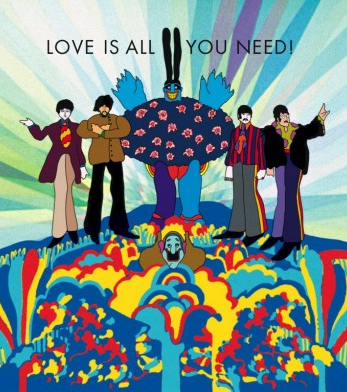
Beatles All You Need Is LoveAt first blush, this seems simple enough. Just follow Dave Ramsey’s advice for getting rid of your loans, car payments, and mortgage. Then live your life humming the Beatles, “All you need is love. All you need is love. All you need is love, love, love. Love is all you need.”
But before images of a debt-free, hippie-eyed, easy-peasy life fill your brain, realize what this actually means in light of what the Scriptures say love is. Love does no wrong to a neighbor. Love is patient and kind. Love does not envy or boast. Love is not arrogant or rude. Love does not insist on its own way. Love bears all things. Love hopes all things. Love endures all things. And remember, love never ends (1 Cor. 13:4-8).

So, when this text says to owe no one anything except love, it is saying that we owe one another absolutely everything because love fulfills the Law. All the Commandments, every last one of them, can be summed up with one little sentence, “Love your neighbor as yourself.”

When you think about what that simple phrase, “Owe no one anything, except to love each other,” really means, those few opening words of our text should accuse and terrify us. To the sinner those words could just as easily be, “Go to hell.” So, sinner, repent.

But Paul doesn’t seem to be throwing down the hammer of the Law here. And, in fact, he isn’t. Paul isn’t writing these words to sinners – at least they aren’t only sinners. Paul is writing these words to sinners who are Christians. So, these words are for you who believe and are walking in the way of righteousness.

Christian, since you are loved unconditionally by Christ, love one another. But how do you do that? How can you love others perfectly as the Law demands? Trying harder, being more resolute, and making promises to do better haven’t worked in the past. And it won’t work in the future. So how can you keep the Law which you have never kept before?

The only way for sinners to keep the Law is to have the Law kept for us. God be praised, this is what Christ has done.

Christ has fulfilled the Law for you. He loved you as Himself. Just as Jesus came riding into Jerusalem to lay down His life on the cross for you, He also came and was born in Bethlehem to lay down His life while holding nothing back from you.

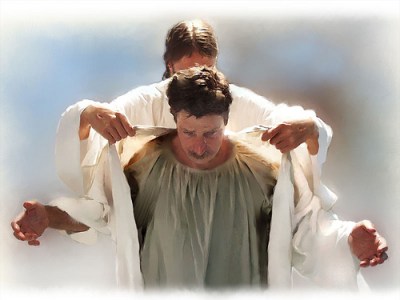
Clothed in ChristSo, as our text says, put on Christ. Clothe yourself in Him. Make His life, His obedience, His perfection your coat, your suit, your dress, your shirt, your shorts, your jeans, and your pajamas. How do you do that? Galatians 3:27 says, “As many of you as were baptized into Christ have put on Christ.”
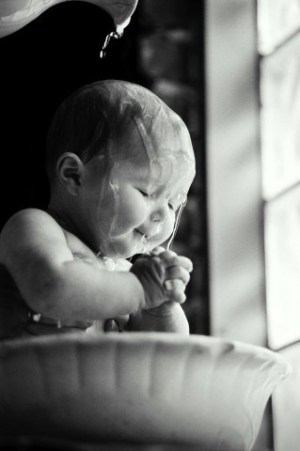
Dear Colt, today you are Baptized. Today, Christ has connected His Word and promise of forgiveness, life, and salvation to water. So, as that water poured on to you, it didn’t simply clean your head. Instead, God’s promise is that in your Baptism, He covered you with Christ.

Colt, today you are a Christian. So, today you begin the constant life of following Christ and loving your neighbor. And this command to love your neighbor as yourself is a command that you will fail to keep. But when you fail, confess that for the sin that it is, and believe. Believe in Christ’s forgiveness remembering that Scripture declares that you are loved perfectly by Christ. Rejoice in that love. And, go, love your neighbor.

Repent. Rejoice. Repeat. Again and again and again. And this is the case for all of you who have been Baptized.

But you say, “Pastor, I keep sinning. My fallen, sinful desires have gotten in the way. I keep failing to fulfill the command to love. There has to be something more.”

Baptism 2Well, there is something more, but it isn’t anything different. Repent again. Cast off the works of darkness again. Put on Christ again. Return to the promises God made when made you His child, when you were born again of Water and the Spirit (Jn. 3:5) in your Baptism.

Repent. Rejoice. Repeat. In other words, be a Christian. Amen.

The peace of God, which surpasses all understanding, will guard your hearts and minds in Christ Jesus. Amen.

God’s New Name – Sermon for the First Sunday in Advent on Jeremiah 23:5-8 & Matthew 21:1-9

Listen here.

Jeremiah 23:5-8

5 “Behold, the days are coming, declares the Lord, when I will raise up for David a righteous Branch, and he shall reign as king and deal wisely, and shall execute justice and righteousness in the land. 6 In his days Judah will be saved, and Israel will dwell Jeremiah 23_6 Righteousnesssecurely. And this is the name by which he will be called: ‘The Lord is our righteousness.’

7 “Therefore, behold, the days are coming, declares the Lord, when they shall no longer say, ‘As the Lord lives who brought up the people of Israel out of the land of Egypt,’ 8 but ‘As the Lord lives who brought up and led the offspring of the house of Israel out of the north country and out of all the countries where he had driven them.’ Then they shall dwell in their own land.”

Matthew 21:1–9

1 Now when they drew near to Jerusalem and came to Bethphage, to the Mount of Olives, then Jesus sent two disciples, 2 saying to them, “Go into the village in front of you, and immediately you will find a donkey tied, and a colt with her. Untie them and bring them to me. 3 If anyone says anything to you, you shall say, ‘The Lord needs them,’ and he will send them at once.” 4 This took place to fulfill what was spoken by the prophet, saying,

5 “Say to the daughter of Zion, ‘
Behold, your king is coming to you,
humble, and mounted on a donkey,
on a colt, the foal of a beast of burden.’”

6 The disciples went and did as Jesus had directed them. 7 They brought the donkey and the colt and put on them their cloaks, and he sat on them. 8 Most of the crowd spread their cloaks on the road, and others cut branches from the trees and spread them on the road. 9 And the crowds that went before him and that followed him were shouting,

“Hosanna to the Son of David!
Blessed is he who comes in the name of the Lord!
Hosanna in the highest!”

jesus-triumphal-entry-palm-sunday

Grace, mercy, and peace be to you from God our Father and from our Lord and Savior, Jesus Christ. Amen.

The Exodus, when God led His people out of slavery in Egypt, was the main event of salvation in the Old Testament. The slaughter of the Passover lamb whose blood protected God’s people from the angel of death. The parting of the sea to release God’s people from the land of slavery on dry ground. The guidance of cloud by day. The protection of the pillar of fire by night. And the culmination when God gave of the Law on Mt. Sinai saying, “I am the Lord your God, who brought you out of the land of Egypt, out of the house of slavery” (Ex. 20:2). All those actions were the main celebration of the people of God. So, when God’s people called upon Him, they would name Him, “the God who brought us out of land of Egypt.”

But in today’s Old Testament text (Jeremiah 23:5-8), God declares through Jeremiah that He will be called by a new name, “the Lord is our righteousness.” God would no longer be known as the one who brought His people out of the land of Egypt because greater things were coming. God would bring about a better, more lasting deliverance. The days were coming when God would raise up for David a righteous branch. This offspring of David would reign as king. He would cause God’s people to be saved, and under Him they would dwell securely.

Our Gospel text today (Matthew 21:1-9), is the beginning of that great event. Jesus rides into Jerusalem, into the royal city. He rides toward the cross – for you.

Jesus is your Lord. He is your righteousness. He rules not over a political kingdom, but over an eternal kingdom. Jesus is the Savior that the all great events of the Exodus were pointing forward to. He is your Passover Lamb; faith points toward Him and the angel of death passes over you. He is the pillar of fire who lights your way through the darkness. He is the cloud protecting you from the scorching heat of God’s wrath. He is the one who brings you out of a foreign land full of death and sin.

Jesus’ death and resurrection stands as the central event in the history of the cosmos. The cross and empty tomb is what all of Scripture pointed forward to. God coming and reconciling you back to Himself is the story and the teaching of all the Scriptures (Jn. 5:39).

That is why the Church has its own unique calendar that centers around Jesus’ death and resurrection. Having such a calendar isn’t commanded in Scripture, but it is a helpful tool prepared Advent Wreath 1for us by the saints who have come before us. Today, this first Sunday in Advent, is the beginning of a new Church year.

Advent is not about us getting ready for Christmas to meet baby Jesus in a manger. Instead it is getting us ready for Christ’s coming in glory to judge the living and the dead. And so, we repent. We repent because Jesus will come on the Last Day to judge all mankind, and sadly for most it will be a day of terror.

But not for you, Christian. Jesus, your Savior, is your righteousness. He died to make you His own. Because of what He has done, you are declared righteous. And we, as God’s people prepare for His return by receiving Him as He comes to us in His Word and as He comes here and now in Bread and Wine given to us for the forgiveness of our sins.

And so, we join our voices with those who welcomed Him into Jerusalem, “Hosanna,” which means, “Lord, save us now.” And He does because He is our righteousness. Amen.

The peace of God, which surpasses all understanding, will guard your hearts and minds in Christ Jesus. Amen.