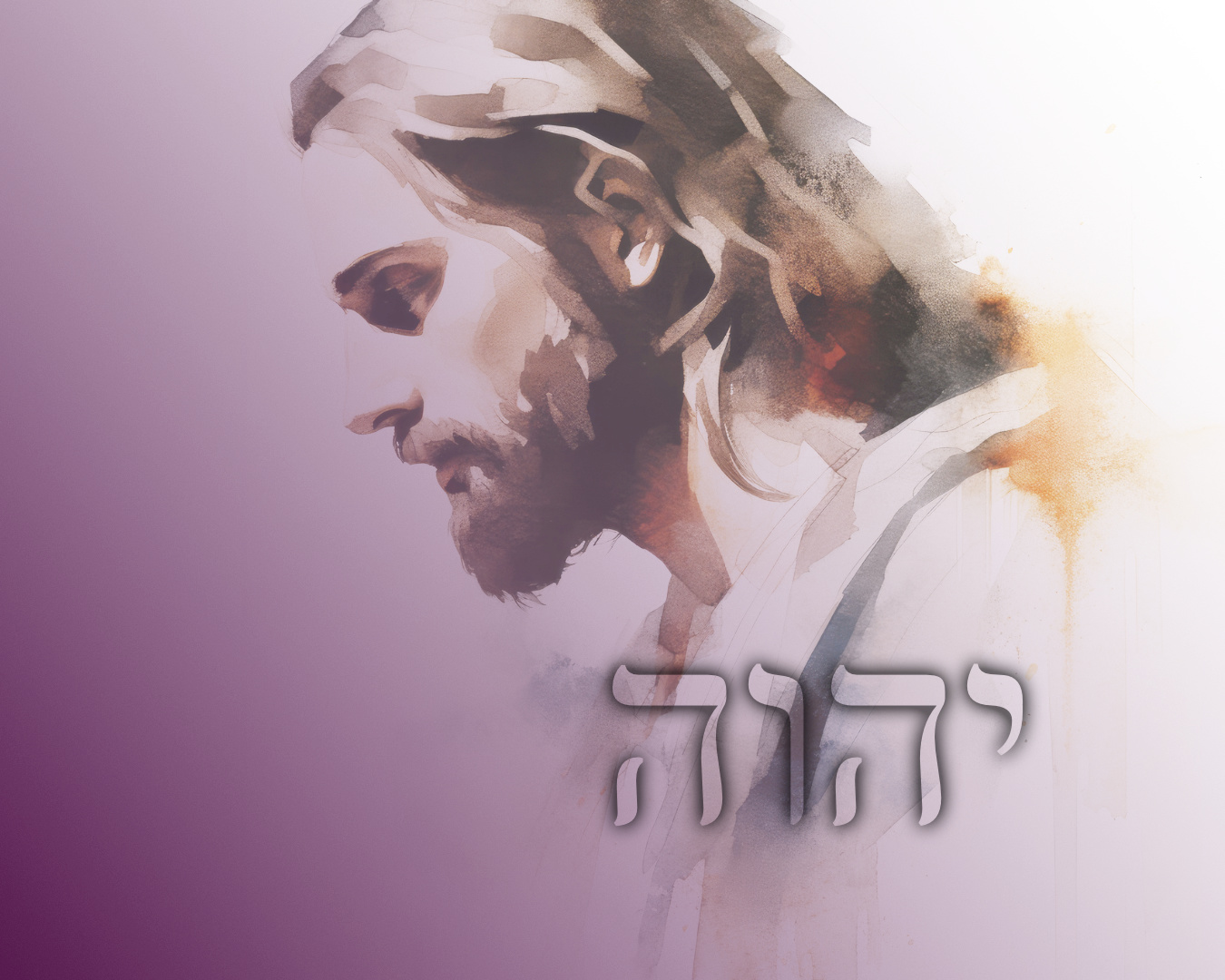
I Am the Light of the World – Sermon on John 9:1-7 for Midweek Lent 1

The Scripture readings for tonight’s service are Psalm 27:1-4Isaiah 42:1-72 Corinthians 4:1-6; and John 9:1-7.

In the name of Jesus. Amen.

When the disciples see this man who was born blind, they rightly recognize something is off. Blindness isn’t the way things should be. Eyes were created to see, but this man’s eyes are dark. That isn’t right. There should be light in those eyes, but they are dark with blindness. The disciples are correct in sensing the disconnect, but their answer misses the mark.

Notice that the disciples only ask a question, “Who sinned, this man or his parents, that he was born blind?” but their question assumes that sin is the answer for this particular darkness. Instead of playing “Pin the Tail on the Donkey,” they’re playing “Pin the Blame on the Sinner.” They suppose that some specific sin is the reason he had never looked into his mother’s eyes, never seen a sunrise, never seen anything. The disciples were simply trying to make sense of the darkness with guilt and blame. Too often, we do the same.

In a world that is darkened by sin, we want to make sense of why things are off-kilter. We grope around for an answer to why. “Why is there this darkness?” Sadly, the most common explanation we have for darkness is to try to assign blame. We do the same thing all the time. “Whose fault is this?” “Who can we blame?” Those kinds of questions are asked all the time in hospital rooms, at gravesides, when a marriage grows cold, and whenever things aren’t as they should be. It’s our vain search for an answer to why darkness exists.

Jesus’ answer is so wonderful. It’s a shocking answer that should lift our dark hearts. Listen to how it frees: “It wasn’t that this man sinned, or his parents” (Jn. 9:3). In other words, not every blindness, not every broken relationship, not every disease is the direct result of a specific sin. Sure. Of course. Suffering flows directly because of the Fall. Sin is what brought suffering and disease and death and darkness into God’s good creation. But Jesus doesn’t let us play the blame game that crushes others with guilt. Christ says, “It was not that this man sinned, or his parents, but that the works of God might be displayed in him” (Jn. 9:3). God is going to display His saving works in and toward and through the blind man.

This text we just read was not the first time Jesus said, “I am the Light of the World.” Jesus first said it back in Jn. 8:12during a tense exchange with the Pharisees that we aren’t going to rehash. Just know that Jesus had already said that He is the Light of the World, but He says it again before He heals this man who was blind from birth. 

We heard in our Psalm tonight (Ps. 27:1-4), “Yahweh is my light and my salvation.” Here, Jesus shows that He is that light and salvation. He is the same God who began creation by saying, “Let there be light” (Gen. 1:3Jn. 1:3), and here He proves that He is God in the flesh by doing something only the Creator can do. He heals the blind man with actions that replicate the creation of Adam.

In the beginning, God took dust from the ground that was wet from a mist; God used that mud to form Adam’s body and breathed into Adam’s nostrils the breath of life (Gen. 2:6-7). Jesus doesn’t have that same mist to make mud, so He creates His own. Right there in the dirt of Jerusalem, the Creator is at work again. Our Lord spits on the ground and spreads that mud on the man’s eye sockets (Jn. 9:6). So, we should see that Jesus is not only healing the man – He is creating. He is showing that He is the One who spoke light into existence at the very beginning.

At the end of our Old Testament reading tonight (Is. 42:1-7), Isaiah spoke about Yahweh’s Servant who was coming as “a light for the nations, to open eyes that are blind, to bring prisoners from the dungeon, from the prison those who sit in darkness” (Is. 42:6-7). Jesus is that Servant, and He is doing exactly that here. A little bit later, John tells us that Jesus did this creative work on a Sabbath (Jn. 9:14). It’s a new Sabbath of a new creation that is free – totally free – from the darkness of sin.

Like this blind man, you and I were born spiritually blind. We stumbled around in the darkness of our sin and chased after the shadows. But Jesus has come as the Light and took on our darkness. As He hung on the cross, darkness fell over the earth, and Jesus cried out, “My God, My God, why have You forsaken Me?” (Mt. 27:45-46). God had forsaken Jesus so that your sin – every dark thought, every selfish choice, every time you blamed someone else for your pain – would be paid for completely.

Three days later, the Light of the World burst forth from the grave. Now, the risen Christ continuously shines out of the darkness and into your heart. In His brightness you have the light of the knowledge of the glory of God in the face of Jesus Christ (2 Co. 4:6).

Dear saints, Jesus, the Light of the World, continues to display the works of God in you (Jn. 9:3). Look again at Jn. 9:4where Jesus says, “We must work the works of Him Who sent Me while it is day.” In the past, I’ve always assumed that Jesus is still talking to the disciples because He’s answering their blame and guilt question right before. But after He corrects their wrong assumption, the disciples drop out of the account. They aren’t involved in the healing of the man in the rest of our text or even in the rest of Jn. 9. In fact, the disciples aren’t even mentioned again until Jn. 11:7. The text doesn’t specifically say it, but the way John writes this, you are to see Jesus dismiss the disciples’ blame question and then turn to the blind man when He says, “We must work the works of Him Who sent Me while it is day,” because it’s the man who was born blind who works with Jesus for the rest of the chapter.

Jesus does the work of creating, healing, and restoring. The blind man does the work of receiving, going, washing, and seeing. And if you keep reading through the rest of Jn. 9 – which I strongly encourage you do – the now-seeing man does the work of believing, confessing, and worshiping (Jn. 9:35-38; cf. Jn. 6:29). But notice that all of the man’s works are a direct result of Christ shining into his darkness. And that, dear saints, is exactly how He still works in you.

Jesus, the Light of the World, has swallowed the darkness and buried it in His now, and forever, empty tomb. Christ’s light shines in the darkness, and the darkness has not, and will not ever, overcome it (Jn. 1:5). Jesus is still in the world. He promises to be with you always, to the end of the age (Mt. 28:20). He remains in the world now as the unconquerable Light of the World (Jn. 9:5). Live in His light. Let His glory shine into and through you. And watch the darkness flee. Amen.

The peace of God, which surpasses all understanding, will guard your hearts and minds in Christ Jesus (Php. 4:7). Amen.

Limping – Sermon on Genesis 32:22-32 for the Second Sunday of Lent

Genesis 32:22–32

22 The same night he arose and took his two wives, his two female servants, and his eleven children, and crossed the ford of the Jabbok. 23 He took them and sent them across the stream, and everything else that he had. 24 And Jacob was left alone. And a man wrestled with him until the breaking of the day. 25 When the man saw that he did not prevail against Jacob, he touched his hip socket, and Jacob’s hip was put out of joint as he wrestled with him. 26 Then he said, “Let me go, for the day has broken.” But Jacob said, “I will not let you go unless you bless me.” 27 And he said to him, “What is your name?” And he said, “Jacob.” 28 Then he said, “Your name shall no longer be called Jacob, but Israel, for you have striven with God and with men, and have prevailed.” 29 Then Jacob asked him, “Please tell me your name.” But he said, “Why is it that you ask my name?” And there he blessed him. 30 So Jacob called the name of the place Peniel, saying, “For I have seen God face to face, and yet my life has been delivered.” 31 The sun rose upon him as he passed Penuel, limping because of his hip. 32 Therefore to this day the people of Israel do not eat the sinew of the thigh that is on the hip socket, because he touched the socket of Jacob’s hip on the sinew of the thigh.

In the name of Jesus. Amen.

Everyone faces difficulties, but what do you do when something difficult stares you in the face? It probably depends on the situation. You might try to find another, easier alternative. You might try to get others to help and assist you. You might try to avoid that difficult thing altogether. A lot of times, the most difficult tasks come with the highest reward, so if you always try to avoid difficulties, you are also going to miss out on some of the greatest joys.

On the 4th of July in 2015, we were on a family trip in Colorado. We wanted to find a nice mountain hike that all of could enjoy. Our kids were 2, 4, 6, and 8 at the time. A quick search yielded a recommendation of the Hanging Lake trail. The review had some pictures that were breathtaking. It said the hike would only took an hour and claimed it was great for families. The person who wrote that review must be the 17th generation of sherpas who lead expeditions up Mt. Everest because I’ve since learned that that trail climbs 1,000 ft. (basically, 90-100 flights of stairs) over 1.2 miles. The thing that kept us going was hearing people hiking back down encouraging us, “Keep going. You’ve got a way to go still, but it’s totally worth it.” They were right. I can show you pictures after the service, but it’s one of the most stunning places I’ve seen on God’s green earth. Difficult? Absolutely. Worth all the pain and struggle? Also, yes.

God had given a promise to Abraham that the Savior first mentioned in the Garden of Eden (Gen. 3:15) would be one of his descents (Gen. 22:17). Jacob here was the third in that line. And Jacob faced difficulties his entire life, and, yes, many of those were self-inflicted. 

Jacob’s difficulties started in his mother’s womb as he wrestled with his twin brother, Esau before they were even born (Gen. 25:19-26). When they were older, Jacob took advantage of Esau’s hunger and purchased Esau’s birthright for a cup of stew (Gen. 25:29-34). Later, Jacob deceived their father, Isaac, into passing the blessing that was first given to Abraham on to him even though he was younger than Esau (Gen. 27:1-40). Because of that deception, Esau planned to kill Jacob, who had to flee (Gen. 27:41-45).

During his exile, Jacob ends up working for a guy named Laban, and his wages for seven years of work would be marrying Laban’s daughter, Rachel. But Laban tricked Jacob and gave him his daughter Leah instead of Rachel. Still, Jacob agreed to work another seven years to marry Rachel (Gen. 29:15-20). Despite all of the deception of his father-in-law, Jacob continued to work for Laban and was paid with certain portions of Laban’s flocks. But that was difficult too. Jacob had to plot against Laban throughout his employment (Gen. 30:25-43).

Finally, God told Jacob to move away from Laban and return to his origins (Gen. 31:3). But as he’s returning home, Jacob hears that Esau is marching toward him with 400 men, which was the standard size of an army in that day (Gen. 32:6). So, what does Jacob do? He prays, and I’ll summarize his prayer (Gen. 32:9-12), “Ok, God. You told me to go back home and promised to do good to me. I’m really thankful about that, but now Esau is coming, and I’m afraid that he’ll kill me. But You’ve promised to be with me. So, what’s going on?” But God doesn’t answer.

So, Jacob does what he’s always done when he is in a difficult situation. He takes matters into his own hands and starts plotting and scheming. He sends a massive, expensive gift from his flocks to Esau (Gen. 32:13-15). That’s his “plan A.” But Jacob isn’t done plotting. He also divides his family into two camps figuring, if Esau attacks one camp, the other one will be able to escape (Gen. 32:7-8). That’s Jacob’s “plan B.” Jacob also sends those two camps ahead of him across a stream while he stays behind on the other side. It almost seems like that’s his “plan C” thinking that if Esau wipes out his family at least he’ll escape so God can keep His promise. Like his grandfather Abraham did before him with Hagar and Ishmael, Jacob decides he needs to matters into his own hands so God can keep His promises.

God did have a plan to get Jacob out of this difficult situation, but God isn’t going to give Jacob a large army. It won’t be because of Jacob’s gift to Esau, or letting half of Jacob’s family escape, and God doesn’t deliver Jacob from this difficulty by anything Jacob does on his own.

Instead, God comes down. God comes down to wrestle with Jacob who, at this point, is 96 years old. Sure, Jacob lived to be 147 (see Gen. 47:28), but wrestling with anyone for an entire night, and having your hip thrown out of joint is going to take a toll on a person. So when you consider the whole context here, it seems as though God has two intentions with this wrestling. On the one hand, is seems like God is letting Jacob take out all his frustration on God Himself in a physical way. On the other hand, it seems like this wrestling is intended to make Jacob look weak. Keeping Jacob up all night isn’t enough, so God wrestles with him. And even that isn’t enough, so God also touches and dislocates Jacob’s hip socket.

The next day, when Jacob limps toward Esau, he looks so weak and pathetic that Esau runs to Jacob, and the two brothers embrace and weep together (Ex. 33:1-4).

All of this is further proof of what God says in 2 Cor. 12:9-10, “My grace is sufficient for you, for my power is made perfect in weakness.” This wrestling match left its toll on Jacob. For the rest of his life, Jacob was limping, and that limping served as a constant reminder that he had held on to God and refused to let God go until God blessed him. Every step of the rest of Jacob’s life, served as a reminder of that night when Jacob grappled with God and was blessed through it – even though that blessing came through the difficulty of limping the rest of his life.

Dear saints, I have two things for you to remember from this account. First, when you look at your life and all of God’s promises to you, remember first that you don’t need to give yourself over to bitterness or political machines or other contrived solutions to fight the difficulty and evil you face. Don’t think that God can only bring about His promises if you get your hands dirty with anger, hostility, and bitterness. God keeps His promises and is always faithful.

Second, remember that God knows what you need better than you or I do. And what you need may be a difficulty. Dear saints, whatever difficulty you have – if it’s pain or trauma or a disease that the doctors cannot treat or heal – yes, this is definitely a difficult, horrible thing that you have to face. But it is not a reason to despair and stop trusting God. Instead, it’s is a call for you to hope. In the brokenness of your flesh, remember Jesus who was broken Himself in order to crush the head of the serpent. And the day is coming when you and all who believe in Christ will be raised to a new life with no more suffering, pain, anguish, or difficulty.

Again, God’s power is made perfect in weakness. There’s no greater proof of that than in what Jesus has done for you by taking on your flesh; being beaten, mocked, whipped, and crucified; and by dying the death you and I deserve. So, in our limping, we do not lose heart, as 2 Cor. 4:16-18 says, “Though our outer self is wasting away, our inner self is being renewed day by day. For this light momentary affliction is preparing for us an eternal weight of glory beyond all comparison, as we look to not to the things that are seen but to the things unseen. For the things that are seen are transient, but the things that are unseen are eternal.” 

Dear saints, when you face difficult things and are struggling to even limp along, lean on God. Trust His promises. Jesus is there with you in your limping. Amen.

The peace of God, which surpasses all understanding, will guard your hearts and minds in Christ Jesus. Amen.