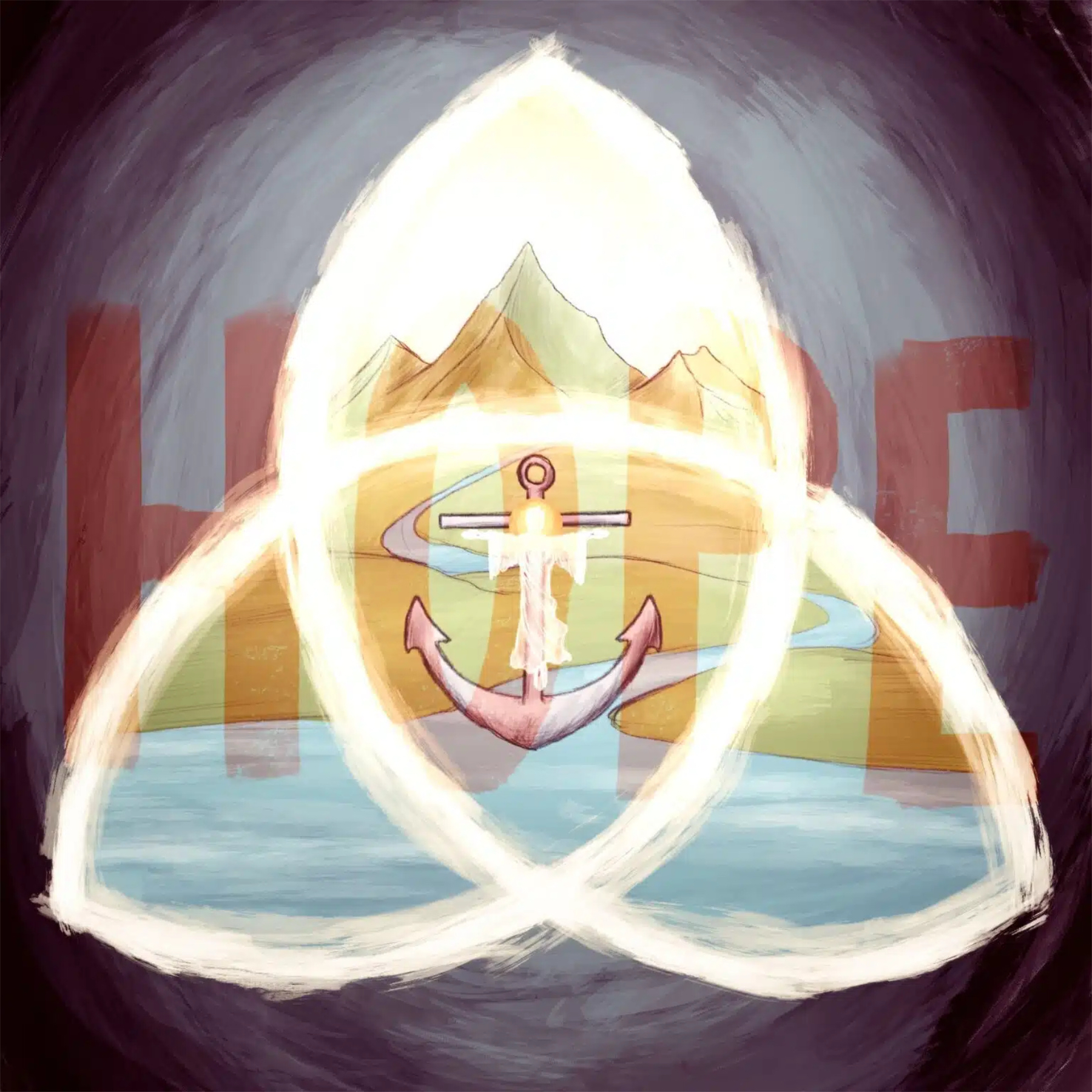
Following the Shepherd – Sermon on 1 Peter 2:21-25 for the Third Sunday of Easter

1 Peter 2:21-25

Alleluia! Christ is risen! 
He is risen indeed! Alleluia!

In the name of Jesus. Amen.

This may or may not shock some of you, but I am old enough that I learned how to write in cursive in elementary school. My 2nd Grade teacher, Mrs. Ranum, would walk across the front of the classroom, lick her fingers to count out the right number of worksheets, plop them on the front desk of each row, and say, “Take one and pass the rest back.” Then we would spend time tracing those dotted lines with all the curves and loops. We’d swoop and swish across those lines again and again. All of that tracing was designed to give our young fingers and wrists the muscle memory so our letters would be legible.

Those dotted lines were the standard we all started with. But over time each of us developed our own unique style—some more legible than others. No two people have identical handwriting. 

Here in our text from 1 Peter, the apostle refers to Jesus as our “example,” and the Greek word he uses is hypogrammos. This word appears only here in the entire New Testament. Literally, it means something you write over or trace—like those dotted lines on the worksheets Mrs. Ranum handed out. When you trace something, there are many different ways to start and finish the strokes. Some are smoother than others. But the goal is always the same: your writing should resemble the the original.

Notice that Jesus is our hypogrammos in a very particular way. Peter is not calling us to trace Jesus in every way. You don’t trace Him so that you get left in the temple at age twelve, or walk on water, or multiply loaves for thousands of people, or heal the sick, or raise the dead. And it’s good that Peter isn’t calling you to trace Jesus in those ways, because you can’t do any of those things. Sure, God could do some of them through you, but none of those things are on Peter’s radar here.

Instead, the focus is to trace Jesus in the way He endured suffering—like a sheep before its shearers is silent (Is. 53:7). The verse just before our text says that when you do good and suffer for it and endure, this is a gracious thing in the sight of God (1 Pet. 2:20).

That is the kind of suffering to which you have been called. Because Christ also suffered for you, leaving you an example—a hypogrammos, a pattern to trace—so that you might follow in His steps. Jesus committed no sin, and absolutely no deceit in was found in His mouth. He spoke pure, unfiltered truth. And He suffered for it. When He was reviled, He did not revile in return. When He suffered, He didn’t threaten. He simply trusted that God would judge justly. In and through all of that, Jesus Himself bore your sins in His body on the tree, that you might die to sin and live to righteousness. By His wounds, you are healed (1 Pet. 2:21-24).

Dear saints, Peter wrote these words to Christians who felt like exiles and aliens in their own world and like scattered sheep far from home. Many of them were servants living under masters who could be harsh and unfair. For them, suffering was not theoretical. It was a daily reality. And Peter doesn’t coat it. He says plainly, “This is what you have been called to do.” Because following Jesus, your Shepherd, means walking in His steps, and those steps often lead through pain and suffering because we still live in a broken world.

But look at the pattern your Shepherd left—the hypogrammos that we are to trace. First, He was completely innocent. “He committed no sin, and no deceit was found in His mouth.” That’s an echo of the Suffering Servant song in Is. 53. Jesus didn’t deserve a single lash, a single insult, a single nail. Yet He took it all like a lamb led to the slaughter (Is. 53:7) without fighting back.

When they hurled insults at Him during His trial and on the cross, He didn’t fire back with clever comebacks or righteous anger. The soldiers mocked Him. The crowd shouted, “Crucify!” Even the thieves crucified beside Him joined in the abuse (Mt. 27:44). Yet, through all of that, Jesus remained silent. He didn’t threaten. Instead, He entrusted Himself to the One who judges justly. He prayed, “Father, forgive them” (Lk. 23:34). He handed all of His suffering over to His heavenly Father.

You and I can’t do exactly as Jesus did. We can’t do this without sin. We can’t shed holy, perfect blood to pay the price for the sins of the world. We can’t do that. But we can trace His pattern and follow His steps. We don’t have to demand our rights. Instead, we can quietly entrust ourselves to the God who sees every injustice.

Now, before we go any further, let’s be clear about what this is not. This is not a call to ignore evil. It does not mean you must stay in situations where you or your children are in danger. Peter is not giving a blank check for evil to run rampant. Instead, he is speaking to believers who are already doing good and suffering for it anyway. When the world hates you simply because you belong to Christ; when standing for truth costs you friends, or a promotion, or respect in the community—keep tracing your Shepherd’s steps. Do not repay evil with evil. Do not let bitterness take root. Instead, entrust yourself to the Judge who sees it all.

The reason we can do this is that Jesus didn’t just leave us an example. He has also given us the power to follow Him. The power of His own resurrected life. Look again at v. 24, “He Himself bore our sins in His body on the tree, that we might die to sin and live to righteousness. By His wounds you have been healed.”

Jesus is more than a model on the page. He is your Substitute. Dear saints, you have the comfort of knowing what Christ accomplished on the cross is for you and your eternal destiny. He took your wandering. He took your straying like sheep. He took your selfish instincts to either strike back or run away—He carried all of it in His own body to the cross. The stripes that should have fallen on us fell on Him. The death we deserved, He swallowed whole. And by those wounds you are healed. You are forgiven. You are made new.

That healing isn’t just a feeling in your heart. It’s a real dying and rising that happens every day. You die to sin and to the urge to lash out. You die to the desire to demand your own way and to nurse grudges. Now, you live to righteousness. You live in the freedom of those who know their Shepherd has already won the victory. So you don’t need to win or prove anything. It is done. Finished.

Whatever your suffering is—whether it’s physical, emotional, or the ache of loneliness—know that it is known by your God and Savior. Know that He isn’t ignoring you or your pain. Instead, He is using that pain to shape you to look more and more like your Shepherd.

You don’t trace those dotted lines alone. Through faith you have returned to the Shepherd and Overseer of your souls. Jesus isn’t standing at a distance shouting instructions. He is your living Shepherd who goes before you. He knows every valley because He walked through the darkest one first. He gathers you when you stray. He binds up your wounds with the same hands that still bear the scars. He leads you beside still waters even when the world feels like a raging storm.

Dear saints, the call to follow the Shepherd in suffering is not a burden meant to crush you. It is an invitation into the life Jesus has already lived for you and now lives in you by His Spirit. When you fail—and we all do—He does not cast you out. He brings you back, again and again, because His sheep hear His voice and follow Him (Jn. 10:27-28).

Dear saints, whatever suffering or injustice or hardship you face, look to your hypogrammos. Trace the steps of the One who suffered for you. Entrust yourself to the Father who judges justly. Die to sin and live to righteousness. By His wounds you have been healed. You belong to the Shepherd and Overseer of your souls. And He will not—never, not ever—lose one of His sheep. Amen.

Alleluia! Christ is risen! 
He is risen indeed! Alleluia!

The peace of God, which surpasses all understanding, will guard your hearts and minds in Christ Jesus (Php. 4:7). Amen.
Unexpected Peace – Sermon on John 20:19-31 for the Second Sunday of Easter

John 20:19-31

Alleluia! Christ is risen! 
He is risen indeed! Alleluia!

In the name of Jesus. Amen.

To get where we’re going, I want to pick up right where last week’s sermon left off with a little more ‘storytelling’ (true ‘storytelling’) about the day of Christ’s resurrection. Last week, we walked through the events of that first Easter morning, ending with Jesus meeting Mary Magdalene in the garden. Today’s Gospel text takes us the events of that same evening. But what happened in between?

Sometime after Jesus left the garden, He caught up with two disciples, who aren’t numbered with the Twelve, as they walked to Emmaus (Lk. 24:13-35). One was named Cleopas, but Scripture leaves the other unnamed. Emmaus was a small village, probably just a cluster of houses that were about an hour’s walk west of Jerusalem.[1] Like Mary in the garden, these two disciples didn’t recognize Jesus at first. Mark tells us He appeared to them in “another form” (Mk. 16:12). In other words, Jesus intentionally made Himself unrecognizable—at least at first.

Only when they reached Emmaus and sat down for a meal did it happen. Jesus took bread, blessed it, broke it, and gave it to them. Then their eyes were opened. They recognized Him, and He immediately vanished from their sight (Lk. 24:30-31). They rushed back to Jerusalem to tell the Eleven and everyone gathered with them (Lk. 24:33). It wasn’t just the Eleven. There were also the women who had been at the tomb that morning were there too, along with others. 

I also have to mention that sometime in the middle of all this, Jesus had appeared to Peter. We’re not sure when because Scripture doesn’t give any details of that meeting, but it clearly states in two separate places that it happened (Lk. 24:341 Co. 15:5). As the two disciples from Emmaus are telling the others about how they had walked with Jesus, eaten with Him, and finally recognized Him “in the breaking of the bread,” suddenly Christ appears right in their midst (compare Lk. 24:36Jn. 20:19). Jesus just popped into the room.

It shouldn’t have been possible. They had locked the doors—barricaded them, really. In those days, they didn’t have doorknobs or deadbolts like we do. Instead, they would lay a heavy beam across the door to keep it shut, but that didn’t stop the risen Jesus. He didn’t knock. He didn’t ask to be let in. He simply appeared. Unexpected, unannounced, and fullyrecognizable. He’s nothiding Himself from them. They know it’s Him.

Imagine the emotional rollercoaster they had ridden over the past 72 hours. The disciples had all vowed to follow Him even to death (Mt. 26:35Mk. 14:31). Yet when Jesus was arrested, they all fled (Mt. 26:56Mk. 14:50). They had abandoned Him. He had been brutally beaten, crucified, and buried. In their minds, all their hopes for salvation were buried with Jesus (Lk. 24:21). For them, it seemed that heaven was forever closed. But that morning, they heard from the women that He was alive. Raised. Resurrected. On the one hand, it seemed too good to be true (Lk. 24:41). On the other hand, it was terrifying because they knew how badly they had failed Him.

There He stood in their midst. But they didn’t know why He had come. They didn’t know what He was going to say or do to them.

Remember Adam and Eve in the Garden of Eden. After they ate from the tree, they sewed fig leaves together to cover their nakedness and shame. Then they heard the sound of God walking in the Garden that evening, and they hid (Gen. 3:7-8). They hid because when you have utterly failed someone, the last place you want to be is with that person. But God was seeking them out. He still wanted to be with them. He called out, “Where are you?” (Gen. 3:9) and gave them chance after chance to repent (Gen. 3:9-13). Even though Adam and Eve didn’t repent and passed the blame around—Eve to the serpent, Adam to his wife and even to God Himself. They didn’t know that God had come to give them the promise that He would crush the serpent’s head through the Seed of the Woman (Gen. 3:15).

Here, Jesus had come to announce that crushing was done. He came to proclaim that sin, death, and Satan were defeated by His death and resurrection. So, He doesn’t wait for them to come to Him. Again, He seeks them out and steps right into the middle of their fear and failure. Christ opens His mouth, and His first words aren’t, “What happened?” or “Why did you fail so badly?” or “How could you?” Even before they can get out an, “I’m sorry,” Jesus unexpectedly says to them, “Peace be with you” (Jn. 20:19).

This isn’t just a normal greeting. This is Jesus’ full, total, complete absolution. He had come to bring peace. His words deliver the wholeness and reconciliation that He had purchased with His own Blood on the cross. The peace that the angels had announced at His birth is now fulfilled in His resurrection.

To drive the point home, Jesus shows them His hands and side (Jn. 20:20). The nail prints. The spear wound. They are still there. But they are not marks of defeat. They are badges of His victory. By those wounds you are healed (Is. 53:5). Now, seeing those wounds doesn’t cause them regret or sadness. Instead, they are changed. Terror turns to gladness. Fear gives way to joy.

Then Jesus says it again, “Peace be with you. As the Father has sent me, even so I am sending you.” He breathes on them and says, “Receive the Holy Spirit. If you forgive the sins of any, they are forgiven them; if you withhold forgiveness from any, it is withheld.” Just as God had breathed life into Adam at the beginning of creation (Gen. 2:7), Jesus, the Son of God and new Adam, breathes the Holy Spirit into His people that first day of the new creation (2 Co. 5:17). And He gives them—and through them His whole church—the authority to deliver forgiveness in His name.

Dear saints, this unexpected peace is for you too. Jesus still comes unexpectedly into our locked-up lives and spaces we barricade because of fear, guilt, and regret. He comes through every barrier you can put up because He loves you. He brings you His absolution because the price has been paid. His peace is for you. Your sin Is forgiven. The tomb is empty. Death is defeated.

Because He has given you this peace, Jesus also sends you with it. As He was sent to seek and save the lost (Lk. 19:10), so He sends you. In your homes, schools, neighborhoods, you are ambassadors of Christ’s peace (2 Co. 5:18-20). When your husband or wife, children or parents, coworker or classmate fails you, you get to deliver and speak Christ’s forgiveness.

Oakley, that brings me to you. Today you are Baptized. Jesus has placed His name upon you (Mt. 28:19) and joined you to His death and resurrection (Ro. 6:3-5). Christ has breathed His life into you and given you the Holy Spirit (Act. 2:38-39). Even when you sin and fail, Christ repeatedly comes to you bringing you the peace of His absolution.

Oakley and all you saints, keep close to Him. Hear His Word so you don’t run from Him but to Him in faith. Hear from Him again and again, “Peace be with you. I have died for you. I am risen for you. In Me, you have life both now and forever.”

Alleluia! Christ is risen! 
He is risen indeed! Alleluia!

The peace of God, which surpasses all understanding, will guard your hearts and your minds in Christ Jesus (Php. 4:7). Amen.

[1]Luke 24:13 (ESV) mentions that the distance from Jerusalem to Emmaus is “about seven miles.” There are four possible sites for Emmaus. The one that seems most likely is current day Mozah which is 3.5 miles from Jerusalem. It is possible that Luke calculated the round-trip distance.

Replay – Sermon for the Resurrection of Our Lord

Today’s sermon is a chronology of the morning of our Lord’s resurrection from Matthew 28:1-15Mark 16:1-8Luke 24:1-12; and John 20:1-18.

A .pdf showing the Scriptural references for the chronological events of our Lord’s resurrection can be found here.


Alleluia! Christ is risen! 
He is risen indeed! Alleluia!

In the name of Jesus. Amen.

Because Jesus is risen, your sin and your guilt are forgiven. They are removed from you as far as the east is from the west (Ps. 103:12). Jesus has died for you. He is risen. Now, nothing can keep you in the grave. Nothing can legitimately cause you fear. The victory is won. God be praised.

This Easter sermon is going to be a little different than what I normally do on Easter. As a preacher, it’s easy for me to jump to the meaning of Christ’s Resurrection to the neglect of the fact of the Resurrection. After He died a real death on Good Friday, Jesus really rose and came out of His tomb. This happened. As surely as you walked through those front doors, picked up a bulletin, and are now in this sanctuary, Jesus walked out of the tomb on this very day, 1,993 years ago.

I want to impress this on you because you can hear all sorts of false preachers who will say stupid things like, “Jesus may or may not have risen. We’re not really sure. But Easter isn’t about the event; it’s about the message.” That’s terrible. You can’t say that and still claim to be a Christian. Who cares about the message if the event didn’t happen? Today, we’re going to simply let Easter be what it is: Jesus is risen.

To do that, imagine that we could sit in that garden, looking toward Jesus’ tomb, and watch everything that happens that morning. While you settle into your lawn chair, let me say this quickly: The year is 33 AD. It is April 5th. Yes, April 5th of 33 AD, the same date as today. I know the date we celebrate Easter moves around on our calendar. That’s simply because we use a slightly different calendar than the Jewish people used back then.

Anyway. We’re there in the garden, and it’s well before sunrise. Ready?

As you look toward the tomb, you will see that there are soldiers. They’re awake, probably mumbling to each other because they’ve been assigned to guard a dead body. They probably think it’s a demotion or something. They’ve been assigned to keep people from stealing the body (Mt. 27:62-66). You can also see the stone rolled across the entrance and it’s sealed tight.

Now, you can’t see this part, but behind that stone Jesus’ human soul is reunited to His human body. And His body is perfected. Jesus opens His eyes. He breathes again. He stands up and walks out of the tomb through the stone. The stone has not been rolled away—not yet. Jesus passes right through it and walks away. You don’t follow Him. You couldn’t—even if you tried. In 1 Peter 3:18-19, Peter tells us that Jesus, in His risen body, descends into hell to proclaim His victory over death.

But you’re still at the tomb. Soon after Jesus leaves the tomb, angels come down from heaven. One of those angels is a little rambunctious. He causes an earthquake, rolls the stone away, and sits on it (Mt. 28:2). He doesn’t sit on it because he’s tired. He’s mocking the stone. He’s laughing at it because it already failed to hold Jesus. This angel is bright like lightning, and his clothes are white as snow (Mt. 28:3).

The soldiers feel the earthquake, see this angel, and they are terrified. These big, strong, armed soldiers begin to shake in fear and fall down like dead men (Mt. 28:4). At some point—and I think it makes here before the women show up—the soldiers wake up again. They check the tomb, and it’s empty. This terrifies them even more. They’ve failed in their mission. They run off to tell the chief priests what happened (Mt. 28:11)

Now, the sun is starting to rise. You can hear footsteps and voices. The women are coming. There are at least five of them: Mary Magdalene, another Mary (the mother of James and Joseph [Mt. 27:56], the wife of Clopas [Jn. 19:25]), Salome, Joanna, and Luke says there are ‘others’ (Mt. 28:1Mk. 16:1Lk. 24:10Jn. 20:1). They’ve prepared their spices (Mk. 16:1Lk. 24:1) but forgot an important detail. Only as they get close do they realize they have no one to roll away the stone (Mk. 16:3).

But when they get close enough, they see that the stone is already rolled away (Mk. 16:4Lk. 24:2). That’s not what they expected. At this point Mary Magdalene turns and sprints away to tell Peter and John (Jn. 20:2). She’s going to tell them that someone has taken Jesus’ body. That’s what she assumes because she hasn’t seen the angels or heard them proclaim that Jesus is risen.

The rest of the women walk into the tomb (Mk. 16:5Lk. 24:3). It must have been a big tomb for all of them to fit inside. They enter and see two angels (Lk. 24:4). God gave one of them the task of announcing the Resurrection. (I wonder what race he won to get this privilege.) I like to imagine this angel has been rehearsing his speech for a while. He begins with a gentle joke (Lk. 24:5): “Why do you seek the Living One among the dead ones?” It’s almost like they are at the grocery store and he’s saying they’re in the wrong aisle. “You’re looking for avocados and salsa, but you’re in the aisle with cleaning chemicals.” “Why are you in a cemetery looking for the Living One? Silly ladies! That doesn’t make any sense.” Then, he goes on as we heard from Mark’s Gospel, “Don’t be alarmed. You seek Jesus of Nazareth, who has been crucified. He has risen. He is not here. See the place where they laid Him. Go. Tell His disciples and Peter that He is going before you to Galilee. There you will see Him, just as He told you” (Mk. 16:6-7Mt. 28:5-7Lk. 24:5-7).

Now those women run back to tell the disciples. As they’re going—so we don’t see this from our lawn chairs—Jesus appears to them and tells them the same good news the angel had (Mt. 28:8-10). Now, for a little while, it’s just us and the angels in the garden.

It’s maybe another half hour or longer—depending on how fast Peter and John can run. John comes running into the garden first because he’s a little younger than Peter. Remember, Mary Magdalene had run back to tell them. John wins the footrace and makes sure to record his victory in his Gospel (Jn. 20:3-4). John stops at the entrance and looks in. But Peter thinks the entrance of the tomb is the finish line and barges right in (Jn. 20:5-6). Peter doesn’t see any angels. He and John only see the burial cloth folded up neatly—as though Jesus simply made His bed (Jn. 20:7). It seems like Peter reaches the same conclusion that Mary Magdalene had: someone has stolen the body (Lk. 24:12). But John has a different look on his face. He begins to believe—even though he didn’t hear any angel announce it (Jn. 20:8). He simply remembers what Jesus had said and is the first to believe. Peter and John catch their breath and head back to where they were staying (Jn. 20:9). 

Now comes final scene of the morning. Mary Magdalene arrives back at the tomb. She’s all alone (Jn. 20:11-12). This is her second trip to the tomb. She’s probably walked or run about five miles this morning. She stands at the entrance and sees the two angels, but she is not afraid. The angels ask her, “Woman, why are you weeping?” She says, “They have taken away my Lord, and I do not know where they have laid Him” (Jn. 20:13).

Then, she turns around and sees Jesus standing there, but she doesn’t recognize Him. She thinks He’s the gardener (Jn. 20:14-15). Of course she thinks He’s the gardener! She sees the resurrected Jesus, the New Adam (1 Co. 15:45-49Ro. 5:14) in His perfected Body. Anyone who looked at Him would think He is a gardener. Like the angels, Jesus asks, “Woman, why are you weeping?” Then He adds, “Whom are you seeking?” (Jn. 20:15). She thinks that this gardener has taken Him, so she pleads, “Sir, if you have carried Him away tell me where you have laid Him” (Jn. 20:15).

Then Jesus simply says, “Mary” (Jn. 20:16). Only when she hears Jesus speak her name does she recognize Him. She falls at His feet. But Jesus says, “Don’t cling to Me yet. I have not yet ascended to the Father. Go and tell My brothers (i.e. the disciples) that I’m going to My Father and your Father, to My God and your God” (Jn. 20:17). It’s beautiful. The very men who had abandoned Him—Jesus now calls them His brothers. Mary turns from the tomb, leaves the garden, and runs back again to tell them that she has seen the risen Lord (Jn. 20:18).

Then Jesus Himself leaves the tomb. He never comes back. That’s it. That’s everything that happens in the garden that morning. You can pack up your lawn chair. Jesus isn’t coming back to the grave—never, ever, ever. Well… not until He returns to your grave, to your burial spot. In His resurrected and glorified body, Jesus will stand at your grave and call you out. And you won’t have to imagine it. You’ll see it with your own eyes (Job 19:27). Your Redeemer lives. And through faith in Him, so will you—for all eternity.

Alleluia! Christ is risen! 
He is risen indeed! Alleluia!

The peace of God, which surpasses all understanding, will guard your hearts and minds in Christ Jesus (Php. 4:7). Amen.
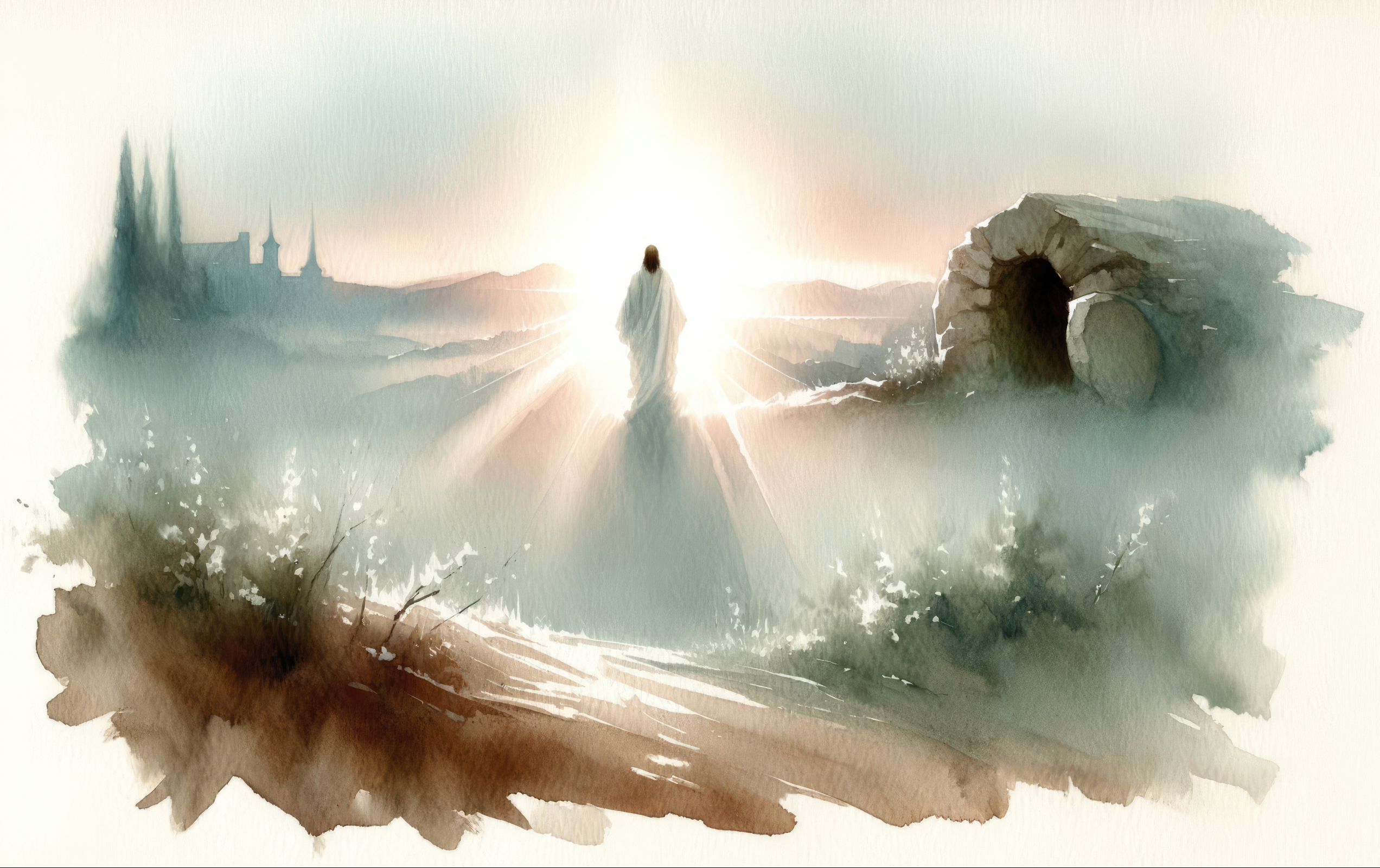
Already Through – Sermon on Exodus 14:10-15:1 and Matthew 28:1-7 for the Vigil of Easter

The bulletin for tonight’s service can be found here.

Exodus 14:10-15:1Matthew 28:1-7.

Alleluia! Christ is risen! He is risen indeed! Alleluia!

In the name of Jesus. Amen.

Picture that scene at the edge of the Red Sea. The people of Israel stand with their backs against the water. Pharaoh’s army is bearing down on them. Chariots thundering. Horses snorting. Spears pointed forward to charge. Fear grips their hearts. They cry to the Lord and turn to Moses in panic: “Is it because there are no graves in Egypt that you have taken us away to die in the wilderness? What have you done to us in bringing us out of Egypt?” (Ex. 14:11).

But Moses says, “Fear not, stand firm, and see the salvation of the Lord, which He will work for you today. For the Egyptians whom you see today, you shall never see again. The Lord will fight for you, and you have only to be silent” (Ex. 14:13-14).

The Lord does exactly what He promises. He fights for them. The angel of the Lord moves behind His people and stands between them and Egypt’s host. The sea parts. The people walk through on dry ground—a wall of water on their right and on their left. God Himself protects them. They pass through the sea.

Only when they are already through do the Egyptians pursue them. But the Lord throws them into confusion, clogs their chariot wheels, and crashes the sea on top of them. Not one of them remains. Then Moses and the people of Israel go on their way singing. “I will sing to the Lord, for He has triumphed gloriously; the horse and his rider He has thrown into the sea” (Ex. 15:1).

Dear saints, this is more than ancient history. It is a picture of your deliverance won by Christ on Good Friday and revealed the morning of the Resurrection.

The women make their way to the tomb. Their hearts are heavy with grief. They have watched their Lord be crucified. They arrive at the tomb expecting only death.

But suddenly an angel causes a great earthquake. He rolls back the stone, and sits on it. The guards tremble and become like dead men. But the angel turns to the women with the same kind of urgent comfort Moses had given to Israel: “Do not be afraid, for I know that you seek Jesus who was crucified. He is not here, for He has risen, as He said. Come, see the place where He lay. Go quickly and tell His disciples that He has risen and is going before you to Galilee. There you will see Him.” (Mt. 28:5-7).

Just as the people of Israel needed Moses to urge them forward, the women at the tomb also needed the angel to urge them forward. “Do not be afraid… go quickly and tell.” In both instances God had already fought the battle. The victory was already won. When the Lord fights for His people, He also calls them to leave fear behind and step into the new life He has already given.

Jesus, your Lord and Savior, has fought for you. On the cross He battled sin, death, and the devil—enemies much greater than Pharaoh and his whole army. And now, like then, He has triumphed gloriously.

By His death and resurrection, you have been delivered. Through the waters of Holy Baptism, you have passed through the sea on dry ground. Now, the devil and all his hosts have been drowned. In Christ you are already through—free because of His Blood.

Too often we fail to live as though this deliverance has actually happened. We stay stuck in the same old ruts. The accusations of the devil still echo in our ears. The fear of death looms over us. Sin and temptation still pull us back toward slavery. We grumble like the Israelites. We hesitate like the women at the tomb—slow to believe, slow to speak, slow to go. Too often we live as though the sea is still closed, as though the tomb is still sealed, as though Christ has not risen.

Dear saints, Christ calls you forward. He is already through the sea of death. Jesus has fought for you. He has won. In Him you are already through. The tomb is empty. Christ is risen. Live as those who have been delivered.

On this night, Christ burst the bonds of death. We are not stuck. We are not defeated. We have been brought out of slavery into the glorious freedom He has won. Jesus is already through, and He will bring you safely through.

Like Moses and the people of Israel did, we can sing. Like the women who ran from the tomb with fear and great joy, we can go and tell. We can sing all the way into the Promised Land of the resurrection and the life of the world to come.

Right now, Christ comes to you with His true Body and Blood for the forgiveness of all your sins. He strengthens you for the journey ahead. One day soon we will sing with all the saints the song of Moses and of the Lamb.

Dear saints, the Lord has fought for you, and He fights for you still. In Christ you are already through. So, go in peace. Go with joy. Go singing. Amen.

Alleluia! Christ is risen! He is risen indeed! Alleluia!

The peace of God, which surpasses all understanding, will guard your hearts and minds in Christ Jesus (Php. 4:7). Amen.

I Am the Resurrection & the Life – Sermon on John 11:17-27 for Good Friday

The Scripture readings for tonight’s service are Isaiah 53:4-6Psalm 102:1-212John 11:17-27Luke 23:33-38Luke 23:39-43John 19:25-27Mark 15:33-35John 19:28-29John 19:30; and Luke 23:45b-47.

In the name of Jesus. Amen.

Dear saints, on this Good Friday—just before we hear the seven words of Jesus from the cross—Jesus says to us, “I Am the Resurrection and the Life.”The first thing we need to have straight in our minds is that the Resurrection isn’t just a future event on God’s calendar. It isn’t only something that will happen on a particular day of a particular month of a particular year. No. The Resurrection is much more definite than that.

Instead of saying that He will cause a resurrection to happen, Jesus says that He is the embodiment of Resurrection and Life. The Resurrection is a Person. The Resurrection and the Life is your Savior, your Redeemer, your God who took on your flesh and blood. That means where Jesus is, there is the Resurrection and there is the Life.

It certainly is true that the Resurrection of all flesh is also something that will happen in the future. Jesus says, “An hour is coming when all who are in the tombs will hear My voice and come out”(Jn. 5:28-29). Christian, you rightly confess in the Creeds that you believe in “the Resurrection of the body, and the Life everlasting” (Apostles’) and that you “look for the Resurrection of the dead, and the Life of the world to come” (Nicene). But even now, believer, you are in the Resurrection and the Life. Jesus promises that though your heart may stop beating and you die, yet shall you live. Even better—Jesus goes one step further—you who live through faith in Christ shall never die (Jn. 11:25-26).

This is one of the most profound and comforting promises Jesus makes, but it is not easy to believe. After Jesus makes this promise, He asks Martha, “Do you believe this?” I don’t think there is any question that Jesus is asking Martha if she believes all four things He just said. 1) That He is the Resurrection. 2) That He is the Life. 3) That everyone who believes in Him will live even though he dies. And 4) That everyone who lives and believes in Him shall never die.

Martha’s answer seems incomplete. Notice, she doesn’t say, “Yes, Lord. I believe You are the Resurrection and the Life.” Instead, she answers, “Yes, Lord. I believe that You are the Christ, the Son of God, Who is coming into the world.” With that answer, there’s no question that Martha is a Christian. But she doesn’t—at least not yet—have the comfort that Jesus is the Resurrection and the Life. She believes Jesus is the Messiah. She believes that He is the Son of God who has come into the world. But it sounds like Martha doesn’t think that Jesus has the power to give life right now, right in the middle of her grief over losing her brother to death. 

I say that because in just a few verses, Jesus arrives at Lazarus’ tomb and tells the people to roll the stone away. And Martha says, “Lord, he’s been dead four days. If we roll the stone away, it’s going to stink” (Jn. 11:39). In other words, Martha thought it was too late for Jesus to do anything for her brother. But Jesus is about to show her the full reality of what she had confessed. Because Jesus is the Christ and the Son of God, He is also the Resurrection and the Life, and everyone who lives and believes in Him shall never die (Jn. 11:26).

Jesus arrives at Lazarus’ grave. The stone blocking the entrance to Lazarus’ tomb is rolled away. Jesus prays to His heavenly Father and cries out with a loud voice, “Lazarus, come out!” And I agree with whoever was the first to say that, if Jesus hadn’t called Lazarus—and only Lazarus—by name, then all the dead would have come out of the grave. “Lazarus, come out!” And Lazarus comes out from his grave alive (Jn. 11:41-46).

That day in the village of Bethany, death had to obey its Superior. But it isn’t long after this that the Resurrection and the Life marches straight into death’s jaws. On Good Friday, Jesus meets death face to face, not to demand the release of one man. He goes to defeat death once for all by giving Himself unto death.

It was the miracle of Jesus raising Lazarus from the dead that stirred the chief priests and Pharisees to plot Jesus’ death (Jn. 11:53). And our Lord wasn’t surprised by this. In fact, He had been repeatedly saying it would happen for much of His ministry. Jesus wasn’t surprised by their plot. It was the very reason He had come to earth. So tonight, we remember that the One who called Lazarus out of the tomb willingly goes into the tomb for you.

This also means, dear saints, that there is nowhere you can go that your Savior, who is the Resurrection and the Life, hasn’t been before. He knows what it is to be human—in every aspect—from conception to adulthood. He knows what it is to have friends and family who sometimes fail Him. He knows what it is to be hungry, thirsty, and tired. He knows what it is to be tempted (Heb. 4:15). He knows how it feels to mourn the death of loved ones (Jn. 11:34-36). He even knows death (Jn. 11:30).

Because the Resurrection and the Life has been in all those places, His holiness has sanctified them and left resurrection and life in His wake.

So tonight, dear saints, as you hear the seven words of Jesus from the cross, don’t hear them as the pitiful cries of a dying man. Instead, hear them for what they really are. They are the words of the Resurrection and the Life accomplishing your salvation and defeating death for you.

The Resurrection and the Life prays, “Father, forgive them, for they know not what they do” (Lk. 23:34) because He pays the full price for your forgiveness.

The Resurrection and the Life says to the thief on the cross, “Truly, I say to you, today you will be with Me in Paradise” (Lk. 23:43) because He is opening heaven even while He hangs under the sentence of death.

The Resurrection and the Life says, “It is finished,”(Jn. 19:30) because He has broken death’s power over you forever.

And the Resurrection and the Life says, “Father, into Your hands I commit My Spirit” (Lk. 23:46). His Body will be in the tomb for three days, but that same Body will rise again to bring Resurrection and Life to all who believe in Him.

Dear saints, tonight is not a funeral for Jesus because He is the Resurrection and the Life. Even though death is a powerful enemy, it is not possible for death to hold Christ (Act. 2:24). In Jesus’ crucifixion, death swallowed more than it could chew. His death has caused death itself to die. By Christ’s death, death itself is forever swallowed up in Resurrection victory (Is. 25:81 Co. 15:54).

Because you are joined to Him in faith, it cannot hold you either. As surely as He called Lazarus from the grave, He will also call you from yours. 

Believer, tonight, Jesus says to you, “I Am the Resurrection and the Life. Whoever believes in Me, though he die, yet shall he live, and everyone who lives and believes in Me shall never die” (Jn. 11:25-26). By the power of His life-giving Word, you can believe it. Amen.

The peace of God, which surpasses all understanding, will guard your hearts and minds in Christ Jesus (Php. 4:7). Amen.
I Am the Bread of Life – Sermon on John 6:35-51 for Maundy Thursday

The Scripture readings for tonight’s service are Psalm 111:1-6Deuteronomy 8:1-3Hebrews 9:11-15; and John 6:35-51.

In the name of Jesus. Amen.

On this very night—1,993 years ago—Jesus celebrated the final Passover feast with His disciples. When that meal was done, Jesus took bread, gave thanks, broke it, and gave it to His disciples, saying, “Take, eat; this is My Body, which is given for you. This do in remembrance of Me.”Then He took the cup, blessed it, and gave it to the disciples, saying, “Drink of it, all of you; this Cup is the New Covenant in My Blood, which is shed for you for the forgiveness of sins. This do, as often as you drink it, in remembrance of Me” (Mt. 26:26-28Mk. 14:22-24Lk. 22:19-201 Co. 11:23-25).

One year before that, right around this time of year—1,994 years ago (Jn. 6:4)—Jesus fed 5,000 men, plus women and children, near the Sea of Galilee. The very next day Jesus stood before that same crowd and declared, “I Am the Bread of Life.”

To understand this text, it’s helpful to have an idea of just who these people are. Like every child of Adam, they lived under the curse of sin which meant they could only eat bread by the sweat of their brow until they returned to the ground (Gen. 3:19). They lived in Galilee, which was a very fruitful land. But heavy taxes and tributes took 30-50% of what they earned. Those taxes meant that most of them could not own their own lands. Instead, they had to find work each day as day laborers. Getting daily bread first required them to find a job for that day. Then, they could eat by the sweat of their brow. They were not utterly destitute, but their lives were far more precarious ours. The line between food and starvation was always just a step behind them.

Then, Jesus came. With five loaves and two fish, He fed a stadium-sized crowd so that every stomach was full. And He could do that in an instant. That’s the kind of man you want to keep around. No more searching. No more sweating. No more fear that the table might be empty tonight. Here was security. Here was stability. Here was a Man who could roll back the curse of eating bread through sweat and toil.

The people tasted that bread. It filled them and carried them through the night. So, the next day they went looking for Jesus. Yes, they were chasing daily bread, but that desire wasn’t evil. They were trying to reach for Eden again. They longed to return to the initial goodness of God’s creation where He would feed them. They wanted to be done with the curse. Done with the thorns and thistles. Done with the pain and sweat and toil of getting daily bread. They wanted life as God had first given it.

In the verses leading up to our text, Jesus sees their hearts. He says, “You are seeking Me… because you ate your fill of the loaves.” But listen to what our Lord says next: “Do not work for the food that perishes, but for the food that endures to eternal life, which the Son of Man will give to you” (Jn. 6:26-27). Jesus is pointing them to something more and better than daily bread: “Don’t just chase after the kind of bread that keeps you alive for one more hour or day. Instead, chase after the Bread that gives you eternal life. I Am the Bread of Life.” Jesus had come to give them far more than a steady supply of bread for their bellies.

In our reading, Jesus presses the point even deeper: “I Am the Bread of Life. Your fathers ate the manna in the wilderness, and they died” (Jn. 6:48-49). Think about it. Their great-great-great-great-grandfathers ate heavenly bread that God rained down on them every morning for forty years in the wilderness. Each day, God gave what they needed to sustain them. Even though they were fed by very the hand of God, they still died. Every last one of them. God humbled them. God let them hunger so they would learn that man does not live by bread alone, but by every Word that comes from the mouth of God (Dt. 8:1-3).

Then, Jesus says something astonishing: “This is the Bread that comes down from heaven, so that one may eat of it and not die. I Am the Living Bread that came down from heaven. If anyone eats of this Bread, he will live forever. And the bread that I will give for the life of the world is My flesh” (Jn. 6:50-51).

Dear saints, do you hear echoes of something more, something better, than the daily manna that God provided? Here is a promise: Eat and never die. Eat and live forever. This is more than the reversal of thorns and thistles. Here is the undoing of death itself!

Jesus is promising a food that results in eternal life. Jesus is offering a new and better Tree of Life. At the end of Genesis 3, God would not let Adam and Eve eat from the original Tree of Life because that would mean living forever in their sin. So, God drove them out and sent the cherubim with a flaming sword to guard them from an eternal life in sin (Gen. 3:22-24).

But now the Son of God steps forward and says, “I have come to give you more than daily bread. I have come to give you Myself as Living Bread that will give you eternal life.”

Dear saints, the Tree that gives eternal life does not grow out of the ground in Eden. It was carried by Simon of Cyrene and planted on Golgotha by a Roman soldier (Mk. 15:21-25). The Fruit of that Tree does not blossom from a flower. It was nailed to that cross with iron spikes. Jesus Himself is the Tree of Life because He is the Bread of Life. He is the way to life without end.

Tonight, dear saints, Jesus has gathered you here so that you would eat that Bread.

He has brought you here to taste and see that the Lord is good (Ps. 34:8). He has brought you here so you would hear His Word and live. Jesus promises that you will live forever because you believe in Him. Your sins are forgiven. Jesus carried them in His Body to the cross. He has died for them. Christ has taken upon Himself not just your flesh and blood, but also your sin and shame. He suffered it all so He could give you Himself—the Bread that never perishes and the Life that never ends. With His Own blood your great High Priest has won an eternal redemption for you. He has cleansed your consciences so you can now serve the living God. Through Him and the New Covenant in His Blood, you have the promised inheritance (Heb. 9:11-14).

Dear saints, come. Come, eat. Come, drink. Come, believe. Come, live because your Savior is the Bread of Life. Amen.

The peace of God, which surpasses all understanding, will guard your hearts and minds in Christ Jesus (Php. 4:7). Amen.