Gift & Assignment – Sermon on 2 Peter 1:2-11 for Ash Wednesday

2 Peter 1:2–11

2 May grace and peace be multiplied to you in the knowledge of God and of Jesus our Lord. 

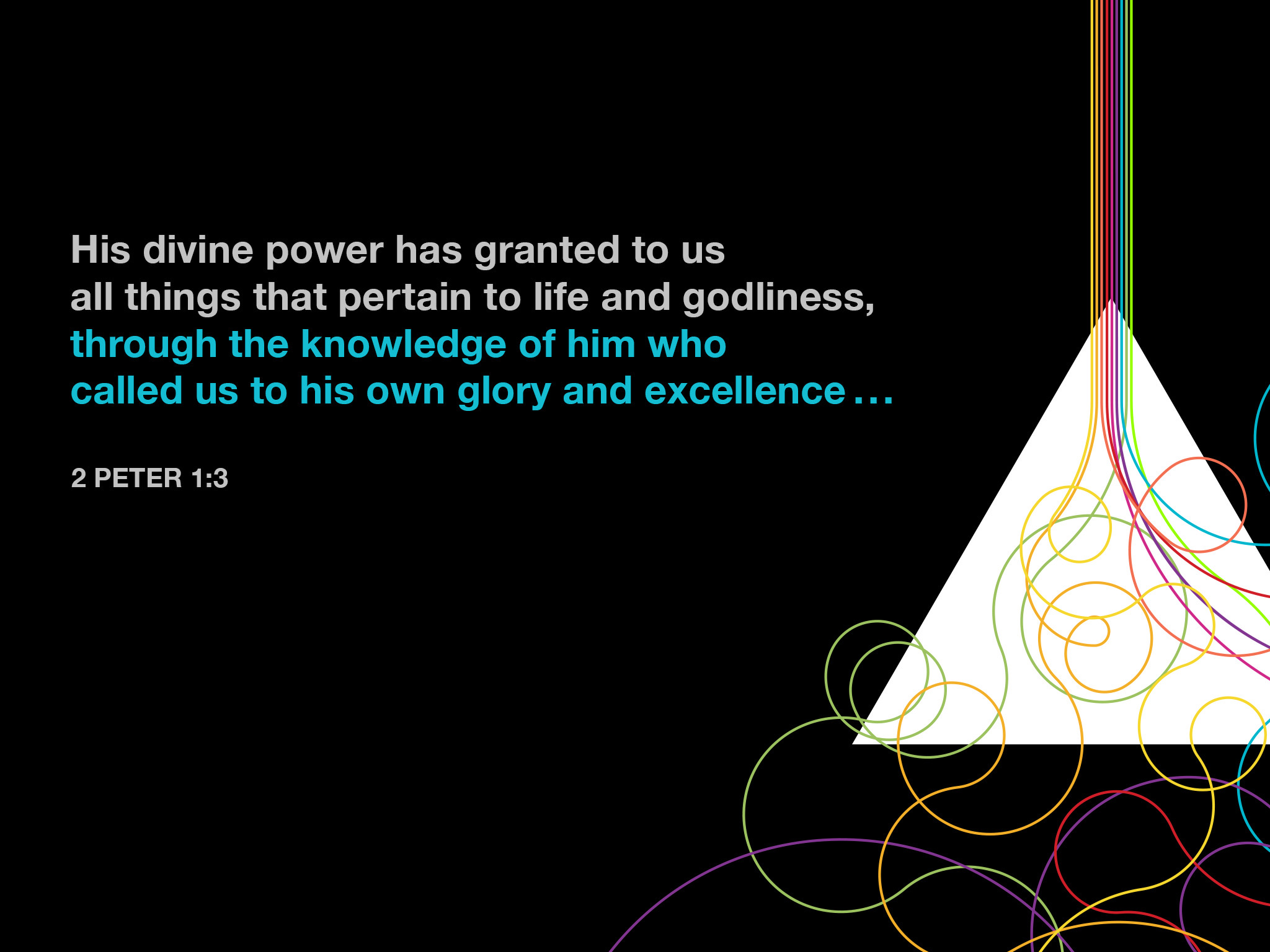
3 His divine power has granted to us all things that pertain to life and godliness, through the knowledge of him who called us to his own glory and excellence, 4 by which he has granted to us his precious and very great promises, so that through them you may become partakers of the divine nature, having escaped from the corruption that is in the world because of sinful desire. 5 For this very reason, make every effort to supplement your faith with virtue, and virtue with knowledge, 6 and knowledge with self-control, and self-control with steadfastness, and steadfastness with godliness, 7 and godliness with brotherly affection, and brotherly affection with love. 8 For if these qualities are yours and are increasing, they keep you from being ineffective or unfruitful in the knowledge of our Lord Jesus Christ. 9 For whoever lacks these qualities is so nearsighted that he is blind, having forgotten that he was cleansed from his former sins. 10 Therefore, brothers, be all the more diligent to confirm your calling and election, for if you practice these qualities you will never fall. 11 For in this way there will be richly provided for you an entrance into the eternal kingdom of our Lord and Savior Jesus Christ.

The Fix – Sermon on the Purpose and Disciplines of Lent (Jonah 3:1-10; 2 Peter 1:2-11; & Matthew 6:16-21)

The Scripture readings for tonight’s Ash Wednesday service are Jonah 3:1-10; 2 Peter 1:2-11; and Matthew 6:16-21.

In the name of Jesus. Amen.

At some point in our lives, we have all broken something that couldn’t be fixed. No amount of glue, duct tape, or tinkering will put it back together. And when that happens – let’s say it was grandma’s antique vase – it doesn’t matter how the vase was broken. Maybe you threw it in a fit of rage, maybe you got a little too fancy with the game of catch in the living room, or maybe you just weren’t paying enough attention and barely bumped it – it doesn’t matter how it was broken because there’s no way to fix it. It doesn’t matter if you were angry or careless or thoughtless. There it lies on the floor, and it can’t be unbroken. All the king’s horses and all the king’s men can’t put Humpty Dumpty together again. The only thing to do is sweep up the pieces and throw it in the trash.

When you think of the things you have broken by your sin – the wrong turns you have taken, the right choices you failed to make, the kind words you didn’t speak, or the wrong words you said – the devil wants to take all of that and give you a sense of hopelessness. He wants you to just stare at the thing you have broken. He likes to hold the guilt of that mess over you, fill you with grief, and constantly remind you of your guilt. He wants to leave you staring at all the shattered pieces lying there on the floor, knowing that it was all your fault.

Tonight, we begin another Lenten season, and Lent is not a time of despair and gloom. At least, it’s not meant to be. Instead, Lent is a time of new beginnings and new hope. “Lent” means “spring.” The Christian religion isn’t one that only tells you about all the things you have broken or all the wrong choices you have made. Neither is Christianity a religion that only says, “God has fixed it. He understands. So, all the mess I’ve left in my wake is no big deal.” No. The Christian religion is far more. Yes, the Christian faith shows you what you’ve broken and how you’ve broken it, but it also shows you what God has done for you in Christ to reconcile you back with God and His creation. That is one of the great benefits of Lent and why it is important.

Lent is a time to put the cross of Christ before your eyes and focus your attention upon it. What Jesus has done for you on the cross gives you the full, complete, total forgiveness of your sins. On the cross, Jesus pays the price for all of your sins and restores you. Because of the cross, God gives you His mercy and grace. You know this, but you also know that the cross can’t unsay the evil and hurtful things you have said. The cross doesn’t undo the pain and harm you have caused yourself and others. The cross doesn’t make everything perfect again – not in this life.

Sinner, because of the cross, you more time. The cross gives you a time of hope when there should only be hopelessness. In Lent, Christ’s work on the cross stands before your eyes. Because of the cross, we should have an urgency. Paul mentions this urgency in 2 Cor. 6:2, “Behold, now is the favorable time; behold, now is the day of salvation.” In Christ and His cross, you and your loved ones still have time. So, what should you do with this time?[1]

First of all [Prayer], Lent is a time to be honest. Remember what the awful sinners of Nineveh did after they heard Jonah preach, “Yet forty days and Nineveh shall be overthrown!” (Jon. 3:4). They had great sin, but they also had time – forty days. And they used that time to repentantly pray. They were honest about their sins. They confessed how they had harmed themselves and others around them. They turned from their evil ways. God saw all this and relented of the disaster He said He would do to them, and He did not do it (Jon. 3:10).

This repentance is a good sorrow and a right sadness about sin. Repentance isn’t a pleasant thing to do. But similar to when a kid falls on his bike and needs to have gravel cleaned from his scrapes and cuts, repentance is going to cleanse so the wounds can heal. The cleansing is going to hurt, but If there’s no cleansing, those wounds might never heal. So, hold out your wounds, endure the pain of the cleansing, and begin to heal.

Second [Fasting], Lent is a time to slow down. Take the quiet moments God gives you – maybe through giving up certain things to free up more time – take those moments and consider how to supplement your faith with virtue, knowledge, self-control, steadfastness, godliness, brotherly affection, and love like Peter said in our Epistle (2 Pet. 1:2-11). And notice that all these things exist only when they flow from faith. In fact, they are impossible to have without faith. When we exercise our faith with these things, the Holy Spirit strengthens our faith.

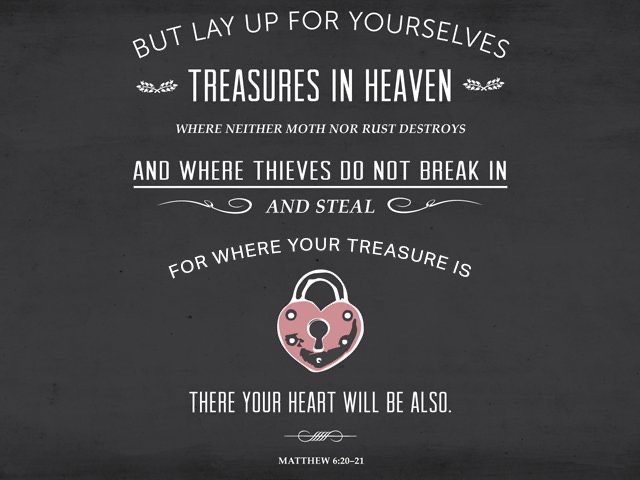
Third [Almsgiving], Lent is a time to remember where your true treasure lies. The things of this earth are going to become moth-eaten, rust, and stolen from you in an instant. But there is a way to lay up for yourself treasure in heaven where it cannot be touched by any moth, rust, or thief. Yes, there may be broken vases all around you that cannot be fixed no matter how hard you try. But the things you do in this life that support the preaching of the Gospel and the things you do that strengthen your faith and the faith of your family – all of that lays up treasure for you in heaven and draws your heart heavenward as well.

Dear saints, God has reconciled all things to Himself and has made everything right by the cross (Col. 1:20). All the wrong turns, all the times you said too much or too little, and all the things you have broken have a cost to be fixed. The price? It was the holy and precious blood of Christ, and it is a payment that has been fully made on the cross. Jesus has destroyed sin and fixed everything that we, by our sin, have broken. And the day of Christ’s return is coming. Then, and only then, will all creation be put back together. There will be no more shards of vase lying there on the floor. It will all be fixed – fixed to perfection. May that day come soon. Until then, happy Lent. Amen.

The peace of God, which surpasses all understanding, will guard your hearts and minds in Christ Jesus. Amen.


[1] What follows will play off of the ‘textbook’ answer that Lent is a time of “prayer, fasting, and almsgiving.”

No Question – Sermon on Jonah 3:1-10 for Ash Wednesday

Jonah 3:1-10

1 Then the word of the Lord came to Jonah the second time, saying, 2 “Arise, go to Nineveh, that great city, and call out against it the message that I tell you.” 3 So Jonah arose and went to Nineveh, according to the word of the Lord. Now Nineveh was an exceedingly great city, three days’ journey in breadth. 4 Jonah began to go into the city, going a day’s journey. And he called out, “Yet forty days, and Nineveh shall be overthrown!” 5 And the people of Nineveh believed God. They called for a fast and put on sackcloth, from the greatest of them to the least of them. 

6 The word reached the king of Nineveh, and he arose from his throne, removed his robe, covered himself with sackcloth, and sat in ashes. 7 And he issued a proclamation and published through Nineveh, “By the decree of the king and his nobles: Let neither man nor beast, herd nor flock, taste anything. Let them not feed or drink water, 8 but let man and beast be covered with sackcloth, and let them call out mightily to God. Let everyone turn from his evil way and from the violence that is in his hands. 9 Who knows? God may turn and relent and turn from his fierce anger, so that we may not perish.” 10 When God saw what they did, how they turned from their evil way, God relented of the disaster that he had said he would do to them, and he did not do it.

In the name of Jesus. Amen.

For several reasons, I don’t preach with props, but if I did tonight’s sermon would begin the sermon with a ‘clapperboard’ – one of those things used during the filming of movies and TV shows. “Jonah called to preach to Nineveh; take two.” “Action!”

We know about the ‘out-take.’ Instead of going to preach to Nineveh, Jonah ran the other direction. He was thrown overboard in a stormy sea, swallowed by a great sea creature, and submerged to the depths of the sea to be digested and die. It looked like Jonah’s refusal to preach to Nineveh would be his own undoing. But from the depths, Jonah prayed to God for mercy, and God heard. God answered from heaven and sent out His steadfast love and faithfulness (Ps. 51:3). God is merciful, but His mercy takes different forms in different situations. In Jonah’s case, mercy looked like being whale vomit instead of becoming whale poo.

God gave Jonah a second chance, “Arise, go to Nineveh, that great city, and call out against it the message that I tell you.” Jonah preached a one-course sermon of Law, “Yet forty days, and Nineveh shall be overthrown!” Notice what the sermon doesn’t do. It does not accuse the people of specific sins. It doesn’t name any of Nineveh’s many evils (Jon 1:2). The sermon only does one thing – it calls Nineveh’s future into question. This is just an aside: In your conversations with unbelievers, be on the lookout for opportunities to point people to the return of Christ, the final judgment, and end of the world (Act. 17:31). Those may be the windows where God will shine the light of the Gospel into the darkness of people’s hearts.

Well, Jonah’s doomsday sermon was used by the Holy Spirit to change the hearts of the Ninevites. From the greatest to the least of them, they called for a fast. Even the king of Nineveh descended from his throne to sit in sackcloth and ashes. He gave a command to all the people of Nineveh, “Fast. Don’t eat or drink. Call out mightily to God. Turn from evil and violence. Who knows? God may turn from His fierce anger against us, so we may not perish.” This wasn’t a revival, it wasn’t a reawakening, it was an initial awakening. But also notice that for the Ninevites this was a shot in the dark. At best it was a, “Maybe,” a “Let’s give this a try,” a, “What if?”

Well, their blind shot at repentance paid off. “God saw what they did, how they turned from their evil way, God relented of the disaster that He said He would do to them, and He did not do it” (Jon. 3:10).

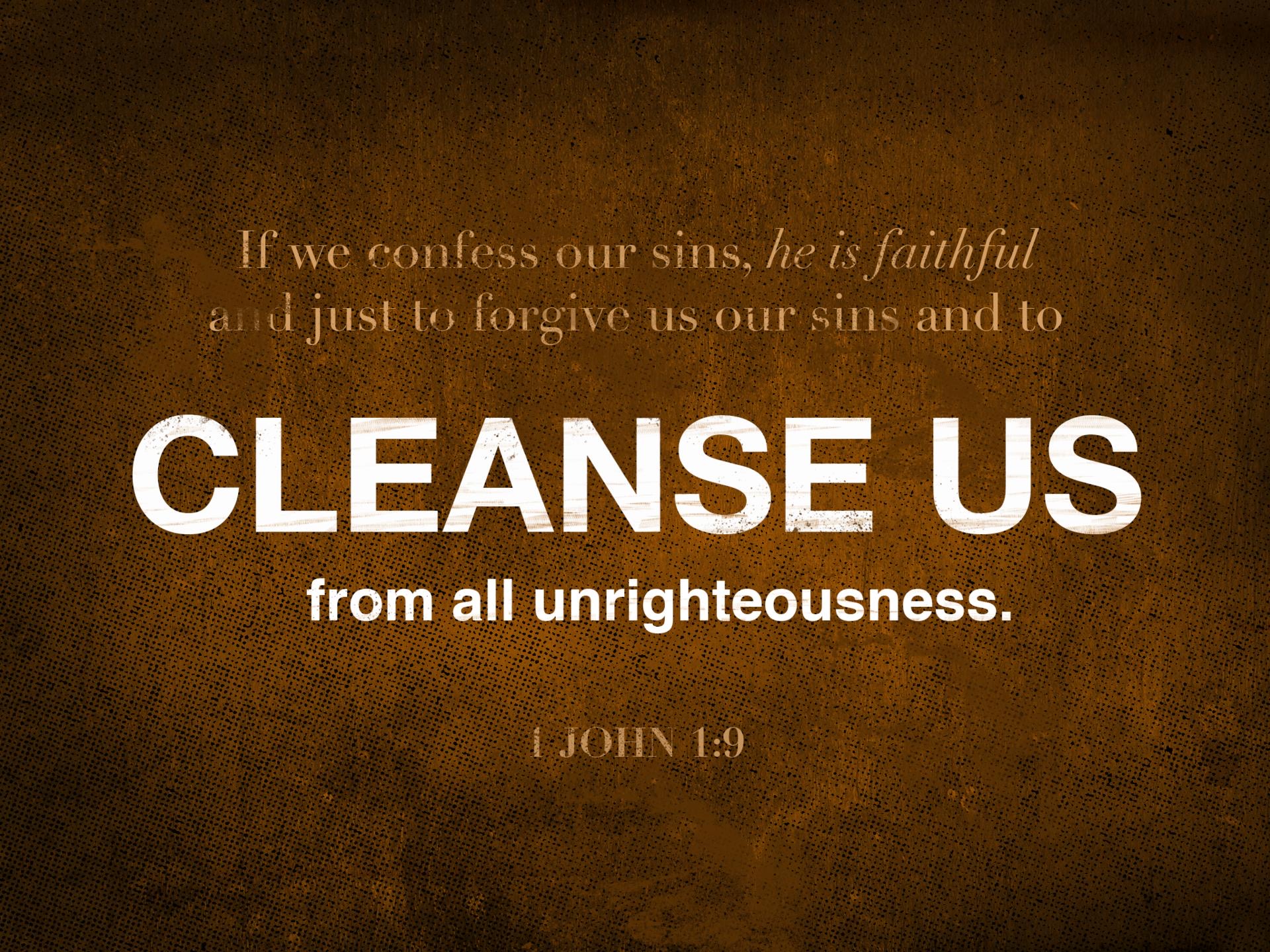
Dear saints, as we begin this repentant season of Lent, you have something better than the preaching of Jonah. You have God’s sure and certain promise forever etched in the Scriptures, “If we confess our sins, He is faithful and just to forgive us our sins and to cleanse us from all unrighteousness” (1 Jn. 1:9). That verse is so important because it contains a promise. We can, and probably should, understand it as, “When we confess our sins, God is faithful and just to forgive us and cleanse us.” Whenever you bring your sins to God, He responds with His forgiveness and mercy.

In Greek, the word ‘confess’ is two words smashed together – ‘same’ and ‘words.’ So, when you confess something, you have the same words as someone or something else. This means that biblical confession of sins has two parts. To confess your sins, you say what God says about those sins. First, you say that those sins are horrible, they are deserving of death, they separate you from God, they harm your neighbor, they earn eternal damnation. That’s what God says about your sins, and when we confess our sins, we have those same words. That’s the first part of confession. But don’t ever stop there!

Keep saying the same words about your sin that God clearly says in His Word. Those sins have been removed from you by Jesus who became sin (2 Cor. 5:21), and God has laid your sin on Christ (Is. 53:4, 6). Those sins are died for by Christ who bore them to the grave which is now empty (Col. 2:14). Those sins are removed from you as far as the east is from the west (Ps. 103:12).

Dear saints, there is no question whatsoever about how God will respond when you confess and cry out to Him for mercy. The answer is the cross and the empty grave. Because of what Christ has done, you, sinner, are forgiven (1 Jn. 2:2). Amen.

The peace of God, which surpasses all understanding, will guard your hearts and minds in Christ Jesus. Amen.

Sackcloth & Ashes to Robes of Righteousness – Sermon on Joel 2:12-19 & Revelation 7:9-14 for Ash Wednesday

Joel 2:12-19; Revelation 7:9-14; Matthew 6:1-6, 16-21

In the name of Jesus. Amen.

Humanity’s first experiment with clothes didn’t work very well. You remember that God had created Adam and Eve without sin, and they were both naked and unashamed (Gen. 2:25). But after they sinned, Adam and Eve became aware of their nakedness. They saw their shame, and because of their disobedience, they now knew what evil was and were ashamed of what God had created to be good. So, they tried to cover their nakedness and shame with fig leaves (Gen. 3:7). Those fig leaves were Adam and Eve’s feeble attempt to cover their sin. It didn’t work.

When God came to the Garden, He was seeking them out asking, “Where are you?” (Gen. 3:9). Of course, God knew where they were, but He was giving Adam and Eve opportunity to repent. Adam knew his half-stitched leaf sewing wasn’t enough to cover his guilt. Adam replied, “I heard the sound of You in the garden, and I was afraid, because I was naked, and I hid myself” (Gen. 3:10). Fig leaves and hiding weren’t enough. Adam and Eve stood before a holy God utterly and totally incapable of covering their sin and shame.

Now, God had told Adam that the day he ate from the Tree of the Knowledge of Good and Evil that Adam would surely die (Gen. 2:17). And those fig leaves were no escape from the death sentence that Adam had earned by his disobedience. The problem of Adam and Eve’s sin and shame doesn’t get fixed until toward the end of Gen. 3 when God makes garments of skins and clothes them (Gen. 3:21). You’ve heard me say this before, but it needs regular repeating. When God makes cloths of skins for Adam and Eve, blood is shed. You can’t get skins from an animal without spilling blood. So, when God clothes Adam and Eve, He is teaching them that He will accept the death of another to cover their sin and guilt.

After clothing Adam and Eve, God did one more gracious thing – He expelled them from the Garden of Eden. We typically think of this exile from Eden and banishment from the Tree of Life as a further penalty (Gen. 3:22). But not so fast. This exile from the Garden wasn’t a punishment. Think about it for a minute. Adam and Eve were now sinners. If they ate from the Tree of Life as sinners, they would live forever in their sin. Dear saints, that is the definition of hell. Their expulsion from the Garden and inability to access the Tree of Life was God acting in grace and mercy. Clothed in those animal skins, Adam and Eve are sent out of the Garden and into exile, but their garments served as a constant reminder of God’s promise to crush the serpent’s head (Gen. 3:15).

Now, we’re going to change gears here, but stick with me. Tonight, we heard in our Old Testament lesson (Joel 2:12-19) God calling to humanity again. But this time, God isn’t calling us to come out of a hiding place in Eden. Instead, He is calling to us who are in the exile of sin. And in this invitation, God brings up the topic of clothing again.

God invites us to return to Him with fasting, weeping, and mourning. He says to rend and rip our hearts and not our garments. Rending and ripping clothes was a way to express and reveal deep sorrow. After all of Job’s possessions and children were destroyed, Job tore his clothes in mourning (Job 1:20). David tore his clothes when King Saul and his dear friend Jonathan were killed in battle (2 Sam. 1:11). The interesting thing about that verse from Joel about rending hearts and not clothes is what comes after. Notice in Joel 2:13 what comes immediately after the call to rend your heart: “Return to the Lord your God, for He is gracious and merciful, slow to anger, and abounding in steadfast love.” Even with your clothes rent and your nakedness uncovered, God invites you to leave your exile in sin, shame, and nakedness to return to Him to receive His grace and mercy.

Instead of simply an outward sign of ripping and rending clothes, God calls us to rend our hearts. God is calling for true repentance – not merely an external show of repentance. When a person rends their garments, it only reveals the nakedness and shame underneath. But after the problem is revealed, God calls us to a step further. Underneath our ripped cloths, lies a broken spirit and heart. And Ps. 51:17 tells us, “The sacrifices of God are a broken spirit; a broken and contrite heart, O God You will not despise.”

Tonight, our corrupt, sinful hearts are laid bare before God. Because of our sin we are under the same curse as Adam, “Remember you are dust, and to dust you shall return” (Gen. 3:19). The wages of our sin is death (Ro. 6:23), but God in His abundant mercy still seeks us out. He desires to save us and bring us out of our exile. And God has fulfilled His promise to cover our sin and shame. God has accepted the death of Another in our place. Jesus has taken your place. He went to the cross and hung there naked, and not just physically. He bore your all your sins in His body on the tree and by His wounds you have been healed (1 Pet. 2:24).

Our Epistle lesson (Rev. 7:9-14) shows what is in store for us. God has permanently covered us in Christ. Because of what Christ has done, we can sing with Isaiah, “I will greatly rejoice in the Lord; my soul shall exult in my God, for He has clothed me with the garments of salvation; He has covered me with the robe of righteousness” (Is. 61:10). You who are baptized into Christ have put on Christ (Gal. 3:27). Even now, you have a white robe that is washed perfectly clean in the blood of the Lamb.

Dear saints, because of what Christ has done, your sackcloth and your dusty ashes have been exchanged for the robe of righteousness. Your exile in sin and shame is ended because Jesus has won the victory over sin and death. By His resurrection, He has turned your mourning into dancing and loosed your sackcloth and clothed you with gladness (Ps. 30:11). By God’s action of seeking you out, you have returned to His presence, and now He welcomes you as His beloved bride (Is. 54:5). Your time in exile is over. You have returned to God. And there is treasure in heaven laid up for you. A treasure that lies hidden with Christ where moth and rust do not destroy and where thieves do not break in and steal (Mt. 6:19-21).

Dear saints, come. Come clothed in Jesus’ righteousness. Come to God’s table and receive Christ’s body and blood for the forgiveness of all your sins. He welcomes you home. In Jesus’ name. Amen.

The peace of God, which surpasses all understanding, will guard your hearts and minds in Christ Jesus. Amen.

Dust & Doves – Sermon on Jonah 3:1-10 and Matthew 6:16-21 for Ash Wednesday

Listen here.

Jonah 3:1-10; Matthew 6:16-21

In the name of Jesus. Amen.

Tonight, you heard harsh words. They were the same words that were first spoken to your father Adam, “You are dust, and to dust you shall return” (Gen. 3:19). God had said it would be this way, “In the day you eat of it, you will die,” and so it is.

God never intended to speak such harsh words of judgment over the crown of His creation. When Adam was created, God had lovingly and carefully formed him out of the mud. As a potter molds and shapes the clay (Is. 64:8), so God formed and shaped Adam. Then, God blew into Adam’s nostrils the breath of life, and Adam became a living soul. After God created Eve from one of Adam’s ribs, God blew on both of them again and said, “Be fruitful and multiply and fill the earth and have dominion over everything that moves on the earth” (Gen. 1:28). God wanted more and more of these creatures of dust which He had made in His image.

But tonight, we remember what we have destroyed by our sins. We need to remember because we so easily forget what our sin is and what our sin does. Your sins and my sins aren’t just little accidents here and there. They aren’t just making an occasional wrong choice. Every one of our sins is a rebellion against God. Sin corrupts and darkens and infects every part of us – body and soul. Our sin is the cause of our stiffness, soreness, tiredness, and fatigue. But even if we can hide the outward, bodily effects of our sin, we cannot hide anything before God. Eventually, sin will overtake us and we will return to dust.

Tonight, we remember what we have done to bring about our own death. We remember how we have lived as though God did not matter and as though we mattered most. We remember that our sin is every thought, word, and deed that we have done and what we have left undone. We remember that we justly deserve God’s present and eternal punishment. We remember that our heart is always turning everywhere except where true treasure is to be found. And, as we remember all of this, we repent.

As important as it is to remember our sin, our separation from God, and our mortality, there is something more important to remember and that is the fact that God remembers His promises to you.

Tonight, we heard about Jonah’s preaching and the repentance it brought to the people of Nineveh (Jon. 3:1-10). God had called Jonah to preach to that great city once before, but Jonah ran the opposite way. Jonah ran, not because he was afraid, but because he had faith in God’s Words. Jonah knew that God had promised to be merciful and gracious, slow to anger and abounding in steadfast love and faithfulness, forgiving iniquity and transgression and sin (Ex. 34:6-7). Jonah didn’t want that for the people of Nineveh. We heard how he went and preached a reluctant, one-sentence sermon of only Law. But despite Jonah’s reluctance and poor preaching, God’s Word was still effective. (And that, by the way, is a comfort for me.) The people of Nineveh repented and turned to the one true God whose mercy abounds.

The people of Nineveh heard and believed God’s Word (Jon. 3:5). And they took, what was for them, a shot in the dark. They repented thinking that maybe, just maybe, God would turn from His fierce anger. And it paid off. God forgave them.

A lot could be said about Jonah’s sinful attitude toward preaching to the people of Nineveh, but we’re going to leave that for another time. Tonight, know this. The same God who forgave the wicked sinners of Nineveh is also your God.

God sent Jonah, whose name means ‘dove,’ to proclaim peace to Nineveh. And even though that little dove, who now smelled of whale vomit (because that’s what he had become), and even though his sermon stank as much as he did, God’s peace arrived to those dusty sinners of Nineveh.

Tonight, God has done for you what He did for the Ninevites. God has sent the dove of His Holy Spirit. God has gathered you here tonight so He can breathe on you His life-giving words.

Your merciful God remembers that you are dust, and He has done something about it. God Himself took on a dusty, human frame when He was born. He took on your human flesh so He could draw all the poison of your sin into Himself. The same God is the One who forgives and raises the poor out of the dust to live forever in His kingdom.

Through God’s Word tonight, He is creating faith in us who were His enemies. He brings life to the dying. He opens the gates of heaven because this Word creates faith which remembers God’s promise that He will remember your sins no more.

Tonight, God invites you to His altar to hear another one-sentence sermon. “Take, eat and drink; this is the Body and Blood of Christ given and shed for you for the forgiveness of your sins.” He gives you this Sacrament so that we men and women of dust will live eternally. Amen.[1]

The peace of God, which surpasses all understanding, will guard your hearts and minds in Christ Jesus. Amen.


[1] I am thankful for a sermon by Pr. Ralph Tausz as inspiration for this sermon.

Faithful & Just – Sermon on 1 John 1:5-10 for Ash Wednesday

Listen here.

The Scripture readings for tonight were Jonah 3:1-10; 1 John 1:5-10; and Matthew 6:16-21.

In the name of Jesus. Amen.

I don’t remember exactly how old I was, but I was definitely old enough to know better. It was a cold, wet, Spring day. A friend from church, my sister, and myself were probably driving our parents crazy, so our parents dropped us off at the Williston Recreational Center to burn off some energy. The Rec. Center had two basketball courts, a few racquetball courts, and a hockey arena that still had the boards up but no ice. When we paid the fee and signed our names in, the employee told us that the empty hockey rink was off limits to the public that particular day, so we went to the basketball courts to play horse and lightning. But it didn’t take long before we got bored and decided we needed a little more excitement. So, of course, we went to the forbidden hockey arena.

I don’t remember exactly how we got past the front desk unnoticed, but we did. And we proceeded to have a grand time playing inside the boards. But not for long. I remember seeing the employee approaching the glass windows and door that separated the hockey arena from the lobby, and he didn’t look happy. I warned my friend and sister that we had been caught and were about to get in trouble. But my sister had a plan. She insisted that if we closed our eyes, the employee couldn’t see us. She said that it worked once for her friend. Now, I’m three years older than she is, so, again, I should have known better. But I did it. I closed my eyes as tight as I could and assumed the fetal position against the boards. I can only imagine how foolish we looked to that employee. Even as he hollered at us for being in there, I didn’t open my eyes until he tapped my shoulder.

Dear people of God, “If we say we have no sin,” (Notice that this is present tense. No matter how long you’ve been a Christian, not matter how much you’ve improved, no matter how much good you do, you still have sin.) “if we say we have no sin we deceive only ourselves,” and we look like a foolish child cowering with our eyes closed. We cannot flee from or escape the watchful eye of the God who created us. He knows your actions. He knows the words that come out of your mouth. He knows the thoughts of your mind. And He knows the hypocrisy of your heart. If we say we have no sin, the truth is not in us.

Repent because there is another way. Repent because that is the only way!

Scripture is clear that our God is merciful and gracious, slow to anger and abounding in steadfast love and faithfulness. This is one of if not the most common descriptions of God. In fact, this is how God Himself defines who He is (Ex. 34:6). Repentance of Ninevah by John Martin c 1840When Jonah preached to the sinners of Nineveh in our Old Testament lesson (Jon. 3:1-10), they repented from their evil, violent ways. And for them, it was as crazy an idea as closing their eyes to enable invisibility mode. The king says in his proclamation, “Who knows? God may turn aside from His fierce anger, so that we may not perish.” In other words, “Let’s try repenting. It might work.” Dear saints, we do not have to wonder how God will respond to humble, contrite sinners. Our Epistle Lesson (1 Jn. 1:5-10) says, “If we confess our sins, God is faithful and just to forgive our sins and to cleanse us from all unrighteousness.”

Make sure you catch all of the words there in v. 9. The text doesn’t just say “If you confess your sins, God will forgive and cleanse.” No. The text says that God is faithful and just to forgive. We would expect to hear different words there – words like merciful, gracious, kind, generous, or even lenient. But that is not what Scripture says. God is faithful and just to forgive you of your sins and cleanse you from all unrighteousness.

Dear saints, God’s forgiveness delivered to you is right and just. That’s saying it in a positive way. And it is true in a negative way (or the opposite way): God would be unjust to withhold forgiveness from you who confess your sins. Your sin, your shame, your unrighteousness, your guilt was all laid upon Jesus on the cross. He has taken all of it and endured the punishment that you deserve. For God to give you any of His anger or displeasure because of your sin would not be right or just. He would be removed from the bench, disbarred, and thrown into prison if He didn’t forgive you.

Dear Christian, be comforted. God faithfully and justly and willingly and delightfully forgives you all your sins because of what Jesus has done for you. Amen.

The peace of God, which surpasses all understanding, will guard your hearts and minds in Christ Jesus. Amen.

Even Now – Sermon for Ash Wednesday

Listen here.

The texts for this evening were Joel 2:12-19 and Matthew 6:16-21.

In the name of the Father and of the Son and of the Holy Spirit. Amen.

In our Old Testament lesson, God called to His people (v. 12-13), “Yet even now, return to me with all your heart with fasting, with weeping, and with mourning and rend your hearts and not your garments. Return to the Lord your God for He is gracious and merciful, slow to anger, and abounding in steadfast love; and He relents over disaster.”

Let’s break this down. “Yet even now.” Those are such beautiful words of Gospel. “Even now.” After everything you have done and left undone. After failing again and again into the same sin over and over. After refusing again and again to do the good God put you there to do for your neighbor. After you have broken trust, broken relationships, broken the hearts of those you should mend, even now, return to the one, true, holy, God.

But repeatedly in Scripture, God’s holy presence is the last place that sinners want to be. Adam and Eve hid from God’s holy presence after they had sinned and realized their nakedness. Standing in God’s holy presence, Isaiah said, “Woe to me, for I am undone.” Jonah fled from God’s holy presence when God called him to preach to Nineveh. Peter asked the holy Son of God to depart from him because he was a sinful man.

Holiness and sin cannot coexist. Just as light destroys the darkness, the brightness of holiness destroys the darkness of sin. But if we think that our sin has forever separated us from God, we are defying the very words of God in this text, “Yet even now, return to Me,” says your Holy God. This returning is repentance.

Return and repent with fasting, weeping, and mourning. Return and repent because the Lord your God is gracious and merciful, slow to anger and abounding in steadfast love.

Repentance has us saying, “Amen,” to God twice. “Amen” simply means yes, truly, absolutely, correct, right. We say “Amen” when God’s Law tells us that we are guilty of sin, when the Scriptures tell us that we deserve God’s wrath and punishment for our sins now, in this moment, and for all eternity. But repentance doesn’t stop there either.

Repentance says, “Amen,” when God speaks His Gospel over us, when God says that we are forgiven for Christ’s sake. That the suffering and death of Jesus has removed our sins as far as the east is from the west.

The first “Amen” is not easy to say. We don’t like to admit our failures and sins. We don’t like to admit that the wages our sin has earned is the bitterness, sickness, and hardships we face in this life. Instead, we blame others for the burdens we bear.

But the second “Amen” isn’t really any easier than the first. The devil and the world scream at us that the sacrifice of Jesus isn’t really enough. Our own flesh even says, “Well, it can’t be so easy as simply believing in Jesus.” But dear saints, that is when we need to say, “Shut up,” to the devil, the world, and our own flesh.

Just as God means it when He speaks the Law to say that your sins harm you and your neighbor, and more importantly that your sins separate you from Him, God also means it when He says that for the sake of Jesus He has forgiven you and blotted out your sins.

Through this Lenten season, we are going to be considering the Ten Commandments, and this will give us ample reasons to weep, lament, mourn, and rend our hearts because of our sin. However, we will also see the great gifts God is giving to us in each Commandment as well. But most importantly, we will see how Jesus has delivered us and calls us, “Even now, return to Me. Return to Me for I am gracious and merciful, slow to anger, and abounding in steadfast love.”

Your God has no pleasure in the destruction of the wicked. Instead He would have you repent. Say, “Amen,” to His Law and to His Gospel. Amen.

The peace of God, which surpasses all understanding, will guard your hearts and minds in Christ Jesus. Amen.