The Bearing Lamb – Sermon on John 1:19-29 for the Fourth Sunday of Advent

John 1:19–29

19 And this is the testimony of John, when the Jews sent priests and Levites from Jerusalem to ask him, “Who are you?” 20 He confessed, and did not deny, but confessed, “I am not the Christ.” 21 And they asked him, “What then? Are you Elijah?” He said, “I am not.” “Are you the Prophet?” And he answered, “No.” 22 So they said to him, “Who are you? We need to give an answer to those who sent us. What do you say about yourself?” 23 He said, “I am the voice of one crying out in the wilderness, ‘Make straight the way of the Lord,’ as the prophet Isaiah said.” 

24 (Now they had been sent from the Pharisees.) 25 They asked him, “Then why are you baptizing, if you are neither the Christ, nor Elijah, nor the Prophet?” 26 John answered them, “I baptize with water, but among you stands one you do not know, 27 even he who comes after me, the strap of whose sandal I am not worthy to untie.” 28 These things took place in Bethany across the Jordan, where John was baptizing. 

29 The next day he saw Jesus coming toward him, and said, “Behold, the Lamb of God, who takes away the sin of the world!

In the name of Jesus. Amen.

The first few verses of this text are a little frustrating. A bunch of priests and Levites come to John the Baptizer and ask him, “Who are you?” John answers with a negative statement, “I am not the Christ.” I don’t think I’ve ever had a conversation similar to this.

Imagine you’re at, say, your spouse’s company Christmas party. You don’t know many of the people there. You know a lot of names because your spouse talks about all those coworkers, but you don’t really know them. Imagine your spouse is off in a corner talking to those coworkers leaving you with the other spouses of those coworkers. Things are a little awkward, so you try to strike up a conversation with someone. You lean over and ask, “What do you do for a living?” and get the reply, “I’m not the President of the USA.” You’d probably be looking for another conversation. 

That is how John replies. But these priests and Levites have come on a mission. They’ve been sent to figure out just who John is. So, they start aiming at all sorts of targets. “Are you Elijah?” “I am not.” “Ok. Are you the prophet?” “Nope.” “Argh. Who are you? Give us something. We have to give a report.”

Finally, John opens up, “I am the voice of one crying out in the wilderness, ‘Make straight the way of the Lord,’ as the prophet Isaiah said” (Is. 40:3). There, John is doing what he was sent to do; he points people to Jesus. And John keeps talking about Jesus like an excited kid, “Among you stands One you do not know, even He who comes after me, the strap of whose sandal I am not worthy to untie.” Then, the next day, John really gets going. He sees Jesus coming toward him and says, “Behold, the Lamb of God, who takes away the sin of the world.”

That is the most beautiful sermon you could ever hear, but I want to press in on it a little bit more. The words are familiar, but just like all the words of Scripture, there is always more to learn, more glean from those simple words. Today, focus on two of those words “takes away” (in Greek is actually only one word). That translation is a bit vague and nebulous.

You might think that is referring to what Jesus does on the cross, and in a sense, that is right. Jesus brings your sins to the cross and buries them by His death. But what John the Baptizer says here is a lot more specific than our translation makes it sound.

Nearly every English translation uses the phrase, “takes away.” The word there is a common one, and in a lot of places it’s a slam dunk that it means “take away.” In Luke 6:29-30, Jesus uses this word twice. He says if someone ‘takes away’ (same word) your coat, give him your shirt as well, and if someone ‘takes away’ your goods do not demand them back. In the parable of the Sower and the Seed, Jesus talks about the seed that falls along the path and the birds come and take it away (Lk. 8:12).

But this word also can clearly mean ‘to carry’ or ‘bear’ something. Jesus uses it in that way in Mt. 16:24 where He says, “If anyone would come after Me, let him deny himself and take up (there’s the word) his cross and follow Me.” There, Jesus isn’t saying that you should first take away your cross and then follow Him. He means that you pick up your cross, that you bear the weight and load of your cross, and you follow Him. That’s the idea of what John is saying here.

And John uses this word in the present tense. John points to Jesus and says, “Behold, the Lamb of God, who is bearing the sin of the world.” Jesus is the sin-bearing Lamb of God. For about three and a half years, starting at His Baptism and ending on Good Friday, Jesus bore and carried the weight and load of the guilt and sin of humanity.

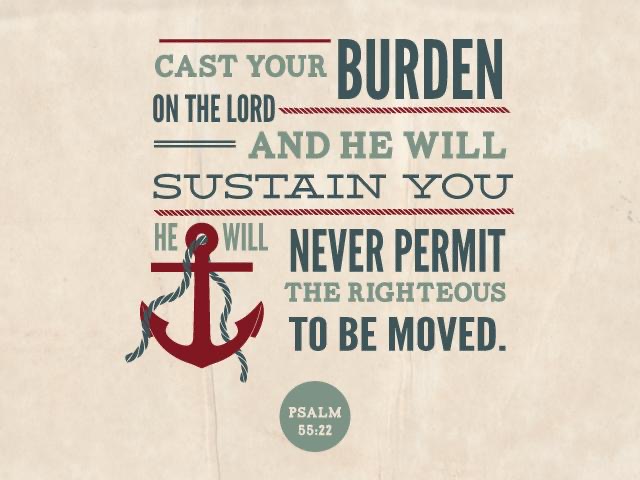
The Bible talks about your sin and my sin in a lot of different ways: darkness, death, blindness, slavery, debt, alienation from and animosity toward God. The Bible talks about your sin being dirty, stinky, rotten. But here sin is described as heavy, as a weight bearing down on your soul (see also Heb. 12:1). The sins you and I have committed and the sins that have been committed against you, Jesus bears and carries them all.

Maybe, you remember the third verse of the hymn “It Came Upon a Midnight Clear.” 
“And ye, beneath life’s crushing load
whose forms are bending low,
who walk along the climbing way,
with painful steps and slow,
look now, for glad and golden hours
come swiftly on the wing;
O rest beside the weary road,
and hear the angels sing.” 

I just wish that verse was a little more clear about why those glad and golden hours come. They come because Jesus, the Lamb of God who bears the sin of the world, has lifted that crushing load. He has taken those sins and carried them.

That load of sin, that crushing burden, is taken from you by Christ. If you read on after our text, you’ll hear why John can say this. John saw the Spirit descend like a dove and remain on Jesus at His Baptism (Jn. 1:32). From that experience of being the one who Baptized Jesus, John knew that Jesus was the One whom God had promised would crush the serpent’s head (Gen. 3:15). John knew that Jesus was the scapegoat who would bear and carry the sins of all humanity into His grave (Lev. 16:21-22), which is now and forever empty.

John knew Isaiah’s message that God would send One who would bear our griefs, carry our sorrows, and have the iniquity of us all laid on Him (Is. 53:4-5). That One is Jesus. He is the Lamb of God who bears and carries the sins of the whole world.

This call from John is for all of you, for your hears to hear, “Behold the Lamb of God who bears the sin of the world.”

You see, your sin, my sin, all sin, has a place, a location. Sin is either on you, and you have to bear and carry its guilt for all eternity, or that sin is on Christ, the Lamb of God, who has already borne it for you. Why, why, would you keep carrying it? You can, sadly, you can continue to carry your sin. If you refuse to believe in Christ, that burden can remain on you. But that would be, frankly, foolish. Jesus has carried it for you. Believe that, and be unburdened. Through faith, your sin is on Christ, and you are saved.

Dear Iris, today you are Baptized. Today, Jesus has joined you to Himself by placing His name upon you (Mt. 28:19). Iris, Jesus, the sin-bearing Lamb of God, has lifted that burden and has now clothed you in His righteousness (Gal. 3:27), and you have been born of God (Jn. 3:3, 5). Iris, continue believing that.

Iris and all you here, know and believe that God is for you. He is on your side. Christ has done what you could not do for yourself. He has borne your sins. He bore, carried, and dealt with them once for all, for you. 

So, be unburdened, Jesus has come to save you by being the sin-bearing Lamb for you. Amen.

The peace of God, which surpasses all understanding, will guard your hearts and minds in Christ Jesus. Amen.

Now & Not Yet – Sermon on 1 John 3:1-3 for the Fourth Sunday of Easter and Confirmation Sunday

1 John 3:1–3

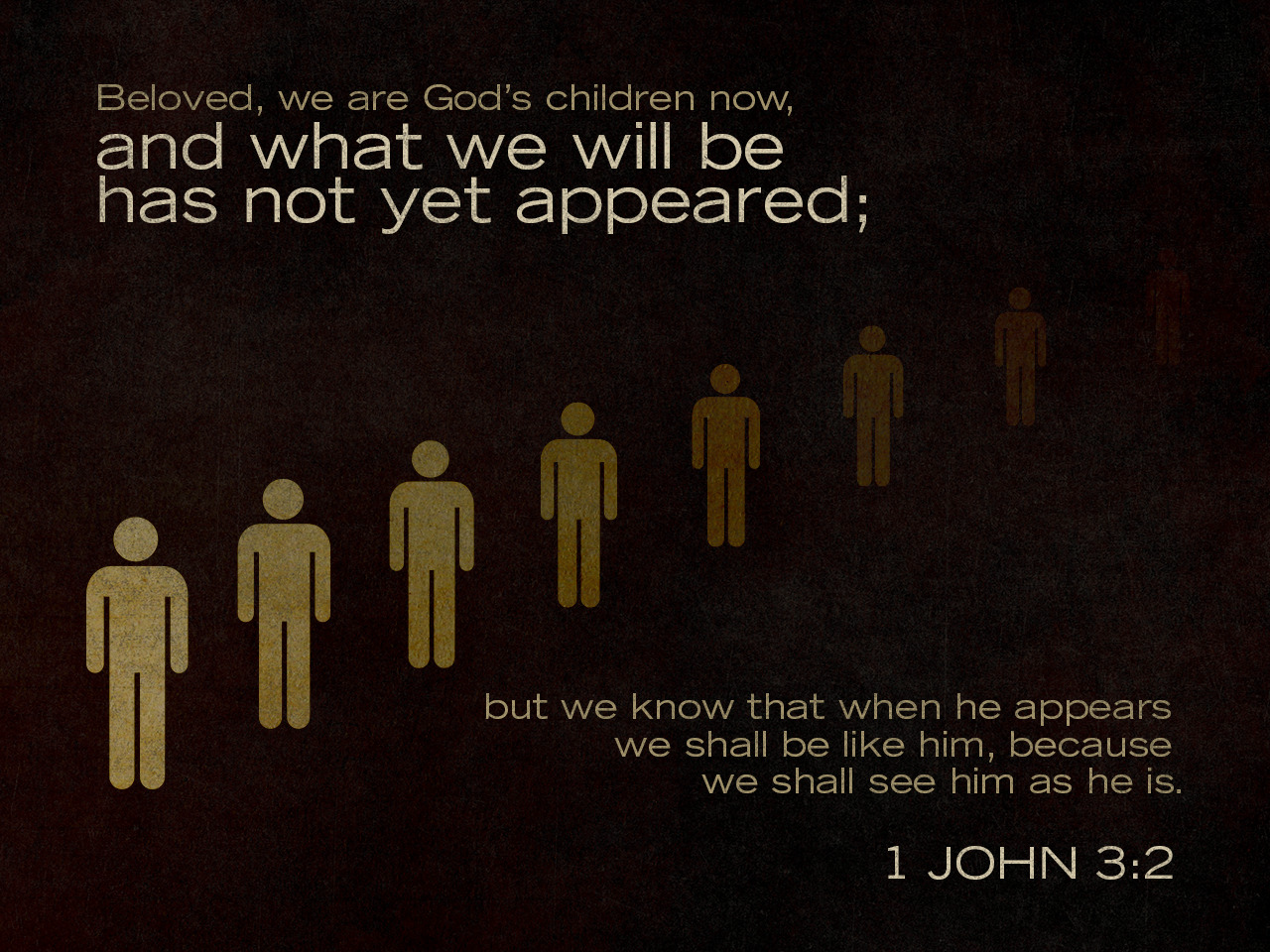
1 See what kind of love the Father has given to us, that we should be called children of God; and so we are. The reason why the world does not know us is that it did not know him. 2 Beloved, we are God’s children now, and what we will be has not yet appeared; but we know that when he appears we shall be like him, because we shall see him as he is. 3 And everyone who thus hopes in him purifies himself as he is pure.

Alleluia! Christ is risen!
He is risen indeed! Alleluia!

In the name of Jesus. Amen.

We live in a noisy world. On any given day, all sorts of things are constantly trying to grab your attention. We get dings and vibrations and taps that let us know who sent a message, what news story is breaking, or who liked that thing you posted. If you have to spend even ten minutes in a waiting room or a restaurant, you’ll find televisions turned to a game or news channel with the constant crawl of information that isn’t important enough, at least at that moment, to be on the main part of the screen. You’re watching the news about what’s going on in the Middle East and get the latest OJ Simpson’s death. Or you’re watching the NBA playoffs and learn about some guy’s hot take on what the Vikings are going to do in the first round of the NFL draft. And on and on it goes.

Now, this isn’t a sermon about how pointless and exhausting this barrage of information is. It’s just an acknowledgement of the conditions in which we live. Our attention is being constantly pulled in a myriad of directions, and all sorts of things shout at you, “Pay attention to me!” Well, this epistle reading (1 Jn. 3:1-3) is calling for your attention. In fact, it’s commanding you to pay attention. So, for the next few minutes, don’t be distracted, don’t be pulled, don’t be thinking about what’s going to happen this afternoon or this week or next summer. Right now, God, through His holy Word, calls you to focus and see. See this.

See the kind of love the Father has given to us. It is the kind of love that calls you, believer, a child of God. It is a love that calls all y’all, Christians, children of God. That is who you are – a child of God. Look around at the believers surrounding you here today, people whom you love and who love you, see that they through faith are also children of God.

See the kind of love that turns sinners and enemies of God into children. See the kind of love that isn’t earned or deserved. See God’s love for you that is demonstrated in that while we were still sinners, Christ died for us (Ro. 5:8). This is the purest kind of love. It’s God’s love that is not based on the lovableness of the individual. It’s a love that is freely given because, in spite of our unloveliness, God determined to seek your highest good and make you His child.

God’s own child, that is what you are, believer. That is what God has called you, and what God says creates reality. Everything in this world – including your own thoughts, opinions, and experiences – will try to convince you otherwise. It will attempt to get you to believe this isn’t true. Don’t listen to any of that. See. Behold. God’s love has made you His child.

Christian, God’s love has given you a new birth. In his Gospel, John says this explicitly. To all who did receive Jesus, those who believe in His name, He gives the right to become children of God (Jn. 1:12), and this right came when you were born again of water and the Spirit (Jn. 3:3, 5-6).

You confirmands, you have this new birth as a child of God. Logan, you received this new birth when you were Baptized on July 3rd, 2011 at Bigwoods Lutheran Church in Bigwoods, MN. Brayden, you were born again as God connected His Word to water on November 16th, 2013 at St. Henry’s in Perham, MN. Maddie, same place, but for you on April 16th, 2011 that was when and where you were born as a child of God. Brady, July 7th, 2013 right there at that font, you became a child of God. And Asher, same font, on November 25th2012, God declared that you are His child. The rest of you here, I’m sorry, but I don’t have your exact information in front of me.

This command to see this kind of love is in the present tense. That means it is a command that you always and continually see this kind of love. That love is to color everything else in your life. Keep holding on to that love because it is the most precious thing you could ever have. That love makes you God’s children now. Right now. What will we children of God be when we grow up? We don’t know, not yet.

John admits that even he doesn’t know exactly what glorious things are in store for us children of God. Think of that. John had seen some glorious things. He saw Jesus’ miracles and transfiguration. John saw the empty tomb. It was so glorious that he kept bragging about the fact that he outran Peter and was the first disciple to see it (Jn. 20:2-5, 8). The evening of Jesus’ resurrection, John had seen Jesus’ resurrected hands, feet, and side (Jn. 20:19-20; Lk. 24:36-43). As best as we can tell, John wrote this epistle after he had seen the vision of recorded in Revelation. That means John had seen Jesus clothed in a robe with a golden sash. He saw Christ’s eyes like a glorious flame of fire. John saw Jesus’ face shining like the sun in full strength (Rev. 1:13-16). And still John says here, “I don’t know what we children of God will grow up to be. I haven’t seen it yet because it hasn’t appeared” (1 Jn. 3:2). “But,” John says, “But we know that when Jesus appears we will be like Him, because we shall see Him as He is.” 

You confirmands and everyone here today, it can be dangerous to look to the past. And it can be troubling to think about the future. If you do look to the past, look at it through the lens of being God’s beloved child. When you consider your present, keep this command and see the constant love God has for you. When you look to the future, have in mind that you, through faith, are a child of God. And keep longing and hoping for that moment when Christ, your Savior, returns knowing that then you will be like Jesus.

That faith, that hope is what makes you pure – pure as Jesus is pure. God wants to orient you to the present reality that you are His child. Because of His love, you have a seat at His table where He gives you His Body to eat and His Blood to drink for the forgiveness of all your sin. You have a seat at His table. Child of God, as you wander through this world, know that you belong among God’s family. Welcome home, children of God. Amen.

Alleluia! Christ is risen!
He is risen indeed! Alleluia!

The peace of God, which surpasses all understanding, will guard your hearts and minds in Christ Jesus. Amen.

Working with Jesus – Sermon on Matthew 3:13-17 for the Baptism of Our Lord

Matthew 3:13–17

13 Then Jesus came from Galilee to the Jordan to John, to be baptized by him. 14 John would have prevented him, saying, “I need to be baptized by you, and do you come to me?” 15 But Jesus answered him, “Let it be so now, for thus it is fitting for us to fulfill all righteousness.” Then he consented. 16 And when Jesus was baptized, immediately he went up from the water, and behold, the heavens were opened to him, and he saw the Spirit of God descending like a dove and coming to rest on him; 17 and behold, a voice from heaven said, “This is my beloved Son, with whom I am well pleased.”

In the name of Jesus. Amen.

At Christmas, we celebrate the fact that the eternal God the Son came down to us so He could bring us up to Him. God, who is spirit (Jn. 4:24), became flesh and dwelt among us (Jn. 1:14). This is the wonder of wonders and deserves our eternal contemplation, thanks, and praise. That being said, God simply becoming flesh wouldn’t have done us any good unless He did more than simply have a body. God came in the flesh and used that body to be your Savior from sin, and that is what we see happening at Jesus’ Baptism.

Today, we’re mainly going to focus on how Jesus responds to John’s objection, but before we do that, we need to consider for a minute what Jesus’ Baptism accomplishes. John said the reason he was preaching and Baptizing in the wilderness is for repentance (Mt. 3:11), and Lk. 3:3 says John’s baptism was for the forgiveness of sins. But Jesus doesn’t have any sin, so He doesn’t need either repentance or forgiveness. That is why John objects and would have prevented Jesus from being Baptized (Mt. 3:14). Jesus isn’t Baptized because of His sins because, again, He didn’t have any. Instead, Jesus is Baptized to be anointed with the sin of the world. In His Baptism, Jesus steps into the office of being the Messiah or the Christ, both of those titles mean ‘the Anointed One.’

Imagine what was happening as John was Baptizing. People who recognized how they had sinned against God by idolatry, profaning God’s name, and breaking the Sabbath; people who were convicted of how rebellious they were toward their parents, murderers, adulterers, thieves, liars, and coveters; they were all coming to John repenting and to have those sins washed away in the waters of the Jordan River. So, imagine all the sins of all those sinners floating around in the water, making it filthy.

But then, Jesus steps into those repugnant waters. Since Jesus didn’t have any sin to wash away, He soaks up all those sins into Himself like a sponge leaving the waters clean again. This is why, the next time John sees Jesus, he says, “Behold the Lamb of God who takes away the sin of the world” (Jn. 1:29). It is at His Baptism that Jesus, at least, begins to fulfill what was prophesied about Him back in Isaiah 53 – that He would be numbered with the transgressors (Is. 53:12), and that God would lay on Him the iniquity of us all (Is. 53:4-6).

One of my favorite verses is 2 Cor. 5:21, which could be viewed as an interpretation of or teaching about what happens at Jesus’ Baptism, “For our sake, [God] made [Jesus], who knew no sin, to be sin.” And I’d encourage you to personalize that verse: “For my sake, God made pure, perfect, sinless Jesus to be sin. God did that for me.” And the verse doesn’t stop there. It also tells you why God did this. He did it so that in Jesus, you “might become the righteousness of God.” Because of Jesus, believer, you are pure as God is pure (1 Jn. 3:3). Because of Jesus, dear saints, you are holy as God is holy (1 Pet. 1:16). Because of Jesus, Christian, you are righteous as God is righteous (2 Cor. 5:21).

Now, that brings us back to Jesus’ response to John’s objection. John doesn’t want to Baptize Jesus because John is the sinner who needs to be Baptized and have his sins washed away by Jesus. But Jesus replies, “Let it be so now, for thus it is fitting for us to fulfill all righteousness” (Mt. 3:15). Notice that, Jesus doesn’t tell John that He needs to be Baptized so He can fulfill all righteousness by Himself. No. He tells John that John has a role to play in fulfilling all righteousness, “It is fitting for us to fulfill all righteousness.”

John had a role and works to do with Jesus in Christ’s work fulfilling all righteousness. John’s role was to prepare the way of the Lord (Jn. 1:23), to proclaim a Baptism of repentance for the forgiveness of sins (Lk. 3:3), to point people to Jesus (Jn. 1:29) and finally, to Baptize Jesus. That was God’s purpose for John. God put John into that specific office and vocation, and God did that long before John was born. 

The Old Testament closes with the prophet Malachi, which was written about 430 years before Jesus was born saying that God would send Elijah before the “great and awesome day of the Lord comes” (Mal. 4:5). And Jesus says that John is the fulfillment of that prophecy (Mt. 11:13-14). All four Gospels say (Mt. 3:3; Mk. 1:2-3; Lk. 3:4; Jn. 1:23) that John the Baptizer was the fulfillment of what God said in Is. 40:3 about the voice crying in the wilderness to prepare the way of the Lord, which was promised about 750 years before John was born. For at least three-quarters of a millennia, God had planned that John would work with Jesus to fulfill all righteousness. John’s identity and purpose is completely bound up to Jesus’ identity and purpose as the Savior of the world.

Dear saints, the same is true for you. Jesus has also called you to work with Him to fulfill all righteousness. Christ calls you into particular offices and vocations to work with Him in fulfilling all righteousness. Sure, you weren’t called to do the things that John the Baptizer did, but you are called to work with Jesus – even from before the foundation of the world (Mt. 25:34). You’re familiar with Eph. 2:8-9 which says, “By grace you have been saved through faith. And this is not your own doing; it is the gift of God, not a result of works, so that no one may boast.” And don’t forget what the next verse (Eph. 2:10) says, “For we are his workmanship, created in Christ Jesus for good works, which God prepared beforehand, that we should walk in them.”

God places you into different offices in which you work with Jesus to fulfill all righteousness. You kids here, from the moment you were conceived, God put you in the office of being a child so you can work with Jesus to fulfill all righteousness by honoring and obeying your parents. You who are married, at your wedding, God put you into the office of husband or wife to work with Jesus to fulfill all righteousness. As God blesses you with children, He places you into the office of parent where you fulfill all righteousness by raising your children, training them in the way they should go, and teaching them the faith. The same is true in your job, in your extended family, and with your friends. In each and every relationship you have, God is placing you into an office and giving you good works to do in order to fulfill all righteousness.

Whenever you do what God gives you to do in the different offices He places you in, you are serving God by loving your neighbor, and as you do that, you are working with Jesus to fulfill all righteousness. In every good work you do, God’s light shines through you, others see your good deeds, and they will glorify their Father in heaven (Mt. 5:16). Dear saints, you are God’s fellow workers (1 Cor. 3:9) and your deeds follow you (Rev. 14:13).

Now, to strengthen you in those tasks and to give you what you need, your heavenly Father invites you to His table where He will fill you with Jesus’ Body and Blood given and shed for the forgiveness of your sins. Through this meal, He fills you cup so it runs over with His righteousness (Ps. 23:5) and spills over to those around you. Amen.

The peace of God, which surpasses all understanding, will guard your hearts and minds in Christ Jesus. Amen.

Remember – Sermon on John 15:26-16:4 for the Seventh Sunday of Easter and Confirmation Sunday

John 15:26–16:4

26 “But when the Helper comes, whom I will send to you from the Father, the Spirit of truth, who proceeds from the Father, he will bear witness about me. 27 And you also will bear witness, because you have been with me from the beginning.

1 “I have said all these things to you to keep you from falling away. 2 They will put you out of the synagogues. Indeed, the hour is coming when whoever kills you will think he is offering service to God. 3 And they will do these things because they have not known the Father, nor me. 4 But I have said these things to you, that when their hour comes you may remember that I told them to you.

“I did not say these things to you from the beginning, because I was with you.”

Alleluia! Christ is risen!
He is risen indeed! Alleluia!

In the name of Jesus. Amen.

Jesus has a sharp warning for us today. It is possible for us to fall away from the faith. Jesus doesn’t want us fall away. He says, “I am saying all these things to you to keep you from falling away.” The Greek grammar makes it clear that these words aren’t just for the disciples. Jesus continues to say this for our benefit so we don’t fall away. Jesus goes on to explain why we and the disciples might fall away – Christians will be persecuted. Jesus says, “They will put you out of the synagogues. Indeed, the hour is coming when whoever kills you will think he is offering service (λατρεία lit. ‘a liturgy’) to God.”

In those times of persecution, you have the Holy Spirit, whom Jesus calls here the ‘Spirit of Truth’ and the Helper. The Holy Spirit helps you not fall away by pointing you to Jesus. That’s His job (Jn. 15:26). In other words, dear saints, the comfort God desires to give you in times of persecution is the Holy Spirit fixing your eyes on Christ who was born, suffered, bled, died, rose again, and is ascended into heaven for your salvation.

Now, in v. 4 which is our focus today, Jesus says why He is telling the disciples these things. “I am saying (again He’s telling the disciples this the night He was betrayed, but the grammar there means that He’s still telling us) these things to you, that when their hour comes you may remember that I told them to you.” In other words, Jesus says these things to us so that, when the persecution comes, we can remember His promises.

Remembering isn’t only a mental exercise. When we hear the word ‘remember,’ we typically think of an internal, silent act. But remembering leads to action.

Throughout Scripture, when God remembers, He acts. After the Flood, God says that when He sees the rainbow, He will remember His promise to never flood the earth again (Gen. 9:15-16), and because He remembers, He pours out mercy (Zec. 13:1) instead of judgment. When God remembered Rachel’s barrenness, He gave her children (Gen. 30:22). When God heard the prayers of His people as they were in slavery, He remembered His covenant with them (Ex. 2:24; 6:5) by sending Moses to free them. I could go on, but you get the idea.

This idea of remembering as action isn’t just about God either. The Hebrew word for ‘remember’ (זכר) also means ‘to proclaim.’ So, in the 3rd Commandment, God says, “Remember the Sabbath day by keeping it holy.” Remembering the Sabbath meant that God’s people proclaimed His Word through singing and confessing. That remembering meant that they set apart a day for gathering as His holy people, hearing His holy Word, and focusing on holy things. Remembering God’s mercy also meant telling the future generations about it (Dt. 32:7).

So, Lulla, that brings me to you. Let’s do some remembering. Lulla, today you are Baptized. Today, Jesus has joined you to Himself by placing His name upon you (Mt. 28:19) and clothed you with Himself (Gal. 3:27). Lulla, in your Baptism, God has made you His daughter. And you will remember that by continuing in the faith and salvation you have been given today (1 Pet. 3:21) as you study, learn, and grow in God’s Word.

And Eli, that is what you have been doing throughout Confirmation. Through the studying, memory work, and learning, you have grown to a deeper understanding of what God did for you at this same Font back on April 17th, 2011. The work God began in your Baptism has continued to this day. Many of your brothers and sisters in Christ who are here today have remembered your Baptism by praying for you and encouraging you toward this day. And in just a few minutes, Eli, you will come back to this Altar where Jesus has more remembering for you to do. Jesus will give you His true Body and Blood given and shed for the forgiveness of your sins. You will eat and drink in remembrance of your Savior (Lk. 22:19; 1 Cor. 11:24-25) as He continues to deliver to you the forgiveness of your sins.

Lulla, Eli, and all you saints, Scripture teaches that the Christian life is a race. Hebrews 12:1-2 says, “Let us lay aside every weight and sin which clings so closely, and let us run with endurance the race that is set before us, looking to Jesus, the Author and Perfecter of our faith, who for the joy that was set before Him endured the cross, despising the shame, and is seated at the right hand of the throne of God.”

The Christian life is a race that requires endurance. Remember that because no one knows exactly how far along you are in the race, but it doesn’t matter how far you have come. Keep up the pace. Keep pressing on. Keep learning. Keep growing in your faith. Keep remembering. You aren’t at the finish line – not yet.

You run with endurance by looking to and remembering Jesus as you proclaim, confess, read, learn, and study His Word. Through that, the Holy Spirit is at work in you, and He who began that good work will be faithful to complete it at the day of Jesus Christ (Php. 1:6).

Alleluia! Christ is risen!
He is risen indeed! Alleluia!

Amen.

The peace of God, which surpasses all understanding, will guard your hearts and minds in Christ Jesus. Amen.

Entrance – Sermon on Matthew 3:13-17 for the Baptism of Our Lord

Matthew 3:13-17

13 Then Jesus came from Galilee to the Jordan to John, to be baptized by him. 14 John would have prevented him, saying, “I need to be baptized by you, and do you come to me?” 15 But Jesus answered him, “Let it be so now, for thus it is fitting for us to fulfill all righteousness.” Then he consented. 16 And when Jesus was baptized, immediately he went up from the water, and behold, the heavens were opened to him, and he saw the Spirit of God descending like a dove and coming to rest on him; 17 and behold, a voice from heaven said, “This is my beloved Son, with whom I am well pleased.”

In the name of Jesus. Amen.

John the Baptizer didn’t invent Baptism. Baptism had been around for a long time before John. The most basic meaning of the verb ‘baptize’ is ‘to wash.’ In the Old Testament, God gave instructions to people who had become spiritually unclean to wash themselves before going to the priest to be declared clean. Just a few examples: If a person had contact with a corpse, he had to wash himself before being declared clean (Lev. 11:25). People with a skin disease, they were unclean, but when that disease cleared up, they were to wash and become clean (Lev. 13:6). And the person who brought the scapegoat into the wilderness was unclean because that goat was loaded up with the sins of all the people (Lev. 16:21, 26). When he returned he would wash and become clean from his proximity to all that sin. I could go on, but you get the picture. If anyone had contact with something that was unclean, that person was to wash and be declared clean. This is part of the background of the baptisms going on before and in John’s day.

To get an idea of what happens at Jesus’ Baptism, I want you to think about what happens when you wash dishes. You fill the sink, and the first dish goes into clean water and is washed. But the second dish goes into water that less clean because of the grime that has been washed off of the first dish. With every dish you wash, the water in the sink gets dirtier and dirtier. But you don’t empty the sink and replace the water for every dish. Even though that water is dirty with the filth and grime of many dishes, it still gets the final glasses and silverware clean. But when you are all done, you wouldn’t want to drink the contents of the sink.

Picture a similar thing happening as John baptizes. A thief would come to John confessing his sins. John would apply the waters of the Jordan to him, and he was clean because that sin had been washed away by the water. Adulterers would confess their adultery, and those waters cleanse them. A gossip would confess her sin and is washed. This was happening over and over. Sins are being washed away from sinners while the waters of the Jordan are getting dirty – even filthier than your sink does when you wash dishes. But now, Jesus comes to the banks of that sin-filled, scummy Jordan River to be Baptized, so John hesitates. He doesn’t want to Baptize Jesus because he recognizes that he is the sinner who needs to be washed by Jesus. But Jesus says, “Let it be so now, for thus it is fitting for us to fulfill all righteousness.”

Then, Jesus enters those sin-filled waters and absorbs all those sins into Himself like a sponge. In His Baptism, Jesus takes all those sins so that He can bring them to the cross and die for them. And we say this because it is only after Jesus’ Baptism that John declares that Jesus is the Lamb of God who ‘takes away the sin of the world’ (Jn. 1:29). John can say that because of what happened in Jesus’ Baptism.

Scripture wants us to see that Jesus is absorbing all the sins in His Baptism because what happens in Jesus’ Baptism is the opposite of what happens to us sinners in our Baptism. In Jesus’ Baptism, He had all the sins of all people placed upon Him. In Isaiah 53, God says that Jesus would be numbered with the transgressors (Is. 53:12) and that God would lay on Jesus the iniquity of us all (Is. 53:4-6). Just like the scapegoat had the sins of the people confessed on it and laid on its head (Lev. 16:21), Jesus had the sins of the world placed upon Himself in His Baptism.

Baptism didn’t wash Jesus clean like it does you (1 Cor. 6:11; Eph. 5:26). Jesus was already clean because He lived a sinless life. Instead, Jesus’ Baptism infects Him with our sins, and Jesus does this willingly. We sinners come to the clean waters of Baptism filthy in our sins, and we come out with the washing of rebirth and renewal of the Holy Spirit (Tit. 3:5). Jesus is clean, pure, and without sin. But then, He steps into the filthy waters and comes out loaded up with all those sins leaving the waters completely clear and clean to be used in your Baptism.

Now, that brings us to what happens to each of us in our Baptism. Some Christians will say that Baptism is merely symbolic, but they are only half right. The Bible does teach that Baptism symbolizes things (which we’ll get to in a minute), but the Bible also teaches that God actually does stuff in Baptism. So first, what does the Bible teach that Baptism does – not just symbolically but in reality?

Scripture teaches in Ro. 6:3-5 that in your Baptism God joined you to Jesus’ death and resurrection. Galatians 3:27 teaches that God clothed you with Christ’s righteousness and holiness in your Baptism. 1 Peter 3:21 says that your Baptism saved you. God did all of that to you in your Baptism. This is not my opinion, understanding, or interpretation; it is what the Bible teaches. God works through Baptism to do all those things. So, continue to live every day in all the gifts and benefits that God gave you in your Baptism.

Baptism actually does each of those things, but does that mean that Baptism is not symbolic? No. Baptism is also symbolic. But the reason Baptism is symbolic is because God actually does things in Baptism. The symbolic things about Baptism teach us how to use our Baptism. While Romans 6 teaches that Baptism actually joins you to Jesus’ death and resurrection, Paul will go on in the rest of Romans 6-7 to say that we Baptized still sin. From that we conclude that Baptism also symbolizes the new life we are to have after our Baptism. Baptized Christians should daily repent and die to sin so that our new man would daily come forth and rise to live before God in righteousness and holiness forever (SC Baptism IV).

1 Peter 3:21 teaches that Baptism actually saves, but when you look at the context, you also see that Baptism symbolizes Noah’s Flood. In the Flood, the water was both the instrument of judgment and deliverance. The floodwaters were sent to purge evil from the world and wash it away. But the waters were also the instrument that saved Noah and his family. So, the picture in Christian Baptism is that the waters wash away, purge, and judge the sin and evil in you. But that doesn’t mean that once you are Baptized, you never need to darken the door of a church again. Instead, those waters of your Baptism also lift you up above God’s judgment and save you as you remain in the ark of the Christian Church.

1 Corinthians 10:2 teaches that Baptism symbolizes that you are led out of slavery to sin just like the Israelites were led out of slavery in Egypt by passing through the waters of the Red Sea, so don’t go back to your slavery in sin. And I could go on and on about other things that Baptism symbolizes. But I want to leave you with one final thing that your Baptism symbolizes, and that is your entrance into the kingdom of God.

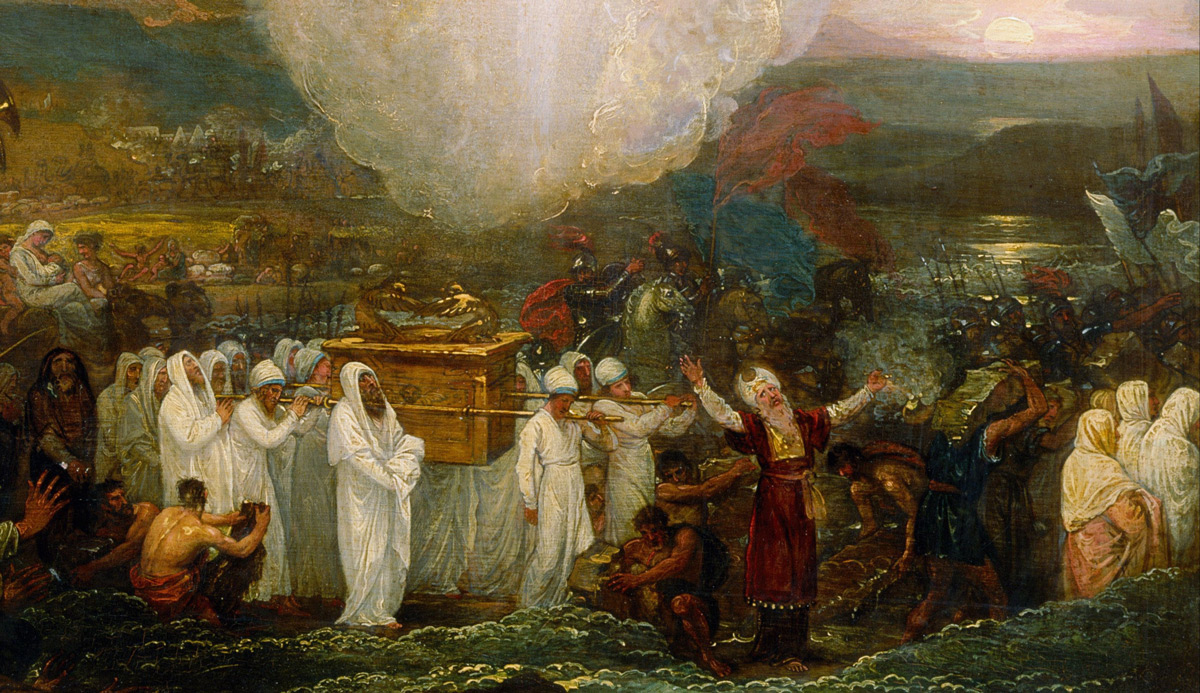
In our Old Testament lesson (Josh. 3:1-3, 7-8, 13-17), God led His people out of the wilderness and into the Promised Land through the waters of the Jordan. In the same way, God leads you out of the wilderness of sin and death and into the promised land of His kingdom, His rule, and His reign as you follow Jesus. This is so comforting. In your Baptism, God led you out of death and into new life with Him.

But, dear saints, let us also remember where Jesus was led after His Baptism. In a lot of ways, we could say that Jesus’ Baptism was the beginning of His work as the Savior. Everything Jesus did before His Baptism – His birth, His obedience, and sinless childhood – was preparation. Then, after Christ exited the water of His Baptism, He was led by the Holy Spirit into the wilderness (Mt. 4:1). He went to battle with the devil fighting against temptation; casting out demons; healing the sick; restoring creation; raising the dead; and suffering, dying, and rising again.

In the same way, Christian, your Baptism is your entrance into a life of following Jesus as you fight temptation, as you serve your neighbor, and walk in a life of holiness and righteousness. In your Baptism, you are saved by grace through faith (Eph. 2:8-9). And your Baptism is your entrance into a life filled with good works which God prepared beforehand that you should walk in them (Eph. 2:10).

Even though you repeatedly fall into sin, the things God has done for you in your Baptism are still available to you. You will fail in your Christian walk, but God remains faithful to all the promises He has given to you in your Baptism. So, keep returning to them. Keep trusting in those promises because God is faithful to you, even when you are unfaithful to Him (2 Tim. 2:13).

Dear saints, Scripture teaches that God began a good work in you in your Baptism, and He will be faithful to complete it at the day of Jesus Christ (Php. 1:6). Amen.

The peace of God, which surpasses all understanding, will guard your hearts and minds in Christ Jesus. Amen.

The Cure – Sermon on Jeremiah 8:4-12 for the Tenth Sunday after Trinity

Jeremiah 8:4-12

4 “You shall say to them, Thus says the Lord:
When men fall, do they not rise again? 
If one turns away, does he not return? 
5 Why then has this people turned away 
in perpetual backsliding? 
They hold fast to deceit; 
they refuse to return. 
6 I have paid attention and listened, 
but they have not spoken rightly; 
no man relents of his evil, 
saying, ‘What have I done?’ 
Everyone turns to his own course, 
like a horse plunging headlong into battle. 
7 Even the stork in the heavens 
knows her times, 
and the turtledove, swallow, and crane 
keep the time of their coming, 
but my people know not 
the rules of the Lord. 

8 “How can you say, ‘We are wise, 
and the law of the Lord is with us’? 
But behold, the lying pen of the scribes 
has made it into a lie. 
9 The wise men shall be put to shame; 
they shall be dismayed and taken; 
behold, they have rejected the word of the Lord, 
so what wisdom is in them? 
10 Therefore I will give their wives to others 
and their fields to conquerors, 
because from the least to the greatest 
everyone is greedy for unjust gain; 
from prophet to priest, 
everyone deals falsely. 
11 They have healed the wound of my people lightly, 
saying, ‘Peace, peace,’ when there is no peace. 
12 Were they ashamed when they committed abomination? 
No, they were not at all ashamed; 
they did not know how to blush. 
Therefore they shall fall among the fallen; 
when I punish them, they shall be overthrown, 
                                    says the Lord.

In the name of Jesus. Amen.

Imagine that you have been in severe pain for two months, so you finally go to the doctor. The doctor asks some questions, examines you, runs some tests, and orders some imaging. After all that, the doctor comes back and says that your blood tests and x-rays show that you have a bacteria that is slowly eating your bones, and if your condition is left untreated it will liquify every bone in your body within six months. We’ll call this infection I completely made up ‘osteoliquiditis.’

You reply to the doctor, “Osteoliquiditis? That sounds completely made up.” But the doctor shows you all sorts of medical journals and studies, and you learn that osteoliquiditis is, in fact, a well-researched, well-studied condition. Your doctor tells you that you can be treated, but the medication will have the side effect of lowering the levels of dopamine in your body reducing your experience of pleasure. You don’t like the sound of that, so you decide to get a second opinion. The second doctor looks over your chart and says, “Yes, this is a classic case of osteoliquiditis. But don’t listen to your first doctor. That medication should never have been approved. Yes, it kills the bacteria that causes osteoliquiditis, but do you really want to have less pleasure in your life? I don’t recommend any of my osteoliquiditis patients take that medication.” You ask, “Then, how should I treat this?” as you hope and pray this second doctor knows of a treatment that kills the bacteria with little to no side effects.

The doctor hands you a Band-Aid, and says, “Here. Put this on, it’ll help you feel better.” You can’t believe your ears and reply, “A Band-Aid for a bone-liquifying bacterial infection? Is this some magical Band-Aid?” The doctor says, “No, it’s just a regular Band-Aid. It won’t do anything to stop or slow the bacteria. But do you remember how, when you were little, your mom would put a Band-Aid on your shin after you bruised it? That Band-Aid did nothing to heal your shin, but it made you feel better because you knew someone cared. This is the same thing.” And the doctor walks out of the room. 

Now, you are left with a decision. You can go back to your first doctor and get a prescription for the pleasure-reducing medicine, or you can slap that Band-Aid on hoping for the placebo as you live out your last six months while the bacteria slowly liquifies every bone your body. So, what do you do? You open the Band-Aid, slap it on, and go about your life. Thus endeth the analogy.

This text from Jeremiah before us today is utterly depressing and almost exasperating. God Himself is mourning the unrepentance of His people. They keep falling headlong into sin and don’t get back up. They turn away, but never return. God isn’t frustrated because His people take one step forward and two steps back. No, instead, they are perpetually backsliding. They abandoned truth and desperately clung to the lies and deceit that their sin isn’t so bad and their pain and suffering wasn’t being caused by their iniquities. They went after their sins with the speed, strength, and determination of a warhorse. But you can hear God’s frustration when He says that the birds know when to migrate. They don’t need to be told to fly south before winter; they just do. Yet God’s people didn’t know the way home. The animals obey God better than the people God created to rule over nature.

What happened? How did things get so bad that God would be so despondent? Why did God’s people take the Band-Aid instead of running back to God for the treatment? Well, the text tells us exactly why. God’s people did not know the rules (lit. the ‘just decrees’) of the Lord. They claimed to be wise thinking they still had God’s Word, but the religious leaders had twisted the Scriptures into a lie. Because God’s people had rejected God’s Word, there was not even the possibility of them having wisdom. Instead of calling God’s people to turn from their sin, the leaders put a Band-Aid on a terminal disease saying, “Peace, peace,” when there was no peace. As a result, God’s people were not ashamed of their sin and did not even know how to blush.

Dear saints, we are no better. The same sins and abandoning of God’s Word in Jeremiah’s day are rampant today, and we don’t have to go outside these walls to find those sins. If we are honest, if we examine ourselves and our actions, thoughts, words, and deeds, we will find the same. Instead of being convicted of our sins, we justify our actions. Instead of turning from sin, we dive headfirst into more transgression. Instead of blushing, we thrive on the dopamine of our pet iniquities and crave after more. Repent.

Dear saints, there is only one cure for our sin and that is the sacrifice of Jesus on the cross. By His blood shed for you, you are cured of your transgressions. Your iniquity is taken away and your sin is atoned for (Is. 6:7). And by His grace, the false pleasures of sin are shown for what they really are. Your lust, greed, and pride are shown to be empty and shallow compared to the freedom that comes from God’s grace. Your idolatry, adultery, gossip, lies, and covetousness are revealed as the stinking piles of dung that they are.

So, come back. Come back to Jesus, your Great Physician, and get the medicine of immortality. Just as Christ wept over Jerusalem in our Gospel lesson (Lk. 19:41-48), Jesus weeps for your repentance that everything He has done for you would be applied to you. Christ comes and clears out the sinful cravings in your life and turns your body into a temple of the Holy Spirit (1 Cor. 6:19). To you who did not pursue righteousness, God has freely given you the righteousness that comes only by faith (Ro. 9:30) bringing you the eternal cure for all your sin.

Dear Branch, that brings me to you. Branch, today you are Baptized. Today, Jesus has joined you to Himself by placing His name upon you (Mt. 28:19) and clothed you with Himself (Gal. 3:27). Branch, in your Baptism, Jesus joined you to His death so that you have a Jesus-kind of death – in other words, a death that doesn’t last long and ends in resurrection (Ro. 6:3-11). Even though you did not seek the cure for your sin, Jesus has freely gifted all of this to you. As those waters ran down your head God healed, restored, and saved you.

So, Branch, and all of you dear saints, do not think that you can find another righteousness. There is no other cure. When you sin, and sin you will, repent and return. Learn and know and grow in God’s Word. When God’s Word tells you that you have slid back into your old ways of sin and pain, come back to Jesus for the cure. When the Scriptures reveal the evil you have in your heart, ask, “What have I done?” and flee to Christ. When there is pain and chaos all around you because of this fallen and broken world, don’t listen to the voices that say, “Peace, peace,” because Jesus is the only true peace. When you recognize the pain and evil of the abominations of sin surrounding you and within you, blush. But don’t stop there. Return to the Savior whose blood gives you the cure for all the evil, pain, and suffering in this world.

Come back to the brightness and glory of Christ’s eternal medicine and grace. Come now to God’s table of love and mercy where He gives you the cure of His Body and Blood given and shed for the forgiveness of all your sin. Amen.

The peace of God, which surpasses all understanding, will guard your hearts and minds in Christ Jesus. Amen.

Name-Calling Savior – Sermon on John 20:1-18 for the Resurrection of Our Lord

John 20:1-18

1 Now on the first day of the week Mary Magdalene came to the tomb early, while it was still dark, and saw that the stone had been taken away from the tomb. 2 So she ran and went to Simon Peter and the other disciple, the one whom Jesus loved, and said to them, “They have taken the Lord out of the tomb, and we do not know where they have laid him.” 3 So Peter went out with the other disciple, and they were going toward the tomb. 4 Both of them were running together, but the other disciple outran Peter and reached the tomb first. 5 And stooping to look in, he saw the linen cloths lying there, but he did not go in. 6 Then Simon Peter came, following him, and went into the tomb. He saw the linen cloths lying there, 7 and the face cloth, which had been on Jesus’ head, not lying with the linen cloths but folded up in a place by itself. 8 Then the other disciple, who had reached the tomb first, also went in, and he saw and believed; 9 for as yet they did not understand the Scripture, that he must rise from the dead. 10 Then the disciples went back to their homes. 

11 But Mary stood weeping outside the tomb, and as she wept she stooped to look into the tomb. 12 And she saw two angels in white, sitting where the body of Jesus had lain, one at the head and one at the feet. 13They said to her, “Woman, why are you weeping?” She said to them, “They have taken away my Lord, and I do not know where they have laid him.” 14 Having said this, she turned around and saw Jesus standing, but she did not know that it was Jesus. 15 Jesus said to her, “Woman, why are you weeping? Whom are you seeking?” Supposing him to be the gardener, she said to him, “Sir, if you have carried him away, tell me where you have laid him, and I will take him away.” 16 Jesus said to her, “Mary.” She turned and said to him in Aramaic, “Rabboni!” (which means Teacher). 17 Jesus said to her, “Do not cling to me, for I have not yet ascended to the Father; but go to my brothers and say to them, ‘I am ascending to my Father and your Father, to my God and your God.’” 18 Mary Magdalene went and announced to the disciples, “I have seen the Lord”—and that he had said these things to her.

Alleluia! Christ is risen!
He is risen indeed! Alleluia!

In the name of Jesus. Amen.

Just as a ‘heads-up,’ I’m going to set the scene and fill out some details about Mary Magdalene as well as the events of morning of Jesus’ resurrection. I’m not making stuff up; I’ll be pulling from Scripture. If you want the references for things that I mention that aren’t in this text, ask me after the service, and I can print out the sermon with all the references.

Mary Magdalene goes to the tomb before light dawns the morning of the Resurrection, but she isn’t seeing, hearing, or thinking clearly. She is still filled with grief and sorrow from watching Jesus’ crucifixion. Mary Magdalene stood and witnessed the sad events of Good Friday at the foot of the cross (Jn. 19:25; Mk. 15:40). And the last time she had seen her Lord, He was wrapped in burial cloths before the sun set on Friday (Mt. 27:61; Mk. 15:47; Lk. 23:55-56).

But now, it’s Sunday, the first day of the week. Mary Magdalene was one of several women who went to the tomb (Mt. 28:1; Mk. 16:1; Lk. 24:10). As the women approached, they began to ask each other, “Who will roll away the stone for us from the entrance of the tomb?” But when they got there, they saw that the stone had already been rolled away by an angel who was sitting on it (Mk. 16:1-4; Mt. 28:2). It seems as though Mary Magdalene immediately ran back to the disciples as soon as she saw the open tomb.

For Mary Magdalene, the empty tomb was, initially, another reason to grieve because she thinks that someone has stolen Jesus (Jn. 20:13, 15). She runs back to tell Peter and John about it. She returns to the tomb with them while they investigate her claim (Jn. 20:3-9). They see the empty tomb and the neatly-folded burial cloths (Jn. 20:5-7). But these two disciples can’t comfort Mary because they didn’t believe that Jesus had risen; at least not at this point. In fact, the disciples won’t believe the resurrection until later that evening (Jn. 20:8b-9; Lk. 24:36-49).

Peter and John leave the tomb, but Mary stays there. And sorrow again fills her. She sees two more angles dressed in white robes sitting inside the tomb where Jesus had been laid, and she even has a conversation with them. They ask her, “Woman, why are you weeping?” And you can hear the pain in Mary Magdalene’s voice as she answers, “They have taken away my Lord, and I do not know where they have laid Him.” This conversation with the angels doesn’t help Mary believe in the Resurrection.

And I wonder what the angels thought about this conversation with Mary. They might have been a bit confused by her reply because, as Mary said this, Jesus is standing behind her.

Mary turns around and sees Jesus standing. But seeing the resurrected Jesus doesn’t give her faith. She thinks He is the gardener. And Jesus, patient Jesus, asks her the same question the angels had asked, “Woman, why are you weeping?” But Jesus adds another question, “Whom are you seeking?”  It’s almost like Jesus is saying, “Hey, it’s Me, I’m right here.” But Mary still doesn’t believe Jesus is raised. She says, “Sir, if you have carried Him away, tell me where you have laid Him, and I will take Him away.” Even this conversation with the resurrected Jesus doesn’t give her faith.

But then, everything changes when Jesus speaks her name, “Mary.” I wonder what intonation Jesus used. Did He say it with a mild rebuke, “Mary”? Did He say it with a snicker, “Mary”? Maybe, He said it with utter compassion, “Mary.”

No matter how Jesus said her name, she believes. That one word – and not just any word, but her very own name spoken by the lips and voice of her resurrected Savior – pulls her out of her grief and sorrow. This is so magnificent.

The same voice that called seven demons out her (Lk. 8:2; Mk. 16:9) now expels the demon of unbelief. The last time she had heard the voice of Jesus was when He cried out on the cross “It is finished,” (Jn. 19:30) and, “Father into Your hands I commit My spirit” (Lk. 23:46). Now, that same voice, filled with life and peace, speaks her name, “Mary.” Jesus – who had drunk the cup of God’s wrath, had all the sins of the world laid on Him, and had passed through death and the grave – He calls her by name. And Mary believes and latches herself on to Jesus as though she will never let go. But her grip on Jesus isn’t as important as His grip on her.

Jesus sends her with a message to give to the disciples, “Go to My brothers and say to them, ‘I am ascending to My Father and your Father, to My God and your God.’” Jesus can call the disciples, “My brothers,” and say this because something new has arrived. All who believe in Christ, all His disciples, all Christians, are welcomed into a new world where they are Jesus’ siblings, where God is ‘your God’ and Jesus’ Father is now ‘your Father.’

So, that very moment in the garden next to the empty tomb, Mary experienced the fulfillment of Isaiah 43:1-3. “Fear not, for I have redeemed you; I have called you by name, you are Mine. When you pass through the waters, I will be with you; and through the rivers, they shall not overwhelm you; when you walk through the fire you shall not be burned, and the flame shall not consume you. For I am the Lord your God, the Holy One of Israel, your Savior.”

I’m going to give you some Easter homework: Before you send your kids out hunting for Easter eggs, as a family, read Isaiah 43:1-3 and v. 11-18 of this text, then read Isaiah 43:1-3 again to see the parallels.

Dear saints, what Jesus did for Mary Magdalene the morning of the Resurrection, He does for you. He calls you by name. In John 10, Jesus calls Himself the Good Shepherd who lays down His life for the sheep (Jn. 10:11). In that passage, Jesus also says that He is the shepherd who, “calls His own sheep by name and leads them out” (Jn. 10:3). Jesus, your Shepherd, is the name-calling Savior. He calls you by name in your Baptism and places His name – Father, Son, and Holy Spirit – upon you (Mt. 28:19). 

Jesus is your God, your Savior. You, Christian – this could be said to each and every one of you by name – you will always have the risen Jesus. He will never leave you or forsake you. He died for you and has forgiven all your sin. Christ leads you through every trial and tribulation you face in this life. And He leads you to the resurrection. Nothing in this world will overwhelm or consume you. You belong to Him. Jesus is your Savior, Redeemer, and Brother, and God is your God.

You are His. You belong to Him. He has bought and purchased you with His holy and precious blood by dying on the cross and rising again for you.

And now, He invites you to come to His table where you will again see Him in Bread, which is His resurrected Body, and in Wine, which is His life-giving Blood. Come, taste, and see that the Lord is good (Ps. 34:8).

Alleluia! Christ is risen!
He is risen indeed! Alleluia!

Amen.

The peace of God, which surpasses all understanding, will guard your hearts and minds in Christ Jesus. Amen.

Wilderness to the Promised Land – Sermon on Joshua 3:1-6 and Matthew 3:13, 4:1-2

Joshua 3:1-6; Matthew 3:13, 4:1-2

In the name of Jesus. Amen.

Imagine that you’re on a family road trip. You get on the freeway and have a nice conversation with your kids. As the talk starts to slow down, the kids ask if they can play some music over the stereo. After an hour of having the tunes cranked up, the kids start complaining about the songs their siblings are picking. So, you turn off the music and tell them all to take a nap, read a book, or just stare out the window. But the kids are tired of being in the car, so they revert to their favorite pastime – annoying each other. (By the way, this isn’t necessarily about my family.) After an hour of dealing with the complaints – “He’s touching me,” “Well, she’s looking at me,” “They’re breathing loud,” – you have just about had it. But you’re getting close to your destination.

It’s been several hours since you left home. You’re tired of being in the car and just want the trip to be over. But as you turn down the street of your destination, all your kids start screaming at each other. You’ve finally had enough. You tell your kids that for their punishment, you are going to fill up the gas tank and drive around for several more hours – one hour for every minute of screaming and fighting. (And, yes, I know with gas prices as high as they are, this seems completely ludicrous.)

Well, that analogy is similar to what happened when God delivered Israel out of slavery in Egypt (just don’t go too far with the details). God was bringing His people to the Promised Land. It was trip that shouldn’t have taken more than a couple of months. But God had led His people via the scenic route that included a lengthy pit stop at Mt. Sinai. After receiving God’s commands and instructions about building the Tabernacle, the people rebelled at the foot of the mountain and made the golden calf. Repeatedly on this road trip, the Israelites complained and wanted to return to Egypt and slavery because the cucumbers tasted good (Nu. 11:5). They would whine about not having food and water even though God was constantly providing for them.

To top it all off, when God’s people were on the doorstep of the land God had sworn to give them, they rebelled again. God had the people send spies into the Promised Land for forty days to have a look around (Nu. 13-14). When the spies returned, they reported that the land was fantastic, but they were terrified to enter because people who lived there were giants. Ten of the twelve spies said that entering the Promised Land was impossible even though God had promised to give it to them. This bad report from those ten spies terrified God’s people, and they refused to go forward.

So, God punished them by sending them into exile. For each of the forty days the spies were in the land, God sentenced the people to one year of exile wandering in the wilderness (Nu. 14:34). Forty days of spying and doubting that God would do what He promised meant forty years of exile. God swore that none of the people who were twenty years or older would enter the Promised Land except for Caleb and Joshua, the two faithful spies (Nu. 14:28-33). All the rest of the people would die in the wilderness, but their children would enter Canaan.

When the people learned about their punishment, some of them decided to try and conquer the Promised Land on their own. It didn’t go well. They went without the Ark of the Covenant which meant they went without God’s presence and blessing, so they were utterly defeated (Nu. 14:39-45). So, into exile went God’s people, but God went with them. For forty years, God’s people wandered in the wilderness between Canaan and Egypt. They had walked right up to their inheritance, but they didn’t believe God’s promises, which meant they had abandoned His blessing. But throughout those forty years of wandering in the wilderness, God remained faithful to His people. God was faithful even though the people continued to complain and rebel.

Finally, in tonight’s Old Testament reading (Josh. 3:1-6), the forty years of exile were over, and God brought His people into the Promised Land. As the priests carrying the Ark neared the banks, the Jordan River stood in a heap so His people could leave the wilderness and exile and enter the land flowing with milk and honey (Josh 3:12-17). Despite the people’s sin and rebellion on the way from Egypt to the Promised Land, and despite their sin during the forty years of exile, God was with His people – blessing them, forgiving them, and providing for them (Josh. 5:10-12).

We are just like the unfaithful Israelites who complained, rebelled, and bickered. Because of our sin, we wander about in the wilderness. We don’t have any word or promise from God about how long our exodus will be. But we do have the promise that a good land awaits us after our time of exile is over. Dear Christian, God has promised to give you the new heavens and new earth (Rev. 21:1). There, the same God who daily provides abundantly for all the needs of your life will abundantly provide for you for all eternity and shelter you in His presence. Jesus has gone there before you to prepare a place for you (Jn. 14:1-3). And now Jesus leads you on the way to that paradise.

In our Gospel lesson (Mt. 3:13, 4:1-2), Jesus went down into the waters of the same Jordan River that the Israelites crossed to go into the Promised Land. Jesus went to those waters to be baptized by John. There, your sins were placed upon Jesus (Jn. 1:29). But unlike the Israelites, Jesus doesn’t pass through the Jordan to enter the Promised Land. Instead, Jesus goes through the Jordan and out to the wilderness. Christ takes your sins into the wilderness and carries them back to Satan. But while out in the wilderness, your Savior finds you to lead you and travel with you on your journey to the Promised Land. He leads you to the waters of your Baptism, which grant forgiveness, life, and salvation and brings you into His kingdom.

Jesus prepared the way to the promised land for you because He is the Way (Jn. 14:6). He has opened the courts of heaven to you. Christ leads you on your pilgrim journey with His powerful, nail-scarred, forgiving hands. He brings you to where He is seated at the right hand of God the Father and where He is, there you may be also (Jn. 14:3). So, dear saints, set your minds above where your Lord and Savior is seated at the right hand of God. And when Christ, who is your life appears, then you will appear with Him in glory (Col. 3:1-4). Amen.

The peace of God, which surpasses all understanding, will guard your hearts and minds in Christ Jesus. Amen.

Slavery to the Promised Land – Sermon on Exodus 14:13-31 and Mark 1:9-13

Exodus 14:13-31; Mark 1:9-13

In the name of Jesus. Amen.

Scripture repeatedly connects water with death and life. At creation, there was chaos and darkness as the Spirit of God hovered over the face of the waters. But then God spoke, and life was brought forth (Gen. 1:2). In the Flood, God sent judgment and death upon sinful mankind by raining water on the earth for 40 days and nights, but those same waters were life-giving as they lifted Noah and his family safely in the ark above God’s judgment (1 Pet. 3:21). When Moses was born, the Hebrew baby boys were to be drowned in the waters of the Nile, but Moses was placed in a basket – his own personal ark – and saved by those waters to be found by Pharaoh’s daughter (Ex. 1:22-2:10).

After wandering in the desert for forty years, God’s people passed out of the deathly, barren wilderness and into the Promised Land by passing through the waters of the Jordan River (Jos. 3). Naaman came to the prophet, Elijah, as a man with deadly leprosy, but he washed himself in the waters of the Jordan River and came out with the skin of a newborn (2 Kg. 5:1-14). Jonah was swallowed by the great fish and brought down to the depths of the sea, but was vomited up again on dry land with new life (Jon. 1:17:2-10, Mt. 12:40). 

Last but not least, in tonight’s Old Testament lesson (Ex. 14:13-31), God’s people are departing Egypt and leaving the land of slavery, leaving the brutal taskmasters, whips, despair, hopelessness, and death behind. Initially, Israel had gone to Egypt to stay alive and find a place of refuge and rescue from a severe famine (Gen. 45:4-15). In those days, Egypt was a land that offered a good home while the world was filled with desperation (Ex. 1:1-7). But things had taken a bad turn. A new pharaoh came to power and saw God’s people as a source of cheap labor. The Hebrews ended up groaning under his cruelty. The land that had provided for them became the place of pain and sorrow. The country that had been a place of life became a place of death.

God heard the cries of His people and sent Moses to deliver them out of slavery and death. It wasn’t an easy departure. It took ten terrible plagues to convince Pharaoh to let them leave and go to the land that God had promised to give to Abraham and his offspring. But the Hebrews only got as far as the Red Sea when Pharaoh had another change of heart. Now, God’s people were stuck between a big body of water on one side and Pharaoh and his army on the other. 

God told Moses to lift his staff over the sea, and the waters parted so God’s people could pass through on dry ground. Through the water, God’s people left slavery and death and begin their journey from their exile in Egypt back to the Promised Land. The Egyptian army pursued them through those waters, but it didn’t work. The walls of the sea collapsed on Pharaoh’s army. The Lord did, indeed, fight for His people, and they had only to be silent (Ex. 14:14). The evil tormentors of God’s people were all washed away. The waters of the Red Sea were an instrument of both life and death. The same waters that destroyed the enemies of God’s people are the waters that save them. The waters that killed also delivered.

Dear saints, the world around is is getting very bleak. Yes, we live in the land of the free, but the darkness of evil is gathering around us. Like the Hebrews when they initially entered Egypt, we’ve had remarkably blessed days, but that is changing daily before our eyes. The novelist, G. David Hopf wrote, “Hard times create strong men. Strong men create good times. Good times create weak men. And, weak men create hard times.” The good times that have been a blessing from God, have created weak men. We are watching inflation soar. We see the potential for horrific wars. The holocaust of abortion continues to rage around us. And our culture has become so open-minded that brains are falling out. For example, yesterday, the supreme court nominee said that she was unable to define what a woman is during her confirmation hearing. Stating simple truths are now considered “hate speech.” It may be that hard times and persecution are looming large before us. Dear Christian, be ready. Our beloved country might turn into a land of slavery. Lord, have mercy.

But even if that isn’t the case and we enjoy more good days, it doesn’t change the fact that we are all slaves of sin and death. We continually sin in thought, word, and deed. We do not love God with our whole heart or our neighbors as ourselves. We need a Savior and deliverer. We need to be rescued from the demons. And, God be praised, God has come and fought for us to deliver us from every oppression.

In our Gospel lesson tonight (Mk. 1:9-13), Jesus came to the Jordan River. Scripture tells us that in those same waters, the people of Jerusalem, all Judea, and all the region around the Jordan were going to John to be baptized as they confessed their sins (Mt. 3:5-6). Jesus also went into that water to be baptized. But Christ didn’t need to be washed clean of sin because He didn’t have any. Instead, Jesus went down into those waters, and like a sponge, He absorbed those sins into Himself. After Jesus was baptized, He was driven by the Holy Spirit to go into the wilderness bringing those sins back to Satan, the father of sin.

In His baptism, Jesus began to take upon Himself the sins of the whole world (2 Cor. 5:21, Jn. 1:29). In Jesus, God has condemned sin in the flesh (Ro. 8:3). By taking our sin, going to the cross, and suffering God’s wrath against your sin, Jesus prepared you for your own journey into and through the waters of Baptism. In your Baptism, your old, sinful nature was drowned (Ro. 6:3-8), and your sin, all your sin, is washed away. God promises that in your Baptism, you have everlasting life and are delivered from your exile. Dear saints, continue to believe what God has promised you. Because of what Jesus has done for you, heaven has been torn open so you can pass safely through this world of sin and into the promised land of the kingdom of heaven. Amen.

The peace of God, which surpasses all understanding, will guard your hearts and minds in Christ Jesus. Amen.

Just as He Transforms You – Sermon on Matthew 22:1-14 for the Twentieth Sunday after Trinity

Matthew 22:1-14

1 And again Jesus spoke to them in parables, saying, 2 “The kingdom of heaven may be compared to a king who gave a wedding feast for his son, 3 and sent his servants to call those who were invited to the wedding feast, but they would not come. 4 Again he sent other servants, saying, ‘Tell those who are invited, “See, I have prepared my dinner, my oxen and my fat calves have been slaughtered, and everything is ready. Come to the wedding feast.”’ 5 But they paid no attention and went off, one to his farm, another to his business, 6 while the rest seized his servants, treated them shamefully, and killed them. 7 The king was angry, and he sent his troops and destroyed those murderers and burned their city. 8 Then he said to his servants, ‘The wedding feast is ready, but those invited were not worthy. 9 Go therefore to the main roads and invite to the wedding feast as many as you find.’ 10 And those servants went out into the roads and gathered all whom they found, both bad and good. So the wedding hall was filled with guests. 11 But when the king came in to look at the guests, he saw there a man who had no wedding garment. 12 And he said to him, ‘Friend, how did you get in here without a wedding garment?’ And he was speechless. 13 Then the king said to the attendants, ‘Bind him hand and foot and cast him into the outer darkness. In that place there will be weeping and gnashing of teeth.’ 14 For many are called, but few are chosen.”

In the name of Jesus. Amen.

If this text was your only indication of God‘s character, what would be your opinion of Him? Because this parable is about the kingdom of heaven, we know that God is the king, but we see that this king gets very angry. He sends out his troops and destroys the murderers. He burns their city and then mocks the very same people he invited to his feast calling them ‘unworthy.’ But what might be the craziest thing about this king is his super strict dress code. He doesn’t just kick the underdressed man out. He has him bound hand and foot and cast into the outer darkness where there is weeping and gnashing of teeth.

Now, maybe you get a little uncomfortable with a text like this. You might find yourself wishing that Jesus would stick to good parables – happy, nice parables like the Prodigal Son or the ones about seeds and birds. Or, maybe, you wish that God always talked like He did in our Old Testament lesson (Is. 55:1-9) where He lovingly invites, “Come, everyone who thirsts, come to the waters; and he who has no money come buy and eat! Come buy wine and milk without money and without price.” We like that kind of God. But the God Jesus presents here – maybe not as much. I mean, seriously, who wants a God who gets all bent out of shape over a guy who doesn’t have the right clothes? Why does God have to be such a hardnose?

Well, dear saints, what if the God that Jesus presents in this parable is just as lavish, just as loving and inviting, as we heard in that Old Testament lesson? In fact, I would argue that even the ugly things that happen in this parable show God’s protection and provision, His mercy, grace, and love.

The king just wants people at his feast. So, he sends out “save the date” cards. When the time to feast comes, he sends his servants to invite those who received those notifications. Still, nobody comes. If we’re being honest, this king is a little too eager to have people at his banquet. Wouldn’t it be better if he was a bit more aloof? “Oh, you don’t want to come? That’s cool!” But the king isn’t that way. He desperately wants these people there at his feast. He wants them to celebrate with him.

So, he sends out his servants again saying, “See, everything is ready. The food is hot, the wine is poured. The music is playing. Come to the feast!” But now the people act wickedly towards the king’s servants. Yes, some only ignore the invitation, but some treat the servants shamefully even kill them. Not a good idea! To attack the king’s servants is the same as attacking the king himself. This cannot stand. The king is done sending his beloved servants to these wicked ingrates. Now, he sends his army to destroy those murderers and burn their city. All the king wanted of them was their presence so he could provide the feast of feasts for them. But they didn’t want anything to do with him.

We should be surprised that the parable isn’t over yet. The story continues. The king still wants a party. He wants guests. He wants people with him to celebrate the marriage of his son. So, he sends more servants out into the streets to invite anyone they can find – good or bad, it doesn’t matter. Just fill the banquet hall with people so we can celebrate. The servants go, and here we see how the servants love their king. The servants know what had happened to the last batch of servants the king sent out. But out of love for their king, they go despite the danger. And surprisingly, they have success! The hall is filled. People arrive at the palace. And every guest finds a place prepared specifically for them at the table even though they have come directly off the street. These guests have come just as they are, and everything is ready.

Now, a lot could be said about the king’s servants. A whole sermon could be preached from this parable about how the king cares for his servants and avenges them when they are wronged. We could consider how God protects you as you go about your work, witnessing for Him as you invite others to the feast. But you are smart people and have been paying good attention. So, I’m going to let you fill in those blanks because this parable is mainly about being worthy to be at the king’s banquet. And there’s one more glitch, one more snafu, in this parable that reveals God’s grace and mercy.

The king enters the banquet hall and spots one of the guests who is there without a wedding garment. So, the king walks over to him and says, “Friend,” or to put it in today’s vernacular, “Dude, how did you get in here without wedding clothes?” No response. Nothing but utter silence. The awkward pause turns into a tragic and even terrifying moment when the king summons his servants and renders swift judgment saying, “Bind him hand and foot and cast him into the outer darkness. In that place there will be weeping and gnashing of teeth.” It’s shocking. This underdressed man gets punished even more severely than the people who murdered the king’s servants. They were only killed and had their city burned to the ground, but this underdressed, speechless man with no excuse, he gets hell.

Why? Why does the king get so bent out of shape when a guy, who has been brought in from the street, looks like a guy who has been brought in from the street? Well, here’s the thing. The wedding garment that this man was expected to be wearing but wasn’t, that garment would have been provided for him at the door. The king would have provided all the guests with wedding garments along with all the food and wine and entertainment. The king didn’t expect his guests to provide anything to be at the feast, not even the clothes on their backs. So, this underdressed man had despised the king’s gift which meant he despised the feast, despised the other guests at the party, despised the king’s son, and even despised the king himself.

So, dear saints, what does this parable teach us about God‘s grace? Well, there is no question God calls you just as you are. God certainly doesn’t need you at His feast, but He desperately wants you there. He wants you for Himself for all eternity. That is why God sent Jesus to shed His blood and die for the sins of all people (1 Tim. 4:10). In Christ’s death, everyone has been reconciled to the Father (2 Cor. 5:19). But the sad reality is that not everyone wants the forgiveness and restoration Christ has won and purchased. The eternal wedding banquet of God is only for beggars who have absolutely nothing and need everything provided for them – even the very clothes that they wear.

For the self-righteous and self-satisfied, the Gospel is insulting. Imagine going to a wedding reception and being told by the host, “You can’t come in here like that. You look and smell disgusting. Strip off all your clothes. Leave your filthy, smelly, smutty rags in the dumpster. Get hosed off and put these fine, fancy, designer clothes on instead. They’re yours to keep. By the way, we’re so glad you are here. Welcome! Enjoy the feast!” Now, if you are infected with lice, homeless, dirty, and hungry you will appreciate that cleansing and gift and have the most marvelous time at the feast. But if you like yourself just as you are, if you are comfortable with yourself in your sin and shame, hearing that is a total, complete insult.

Dear saints, God has invited you just as you are, but your God has no intention of you remaining just as you are. God loves you more than that. He transforms and elevates you. God has given you new clothes, splendent and radiant clothes. In your baptism, God closed you with the righteousness of Christ (2 Cor. 5:21Gal. 3:27). In that robe, you are without spot or wrinkle or any such thing; instead, you are holy and without blemish (Eph 5:27). Sure, you can despise that gift and treat it as though it is nothing. But you do so at your own peril.

God wants you at his feast, and at His feast there is only one rule: You don’t pay for anything. Everything is provided for you because of what Christ has done. And here’s the best part: Your God invites you now to this banquet where everything is ready. Come. You are invited just as you are. And God accepts you just as He has transformed and clothed you in Christ. Amen.

The peace of God, which surpasses all understanding, will guard your hearts and minds in Christ Jesus. Amen.