What Is Baptism? – Sermon for Midweek Lent 1

Listen here.

I. What is Baptism?

Baptism is not simply water, but it is the water used according to God’s command and connected with God’s Word.

What is this word of God?

It is the word of our Lord Jesus Christ, as recorded in the last chapter of Matthew: “Go therefore and make disciples of all the nations, baptizing them in the name of the Father and the Son and the Holy Spirit.”

Martin Luther’s Small Catechism.

In the name of Jesus. Amen.

I’m no Julie Andrews, but I’ll attempt a little Maria von Trapp impersonation here, “Let’s start at the very beginning – a very good place to start. When you read, you begin with A-B-C. When you sing, you begin with Do-Re-Mi…” When you consider Baptism, you begin with Mt. 28:19.

Jesus says, “Go therefore and make disciples of all nations, baptizing them in the name of the Father and of the Son and of the Holy Spirit.” Our crucified and resurrected Savior, who has all authority in heaven and on earth, passes His authority to His disciples. But what exactly is Jesus telling His disciples to do here? What is the command? I can still hear and picture a particular missionary repeatedly telling a group I was in, “The command is to go!” Actually, it isn’t. And, in fact, the word ‘go’ is probably the least important word in this verse. That’s a horrible thing to say about anything Jesus tells us, but it’s true. In all honesty, you could remove the word ‘go’ and what Jesus says would have the same meaning. Just quickly, here’s why.

Before ascending into heaven, Jesus meets the disciples on a mountain in Galilee. Jesus wants His disciples to ‘make disciples’ of ‘all nations.’ Since ‘all nations’ are not there on that mountain, the disciples are going to have to leave the mountain in order to do what Jesus wants them to do. But because Jesus does say, “Go,” it is important. I don’t want to overly bore you here with grammar, so I’ll just get to the point. “Go,” is not a verb in Jesus’ sentence here. The idea is more along the lines of, “as you go,” in other words, wherever the disciples go, here is what they are to do. “Disciple all nations.” The command Jesus gives is ‘disciple,’ and ‘disciple’ is not a word that we are used to being an action. Normally, we hear the word ‘disciple’ and think it is a person – one of the twelve or a Christian today. But that’s the command, ‘disciple’ or ‘make disciples.’

And Jesus specifies whom the eleven disciples are to disciple – “all nations.” The word, there, for nations is ἔθνος – where we get our word ‘ethnicities’ or ‘all types of people.’ Jesus wants all ethnicities to be His disciples because – “red and yellow, black and white, they are precious in His sight.” And to fast-forward to when we will consider infant Baptism, that is one of the reasons we baptize infants. No matter their skin color, country, heritage, age, or ethnicity, Jesus wants all people to be saved and come to a knowledge of the truth (1 Tim. 2:4).

How are Jesus’ disciples to disciple all ethnicities? Two things are necessary: First, baptizing in the name of the Father, Son, and Holy Spirit, and second, teaching them all that Jesus has said.

Notice that, according to Jesus, the water of Baptism is tied to the divine, triune name of God – Father, Son, and Holy Spirit. God places His holy name on you in Baptism. But this is more than simply slapping a bumper sticker or luggage tag on you. When you were Baptized into the name of the Father, Son, and Holy Spirit, God brought you into fellowship with Himself. God gave you a new character, new identity, and even new birth.

When you put your name on a loan or marriage certificate, something changes. You are bound to an agreement or a person. When the eternal, unchangeable, holy God puts His name on you, that is significant.

That’s why teaching is also part of making disciples. It will take our entire lifetime to learn what it means to have God’s name placed upon us, the Baptized. That is why you come to church and listen to sermons, why you study and read your Bible. You have been made a disciple through water and the Word. Keep learning what that means, you children of God!

Now, some object to what the Bible says about God working spiritually through something physical like water. To that, we have to ask, “Has God ever used something physical to bring about salvation?” To that we have to say, without hesitation, “Yes!” Jesus became a literal, physical human to die on a cross, shed His blood, and rise again. In Christ, God used something physical to bring about something spiritual.

As humans, we are physical and spiritual – body and soul. So, it makes complete sense for God to save us through both physical and spiritual means – water and Word.

Now, it is vitally important that we recognize that Baptism isn’t simply water, but water used according to God’s command and connected to God’s Word. Without the Word and command of God, there is nothing special about the water used. That same water could be used to boil potatoes, wash your hands, or mop the floor. God’s Word and promise connected to that water is essential.

We might wonder, “Why would God chose to connect His promises to something as common as water?” God could have connected the same promises to honey, milk, or kiwi juice. But He didn’t. Asking why water is used in Baptism is like asking, “Why didn’t God create us with six arms? Why don’t birds say, ‘Moo’? Why doesn’t salt taste sweet?” The only answer is that God didn’t do it that way. Let’s let God be God, and let us be His creatures.

Again, God’s Word is essential to make a Baptism, but so is the water. Consider the importance of water through Scripture. It was over the water that the Holy Spirit hovered at the beginning of creation (Gen. 1:2). It was through water that God brought His people into the Promised Land (Jos. 3). It was through water that God led His people out of slavery (Ex. 14). It was with water that the priests were to wash their hands and feet before they went near the altar to minister to the Lord (Ex. 30:18-21).  And it was into the water that Jesus stepped to fulfill all righteousness (Mt. 3:15). 

Christian, as we will see in the coming weeks, in your Baptism God has done all of this for you. In your Baptism, the Holy Spirit has come to dwell in you. In your Baptism, you have been brought out of your slavery to sin. In your Baptism, you have been brought into the Promised Land of the kingdom of God. In your Baptism, you have been brought into God’s presence and before God’s altar. In your Baptism, God has fulfilled all righteousness and saved you. 

Finally, because Jesus commanded Baptism and as we see what it does in the coming weeks, we know that Baptism isn’t merely a human work. Baptism is God’s work. Just as God has redeemed you through the shedding of blood through Jesus’ hands, He has adopted you through the washing of water in Baptism done by human hands. In your Baptism, God gave you His grace, mercy, forgiveness, and adoption. It didn’t miss. Amen.

The peace of God, which surpasses all understanding, will guard your hearts and minds in Christ Jesus. Amen.
I Need to Be Baptized by You – Sermon on Matthew 3:13-17 for the Baptism of Our Lord

Listen here.

Matthew 3:13-17

13 Then Jesus came from Galilee to the Jordan to John, to be baptized by him. 14 John would have prevented him, saying, “I need to be baptized by you, and do you come to me?” 15 But Jesus answered him, “Let it be so now, for thus it is fitting for us to fulfill all righteousness.” Then he consented. 16 And when Jesus was baptized, immediately he went up from the water, and behold, the heavens were opened to him, and he saw the Spirit of God descending like a dove and coming to rest on him; 17 and behold, a voice from heaven said, “This is my beloved Son, with whom I am well pleased.”

In the name of the Father and of the Son and of the Holy Spirit. Amen.

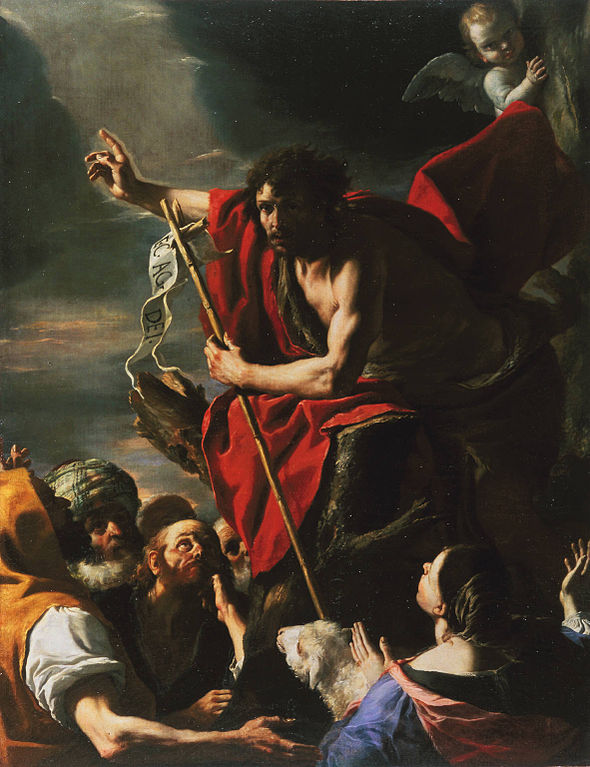
John the Baptizer tried to prevent Jesus from being baptized, but it wasn’t the first time that John had the inclination to not baptize. A few verses before our text (Mt. 3:5-10), Matthew tells us that all Judea and all the region around the Jordan were being baptized by John. But, when many of the Pharisees and Sadducees were coming to John to be baptized, John sees them and says, John the Baptizer“You brood of vipers! Who warned you to flee from the wrath to come? Bear fruit in keeping with repentance.” The text doesn’t explicitly say it, but it appears as though John refused to baptize at least some of the Pharisees and Sadducees. But why? Why do they get a tongue-lashing and no baptism?

To get to an answer, we need to have a little background. First of all, we have to understand a little more about what baptism is because baptism isn’t something John invented on his own. The most basic meaning of the Greek word βαπτίζω (which gets translated ‘baptize’) is to wash something either by immersing it in or sprinkling it with water.[1] In the Old Testament, God had given lots of instructions to people who had become unclean to go and ceremonially wash themselves before going to the priest to be declared clean (like when a person had contact with a corpse Lev. 11:25, had a skin disease Lev. 13:6, the person who led the scapegoat into the wilderness Lev. 16:26, etc.). After becoming unclean by contact with what was unclean, that person was to wash and be declared clean, and this is the background of the baptisms going on in John’s day. They were further washings that weren’t commanded or forbidden in Scripture. Things that are neither commanded or forbidden in Scripture can be either good or bad. Scripture doesn’t command us to celebrate Christmas, but it is good and even necessary to do so. But we can make celebrating Christmas such a big deal that it becomes the only day that people come to church, which is bad.

We don’t have a lot of information about the history, but we do know that people who wanted to become part of the Jewish people would be baptized (though, these mainly appear after Christ’s ascension into heaven). But there are records outside of Scripture where baptisms did happen and were somewhat common during the time of the Old Testament and between the Testaments. However, these baptisms were all self-washings. They were a way of physically confessing your sins, turning over a new leaf, recommitting yourself to God, and making a better life for yourself. In other words, those baptisms were something people did forGod.

Now, we can’t say for sure, because Scripture doesn’t explicitly say it, but this is possibly why some of the Pharisees and Sadducees were coming to John to be baptized by him. Their thinking possibly went like this, “It is good to commit your life to God, and maybe people who are more sinful than I am will follow my example and commit their lives to God.” But here’s the problem with this attitude of the Pharisees and Sadducees, if that is correct, they weren’t coming in repentance to receive the forgiveness of their sins. And Scripture does say that John was baptizing unto repentance for the forgiveness of sins (Mk. 1:4).[2]

John was baptizing unto repentance for the forgiveness of sins, but the Pharisees in particular didn’t see themselves as having sins to confess. Remember Jesus’ parable about the Pharisee who thanked God that he was not like that rotten sinful tax collector (Lk. 18:11).

So, it is possible that these Pharisees and Sadducees who are denied baptism by John are not coming to be baptized because they have sins that need to be washed away. They are stuck in a way of thinking that they could do enough things for God that God would be pleased with how holy they were. They thought getting baptized was something more they could do to earn favor with God, so John refuses to baptize them because they aren’t repentant. The sad thing is that many Christians today have this type of view of Christian Baptism. They view Baptism as something they do for God once they have come to faith. But this is not the picture of Baptism that Jesus and the rest of the New Testament gives. Not at all!

Jesus' BaptismNow we come to our text. John is baptizing all these people. A thief comes confessing his stealing, an adulterer confesses his adultery, a liar confesses her sin, and John absolves and baptizes them. But then to the front of the line comes Jesus, and John knows Him (Lk. 1:39-45). They’re related to each other. John knows what the angel Gabriel told Mary, that this Jesus would be Son of the Most High, that He would reign over the house of God, and that His kingdom would have no end (Lk. 1:26-38). John knows the angel Gabriel told Joseph that Jesus would be the One to save His people from their sins (Mt. 1:18-25). John knows that Jesus is the sinless God in the flesh. And here He is coming to be baptized unto repentance for the forgiveness of sins? This shouldn’t be!

John recognizes that he is the sinner who needs to confess his sins and be baptized by Jesus. “I need to be baptized by You, and do You come to me?”

But Jesus reassures John, “Let it be so now, for thus it is fitting for us to fulfill all righteousness.” So, John consents and baptizes Jesus. The heavens are opened. The Holy Spirit descends like a dove and rests on Christ. And God the Father says from heaven, “This is my beloved Son, with whom I am well pleased.” Such a beautiful picture of each Person of the Holy Trinity there at our Lord’s Baptism.

What happens when Jesus is Baptized is both the opposite and the same thing that happens to you in your Baptism. In your Baptism, God washed away your sins (Tit. 3:5-6). But when Jesus was Baptized, the opposite happened. Picture it this way. Those sinners who had been baptized by John in the Jordan came to have their sins washed away. But when Jesus enters those sin-filled waters, He absorbs all those sins into Himself so that He can take them to the cross and die for them.

We say this because it is only after Jesus’ Baptism that John says Jesus is the Lamb of God who takes away the sin of the world. John can say that because of what he saw in Jesus’ Baptism. There, Jesus had all the sins of all people of all time piled upon Him. in Isaiah 53, God says that Jesus would be numbered with the transgressors (Is. 53:12) and that God would lay on Jesus the iniquity of us all (Is. 53:4-6). That happened at Jesus’ Baptism.

You know how you feel when you are caught doing something wrong. You have a physical reaction – maybe you feel a rush of heat and guilt, and you feel the weight of it. Imagine having every sin of every person of all time piled upon you. How crushing would that be for Jesus? But having the weight and burden of the sin of the world put upon Him, Jesus hears the comforting voice of His Father, “You are My Son, with You I am well pleased. You are doing what I have sent You to do.” So, Jesus’ Baptism works the opposite direction of yours. Your Baptism washes away your sins, and Jesus’ Baptism is where Jesus is loaded up with your sins.

Matthew 3_17 - Baptism of Jesus Holy Spirit DoveBut also, the same thing that happens to Jesus in his Baptism happens to you in yours. In your Baptism, you are given the gift of the Holy Spirit and are made God’s beloved child. In your Baptism, God intimately joins you to Jesus, and to His death and resurrection (Ro. 6:3-6).
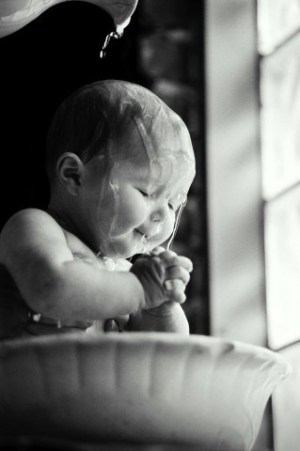
John’s question in our text, “I have need to be baptized by You, and do You come to me?” can be turned into a confession of faith. “Jesus, I need to be Baptized by You, and You have come and Baptized me.” Jesus does come to Baptize you and make you His disciple (Mt. 28:18-20). God has Baptized you through the hands of whatever pastor did the Baptism. It wasn’t the pastor doing it alone; God was Baptizing you. The pastor was simply God’s instrument to put the water upon you.

I have one final encouragement for you, and it is going to seem to come out of left field but bear with me. In Genesis 15[:1-6], God appears to old Abraham who has no children. God tells Abraham to try counting the stars and says, “So shall your offspring be.” God made a promise to Abraham and connected it to something physical that Abraham could see. And Scripture says, “Abraham believed the Lord, and He counted it to him as righteousness.”

Now, imagine every night of Abraham’s life after this. I wonder how often he would go out at night with that promise of God echoing in his ears and start counting. Imagine him trying for a while but then having to give up counting because he’d lose track. And yet, Abraham continued to believe God’s promise.

Dear saints, God has given you something even more precious in your Baptism. God connected His promise of mercy, forgiveness, and life to something physical, to water – something that you interact with daily. Baptism 2In your Baptism, God has given you the new birth of water and the Spirit (Jn. 3:5). In your Baptism, God has promised to wash away your sins (Act. 2:38-39), save you (1 Pet. 3:21), make you His child (Mt. 3:17), connect you to Jesus’ death and resurrection (Ro. 6:3-6), clothe you with Christ (Gal. 3:27), and fill you with the Holy Spirit (Tit. 3:5). So now, whenever wash your hands or take a shower, you can remember that God Himself has washed you clean and made you holy and sacred. Whenever you take a drink, you can remember that, in your Baptism, Jesus has given you to drink of the living water that wells up to eternal life (Jn. 4:10, 14).

You have need to be Baptized by God, and God has done this. Believe these promises of God. Trust them. Don’t leave them. And if you do walk away from the blessings and promises that God has given to you in your Baptism, remember that God hasn’t changed His mind. Those promises are there for you to return to because God is always faithful. He who began a good work in you in your Baptism will be faithful to bring it to completion in the day of Christ (Php. 1:6). Amen.

The peace of God, which surpasses all understanding, will guard your hearts and minds in Christ Jesus. Amen.

[1] In Mark 7:4, Mark mentions that the Pharisees had rituals for baptizing (most translations will simply say ‘washing’) they would baptize cups, pots, copper vessels, and dining couches. Unless you want to ruin it, you don’t immerse a dining couch. So, to say that Scriptures always mean immersing when they speaks about baptism is simply wrong.

[2] Scripture does make a distinction between John’s baptism and Jesus instituting Christian Baptism (especially in Mt. 3:11-12 and Act. 19:1-7). And we could spend a whole bunch of time considering the differences but let me just say this. According the Scripture, John’s baptism is a precursor to Christian Baptism. John would have repentant sinners come to him, confess their sins, and be baptized by him. And it was those very sins that Jesus would die for. So, God was granting forgiveness through John’s baptism.

Exalted – Sermon on Matthew 3:13-17 for the Baptism of Our Lord.

Listen here.

Matthew 3:13-17

Jesus' Baptism Spirit Descends13Then Jesus came from Galilee to the Jordan to John, to be baptized by him. 14John would have prevented him, saying, “I need to be baptized by you, and do you come to me?” 15But Jesus answered him, “Let it be so now, for thus it is fitting for us to fulfill all righteousness.”Then he consented. 16And when Jesus was baptized, immediately he went up from the water, and behold, the heavens were opened to him, and he saw the Spirit of God descending like a dove and coming to rest on him; 17and behold, a voice from heaven said, “This is my beloved Son, with whom I am well pleased.”
In the name of the Father and of the Son and of the Holy Spirit. Amen.

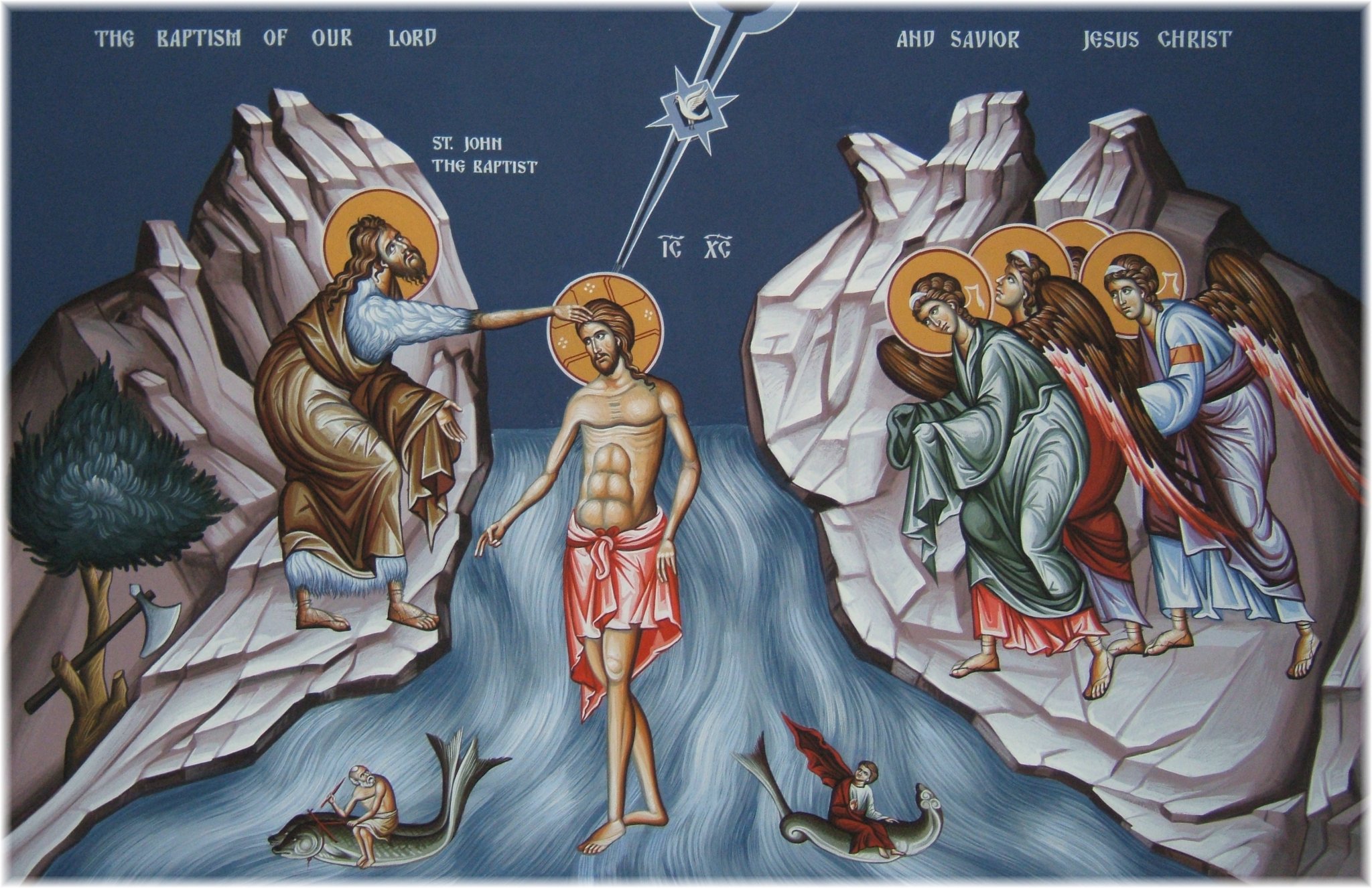
Our texts today (both this Gospel lesson and the Old Testament lesson [Josh. 3:1-3, 7-8, 13-17]) bring us to the banks of the Jordan River. And to understand what is going on at Jesus’ baptism, we have to understand what happened in Joshua.

In that Old Testament reading, all the people of Israel are outside the land that God had promised to give to them. They had been waiting and wandering in the wilderness for forty years. Their leader, Moses, went up on a mountain to die. And Joshua, as God’s appointed man, takes over the leadership responsibilities.

Anyway, it is time to enter the Promised Land. So, God tells Joshua that He is about to exalt Joshua in the sight of all Israel so that the people will know that God is with Joshua as He had been with Moses. The priests who carry the ark of the covenant are to stand in the Jordan, and the waters of the river will be cut off from flowing so that the people can pass through on dry land. Just as God parted the waters of the Red Sea to lead God’s people out of bondage and slavery in Egypt (Ex. 14), God will lead His people through water into their own land.

The priests were carrying the ark and as soon as their feet are dipped in the brink of the Jordan (which, like our river here, floods its banks) the swollen waters stop flowing. The river stands and rises up in a heap. The people pass into the Promised Land near Jericho. And Joshua is exalted in the sight of the people just as God had promised (Josh 4:14).

So, what does this text from Joshua have to do with Jesus’ Baptism? Well, first the place is the same – the Jordan River, but there is so much more. Bear with me for a bit.

When John was out in the wilderness preaching and baptizing, he was there by the Jordan River – the place where God’s people entered their own land. Now, baptism is something that had been going on well before John ever started doing it. When someone who wasn’t a Jew converted and wanted to become part of God’s people, they would be baptized. The idea was that Israel had all gone through water to enter the Promised Land and become God’s people through their ancestors, so people who were converting would also go through water.

But remember, John was baptizing people who were already Jews. John is out there calling people back to their roots, back to the Jordan, back to where God brought them into their own land and made them a people. And they are being baptized ‘unto’ repentance (Mt. 3:11), confessing their sins, and receiving forgiveness. Sinners are going to John. They receive a baptism that is for sinners and brings about repentance.

Baptism of Christ - TheophanyTo that very place and in that very context comes Jesus Christ, our Lord. And what is He coming to do? He’s coming to be baptized!
John says, “No way! No sinner’s baptism for You.” But Jesus corrects John, and John consents. Jesus enters the waters of the Jordan. The heavens open. The Holy Spirit descends like a dove. And a voice from heaven says, “This is My beloved Son, with whom I am well pleased.”

There is a lot for us to see in those two verses (v. 16-17). But to get the whole picture, we need to hear what John has to say about this event in the Gospel of John(1:29, 32-34[it’s in your Scripture insert]). After Jesus had been baptized, John is hanging out with his disciples. He sees Jesus and points to Him saying, “Behold the Lamb of God, who takes away the sin of the world.” John goes on to say how he saw the Spirit descend on Jesus and remain on Him after He was baptized. And John testifies saying, “This is the Son of God.”

So, here is the whole picture:

When Jesus, our great High Priest, was baptized, He stepped into the Jordan River. But the waters did not part like they did for the priests carrying the ark of the covenant. Instead, the heavens opened, and God proclaimed His presence in this world. And what is Jesus, our High Priest, here to do? He is here to be the sin-bearer.

All the sins of the people who had been baptized by John are there in the Jordan River. Jesus enters those waters. And as He is baptized, Jesus sucks up all those sins into Himself like a sponge. As Isaiah wrote, “[Jesus] has borne our griefs and carried our sorrows. The Lord laid on [Jesus] the iniquity of us all” (Is. 53:4, 6, 11). That is why John can say that Jesus is the Lamb of God who takes away the sin of the world.

As God lead His people through the Jordan to exalt Joshua in the sight of the people, God led Jesus (who shares Joshua’s name), the new and greater Joshua, and exalted Him by saying, “This is My beloved Son with whom I am well pleased.” And know why it is that God is pleased with His beloved Son. It is because He, in His baptism, takes on your sin. He takes on your sin so He can carry it for you. So He can bear it to the cross for you. So He can bear God’s wrath against that sin for you. So that He can die in those sins for you. And so that, when He rises from the tomb leaving it empty, your sin is nowhere to be found.

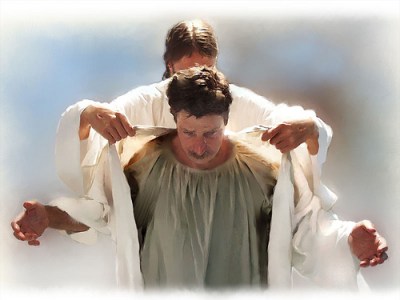
Baptism 2Christ’s glory, His exultation is to call you and chose you who are not wise according to worldly standards, not powerful, not of noble birth. Instead, He is exalted to choose us who are foolish, weak, and despised in the world (1 Cor. 1:26-31).

Christ’s glory is to be numbered with us transgressors and to bear our sin (Is. 53:12). He has taken your shame, your pride, your lust, your iniquities and given you His righteousness.

God’s delight and pleasure is in His Beloved Son, Jesus. And that is where you are. In your Baptism, you were united and clothed with Christ (Gal. 3:27). You were buried with Christ in your Baptism so that you would be joined to His resurrection (Ro. 6:3-4). Jesus has indeed fulfilled all righteousness, and you are in that. Amen.

The peace of God, which surpasses all understanding, will guard your hearts and minds inChrist Jesus. Amen.

Repent, Rejoice, Repeat – Sermon on Romans 13:8-14 for the First Sunday in Advent

Listen here.

Romans 13:8-14

Owe no one anything, except to love each other, for the one who loves another has fulfilled the law. For the commandments, “You shall not commit adultery, You shall not murder, You shall not steal, You shall not covet,” and any other commandment, are summed up in this word: “You shall love your neighbor as yourself.” 10 Love does no wrong to a neighbor; therefore love is the fulfilling of the law.

11 Besides this you know the time, that the hour has come for you to wake from sleep. For salvation is nearer to us now than when we first believed. 12 The night is far gone; the day is at hand. So then let us cast off the works of darkness and put on the armor of light. 13 Let us walk properly as in the daytime, not in orgies and drunkenness, not in sexual immorality and sensuality, not in quarreling and jealousy. 14 But put on the Lord Jesus Christ, and make no provision for the flesh, to gratify its desires.

In the name of the Father and of the Son and of the Holy Spirit. Amen.

Think about the opening words of this text for a moment: “Owe no one anything, except to love each other.”

Beatles All You Need Is LoveAt first blush, this seems simple enough. Just follow Dave Ramsey’s advice for getting rid of your loans, car payments, and mortgage. Then live your life humming the Beatles, “All you need is love. All you need is love. All you need is love, love, love. Love is all you need.”
But before images of a debt-free, hippie-eyed, easy-peasy life fill your brain, realize what this actually means in light of what the Scriptures say love is. Love does no wrong to a neighbor. Love is patient and kind. Love does not envy or boast. Love is not arrogant or rude. Love does not insist on its own way. Love bears all things. Love hopes all things. Love endures all things. And remember, love never ends (1 Cor. 13:4-8).

So, when this text says to owe no one anything except love, it is saying that we owe one another absolutely everything because love fulfills the Law. All the Commandments, every last one of them, can be summed up with one little sentence, “Love your neighbor as yourself.”

When you think about what that simple phrase, “Owe no one anything, except to love each other,” really means, those few opening words of our text should accuse and terrify us. To the sinner those words could just as easily be, “Go to hell.” So, sinner, repent.

But Paul doesn’t seem to be throwing down the hammer of the Law here. And, in fact, he isn’t. Paul isn’t writing these words to sinners – at least they aren’t only sinners. Paul is writing these words to sinners who are Christians. So, these words are for you who believe and are walking in the way of righteousness.

Christian, since you are loved unconditionally by Christ, love one another. But how do you do that? How can you love others perfectly as the Law demands? Trying harder, being more resolute, and making promises to do better haven’t worked in the past. And it won’t work in the future. So how can you keep the Law which you have never kept before?

The only way for sinners to keep the Law is to have the Law kept for us. God be praised, this is what Christ has done.

Christ has fulfilled the Law for you. He loved you as Himself. Just as Jesus came riding into Jerusalem to lay down His life on the cross for you, He also came and was born in Bethlehem to lay down His life while holding nothing back from you.

Clothed in ChristSo, as our text says, put on Christ. Clothe yourself in Him. Make His life, His obedience, His perfection your coat, your suit, your dress, your shirt, your shorts, your jeans, and your pajamas. How do you do that? Galatians 3:27 says, “As many of you as were baptized into Christ have put on Christ.”

Dear Colt, today you are Baptized. Today, Christ has connected His Word and promise of forgiveness, life, and salvation to water. So, as that water poured on to you, it didn’t simply clean your head. Instead, God’s promise is that in your Baptism, He covered you with Christ.

Colt, today you are a Christian. So, today you begin the constant life of following Christ and loving your neighbor. And this command to love your neighbor as yourself is a command that you will fail to keep. But when you fail, confess that for the sin that it is, and believe. Believe in Christ’s forgiveness remembering that Scripture declares that you are loved perfectly by Christ. Rejoice in that love. And, go, love your neighbor.

Repent. Rejoice. Repeat. Again and again and again. And this is the case for all of you who have been Baptized.

But you say, “Pastor, I keep sinning. My fallen, sinful desires have gotten in the way. I keep failing to fulfill the command to love. There has to be something more.”

Baptism 2Well, there is something more, but it isn’t anything different. Repent again. Cast off the works of darkness again. Put on Christ again. Return to the promises God made when made you His child, when you were born again of Water and the Spirit (Jn. 3:5) in your Baptism.

Repent. Rejoice. Repeat. In other words, be a Christian. Amen.

The peace of God, which surpasses all understanding, will guard your hearts and minds in Christ Jesus. Amen.