In the name of Jesus. Amen.
I thought about starting this sermon with a question, but I’m going to start with the answer first. So, here’s the answer, “No. Absolutely, positively, definitely not!” That’s the answer. You’re probably wondering, “Ok, pastor. What’s the question?” Here it is: “Is Jesus telling us to be hypocrites here?” Again, the answer is, “No way. No how. Nuh-uh.” One of the common definitions of a hypocrite is ‘someone who says one thing and does another.’ Or we can flip the order – a hypocrite is ‘someone who does one thing and says another.’
That definition is overly simplistic because here Jesus says that when you fast you are to make it look like you aren’tfasting. And Jesus isn’t telling you to be a hypocrite. So, we should probably get better get a better, more Biblical definition of what hypocrite is. A hypocrite is someone who removes God from the equation of everything they do.
Scripture clearly teaches that everyone knows that God exists. Ro. 1:19-21 says that God has revealed Himself in the things that have been made. But instead of acknowledging God, people do not honor Him as God or give thanks to Him. The short way to say that is that atheists don’t exist. Sure, there are liars who falsely call themselves atheists. They claim to believe that God doesn’t exist, but they’re lying to themselves.
So basically, a hypocrite is someone who seeks the approval of men rather than of God. Jesus repeatedly says so here in Mt. 6. Christ says that hypocrites sound a trumpet before they give so that they can be praised by others (Mt. 6:2). He teaches that hypocrites pray so that they can be seen by others (Mt. 6:5). In this reading, our Lord says that hypocrites make themselves look gloomy and miserable when they fast so they will be seen by other people (Mt. 6:16).
In other words, hypocrites do good works. But they do those good works to get the approval of other sinners instead of God. Again, they remove God from the equation. Ultimately, hypocrisy is idolatry. It makes people into little gods. And if you do good works for people, Jesus says that you already have your reward which won’t last. But Jesus promises that if you do your good works for God, you will be rewarded by God, and that reward will be eternal treasure that will last forever (Mt. 6:4, 6, 18).
With all of that said, I’m going to give you the entire sermon in one sentence. Ready? There is a spiritual benefit to the bodily practice of fasting because fasting helps align our body and soul.
Christian, you are justified and saved by grace through faith and not your works (Eph. 2:8-9). Faith is not just something that happens in your heart and that’s it. No. Faith changes everything about you. Faith changes both your soul and your body. In other words, faith is lived out. We know this because God works on you to sanctify you, to make you more and more holy.
There are two aspects of sanctification. First, sanctification comes about when the Holy Spirit comes to live in you and gives you the strength to love God and love your neighbor. Sanctification is that growth in good works and acts of love. The second side of sanctification is that the Holy Spirit gives you strength to fight against your sinful flesh. Ro. 6:12-14 puts it this way, “Let not sin reign in your mortal body, to make you obey its passions.” In other words, don’t go on sinning. Don’t let yourself to continue living in sin.
That’s where fasting comes in. You can think of fasting as practice. Just like a basketball player will run ‘crushers’ and do dribbling and shooting drills so, when they face an opponent in a game, all of those things come naturally. Fasting is like doing those drills. It gives you the endurance and discipline and skill that you need to fight against sin when it really counts.
Before I go on, I have to add this. You can’t fast when it comes sinful actions. If you’re a kleptomaniac and habitual liar, you can’t say, “I’m going to fast from stealing and lying.” No! Those are sins; don’t do them. Fasting is temporarily denying yourself and not doing things that aren’t sinful. You do that so that you know what to do when you stand face-to-face with sinful lusts and desires.
Normally, we think about fasting as not eating. That is one way to fast. When you fast from eating and your stomach growls and starts preaching to you, “Hey, you should feed me,” you say to your stomach, “You’re not the boss. Man does not live by bread alone but by every word that proceeds from the mouth of God” (Mt. 4:4; Dt. 8:3). Then, instead of eating, you read Scripture or pray. That discipline helps bring your body in alignment with your redeemed and forgiven soul.
So, I would encourage you, give fasting a try. It doesn’t have to be giving up food. Use your God-given wisdom to pick something that you regularly do and don’t do it for a certain amount of time. Let me give you a few possible examples:
Maybe, you decide that you won’t go on YouTube or social media for a few days, or you decide to limit yourself to a certain amount of time on those apps each day, or only during a certain window of the day. You get to pick. Then, when you have the desire to go on them outside of your window, read your Bible or pray or sing a hymn instead.
Maybe, you decide to give up watching a news program for a while. Instead of watching it, read the Psalms to remind yourself that God is in control. This will help you learn that the world won’t fall apart just because you don’t know what’s going on. Use that time to pray for our leaders.
Maybe, you normally listen to something on your headphones while you’re plowing snow. Instead of doing that, meditate on a passage of Scripture. Maybe, you set your alarm 15 minutes earlier and deny yourself that bit of sleep to pray for your family and friends or text them a Bible verse.
The possibilities are endless. By doing those things, you train your body and mind and bring them into alignment with your redeemed soul. You gain self-control and see that you have the strength to fight when you have desires that are actually sinful.
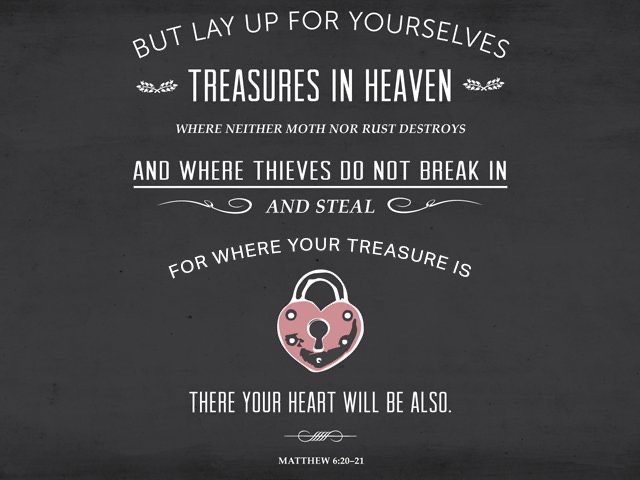
Yes, keep your fasting secret, but remember that Jesus promises that your heavenly Father sees your fasting and will reward you. In other words, fasting lays up treasures in heaven for you. And where your treasure is, there your heart will be also (Mt. 6:21).
Dear saints, know this – God loves you whether you fast or not. He has come to win your forgiveness and salvation, and His work is finished, complete, and perfect. Certain of that restored relationship with God, know that you are His, and you are free. Free to spend your life on things that matter. Free to store up eternal treasures in heaven.
And your Savior freely invites you now to His table to receive the greatest treasure of His Body and Blood given and shed for you for the forgiveness of all your sins. Amen.
The peace of God, which surpasses all understanding, will guard your hearts and minds in Christ Jesus (Php. 4:7). Amen.







 Pastorsamwise
You must be logged in to post a comment.