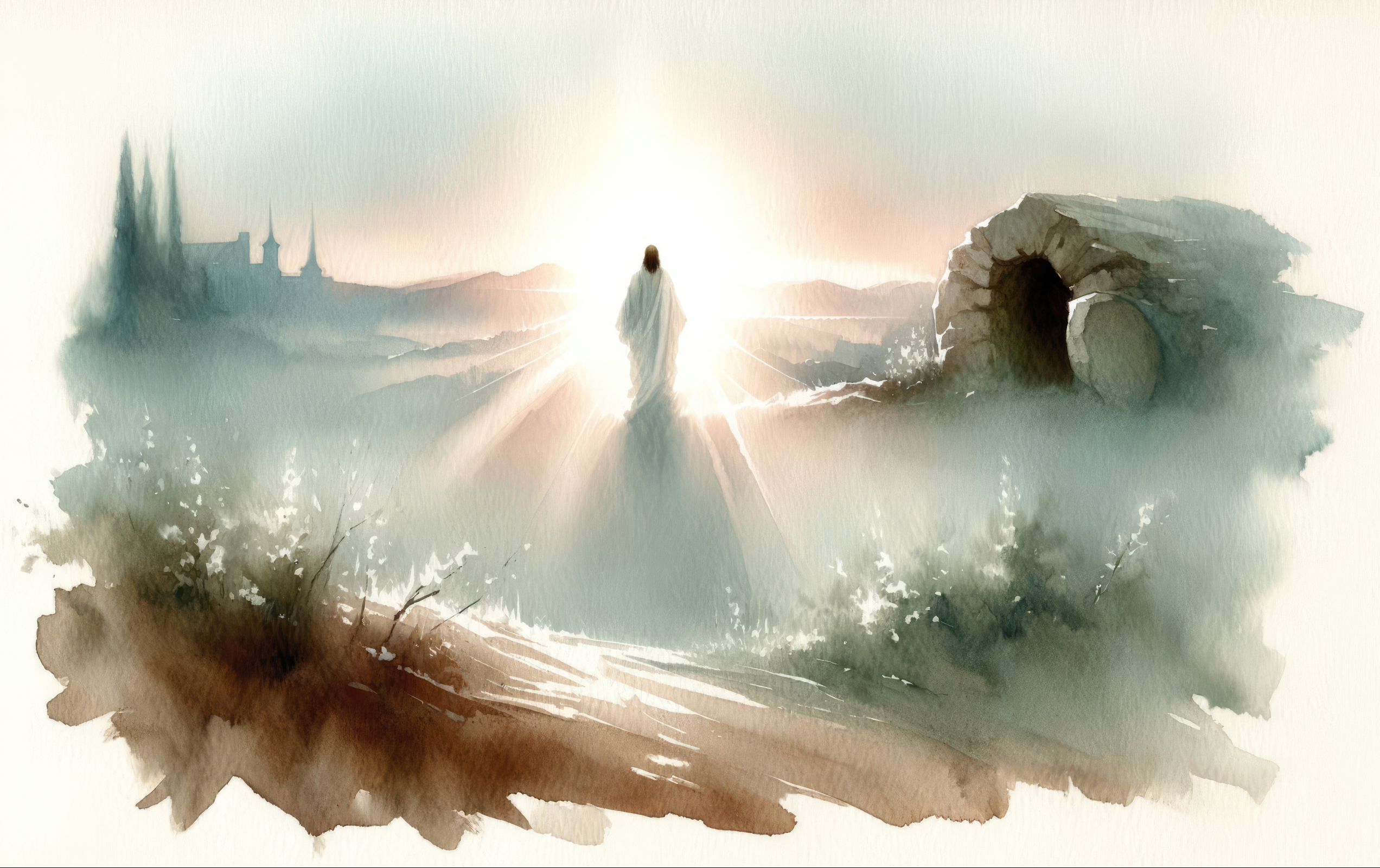
Living Redeemer – Sermon on Job 19:23-27 & Mark 16:1-8 for the Resurrection of Our Lord

Job 19:23-27 & Mark 16:1-8 

Alleluia! Christ is risen! He is risen indeed! Alleluia!

In the name of Jesus. Amen.

Imagine someone plopped a thousand piece puzzle in front of you – not the box with the picture of the final product, just the thousand pieces. Those pieces sit in front of you, and the person says, “Put it together.” Sure, it would be daunting at first, but you’d start using your brain and logic. Maybe, you’d start searching for the corner and edge pieces. Once they’re sorted out, you start to fit all the boarder together. Then, you’d start looking at the colors. You continue to sort the pieces out, match the ones with the same color, find the right fits. You’d start to see that this matches with this and that matches with that. You’d see how this one piece has blue on one side and green on the other side and, yup, it fits with that one.

So long as you kept at it, there’s nothing that would stop you from eventually solving that puzzle. Sure, it might take really long time, but you’d figure it out. All puzzles are solvable when you have enough determination, information, and time.

Too often, we approach life as though it’s all a big puzzle to be solved, and we don’t have a picture of the final product. But we still think that if we can just figure out this then that will fall in place. We imagine that finishing this thing will make that portion easier. We try arranging the pieces of finances and family, school and career, the busy schedule and the need to rest. Sometimes, it feels like you make progress; sometimes, you’re completely stuck and confounded. A new problem pops up over here, and the pieces doesn’t seem to fit in quite the right way. 

That’s the wrong approach to life. Life is not a puzzle for you to figure out and solve with enough logic and time and effort. Instead, your life is a mystery. Mysteries are different from puzzles. Mysteries are things that you can’t figure out. It doesn’t matter how much information you have, how many details you know, or how much you piece together. Mysteries can’t be solved with logic. We can’t use our reason to get everything to fit nice and neat into a complete picture. With mysteries, you might get periodic glimpses of potential solutions, but final solution always seems to be just beyond your grasp.

When Job was suffering all the horrible things that did, he approached his life as a puzzle. He thought that if he could just get enough information that everything would make sense and fit together. But the information Job needed wasn’t available to him. It was hidden in what was taking place in the heavenly council (Job 1:6-122:1-6Jer. 23:18-22).

When we read the book of Job, we get information that wasn’t available to Job. We have the 30,000 ft. overview of what is happening. We get to know what’s going on behind the curtain. We have a window into all the things that God is doing. The whole time of his suffering, we know why Job had all these crosses placed on him. But Job – he never knows. He never gets told. He just trudges through his pain and suffering. He is simply experiencing a life that is filled with trouble, and all Job can do is slog through it.

Even though we might not suffer the same things Job suffers or to the same degree or for the same reasons that Job suffers, we are like Job. We can only live our lives one moment at a time. You can only go through the experiences of this life by living in them. And you don’t always get to know why certain things happen. You don’t get to know why the one you love died. Why you lost our job. Why your kids are misbehaving. Why your parents are so unreasonable and unbending. You don’t get to know why everything happens. And the book of Job is a great reminder that God doesn’t owe us an answer to the why. God isn’t obligated to show us the picture on the box of a puzzle. He doesn’t need to precisely because He hasn’t given you the responsibility of piecing all the parts of your life neatly together. That’s nor your job. It’s not what God has called you to do.

Instead, God has given you something far, far better. God has given you the assurance that He’s given you a Redeemer, and not just any redeemer. God has given you a living Redeemer who can place all the jagged corners and complex pieces of your broken life into one big, grand masterpiece.

Dear saints, God has given you His promise that, at the last, you will stand upon the earth with your Living Redeemer, Jesus Christ, in the new heavens and earth. You will stand resurrected in the kingdom of God when all sorrow and sighing have been put away for eternity.

That’s God’s promise, and His promise is worth believing. Job had that faith as he was going through all the things that he suffered. God gave Job the faith to know and believe that his Redeemer lives.

Those verses you heard from Job’s lips today (Job 19:23-27) have become so connected to Jesus’ resurrection – probably because of the hymn. And, yes, we’ll sing it near the end of the service. But the fact that these words are so connected to Easter makes it easy to forget that Job spoke those words thousands of years before the eternal Son of God took on flesh.

Even then, Job knew that he had a Redeemer, and that faith was what carried Job through his horrible suffering. But what Job believed back then is even more true now than when Job confessed it.

You have a Redeemer who not only lives, but who died and now lives again and forevermore. You have a Redeemer who marched straight, right into the jaws of death and the grave. And He has come out on the other side alive. Your Living Redeemer is the same Redeemer that Job confessed. That Redeemer was living when Job confessed and trusted and He lives even more assuredly now.

So, when life seems like a puzzle, when it seems like you have to figure all sorts of things out and piece it all together in just the right way, forget about it. Instead, listen to what the angel says to the women on the morning of the resurrection. “Do not be alarmed. You seek Jesus of Nazareth, who was crucified. He has risen” (Mk. 16:6). In other words, “Your Redeemer lives. He is not here. And your Living Redeemer is going before you” (Mk. 16:7). This is still true.

Your Living Redeemer has gone before you to death and the grave. He has also gone before you to the resurrection and life eternal. And your Living Redeemer continues to go before you each and every day of your life.

So, no matter what you go through, no matter what puzzling trials, tribulations, and sufferings you face, Jesus has already gone before you through all of them. Your living Redeemer is the first fruits of the resurrection (1 Co. 15:20). He stepped before you and did what was needed. He bore all of your sins upon His cross. He went to His grave to sanctify your grave. He walked out of that grave alive. And you will too.

Jesus has won and purchased your forgiveness. All your sins – all of your envy, malice, and laziness; all of your unwillingness to help others, all of your attempts to dodge responsibilities, and all of your attempts to make excuses for your failures and the pain you have caused others – all of it is forgiven. All of it can be blotted out.

None of that sin can stand next to your Living Redeemer, but you can. You can stand with Him because all of that sin has been dealt with and laid aside by His perfect forgiveness.

Faith in Jesus, your Living Redeemer doesn’t just give you the picture on the lid of a thousand piece puzzle so you can put it all together yourself. Instead, it makes you see further, beyond the puzzle.

The confusing, dark, and evil complexities of this life, they’re all fading away, because the light is coming. The sun of a new, eternal day is rising. Your Redeemer lives. And at the last, so will you. Amen.

Alleluia! Christ is risen! He is risen indeed! Alleluia!

The peace of God, which surpasses all understanding, will guard your hearts and minds in Christ Jesus. Amen.

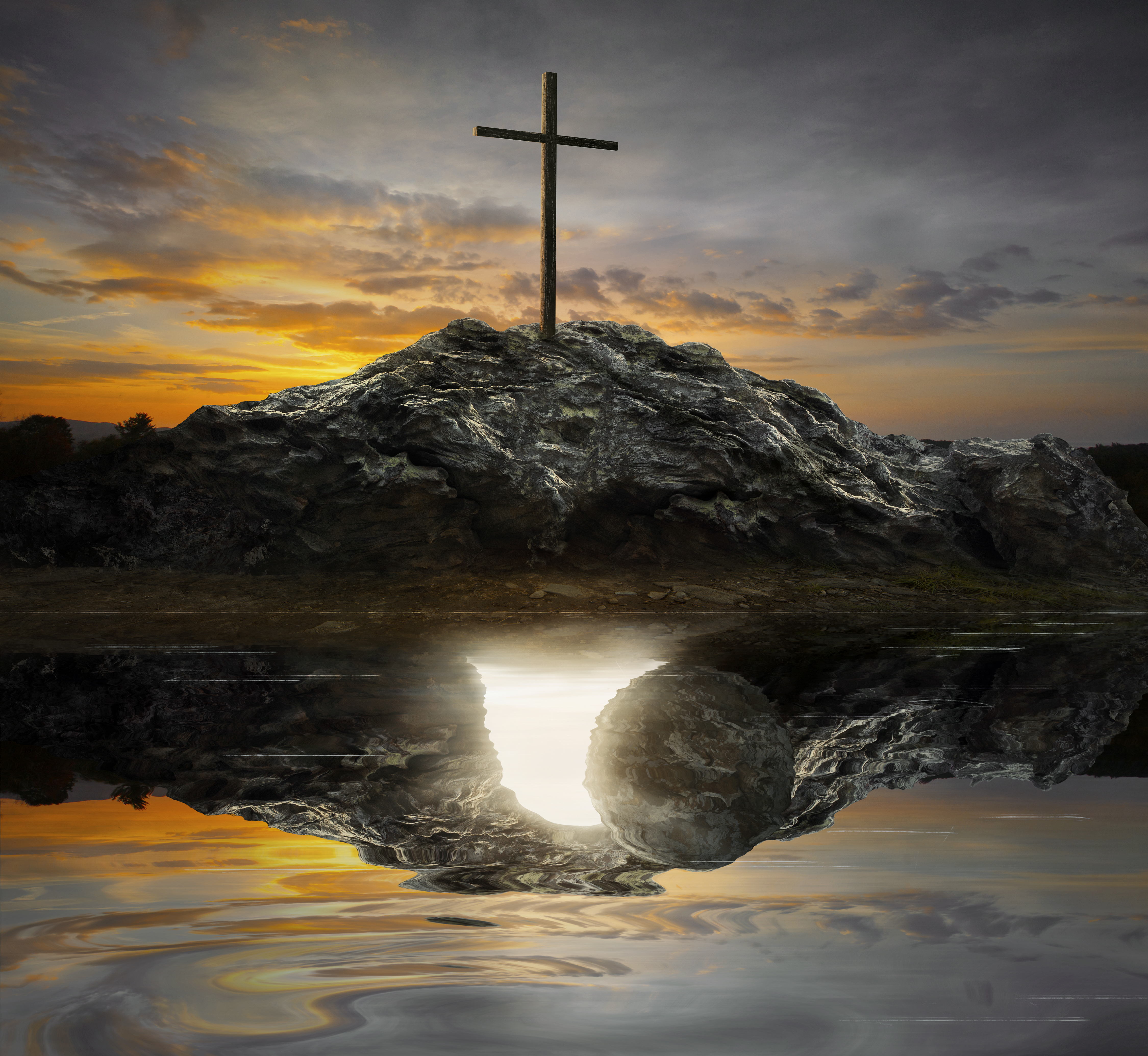
Change of Plans – Sermon on Mark 16:1-8 for the Resurrection of Our Lord

Mark 16:1–8

1 When the Sabbath was past, Mary Magdalene, Mary the mother of James, and Salome bought spices, so that they might go and anoint him. 2 And very early on the first day of the week, when the sun had risen, they went to the tomb. 3 And they were saying to one another, “Who will roll away the stone for us from the entrance of the tomb?” 4 And looking up, they saw that the stone had been rolled back—it was very large. 5 And entering the tomb, they saw a young man sitting on the right side, dressed in a white robe, and they were alarmed. 6 And he said to them, “Do not be alarmed. You seek Jesus of Nazareth, who was crucified. He has risen; he is not here. See the place where they laid him. 7 But go, tell his disciples and Peter that he is going before you to Galilee. There you will see him, just as he told you.” 8 And they went out and fled from the tomb, for trembling and astonishment had seized them, and they said nothing to anyone, for they were afraid.

Alleluia! Christ is risen!
He is risen indeed! Alleluia!

In the name of Jesus. Amen.

That day began like any other day in that garden. While the city slept, daylight began to peek over the horizon. Birds began to rustle in the bushes and branches. They didn’t have any songs yet, just little chirps here and there. A light breeze rustled through the trees, but otherwise everything was silent and still.

For the women, any other day like this would have seemed utterly and completely normal. But everything that had transpired on Friday made this morning bitterly different. They had woken up early, well before the sun had risen. They walked out of the city walls in complete silence, each of them carrying a bundle of spices. They were returning to the place they had seen Him laid, and every step was agonizing but not because the path was difficult to walk. That wasn’t the problem. This trek was painful because His tomb was in the shadow of where they had stood for three hours watching Him die (Jn. 19:41). And those memories were still bitterly fresh and raw. But they had to go. They had a job to finish.

Their intention was to give Him a proper burial. It was something they had done for countless others back home in Galilee. But as they approached the garden, their plans were interrupted. They started to worry because they remembered the large, heavy stone that stood between them and their task. They had completely forgotten to calculate it into their plans. “Oh no! What are we going to do about that stone?” “We could go back and get some of the disciples to move it for us.” “No, that won’t work. The guards aren’t going to let them anywhere near His body.” “Ok then. What do you suggest we do?” “I guess we keep going. We’re almost there anyway. Maybe the guards will move it for us. If they won’t, we’ll just figure something else out.”

But then, as they came into the clearing, Mary saw something. The stone had been rolled back. It was laying there, face down. Somehow, the grave looked different. On Friday, the mouth of that tomb looked like the fierce jaws of a predator ready to snap shut. Now, it looked as weak and harmless as a limp, drooling mouth of someone who had unintentionally fallen asleep in a chair.

Those women had planned to anoint the body of a dead Man, but their plans were irrelevant. There was no dead man there. Those women were worried about the heavy stone, but their anxiety was a moot point. It had already been tossed aside by the angel who now sat on it in mocking it (Mt. 28:2).

All the plans of the women, all their worry and anxiety, all their calculations of how this day would go – all of that was thrown out the window because this was no normal day. It was the first day, and not just the first day of the week. It was the first day of something much, much, much greater. It was the first day of the new creation. It was the first day of the Resurrection of the dead. Jesus is the firstfruits, and the full harvest will come soon (1 Co. 15:20, 23).

It wasn’t just the women who had their plans changed and their worries wiped away that day. The guards had planned to watch over Jesus’ dead body to prevent the disciples from stealing it, but hose plans didn’t matter. One, they didn’t matter because Jesus wasn’t, still isn’t, and never for the rest of eternity done with His body. And two, they didn’t matter because the disciples were afraid and locked in the house (Jn. 20:19, 26). I imagine those guards were worried about getting this assignment. “They want us to guard a dead body? This must be some sort of demotion.”

The religious leaders had plans to destroy Jesus (Mt. 27:20), but all they could do was kill Him. And when the Son of God dies, He doesn’t stay dead. Those religious leaders planned to annihilate the Son of David, their King, and have no king but Caesar (Jn. 19:14-21). But now, Jesus is risen and ascended into heaven, seated at God’s right hand on the throne of creation with all authority in heaven and on earth (Mt. 28:18, Col. 2:10). The devil planned to strike Jesus, but he only got Christ’s heal. And now, the devil’s head is crushed (Gen. 3:15).

Christ’s Resurrection requires – even demands – a change of plans. It doesn’t matter if the plans are to do good things like the women, and it doesn’t matter if the plans are for evil like the religious leaders, the rulers, the soldiers, and the devil. None of those plans end up mattering because Christ is risen.

Now, this doesn’t mean you shouldn’t ever make any plans. Don’t let that be your conclusion. Instead, what it means is this: only what God plans matters. God’s plan is what is going to happen. God’s plan is what you can count on. So Christian, whatever plans you make, make them with your mind set on Christ your crucified, risen, ruling, reigning King. Every plan you make, make it by first setting your mind on Christ who is seated at the right hand of God because when Christ who is your life appears, you also will appear with Him in glory (Col. 3:1-4).

This also means that, whatever worries and anxieties you have, now they matter a whole lot less. Christian, because of Christ’s Resurrection, you can now look at everything – all the sin, evil, sickness, injustice, opposition, wickedness, and death in this world – you look at all of that through a different lens, the lens of Christ’s Resurrection.

That lens makes everything clear. That puts everything into its proper perspective. That is how things actually are in reality. The Resurrection has forever changed creation. Your sins are died for and forgiven. And Jesus is out of the tomb proving that God accepted His sacrifice. Death and the grave are defeated. Satan is crushed. And because Christ is risen, so will you.

Today and every day, celebrate that this morning, and every other morning of your life, is no normal morning. Every morning is another morning in the Resurrection. Your Redeemer lives. At the end, He will stand triumphant upon the earth. You will see Him with your own eyes (Job 19:25-26). You can plan on it. Amen.

Alleluia! Christ is risen!
He is risen indeed! Alleluia!

The peace of God, which surpasses all understanding, will guard your hearts and minds in Christ Jesus. Amen.

Rejoice – Sermon on Matthew 28:1-10 for the Resurrection of Our Lord

Matthew 28:1–10

1 Now after the Sabbath, toward the dawn of the first day of the week, Mary Magdalene and the other Mary went to see the tomb. 2 And behold, there was a great earthquake, for an angel of the Lord descended from heaven and came and rolled back the stone and sat on it. 3 His appearance was like lightning, and his clothing white as snow. 4 And for fear of him the guards trembled and became like dead men. 5 But the angel said to the women, “Do not be afraid, for I know that you seek Jesus who was crucified. 6 He is not here, for he has risen, as he said. Come, see the place where he lay. 7 Then go quickly and tell his disciples that he has risen from the dead, and behold, he is going before you to Galilee; there you will see him. See, I have told you.” 8 So they departed quickly from the tomb with fear and great joy, and ran to tell his disciples. 9 And behold, Jesus met them and said, “Greetings!” And they came up and took hold of his feet and worshiped him. 10 Then Jesus said to them, “Do not be afraid; go and tell my brothers to go to Galilee, and there they will see me.”

Alleluia! Christ is risen!
He is risen indeed! Alleluia!

In the name of Jesus. Amen.

Dear saints, rejoice. Rejoice because God will not allow what is His to be stolen. You’re going to get a little Christmas on Easter because the two go together. The Son of God has taken on flesh. God has a Body. He was born in Bethlehem and laid in a manger so He could die and be laid in a tomb for you and in your place. But even though Jesus died, God did not allow death and the grave to claim, take possession of, or keep His Body (Ps. 16:10). That Body belongs to Him. He will not let it be stolen. Christ is risen. Rejoice!

The morning of the Resurrection, the Marys who had watched Jesus’ crucifixion (Mt. 27:55-56) and burial (Mt. 27:59-61) get up before dawn, and Matthew tells us that they are going to see the tomb. That statement is so ominous. The other Gospels let us know that they were returning to finish the work of embalming Jesus’ Body (Lk. 24:1; Mk. 16:1), but Matthew gives us a little insight into their mindset. They are going to the cemetery to see the tomb, the place of the dead.

But when they get there, their eyes are drawn away from the tomb to the angel sitting triumphantly on top of the stone. His appearance was like lightening, and he was wearing clothes white as snow. We don’t know his name, but this angel is quite the character. Most of the time angels pop on the scene in Scripture, they are there to declare something. Only a few times in Scripture do angels actually do things. After the Fall, a cherub guards the way to the Tree of Life with a flaming sword (Gen. 3:24). An angel takes Lot by the hand to save him from a mob (Gen. 19:9-11). And a seraph touched Isaiah’s unclean lips with a burning coal (Is. 6:6-7). But this angel outdoes all of those. This angel puts on a show.

It’s clearer in the Greek than it is in our translation, but this angel descends and causes the earthquake. He then rolls away the stone from the entrance of the tomb – not to let Jesus out. The resurrected Jesus can pop up anywhere anytime (Jn. 20:19, 26). The angel rolls away the stone to show all creation  that Jesus is risen. And then the angel sits on the stone to dance on the grave of death. This angel is playful, rambunctious, and full of rejoicing.

After all of that, the angel settles down a bit and does things we are more used to angels doing throughout Scripture. He starts talking, “Do not be afraid, for I know that you seek Jesus the Crucified One (which is a more literal translation). He is not here, for He has risen.” In other words, the Living One is not found in the place of the dead (Lk. 24:5). The angel then invites the women to see something better than what they had come to see. They had come to see a tomb, but it’s no longer a tomb. The angel directs their attention to the empty, vacated place where Jesus lay while He was dead (Mt. 28:6). What was supposed to be the tomb of Jesus ended up being nothing more than a temporary bed. Death had not won. Death was defeated because, again, God will not be stolen from.

Then, this dazzling, electric angel has some instructions for these women. They are given a task, a job. They are to report, but notice, please, to whom they are to give this report. “Go quickly and tell His disciplesthat He has risen from the dead, and behold, He is going before you [disciples] to Galilee; there you [disciples] will see Him” (Mt. 28:7). So, the women quickly leave the tomb to tell the disciples as they were instructed. But their announcement gets delayed because the Crucified, Risen, and Living Jesus meets them.

Christ greets them with one word, “Rejoice.” Even though that one word was a common way to greet people, the word means ‘rejoice.’ Hawaiians greet people with, “Aloha,” which means, “Love,” Jewish people will greet others with, “Shalom,” which means “Peace,” and the common greeting in Jesus’ day was “Rejoice.” (Editorial comment here: Our common greetings stink. HiHey, and ’Sup? are lame.) Anyway, even though this was the common greeting, it’s hard to imagine that Jesus, on the morning of His resurrection, was simply saying to the women, “Hey; how’s it going?” No. Our Lord joyfully greets them and invites them to rejoice.

Then, Jesus gives these women the exact same task that the angel had given them, but with an important difference. Jesus tells the women, “Go and tell My brothers to go to Galilee, and there they will see me.” Unlike the angel, Jesus doesn’t call the eleven, “My disciples.” Jesus calls them “My brothers.” And there was no confusion for the women here. It wasn’t that they were to go tell the disciples about the resurrection and then go to find another, second group of people who are Jesus’ brothers. No. The disciples are Jesus’ brothers. And this one little change from the lips of Jesus is astounding and should fill our hearts with joy.

When someone upsets or disappoints you, you might try to create distance between that person and yourself by changing how you address them. Imagine that your best, closest friend did something truly horrible, evil, and disgusting, and this thing is known. It’s on the news, in the papers, plastered on social media, everyone knows about it. Someone might come to you and say, “Aren’t you friends with Vinny?” (I’m trying to use a name that isn’t represented here.) “Wasn’t Vinny in your wedding? Don’t you hang out with him a lot?” You don’t want your reputation to be harmed because of Vinny’s bad reputation, so you distance yourself from Vinny by changing how you refer to him. “Ugh, yeah. That guy did an awful thing.”

But look at what Jesus does here. Jesus brings the disciples closer to Himself by calling them, “My brothers.” This is remarkable. The disciples had all failed at being disciples. Just a few hours before Jesus was arrested, He clearly told the disciples, “You will all fall away because of Me this night” (Mt. 26:31). When the crowd came with clubs and swords to arrest Jesus, the disciples fled with their tails between their legs (Mt. 26:55-56). All of them were an embarrassment but think especially of Peter. Three times, Peter denied even knowing Jesus when a couple young servant girls and a stranger asked him if he knew Jesus. Peter even calls down a curse on himself, “God condemn me if I know this Jesus.” And he used more foul, colorful language than that (Mt. 26:69-74). All of the disciples had failed Jesus and fallen away, but the resurrected Jesus still calls them, “My brothers.”

When Jesus calls these eleven failures, “My brothers,” before He sees them, it shows that He has done more than reconciled them. Jesus wants to make sure that the eleven know that they are more to Jesus now, after He is raised, than they were before He died because those eleven are now forgiven, righteous, and given a better status than being followers and disciples. They now have the glory of being children of God. They are His brothers. And the same is true for you. You, like the disciples, are part of the purchased, redeemed, and adopted family of God because Jesus has died and risen to make you His own.

Dear saints, rejoice. Jesus has cleansed you of all your sins. He has made you His holy, redeemed brothers and sisters. He is not ashamed to claim you as part of His family – not at all.

I put two verses on the back of your bulletin that are worth pondering every day of your life. Hebrews 2:10-11. “For it was fitting that he, for whom and by whom all things exist, in bringing many sons to glory, should make the founder of their salvation perfect through suffering. For he who sanctifies and those who are sanctified all have one source. That is why he is not ashamed to call them brothers.”

Because He is holy, Jesus is the one who sanctifies you, who makes you holy. He is not ashamed of you. He isn’t embarrassed about your past sins – either known or hidden. Those sins have been dealt with. They have been paid for by the precious blood of Jesus. Christ has sanctified you, made you holy by His death and resurrection. He is your God, and from Him you can expect every good thing. While you were a sinner, Christ died for you. Now that He has made you Hid child, He won’t hold back any good thing from you (Ro. 8:32).

Rejoice! The Crucified and Living One is your Brother and He is not ashamed to have you as part of His family. Not now, not ever.

Alleluia! Christ is risen!
He is risen indeed! Alleluia!

Amen.

The peace of God, which surpasses all understanding, will guard your hearts and minds in Christ Jesus. Amen.
The Price – Sermon on Matthew 27:62-28:15 for the Vigil of Easter

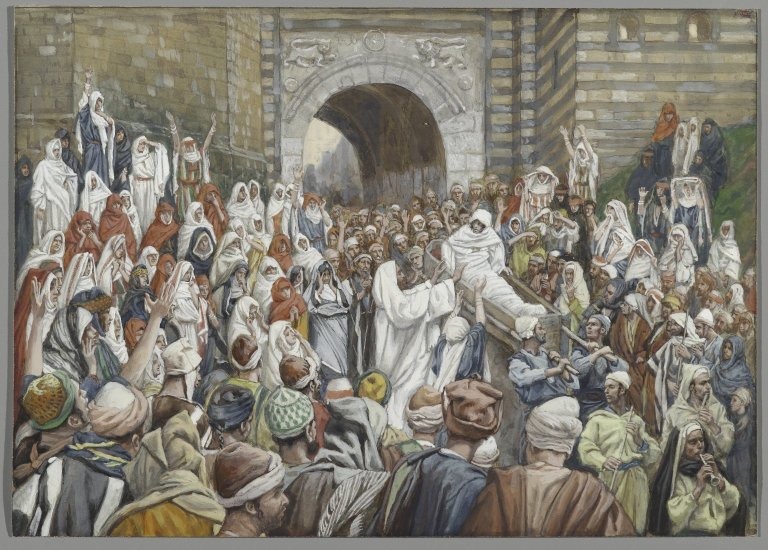
A single cross with the reflection of an empty tomb.

Matthew 27:62-28:15

62 The next day, that is, after the day of Preparation, the chief priests and the Pharisees gathered before Pilate 63 and said, “Sir, we remember how that impostor said, while he was still alive, ‘After three days I will rise.’ 64 Therefore order the tomb to be made secure until the third day, lest his disciples go and steal him away and tell the people, ‘He has risen from the dead,’ and the last fraud will be worse than the first.” 65 Pilate said to them, “You have a guard of soldiers. Go, make it as secure as you can.” 66 So they went and made the tomb secure by sealing the stone and setting a guard. 

1 Now after the Sabbath, toward the dawn of the first day of the week, Mary Magdalene and the other Mary went to see the tomb. 2 And behold, there was a great earthquake, for an angel of the Lord descended from heaven and came and rolled back the stone and sat on it. 3 His appearance was like lightning, and his clothing white as snow. 4 And for fear of him the guards trembled and became like dead men. 5 But the angel said to the women, “Do not be afraid, for I know that you seek Jesus who was crucified. 6 He is not here, for he has risen, as he said. Come, see the place where he lay. 7 Then go quickly and tell his disciples that he has risen from the dead, and behold, he is going before you to Galilee; there you will see him. See, I have told you.” 8 So they departed quickly from the tomb with fear and great joy, and ran to tell his disciples. 9 And behold, Jesus met them and said, “Greetings!” And they came up and took hold of his feet and worshiped him. 10 Then Jesus said to them, “Do not be afraid; go and tell my brothers to go to Galilee, and there they will see me.”

11 While they were going, behold, some of the guard went into the city and told the chief priests all that had taken place. 12 And when they had assembled with the elders and taken counsel, they gave a sufficient sum of money to the soldiers 13 and said, “Tell people, ‘His disciples came by night and stole him away while we were asleep.’ 14 And if this comes to the governor’s ears, we will satisfy him and keep you out of trouble.” 15 So they took the money and did as they were directed. And this story has been spread among the Jews to this day.

Alleluia! Christ is risen!
He is risen indeed! Alleluia!

In the name of Jesus. Amen.

When Jesus died on Friday, things happened quickly and somewhat haphazardly because the Sabbath was about to begin at dusk. Joseph of Arimathea asked for the body of Jesus and laid it in his own new tomb (Mt. 27:57-61). Jesus had His Sabbath rest in that tomb from all the work that He had done (Gen. 2:2), but the chief priests and Pharisees don’t rest because they can’t rest. Instead, they work. They work like busy, busy bees. Even though it is the Sabbath day (and a high Sabbath because of the Passover), they go to Pilate and ask that a guard be set because they remember that Jesus had said He would rise after three days (Mt. 27:63-64). In a sad twist of irony, the enemies of Christ take His prediction of the resurrection more seriously than Jesus’ own disciples do.

Pilate seems to be a little annoyed by the request. He figures Jesus is dead and is no longer a threat, but here are these chief priests completely obsessed with a guy who has been crucified and is dead. So, Pilate says, “You have a guard of soldiers.” The Greek here is a little ambiguous. Pilate’s words there could be either a statement – which is how it is in our translation – or a command, “Here, have/take a guard of soldiers. Go, make it as secure as you can.”

I bring this up because it would make a difference as to which soldiers are stationed to guard the tomb. If it is a command, “Have a guard of soldiers,” it would be Roman soldiers. But if it is a statement, “You have a guard of soldiers,” then it would be soldiers from the Jewish Temple guard. I used to think that they were Roman soldiers (probably because of all the artwork I’ve seen depicts them as Roman soldiers). It could very well be that they were Roman soldiers, but I think there are enough clues to see that it is a real possibility that these guards are part of the Jewish Temple guard, and that is the assumption I’ll be using through the rest of the sermon tonight.

Toward the dawn of the first day of the week, the women go “to see the tomb” (Mt. 28:1), but they are invited by the angel to see that the place where Jesus lay and rested was now empty because Jesus has risen (Mt. 28:6). The angel sends them to tell the disciples the good news, but on the way, Jesus meets them. If you want to hear more about that exchange (which is so rich and beautiful), you’ll have to come back tomorrow morning.

While the women restart their journey to tell the disciples, the guard that had been stationed at the tomb go not to Pilate but to the chief priests and report everything that had taken place (Mt. 28:11). And the chief priests don’t accuse the soldiers of being crazy or drunk. Imagine someone came to your front door and said, “I was in the cemetery, and a guy came out of his grave,” your first reaction would not be, “Here’s some money, don’t tell anybody.” But that is what the chief priests do. They pay the guards to lie about what had happened, and it took a significant payment. Our text says, “a sufficient sum of money,” or, literally, “silver” (Mt. 28:12). That “hush silver” was the price of the soldiers’ lie. The chief priests instruct the soldiers to say, “Jesus’ disciples came while we were asleep and stole the body.”

This is why I think these soldiers were part of the Temple guard. Roman soldiers knew that falling asleep while on duty was a death sentence. Roman soldiers were well-trained and well-armed, so even lying about a bunch of fishermen being able to steal what they were guarding would be humiliating. And excuses from the chief priests would not satisfy Pilate to keep them out of trouble (Mt. 28:14), no matter how elaborate those excuses were. But the soldiers take the silver, and the “stolen body theory” spread to deny the fact of Jesus’ resurrection.

Now, all of that was to set this up: Everyone has a price. Judas’ price to betray Jesus was thirty pieces of silver (Mt. 26:15). The soldiers’ price to lie and defame their own honor was a large sum of silver (Mt. 28:12, 15). Now, ask yourself, “What is my price?” 

I don’t think anyone here would betray Jesus, like Judas did, for any amount of money. And I would guess that all of us would say that we are willing to die rather than deny Christ, but so did Peter (Mt. 26:35). We might not think that we have a price. And yet, we are all bought with a lower price for lower things.

Every time we sin, we are easily bought. We sin and despise God’s Word by skipping church and neglecting to gather with our brothers and sisters in Christ because we don’t want to pay the price of getting extra sleep on Saturday night, missing our kids’ tournament, or researching to find a church while we are on vacation. We sin and lie because we aren’t willing to pay the price of our reputation when the truth will cost us. Whenever we fall into sin, we sell our souls for the deadly wages that sin pays us (Ro. 6:23). Dear saints, repent.

Repent and know that the price of your sins has been paid by Jesus. Everyone has a price, even God. The story of Abraham and Isaac (Gen. 22:1-18) showed what kind of price, what kind of sacrifice, was needed. There, Abraham places his son on the altar, and even though God stopped the sacrifice of Isaac, it gives us an idea of the price and what kind of sacrifice needed to take place for our redemption.

God the Father took His Son, His only Son, Jesus whom He loved and sacrificed Him on Calvary. God didn’t just forgive your sin willy-nilly. No. He sent Jesus to pay the price for every sin you have committed. Your God and Lord has paid the debt you owed to Him. And because the price has been paid, you are now Jesus’ brothers and children of God.

And the resurrection proves that God has accepted the payment. Because of Jesus’ death and resurrection, you have been brought out of slavery. You have been delivered through the sea of your Baptism and through the flood of God’s wrath against your sin. You have been saved from the fiery furnace and brought to dawn of the New Creation and into the life everlasting.

And now that the, you are invited to your seat at the Lord’s table where Jesus gives you His Body and His Blood. God invites you, “Come, everyone who thirsts, come to the waters; and he who has no money, come, buy and eat! Come, buy wine and milk without money and without price” (Is. 55:1). And you have this invitation because Jesus, your crucified and risen Savior, has fully paid the price for you.

Alleluia! Christ is risen!
He is risen indeed! Alleluia!

Amen.The peace of God, which surpasses all understanding, will guard your hearts and minds in Christ Jesus. Amen.

Name-Calling Savior – Sermon on John 20:1-18 for the Resurrection of Our Lord

John 20:1-18

1 Now on the first day of the week Mary Magdalene came to the tomb early, while it was still dark, and saw that the stone had been taken away from the tomb. 2 So she ran and went to Simon Peter and the other disciple, the one whom Jesus loved, and said to them, “They have taken the Lord out of the tomb, and we do not know where they have laid him.” 3 So Peter went out with the other disciple, and they were going toward the tomb. 4 Both of them were running together, but the other disciple outran Peter and reached the tomb first. 5 And stooping to look in, he saw the linen cloths lying there, but he did not go in. 6 Then Simon Peter came, following him, and went into the tomb. He saw the linen cloths lying there, 7 and the face cloth, which had been on Jesus’ head, not lying with the linen cloths but folded up in a place by itself. 8 Then the other disciple, who had reached the tomb first, also went in, and he saw and believed; 9 for as yet they did not understand the Scripture, that he must rise from the dead. 10 Then the disciples went back to their homes. 

11 But Mary stood weeping outside the tomb, and as she wept she stooped to look into the tomb. 12 And she saw two angels in white, sitting where the body of Jesus had lain, one at the head and one at the feet. 13They said to her, “Woman, why are you weeping?” She said to them, “They have taken away my Lord, and I do not know where they have laid him.” 14 Having said this, she turned around and saw Jesus standing, but she did not know that it was Jesus. 15 Jesus said to her, “Woman, why are you weeping? Whom are you seeking?” Supposing him to be the gardener, she said to him, “Sir, if you have carried him away, tell me where you have laid him, and I will take him away.” 16 Jesus said to her, “Mary.” She turned and said to him in Aramaic, “Rabboni!” (which means Teacher). 17 Jesus said to her, “Do not cling to me, for I have not yet ascended to the Father; but go to my brothers and say to them, ‘I am ascending to my Father and your Father, to my God and your God.’” 18 Mary Magdalene went and announced to the disciples, “I have seen the Lord”—and that he had said these things to her.

Alleluia! Christ is risen!
He is risen indeed! Alleluia!

In the name of Jesus. Amen.

Just as a ‘heads-up,’ I’m going to set the scene and fill out some details about Mary Magdalene as well as the events of morning of Jesus’ resurrection. I’m not making stuff up; I’ll be pulling from Scripture. If you want the references for things that I mention that aren’t in this text, ask me after the service, and I can print out the sermon with all the references.

Mary Magdalene goes to the tomb before light dawns the morning of the Resurrection, but she isn’t seeing, hearing, or thinking clearly. She is still filled with grief and sorrow from watching Jesus’ crucifixion. Mary Magdalene stood and witnessed the sad events of Good Friday at the foot of the cross (Jn. 19:25; Mk. 15:40). And the last time she had seen her Lord, He was wrapped in burial cloths before the sun set on Friday (Mt. 27:61; Mk. 15:47; Lk. 23:55-56).

But now, it’s Sunday, the first day of the week. Mary Magdalene was one of several women who went to the tomb (Mt. 28:1; Mk. 16:1; Lk. 24:10). As the women approached, they began to ask each other, “Who will roll away the stone for us from the entrance of the tomb?” But when they got there, they saw that the stone had already been rolled away by an angel who was sitting on it (Mk. 16:1-4; Mt. 28:2). It seems as though Mary Magdalene immediately ran back to the disciples as soon as she saw the open tomb.

For Mary Magdalene, the empty tomb was, initially, another reason to grieve because she thinks that someone has stolen Jesus (Jn. 20:13, 15). She runs back to tell Peter and John about it. She returns to the tomb with them while they investigate her claim (Jn. 20:3-9). They see the empty tomb and the neatly-folded burial cloths (Jn. 20:5-7). But these two disciples can’t comfort Mary because they didn’t believe that Jesus had risen; at least not at this point. In fact, the disciples won’t believe the resurrection until later that evening (Jn. 20:8b-9; Lk. 24:36-49).

Peter and John leave the tomb, but Mary stays there. And sorrow again fills her. She sees two more angles dressed in white robes sitting inside the tomb where Jesus had been laid, and she even has a conversation with them. They ask her, “Woman, why are you weeping?” And you can hear the pain in Mary Magdalene’s voice as she answers, “They have taken away my Lord, and I do not know where they have laid Him.” This conversation with the angels doesn’t help Mary believe in the Resurrection.

And I wonder what the angels thought about this conversation with Mary. They might have been a bit confused by her reply because, as Mary said this, Jesus is standing behind her.

Mary turns around and sees Jesus standing. But seeing the resurrected Jesus doesn’t give her faith. She thinks He is the gardener. And Jesus, patient Jesus, asks her the same question the angels had asked, “Woman, why are you weeping?” But Jesus adds another question, “Whom are you seeking?”  It’s almost like Jesus is saying, “Hey, it’s Me, I’m right here.” But Mary still doesn’t believe Jesus is raised. She says, “Sir, if you have carried Him away, tell me where you have laid Him, and I will take Him away.” Even this conversation with the resurrected Jesus doesn’t give her faith.

But then, everything changes when Jesus speaks her name, “Mary.” I wonder what intonation Jesus used. Did He say it with a mild rebuke, “Mary”? Did He say it with a snicker, “Mary”? Maybe, He said it with utter compassion, “Mary.”

No matter how Jesus said her name, she believes. That one word – and not just any word, but her very own name spoken by the lips and voice of her resurrected Savior – pulls her out of her grief and sorrow. This is so magnificent.

The same voice that called seven demons out her (Lk. 8:2; Mk. 16:9) now expels the demon of unbelief. The last time she had heard the voice of Jesus was when He cried out on the cross “It is finished,” (Jn. 19:30) and, “Father into Your hands I commit My spirit” (Lk. 23:46). Now, that same voice, filled with life and peace, speaks her name, “Mary.” Jesus – who had drunk the cup of God’s wrath, had all the sins of the world laid on Him, and had passed through death and the grave – He calls her by name. And Mary believes and latches herself on to Jesus as though she will never let go. But her grip on Jesus isn’t as important as His grip on her.

Jesus sends her with a message to give to the disciples, “Go to My brothers and say to them, ‘I am ascending to My Father and your Father, to My God and your God.’” Jesus can call the disciples, “My brothers,” and say this because something new has arrived. All who believe in Christ, all His disciples, all Christians, are welcomed into a new world where they are Jesus’ siblings, where God is ‘your God’ and Jesus’ Father is now ‘your Father.’

So, that very moment in the garden next to the empty tomb, Mary experienced the fulfillment of Isaiah 43:1-3. “Fear not, for I have redeemed you; I have called you by name, you are Mine. When you pass through the waters, I will be with you; and through the rivers, they shall not overwhelm you; when you walk through the fire you shall not be burned, and the flame shall not consume you. For I am the Lord your God, the Holy One of Israel, your Savior.”

I’m going to give you some Easter homework: Before you send your kids out hunting for Easter eggs, as a family, read Isaiah 43:1-3 and v. 11-18 of this text, then read Isaiah 43:1-3 again to see the parallels.

Dear saints, what Jesus did for Mary Magdalene the morning of the Resurrection, He does for you. He calls you by name. In John 10, Jesus calls Himself the Good Shepherd who lays down His life for the sheep (Jn. 10:11). In that passage, Jesus also says that He is the shepherd who, “calls His own sheep by name and leads them out” (Jn. 10:3). Jesus, your Shepherd, is the name-calling Savior. He calls you by name in your Baptism and places His name – Father, Son, and Holy Spirit – upon you (Mt. 28:19). 

Jesus is your God, your Savior. You, Christian – this could be said to each and every one of you by name – you will always have the risen Jesus. He will never leave you or forsake you. He died for you and has forgiven all your sin. Christ leads you through every trial and tribulation you face in this life. And He leads you to the resurrection. Nothing in this world will overwhelm or consume you. You belong to Him. Jesus is your Savior, Redeemer, and Brother, and God is your God.

You are His. You belong to Him. He has bought and purchased you with His holy and precious blood by dying on the cross and rising again for you.

And now, He invites you to come to His table where you will again see Him in Bread, which is His resurrected Body, and in Wine, which is His life-giving Blood. Come, taste, and see that the Lord is good (Ps. 34:8).

Alleluia! Christ is risen!
He is risen indeed! Alleluia!

Amen.

The peace of God, which surpasses all understanding, will guard your hearts and minds in Christ Jesus. Amen.

Looking in the Wrong Place – Sermon on Mark 16:1-8 for the Resurrection of Our Lord

Listen here.

Mark 16:1-8

1 When the Sabbath was past, Mary Magdalene, Mary the mother of James, and Salome bought spices, so that they might go and anoint him. 2 And very early on the first day of the week, when the sun had risen, they went to the tomb. 3 And they were saying to one another, “Who will roll away the stone for us from the entrance of the tomb?” 4 And looking up, they saw that the stone had been rolled back—it was very large. 5And entering the tomb, they saw a young man sitting on the right side, dressed in a white robe, and they were alarmed. 6 And he said to them, “Do not be alarmed. You seek Jesus of Nazareth, who was crucified. He has risen; he is not here. See the place where they laid him. 7 But go, tell his disciples and Peter that he is going before you to Galilee. There you will see him, just as he told you.” 8 And they went out and fled from the tomb, for trembling and astonishment had seized them, and they said nothing to anyone, for they were afraid.

Alleluia! Christ is risen!
He is Risen indeed! Alleluia!

In the name of Jesus. Amen.

Jesus is out. Risen from the grave. The One who was crucified; who was stricken, smitten, and afflicted (Is. 53:4); who had all the sins of the world laid upon Him (Is. 53:6); who suffered God’s wrath for all of those sins; He is risen. The resurrection proves that God has accepted the death of Jesus in your place. The price for your sins has been paid. You do not need to be held accountable for any of your sins when Christ returns on the Last Day. Christ is the Lamb of God who takes away the sin of the world. Guess what? That means your sin, whatever sin it is, your sin is included. He bore your sins to the cross, to death, and to the grave. Now, that grave is empty.

It’s the greatest story ever because it’s true. The Resurrection is no “fake news.” It wasn’t fabricated by men who were out to get rich. The preachers of this Good News were persecuted, exiled, and even killed for preaching it. The resurrection of Jesus is one of the most provable events in history. There are hundreds of books and days’ worth of podcasts that I could point you to. Just ask me after the service. I just want to make sure you know this. The historical evidence for Christ’s resurrection is out there for anyone to learn, and it is undeniable.

Most of you are here today because you do believe that Jesus rose from the dead. But if, for some reason, you are here today and deny Christ’s resurrection from the grave, it is only for one of two reasons. Either you aren’t familiar with the evidence, or you do know the evidence, but you ignore it and continue denying it because you want to continue in some sinful habit or lifestyle. And you know that because Jesus is risen, you will have make a change and begin to take Jesus very seriously. But you don’t want to do that.

If that’s the case, I beg and plead with you. The pleasures of this life will never give you the peace and joy that the forgiveness of Jesus will give you. And, deep down, you already know that those sins don’t satisfy. Christ has died for whatever sins you are holding on to and forgives you for those sins. So, repent. Consider the evidence and believe because if you won’t believe, I have to be honest with you, if you won’t believe, you will have Jesus, the Son of God who defeated death, you will have Him against you. And you are without excuse.

Ok. To the Resurrection. And I’m going to add some details from the other three Gospels. If you want the references, I can print this sermon off for you after the service. Just ask me. Early that first Easter morning the women arrive at the tomb to finish the burial and embalming customs because there wasn’t time to finish it all on Friday. Joseph of Arimathea and Nicodemus had begun the work of embalming Jesus’ body back on Friday (Jn. 19:38-42). Now, these women are back to finish their work for the dead. They didn’t know the One who died had finished off death. And when they arrive at the tomb, the Gospel of Luke tells us that they find two angels (Lk. 24:4).

According to Matthew’s Gospel, the first angel was outside of the tomb and was sitting on the stone that had sealed Jesus’ grave (Mt. 28:2). That first angel tells them, “Do not be afraid, for I know that you seek Jesus who was crucified. He is not here, for he has risen, as He said. Come, see the place where He lay” (Mt. 28:5-6).

So, the women go into the tomb and find the second angel which is what we have recorded here in Mark. The second angel tells them nearly the same thing. “Do not be alarmed. You seek Jesus of Nazareth, who was crucified.” I need to make a quick comment here. The grammar of that statement is so important. The angel doesn’t say that the crucifixion is just some event that happened to Jesus in the past. Instead, the angel says that Jesus is the one who is and remains the Crucified One. But, even though He was crucified, death didn’t stop Him.

So, allow me to give a loosey-goosey translation/interpretation of what the angel says there in v. 6. “You seek Jesus of Nazareth, the Crucified One. But crucifixion can’t keep Him down. He bounced right out of His death. See the place where they laid Him.” And the women look at the place where they had seen the crucified, dead Jesus laid. And what do they see? According to John’s Gospel, they say saw the cloths that had covered Jesus lying there neatly folded (Jn. 20:6b-7). In other words, Jesus made His bed before He left to tomb. Kids, note that. If you want to be like Jesus, make your bed and tidy up after yourself! 

I want to tie all of this back to the first words of Scripture you heard this morning in our call to worship from Lk. 24:5 where the angel asks the women, “Why do you seek the living among the dead?” One more grammar point. The angel asks, “Why do you seek the Living One (singular) among the dead ones (plural)?” In other words, the women were looking in the wrong place.

They were looking for the Crucified One in the place of dead ones. But Jesus, the Crucified One, is God. And when God dies, He doesn’t stay dead! Jesus had told them this would happen. No less than three times (Mk. 8:319:30-3210:32-34), Jesus told His disciples that He would die and rise again. These women had come to the tomb with their spices to finish embalming a dead guy who wasn’t there anymore. They were looking in the wrong place.

I want to bring this idea, this concept to today. If the past year of virus and pandemic has taught us anything, I hope it has taught us this: Don’t look for health, hope, security, or safety in anything in this fallen world. The dangers of sin and death that surround us are more than we realize. And if you are looking for hope and life in anything but the crucified and resurrected Jesus, you’re looking in the wrong place.

Hope and life are only found in Jesus, the Crucified and Risen One. Because of what Christ has done, nothing can harm you. The resurrection is what helps us understand Psalm 91 which says, “He who dwells in the shelter of the Most High will abide in the shadow of the Almighty. He will deliver you from the snare of the fowler and from the deadly pestilence…. You need not fear the terror of the night, nor the arrow the flies by day…. [When you make the] Lord your dwelling place – the Most High your refuge, no evil shall be allowed to befall you, no plague come near your tent. He will command His angels concerning you to guard you in all of your ways…. When you call to [God], [He] will answer [you]. [He] will be with [you] in trouble; and will rescue and honor [you]. With long life [God] will satisfy [you] and show [you] [His] salvation.” 

Dear people loved by God, everything in this life will fail you. Politicians, scientists, experts, and doctors are all good gifts from God, and we do thank God for them. But they cannot give you the life and peace and security that Jesus gives.

So, when you feel the guilt and weight of your sin, don’t go looking for deliverance from your works and efforts. Look to the cross where Jesus died for those sins.

And when you are afraid, unsure, or uncertain about the present or the future, look to the empty tomb and nowhere else. Christ is risen. Death has been swallowed up in victory. Death’s victory and sting is gone forever (1 Cor. 15:54-57).

Christ is risen. Your Redeemer lives. And at the last He will stand upon the earth. You will see Him for yourself. And through faith in Jesus, the Crucified and Risen One, you will live forever with Him.

Alleluia! Christ is risen!
He is Risen indeed! Alleluia!

Amen.

The peace of God, which surpasses all understanding, will guard your hearts and minds in Christ Jesus. Amen.

The Easter Angel – Sermon on Matthew 28:1-7 for the Easter Vigil

Listen here.

Matthew 28:1-7

Alleluia! Christ is risen!
He is risen indeed! Alleluia!

In the name of Jesus. Amen.

The angel caused the earthquake that Easter morning. Our translation says, “there was a great earthquake, for an angel of the Lord descended from heaven” (Mt. 28:2), but it should probably be, “becausean angel of the Lord descended.” The earth shook because the angel caused it to. And it isn’t the quake that moves the stone. The angel rolls it away after the quake then sits on it.

This angel is quite the character. We don’t know his name, but he certainly is a rabble rouser. He has the appearance of lightening and clothing white as snow.

This flashy, showy angel doesn’t sit on the stone because he is tired. Angels don’t get fatigued like we do. He sits there to mock the stone and the tomb that it had sealed. You could almost say that he’s dancing on the grave. But with a different meaning than we usually give to that phrase. He’s dancing on the grave of death.

It would have taken several strong, well-bodied people to roll that stone away. You’ll hear in tomorrow’s Gospel reading from Mark (16:3) that the women were concerned about who was going to move it for them when their plan is to return to the tomb and finish preserving Jesus’ body. Their plans had to change. But for this angel, that stone was puny and totally insignificant. The angel just tosses it aside. It wasn’t capable of keeping Jesus in the grave, and the angel sits on it to show how inconsequential the attempts were to keep Jesus dead.

The guards are terrified by all of this and rightly so. They trembled just like the ground. Their armor, swords, and training were nothing in the presence of this angel. They became like dead men. As they lay there on the ground, they were probably glad that this electrified angel hadn’t sat on them.

But then, Matthew mentions the women. They arrive to this dominant display of angelic power, and the angel tells them, “Do not be afraid,” even though there is no mention of them being fearful. The women had been scared previously. Scared to tears after the death of Jesus. But the time for weeping is over. Psalm 126:5 says, “Those who sow in tears shall reap with shouts of joy.” For these women, and for all believers in Christ, the harvest has come.

Our time of sowing tears is finished. Jesus lives. It is time to gather in the crop of resurrection joy. Because Jesus is risen, our mouths are filled with laughter and our hearts with cheer. The angel sits on that stupid, weak, trivial stone because nothing can stop the victory parade of life.

Jesus had gone weak as a newborn lamb to the cross, but there He stripped the devil of all his strength. The trickster serpent has been tricked. On Good Friday, Satan was tempted just like Eve was in the Garden. The devil saw the forbidden fruit that hung on the tree of Calvary. He took it and ate. But now his belly bursts, and he is the one who has to hide.

He is done, finished, defeated. The devil has no accusations left. He threw all his accusations at Christ, and Jesus has answered for all of them. So now, when Satan tries to accuse you, all you have to do is point him to Christ, and his mouth is silenced. He has no allegations left for you because Jesus has died to take them all away, and Christ is risen to show they are nothing.

Did Satan think that a rock and some guards could keep Jesus dead? Maybe, but this resurrection angel, and all the angels, laugh at the thought. It would be easier to fit the oceans in a styrofoam cup or to ride a unicycle to Pluto than to keep God in the grave.

God wouldn’t let what is His be stolen. He takes it back. He takes back Adam and Eve. He delivers Noah and his family. He frees the whole people of Israel from slavery. He restores to Himself Ezekiel and that valley of dead, dry – very dry – bones. He restores the fortunes of Zion and exalts over them with loud singing. He pulls His people safely from the burning fiery furnace and walks with us in every trouble.

God does all of this because Christ has bought and paid for you on the cross. The devil has no claim – none whatsoever. Satan got what he thought he wanted. He took a bite out of God. The devil bruised His heel by putting Him to death. But Jesus has crushed his head. Jesus died, but He lives.

Every day of our lives now, let’s join this rambunctious angel in mocking sin, death, and the devil. Daily don the robes of righteousness that Christ has given you in your Baptism (Gal. 3:27). Daily let the God-given light of salvation shine through you (Mt. 5:14-16).

The grave is open. It couldn’t hold Jesus. It won’t hold your loved ones who have departed with the sign of faith. And It won’t hold you either.

We don’t know this rambunctious resurrection angel’s name. But one day, God be praised, we will. Amen.[1]

Alleluia! Christ is risen!
He is risen indeed! Alleluia!

The peace of God, which surpasses all understanding, will guard your hearts and minds in Christ Jesus. Amen.


[1] This sermon was adapted from Rev. David Petersen of Redeemer Lutheran Church, Ft. Wayne, ID.

Out for You – Sermon on Mark 16:1-8 for Easter or the Resurrection of Our Lord

Listen here.

Mark 16:1–8

1 When the Sabbath was past, Mary Magdalene, Mary the mother of James, and Salome bought spices, so that they might go and anoint him. 2 And very early on the first day of the week, when the sun had risen, they went to the tomb. 3 And they were saying to one another, “Who will roll away the stone for us from the entrance of the tomb?” 4 And looking up, they saw that the stone had been rolled back—it was very large. 5And entering the tomb, they saw a young man sitting on the right side, dressed in a white robe, and they were alarmed. 6 And he said to them, “Do not be alarmed. You seek Jesus of Nazareth, who was crucified. He has risen; he is not here. See the place where they laid him. 7 But go, tell his disciples and Peter that he is going before you to Galilee. There you will see him, just as he told you.” 8 And they went out and fled from the tomb, for trembling and astonishment had seized them, and they said nothing to anyone, for they were afraid.

In the name of Jesus. Amen.

Alleluia! Christ is risen!
He is risen indeed! Alleluia!

The tomb is empty. Jesus is out, and He’s out for you.

Normally, when you put a person in the grave, they stay there. But Jesus is not a normal man. Jesus is God in your flesh. On Good Friday, He took your sin, your death, your punishment onto Himself. He bore your griefs and carried your sorrows. He was pierced for your transgressions and crushed for your iniquities (Is. 53:4-5).

You were born a slave to sin (Jn. 8:34, Ro. 6:17). You are deserving of God’s anger and wrath. If you don’t understand this, then Jesus’ cross and resurrection won’t make sense to you. Ephesians 2:3 says that you were, “by nature, children of wrath.” You were born a sinner, despicable to God, completely incompatible with His holiness. Most often, we don’t know this or are aware of it. Typically, we think that we are descent people. But that only shows us how deep the sickness goes. No matter how good we are outwardly, we carry around the virus of sin and death – a danger to others and a ticking time bomb to ourselves. And it is only a matter of time until the disease of sin leads us down into death.

But that is why Jesus went to the cross. He took care of your sin, sickness, and death by His death. Your sin, your suffering, your death was placed on Him until it was finished and done away with.

But now, Jesus is out. Death could not hold Him. The grave could not keep Him. Jesus is alive. He is risen. Jesus is out, and He is out for you.

Jesus, the One who wouldn’t (and couldn’t) stay dead, is out for you. On the one hand, this could be a terrifying thing. A Man who dies but emerges from the grave’s clutches being out for you is a terrifying thing unless that man is Jesus. He is out for you, chasing you down with His forgiveness. He is hunting you down through this broken and fallen world to give you His healing, His restoration, and His life.

Jesus is the Good Shepherd seeking you wandering, straying sheep. Psalm 23 is some of the most beautiful imagery in all the Scriptures. But the closing picture of that Psalm takes on a whole new meaning because of the Resurrection. “Surely goodness and mercy shall follow me all the days of my life, and I shall dwell in the house of the Lord forever.” The word ‘follow’ there is way to weak. It actually means ‘to pursue’ or ‘chase.’ Every other time that word gets used in the Old Testament someone’s enemies are pursuing or chasing. But in a beautiful reversal, it is God’s goodness and mercy that hunts you down. That is why Jesus is out and why He is out for you. To stalk and overtake you with His mercy.

Dear saints, every time you open your Bible, Jesus is out for you. Every time you come to church and hear the Gospel, Jesus is out for you. And someday soon, Jesus will be out for you coming on the clouds to take you to be where He is for all eternity.

Until that day, you have angel’s work to do. Go. Tell others. Tell them that since Jesus has become their brother, they are God’s children. Tell them they are forgiven because of Jesus. Tell them they are made holy because of Jesus. Tell them that Jesus is out for them to bring them His mercy, His forgiveness, and His life.

Alleluia! Christ is risen!
He is risen indeed! Alleluia!

Amen.

The peace of God, which surpasses all understanding, will guard your hearts and minds in Christ Jesus. Amen.

Easter in October – Sermon on Luke 7:11-17 for the Sixteenth Sunday after Trinity

Listen here.

Luke 7:11-17

11 Soon afterward he went to a town called Nain, and his disciples and a great crowd went with him. 12 As he drew near to the gate of the town, behold, a man who had died was being carried out, the only son of his mother, and she was a widow, and a considerable crowd from the town was with her. 13 And when the Lord saw her, he had compassion on her and said to her, “Do not weep.” 14 Then he came up and touched the bier, and the bearers stood still. And he said, “Young man, I say to you, arise.” 15 And the dead man sat up and began to speak, and Jesus gave him to his mother. 16 Fear seized them all, and they glorified God, saying, “A great prophet has arisen among us!” and “God has visited his people!” 17 And this report about him spread through the whole of Judea and all the surrounding country.

Alleluia! Christ is risen!
He is risen indeed. Alleluia!

In the name of Jesus. Amen.

The Resurrection of the Widow's Son at NainIf Menards can have Christmas decorations out already and if the Hallmark Channel can do nonstop Christmas movies in July, then the Church can certainly have Easter in October. In fact, we have to celebrate Easter because this text screams Easter – loud and clear. But always before Easter, there is Good Friday. Before resurrection, there must be death. Good Friday sadness is a prerequisite to Easter joy. We have to see that first.
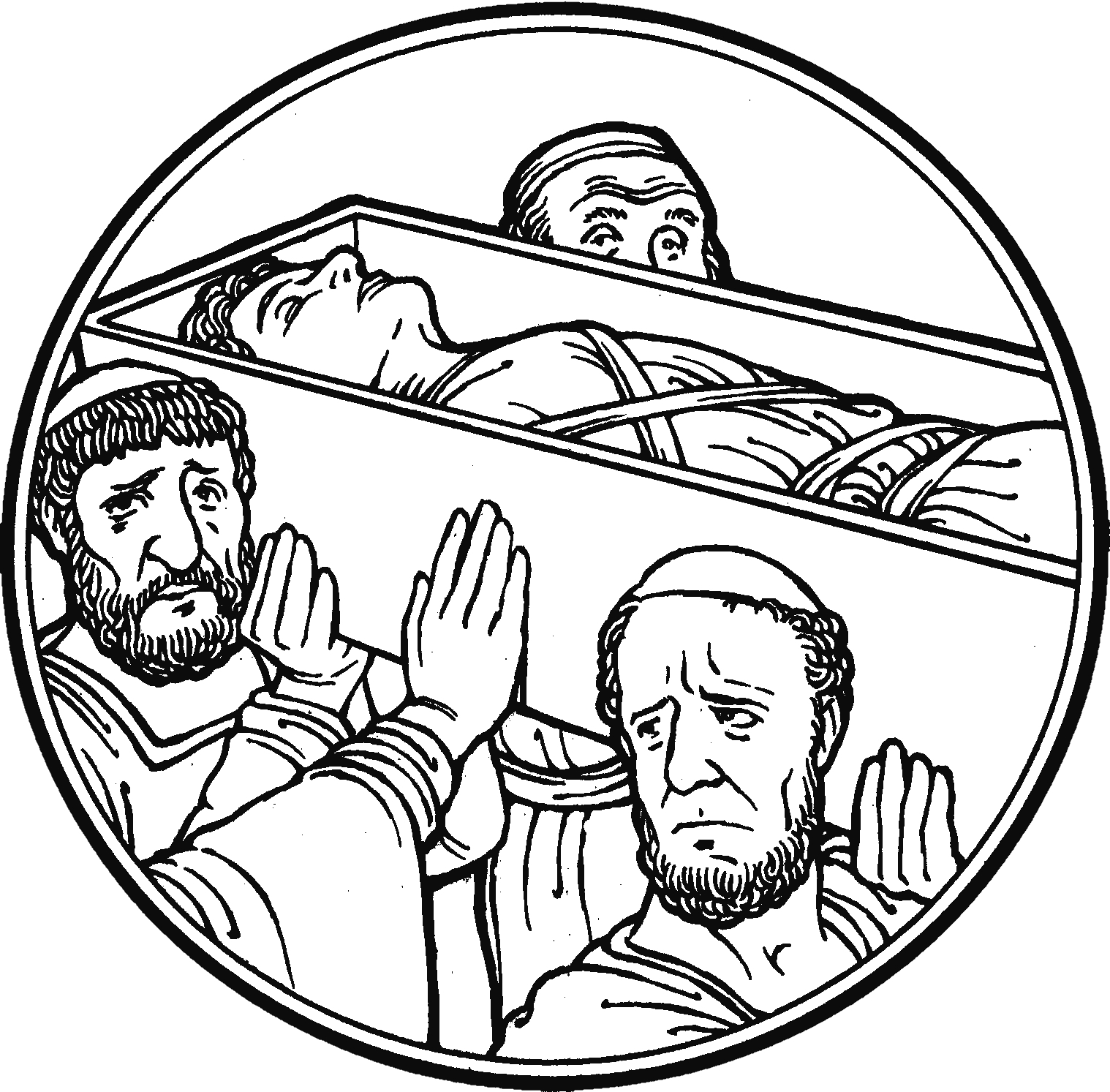
Yes, Easter joy is the climax of this text, but Good Friday sadness gets more words. Yes, the young son of this woman is raised, but Luke spends much more time telling us about the sad estate of his mother. She was a widow, but now she is really alone. This son of hers that has died is her only-begotten (μονογενής same word used in Jn. 3:16) son. A great crowd follows her sharing in her grief. Jesus sees her and speaks to her first. This woman is drowning in Good Friday grief. But Jesus He won’t allow it.

Jesus isn’t very good at funerals. He always ruins them. Remember when Jairus’ little girl died (Mt. 9:18-26; Mk. 5:22-43; Lk. 8:41-56), Jesus sees all the mourners weeping and wailing and tells them, “Go away, for the girl is not dead but sleeping,” and everyone laughs at Him. But then Jesus goes into the house, takes the girl by the hand, and says, “Little girl, get up” (Mk. 541:). And she does. Or, remember when Lazarus died. Jesus came when Lazarus’ corpse would have been ripe and stinky. Then, Christ tells them to roll the stone away from the entrance of the tomb and says, “Lazarus, come out” (Jn. 11:43). And out He comes. Finally, remember Jesus’ own funeral. Our Lord didn’t behave properly then either. Jesus leaves before His funeral is finished. He didn’t stick around in the grave long enough to have a proper burial.

Well, here in this text, Jesus ruins another funeral. Jesus is leading a great crowd. And as they reach the city of Nain, they meet another crowd who were going out of the city to bury the boy. These two throngs of people meet at the gate. Imagine this. One crowd is leaving the city and following death, and another crowd is entering the city lead by the Life of the world (Jn. 11:25, 14:6). And these two crowds get mixed up together in this bottle neck.

Proper etiquette and manners would dictate that Jesus and His crowd would step aside and allow the funeral procession to pass by. But, remember, Jesus is no good at funerals. Instead, Jesus marches right up to the front of the funeral procession. He does this, Luke tells us, because when He saw the mother He had compassion on her. Literally, Jesus’ guts were being wrenched and all twisted up inside.

He walks up to the woman and says, “Do not weep.” This sounds absolutely callous. Weeping is the right thing for this woman to be doing – her son has died. When you are saddened by the death of someone and find yourself weeping, you are doing what is right. Your actions line up with how God feels about death. Jesus, who never sinned, Himself cried when He was at the tomb of Lazarus (Jn. 11:35). Now, the text doesn’t tell us this, but I wouldn’t be surprised if Jesus had tears in His eyes as He approached the widow. Remember His guts are wrenched. But He tells her to stop crying because He is about to intervene. Jesus could have reversed the order. He could have raised the young man first, then told the mother to stop crying. But He doesn’t. He tells her to stop crying because it isn’t going to be necessary in a moment. This command to stop crying is a call for her to trust in Him.

H-70 Trinity 16 (Lu 7.11-17)Then, Jesus walks past the pallbearers, straight up to the bier, touches it, and says, “Young man, I say to you, arise,” as though He was waking up a sleepy teenager late on a Saturday morning. The boy gets up and begins to speak. I wonder what he said.
Jesus gives the boy back to his mother and everyone glorifies God saying, “A great prophet has arisen among us!” And, “God has visited His people!” They were right. God had visited His people. God had taken on flesh to deliver His people from death and sin, the sting of death (1 Cor. 15:54-56).

Dear saints, today is October 6th, but today we celebrate Easter; we celebrate the resurrection. Yes, we await the resurrection on the final day when Christ returns and raises up the dead and grants eternal life to all who believe in Him. But the resurrection has already begun. Jesus, your Savior died, but He lives. He is the first fruits of those who have fallen asleep (1 Cor. 15:20). Whenever Jesus contends with death, death looses.

And that is what you need because this morning, you were part of a funeral procession. Because you are a sinner, the stink of death hangs around you. Young and old – man, woman, and child – we all dragged some dead thing here with us today.

Is it your relationship with your spouse that is slowly dying? Is it the skeleton of disobedience to parents? What dead thing have you brought with you?

Is it the rotting remains of your finances that cause you to worry and doubt, or simply discontentment with what God has given you? Is it the cadaver of lust that flames within you? Is it the carcass of pride that is so inwardly focused that you do not notice the needs of others? What dead thing have you brought here with you?

Maybe it isn’t even your fault. Maybe it is just the fear of what might happen in the future. Maybe it is anger for how you have been wronged in the past. Maybe your dead thing is your own sick, crumbling body. What dead thing have you brought here with you?

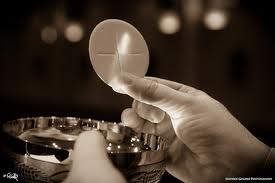
Body of Christ CommunionJesus marches toward your funeral procession, and He does not stop or yield. Jesus does not give way or defer to death. Instead, Jesus defeats death with His death and resurrection, each and every time He meets it. Jesus meets you here today as you plod along in your personal funeral procession and gives you life. Jesus meets you at this altar to give you His living Body and His life-giving Blood.

Alleluia! Christ is risen!
He is risen indeed. Alleluia!

Amen.

The peace of God, which surpasses all understanding, will guard your hearts and minds in Christ Jesus. Amen.

Where Is Your Sting? – Sermon on 1 Corinthians 15:51-57 for the Resurrection of Our Lord

Listen here.

1 Corinthians 15:51-57

51 Behold! I tell you a mystery. We shall not all sleep, but we shall all be changed, 52 in a moment, in the twinkling of an eye, at the last trumpet. For the trumpet will sound, and the dead will be raised imperishable, and we shall be changed. 53 For this perishable body must put on the imperishable, and this mortal body must put on immortality. 54 When the perishable puts on the imperishable, and the mortal puts on immortality, then shall come to pass the saying that is written:

“Death is swallowed up in victory.”
55 “O death, where is your victory?
O death, where is your sting?”

56 The sting of death is sin, and the power of sin is the law. 57 But thanks be to God, who gives us the victory through our Lord Jesus Christ.

Alleluia! Christ is risen!
He is risen indeed! Alleluia!

In the name of Jesus. Amen.

“O death, where is your victory? O death, where is your sting?” Too often we think of death in wrong ways. We think that death is a state or a category or a condition. But v. 55 of that Epistle Lesson says that death is an enemy, a person who can be talked to and, most importantly, an enemy who can be questioned.

Imagine encountering death. When you or someone you love dies and you cross paths with death, you need to only ask death one simple question: “O death, where is your sting?”

Death might try to answer you with a pale, menacing, frightening voice, “My sting is your sin. I sting because you sin. If you didn’t have sin, I would have no sting. But I sting everyone because all have sinned. I am the wages and payment of sin (Ro. 6:23). And I will sting you because your sin is my sting.”

But you can simply respond, “I know all of that, death. I know that my sin has put me under your thumb. I know that the Bible says, ‘The wages of sin is death.’ So, what you say is true. But, death, I didn’t ask you, ‘What is your sting?’ I asked you, ‘Where is your sting?’ So, death, where is it, where is your sting?”

And death might smile and respond, “You simple Christian, have you forgotten how powerful my sting is? It is more powerful than the most poisonous snake or spider or jellyfish. My sting is the most powerful sting imaginable. My sting burns forever because the power of my sting is fueled by the Law. Yes, God’s eternal Law that abides forever, and you have broken that Law over and over.”

But you can look back at death and say, “I know my sin is no small sting. I know my sin is against the God who created me and loves me. I know the penalty of my sin is everlasting death, and I feel it in my conscience. I also know that the Law is not ever going to go away. I know that God’s Commandments are eternal. In fact, the Law was what made me scared of you. Because of the good and righteous Law, I know what you can do to me. I know that your sting is my sin, and I know that the power behind that sting is the Law. But, death, you still have not answered my question. Where is your sting?”

At this point, death is uncomfortable and a little fidgety, but he musters as much gusto as possible and says, “Well, you are face-to-face with me, aren’t you?”

“Yes, I am, but the sting of death is not death. The sting of death is sin. So, I ask you again, ‘Death, where is your sting?’”

Finally, death hangs his head. “I have used it, and I have lost it. But I’ll get it back again.”

Jesus Coming out of the TombAnd you can smile in his face, “Yes, death, you used your sting, didn’t you? You should have used your sting on me. The sting would have stuck on me. But you didn’t. Instead, death, you used your sting on my Savior, my God, and my Lord. You used your sting on Jesus, didn’t you? You had Jesus pinned tightly on the cross, and you stuck Him with your stinger and buried it into Him. Death, you were a fool that day. You stung God Himself. You stung Jesus who is the Resurrection and the Life (Jn. 11:25). But when you went to the tomb to find your stinger and get it back, Jesus wasn’t there. And guess what, death, Christ has taken my sin as He hung on the cross. And, death, you will not ever get your sting back. Never. That empty tomb means that your sting is lost forever. Death, I don’t fear you any longer.”

And having no other answer, death now turns around and walks away from you.

Dear saints, this is why we celebrate every Easter and every Sunday. Every Sunday, we celebrate what Christ has done in absorbing the sting of death so that death no longer has his sting.

And the day is coming when Christ will return. On that day, the trumpet will sound, and the dead will be raised imperishable. The day is coming when your perishable body will put on the imperishable and your mortal body will put on immortality.

Yes, death can and does buzz around now for a while. But death is like a bee that has used its stinger and soon dies.

Dear saints, “Death is swallowed up in victory.” Yes, the sting of death is sin, and the power of sin is the Law. But thanks be to God, who gives us the victory through our Lord Jesus Christ. So now, Christian, you need have no fear of death. Jesus has conquered the bitter tyrant of death. And He has connected you to that victory. You do not need to fear and watch out for death hiding behind a corner to pounce on you. Instead, Christian, you continue to look for the resurrection of the dead, and the life of the world to come.

Because Christ is risen, death is overthrown. Christ is risen and life reigns. Christ is risen, and dear saint, you are safely anchored in Christ who has given you the victory, now and forever.

Alleluia! Christ is risen!
He is risen indeed! Alleluia!

Amen.

The peace of God, which surpasses all understanding, will guard your hearts and minds in Christ Jesus. Amen.