The Medicine – Sermon for Maundy Thursday

The Scripture readings for tonight’s service are Exodus 12:1-141 Corinthians 11:23-32; and John 13:1-1534-35.

In the name of Jesus. Amen.

When a doctor gives you a prescription for medicine, it doesn’t really matter if you understand how the medicine works. It doesn’t matter if you understand how that medicine is made. You don’t need to know exactly what that medicine does in your body. The only thing that matters is that the doctor who says, “Take this. It will heal you,” is right and that you actually take it.

Tonight, your Savior, Jesus Christ, the Great Physician, has a prescription for you, and it is the medicine of immortality.

So, we have to ask, “Is Jesus’ Word trustworthy?” Yes; absolutely yes! The power of Jesus’ Word is seen when He created everything (Jn. 1:3). In the beginning, God spoke, “Let there be light,” and there was light (Gen. 1:3). The power of Jesus’ Word is on full display throughout His life. When Jesus says something, it happens – always. When He speaks to paralytics, “Take up your bed and walk,” that powerful Word heals limbs that didn’t work (Mk. 2:11-12Jn. 5:8-9), and it happens. When Jesus says to the wind and waves, “Peace, be still,” (Mk. 4:39), it happens. When Jesus hands the disciples five loaves of bread and two fish to the disciples and says, “Use this to feed thousands of people,”(Lk. 9:16), it happens. When Lazarus has been dead in his tomb for four days and Jesus tells him, “Lazarus, come out,” (Jn. 11:43-44), he does. There’s no question that Jesus’ Word is powerful and does exactly what Jesus says.

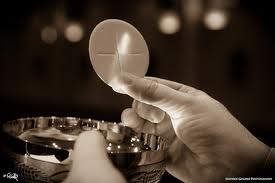
So, when Jesus says to you tonight, “Take eat; take drink. This is for you for the forgiveness of sin,” does His Word have the power to forgive? Yes. When Jesus says, “This is My Body; this is My Blood,” does His Word have the power to make the bread and wine His Body and Blood? Yes. Do we have to understand how it works? No. Not at all. If Jesus wanted us to understand the how, He would’ve told us. But He didn’t, so we simply believe His Word.

Sure, it seems strange that eating and drinking the elements of Communion would do something spiritual like forgiving sin. Most of the things we eat are for physical benefits. We eat to fuel our body and give it the nutrients, vitamins, and minerals it needs. But eating food and having it do something spiritual sounds strange. But it shouldn’t. Remember how sin and death entered the world? Through eating the forbidden fruit. That eating was the sin that brought about both physical and spiritual sickness, death, and separation from God that has spread like a virus to all humanity (Ro. 5:12). God had warned Adam that would happen (Gen. 2:17), and God’s Word proved true (Gen. 3:6-7). So, when Jesus, the Son of God, promises that this meal will forgive sin (Mt. 26:28), His Word is also trustworthy and true.

A quick disclaimer before I go on here: I’m not a doctor, so what I’m about to say isn’t intended to be medical advice. Talk to your own healthcare professional.

When you get an ear infection, a doctor will prescribe an antibiotic to target and kill the bad bacteria. But those antibiotics will also kill the good bacteria in your gut that you need to properly digest food. When a doctor prescribes an antibiotic, he might also advise you to take a probiotic to keep all the biotics [sic.] in your body in balance. So, when you have a bacterial infection, you might end up taking two things – a prescription of antibiotics and a supplement of probiotics. Again, that’s not medical advice; talk to your healthcare provider.

Tonight, your Great Physician gives you one medicine, but it does two things. First, it fights off and rids you of the infection of sin through forgiveness. And second, it bestows, grants, and gives life. This one medicine of Jesus’ Body and Blood does both.

Listen to what Jesus says about this medicine in John 6. Jesus says that He is the living bread that comes down from heaven, so that you may eat of it and not die (Jn. 6:50). Christ says that when you eat this bread, you will live forever(Jn. 6:51). Jesus says that whoever eats His flesh and drinks His blood has eternal life (Jn. 6:54) because His flesh is true food, and His blood is true drink (Jn. 6:55). Christ says that by this eating and drinking, you abide in Him and He abides in you (Jn. 6:56).

In other words, this medicine kills your sin through forgiveness, and it nourishes and strengthens you so you love others in the same way as Jesus did. One of the prayers we use to thank God for what He gives in Communion highlights this. It goes, “We give thanks to You, Almighty God, that You have refreshed us through this gracious gift, and we ask that in Your mercy You would strengthen us through [this meal] in faith toward You and in fervent love toward one another.”

Holy Communion strengthens your love for others because it joins you to Jesus and Him to you. And this joining of you and Jesus results in love for others. And the love that Jesus has for His disciples, which is beautifully demonstrated in our Gospel reading (Jn. 13:1-1534-35) is a humble, sacrificial, self-giving kind of love. Think of it. The One who had shaped Adam from the soil (Gen. 2:7) now stoops to wash the soil from the feet Adam’s sons (Jn. 13:5). The One who powerfully yet intricately placed all the galaxies, stars, and planets into orbit now kneels with a water basin and a rag. The medicine of the Lord’s Supper pours that kind of love into you and strengthens you to give that same love to others. And by you having that same kind of love, Jesus says that all people will know that you are His disciples (Jn. 13:35). 

So, whenever you feel your sin, come. Receive this medicine. Whenever your love grows cold, come. Receive this medicine. 

Medicine always has a cost, and so does this medicine. But Jesus, your Great Physician, foots the bill. He absorbs the entire cost. Christ fully pays for it so you can receive it gratis. Tomorrow, you’ll hear Jesus cry out on the cross, “My God, my God, why have You forsaken Me?” (Mk. 14:34). That was the cost, and it is completely covered by Jesus.

Dear saints, you have a Great Physician who heals, who forgives, who strengthens, who increases your love, and who gives you the medicine you need to lead you unto life everlasting. Amen.

The peace of God, which surpasses all understanding, will guard your hearts and minds in Christ Jesus. Amen.

Who, Then, Receives This Sacrament Worthily? – Sermon for Midweek Lent 5

IV. Who, Then, Receives This Sacrament Worthily?

Fasting and bodily preparation are indeed a good outward discipline, but that person is truly worthy and well prepared who believes these words: “Given and shed for you for the forgiveness of sins.” But anyone who does not believe these words or who doubts them is unworthy and unprepared, for the words “for you” require truly believing hearts.

Luther’s Small Catechism

In the name of Jesus. Amen.

It’s a gift. The Lord’s Supper is a gift. The Body of Christ broken for you is a gift. The Blood of Christ shed for the forgiveness of your sins is a gift. Everything about the Lord’s Supper is a gift. When we consider our worthiness or unworthiness of receiving the Holy Communion, we must start with the understanding that it is a gift.

Jesus doesn’t give us Himself in the Sacrament because we have earned or deserved Him. Birthday and Christmas presents aren’t earned. If something is earned, it is no longer a gift. When you give a gift, you give out of love. Jesus is not Santa Claus who makes his list and checks it twice to see who has been naughty or nice and give based on that. And remember what the gift gives – the forgiveness of sins. If you imagine, somehow, that you don’t have any sins that need forgiving, then you don’t need or have any desire for the gift. Only the sick need a doctor, and only sinners need the Sacrament.

In our epistle reading tonight (1 Cor. 11:27-34), Paul does give a warning about Holy Communion. You can receive the gift Jesus gives in an unworthy manner, and there are serious consequences of receiving the Lord’s Supper in an unworthy manner. But before we get to that, let’s first consider what it is to be worthy of receiving the Sacrament. The two ‘qualifications’ – or, maybe better, ‘qualities’ or ‘attributes’ – of being a worthy recipient of the Lord’s Supper are found in v. 28-29 and v. 31.

To be worthy of Communion, a person is to ‘examine’ and ‘judge’ himself ‘truly’ (1 Cor. 11:28, 31). Here’s what that means: When you consider who you are in light of God’s Commandments, you find nothing but sin and failure. You find that you have not done what God demands and that you have done what God forbids. When you examine your thoughts, words, and deeds, you see clearly that you are not worthy to be in God’s presence let alone have a seat at His Table. God be praised that the recognition of your sin and unworthiness is precisely what makes you worthy to receive what Jesus gives in Holy Communion because what He gives is His very Body and Blood for the forgiveness of sins.

The other ‘quality’ of receiving the Lord’s Supper worthily comes in 1 Cor. 11:29 and is to “discern the Body.” In other words, it is to recognize that Jesus is truly present in His Supper as He gives you the New Covenant of His Blood in the elements of Communion.

When you know and recognize those two things, God invites you and desires that you, “eat of the Bread and Drink of the Cup” (1 Cor. 11:28).

If someone does not recognize that they are a sinner who needs forgiveness or does not believe that Jesus gives His Body and Blood in the Sacrament, that person eats and drinks the Sacrament in an unworthy manner, and that does have consequences.

The first consequence Scripture mentions is to be guilty concerning the Body and Blood of the Lord. In other words, an unworthy reception of the Lord’s Supper puts that person alongside the soldiers, Pilate, Judas, and the Jewish leaders as being guilty of Jesus’ wounds and crucifixion.

A person can be guilty of the Body and Blood of Jesus in various ways. Judas was guilty because he betrayed Jesus (Mt. 27:3-4). The priests and Pharisees were guilty because they falsely accused Jesus (Mt. 26:59). The soldiers were guilty because they beat, whipped, and spat upon Jesus (Mt. 27:27-31). Pilate was guilty because he condemned Jesus (Mt. 27:24-26). All of them were individually guilty of the bodily harm done to Jesus in different ways, but the guilt remains the same. Here, Paul says that to receive Communion in an unworthy manner is just as great a crime as those who carried out the betrayal, beating, and crucifixion of our Lord (1 Cor. 11:27).

The consequence of this guilt concerning Christ’s Body and Blood brings God’s judgment. Paul says that the reason some of the Corinthian Christians are weak, sick, and have died is that they were receiving Communion in an unworthy manner. Paul isn’t speaking figuratively here; this is serious stuff.

Now, I want to be clear, the judgment Paul talks about here does not mean that the Christians who receive the Lord’s Supper in an unworthy manner are condemned. The text is clear. The judgment from the Lord that they receive is used by God to discipline them so that they are not condemned with the world (1 Cor. 11:29, 32). But that discipline and judgment is real, and because that discipline is real, this should guide what we do.

As your pastor who loves and cares for you and your well-being as well as the well-being of other Christians, I need to say this: When you are traveling or visiting a church with family or friends, there are times and instances where you should not take Communion. If you are at a church that says the Lord’s Supper is only symbolic, or, if you are at a Roman Catholic church that teaches that receiving the Lord’s Supper is earning some sort of spiritual merit, do not commune there. I say that because, by receiving the Sacrament there, you are encouraging your Christian brothers and sisters in their wrong belief and unworthy reception of the Lord’s Supper. And by not taking Communion there, God may open a door for you to teach them about the great blessing that Jesus gives in His Supper. Pray that that would be the case.

Yes, Scripture gives us warnings about receiving the Sacrament in an unworthy manner, but it is done in a way to encourage us to receive it regularly and rightly. Listen carefully to what comes after the warning of receiving in an unworthy manner and being guilty concerning the Body and Blood of our Lord, “Let a person examine himself, then, and so eat of the Bread and drink of the Cup” (1 Cor. 11:28). In the Large Catechism, Luther picks up on this and rightly says this is warning, but it is an encouragement to receive the gift of the Lord’s Supper which Jesus gives to us as often as we eat and drink.

Luther says, “If… you are heavy-laden and feel your weakness, then go joyfully to this Sacrament and receive refreshment, comfort, and strength.” But what if you don’t feel your weakness? Luther suggests that you put your hand to your chest and to check if you still have flesh and blood because Ro. 7:18 says, “I know that nothing good dwells in me, that is, in my flesh.” Then, look around and see if you are still in the world. If you are in the world, believe what the Bible teaches about it – that it is full of danger and difficulties (Jn. 15:18-21, 16:33). Finally, remember that the devil is prowling around like a roaring lion seeking to devour us (1 Pet. 5:8) and has all sorts of flaming darts pointed at us (Eph. 6:16). Your sinfulness, the danger of living in a sinful world, and the promise of Jesus are all constant reminders of how greatly you need the gift Jesus gives in the Sacrament.

I want to close this series on the Lord’s Supper with one final thought about receiving God’s gifts. When it comes to earthly things, desire and satisfaction are opposites. If you are hungry, it is because you don’t have food. Once you have eat and are full, you no longer desire food.

Spiritual things work differently, and I think we have all seen or experienced this. When you have God’s Word, you want more of it, and, sadly, the opposite is also true. The less you have God’s Word, the less you desire it. When it comes to the gifts Gospel, the more we receive them, the more we long for them. When we taste and see that the Lord is good (Ps. 34:8), our hunger for His goodness and mercy grows.

May our love and desire for God’s Word continue to grow as we receive more and more of the free gift of His grace and mercy which He freely gives through His Word and Sacraments. Amen.The peace of God, which surpasses all understanding, will guard your hearts and minds in Christ Jesus. Amen.

How Can the Bodily Eating and Drinking Produce Such Great Benefits? – Sermon for Midweek Lent 4

III. How Can the Bodily Eating and Drinking Produce Such Great Benefits?

The eating and drinking, indeed, do not produce them, but the words: “Given and shed for you for the forgiveness of sins.” For besides the bodily eating and drinking, these words are the chief thing in the Sacrament; and anyone who believes them has what they say and declare, namely, the forgiveness of sins.

Luther’s Small Catechism

In the name of Jesus. Amen.

Again, to recap: the Lord’s Supper is the true Body and Blood of Jesus in and with the bread and wine which Christ gives to us to eat and to drink. This means that Jesus is truly present in the Lord’s Supper to give you forgiveness, life, and salvation. When you receive Communion, you never have to wonder why Jesus is with you. He is there to deliver all the benefits of His death and resurrection which He won for you on the cross. You simply taste and see that He is good (Ps. 34:8).

This question from the Small Catechism addresses a common misunderstanding many Christians today have about the Lord’s Supper. The misunderstanding will take different shapes, so tonight’s sermon is largely going to be responding to the errors about Communion.

I don’t know of any Christians who say that Jesus doesn’t really care if we have Communion or not. But some Christians will say that Jesus doesn’t actually give us His Body and Blood for the forgiveness of sins in the Sacrament. Instead, they believe the Lord’s Supper is a meal which helps us remember what Christ has done for us. They will say that when Jesus said, “This is My Body and Blood,” what He really meant was, “This represents My Body. This represents My Blood.” I think one of the biggest reasons they think that is what this question from the Small Catechism addresses. If we modernized this question a bit it would be, “How can having a physical bite a bread and a physical sip of wine do anything that benefits a person spiritually?” 

This is a logical question. You don’t eat a hotdog and drink a soda to be forgiven. You aren’t saved by having a bowl of soup and a glass of water. So, why would eating and drinking the elements of Communion be any different? Even though it is a logical question, that doesn’t mean we can respond with mere logic. Our logic, thinking, and reasoning is a good gift from God. But our logic is fallen and cannot comprehend everything God teaches and promises in His Word. God’s ways and thoughts are higher than our ways and thoughts (Is. 55:8-9).

So, it all comes down to the words and promises of Jesus. Once Jesus says, “Given and shed for you for the forgiveness of sins,” that settles any disagreement of what Communion is for. The Lord’s Supper delivers the forgiveness of sins. 

Think back to Naaman, the commander of the army of Syria (1 Kgs. 5:1-14). He had leprosy and was given the suggestion to go to God’s prophet, Elisha. Elisha told Naaman to wash seven times in the Jordan River, and he would be cleansed of his leprosy. But when Naaman considered the water of the Jordan, he balked at the idea. There were cleaner rivers back in Syria which he thought could do a better job of washing his festering, diseased skin. So, he wasn’t going to lower himself into those dirty, mucky waters until one of his servants basically said, “Why not give it a try? We’ve come all this way, and the prophet said to wash and be cleansed of your leprosy. If it doesn’t work, we can get the mud washed off of you later.” Naaman washes and finds out that God had given him a promise through Elisha. The waters of the Jordan River became a leprosy-healing stream – not because those waters were special by themselves. Instead, it was because God had attached a promise for Naaman to those waters.

Some might object to that and say, “Well, that was to heal the physical ailment of leprosy. God doesn’t use physical things to bring about spiritual benefits.”  Not so fast. What about the burning coal that touched Isaiah’s lips? The seraph promised him, “Behold, this has touched your lips. Your guilt is taken away, and your sin atoned for” (Is. 6:7). The same is true for Holy Communion. Jesus, the Son of God Himself, puts His Supper into your mouth and says to you who receive it, “This has touched your lips. You have eaten and drunk. Your guilt is taken away, and your sin atoned for.”

And on top of that, if it were true that physical things do not and cannot bring about forgiveness and spiritual benefits, what is Jesus doing on the cross? Throughout Scripture, God can and does regularly bring about spiritual benefits through physical things and physical actions.

Another objection Christians have about the elements of the Lord’s Supper being Jesus’ Body and Blood is, as I already mentioned, that Jesus is speaking figuratively. They will say, “Sure Jesus said, ‘This is My body; this is My blood,’ but what He meant is, ‘This represents My body; this represents My blood.’” They will point to passages where Jesus says that He is the door (Jn. 10:7, 9). Obviously, Jesus isn’t a literal door. They will say we should understand what Jesus says when institutes Communion exactly the same way.

The problem with that argument is the context of what Jesus is saying and what He is doing when He says it. When Jesus talks about being the door, it is in the context of Him drawing from all sorts of shepherd/sheep imagery from the Old Testament. When you read those verses in context, it is clear that He is using figurative language.

But when Jesus institutes Holy Communion everything is different. Jesus blessed the physical Bread and physical Cup and handed them to the disciples saying, “This is My Body. This is My Blood.” Jesus could have used language that is figurative. He does that all the time to introduce the parables. “The kingdom of heaven is like…” (Mt. 13; 20:1; 25:1; Lk. 13:18; etc.) But Jesus doesn’t do that in His Supper. He gives them Bread and Wine saying, “This is My Body; this is My Blood.” When God speaks, the impossible happens – the lame walk, the blind see, the dead are raised, and Bread and Wine become more than mere bread and wine.

Another objection that Christians today will have about Communion is that created things – especially small things like bread and wine – cannot hold something as big as God. The phrase that gets used is, “The finite cannot hold the infinite.” If that statement is true (and it’s not), that is big problem. If the finite cannot hold the infinite, that would mean that Jesus wasn’t God in the flesh, that would be impossible. But that is not the case. The finite can and does hold the infinite. Scripture clearly teaches that in Jesus, “the whole fullness of God dwells bodily” (Col. 2:9). And if Jesus wants to put Himself in Bread and Wine, He can do that too.

The final objection we will address tonight is when some Christians will say something like, “Well, Jesus’ death on the cross is what saves – not what we receive in Communion.”

The response to that is, “Yes. It is only through Jesus’ finished work on the cross that we are saved.” But how does God give and deliver what Jesus did on the cross to you? You weren’t there.

As much as I enjoy the hymn Were You There When They Crucified My Lord? (especially hearing Johnny Cash’s version), that hymn is asking questions to which we would have to answer with a resounding, “No.” In fact, only a small minority of the people who existed were there. You weren’t there when they crucified Jesus. You weren’t there when they nailed Him to the tree. You weren’t there when they laid Him in the tomb. You weren’t there when He rose up from the grave. All those things are good and important to remember, but you weren’t there – halfway across the world, outside of Jerusalem nearly 2,000 years ago.

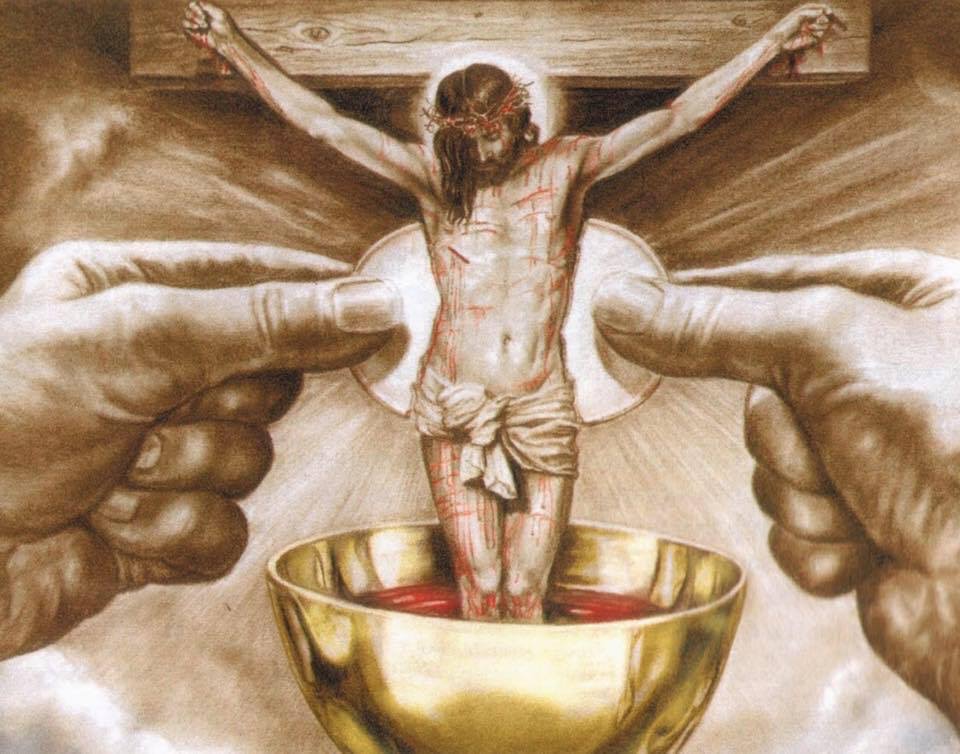
But Jesus can, and promises to, deliver all the benefits of the cross to you in Holy Communion – His body broken, His Blood shed – directly delivered to your mouth. If the eating of the fruit of the tree of the knowledge of good and evil can cause the devastating damage of sin entering the whole world, how beautiful is it that eating and drinking Jesus’ Body and Blood, which were given on the tree of the cross, brings forgiveness, life, and salvation?

We probably want to know more about how the eating and drinking of the Lord’s Supper makes logical sense, God hasn’t given us all the details. That’s ok. We have His sure and certain promise, so hold fast to that.

Even though what you receive in the Sacrament doesn’t look like much, and by itself it isn’t much, but when Jesus attaches His promises to it, it is everything. It is the medicine of immortality. Amen.

The peace of God, which surpasses all understanding, will guard your hearts and minds in Christ Jesus. Amen.

What is the Benefit of Such Eating and Drinking – Sermon for Midweek Lent 3

II. What Is the Benefit of Such Eating and Drinking?

It is pointed out in these words: “Given and shed for you for the forgiveness of sins.” Through these words, the forgiveness of sins, life and salvation are given unto us in the Sacrament. For where there is forgiveness of sins, there is also life and salvation.

Luther’s Small Catechism

In the name of Jesus. Amen.

To recap where we’ve been, the Lord’s Supper is the true Body and Blood of Christ in the bread and wine which Jesus gives to us to eat and to drink. This means that Jesus is truly present in the Lord’s Supper. At this altar, Immanuel – God is with you (Is. 7:14; Mt. 1:23). Throughout the Scriptures, God will show up, and He always has a reason for His coming even though His people don’t always know why He is there.

After Adam and Eve ate the fruit from the forbidden tree, they heard God walking in the garden. God’s approaching presence filled them with fear and they hid. In their defense, they probably thought that God was coming to smite them (Gen. 3:8-11). But God was there to give them chance after chance to repent. He had come to give them the promise that the Seed of the woman would come to crush the serpent’s head (Gen. 3:15).

When Moses saw the burning bush, his curiosity got the better of him as he was drawn into God’s holy presence. God had appeared to call Moses to return to Egypt and lead the Israelites out of bondage and slavery (Ex. 3:1-10).

At Mt. Sinai, God’s people assembled around the mountain. They were to prepare for God to descend, and God came in fire. Thunder and lightning filled the air. The mountain was wrapped in smoke as the earth shook. The sound of the trumpet of heaven grew louder and louder. And from the peak of the mountain, the present God spoke. God had come to promise to be their God and to give them the Ten Commandments, telling them His will for their lives (Ex. 19:16ff).

After Joshua led God’s people into the Promised Land, Jesus, the commander of the Lord’s armies of the appeared to Joshua. Christ had come to give the battle plans for how they were to attack Jericho (Jos. 5:13ff).

One day when Isaiah went to the Temple, he saw God high and lifted up with the train of His robe filling the Temple. The seraphim called out, “Holy, holy, holy is the Lord of hosts; the whole earth is filled with His glory.” Isaiah figured God had come to put an end to him and his sinful lips. But God was there to call Isaiah to preach His Word to His people (Is. 6:1ff).

God came to Jonah to call Jonah to preach to his enemies, the Ninevites (Jon. 1:1-2). God came to Hosea to call him to enter a marriage that would be a sermon to God’s adulterous people (Hos. 1:2). God appeared to Zechariah to give Him visions that would encourage the people to rebuild the Temple (Zech. 1:7-6:15). Again, God always showed up with a purpose even though the people He was present with didn’t know or understand the purpose. And this pattern continues in the Gospels.

Jesus walks by the Sea of Galilee so He can call His disciples (Mk. 1:16-17). In the Gospel text this coming Sunday (Jn. 6:1-15), we will see Jesus lead a crowd of 5,000 men plus women and children into the wilderness where there was no food in order to test Philip. On His way to Jerusalem, Jesus passes through Jericho because He must stay at Zacchaeus’ house (Lk. 19:5). The night Jesus is betrayed, He goes to the Garden of Gethsemane in order to be arrested (Mt. 26:46). Easter evening, Jesus goes to the disciples who are behind locked doors to preach peace to them, to show them that He is alive, to breathe on them to give them the Holy Spirit, and to authorize them to forgive sins (Jn. 20:19-23). One week later, Jesus appears in the same locked room to appear to Thomas (Jn. 20:24-29). Sometime later, Jesus appeared on the shore of the Sea of Galilee, and as best as we can tell, Jesus was there to cook breakfast for His disciples (Jn. 21:12) and to restore Peter after his denial (Jn. 21:15-19).

As we think through all these times God appears, we start to see some recurring reasons why He appears among His people. He comes to call to repentance and faith. He comes to give instructions and teach. God will come to guide people on how they should live. God will come to call people to speak His Word to others. God comes to reveal that He is risen, to grant authority to forgive, and to simply fry up some breakfast for His buddies and be with them.

Sometimes, Jesus is with us to teach or instruct us in what we should do. Sometimes, God is with us to call us to specific tasks. Sometimes, God doesn’t tell us why He is there. He just promises to be there. Christ promises that He is continually present with you even to the end of the age (Mt. 28:20). He promises where two or three are gathered in His name, there He is among them (Mt. 18:20). Both of those promises are wonderful and comforting, but He doesn’t explicitly say why He’s with us. In Psalm 23:4 teaches that God is with us even in the valley of the shadow of death. While that is – it absolutely is – comforting, God doesn’t say specifically what He is there to do for us in death’s valley. Sometimes, He is there to deliver us from death, but sometimes He is there to comfort and protect as a person takes his or her last breath.

We know that God is always with us as He provides everything we need. Jesus is with you as you work, clean, care for your family, and as you rest. Jesus was with you downstairs as you ate your soup, sandwiches, and dessert – just like when He cooked breakfast for the disciples (Jn. 21:12). God is present to bring His comfort and His peace, but we don’t always know what kind of comfort we will receive.

Again, I don’t want to belittle any of the comfort of God’s presence as He teaches, instructs, guides, protects, and provides for us. All of those are encouraging, soothing, reassuring things, and we need all of that. Sometimes, another person’s presence is simply comforting when we face dark things.

But there is one place where God regularly, physically comes to you and you never have to wonder whyHe is there, and that is in Holy Communion. At this altar, Jesus comes to you in His Body and Blood to give you the forgiveness of all your sins. And because He comes to you with forgiveness, He comes with life and salvation because wherever there is forgiveness of sins, there is also life and salvation.

Dear saints, when Jesus comes to you in the Lord’s Supper – wherever you receive it – He brings you His forgiveness, His life, and His salvation. You don’t have to wonder, “What does He want me to do now? Where does He want me to go? How does He want me to respond?” He simply sets His table before you to serve you (Ps. 23:5) saying, “Here. Take, eat. Take, drink. This is for the forgiveness of your sins.” Whenever you come to the Lord’s Supper, Jesus is with you to forgive you so you can taste and see that He is good (Ps. 34:8). Amen.

The peace of God, which surpasses all understanding, will guard your hearts and minds in Christ Jesus. Amen.

Where Is It So Written? – Sermon for Midweek Lent 2

The Scripture readings for tonight’s service are Psalm 111; Exodus 12:43-51; and Mark 14:22-25.

I. What Is the Sacrament of the Altar?

It is the true Body and Blood of our Lord Jesus Christ, under the bread and wine, given unto us Christians to eat and to drink, as it was instituted by Christ Himself.

Where is it so written?

The holy Evangelists, Matthew, Mark, and Luke, together with St. Paul, write:

“Our Lord Jesus Christ, in the night in which He was betrayed, took bread; and when He had given thanks, He broke it and gave it to His disciples saying, ‘Take, eat; this is My Body, which is given for you; this do in remembrance of Me.’

“In the same manner, also, when He had eaten, He took the cup, and when He had given thanks, He gave it to them saying, ‘Drink of it, all of you; this cup is the New Testament in My Blood, which is shed for you, and for many, for the forgiveness of sins; this do, as often as you drink, in remembrance of Me.’”

Luther’s Small Catechism

In the name of Jesus. Amen.

Imagine being in Egypt for the initial Passover (Ex. 12:1-13). Your entire family is gathered for a special meal because God is about to deliver you from slavery, and being a slave is all you have ever known. God is coming to deliver, release, and rescue you, so everyone is filled with excitement. Your enemies are about to be defeated as the angel of death passes through the land. God promises that you will be protected from the angel of death because the blood of the Passover lamb will cover you.

So, you find that perfect, year-old lamb. You kill it and take the blood of the lamb and put on the posts and over the door of your house. Then, you start cooking. You roast the lamb, set the table, and have the meal. You eat it dressed and ready to travel to the Promised Land. And the next day, you walk out of Egypt through the Red Sea with a wall of water on your right and on your left. All your enemies are being defeated behind you. You are finally delivered from bondage and slavery.

Dear saints, that is, essentially, what happens each and every time you come to the Lord’s Supper. At this altar, you are delivered out of your slavery to sin. Jesus, the lamb without blemish or spot (1 Pet. 1:18-19), has been sacrificed. His Blood marks your door, and the angel of death passes over you. You eat His Body and drink His Blood which have been given and shed for the forgiveness of your sins. All your enemies are defeated. You are rescued from your slavery to sin and death. And God ushers you into the Promised Land of the kingdom of heaven.

Whenever you have the Lord’s Supper, as you return to your seat, it is completely and utterly appropriate for you to imagine walls of water on your right and left because in the Lord’s Supper you are being delivered from slavery and ushered into God’s kingdom.

Last week, we considered the first part of the question, “What is the Sacrament of the Altar?” and how Holy Communion is Jesus’ Body and Blood given to Christians to eat and drink for the forgiveness of sins. Tonight, we are going to consider the words Jesus used to institute the Lord’s Supper a bit more. 

The words in your bulletin are a conflation of the four places in Scripture that record Jesus instituting the Lord’s Supper. By ‘conflation,’ I mean this: The four places where Scripture gives us the words of institution have slight, minor differences. The four passages are all in agreement in the essentials, and what you have printed there in the bulletin is all the actions and words of Jesus as He instituted His Supper which are taken from those four texts. If you are interested, I put together a table of the four passages and divided them into the parallel sections so you can see the similarities and differences. Through these midweek services, you will hear all four accounts. Last week, you heard Matthew; tonight, Mark; next week, Luke; and the week after, Paul in 1 Corinthians 11.

Again, even though there are minor differences, the essentials are the same. Jesus takes bread, blesses it, and gives it to the disciples to eat saying, “This is My Body.” Jesus takes the cup, blesses it, and gives it to the disciples to drink saying, “This is My Blood of the New Testament which is shed for you.”

So, what is this New Testament? When a person makes out a will or testament, he spells out who gets what after he dies. There might be times when a person will make changes to the will and what is to be done with the inheritance, but that is rare. And once he dies, that will is set in stone and cannot be changed.

Jesus’ will and testament is where and how Jesus swears to give His children everything that is His after He dies. In Holy Communion, Jesus gives you everything He has – His entire self His Body and Blood and His divine life. In other words, by Jesus’ crucifixion and death, you are made inheritors of His life which is a resurrection life. And because He made this Testament with you and has died for you, this Testament cannot be altered or changed – not even by God Himself. 

God spoke about this new testament in Jeremiah 31:33-34 where He promised to put His Word in you and write it on your hearts. He will be Your God, and you will be His people. God will forgive your iniquity and remember your sin no more.

In the Lord’s Supper, you are given your inheritance as a child of God. You are delivered, forgiven, and have the right to enter the kingdom of God because Christ Himself has given you that right.

Remember that Jesus wants to give you this gift regularly, as often as you eat and drink it. And this does something for you and for others. Whenever you partake in the Lord’s Supper, you are doing two things simultaneously. First, you are receiving this Testament where Jesus promises the forgiveness of sins. And second, you are proclaiming Jesus’ death until He comes.

1 Corinthians 11:28, which should be familiar to you, says, “As often as you eat this Bread and drink the Cup, you proclaim the Lord’s death until He comes.” In a very real way, receiving the Lord’s Supper is how you proclaim, preach, and confess Jesus’ death and resurrection to a fallen and darkened world.

As you receive His meal of forgiveness, you are strengthened in faith toward God and love toward your neighbor. Psalm 116:12 asks, “What shall I render to the Lord for all His benefits to me?” Psalm 116:13 gives the answer, “I shall lift up the cup of salvation and call on the name of the Lord.” By you receiving the Lord’s Supper, God draws others to Himself to become His people, His children. For that, God be praised. Amen.

The peace of God, which surpasses all understanding, will guard your hearts and minds in Christ Jesus. Amen.

What Is the Sacrament of the Altar? – Sermon for Midweek Lent 1

The Scripture readings for tonight’s service are Psalm 23; 1 Corinthians 10:1-22; and Matthew 26:26-29.

I. What Is the Sacrament of the Altar?
It is the true Body and Blood of our Lord Jesus Christ,
under the bread and wine, given unto us Christians to eat and to drink,
as it was instituted by Christ Himself.

Luther’s Small Catechism

In the name of Jesus. Amen.

When Jesus instituted the Lord’s Supper, He gave the disciples bread which He said is His Body, and He gave the disciples the cup which He said is His Blood (Mt. 26:26-29). Next week, we will take more time to consider those words of institution. For tonight, we see that in the Lord’s Supper Jesus gives us His Body and Blood to eat and to drink. A couple of years ago when we considered Baptism during our Lenten services, we saw how Baptism is two elements put together: God’s Word and water. In the Lord’s Supper, there are three elements, factors, or ingredients: God’s Word, the elements of bread and wine, and Jesus’ Body and Blood. Those three things make up the Sacrament.

A helpful way for us to see what the Lord’s Supper is is to consider the different names we have for it: Lord’s Supper, Holy Communion, the Sacrament of the Altar, and the Eucharist.

First, we call it ‘the Lord’s Supper’ because that is what Paul calls it in 1 Cor. 11:20. It is the Lord’s Supper because it was instituted by our Lord Jesus Himself. Jesus instituted it, so He defines what it is. Jesus says it is the new covenant in His Blood which isn’t a little meal to fill bellies; instead, it delivers the gifts of His Body and Blood for the forgiveness of sins (Jer. 31:33-34).

Second, we call it ‘Holy Communion.’ Holy Communion is holy because Jesus, the holy One, gave it to us. It is holy because it delivers Jesus’ holy Body and Blood to us which then makes us holy as we receive it in faith. It is ‘Communion’ because of what you heard in our Epistle text (1 Cor. 10:1-22), “The cup of blessing that we bless, is it not a participation in the blood of Christ? The bread that we break, is it not a participation in the body of Christ?” (1 Cor. 10:16). The Greek word there for ‘participation’ is κοινωνία which means ‘fellowship’ or ‘common unity.’ Holy Communion unites us to Jesus, and when Christians are united to Jesus, they are also united to one another.

The third common term comes from the Small Catechism where Luther calls it ‘the Sacrament of the Altar.’ Even though this isn’t a term that Scripture uses, it is helpful because it highlights the fact that Jesus’ sacrificial death on the altar of the cross is given to us from the altars of His churches. What Christ accomplished on the cross, He delivers to you in the Sacrament of the Altar.

Finally, the church has also used the term ‘Eucharist’ after the Greek word for ‘thanksgiving’ which is εὐχαριστέω. Calling it ‘Eucharist’ reminds us how Jesus blessed the bread and wine by giving thanks before giving them to His disciples. It is also a reminder of our response to receiving it. We give thanks to God for giving us the gift of Jesus’ Body and Blood.

Again, because Jesus says it is His Body and Blood, the Lord’s Supper is not just a little snack we have at church before we head out the door. No, the Lord’s Supper is a heavenly meal.

In our Epistle text tonight (1 Cor. 10:1-22), we heard that after God’s people left Egypt, they all “ate the same spiritual food” (1 Cor. 11:3). For forty years, God fed His people with manna that appeared on the ground six days every week as God’s people wandered in the wilderness. Sunday through Thursday, they were to gather up enough to eat for that day. But on Friday, the sixth day, they were to gather enough for that day andfor Saturday, the Sabbath day, so they could rest on the Sabbath (Ex. 16:4-31).

The manna was the actual food that God provided to them to keep their bodies going. But the manna was providing more than just the calories they needed to live physically. The manna was also spiritual food that fed their faith by teaching them to daily trust in God’s provision and mercy. Psalm 78 remembers how God provided for His people during the exodus saying, “[God] commanded the skies above and opened the doors of heaven, and He rained down on them manna to eat and gave them the grain of heaven. Man ate of the bread of the angels; He sent them food in abundance” (Ps. 78:23-25).

The nutritional value of the Lord’s Supper wouldn’t keep our bodies going for very long because there isn’t much there, but that isn’t why Jesus gives it to us. Christ says that He gives us this heavenly meal for the forgiveness of our sins. He gives us food that feeds our souls and our faith by giving us a taste of heaven. As we receive Jesus’ Body and Blood in our mouth, we also receive the forgiveness of our sins in our heart by faith.

Now, there are some who say that simply taking Christ at His word about His Body and Blood being given in Communion is cannibalistic. They will say that when Jesus said ‘is’ what He really meant was this ‘represents’ or ‘symbolizes’ His Body and Blood. I’m not going to address that tonight, but I will in a few weeks. But I do want to say that Jesus giving His Blood to drink is pretty radical.

Right after the flood, God told Noah and his family that consuming blood was strictly forbidden because according to God, the life of the creature was in the blood (Gen. 9:4). Throughout Leviticus, God continued to forbid the consuming blood (Lev. 7:25-27; 17:10-12) saying, “The life of every creature is its blood: its blood is its life” (Lev. 17:14). There were and still are pagan cultures that dabble in demonic practices (1 Cor. 10:19-22) by drinking the blood of animals to get the power and ability of those animals. So, in the old covenant, God set apart the blood of each sacrifice to be used for atonement. By offering the lifeblood of those animals, God was showing His people that He accepted the death of another in place of the sinner.

This was pointing to Jesus. Now, Christ has come and fulfilled the old covenant and established the new covenant in His blood (Heb. 9:11-14, 10:11-14, 19-22). God accepts Jesus’ death and the shedding of His blood in place of the sinner. All the Old Testament sacrifices pointed forward to Jesus shedding His Blood and offering it to God as the one-time sacrifice for all sin. And in Holy Communion, the forbidding of consuming blood stops. Jesus gives you His blood to drink. Remember that God says, “the life is in the blood.” That means in the Lord’s Supper Jesus, the Son of God, gives you His Blood, God’s Blood, and God’s life – a life that that has conquered death and is eternal.

Dear saints, when you come to the Lord’s Supper, God prepares a table before you in the presence of your enemies (Ps. 23:5) and fills you who hunger and thirst for righteousness (Mt. 5:6) with the good things of His Body and Blood (Lk. 1:53) for the forgiveness of your sins and everlasting life. And for all of that, we give thanks. Amen.

The peace of God, which surpasses all understanding, will guard your hearts and minds in Christ Jesus. Amen.

Passover to the Lord’s Supper – Sermon on Exodus 12:1-13 & Mark 14:12-28 for Maundy Thursday

In the name of Jesus. Amen.

Before God rescued His people from slavery in the land of Egypt, He gave them a meal to celebrate their deliverance – the Passover meal. They were to take a lamb and slaughter it at twilight. God told them to take some of the blood and smear that blood on doorposts and the lintel of the houses where they would eat it. They were to eat that lamb and unleavened bread quickly and dressed to travel. That night, God passed through the land of Egypt and struck dead all the firstborn of both man and beast, but He did not enter any houses where He saw the blood of the lamb on the door. That blood was a sign that shielded God’s people from death.

It’s interesting, though, God had already set apart His people so they were not troubled by the previous plagues. Scripture tells us that the flies of the fourth plague didn’t pester the Israelites (Ex. 8:22-23). In the fifth plague, the livestock of the Egyptians died, but not the livestock of God’s people (Ex. 9:4, 7). The hail of the seventh plague didn’t fall upon the Hebrews (Ex. 9:26). Same with the darkness in the ninth plague (Ex. 10:22-23). God didn’t have His people set up any sign to keep those plagues from harming them. They didn’t need to put a fly in their window or write a “Have a nice day” in chalk on their sidewalks to be spared from those plagues. But with this final plague, God had His people set themselves apart with the sign of the blood of the lamb marking their doors.

The fact that God had His people do this not only on that day but also every year afterward was to preach an annual sermon. Each year in the Passover feast, God was reminding His people and preaching to them that the blood of a lamb protected and guarded them from His wrath and death. That blood and meal reminded the people of what God had done in the past, but it was also pointing forward to another Lamb and a better blood that would protect and shield God’s people. And that Lamb is Jesus.

But then, in our Gospel lesson tonight (Mk. 14:12-26), that Passover sermon was preached for the final time. Jesus has His disciples prepare the Passover meal, and that very night, that sermon is fulfilled. It’s no longer needed. The Passover sermon is about to become obsolete because Jesus institutes the new testament of His Supper where He gives His Body and Blood for the forgiveness of sins.

One interesting thing to notice before we move on here: In both instances, both with the Passover meal and the Lord’s Supper, God gives this meal to His people before the event actually happened. Before God passed through Egypt, God gave the Passover meal. The same thing is true in the Lord’s Supper. Before Jesus goes to the cross and gives His body unto death and sheds His blood, Jesus gives the meal of His Body and Blood for the forgiveness of your sins.

Jesus had come, and He was about to do His Father’s will. The Lamb of God, who takes away the sins of the world (Jn. 1:29) and eternally protects God’s people from the plague of death (Heb. 12:24), this Lamb had come to give Himself so that His blood can shield you and death no longer has a claim on you.

The Passover meal had served its purpose. Tomorrow, Jesus will go to the cross. And to replace the Passover meal, Jesus now gives you Holy Communion. Yes, the Lord’s Supper was instituted in the context of the Passover, but it lays aside that old meal. Many people have tried to figure out at what point during the Passover meal Jesus gives Communion as its replacement. But Scripture indicates that Jesus institutes Holy Communion as a separate thing after they had finished that final Passover meal. The Gospel of Luke especially indicates that Jesus institutes His Supper after the Passover meal was finished (Lk. 22:20). 

Now, instead of the Passover meal, you are to eat the bread, which Jesus says is His body, and you are to drink the cup, which Jesus says is His blood. And you do this as a remembrance of what Christ has done for you. Yes, there is remembrance in this meal, but it also delivers exactly what Christ promises it delivers. Jesus promises that in this little meal, you receive the forgiveness of your sins. And unlike the Passover meal, which was an annual thing, Jesus says to do this often in remembrance of Him (1 Cor. 11:25).

So now, Jesus invites you – yes, you – to His altar, to His table. Jesus knows what you need, and He invites you to come and receive it. This is your entry into the Holy of Holies. Here in this meal, the time and distance between you and the cross of Jesus collapses as you participate in the feast of the Lamb who was slain from the foundation of the world (1 Pet. 1:19-20). Here, your Lord gives you everything you need as you walk out of your slavery to sin and toward the Promised Land of the new heavens and earth (Rev. 21:1). Here, your sins are forgiven. Here, the Body and Blood of Christ are given for you.

So, come. Your Brother, your Lord, and your Savior invites you. Amen.The peace of God, which surpasses all understanding, will guard your hearts and minds in Christ Jesus. Amen.