Wilderness to the Promised Land – Sermon on Joshua 3:1-6 and Matthew 3:13, 4:1-2

Joshua 3:1-6; Matthew 3:13, 4:1-2

In the name of Jesus. Amen.

Imagine that you’re on a family road trip. You get on the freeway and have a nice conversation with your kids. As the talk starts to slow down, the kids ask if they can play some music over the stereo. After an hour of having the tunes cranked up, the kids start complaining about the songs their siblings are picking. So, you turn off the music and tell them all to take a nap, read a book, or just stare out the window. But the kids are tired of being in the car, so they revert to their favorite pastime – annoying each other. (By the way, this isn’t necessarily about my family.) After an hour of dealing with the complaints – “He’s touching me,” “Well, she’s looking at me,” “They’re breathing loud,” – you have just about had it. But you’re getting close to your destination.

It’s been several hours since you left home. You’re tired of being in the car and just want the trip to be over. But as you turn down the street of your destination, all your kids start screaming at each other. You’ve finally had enough. You tell your kids that for their punishment, you are going to fill up the gas tank and drive around for several more hours – one hour for every minute of screaming and fighting. (And, yes, I know with gas prices as high as they are, this seems completely ludicrous.)

Well, that analogy is similar to what happened when God delivered Israel out of slavery in Egypt (just don’t go too far with the details). God was bringing His people to the Promised Land. It was trip that shouldn’t have taken more than a couple of months. But God had led His people via the scenic route that included a lengthy pit stop at Mt. Sinai. After receiving God’s commands and instructions about building the Tabernacle, the people rebelled at the foot of the mountain and made the golden calf. Repeatedly on this road trip, the Israelites complained and wanted to return to Egypt and slavery because the cucumbers tasted good (Nu. 11:5). They would whine about not having food and water even though God was constantly providing for them.

To top it all off, when God’s people were on the doorstep of the land God had sworn to give them, they rebelled again. God had the people send spies into the Promised Land for forty days to have a look around (Nu. 13-14). When the spies returned, they reported that the land was fantastic, but they were terrified to enter because people who lived there were giants. Ten of the twelve spies said that entering the Promised Land was impossible even though God had promised to give it to them. This bad report from those ten spies terrified God’s people, and they refused to go forward.

So, God punished them by sending them into exile. For each of the forty days the spies were in the land, God sentenced the people to one year of exile wandering in the wilderness (Nu. 14:34). Forty days of spying and doubting that God would do what He promised meant forty years of exile. God swore that none of the people who were twenty years or older would enter the Promised Land except for Caleb and Joshua, the two faithful spies (Nu. 14:28-33). All the rest of the people would die in the wilderness, but their children would enter Canaan.

When the people learned about their punishment, some of them decided to try and conquer the Promised Land on their own. It didn’t go well. They went without the Ark of the Covenant which meant they went without God’s presence and blessing, so they were utterly defeated (Nu. 14:39-45). So, into exile went God’s people, but God went with them. For forty years, God’s people wandered in the wilderness between Canaan and Egypt. They had walked right up to their inheritance, but they didn’t believe God’s promises, which meant they had abandoned His blessing. But throughout those forty years of wandering in the wilderness, God remained faithful to His people. God was faithful even though the people continued to complain and rebel.

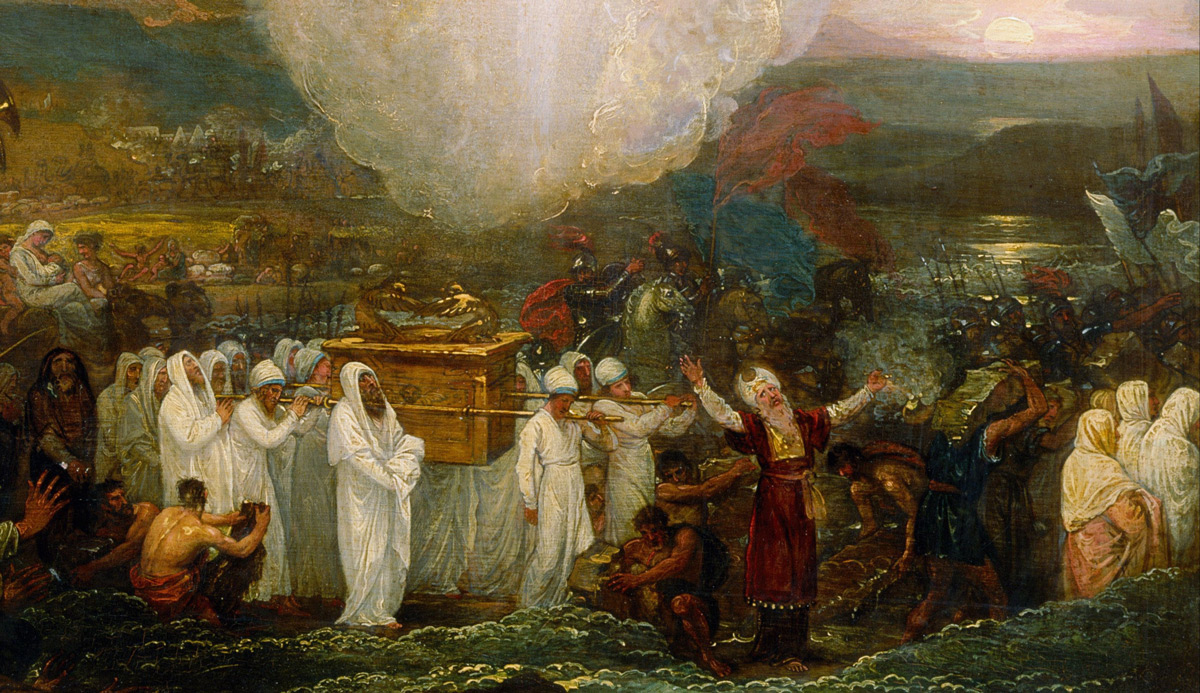
Finally, in tonight’s Old Testament reading (Josh. 3:1-6), the forty years of exile were over, and God brought His people into the Promised Land. As the priests carrying the Ark neared the banks, the Jordan River stood in a heap so His people could leave the wilderness and exile and enter the land flowing with milk and honey (Josh 3:12-17). Despite the people’s sin and rebellion on the way from Egypt to the Promised Land, and despite their sin during the forty years of exile, God was with His people – blessing them, forgiving them, and providing for them (Josh. 5:10-12).

We are just like the unfaithful Israelites who complained, rebelled, and bickered. Because of our sin, we wander about in the wilderness. We don’t have any word or promise from God about how long our exodus will be. But we do have the promise that a good land awaits us after our time of exile is over. Dear Christian, God has promised to give you the new heavens and new earth (Rev. 21:1). There, the same God who daily provides abundantly for all the needs of your life will abundantly provide for you for all eternity and shelter you in His presence. Jesus has gone there before you to prepare a place for you (Jn. 14:1-3). And now Jesus leads you on the way to that paradise.

In our Gospel lesson (Mt. 3:13, 4:1-2), Jesus went down into the waters of the same Jordan River that the Israelites crossed to go into the Promised Land. Jesus went to those waters to be baptized by John. There, your sins were placed upon Jesus (Jn. 1:29). But unlike the Israelites, Jesus doesn’t pass through the Jordan to enter the Promised Land. Instead, Jesus goes through the Jordan and out to the wilderness. Christ takes your sins into the wilderness and carries them back to Satan. But while out in the wilderness, your Savior finds you to lead you and travel with you on your journey to the Promised Land. He leads you to the waters of your Baptism, which grant forgiveness, life, and salvation and brings you into His kingdom.

Jesus prepared the way to the promised land for you because He is the Way (Jn. 14:6). He has opened the courts of heaven to you. Christ leads you on your pilgrim journey with His powerful, nail-scarred, forgiving hands. He brings you to where He is seated at the right hand of God the Father and where He is, there you may be also (Jn. 14:3). So, dear saints, set your minds above where your Lord and Savior is seated at the right hand of God. And when Christ, who is your life appears, then you will appear with Him in glory (Col. 3:1-4). Amen.

The peace of God, which surpasses all understanding, will guard your hearts and minds in Christ Jesus. Amen.

Tree of Life to the Cross – Sermon on Genesis 2:15-17, 3:22-24; 1 Peter 2:21-25; and John 3:14-15

Genesis 2:15-17, 3:22-24; 1 Peter 2:21-15; John 3:14-15

In the name of Jesus. Amen.

I love looking at maps. At the risk of you thinking I’m a complete geek (which I probably am), I sometimes relax by opening the Google Earth app on my iPad and search for little islands near Antarctica, the north pole, and in the middle of the Pacific Ocean. I’ll zoom in as close as possible and tilt the view to see what the terrain of those islands looks like. Then, I’ll zoom out and see how close those islands are to other locations that I am familiar with.

Let’s do something similar tonight. Don’t actually pull out your devices, just do this in your mind. How would you find the place where Jesus was crucified? If you wanted to find it on Google Earth, you would probably zoom out and scroll over to the Mediterranean Sea. Then, you would zoom in again to find Jerusalem, and there you have it. Geographically, slightly outside of Jerusalem, Jesus was crucified on the hill of Golgotha. But most of the time, when you think about the location of Jesus’ death, you probably don’t imagine a map. Instead, you likely think about the instrument of His death – the cross. The cross is where Jesus paid the price for your sin. The exact latitude and longitude of where Jesus’ cross was planted isn’t certain; Scripture doesn’t give all those details and didn’t need to. But, believer, you can know for certain that the cross of Jesus is where God saved you.

Now, there was a point to all that. In our Epistle lesson tonight (1 Pet. 2:21-25), Peter zooms in as close as possible to the place where you were reconciled to God. In v. 24, Peter says, “[Jesus] Himself bore our sins in His body on the tree.” Notice, Peter doesn’t say that Jesus bore your sins in His body on the cross, but on the tree. It’s no accident Peter uses that word. Just briefly, the Greek word Peter uses that gets translated as ‘tree’ can mean either ‘wood’ or ‘tree.’ The same thing is true in Hebrew; Hebrew has one word for ‘wood’ and ‘tree.’

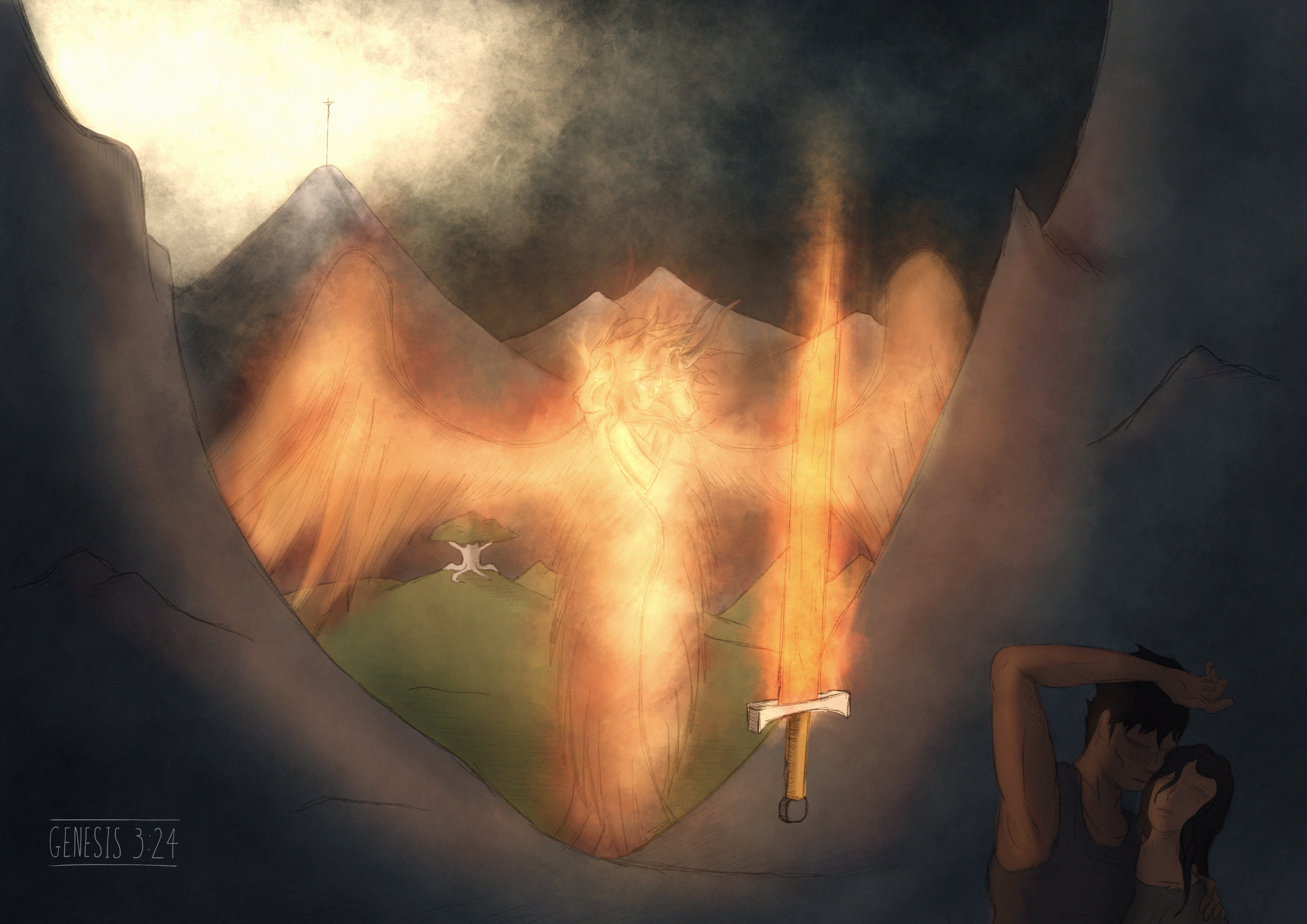
Now, with that in mind, let’s go back to the beginning. God placed man and woman in the Garden of Eden to work and keep it. In the middle of the Garden of Eden (Gen. 2:9), God put two trees, two living woods – the Tree (or ‘wood’) of Life and the Tree (or ‘wood’) of the Knowledge of Good and Evil. The fruit of the Tree of Life was, of course, life. That is why God wouldn’t even finish the thought of Adam and Eve eating its fruit after they fell. They would live forever in sin and death. And the fruit of the Tree of the Knowledge of Good and Evil was forbidden because it brought forth death. But there, at the trunk of the Tree of the Knowledge of Good and Evil, Adam and Eve listened to and believed the lies of the devil. That disobedience has cast us into exile and away from life itself. Before humanity could have access to the Tree of Life again, sin had to be dealt with.

Because of our sin, you and I are not able to be part of the solution to sin and death. In our sin, we are left stumbling helplessly through this world. Restoring ourselves to God is impossible and beyond our reach, but not beyond the reach of God. Even though we were overcome by the fruit of a tree, God has come and restored us by the fruit of another tree – the wood of the cross that was planted outside Jerusalem on Golgotha.

Jesus, the Son of Man was lifted up on a tree just as Moses lifted up the bronze serpent in the wilderness (Jn. 3:14-15). The tree of the cross – a piece of wood that was used as an instrument of torture, suffering, and death – is the Tree of Life upon which Jesus is lifted up. There, Christ bears your sins – all of them. Just as all mankind brought the curse of sin and death upon himself by eating the fruit of the forbidden tree, Jesus takes all the curse of sin and death upon Himself by becoming a curse for us. The Scriptures say, “cursed is everyone who hangs on a tree” (Dt. 21:23, Gal. 3:13). Now, through Jesus’ wounds you are healed because He has taken the curse that belonged to you upon Himself. And now, whoever believes in Him has eternal life.

Jesus has led you out of your exile away from the Garden, away from the Tree of Life to the new Tree of Life.. Through faith in Jesus, the promised Seed of the Woman (Gen. 3:15), you follow your Savior to the tree of life, which is the tree of the cross, whose fruit gives you life. 

You heard God say in Genesis 3:22, “Behold, the man has become like one of us in knowing good and evil.” Listen carefully here, “Now, lest he reach out his hand and take also of the tree of life and eat, and live forever—” God wouldn’t even finish the thought of you being cursed by living forever in sin. But now Jesus has come and become a curse for you by dying on the tree of the cross. The way to the Tree of Life is open again to you. In John 6:51 (and listen to how closely this parallels Gen. 3:22), Jesus says, “I am the living bread that came down from heaven. If anyone eats of this bread, he will live forever. And the bread that give for the life of the world is My flesh.” Now that you are redeemed by Jesus, He desires that you eat and live forever with Him. Jesus has come to bring you home, out of exile, and give you eternal life free from sin, pain, guilt, shame, and death. A new life of joy, peace, and perfection that is forever.

Dear saints, by Jesus’ wounds on the new Tree of Life, which is His cross, you have been healed. You are no longer straying like sheep but have returned to the Shepherd and Overseer of your soul. Amen.

The peace of God, which surpasses all understanding, will guard your hearts and minds in Christ Jesus. Amen.

Slavery to the Promised Land – Sermon on Exodus 14:13-31 and Mark 1:9-13

Exodus 14:13-31; Mark 1:9-13

In the name of Jesus. Amen.

Scripture repeatedly connects water with death and life. At creation, there was chaos and darkness as the Spirit of God hovered over the face of the waters. But then God spoke, and life was brought forth (Gen. 1:2). In the Flood, God sent judgment and death upon sinful mankind by raining water on the earth for 40 days and nights, but those same waters were life-giving as they lifted Noah and his family safely in the ark above God’s judgment (1 Pet. 3:21). When Moses was born, the Hebrew baby boys were to be drowned in the waters of the Nile, but Moses was placed in a basket – his own personal ark – and saved by those waters to be found by Pharaoh’s daughter (Ex. 1:22-2:10).

After wandering in the desert for forty years, God’s people passed out of the deathly, barren wilderness and into the Promised Land by passing through the waters of the Jordan River (Jos. 3). Naaman came to the prophet, Elijah, as a man with deadly leprosy, but he washed himself in the waters of the Jordan River and came out with the skin of a newborn (2 Kg. 5:1-14). Jonah was swallowed by the great fish and brought down to the depths of the sea, but was vomited up again on dry land with new life (Jon. 1:17:2-10, Mt. 12:40). 

Last but not least, in tonight’s Old Testament lesson (Ex. 14:13-31), God’s people are departing Egypt and leaving the land of slavery, leaving the brutal taskmasters, whips, despair, hopelessness, and death behind. Initially, Israel had gone to Egypt to stay alive and find a place of refuge and rescue from a severe famine (Gen. 45:4-15). In those days, Egypt was a land that offered a good home while the world was filled with desperation (Ex. 1:1-7). But things had taken a bad turn. A new pharaoh came to power and saw God’s people as a source of cheap labor. The Hebrews ended up groaning under his cruelty. The land that had provided for them became the place of pain and sorrow. The country that had been a place of life became a place of death.

God heard the cries of His people and sent Moses to deliver them out of slavery and death. It wasn’t an easy departure. It took ten terrible plagues to convince Pharaoh to let them leave and go to the land that God had promised to give to Abraham and his offspring. But the Hebrews only got as far as the Red Sea when Pharaoh had another change of heart. Now, God’s people were stuck between a big body of water on one side and Pharaoh and his army on the other. 

God told Moses to lift his staff over the sea, and the waters parted so God’s people could pass through on dry ground. Through the water, God’s people left slavery and death and begin their journey from their exile in Egypt back to the Promised Land. The Egyptian army pursued them through those waters, but it didn’t work. The walls of the sea collapsed on Pharaoh’s army. The Lord did, indeed, fight for His people, and they had only to be silent (Ex. 14:14). The evil tormentors of God’s people were all washed away. The waters of the Red Sea were an instrument of both life and death. The same waters that destroyed the enemies of God’s people are the waters that save them. The waters that killed also delivered.

Dear saints, the world around is is getting very bleak. Yes, we live in the land of the free, but the darkness of evil is gathering around us. Like the Hebrews when they initially entered Egypt, we’ve had remarkably blessed days, but that is changing daily before our eyes. The novelist, G. David Hopf wrote, “Hard times create strong men. Strong men create good times. Good times create weak men. And, weak men create hard times.” The good times that have been a blessing from God, have created weak men. We are watching inflation soar. We see the potential for horrific wars. The holocaust of abortion continues to rage around us. And our culture has become so open-minded that brains are falling out. For example, yesterday, the supreme court nominee said that she was unable to define what a woman is during her confirmation hearing. Stating simple truths are now considered “hate speech.” It may be that hard times and persecution are looming large before us. Dear Christian, be ready. Our beloved country might turn into a land of slavery. Lord, have mercy.

But even if that isn’t the case and we enjoy more good days, it doesn’t change the fact that we are all slaves of sin and death. We continually sin in thought, word, and deed. We do not love God with our whole heart or our neighbors as ourselves. We need a Savior and deliverer. We need to be rescued from the demons. And, God be praised, God has come and fought for us to deliver us from every oppression.

In our Gospel lesson tonight (Mk. 1:9-13), Jesus came to the Jordan River. Scripture tells us that in those same waters, the people of Jerusalem, all Judea, and all the region around the Jordan were going to John to be baptized as they confessed their sins (Mt. 3:5-6). Jesus also went into that water to be baptized. But Christ didn’t need to be washed clean of sin because He didn’t have any. Instead, Jesus went down into those waters, and like a sponge, He absorbed those sins into Himself. After Jesus was baptized, He was driven by the Holy Spirit to go into the wilderness bringing those sins back to Satan, the father of sin.

In His baptism, Jesus began to take upon Himself the sins of the whole world (2 Cor. 5:21, Jn. 1:29). In Jesus, God has condemned sin in the flesh (Ro. 8:3). By taking our sin, going to the cross, and suffering God’s wrath against your sin, Jesus prepared you for your own journey into and through the waters of Baptism. In your Baptism, your old, sinful nature was drowned (Ro. 6:3-8), and your sin, all your sin, is washed away. God promises that in your Baptism, you have everlasting life and are delivered from your exile. Dear saints, continue to believe what God has promised you. Because of what Jesus has done for you, heaven has been torn open so you can pass safely through this world of sin and into the promised land of the kingdom of heaven. Amen.

The peace of God, which surpasses all understanding, will guard your hearts and minds in Christ Jesus. Amen.

Eden to Heaven – Sermon on Genesis 3:22-24 & Revelation 22:1-5

Genesis 3:22-24 & Revelation 22:1-5

In the name of Jesus. Amen.

God created you to live in perfection. In six days, God created everything in the universe. He created light and darkness. He placed the sun, moon, stars, and galaxies in their places. God established land, sea, and plants and filled the earth with birds, fish, and every kind of animal. And God planted the garden of Eden. Only after all that was completed did God create the crown of creation – man and woman. And Adam and Eve were placed in the Garden of Eden to work it and keep it.

But it wasn’t the kind of work that we experience – it was pure joy. There was no need to look at the forecast to see what the weather would be. No worries about gas prices and inflation. No crisis. No war. No disease or pandemic. Everything was in perfect harmony. In God’s own estimation, all that He created was good, in fact, very good (Gen. 1:21). Best of all was the perfect relationship that existed between God and man. God freely giving and man graciously receiving. Even the one command that God gave was gracious, “Of the tree of the knowledge of good and evil you shall not eat, for in the day you eat of it you shall surely die” (Gen. 2:17).

Now, some suggest that God put the tree of the knowledge of good and evil in the garden so Adam and Eve could choose to trust or reject God. But this is not the case. God’s prohibition to eat from that tree was a promise for Adam and Eve to believe. Just track with me for a minute here. Scripture repeatedly says, “The righteous shall live by faith” (Hab. 2:4; Ro. 2:17; Gal. 3:11; Heb. 10:38). In other words, to be righteous is to have faith. We know that for us sinners to be righteous is to have faith in Jesus as our Savior. But what kind of faith did Adam and Eve have before the Fall? They already knew the mercy, goodness, and graciousness of God because they constantly experienced it in everything that God had given and in everything God was to them. So, what is it that Adam and Eve believed before the Fall that made them righteous through faith?

Well, at some point in those first six days, God created the angels. Now, Scripture doesn’t tell us specifically when, but at some point in those days of creation the devil and demons rebelled and fell. In other words, evil existed. When God banned Adam and Eve from eating from the tree of knowledge of good and evil, God was giving a promise, “Evil exists, and I just want you to trust Me on this. When you find out what evil is, it won’t go well for you, in fact, you’ll die.” So, Adam and Eve could go to the tree of the knowledge of good and evil and know, “What a good God we have. He has given us everything and doesn’t want us to experience or even know what evil is.”

But, as you heard in Sunday’s Old Testament lesson (Gen. 3:1-21), Satan stirred up discontentment in Adam and Eve. The devil told Eve that she could become something more than God had created her to be. Satan said that she would become like God. So, deceived as she was (Gen. 3:13; 2 Cor. 11:3), Eve took the fruit. Adam was even worse; he wasn’t deceived and knew exactly what he was doing (1 Tim. 2:14). They both sinned and fell. They took. They ate. Their eyes were opened. They had become something more. You heard God say it Himself tonight, “Behold, the man has become like one of us in knowing good and evil” (Gen. 3:22).

But Adam and Eve knowing evil wasn’t better. Not even close. Now, because the head of creation had fallen into sin, creation fell with him (Ro. 8:20-21). And Adam and Eve were sent into exile – away from God’s presence, away from the Garden of Eden, and away from the tree of life which was now guarded by the cherubim and a flaming sword. But God sent them into this exile with a new promise to believe. A promise that paradise would be restored to them when the seed of the woman would come and crush the serpent’s head (Gen. 3:15). And it was through faith in that promise that God went with them.

Dear saints, you and I live in exile. We wander about sinfully trying to become like God by our own works, but all our effort is curved in upon itself. Instead of being like our giving God, we seek after our own comfort and desires. Unlike God who is generous and giving, we try to pile up riches for ourselves. We try to create our own little gardens of Eden in an attempt to regain the paradise we lost. But we never achieve the perfection we long for. The treasures we acquire quickly fade and fall apart in our hands.

We cannot return from this exile by our own reason or strength. Yet, God walks alongside us, calling us back unto Himself. Out of His great love for us, He continues to give us promise after promise. And God delivers on every one of His promises. He has sent Jesus into this world of exile to bring us back to paradise. He comes to us who are bent over in our sin and frees us. He delivers us from the bondage of Satan (Lk. 13:16) and gives us rest. He announces to us that because of what He has done by His death and resurrection, we will be eternally restored. While Jesus was on the cross, He told the thief next to Him, “Today, you will be with Me in paradise” (Lk. 23:43). That word ‘paradise’ means ‘an enclosed garden.’

In our reading from Rev. 22:1-5 tonight, we get a picture of that garden of paradise. And that is what lies ahead for you, dear saint. Through faith in Jesus, you are righteous. Your destination is the bright crystal river, the tree of life yielding its twelve kinds of fruit, and leaves for the healing of the nations. There you will see God’s face, and there will be no more night. You will need no light of lamp or sun, for you will be restored to God, and He will be your light. Your time in exile has an end. And there, in eternal bliss, you will reign forever and ever. Amen.

The peace of God, which surpasses all understanding, will guard your hearts and minds in Christ Jesus. Amen.