The Word Among Us – Sermon on John 1:14-18 for Midweek Advent 3

John 1:14-18

In the name of Jesus. Amen.

Moses saw some amazing, glorious things during his lifetime. It began when he was an 80-year-old shepherd for his father-in-law. Moses saw and talked with God at the bush that burned but wasn’t consumed (Ex. 3:1-2). When Moses approached the bush, God told him to remove his sandals because he was standing on holy ground (Ex. 3:5), so Moses hid his face because he was afraid to look at God. Rightly so.

Later, as we heard in tonight’s Old Testament reading (Ex. 33:18-34:8), Moses got a lot bolder than he was back at the burning bush. He asked to see God’s glory. God agreed but with a big caveat. “Ok, Moses, I’ll let you see all My goodness and will proclaim My name, Yahweh, before you. But you cannot see My face, for man shall not see Me and live.” In short, God’s presence is dangerous for fallen mankind. God has to hide His glory from sinners. So, God put Moses in the cleft of a rock and shielded Moses with His hand. And God only removed His hand after He had passed by so Moses could see His back.

There in the cleft of the mountain, God revealed Himself. But even better than that, God proclaimed and defined what His name means, “Yahweh, a God merciful and gracious, slow to anger, and abounding in steadfast love and faithfulness.” Moses was the only human on the mountain when he saw God’s glory (Ex. 34:3) because God had something better in mind for how to reveal Himself to His people.

Shortly after God appeared to Moses, God’s people constructed the Tabernacle. God had told them build the Tabernacle so He could dwell among them (Ex. 29:45-46Lev. 26:11-12). God needed to contain His holiness and glory in a way that His people could approach Him without being destroyed. That is why the Tabernacle was constructed the way it was. For God to dwell among His people, the priesthood, the sacrifices, the blood, the incense, and all sorts of offerings were required.

Even with all the safeguards of the Tabernacle, it was only on one day out of the year, the Day of Atonement, that the high priest, and only the high priest, could enter the Holy of Holies where God dwelled. And even then, the high priest would have to change his clothes fourteen times, wash himself almost 10 times, and offer dozens of sacrifices to safely approach the awesome, holy glory of God. That’s the theology of the Tabernacle. Yes, God wanted to dwell with His people, but they needed protection from His holiness and glory so they wouldn’t be consumed.

But now, here in John 1:14, John says, “the Word became Flesh and dwelt among us.” Now, the Greek word translated ‘dwelt’ is skēnē, which literally means ‘tabernacled.’ “The Word became flesh and tabernacled among us.” Because of this fact, we can truthfully sing, “Veiled in flesh the Godhead see; / Hail th’ incarnate Deity, / Pleased as Man with man to dwell; / Jesus, our Immanuel.” And this is the wonder of all wonders.

The Incarnation, the fact that God became one of us, is how God reveals Himself and His glory to us. Yes, God wraps Himself in flesh, but He wraps Himself in a different way than how you use wrapping paper. When you wrap your gifts, you are trying to keep the gift a secret from the person you are giving it to until he or she opens it. Once they tear the wrapping paper off the gift, the gift isn’t a secret anymore. The Incarnation isn’t like that – it isn’t a secret. Instead, it’s a mystery. And the difference between a secret and a mystery is that a secret is no longer a secret once it is revealed. A mystery is different. A mystery remains a mystery even after it is revealed, and the more you think about a mystery the more mysterious it becomes.

The Eternal Word wraps Himself in flesh so He can tabernacle and dwell with you. In Col. 2:9, Scripture says, “In [Christ] the whole fullness of the Deity dwells bodily.” Jesus does this so you can see and behold His glory, glory as of the only Son from the Father. And this Eternal Word who tabernacles with you is full of grace and truth.

Back in our Old Testament reading, God proclaimed that He is the God who abounds “in steadfast love and faithfulness.” Without getting into too much grammar and vocabulary stuff, that is very phrase – ‘steadfast love and faithfulness’ – that John is picking up when he says that Jesus is “full of grace and truth.” But notice the difference here in Jn. 1. Jesus doesn’t just proclaim that He abounds in grace and truth like He did when Moses was safely nestled in the cleft of the rock. No. Now in Christ, God reveals it.

The Eternal Word humbled and emptied Himself by being born in the likeness of men. God came in human form and became obedient to the point of death, even death on a cross (Php. 2:8). And from the fullness of Christ’s grace and truth, you receive grace on top of grace (Jn. 1:16).

Dear saints, Jesus makes God known. He reveals what God thinks of you. He gives you His grace, and on top of that, He gives you more grace, and more grace, and more grace…

I want to close these Advent services pondering that:

In our normal, human lives, growing up and maturing is a gradual shift from dependence to independence. When you’re born you are totally dependent on others doing things for you – feeding, cleaning, clothing, sheltering, protecting, etc. And as you grow, you become more independent. You don’t need others as much because you can do it yourself.

Spiritual growth is the opposite. Growing and maturing in faith is becoming more and more like a child (Mt. 18:3-4). Being a stronger Christian is learning that you are needy, learning that you need to borrow all that you are and all that you have from Jesus. Dependent upon Him, you receive grace upon grace from His fullness. That is how you mature as a believer. You receive from Him more and more.

That is precisely why the Eternal Word became flesh. He did it so He could dwell with you. So He could live for you. So He could die for you. So He could rise again for you. So He could ascend into heaven and rule over all creation for you. So He could forgive you. So He could give you His mercy. So He can give you grace upon grace. And so you could live and reign forever and ever with Him. Amen.

The peace of God, which surpasses all understanding, will guard your hearts and minds in Christ Jesus (Php. 4:7). Amen.

Live Man Walking – Sermon on Ephesians 2:1-10 for the Eleventh Sunday after Trinity

Ephesians 2:1-10

1 And you were dead in the trespasses and sins 2 in which you once walked, following the course of this world, following the prince of the power of the air, the spirit that is now at work in the sons of disobedience— 3 among whom we all once lived in the passions of our flesh, carrying out the desires of the body and the mind, and were by nature children of wrath, like the rest of mankind. 4 But God, being rich in mercy, because of the great love with which he loved us, 5 even when we were dead in our trespasses, made us alive together with Christ—by grace you have been saved— 6 and raised us up with him and seated us with him in the heavenly places in Christ Jesus, 7 so that in the coming ages he might show the immeasurable riches of his grace in kindness toward us in Christ Jesus. 8 For by grace you have been saved through faith. And this is not your own doing; it is the gift of God, 9 not a result of works, so that no one may boast. 10 For we are his workmanship, created in Christ Jesus for good works, which God prepared beforehand, that we should walk in them.

In the name of Jesus. Amen.

“Dead man walking!” That phrase originated just over 100 years ago. It was called out when a death-row inmate was being marched through the prison halls to the execution chamber. When that phrase was shouted, the inmate was, obviously, still alive, but he was as good as dead. The inevitable was soon to happen, and judgment would be carried out. Imagine how lonely that soon-to-be-executed inmate would feel hearing that phrase, “Dead man walking.” Yes, he is still breathing, still has a beating heart, still alive, and still a part of humanity. But his demise is mere moments away.

Here, in the first three verses of this text, Paul might as well be calling out, “Dead man walking!” about each of us as he describes our former life in sin. Because of our sin, every one of us was marching to our imminent demise. Hopeless, doomed, and lonely.

God created us in such a way that we are connected to each other. We have all blossomed from the root of Adam. Since the poison of sin ran through his veins, it has spread through the entire plant of humanity. And it isn’t just the fact that you and I inherited Adam’s sin and are charged with a crime that he committed. No. We all willingly march straight forward into the deadness and rebellion against God that we have inherited from Adam.

We do not become sinners by sinning. We sin because we are, by nature, sinful and unclean. We sin against God in our every thought, word, and deed. We were born revolting and fighting against every notion that we should submit ourselves to the will of God, against every idea that we should serve our neighbor. In other words, we fight against what God created us to be. That’s a losing proposition. And yes, our life in sin is that broad road that has been traveled by every member of the human race. But it is still a long, lonely road.

But – that word can be so beautiful – “but God, being rich in mercy, because of the great love with which he loved us, even when we were dead in our trespasses, made us alive” (Eph. 2:4-5). God saw our lonely, helpless, hopeless state, and, in His great love for us, He did something about it. God be praised!

The ESV does a very good job with its translation here through v. 5-6; I just want to highlight it a bit further. Notice all the withs in v. 5-6. God, because of the great love with which He loved you, has made you alive together with Christ, raised you with Christ, and seated you with Christ in the heavenly places. God saw your situation, and He has joined you to and with Jesus. Now, you are alive with, raised with, and seated with your Redeemer and Savior who is the Lord and King of all creation.

Your place in heaven is secure because what is true of Christ is now true of you who have become incorporated into and joined with Him. Dear saints, Jesus became what you are, so that He could make you what He Himself is (St. Irenaeus).

Because of Jesus, no longer are you a lost, lonely “dead man walking.” Now, you are a “live man walking.” All this is yours by God’s grace, through God-given faith. It isn’t because you have made the right sacrifices or have done enough good works. It isn’t because of your efforts, your desiring, your deserving, your trying, or even your deciding. Nope! It isn’t because of your actions or work at all.

It’s only because God has worked faith in you so that you now cry out, “God be merciful to me, the sinner” (Lk. 18:13). Through Jesus, God Himself has made you alive with Christ, raised you with Christ, and seated you with Christ. Normally, when Scripture talks about Christ being seated, it adds that He is seated at God’s right hand. Over and over again, it does this (Ps. 110:1Mt. 26:64Mk. 14:6316:19Act. 7:56Ro. 8:34Eph. 1:20Heb. 1:3).

That’s why, when we confess the creed (either Apostles’ or Nicene), we confess that Jesus is “seated at the right hand of God the Father [Almighty].” But notice here in v. 6 that when Paul announces that you are seated with Christ, he doesn’t add the phrase “at God’s right hand.” That is because God’s right hand isn’t so much a place or location. Instead, it is a position of authority and honor.

Christ has been raised from the dead and has ascended into heaven where He is seated at God’s right hand with all power and authority in heaven and on earth. You are seated with Christ in the heavenly places, and yet you remain here on earth – but still in a position of authority because you are seated with Christ. No, you aren’t all-powerful or everywhere-present like Jesus. But, you do have a share in His authority as you live here on earth. Christian, you have risen with and are seated with Christ not in such a way that you are removed from this world. Instead, you are exalted here – in this world, in this life – with the divine honor of being God’s child.

God intentionally leaves you here to exercise that authority in His creation through your good works. That’s why God has prepared those good works for you to walk in. And – this needs to be abundantly clear – the good works that God has prepared for you to walk in are not some secret thing that God hasn’t revealed to you. You don’t have to go around searching for these good works as though they are hidden. These good works are all around you. And you find them in the people that God puts right, smack dab in front of you.

You have been raised from your deadness in sin to be living men who walk in the love for both God and your neighbor that He created you to have. God has made you His ‘workmanship,’ His work of art, shining His light in a dark, evil, lonely world that is following the prince of the power of the air.

God has made you alive, raised, and seated you with Jesus so that in the coming ages He can show you the immeasurable riches of His grace in kindness toward you in Christ Jesus.

I just have to say here that a text as beautiful and full and rich as this one is barely needs anything added to it. You can just read it over and over and it is enough. But let me preach a little more and change gears here:

The shooting this past Wednesday at Annunciation Catholic School in Minneapolis that left two dead and 18 wounded is a sober reminder to us: this world is very, very evil. The devil, the prince of the power of the air, is constantly at work in the sons of disobedience (Eph. 2:2). Satan along with his demonic forces of evil constantly tempt everyone to live out the passions and desires of our flesh, and it often appears to us as though the devil’s reign of evil has no limits. But God doesn’t and won’t let the devil roam unchecked (Job 1:10122:6Mt. 12:29Col. 2:15).

Even though it seems as though we are entering into a new era of martyrdom in our country and that the persecution of Christianity is increasing and inevitable, God has not given Satan free reign. Jesus is still on the throne and the Head of all things (Eph. 1:22). Jesus is still in control – even in this dark age (Eph. 1:21). Whatever the future holds, God’s grace is, and will remain, constant.

God does not change. He knows what He is doing, and He uses martyrdoms, as painful as they are, for good (Ro. 8:28).

God has delivered those two saints, those two young martyrs, to Himself in mercy, and they are free. God has also made them an example to us that some things are more precious and valuable than living. May God, in His mercy, give us all a measure of their spirit.

We were dead, but now we are alive because of God’s grace given to us by faith. Jesus Himself is our risen and living Savior. Even if we die, we live because Jesus lives, and in Him we live too. Amen.

The peace of God, which surpasses all understanding, will guard your hearts and minds in Christ Jesus (Php. 4:7). Amen.
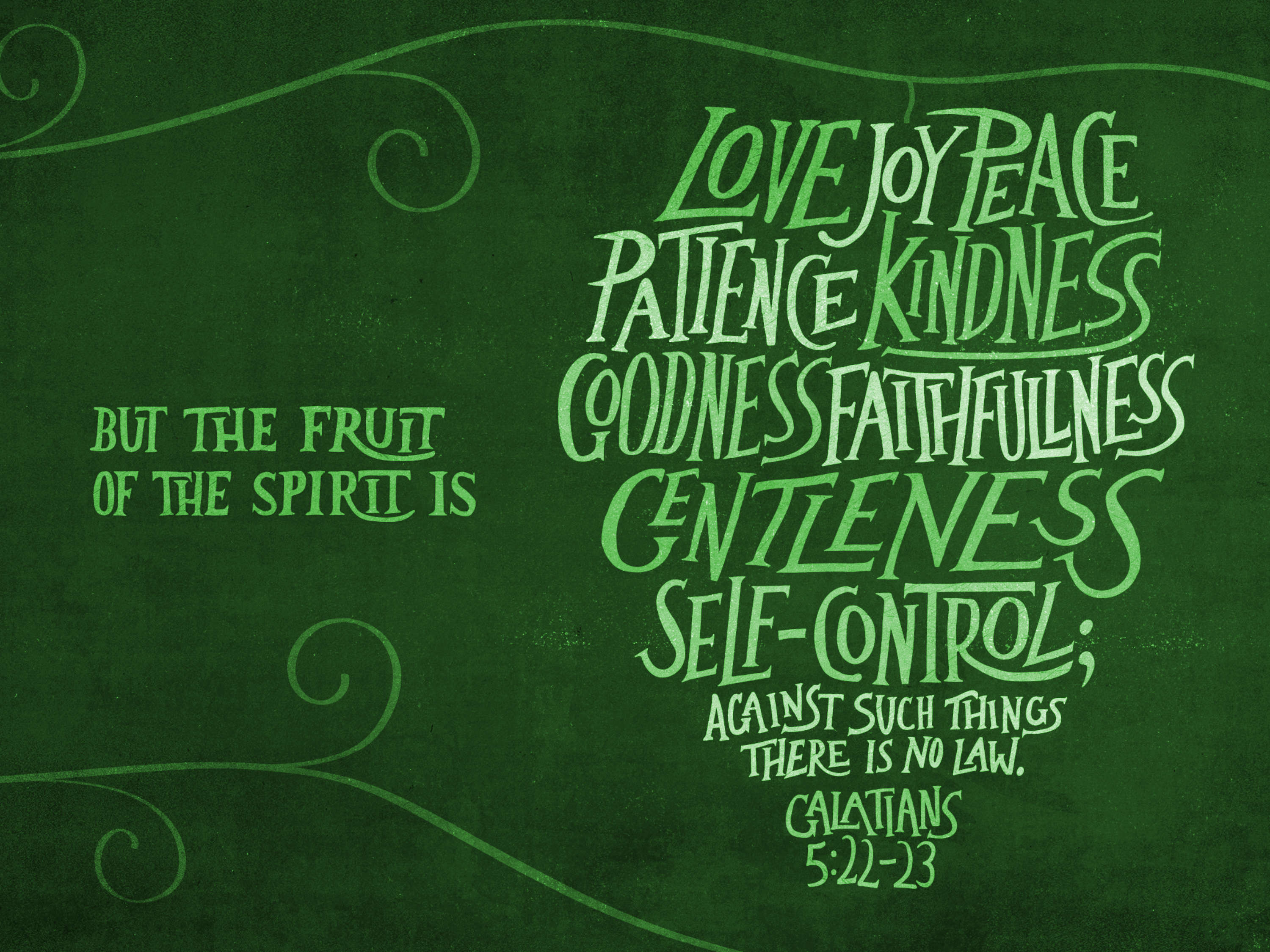
In Step with the Spirit – Sermon on Galatians 5:25-6:10 for the Fifteenth Sunday after Trinity

Galatians 5:25–6:10

25 If we live by the Spirit, let us also keep in step with the Spirit. 26 Let us not become conceited, provoking one another, envying one another. 

1 Brothers, if anyone is caught in any transgression, you who are spiritual should restore him in a spirit of gentleness. Keep watch on yourself, lest you too be tempted. 2 Bear one another’s burdens, and so fulfill the law of Christ. 3 For if anyone thinks he is something, when he is nothing, he deceives himself. 4 But let each one test his own work, and then his reason to boast will be in himself alone and not in his neighbor. 5 For each will have to bear his own load. 

6 Let the one who is taught the word share all good things with the one who teaches. 7 Do not be deceived: God is not mocked, for whatever one sows, that will he also reap. 8 For the one who sows to his own flesh will from the flesh reap corruption, but the one who sows to the Spirit will from the Spirit reap eternal life. 9 And let us not grow weary of doing good, for in due season we will reap, if we do not give up. 10 So then, as we have opportunity, let us do good to everyone, and especially to those who are of the household of faith.

In the name of Jesus. Amen.

Imagine that you are offered a choice between two pieces of property. You don’t get to build a house or start a business on this property; it’s just a piece of land for you to enjoy. The first plot is total mess. It’s filled with trash that’s gotten piled up along the rusty chain-link fence and around the scraggily, overgrown bushes. There are several rusty machines strewn haphazardly across the lot. Thistles, thorns, and nettles are all over the place. You can see huge anthills. There are wasp nests in the diseased and rotting trees which look like they’re about to fall down at any moment.

The second plot could be on the cover of a magazine. It has a new, perfectly stained wooden fence all around it. There are mature cedar and maple trees that give the property the perfect balance of sun and shade. The grass is green, thick, and meticulously maintained. It has a large garden with rich soil producing all kinds of vegetables. Colorful flowers are blossoming in all the right places. This second property is a little slice of Eden.

Now, which of the two lots would you choose to own? Which would you prefer to have at your disposal on a beautiful afternoon to sit and read a book while sipping your favorite beverage?

Maybe you wouldn’t want either. If you start to think about everything that is required to fix up the first or to maintain the second, both would require a lot of work. Maybe you’d just prefer to be neutral. In reality, there is no neutral. You cannot serve two masters (Mt. 6:24), but you will serve one.

Here, in Gal. 6:8, Paul says there are only two options for the kind of life you will have, Christian. “The one who sows to his own flesh will from the flesh reap corruption, but the one who sows to the Spirit will from the Spirit reap eternal life.” In other words, something is always being sown. It doesn’t matter if your life is currently dilapidated or flourishing – something is being sown and is contributing either to decay and disorder or to beauty and order. A harvest will come. Whatever is sown now will determine either the allure or the repulsiveness of what you harvest later.

So, what are you sowing now? Is it weeds or flowers? Thistles or produce? Chaos or beauty? Trash or nourishment? Disgust or delight? Whatever you sow, you will reap.

The good news is you are not alone in this sowing. You have help. Jesus says that He has come that you may have life and have it abundantly (Jn. 10:10). And Christ has given you the Holy Spirit, the Helper, who works the fruit of the Spirit within you. Jesus didn’t come to put you in neutral. Again, neutral isn’t possible. You aren’t given the Holy Spirit just so you grow. You are given the Holy Spirit so you can bear a bumper crop of the fruit of the Spirit – the fruit of love, joy, peace, patience, kindness, goodness, faithfulness, gentleness, and self-control (Gal. 5:22-23).

So, keep in step with the Spirit. Paul uses a military term there that refers to a line of soldiers marching in a row and following their commander. Paul lists several things that keep you in step with the Spirit: Restore those caught in transgression with gentleness. Keep watch on yourself. Bear the burdens of others. Share your blessings with the one who teaches God’s Word. Do not growing weary of doing good but persist. As you are given opportunity, strive to do good to everyone – especially to those who are of the household of faith (Gal. 6:1-10).

Yup, that is a lot of work. Keeping in step with the Spirit isn’t a cake-walk. But remember, you are always sowing something. Are you sowing to the flesh, which means you reap corruption? Or are you sowing to the Spirit, which will result in a harvest of limitless blessings now and eternal life in the age to come (Mk. 10:29-30)?

Now, I want to focus on one aspect of keeping in step with the Spirit because there are a couple phrases in this text that have always been a little confusing to me. In Gal. 6:2, Paul says, “Bear one another’s burdens,” but then just after in Gal. 6:5, he says, “Each will have to bear his own load.” It sounds like a contradiction.

When Paul says, “bear one another’s burdens,” he isn’t just saying that you need to just tolerate others. He’s calling you to do something that is inconvenient for you and requires a lot of effort. Bearing burdens was the task of a slave. You, believer, are to be a servant of others. Depending on the situation, that might mean bearing the financial burden of someone by giving them money or bringing them a meal while they are healing from a procedure. It might mean helping them do some work on their house. Bearing someone’s burden might simply mean listening to them as they talk about their worries and anxieties. Each situation will be different, but God has and will continue to give you the wisdom you need so you know how to go about bearing the burdens of others. So then, what do we do with Gal. 6:5, “Each will have to bear his own load”?

Paul uses two different words for ‘burden’ and ‘load.’ You can assist someone with their burden, but ultimately, they are responsible for their own load. Imagine you’re in a group hiking up a mountain. Everyone has their own pack filled with gear and supplies. But certain spots on that hike pose greater difficulty for some than others. A steep slope is easier for tall people like me, but the portions of the hike with low hanging branches are easier for short people like some of you. I’ll let you imagine other scenarios.

When others are injured or exhausted by their burden and come to places that are difficult for them, God calls you to help them get through that portion of the hike. And when you are struggling in other times and at other places, your brothers and sisters are there to assist you. Christians need each other. Yes, every Christian is ultimately responsible for his or her own load, but every Christian is also called to assist one another when the burden of that load is heavy.

Dear saints, you do this for others because you remember what Jesus has, continues, and will do for you forever. Jesus’ way with you could have been harsh. Because of your sin, because of the things you have done and left undone, Jesus could have given up on you. But He hasn’t and won’t. Jesus never wearied of doing good to and for you. He never asked, “Do I really have to heal another leper; expel another demon; forgive and save another from damnation?” He never did that. He never grew weary of you and your burdens. Not once. Not even possible. Instead, He has borne your burdens and carried your sorrows (Is. 53:4).

Christ’s way with you is always to give you His love, His peace. He always extends His patience, kindness, and gentleness. He loves to crown you with honor and glory you didn’t deserve. He loves to give you mercy and forgiveness you didn’t earn. He continually grants you peace that surpasses understanding.

So, keep in step with the Spirit because that keeps you in step with Jesus. He calls to you, “Come to Me, all who labor and are heavy laden, and I will give you rest. Take My yoke upon you, and learn from Me, for I am gentle and lowly in heart, and you will find rest for your souls. For My yoke is easy, and My burden is light”(Mt. 11:29-30).

Christ doesn’t ever promise that you will have an easy life, but He does promise to be with you through all the difficulties of this life and to bring you through (Jn. 16:33). He is with you, and He has blessed you with others to help and assist you.

Dear saints, as we sow to the Spirit, let us keep in step with the Spirit who will see us safely through. Yes, the march is hard, and the path is difficult. But keep in step with the Spirit because the harvest is coming. Amen.

The peace of God, which surpasses all understanding, will guard your hearts and minds in Christ Jesus. Amen.

Fruit – Sermon on Galatians 5:16-24 for the Fourteenth Sunday after Trinity

Galatians 5:16–24

16 But I say, walk by the Spirit, and you will not gratify the desires of the flesh. 17 For the desires of the flesh are against the Spirit, and the desires of the Spirit are against the flesh, for these are opposed to each other, to keep you from doing the things you want to do. 18 But if you are led by the Spirit, you are not under the law. 19 Now the works of the flesh are evident: sexual immorality, impurity, sensuality, 20 idolatry, sorcery, enmity, strife, jealousy, fits of anger, rivalries, dissensions, divisions, 21 envy, drunkenness, orgies, and things like these. I warn you, as I warned you before, that those who do such things will not inherit the kingdom of God. 22 But the fruit of the Spirit is love, joy, peace, patience, kindness, goodness, faithfulness, 23 gentleness, self-control; against such things there is no law. 24 And those who belong to Christ Jesus have crucified the flesh with its passions and desires.

In the name of Jesus. Amen.

Scripture uses many different metaphors when it comes to salvation and being a Christian. There are the optical metaphors of darkness vs. light (Is. 9:2; Jn. 1:5, 3:19; 1 Pet. 2:9) and blindness vs. seeing (Is. 35:5, 42:7; Act. 26:18). There are the medical metaphors of death vs. life (Eph. 2:5; Col. 2:13) and heart of stone vs. a heart of flesh (Ezk. 11:19, 36:26). Scripture uses familial metaphors of adoption (Ro. 8:15; Gal. 4:5; Eph. 1:5), being a son (Mt. 6:8-9; Lk. 15:11f) and child (1 Jn. 3:1-2). There is the metaphor of sheep and shepherd (Ps. 23; Ezk. 34-35; Jn. 10:1-18). There are many, many more, but today, we get the botanical metaphor of fruit.

The thing about fruit is that plants don’t produce fruit for themselves. The main function of a plant’s fruit is so it can reproduce. The fruit provides water and protection for the seeds of the plant. God also designed fruit to be tasty so it would be eaten, and the seed(s) in the plant is spread to produce other plants.

When this text contrasts the flesh and the Spirit, it talks about the ‘works’ of the flesh and the ‘fruit’ of the Spirit. Notice how the works of the flesh are all directed inwardly. These works are self-interested and self-serving. Paul lists 15 “works of the flesh.” The first 3 – sexual immorality, impurity, and sensuality – all have to do with carnal, bodily appetites or a desire for the flesh to assert itself over others. The next 2 – idolatry and sorcery – are sins against God, trying to put the self in place of God. The next 8 – enmity, strife, jealousy, fits of anger, rivalries, dissensions, division, and envy – are all things that separate individuals by prioritizing the self over another. And the final 2 – drunkenness and orgies – are sins of excess. Then, when Paul adds, “and things like these,” he admits that this list isn’t all the works of the flesh. He could have added more.

And Paul says all these works of the flesh are “evident.” You can see them. They are apparent, clear, plain, and obvious. It is certainly easy to see all these things in our world and in our culture. But do you suppose that Paul gives us this list so we can point out other people’s faults? No. If they’re evident, they don’t need to be pointed out. They’re out there for everyone to see. Instead, Paul wants us to see how these things are present in each of us. They are in and of our flesh. And by ‘flesh’ he doesn’t mean our skin, muscles, tissue, tendons, and bones. By ‘flesh’ here, Paul is saying that these things come from the poisonous root of our heart.

If we sinners were an apple tree, every apple we produced would be infected with disease, blight, and worms; it would be rotting, and withering. If you saw a tree like that, you wouldn’t think the problem was the individual apples. You’d know something was wrong with the tree. It has a disease that infects every branch and goes deep down to the roots. That tree needs to be torn down. In other words, we all need to repent.

There is a penalty for these works of the flesh. You don’t need to wonder if you deserve eternity in hell. You can know that you do. Scripture is crystal clear, “Those who (lit.) are doing such things will not inherit the kingdom of God” (Gal. 5:21b).

God be praised, there is a solution, a fix. Christ Jesus has come to deliver you from these works of the flesh. “Those who belong to Christ Jesus have crucified the flesh with its passions and desires” (Gal. 5:24). Christian, God has removed your heart of stone and given you a heart of flesh (Ezk. 11:19, 36:26). He has put a new spirit within you. He has given you the Holy Spirit. And the Holy Spirit produces fruit.

These nine different qualities are called ‘fruit.’ Notice that the word ‘fruit’ is singular. It’s not many fruits like the 15 works of the flesh. But these 9 fruit (sic.) of the Spirit belong together; love, joy, peace, patience, kindness, goodness, faithfulness, gentleness, and self-control. This fruit all grows on the same tree – out of you. And remember that fruit needs time to grow. It isn’t like you can manufacture this fruit artificially or mechanically. No. It needs to be planted, pruned, watered, and nourished (1 Co. 3:6-7).

Remember that the works of the flesh are evident, plain, visible. The same thing isn’t said about the fruit of the Holy Spirit. If you don’t see this fruit, continue to pray that the Holy Spirit will nourish all these things in you. The Holy Spirit will cause that fruit to grow, bloom, ripen, and spread. So, let’s just go through each of these 9 fruit individually. 

Love: This is the chief characteristic of how God is disposed toward you, believer. Scripture explicitly says that nothing can separate you from God’s love for you (Ro. 8:35, 38-39). The Spirit takes God’s love and pours it into your heart (Ro. 5:5). This love of God isn’t just warm, nice feelings; it is action evidenced by Jesus’ sacrificial love for you as He gave His life on the cross. That love of God is given to you so you can give it to others.

Joy: God’s love provides you a sure confidence about the future (Ro. 5:11). Whatever circumstances come your way, you know that you will be in eternal bliss. So, the darkness and pain of this world will cease. That brings joy as well as…

Peace: Your relationship with God is no longer filled with strife. Christ has ended your hostility toward God. You have God’s peace that surpasses understanding (Php. 4:7), and then, you can be at peace with others as well.

Patience: Because you have God’s love which gives joy and peace, you can be patient. Even though the world throws all sorts of chaotic things at you, you can patiently endure it (Ro. 8:25). And beyond that you have…

Kindness: Kindness is the active, merciful goodness that mirrors God’s kindness. You grow to forgive others as God has forgiven you (Eph. 4:32).

Goodness: The word here can also mean ‘generosity.’ Because God has infinite resources, you know that you will receive all good things from Him (Ro. 8:32). This frees you to be God’s conduit to generously give your good things to others.

Faithfulness: Again, God proves His faithfulness to you as He died for you on the cross. He is faithful to keep you from tests and temptations that are beyond your strength (1 Cor. 10:13). This creates a faithfulness in you toward others.

Gentleness: This is an interesting one. Gentleness means that you don’t get excessively angry when things are out of step with how God created the world. There are times when you will need to say hard things to others, things that cause them grief. But you say those hard things in a gentle way which produces repentance. Paul talks about this quite a bit in 2 Cor. 7:8-13. To be gentle requires the final aspect of the Spirit’s fruit…

Self-control: The Holy Spirit leads you to resist your own passions through self-control.

These nine fruit (sic.) of the Holy Spirit are under no compulsion or requirement. Unlike the works of the flesh that exclude sinners from the kingdom of God, these fruits aren’t how you earn entrance to God’s kingdom. Instead, as the Spirit has begun to create these things in you, He will bring all of it to completion (Php. 1:6).

How will the Holy Spirit cultivate this fruit? Jesus has the answer. In John 15:1-5, Jesus says, “I am the true Vine, and My Father is the Vinedresser. Every branch in Me that does not bear fruit He takes away, and every branch that does bear fruit He prunes, that it may bear more fruit. Already you are pruned,” (the ESV says ‘clean’ but it’s the same word Jesus just used). “Already you are pruned because of the Word that I have spoken to you. Abide in Me, and I in you. As the branch cannot bear fruit by itself, unless it abides in the vine, neither can you, unless you abide in Me. I am the vine; you are the branches. Whoever abides in Me and I in him, he it is that bears much fruit, for apart from Me you can do nothing.”

Dear saints, the Spirit will use Christ’s Word and create this fruit in you. Abide, remain steadfast in that Word, and this fruit will be produced. Again, if you don’t see things in your life, know that God continues to work on you, and that fruit will be there for the benefit of others. Amen.

The peace of God, which surpasses all understanding, will guard your hearts and minds in Christ Jesus. Amen.

God Made Known – Sermon on Exodus 40:17-21, 34-38; Titus 3:4-7; and John 1:1-18 for Christmas Day 2022

John 1:1-18

1 In the beginning was the Word, and the Word was with God, and the Word was God. 2 He was in the beginning with God. 3 All things were made through him, and without him was not any thing made that was made. 4 In him was life, and the life was the light of men. 5 The light shines in the darkness, and the darkness has not overcome it. 

6 There was a man sent from God, whose name was John. 7 He came as a witness, to bear witness about the light, that all might believe through him. 8 He was not the light, but came to bear witness about the light. 

9 The true light, which gives light to everyone, was coming into the world. 10 He was in the world, and the world was made through him, yet the world did not know him. 11 He came to his own, and his own people did not receive him. 12 But to all who did receive him, who believed in his name, he gave the right to become children of God, 13 who were born, not of blood nor of the will of the flesh nor of the will of man, but of God. 

14 And the Word became flesh and dwelt among us, and we have seen his glory, glory as of the only Son from the Father, full of grace and truth. 15 (John bore witness about him, and cried out, “This was he of whom I said, ‘He who comes after me ranks before me, because he was before me.’”) 16 For from his fullness we have all received, grace upon grace. 17 For the law was given through Moses; grace and truth came through Jesus Christ. 18 No one has ever seen God; the only God, who is at the Father’s side, he has made him known.

In the name of Jesus. Amen.

Until the Temple was built, God was happy to dwell on earth in the tent of the Tabernacle. We heard about it in our Old Testament lesson from Exodus (Ex. 40:17-21, 34-38). If you’re like me, the first thing that comes to mind about the book of Exodus is God sending plagues on Egypt to deliver His people from slavery. It is a significant part of the book. Chapters 5-15 deal with the plagues, the Passover, and the crossing of the Red Sea. But a similar chunk of Exodus, in fact 13 chapters (Ex. 25-31, 35-40), deals with the Tabernacle. In Ex. 25-31, God picked the curtains, furniture, and standardized the dress code. And in those chapters, God spent a lot of time designing His throne.

That throne would be a box about 3 x 2 ft. which we know as the Ark of the Covenant. Inside that box was placed a golden jar of manna, Aaron’s rod that miraculously bloomed, and the tablets of the Ten Commandments (Heb. 9:4). But the most important part of the Ark was the gold cover which was called the mercy seat. The mercy seat had two big golden angels facing each other, and the wings of those angels pointed toward an empty spot which God declared to be His throne on earth where He would meet with His people (Ex. 25:17-22).

In today’s Old Testament lesson, we heard about the first time the Tabernacle was pitched. The poles were assembled, the curtains hung, the furniture arranged, and the Ark brought into the Most Holy Place. The cloud of God’s glory entered the Tabernacle. And that cloud would dictate the movements of God’s people. When it stayed, they stayed, and when the cloud went up, the people would pack up their things and move.

Once each year, on the Day of Atonement, the high priest would enter the Most Holy Place to sprinkle the blood of a goat between the wings of those golden angels above the mercy seat, but visually that space was always empty. Only by faith in God’s promise did the high priest and God’s people know that God was dwelling with them. For generations this went on. God’s people brought that box with them wherever they went. But a King never appeared to sit on the throne of the mercy seat. God’s presence with His people was always invisible. So, it always seemed as though something was missing.

Until today. Today is the day, the day of great joy for all people – for you. In the birth of Jesus, the King appeared. As we heard last night, King Jesus wasn’t born in a palace with soft beds and linens. He didn’t even come to that tent to sit in that empty space above the golden throne of the Ark. No. He appeared humbly, born in a stable and placed in an empty feeding trough until He would finally be enthroned on the cross. King Jesus had appeared to save His rebellious people.

As our Epistle lesson (Tit. 3:4-7) said, “When the goodness and loving kindness of our God and Savior appeared, He saved us.” The word for loving-kindness in Greek is philanthropia, where we get our word ‘philanthropy’ – lover of man. God Himself is the ultimate philanthropist. He has appeared in the flesh of Jesus to love you by saving you.

You aren’t saved by doing all sorts of good, righteous works. You are saved by God’s mercy through the washing of regeneration and renewal of the Holy Spirit. And God pours His Holy Spirit out on you richly through Jesus Christ, your Savior.

Dear saints, God has come to you, here on earth. The Word became flesh and dwelt among us (Jn. 1:14). Literally, John says the Word became flesh and ‘tabernacled’ among us. And by Jesus’ tabernacling with us, God is made known.

He came with a glory that isn’t frightening, but with a glory full of grace and truth. From the fullness of His mercy, goodness, and loving-kindness, we receive grace upon grace. God’s glory is no longer covered in a smoke that fills the Tabernacle. The truest form of God’s glory appears to you today in the body Jesus. And that glory draws to itself the presence and attention of angels, shepherds, wise men, and all who hunger and thirst for righteousness.

The Ark and throne of God that was in the Tabernacle and, later, the Temple had served its purpose. Because of the birth of Jesus, because of Christmas, there is a better place where God meets man. It’s here, at this altar, and every Christian altar.

Here, you have a better manna – Jesus’ true Body and Blood given to you for the forgiveness of your sin. Here, you have something better than Aaron’s rod. You have the royal branch of David’s tree (Jer. 23:5). And here, you have those Ten Commandments which have been fulfilled (Mt. 5:17-18) and fully credited to your account.

Dear saints, in Jesus, God makes Himself known as your Savior, your King, your Deliverer. Merry Christmas! Amen.[1]

The peace of God, which surpasses all understanding, will guard your hearts and minds in Christ Jesus. Amen.


[1] This sermon has been adapted from a sermon written by Pr. Ralph Tausz of Melrose Park, IL.