
1 Therefore be imitators of God, as beloved children. 2 And walk in love, as Christ loved us and gave himself up for us, a fragrant offering and sacrifice to God.
3 But sexual immorality and all impurity or covetousness must not even be named among you, as is proper among saints. 4 Let there be no filthiness nor foolish talk nor crude joking, which are out of place, but instead let there be thanksgiving. 5 For you may be sure of this, that everyone who is sexually immoral or impure, or who is covetous (that is, an idolater), has no inheritance in the kingdom of Christ and God. 6 Let no one deceive you with empty words, for because of these things the wrath of God comes upon the sons of disobedience. 7 Therefore do not become partners with them; 8 for at one time you were darkness, but now you are light in the Lord. Walk as children of light 9 (for the fruit of light is found in all that is good and right and true),
In the name of Jesus. Amen.
You’ve probably all heard the phrase, “Nothing good happens after ___ o’clock.” If a news anchor said it, the time might have been midnight or 2 AM. If it was one of your parents, it was probably 10:00. Kids, if you ever hear that phrase from your parents or grandparents, they know what they’re talking about. When darkness falls, it is a lot more likely that evil things are going to happen.
Darkness is the favorite blanket of evil, and we know this instinctively. It’s why kids go into their parents’ room in the middle of the night and cry about monsters under the bed or whatever other impossible things kids imagine. Everyone has a keen sense of vulnerability in the dark. Even adults often have their bleakest thoughts when the world is dark. The thoughts that wake me up at 3 AM are never the best, brightest, or most hopeful ones.
In a wonderful way, Scripture repeatedly gives a picture of the Savior as the bright Morning Star (Is. 60:1-3; Mal. 4:2; 2 Pet. 1:19; Rev. 2:28, 22:16). Or, in a similar vein, Scripture says that, when Jesus comes, a new day dawns (Ps. 84:11; Ro. 13:12). In the first chapter of Luke’s Gospel, the coming of Jesus is described as the “sunrise from on high” that “give[s] light to those who sit in darkness and in the shadow of death,” and His coming, “guide[s] our feet into the way of peace” (Lk. 1:78-79).
Dear saints, the picture Scripture gives us is that all of creation has changed because Christ has come. The darkness has been dispelled, put to flight, and broken up. Jesus hints at this in our Gospel reading (Lk. 11:14-28). Christ says that He casts out demons by the finger of God, and His power to do that is proof that the kingdom of God has come upon us (Lk. 11:20).
Because of Jesus’ resurrection, there is a new day – the day that the Lord has made. Because He has made it, we rejoice and are glad in it (Ps. 118:24). And this new day will never end. Believer, this changes you, and it changes how you think about the world. The fact that today and every other day of your life is the day that the Lord has made, the things in front of you that are ominous, scary, and threatening are all less intimidating. Yes, they are still threats, but you know that they are all defeated threats.
All three of our readings today are about spiritual warfare, about the battle between the kingdom of darkness and Christ’s kingdom of light. It’s obvious in both the Old Testament (Ex. 8:16-24) and Gospel (Lk. 11:14-28). In our Gospel reading, Jesus tells us know how the kingdom of Satan operates, and our Lord comforts us because He tells us how He, our Savior and Champion, has defeated sin, death, and the devil.
And in the Old Testament reading, we heard how Pharaoh’s magicians recognized that the finger of God was at work when they couldn’t replicate the gnats that swarmed throughout Egypt (Ex. 8:18-19). Those evil, demonic sorcerers were able to duplicate the sign God did through Moses of turning his staff into a serpent (Ex. 7:11-12), but they failed to do the smaller thing of reproducing gnats.
The last time these texts came up, I had fully intended to preach about the folly of the kingdom of darkness because that folly is on full display through Pharaoh and his magicians. Their whole country is completely overrun with gnats, but they still try to duplicate the sign done through Moses. That text shows how self-destructive the kingdom of Satan is. “Our whole nation is filled with these gnats.” “I know what we should do; let’s try to make more of them.”
But today, rather than seeing how the kingdom of darkness works or how self-destructive it is, I decided to preach on this Epistle reading because it gives us the strategy of how to fight back against the forces of darkness. Throughout Scripture you are given several ways to fight evil, but this text gives you one simple weapon – thankfulness and thanksgiving.
Notice that v. 3 gives us a list of things we are to not only avoid we aren’t even to name them. That list is sexual immorality, impurity, and covetousness. Then in v. 5, that list is repeated when we’re told that the sexually immoral, the impure, and those who are covetous have no inheritance in the kingdom of Christ and God.
To contrast that twice-repeated list, Paul mentions only one thing here – thanksgiving. The beloved children of God who walk in love as children of light have thanksgiving on their lips, not filthiness or foolish talk or crude joking.
Thanksgiving is one of the fruits of the Spirit (Gal. 5:22-23). And thanksgiving is one of your best weapons against the darkness from which you have been rescued. When thanksgiving is on your lips, the temptations and sins you face are much easier to fight because those things become revolting.
Think back to the Garden of Eden and how the devil tempted our first parents to fall into sin. “Can’t you eat from any tree? If you eat from this one that God told you not to eat from, you will be like God. Don’t you want to be like Him?” (Gen. 3:1, 5). Instead of being thankful that God had given all the other trees for food, instead of being thankful that God had already made created them in His image (Gen. 1:27), Adam and Eve coveted (Gen. 3:6). The fruit of the forbidden tree looked good, and it was desirable. Because of that coveting, because of that wrong desire to be more than God had already made them to be, they took of the fruit and ate and plunged all of creation into the darkness of sin and death.
Coveting is a sin, but it is a sin that rarely registers in our conscience. We pass off coveting as nothing because we think it doesn’t hurt anyone else. That is so wrong. Here coveting is equated with idolatry (Eph. 5:5). Coveting is the first step into sin. To put it another way, every time you sin, you first covet and idolize yourself. Coveting is basically saying, “God, you got it wrong. You messed up. That thing over there,” whatever it is, “should be here. It should be mine.”
Whenever you sin, you break at least three commandments. Every time you sin, you first covet which is nothing less than idolizing yourself. Then you commit adultery, steal, lie, take the Lord’s name in vain, etc. The way to fight against this is to give thanks instead of coveting and having those false desires.
Imagine for just a minute if thankfulness had replaced Adam and Eve’s coveting. They would have realized, “We aren’t hungry; the entire world is our pantry! Thank you, God. We are already created in God’s image and are exactly what God wants us to be. Thank you, God, that we are created in Your image and that you have declared that we are ‘very good’” (Gen. 1:31).
Dear saints, Scripture gives you several ways to fight against the devil and the darkness. But today, you children of light, this text gives you one simple, specific weapon to fight back against the forces of evil, and that is thanksgiving.
You husbands, the next time you are tempted with lust, pause. Take a moment to give thanks to God for your wife. Thank God for uniting the two of you in the bond of holy marriage (Mt. 19:6). You wives, the next time you are tempted to complain to someone about your husband, take a moment to give thanks to God for him and all the ways he cares for you and your family. Children, the next time you are tempted to disobey your parents, take a moment to give thanks to God for all that your parents provide to you and how they protect you.
Dear saints, the light of Christ has shined upon you, and because of that you are now children of the light. You used to be darkness, and notice the way Eph. 5:8 says that. It isn’t just that you were in darkness. No. You were darkness itself. But now that you are God’s children, you are light in the Lord, so now you walk as children of the light. And as children of the light, you produce the fruit of light which is found in all that is good and right and true.
You give thanks to God for all the good He has given you. You give thanks to God, and it is right to do so because He has truly blessed you because He has given Himself up for you as a fragrant offering and sacrifice.
God has forgiven you (Eph 4:32). He has made this new day of light and has shined His light into you. So, rejoice, be glad in this day, and give thanks. And as you give thanks, the darkness flees. Amen.
The peace of God, which surpasses all understanding, will guard your hearts and minds in Christ Jesus. Amen.
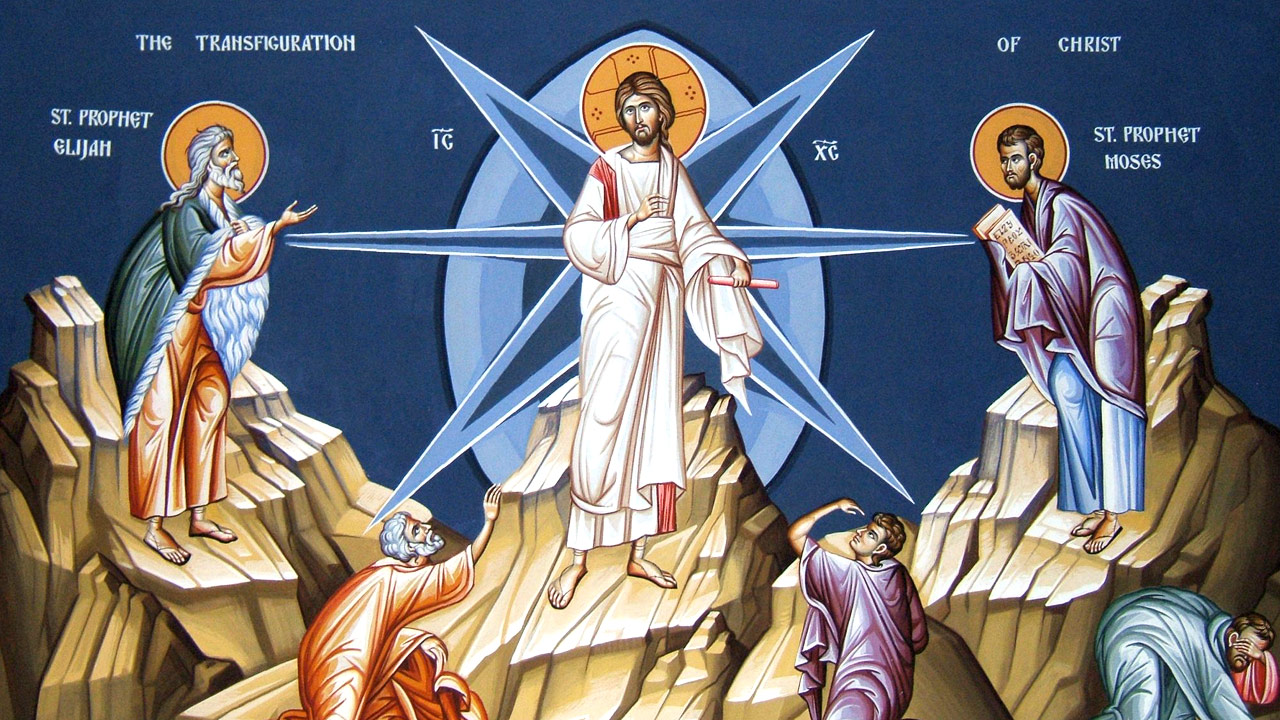
 And from this point, things get a little crazy and awkward. It is almost as though Peter didn’t hear Jesus say that He would rise from the dead because Peter rebukes Jesus – the very one he just confessed is the Son of the living God. Peter says, “Far be it from You, Lord! This shall never happen to You.” It would be easy to sling mud at Peter here for telling God that what He says is going to happen won’t ever happen. But you do it all the time – more on that in a bit.
 But here is where all of this is leading: Jesus comes to Peter, James, and John cowering in their sins and touches them. And notice what He says. He doesn’t continue to rebuke Peter. Jesus doesn’t say, “See I told you so.” Instead, Jesus says, “Rise,” the same word Jesus used when He spoke about His resurrection.“Rise, and have no fear.” Of all the things our Lord could have said, He says, “Rise, and have no fear.” Jesus is resurrecting Peter from his sin.
 Pastorsamwise
You must be logged in to post a comment.