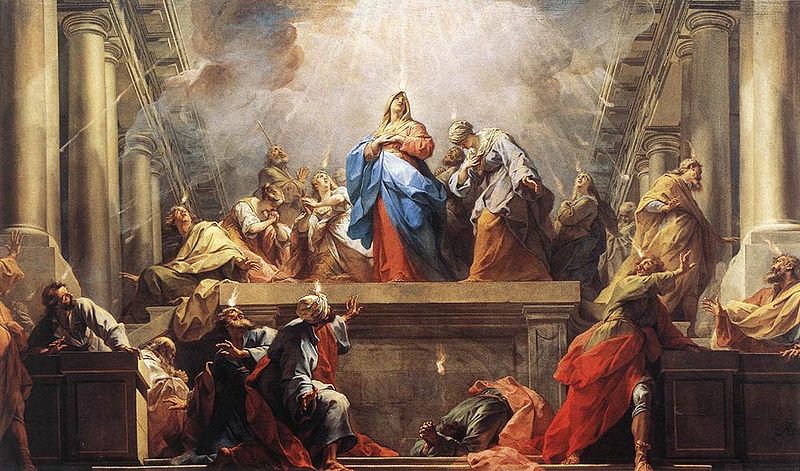
Disturbing the Peace – Sermon on Luke 11:14-28 for the Third Sunday in Lent

Luke 11:14-28

14 Now he was casting out a demon that was mute. When the demon had gone out, the mute man spoke, and the people marveled. 15 But some of them said, “He casts out demons by Beelzebul, the prince of demons,” 16 while others, to test him, kept seeking from him a sign from heaven. 17 But he, knowing their thoughts, said to them, “Every kingdom divided against itself is laid waste, and a divided household falls. 18And if Satan also is divided against himself, how will his kingdom stand? For you say that I cast out demons by Beelzebul. 19 And if I cast out demons by Beelzebul, by whom do your sons cast them out? Therefore they will be your judges. 20 But if it is by the finger of God that I cast out demons, then the kingdom of God has come upon you. 21 When a strong man, fully armed, guards his own palace, his goods are safe; 22 but when one stronger than he attacks him and overcomes him, he takes away his armor in which he trusted and divides his spoil. 23 Whoever is not with me is against me, and whoever does not gather with me scatters.

24 “When the unclean spirit has gone out of a person, it passes through waterless places seeking rest, and finding none it says, ‘I will return to my house from which I came.’ 25 And when it comes, it finds the house swept and put in order. 26 Then it goes and brings seven other spirits more evil than itself, and they enter and dwell there. And the last state of that person is worse than the first.”

27 As he said these things, a woman in the crowd raised her voice and said to him, “Blessed is the womb that bore you, and the breasts at which you nursed!” 28 But he said, “Blessed rather are those who hear the word of God and keep it!”

In the name of Jesus. Amen.

This text is so full and rich, I could easily preach 847 sermons on it, but you’re only going to get one today. To some of you, “Sorry,” and to the rest of you, “You’re welcome.” Today, we’re mainly going to focus on the little parable that Jesus tells in v. 21-22 and then carry what we learn there to the blessing that Jesus gives to you in v. 28. But to do that, let’s quickly highlight a few things from the opening of the reading to get the context.

Jesus has cast out a demon that made a man mute. Some of the people marvel at this exorcism, but some (Mt. 12:24 tells us that they are Pharisees) say that it is only by the power of Beelzebul, which was a name for the devil, that Jesus can do this. Earlier this week, Anna asked me what text I was going to be preaching on I summarized the text. When I told her about the Pharisees’ accusation that Jesus was casting out demons by the power of demons, she said, “That’s so dumb.” Yup. And Jesus addresses the absurdity (v. 17-20). Then, He says something very important to set up the parable. “If it is by the finger of God that I cast out demons, then the kingdom of God has come upon you.” The grammar there makes it clear that Jesus says that it is, indeed, by God’s finger that He casts out demons which means that the kingdom of God has arrived. Christ the King is bringing the kingdom of God with Him as He throws out the demons He has defeated. Then, Jesus tells everyone what is going with this little parable.

“When a strong man, fully armed, guards his own palace, his goods are safe; but when one stronger than [the strong man] attacks him and overcomes him, he takes away his armor in which he trusted and divides the spoil.” Let’s dissect this. The strong man with all his armor is the devil, the palace that the devil is guarding is the entire world which is under his power, and the goods that he is guarding are all sinners. Until Christ claims us as His own, we were under the rulership of Satan and the demons. Col. 1:16 says, “[God] has delivered us from the domain of darkness and transferred us to the kingdom of his beloved Son.”

Now, please don’t misunderstand this. Typically, when we think of people demons influencing people, scenes from the movie The Exorcist come to our minds. We do see that a few times in the Gospels. In this text, the demon makes the man mute. In Mt. 17:14-15, there is a demon-possessed boy who is repeatedly thrown into fire and water. Or the man who was possessed by the demon, Legion, who lived among tombs and could not be bound (Mk. 5:2-5). But that type of extreme demonic possession is extremely rare in Scripture; in fact, it never happens in the entire Old Testament. We only see it a few times in the Gospels and a couple of times in the book of Acts (16:16-18, 19:15-16). Most of the time, the Bible links what we think of as common illness with unclean spirits (Mt. 4:24, 8:16, 10:1; Mk. 1:32-34, 6:13; Lk. 9:1; Act. 5:16, 19:12). I’ve got a whole slew of references for that, and if you’re interested, just ask me after the service.

So yes, this extreme demonic possession does happen, but it is rare. What we do regularly see, throughout Scripture, is demonic influence and temptations. Just think of Job. When the devil went after Job, it was manifest with loss of property, children, and health. Because Job’s friends and wife only see that and can’t see that the devil is behind all of this, they wrongly think that Job has some secret sin that he must confess and repent. But they’re just plain wrong.

So, for you Christians here today, remember demons are real, and they do pester us trying to get us to fall into unbelief. But normally, they do so with things that disguise their evil intent. But Scripture helps us see through their disguise. It is right to recognize that the pandemic, the divisions in our families and country, and the wars and rumors of wars[1] are all demonic. And it is right to see every stolen car; every case of cancer; and every addiction, struggle, temptation, and fear we have as a demonic attack. Recognizing this will help us do two things. One, it will drive us to prayer, and two, it will help us to have sympathy and patience when others wrong us instead of hating them.

Now, the eeriest part of this little parable is the condition of those who are guarded by the devil. Our translation reads, “his goods are safe,” which makes it sound like Jesus is saying there that the devil’s very powerful in his armor and palace. But that isn’t what Jesus is highlighting with that phrase. What Jesus says there is literally, “his goods are in peace.” The picture is that those under the control of the devil are content, safely tucked away, and quietly and lying there with no desire to leave the devil’s palace. Those who are under the control of the devil and his demons have grown so accustomed to being under his watchful eye with his strong armor that they don’t like it when they see Jesus, the stronger man, stripping the devil of all his protection and leaving him in nothing but his underwear. Those under the guardianship of Satan don’t like seeing their fellow goods are being plundered and taken away.

But, dear saints, here is the good news: Christ has come to disturb the evil, demonic peace of Satan’s kingdom. In fact, the devil has been dealt a fatal blow; his head has been crushed by Jesus, the promised Seed of Eve (Gen. 3:15). And as the days get more and more evil, that evil is a sign of Christ’s victory over all the forces of darkness. The kingdom and domain of Satan is chaotic today precisely because Christ come bringing the kingdom of God with Him. The kingdom of God disrupts the peace of the devil’s goods and brings true peace. What the crowd was witnessing in this text – and, quite frankly, what we are witnessing today – is not some demons fighting against other demons trying to see who is the strongest. Instead, we are witnessing Satan being unseated. Jesus is the stronger man who flicks away the demons with His finger and brings God’s true peace.

Dear saints, the battle is won. You are the prize, the treasure, and the spoil. Christ has come and given His life for you. His blood covers you and cleanses you as a bride adorned for her husband (Eph. 5:25-27, Rev. 21:2). The war has been won by the Word of God. The Word of God speaks you righteous and clean, which brings us to that final verse.

Jesus says, “Blessed are those who hear the Word of God and keep it.” We know what it is to hear God’s Word, but what does it mean to ‘keep’ it? A lot of times, we think to ‘keep’ God’s Word is equivalent to obeying it. Yes, of course, we absolutely should obey God’s commands. But the devil wants you to think that only those who perfectly keep God’s commands are blessed so you think this blessing of Jesus isn’t for you. In other words, Satan wants to steal this blessing from you and make you think it doesn’t really apply to you. But the devil is a liar.

The word that Jesus uses here for ‘keep’ is the exact same word Jesus used to describe what the strong man did with his goods in v. 21 – he ‘guarded’ and protected them. Jesus’ blessing reads like this, “Blessed are those who hear the Word of God and guard it.”

Dear saints, Jesus calls you to a life of faith which wars against the demons by guarding the promises God has spoken to you. So, hear God’s Word and guard it, hold on to it, and treasure it. That is precisely what you are doing now. As you sit there listening to this sermon, you are engaging in spiritual warfare, and the devil is losing. So, keep listening, keep learning, keep repenting, believing, and trusting that God is good and that He loves you and has bought and won you through Christ’s death and resurrection because He has.

The spiritual warfare you are called to is made up of the little things of hearing God’s Word, coming to church, attending Bible study, talking with your children about God, and praying. In these quiet, simple things, the devil is stripped of his armor and his goods are plundered. By hearing and guarding God’s Word, you set up a barrier and sanctuary for yourself and your children. When you hear and guard God’s Word, you are engaging the enemy and reinforcing the defenses of the saints.

It doesn’t matter how strong the forces of evil appear to be. They have lost. Jesus has come bringing His kingdom with Him. Christ flicks away the demons like flies. Their demonic peace has been disturbed by Jesus. And He has freely given you true, eternal, abiding, and everlasting peace. Amen.

The peace of God, which surpasses all understanding, will guard your hearts and minds in Christ Jesus. Amen.


[1] The wars and rumors of wars are demonic even though they are signs that Jesus gives us to be looking for His return (Mt. 24:6, Mk. 13:7) and should cause us to raise up our heads because it means our redemption is drawing near (Lk. 21:28).

The Lamb – Sermon on John 1:19-29 for the Fourth Sunday of Advent

John 1:19-29

19 And this is the testimony of John, when the Jews sent priests and Levites from Jerusalem to ask him, “Who are you?” 20 He confessed, and did not deny, but confessed, “I am not the Christ.” 21 And they asked him, “What then? Are you Elijah?” He said, “I am not.” “Are you the Prophet?” And he answered, “No.” 22 So they said to him, “Who are you? We need to give an answer to those who sent us. What do you say about yourself?” 23 He said, 

“I am the voice of one crying out in the wilderness, 
‘Make straight the way of the Lord,’ 

as the prophet Isaiah said.” 

24 (Now they had been sent from the Pharisees.) 25 They asked him, “Then why are you baptizing, if you are neither the Christ, nor Elijah, nor the Prophet?” 26 John answered them, “I baptize with water, but among you stands one you do not know, 27 even he who comes after me, the strap of whose sandal I am not worthy to untie.” 28 These things took place in Bethany across the Jordan, where John was baptizing.

29 The next day he saw Jesus coming toward him, and said, “Behold, the Lamb of God, who takes away the sin of the world!”

In the name of Jesus. Amen.

Nativity sets always include Joseph, Mary, and, of course, baby Jesus in the manger. Most will have figures that depict the shepherds and wise men (even though the wise men almost certainly did not arrive the night of Jesus’ birth). A lot of nativity sets will also incorporate animals. There might be a donkey because of the idea that Mary rode on a donkey. It very well might be that she did ride on a donkey from Nazareth to Bethlehem, but that is not recorded for us in Scripture. Nativity sets might include camels that the wise men supposedly rode, but again, even if they were there that night, Scripture doesn’t tell us if they rode on camels. But if there is one animal in a nativity set, it is probably a lamb. Of all the animals that should be part of our imagery of Christ’s birth, a lamb is at the top of the list.

Now, Jesus’ birth took place in Bethlehem which is located about five miles south of the Temple where God commanded that sacrifices be made. And the requirements for the sacrificial system at the Temple would have been immense. Each day, two lambs would be sacrificed – one in the morning and one in the evening. On top of that there were the sin offerings, peace offerings, and freewill offerings that individuals and families would bring at various times all would have required animals for sacrifice. And even beyond that, there were the animals needed for the extra sacrifices on festival days. So, all around Jerusalem, there would have been a large industry of raising animals that would be sacrificed at the Temple.

It is not a stretch to think that at least some if not most of the lambs the shepherds were tending the night of Jesus’ birth were destined to be sacrificed. It’s even possible that some of the animals who fed from the manger where Jesus was laid would also end up on the altar at the Temple. But there, in the center of it all, is Jesus – God in the flesh, the One who was born to be the one-time, forever sacrifice for your sins.

“Behold the Lamb of God who takes away the sin of the world.”

In this Gospel reading, the priests and Levites were sent to ask John the Baptizer, “Who are you?” John had been attracting massive crowds who were going out to hear his preaching and to be baptized. So, the big shot Pharisees back in Jerusalem wanted to know why John was doing what he was doing out there in the wilderness beyond the Jordan.

“Who are you, John?”

John confessed, “I am not the Christ. I am not Elijah. I am not the Prophet. I am the voice of one crying out in the wilderness, ‘Make straight the way of the Lord.’” Everything John does and says in this text points people away from himself and to Jesus, to the Savior, to the Lamb of God who takes away the sin of the world.

Dear saints, as we approach the birth of our Lord, there are all sorts of things that would grab our attention. Parties, pageants, and programs. Decorating, shopping, and wrapping. Cleaning, baking, and cooking. In the midst of the hustle and busyness of this season, don’t let your attention be grabbed only by the peripherals. Don’t be like the Pharisees, priests, and Levites who are only interested the stuff that is flashy and popular. One thing and one thing only is important this Christmas season: May you behold the Lamb of God who takes away the sin of the world.

He comes to you to take away your sin, to restore you into a right relationship with God, and to give you eternal life. Jesus comes to take away the sin of the world. That means your sin – every last bit of it – is taken away by Jesus.

This Christmas, may you be surrounded by God’s blessings – family, friends, food, gifts, and celebration. But in the midst of all of that, remember that you are secure for all eternity because of what Christ has done. He is your Savior, your Lamb of God who takes away the sin of the world. Amen.

The peace of God, which surpasses all understanding, will guard your hearts and minds in Christ Jesus. Amen.

The Child Who Is John’s Joy – Sermon on 2 Samuel 6:12-23 and Luke 1:39-45 for Midweek Advent 3

In the name of Jesus. Amen.

We expect kings to behave differently than we do. Kings don’t walk; they strut. Kings don’t just throw on some clothes; they are robed. And kings don’t eat; they dine. Kings are dignified and distinguished. That’s why David’s wife, Michal, was so disgusted by her husband’s behavior in our Old Testament reading (2 Sam. 6:12-23). He wasn’t acting very kingly.

The Ark of the Covenant had been stolen by the Philistines and had been held for about seven months (1 Sam. 6:1). When the Israelites initially recovered the Ark, things didn’t go so well. Hundreds of years before, when God had given instructions on how to build the Ark, He commanded that the Ark have golden rings on its corners so that poles overlaid with gold could be placed through those rings (Ex. 25:12-15). The priests were instructed to carry the Ark by those poles on their shoulders (Nu. 7:9). But a guy named Uzzah and those with him put the Ark on a cart. When one of the oxen pulling the cart stumbled, Uzzah reached out to stabilize the Ark and was killed when he touched it. This made David afraid to move the Ark any further. So, the Ark stayed at the house of Obed-edom for three months (2 Sam. 6:11) while he and his whole household were blessed. That is where our Old Testament lesson picks up.

David hears how Obed-edom was blessed and decides to finish the job of bringing the Ark back to Jerusalem. This time, the proper procedure for carrying the Ark was followed to the letter (1 Ch. 15:13-15). The “proper” behavior for a king, however, was thrown out the window. King David is part of the procession, but he doesn’t wear his royal robes. Instead, David puts on a linen ephod which was a humble garment for a priest. David doesn’t stride like a king before the Ark; instead, David leaped and danced like nobody was watching.

But David’s wife, Michal, was watching, and she wasn’t at all impressed by her husband’s behavior. Instead, she sarcastically nags him for it. But God was watching David too, and God judged David’s celebration and joy to be very befitting for His king. So, God made Michal barren for the rest of her life because she mocked David’s joy.

At the beginning of our service this past Sunday, the first words of Scripture you heard in our Call to Worship were the same words from our Epistle lesson tonight (Php. 4:4-7), “Rejoice in the Lord always; again I will say, rejoice.” (And, in fact, you’ll hear those verses again in this coming Sunday’s epistle lesson.) The reason for so much rejoicing this week is, according to the text, that “the Lord is at hand.” Rejoice. You don’t have to climb up to heaven to the presence of God. No. He comes to you. He comes to bring His love, mercy, forgiveness, and grace. And this good news should make us throw away any sense pride or dignity we might think we possess in ourselves and cause our hearts to leap for joy like David.

Our problem is that we are too much like Michal and not enough like King David. Our hearts are pulled from the joy of God’s presence. Like Adam and Eve in the garden after they ate the forbidden fruit, we avoid God’s presence. Usually, it isn’t because we are afraid of punishment but because we are too busy running after worldly things that we imagine will bring joy. But when we attain those things, we don’t find joy or even fulfillment. At best, we are amused for a while and then get bored. Even though God knows this about us, He still graciously desires to dwell with us.

That is why Christ came. He draws near to save a world that is in love with sin instead of Him. God comes to remove our hearts of stone and give us new hearts of flesh so that we can truly rejoice in His presence with us.

We can learn a lot both from King David and from the pre-born John the Baptizer in our Gospel text (Lk. 1:39-45). King David was so overcome with joy that he dropped all sense of decorum a king should have and danced and leapt for joy at the return of the Ark because the Ark of the Covenant was where God promised to dwell with His people. In other words, when David brought the Ark back to Jerusalem, God was returning to His people. And in a more important way, when Mary, who was pregnant with Jesus, visited her older relative (Lk. 1:36) Elizabeth, unborn John leapt when he heard the voice of the woman carrying the world’s Savior. John leapt because something even more wonderful than the Ark had arrived at his house. Mary was, in a very real way, the new Ark of the Covenant because she carried in her womb God in human flesh.

It is absolutely true that our Roman Catholic brothers and sisters in Christ say way more about Mary than what Scripture does. But we overreact and push back against the false Roman Catholic teaching harder than we should. That isn’t good either because it ends up diminishing what Scripture says about Jesus. And if we say anything less about Jesus, our salvation is in doubt. Now, if you have any questions regarding what I’m about to say here, please let me know. I’m happy to answer them. Trust me; I’m not starting to lean toward Rome.

To have a proper understanding of Mary and her place in the story of God saving mankind, it is good to start with a Scriptural understanding of who we are and who Jesus is. So, Adam was created by God without a man or woman. Eve was created by God from a man without a woman. We are created by God from both a man and a woman. But Jesus, the God-man, is the only one who comes into human flesh solely from a woman, and that woman is Mary.

The Son of God, the second Person of the Trinity, existed from all eternity. But when He took on flesh, He did so through Mary. That means every bit of Jesus’ human nature comes from Mary. She was chosen by God to carry out a unique role in the salvation of mankind. According to our Gospel text, she is the mother of Elizabeth’s Lord and your Lord as well. God chose her to be Jesus’ earthly mother.

Now, in no way does that mean that Mary was sinless herself. We have at least one example from Scripture where Mary sins (and possibly others [Mk. 3:21, 31Jn. 2:3-47:5]). The easiest example is when Mary wrongly chides twelve-year-old Jesus when He stays in Jerusalem (Lk. 2:48). Mary sins at least twice there. First, she neglected her responsibility as a parent to protect her Son, and second, she blames Jesus for her sin, which is the same thing Adam did when he blamed God for giving him a wife who gave him the forbidden fruit. Also, no, we don’t and shouldn’t worship Mary or pray to her. But, again, we shouldn’t diminish her unique part in the story of salvation. Doing so robs us of the wonder and joy of our salvation. God became man to save us.

In our Gospel text tonight, God was drawing near not just to Jerusalem, but to the whole world through the pre-born Jesus in Mary’s womb. And that is why the unborn John the Baptizer leaps in Elizabeth’s womb. God had come to earth in order to redeem sinful mankind.

This good news brought joy to John even before he was born, but it also brought joy to Jesus Himself. Hebrews 12:2 says that enduring the cross to save mankind was the joy that was set before Jesus. God had come born of a woman, born under the Law, to redeem you who were under the Law, so that you might receive adoption as sons (Gal. 4:4-5).

So, when the hymn we sang earlier asks, “What Child is This?” the answer is enough to make our hearts leap just like King David and John the Baptizer. The Child is Christ the King, God in the flesh come to save us. The eternal Son of God comes brings forgiveness, eternal life, and joy to the world.

And right now, through His Word, He comes even nearer to you than He came to John in this Gospel text (Mt. 18:20). He comes and takes up residence in your heart. His love fills you and that love spills over to others. Jesus comes near and makes you a new creation (2 Cor. 5:17). And the day is coming soon when Jesus will come to dwell with you again. He will come from His eternal throne one final time to bring you out of this world of sin and sorrow to His eternal joys.

So, “Rejoice in the Lord always; again I will say, rejoice. The Lord is at hand.” He has come, and He is coming again. Amen.[1]The peace of God, which surpasses all understanding, will guard your hearts and minds in Christ Jesus. Amen.


[1] The idea for connecting David’s joy at the return of the Ark to the leaping of John the Baptizer was adapted from a sermon by Pr. Ralph Tausz.

Beware – Sermon on Matthew 7:15-23 for the Eighth Sunday after Trinity

Matthew 7:15-23

15 [Jesus says,] “Beware of false prophets, who come to you in sheep’s clothing but inwardly are ravenous wolves. 16 You will recognize them by their fruits. Are grapes gathered from thornbushes, or figs from thistles? 17 So, every healthy tree bears good fruit, but the diseased tree bears bad fruit. 18 A healthy tree cannot bear bad fruit, nor can a diseased tree bear good fruit. 19 Every tree that does not bear good fruit is cut down and thrown into the fire. 20 Thus you will recognize them by their fruits.

21 “Not everyone who says to me, ‘Lord, Lord,’ will enter the kingdom of heaven, but the one who does the will of my Father who is in heaven. 22 On that day many will say to me, ‘Lord, Lord, did we not prophesy in your name, and cast out demons in your name, and do many mighty works in your name?’ 23 And then will I declare to them, ‘I never knew you; depart from me, you workers of lawlessness.’”

In the name of Jesus. Amen.

Christian, the greatest danger you face is not a virus, riots, or any natural or manmade disaster. The greatest danger to a Christian is not politicians, persecution, or even martyrdom. The greatest danger you face, dear Christian, is false teaching. The worst any of those other things could do is send you to be with your Savior. But false teaching from false prophets, who are ravenous wolves, can lead you to eternal hell.

I came across an illustration that is based on a true story: There was a train operating during a severe blizzard, and the spaces between the stops for this train were empty, barren country. A woman was on that train with her infant child and was very nervous about the whiteout conditions. Whenever the train would stop, she would ask the conductor if she was supposed to get off. She couldn’t tell by looking out the window because it was storming too hard.

This happened several times. The train would stop, and the woman would ask the conductor, “Are you sure this isn’t my stop?” “No, mam. This isn’t it.” After this happened a couple more times, and the conductor reassured the woman, “No, this still isn’t your stop, but when we do get to your stop, I’ll come and let you know. I’ll make sure you get off when it’s time.” The train went on and stopped a few more times, when a man in a seat near the woman leaned over to her and said, “We’re at your stop.” And the woman hesitated, “But, the conductor told me he would come and let me know.” The man replied, “It’s ok. He must have had to take care of something else. I’ve been riding this train for years. I heard where we were two stops ago, and trust me, this is your stop.” So, the woman grabbed her things, carried her infant to the door, and stepped off into the blizzard.

The train started again and eventually came to another stop. The conductor walked to the seat where the woman had been, but as he looked around the woman wasn’t there. So, the conductor asked the man, “Where’s the woman and her baby?” The man said, “Don’t worry. I took care of it for you. Even though you missed it, I let her know the last stop was hers. She got to her destination.”

The conductor shouted, “You told her to get off! The last time the train stopped wasn’t at a station. We had to stop in the middle of nowhere because of snow on the tracks!” They immediately threw the train in reverse and went back. But when they got there it was too late. They found the woman holding her baby, and both were frozen to death. That woman and her child needlessly died because of bad information from a well-intentioned individual who was simply wrong.

Dear saints, that story has a lot to say about the last paragraph of this Gospel text. According to Jesus, there are those who have all the appearances of being genuine and biblically informed. They will refer to Jesus as Lord. They will teach and prophesy in Jesus’ name. They will do many mighty works claiming the power of Jesus. But when they stand before Christ on the Last Day, they will hear Jesus say, “I never knew you; depart from me, you workers of lawlessness.”

On that day, many will be shown to be false teachers and false prophets. Even though they seem to be knowledgeable and can to point to a high worship attendance, their impressive buildings, and their many podcast downloads and views of YouTube, it won’t matter. Numbers and statistics are meaningless to Christ. The only thing that matters is if that teacher faithfully preached Jesus Christ and Him crucified.

Now, good intentions but bad information is one thing. But Jesus also warns us about false prophets who come in sheep’s clothing but inwardly are ravenous wolves. Dear saints, Jesus cautions us that there are those who intentionally lead people astray into false theology and doctrine.

It has been said that the most common command in Scripture is to not fear, and that’s probably true. There is nothing that we need to fear except God alone. But the Scriptures do a lot of warning when it comes to false doctrine and teaching. And you have heard some of that in our readings today. This Gospel text is filled with Jesus’ own words warning against false, misleading teaching. Our Old Testament lesson (Jer. 23:16-29) was also a lengthy diatribe on the dangers of false prophets and the ruin that they bring instead of the preaching of repentance that God wants His people to hear. And the Scriptural warnings don’t stop there.

1 Timothy 4:1 says, “Now the Spirit expressly says that in later times some will depart from the faith by devoting themselves to deceitful spirits and teachings of demons.” Did you catch that? Some “will depart from the faith” – that means Christians will stop believing in Jesus for the forgiveness of their sins. And in the place of the Gospel, those people will devote themselves to deceitful spirits and the teachings of demons.

In 2 Peter 2:1, Peter recounts how false prophets arose in the past and goes on to say, “[T]here will be,” notice this isn’t just a hypothetical, “there will be false teachers among you, who will secretly bring in destructive heresies, even denying the Master who bought them, bringing upon themselves swift destruction.”

In Acts 20:17-35, Paul says his final goodbye to the leaders of the church in Ephesus. Paul had been pastor there for three years (Act. 20:31), but he knows that he won’t see them again. So, Paul spends his last moments with these believers warning them about the danger of false teachers. He says, “I know that after my departure fierce wolves will come in among you, not sparing the flock; and from among your own selves will arise men speaking twisted things, to draw away the disciples after them. Therefore be alert” (Act. 20:29-31).

Dear saints, you need to be alert. When Jesus says, “Beware of false prophets,” Your Savior is giving you a command. Again, there is no need to fear but you do need to beware, and Jesus gives you a sure way to detect when ravenous wolves and even good-intended people teach falsely in His name. You will know them by the fruit of their teaching. Any teaching that does not ultimately point you to Jesus’ work of purchasing your forgiveness by His death and resurrection is bad fruit that comes from the thorns, thistles, and bad trees of false doctrine.

The best way to recognize the bad fruit of ravenous wolves and those who are well-intentioned but misguided is to know good theology yourself. That means – know your Bible. Be in the Word. Read it. Study it. Immerse yourself in it every chance you get. Check the sermons and theology you hear – even from this pulpit and this mouth – with what the Bible says. If you hear me preach or teach something that doesn’t line up with what Scripture says, call me out. And if I can’t back it up from the Bible, run me out of here.

And, parents, train your children in the Word of God. Teach them the Bible stories. Constantly point them to Jesus for the forgiveness of sins. Help them memorize the Catechism. It teaches the main doctrinal truths of the Bible and has stood the Scriptural test for 500 years. We will be starting Sunday School and Confirmation again in a little more than a month, and, as a congregation, we are to help you teach the Bible to your children. But don’t think for one second that coming to church and Sunday School for two hours a week is enough Bible for your kids. Your kids need to see you model the importance of studying the Scriptures.

Dear saints, Jesus is everything. Without Christ’s death, resurrection, and forgiveness, nothing else matters. In Jesus is life, eternal life. He has done what was necessary to deliver you from sin, death, and the devil. Because of what He has done, you can walk through the valley of the shadow of death fearing no evil because He promises to be with you (Ps. 23:4).

And, ultimately, take comfort. Jesus tells us to beware false teachers and their hellish doctrines, but He also makes a promise. Just after this text, Jesus concludes the Sermon on the Mount by saying, “Everyone then who hears these words of mine and does them will be like a wise man who built his house on the rock. And the rain fell, and the floods came, and the winds blew and beat on that house, but it did not fall, because it had been founded on the rock” (Mt. 7:24-25).

May this be true of us all as we stand firm upon the sure and certain promises of our Lord. Amen.

The peace of God, which surpasses all understanding, will guard your hearts and minds in Christ Jesus. Amen.

Pentecost Miracles – Sermon on Acts 2:1-11 for Pentecost Sunday

Acts 2:1-11

1 When the day of Pentecost arrived, they were all together in one place. 2 And suddenly there came from heaven a sound like a mighty rushing wind, and it filled the entire house where they were sitting. 3 And divided tongues as of fire appeared to them and rested on each one of them. 4 And they were all filled with the Holy Spirit and began to speak in other tongues as the Spirit gave them utterance.

5 Now there were dwelling in Jerusalem Jews, devout men from every nation under heaven. 6 And at this sound the multitude came together, and they were bewildered, because each one was hearing them speak in his own language. 7 And they were amazed and astonished, saying, “Are not all these who are speaking Galileans? 8 And how is it that we hear, each of us in his own native language? 9 Parthians and Medes and Elamites and residents of Mesopotamia, Judea and Cappadocia, Pontus and Asia, 10 Phrygia and Pamphylia, Egypt and the parts of Libya belonging to Cyrene, and visitors from Rome, 11 both Jews and proselytes, Cretans and Arabians—we hear them telling in our own tongues the mighty works of God.” 12 And all were amazed and perplexed, saying to one another, “What does this mean?” 13 But others mocking said, “They are filled with new wine.”

14 But Peter, standing with the eleven, lifted up his voice and addressed them: “Men of Judea and all who dwell in Jerusalem, let this be known to you, and give ear to my words. 15 For these people are not drunk, as you suppose, since it is only the third hour of the day. 16 But this is what was uttered through the prophet Joel:

17 “‘And in the last days it shall be, God declares,
that I will pour out my Spirit on all flesh,

and your sons and your daughters shall prophesy,
and your young men shall see visions,
and your old men shall dream dreams;

18 even on my male servants and female servants
in those days I will pour out my Spirit, and they shall prophesy.

19 And I will show wonders in the heavens above
and signs on the earth below,
blood, and fire, and vapor of smoke;

20 the sun shall be turned to darkness
and the moon to blood,
before the day of the Lord comes, the great and magnificent day.

21 And it shall come to pass that everyone who calls upon
the name of the Lord shall be saved.’”

In the name of Jesus. Amen.

To understand the significance of this text and what happened here in Acts 2, it is helpful for us to realize two things. First, Pentecost was already an important feast that had been instituted by God. And Second, the Holy Spirit was already at work in the world before this text. But let’s dive into each of those a little more. What was this feast, and what was the feast celebrating?

Pentecost was one of three Old Testament feasts that required a trip to Jerusalem. The other two were Passover and the Feast of Booths. Now, you won’t find the word “Pentecost” in the Old Testament. There, it’s usually called the “Feast of Weeks.” To understand why it eventually gets called “Pentecost,” we have to do a little math. (Yes, math in a sermon.) In Lev. 23:15-16, God tells the people to count seven weeks plus one more day after the Passover. So, you count seven weeks – 7×7=49 – plus one more day equals 50. And “Pentecost” means the 50th day. In the Jewish mind, the 50th day was a week of weeks plus one more day. So, the “Feast of Weeks”/Pentecost is a celebration of the 8th day.

And this is significant because when Genesis tells us about creation (Gen. 1:1-2:3), it counts out the first seven days, but that’s it. So, in the Jewish mind, the 8th day is the day outside of creation and the day of the new creation when we stop counting. The festival of Pentecost was a time of joy and rest because it was the end of the barley harvest (similar to our Thanksgiving holiday), and the focus of Pentecost was looking forward to the eternal rest God promised to His people.

Pentecost was also considered as the anniversary of the giving of the Law on Mt. Sinai. The idea was that Passover and the exodus from Egypt was the birth of the people of Israel, and then fifty days later, God gives the Law on Sinai which was understood as God’s marriage to His people, Israel. To see this, it is helpful to expand our understanding of what Ten Commandments are. (And if anyone is interested, we can have a brief Bible study after the service to cover this more thoroughly.)

In Exodus 20:1-17, God speaks to the whole congregation of Israel and gives the Ten Commandments. When you look through those verses, God says a lot of things, and if you take all the “you shalls” and “shall nots” there are more than ten. In fact, you get at least 13. But in Ex. 34:28 and Dt. 10:4, the Bible tells us that there are ten things there. But there is no place in Scripture where we are told how to number the things God gives there. God simply lets us figure it out, which is why there are different numberings of the Commandments.

The other important thing to know is that the Bible itself doesn’t call what God gives us in Ex. 20 “Commandments.” Scripture simply calls them the “Ten Words.” So, to get to the point quickly (again if you want more of an explanation, stick around after the service), the Jewish people count the first of the Ten Words as, “I am the Lord your God, who brought you out of the land of Egypt, out of the house of slavery.” The way they count the Ten Words, the first Word is a promise from God. God defines who He is – He is their God who delivers them. Then, in the other nine words, God gives the instructions about what His people are to be in this world because He is our God.

So, the Ten Words are understood as the wedding vows. God is the faithful husband, and His people are to be His faithful bride. And, again, Pentecost was a celebration of that. That is why the people have gathered in Jerusalem. They are celebrating because the harvest has ended, and they are looking to the eternal rest with God, their faithful husband.

The second thing that helps us understand what is happening here in Acts 2 is a right understanding that the Holy Spirit was already at work in the world before this first Day of Pentecost. Just a few examples:

In Gen. 1:2, we see that the Holy Spirit was involved in creation.

In Gen. 41:38, Pharaoh recognizes that the Holy Spirit had blessed Joseph with wisdom to interpret his dream and make plans to provide food during the upcoming famine.

In Ex. 31[:3] & 35[:21], God says that a guy named Bezalel is filled with the Holy Spirit to have artistic skill so he could make all the different pieces of the Tabernacle.

In Num 11:26-29, the Holy Spirit rests on two men named Eldad and Medad, and they begin to prophesy. (And I’ll give $100 to anyone who has twin boys, and names them Eldad and Medad. Those names mean, “God has loved,” and, “Love.”)

In Num. 24:2ff, the wicked prophet Balaam has the Holy Spirit come upon him so that he blesses Israel instead of cursing them like he intended. In Num. 27:18, Joshua, Moses’ successor, is said to have the Holy Spirit dwelling in him.

In Ps. 51:11, David’s great Psalm of confession, David prays that God would not take the Holy Spirit from him.

Is. 63:10, talks about how God’s people sinned and grieved the Holy Spirit.

In Lk. 1:35, Gabriel tells Mary that she will conceive Jesus when the Holy Spirit comes upon her. We could go on, but I hope you get the picture. The Holy Spirit was active in many ways before He came upon the disciples here in Act. 2.

To sum up: Pentecost was already a festival celebrating the eternal rest of the new creation and God being a husband to His people. And the Holy Spirit was already at work in many significant ways before this text in Acts 2. So, what is the big deal about Pentecost?

Now, Jesus has come. Christ has been born as a Man. He has suffered, shed His blood, and died. Jesus has risen again and ascended to the right hand of God the Father. Now, the Holy Spirit comes in full measure and is poured out upon His Church as the promised Comforter.

On the day of Pentecost, the Holy Spirit comes in ways that were seen and heard. The Spirit was visible in the fire that rested on the heads of those who were gathered. They had that fire rest upon them, but they were not burned or consumed like the burning bush where God appeared to Moses. And the Holy Spirit is audible first in the mighty rushing wind and then in the languages that the disciples spoke telling the mighty works of God (Act. 2:4, 11).

These miracles are significant. Remember, it was mandatory that all the Jewish males try to get to the Temple for Pentecost, so all sorts of pilgrims were gathered from all over the world to celebrate the harvest and rest God had given. And while those pilgrims are in the Temple, they hear the sound of the mighty rushing wind. V. 6 of our text says that the multitude gathered together because they heard the sound of that wind. This crowd knew it wasn’t just a normal storm, something extraordinary was hapening.

So, they come out of the Temple and hear not simply the wind, but they hear about the mighty works of God in Jesus in their native languages. And this is so spectacular because these people had just been in the Temple hearing God’s Word, but not in their native language. Hebrew was the language of the Temple, and it is likely that some of them didn’t even understand the Hebrew used in the Temple. Even though they were ethnically Jewish, they had been living for generations in other countries and didn’t know Hebrew at all or very well.

But that multitude who came together at the sound of the rushing wind did know more than one language. For them to get to Jerusalem, check into a hotel, and buy food, they had to know at least Greek, Aramaic, or Latin. These people couldn’t have been at the feast of Pentecost without at least a working knowledge of one of those languages. So, the Holy Spirit could have enabled the apostles to speak in only those four languages, and everyone there would have been able to understand. But the Holy Spirit is more gracious than that. Each person there heard in their native language the mighty works of God in Jesus.

So, here at Pentecost, the Holy Spirit reaches out to that entire multitude of pilgrims in a very personal way. The Temple was strict, everything had to be in Hebrew. But now people from every tongue are able to hear the mighty works of God in their mother’s tongue. The Holy Spirit sanctifies all those languages to carry the Gospel of Jesus Christ. This is so beautiful.

We heard in our Old Testament reading (Gen. 11:1-9) how God dispersed the inhabitants of the earth by confusing their language at the tower of Babel. Here at Pentecost, God reverses the curse of Babel, but not in the way we would expect. He doesn’t reunite the languages of the world into one language. Instead, God unites all people through the one message of the Gospel and blesses what once divided us. What used to divide humanity becomes a blessing and a variety of grace. And this multiplied grace continues into eternity. In Rev. 7:9-10, John sees a great multitude that no one could number from every nation, from all tribes and all peoples and all languages standing before the throne of God and before the Lamb. In heaven, the saints are equally perfected, but they aren’t erased of their personalities and histories.

If you want diversity, look to the Church united in faith in Jesus.

But as amazing as all these Pentecost miracles are – the wind, the tongues of fire, the speaking in a multitude of languages – these miracles have their limits. Some in that crowd figure the apostles are drunk, which is absurd. Drunk people have difficulty speaking their own language let alone fluently, coherently, and eloquently in other languages that they don’t even know. But even those who don’t accuse the apostles of being drunk only get to the point of asking the Lutheran question, “What does this mean?”

So, Peter stands up for the apostles and says that Joel 2 is being fulfilled in their presence. In these last days (Act. 2:17), the Holy Spirit is being poured out so that the wonders of heaven and mighty works of God in Christ Jesus are being shown to the multitude so that “everyone who calls upon the name of the Lord may be saved.”

That is the most significant miracle. The greatest miracle of all the spectacles of Pentecost is the salvation that is available to everyone despite their sin.

Peter will go on to preach a short sermon. Listen quickly to the main thrust of that sermon in the three verses that follow our text here. Peter preaches, “Men of Israel, hear these words: Jesus of Nazareth, a man attested to you by God with mighty works and wonders and signs that God did through Him in your midst, as you yourselves know – this Jesus, delivered up according to the definite plan and foreknowledge of God, you crucified and killed by the hands of lawless men. God raised Him up, loosing the pangs of death, because it was not possible for Him to be held by it” (Act. 2:22-24).

After Peter’s sermon is done, the multitude is convicted of their sin and asks, “What shall we do?” And Peter says, “Repent and be baptized every one of you in the name of Jesus Christ for the forgiveness of your sins, and you will receive the gift of the Holy Spirit for the promise is for you and your children and for everyone who is far off, everyone whom the Lord calls for Himself.” And 3,000 believe, are Baptized, and saved.

That is the real miracle of Pentecost. The Holy Spirit calls, gathers, enlightens, and sanctifies those who were responsible for the crucifixion of Jesus. The Holy Spirit used Peter to preach to them the Word of God – Law and Gospel. And the Holy Spirit causes them to repent, believe, and be saved.

And that miracle continues to this day. Whenever you hear the Word of God and are pointed to Jesus, there is Holy-Spirited, Pentecost work going on. Just last week, you heard how Jesus says we can tell when the Holy Spirit is working. In John 15:26 Jesus says, “When the Helper comes, whom I will send to you from the Father, the Spirit of truth, who proceeds from the Father, He will bear witness about Me.” Wherever and whenever Jesus is being proclaimed as the Savior of sinners, the Holy Spirit is at work.

Dear saints, the real miracle of Pentecost is still going on; in fact, it’s happening right now. You think your pastor is preaching to you, but I’m just the speaker producing the sound. When you hear the Gospel that declares that all your sins are forgiven and that you have peace with God because of the suffering and death of Jesus on the cross, it isn’t a mere human telling you this. That is the work of the Holy Spirit.

So, when you come to church with your sins, failures, and doubts, when you come stained and soiled by the godless world in which we live, the Holy Spirit enters into this place and opens the Scriptures to you. He brings to remembrance all that Jesus has said (Jn. 14:26). And by pointing you to Jesus, the Holy Spirit does His work of making you holy. That’s why He’s called the Holy Spirit. Yes, He is holy, but He is called the Holy Spirit because He makes you holy. He clothes you in the robe of Christ’s righteousness and sends you home at peace with God.

Dear saints, Pentecost happened. The Holy Spirit came that day nearly 2,000 years ago in Jerusalem, but Pentecost continues, and for that, God be praised. Amen.

The peace of God, which surpasses all understanding, will guard your hearts and minds in Christ Jesus. Amen.

The Well of Salvation – Sermon on Isaiah 12:1-6 for the Fifth Sunday of Easter

Listen here.

Isaiah:12-1-6

1 You will say in that day: 

     “I will give thanks to you, O Lord, 
      for though you were angry with me, 

     your anger turned away, 
that you might comfort me. 

2   “Behold, God is my salvation; 
I will trust, and will not be afraid; 

     for the Lord God is my strength and my song, 
and he has become my salvation.” 

3 With joy you will draw water from the wells of salvation. 4 And you will say in that day: 

     “Give thanks to the Lord, 
call upon his name, 

     make known his deeds among the peoples, 
proclaim that his name is exalted. 

5   “Sing praises to the Lord, for he has done gloriously; 
let this be made known in all the earth. 

6   Shout, and sing for joy, O inhabitant of Zion, 
for great in your midst is the Holy One of Israel.”

Alleluia! Christ is risen!
He is risen indeed! Alleluia!

In the name of Jesus. Amen.

Have you ever been watching a movie for an hour and a half and then right at the climax, when there is only twenty minutes left, someone walks into the room starts asking questions? They want to know everything about the characters and what is happening so they can watch the end with you. When that happens to me, my inclination is to grab the remote, turn up the volume, and pretend I don’t hear the intruder. Hopefully, you’re more polite than I am and pause the movie to give as full of an explanation as possible so that person will understand the characters, plot, and inside jokes that usually come at the end of a movie.

This text, which is a stunning song, is one of the climactic parts of the book of Isaiah. Isaiah 12 is absolutely magnificent, but jumping straight into it like we have today is like coming in for the climax of a movie. Without the context, you miss the beauty and wonder. Well, don’t worry. Today, I’m a preacher, so I won’t just ignore the questions that this text begs. Let’s all get caught up.

The two questions that stare us in the face when we come to this beautiful chapter are first, when is “that day”? And second, who is the “you” that will sing this song in “that day”?

To get at the ‘when’ of that day, we have to go back to Isaiah 11 which begins with a famous prophecy of Jesus’ birth. “There shall come forth a shoot from the stump of Jesse, and a branch from his roots shall bear fruit.” And as you get to v. 6 of Isaiah 11, the focus shifts to looking beyond Christ’s birth to His return on the Last Day. There, Isaiah talks about how “the wolf shall dwell with the lamb,” etc. And as you work your way down to v. 10, Isaiah speaks about how Christ will, “stand as a signal for the peoples – of Him shall the nations inquire, and His resting place shall be glorious.”

So, when we get to our passage here in ch. 12, what day is Isaiah referring to when he says this beautiful song will be sung? Is it when Christ is born in Bethlehem, or is it when He returns on the Last Day? I think the best and safest answer is, “Yes. It’s both.” Which also means that the answer to the second question about the identity of the “you” who sings this song is you, believer.

Dear saint, you live in the day when God’s anger turned away from you and to Christ. God comforts you because Jesus went to the cross to suffer God’s wrath against your sin in your place. On the cross, Christ, the eternal Son of God, became your salvation. Today, you trust in Him and are not afraid. Jesus is your strength and your song, and He has become your salvation.

And to see how this is for you now, we have to do a little leg work. And, please, bear with me; this will feel more like Bible study than a sermon for just a bit. And it would be helpful for you to turn to ch. 7 of John’s Gospel. There in Jn. 7, Jesus is in Jerusalem for the Feast of Booths. That feast was when God’s people commemorated their time of exodus in the wilderness and lived in tents. If you want to learn more about what God commanded for that feast, see Lev. 23[:33-36, 39-43] and Dt. 16[:13-17].

Each day of the celebration of that week-long feast, the priest would go to the Pool of Silom in Jerusalem and draw some water and carry it back to the Temple in a parade filled with trumpets. The crowds would follow the priest who was carrying that jar of water and sing v. 3 of our text, “With joy you will draw water from the wells of salvation.” When they reached the Temple, that water was poured around the Altar as a thank offering for God’s provision for the people during the Exodus.

So then, look at Jn. 7:37-38. It was on the last day of that feast that Jesus cries out, “If anyone thirsts, let him come to Me and drink. Whoever believes in Me, as the Scripture has said, ‘Out of his heart will flow rivers of living water.’” So, in the context of the people singing for a whole week about joyfully drawing water from the wells of salvation, Jesus says, “If you’re thirsty for salvation, come to Me and drink.”

Now, the way the ESV reads there, the one who drinks from Christ will have living waters flowing from his heart. But I want you to notice something. If you are looking at one of our pew Bibles, there is a little footnote #3 which provides an alternate translation (which, I think, fits better with the context).

The alternate translation reads, “If anyone thirsts, let him come to me, and let him who believes in Me drink. As the Scripture has said, ‘Out of his heart will flow rivers of living water.” Translated that way, it makes Jesus Himself the source of the rivers of living water. In other words, Jesus is saying, “Believer, drink from Me because out of My heart flow the rivers of the living water of salvation.” And understanding Christ’s words that way makes more sense since Christ is inviting those who are thirsty for salvation to come to Him and be satisfied.

Also, think back to what John tells us happened after Christ died on the cross. The soldiers came to Jesus, saw that He was already dead, and pierced His side with a spear. And what came out? Water and blood flowed from Christ (Jn. 19:31-37). In other words, when we understand Jesus as the source of the rivers of living water, it is the very wounds of Christ that are the wells of salvation for you, believer. From the wounds of Jesus, salvation has poured and flows into this world. God be praised!

That is why we Christians sing. We give thanks to the Lord, we call upon His name, and we make His deeds known among the peoples.

All of this brings me back to you, Israelle. Israelle, today, God has joined your voice to the great choir of His children. Today, God poured the wells of His salvation over you. Though you were born in sin, Jesus’ heart has flowed with rivers of living water to save you (see also Jn. 4:1014).

Israelle, in your Baptism today, you have begun to drink from the wells of salvation which are the wounds of Christ. Because of God’s promises given to you in your Baptism, His anger has turned away from you, and He has comforted you (Is. 12:1). Continue to drink from Christ. And continue to sing His praises because He will never leave you or forsake you.

Israelle, Jesus will always be in your midst to deliver and save you (Is. 12:6). He will bless you with every good and perfect gift from above (Jas. 1:17). His right hand and holy arm have worked salvation for you (Ps. 98:1). Israelle, God has given you the Holy Spirit to guide you into all the truth throughout your life (Jn. 16:13). So, continually put away all filthiness and wickedness and receive with meekness the implanted Word of God, which is able to save your soul (Ja. 21).

And all you Christians, come today to this altar to drink again from the wells of salvation as Christ gives you His Body to eat and His Blood to drink. Nourished by this pure gift, give Him thanks. Go back out into the world making His deeds known among the people you encounter.

Sing His praises. He has done gloriously. Shout, and sing for joy, you inhabitant of Zion. The Holy One of Israel is great in your midst today and forever. Amen.

Alleluia! Christ is risen!
He is risen indeed! Alleluia!

The peace of God, which surpasses all understanding, will guard your hearts and minds in Christ Jesus. Amen.

I Thirst – Sermon on John 19:28 for Good Friday

Listen here.

In the name of Jesus. Amen.

In Hosea 11:1, God says, “When Israel was a child, I loved him, and out of Egypt I called My son.” But it didn’t take long for that beloved child to start whining. Even though God had displayed His might and power to protect and deliver His people through the plagues He sent upon Egypt, three days after crossing the Red Sea the people came to the bitter waters of Marah (Ex. 15:22-26). They grumbled against Moses saying, “I thirst! What are we going to drink?”

Well, God acted for His son, Israel. God showed Moses a log and told him to toss it into those bitter waters. Moses did, the bitter water became sweet, and the thirst of Israel, God’s son, was quenched.

About one month later, God’s son, Israel, again said, “I thirst.” They had come to a place where there was no water. This time the whining was worse. The son grumbled again saying to Moses, “Why did you bring us up out of Egypt, to kill us and our children and our livestock with thirst?” But God, their loving Father, still provided. He told Moses to take his staff and strike a rock. And from that rock came water for God’s son, and his thirst was quenched again.

Tonight, Jesus, on the verge of death, cries out, “I thirst.” Jesus is God’s true, beloved, faithful, obedient Son. Jesus is the true Israel. Christ had never whined or complained no matter how hard or bitter things got for Him. He was everything that the nation of Israel wasn’t. Yet, when Jesus, the only-begotten Son of God, cries out to His Father, “I thirst,” God doesn’t move a muscle. God doesn’t jump to action.

You remember the parable of the rich man and Lazarus (Lk. 16:19-31). As he is there in torment, the rich man begs for a drop of water from Lazarus’ finger. Like that rich man, Jesus gets nothing to drink. Not even one drop.

When Jesus cries, “I thirst,” it is because He is truly parched. Jesus is true God and also true Man. He actually was thirsty. But even more than needing water for His dehydrated mouth, Jesus’ thirst is to do His Father’s will (Jn. 4:34). Christ thirsted for your salvation so that you can be God’s child. Only Jesus can truly say, “As a deer pants for flowing streams, so pants my soul for You, O God. My soul thirsts for God, for the living God” (Ps. 42:1-2a). Jesus thirsted in your place.

We thirst for things that are momentary and trivial. We thirst for the attention and approval of others. We thirst for our own glory, our own wealth, our own safety, our own selfish desires. But no matter how much we drink from the cup of our sins, our thirst is never satisfied there. That is why Jesus went to the cross. He went there because of your sin. He went to the cross to atone for your sinful thirsts.

That is why, it pleased God to do nothing for Jesus as He thirsted on the cross. It was God’s will for Jesus to drink from the bitter cup of wrath so that you could drink the sweet, living waters that Jesus gives which well up to eternal life (Jn. 4:14).

There was no water from the rock for Jesus because He was the Rock. According to 1 Cor. 10:4, Christ was the Rock that was struck in the wilderness for God’s people to drink. It happened in the wilderness for Israel, God’s son, and it still happens for you today, believer. Jesus was struck with a spear and out of that dead Rock hanging on the cross came the water and blood which give eternal life.

Jesus thirsted. He died. He rose again. And He is ascended and is now seated at God’s right hand. But Christ still thirsts. Even today He thirsts, and His thirst is for your salvation. He thirsts for you to be forgiven and receive His righteousness. Jesus’ thirst is to eternally satisfy your thirst.

So, Jesus, your Savior, invites you, “If anyone thirsts, let him come to me and drink. Whoever believes in me, as the Scripture has said, ‘Out of his heart will flow rivers of living water’” (Jn. 7:37-38).

May we drink from Him, our crucified and risen Lord and Savior. Amen.The peace of God, which surpasses all understanding, will guard your hearts and minds in Christ Jesus. Amen.

A Mandate & a Meal – Sermon on John 13:1-15, 34-35 for Maundy Thursday

Listen here.

John 13:1-15, 34-35

In the name of Jesus. Amen.

Tonight is the night when Jesus was betrayed into the hands of evil men, but the plan had already been put into motion. The money had been counted and put in Judas’ pocket on Tuesday of Holy Week. That day, Satan entered into Judas Iscariot through a love of money (Lk. 22:3-6), and he agreed with the chief priests and officers to hand Christ over to them.

This is probably why we do not have any record of what Jesus did on Wednesday of Holy Week. Jesus probably didn’t do much that day. After Jesus entered into Jerusalem on Palm Sunday, He would enter the city and preach and teach publicly in the Temple. The Gospels record that these public appearances and teaching happened Sunday, Monday, and Tuesday. But there is no record of anything happening on Wednesday.

It is very possible that Jesus didn’t even enter into Jerusalem on Wednesday because He knew the plot. If He had entered into Jerusalem on Wednesday, He would be arrested. It is also probably why He didn’t appear to have a plan on where He and His disciples would celebrate the Passover. Jesus isn’t just a guy who doesn’t like to make plans. His plan was to keep the plan secret. The whole thing is carefully and deliberately orchestrated so that Judas can’t betray Jesus until He is ready.

It isn’t until sometime on Thursday that Jesus sends only two disciples, Peter and John, to find a certain man carrying a water jar, follow him into the house he enters, and tell the master of the house that Jesus would like to eat the Passover there (Lk. 22:7-13). So, until they get to that upper room, only Jesus, Peter, and John know where they will be that Thursday night. Again, Jesus orchestrates all of this so that Judas can’t betray Him secretly. Judas only betrays Jesus when Christ dismisses him to do it.

And Jesus times His betrayal so that He can give His Church a new commandment or ‘mandate’ (which is why tonight is called ‘Maundy Thursday’) and a meal.

The very same night Jesus was betrayed, our Lord washed His disciples’ feet. This foot washing isn’t a Sacrament. There is no word or promise of forgiveness attached to washing feet. This washing was, in a sense, a parable acted out. By serving His disciples in this way, Jesus is showing how He wants them and us to serve and love one another.

Foot washing was a common thing in those days. Anyone who was going to be a guest at a banquet would have their feet washed even if they had just bathed. The walk from one house to another would make a person’s feet dirty and dusty enough to need another washing. But the task of foot washing was always reserved for the lowest servants. A disciple would do many different chores for the rabbi he was following, but foot washing was never one of them. But here, in a beautiful reversal, Jesus, the Rabbi, the Teacher sent from God, and in fact God Himself in the flesh, humbles Himself to do the lowest of tasks for His disciples.

At this point in the supper, all twelve disciples were still there. Judas had not yet left to betray Jesus. So, yes, our Lord washed the feet of Judas and served His betrayer in this way. This foot washing was an act of vulnerability and intimacy. In this washing, Jesus takes their faith and, in return, gives them His righteousness and cleansing.

Judas does not benefit from this, but Jesus still does it for him. Judas rejected the righteousness of Jesus in place of the thirty pieces of silver. Later, Judas will reject forgiveness too. After the crucifixion, Judas seeks atonement in remorse and self-judgment, but he didn’t find it there.

With this foot washing of all the disciples including Judas, Jesus gives us an example that teaches us a very important lesson, and that lesson is this: Love isn’t always easy or clean. Love can often be one-sided and unanswered. Just because you love someone and do selfless acts for them does not mean they will love you in return. And know that you aren’t greater than Jesus. If His love was rejected and repaid with betrayal, yours will be too.

Yet, still Jesus would have you, His disciples, His Christians, love your enemies as you have been loved by Him. Bear one another’s burdens. Forgive and serve one another. That is this new commandment, this new mandate, that Jesus gives. Which, again, is why today is called Maundy Thursday.

But because you do and will fail in this mandate that Jesus gives, Maundy Thursday is more than that. It is the night that Jesus mandates and gives you a meal. Tonight is the night in which Jesus was betrayed, and Judas isn’t the only culprit. Even the disciples who do love Jesus fail Him, but He does not fail them. That is why Jesus gives the disciples more than a mandate. He also leaves them the enduring, continual gift and meal of His living Body and Blood.

We have considered Baptism the past several weeks in our Lenten services, and Baptism is who we are as Christians. In Baptism, we are given God’s name (Mt. 28:19), we are begotten as His children (Jn. 3:3-8), and we are clothed in Christ (Gal 3:27). Baptism defines who we are.

And the Lord’s Supper is what we do because it is what Jesus has given us to do. We are to eat and drink in remembrance of Jesus (1 Cor. 11:23-25) and whenever we celebrate the Lord’s Supper, according to Scripture, we proclaim His death until He comes (1 Cor. 11:26). In the Lord’s Supper, Jesus promises that we receive the forgiveness of sins. Is there anything more Christian than receiving Christ’s forgiveness?

When Jesus calls us to eat and drink in remembrance of Him, He doesn’t mean, “Do this while you think fondly about Me and what I did for you a long time ago.” Instead, this remembrance is about faith. Faith recalls and clings to what Jesus did and still does with this bread and cup. According to what Jesus says, this bread is His Body which was broken upon the cross for you, and this cup is His Blood which was shed for you. In faith, we celebrate the Lord’s Supper believing that all of this pertains to us and to our salvation.

Jesus’ death happened nearly 2,000 years ago on a cross outside Jerusalem, but the fruits of that redeeming death are given both before and after. Jesus gives His disciples His Body and Blood even before He makes the sacrifice. And He continues to give the same gifts in every congregation where two or three are gathered. His gift is not bound by time or place.

Both of these things go together – the mandate and the meal, the washing of feet and the Lord’s Supper. They are faith and love in action. With the sacrifice of His body and blood, Jesus loved them. And when He washed their feet, Christ showed them how to love each other as they place their trust in Him.

So, dear saints, follow Christ’s example and do as He has done to and for you (Jn. 13:15). Your Savior became your servant.

And know that when you come to this altar, to this table, you are, in fact, serving the world. The world benefits from you coming here to receive the true Body and Blood of Jesus. This Sacrament drives back the forces of darkness because in this meal, Jesus’ death in the place of sinners is proclaimed (1 Cor. 11:26). Here, Jesus comes to you as a Man, alive and out of the grave. He puts His Body and Blood into you to crucify you to the world and the world to you (Gal. 6:14). As you receive this meal and do this in remembrance of Him, you celebrate His victory over sin, death, and the devil. And those around you will benefit from this. As you are fed and strengthened in your faith, you will go back into the world knowing that God has forgiven you for the sake of Christ.

And, then, when you fail to be the servant Jesus calls you to be, when you fail to love as you have been loved, run back to Jesus. He is always ready to give you another washing and another serving.

Dear saint, you are declared by Jesus to be clean. Your Lord and Savior is here to be your Servant and clean you again. Come and receive what He gives you for your cleaning, for your comfort, for your strengthening. Amen.

The peace of God, which surpasses all understanding, will guard your hearts and minds in Christ Jesus. Amen.

An Eternal Redemption – Sermon on Hebrews 9:11-15 for the Fifth Sunday in Lent

Listen here.

Hebrews 9:11-15

11 But when Christ appeared as a high priest of the good things that have come, then through the greater and more perfect tent (not made with hands, that is, not of this creation) 12 he entered once for all into the holy places, not by means of the blood of goats and calves but by means of his own blood, thus securing an eternal redemption. 13 For if the blood of goats and bulls, and the sprinkling of defiled persons with the ashes of a heifer, sanctify for the purification of the flesh, 14 how much more will the blood of Christ, who through the eternal Spirit offered himself without blemish to God, purify our conscience from dead works to serve the living God. 

15 Therefore he is the mediator of a new covenant, so that those who are called may receive the promised eternal inheritance, since a death has occurred that redeems them from the transgressions committed under the first covenant.

In the name of Jesus. Amen.

The first ten verses of Hebrews 9, which lead up to this text here, describe the décor of the Tabernacle, how it had a Holy Place with a golden lampstand, the table, and the Bread of the Presence. Beyond the Holy Place was the Most Holy Place, the Holy of Holies, where there was an altar of incense and the Ark of the Covenant covered in gold.

Inside the Ark was a golden urn holding some of the manna, Aaron’s staff which had budded, and, most importantly, the tablets of stone on which was written the Ten Commandments. Standing over the Ark were the golden cherubim overshadowing the mercy seat which was the exact place where God said He would meet with His people. Only high priest could enter that Holy of Holies, and he only went in one day each year – the Day of Atonement. The high priest would actually go into the Holy of Holies three times that day. First, he would enter to fill the place with the smoke of incense creating a smoky barrier between himself and God’s holiness. He would enter a second time to offer the blood of a bull for his own sins. And finally he would enter, to sprinkle the blood of a goat on the Ark for the sins of the people. 

Now, there are all sorts of details that we could go into, but for the sake of time today, we’re going to focus on the blood of the goat that was sprinkled on the Ark and the tablets of the Ten Commandments that were inside the Ark. The blood of that sacrifice created a barrier between God’s Law inside the Ark and the people outside the Tabernacle. That blood, according to God, was what was required for sins.

To get an idea of what was happening on the Day of Atonement, I’d like to give you a picture from a friend of mine. Imagine a huge stone wall before the presence of God in heaven. Every time you sin, a chisel etches into that rock recording how you have broken God’s Commandments. Every time you covet the things that God has not given you, tink, tink, tink, your sin is engraved in heaven. Every time you gossip, spread rumors, or speak poorly of your neighbor, tink, tink, tink. Every time you take was is not yours, hold back something that could help your neighbor, or act selfishly or ungenerously, tink, tink, tink. Every lustful thought, every filthy word, every unchaste deed, tink, tink, tink. Every ounce of your anger is recorded there on that wall, every time you disobey your parents or rebel against the authorities God has placed over you.

This is the record of sins against your neighbor, but your sins against God cry out even more. Missing church, despising God’s Word, neglecting your prayers, and fearing and loving and trusting in everything but God, all of this comes before the Father and cries out for justice and punishment. This is the accusing work of the Ten Commandments, they accuse us, and you and I stand guilty.

Now, it doesn’t really matter if you feel guilty. You are guilty. And in fact, if you aren’t concerned about those sins, that’s additional marks against you. When a convicted criminal has no remorse or feelings of guilt for the sins for which he’s guilty, it is good and right for the punishment to be harsher.

What the high priest was doing when he entered into the Holy of Holies on the Day of Atonement was offering the blood of a goat for the sins of the people. Every year the blood of that sacrifice preached to the people that God accepted the death of another in their place. But the problem was that it was that blood, that sacrifice, needed to be annually refreshed and touched up with another sacrifice. So, every Day of Atonement, the high priest would go through all of it again.

But now, our text would have us imagine that Jesus, our Great High Priest, has come, not into the Tabernacle, but into the heavenly courtroom. Jesus still has the holes in His hands, feet, and side. And Jesus carries a bowl full of blood, but it isn’t the blood of a goat. Instead, it is His own blood, drained from His body as He suffered and died on the cross. He takes that blood to this massive stone wall with the chiseled record of all of your sins, and He covers the whole wall with His blood. All those marks are smeared with His blood. And now, when the Father looks there, the record of your sin is gone. instead, God sees the blood of Jesus, and not one bit of the evidence of your sins is visible. Every sin is died for. Everything you have done that deserves God’s punishment has been covered by the blood of Jesus.

That’s the picture of this text. Look again at v. 12, “[Jesus] entered once for all into the holy places, not by means of the blood of goats and calves but by means of His own blood, thus securing an eternal redemption.” Your sins are forgiven, and the perfect righteousness of Jesus is given to you. And this transaction happened, not in a tent made by hands. Instead, this transaction took place once for all eternity in the reality of the heavenly courtroom, the temple not made with hands.

Jesus took your place. He endured the wrath of God that you and I deserve. Because He did this, He secured an eternal redemption for you. His sacrifice, His shed blood, is presented before God the Father who, according to Jesus in our Gospel lesson (Jn. 8:42-59, see v. 50), is the Judge, and God Himself declares you to be not guilty. Because of what Jesus, your Savior, has done, you have an eternal redemption. And, according to Jesus, as you keep and believe His Word, you will never taste death (Jn. 8:52).

Now, the text plainly says that you have an eternal redemption. Unending, ceaseless, endless – it’s an eternal redemption. But there is another statement here that shows the extent of this redemption. Look again at v. 13-14 and, as you hear this, think back to the sacrificial worship of the Old Testament, “For if the blood of goats and bulls, and the sprinkling of defiled persons with the ashes of a heifer, sanctify (make holy) for the purification of the flesh, how much more will the blood of Christ, who through the eternal Spirit offered Himself without blemish to God, purify our conscience from…” Now, look carefully at what the text says here. “How much more will the blood of Christ, purify our conscience from dead works.”

You would expect the text to say that Jesus’ blood purifies our conscience from ‘sin’ or ‘iniquities’ or ‘transgressions,’ but it doesn’t say that. The text could have said that because that is also true. The blood of Jesus purifies you from every sin that troubles your conscience. But it says that it purifies your conscience from dead works. What are those?

We know that our sins alienate us from God and make God angry with us. But we think that the opposite is true, that God is pleased with us because of our good works. We wrongly think that a few good works here and there earn us brownie points with God. No. Nothing helps us but the blood of Jesus. His sacrifice on the cross cleanses us even from our good works which are, according to this text, dead works.

Our sinful flesh is stuck on the wrong idea that we can cleanse ourselves from sin by making up for those sins by doing good works. That is a dangerous place to be. We cannot atone for our sins. The only hope we have for a clean conscience is the blood of Jesus. He died for your sins, and He died for your dead works that will never make up for the ways in which you have failed.

Because Jesus has offered Himself as the sacrifice for our sins, He is the mediator of a new covenant which He instituted in His Last Supper. When you come in a few minutes to this altar, Jesus gives you that blood which wipes away your sins. The blood that the priests offered in the Old Testament was sprinkled on the altar, but Jesus is about to fill you His life-giving blood.

Christ now invites you to come and receive this eternal redemption, and you will receive the promised, eternal inheritance. Come and receive so that you may have a purified, clean conscience now and through eternity. Amen.

The peace of God, which surpasses all understanding, will guard your hearts and minds in Christ Jesus. Amen.

Ask in Jesus’ Name – Sermon on John 16:23-33 for the 6th Sunday of Easter

Listen here.

John 16:23-33

23 “In that day you will ask nothing of me. Truly, truly, I say to you, whatever you ask of the Father in my name, he will give it to you. 24 Until now you have asked nothing in my name. Ask, and you will receive, that your joy may be full.

25 “I have said these things to you in figures of speech. The hour is coming when I will no longer speak to you in figures of speech but will tell you plainly about the Father. 26 In that day you will ask in my name, and I do not say to you that I will ask the Father on your behalf; 27 for the Father himself loves you, because you have loved me and have believed that I came from God. 28 I came from the Father and have come into the world, and now I am leaving the world and going to the Father.”

29 His disciples said, “Ah, now you are speaking plainly and not using figurative speech! 30 Now we know that you know all things and do not need anyone to question you; this is why we believe that you came from God.” 31 Jesus answered them, “Do you now believe? 32 Behold, the hour is coming, indeed it has come, when you will be scattered, each to his own home, and will leave me alone. Yet I am not alone, for the Father is with me. 33 I have said these things to you, that in me you may have peace. In the world you will have tribulation. But take heart; I have overcome the world.”

Alleluia! Christ is risen!
He is risen indeed! Alleluia!

In the name of Jesus. Amen.

The name for this sixth Sunday of Easter is “Pray.” The name comes from the wonderful promise of Jesus in this text that gets translated, “Whatever you ask of the Father in My name, He will give it to you.”

Prayer is not an optional part of the Christian life. God commands us to pray in the 2nd Commandment, “Thou shalt not take the name of the Lord thy God in vain, for the Lord will not hold him guiltless who taketh His name in vain.” When God forbids us from misusing His name, He is also commanding that we do rightly use His name to call upon Him in every time of need and worship Him with prayer, praise, and thanksgiving. In other words, God wants His people to pray.

Constantly, the Scriptures tell us to pray. The Biblical design is that Christians should pray regularly and an ordered way. In the Old Testament there were specific times for prayer – both morning and evening. Even after the day of Pentecost, the apostles were going to the Temple to pray at the appointed times (Act. 3:1). Even though specific hours or times of prayer aren’t prescribed in the New Testament, every single book in the New Testament directs God’s people to pray. And Paul will go so far as to say in 1 Thessalonians 5:17, “Pray without ceasing.” God wants His people to be people of prayer.

With all of that in mind, why is it that we – please note that I am including myself in this – why is it that we have find it difficult to make prayer a regular part of our lives?

Now, there are no passages of Scripture that expressly say, “Here is why you struggle to pray.” So, this isn’t a “Thus sayeth the Lord” thing. But I think all our hesitations to pray can be boiled down to one of two reasons. First, we find it hard to pray when we have a guilty conscience, and second, we don’t actually believe God when He promises to hear and answer our prayers. And the answer to both of those hesitations – the answer to our guilt and our doubt – is when Jesus tells us to pray in His name. So, let’s address both of those objections.

If you have a guilty conscience, you are reluctant to pray. When you know the guilt and depth of your sin, you don’t have the boldness to ask the holy God for something. I know I often go back to Isaiah’s call to be a prophet in Isaiah 6, but it is familiar and such a powerful scene. Isaiah sees God surrounded by the cloud and smoke. He sees the seraphim with their six wings. He hears them calling out, “Holy, holy, holy is the Lordof hosts.” Isaiah doesn’t interrupt their song to say, “Hey God, would You mind helping me out? I’ve got something here that needs Your attention.” Instead, Isaiah is overwhelmed with his guilt and says, “I am undone. I’m a man of unclean lips,” which isn’t a prayer. Isaiah isn’t addressing in prayer there because he doesn’t know how to pray as he ought because of his guilty conscience. Yet, the Holy Spirit intercedes for Isaiah with groanings too deep for words (Ro. 8:26). And God treats Isaiah’s statement like a prayer and answers it by sending one of the seraphs with a coal and a word to absolve Isaiah.

When we have a guilty conscience, we don’t want to pray because we think it would be a waste of God’s time. You see, a guilty conscience makes all our requests seem petty. Even though we might be praying for a truly important thing – like an end to the physical and economic suffering and that the virus is inflicting upon the world – a guilty conscience makes us feel insignificant and distant from a holy God. But listen, if you aren’t going to pray until you feel you are worthy, you will never and should never ask God for anything. Ever!

So, the solution to a guilty conscience is found in Jesus’ words here: “Whatever you ask of the Father in My name, He will give it to you.”

Now, simply throwing a quick “in Jesus’ name” to the end of your prayers isn’t the magical “abracadabra” that gets God’s attention. You are a child of God, and you always have God’s attention.

Instead, praying in Jesus’ name means that you are praying for the sake of Jesus’ death and atonement of you. If you were to approach God without Jesus’ blood and cleansing, your prayers are not pleasing to God. But with Jesus and in His name, you have Jesus’ clear promise that the Father Himself loves you (Jn. 16:27). You have Jesus’ promise that when you ask in His name the Father will give what you ask so that your joy will be full (Jn. 16:24). When you pray in Jesus’ name, you come before God with the perfection of Jesus.

Many Christians have the wrong idea that when they are forgiven by God for the sake of Jesus that they have entered into some sort of neutral state. They think of their sin sort of like credit card debt that they have racked up. Then, when Jesus comes along to forgive them, He pays off their debt so that it is gone, and they can start again with a zero-debt balance. That kind of thinking, that kind of theology, that view of sin and forgiveness is actually very Roman Catholic.

Dear saints, when Scripture teaches that Jesus forgives you for the sake of His death and resurrection, and He also gives you His complete righteousness and perfect obedience (Ro. 3:21-22; 5:17-19; 2 Cor. 5:21; Php. 3:9; Gen. 15:6). God hears your prayers and does not take your sins into account. When God hears your prayers, it is as though He is hearing Jesus Himself pray.

When you pray in Jesus’ name, there are no trivial or unimportant prayers. Whatever you pray for is important to God because it is important to you, and God is interested in you.

I remember in 8th grade, I was going to a Christian school, and our first period was always Bible. Our teacher would take prayer requests. The other boys and I would raise our hands and ask that we pray for the Twins or Vikings to win. There was a kid who was a fan of the Cleveland Indians and the Chicago Bears, so when the Twins were playing the Indians or the Vikings playing the Bears there would be competing prayer requests. So, we would make sure to get enough prayer requests to outnumber his requests for the enemy teams. I think we’d even giggle when the person praying (it might have been me) made sure to mention in the prayer, “Four of us want the Twins to win, and only one of us wants the Indians to win.”

For many years (and still today) I find myself getting embarrassed about praying to God for trivial and simple things. But you know what? God didn’t, and God doesn’t. If you want something, it doesn’t matter how silly it is, go ahead and pray for it. At least you’re going to the right Source! You are asking your loving, generous, and kind heavenly Father for what you want. And He doesn’t look down on you for it.

Now, this doesn’t mean that our prayers are perfect. In fact, sometimes we pray for sinful things. But remember that the blood of Jesus has covered you, and God does not remember or regard those sins (Is. 43:25). He always loves to hear your prayers, so go to God in prayer with boldness.

So, when you have a guilty conscience, remember that you pray in Jesus’ name.

And regarding the second hesitation or reason we find it difficult to pray is that we don’t believe God when He promises to hear and answer our prayers.

Too often, we have a philosophical and fatalistic approach to our prayer. Here’s what I mean by that. We know that God is omniscient – He knows everything. This means that He knows everything that will happen in the future. And we know that God is omnipotent, or all-powerful, and He governs everything. He has His loving hand in everything that happens in the world which is why Scripture can say that God works all things together for good for those who love Him and are called according to His purpose (Ro. 8:28).

If we take that Scriptural truth with us into prayer, we can come to the wrong conclusion that our prayer isn’t going to do any good or change anything because God has already determined He will do and will do it. Ultimately, that line of thinking makes prayer pointless with regard to changing anything. But that view is wrong. It is just plain wrong.

The Bible teaches the opposite. When you pray, you pray as a child of God, and God reacts to your council on matters in the world.

Picture it this way. When a president or king or general is fighting a war, he has advisors. They sit around a table and strategize and consult and plan together. Those advisors are important, and their input is valued and sways and changes the strategy and actions of the leader.

As a child of God, you are at that table. When Scripture tells you to pray, it means that you are invited into God’s war room to give your input as to how things should be handled on the battlefield. God is going to ask your thoughts on how a situation should be handled. God turns to you and says, “Ok child. Here’s the situation. What do you think we should do?” And your prayers are your response. And God says, “Ok. That’s what we’ll do.”

Think back to the people of Nineveh when Jonah preached to them. They prayed in repentance and faith to God, and Jonah 3:10 says, “God relented of the disaster that He had said He would do to them, and He did not do it.” Their repentance was faith in God’s Word. They repented because they believed the Word of God’s Law. And because they were united to Jesus’ name through that repentance, God listened to their prayers and acted accordingly. And this view of prayer, the view that prayer is effective and influences how God acts in the world, in no way limits God’s power or authority.

Now, let me be very clear on this. God always knows what is best to do, and He won’t let His counselor’s input ruin what is best. Remember that even Jesus had one of His prayers denied. When Jesus prayed, “Father, if it is possible, let this cup pass from Me” (Mt. 26:39), it was the most futile and impossible prayer that has ever been prayed or will be prayed. Jesus’ death was the only answer for our sin. But God absolutely listened to Jesus prayer, and He loved to hear it. Jesus prayed it without sinning, and God still answered Jesus’ prayer because He also prayed, “Nevertheless, not as I will, but as You will.” Again, God will not let His counselor’s input thwart what is best.

But God does respond to what you, as His children and counselors, want to do. So, when God invites and commands you to pray, He is asking you for your input. So, if you fumble around and look at the ground saying, “Well, I’m not sure. You’re God. You should decide what to do,” do you think that God is pleased with that? Of course not. Pray. Ask. Be at God’s table.

Listen to these Scripture texts and tell me if it seems like your prayer does anything. From James 5[:15], “The prayer of faith will save the one who is sick, and the Lord will raise him up.” Yes, your prayer does something!

Listen to the next verses (Jam. 5:16b-18), “The prayer of a righteous person has great power as it is working. Elijah was a man with a nature like ours, and he prayed fervently that it might not rain, and for three years and six months it did not rain on the earth. Then he prayed again, and heaven gave rain, and the earth bore its fruit.” Does that make it sound like God just does whatever He is going to do and your prayer doesn’t matter? Nope!

God invites you, His children, into the war room and wants your input regarding His action. And, in no way does this limit God’s power. God retains His total sovereignty and still is able to bring our opinions into His consideration. This is beyond our ability to make sense of. We cannot philosophize how this is possible. But it is what Scripture teaches, and it is beautiful.

If we don’t believe that our prayers make a difference, we have the false idea that God is like a lazy father on television shows who is disinterested in his children. We wrongly think that He just wants to be left alone and read His newspaper.

Dear children of God, your loving heavenly Father always puts the newspaper down, always puts His cell phone back in His pocket, always turns off the game. Your heavenly Father always has time for you, always wants to hear from you, and always wants to speak with you.

Before I conclude here, I want to give you three quick and easy prayers to put in your back pocket. I think one of the best ways to be more regular and faithful in prayer is to do it more often, and these three little prayers are can help with that. They might not feel like prayers, but they are. Again, the more regularly you pray these simple prayers, the more easily you will find it to be more consistent in praying.

The first little prayer is for whenever you see something good happen. Pray, “God be praised.” It is good and right for you to verbally acknowledge and recognize that that good thing, whatever it is, has come from God.

The second little prayer is for whenever you see something bad or evil. Pray, “Lord, have mercy.” This is a perfect prayer in the face of any evil or disaster because God always desires to give you His mercy.

The third and final little prayer is for whenever you are making plans or looking to the future. Pray, “Lord willing,” or “If the Lord wills” (see James 4:13-15). Especially in these days of pandemic with constant change in rules and guidelines, etc. this little prayer reminds you that everything is in God’s merciful hands.

Hear again what Jesus says, “In that day you will ask in My name, and I do not say to you that I will ask the Father on your behalf, for the Father Himself loves you” (Jn. 16:26-27). So, pray. Be regular in your prayers because God does not regard your sins, and He desires and acts upon your input. Pray in Jesus’ name, and watch how God acts for your good and for the good of others.

Alleluia! Christ is risen!
He is risen indeed! Alleluia!

Amen.

The peace of God, which surpasses all understanding, will guard your hearts and minds in Christ Jesus. Amen.